Boris gets it right, but I’m already seeing the next Big Myth: Other cartoonists, and plenty of social media commentators, are declaring that Congress has approved $1 billion to build the ballroom. Not true.The billion of taxpayer funds is mostly for the bunker under the ballroom, and specifies that none of it can be spent […]
Boris gets it right, but I’m already seeing the next Big Myth: Other cartoonists, and plenty of social media commentators, are declaring that Congress has approved $1 billion to build the ballroom. Not true.The billion of taxpayer funds is mostly for the bunker under the ballroom, and specifies that none of it can be spent […]
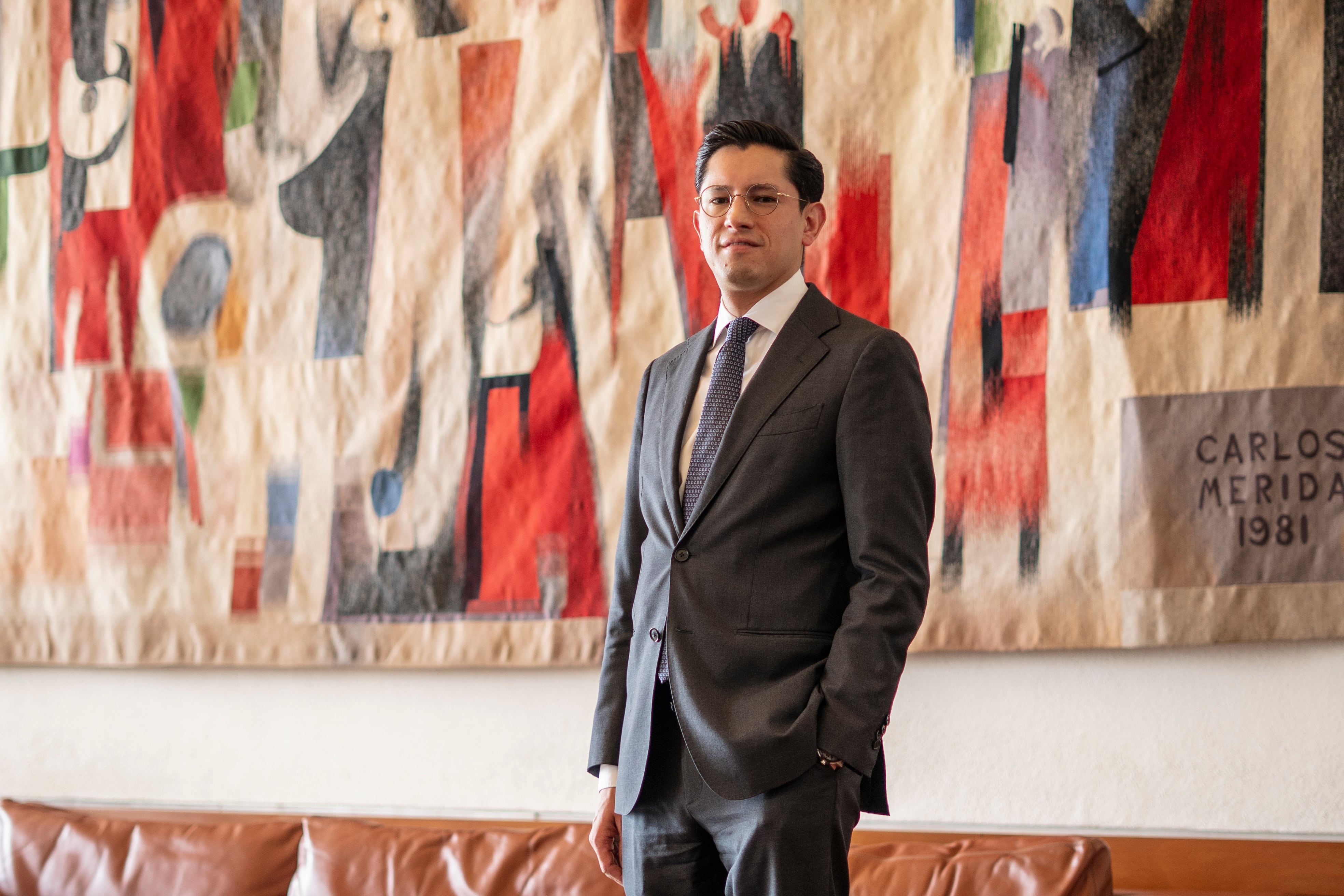
Roberto Velasco’s first two months at the helm of Mexico’s foreign ministry have been anything but calm. The 38-year-old chief of the country’s diplomacy — who had already served in the role temporarily during his predecessor José Ramón de la Fuente’s illness — is suddenly facing one of the most delicate moments in bilateral relations with the United States since Donald Trump returned to the White House. The death of two unaccredited CIA officers in the Sierra Madre of Chihuahua; the U.S. Depart
Roberto Velasco’s first two months at the helm of Mexico’s foreign ministry have been anything but calm. The 38-year-old chief of the country’s diplomacy — who had already served in the role temporarily during his predecessor José Ramón de la Fuente’s illness — is suddenly facing one of the most delicate moments in bilateral relations with the United States since Donald Trump returned to the White House. The death of two unaccredited CIA officers in the Sierra Madre of Chihuahua; the U.S. Department of Justice’s charges against Sinaloa’s governor, Rubén Rocha Moya; the renegotiation of the USMCA trade treaty… All of these issues push Velasco to choose his words with surgical precision, or even to steer clear of certain topics to avoid any hint of conflict. That caution runs throughout the entire conversation, held on Monday.
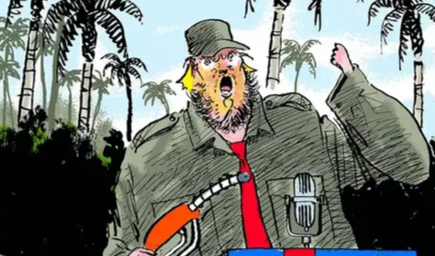
I’m getting a “shut up and hand over your wallets” vibe from this one, for a number of reasons.One is that nobody voted for this war, and, in fact, Trump was elected on a pledge to keep us out of foreign wars. Not only did the people not vote for it, but their legislators didn’t, […]
I’m getting a “shut up and hand over your wallets” vibe from this one, for a number of reasons.One is that nobody voted for this war, and, in fact, Trump was elected on a pledge to keep us out of foreign wars. Not only did the people not vote for it, but their legislators didn’t, […]
US President Donald Trump heads for a superpower summit with Chinese counterpart Xi Jinping next week hoping the Iran war will not spoil the mood in Beijing.
US President Donald Trump (left) and Secretary of Defence Pete Hegsesth (right) at a White House press briefing on April 6, 2026. Photo: The White House/Flickr.
Trump will be expecting a lavish welcome at the high-stakes meeting, which he delayed in March because of the Middle East conflict.
But the war will still loom large over
US President Donald Trump heads for a superpower summit with Chinese counterpart Xi Jinping next week hoping the Iran war will not spoil the mood in Beijing.
US President Donald Trump (left) and Secretary of Defence Pete Hegsesth (right) at a White House press briefing on April 6, 2026. Photo: The White House/Flickr.
Trump will be expecting a lavish welcome at the high-stakes meeting, which he delayed in March because of the Middle East conflict.
But the war will still loom large over his first visit to China since 2017, which is supposed to focus on easing tensions over trade and Taiwan between the world’s largest economies.
Trump said the two leaders would discuss the issue and that Xi had been “very respectful” over Iran.
Yet with Trump desperately seeking a deal to end the war before he lands in Beijing, China may seek to use his weakened position to extract concessions on key issues.
“The reality is that right now, Iran is critical for the US and the Chinese know that,” said Edgard Kagan of the Center for Strategic and International Studies (CSIS).
‘Big, fat hug’
The world will be closely watching the Trump-Xi summit, but uncertainty over the timing and a lack of preparation mean deliverables are likely to be limited.
For a US president obsessed with the idea of Great Power diplomacy, the main priority during the May 14-15 visit will be visuals of him being feted by a strongman fellow leader.
Chinese President Xi Jinping attends a China-US bilateral meeting at the Gimhae International Airport terminal, in Busan, South Korea, on October 30, 2025. Photo: The White House, via Flickr.
Trump, 79, has repeatedly talked up his “very good relationship” with Xi, 72, whom he met in South Korea last October, even saying the Chinese leader will give him a “big, fat hug” over Iran.
He will also hope to come away from the summit with big business deals as he looks to midterm elections in which Republicans face a hammering over high oil prices from the Iran war.
While some industry leaders say invitations have still not formally gone out, Trump’s administration plans to invite CEOs from companies including Apple, Exxon, Nvidia and Boeing, Semafor reported, with talk of a big Boeing deal in the offing.
Trump will also be hoping to bring back deals on AI, critical minerals and fentanyl.
One solid result that China in particular hopes for could be an extension of the fragile year-long trade truce that Trump and Xi agreed on in South Korea in October.
The White House. Photo: White House, via Flickr.
China has however shown that it is still ready to respond to Washington, saying on May 2 that it would not comply with US sanctions against firms targeted over Iranian oil transactions.
“It appears that the truce is not as strong as we were hoping,” Sean Stein, president of the US-China Business Council, told AFP.
‘A lot of leverage’
Communist-run China will meanwhile be looking for stability in a Trump-roiled world, and to play for time in the knowledge that the volatile US leader is on his second and final term in office.
Beijing is also likely to use Trump’s weakened position to its advantage where it can.
“There’s actually a lot of leverage there that Beijing could use,” said Patricia Kim, a senior foreign policy fellow at the Brookings Institution in Washington.
“Trump is looking for a win, right? I mean, he hasn’t had much wins in recent weeks with the war in Iran going on.”
US and China flags. File photo: U.S. Army.
Taiwan could be one area in particular where Xi may try to extract concessions, analysts say — for example on arms sales to the self-governing island that Beijing claims as its own.
Trump has been known to go off-script on the thorny topic before and allies in the region who fear an assertive China will be closely watching for signs of US wavering.
At the same time Beijing is likely to play up to Trump’s love of pomp and flattery, knowing that a slighted and angry Trump would cause trouble.
But the Chinese will try to wash their hands of any involvement in the war on its ally Iran and deflect pressure from Trump during the meeting with Xi.
Beijing’s hosting of Iran’s foreign minister this week was “a sign that they realize this is coming down the pike,” said Kagan from CSIS.
President Donald Trump talks to reporters before boarding Air Force One on May 20, 2026, at Joint Base Andrews, Maryland. | Chip Somodevilla/Getty Images
President Donald Trump has put the US economy through the wringer.
Since taking office, he has:
Imposed large and evershifting tariffs on imports, thereby driving up consumers’ costs and businesses’ uncertainty.
Engineered a collapse in both legal and unauthorized immigration, which has undermined growth and labor specialization.
President Donald Trump talks to reporters before boarding Air Force One on May 20, 2026, at Joint Base Andrews, Maryland. | Chip Somodevilla/Getty Images
President Donald Trump has put the US economy through the wringer.
And yet, the American economy keeps trudging forward like a gut-shot zombie, damaged but undeterred by the bullets it has absorbed.
US GDP rose at a 2 percent annual rate in the first quarter of 2026 and a 2.1 percent pace in 2025, far outstripping growth in most other advanced economies. Meanwhile, America’s unemployment rate remains low by historical standards at 4.3 percent. And wages rose faster than inflation throughout 2025.
To be sure, the economic indicators aren’t all sunny. Last month, for the first time since 2023, real wages in the US fell as annual inflation hit 3.8 percent.
Nevertheless, if you told an economist in January 2025 that America’s new president would launch a haphazard global trade war, throttle legal immigration, and launch a conflict with Iran that indefinitely shuttered the Strait of Hormuz — then asked that expert to guess what the US economy would look like in May 2026 — they almost certainly would have sketched a far grimmer scenario than the one we’re currently living through.
Some will look at all this and conclude that Trump’s trade, immigration, and foreign policies weren’t that costly after all.
Another interpretation, however, is that Trump could have presided over a pristine economy, if he’d simply refrained from increasing import prices, reducing labor-force growth, and launching a war of choice near the aorta of the global energy market.
One could call this the “We had a good thing” account of Trump-era economic performance, after Mike Ehrmantraut’s much-memed scolding of the self-sabotaging drug lord Walter White in a late season of the AMC series Breaking Bad.
To understand how Trump’s most destructive policies have harmed the economy, one needs some sense of what American economic life would look like today in the absence of those measures.
Of course, this is impossible to know with certainty; we don’t have a time machine or access to an inter-dimensional wormhole. But economic analysts have done their best to sketch what growth and inflation would look like in that alternate universe.
Let’s start with GDP. According to the Peterson Institute for International Economics, tariffs reduced America’s growth rate in 2025 by 0.23 percentage points. But as the Economist notes, this figure likely understates the full impact of Trump’s tariffs, as it does not account for their impact on investor uncertainty.
When a business decides whether to sink capital into a new project, it must weigh the risk that unforeseen circumstances will reduce their investment’s profitability. For this reason, according to conventional wisdom, the more volatile the market and policy environment is, the more likely firms are to hoard their cash.
And outside of the booming AI sector, American businesses have indeed pared back investment. As the Economist observes, excluding artificial intelligence-related categories, business investment fell at a 3 percent annualized rate over the last four quarters — after rising at a 5 percent average rate over the preceding decade. This collapse in non-AI capital investment shaved about 0.4 percentage points off America’s 2025 GDP growth, according to the magazine’s analysis.
Meanwhile, without Trump’s immigration policies, America’s labor force would be substantially larger — and thus, US economic output would be higher. According to a Brookings Institution report, last year’s decline in immigration shaved as much as 0.26 percentage points off US GDP.
Taken together, these analyses suggest that economic growth would have been about 0.9 percentage points higher last year, were it not for Trump’s trade and immigration policies.
Precisely how much Trump’s war with Iran is slowing growth in 2026 is unclear. Much depends on the trajectory of the conflict. But most analysts believe that it has dampened output marginally. At the same time, Trump’s tariffs and immigration policies continue to weigh on the economy.
Trump has engineered higher prices
The data on inflation tells a similar story. Trump’s tariffs have raised import costs for businesses that’ve passed on part of that burden to consumers. As a result, prices are rising much faster in the United States than they otherwise would be, according to a recent report from the Dallas Federal Reserve.
In that analysis, the bank plots America’s core inflation rate over time and compares this to what that rate would havebeen in the absence of all tariff impacts. The two lines diverge sharply after “Liberation Day,” when the president slapped large tariffs on virtually all of America’s trading partners (these rates were later pared back by both the administration and a Supreme Court ruling, but most remain far above their pre-Trump levels).
Judging by the Fed’s calculations, as of this March, America’s core inflation rate would have been just 2.3 percent — instead of 3.2 percent — in the absence of Trump’s tariffs.
And this does not account for the Iran War’s price impacts. A separate paper from Federal Reserve economists estimates that a three-month closure to the Strait of Hormuz would add 0.35 points to headline inflation. If that waterway remains shuttered for six months, that figure jumps to 0.79 points. After 9 months, it hits 1.47 points.
In other words, without Trump’s tariffs and warmaking, America’s inflation rate would likely be more than one point lower today (and not that far off the Fed’s 2 percent target).
What’s more, in that alternate-universe United States, Americans would not just enjoy lower prices but also lower borrowing costs. As is, persistent inflation has constrained the Fed’s willingness to lower benchmark interest rates while motivating private lenders to offer less generous terms. Since the War with Iran started in late February, mortgage rates have climbed.
We had a good thing
For all this, America’s economy is still growing. And inflation isn’t exceptionally high by historic standards, though it remains elevated.
Yet, the economy’s resilience is largely attributable to tailwinds disconnected from Trump’s trade, immigration, and foreign policies. The AI boom is catalyzing massive investment in data centers, software, and information processing technologies, while also lifting stock values — and, thus, the consumer spending of rich and upper middle-class households. At the same time, inflation was likely poised to decline when Trump took office, as supply chains continued normalizing after post-COVID shocks.
Buenos Aires, Argentina – The Supreme Court of the United States heard arguments on Wednesday regarding the Trump administration’s attempts to end Haitians’ Temporary Protected Status (TPS), which defends Haitian migrants from deportations.
The Supreme Court’s ruling, which is likely to be made in the coming months, could affect around 350,000 Haitians who are currently living in the United States.
The Department of Homeland Security, then headed by Kristi Noem, justified February’s deci
Buenos Aires, Argentina – The Supreme Court of the United States heard arguments on Wednesday regarding the Trump administration’s attempts to end Haitians’ Temporary Protected Status (TPS), which defends Haitian migrants from deportations.
The Supreme Court’s ruling, which is likely to be made in the coming months, could affect around 350,000 Haitians who are currently living in the United States.
The Department of Homeland Security, then headed by Kristi Noem, justified February’s decision saying that Noem “determined that there are no extraordinary or temporary conditions in Haiti that prevent Haitian nationals […] from returning to safety,” and that “it is contrary to the national interests of the United States to permit Haitian nationals […] to remain.”
Immigrant rights advocates, however, paint a different picture.
Daniel Berlin, policy director for protection pathways at the International Rescue Committee (IRC), told Latin America Reports that “Haiti continues to face a compounding crisis marked by food insecurity, displacement, deadly disease outbreaks, and surging gang violence, making it dangerous for anyone forced to return.”
“There are groups of people at particularly high risk, notably women and children as gangs increasingly use sexual violence to strike fear in communities and forced child recruitment has risen 200%,” he added.
Haitians were first granted TPS in 2010 following a devastating earthquake and have seen their protections extended multiple times since, including after the assassination of Jovenel Moise, the Caribbean country’s last elected president.
Since Moise’s assassination in 2021, Haiti has suffered from institutional collapse and rife gang violence.
As a result, the IRC reports that 73% of households feel unsafe where they sleep and 60% of households do not have their children in school due to fears of kidnapping, recruitment, and crossfire.
Berlin warns that “if TPS is ended, the administration could begin the legal process to remove people without other status immediately.”
The reality on the ground has led the plaintiffs to argue that the Trump administration did not follow due process in evaluating the conditions in Haiti.
The New York Timesreported earlier this week that government officials had distorted evidence in order to justify removing Haitians’ TPS. Internal emails show that data that did not support the administration’s argument was removed from research reports.
Moreover, the lawyers also referenced President Trump’s frequent usage of inflammatory language against Haitian people to contend that the administration was racially motivated in its decision, which would violate the constitutional prohibitions of discriminatory government actions.
Trump has previously described Haitian immigrants as undesirable because they come from a “filthy, dirty, disgusting” country and claimed that they had been eating their neighbors’ pets in Springfield, Ohio.
Lower court judges who dealt with the case found that Noem’s decisions were in fact predetermined and not informed by meaningful analysis, thus postponing the terminations of Haitians’ TPS.
The government’s lawyers asked the conservative-dominated Supreme Court to intervene as a result, arguing that the courts have no right to review Noem’s decisionmaking.
In the same session, the Supreme Court also heard arguments regarding the TPS of 6,100 Syrians in the US.
Featured image description: Protest at the US Capitol against the removal of Haitian migrants’ Temporary Protected Status, March 6th 2026.
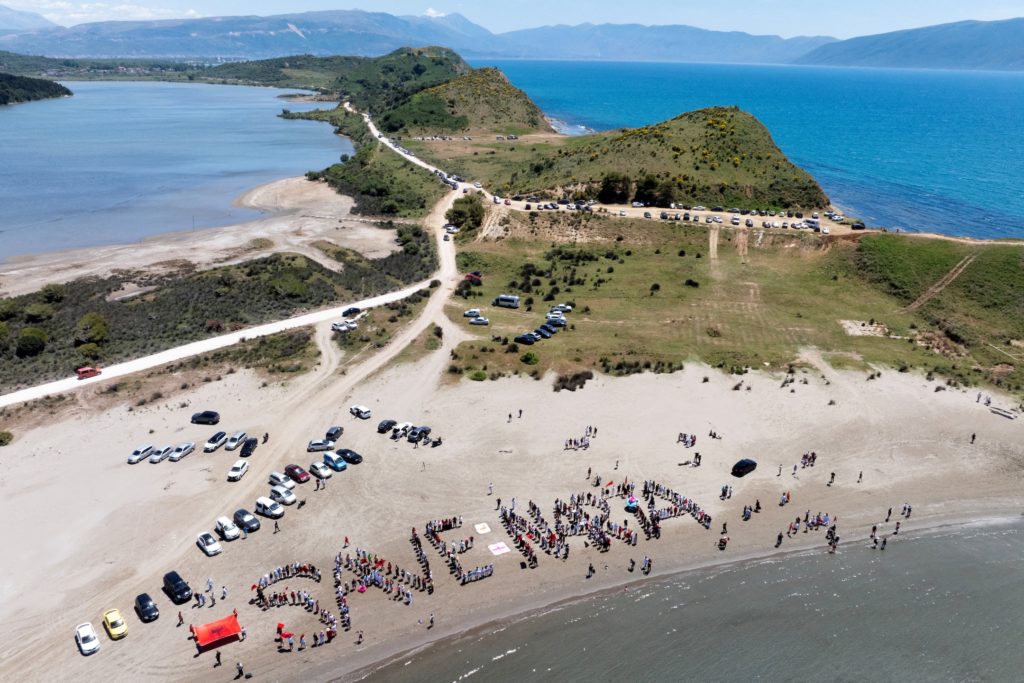
Albania's Sazan Island is a jewel in the Adriatic Sea. The former Cold War-era base is now in a luscious nature preserve and an inviting prospect for real estate developers. Chief among them is Ivanka Trump and Jared Kushner. Their plans are running headlong into Albanians who want to keep what's theirs. Special correspondent Simon Ostrovsky and producer Katia Patin report.
Albania's Sazan Island is a jewel in the Adriatic Sea. The former Cold War-era base is now in a luscious nature preserve and an inviting prospect for real estate developers. Chief among them is Ivanka Trump and Jared Kushner. Their plans are running headlong into Albanians who want to keep what's theirs. Special correspondent Simon Ostrovsky and producer Katia Patin report.
President says Hector Rusthenford Guerrero Flores killed in ‘swift and lethal’ military strike with help from VenezuelaThe US military has killed a leader in the Venezuelan street gang Tren de Aragua, Hector Rusthenford Guerrero Flores, with the help of Venezuela, Donald Trump announced on Friday.“At my direction, the United States Southern Command delivered a swift and lethal kinetic strike to successfully execute Niño Guerrero, the infamous leader of Tren De Aragua, one of the most bloodthirst
President says Hector Rusthenford Guerrero Flores killed in ‘swift and lethal’ military strike with help from Venezuela
The US military has killed a leader in the Venezuelan street gang Tren de Aragua, Hector Rusthenford Guerrero Flores, with the help of Venezuela, Donald Trump announced on Friday.
“At my direction, the United States Southern Command delivered a swift and lethal kinetic strike to successfully execute Niño Guerrero, the infamous leader of Tren De Aragua, one of the most bloodthirsty Terrorist Organizations on Planet Earth,” Trump wrote on Truth Social.
The Walt Disney Co. and ABC are once again pushing back on the FCC, this time over the agency’s demand that it file early renewal applications for its broadcast licenses, a move that the company calls a threat to the First Amendment. “It is an extraordinary demonstration of power and coercion directed at disfavored editorial […]
The Walt Disney Co. and ABC are once again pushing back on the FCC, this time over the agency’s demand that it file early renewal applications for its broadcast licenses, a move that the company calls a threat to the First Amendment. “It is an extraordinary demonstration of power and coercion directed at disfavored editorial […]
President Donald Trump will visit China from May 13 to 15, Beijing confirmed on Monday, with the US leader expected to discuss Iran and trade with his Chinese counterpart.
US President Donald Trump and Chinese President Xi Jinping before a bilateral meeting at the Gimhae International Airport terminal, in Busan, South Korea, on October 30, 2025. Photo: The White House, via Flickr.
Washington and Beijing have been at loggerheads over key issues ranging from trade tariffs to the Middle East
President Donald Trump will visit China from May 13 to 15, Beijing confirmed on Monday, with the US leader expected to discuss Iran and trade with his Chinese counterpart.
US President Donald Trump and Chinese President Xi Jinping before a bilateral meeting at the Gimhae International Airport terminal, in Busan, South Korea, on October 30, 2025. Photo: The White House, via Flickr.
Washington and Beijing have been at loggerheads over key issues ranging from trade tariffs to the Middle East war and Taiwan, which China claims as part of its territory.
“At the invitation of President Xi Jinping, President of the United States of America Donald J. Trump will pay a state visit to China from May 13 to 15,” a Chinese foreign ministry spokesperson said.
Trump is expected to push Xi on Iran while aiming to ease trade tensions, according to US officials.
China is a key customer for Iranian oil, mainly through independent “teapot” refineries that rely on discounted crude from the Islamic republic.
“This will be a visit of tremendous symbolic significance,” US Principal Deputy Press Secretary Anna Kelly told reporters on a call.
“But of course, President Trump never travels for symbolism alone. The American people can expect the president to deliver more good deals on behalf of our country.”
Trump’s first trip to China in his second term will feature pomp and ceremony including a tour of the Temple of Heaven in Beijing and a lavish state banquet, the White House said.
This is the first visit by a US president to China since 2017.
By Jan Hennop and Matthew Walsh
Pentagon chief Pete Hegseth is the headline speaker at Asia’s premier defence summit opening Friday, but China’s top officials aren’t expected despite weighty questions like Taiwan and the war in Iran.
Chinese Defence Minister Dong Jun speaks during the 21st Shangri-La Dialogue summit at the Shangri-La Hotel in Singapore on June 2, 2024. Photo: The International Institute for Strategic Studies, via Flickr.
Beijing’s defence minister is to skip the three-
Pentagon chief Pete Hegseth is the headline speaker at Asia’s premier defence summit opening Friday, but China’s top officials aren’t expected despite weighty questions like Taiwan and the war in Iran.
Chinese Defence Minister Dong Jun speaks during the 21st Shangri-La Dialogue summit at the Shangri-La Hotel in Singapore on June 2, 2024. Photo: The International Institute for Strategic Studies, via Flickr.
Beijing’s defence minister is to skip the three-day Shangri-La Dialogue in Singapore for the second year running, which analysts viewed as a sign of China’s rising power.
Yet, the forum that brings together top officials from around 45 nations has historically provided a setting for debate as well as quiet and high-profile diplomacy.
Defence Minister Dong Jun’s absence means no meeting there with Hegseth as China warns the US over its involvement with Taiwan and Washington seeks an end to the Mideast war.
The Middle East was the source of 57 percent of China’s direct seaborne crude imports in 2025 — 5.9 million barrels per day (mbd) — maritime tracking firm Kpler said.
Hegseth’s second trip to the Shangri-La Dialogue comes after US President Donald Trump’s visit to China in May, and his subsequent suggestion that US arms sales to Taiwan could be used as a bargaining chip with Beijing.
Hegseth’s speech on Saturday is expected to be “quite strong against China, but mainly for internal (US) consumption”, said Oh Ei Sun, senior fellow at the Singapore Institute of International Affairs.
“I think under Trump anything is negotiable and even with enemies deals can be done… (even) with Taiwan as a negotiating chip,” Oh told AFP.
Trump said “fantastic” trade deals were struck after his visit to China, although details were vague and no breakthrough with Beijing emerged in the war with Iran.
China arrived as ‘major power’
As the US and Iran clashed again on Thursday, threatening to derail a fragile push for peace, it “is unlikely that any possible deal will be discussed at the Shangri-La Dialogue”, Oh said.
“Dong was absent last year, reportedly due to China’s reluctance to engage with… Hegseth,” said William Choong, principal fellow at the ISEAS-Yusof Ishak Institute think-tank.
US Secretary of Defense Pete Hegseth (centre) arrives for a bilateral meeting with Singapore’s Minister for Defence Chan Chun Sing on the sidelines of the Shangri-La Dialogue summit in Singapore on May 29, 2026. Photo: Jam Sta Rosa/AFP.
China said Thursday it would send experts and scholars from its army’s study institutions.
Major General Meng Xiangqing of the National Defense University will lead the delegation, which is to include scholars from the National Defense University, the Academy of Military Sciences and the Navy.
“It’s kind of a poisoned chalice for any Chinese defence minister to speak out publicly,” said Jennifer Parker, adjunct professor at the University of Western Australia’s Defence and Security Institute.
With Dong again not attending, one of the reasons seemed obvious, said Choong, writing for the Lowy Institute think-tank.
“For one thing, China has truly arrived as a major power in the region, so it does not really need to send its defence minister to brave a fusillade of questions and try to ‘score’ brownie points,” he said.
Beijing, however, like last year, risked not having a senior leader present if the two most pertinent global security issues — Taiwan and the opening of the Strait of Hormuz — do come up.
“At a time when perceptions of US leadership are falling, Beijing could soothe some jangled nerves in the region by reassuring delegates that it would use force against the island only as a last resort,” Choong said.
AUKUS focus
The defence ministers of the United States, Britain and Australia — the members of the AUKUS security alliance — are also due to convene.
Australian Defence Minister Richard Marles (right) and US Defense Secretary Pete Hegseth meet on the sidelines of the ASEAN Summit in Kuala Lumpur on November 1, 2025. File photo: Richard Marles, via X.
AUKUS’s stated goal is to ensure a free and open Indo-Pacific region, though it is widely seen as a bulwark against a rising China, which strongly opposes the pact.
Australian Defence Minister Richard Marles said on Friday that Canberra was seeking “the maintenance of the global rules-based order” in the region.
“We’ve seen China engage in a very significant military buildup… and it has not happened with the kind of strategic reassurance which (we) would expect,” he told journalists at the forum.
“Fundamentally, we want to have a productive relationship with China. We want to live in a world which is governed by rules.”
Australian media outlets have reported, citing unnamed sources, that the AUKUS nations are expected to announce a major project, perhaps involving uncrewed underwater vehicles.
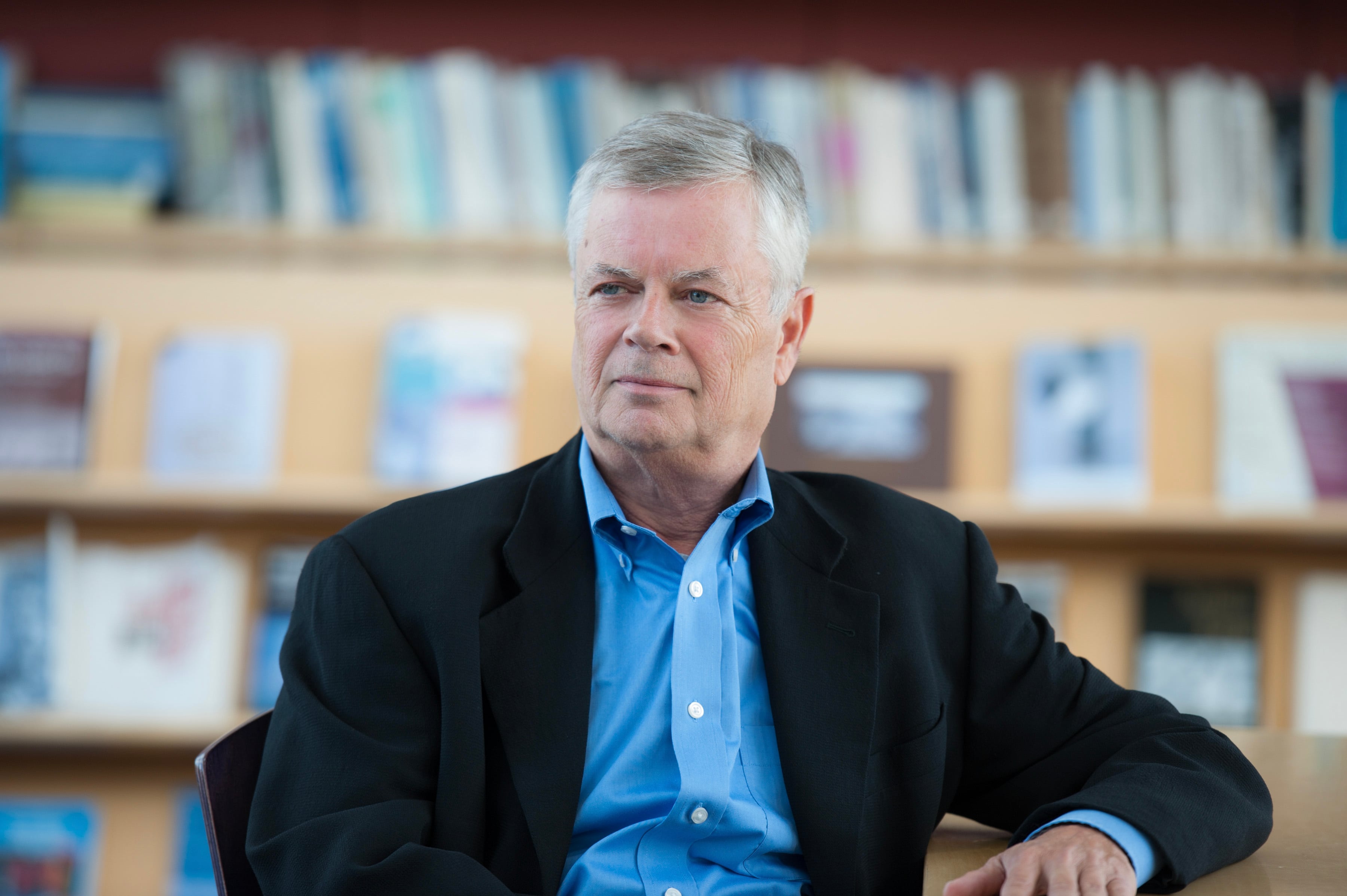
U.S. journalist and historian Stephen Kinzer, 74, has devoted much of his work to analyzing a century of U.S.-backed government overthrows around the world: from Hawaii to Iraq, examining the pattern of military intervention and exposing its long-term consequences. A former correspondent for The New York Times, Kinzer has established himself as one of the most vocal critics of U.S. interventionism.Seguir leyendo
U.S. journalist and historian Stephen Kinzer, 74, has devoted much of his work to analyzing a century of U.S.-backed government overthrows around the world: from Hawaii to Iraq, examining the pattern of military intervention and exposing its long-term consequences. A former correspondent for The New York Times, Kinzer has established himself as one of the most vocal critics of U.S. interventionism.

 Login
Login