Normal view

  • ✇Eos
  • Antibiotic Resistance Might Get a Boost from Droughts Javier Barbuzano
    The spread of antibiotic resistance, a growing threat to global health that causes millions of deaths annually, is typically blamed on the overuse of drugs in hospitals and in the food industry. However, a new study published in Nature Microbiology suggests that normal geological processes could be accelerating the development of new resistances. Soil microorganisms naturally produce antibiotics as a form of chemical warfare to compete with each other. When soils dry out, these natural compo
     

Antibiotic Resistance Might Get a Boost from Droughts

29 April 2026 at 13:19
A forest on a mountainside has mostly green trees, with sprinkles of autumn red and yellow. A brown mountain is in the distance.

The spread of antibiotic resistance, a growing threat to global health that causes millions of deaths annually, is typically blamed on the overuse of drugs in hospitals and in the food industry. However, a new study published in Nature Microbiology suggests that normal geological processes could be accelerating the development of new resistances.

Soil microorganisms naturally produce antibiotics as a form of chemical warfare to compete with each other. When soils dry out, these natural compounds become more concentrated because there is less water to dilute them. Like a dosage increase, this concentration can create a harsher environment, killing sensitive microbes and sparing those with the capacity to resist. This phenomenon, in turn, is an evolutive driver that favors the appearance of new and more effective resistance genes.

“If you have more antibiotics in your environment, only the organisms that can withstand it…can resist it.”

To test whether this mechanism is having real genetic effects, Xiaoyu Shan, a microbial ecologist and postdoctoral researcher at the California Institute of Technology (Caltech), and colleagues looked at soil samples under controlled conditions as the samples transitioned from a wet state to a desiccated one. They found that as the soil dried, the presence of genes related to antibiotic production and resistance spiked, suggesting that drought leads to a rapid escalation in the subterranean biological arms race. Importantly, they did not look for pathogenic bacteria specifically, only for resistance genes, which can be present in a variety of microbes, whether those microbes are pathogenic or not.

“Drought leads to this elevation of antibiotic producers and bacteria that are resistant,” said team member Dianne Newman, a professor of biology and geobiology also at Caltech. “It’s a pretty simple idea: If you have more antibiotics in your environment, only the organisms that can withstand it…can resist it.”

Alternative Explanations

However, there could be other potential explanations for the observed increase in antibiotic-producing and antibiotic resistance genes, according to Enrique Monte, a microbiologist at the Universidad de Salamanca in Spain who wasn’t involved with the new study. For instance, arid soils are naturally more diverse than humid soils, making it common to find a more diverse gene pool in the ground, Monte said. In addition, the mere presence of antibiotic genes might not result in an actual release to the environment, or a release could happen in dosages that are too small to cause noticeable effects. “There are antibiotics that are volatile; they escape into the air, so they never reach a therapeutic concentration to kill others,” Monte said.

The authors, however, took some precautions to show that the increase in antibiotic resistance genes was actually a biological response to environmental stress. For instance, they also tracked other genes that should remain unaffected or decline under desiccation. As expected, genes that are needed for basic survival remained stable, while genes responsible for bacterial movement declined in dry soil, where mobility is restricted. Even some species that were not favored by desiccation saw an increase in resistance-related genes, “which is even stronger evidence,” Shan said.

Geographic Limitations

As the researchers combed through publicly available metagenomic data libraries, they had to select collections with strict control of all variables and in which the only changing factor was water content. That limited the analysis to five locations: two grasslands and a sorghum field in California; a forest in Valais, Switzerland; and a wetland in Nanchang, China.

The scarcity of locations might limit how extrapolable these results are, said Fiona Walsh, a microbiologist at Maynooth University in Ireland who was not involved with the work. “There are thousands of high-quality metagenomes available online with excellent metadata. I would really like to see a comparison where they apply their analysis to a broader map of global metagenomic data to see if they reach the same conclusions,” she said.

From the Soil to the Hospital

Drier regions consistently showed a higher number of resistant bacteria cases in hospitals, even after adjusting for confounding factors such as local income.

The study also suggests that dry soils might be a hidden driver of clinical cases of antibiotic resistance worldwide. The authors combined hospital data on the number of cases of resistant infections from 116 countries with the local aridity index, which measures temperature and precipitation, for each location. They found a strong correlation: Drier regions consistently showed a higher number of resistant bacteria cases in hospitals, even after adjusting for confounding factors such as local income.

However, the authors admitted that this is only a correlation effect and doesn’t prove causation. “It motivates follow-up research to see how environmental concentration weighs against human overuse and poor stewardship,” Newman said.

Even this correlation could be a stretch, according to microbiologist Sara Soto, head of the Global Viral and Bacterial Infections Programme at the Instituto de Salud Global de Barcelona. At the end of the day, she said, the authors have soil data from only five locations in three countries, and they are not tracking the specific bacterial varieties that make people sick, only resistance genes.

For the thesis to be solid, Soto said, the ideal approach would have been to contrast hospital strains from a specific area with soil data from that same region during the same drought episode. “Making such a vast inference—that what happens in the soil of one location affects what happens in a hospital elsewhere—is a big leap,” she said.

The authors, however, point out that resistance genes from soils can eventually make their way into human pathogens. Microbes have the capacity to share genetic material across species—a process known as horizontal gene transfer. In their analysis, the team identified specific resistance sequences that appeared to have been transferred between soil bacteria relatively recently, perhaps within the past decade. How they are reaching hospitals remains a matter for a future study, they said.

As droughts increase in numerous regions in the face of climate change, this selective pressure within soil ecosystems is expected to intensify. Though these findings do not show that drought directly puts drug-resistant pathogens in hospitals, they still suggest that a drying climate could set the scene for an increase in antibiotic resistance, the researchers report.

—Javier Barbuzano (@javibar.bsky.social), Science Writer
Citation: Barbuzano, J. (2026), Antibiotic resistance might get a boost from droughts, Eos, 107, https://doi.org/10.1029/2026EO260132. Published on 29 April 2026.
Text © 2026. The authors. CC BY-NC-ND 3.0
Except where otherwise noted, images are subject to copyright. Any reuse without express permission from the copyright owner is prohibited.

How health sleuths are watching for threats like measles during the World Cup

11 June 2026 at 16:45
While millions of soccer fans cheer or groan over World Cup matches spanning North America, health officials will be on high alert for germs.

  • ✇Vox
  • We’re not as helpless against dementia as we think Bryan Walsh
    A scan of a brain with Alzheimer’s. | BSIP/UIG via Getty Images I turned 48 this week, which meant it was time for my annual physical. After the usual battery of questions from my doctor — How much did I drink? Was I exercising? How was I sleeping? — it was my turn to ask a question. I had one prepared: Should I get the shingles vaccine? Key takeaways Dementia cases will keep climbing as the population ages — a projected million new US cases annually by 2060 — but your odds of gett
     

We’re not as helpless against dementia as we think

15 June 2026 at 12:30
A scan of a brain with Alzheimer’s. | BSIP/UIG via Getty Images

I turned 48 this week, which meant it was time for my annual physical. After the usual battery of questions from my doctor — How much did I drink? Was I exercising? How was I sleeping? — it was my turn to ask a question. I had one prepared: Should I get the shingles vaccine?

Key takeaways

  • Dementia cases will keep climbing as the population ages — a projected million new US cases annually by 2060 — but your odds of getting it at any given age have been falling for decades. An 80-year-old today is meaningfully less likely to have dementia than one a generation ago.
  • Across wealthy countries, age-specific dementia rates have dropped roughly 13 percent per decade since the late 1980s, and most of that decline tracks with things we can influence: better-controlled blood pressure and cholesterol, less smoking, more years of school. The brain lives downstream of the heart.
  • A 2024 Lancet commission estimated that up to 45 percent of dementia could be prevented or delayed by addressing 14 risk factors — and the highest-leverage window is midlife, not old age.
  • The anti-dementia to-do list: treat your blood pressure and LDL cholesterol, don’t smoke, stay physically active, get your hearing and vision checked, keep learning, and go easy on alcohol. Unglamorous, but it buys time for your brain.
  • A growing run of studies links the shingles vaccine to lower dementia risk. The evidence isn’t conclusive and the shot is only recommended at 50, but it’s worth a conversation with your doctor.
  • There is no drug that reverses dementia today. That’s not the same as being helpless.

According to standard medical guidance, the answer would be no. The shingles vaccine is only recommended by the government for people 50 years or older; the only exceptions are adults whose immune systems are weakened by disease or treatment. And despite the way my back feels when I get out of bed each morning, I wasn’t there quite yet. Our immune systems weaken as we age, but at 48, I was probably still capable of beating back the varicella-zoster virus that causes shingles (and chickenpox).

And yet my doctor was open to the idea for the same reason that I was asking about it: because there is early but growing evidence that the shingles vaccine may be protective against neurodegenerative diseases like dementia. For someone my age, with more time behind me than in front of me, the possibility of developing those diseases — and the desire to do anything to prevent them — is suddenly looming large.

I’m far from alone. Dementia already afflicts more than 6 million Americans today, and a 2025 study in Nature Medicine estimated that the lifetime risk of developing dementia after age 55 is 42 percent, with higher figures for women, Black adults, and those who carry the APOE ε4 allele genetic variant, which is known to increase the risk for Alzheimer’s. That same study projected new US cases of dementia would double by 2060, from 514,000 a year in 2020 to more than 1 million annually, due largely to population aging.

Behind those figures is a universe of suffering. Nearly everyone reading this has watched, or will watch, someone they love succumb to dementia. And once you get to my side of your 40s, that risk starts to feel less abstract and a lot more personal.

Yet the frightening story of the rise in dementia cases as the US population ages obscures real progress that is already being made to prevent it — and the even greater progress that could follow. Dementia may feel inevitable, a cruel side effect of longer life. But it doesn’t have to be.

Dementia epidemiology 101

The Nature study is about incidence — new cases, not the total number of people living with dementia. Separate CDC estimates project nearly 14 million older Americans living with Alzheimer’s disease, the most common form of dementia, by 2060.

But the rate hasn’t been holding steady — it’s been dropping. A 2020 study that drew on data from six countries across Europe and North America found that age-specific dementia incidence for people of European ancestry had fallen about 13 percent per decade since the late 1980s, and around 16 percent per decade for clinical Alzheimer’s. A 2016 study tracked five-year dementia rates across four periods between the late 1970s and the early 2000s and found them steadily falling, ultimately dropping 44 percent by the most recent period. The authors of the 2020 study project that if the decline in incidence remains steady in the future, 15 million fewer people might develop dementia by 2040 across high-income countries than if the incidence of the disease remained unchanged.

That good news may not be shared by everyone. The 2016 study found that the decline only showed up among people with at least a high school diploma — more on that below — and even then, it wasn’t evenly shared. And the sheer increase in older people means that a continually dropping incidence only blunts the coming dementia wave, rather than blocking it. One study of older adults in England actually found dementia incidence falling through 2008 and then creeping back up; the researchers also found that when you account for the fact that people headed toward dementia tend to die earlier, the drop gets much harder to see. What’s fallen before can rise again.

But what this likely means in practice is that a person turning 80 today is meaningfully less likely to have dementia than a person who turned 80 a generation ago. And it’s reasonable to hope the same will hold for whoever turns 80 next — like, say, me.

The question, though, is why.

How we learned to fight dementia without realizing it

Here’s a veteran health journalist tip: if anyone ever asks you why something is improving in public health, just attribute it to the decline in smoking. There’s a decent chance you’ll be right.

While Alzheimer’s is a brain disease, and dementia is the umbrella term for several kinds of cognitive decline, there is a growing consensus that they are deeply driven by vascular health — meaning what damages your heart and blood vessels is ultimately what damages your mind. Thanks to the development of blood pressure and cholesterol-lowering medicines, better heart disease and stroke management, and perhaps most of all, drastic reductions in smoking, cardiovascular health has been improving. Even with the rise of obesity and diabetes, most vascular risk factors have decreased over the same time that dementia and Alzheimer’s prevalence fell.

The rise in education over the same time period may play a role as well. Americans turning 80 today went to school during a great mid-century expansion in education, while their parents were schooled — or rather, not schooled — in the 1920s and ’30s. In 1940, only 24.5 percent of Americans 25 and older had a high school diploma, and just 4.6 percent had completed a bachelor’s degree or more. By 2017, high school completion had reached 90 percent, and the share of people with a bachelor’s or more had hit 34 percent. And researchers have correlated higher education attainment with lower dementia and Alzheimer’s rates.

Now repeat after me: correlation is not causation. Researchers don’t really know why more years of schooling seem to be associated with a lower risk of dementia, though there are theories that education might boost the brain’s “cognitive reserve.” But the hopeful take is that the decline in incidence is largely driven by behaviors and life conditions we can change. And one of the most unexpected and promising acts is something as simple as routine vaccination.

The vaccine you need to know about

Last April, I wrote about what I called “one of the brightest spots in an otherwise dark field”: a study in Wales that found that older adults who received a vaccine against shingles were 20 percent less likely to develop dementia in the seven years following vaccination than those who did not receive it. It wasn’t a randomized trial, but it was stronger than the usual observational association: the study harnessed a natural experiment in Wales, where vaccine eligibility turned on a birthday cutoff, meaning it was less likely that the results were because vaccinated people were simply healthier.  

Earlier this year, a study in Canada looked at hundreds of thousands of people over the age of 70 and, like the Welsh study, found that those who had taken the shingles vaccine were less likely to develop dementia. And a new analysis from late 2025 of the data in the Welsh study found that the vaccine was associated with benefits that went beyond prevention — it also seemed to slow the disease for those with dementia and reduced deaths attributable to it.

The shingles vaccine in the Welsh study was an older, live-virus version; the current vaccine is a newer recombinant form that can’t accidentally cause shingles, and another study found it was associated with even greater protection from dementia.

These findings are promising but still leave plenty of questions. The Welsh live-vaccine study found a larger apparent benefit in women, who also suffer higher rates of dementia. But the pattern is not settled: the newer recombinant-vaccine study found an association in both men and women, though stronger in women. Shingles may be connected to dementia, though the evidence is still messy: A large 2025 health-records study found recurrent shingles was associated with a modestly higher dementia risk than a single episode, while earlier evidence has been more mixed.

Shingles occurs when the dormant varicella zoster virus — the same virus that causes chickenpox — reactivates. It’s possible that the resulting neural inflammation may feed dementia. A randomized controlled trial published in December tested a related herpes-virus idea, treating 120 adults with early Alzheimer’s or mild cognitive impairment — all with evidence of prior herpes simplex infection — with a medication called valacyclovir. After 18 months, researchers found no significant advantage over a placebo, dampening hopes that herpes antivirals could be an effective Alzheimer’s treatment. 

That’s a real strike against the simplest version of the theory that the virus itself is rotting the brain. But it could mean that the shingles vaccine’s possible protective effects don’t come from shingles at all. A 2025 study found that the newer shingles vaccine and an RSV vaccine that share the same AS01 immune-boosting adjuvant were each associated with lower 18-month dementia risk compared with flu vaccination, and researchers did not find a statistically significant difference between the two AS01 vaccines. The implication is that the benefit might come from giving an aging immune system a jolt, rather than from any one bug it’s aimed at.

You can protect yourself

But as the vaccine science sorts itself out, there are lifestyle changes you can make to help protect yourself without getting a shot. A 2024 Lancet commission found that, in principle, up to 45 percent of dementia cases could be prevented or delayed by addressing 14 risk factors, including not smoking; lowering high LDL cholesterol in midlife; treating hearing loss, especially from midlife on; and limiting obesity. The key period here is midlife, which the commission defined (rather widely in my opinion) as 18-65. Which, for someone my age, means there’s no better time to focus on prevention.

I don’t know whether I’ll go ahead and try to get the shingles vaccine early, and to be clear, I’m not telling anyone they should. The science is still uncertain, and I am, obviously, not a medical doctor. But the lifestyle factors that have been shown to protect against dementia — which are largely the same ones that help cardiovascular health — can be adopted by everyone, for their health now and in the future.

No one knows for sure what the future holds, for me or for you. What’s certain is that, barring a medical miracle, the sheer number of dementia cases will continue to rise as our population ages, and that some of us will be in that number. But that doesn’t mean we’re helpless.

A version of this story originally appeared in the Good News newsletter. Sign up here!

  • ✇Vox
  • This is what happens when you defund Ebola prevention Sara Herschander
    The terrifyingly fast Ebola outbreak in the Democratic Republic of the Congo and Uganda is already the third-worst ever recorded. | Michel Lunanga/Getty Images Shortly after brandishing his infamous chainsaw on a conservative conference stage last February, Elon Musk attended a Cabinet meeting where, giggling slyly, he admitted to having “accidentally canceled” Ebola prevention in his haste to obliterate the US Agency for International Development (USAID). “We restored the Ebola prevent
     

This is what happens when you defund Ebola prevention

27 May 2026 at 12:30
a group of medical professionals stand on a dirt surface wearing hazmat suits and being sprayed by someone with a yellow disinfectant device.
The terrifyingly fast Ebola outbreak in the Democratic Republic of the Congo and Uganda is already the third-worst ever recorded. | Michel Lunanga/Getty Images

Shortly after brandishing his infamous chainsaw on a conservative conference stage last February, Elon Musk attended a Cabinet meeting where, giggling slyly, he admitted to having “accidentally canceled” Ebola prevention in his haste to obliterate the US Agency for International Development (USAID).

“We restored the Ebola prevention immediately,” he added coolly at the time, “and there was no interruption.” That claim has since proven to be disastrously, profoundly untrue. 

On May 17, the World Health Organization declared a rapidly spreading Ebola outbreak in the Democratic Republic of the Congo and Uganda a “public health emergency of international concern,” only the ninth-ever time the agency has made that designation. In the weeks since, at least 220 people have died of the highly fatal virus, and more than 900 suspected cases have been identified so far. It is already the third-largest Ebola outbreak on record.

And yet, that toll is likely a tremendous undercount because, as the New York Times reported from the ground this week, “only a trickle of tests are being processed every day” in the cities most affected by the outbreak. “The virus is far ahead of us,” Ahmed Mahat, a manager with International Medical Corps, told the Times. “And it’s spreading fast.”

In fact, publicly known cases are rising exponentially faster than in any prior outbreak, including the largest ever, West Africa’s catastrophic outbreak in 2014, and the second-largest in 2018. By the time this outbreak was declared, hundreds of people had already been infected.

When you stop looking, you can’t see

Why did this outbreak spread so quickly? Part of it was the virus itself, a rare Bundibugyo strain of Ebola, which is harder to diagnose and for which there are no vaccines or treatments. (At least, not yet.) Another reason is that this outbreak began in a remote province of eastern Congo, an active war zone, where what health systems exist have been ravaged by decades of armed conflict. 

As if the odds weren’t already stacked enough, however, this outbreak broke out under the heavy shadow of US foreign aid cuts that, among other calamities, gutted the world’s Ebola detection and response apparatus last year. Despite Musk’s earlier assurances, US-funded programs to detect new Ebola cases and dispatch a response were indeed frozen under the Trump administration, according to Stat. US cuts also indirectly contributed to the outbreak by weakening local health systems and stockpiles. 

This story was first featured in the Future Perfect newsletter.

Sign up here to explore the big, complicated problems the world faces and the most efficient ways to solve them.

Altogether, the US Department of Health and Human Services disbursed about $10 million to Congo last year, down from $33 million the year prior, Stat noted. USAID sent $693 million in aid to Congo last year, down from nearly $1.2 billion in 2024. 

Cuts to disease surveillance meant that this virus took longer to identify than it should have. And with cuts to local health systems, it’s now much harder to come by the tests, nurses, doctors, and protective equipment needed to stop the spread. 

“It’s so bad. It’s so bad,” Jean Kaseya, director-general of the Africa Centre for Disease Control and Prevention, told Devex. The Africa CDC’s role in quelling outbreaks has become even more important as wealthy countries have retreated from the global health stage, but it is impossible to fill all of the medical surveillance gaps left by the US withdrawal of support, he said. “No one can give you the magnitude of this outbreak.”

Bleeding out

The US has done some course correction since the outbreak began. Last week, the State Department pledged $23 million in emergency funding for Congo and Uganda, plus the deployment of a disaster response team and enhanced involvement from the CDC, which says it’s been actively coordinating with local health agencies. At least some lost funding should have also begun flowing back to both countries through their bilateral aid deals with the US. 

But when you lose a limb to a chainsaw — even a “chainsaw of bureaucracy” like the one Musk dragged across a stage — you can’t expect a bandaid to make up for the damage. Beyond the money, the US withdrawal from the WHO and other policy decisions have had a deeply destabilizing effect on global health systems, which no doubt helped bungle this outbreak response. In many cases, the disease experts and researchers who were once in charge are simply not there anymore

Given the outbreak’s virulence so far, things will probably get significantly worse before they get better. While the majority of cases have occurred in Congo so far, Robert Redfield, former head of the CDC, predicted last week that the virus could soon spread to neighboring countries like Tanzania and South Sudan. Researchers have rapidly begun development on a new vaccine for the deadly virus, but even in a very best-case scenario, it will take months to roll out. In the meantime, health workers will continue to play catch-up to a virus that now has a massive head start.

As Nicholas Enrich, the former top global health official for USAID, told the New York Times last week: “In a time when hours matter, we’re delayed by weeks.”

  • ✇Vox
  • MAHA wellness culture is coming for teens. Grown-ups aren’t ready. Anna North
    This story was originally published in The Highlight, Vox’s member-exclusive magazine. To get access to member-exclusive stories every month, become a Vox Member today. For years, the “Make America Healthy Again” movement was driven by moms. Concerned about the safety of childhood vaccines and about chemicals in the food their kids were eating, they helped propel Donald Trump to the White House — and Robert F. Kennedy Jr. to the role of the nation’s top health influencer — with a mess
     

MAHA wellness culture is coming for teens. Grown-ups aren’t ready.

28 May 2026 at 10:07
an illustration of teens on their phones standing among a cracked medical symbol and oversized food items, including raw milk, steak, an egg and a soda

This story was originally published in The Highlight, Vox’s member-exclusive magazine. To get access to member-exclusive stories every month, become a Vox Member today.

For years, the “Make America Healthy Again” movement was driven by moms.

Concerned about the safety of childhood vaccines and about chemicals in the food their kids were eating, they helped propel Donald Trump to the White House — and Robert F. Kennedy Jr. to the role of the nation’s top health influencer — with a message centered on fear for the next generation. 

Now, that next generation is here.

Key takeaways

  • A new group of young influencers is changing the face of MAHA.
  • Gen Z Americans, with their low trust in mainstream medicine and other institutions, may be especially susceptible to MAHA messaging.
  • Educators can teach young people to evaluate MAHA and other health claims, but it requires meeting Americans where they are.

The latest MAHA advocates to gain public attention are women in their teens or early 20s. Lexi Vrachalus, 20, posts videos of her seed-oil-free, sugar-free meals, snacks, and shopping trips. In a post around Easter, she made her own Peeps with maple syrup and beef gelatin.

Her message: “You can take back health into your own hands,” she told me. “You have the power to heal your body.”

She and other influencers, like the young filmmaker Grace Price and clean-living maven Ava Noe, are creating videos with a younger sensibility than their forebears — think baking sourdough for siblings rather than talking about kids’ vaccines. And their version of MAHA (that’s Make America Healthy Again, for the uninitiated) is breaking through to American teens.

“I get questions from my younger audience like, how can I encourage my parents to eat healthy?” Vrachalus said. “Or, how can I eat healthy when all my parents do is buy junk food?”

On the surface, there’s nothing wrong with young people trying to eat healthy. But educators and misinformation experts are worried about what comes next: Among adults, MAHA influencer culture has served as a funnel for a host of beliefs and behaviors that start with skepticism, veer into suspicion of all authority, and end up with actively dangerous behavior, including a resistance to vaccines that has led to outbreaks of disease.

“There’s this focus on healthy foods and environmental concerns, but running under the surface of some of those more superficial connections is this idea that there’s this cabal,” said Whitney Phillips, a professor of information politics and media ethics at the University of Oregon. “There’s this kind of conspiratorial thinking that ‘they,’ coded as liberal, are lying to you.”

So far, polling shows that young people are less likely to identify with MAHA than Americans in their 30s and 40s. But MAHA-inflected wellness videos are reaching more teens, and there’s evidence that more young people are falling for health misinformation that they see online. 

In a 2024 survey by the News Literacy Project, 80 percent of teens said they saw conspiracy theories on social media platforms, and a majority of those teens said they were inclined to believe one or more of those theories. The second most common type of conspiracy theory mentioned by teens in the survey (after “aliens & UFOs”) was content around Covid-19 and public health issues.

The rise of young MAHA influencers has educators and other experts asking what they can do to help Gen Z and Gen Alpha Americans — a group already deeply distrustful of institutions and authorities — distinguish reality from toxic misinformation. If teachers, families, and policymakers hope to thread that needle, they’ll have to do more than just respond to false claims point-by-point — they’ll need to address the sources of discontent and disaffection that may be pushing young people toward MAHA in the first place. 

The new face of MAHA

If you had to picture the MAHA coalition, you might think about a group of millennial and Gen X moms, banding together over their opposition to vaccine mandates and food additives. Or maybe you’d call to mind someone like Andrew Huberman or Joe Rogan, male podcasters in their 50s extolling the virtues of supplements and protein to an audience of “Huberman husbands.”

And sure, that’s today’s MAHA — a recent Politico poll found that those most likely to identify with the movement were Americans in their 30s and 40s. 

But tomorrow’s MAHA is coming, and the teen girls and young women emerging as MAHA influencers show us what it might look like. 

Vrachalus, for example, has more than 170,000 followers on Instagram — not as many as established voices like Vani Hari with follower counts in the millions, but a respectable reach for a creator, especially one so young. Vrachalus recently made a video with Kennedy, the Health and Human Services secretary, to promote the new federal dietary guidelines

When she was diagnosed with anorexia at 13, a dietitian told her she’d have to eat “junk food” in order to get better, Vrachalus told me. Instead, “I started to research, and I realized that basically everything in the grocery store is ultraprocessed junk food,” she said. 

Today, “I heal my body using real food that God created and designed us to eat,” she said.

Ava Noe, 18, has about 26,000 followers on her Instagram account, @cleanlivingwithava. She hopes to show young people that they “don’t have to be a certain age to take their health into their own hands,” she told me. “It’s never too early to start maximizing your health.”

For Noe, that looks like anything from searching for “clean” food at the grocery store to medically controversial practices like making her younger siblings use fluoride-free toothpaste. 

Meanwhile, some older MAHA influencers feature their young children as a way to get their message out to families. Gretchen Adler, for example, a creator with over 500,000 Instagram followers, recently posted a video in which her 9-year-old daughter explains why she makes her own gummy candy from orange juice and gelatin. Storebought gummies, she says, are “pure trash.”

“I’ll always say to show this to your child,” Adler says of her daughter’s appearances on her feed. “That’s the way that we can inspire these people or these young children, is when they see another child that they can relate to.”

The anti-seed-oil to anti-vax pipeline

Young people may be an especially receptive audience for the message that they can take their health into their own hands.

Gen Z Americans “feel very disillusioned by organizations in society and institutions, including, of course, medical institutions in the wake of Covid,” said Melissa Deckman, CEO of Public Religion Research Institute and author of The Politics of Gen Z

They are more likely than their elders to rely on friends and family or social media for health advice, and less likely to rely on doctors. They also distrust news outlets that could give them fact-checked information about health claims.

At the same time, young people are concerned about their health, experts say. “I have seen students become more inclined towards trying to think about wellness because they need to, because they’re not doing well,” said Phillips, who has taught university students for 18 years. “College students used to be some of the most carefree people in the world, and that just isn’t what is true anymore.”

The result, some say, is a population especially primed to listen to MAHA messaging delivered by influencers their own age. “These are beautiful young people that are promoting it, and they’re thinking, old people don’t know what they’re talking about. Here’s this cute 22-year-old who’s explaining this to me,” said Bertha Vazquez, who runs Generation Skeptics, a program that trains teachers to respond to misinformation.

However, experts worry that some MAHA content could be harmful, not helpful, for young people’s health. Such content often promotes the idea that consumers need to be vigilant about their food to avoid “toxins,” or that products can be divided into “real food” and “not-real food.” 

“That black-and-white thinking is very dangerous for people that have vulnerability to eating disorders,” Zoë Bisbing, a psychotherapist specializing in disordered eating, told me. 

Vrachalus isn’t convinced that opposing processed food promotes disordered eating. “Our great-great-grandparents, they didn’t have Oreos, they didn’t have ice cream,” she said. “I just don’t think that our great-great-grandparents had eating disorders because they didn’t have fake food.”

But eating disorders aren’t the only concern experts have raised. Some fear that exposure to MAHA content could push young people toward harmful behaviors that Kennedy and other movement leaders have supported, from using beef tallow as sunscreen to avoiding vaccines or chemotherapy

 “When they do get a dangerous virus, or they do get cancer, or they do have a child, the big concern is that they will not get the vaccines and the standard care,” Vazquez said.

Vrachalus and Noe don’t talk as much about vaccines or avoiding modern medicine as older MAHA and MAHA-adjacent influencers do. “I’m not anti-Western medicine at all,” Vrachalus told me. “If I break my arm, I’m going to the doctor tomorrow.”

But previous generations of MAHA and wellness influencers have cast doubt on proven treatments from the measles vaccine to chemotherapy, sometimes while pushing dietary supplements that are unproven and unregulated, or foods like raw milk that can cause serious illness.

Some young people are already subscribing to this kind of thinking — 18-year-old Shelby Gwinn, who is studying to be a dietitian, recently told the New York Times that “all pills do is cover up a problem instead of getting to the root cause,” and that today she takes 30 supplements to manage her eczema. “I do think the government should step in if a food company is putting absolute trash or chemicals in their food products,” she said — “but then again, I don’t trust the government.”

There’s a long history of wellness movements shading into conspiracy theory, Phillips told me. This anti-government, anti-medicine thinking began to creep into many wellness spaces, including yoga studios, around the time of the pandemic. 

“The messaging is basically this idea that you can’t trust doctors, you can’t trust the medical establishment,” Phillips explained. “They are trying to poison you.”

Getting young people to trust science again

In a polarized political landscape in which many young people are disillusioned with traditional news sources, conspiracy theories can be especially difficult to counter. That’s doubly true since so many young people really have been failed by their doctors, their government, and their world. 

“There are so many different ways that institutions have really genuinely let people down,” Phillips said. “But being able to make those kinds of critiques is different than this kind of conspiratorial attitude towards institutions.”

Teaching young people to think critically about information, whether it comes from an authority figure or a content creator their own age, may involve separating that information from politics. 

Melanie Trecek-King, a biology professor at Massasoit Community College and founder of the website Thinking Is Power, likes to start with European witch trials. She helps her students evaluate the beliefs about witchcraft that led to these trials, the evidence presented against accused “witches,” and the harms — including torture and executions — that false beliefs caused. 

By choosing examples from the past that aren’t personal for students today, she avoids putting them on the defensive. And once they’ve learned the process of evaluating information and evidence, “then they will make the connection in the real world,” she told me.

Not everyone can take a class like Trecek-King’s. But educators say it’s crucial for science communicators to meet young people where they are, whether that means posting on platforms like Instagram and TikTok or responding to questions about health without judgment or shaming.

“We have to be going to the places where people are,” said Jessica Knurick, a science communicator and content creator who has a PhD in nutrition science. Too often, scientific and medical experts take the attitude that “you should just listen to us because we’re us, instead of talking to people on a human level and understanding where their concerns are,” Knurick said. 

Getting expert information to where teens and other young people can see it will require changing professional norms that discourage doctors and tenure-track scientists from being on social media, Knurick said. It will also require finding ways to compensate experts for their time in a social-media economy that doesn’t always reward sober fact-checking.

But more science communicators and groups that serve young people are rising to the challenge. And it’s possible that young people’s tendency to question everything can be part of the solution.

“These MAHA influencers, they’re so confident in their claims, and you’ll never see a scientist like that,” Vazquez said. “Science is never about 100 percent certainty.”

That’s something educators can teach students, Vazquez said: “If someone’s so cocksure of themselves, then that’s a red flag.”

  • ✇Eos
  • Cleanup of Battery Recycling Sites May Lower Childhood Lead Exposure Anuradha Varanasi
    Lead-acid batteries are omnipresent. An integral part of most electric vehicles and all conventional vehicles globally, they also serve as backup energy storage systems in developing countries. But if lead-acid batteries are recycled in smelting units without adequate pollution control measures, they can cause elevated lead pollution that persists in local soils for thousands of years. However, because recycling sites with pollution control measures cost millions of dollars, most efforts are in
     

Cleanup of Battery Recycling Sites May Lower Childhood Lead Exposure

15 April 2026 at 13:00
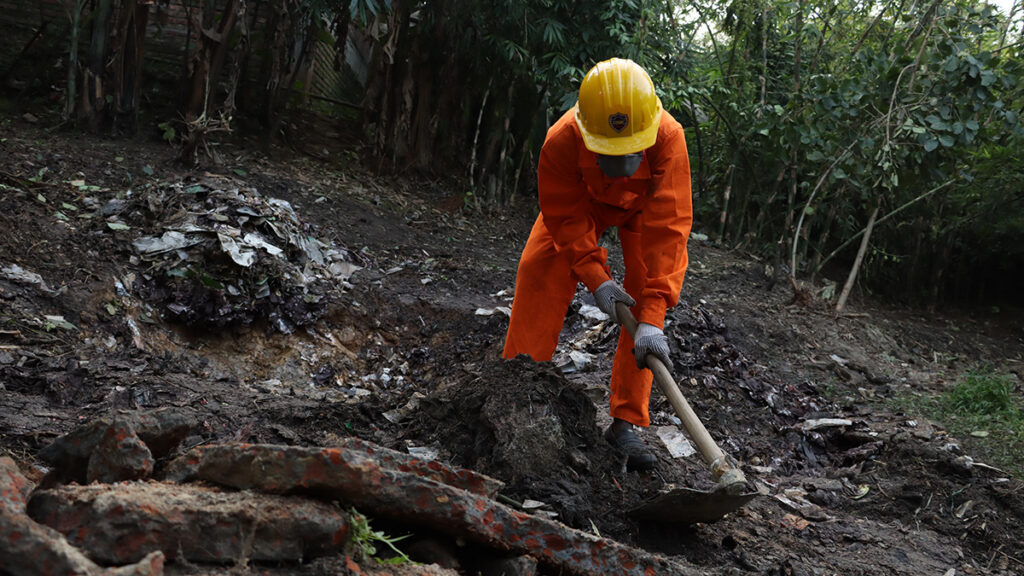
A person in an orange jumpsuit and a yellow hard hat takes a tool similar to a hoe to the dark soil they are standing on.

Lead-acid batteries are omnipresent. An integral part of most electric vehicles and all conventional vehicles globally, they also serve as backup energy storage systems in developing countries. But if lead-acid batteries are recycled in smelting units without adequate pollution control measures, they can cause elevated lead pollution that persists in local soils for thousands of years. However, because recycling sites with pollution control measures cost millions of dollars, most efforts are informal and unregulated.

In a recent study, researchers reported that scraping lead-contaminated soil in the vicinity of an abandoned recycling site for used lead-acid batteries and treating it with phosphate was linked to a 22% reduction in the blood lead levels (BLLs) of children who were living close to that site in a Bangladeshi town. The research was published in the International Journal of Hygiene and Environmental Health.

“Informal battery recycling is rampant in Bangladesh.”

“Informal battery recycling is rampant in Bangladesh,” said study coauthor Mahbubur Rahman, an environmental health scientist at the International Centre for Diarrhoeal Disease Research, Bangladesh. “Used lead-acid batteries are broken up and smelted in close proximity to residential and agricultural areas, which exposes those communities to lead emissions that contaminate their soil and water sources.”

Rahman and colleagues analyzed the BLLs of 130 children living close to two recycling sites for used lead-acid batteries (ULAB) in the Tangail District of Bangladesh that were abandoned in early 2019. They also assessed the BLLs of 37 children who did not live anywhere near ULAB recycling sites. The researchers then carried out soil remediation efforts at one of the ULAB sites but not the other. Prior to the work, the team members held informational sessions for the community about the dangers of lead pollution so locals could provide informed consent to participate.

The team observed that following remediation efforts, the lead content of the soil in and around the former battery recycling site decreased from more than 20,000 parts per million to less than 400 parts per million, which was considered acceptable by the U.S. EPA when the study was conducted, from 2022 to 2023. (The EPA reduced the limit to 200 parts per million in 2024.)

The researchers collected and cleaned up soil from children’s play areas, roadsides, and courtyards of 68 households that belonged to the intervention group. A year after the lead-contaminated soil was cleaned up, the 89 children from those households had the most significant decreases in their BLLs: from 90.1 to 70.4 micrograms per liter, a decrease of more than 21%.

“We know for sure that the areas close to abandoned ULAB recycling sites are as contaminated as areas around abandoned lead mines.”

The children in the group who lived close to the second abandoned ULAB recycling site, where soil remediation was not conducted, experienced only about an 8.4% decrease in their BLLs, from 88.5 to 81.1 micrograms per liter. The reduction in the control group’s BLLs could be attributed to a government initiative focused on reducing lead levels in turmeric, which was happening over the same time period as the study, Rahman said.

Anne Riederer, an environmental health scientist at the University of Washington who was not involved in the new study, said the dangers of lead exposure from ULAB recycling sites are well documented.

“We know for sure that the areas close to abandoned ULAB recycling sites are as contaminated as areas around abandoned lead mines. This study fits with the bigger picture of what we have learned to date about cleaning up contaminated sites and how that could improve children’s health,” she said.

A Widespread Issue

Similar studies conducted in Brazil and Bangladesh reported 46% and 35% reductions, respectively, in children’s BLLs following soil remediation initiatives around ULAB recycling sites.

Despite those drastic improvements, the children’s BLLs were still far above the World Health Organization’s threshold of 50 micrograms per liter. “This could mean there are other sources of lead exposure, like paints and cookware items,” said Rahman. “Or the persistently high BLLs could be because of chronic and long-term lead exposure, due to which lead gets deposited deep into the bones for several decades, even if [people] move away from toxic sites.”

Rahman explained that while soil remediation is an effective mitigation measure for lowering childhood lead exposure, it is also labor-intensive and expensive. Though the team identified hundreds of toxic sites borne from informal ULAB recycling, it wasn’t possible for them to remediate the soil at every site.

“The reason why this issue is so widespread is [that] informal recycling is cheap,” he said. “That makes the formal sector reluctant to invest in costly pollution control measures.”

—Anuradha Varanasi, Science Writer

Citation: Varanasi, A. (2026), Cleanup of battery recycling sites may lower childhood lead exposure, Eos, 107, https://doi.org/10.1029/2026EO260120. Published on 15 April 2026.
Text © 2026. The authors. CC BY-NC-ND 3.0
Except where otherwise noted, images are subject to copyright. Any reuse without express permission from the copyright owner is prohibited.
  • ✇Vox
  • The next AI safety fight may actually be about DNA Shayna Korol
    AI company CEOs Sam Altman (OpenAI), Demis Hassabis (Google DeepMind), and Dario Amodei (Anthropic) disagree on a lot, like how fast the technology should develop, the best way to regulate it, and how to prepare society for smarter-than-human AI, among other things.  That makes it all the more remarkable that they — along with 85 other experts in tech, biology, and national security policy — recently signed on to an open letter calling for more robust regulations around gene synthesis.
     

The next AI safety fight may actually be about DNA

12 June 2026 at 11:00
A robotic arm grasps a glass test beaker containing a blue liquid, in an advanced lab.

AI company CEOs Sam Altman (OpenAI), Demis Hassabis (Google DeepMind), and Dario Amodei (Anthropic) disagree on a lot, like how fast the technology should develop, the best way to regulate it, and how to prepare society for smarter-than-human AI, among other things. 

That makes it all the more remarkable that they — along with 85 other experts in tech, biology, and national security policy — recently signed on to an open letter calling for more robust regulations around gene synthesis. They’re all concerned that AI systems might be used to help develop and even deploy dangerous biological weapons designed through gene synthesis, which is used to chemically build custom DNA sequences in a lab, rather than relying solely on existing natural DNA templates.

The simple fact of multiple CEOs of fiercely competitive AI companies aligning on anything is remarkable. But to understand how they came to this agreement, we have to take a step back to understand what gene synthesis is, how it works, and why the possibility of AI-assisted misuse of the technology generates so much fear.  

Modern microbiology owes a lot to gene synthesis. Researchers can order synthetic genes from commercial DNA providers to develop new vaccines, drugs, and gene therapies for inherited diseases like hemophilia; produce human insulin, boost agricultural output, and more. Gene synthesis is a foundational technology for successful CAR-T cell therapies for cancer and many diagnostic tools. The demand for synthetic DNA is growing globally, and it’s never been cheaper or simpler to write genetic code.  

But for all its power, gene synthesis also carries substantial risk. The same technology that can enable life-saving new gene therapies can also assist in the creation of deadly pathogens by assembling some of the same nucleotides — the genetic building blocks that create the code for all of life — in a different order. 

Most US companies that provide gene synthesis services screen orders for genetic sequences of concern, such as those that can make a pathogen more dangerous or transmissible, and to verify that customers are legitimate. They do so voluntarily, well aware of the potential dangers. 

But not every provider does so. “As long as screening remains voluntary, some companies will not do it,” Becky Mackelprang, the director for security programs at the Engineering Biology Research Consortium, told me over email. There’s a real risk that bad actors could find a gene synthesis company with more lax standards, and that might mean disaster.

We’ve been fortunate so far. “This technology has been commercially deployed for more than 20 years and has never been misused to cause harm,” James Diggans, the vice president of policy and biosecurity at gene synthesis company Twist Bioscience, told me over email.

But AI threatens to complicate matters, opening up new frontiers of risk.

For good or for ill

Both large language models (LLMs) and AI biodesign tools enable scientists to design entirely novel genetic sequences. This is a boon for industrial and medical applications — and a challenge for current screening systems, which use similarity to known pathogenic or toxic sequences in order to detect risk. A screening system should catch someone trying to order sequences of a known dangerous virus like Ebola, for example, but it might miss a new sequence that could still be risky. Last year, a study published in Science demonstrated that our screening systems have kept pace with AI capabilities so far. “But the industry clearly understands this will not be the case forever,” Diggans said.   

Mackelprang is worried that AI could reduce the knowledge barriers that have historically prevented bad actors from developing bioweapons. Frontier AI systems, for example, seem to already outperform expert virologists on questions about performing complex laboratory procedures. 

But there is knowing and there is doing, and biological lab work is still hard. “Researchers spend years trying to make a protocol work even after consulting directly with others who have perfected that exact same protocol. I think AI can help someone ‘level up’ their laboratory skills, but I do not think AI can enable someone without any biological training to create a serious hazard,” Mackelprang told me.

That means that gene synthesis companies are still a primary chokepoint for anyone trying to produce a novel genetic sequence. Mackelprang’s main concern is that aspiring bioterrorists might use AI to generate harmful genetic sequences that can evade current or future screening systems. “In the near term, I think the likelihood of these types of misuse are quite low. But when the potential consequences are severe and technologies continue to develop rapidly, we have a responsibility…to develop reasonable prevention and mitigation options,” she said.

Maximizing the benefits of gene synthesis while minimizing the risks is difficult, but not impossible. That’s why Diggans and Mackelprang — along with Altman, Hassabis, and Amodei, as well as other gene synthesis providers, tech entrepreneurs, life science executives, and national security experts — signed the open letter calling for mandatory gene synthesis screening and recordkeeping of orders. 

Co-organized by the think tanks Institute for Progress and the Foundation for American Innovation, the open letter also calls for providers to record synthesis orders and sequence data to support biosecurity investigations “so that any threat that might evade initial screening can be traced back to its source…Awareness of traceability itself deters misuse.” This would, ideally, address Mackelprang’s concern that AI might eventually help bad actors evade existing screening protocols.

“Screening every DNA synthesis order before it’s manufactured is the kind of unglamorous, common-sense step that prevents a much bigger problem later,” DJ Kleinbaum, the co-founder of the biotech startup Emerald Cloud Lab, an automated lab scientists can access remotely, and one of the signatories, said. 

But Altman, Hassabis, and Amodei’s shared signatures may be the most meaningful evidence that the letter matters. For all their disagreements, they are well aware that their tools can be used for tremendous — even catastrophic — harm. 

AIxBio risk: A thing on which we can all agree

While it’s far from the first time frontier AI companies have spoken to AI-enabled biological risk, the open letter is the first place they’ve come together to do so in a single voice. “Support for screening does not depend on any particular view of AI,” the letter reads. “This is a rare moment of agreement across stakeholders that are often at odds.”

The letter calls for Congress to act now. “We applaud the legislative efforts currently underway,” the letter says, alluding to the bipartisan Biosecurity Modernization and Innovation Act, a bill that gives the Department of Commerce a year to develop new gene synthesis screening rules. The letter also suggests that US states should implement screening requirements based on federal and industry guidelines to create a unified national standard rather than an inconsistent set of laws.

The letter isn’t about applying biosecurity regulations to the AI companies themselves, which likely would have limited the number of tech signatories. (Though major companies do actively try to prevent their models from giving away dangerous biological knowledge, albeit not always successfully.) Focusing on screening is tractable, has the buy-in of several gene synthesis providers, and provides a concrete example of how AI can lower the barrier to doing both great and terrible things. And of course, it’s ultimately something a human being has to do at this point. 

The AI companies are actively thinking about the catastrophic risks that their technologies might enable. Anthropic is hiring a technical chemical, biological, radiological, and nuclear threat investigator for its threat intelligence team. In May, after launching GPT-Rosalind, a frontier model to accelerate life sciences research and drug discovery, OpenAI introduced Rosalind Biodefense, a program that allows trusted developers to use GPT-Rosalind to build biodefense tools. On June 4, the day after the open letter went live, security specialists at OpenAI and Anthropic served as panelists at the Bipartisan Commission for Biodefense’s meeting on AI and biological threats.

But according to Twist Biosciences’s Diggans, the best way to defend against misuse of AI models to design harmful pathogens is to use AI models as defense. These defensive models can be used to detect attempted misuse before anything happens. DNA synthesis companies can employ these models to ensure orders for highly-engineered sequences are given the same scrutiny and evaluation as orders for naturally occurring sequences.

“[Gene synthesis] companies have to agree to have their order screened not just against a list of sequences but by an AI that people agree is smart enough to recognize and thwart an adversary who’s trying to build a deadly pathogen,” David Haussler, the scientific director of the UC Santa Cruz Genomics Institute and a signatory of the open letter, told me.

Using AI to protect against AI

The good news is that this work is already underway. Last year, I reported that OpenAI provided $30 million in seed funding to biodefense startup Valthos, which develops frontier AI systems to detect biological threats and create medical countermeasures. Valthos’s co-founder Kathleen McMahon signed the open letter.

In September 2025, the Coalition for Epidemic Preparedness Innovations (CEPI) and philanthropic nonprofit Sentinel Bio created the Pandemic Preparedness Engine AI platform (sometimes referred to simply as “the Engine”). They’re taking a biosecurity-by-design approach, considering biosecurity risks from the outset. “This includes a multi-layered approach to biosecurity: from protecting biosecurity-sensitive data needed to train the AI to carefully managing who has access to the Engine and monitoring how they use it,” Sarah Carter, a biosecurity consultant at CEPI, told me over email. 

Users of the Pandemic Preparedness Engine would use AI prompts to interact with the system, similar to how people use consumer platforms. User prompts could be monitored in real time by a specialized AI agent built to assess the risk of misuse potential or attempts to “jailbreak” an LLM to get it to generate prohibited content, such as the “recipe” for assembling a deadly virus. 

Still, even commercially available technologies may present problems of their own. This week, Anthropic launched Claude Fable 5, a version of its highly powerful and restricted Mythos model that the company has aimed to make safe for public use. Claude automatically stops use of Fable if it detects requests involving cybersecurity, biology, chemistry, or distillation (attempting to extract Claude’s capabilities to train competing AI models), shunting those requests to a less powerful model. Users have complained that trying to discuss biology for legitimate purposes with Fable 5 results in the model refusing to engage or defaulting to less capable models instead. The Fable example shows that it’s possible to overcorrect, limiting the potential upside of using AI for the life sciences.

“The major providers of LLMs are doing their best to prevent the models from answering questions that would enable somebody to do something dangerous,” Haussler told me. “[But] the end product of jailbreaking an LLM that’s capable of teaching you how to build a deadly virus is that you now have an LLM that’s capable of teaching anybody how to build a very dangerous virus. And we don’t want that to happen.”

It’s here that the letter’s signatories hope they can stop a still-simmering problem before it comes to a full boil. “Mandatory synthesis screening is that rare case where a threat is clearly visible and substantial prevention clearly achievable before any crisis has occurred,” said Richard Danzig, a natural security expert who served as the 71st Secretary of the Navy under former President Bill Clinton. “Opportunities to act in advance are unusual in this field. I think we should take this one.”

  • ✇Vox
  • When did getting prescriptions start feeling like online shopping? Dylan Scott
    A generation or two ago, when Americans had an important but nonemergency medical need, many of them would have called on their family doctor, somebody who had treated them for years. It was a little like going to a family restaurant: The purveyors knew you, knew your tastes and personal quirks, and they were part of the fabric of your community. These days, patients aren’t visiting the family doctor nearly as frequently. They’re instead heading to what you might think of as drive-thru
     

When did getting prescriptions start feeling like online shopping?

4 June 2026 at 10:00
an illustration of a doctor in split-view. On the left, she’s holding a clipboard, and on the right side, she’s holding a pill bottle and the scene is pixelated

A generation or two ago, when Americans had an important but nonemergency medical need, many of them would have called on their family doctor, somebody who had treated them for years. It was a little like going to a family restaurant: The purveyors knew you, knew your tastes and personal quirks, and they were part of the fabric of your community.

These days, patients aren’t visiting the family doctor nearly as frequently. They’re instead heading to what you might think of as drive-thru clinics — some physical, some entirely online — where they order off a menu, undergo a cursory and formulaic interaction with a healthcare provider they’ll never see again, and head off with the product they came to get. It’s like ordering a Big Mac at McDonald’s: When you pull up, you already know exactly what you want.

The very nature of medical care in the United States is changing. It is a transformation driven by the flaws of the preexisting healthcare system, technological progress, evolving patient preferences, and the do-it-yourself consumerism that is the lifeblood of modern medicine as much as any conventional clinical practice. 

In some cases, this drive-thru healthcare approach is filling genuine holes in healthcare access for Americans who are in need, such as people in the United States who live in the states with restricted access to reproductive and abortion services, and who have had no choice but to seek help online from other providers out of state. Beyond that, we’re dealing with a doctor shortage. Wait times to see a physician for all types of care are getting longer and longer — and these new practices promise to put you in touch with one with a simple click of a button. They can also offer competitive prices compared to conventional medicine, even without taking insurance, because they have maximized their efficiency. They’ve eliminated a lot of overhead in terms of physical space or administrative workload. One provider can screen an enormous number of patients and rake in a lot of revenue, which allows the company to reduce their prices.

“The word of the day in health policy is affordability,” said Dr. Ateev Mehrotra, who chairs the Department of Health Services, Policy, and Practice at the Brown University School of Public Health and has studied these practices. “You can see how these can create a more affordable and accessible way” to get healthcare.

But replacing the traditional doctor-patient relationship with something brief and transactional presents real risks to patients and their long-term well-being. Some of the most common reasons for seeking these services — erectile dysfunction medications or hair loss treatments — could be signs of an underlying health condition that would benefit from a more serious conversation with a personal physician.

The trick is in knowing the difference — and that isn’t always easy to do. The US healthcare system in its current incarnation places an enormous burden on individuals to figure out the best way to get the care they need. 

“A lot of quote-unquote empowered consumers are engaging in a lot of do-it-yourself medicine without necessarily understanding the limits of it,” Dr. Sachin Jain, who held several leadership roles in the Department of Health and Human Services during the Obama administration and is currently the CEO of the nonprofit Medicare Advantage insurance carrier SCAN Health Plan, told Vox. “I think even though there are more options for patients today than there were 30 years ago, the degree of fragmentation, in my view, is decreasing quality and truly eroding the patient experience.”

Drive-thru clinics don’t appear to be going anywhere — and that’s exactly why consumers need to be smart about how they use them.

Why drive-thru healthcare is thriving

Drive-thru medical care has emerged as primary care access has shrunk in recent decades. Long-term relationships with a family physician or general practitioner, which were once the foundation of medical treatment, are less common: The number of Americans who say their source of medical care is their personal physician has been steadily declining. As of 2018, nearly half of adults under 30 said they did not have a primary care doctor. By one estimate, 100 million Americans face some kind of barrier (physical or financial) to accessing primary care. More than 30 percent of Americans don’t have a regular source of healthcare, a share that has been steadily growing since 2000.

In hundreds of communities, a doctor shortage is already here. Most of rural America, 80 percent of it, is considered by the federal government to be medically underserved. About 20 percent of the US population lives in rural communities, but only 10 percent of doctors practice there.

Sign up for the Good Medicine newsletter

Our political wellness landscape has shifted: new leaders, shady science, contradictory advice, broken trust, and overwhelming systems. How is anyone supposed to make sense of it all? Vox’s senior correspondent Dylan Scott has been on the health beat for a long time, and every week, he’ll wade into sticky debates, answer fair questions, and contextualize what’s happening in American healthcare policy. Sign up here.

“This notion that there’s going to be this available person who’s covered through your insurance, like who schedules visits with you and really gets to know you and is able to provide you with a comprehensive assessment, is just unavailable to most people,” Jain said.

Faced with these barriers, Americans have gravitated toward the convenience offered by urgent care facilities and “minute clinics” in pharmacies or large retail stores. The number of urgent care visits among privately insured Americans doubled from 2008 to 2015. In 2024, more than 80 percent of Americans said they had visited an urgent care or other kind of walk-in clinic; about 7 percent said in 2022 that it was their regular source of care.

The success of those businesses revealed Americans were comfortable with one-time-only healthcare. The idea of visiting a provider for one specific purpose predetermined by the patient started to take hold. As medical marijuana proliferated in the 2000s and 2010s, clinics popped up that offered the kind of routinized service that is now commonplace: Simply answer a few questions, and you’ll get the prescription you desire.

Today, that kind of service is available for an array of medical products and services, including erectile dysfunction pills, testosterone, GLP-1s, birth control, performance anxiety drugs, and Botox. They are finding an audience as Americans desire agency over their own healthcare — driven by the lack of access to conventional healthcare, distrust in the medical establishment, and wellness trends that prioritize self-optimization.

According to one consumer survey, 80 percent of Americans said that they own at least one personal medical device, which could include a blood pressure monitor or smartwatch. Nearly half prefer at-home or virtual care to visiting a doctor’s office. They increasingly consult Google or ChatGPT to investigate their own health before seeing a provider.

“We glorified do-it-yourself medicine through the lens of this idea of consumerism,” Jain said. “What consumerism has really done is it’s created a high degree of fragmentation in a customer base, where they may not fully understand or know what they need.”

Amid those trends, the old-fashioned image of a family doctor you’d call for any range of medical needs looks increasingly out-of-date and out of reach.

“It’s turning medical care into a commodity,” said John McDonough, a public health professor at the Harvard T.H. Chan School of Public Health and author of the new book America’s Wrong Turn: US Health Care in the Neoliberal Era. “You can buy the package of services. You can buy the individual services, and you can go to the store and pull it off the shelf.”

Medical care looks more like Hims and Hers, perhaps the most high-profile examples of this kind of limited-category telehealth. Visit their websites and it looks a lot like ordering at a fast-casual chain restaurant: Have better sex, grow fuller hair, lose more weight, treat menopause, and would you like a side of testosterone with that? In 2025, the company generated $2.4 billion in revenue, an increase of 59 percent from 2024; it now claims more than 2.5 million subscribers.

Many consumers are getting the convenience they desire, but others may feel that the patient experience suffers. Patients on social media who’ve used Hims and Hers, for example, will sometimes complain about how impersonal the interactions feel or worry the service is increasing their dose too quickly.

In a statement to Vox, Dr. Pat Carroll, chief medical officer of Hims & Hers, said:

Millions of Americans face real barriers to healthcare: long wait times, stigma, cost, and provider shortages. Digital health can help close these gaps in care but only when done responsibly.

At Hims & Hers, every treatment decision is made by a licensed, independent provider who reviews a comprehensive medical intake to determine clinical eligibility before anything is prescribed. No shortcuts. As patient expectations rise, that standard should be non-negotiable across the industry.

Why you should be cautious about using drive-thru medical services

The premise of these services is that the patient knows what they want. But even a well-informed patient is not a physician — and, at the same time, these business models are based on doctors selling a specific product, not necessarily on whether they are providing the most clinically appropriate care during this one-time interaction.

“What happened is a number of entrepreneurs started picking off specific pain points, like things that are true pain points for patients, where there’s no clean place to go, and created access,” Jain said. For example, you may not be able to find a dermatologist covered by your insurance but visit a Hims and Hers-type service, and “there’s going to be someone there who’s willing to use their medical license to actually give you the thing you need.”

Patients should be cautious about using these “drive-thru” services, given those misaligned incentives, experts told me. Two of the most popular uses — for men who are seeking treatment for impotence or hair loss — are instructive.

On its face, erectile dysfunction checks all the boxes for this kind of service: It’s a narrow medical question and there is an obvious drug for physicians to prescribe. People who might be embarrassed to bring the problem up can get the treatment they want after answering a few questions from a provider that they will never have to see again, without anybody else needing to know.

“The business model is the provider has a drug they’re trying to sell.”

Vivian Ho, Rice University healthcare economist

But erectile dysfunction can be a more complex medical question than “can you get an erection when you want to have sex?” It absolutely could be something as innocuous as older age, and therefore an ED drug is the right treatment. But it could be a sign of serious underlying health problems such as hypertension, diabetes, depression and anxiety, sleep apnea, and more. 

“Good clinical practice suggests that you have to rule out underlying causes while you’re simultaneously treating it,” Jain said. “I think that’s the kind of stuff that gets lost in clinically sloppy protocols. Oftentimes, these ‘lifestyle conditions’ are the window into broader systemic issues that go untreated or undertreated.”

Likewise, losing your hair can simply be a byproduct of aging and thus responsive to a hair-loss treatment. But it can be an outward symptom of a more serious issue like hypothyroidism or, again, stress and anxiety. Performance anxiety, which some of these services will prescribe a beta blocker for ahead of, say, a public speaking engagement, could be a signal you have deeper issues with anxiety or depression.

Or take GLP-1 drugs, which have become a popular offering for telehealth services. As Vox has reported, these powerful drugs can be effective in helping people lose weight — but they can also have serious side effects, including dramatic loss of muscle mass. They require careful management in terms of eating the right diet and getting on the right kind of exercise regimen. Developing a holistic weight-loss plan would be best done in ongoing consultation with a doctor who knows you and your medical history.

But this is where the economics of drive-thru healthcare fail patients. The doctors who practice in them don’t necessarily make money by offering you the best personalized advice or looking at your health from a whole-person perspective. They make money by prescribing you the medication you came to get; some of these services even ship the drug to you directly themselves.

“The business model is the provider has a drug they’re trying to sell,” Vivian Ho, a healthcare economist at Rice University, told me. Some pharmaceutical ads now even allow you to click through to connect with a provider who will prescribe you the advertised drug.

Secret-shopper research has revealed the limitations of these types of services. When Mehrotra’s team tried out contraception telehealth clinics using different patient profiles, they found these services were generally very good at screening for the specific product that they offer. But the companies did not take a broader look at the person’s sexual and reproductive health.

“They never address the fundamental questions. No one ever asked about STDs. No one ever asked, ‘Did you get your Pap smear?’” Mehrotra said. “There’s some holes here in this.”

Why you may sometimes need a drive-thru clinic anyway

Of course, it’s easy to say that everyone should seek out a primary care physician for some of these services — but, given the access issues faced by many people, it’s not that simple. For a person who needs birth control but can’t get an OB-GYN appointment (wait times were up 33 percent in 2025 compared to 2022), using that uncurious drive-thru clinic might be better than the alternative if the alternative is nothing.

“If a woman wants a freaking birth control, she should have every right to get birth control. … There’s all sorts of research out there about birth control deserts in the world,” Mehrotra said. “So if that’s what she wants, go for it. … You could see how the rationale for these in the context of birth control could be quite viable.”

Jain told me that, in his ideal world, insured patients would at least have a specific general practitioner who would hopefully become their first stop for some of these medical needs. The emergence of direct primary care — where patients pay a flat fee for on-demand access to the same doctor or a group of doctors — could also provide a counterweight to drive-thru clinics. The premise of these practices is that you pay for a subscription to have a doctor on call whenever you need them, and that doctor will already know you and your medical history. But those services tend to target people well-off enough to pay those fees on top of health insurance premiums (or who can afford to just pay for everything out of pocket).

And there may be times when a one-time-only provider is a good option. Going to urgent care or a minute clinic can be convenient for minor medical needs like a strep test or a flu shot. Prior case studies have found that these facilities tend to operate under rigorous clinical protocols that guide the care they offer to their patients. The value proposition is clear: It’s readily available, it’s clinically sound — and it’s cheaper than going to the emergency room.

“When there’s a degree of clinical discipline that is really rigorous and where there’s a high degree of protocolization that ensures people are getting really high-quality care, I have no problem with it,” Jain said. “But a lot of times the work is highly superficial.”

Then there is at least one truly special case, where drive-thru clinics are providing a service to patients when they have no other options available: mifepristone and other abortion drugs in a post-Dobbs America. Requests for telehealth abortion care have doubled since the decision, according to the Center for Reproductive Rights. They have offered a vital lifeline to patients with an urgent healthcare need when the alternative is having to travel out of state: A recent report from the Guttmacher Institute found that the number of American women who lived in a state with a total abortion ban and traveled out of state for an abortion dropped in 2025 while, at the same time, telehealth visits for women in those states were on the rise.

The Supreme Court is still weighing whether to permit doctors to continue virtually prescribing mifepristone. For this special type of drive-thru clinic, the stakes are high. 

“Women in the United States already face real health consequences, including preventable deaths, due to abortion care being denied or delayed,” wrote two women’s rights advocate at Human Rights Watch in May. “Ending telehealth provision would greatly worsen this crisis, especially for women and girls with limited financial resources, or with disabilities, and those living in states with abortion bans or in rural areas.”

But those abortion providers are, in the broader context of DIY healthcare, an exception that proves the rule. Without those services, patients would lose access to lifesaving medical care. 

For other healthcare needs, however, convenience does not always equal quality. Buyer — and patient — beware.

  • ✇Vox
  • Millions of Americans are losing their health insurance Dylan Scott
    The US uninsured rate is expected to rise significantly in the coming years. | Malte Mueller/Getty Images One of the clearest success stories in US healthcare over the past 20 years has been the dramatic decline in the number of Americans without health insurance. In 2010, the year the Affordable Care Act was enacted, 16 percent of the population lacked coverage. By 2025, according to estimates from the US government, that figure was cut nearly in half, to 8.3 percent. The increase in c
     

Millions of Americans are losing their health insurance

29 May 2026 at 11:00
an illustration of a woman holding a giant pack of pills, which is clearly weighing her down
The US uninsured rate is expected to rise significantly in the coming years. | Malte Mueller/Getty Images

One of the clearest success stories in US healthcare over the past 20 years has been the dramatic decline in the number of Americans without health insurance. In 2010, the year the Affordable Care Act was enacted, 16 percent of the population lacked coverage. By 2025, according to estimates from the US government, that figure was cut nearly in half, to 8.3 percent.

The increase in coverage hasn’t been a panacea; even people with an insurance card can struggle to afford their medical bills or to secure a doctor’s appointment. But with the US standing alone among its international peers in its failure to offer universal healthcare, it represented significant progress toward ensuring every American had a basic level of access to routine medical services.

Now, however, those gains are about to be reversed.

Last year, when drafting their One Big Beautiful Bill, Republicans had a chance to strike a blow against the ACA — a law they’d vilified for years — 15 years after its passage and eight years after failing to repeal the law in President Donald Trump’s first term. They established work requirements to target the people covered by the ACA’s Medicaid expansion and allowed subsidies that had helped millions of people to buy private coverage on the ACA marketplaces to lapse.

As a result, millions of Americans are dropping their health insurance this year, and millions more are expected to lose their coverage in the years to come.

The uninsured rate has spiked before, but it’s usually the byproduct of an economic crisis; people lose their jobs, and they lose their coverage. What makes the current turmoil different is that it is entirely a matter of policy choices. 

Now, millions of Americans will pay the price.

“I don’t think there’s any historical precedent for the rollback in federal support for health coverage coming with the cuts in Medicaid plus the expiration of enhanced ACA premium subsidies,” Larry Levitt, executive vice president for health policy at the healthcare think tank KFF, told me. “The expected effects of OBBBA on coverage are self-inflicted and dwarf even the historical losses due to changes in the economy.”

ACA marketplace enrollment is projected to shrink dramatically in 2026

One of the major ways that the ACA expanded health insurance coverage was by setting up insurance marketplaces where individuals and families could purchase private health plans with the help of government subsidies.

Sign up for the Good Medicine newsletter

Our political wellness landscape has shifted: new leaders, shady science, contradictory advice, broken trust, and overwhelming systems. How is anyone supposed to make sense of it all? Vox’s senior correspondent Dylan Scott has been on the health beat for a long time, and every week, he’ll wade into sticky debates, answer fair questions, and contextualize what’s happening in American healthcare policy. Sign up here.

Enrollment in those marketplaces has ballooned — particularly since 2021, when Democrats in Congress approved an expansion of the ACA’s financial aid that made more people eligible for assistance. Prior to 2021, there had been a strict cutoff at 400 percent of the federal poverty level (about $64,000 for an individual in 2026, or $132,000 for a family of four). Anybody who made a higher income was ineligible for aid. After 2021, anybody could qualify for ACA subsidies, and their insurance premiums were capped at a percentage of their income. (The subsidies were initially authorized for two years and, then, were extended to 2026 through the Inflation Reduction Act.)

It seemed to have plugged one of the obvious holes in the healthcare law: While many people below 400 percent of the poverty level had enjoyed both mandated comprehensive coverage and new government subsidies that offset any increases in costs, people above that threshold had been subjected to significant premium hikes since the ACA passed. Now, they were able to access the same subsidies, and sign-ups boomed. Marketplace enrollment grew from 9.8 million Americans in 2019 to 22.3 million in 2025. 

But, to keep down the cost of their legislation and get it passed with a narrow Senate majority, Democrats allowed the new subsidies to expire in 2026. Then, Trump won the 2024 presidential election, and Republicans took control of Congress. The GOP decided not to extend the subsidies, despite some bipartisan efforts to pull together a plan. When people went to sign up for their health insurance for 2026, many of them no longer had access to financial aid. I spoke last year with some of those people. One family was preparing to allow one parent and child to become uninsured so they could afford a health plan for the other parent who has an autoimmune disease. A young man with asthma also expected to go without coverage after his previous plan ($100 per month and no deductible) was no longer available, and the cheapest replacement he could find was $282 per month with a $10,000 deductible. He told me he was banking on being able to pay for his medication out of pocket or getting it through a charity service.

So, we knew some people would drop their insurance as a result of the expired subsidies, but it was hard to be sure how many. Now, we’re starting to get hard data, and it does not look good. Based on KFF’s preliminary analysis of enrollment data and premium payments, about 4.7 million fewer people will actually end up being enrolled in an ACA marketplace plan in 2026 compared to 2025 — a 21 percent drop in a single year.

Work requirements are going to knock millions of people off Medicaid

The ACA’s other major coverage provision was the expansion of Medicaid eligibility to any American with an income at or below 133 percent of the poverty level (about $21,000 for an individual in 2026, or $44,000 for a family of four). It replaced the preexisting patchwork system for eligibility that created significant differences across states — in particular, millions of childless adults, some of whom were living in deep poverty but had been left out of the program in many states before the ACA, now qualified for Medicaid. 

As of June 2025, more than 16 million Americans who became newly eligible for Medicaid through the ACA had been enrolled in the program, making up nearly a quarter of all Medicaid enrollees.

Republicans in Congress had been sharply critical of Medicaid expansion, even as many GOP-led states adopted it, and 2025’s OBBBA gave them a chance to roll it back. They approved, for the first time, national work requirements for Medicaid, targeted to expansion-eligible enrollees, and made several other technical changes to constrain states’ Medicaid financing. People on the program will be required to work or perform other approved activities for at least 80 hours per month or show they should be exempted from the requirement. Otherwise, they could lose their benefits.

And based on what we know from historical precedent, many of the coverage losses won’t be because people are actually ineligible for Medicaid, but because of the administrative burden of complying with these new requirements, even if you are working, or if you are someone — like a pregnant person — who is supposed to be exempted. Arkansas is the only state to implement Medicaid work requirements prior to the OBBBA, and only a fraction of the people required to submit work activities to the state actually did so; many of the people who lost coverage lost it because they failed to turn in paperwork. 

The Medicaid population is, by nature, hard to reach. This group is lower-income and might work irregular hours, move around more, or have less access to the internet. It’s easy for people to fall through the cracks.

The OBBBA’s requirements go into effect nationally in January 2027 (after this year’s midterm elections), but some states are instituting them early. Nebraska implemented work requirements on May 1, Montana and Arkansas are starting theirs on July 1, and Iowa will adopt the requirements on December 1. Then, starting on January 1, 2027, they will apply in every state.

The coverage losses are difficult to project, and they could take time to accrue, but they are expected to be sizable. The nonprofit research group RAND estimated Medicaid enrollment will drop by 7.6 million people by 2034. 

And they, much like those people dropping ACA coverage, will lose more than just their insurance card. Health insurance, even with its shortcomings, does a lot to help people. Americans with health insurance accrue less medical debt. They are more likely to go to routine medical appointments and receive routine screenings. Prior research on Medicaid expansion’s effects has estimated that it saved tens of thousands of lives.

In other words, the coming increase in the uninsured rate will do more than change some percentage points on a spreadsheet; it will make it harder for millions of Americans to stay healthy and stay alive.

  • ✇Vox
  • The US just got its first new sunscreen in almost 30 years Dylan Scott
    A new sunscreen ingredient, bemotrizinol or BEMT, has won approval in the US. | Jon Tlumacki/Boston Globe via Getty Images For the first time in the 21st century, the United States has approved a new sunscreen ingredient. Well, new to us. It’s called bemotrizinol, also known as BEMT, and it’s been available in Europe and Asia for years. But the peculiar way that sunscreen is regulated in the United States — as an over-the-counter drug rather than a cosmetic — had long prevented it from
     

The US just got its first new sunscreen in almost 30 years

9 June 2026 at 18:50
A sports fan sitting in stands among a crowd applies a white sunscreen to his face.
A new sunscreen ingredient, bemotrizinol or BEMT, has won approval in the US. | Jon Tlumacki/Boston Globe via Getty Images

For the first time in the 21st century, the United States has approved a new sunscreen ingredient. Well, new to us.

It’s called bemotrizinol, also known as BEMT, and it’s been available in Europe and Asia for years. But the peculiar way that sunscreen is regulated in the United States — as an over-the-counter drug rather than a cosmetic — had long prevented it from coming to American store shelves. 

In 2020, however, Congress ordered the Food and Drug Administration (FDA) to overhaul its sunscreen approval process, and in 2024, DSM Nutritionals, which manufactures a bemotrizinol-based sunscreen, asked the FDA for approval. After a review of relevant safety and efficacy data, bemotrizinol has become the first new sunscreen ingredient to be approved for sale in the US since the late 1990s. The Environmental Working Group, which has lobbied for bemotrizinol’s approval since 2019, called its approval “a monumental victory for health and wellness.” 

Dr. Adewole Adamson, who is a dermatologist and assistant professor of internal medicine at the University of Texas at Austin, agreed that this is a win for consumers. “We haven’t been able to really have any innovation in US-based sunscreens since last millennium,” he told me. 

Sunscreen use has ticked downward in the US, at the same time that concerns about sunscreen seeping into your body and causing adverse health effects have risen. BEMT’s boosters hope it can change that trend by promising broad protection, a more aesthetically appealing application, and less risk of it permeating your skin.

Sunscreen is already complicated, as Vox’s Allie Volpe covered in her 7 burning questions about sunscreen explainer. Now there’s a new ingredient to consider. Here’s what you should know.

Sunscreen and the sunscreen backlash, briefly explained

The sun emits a spectrum of ultraviolet rays, including two types — UVA and UVB — that can burn your skin if you are exposed for too long without protection. 

That is why experts advise consumers to make sure they are buying “broad spectrum” sunscreen, which means it provides protection against both kinds of UV rays. Those products usually combine several different agents (or “filters”) that protect against different parts of that spectrum. 

“Some filters only cover part of the spectrum, so you have to combine a bunch of them in order to get that broad-based coverage,” Adamson said. 

Sunscreens are either “mineral” or “chemical.” Both types are equally effective if used correctly, assuming they have the same sun protection factor, or SPF, but each come with their own trade-offs. Mineral sunscreens leave unsightly white residue, while chemical sunscreens have faced widespread safety concerns in recent years.

The major shift came in 2019, when the FDA announced an overhaul in its safety assessment of some of the most popular sunscreen ingredients, sparking a backlash against chemical sunscreen in particular. The agency said that the two ingredients primarily used in mineral sunscreens — zinc oxide and titanium dioxide — were generally regarded as safe for human use. Two ingredients (aminobenzoic acid and trolamine salicylate) were said to be unsafe, and more than a half-dozen other ingredients used in chemical sunscreens were left a question mark due to “insufficient data.” New research soon followed that suggested that the ingredients in chemical sunscreens could seep into your blood and body in concerning concentrations, raising the specter of uncertain long-term health effects.

In response to the new findings and the doubts they raised about such a widely used product, anti-sunscreen advocacy spread, bolstered by the broader wellness and MAHA movements. As the Washington Post described, some people online boasted of stopping their sunscreen use — despite its clear effectiveness in preventing skin cancer, which kills thousands of people in the US every year — and promoted DIY formulas featuring, for example, oil and butter. (They do not confer the same protection.) Some influencers have even argued for the health benefits of more sun exposure.

One consumer analysis found that the percentage of Americans who believed sunscreen is toxic grew from 17 percent in 2021 to 24 percent in 2025. And, at the same time, the share of people who reporting using sunscreen at all has slightly declined.

Bemotrizonal is broad spectrum and could be more cosmetically appealing

Into that messy context comes a new sunscreen ingredient. 

A big part of what makes bemotrizinol appealing is that it provides protection against both types of dangerous ultraviolet rays on its own. And not only does it provide that broad level of protection, Adamson said, but it could also be more “cosmetically elegant,” as he put it. It won’t leave those white streaks that mineral sunscreens do, which could encourage more people to actually put it on. 

The shift toward mineral sunscreen in the wake of the chemical sunscreen panic has brought one unfortunate side effect: that white film on the skin of beachgoers and baseball game fans across the country. If you have ever applied zinc-centric sunscreen, you probably know the look (and that heavy feeling of the cream on the skin).

Chemical sunscreens can be annoying for people with sensitive skin, but by and large, people seem to prefer those products because they look better when wearing them. BEMT could make it easier for manufacturers to produce sunscreens that provide that broad level of coverage while being aesthetically more pleasing.

BEMT also comes with fewer safety concerns

The other hope is that bemotrizinol products will ameliorate some of the safety concerns that have driven sunscreen skepticism since 2019, when the one-two punch of the FDA’s announcement that most ingredients had “insufficient” data to judge their safety, followed by a worrying study, damaged the reputation of chemical sunscreens for the better part of a decade.

Sign up for the Good Medicine newsletter

Our political wellness landscape has shifted: new leaders, shady science, contradictory advice, broken trust, and overwhelming systems. How is anyone supposed to make sense of it all? Vox’s senior correspondent Dylan Scott has been on the health beat for a long time, and every week, he’ll wade into sticky debates, answer fair questions, and contextualize what’s happening in American healthcare policy. Sign up here.

The study, published in JAMA in May 2019, showed several popular chemical sunscreen ingredients appeared to penetrate a user’s body in volumes sufficient enough that they should trigger new safety studies. The authors noted that some of the ingredients had previously been found in human breast milk and other bodily fluids. The findings raised real concerns, thus the FDA’s policy shift — but those concerns also took on a life of their own in the health and wellness social media ecosystem, stoking doubts about sunscreen overall.

“That freaked everyone out. And everyone was like, ‘I don’t want to do chemical sunscreens. They’re terrible. They’re getting [in] your blood. They’re endocrine disruptors.’ All of that kind of fearmongering,” Adamson said. “This ingredient doesn’t seem to do that.”

He pointed me to preliminary evidence from clinical trials that indicates BEMT does not generally lead to the same kind of concentration in human plasma. The drug has already been in use in other countries for decades and has accrued a strong safety record. But the FDA’s policy of regulating sunscreen as an over-the-counter drug, rather than as a cosmetic, sets a higher standard for approval, which meant that it took more than 25 years for BEMT to finally cross the Atlantic from Europe to the US.

BEMT will be coming soon to stores near you

DSM Nutritionals will have exclusive rights for 18 months to sell their proprietary BEMT formulation Parsol Shield in the United States; after that, other companies will be able to sell sunscreens with it in them too. Going forward, consumers can check for bemotrizinol or BEMT on the ingredients list.

Whether or not you opt for BEMT, here is the thing to keep in mind about protection when you’re buying this or any sunscreen: SPF, or sun protection factor. Experts say that the ideal is between SPF 30 and SPF 50, which blocks 98 percent of the sun’s rays. Just remember that SPF above 50 adds minimal additional protection, and doesn’t mean you can spend longer in the sun without reapplying.

Advocates hope BEMT can revive people’s faith in sunscreen which, despite the recent controversies, remains a lifesaving product. Skin cancer is still the most commonly diagnosed cancer in the United States, with more than 200,000 new cases expected this year. “American consumers deserve access to the best available sun protection,” Alexa Friedman, senior scientist at EWG, said in a statement. “Today they’re finally getting closer to it.”

  • ✇Vox
  • The secrets you shouldn’t keep from your doctor Dylan Scott
    Let’s be frank: When you go to see your personal doctor or stop at an urgent care for a quick visit, you probably don’t always tell the physician the whole truth and nothing but the truth. According to one major study, between 60 and 80 percent of US adults have reported they withheld at least one pertinent piece of medical information from a healthcare provider during a visit. And we do it for the most natural and human reasons. The most common explanations that patients gave for decl
     

The secrets you shouldn’t keep from your doctor

11 June 2026 at 20:00

Let’s be frank: When you go to see your personal doctor or stop at an urgent care for a quick visit, you probably don’t always tell the physician the whole truth and nothing but the truth. According to one major study, between 60 and 80 percent of US adults have reported they withheld at least one pertinent piece of medical information from a healthcare provider during a visit.

And we do it for the most natural and human reasons. The most common explanations that patients gave for declining to disclose relevant information were not wanting to be lectured, not wanting to be judged for their behavior, and being embarrassed. Women, young people, and the people with the worst health (according to their own self-report) were most likely to hold something back. 

If you have faced discrimination from society because of who you are, you may feel more distrustful of the medical system and its practitioners. Research has found that people who have faced prior discrimination are more likely to withhold information from a healthcare provider. And doctors sometimes earn that distrust, especially when it comes to women and people of color. Our era of do-it-yourself medicine only adds more barriers between patients and their doctors. One survey found that more than 40 percent of US adults who had used alternative or complementary medicine did not disclose that fact to their primary care doctor.

Doctors bear some of the blame for this disconnect. But, at a time when people say they want more agency over their healthcare, the rest of us have to hold up our side of the conversation, too. Here’s how to think about how honest you should be with your doctor.

The key question you should ask yourself about being honest with your doctor

There is no shame in feeling uncomfortable sharing information with your doctor. I spoke with Dr. Ronald Epstein, a professor of family medicine at the University of Rochester Medical Center who has written extensively on patient-doctor communication and authored the book Attending: Medicine, Mindfulness, and Humanity as a guide for doctors who want to practice a more humane kind of medicine. Epstein said he’s been tempted to not tell his doctor when he misses doses of his prescribed medication because he felt embarrassed, and even withheld information once when he didn’t want to spark a lot of burdensome follow-up work; he had fallen down while skiing after bumping into a rock. Because Epstein is 71, his provider routinely screens for any recent falls, and he knew that answering “yes” would lead to a range of tests and consultations with specialists. So he answered “no,” because he felt certain the fall had been a freak accident, not a symptom of an underlying health problem.

I appreciated Epstein making that confession, because it was a reminder that any of us, even somebody who has committed much of their career to open doctor-patient communication, can be tempted to hold something back from a doctor because it seems like it’ll be a hassle.

But even as he shared it, he offered a warning to other people not to follow his example.

“The danger in doing that, of course, is if someone actually fell while turning around on a landing while going downstairs, that could signal some kind of balance or neurologic disorder,” he told me.

To state the obvious, your clinician can’t provide you with the best care if they don’t know everything about your health. That’s especially important in high-stakes situations. One study found that one in four patients who were experiencing an imminent threat to their well-being — depression, suicidal ideation, abuse, or sexual assault — withheld that information from their doctor. Once again, they feared being embarrassed or being judged.

So, to start with, there are certain things your doctor really needs to know if they are going to properly evaluate your health and that you should never lie about or withhold:

  • Which prescription drugs you are currently on
  • Whether you’re actually taking them as prescribed
  • Any other substances you are consuming, including those that are legal but potentially harmful (like tobacco or alcohol) and ones that are illegal, and how much/how often you are using them

Even if it is awkward or you fear judgment, the risks in withholding that kind of information are high. Beyond that, Epstein suggested one question that every patient should ask themselves when interacting with a doctor.

Sign up for the Good Medicine newsletter

Our political wellness landscape has shifted: new leaders, shady science, contradictory advice, broken trust, and overwhelming systems. How is anyone supposed to make sense of it all? Vox’s senior correspondent Dylan Scott has been on the health beat for a long time, and every week, he’ll wade into sticky debates, answer fair questions, and contextualize what’s happening in American healthcare policy. Sign up here.

“I think the key question for patients to ask themselves and for families to ask themselves is: Would withholding this information threaten or enhance the health of the person involved?” he told me.

Doctors have a responsibility to make their patients feel comfortable enough to be honest. But from the patient’s perspective, this question cuts to the heart of the matter. If you withhold a certain piece of information from your provider, does it put your and a loved one’s health at risk? You should also ask the inverse of this question: Could sharing the information lead to a better outcome for you or your loved one? 

At the end of the day, these are judgment calls for each individual to make. But think the situation through and be honest with yourself. Are you really equipped to be the judge of whether a certain piece of information is relevant to your or your loved one’s health — or should you let the doctor decide? If you withhold some information, Epstein said, “you’re taking the risk that you know better versus being transparent and letting your doctor make that judgment.”

Communication between doctor and patient is a two-way street

Building a good relationship between doctors and patients is, as Epstein put it to me, “a shared responsibility.” 

“There are two aspects of any healing tradition. One is the technical and instrumental pieces. That is the drugs you prescribe, the surgeries, the manipulations you do,” he said. “The other is relational. That is the achievement of shared understanding, trust, confidence, and sometimes optimism so that people can really make decisions on their own behalf and feel empowered.”

Epstein trained at Harvard Medical School in the 1980s, as the AIDS crisis was beginning, and he still recalls the sometimes awkward conversations doctors and the people they were treating had to have about sex. Even though the stakes were clearly life and death, many doctors were too embarrassed to ask detailed questions about people’s safer sex practices. Sex, drugs, and money remain sensitive and uncomfortable subjects, but they can have a huge bearing on a person’s health. 

Doctors can easily build walls between themselves and their patients without even realizing it — and, sometimes, even a subtle change can make patients feel more welcome. Asking “are you taking your medications daily?” in an abrupt, scolding fashion could lead a person to lie and say yes to avoid being judged. A softer approach — “it’s hard to remember to take pills every day, how are you doing with that?” — could yield more honest answers for a question that has serious clinical implications.

“If the pills are something that if you miss a dose, you might suffer severe consequences, then it can be life and death,” Epstein said.

People often feel nervous during medical appointments — I know that’s true for myself — and Epstein said doctors should take care to make sure their patients are absorbing the information. Asking them to repeat back instructions, for example, can act as a backstop to avoid any miscommunication. 

Sometimes, the solution can be as simple as phrasing questions in an open-ended way. “Do you have any more questions?” could lead to a quick “no” from an anxious patient, while posing “what questions do you have?” might invite a more open dialogue.

Epstein has a favorite Frank Kafka quote that illustrates the challenge: “To write prescriptions is easy. To come to human understanding is difficult.” Good medicine requires both.

❌
Subscriptions