Normal view

  • ✇Latin America Reports
  • Cuban energy minister announces country has run out of fuel oil and diesel  Raphael McMahon
    Cuba has “absolutely no fuel oil and absolutely no diesel”, according to the country’s Energy Minister, Vicente de la O Levy. His comments, made to state-run media on Wednesday, underline the severity of Cuba’s energy crisis, which has been intensified by a near-total U.S. blockade on fuel imports since January.  The effects of the fuel shortages were felt immediately, with widespread power outages on Wednesday night sparking protests in Havana. Though the protests soon dissipated, large s
     

Cuban energy minister announces country has run out of fuel oil and diesel 

15 May 2026 at 19:21

Cuba has “absolutely no fuel oil and absolutely no diesel”, according to the country’s Energy Minister, Vicente de la O Levy.

His comments, made to state-run media on Wednesday, underline the severity of Cuba’s energy crisis, which has been intensified by a near-total U.S. blockade on fuel imports since January. 

The effects of the fuel shortages were felt immediately, with widespread power outages on Wednesday night sparking protests in Havana. Though the protests soon dissipated, large sections of eastern Cuba remained in darkness on Thursday. 

While Cuba has domestic reserves of natural gas and crude oil, it lacks the money to maintain or upgrade its refineries, which are necessary to convert high-viscosity crude oil into fuel oil, essential to electricity generation. 

“Cuba is open to anyone that wants to sell us fuel”, Levy implored.

However, Cuba has largely been cut off from international oil imports by the U.S., which threatened to impose tariffs on any country supplying oil to Cuba and severed Venezuelan oil supplies to the Cuban state.

Despite this, Russia sent an oil tanker to help alleviate the crisis in March and China has also helped Cuba mitigate its reliance on imported fuel by helping install solar parks across the island. 

Nevertheless, it is unclear if any country would be willing to provide Cuba with enough oil to sustain its national grid indefinitely. There is also no guarantee that the U.S. would allow new foreign oil imports to arrive. 

The U.S. is reportedly considering sending the island a humanitarian aid package worth US$100 million to ease the effect of its own oil blockade of the island, with CIA Director John Ratcliffe visiting Havana yesterday to discuss “intelligence cooperation, economic stability, and security issues”. 

Ratcliffe is likely the first CIA Director to visit the island since 1953, as the U.S. and Cuba have been staunch geopolitical adversaries since the triumph of the Cuban Revolution in 1959. 

Although the two nations are involved in official diplomatic negotiations, tensions between Washington and Havana have been rising dramatically. The North American superpower has repeatedly threatened the Cuban leadership with political regime change and has ratcheted up punitive sanctions against officials and economic entities deemed to be linked to the Cuban regime. 

Although the U.S. claims its measures are solely targeted at the Cuban government, the punitive measures have contributed to an economic and humanitarian crisis that is harming many ordinary Cubans, with hospitals, schools and workplaces facing shortened operating hours because of power cuts. 

Critics of the Cuban regime, however, argue that the energy shortages and the humanitarian suffering in the Caribbean nation are a result of the political leadership’s authoritarianism, economic mismanagement and corruption.

Featured Image: An oil refinery near Regla, Cuba 

Image Credit: Marcel601 via Wikimedia Commons

License: Creative Commons Licenses

The post Cuban energy minister announces country has run out of fuel oil and diesel  appeared first on Latin America Reports.

Camagüey Keeps Its Culture Week for the City’s 512th Anniversary

Despite current economic constraints, Camagüey has decided to go ahead with its Culture Week, scheduled for February 1st–7th, as an exercise in responsibility and identity. Formats and scope have been adjusted, but the city has not renounced the core purpose of bringing together memory, artistic creation, and cultural life on the occasion of the 512th anniversary of its founding.

Colombian president declares three days of national mourning after military plane crash kills 69

25 March 2026 at 21:00

Bogotá, Colombia — President Gustavo Petro on Tuesday declared three days of national mourning in Colombia following a military plane crash on Monday which killed 69 soldiers. 

The accident occurred at the Puerto Leguízamo airport in Putumayo, a region located in the southwest of the country, involving a C-130 Hercules aircraft normally used to transport troops and humanitarian aid to remote regions.

According to the latest official reports, at least 69 soldiers and crew members were killed in the disaster. The military transport plane, belonging to the Colombian Aerospace Force (FAC), was carrying over 120 people when it smashed onto the grounds of a nearby farm just after takeoff. 

During the period of national mourning, Petro confirmed that flags will fly at half-mast and military honors will be given to the victims of the tragedy and their families.

He decretado tres días de duelo en todo el territorio nacional en memoria de los 69 uniformados pertenecientes al Ejército, Fuerza Aeroespacial y la Policía Nacional que perdieron la vida en el accidente aéreo en Puerto Leguízamo – Putumayo el pasado 23 de marzo.

Las banderas… pic.twitter.com/INUAnW4bWy

— Gustavo Petro (@petrogustavo) March 24, 2026

Many households are grieving the loss of their children, but one family in particular mourns the loss of two: brothers Santiago and Daniel Esteban Arias. Originally from Puerto Libertador, in the Caribbean department of Córdoba.

Monday’s crash is one of the worst aviation tragedies in the country’s recent history. In 2016, a plane carrying players from Brazil’s Chapecoense soccer team crashed into the mountains outside Medellín, killing over 70 people. 

Lamentamos profundamente informar que, tras culminar las labores de búsqueda y rescate, hoy confirmamos con dolor los nombres de nuestros héroes que ofrendaron su vida en el accidente aéreo en Puerto Leguízamo, #Putumayo.

Cada uno de ellos partió cumpliendo su deber, con honor,… pic.twitter.com/cr25JbYdjr

— Ejército Nacional de Colombia (@COL_EJERCITO) March 24, 2026

In Puerto Leguízamo, survivors of the military plane crash were transferred to specialized medical centers across the country.

Authorities are investigating the causes of the accident but have dismissed preliminary claims of an attack by guerrilla forces active in the region. 

The Mayor of Puerto Leguízamo, Luis Emilio Bustos Morales, told local media, including Blu Radio and Noticias RCN, that “they have many hypotheses.” 

He noted that among them, “there is talk that they were carrying too much weight” or “that the runway was too short for them.”

During the emergency, residents used their own motorcycles to evacuate the survivors before official help arrived; some of them were also injured by ammunition exploding in the flames. 

The medical center known as ‘Hospital Militar Central’, located in the capital Bogotá, confirmed that a local rescue worker is among those being treated there.

President Petro expressed his gratitude through his X account, stating that “this is how a nation is built.” He thanked the local citizens who rushed to save the survivors. He also highlighted the soldiers who ran to save others during the disaster, calling their actions a “beautiful proof of love and solidarity.”

The painful moments were detailed by soldier Mauro Peñaranda, who survived and described the scene as the aircraft went down to local media outlets: “It was leaning to one side, and there was a weird noise (…) the plane was creaking,” he told RTVC. Mauro also stated that they did not receive clear instructions from the cockpit during the situation. 

“I honestly don’t even know how I got out of there… I just jumped and got out,” he said.

The governments of Ecuador, Panama, France, and the United States, among others, also offered their condolences to the Colombian military forces and the victims’ families.

Featured image: Photo of Colombian military plane crash site in Puerto Leguízamo on March 23, 2026.

This article originally appeared on The Bogotá Post and was republished with permission.

The post Colombian president declares three days of national mourning after military plane crash kills 69 appeared first on Latin America Reports.

  • ✇Latin America Reports
  • Colombia renewables conference comes at critical moment for global energy Steve Hide
    Bogotá, Colombia – The first global summit on “Transitioning away from Fossil Fuels” kicked off today in Santa Marta, Colombia, with 50 country delegations and dozens of civil society organizations in attendance. Unlike other climate conferences, the six-day meeting will focus on implementing measures to end dependence on oil, coal, and gas, rather than negotiating international environmental commitments.  The summit comes at a pivotal time for global energy, with conflict in the Middle Ea
     

Colombia renewables conference comes at critical moment for global energy

24 April 2026 at 16:58

Bogotá, Colombia – The first global summit on “Transitioning away from Fossil Fuels” kicked off today in Santa Marta, Colombia, with 50 country delegations and dozens of civil society organizations in attendance.

Unlike other climate conferences, the six-day meeting will focus on implementing measures to end dependence on oil, coal, and gas, rather than negotiating international environmental commitments. 

The summit comes at a pivotal time for global energy, with conflict in the Middle East restricting oil and gas supplies and creating economic woes for countries reliant on fossil fuels.

Because of the ongoing oil turmoil, the conference came at the “best possible moment” to shift world opinion towards renewables, said Colombia’s environment minister Irene Vélez.

Talking to the UK’s Guardian newspaper this week, the minister, who was a prime mover of the conference, said nations were “at a fork in the road” in their choices between clean power sources such as solar or wind, or continuing to back fossil fuels that created climate crises and conflict.

It promised to be a “coalition of the willing”, said the minister, providing a road map to support nations already dedicated to transitioning from fossil fuels.

The conference organizers were combative in refusing to invite nations and organizations wedded to climate change denial.   

“Whatever nations have not yet taken that decision, then this is not the space for them. We are not going to have boycotters or climate denialists at the table,” Vélez told the Guardian.

Behind the conference is the Fossil Fuel Treaty Initiative, an alliance of nation states, technical bodies, communities and individuals “working to secure a global just transition from coal, oil and gas”.

According to the initiative, globally nations were planning to extract 120% more fossil fuels by 2030 than the “amount consistent with managing the impacts of climate change” – taking warming past the point of survival.  

“The science is unequivocal. For the last decade, oil, gas, and coal have been responsible for 86% of the CO2 pollution heating our planet, as well as causing one in five deaths worldwide from fossil fueled-air pollution.”

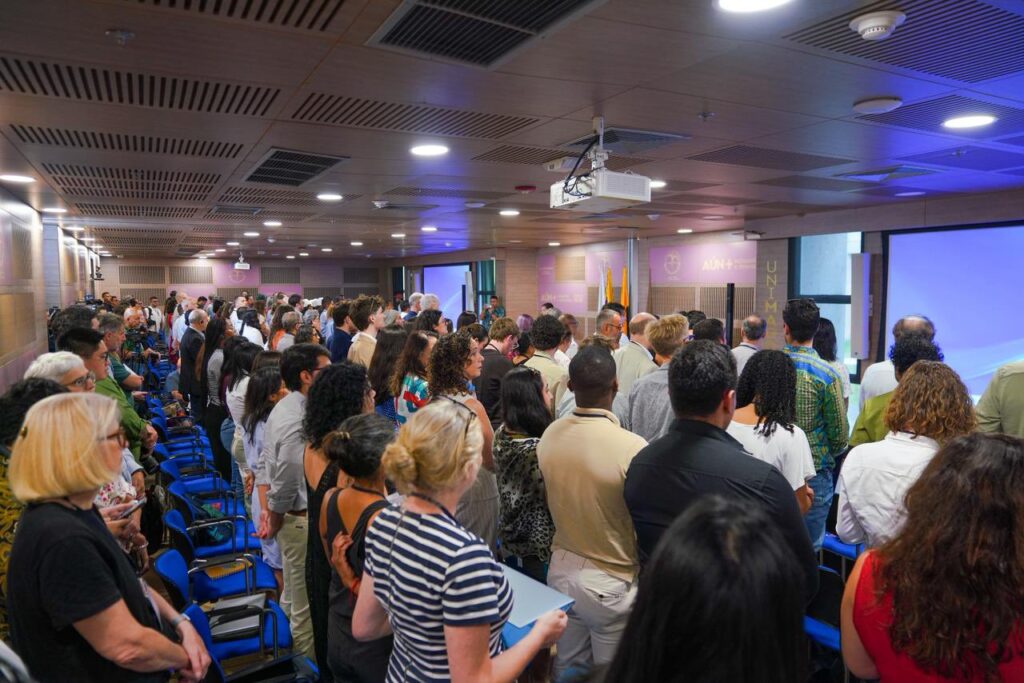
Delegates at the inauguration of the fossil fuel conference on Friday. Image credit: @MinAmbienteCo via X

For three decades global climate negotiations had focused on managing the symptoms of the crisis — fossil fuel emissions — while ignoring its root cause: the unchecked proliferation of oil, gas, and coal extraction.

This was a theme picked up by Kevin Koenig, director of climate and energy at Amazon Watch, a California-based nonprofit supporting indigenous communities attending the conference.

The last major summit, COP 30, was held last year in Brazil and saw “fossil fuel lobbyists outnumbering country delegates” he told Latin America Reports, adding that declarations at the end of that meeting “barely mentioned fossil fuels at all”.

In Santa Marta he expected things to be different: “This is the conference that is finally going to address the elephant in the room and get to the source of the climate change problem.”

Several factors were contributing to a momentum towards renewables, added Koenig, with recent data showing that cities and even whole countries have run for weeks off renewable energy as the Middle East crisis exposes the dangers of oil addiction.

“This is the moment where we are seeing both wars linked to fossil fuels politics and dependencies, but also for the first time renewables energies are not just theoretical, they are real, and decision-makers know they are scalable,” said Koenig. 

This was supported by data from the Center for Energy and Clean Air, which reported that global power generation from fossil fuels fell in the first month after the U.S.- Iran conflict closed the Strait of Hormuz – a vital waterway for oil tankers – while energy generated by solar and wind power increased.

Another conference goal was to identify economic and legal barriers to transitioning to renewables, said Koenig.

An example was the hegemony of interconnected global norms feeding fossil fuel dependence, such as arbitration laws that punished small countries in international courts if they attempted to free themselves from big oil contracts. This architecture kept countries dependent, he said.

“Countries transitioning get beat up in arbitration courts or penalized by credit rating agencies. When Ecuadorians voted to keep fossil fuels in the ground, for example, their credit rating went down.”

In countries like Colombia, fossil fuels were also linked to localized conflict and armed groups, explained Koenig; over 30 years Amazon Watch has supported many indigenous communities under attack for defending their territories against drilling.

“Some countries use oil extraction as a reason to open areas, saying ‘we can militarize it and it will be safer’. In fact, oil and energy infrastructure are a magnet for armed groups, for political attacks or blackmail,” he explained.

Inga indigenous guards in Putumayo, Colombia. Their traditional lands are under threat from oil exploration and illegal mining. Photo: Steve Hide.

That dynamic was more visible than ever on the world stage.

“Fossil fuels are fueling dictatorships, violence, conflict and authoritarian regimes,” said Koenig. “The Middle East crisis underscores the urgency to transition.”

“Yes, abandoning fossil fuels is about climate – but also about security and democracy.”

Featured image description: Delegates register at the fossil fuel conference in Santa Marta on April 24, 2026.

Featured image credit: @MinAmbienteCo via X

The post Colombia renewables conference comes at critical moment for global energy appeared first on Latin America Reports.

  • ✇Latin America Reports
  • Colombia bans Female Genital Mutilation in landmark law Alfie Pannell
    Colombia’s Senate passed a bill prohibiting Female Genital Mutilation (FGM) today after a long battle by women’s rights activists. The ‘Law on Girls Without Mutilation’ passed unanimously in the final session of congress and just requires presidential approval to come into effect. Colombia is the last country in the Americas where FGM is still practiced, a ritual that is linked to the Embera Indigenous community. Between January 2024 and March 2026, the government registered 98 cases
     

Colombia bans Female Genital Mutilation in landmark law

10 June 2026 at 23:26

Colombia’s Senate passed a bill prohibiting Female Genital Mutilation (FGM) today after a long battle by women’s rights activists.

The ‘Law on Girls Without Mutilation’ passed unanimously in the final session of congress and just requires presidential approval to come into effect.

Colombia is the last country in the Americas where FGM is still practiced, a ritual that is linked to the Embera Indigenous community.

Between January 2024 and March 2026, the government registered 98 cases of girls being subjected to FGM, which is defined by the World Health Organization (WHO) as “procedures that involve partial or total removal of the external female genitalia, or other injury to the female genital organs for non-medical reasons.” The WHO estimates that 230 million women worldwide are victims of FGM, the vast majority living in Africa.

The procedure poses risks such as bleeding, infection, extreme pain and death. The existence of FGM in Colombia was not known until 2007, when two Embera girls died after being mutilated.

The law was authored by lower house representatives Jennifer Pedraza, Alexandra Vásquez, and Carolina Giraldo, as well as Senator Angélica Lozano.

The legislation was developed in consultation with academics, social organizations, and women from the Embera community.

“As such, it takes a preventive and cultural approach—rather than a punitive one—with the aim of
protecting victims and potential victims of this practice, which occurs primarily
among newborn girls,” said a press release following the bill’s passing.

Featured image description: Carolina Giraldo, Jennifer Pedraza, and Alexandra Vásquez smile after the bill’s passing.

Image credit: Courtesy of Jennifer Pedraza

The post Colombia bans Female Genital Mutilation in landmark law appeared first on Latin America Reports.

  • ✇Latin America Reports
  • Rights groups decry El Salvador’s new juvenile penal code Stella Horrell
    On March 27, El Salvador’s legislative assembly approved legislation allowing those under the age of 18 to serve life sentences for murder, rape and terrorism.  The move came just weeks after the Nayib Bukele regime amended the constitution to permit life sentences for adults, part of its hallmark iron fist approach to crime.  The extension of penalties marks a significant escalation in the severity of the country’s punitive policy, raising a number of ethical and legal concerns, accor
     

Rights groups decry El Salvador’s new juvenile penal code

31 March 2026 at 22:36

On March 27, El Salvador’s legislative assembly approved legislation allowing those under the age of 18 to serve life sentences for murder, rape and terrorism. 

The move came just weeks after the Nayib Bukele regime amended the constitution to permit life sentences for adults, part of its hallmark iron fist approach to crime. 

The extension of penalties marks a significant escalation in the severity of the country’s punitive policy, raising a number of ethical and legal concerns, according to rights groups.

The reform to the Juvenile Criminal Law provides for “the inapplicability of the special juvenile procedure” which formerly saw children and adolescents held in separate, secure centres designed to provide a more nurturing environment for younger inmates. 

With the support of the Salvadoran Institute for the Comprehensive Development of Children and Adolescents, child-friendly court-procedures and age-appropriate prisons which prioritized education, vocational training, psychological support and social reintegration were once foregrounded. 

But under the reformed law children and adolescents could now be condemned to a lifetime in prison.

Rights groups warn that the reform risks disproportionately targeting children and adolescents from lower socio-economic backgrounds, many of whom are already vulnerable to coercion and exploitation by organised crime.

The United Nations Children Fund (UNICEF) and the Committee on the Rights of the Child (CRC) said in a joint statement that the reforms “constitute a contradiction of the standards enshrined in the Convention on the Rights of the Child.” These standards say that children in conflict with the law must be treated in a manner that “prioritizes their rehabilitation and reintegration, and that deprivation of liberty be used only as a measure of last resort and for the shortest, appropriate time.”

Since being elected as president in 2019, Bukele has been a divisive figure in El Salvador. In a bid to tackle gang violence, he introduced a state of emergency in March 2022, granting authorities broad-based authority to arrest and detain individuals suspected of gang affiliation without warrants.

The state of emergency, intended to last no longer than 30 days, has been extended more than 20 times as Bukele continues his crusade against criminal networks, groups, individuals and affiliates. 

As of March 2026, approximately 91,500 people have been arrested under the state of emergency, according to official government figures. 

While the policy has been credited with reducing homicide rates and improving public safety, its implementation has been deeply controversial. Reports suggest that many individuals, and even young people and adolescents, have been detained based on tenuous evidence, including their socio-economic status. 

This raises the alarming possibility that minors could face life imprisonment not on the basis of proven criminal activity, but on suspicion alone.

However, Bukele seems an unstoppable force, frequently polling above other Latin American leaders in popularity during his term.

Minors face arrests under repeated states of emergency

The precedents set by President Bukele’s mano duro policy are particularly concerning with the new reformed juvenile penal code on the horizon.

Salvadoran security forces have already detained more than 3,300 children, many of whom had no apparent connection to gangs’ criminal activities, according to this Human Rights Watch report.

The risk of condemning a young person to a lifetime in prison based on flawed evidence or coerced confessions is a significant concern for NGOs and analysts. 

“The legislative changes place children under the authority of El Salvador’s adult prison administration, which has been responsible for torture and other grave abuses,” noted Juanita Goebertus, Americas director at Human Rights Watch.

While the reform promises to hold “periodic reviews” for life sentences, it still raises questions about the availability of the alternative of rehabilitation programs within the prison system.

Previous amendments to the Criminal Code which determine that criminal courts will have “exclusive jurisdiction” to hear proceedings “against adults and minors” involved in crimes punishable by life sentences equally raises concern about the adequacy of legal representation for minors.

If the repercussions of the “Bukele Method” continue to be enacted so stringently, young people will likely continue to face undue arrest.

Minors transferred to adult prisons

Equally concerning are the precedents set by the “Bukele Method”, demonstrating a tendency that juvenile offenders may be absorbed into an already overburdened prison system. 

UNICEF and CRC have similarly argued that “detention is not only harmful to children, but also highly costly and ineffective in preventing crime”.

Juanita Goebertus explained that there is a risk of children experiencing mistreatment in adult prison systems and that “transferring children into detention facilities designed and operated for adults, even if they are placed in nominally separate areas, is a massive regression for children’s rights in El Salvador.”

Evidence demonstrates that young children and adolescents imprisoned for “collaborating” with organised crime groups or low-level crimes are more likely to reoffend or become more closely affiliated with criminal groups during their time in prison. 

While many Salvadorans credit Bukele’s hardline policies with delivering safer streets and a dramatic reduction in violence, international bodies such as UNICEF caution that security gains may prove fragile unless “the specialized nature of the juvenile justice system” and the rights of all children are fully upheld.

Failing to invest in rehabilitation, education and social reintegration risks entrenching the very cycles of crime these policies seek to eliminate. Prioritizing punitive measures over children’s rights may ultimately undermine both long-term public safety and the wellbeing of future generations.

Featured image description: (From left to right) Minister of Defense René Merino Monroy, General Director of Penal Centers Osiris Luna Meza, President Nayib Bukele, Minister of Public Works Romeo Herrera, and Director of the National Civil Police Mauricio Arriaza Chicas touring the Terrorism Confinement Center (CECOT) in January 2023.

Featured image credit: President’s Office of El Salvador.

The post Rights groups decry El Salvador’s new juvenile penal code appeared first on Latin America Reports.

Yicel Acosta: claiming her own voice

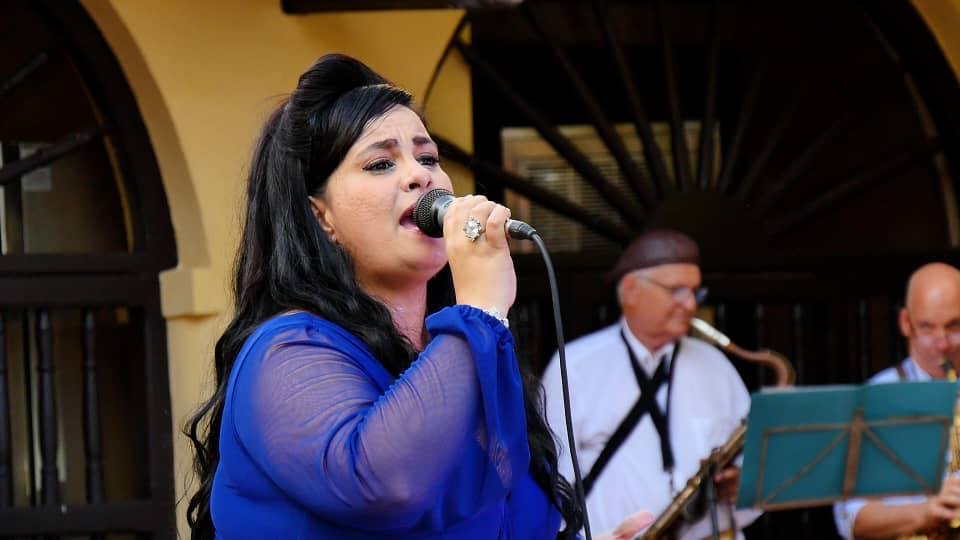
Evening settled gently over the courtyard of Hotel El Colonial by Mystique, setting the tone for a concert that invited listening rather than spectacle. In that intimate atmosphere, Yicel Acosta delivered a performance that became less a tour of repertoire and more a personal statement.

  • ✇Latin America Reports
  • Ecuador-Colombia relations dive as Quito recalls ambassador over Petro comments Amelia Makstutis
    Medellín, Colombia – Ecuador’s Foreign Minister announced on Wednesday morning that Ecuador’s ambassador to Colombia, Arturo Felix Wong, has been recalled. The move follows comments made by Colombian President Gustavo Petro regarding Ecuador’s jailed former Vice President, Jorge Glas, who he called a “political prisoner” and said was not being given sufficient food.  The spat is the latest in a series of diplomatic rows between the two neighbors this year, which have included tit-for-tat t
     

Ecuador-Colombia relations dive as Quito recalls ambassador over Petro comments

9 April 2026 at 01:01

Medellín, Colombia – Ecuador’s Foreign Minister announced on Wednesday morning that Ecuador’s ambassador to Colombia, Arturo Felix Wong, has been recalled.

The move follows comments made by Colombian President Gustavo Petro regarding Ecuador’s jailed former Vice President, Jorge Glas, who he called a “political prisoner” and said was not being given sufficient food. 

The spat is the latest in a series of diplomatic rows between the two neighbors this year, which have included tit-for-tat tariffs and accusations about border security.

Gabriela Sommerfield, Ecuador’s Foreign Minister, justified the withdrawal of the Ecuadorean ambassador from Colombia as “a protest towards Colombia over the terms used by Petro and the interference in decisions made by different branches of the Ecuadorean State” in an interview with Centro Digital Radio.

The announcement followed several inflammatory statements about Glas by Petro in recent days. On Monday, the President said, “it is undeniable that Jorge Glas is a political prisoner.” 

Glas has faced several convictions for corruption-related charges but his supporters, including Petro, accuse Ecuador’s right-wing government of persecuting him for being associated with the progressive Citizen Revolution Movement. 

“Letting someone die of hunger, while under the care of the government, is a crime against humanity,” said Petro on Tuesday. 

Glas is currently serving an eight-year sentence for bribery and criminal association, and a thirteen-year sentence for embezzlement in the maximum-security El Encuentro prison, which is modelled on Salvadorean president Nayib Bukele’s infamous prison system.

He was first convicted in 2017 for his involvement in the Odebrecht case, one of the largest corruption cases in recent Latin American history, after it was revealed that he had received millions of dollars in bribes from the Brazilian conglomerate Odebrecht.

He has since received further sentences and was released temporarily in 2022 but re-imprisoned shortly after. Later that year, he was released again, and sought asylum in the Mexican embassy, claiming political persecution. But two years ago, he was arrested in a controversial police raid of the Mexican embassy in Quito, leading to the severing of diplomatic ties between the two countries. 

Now, Ecuador also faces chilly relations with neighboring Colombia; on February 1st, Quito imposed a tariff of 30% on Bogotá, which it increased to 50% in March. President Daniel Noboa said that the levy was a response to Colombia failing to cooperate in the fight against narcotrafficking.

Colombia responded with tariffs of 30% on 73 types of products coming from Ecuador, including rice and sugar, which later increased to 50% for more than 185 products.

A further dispute emerged last month when Petro accused Ecuador of bombing across the two countries’ joint border.

After recalling Ecuador’s Ambassador to Colombia on Wednesday, Foreign Minister Sommerfield announced that meetings to address the ongoing trade war between the two countries would be suspended.

Featured image description: President Gustavo Petro at a cabinet meeting, October 22, 2025.

Featured image credit: @InfoPresidencia via X.

The post Ecuador-Colombia relations dive as Quito recalls ambassador over Petro comments appeared first on Latin America Reports.

  • ✇Latin America Reports
  • U.S.-Cuba tensions escalate amidst new sanctions and failed attempts to prevent conflict  Raphael McMahon
    High-ranking members of the Trump administration have intensified their rhetoric towards Cuba in recent days, with President Donald Trump himself joking last week that the U.S. Navy would attack the communist island after it has completed its operations against Iran.  U.S. Secretary of State Marco Rubio also told reporters at the White House on Tuesday that Cuba was a “failed regime” run by “incompetent communists” while dismissing the significance of a months-long U.S. fuel blockade against
     

U.S.-Cuba tensions escalate amidst new sanctions and failed attempts to prevent conflict 

8 May 2026 at 08:30

High-ranking members of the Trump administration have intensified their rhetoric towards Cuba in recent days, with President Donald Trump himself joking last week that the U.S. Navy would attack the communist island after it has completed its operations against Iran. 

U.S. Secretary of State Marco Rubio also told reporters at the White House on Tuesday that Cuba was a “failed regime” run by “incompetent communists” while dismissing the significance of a months-long U.S. fuel blockade against the island nation of 10 million. 

The threats, however, are not merely rhetorical. Trump also signed an executive order on Friday introducing further sanctions against the Cuban government. 

These measures target officials deemed to be working in the security, energy, defense, financial services and mining sectors of the Cuban economy. The order also authorized secondary sanctions against anyone accused of facilitating transactions with these officials. 

This weekend’s announcement marks the latest example of a series of punitive measures that the U.S. has introduced against the island since the beginning of the year. 

In addition to restricting the island’s oil supply, the U.S. has declared Cuba an extraordinary threat to U.S. national security and pressured countries in the region to cancel decades-old medical agreements with Cuba. 

Domestic attempts to prevent military action fail 

Some members of the Democratic party, however, have been urging the Trump administration to show restraint towards Cuba. 

Last week, the majority-Republican Senate blocked a Democrat-backed resolution which would have prevented Trump from authorizing military action against Cuba without congressional approval. 

The resolution lost by a vote of 51-47, with all Senators voting along party lines with the exception of Republican Senators Rand Paul and Susan Collins, who supported the resolution, and Democrat John Fetterman, who opposed it. 

This is not the first time that Democrats have attempted to limit Trump’s capacity to circumvent congress and approve military action abroad; the U.S. Senate has rejected resolutions seeking to block U.S. military action against Venezuela and further action in Iran. 

Democratic Senator Tim Kaine cited the economic blockade as a key reason for his sponsorship of the resolution, calling the sanctions tantamount to an “act of war”. 

Republican Senator Rick Scott, who has been an outspoken supporter of U.S.-backed political regime change on the island, introduced the point of order which stopped the resolution’s adoption. 

Scott asserted that the resolution was unnecessary as Trump has thus far not deployed any troops to the island and, this notwithstanding, argued that “President Trump is doing everything he can to bring back freedom and democracy all across Latin America, and we should do everything we can to support him”.

Probability of political conflict grows

The Cuban and U.S. governments are currently negotiating a potential solution to the brewing tensions between the two nations, but sources close to the Trump administration’s negotiating team have revealed that the U.S. sees the removal of current Cuban President Miguel Díaz-Canel as key to any successful deal. 

However, the Cuban government has been emphatic in its opposition to any form of U.S.-enabled political change on the island: Díaz-Canel told NBC that he would not step down as a result of U.S. pressure under any circumstances.

In light of this political impasse, the recent escalation of rhetoric by the Trump administration and the failure of the U.S. Senate to restrict Trump’s capacity to strike the island, a U.S.-instigated attempt at forcing political regime change appears increasingly likely. 

Stephanie Cepero, the co-founder of the Florida-based Cuban dissident organization Cuban Freedom March, spoke to Latin America Reports about the implications of the recent Senate ruling and increasing U.S. sanctions, as well as her hopes for comprehensive political change. 

“When you cut off GAESA [the Cuban military conglomerate that controls a large portion of the Cuban economy], when you sanction Díaz-Canel directly, when you choke the regime’s access to hard currency — you are hitting the people responsible, not the people suffering”, Cepero argued. 

Cuban Foreign Minister Bruno Rodriguez Parrilla disagrees, calling the sanctions “illegal and abusive” and tantamount to “collective punishment against the Cuban people”. 

Cepero also characterized the Senate ruling as “the right outcome”, accusing the proponents of the Democrat-led resolution of attempting to “tie the President’s hands at a moment when U.S. leverage over the regime is arguably stronger than it’s been in decades.”

“The Cuban dictatorship has survived for over 60 years in part because of predictable, toothless U.S. policy. Uncertainty is a tool. Removing it prematurely would have been a gift to Havana, not to the Cuban people,” she continued. 

Large elements of the sizable Florida-based Cuban-American community have long pressured successive U.S. administrations to take more decisive action against the Cuban state, citing its human rights abuses, imprisonment of dissidents and restriction of civil liberties. 

Cepero believes that the change long sought after by the Cuban-American constituency could be imminent given the Trump administration’s current harsh stance towards the Cuban government. 

“A U.S. administration willing to hold firm on pressure without blinking creates real conditions for change … pressure [must be] sustained and intensified until there is meaningful, verifiable political change on the island. Half-measures and relief valves only delay the inevitable. The Cuban people deserve freedom now,” the dissident concluded. 

The Cuban government, however, has promised to resist any attempts to force political change upon the island; Díaz-Canel warned that millions of Cubans, including him, would be willing to sacrifice their lives to resist a U.S. attack on Cuba and its Revolution. 

Featured Image: Pro-Trump Cuban Americans celebrate his first inauguration in 2017. 

Image Credit: VOA via Wikimedia Commons

License: Creative Commons Licenses

The post U.S.-Cuba tensions escalate amidst new sanctions and failed attempts to prevent conflict  appeared first on Latin America Reports.

  • ✇Latin America Reports
  • Mexican authorities arrest top cartel leader ‘El Jardinero’ Dario Migliorini
    The Mexican military captured Audias Flores Silva, alias ‘El Jardinero’, on Monday – one of the top leaders of the Jalisco New Generation Cartel (CJNG). Flores Silva was considered to be one of the key candidates to succeed alias ‘El Mencho’, the former leader of the CJNG who was killed by authorities in February. The drug lord’s arrest comes amid a wider crackdown by Mexican security forces against organized crime, driven partly by pressure from Washington. According to authorities, Mo
     

Mexican authorities arrest top cartel leader ‘El Jardinero’

28 April 2026 at 22:48

The Mexican military captured Audias Flores Silva, alias ‘El Jardinero’, on Monday – one of the top leaders of the Jalisco New Generation Cartel (CJNG).

Flores Silva was considered to be one of the key candidates to succeed alias ‘El Mencho’, the former leader of the CJNG who was killed by authorities in February.

The drug lord’s arrest comes amid a wider crackdown by Mexican security forces against organized crime, driven partly by pressure from Washington.

According to authorities, Monday’s operation did not involve any shooting, injuries, or collateral damage. The military deployment included 120 direct action troops, four close air support helicopters, four fixed-wing aircraft, and two troop transport helicopters, with 400 naval personnel providing support.

The CJNG leader’s more than 60-strong escort group dispersed in different directions upon the arrival of security forces, attempting a tactical distraction maneuver, but the target was located through air and ground tracking.

Official footage of the operation shared by Omar García Harfuch, Secretary of Security and Citizen Protection of Mexico, shows the moment of the capture, with Flores Silva extracted from a roadside drainage conduit, where he was hiding. The arrest happened near El Mirador, a rural community in the western state of Nayarit.

Hours after the news became public, several stores and vehicles were set on fire across Nayarit. While the unrest fell short of the level of retaliation following the killing of ‘El Mencho’ in February 2026, the Government of Nayarit urged citizens to stay in their homes as a preventative measure.

A major blow to CJNG

The arrest was praised by the U.S. Ambassador to Mexico, Ronald Johnson, who congratulated Mexico’s Security Cabinet and Secretary of the Navy.

In 2021, the U.S. Drug Enforcement Agency offered a US$5 million reward for information leading to Audias Flores Silva’s arrest or conviction. Flores Silva was defined as “closely aligned” with former CJNG leader ‘El Mencho’, whose real name is Nemesio Oseguera Cervantes.

In June 2025, the U.S. Department of the Treasury’s Office of Foreign Assets Control (OFAC) sanctioned Flores Silva, identifying him as a CJNG regional commander in charge of significant portions of territory in the states of Zacatecas, Guerrero, Nayarit, Jalisco, and Michoacán. 

According to U.S. authorities, Flores Silva was in control of clandestine laboratories producing methamphetamine and other illicit drugs in central Jalisco and southern Zacatecas. In addition, Silva managed the logistics of cocaine trafficking operations from Central America through Mexico to the United States, including the supervision of several clandestine airstrips.

‘El Jardinero’ was also believed to have coordinated a deadly 2015 attack against Mexican police forces in Jalisco that left 15 agents dead.

Flores Silva’s arrest is a hard hit to CJNG, as security analysts considered him a potential successor to the group’s command after the death of ‘El Mencho’ last February.

“Flores Silva was the closest thing the CJNG had to a chief operating officer, the man who once ran Mencho’s personal security, managed the Pacific corridor’s labs and airstrips, oversaw a timeshare fraud network and U.S. money-laundering pipeline, and brokered the alliance with Los Chapitos after the Sinaloa civil war,” Chris Dalby, director of World of Crime and senior analyst at Dyami Security Intelligence, told Latin America Reports.

Authorities dealt a second blow to CJNG yesterday when the Special Forces of the Mexican Army and the National Guard detained César Alejandro N, alias “El Güero Conta”. He was identified as the main financial operator for ‘El Jardinero’ and accused of laundering money through companies and frontmen.

“Losing Silva alongside his financier on the same day hits the CJNG operationally and financially simultaneously. It doesn’t spell an end to the CJNG, however, and may actually help Juan Carlos Gonzalez Valencia secure leadership by removing a rival,” said Dalby.

Featured image description: Wanted poster for Audias Flores Silva, alias ‘El Jardinero’.

Featured image credit: Omar García Harfuch via Facebook.

The post Mexican authorities arrest top cartel leader ‘El Jardinero’ appeared first on Latin America Reports.

❌
Subscriptions