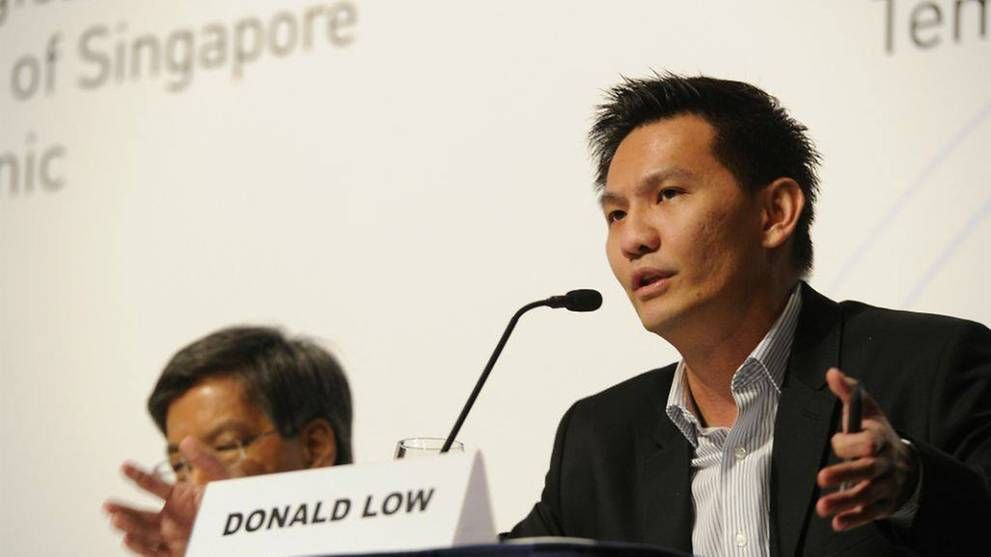
SINGAPORE: Singaporean economist and academic Donald Low has expressed growing scepticism about the long-term benefits of artificial intelligence, warning that discussions about the technology have focused too heavily on its economic upside while overlooking a range of high costs and risks.
Prof Low formerly served as the associate dean at the Lee Kuan Yew School of Public Policy. He now teaches at the Hong Kong University of Science and Technology
In a Facebook post published on Friday (June 5), Prof Low argued that economists have largely concentrated on the macroeconomic implications of the AI revolution, particularly the potential productivity gains and disruptions to labour markets. However, he said the technology’s microeconomic effects deserve far more scrutiny.
Among the concerns he highlighted were the environmental costs associated with AI development. Prof Low noted that insufficient attention has been paid to what economists call “negative externalities,” pointing specifically to the vast amounts of energy required to power data centres and train increasingly sophisticated AI models.
While acknowledging AI’s capabilities, Prof Low noted that “there’s no doubt that AI can do many of our jobs better” but he said that “a skilled/experienced worker working with AI is more competent than a similar professional without AI or AI on its own.”
He also questioned whether reliance on AI tools is compatible with the development of expertise.
“There’s also very little doubt that AI doesn’t necessarily help us to learn,” he wrote, pointing to studies that suggest dependence on large language models can impair learning. According to Prof Low, research conducted so far has been “quite unanimous in saying that reliance on LLMs undermines learning” because of what scholars describe as “cognitive surrender.”
Prof Low also expressed scepticism about claims that schools and workplaces will easily adapt to the new reality.
“Personally, I also think that the argument that educators and employers would help their students and employees use AI responsibly and find (new) ways to encourage/enable learning with AI [is] too glib and simplistic,” he said.
In his view, mastery of a subject cannot be outsourced to technology.
“If the individual doesn’t learn, and simply relies on AI to do the job, he/she will never acquire the mastery that would enable him to know when AI is helpful and when it’s not,” Prof Low wrote.
Beyond individual learning, Prof Low said AI presents a broader collective action problem. While it may be rational for individuals to maximise their use of AI to gain personal advantages, he warned that the cumulative effect could leave society less capable of learning and developing skills.
At the corporate level, he noted that businesses are increasingly adopting AI to improve efficiency and gain an edge over competitors. Yet because rival firms are likely to pursue the same strategy, relative competitive positions may remain largely unchanged.
As a result, companies could find themselves spending significantly more on AI while potentially reducing expenditure on workers. Prof Low also questioned whether AI-driven productivity gains would be distributed evenly across society.
He warned that while governments have strong incentives to promote widespread AI adoption as a way to boost national competitiveness and productivity, “since people’s ability to adopt AI is unevenly distributed, AI will probably increase inequality.”
At the same time, he argued that AI is unlikely to generate large numbers of new jobs. This could mean that any productivity gains from the AI revolution remain limited and concentrated among certain groups rather than benefiting society broadly, unlike the widespread economic transformation associated with the Second Industrial Revolution.
Drawing on a famous observation by Nobel Prize-winning economist Robert Solow about computers, Prof Low predicted that the promised benefits of AI may ultimately fall short of expectations.
“To paraphrase Solow,” he wrote, “I predict that in a few years, ‘we would see the AI age everywhere but in the productivity statistics.’”
The academic’s concerns extended beyond economics to the global competition surrounding the development of increasingly powerful AI systems.
Referencing recent warnings from AI company Anthropic, he argued that the race to build more advanced AI resembles one of history’s most well-known collective action problems: a nuclear arms race.
“Like most economists, I was a techno-optimist,” he wrote. “I’m less sure now.”
The academic’s views come on the heels of Anthropic’s call for a globally coordinated pause on the development of the most advanced AI systems. The AI firm warned that the latest generation of models is beginning to exhibit capabilities that could eventually outpace human oversight.
In a report released on Thursday (June 4), the San Francisco-based company behind the Claude family of AI models argued that the world should have the ability to slow or temporarily halt frontier AI development if necessary, allowing governments, institutions and researchers more time to address safety concerns and ensure that increasingly powerful systems remain aligned with human interests.
Anthropic said a slowdown in cutting-edge AI development would “likely be a good thing” but acknowledged that any pause would only be effective if it were adopted simultaneously by major AI developers across multiple countries. The company cautioned that if a single organisation were to stop advancing its systems while competitors continued, it would risk falling behind in an intensely competitive industry.
The company said any meaningful pause would require cooperation between leading AI firms and governments, particularly in the United States and China, as well as mechanisms that would allow compliance to be independently verified.
“Without a global coordination mechanism, companies and governments will have to make difficult decisions about safety while under competitive and geopolitical pressures,” Anthropic said.
The proposal arrives amid fierce competition among technology firms racing to develop ever more powerful AI models. It is also likely to face resistance from industry leaders whose businesses are tied to rapid AI advancement, including billionaire entrepreneur Elon Musk. Musk’s AI company xAI is owned by SpaceX, whose anticipated future stock market debut has fuelled speculation that he could become the world’s first trillionaire.
Anthropic’s position has not gone unchallenged. Critics within the technology sector and some officials in Washington have accused the company of overstating worst-case scenarios and using safety concerns as a way to slow competitors.
Despite such criticism, the White House has recognised the capabilities of Anthropic’s powerful Mythos model. The system has not been released to the general public because of its cybersecurity-related capabilities and is currently available only to a limited group of vetted organisations.
The company’s proposal also runs counter to arguments frequently made by US policymakers and technology executives, many of whom contend that slowing AI development could hand China a strategic advantage in what is increasingly viewed as one of the most consequential technological competitions of the century.
However, US President Donald Trump recently indicated that AI safety was among the topics discussed during his visit to Beijing, where he raised the possibility of cooperation with China on managing risks associated with advanced AI systems.
Drawing parallels with nuclear arms control agreements, Anthropic argued that regulating AI could prove even more difficult. Unlike missile silos or nuclear facilities, AI training activities can be conducted more discreetly, making it harder to verify whether organisations are complying with restrictions. The company also warned that the incentives to continue developing increasingly capable systems in secret would be significant.
Speaking to BBC Newsnight on Thursday, Anthropic co-founder Jack Clark said the industry currently lacks mechanisms to slow development if safety concerns arise.
“You want the option to be able to take your foot off the gas and put your foot on the brake,” Clark said.
“Right now, it’s like the AI industry has a gas pedal, but it doesn’t have a brake pedal.”
Anthropic said it plans to convene government representatives, scientists, civil society groups and rival AI companies in the coming months to explore how a coordinated global framework could be established.
The company’s concerns are also informed by internal findings suggesting that AI systems are increasingly accelerating the development of newer AI models. According to Anthropic, this trend is creating a feedback loop that could eventually lead to what researchers describe as “recursive self-improvement” — a scenario in which AI systems become capable of substantially improving themselves with diminishing levels of human involvement.
While Anthropic stressed that such a development is neither inevitable nor imminent, it warned that the possibility may arrive faster than governments and institutions are prepared for.
“We are not there yet, and recursive self-improvement is not inevitable,” the report said.
At the same time, the company argued that evidence increasingly points to a shrinking role for humans throughout the AI development process.
“The evidence suggests that the human role is narrowing at each step in the AI development process,” Anthropic said.
This article (Singaporean economist cautions AI may increase inequality, as Anthropic calls for global AI pause) first appeared on The Independent Singapore News.

 Login
Login