
Normal view

Illegal gold mining causes surges in malaria in the Amazon, and the association is far worse than we suspected

Gold prices are at an all-time high, and we are very worried. As disease ecologists, it’s not the economic instability that concerns us, but the fact that a surge in gold mining could have a devastating impact on human health.

Our team of researchers from Stanford University, Universidade Federal de Mato Grosso, and Universidade Federal de Minas Gerais, Brazil, established and quantified the effects of illegal gold mining on a recent surge in malaria in the Yanomami territory in the Brazilian Amazon that plunged this isolated Indigenous population into a devastating health crisis in the early 2020s.

An executive push towards extraction

When Jair Bolsonaro became Brazil’s president in 2019, he made environmental deregulation a central tenet of his platform, claiming that environmental and Indigenous land protections hindered the country’s economic development. He also transferred the authority of Indigenous land demarcation from the National Indigenous Foundation (FUNAI) to the Agriculture Ministry.

Furthermore, he issued decrees aimed at deregulating small-scale mining activities in the Amazon region. The decrees made no distinction between regulated (therefore, legal) mining outside of Indigenous territory and mining within Indigenous land, which is universally illegal. Illegal miners flooded the Yanomami territory.

By January 2023, when Lula da Silva secured the Presidency as Bolsonaro successor, the number of illegal gold miners in Yanomami territory — the largest Indigenous territory in the Amazon — had surged to 20,000, roughly two-thirds the number of the local Yanomami population.

Malaria and the Yanomami health crisis

Weeks after Lula da Silva took office, independent news outlet Sumaúma released a dispatch citing shocking disease and malnutrition figures among the Yanomami. Threaded with images of suffering Yanomami people, the report motivated the president to declare a humanitarian crisis.

Dr. Andre Siqueira, a researcher from the Oswaldo Cruz research institute (Fiocruz) and a member of the team of doctors sent into the territory upon declaration of the crisis recounted: “The conditions of the population were devastating.” Nearly every person they tested was positive for malaria.

Even small increases in mining can cause a surge in malaria cases

The Sumaúma dispatch, and the Instituto Sociaombiental report upon which it was based, linked the influx of illegal gold miners during the Bolsonaro administration to the Yanomami health crisis and the proliferation of malaria.

As researchers who focus on how trends in land use contribute to the spread of parasites, we suspected that gold mining and malaria were not separate contributors to the same crisis, but part of one system of cause and effect devastating the territory and its people.

Illegal gold mining can drive malaria in multiple ways. First, when miners tear down forests and open gashes along the edges of rivers to access gold deposits, they create the ideal breeding grounds for the mosquito species that transmits malaria in the Amazon.

Second, when miners travel to the territory, potentially from malaria hotspots across South America, they can carry the parasite into the territory and increase its transmission.

Finally, small-scale gold miners often use mercury to cheaply and easily extract gold particles. This mercury is dumped into waterways across the region, poisoning the people who rely on the rivers for water and for fish, weakening their immune systems and making them more susceptible to malaria infection.

Thorough data on health and environmental conditions in the Amazon collected by the Brazilian Ministry of Health enabled us not only to confidently establish the link Indigenous people had long suspected, but to assign numbers to the relationship, making it concrete and actionable.

We were shocked by the results. The relationship was far stronger than we suspected. We found that every 0.03% increase in mining led to a 20-46% increase in malaria one to two years later, resulting in a 300% increase in malaria in the Yanomami territory between 2016-2023.

Understanding the association between gold mining and malaria underpinning the Yanomami health crisis is only one part of the puzzle. We hope that this research can serve as a tool to empower Indigenous communities with information about their health and inform policies that protect both human health and the environment. Our data indicates that by preventing illegal mining within Indigenous lands can protect their health and other important natural and cultural heritage.

Improving healthcare access

The Lula government is engaging in important efforts to expel illegal gold miners and establish health centers in the Yanomami territory. Though hospitalizations for malaria have decreased slightly since 2023, malaria rates among Yanomami remain high due to the lagged effect we identified in our research and the difficulty of access to timely diagnoses and treatment in remote regions.

Researchers are making strides to close this accessibility gap. An international team has developed “malakits”, which empower community members without formal medical training to diagnose and treat malaria on site. Such efforts are of critical importance given that the lagged effects of illegal gold mining will continue to cause elevated malaria incidence unless communities have broad access to treatment.

It is also important to ensure full land rights of Indigenous populations and empower them to defend their land. This is proven to be one of the most effective ways to fight deforestation and protect ecosystems.

Addressing the malaria crisis requires diversifying the rural Amazonian economy with an eye toward sustainability, such that people have options beyond mining and logging. Brazil is making strides toward this goal with the recent launch of a national bioeconomy development plan.

Informed consumers can prioritize purchasing recycled gold or refrain from purchasing gold at all to send a signal that further illegal gold extraction is not worth the human toll. As with the Blood Diamonds campaign in the early 2000s, real change can come from spreading the word about the human and environmental cost of illegal mining and demanding ethical supply chains.

Appeals to protect the Amazon region are often made on environmental terms. We want to make the case that saving the people in Amazon is also a global health imperative. Protecting the forest, investing in Indigenous land rights, fostering healthy economic opportunities for rural communities, and interrogating the role of gold in our global economy are all part of preventing the continued spread of one of the world’s deadliest infectious diseases.

The Conversation

Daniela de Angeli Dutra was funded by a grant from the National Institutes of Health (USA) awarded to Professor Erin Mordecai.

Riley Casagrande não presta consultoria, trabalha, possui ações ou recebe financiamento de qualquer empresa ou organização que poderia se beneficiar com a publicação deste artigo e não revelou nenhum vínculo relevante além de seu cargo acadêmico.

Trump-XI summit: US president says he will discuss arms sales to Taiwan – breaking decades of US policy

Donald Trump and Xi Jinping are likely to discuss many issues as they meet this week in Beijing. But alongside trade, technology and the war in Iran, one topic of conversation will stand out – the future of Taiwan.

Taiwan has long been a sensitive issue in Sino-American relations. Beijing regards the island as a breakaway province which must be reunited with the mainland. The United States has long opposed such a step. Yet in recent months, Trump has fuelled speculation that he may be ready to change key aspects of US policy on the issue, potentially granting Beijing long-sought concessions.

Trump’s apparent readiness to make these moves means that Taiwan is one of the issues on which we might see the most significant policy developments at the summit. And that could happen simply through the famously voluble president uttering just a few simple words.

The president’s policy towards Taiwan has been inconsistent and seemingly more malleable than that of previous administrations. Advocates for Taiwan point out that his administration recently approved the largest ever US arms sale to the island. But at the same time, he has sowed doubts about the strength of his support for Taiwan’s independence.

US policy towards Taiwan has traditionally been based on two principles. The first is “strategic ambiguity”, which means that the US declines to explicitly state whether it would actively use its military to defend Taiwan from attack by China. This policy is supposed to deter China while also discouraging Taiwan from formally declaring its independence from Beijing.

The second principle is the “one China policy”. According to this policy, the US recognises Beijing as the legitimate government of China, while opposing any violent solution to its dispute with Taiwan. It also retains robust informal links to the Taiwanese government in Taipei.

Observers are concerned that Trump may water down these principles during his summit with Xi. For instance, he might state that the US not only “does not support” Taiwanese independence but actively “opposes” it. Or he might double down on previous comments he has made indicating that whether or not Xi invades Taiwan is “up to him”.

Trump has also explicitly stated that he will discuss future US arms sales to Taiwan with Xi during this week’s summit. This violates one of the so-called Six Assurances that the US has upheld towards Taiwan since the 1980s, and which were endorsed by the US Congress in 2016.

Even securing a discussion of arms sales would be a victory for Xi, who would welcome an opportunity to chip away at the Six Assurances. Presumably he would then try to weaken the US commitment to the other five, which include a US commitment not to change its position on Taiwan’s sovereignty.

More concretely, if Xi succeeds in making US arms sales to Taiwan a legitimate topic of negotiation in Sino-American relations, then he could head them off in the future by offering the US concessions in other areas. For instance, if Trump or a future president asks Beijing for its help settling a conflict like that in Iran, Beijing might demand an end to US arms sales to Taiwan as the price.

High stakes

Given Trump’s reputation as a formidable China hawk, his attitude towards Taiwan may seem surprising. But it’s actually part of a longstanding pattern.

In relations with China, Trump has arguably always prioritised economic issues, while appearing less concerned about the security of America’s regional allies. He has also raised doubts about whether Taiwan is even defensible. In his first term, he reportedly told aides that: “Taiwan is like two feet from China. We are 8,000 miles away. If they invade, there isn’t a fucking thing we can do about it”.

Trump is also both highly transactional and less focused on abstract principles of foreign policy than most previous presidents. He views America’s support of allies such as Taiwan as a gift that it gives them, one that is often not worth the cost. If he can achieve a concrete victory for himself today by trading away support for Taiwan tomorrow, he may well be willing to do so.

All of these developments matter because they make a violent conflict between China and Taiwan, potentially ultimately involving the US, more likely. If Trump makes concessions to Xi, it will be the latest signal that US support for Taiwan is wavering. That made be read in Beijing as permission to violently change the status quo. Even though such an act might belatedly then be met with force from Washington in response, it is made more likely by Trump’s stance today.

Even worse for Trump, the summit comes at a time when American power and the wisdom of its long-term strategy are being visibly called into question in the Middle East. The US is bogged down in an intractable conflict and has severely damaged its deterrent capacity in the Indo-Pacific by burning through advanced munitions at a high rate. Trump’s personal unpopularity is also rising at home amid the war and its economic fallout.

This weakened position makes it even more likely that Trump will want to strike a deal with Xi to help end the war in Iran or ease trade tensions to help the economy at home. Taiwan may be the price of that – and, ultimately, peace.

The Conversation

Andrew Gawthorpe is affiliated with the Foreign Policy Centre in London.

100 million African children are not in school. What’s driving the trend and how to reverse it

Many countries across Africa have embraced universal basic education policies in recent decades. But recent data has revealed that more than 100 million children and adolescents remain out of school, out of a total potential population of 469 million. The latest statistics suggest that after some years of progress, the situation is deteriorating. Education and youth empowerment scholar Moses Ngware and his co-researchers recently carried out an analysis of trends going back 25 years. Their main findings are set out below.

What are the school attendance trends in Africa across all age groups?

In 2000, the number of out-of-school children in primary school, lower secondary and upper secondary was above 100 million. It was down to about 90 million in 2014, and then up again to 100 million by 2025.

Viewed against Africa’s high population growth of above 2.5%, these absolute numbers suggest that school participation is not keeping pace.

Nevertheless, between 2000 and 2024, the proportion of out-of-school children and adolescents declined at all education levels. It fell from 37% to 20% for primary schools; from 47% to 35% for lower secondary and from 56% to 47% for upper secondary school-age children. This is despite the absolute numbers of out-of-school children remaining high.

Countries that showed greatest improvement included Côte d’Ivoire, Ethiopia, Guinea, Madagascar and Mozambique. Improvements were driven by at least two main factors. First, targeted policy responses that enabled them to achieve good coverage in a short time. Second, a strong political will combined with a multi-sectoral approach. The approaches included combining conditional cash transfers for households, food supplies, expanding access to schools and implementing universal education policies that reduce cost of schooling for households.

On the other hand, there are countries that made little or no progress. They include Angola, Cape Verde, Lesotho, South Sudan and Zimbabwe. The main drivers of the low progress are:

  • political instability, as seen in South Sudan

  • poor economic performance, as witnessed in Zimbabwe

  • the high opportunity cost of schooling, as seen in Lesotho, where boys drop out due to poverty related coping mechanisms, including herding cattle, with only one in every five boys completing grade 12.

What are the notable changes in recent years?

In the past five years, we have seen a steady increase in absolute numbers of out-of-school children and adolescents from 95 million to 100 million, with an average of about 1 million children either not transitioning from primary to secondary school or leaving school or not joining school at all.

There are two main drivers of such a trend. First, finance – the fizzling effect of the universal basic education subsidies of the early 2000s. These subsidies made basic education affordable to many households. Of the 42 African countries with free education in their policies, only three were in a position to offer free schooling in 2025. Donor funding of education by multilateral organisations has also been reduced, with education aid in Africa declining by 7% in 2024. Second, the negative impact of COVID-19, with about 10 million who left school due to the lockdowns never to return, for various reasons, including forced marriages among girls and child labour for boys.

Across all the schooling levels, higher than before rates of out-of-school children and adolescents were observed in the Sahel region, in Central African Republic, Chad, Mauritania and northern Nigeria. These countries or regions are characterised by politically motivated violence, harsh climatic changes and a history of low school participation.

Why is school completion important for societies?

The main benefits to societies of school completion include transition to decent work, girls’ empowerment, and improved health outcomes. An additional year of schooling increases an individual’s lifetime earnings by about 10% on average, with a potential to increase an individual’s purchasing power. Such benefits can also trickle down to households through providing household financial stability and enhanced family support.

For girls, school completion is critical for participation in decision making at societal level. Research shows that a woman’s power to make decisions, such as education for her children or where to invest, increases with education attainment. This has a bearing on economic independence and gender equity within the society.

Furthermore, and related to these two benefits, children of mothers who have completed secondary education have a 45% lower under-3 mortality rate. This implies that such children have about half the risk of death before age 3 compared to those born to mothers with no education.

What are the gender dynamics?

By 2025, the proportion of males that were out of school, at 51%, was only slightly higher than that of females. However, the out-of-school female rate was on the rise – up by two percentage points in 10 years.

If this growth continues, then the proportion of out-of-school females will overtake that of males in the coming years. This will compound the vulnerabilities disadvantaged girls face in their schooling journey and transition to work.

In addition, the gains made in the last three decades in closing gender gaps in education will be eroded. Eroding the gains made in education has severe consequences, especially for girls. For instance, we are likely to see an increase in females getting married much earlier, and child bearing among adolescents may also increase.

What lessons can we learn from the better-placed countries?

There are a number of important lessons to be learnt from countries that have lowered the number of out-of-school children and adolescents.

First, Algeria, Ghana, Kenya and Rwanda have relied on a strong national policy framework backed by political good will, high-level central coordination and donor-partner support.

Second is the importance of targeted social support such as school feeding and conditional cash transfers. Close evaluations using hard data are needed.

Third is the elimination of significant direct fees or levies at basic education level, with timely financial disbursements and school supplies.

Fourth is the lesson that affirmative action for vulnerable populations is an invaluable investment. These populations include disadvantaged girls, children from remote rural areas, children with disabilities, and children from poor households.

Finally, there are other interventions that can add value depending on the context. These include reducing travel distance through expanding infrastructure, and flexible school entry, such as late entry to improve participation. Another is catch-up programmes, which means accelerating progression to recover lost time and learning.

The Conversation

Moses Ngware receives funding from. African Population and Health Research Center (APHRC)

We tested the new World Cup ball – this is what you need to know about how it will fly, dip and swerve

Small variations in the ball can influence how it behaves once it leaves the foot. Robbie Jay Barratt/AMA/Getty Images

Every four years, the men’s World Cup delivers some certainties. The pitch dimensions are tightly regulated, offside is signaled with a flag, and referees end the match with a blast of a whistle. But one key piece of equipment is changed on purpose: the ball.

Adidas, which has supplied World Cup soccer balls since 1970, introduces a new match ball for every tournament, and with that comes fresh aerodynamic calculations for players. How will it fly through the air, weave and dip?

For the past 20 years, my engineering colleagues in Japan and England and I have put the new balls through their paces, investigating soccer ball aerodynamics. Our work begins by putting balls in wind tunnels to measure drag, side and lift forces. We use the measurements from these tests in trajectory simulations that tell us how the ball will behave in a real-game setting.

Putting the 2026 World Cup ball through the wind tunnel test.

That may all sound a little academic, and we do produce an academic paper on our findings. But what our data indicates could mean the difference between a goal or a miss for strikers, a save or a blunder for goalkeepers, and jubilation or heartache for fans.

At the World Cup, the ball is the most important piece of equipment in the biggest tournament of the world’s most popular sport.

This year’s ball, the Trionda, is especially interesting. When FIFA and Adidas unveiled it in fall 2025, the first thing many people noticed was the color and the paneling.

An orange ball and a black and white ball are under a trophy.
Earlier World Cup balls used many panels; modern balls use far fewer. Manfred Rehm/picture alliance via Getty Images

The ball’s red, blue and green graphics correspond to the three host countries, with maple leaf, star and eagle motifs representing Canada, the United States and Mexico. And for the first time in men’s World Cup history, matches will be played with a four-panel ball.

But with so few panels, has Adidas made the ball too smooth? That is the trap engineers fell into with the Jabulani ball used at the 2010 World Cup in South Africa that became notorious for sudden dips and swerves, which made goalkeepers’ lives far trickier.

You do not want the World Cup ball to feel like the start of a science experiment once it is in the air. And if it behaves strangely, players and goalkeepers notice immediately.

The evolution of soccer balls

World Cup balls have come a long way over the decades. If you go back to 1930, the ball looked very different. The first World Cup final used two different leather balls: Argentina’s Tiento in the first half and Uruguay’s T-Model in the second. Both were hand-sewn, multipaneled balls, inflated through a bladder opening that had to be tied off and tucked back beneath the laces. In damp conditions, the leather absorbed water, making the ball heavier and less predictable in play.

A ball nestles in the top of a goal.
Uruguayan keeper Enrique Ballestrero fails to save a shot from Argentina’s Carlos Peucelle in the final of the first World Cup. Keystone/Getty Images

By 1994 – when the United States last hosted the men’s tournament – the official ball, Adidas’ Questra, had evolved into a foam-based design. The modern World Cup ball is no longer just stitched leather. It is an engineered aerodynamic surface.

Trionda pushes that evolution further. It has only four panels, the fewest in men’s World Cup history, which have been thermally bonded – melded together using heat and adhesive.

Fewer panels might suggest less total seam length and therefore a smoother ball. And smoothness matters because the thin boundary layer of air clinging to the ball determines where the flow separates, how large a wake forms, and how much drag the ball experiences.

The Trionda has intentionally deep seams, three pronounced grooves on each panel and fine surface texturing.

But will these textures and grooves do the trick? To find that out, my colleagues and I measured the ball’s seam geometry and overall aerodynamic behavior. We compared it with Trionda’s four predecessors: 2022’s Al Rihla, 2018’s Telstar 18, the Brazuca used in 2014 and the Jabulani in 2010.

What the measurements show

In our wind tunnel tests at the University of Tsukuba, we measured something called the drag coefficient, which is a way of describing how much air resistance a ball experiences as it moves.

Using this data, we gained insights into how the airflow changes around the ball after it is kicked. The tests helped identify the drag crisis, the speed range in which changes in the boundary layer and flow separation produce a sharp change in drag, which can alter the ball’s acceleration, trajectory and range.

A ball is seen suspended.
The Trionda soccer ball prepares for the wind tunnel. Goff/Hong/Liu/Asai

We found that the Trionda is effectively rougher than those predecessors.

Trionda reaches its drag crisis at a lower speed, at about 27 mph (43 kph). That is below the roughly 31-40 mph (50-65 kph) range for Al Rihla, Telstar 18 and Brazuca, and far below Jabulani’s roughly 49-60 mph (79-97 kph) range, depending on orientation.

Why does all that matter? Because a ball can feel ordinary off the boot and still behave differently in flight. When the drag crisis occurs in the middle of game-relevant speeds, small changes in launch speed, orientation or spin can shift the ball from one aerodynamic regime to another.

That was Jabulani’s problem. Once kicked with little spin, it had a tendency to slow down too much as it passed through its critical-speed range.

Trionda does not look like that kind of ball. It has a more steady and consistent drag coefficient in the range of speeds associated with corner kicks and free kicks.

But there is a trade-off. Our measurements also showed that once Trionda enters the higher-speed, turbulent-flow regime, its drag coefficients are somewhat larger than those of Brazuca, Telstar 18 and Al Rihla.

In plain language, that suggests a hard-hit long ball may lose a little range.

In our simulations, the difference is not huge. But it is large enough that players may notice long kicks coming up a few meters short.

It is also important to note that we tested a nonspinning ball. As such, our results do not provide a prediction of every pass, clearance or free kick fans will see this summer. Balls in flight often spin due to off-center kicks. That, along with altitude, humidity, temperature and air pressure all influence how a ball flies through the air once kicked.

A ball mounted on a rod.
Close-up of the Trionda ball during wind tunnel testing. Goff/Hong/Liu/Asai

The big test yet to come

Fewer panels and more texturing aren’t the only differences with the new ball.

Trionda also carries technology that has little to do with its flight and a great deal to do with officiating. Like Al Rihla, Trionda includes “connected-ball technology” that lets computers know when the ball is kicked, helping with offside decisions.

But the architecture has changed. In 2022, the measurement unit was suspended at the center of the ball. With Trionda, it sits in a specially created layer inside one panel, with counterbalancing weights in the other three panels. The chip sends data to the video assistant referee, or VAR, system and the tournament’s semi-automated offside system.

That tweak will help referees, but will the new ball in general help or hinder players?

The evidence from our tests suggests that the ball won’t be behaving in a way that leads to baffling and erratic flight.

But the more intriguing possibilities are subtler and outside the scope of our tests. Will the grooves on Trionda help players generate more backspin on the ball, generating more lift and possibly offsetting Trionda’s somewhat larger high-speed drag coefficient?

That is why I keep studying World Cup balls both in the lab and through their behavior in play. Every four years, a new design offers a fresh way to watch physics enter the game, not in theory, but in the movement of an object in which every player on the soccer field must place their trust.

The Conversation

John Eric Goff currently works as a visitor in the Department of Physics at the University of Puget Sound in Tacoma, Washington. Following the conclusion on 30 June of that one-year appointment, he will start on 1 July as Professor of Engineering Practice in the Weldon School of Biomedical Engineering and the School of Mechanical Engineering at Purdue University.

Falling space debris poses an escalating risk as spacecraft get stronger and more heat resistant

Not all space debris burns up in the atmosphere before it makes it back to Earth. PaulFleet/iStock via Getty Images

When it comes to space debris, what goes up is coming down more often – and not safely.

When spacecraft launch, some components, including nonreusable rocket boosters, are jettisoned to decrease weight, leaving them to intentionally burn up as they reenter the atmosphere. Satellites also enter the atmosphere at the end of their life, supposedly burning up. But in many cases, they are not doing so as predicted.

Debris from partially burned-up spacecraft components and satellites reentering Earth’s atmosphere can pose a risk to people and structures on the ground. The surge in launches, driven largely by private players such as SpaceX, is turning a once-remote risk into a growing threat.

Our materials research group at the University of Wisconsin-Stout is studying the materials that allow reentry debris to survive. We look for ways to safely modify their exceptional heat-resistant qualities to make them safer for atmospheric reentry.

Debris landing on Earth

Reentry debris has fallen on both private and public property around the world multiple times since 2021. Some of the most notable events involve pieces from SpaceX Dragon’s carbon fiber trunk, which stays attached to the crewed capsule until just hours before its reentry. These trunks are larger than a 15-passenger van and used for storage.

Trunk debris from the Crew 7 mission to the International Space Station has landed in North Carolina, and fragments from the Crew 1 mission landed in New South Wales, Australia. Similarly, debris from the Axiom 3 mission landed in Saskatchewan, Canada.

A large piece of space debris from a SpaceX Dragon capsule was found by a campsite groundskeeper in North Carolina in 2025.

In addition to trunk debris, carbon fiber components that hold pressurized gases to adjust a spacecraft’s orientation also make up a lot of recovered reentry debris. Some of these most recent recoveries have been in Australia, Argentina and Poland.

Most of the debris that reenters the atmosphere burns up, so why are these pieces making it down to Earth’s surface?

Atmospheric reentry

Satellites such as SpaceX’s Starlink reside in low Earth orbit, typically between 190 and 1,240 miles (300 and 2000 kilometers) above the Earth’s surface. To stay there, they need to move really fast, at about 17,000 miles (27,000 km) per hour. To reach this speed, a rocket with a million pounds of fuel had to accelerate it, and part of this energy is still contained within the satellite’s momentum.

As an object in orbit drifts down, closer to Earth’s upper atmosphere, it starts to collide with air molecules, slowing the object down. The amount of heat generated from this interaction rapidly consumes the satellite, melting metal at over 3,000 degrees Fahrenheit (1,600 degrees Celsius).

More launches

Countries around the world have been launching items into space since the 1950s, so why is reentry a concern now?

Starting in the 1960s, about 100 objects were launched into space every year – or at least that was the case until 2016. Since then, the number has been increasing exponentially. In 2016, 200 objects launched. But in 2025, that number was 4,500, meaning 20% of all objects launched into space since the 1950s were launched last year.

Most of these launches came from companies in the United States, such as SpaceX and Rocket Labs. Companies like these, along with those outside of the U.S., have plans for large satellite constellations composed of hundreds of thousands to a million satellites.

The more objects and payloads launched, the more reentry events occur. Satellite operators are required to remove their decommissioned satellites from orbit after 25 years to comply with regulations set in place by international committees. Groups across the world, including the Federal Communications Commission in the U.S., have pushed to shorten the deorbit window to five years. Because of these guidelines, the full influx of reentry debris events from these recent launches will not be felt for another 10 or more years.

The objects launched and policy decisions made today will have a lasting effect on future safety.

Carbon fiber

As the world has progressed technologically, efficiency for launching items into space has too.

Satellites and spacecraft are becoming lighter, stronger and more heat resistant because of materials such as carbon fiber-reinforced plastics and new metals. These strong materials are sought after because they’re lightweight, but they can also cause deorbiting debris to withstand reentry temperatures.

Carbon fiber, once used exclusively in space technology, is now found in common items such as bicycle frames and racing car bodies. It is still the gold standard for fabricating high-strength, low-weight materials for spacecraft components such as rocket fuselages, interstaging – the protective housing found between the rocket stages – and pressure vessels that experience extreme temperatures and high mechanical stress and strain.

Simple metals such as aluminum and steel melt and burn away, while complex materials such as carbon fiber, which is manufactured at up to 5,000 F (3,000 C), burn away unpredictably, changing the way jettisoned components break up upon reentry.

Since the early 2000s, a majority of recovered space debris contains either carbon fiber-reinforced plastic sections or metal components wrapped with carbon fiber. The carbon fiber can act as an unintentional heat shield for heavier, more harmful debris.

A map showing the world with dots spread across the U.S., South America, the coasts of southern Africa, Australia and Southeast Asia.
This map shows locations where confirmed space debris has been recovered. With the increase in launches, the European Space Agency predicts that future space debris could fall practically anywhere across the world. European Space Agency

Design For demise

Design for demise is a major area of research focused on mitigating the risk of reentry debris. Instead of relying on controlled and meticulously timed deorbits that send components that survive reentry into the ocean at the end of their lives, spacecraft components are engineered to ensure they completely disintegrate while deorbiting through the atmosphere.

Design for demise can take many forms. These range from changing to more heat-susceptible materials to relocating harder-to-burn components to areas of the spacecraft that will be hotter during reentry, or using linkages that break apart at high temperatures to separate structures into smaller components to help them burn up.

With so much focus historically on spacecraft being made from the lightest, strongest and most heat-resistant materials available, it may seem counterintuitive to intentionally make some materials weaker. The key is making materials smarter, so they maintain their strength during their mission but weaken under the heat of reentry.

The Conversation

Matthew Ray's lab is developing and working toward patenting a system to decrease risk from future carbon fiber based reentry debris.

Reese Hufnagel conducts research on space debris and is developing ways to make future carbon composites safer for use in orbit.

What a list of Black Death survivors reveals about the way people recovered from plague

The Dance of Death by John of Kastav (1490). National Gallery of Slovenia

In our research in the British Library’s medieval collections, we have identified a previously unnoticed document that provides fresh insights into the survivors of the outbreak of plague known as the Black Death (1346–53).

The document – a scrap of parchment inserted into an account of the Ramsey Abbey manor of Warboys in Huntingdonshire – records how much time peasants were absent from work when struck down by the plague. It also reveals the names of those who survived and how long their employers believed recovery could take.

In our recent paper with Barney Sloane we shed new light on a group of 22 tenants who probably contracted plague, languished on their sickbeds for several weeks, and then recovered.

As one of the deadliest pandemics in recorded history, it has been estimated that between a third and two-thirds of the population of medieval Europe died during the Black Death.

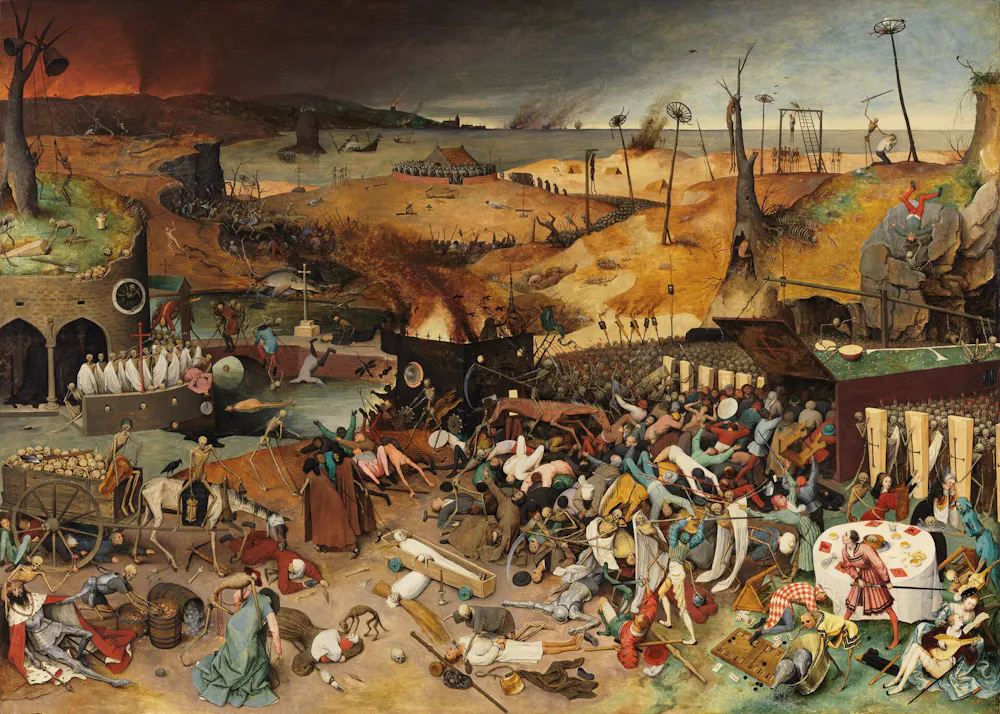
Painting of a grim landscape destroyed by plague
The Triumph of Death by Pieter Bruegel the Elder (1562) shows the social upheaval that followed the plague. Museo del Prado

Given the sheer scale, many historians have focused on discovering details about those who died. Yet this has left the histories of those who contracted plague and recovered largely untold.

Despite the deadliness of the disease, it was possible to recover from plague, and medieval chroniclers mention the possibility – however unlikely – of survival. For example, Geoffrey le Baker, a clerk of Swinbrook in Oxfordshire, wrote in the following decade that he thought recovery depended on people’s symptoms:

People who one day had been full of happiness, on the next were found dead. Some were tormented by boils which broke out suddenly in various parts of the body, and were so hard and dry that when they were lanced hardly any liquid flowed out. Many of these people escaped, by lancing the boils or by long suffering. Other victims had little black pustules scattered over the skin of the whole body. Of these people very few, indeed hardly any, recovered life and health.

But who recovered? Why did so many succumb to the disease when others survived? And just how long was this “long suffering”? Unfortunately, there is remarkably little documentary evidence because most medieval sources record information about mortality rather than ill health.

Unique list of plague survivors

A unique inclusion in the account of the manor of Warboys details a group of people who fell ill between the end of April and the start of August 1349. The monks of Ramsey Abbey wrote a list of their tenants who had fallen sufficiently sick that they could not work on the lord’s lands and detailed the length of time that they were absent.

People were clearly affected differently by their experience of plague.

The quickest recovery was that of Henry Broun who missed just a single week of work. By contrast, John Derworth and Agnes Mold had much more protracted illnesses and were both absent for nine weeks.

The average length of illness was between three and four weeks, with three-quarters of people returning to work in under a month. The speed of their recoveries is all the more surprising given that they were entitled to up to a year and a day of sick leave from work.

This list of survivors includes a preponderance of tenants who occupied larger holdings on the manor. It has long been debated by historians and archaeologists whether the plague killed indiscriminately, with no regard to status, sex or age, or whether the poor and elderly were more vulnerable.

The survival of so many wealthier tenants could indicate that their higher living standards enabled them to recover more readily than their poorer neighbours, perhaps because they were able to stave off secondary infections and complications. We should not read any significance into the fact that 19 out of the 22 people were men: this reflects the gender bias of manorial landholding rather than any sex-selectivity of plague.

Although 22 people may not seem like many, in a regular year during the 1340s, only two or three absences were recorded during the summer months. It, therefore, represents a tenfold increase in regular illnesses on the manor. Put another way, these sick tenants were absent for 91 weeks’ worth of labour services during just a 13-week period.

Medieval drawing of men harvesting wheat
Medieval peasants at work harvesting wheat (circa 1310). Queen Mary's Psalter (Ms. Royal 2. B. VII)

Our understanding of the impact of the Black Death has been influenced by the appalling scale of death. Yet it is only when we add those who fell ill and recovered back into the picture that we can truly understand the seismic shock the pandemic had on society. The dead, dying and sick must have considerably outnumbered the living in villages and cities across Europe.

The consequences of this can be seen in medieval accounts and chronicles, one of which records that “there was so great a shortage of servants and labourers that there was no one who knew what needed to be done”. As a result of this combination of high mortality, unprecedented illness and abysmal weather, the two harvests of 1349 and 1350 have been described as the worst experienced in medieval England, worse even than those that caused the great famine of 1315-17.

This archival discovery allows us to write the history of sickness and recovery back into the Black Death, demonstrating that recovery was possible even during one of the worst pandemics in recorded history.

This new evidence reveals the remarkable resilience of medieval peasants. Many of them lay languishing on their sickbeds, exhibiting buboes (the painful, swollen and inflamed lymph nodes on the groin and neck that were typical of the Black Death), vomiting blood and wracked by fevers and not only survived but returned to work in just a few short weeks.

The Conversation

Research for this article was conducted thanks to funding from a Leverhulme Trust research project grant, 'Modelling the Black Death and Social Connectivity in Medieval England'.

Dr Grace Owen is a postdoctoral research associate on the Leverhulme-Trust funded project, 'Modelling the Black Death and Social Connectivity in Medieval England'.

Stardust trapped in Antarctic ice reveals tens of thousands of years of Solar System’s past

Alfred-Wegener-Institute/Esther Horvath

When you think of outer space, you’re likely picturing stars, planets and moons. But much of space is filled with clouds of gas, plasma and stardust – known as interstellar clouds.

In the local parts of our galaxy alone there’s a complex of roughly 15 individual interstellar clouds. The Solar System is currently traversing one of them, aptly named the Local Interstellar Cloud. The origin and history of these clouds are believed to be tightly connected to the birth and death of stars. But we can see their imprints right here on Earth, in a place you might not expect – Antarctic ice.

My colleagues and I have been studying stardust trapped in old Antarctic snow and ice to trace the history of our solar neighbourhood, including the Solar System itself.

In a new study published in Physical Review Letters, we found a subtle clue that reveals our Solar System’s movement through the local interstellar environment over the past 80,000 years.

Looking down to see the sky

Astronomy usually looks outward. Telescopes collect light from distant stars and galaxies, allowing us to observe events across vast stretches of space and time. From these observations, we infer how stars live and die, how elements are formed, and how the universe evolves.

Our approach turns that idea on its head.

Instead of observing the light coming to us, we study the debris of exploding stars right here on Earth. As cosmic furnaces, stars forge many elements in their cores, from carbon and oxygen to calcium and iron. This includes rare isotopes (variants of chemical elements) such as iron-60.

When massive stars explode into supernovae at the end of their life, these elements are ejected into space and become interstellar dust.

Tiny grains of this dust then drift through the galaxy and occasionally find their way to Earth’s surface. Radioactive iron-60, a fingerprint of stellar explosions, is embedded within these grains. By searching for these atoms in geological archives on Earth, we can probe astrophysical events like supernovae long after their light has faded.

This is why Antarctica is so valuable. Its snow accumulates slowly and remains largely undisturbed, forming a layered record that stretches back tens of thousands of years. Each layer captures a snapshot of the material that was present in our cosmic neighbourhood at the time.

Finding stardust in Antarctic ice

When we studied 500kg of recent snow in Antarctica, we unexpectedly found this rare radioactive isotope. Where did it come from? There was no recent near-Earth supernova.

But our solar neighbourhood is filled with 15 clouds, with the Solar System currently traversing at least one of them. Is the stardust waiting in the clouds to be picked up by Earth? If yes, then the amount of stardust Earth collects should be related to their structure: the denser the clouds, the more iron-60 they contain. This was our educated guess in 2019.

Soon, other explanations were brought forward. Millions of years ago Earth received large showers of iron-60 from massive supernovae. Is the iron-60 in Antarctic snow the last remnant or an echo of this signal? A rain that became a drizzle?

To find out, we analysed a 300kg section of Antarctic ice, dating from 40,000 to 80,000 years ago. The process is painstaking. The ice needs to be melted and chemically treated to isolate tiny amounts of iron, including the iron-60 from the stardust.

Then, using the sensitive atom counting technique of accelerator mass spectrometry at the Heavy-Ion Accelerator Facility at Australian National University, we counted individual atoms of iron-60.

The expectation was straightforward: based on previous measurements from surface snow of Antarctica and several thousand-year-old ocean sediments, we anticipated a certain steady level of iron-60 deposition.

Instead, we found less. Not zero, but noticeably lower than expected.

This result suggests that less interstellar dust was reaching Earth during that period. This is a remarkable change on a comparatively short astrophysical timescale and does not fit the long timescales of the iron-60 deposits that landed here millions of years ago. Instead, we needed to look for a smaller, more local source for the isotope.

The Orion Molecular Cloud Complex is a type of interstellar cloud. NASA/JPL-Caltech

A fitting story

Naturally, astronomers are also quite interested in the clouds around the Solar System. Last year, a study reconstructing the history of the clouds arrived at the conclusion that they most likely originated in a stellar explosion. Furthermore, they found the Solar System has been traversing the Local Interstellar Cloud from sometime between 40,000 and 124,000 years ago.

If that’s correct, we would expect that the amount of iron-60 collected on Earth should have changed sometime in the same time period – between 40,000 and 124,000 years ago.

This is exactly what our results showed in Antarctica.

The story doesn’t fit perfectly, though. If these clouds did originate directly from an exploding star, we would expect way more iron-60 than we actually see in Antarctic ice.

Nevertheless, these clouds are imprinted in Earth’s geological record. If we look deeper and analyse even older ice, we might soon unravel the mystery of these local interstellar clouds, revealing their full history and uncertain origins.

The Conversation

Dominik Koll receives funding from the Australian Institute of Nuclear Science and Engineering (AINSE).

Why was an Egyptian mummy stuffed with a fragment of Homer’s Iliad?

Achilles Lamenting the Death of Patroclus by Gavin Hamilton (1760-1763). National Galleries of Scotland Collection

Archaeologists have found something unexpected inside a 1,600-year-old Roman-era Egyptian mummy: a fragment of Homer’s Iliad. It wasn’t placed beside the body, but inside the mummy’s abdomen. But the real surprise isn’t just where the fragment was found. It’s how it got there. To understand, we must go back – to the Iliad itself, and to what it became in the Roman world.

In The Iliad, a poem shaped in the 8th century BC and attributed to Homer, the Trojan war does not end in triumph or renewal. It ends in devastation. The poem closes at the edge of collapse, with Troy reduced to a landscape of heroic ruin. And yet, this is not where the story ends.

According to later Roman tradition, one Trojan escaped. Aeneas – son of Anchises and the goddess Aphrodite – fled the burning city carrying his father on his shoulders and the household gods in his hands. He moved west, across the Mediterranean, towards Italy, where he became the ancestor of Rome.

This continuation did not come from the Iliad itself. It was shaped centuries later, most famously in Virgil’s Aeneid. But it changed the meaning of the Trojan war entirely. The past, in other words, was actively reorganised – through stories that could be reworked, extended and connected across time and space.

Painting by Pompeo Batoni (1753), depicting Aeneas fleeing the burning city of Troy with his father Anchises and the household gods, as the fall of Troy is recast as the beginning of a journey toward the foundation of Rome.
Painting by Pompeo Batoni (1753), depicting Aeneas fleeing the burning city of Troy with his father Anchises and the household gods, as the fall of Troy is recast as the beginning of a journey toward the foundation of Rome. Galleria Sabauda

Turning defeat into origin

For Roman audiences, the Trojan war was more than a distant Greek legend. It became a way of thinking about origins, identity and power.

Claiming descent from Troy was more than a matter of tracing a lineage. It required constant cultural work – through storytelling, education and shared knowledge. The Iliad provided the raw material: characters, events and genealogies that could be reshaped and redeployed across generations.

Across the Roman Empire, educated elites learned Homer as part of their schooling. They quoted him in speeches, analysed him in classrooms and used him to signal cultural authority. To know the Iliad was to speak a language that others across the empire understood.

A senator in Rome, a teacher in Asia Minor or a student in Egypt could all draw on the same stories. The poem created a shared frame of reference – one that allowed very different people to situate themselves within a common past.

Plan of the late bronze age citadel of Troy
Plan of the late bronze age citadel of Troy (c. 1300–1109BC) shown in red, with Roman-period structures in blue, integrated into the ancient fortification in such a way that the surviving walls functioned as a theatrical backdrop of ‘authentic antiquity’, transforming archaeological depth into a deliberately scenographic experience. University of Tübingen, CC BY-SA

In the Roman imperial period, the site of ancient Troy – located in modern-day Turkey – became a destination. Emperors invested in its development, tying it directly to Rome’s claimed Trojan origins. Under Emperor Augustus, Troy was folded into the political language of empire. And under Emperor Hadrian, it became part of a wider culture of travel, memory and heritage.

A visitor to Troy in the 2nd century AD would have arrived at a curated landscape. There were baths, places to stay and spaces for performance. A small theatre – the Odeion – was built directly into the ancient citadel, so that the remains of the bronze age city, understood as the setting of the legendary battles around Troy, formed a dramatic backdrop.

Visitors could walk through what was presented as the setting of Homeric epic, experiencing the Trojan war as something anchored in the ground beneath their feet.

From Troy to Egypt

Across the Roman Empire, the Iliad circulated as a living text: copied, taught and read. Egypt, one of Rome’s most important provinces, was no exception. Yet here, Homer circulated within a cultural landscape that differed in important ways from the Greek literary world in which the poem had first taken shape.

For Roman observers, Egypt often appeared as a place where antiquity was materially preserved as well as remembered – through temples, monuments and practices that emphasised continuity with the past. At the same time, it was a deeply hybrid society, where Egyptian, Greek and Roman traditions interacted in complex ways.

Homer was among the most widely copied authors in Roman Egypt – read and taught as a marker of education and cultural belonging and deeply embedded in everyday literary culture.

A small covered Roman theatre
The Odeion of Troy, a small covered theatre inserted into the fabric of the ancient citadel and constructed in the early 2nd century AD, exemplifies the Roman reconfiguration of the site’s urban and cultural landscape. University of Tübingen, CC BY-SA

The Homeric version of the Trojan War was particularly prominent among the Greek-speaking elite, especially in urban centres such as Oxyrhynchus, where the mummy was found. Other versions of the story – which placed greater emphasis on Paris and Helen’s stay in Egypt, as reported by Herodotus based on accounts from Egyptian priests – were probably more widespread among the broader Egyptian population.

The initial media coverage of the discovery of the fragment inside the Egyptian mummy suggested the text was deliberately chosen to accompany the deceased. As a personally meaningful object, perhaps reflecting their education or cultural identity.

The most telling explanation, however, may be the most straightforward. Discarded or damaged papyri could be reused as inexpensive material. The fragment may therefore have functioned as stuffing – bundled together and inserted into the body cavity without particular regard for its literary content.

The very fact that a scrap of the Iliad could end up as disposable filling, however, speaks to how deeply Homer had penetrated everyday life in Roman Egypt.

A text in motion

To make sense of the past in the Roman world meant moving between story and monument, between genealogy and deep time. Each perspective made the others more intelligible.

The Iliad helped create a world in which different pasts could be connected, compared and reshaped. By linking stories, places and traditions across the Mediterranean, the Roman world turned the past into a flexible resource – one that could generate identity, authority and belonging in shifting contexts.

This is why the Iliad mattered: it circulated across many different settings. It shaped elite education, but it was also part of everyday reading culture. At Troy, it helped transform the city into a place of cultural memory. The text itself also had a long material afterlife, surviving not only as an authoritative story, but through manuscripts and writing materials that were copied, passed on – or even reused for entirely different purposes.

Its most enduring insight is therefore this: the past is not something simply preserved, but something continuously made and remade – through the stories, practices and materials that carry it across time.

This article features references to books that have been included for editorial reasons, and may contain links to bookshop.org. If you click on one of the links and go on to buy something, The Conversation UK may earn a commission.

The Conversation

The authors do not work for, consult, own shares in or receive funding from any company or organisation that would benefit from this article, and have disclosed no relevant affiliations beyond their academic appointment.

Is your AI chatbot manipulating you? Subtly reshaping your opinions?

A billboard tries to sell you something. So does a used car salesman. But no matter how smooth the pitch, you’re quite aware of the profit motive, and you can walk away at any time.

What if that pitch is invisible, plays to your unique fears and vanities, and is delivered in a voice that sounds like a trusted friend? Generative AI has changed the equation of persuasion entirely: chatbots can now deliver a personalized, adaptive and targeted message, informed by the most intimate details of your life.

Large language models (LLMs) can hyper-target messages by drawing from your social media posts and photos. They can mine hundreds of previous chatbot conversations in which you asked for relationship advice, discussed your parenting fails and shared your health concerns and financial woes. They can also learn from each interaction, refining their manipulation in real time, targeting your unique and individual tastes, preferences and vulnerabilities.

Studies show this kind of personalized content to be 65 per cent more persuasive than messages from humans or from non-personalized AI. It is four times as effective at changing political opinions as advertising. It could be a powerful tool for social change — used for the good, or for nefarious purposes.

This makes one feature especially troubling: Each conversation is private. It is not monitored, never audited and doesn’t happen in the public eye.

This isn’t advertising. It’s something we don’t have words for yet, and we’re living inside it.

Convincing arguments

In my book Digital Wisdom: Searching for Agency in the Age of AI, I explore how large language models introduce a new frontier in persuasion — one where AI systems can draw upon a huge amount of data about the world, language and you to tailor a highly personalized pitch.

Consider how this might work: You’re a nurse. Through your employer’s AI platform, you’ve shared your sleep problems, burnout and the financial stress of a recent divorce. Now the hospital is short-staffed and offering shifts at a reduced rate calculated by software they license.

You ask the AI chatbot whether you should take them. It knows you’re exhausted. It knows you’re behind on bills. It knows exactly which argument could convince you one way or the other. Who is it working for in that moment?

As companies like Meta and IBM explore how AI can hyper-personalize ads for specific audiences, the dividing line between tools that help users find what they genuinely want, and those that manipulate them against their interests, becomes increasingly important.

Friend or stranger?

Let’s look at another example. Imagine the following messages from your favourite AI chatbot or companion:

I noticed your sleep patterns haven’t been great lately, averaging only 5.4 hours, with lots of restless periods. That’s common when dealing with relationship stress. Your partner just went back to work and 76 per cent of couples experience strain during career transitions.

A new sleep medication has shown effectiveness for relationship-linked insomnia. Your insurance would cover it with just a $15 contribution. Would you like me to schedule a telehealth appointment for tomorrow at 2 p.m.? I see you have a break in your schedule.

This might feel great, like advice from a thoughtful friend who knows you well. It might also feel terrifying, as if a manipulative stranger has read your diary.

Given that people are increasingly turning to AI for medical or mental health advice, despite studies showing this advice to be problematic almost 50 per cent of the time, a manipulative stranger could cause real harm.

The danger here isn’t just the precision of the targeting. This content is also impossible to police. What you view can’t be tracked by watchdogs, since you’re the only person who ever sees it.

While governments don’t typically police the content of political ads, beyond transparency about their funding, we often rely on public outcry and the media to expose campaigns that spread falsehoods. If an AI personalizes every message for an individual, there is no trace left behind.

Reshaping our worldview

Perhaps most concerning is that these systems could gradually reshape our worldview over time.

Scholars have long argued that the algorithms used by social networking sites and search engines create filter bubbles, in which we are fed well-crafted text, video and audio content that either reinforces our worldview or exerts influence towards someone else’s.

The text 'Meet your thinking partner' is displayed on a dark computer screen with the Claude logo.
Are AI chatbots like Claude, ChatGPT, Gemini and DeepSeek helping you think, or subtly shaping your thoughts? (Unsplash)

By controlling what information we see and how it’s presented, AI systems could slowly shift how we think about and interpret the world around us, and even change our understanding of reality itself.

This capability becomes particularly concerning when combined with emotional manipulation. Vendors suggest their AI systems can gauge a user’s emotional state through text analysis, voice patterns or facial expressions, and adjust their persuasive strategies accordingly.

Are you feeling vulnerable? Lonely? Angry? The system could modify its approach to exploit those emotional states. Even more troubling, it could deliberately cultivate certain emotional states to make its persuasion more effective.

Preliminary research shows that AI models tend to flatter users, affirming their users’ actions 50 per cent more than other humans do, even when the actions involve potential harms. Further research shows that chatbots use deliberate emotional manipulation strategies — such as “guilt appeals” and “fear-of-missing-out hooks” — to keep us chatting when we try to say goodbye.

There have also been cases of AI chatbots allegedly endangering users, encouraging suicidal thoughts or giving detailed advice on how a user could harm themselves.

The guardrails set up by corporations to protect users from harm have also proven surprisingly easy to bypass.

Design matters

Persuasion is not a side effect of technology — it’s often the point. Every interface, every notification, every design decision carries with it an intent to influence behaviour.

Sometimes that influence is welcome: reminders to take medication, encouragement to exercise or nudges to donate blood that reinforce values we already hold. But sometimes persuasion serves someone else’s agenda — nudging us to buy, to scroll, to work harder or to give up privacy.

The same persuasive techniques can empower or exploit, depending on who controls the system, what goals they pursue and whether they have meaningful consent.

Design matters. Whether in public health, the workplace or daily life. We must ask hard questions about intent, agency and power. Who benefits from a design? Who is being persuaded and do they know it?

The technologies we build should support reflective choice, not undermine it. As AI continues to shape how we think, feel and act, our ethical obligations grow sharper: to create systems that are transparent, that prioritize user dignity and that reinforce our capacity for independent judgment. We don’t just need innovation — we need wisdom.

The Conversation

Richard Lachman does not work for, consult, own shares in or receive funding from any company or organisation that would benefit from this article, and has disclosed no relevant affiliations beyond their academic appointment.

  • ✇Eos
  • Astronomers Find 10,000 Potential New Exoplanets Kimberly M. S. Cartier
    Research & Developments is a blog for brief updates that provide context for the flurry of news that impacts science and scientists today. To date, astronomers have confirmed the existence of just under 6,300 exoplanets. New research could more than double that number, adding a potential 10,000 new planets in one fell swoop. Yes, that’s right. A 1 with 4 zeros. The T16 project has announced the discovery of 10,091 exoplanet candidates observed by NASA’s Transiting Exoplanet Sur
     

Astronomers Find 10,000 Potential New Exoplanets

13 May 2026 at 14:45
An artist’s illustration of an array of exoplanets with a 9 by 12 grid of colorful planets in a gibbous phase. A second grid of shadowed planets sits behind it.

Research & Developments is a blog for brief updates that provide context for the flurry of news that impacts science and scientists today.

To date, astronomers have confirmed the existence of just under 6,300 exoplanets. New research could more than double that number, adding a potential 10,000 new planets in one fell swoop.

Yes, that’s right. A 1 with 4 zeros.

The T16 project has announced the discovery of 10,091 exoplanet candidates observed by NASA’s Transiting Exoplanet Survey Satellite (TESS). Since 2018, the all-sky survey has been monitoring more than 200,000 nearby stars using the transit method, which detects the faint dip in a star’s light when a planet crosses in front of it. Astronomers typically require 3 dips to be sure that what they’re seeing is actually a planet and not a one-off event such as an asteroid or comet in that distant star system.

The T16 project analyzed the light curves of more than 54 million stars observed during the first year of the TESS mission. The project’s analysis technique allowed it to search for planets around stars up to 16 times fainter than TESS typically searches, drastically increasing the field of discovery.

That’s more than were detected in the entirety of NASA’s Kepler mission and its follow-on K2.

Their pipeline detected 11,554 planet candidates. Of those, 1,052 of those had been detected previously and 411 only had one transit—not enough to confirm a planet.

That leaves 10,091 potential new planets. That’s more than were detected in the entirety of NASA’s Kepler mission and its follow-on K2 and more than double the existing planet candidates from TESS that await confirmation. These discoveries will be published in the Astrophysical Journal Supplement.

All of the new planet candidates orbit their stars quickly, with orbital periods between 12 hours and 27 days. Although most of the stars that TESS observes are smaller and cooler than the Sun, those close orbits likely mean that most of those planets are far too hot to be habitable.

 
Learn More

•  Read the paper: The T16 Planet Hunt
•  More context from The Bad Astronomer
 

The T16 project team confirmed the planet-hood of one of their candidates not using the transit method, but a different method that measures the gravitational tug a planet exerts on its host star. That planet, TIC 183374187, is hot and slightly larger than Jupiter.

The remaining 10,090 newly discovered planet candidates require additional verification to determine whether they truly are planets or not. But given the rigor of the team’s analysis and the requirement of at least 3 transits to even make this list, it’s likely that most of the new discoveries are indeed planets.

“Astronomers are a bit conservative when it comes to claims like this, and want to be sure they pass a bunch of tests to make sure everything was done correctly and these planets actually exist,” astronomer Phil Plait wrote in his Bad Astronomy Newsletter. “Having said that, the process the astronomers went through looks legit to me, and I would bet the majority of these new candidates are real. That’s amazing.”

—Kimberly M. S. Cartier (@astrokimcartier.bsky.social), Staff Writer

These updates are made possible through information from the scientific community. Do you have a story about science or scientists? Send us a tip at eos@agu.org.

A photo of a hand holding a copy of an issue of Eos appears in a circle over a field of blue along with the Eos logo and the following text: Support Eos’s mission to broadly share science news and research. Below the text is a darker blue button that reads “donate today.”
Text © 2026. AGU. CC BY-NC-ND 3.0
Except where otherwise noted, images are subject to copyright. Any reuse without express permission from the copyright owner is prohibited.
  • ✇Eos
  • Low Snow in Eurasia Linked to Wildfires in California Andrew Chapman
    California is no stranger to the hot, dry summer weather that makes wildfires more likely. But wildfire season in the state is now stretching into the heart of winter, when it has historically been protected by cool, wet weather. In January 2025, Southern California experienced some of the deadliest and costliest wildfires in the state’s history. Now, a new study published in Nature Communications shows that the climatic changes that increase the risk of these winter wildfires could be drive
     

Low Snow in Eurasia Linked to Wildfires in California

13 May 2026 at 13:17
A burnt, smoky hillside with burnt trees lies along a road.

California is no stranger to the hot, dry summer weather that makes wildfires more likely. But wildfire season in the state is now stretching into the heart of winter, when it has historically been protected by cool, wet weather. In January 2025, Southern California experienced some of the deadliest and costliest wildfires in the state’s history.

Now, a new study published in Nature Communications shows that the climatic changes that increase the risk of these winter wildfires could be driven by low autumn snow levels thousands of miles away, in western Eurasia. The authors said that tracking snowfall in Eurasia could help forecast winters in California that will have higher chances of wildfires.

The researchers were motivated by the catastrophic 2025 wildfires to search for climate drivers of winter wildfire conditions in California. First, they looked for correlations between winter wildfires and ocean temperatures, especially La Niña events that are associated with drier-than-average conditions in California. They also examined variability in sea ice, which can affect global weather patterns. But they saw only weak connections.

Compared to oceans and sea ice, the influence of snow cover on global weather patterns is less studied, said Shineng Hu, a climate scientist at Duke University and lead author of the paper. But another climate researcher in Hu’s lab had previously studied the connection between snow cover and weather patterns and suggested the team look for connections between snow and fires. That’s when they found significant correlations between the winter wildfires in California and low snow cover in western Eurasia.

“When I saw the result, I was suspicious,” Hu said, “because we all know that correlation doesn’t mean causality.” But they ran hundreds of climate model simulations reducing snow cover in Eurasia and saw an increased probability of winter fires in California. “At that point, we were pretty much convinced that there could be something interesting happening over there,” Hu said.

Propagating Pressure

“I’m glad to see this group saying snow can do something similar to what ocean temperature anomalies can do.”

The scientists determined that this intercontinental link starts because the land absorbs more energy when snow cover is low, disturbing the atmosphere above it. This disturbance, like a stone thrown into water, generates large waves of air called Rossby waves that travel eastward along the jet stream across the Pacific Ocean. The Rossby waves drive the formation of a high-pressure zone that creates the hot, dry, windy conditions conducive to wildfires.

“I’m glad to see this group saying snow can do something similar to what ocean temperature anomalies can do,” said Judah Cohen, a climatologist at the Massachusetts Institute of Technology who was not involved in the study but has also studied the links between snow in North America and Eurasia. “I’ve been surprised by how important this mechanism is for U.S. weather in the winter and how little there is about it in the literature.”

“This is just one missing gap that people didn’t even realize. We want to add that to the table.”

But Cohen suggested the study tells only part of the story. In North America, dry winters in the west are paired with wet, cold winters in the east. The same is true in Eurasia, and according to Cohen’s past research, when snow levels are low in western Eurasia but high in eastern Eurasia, a temperature and pressure gradient is created across the continent. The energy released as the atmosphere works to equalize that pressure drives the Rossby waves. Cohen said the disparity between snow levels in eastern and western Eurasia would likely strengthen the Rossby waves and then the warming in California. “If all of Eurasia [had] below normal [snow levels], I don’t think you could easily excite this wave energy that propagates across the hemisphere.” He also stressed that Rossby waves don’t just travel eastward. They also travel upward into the stratosphere, where they bounce back down over North America and intensify the high pressure over the western United States.

Both Cohen and the study authors insisted that many other factors influence whether wildfires ignite in winter. “This is just one missing gap that people didn’t even realize. We want to add that to the table,” said Hu. But monitoring snow levels in Eurasia could offer signs of bad wildfire winters to come. The January 2025 Southern California fires were preceded by low snow levels in November and December in Eurasia, Hu said. “So there’s a 1‑month lag, which gives us some hope that we can use that for prediction.”

—Andrew Chapman (@andrewchapman.bsky.social), Science Writer

Citation: Chapman, A. (2026), Low snow in Eurasia linked to wildfires in California, Eos, 107, https://doi.org/10.1029/2026EO260138. Published on 13 May 2026.
Text © 2026. The authors. CC BY-NC-ND 3.0
Except where otherwise noted, images are subject to copyright. Any reuse without express permission from the copyright owner is prohibited.
  • ✇Eos
  • Have We Been Focusing on the Wrong Ocean Pollutants? This Study Maps What We’ve Been Missing Mariana Mastache-Maldonado
    For decades, regulators built their ocean monitoring programs mainly around pesticides and pharmaceuticals, treating them as the primary chemical threat to ecological and human health. That assumption left a much larger category of compounds largely unexamined: the industrial chemicals embedded in packaging, furniture, and everyday personal care products. Those chemicals, it turns out, have been spreading widely. And they’re now showing up even in the places some might consider pristine, suc
     

Have We Been Focusing on the Wrong Ocean Pollutants? This Study Maps What We’ve Been Missing

13 May 2026 at 13:16
Satellite image of the Mergui Archipelago off Myanmar, showing swirls of organic matter and sediment flowing into the ocean near coastal coral reefs.

For decades, regulators built their ocean monitoring programs mainly around pesticides and pharmaceuticals, treating them as the primary chemical threat to ecological and human health.

That assumption left a much larger category of compounds largely unexamined: the industrial chemicals embedded in packaging, furniture, and everyday personal care products. Those chemicals, it turns out, have been spreading widely. And they’re now showing up even in the places some might consider pristine, such as coral reefs in the Caribbean.

These compounds are biologically active, some interfere with microbial metabolism, and according to a sweeping meta-analysis published in Nature Geoscience, they may be altering how the ocean cycles carbon, one of our planet’s most critical biogeochemical processes.

“Beyond the usual [pesticides and pharmaceuticals], what really surprised us was that everyday industrial chemicals are showing up at even higher levels and not just in coastal or polluted areas, but pretty much everywhere,” said Daniel Petras, a biochemist at the University of California, Riverside.

Led by Petras and Jarmo-Charles Kalinski, a postdoctoral fellow at the Rhodes University Biotechnology Innovation Centre, the study reanalyzed 21 publicly available datasets comprising seawater samples collected over more than a decade across the Pacific, Indian, and North Atlantic Oceans, including the Baltic and Caribbean Seas.

All groups the researchers examined—industrial pollutants, pharmaceuticals, and pesticides—belong to a class called xenobiotics: human-made organic compounds that are foreign to natural systems. Pesticides and pharmaceuticals were prevalent in coastal samples, as expected, given their well-documented entry through agricultural runoff and wastewater outfalls.

But industrial compounds behaved differently. Polyalkylene glycols used in hydraulic fluids, phthalates from polyvinal chloride (PVC) packaging, organophosphate flame retardants from furniture and electronics, and surfactants from personal care products proved far more widespread across all ecosystem types than either pesticides or pharmaceuticals. “These are chemicals we use all the time,” Petras said, “so they end up spreading widely.”

Glimpsing What Was Always There

To map the ocean’s full chemical landscape, the researchers analyzed more than 2,300 samples from temperate coastal zones, coral reefs, and the open ocean, searching for the presence of xenobiotics and examining the share of dissolved organic matter (DOM), a pool of carbon-containing molecules dissolved in seawater. In total, the team identified 248 known xenobiotic molecules. Their work offers the most comprehensive chemical map of anthropogenic organic pollution in the ocean to date.

Researchers used nontargeted mass spectrometry paired with scalable computational tools. Unlike conventional targeted analysis, which tests only for a predefined list of known hazardous molecules, this open-ended approach can detect thousands of chemicals simultaneously, even at low concentrations. The team then applied molecular networking, a computational technique that enables the identification of not only known substances but also their “families” or derivatives.

Coral Reefs as Far-Flung Hot Spots

“Our traditional idea of ‘pristine’ needs a serious rethink, as anthropogenic potential sources are now present nearly everywhere.”

For Petras, it was surprising to find these compounds in coral reefs like those in French Polynesia, which are typically viewed as perfect, “postcard-style” paradises. Yet closer examination reveals that these areas are, indeed, rarely isolated. Agriculture, urban runoff, hotel infrastructure, and cruise ship traffic all contribute pollutants. Remnants of human activity, such as sunscreen, wastewater, and boat fluids, are concentrated near reefs.

“We specifically detected plasticizers and flame retardants even in these remote areas,” Petras said. “This suggests that our traditional idea of ‘pristine’ needs a serious rethink, as anthropogenic potential sources are now present nearly everywhere.”

Anastazia T. Banaszak, a researcher at the Reef Systems Unit of the Universidad Nacional Autónoma de México who was not involved in the study, stressed the broader implications for reef conservation: “Inadequately treated urban wastewater discharges pose a risk to coral reefs and the success of restoration projects,” she said. Such discharges raise nutrient levels, fueling macroalgal blooms that grow faster than corals and compete with them for space. This pressure on ecosystems is intensifying as climate change shifts the baseline against which restoration outcomes are measured, Banaszak noted.

Carbon…and Microbes?

Beyond reefs, these synthetic compounds could be affecting the ocean’s carbon cycle. DOM is one of Earth’s largest carbon reservoirs, comparable in size to all the carbon dioxide (CO2) in the atmosphere. Marine microbes transform it from readily degradable forms into biologically resistant ones; refractory DOM that escapes microbial consumption accumulates in the ocean and acts as an important climate regulator.

But with industrial compounds representing up to 63% of DOM in some estuarine samples (with a global estimate of 10%), the microbial loop is, perhaps, facing chemical conditions it did not evolve to handle. This shift means the efficiency of the ocean’s carbon pump, the mechanism that pulls CO2 from the atmosphere, could be compromised in ways that are not yet understood.

“The data suggest they are present at substantial levels,” Petras said. “Enough that they should be considered in models of carbon cycling.”

Handling the Invisible

Finding xenobiotics is only the first step, the authors say. They laid out several suggestions for next steps. For instance, governments should mandate open-ended approaches as a standard monitoring tool, not just targeted testing of preselected chemicals. Oceanographic data also should be publicly available and standardized, following FAIR (findable, accessible, interoperable, reusable) principles.

“There’s already a strong track record of building long-term datasets for things like trace metals and nutrients. I hope that nontargeted analysis could become part of such long-term efforts,” Petras concluded. “We’ve been quite active in establishing these tools for the community.”

Mariana Mastache-Maldonado (@deerenoir.bsky.social), Science Writer

Citation: Mastache-Maldonado, M. (2026), Have we been focusing on the wrong ocean pollutants? This study maps what we’ve been missing, Eos, 107, https://doi.org/10.1029/2026EO260151. Published on 13 May 2026.
Text © 2026. The authors. CC BY-NC-ND 3.0
Except where otherwise noted, images are subject to copyright. Any reuse without express permission from the copyright owner is prohibited.
❌