 Login
LoginShe’s Excited about Her New Starfire
31 May 2026 at 23:41




Sacred fire saved from non-sacred fire on Miyajima.
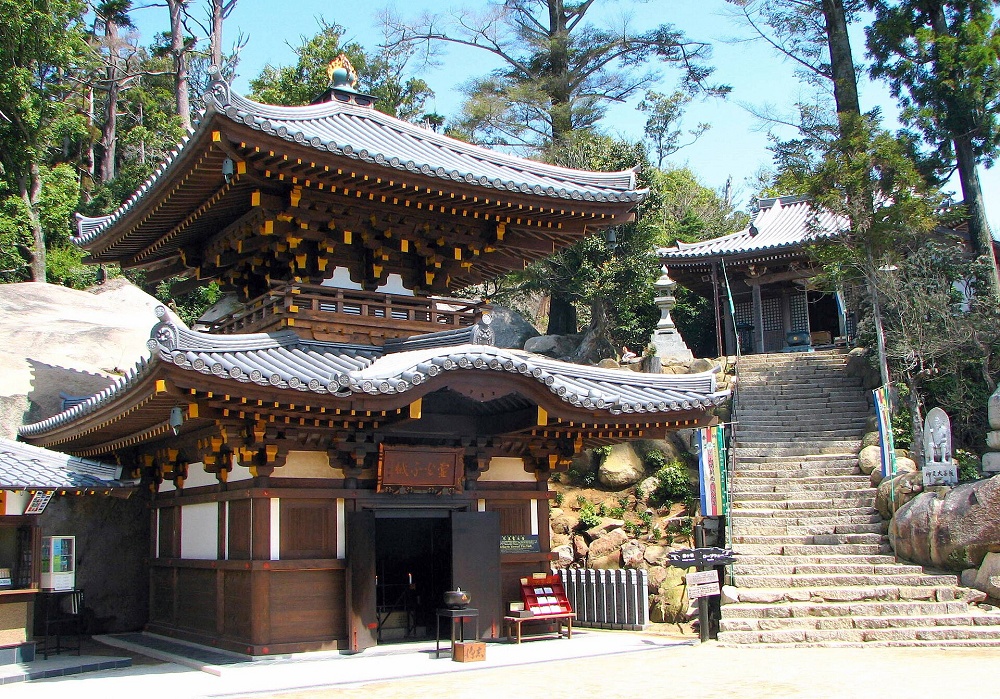
Hiroshima Prefecture’s Miyajima Island, famed for the torii gate that stands in the water just off its coast, is home to one of Japan’s most beautiful and historically significant concentrations of shrines and temples. Among them, though, Daishoin Temple is especially noteworthy, as it’s the oldest Buddhist temple on the island, founded by traveling monk Kukai (a.k.a. Kobo Daishi) in the year 806.
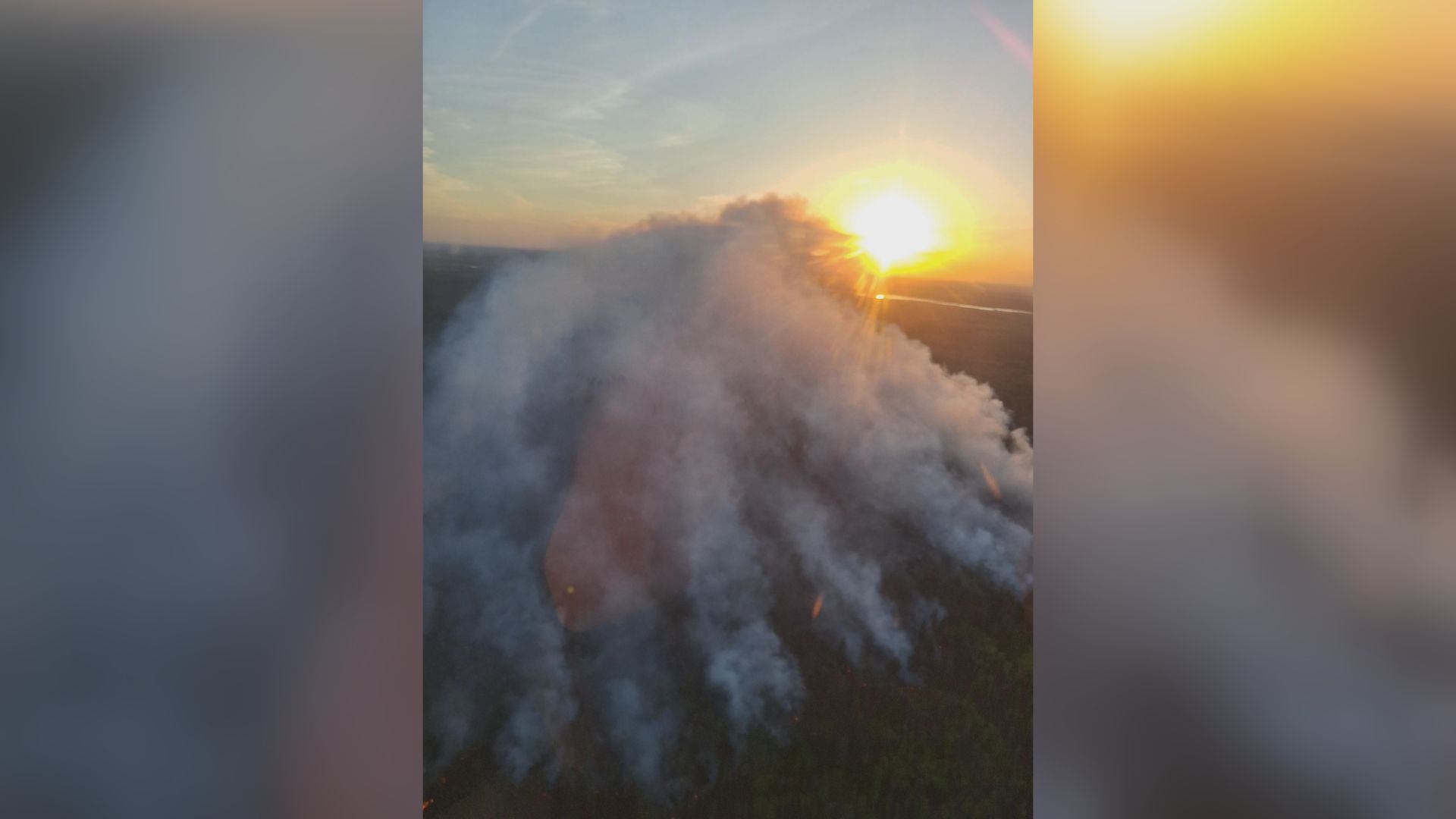
Located on Mt. Misen, along a popular hiking trail that leads up to the mountain’s peak, Daishoin receives many visitors. On the morning of May 20, though, a call came in to Japan’s 119 emergency response number reporting that the temple’s Reikado hall was on fire. Firefighters rushed to the scene, and after roughly two hours the blaze, which had also spread to part of the neighboring forest, was largely suppressed, but sadly, the hall burned to the ground.
Thankfully, though, the Reikado’s fire was unharmed.
To unravel this confusing situation, it’s helpful to know that Reikado translates as “Hall of the Sacred Flame,” and also that the building’s official name is Kiezu no Reikado, or “Hall of the Ever-burning Sacred Flame.” Housed within the hall was a flame that’s said to have been burning for more than 1,200 years.
▼ The Reikado’s sacred flame (prior to the fire on May 20) can be seen at the point queued in this video.
After the hall caught on fire, a quick-thinking monk transferred the sacred flame to another section of the temple where no unwanted fires were occurring, preserving its streak as it progresses towards the 1,300-year mark.
Fortunately, no one was injured in the fire, though the hiking trail as well as the ropeway to the top of the mountain were shut down as a precaution. Investigators are still trying to determine the cause of the fire.
This isn’t the first time for the Seikado to burn down but its sacred flame to be saved, as the same scenario also unfolded in 2005, with the rebuilt hall then opening in 2006. Daishoin’s abbot Masahiro Yoshida, though, says that the newest rebuilding will likely take more than one year to complete.
Source: Yomiuri Shimbun, FNN Prime Online
Top image: Wikipedia/Bgag
● Want to hear about SoraNews24’s latest articles as soon as they’re published? Follow us on Facebook and Twitter!

A Hong Kong company appointed by the government to administer the fire-ravaged Wang Fuk Court has asked the Lands Tribunal to postpone a statutory deadline for holding a homeowners’ meeting.
Hectar Pun, a lawyer representing Hop On Management, told the tribunal on Monday that the firm had faced challenges in verifying signatures and finding venues for the meeting.
Hop On, a subsidiary of real estate giant Chinachem Group, applied to the Lands Tribunal to postpone the May 13 deadline for notifying owners of the meeting and the June 13 deadline for convening the meeting.
Judge Gary Lam noted that Hop On had made an ex parte application – a request for a court order without the presence of the opposing party – and told the firm to consider the matter from the perspective of the flat owners.
He also asked whether the court should postpone the deadline every time Hop On encountered difficulties. Pun replied that the tribunal has the judicial powers to make delays as long as there is “good cause” to do so.
Judge Lam said that the court would hand down its decision at 3pm on Tuesday.
Hop On was appointed by the government to take over administrative duties at Wang Fuk Court from the board of the owners’ corporation weeks after the deadly November fire at the Tai Po housing estate.
The Lands Tribunal granted the government’s appointment of the firm in early January.
Hop On said last month that it would apply to the tribunal to extend the deadline for holding a homeowners’ meeting after it received a petition with 247 handwritten signatures asking the firm to meet with flat owners to discuss long-term resettlement and related financial matters.
The total number of signatures supporting the petition exceeded the 5 per cent threshold needed to convene a meeting stipulated by the Building Management Ordinance.
See also: Tai Po fire: Residents say ‘no choice’ but to accept buyback as deadline looms
According to the ordinance, the management committee should issue notice of the meeting within 14 days and hold the general meeting with owners within 45 days.
Wang Fuk Court resident Jason Kong, one of the petition’s organisers and a former board member, was arrested for alleged government loan fraud last month, two weeks after delivering the petition.
After he was released from police detention, he said he would no longer take media interviews.

A senior surveyor at a government inspection unit has admitted alerting the renovation consultant ahead of site checks at Wang Fuk Court before the estate went up in flames, a public inquiry has heard.
Victor Dawes, lead counsel to the independent committee investigating the fatal fire, questioned Andy Ku, a senior maintenance surveyor at the Housing Bureau’s Independent Checking Unit (ICU), on Wednesday.
Dawes presented to the committee Ku’s written witness statement, in which the senior surveyor said that the ICU had “no particular role in reviewing or confirming the quality, reliability, and integrity of consultants.”
The committee earlier heard in March that one of the directors of Will Power Architects, the consultancy firm overseeing the large-scale maintenance work at the Tai Po housing estate, had not carried out his duties as a “registered inspector” (RI).
“The RI’s work, in effect, is to act as a regulator. If it’s not up to you to keep them in check, who else would it be?” Dawes asked Ku.
Ku replied that the oversight system is essentially “self-regulating” and that the ICU does not have a formal auditing system.
The committee also heard on Wednesday that for most of its inspections, the ICU had notified a Will Power employee, who was also a representative for the RI. The inspector himself was not there for most of the ICU checks.
Dawes remarked that the ICU’s inspection practice deviated from the norm with other government departments, such as the Labour Department and Buildings Department.
The lead counsel also told the hearing that the ICU had conducted a total of 10 inspections at Wang Fuk Court, of which only two were held without advance notice. One of those two inspections was an impromptu check, which Ku conducted himself after a medical appointment in the same district.
“If you didn’t have a medical appointment in Tai Po that day, there wouldn’t have been an inspection?” Dawes asked. Ku agreed.
Dawes then showed the committee screenshots of ICU maintenance surveyor Amanda Lau’s text conversations scheduling an inspection with the RI representative, who then alerted the contractor, Prestige Construction & Engineering. Ku confirmed that Lau acted on his orders.
After the fire, the ICU began conducting inspections without advance notice, Ku said.
Dawes asked if the new arrangements meant that the ICU realised there were issues with its old system. Ku replied: “There was room for improvement.”
Ku was also grilled on his unit’s oversight of scaffolding nets and foam boards, which a preliminary investigation has blamed for contributing to the spread of the blaze.
The lead counsel brought up the ICU’s checks on the fire retardancy of scaffolding nets used at Wang Fuk Court.
He asked Ku why he told the Buildings Department the nets were up to standard, despite the ICU’s own test showing the nets continued to burn for more than 10 seconds before the flame was extinguished.
Ku said that upon two retrials of the same piece of netting, the net did not catch fire.
Dawes showed a fire retardancy certificate to the committee and asked Ku whether the ICU could verify the legitimacy of the certificate and whether it really corresponded to the same lot of scaffold nets.
Ku said the unit could not verify, as it relied on the contractor’s word.
Despite residents’ complaints, the senior surveyor told the hearing that he did not notice the estate’s windows were covered with foam boards during an ICU inspection in September because scaffolding nets were in the way.
A month later, the contractor and the inspector told Ku that only three floors would have windows covered with foam boards whenever spalling works were carried out.
Ku said he did not ask to see a fire retardancy certificate for the foam boards as he believed the phased arrangement would mitigate fire risks. “There was no basis to ask for a certificate,” he said.
Dawes scrolled through about a dozen photos from the site, most of which showed windows covered with foam boards in clear view. The photos were part of a slideshow report that Ku had previously seen.
Dawes questioned how Ku could have been unaware of the foam boards, to which the government surveyor said he was “focused on the concrete works.”
Ku added that in retrospect, he “had been lied to” and that he did not follow up on the matter because there were no further complaints from residents.

Some Wang Fuk Court residents have said they “are given no choice” over the government’s plan to buy back their flats, urging authorities to reconsider rebuilding the fire-hit estate on site.
Residents continued to return to the housing complex in Tai Po on Wednesday, half a year after the massive fire in November, which killed 168 people and displaced thousands. They were permitted to visit their flats for a second time to retrieve personal belongings, following an initial round of trips last month.
Speaking to the media outside the cordoned area, several residents expressed dissatisfaction with the buyback plan. The government has given flat owners until the end of August to accept the offer, while those who opt in before June 30 will be given priority in selecting flats in a special sales scheme.
“We are given no choice,” a Wang Tao House resident surnamed Lee told reporters in Cantonese. “It’s either sell your flat or sell your flat,” she said.
A Wang Shing House resident, surnamed Sze, said his family were inclined to accept the buyback plan, calling it the “only rational option.”
“We have concerns about how to conduct our lives after selling the flat, because it has not been made clear,” Sze told InMedia in Cantonese. “It’s not an easy decision [to sell the flat], but people will understand that, in our situation, we don’t really have many options.”
A Wang Tao House resident, surnamed Lai, criticised the government’s June 30 deadline for early flat selection as “putting the cart before the horse.”
“A sensible way would be to let us pick what we really want to buy, before making us sell the flat,” he told local media outlet The Collective in Cantonese.
Another Wang Shing House resident, identified only as Mrs Wong, similarly slammed the deadlines in the government buyback plan.
“Why do we have to decide before June 30 or the end of August? Why can’t we wait until the report by the independent committee?” she said in Cantonese. She was referring to a public inquiry that is due to report on a range of issues relating to the blaze by September.
She also questioned how the HK$2 billion fire insurance covering Wang Fuk Court would be claimed if the government decided not to rebuild the estate.
“Why can’t you use that HK$2 billion to rebuild? We can wait. I am not dying,” she told The Witness. “But [the government] is not giving us a choice.”
Lee, the Wang Tao House resident, said her flat was not affected by the fire and expressed hope that she could live there in the future. She supports the idea of rebuilding the estate, she added.
She also called on the government-appointed administrator, Hop On Management, to organise an owners’ meeting to facilitate communication and improve transparency.
Wang Tao House resident Lai also appealed for an owners’ meeting, saying it would allow residents to communicate their preferences regarding the government buyback plan as well as to communicate directly with the government.
“Often, residents’ voices are only heard through the media. In fact, the government has never communicated with us directly,” he said.
More residents have been calling on the government to reconsider rebuilding Wang Fuk Court in media interviews. Some have also expressed this wish through handmade posters and drawings displayed in their flats’ windows.
The second round of visits will run until May 29. It is unclear whether residents will be allowed to make more trips in the future.
The authorities have said the buyback plan is final. So far, there have been no announcements regarding the arrangements for those choosing not to accept the buyback offers.
Deputy Financial Secretary Michael Wong said in February that the government would study whether “special legislation” would be needed if some owners refused to sell their flats.
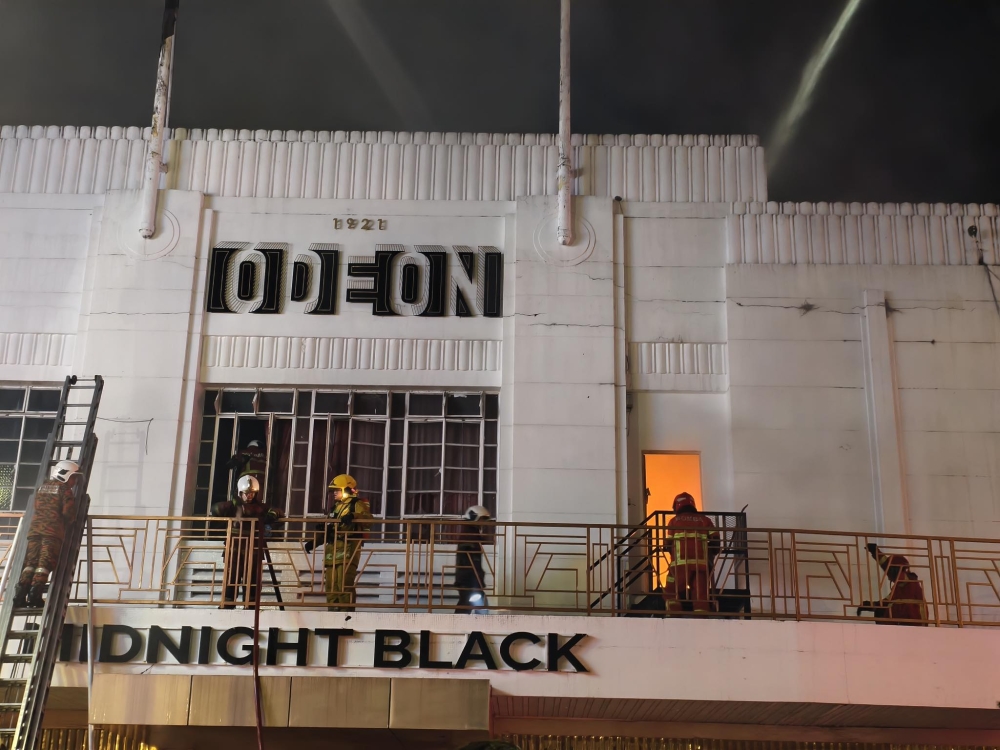
GEORGE TOWN, June 2 — Penang will review possible improvement measures, including strengthening compliance with fire safety requirements for old and heritage buildings, following the fire at the Odeon building on Jalan Penang here, which claimed the life of a Myanmar construction worker last Saturday.
State Local Government and Town and Country Planning Committee chairman H’ng Mooi Lye said the matter would be examined based on the findings of investigations by the relevant authorities, as well as feedback from technical agencies.
“The state government views the fire incident seriously, and among the areas that could be given attention are strengthening compliance with fire safety requirements, monitoring high-risk buildings, regulating renovation works, and increasing awareness among building owners and premises operators.
“Any proposed improvements will be studied comprehensively, taking into account safety considerations, heritage preservation and existing legal requirements,” he told Bernama.
H’ng said Penang’s two local authorities — the Seberang Perai City Council (MBSP) and the Penang Island City Council (MBPP) — have consistently prioritised the safety of old and heritage buildings through close cooperation with the Fire and Rescue Department of Malaysia (JBPM) and other relevant technical agencies.
H’ng said existing measures include monitoring building usage, regulating renovation works, ensuring compliance with licensing requirements and coordinating with technical agencies to strengthen fire safety standards.
Building owners and premises operators are also encouraged to maintain fire safety systems, including emergency exits, fire extinguishers, alarm systems and electrical wiring.
He said both the MBSP and MBPP conduct regular inspections and monitoring of buildings, renovation projects and heritage properties to ensure compliance with relevant laws and safety requirements, while also keeping track of dilapidated and abandoned buildings.
“To ensure a higher level of compliance among building owners, MBPP has previously taken the initiative to facilitate the application process for existing shophouses and heritage buildings within the Unesco World Heritage Site of George Town through the implementation of more efficient procedures.
“The initiative allows building owners to submit Building Plan applications for related works without having to undergo the Planning Permission process, subject to the stipulated conditions and criteria,” he said.
Following the Odeon fire on Saturday, H’ng said MBPP would review investigation findings and consider measures to strengthen existing procedures, guidelines and safety requirements.
“In addition, MBPP will hold further discussions with members of the Spead (Surveyors, Planners, Engineers, Architects and Developers) Committee as well as relevant technical agencies to review suitable improvement proposals, particularly those related to the safety of old and heritage buildings,” he said.
He added that the state government continues to coordinate with local authorities and relevant agencies on monitoring and follow-up actions, with enforcement measures, inspections and repair directives to be undertaken where necessary.
In the incident last Saturday, a 56-year-old Myanmar construction worker, Mohamad Boshi Sabi Ullah, died from smoke inhalation after becoming trapped in a fire at an entertainment centre premises in the Odeon building on Jalan Penang. The premises was undergoing renovation works to be converted into a restaurant. — Bernama
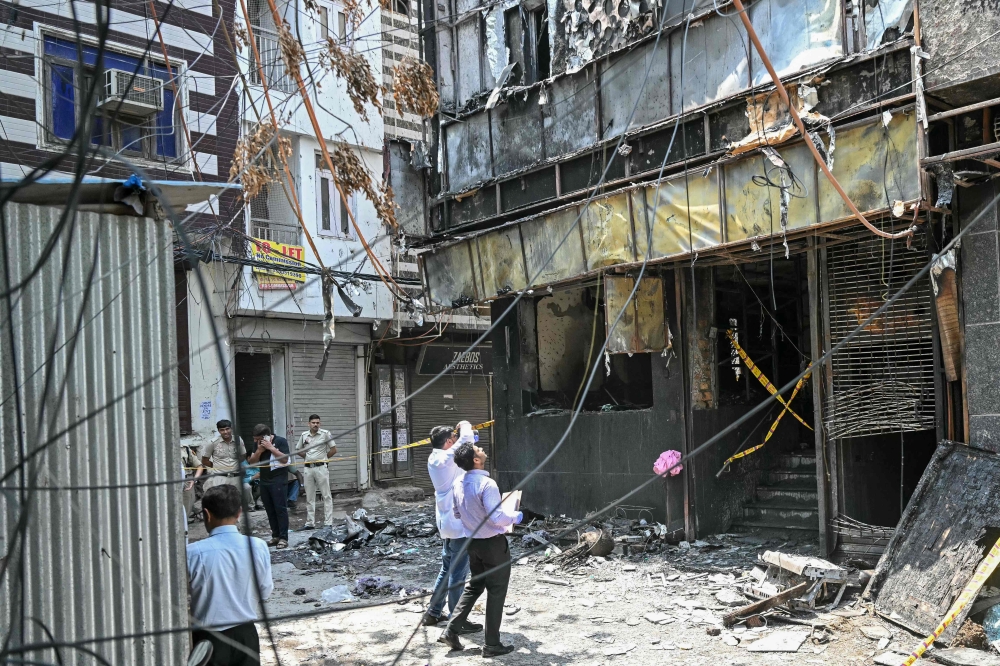
NEW DELHI, June 3 — At least 21 people, including 18 foreign nationals, were killed in a fire at a hotel in Delhi today, police and broadcaster CNN-News18 said, in one of the worst such incidents in the national capital since 2022. The dead included people from Bangladesh, Nigeria, Mozambique and Liberia, the broadcaster said.
Reuters could not immediately confirm the nationalities of the victims. Several people had jumped out of the burning building in South Delhi’s Malviya Nagar to escape the flames, witnesses said, with residents dragging mattresses from a nearby store to try to break their fall.
“People spread mattresses, and a woman from the third floor jumped on it with a little kid,” witness Sher Khan said.
Television footage showed two people jumping from a higher floor of the building as it was engulfed in flames, with smoke billowing out.
Local people who helped in the initial rescue said the fire broke out on the ground and first floors of the four-storey building, trapping those on higher floors.
“There is a mattress shop here... We took the mattresses from there and laid them on the road to help those who were jumping out of the building,” Wasim Raja, a local resident, told news agency ANI.
Fire may have started in restaurant
The fire broke out a little before 9am (0330 GMT/11am Malaysian time), and eight fire tenders were dispatched to douse the blaze, police said in a statement.
The fire was extinguished around midday, a Reuters witness said.
“Through the coordinated efforts of police, fire services, and other emergency responders, more than 40 persons have been rescued and shifted to nearby hospitals for medical treatment,” police said.
“It is with profound sorrow that 21 persons have been declared dead in this tragic incident,” it said.
A spokesperson at the state-run All India Institute of Medical Sciences told Reuters the hospital had received 13 patients, two of whom were critical.
“There was reportedly a restaurant operating on the ground floor of the building ... it is most likely that the fire was connected to that restaurant,” local administration official Jitendra Kumar told reporters.
Prime Minister Narendra Modi expressed his condolences for the loss of lives in a post on X. “Authorities are providing all possible assistance to those affected,” he said. — Reuters

The administrator of the fire-hit Wang Fuk Court has said it is studying the Lands Tribunal’s judgment after the court denied its bid to extend the statutory deadline for an owners’ meeting.
Replying to media enquiries, Hop On Management, the government-appointed administrator of the housing estate, also said on Wednesday that it would continue to verify signatures in the petition from homeowners and would hold a meeting as requested.
Just a day earlier, the Lands Tribunal denied Hop On’s application to postpone the deadline for convening and holding an owners’ meeting, as required by the Buildings Management Ordinance (BMO), after the company received the homeowners’ petition.
Hop On also said on Wednesday that it made the application due to the extensive preparations for the meeting and that it hoped all homeowners would have a “fair opportunity” to participate in the meeting.
Hop On added that it appreciated the tribunal’s acknowledgement of the administrator’s efforts in contacting homeowners.
In his Tuesday judgment, Judge Gary Lam, presiding officer of the Lands Tribunal, said that the firm’s difficulty in contacting owners was “not insurmountable” as it had managed to collect addresses, phone numbers and email addresses of 1,601 owners out of 1,984 units at the Tai Po housing estate.
He also said it was “plain and obvious” that the BMO does not give the tribunal jurisdiction to extend the statutory deadline for holding owners’ meetings.
Replying to press enquiries, the Home Affairs Department (HAD) said that Lam’s ruling involved the interpretation of the BMO and that the government would study the judgment.
The department also noted that the tribunal gave Hop On and the HAD “credit” for their efforts in issuing notices and convening the meeting, given the exceptional circumstances.
On April 29, Hop On, a subsidiary of real estate giant Chinachem Group, received a petition with 247 handwritten signatures asking the firm to meet with flat owners to discuss long-term resettlement and related financial matters.
The total number of signatures supporting the petition exceeded the 5 per cent threshold needed to convene a meeting stipulated by the BMO.
According to the ordinance, the management committee should issue notice of the meeting within 14 days and hold the general meeting with owners within 45 days.


In April, the 70th month since Beijing imposed the national security law, the Hong Kong government applied to the court to seize assets belonging to Apple Daily founder Jimmy Lai, who is serving a 20-year prison sentence.
On National Education Day, a top Chinese official delivered a warning about those who “politicised” the deadly Tai Po fire and tried to “stir up chaos” in the city.
The Hong Kong government filed an application with the High Court on April 2 to seize “offence-related” properties owned by jailed pro-democracy media tycoon Jimmy Lai on national security grounds.
In a statement issued the same day, the government mentioned Lai’s earlier convictions under the Beijing-imposed national security law. It said the High Court had found that he was the “mastermind and driving force behind the case, consciously using Apple Daily and his personal influence” to undermine local and Beijing authorities.
In a writ dated April 2, the secretary for justice listed HK$127 million in assets to be “forfeited” to the authorities.
The assets include credit balances in bank accounts belonging to or linked to the Apple Daily founder.
Fifteen bank accounts under Lai’s name – 10 with HSBC, two with Hang Seng Bank and three with Shanghai Commercial and Savings Bank – have over HK$32 million.
The government is also seeking to seize bank accounts belonging to 17 companies linked to Lai. It is also demanding that Lai give up shares in 17 companies, some of which overlap with the 17 firms whose assets the government is seeking to seize.
Among the companies whose assets and shares the government wants to seize are Dico Consultants Ltd, which has over HK$404,302 in its HSBC account, and Lai’s Hotel Properties Ltd, which has over HK$3.1 million in its four HSBC accounts.
Lai has been summoned to the High Court on July 8 to hear the government’s application. The case will be presided over by Esther Toh, one of the three judges who heard his national security trial.
The move to seize Lai’s assets came after the government designated three companies linked to Lai’s now-defunct Apple Daily tabloid “prohibited organisations” in late March and removed them from the corporate registry. Police cordoned off the Apple Daily building in Tseung Kwan O a day later.
The three firms were tried and convicted alongside the Apple Daily founder in his high-profile national security case. Lai was sentenced to 20 years behind bars in early February, while the companies were each fined over HK$3 million.
A Hong Kong political commentator charged with disclosing details of a national security investigation appeared at the District Court on April 28.
Wong Kwok-ngon, known by his pen name Wong On-yin, has been detained since his arrest in December for allegedly divulging in a YouTube video details of enquiries made by police during a national security investigation.
Judge Stanley Chan said the pre-trial review would take place behind closed doors on August 11, and the trial would begin on October 9.
Wong’s offence falls under the Safeguarding National Security Ordinance, a homegrown security law known as Article 23. It was added to the ordinance in May as part of subsidiary legislation, and Wong is the first to be charged under the new law.
He is also charged with sedition over videos posted on YouTube between January 3 and December 6 last year. He plans to plead not guilty to both charges.
The defendant, who continues to represent himself, told the court he had dropped his legal aid application.
Asked by the judge whether he had legal knowledge for self-defence, Wong said he had “three law degrees” and was confident of handling the case.
Secretary for Environment and Ecology Tse Chin-wan said in early April that all Hong Kong restaurant licences would include national security clauses from September.
Tse made the remarks on April 7, nearly a year after the Food and Environmental Hygiene Department (FEHD) introduced the provisions for restaurant licence renewals in May.
“With restaurants renewing their licences gradually, we expect that by September this year, all restaurant licences will contain the clauses,” Tse told reporters, according to RTHK.
A Hong Kong man was jailed for a year under the city’s homegrown national security law after pleading guilty to making seditious remarks on Facebook, including comments supporting Hong Kong’s and Taiwan’s independence.
Raymond Chong pleaded guilty before national security judge Victor So at West Kowloon Magistrates’ Courts on April 14 to one count of knowingly publishing publications with a seditious intention – an offence under the city’s local security law, also known as Article 23.
The magistrate handed Chong, a retiree in his early 60s, an 18-month sentence but discounted it by six months after considering his guilty plea.
Chong was accused of making 53 seditious social media posts between March 2024 and November 2025, local media reported.
The posts had wording such as “dissolving the Chinese Communist Party is the most important thing” and “Hong Kong independence is within sight.”
The defendant posted on a public Facebook page called “Holy Raymond,” which features the Chinese phrase “Heaven will destroy the Chinese Communist Party, God bless Hong Kong” as its profile picture.
During mitigation ahead of sentencing, his lawyer argued that Chong was a Falun Gong believer who had come to hate the Chinese Communist Party because of false information that the CCP engaged in live organ harvesting.
China’s top official in charge of Hong Kong affairs warned of some people who “politicised” the deadly Tai Po fire and tried to use the disaster to “stir up chaos” in Hong Kong.
Xia Baolong, director of the Hong Kong and Macao Affairs Office, delivered his remarks on April 15 via a recorded video shown at a National Security Education Day ceremony.
In his speech, Xia mentioned the massive fire that broke out at Wang Fuk Court, a government-subsidised housing estate in Tai Po, on November 26, killing 168 people.
“After the Tai Po fire, some malicious people politicised the tragedy, attempting to use the disaster as a means to disrupt Hong Kong,” Xia said in Mandarin, without giving further details.
“Once again, it reminds us that along Hong Kong’s path toward prosperity under good governance, there will be various risks and challenges.”
Speaking at the same event, Hong Kong Chief Executive John Lee also warned that some people were “using the disaster to stir up chaos” and “to incite hatred” in Hong Kong.
“Only through the government’s swift action and decisive law enforcement has the situation been able to return to normal,” Lee said in Mandarin.
A French journalist was denied entry to Hong Kong in November, Reporters Without Borders (RSF) said in late April, accusing the city’s authorities of “weaponising visas” against foreign media workers.
Antoine Vedeilhe, who was shooting a documentary for French public broadcaster France Télévisions, was questioned upon arrival at Hong Kong International Airport on November 2 last year, RSF said in a statement on April 24.
He was detained for three hours before being deported without being given a reason, it added.
The press freedom NGO said Vedeilhe was the 13th foreign media worker who had been denied entry or a visa by the city’s authorities following Beijing’s imposition of the national security law in 2020.
“In the journalist’s view, his detention was a reprisal for his work on a documentary examining Beijing’s grip on Hong Kong,” RSF said.
Another cameraman for the documentary was able to enter the city, RSF said, but he was followed by “unidentified individuals that he suspects were Hong Kong’s national security police.”
“In the following days, there was a hacking attempt on Vedeilhe’s private email account and his sources in the documentary were harassed by the national security police,” the NGO said.
In an emailed reply to HKFP’s enquiries, the Hong Kong government said it “strongly condemns the smearing remarks and distorted narratives by” RSF.
As of April 1, a total of 394 people have been arrested for “cases involving suspected acts or activities that endanger national security” since Beijing’s national security law came into effect, according to the Security Bureau. That figure includes those arrested under Article 23 and for other offences.
Of the 208 people and five companies that have so far been charged, 180 people and four companies have been convicted or are awaiting sentencing.
In total, 100 people and four companies have been charged under Beijing’s national security law, with 79 persons and three companies convicted. Thirteen people have been charged under Article 23, 10 of whom have been convicted.

