Reading view

Guest Idea: The Hidden Environmental Cost of Lost Golf Balls

Every year, American golfers lose an estimated 300 million golf balls, according to research by the Danish Golf Union — and that figure, dating to 2009, is almost certainly too low. A 2024 CNN investigation using updated participation data estimated the U.S. number could now exceed 1.5 billion annually, with the global total up to 3 billion. Made from synthetic rubber cores and plastic polymer covers, each of those balls can take 100 to 1,000 years to decompose, leaching microplastics and chemicals into soil and water along the way.

But lost balls are just one piece of golf’s environmental footprint. The sport’s real sustainability challenge spans water consumption, chemical runoff, habitat disruption, and carbon-intensive manufacturing. The good news: a growing wave of innovations — from recovered ball resale to fully biodegradable alternatives to course-level conservation programs — is giving golfers real options for reducing their impact.

Golf’s environmental footprint: beyond the lost ball

The environmental impact of golf extends well beyond what ends up in the rough. U.S. golf courses collectively use approximately 1.5 billion gallons of water per day, with individual courses in arid regions consuming over a million gallons daily during summer months. The Golf Course Superintendents Association of America (GCSAA) reported in December 2025 that the industry has reduced total water use by 31% since 2005 — real progress, but the baseline remains enormous.

Chemical inputs compound the water problem. According to CBC reporting on golf course maintenance, more than 50 pesticides are commonly used in the industry, and when turf is mowed to the low heights golfers expect, stressed grass requires even more chemical intervention. These inputs can migrate into nearby waterways and groundwater.

Then there’s the equipment itself. Manufacturing a single golf ball involves synthesizing polybutadiene rubber for the core and ionomer or urethane plastic for the cover, with the supply chain spanning mining, polymer synthesis, and transoceanic shipping — most golf balls are manufactured in Southeast Asia. When those balls are lost to water hazards, forests, and coastal environments, marine researcher Matthew Savoca of Stanford University estimated that tens of thousands of tons of debris enter U.S. ecosystems every year from lost golf balls alone, posing ingestion risks to marine life and contributing to microplastic pollution.

The recovered ball market: reuse at scale

The simplest way to reduce golf ball waste is to keep existing balls in play. The recovered golf ball industry has grown into an estimated $200 million annual market, with professional divers and retrieval companies pulling millions of balls from water hazards each year. An estimated 100 million balls are recovered and resold annually in the U.S. alone.

Companies like LostGolfBalls.com, operated by PG Golf, a subsidiary of Titleist, sell roughly 50 million recovered balls per year. Independent testing has shown that recovered balls in good condition perform comparably to new ones — and at a fraction of the cost. A dozen quality recovered Pro V1s can sell for $10–18 versus $50+ new, making reuse both the greener and more affordable choice.

Recovered balls are still made from the same non-biodegradable materials. They’ll eventually re-enter the waste stream. But extending each ball’s useful life by one or more rounds meaningfully reduces demand for new manufacturing and keeps plastic out of ecosystems longer.

Innovations changing golf’s environmental equation

Biodegradable golf balls. Several companies are now teeing up balls designed to decompose in weeks or months rather than centuries. These products aren’t yet approved by the USGA for competitive play, and most achieve roughly 70% of the distance performance of premium conventional balls. But for practice sessions, waterfront driving ranges, and casual rounds, they eliminate the lasting environmental damage of a lost ball entirely.

Course-level conservation programs. The Audubon Cooperative Sanctuary Program (ACSP) for Golf Courses, endorsed by the U.S. Golf Association, certifies courses that demonstrate high standards in wildlife habitat management, water conservation, chemical use reduction, and environmental planning. Over 2,100 courses in 24 countries participate, though that’s still less than 2% of worldwide courses. Audubon International’s Monarchs in the Rough program is also helping hundreds of courses create habitat for endangered monarch butterflies in out-of-play areas.

Water conservation technology. The GCSAA’s December 2025 survey documented a 31% reduction in water use since 2005 across U.S. golf facilities, driven by precision irrigation systems, drought-resistant turf grass varieties, and conversion of managed turf to natural rough. Two-thirds of the reduction came from more efficient application rather than simply reducing irrigated acreage.

Five ways to reduce your impact as a golfer

Buy recovered balls. The single easiest step is to play with recovered golf balls from companies like LostGolfBalls.com. You’ll save money and reduce demand for new manufacturing. At higher handicap levels, there’s no meaningful performance difference.

Play Audubon-certified courses. Look for courses certified through the Audubon Cooperative Sanctuary Program. These facilities have demonstrated measurable commitments to water conservation, habitat protection, and chemical use reduction. If your home course isn’t certified, ask the superintendent why not.

Support Extended Producer Responsibility. EPR legislation would require golf ball manufacturers to take responsibility for end-of-life collection and recycling. Several U.S. states are expanding EPR frameworks to cover more product categories — sporting goods could be next. Contact your state legislators to advocate for including golf equipment in EPR programs.

Recycle your other golf gear. Clubs, bags, shoes, and gloves all have recycling and donation pathways. Check Earth911’s recycling search for local clothing recycling and donation options, donate usable equipment to organizations like The First Tee or Goodwill, and look for brands using recycled materials in apparel and accessories.

Golf is played across 84% of the world’s countries, though roughly 80% of courses are concentrated in just 10 nations. That concentration means targeted action by players, course operators, and manufacturers in the U.S., Japan, the U.K., Canada, and Australia, can have outsized impact.

Choosing recovered balls and playing courses that invest in conservation are all choices available to every golfer today. The sport doesn’t have to leave a permanent mark on the landscape.

About the Author

This sponsored article was written by John Cunningham, a sports writer with a journalism background and a strong passion for analytical storytelling. He breaks down matches, odds, and betting trends in a way that both newcomers and seasoned bettors can easily understand. John’s work blends data-driven insights with engaging narratives that bring sports to life.

The post Guest Idea: The Hidden Environmental Cost of Lost Golf Balls appeared first on Earth911.

  •  

Guest Idea: How to Choose a Laundry Detergent That’s Better for the Planet

A single load of synthetic laundry can shed hundreds of thousands of plastic microfibers into wastewater. Multiply that by the roughly 300 wash cycles an average U.S. household runs each year, and the case for rethinking laundry gets concrete fast—not just the detergent itself, but the chemistry that rinses out, the plastic that carries it home, and the residue that stays on fabric after the cycle ends.

We’re Orange House, a plant-based cleaning brand built around food-grade orange oil. We wanted to share how we think about the trade-offs in sustainable laundry—concentration, packaging, residue, and third-party testing—because the answers aren’t always the obvious ones, and because consumers deserve more than a “natural” label to go on.

Why we built our formulation around orange oil

We chose orange oil as a primary active ingredient because of its natural performance as a grease-cutting and stain-removing agent. For us, it represents a conscious move away from chemical-heavy conventional systems while still delivering the cleaning results families expect. Plant-based doesn’t have to mean underpowered.

But we also know that sustainability in laundry isn’t defined by a single ingredient. Every wash cycle contributes to environmental pressure in two main ways: the chemical substances released into wastewater, and the residues that stay behind on fabric in direct contact with skin. A good formulation has to address both.

Some laundry additives—especially fabric softeners and certain enhancers—can coat fabric surfaces and remain even after rinsing. The American Cleaning Institute has published guidance on how these products interact with fibers. We optimized our detergents to clean effectively and rinse away thoroughly, which reduces residue build-up over repeated washes.

Trace impurities: why we test for 1,4-dioxane

Product safety isn’t just about what goes into a formula—it’s also about what slips in during manufacturing. 1,4-dioxane is a well-known example. It’s not an ingredient; it’s a byproduct that can form during the production of certain surfactants and foaming agents, and the EPA classifies it as a likely human carcinogen.

Since December 31, 2023, New York State law has required that finished household cleansing products sold in the state contain no more than 1 ppm of 1,4-dioxane—the strictest such limit in the country. We test against that benchmark.

Our finished-product testing was performed by Intertek Testing Services Taiwan Ltd. using a method aligned with USP-NF 2023 <467> for residual solvents, analyzed by Headspace Gas Chromatography-Mass Spectrometry (Headspace GC-MS). Testing was conducted between March 20 and March 27, 2026, with a limit of quantitation of 0.5 ppm. Under those conditions, 1,4-dioxane was not detected in our final formulation.

For us, sustainable laundry means more than a “natural” label. It’s a commitment to minimizing total material usage and reducing cumulative chemical exposure over time—and being willing to publish the data that shows it.

The packaging trade-off most brands skip

Packaging is where a lot of laundry sustainability claims fall apart. Every detergent bottle eventually becomes waste, and highly diluted formulas compound the problem: more bottles per year, more transportation weight, more emissions per wash.

We addressed this with a concentrated format—including our 4-liter design—that delivers more washes per container. Increasing efficiency per use reduces the number of bottles a household goes through annually, which is a straightforward way to cut plastic waste without asking consumers to change their routines.

We’ll be candid about a trade-off other brands sometimes obscure. Paper-based detergent containers can appear more environmentally friendly, but many of them require internal plastic linings that make them difficult to recycle in practice. A single-material plastic that actually gets recycled in local infrastructure can have a better real-world outcome than a multi-material paper container that ends up in landfill. Neither option is perfect; we chose the one we believe performs best in the waste stream most of our customers live in.

Testing for sensitive skin

After washing, trace detergent components can remain embedded in textile fibers. For people with sensitive skin or atopic dermatitis, residual detergent has been linked to skin barrier irritation. That’s why residue behavior matters as much as the active ingredient list.

We subjected our detergent to a Human Repeat Insult Patch Test (HRIPT), a standard dermatological evaluation. The test ran for six weeks across 108 participants, including people with sensitive skin, and used repeated exposure followed by a controlled challenge phase. Under the test conditions, no signs of irritation or sensitization were observed.

Our goal isn’t to eliminate chemistry—it’s to optimize it. Our micellar orange oil technology combines citrus oil with molecular structures that encapsulate and remove dirt using less detergent per wash. Orange House detergents are dermatologically tested and carry the USDA Certified Biobased Product label at 85% biobased content, verified through the USDA BioPreferred Program’s ASTM D6866 testing protocol.

What to look for in any sustainable detergent

The broader point we want to leave you with: choosing a better detergent comes down to informed decision-making, not marketing claims. Whether or not you choose Orange House, these are the questions worth asking about any product on the shelf.

  • Concentration: How many loads per container? More concentrated formulas mean less plastic, less shipping weight, and lower emissions per wash.
  • Packaging honesty: Is the container actually recyclable in your local system—or is it multi-material packaging that sounds greener than it performs?
  • Residue and rinse-out: Does the formula rinse cleanly, or does it coat fibers with additives you’ll end up wearing?
  • Third-party testing: Has the finished product been tested for trace contaminants like 1,4-dioxane by an accredited lab? Is the data published?
  • Independent certifications: Look for labels that require third-party verification—USDA Certified Biobased Product, EPA Safer Choice, or dermatological testing with disclosed protocols.

Innovation in formulation and packaging design can align real cleaning performance with environmental responsibility. We built Orange House to prove that. But even if the detergent you choose isn’t ours, asking these five questions pushes the category in the right direction—one load at a time.

About the Author

This sponsored article was written by the Orange House team. Orange House is a plant-based cleaning brand whose products are formulated around food-grade orange oil and tested to meet New York State’s 1,4-dioxane standard. Learn more at orangehouse.com.

The post Guest Idea: How to Choose a Laundry Detergent That’s Better for the Planet appeared first on Earth911.

  •  

What they carry: The unseen burdens of migrant domestic workers in Hong Kong

Migrant workers op-ed featured image

By Sringatin & MICROLAB

MICROLAB Collective’s latest book, What We Carry, Under the Same Sky, features essays, poems, photographs and drawings by Indonesian migrant workers, reflecting on their life journeys from their home villages in Indonesia to Hong Kong.

The cover of the book "What We Carry, Under the Same Sky," and a poster of the book launch on March 8, 2026. Photo: MICROLAB Collective.
The cover of the book “What We Carry, Under the Same Sky,” and a poster of the book launch on March 8, 2026. Photo: MICROLAB Collective.

This collaborative effort involved not only migrant workers but also academics who helped sharpen their writing, as well as artists who guided the process and helped design the book’s layout.

Their stories represent the journeys of hundreds of thousands of domestic workers in Hong Kong and beyond.

The shared collective emotion begins in Chapter One. Despite living in resource-rich Indonesia, the authors describe facing economic difficulties due to the country’s broken system. “It is true, our country is rich, yet we do not live in prosperity,” they write.

Each chapter touches upon the invisible burdens faced by migrant workers, such as long-distance motherhood and structural isolation. It opens with an essay, followed by photos taken by migrant workers. The pictures are their personal reflections of what they have “carried,” metaphorically and literally, from Indonesia to Hong Kong, during work and on their days off.

The photos are accompanied by captions that describe the burdens of their lives, worries, and hopes as migrant workers.

A poignant example is in Chapter Two. A migrant worker uses a photo of suitcases in front of airport check-in counters to express loneliness, longing and determination. “Leaving behind family, children, parents – we store our feelings of longing, pain, discrimination in a suitcase of sincerity,” she wrote.

An Indonesian migrant worker takes part in a workshop for the book "What We Carry, Under the Same Sky."
An Indonesian migrant worker takes part in a workshop for the book “What We Carry, Under the Same Sky.” Photo: Lennie Chamello, via Facebook.
Copies of the book "What We Carry, Under the Same Sky," written by 15 Indonesian migrant domestic workers.
Copies of the book “What We Carry, Under the Same Sky,” written by 15 Indonesian migrant domestic workers. Photo: JBMI, via Facebook.

The stories shared by 15 women in the book can easily be experienced by many other migrant workers. This could be seen during the book launch on International Women’s Day on March 8.

The authors drew much laughter when they told the audience about experiencing miscommunications and misunderstandings when they first came to Hong Kong. For example, they mistook the Cantonese word “tang” for “chair,” whereas the employer meant “wait” or “lamp.” The writers turned to humour to ease the daily struggles and sadness they may experience.

Reading What We Carry, Under the Same Sky is like watching a TV drama. It begins with reflections on their home country, then continues with the challenges they face overseas, personal moments with friends on their days off, and ends with their dreams and aspirations.

The book also captures the bitter reality of a cycle of exploitation. Even though Hong Kong and Indonesian laws are said to protect migrant workers, they fail to change the fundamental well-being and status of migrant domestic workers in Hong Kong.

The laws and regulations often contrast with the realities faced by migrant domestic workers. While smartphone technology makes it easier for migrant workers to communicate and send money home, their living conditions remain the same.

The mandatory live-in policy forces migrant domestic workers to live with their employers.  It is not uncommon for them to sleep in the kitchen, in the bathroom, or in a coffin-sized compartment. There is no legal limit to their working hours, and many work for over 12 hours a day and are on call 24/7.

The rules often become a trap. The two-week immigration rule for migrant workers forces them to leave Hong Kong within 14 days after their contract is terminated. As a result, many workers are afraid to report abuse for fear of being immediately deported and losing their livelihood.

There is a statutory monthly minimum wage for migrant domestic workers, but in reality, their hourly wage is far below that of other Hong Kong workers and has not kept pace with the high cost of living and inflation.

Migrant domestic workers on their day off in Hong Kong, on November 11, 2023. Photo: Kyle Lam/HKFP.

Indonesia also prohibits employment agencies from charging migrant workers placement fees, while Hong Kong only allows agencies to deduct at most 10 per cent from workers’ first-month salaries. But in practice, some workers have to spend their entire wages for four to five months to pay agencies HK$ 20,000 to HK$25,000 in placement fees.

The language used by the governments often contrasts with reality.

The Hong Kong government still calls migrant workers “foreign domestic helpers” – a term that minimises their contribution as “help” rather than work. “Helper” erases the importance of the labour of migrant domestic workers and their significant contribution to Hong Kong’s economy and the households that employ them.

Meanwhile, the Indonesian government praises migrant domestic workers as “remittance heroes.” However, for many workers, it covers up the reality of being treated as commodities.

What We Carry, Under the Same Sky reveals that behind those beautiful terms and high-rise buildings in Hong Kong, these migrant women carry burdens, sweat and tears. Their stories are repeated and remain the same from year to year, decade to decade.

On International Domestic Workers Day, which falls on June 16, we encourage people and governments in Hong Kong and Indonesia to appreciate and celebrate the deep commitment of migrant domestic workers who leave their own families to take care of other families.

While this is a mutually beneficial relationship, migrant workers deserve deep appreciation, respect, and understanding of their rights, sacrifices, and struggles.

Without migrant domestic workers, employers will find it impossible to have both a career and take care of their children and elderly parents.

The responsibility of looking after others’ children, parents and home has been borne by invisible workers, often called “maids,” “servants,” or “helpers.” Yet they are more. They are workers who deserve respect, as well as fair and just treatment.


Sringatin is an Indonesian migrant domestic worker and labour activist in Hong Kong. She is the secretary of the Indonesian Migrant Workers Union (IMWU) and spokesperson for the Asian Migrants Coordinating Body (AMCB). In 2014, she was named by the South China Morning Post as one of the Top 10 Local Heroes.

MICROLAB is a shared space to cultivate collaboration between grassroots migrants, academics, artists and service providers hosted in the Department of English and Communication at the Hong Kong Polytechnic University. It is collaboratively run by the Network of Indonesian Migrant Workers (JBMI) leaders Sringatin and Jepy, Professor Lydia Catedral, Francis Catedral, Yvonne Zhu and Yuyan Liang.

HKFP is an impartial platform & does not necessarily share the views of opinion writers or advertisers. HKFP presents a diversity of views & regularly invites figures across the political spectrum to write for us. Press freedom is guaranteed under the Basic Law, security law, Bill of Rights and Chinese constitution. Opinion pieces aim to constructively point out errors or defects in the government, law or policies, or aim to suggest ideas or alterations via legal means without an intention of hatred, discontent or hostility against the authorities or other communities.
  •  

Guest Idea: When to Act and What to Use for Seasonal Pest Control

Pest management is most effective when the man-made cycles of the pests are observed in relation to their annual changes. Through such seasonal patterns, homeowners will be able to combine preemptive seasonal pest control tips with residential pest control services to avoid infestation before it becomes a great issue.

Early intervention lowers the population of pests in the area, and they curb the environment as well as the necessity of more potent chemicals in the future. Here is a year-round guide to minimizing insect, rodent, and other pests around the home.

Spring Pest Control

The growth of infestations is best stopped in early spring. People living at home are supposed to inspect their homes in order to find possible entry points and breeding sites. Stagnant water, cracks in the foundations, and standing water are all attractive to pests.

This is done by common pest control activities such as:

  • Sealing cracks around doors, windows, and foundations.
  • Essentially, removing accumulated water in the gutters or containers.
  • Clipping of the plants around the home.
  • Outdoor application of insecticides to prevent the disease.

Termite inspections are also important, as part of spring pest prevention, since termite galleries increase when it is warmer. Early identification of activity will prevent severe damage to buildings.

Summer Pest Control

The most active season of pests is summer, as the heeat and the greater amounts of moisture encourage rapid reproduction of insects.  Helpful strategies include:

  • The lawn should be trimmed frequently in order to clear hiding places.
  • Repel them with insecticides or repulsive smears of mosquitoes in the areas.
  • Store trash containers in a closed manner.
  • Clean outdoor places to dine so as to get rid of food remains.

It is also imperative to control the mosquitoes since stagnant water may develop into a breeding habitat very quickly.

Fall Pest Control

In the lowering of the fall, the pests begin to seek warm places. Rodents and insects usually attempt to get into houses and structures.

Common fall pests include:

  • Mice or rats
  • Spiders
  • Stink bugs
  • Cockroaches

The fall is a vital season for preventive control of pests. When pests are in a house, they may stay there throughout the winter.

Control activities of critical falls involve:

  • Checking and closing door and window perimeters.
  • Regluing broken windows or flues.
  • Keeping firewood outside the house.
  • Removal of litter and debris in the area of the foundation.

Rodent control is of particular concern during this season, when mice have the ability of squeezing into a very small hole.

Winter Pest Control

Even though enterable insects hibernate during winter, the control of pests is essential in the cold seasons. Some pests remain active in the house because temperatures are usually higher, and rodents usually head to houses.

It is the responsibility of the homeowners to ensure that they maintain their houses clean during winter. Keep food in closed containers, vacuum regularly, and examine exotic corners used infrequently, like attics and crawl spaces.

Choosing the Right Pest Control Methods

The choice of the seasonal pest control tips relies on the type of pests, the degree of their infestation, and the place of their treatment. Here are some of the popular strategies:

  • Prevention measures to prevent the infestations in advance.
  • Biological systems, which characterize the use of natural predators or other environmentally friendly solutions.
  • Selective pest treatment with chemicals.
  • Bodily obstacles, including traps, screens, and closed entry points.

Some companies like CitiTurf are known to come up with tailor-made pest management structures that are made to deal with the domestic pest action all through the year.

Tips for Year-Round Pest Prevention

46% of homeowners have experienced structural damage due to pests. The risk of infestations may be reduced significantly by simple maintenance measures and by following pest control tips.

The following are some tips to be considered in year-long pest prevention:

  • Take out waste on a regular basis and use the correct bins for trash, recycling, and compost.
  • Seal up the leaks that form dampness.
  • Inspect the house on a regular basis to detect pests.

The care of the outside is taken with the same consideration as the house. Uncontrolled vegetation, dirty storage, and unnecessary moisture accumulation are some of the attractions of pests.

Your home is safe and comfortable courtesy of adequate seasonal pest management. Spring pest prevention is possible by addressing repairs, and rodents are better kept out in the fall and winter through routine maintenance and cleaning.

Being aware of the active period of pests makes homeowners respond in time before an infestation takes place.

About the Author

This sponsored article was written by Laura Phoenix, a British freelance writer with specialisations in countryside living, health, travel, and wellbeing. She writes content for blogs and social media and has been doing so for over 10 years, with a collective online following of over 40,000 viewers.

The post Guest Idea: When to Act and What to Use for Seasonal Pest Control appeared first on Earth911.

  •  

Guest Idea: Stormwater Runoff into the Atlantic and the Atlantification of the Arctic

In March 2026, the Arctic’s winter sea ice reached one of the lowest levels ever recorded, at 5.52 million square miles, about 10% below the 30-year average. This was 10,000 square miles less than the 5.53 million square miles measured in 2025. The Arctic winter sea ice covered 5.56 million square miles in 2017 and 5.79 million square miles in 2020, and has been declining since then.

Less white ice means more dark ocean water, and dark water absorbs heat rather than reflecting it, speeding up warming, or so we are told. Yet, any helmsman will attest that the ocean is never truly black, except on a moonless night. Light reflects off the sea as brightly as the sky. A cloud-covered sky lowers the reflection, turning the ocean gunmetal gray.

Science is a cycle of observing, questioning, recording, and sharing. Imagine practicing science with a pair of pint glasses on a sunny day. Fill one glass with cold black coffee and the other with cold white milk. Place a thermometer in each and observe what happens over time.

Both the pint of coffee and the pint of milk will reach the same temperature as the air. The heating occurs through conduction, with the glass in contact with the air. Unlike a black car seat, water molecules are free to move. The chaotic motion of warming water molecules makes it impossible to heat water in a glass or coffee in a mug above room temperature with a hair dryer. Dark waters are not warmed by sunlight and so are not responsible for melting sea ice. Waters are warmed by contact with warmer surfaces, like when a coffee pot is placed on the stove.

The Arctic Ocean connects to the Atlantic Ocean via the Greenland Sea, which is part of the Atlantic. The Svalbard Archipelago is on the threshold between the two oceans. To the east of Svalbard is the Barents Sea. Covering about 540,000 square miles, the Barents Sea is north of Norway and Russia and west of Franz Josef Land. On the continental shelf, it is relatively shallow, with an average depth of about 750 feet.  The average depth of the Arctic Sea to the North is about 3,900 feet.

The Arctic isn’t melting uniformly like a spring pond. Melting starts with warm Atlantic Gulf Stream water. Nearly all the Arctic Sea ice loss, totaling 525,000 square miles, happens in the Barents Sea, a part of the Arctic Ocean. This occurs because of the Coriolis Effect, a phenomenon caused by the Earth’s eastward rotation. The equator moves faster through space than the North Pole. As a result, water flowing north curves to the right. When it enters the Arctic, warm Atlantic water flows directly into the Barents Sea.

In April 1810, the whaler William Scoresby lowered a ten-gallon wooden cask made of fir into the deep after overwintering in the Greenland Sea west of Svalbard. This design was by Joseph Banks, the scientist on Cook’s expedition. Fir was the preferred wood because it is a softwood that insulates better than harder woods. Scoresby was surprised to find that the Gulf Stream water at 100 to 200 fathoms deep was six to eight degrees warmer than the Arctic water above. He didn’t believe it at first and modified the cask to record the temperature more quickly. However, the results were consistent. The Gulf Stream was flowing into the Arctic Ocean, separated from the sea ice by a layer of less salty, denser Arctic water.

Besides discovering changes occurring in the Greenland Sea, Scoresby observed, “changes of climate to a certain extent, have occurred, …, considered as the effects of human industry, in draining marshes and lakes, felling woods, and cultivating the earth” (Scoresby 1821, page 263).

Over time, the loss of vegetation and soils, replaced by hard surfaces that have become heat islands, has resulted in more and warmer stormwater runoff into the Atlantic. This happened without a change in annual rainfall. More water strengthens the Gulf Stream, and as temperatures rise, the expanded water has moved closer to the surface in the Arctic.

In 2007, the Gulf Stream surfaced in Svalbard, and warm water began melting glaciers on land.

During the winter of 2010-2011, the Gulf Stream was observed to have a more pronounced meander onto the Continental Shelf closer to Rhode Island than ever before. This indicates a need for a strengthened Gulf Stream to dissipate more energy.

The Gulf Stream flows past New Jersey at 30 to 40 Sverdrups, or 30 to 40 million cubic meters per second, with a seasonal variation of 5-15%. Maximum flow usually occurs in late summer to early fall. It gathers water as it barrels northward. The Gulf Stream transports more than 100 Sverdrups east of the Grand Banks off Newfoundland,

Only 2-3% of the total Gulf Stream flow is carried by the Norway Current into the Barents Sea, but it punches far above its weight in terms of climate impact in the Arctic Ocean.

Atlantification is the process by which warm Atlantic water melts Arctic sea ice. This leads to thinner winter sea ice that melts faster in summer. NASA imagery shows the Siberian coast from Norway to Alaska opening nearly simultaneously. The counter-clockwise gyre created by Atlantic water entering the Arctic pushes ice against Canada and Northern Greenland.

Rounding Greenland, the Arctic Ocean current flows south along Greenland and into the Denmark Strait between Iceland and Greenland.  Here, the cold, nutrient-rich Arctic water meets warm, nutrient-poor Atlantic water and plunges 11,500 feet down.  The Earth’s largest waterfall, three times taller than Angel Falls, is underwater.

The East Greenland Current will become the Labrador Current after rounding Greenland, carrying oxygen-rich and nutrient-rich waters into the Atlantic. The Grand Banks off Newfoundland will force Arctic waters to mix with warm, salty water, creating arguably the world’s most productive fishing region.

The Northeast Passage, the Arctic Ocean sea route from the Atlantic along the coast of Siberia to the Pacific, opened in the early 2000s.  In 2007, the Northwest Passage through the Canadian Arctic Archipelago opened to shipping.  The close timing of the two passages’ openings was a surprise, given our understanding of oceanography.  However, solar radiation off the granites and gneiss (igneous and metamorphic) rocks of the Canadian Shield made the difference for a region where warm Atlantic water could not reach.

We need to reduce surface runoff by increasing vegetation cover and soil depth to help water stay on the land where it falls, while restoring the Arctic’s winter sea ice and cooling the climate. Additionally, we should naturally lessen the heat island effects of our structures by providing more shade and transpiration cooling from plants. Slowing down water flow during times of abundance to ensure it is available where and when nature needs it will lower seasonal ocean warming.

There are immediate benefits to having more water on land, such as more greenery, less warming, and decreased ocean swelling. The advantages for land, water, and sky are vast and difficult to fully understand. Still, the benefits of restoring Arctic sea ice are clear and serve as a clarion call for responsible local actions by all property owners, no matter where they are in the watershed we call Earth.

About the Author

Dr. Rob Moir is a nationally recognized and award-winning environmentalist. He is the president and executive director of the Ocean River Institute, a nonprofit based in Cambridge, MA, that provides expertise, services, resources, and information not readily available locally to support the efforts of environmental organizations. Please visit www.oceanriver.org for more information.

The post Guest Idea: Stormwater Runoff into the Atlantic and the Atlantification of the Arctic appeared first on Earth911.

  •  

Guest Idea: April Is Already Fire Season. Is Your Home Ready?

A couple years ago, in the middle of April, I was on a controlled burn in Nebraska—watching grass that should have been green – burn like it was August. The wind was steady. And somewhere beyond the tree line, a few scattered homes had no idea how close they could have been to a bad day if we hadn’t kept it fully contained—which the bosses did with proper planning and some safe soss® lines to control perimeter and protect valuable assets like power poles and pump sheds.

Most people associate wildfire with late summer and fall, when dramatic footage airs and catastrophic fire names get burned into public memory. But the fire season in large parts of the American West no longer has clean edges. Warm, dry springs have made March through May legitimate risk months across California, Nevada, Arizona, and the intermountain West.

If you live in a fire-prone area and haven’t thought about your home since last October, spring is the right time to fix that, while you still have the time to do it without pressure.

What’s Actually Burning Houses Down

There’s a persistent image of wildfire that shapes how people prepare (or don’t). Walls of flame advancing on a neighborhood, a fire you can see coming in time to act. The reality of how homes actually ignite is far less cinematic and far more preventable.

Research from the Insurance Institute for Business & Home Safety consistently identifies wind-borne embers, firebrands carried well ahead of the fire front, as a dominant cause of residential structure loss in wildfires. I’ve watched embers travel far from direct flames – igniting structures long before the fire front arrives.

By the time an engine reaches the street, the house is already going. Reduce the places where an ember can land and find something to burn, that’s what wildfire preparedness actually means.

The Five Feet That Matter Most

Zone 0, the zero to five feet immediately surrounding your structure, is the most underestimated area in home hardening, and it’s almost entirely within a homeowner’s control.

Combustible mulch against the foundation, firewood stacked against an exterior wall, a wooden fence attached directly to the house, debris under a deck: any of these can take a single ember and produce a structure fire while the wildfire is still far away.

Replacing organic mulch with gravel in the immediate perimeter, clearing debris from under decks, and breaking the fence-to-wall connection are weekend tasks, not contractor projects. Real protective value, reasonable effort.

Close the Entry Points

Older homes were not always designed with wildfire in mind. Attic vents, foundation vents, and eave gaps that allow normal airflow also function as ember entry points. Embers can get in, find accumulated dust or insulation, and the structure starts burning from the inside before anyone realizes what’s happening.

Ember-resistant vent covers represent some of the highest-value, lowest-cost improvements an existing home can make. High-heat tape designed for door frames and thresholds can seal those gaps temporarily before a fire event and be removed cleanly afterward, making it a practical option for homeowners who want protection without permanent modification.

A walkthrough of your home’s exterior, looking for gaps that open into wall cavities, attics, or crawl spaces, will tell you where the real priorities are.

Vegetation Work Is Time-Sensitive

Defensible space gets treated as a one-time project when it’s actually seasonal maintenance. Zone 1 (5 to 30 feet from your home) and Zone 2 (30 to 100 feet) require thinning, spacing, and clearing of dead vegetation well before fire weather arrives.

Grasses that green up in March cure out across much of the West by May. Storm debris, overgrown plantings against the structure, and dead annual grasses need to come out before they become kindling fuel to your structures.

Make the Evacuation Decision Early

Everything above matters more if you leave when the time comes. The most dangerous thing I see on firelines is people staying to defend property when they should be gone. A home can be rebuilt. You cannot.

READY, SET, GO describes three phases of wildfire response:

  • READY is where you are right now, no fire nearby, no pressure. This is the phase for preparing the home, assembling a go-bag, mapping your evacuation route, and deciding where your household will meet if separated.
  • SET means a threat is developing; be ready to move.
  • GO means leave, not wait and see. Having that conversation now, when there’s no smoke in the air, makes it far more likely everyone moves when it matters.

Better Odds Are Worth Having

Preparation doesn’t guarantee your home survives. What it does is reduce the ways embers can ignite it, slow how fast those ignitions develop, and make your property a better candidate for defense when suppression resources are stretched thin.

Zone 0 cleanup, vent protection, vegetation management, and a family evacuation plan cover most of the meaningful ground. No contractor required, no large budget needed.

April is not too early. For a lot of communities, it can mean just in time.

About the Author

Nicholai Allen is a wildland firefighter and the founder of SAFE SOSS®, which makes patent-pending ember defense products available at Lowe’s. He continues to respond to wildfires as a federal resource when called.

The post Guest Idea: April Is Already Fire Season. Is Your Home Ready? appeared first on Earth911.

  •  

Guest Idea: How To Spread Awareness About Issues That Matter

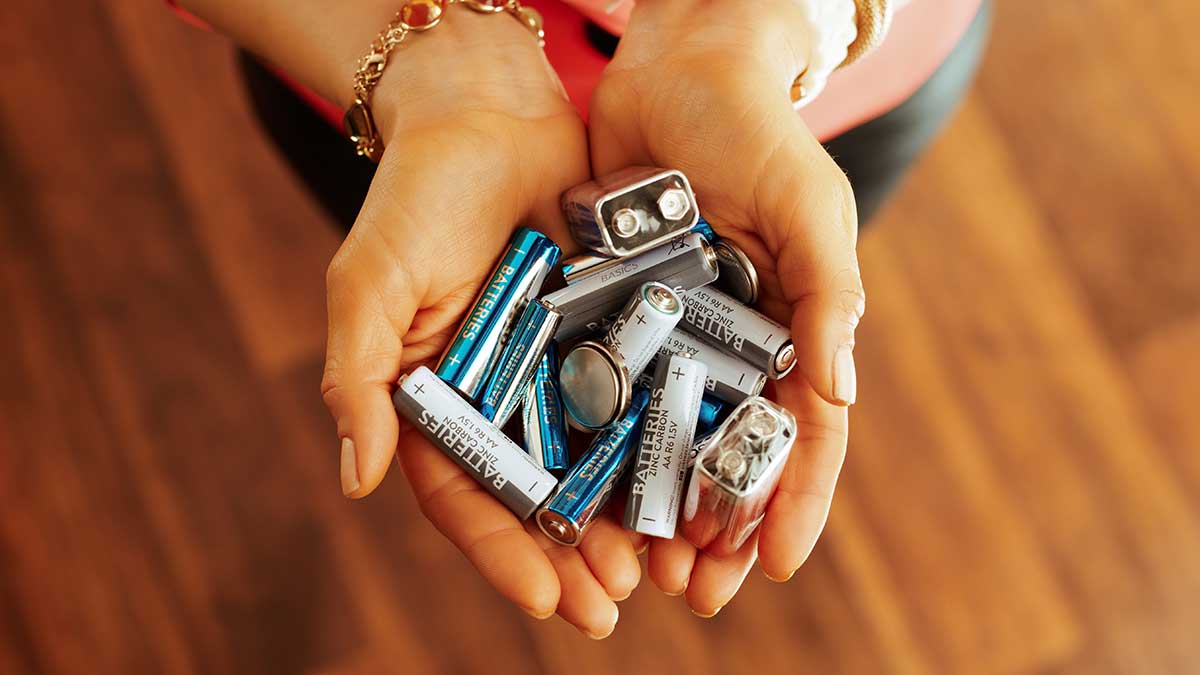
Trash can? Storage container? The dilemma of what should be done with all types of old batteries may seem trifling, but choosing incorrectly is detrimental to our planet and against the law in many states. As a junior in high school, I chose to help people make the right choice by starting an awareness campaign, the Battery Recycling Initiative.

The first step to starting an awareness campaign is identifying the issue you wish to advocate for. Through research and observation, I noted that many of us, including people in my own community, were unaware of the consequences of improper battery disposal on our environment. In fact, according to Recycling Today, 41% of Americans are unaware of the dangers of improper battery disposal.

The second step is to set the scope of your campaign. Are you planning on only advocating locally, globally, or a mix of both? Which specific areas should you advocate in to effectively spread awareness?

For my campaign, I chose to start locally and move globally. To find out if a local battery recycling campaign would be effective in my community, I decided to survey residents in Houston, TX and found out that more than 50% of the residents did not recycle batteries and about 14% only recycled certain types of batteries.

Step 1: Identify the issue and scope of your initiative

How does one start taking inititative? It is simple. Get people to listen. There were three strategies I used to increase awareness about battery recycling:

  1. Provide information digitally and physically
  2. Engage people through interaction and face-to-face conversations
  3. Provide resources for people to take action.

These strategies tend to work for the majority of awareness campaigns: indirectly educate people (this could be through flyers, websites posts, etc.), directly educate people through in-person events, and give them a convenient method to take action. Why are these strategies effective?

Because through these 3 different ways to reach out to and engage people, you can cover most of the reasons why people may choose not to participate in resolving an issue. For example, the three main reasons why people don’t recycle batteries are:

  • people do not know they can recycle batteries.
  • recycling batteries is not convenient for some people.
  • they do not know where to recycle, or people do not have the will to recycle- they see recycling as insignificant, or they are ignorant of grave consequences for future generations.

All three of these problems can be combatted using the three strategies. Through indirect education, people learn that batteries can be recycled and where they can recycle them. Direct education empowers people to recycle, to take action, which combats the lack of will problem. Finally, providing resources to residents, in my case by placing battery recycling bins at my community clubhouses, combatted the lack of convenience aspect.

Step 2: Use the Three Strategies

Strategy 1 – Indirect Education

The first step to indirectly educating people is to ensure your information is accurate. I did plenty of research and talked to various battery recycling centers- like the Fort Bend County Battery Recycling Center- to ensure my information was accurate. The next step is choosing which methods of indirect education you wish to utilize. I chose to provide information via flyers, and use a QR code to help people locate their nearest battery recycling center, to give people quick and easy means to receive the information. I chose to utilize social media as my 2nd method to spread my initiative over a more globalized scope.

Strategy 2 – Direct Education

The main goal of direct education is to empower people to take action and to support/join your initiative.  By interacting with people via face-to-face conversations, you retain the person’s attention a lot better than indirect means. By building a connection with the person you converse with, it encourages them to take part in the initiative.

For example, I participated in my community’s Green Day event where I set up a small booth and talked with residents about battery recycling.  I remember having a conversation with this resident who was surprised to learn she could recycle batteries.

Many other residents told me they would just store old batteries in a container, not knowing what to do with them. One of my favorite interactions was with this lady who was so inspired by my initiative; she offered to help me out with anything I needed. While direct education does not reach that large of an audience, every meaningful connection you develop carries a depth of impact that numbers alone cannot measure- it has the potential to ripple out and influence countless others.

Strategy 3 – Providing a Convenient Method to Take Action

Convenience and availability play a big part in people’s will to take action. In fact, according to a study done by the Carton Council, these two factors contributed the most towards people’s will to recycle.

By appealing to people’s need for convenience, you spread awareness more effectively and grow your initiative by influencing people to act. I applied this idea by placing two battery recycling bins at both of my community clubhouses. I ended up receiving around 1,000 old batteries from those bins within two weeks, which I then safely recycled by taping the points of contact- this helps prevent fires due to batteries.

Have the Will and a Vision to Make an Impact

It may seem like you are just one person who cannot make an impact, but with a strong will and right vision you can achieve success. Your age, position, or location does not matter: I am just a Junior in high school living in a suburban area, but what does matter is you care and you have the heart to do something about it.

I urge you to utilize these methods and strategies to spread awareness about issues that matter to you, to make an impact. To quote the well-known, “Be the change you wish to see in the world.”

About the Author

Swara Bhatt is a high school junior who loves to paint, read, and watch movies in her free time. She hopes to make the world a better place, one step at a time. If you are interested in seeing updates about the battery recycling initiative, follow the project on Instagram: @batteryrecyclingintitative

The post Guest Idea: How To Spread Awareness About Issues That Matter appeared first on Earth911.

  •  

Convenience Comes at the Environment’s Expense

I must admit, I still get excited when an online order arrives at my doorstep, sometimes within hours or the next day.

But once I open the box and unpack everything, I often find myself standing over the recycling bin wondering what to do with all the packaging. In that moment, the convenience of fast delivery starts to feel connected to a bigger question about the environmental trade-offs behind the products and services we rely on every day.

The infrastructure behind that convenience — trucks, warehouses, packaging, construction — carries real environmental costs in carbon emissions, material waste, and single-use plastics. But the more immediate place most of us can act is closer to home: in our own yards and landscapes, where small choices compound across neighborhoods and watersheds. Everything from groceries and meals to home and garden products can be delivered within hours, thanks to the rise of quick commerce.

But every product has a lifecycle, from production and transport to packaging, use, and disposal. Recognizing these lifecycle impacts builds lifecycle awareness and helps people see the environmental costs behind convenience. These impacts appear at both the city scale and in our own homes and landscapes, where small choices can add up.

Guides like Earth911’s Sustainable Guide to Amazon Shopping highlight simple ways we as consumers can reduce waste and make more eco-friendly purchasing decisions.

Your Yard as a Microcosm

After more than 20 years working as a landscape designer, I’ve come to see the yard as a small-scale version of larger systems. The way you choose to manage it – often for the sake of convenience – can quietly add to broader environmental harm. However, a few ideas you can shift your perspective:

  • Rainwater management: Rain gardens slow water and allow it to soak into the soil, reducing runoff rather than sending it quickly into streets and storm drains.
  • Native plant species: Choosing regionally adapted plants can reduce the need for routine spraying while supporting pollinators and local ecosystems across property lines.
  • Natural predators: Instead of spraying for mosquitoes, bring natural predators to your yard like dragonflies.

Quick-Fix Lawn Care and Ecological Trade-Offs

Many homeowners want a perfectly green, neatly trimmed lawn, and quick-fix products promise fast results. Fertilizers, weed killers, and insect treatments can make a yard look good quickly. But those short-term improvements can come with longer-term environmental costs.

  • Synthetic fertilizers: Quick-release nitrogen promotes rapid turf growth but can contribute to nutrient runoff, reduced soil microbial diversity, and dependency on repeated applications.
  • Herbicides and pesticides: Broad-spectrum chemical treatments eliminate target weeds or insects but can also affect beneficial organisms, including pollinators and soil life.
  • Monoculture turfgrass: Large expanses of single-species lawns provide minimal habitat diversity compared to mixed plantings, reducing food sources for bees and other insects.
  • Runoff of fertilizers, herbicides and pesticides: Kill aquatic life as the runoff heads into storm drains and into our rivers, lakes and the ocean.
  • Excessive water use: Maintaining a constantly green lawn often requires frequent irrigation, increasing water demand on the infrastructure, and also contributing to runoff.

The scale of chemical use in American lawns is significant. According to the CDC, Americans apply roughly 75 million pounds of pesticides annually on residential landscapes. As Scientific American reports, when those chemicals reach waterways, they enter the food chain; fish ingest them, become diseased, and humans who eat those fish can become ill as a result.

Alternative Approaches: Lower-Impact Lawn and Landscape Practices

Instead of relying on chemical pesticides and synthetic fertilizers, adopting lower-impact landscape practices that support soil health while reducing water use, emissions, and chemical inputs.

  • Reduce lawn area: Replacing sections of grass with native plant garden beds, ground covers, or pollinator gardens lowers water use and fertilizer demand.
  • Clover or mixed lawns: Clover naturally fixes nitrogen in the soil, reducing the need for synthetic fertilizers while supporting pollinators.
  • Xeriscaping: Drought-tolerant plants and water-efficient design reduce irrigation requirements.
  • Electric lawn equipment: Battery-powered mowers and other lawn care tools eliminate gasoline emissions and reduce air and noise pollution.
  • Soil-first maintenance: Aeration, compost amendments, and organic soil enrichment strengthen soil structure and reduce dependence on chemical inputs.

The Waste Behind Landscaping and Exterior Home Projects

Landscaping upgrades and exterior home projects often leave behind leftover materials that are tossed in the trash. Many of these materials end up in landfills, and some can eventually make their way into rivers and streams.

Landscaping plastics: Plastic landscape edging, irrigation tubing, landscape fabric, and synthetic turf backing can remain in landfills for decades because they do not easily break down.

Chemical contamination risks: Treated wood materials such as old railroad ties were commonly preserved with creosote and may release harmful compounds if improperly discarded.

Hazardous household materials: Leftover paint, adhesives, and sealants often require special disposal through hazardous waste programs to prevent soil and groundwater contamination.

If you have leftover plant containers after planting and are unsure what to do with them, read Earth911’s How to Recycle and Reuse Garden Plug Trays.

Reduced Labor, Reduced Ecological Feedback

Modern conveniences have reduced the physical labor required to maintain landscapes, and with it, the direct, sensory contact people once had with soil, plants, and seasonal cycles. Robotic mowers, automated irrigation, and app-controlled sprinkler systems can keep a yard looking maintained without the homeowner ever kneeling in the dirt.

That disconnect matters. Gardeners who work hands-on with their soil tend to notice changes — a drop in earthworm activity, an unusual pest, soil that’s become compacted or hydrophobic — before those conditions worsen. Ecological feedback is harder to receive when the landscape is managed at a distance. Spending even occasional time in direct contact with your yard, pulling weeds, turning compost, or simply observing what’s growing, rebuilds that feedback loop and makes sustainable choices more intuitive.

Redesigning Convenience: Small Changes That Add Up

When we develop an understanding of lifecycle impacts, consider embracing practices that translate your lifecycle awareness into small adjustments that support healthier landscapes and ecosystems:

  • Soil testing before fertilizing to prevent unnecessary nutrient application and reduce chemical runoff.
  • Compost amendments improve soil structure and reduce reliance on synthetic additions.
  • Deep, infrequent watering encourages deeper roots and lowers overall water use.
  • Native plants reduce water use (and your water bill) while supporting pollinators.
  • Durable tools over disposable kits decreases plastic waste and material turnover.
  • Purchase planning can avoid excess mulch, soil, paint, and irrigation components from entering landfill.

Convenience is embedded in modern life, from online shopping and fast delivery to automated lawn care systems and disposable home improvement materials. If you’re like me, the next time a package arrives at your doorstep, the excitement of opening it can also be a reminder to think about what happens next.

Small choices, from recycling packaging to making more sustainable lawn and landscape decisions, can reduce waste and protect soil, water, and local ecosystems. When multiplied across communities, these everyday decisions can lead to meaningful environmental progress.

About the Author

This guest article was written by Harley Grandone, a writer and landscape designer. After 20+ years of being a landscape designer, she loves combining writing with her love of the industry.

The post Convenience Comes at the Environment’s Expense appeared first on Earth911.
  •  

Guest Idea: The Hidden Environmental Cost of Digital Hoarding

Every photo, email and forgotten download stored in the cloud lives somewhere physical. Most of the time, it’s in a data center that runs around the clock, drawing power and emitting greenhouse gases. Digital clutter feels weightless, but it carries a real environmental cost that most people never think about. The good news is that cleaning it up is one of the easiest green actions anyone can take.

Most people picture hoarding as stacked newspapers and overflowing closets. Digital hoarding is quieter. It’s things like 11,000 unread emails sitting in an inbox, the 4,000 photos from a holiday taken six years ago, most of them blurry or duplicated, or the streaming subscriptions no one canceled.

It’s different from intentional archiving, where someone keeps records for a purpose. Digital hoarding happens by default. It occurs through inaction and the comfortable assumption that storage is essentially free. It feels like nothing until someone starts adding it up.

The Data Centers Behind the Inbox

All of that information has to live somewhere. The warehouse-scale facilities that store, process and move the world’s digital information consumed 415 terawatt-hours of electricity globally in 2024. That figure is projected to reach roughly 945 terawatt-hours by 2030, driven primarily by the rapid expansion of AI workloads. This is a demand surge unlike anything the sector has seen before.

That AI dimension is important to note. General cloud storage and consumer data are no longer the main story. The infrastructure being built right now is being built for AI, and the energy requirements are growing accordingly.

As senior scientist Vijay Gadepally at MIT Lincoln Laboratory has noted, “As we move from text to video to image, these AI models are growing larger and larger, and so is their energy impact. This is going to grow into a pretty sizable amount of energy use and a growing contributor to emissions across the world.”

What’s less discussed is that passive stored data still draws continuous power for cooling and maintenance. In many data centers, the cooling system is one of the most energy-intensive components, accounting for about 40% of the facility’s total power consumption. A meaningful portion of data center energy goes toward simply keeping data at rest rather than processing or transmitting it.

A photo no one has looked at since 2018 still occupies server space that must be cooled, powered and maintained around the clock. Multiply that across billions of users who have never once audited their cloud storage, and the scale becomes hard to ignore.

Some research has put the ICT sector’s share of global greenhouse gas emissions between 1.8% and 3.9%, depending on methodology and growth trajectory.

Why It Keeps Happening

Storage is cheap, deletion feels risky, and there is always the nagging thought that a file might be necessary someday, even if that day never actually comes. Unlike physical clutter, a digital mess is invisible. It doesn’t take up space in a room or collect dust. That invisibility is precisely what makes it so easy to ignore.

Most of what people store has no practical value and hasn’t been accessed in years. However, it takes a deliberate decision to let it go.

What Can Be Done?

Tackling digital hoarding requires no specialist knowledge and no significant time investment. Repeating a few deliberate habits consistently makes a real difference.

Recent research confirms that a surprising amount of a data center’s energy is spent on background tasks that manage and ensure the reliability of stored files, even those that are never accessed. While the savings from your personal cleanup are small, it adds up. When replicated across hundreds of millions of users, it compounds into something that registers at the infrastructure level.

Start with email. Unsubscribing from newsletters and promotional lists takes minutes and stops a steady stream of data from accumulating indefinitely.

Next, look at cloud storage. Most people are keeping far more than they realize across things like Google Photos, iCloud and Dropbox. A quick audit tends to surface duplicates, large video files and folders that haven’t been opened in years. Deleting them permanently rather than just moving them to a trash folder actually reduces the load on the server infrastructure.

Unused applications are also taking up space. Every app that runs in the background, syncs data or stores files in the cloud draws resources. Removing anything that hasn’t been opened in three months or more is a small action with a compounding effect.

A monthly digital declutter, even just 30 minutes, keeps accumulation from getting out of hand. Treating it like a recurring calendar task rather than a vague intention makes it far more likely to stick.

Byte-Sized Decluttering

Individual action on digital hoarding might feel modest. However, the effects add up when they’re shared across hundreds of millions of people. The collective impact of better digital hygiene reduces demand on data centers that are expanding right now. Having less stored data, fewer idle fuels and more deliberate use of cloud services can make a big difference.

Cleaning out a photo library won’t solve the climate crisis, but it is a genuine contribution and one that costs almost nothing to make.

About the Author

Lola Marks is a health and wellness writer specializing in lifestyle evolution and optimization. Lola is also the Senior Editor of Body+Mind Magazine, where she prioritizes holistic living as a way to achieve a sense of balance and community.

The post Guest Idea: The Hidden Environmental Cost of Digital Hoarding appeared first on Earth911.

  •  

Guest Idea: Gaming’s Console Upgrade Cycle Is a Growing E-Waste Problem Nobody Talks About

The PlayStation 4 sold approximately 117 million units over its lifetime, making it one of the best-selling consumer electronics products ever made. By 2025, Sony was winding down support for the platform, and tens of millions of those devices are now moving toward disposal. Only 22.3 percent of global e-waste reaches formal recycling, according to the UN’s Global E-waste Monitor 2024. The rest ends up in landfills, incinerators, or informal processing abroad.

The PS4 is one example of a pattern that repeats across every major console cycle. Gaming hardware is a significant and growing contributor to the e-waste stream, and the rate at which old devices are replaced consistently outpaces any manufacturer recycling effort.

What Goes Into a Console

A modern gaming console contains gold, copper, lead, nickel, zinc, lithium, cobalt, and cadmium, along with processed plastics and specialized circuit components. Extracting and purifying those materials involves complex global supply chains that frequently release hazardous compounds, including arsenic and mercury, into surrounding ecosystems. Some raw materials, including tungsten and gold, are sourced from regions linked to civil unrest and documented human rights concerns.

A life-cycle analysis of the PlayStation 4 found that manufacturing and shipping a single unit produces roughly 89 kilograms of CO2 equivalent. That figure does not include the energy consumed during years of use, the disposal of the device, or the environmental cost of the controller, cables, and accessories that accompany it.

When a household upgrades at a console launch, that manufacturing footprint is reset. The previous device is set aside, and producing the new one requires that same chain of extraction, processing, and shipping to start over.

The Scale of the Disposal Problem

The PS4’s long lifecycle shows how slowly hardware actually exits households. As Game File reported, roughly half of Sony’s 118 million monthly active PlayStation users were still on the PS4 years after the PS5 launched, largely because the newer console offered too little improvement to justify the cost. By 2025, that transition was finally underway, moving tens of millions of PS4 units toward disposal at scale.

The same dynamic has played out in every previous generation. Xbox One units are now reaching end of life. Nintendo Wii U consoles predated them. Devices accumulate in closets for years before they eventually reach the waste stream.

U.S. gaming consoles consume roughly 34 terawatt-hours of electricity per year, with an estimated 24 million metric tons of carbon emissions associated with that use. On the disposal side, the $91 billion in recoverable metals sitting in the 2022 global e-waste pile, most of it lost to informal processing or landfill, reflects a recycling gap that gaming hardware contributes to.

Mid-Generation Upgrades Add to the Problem

Beyond full generational cycles, manufacturers have introduced mid-cycle hardware refreshes. The PS4 Pro, Xbox One X, and PlayStation 5 Pro each offered improved performance for players who already owned the previous model. Unlike a full generation transition, these upgrades carry no technical requirement to stop using the older device. A 2016 analysis noted that mid-generation consoles encourage disposal of hardware that remains fully functional, without the platform incompatibility that at least makes a generational upgrade necessary for some players.

Trade-in programs offer credits toward the new device, but the value paid for an older console is typically far below its replacement cost. The traded-in unit often passes through several resale steps before eventually reaching the waste stream.

Where Manufacturer Responsibility Falls Short

Sony and Microsoft have both published sustainability commitments. Microsoft has pledged to make its Xbox division carbon negative by 2030. Newer console models include energy-saving standby modes. A 2021 National Resources Defense Council analysis, however, found that those modes go largely unused, with most players defaulting to instant-on settings that consume significantly more electricity.

On device disposal, no major console manufacturer has a take-back program at the scale of the devices it sells. There is no PS4 collection initiative, no Xbox One recovery program. The burden of keeping those devices out of landfills falls primarily on individual consumers.

Gaming Without Dedicated Hardware

Some gaming takes place without any dedicated hardware at all. Browser-based gaming platforms run on devices people already own, whether that is a laptop, phone, or tablet. Platforms like Poki, which reached 100 million monthly players and recorded one billion gameplays in a single month in 2025, offer over 1,500 titles that load in a browser without installation. That approach avoids the manufacturing footprint of a dedicated gaming device and the upgrade cycle that follows it.

Browser gaming is a small fraction of the overall market. Most gaming still runs on dedicated consoles and high-performance PCs. But it is one example of a model where play does not require a purpose-built device.

What You Can Do

Extending the life of current hardware has more impact than any individual recycling action. Beyond that, there are a few practical steps.

  • Keep hardware longer. A console used for eight years instead of five spreads its manufacturing footprint over a longer period. Mid-generation refreshes are optional upgrades, not replacements.
  • Find a recycler. Earth911’s recycling search tool accepts “game consoles” as a search term and returns local drop-off options by ZIP code. Best Buy and Staples accept gaming hardware for recycling at no charge.
  • Use certified recyclers. The e-Stewards certification identifies recyclers that meet standards for safe handling and do not export devices to informal processing sites, where hazardous materials can harm workers and nearby communities.
  • Buy refurbished or previous-generation. A PS4 in 2026 runs the vast majority of available titles. Buying one secondhand extends the life of an existing device at no additional manufacturing cost.
  • Donate working hardware. Organizations like PCs for People accept game consoles. A device that still functions is more useful rehomed than processed for scrap.

Gaming consoles are consumer electronics, and they carry the same end-of-life problems that come with any complex device. The upgrade cycle moves faster than recycling infrastructure can accommodate. Understanding that gap is a starting point for making different choices about when to upgrade, where to bring old hardware, and what to buy next.

About the Author

This sponsored article was written by Christopher Baude.

The post Guest Idea: Gaming’s Console Upgrade Cycle Is a Growing E-Waste Problem Nobody Talks About appeared first on Earth911.

  •  

Guest Idea: What Really Happens After You Drop Off Recycling?

Most of us feel a small sense of satisfaction when we take out the recycling. Whether you set materials on the curb, bring electronics to a drop-off center, or schedule a rubbish pickup in London, it can feel like the final step in doing the right thing.

That moment is just the beginning of a complex journey. Once your recyclables leave your hands, they enter a global system shaped by local policies, international markets, technology, and consumer demand.

Understanding what happens next is key to becoming a more informed and effective recycler.

Step 1: Collection and Transportation

After recyclables are collected from homes, businesses, or drop-off points, they are transported to a Materials Recovery Facility (MRF). The type of collection system your community uses — single-stream (all recyclables in one bin) or multi-stream (separated by material) — significantly affects what happens next.

Single-stream systems are convenient for households, but they often result in higher contamination rates. When paper, plastics, metals, and glass are mixed together, broken glass can embed in paper fibers, food residue can spoil cardboard, and plastic bags can tangle machinery. That contamination increases processing costs and can cause entire batches of recyclables to be diverted to landfill.

Transportation also has an environmental cost. Trucks burn fuel, and in rural areas recyclables may travel long distances before reaching a sorting facility. Efficient routing and cleaner vehicle fleets can reduce this footprint, but the logistics of waste collection remain an important piece of the sustainability puzzle.

Step 2: Sorting at the Materials Recovery Facility

Once recyclables arrive at an MRF, they are unloaded onto a tipping floor and fed onto conveyor belts. From there, a combination of human workers and automated systems separates materials by type. Here’s how the sorting typically works:

  • Screens and trommels separate items by size and shape.
  • Magnets pull out ferrous metals like steel.
  • Eddy current separators eject non-ferrous metals such as aluminum.
  • Optical sorters use infrared technology to identify different types of plastics.
  • Air classifiers help separate lightweight materials from heavier ones.

Despite advanced technology, human oversight is still essential. Workers remove contaminants, such as plastic bags, food waste, garden hoses, and other non-recyclable items that can damage equipment or reduce material quality.

The goal at this stage is to produce clean, marketable streams of materials — bales of cardboard, aluminum, PET plastic, HDPE plastic, and so on. The cleaner the input, the higher the value of the output.

Step 3: Processing into Raw Materials

After sorting and baling, materials are sold to reprocessors. These facilities transform recyclables into raw materials that manufacturers can use to make new products.

Paper and Cardboard

Baled paper is shredded and mixed with water to create pulp. Contaminants like staples, tape, and plastic coatings are removed. The clean pulp can then be turned into new paper products, from packaging to tissue. However, paper fibers shorten each time they are recycled, which means paper can only be recycled a limited number of times (typically five to seven cycles) before the fibers become too weak for reuse.

Plastics

Plastics are more complicated. Different resin types — such as PET (#1) and HDPE (#2) — must be separated because they melt at different temperatures and have different properties. After sorting, plastics are washed, shredded into flakes, melted, and formed into pellets. These pellets become the feedstock for new plastic products.

However, not all plastics are equally recyclable. Flexible films, multi-layer packaging, and mixed plastics are often difficult or uneconomical to process. Even when technically recyclable, they may lack strong end markets.

Glass

Glass is crushed into cullet, cleaned, and melted down to form new bottles or jars. Unlike paper and plastic, glass can be recycled indefinitely without losing quality. In practice, however, much collected glass is downcycled into road aggregate or construction fill rather than new containers, limiting its closed-loop value. However, contamination — especially ceramics or heat-resistant glass — can disrupt the process.

Metals

Aluminum and steel are highly valuable and can be recycled repeatedly without degradation. Recycling aluminum, for example, uses significantly less energy than producing it from raw ore. This makes metal one of the most successful recycling categories.

Step 4: The Role of Global Markets

Recycling is not just a local activity; it is deeply connected to global commodity markets. For years, many countries exported large volumes of recyclable materials overseas for processing. China’s 2018 National Sword policy, which banned imports of most recyclable materials and set strict contamination limits, reshaped this landscape, forcing exporting countries to improve domestic sorting and reduce contamination.

When demand for recycled materials is strong, recycling programs thrive. When commodity prices drop, municipalities may struggle to cover processing costs. This economic reality explains why some communities adjust accepted materials or emphasize contamination reduction campaigns.

In short, your recycling bin is connected to international supply chains and market dynamics that most people never see.

Step 5: E-Waste Is A Special Case

Electronic waste follows a different and often more complicated path. Devices like smartphones, laptops, and televisions contain valuable metals — including copper, gold, and rare earth elements — but also hazardous substances such as lead and mercury.

Responsible e-waste recycling involves:

  • Manual disassembly to recover components.
  • Shredding and separation of materials.
  • Specialized processes to extract precious metals.
  • Safe handling of toxic elements.

Improperly managed e-waste can end up in informal recycling sectors, where unsafe practices harm both workers and the environment. That’s why certified electronics recyclers are critical for ensuring materials are recovered responsibly.

The Contamination Problem

One of the biggest threats to effective recycling is contamination. When non-recyclable items are placed in recycling bins — often with good intentions — they can cause entire loads to be rejected.

Common contaminants include:

  • Plastic bags in curbside bins.
  • Food-soiled containers.
  • Garden waste.
  • Diapers and textiles.
  • Tanglers like hoses and cords.

Reducing contamination requires clear communication, consistent labeling, and public education. The more accurately we sort at home, the more likely materials are to be successfully recycled.

The Energy and Climate Equation

Recycling generally saves energy compared to producing materials from virgin resources. For example:

  • Recycling aluminum saves 90–95% of the energy required for primary production.
  • Recycling paper reduces the need for logging and lowers water usage.
  • Recycling plastics can cut greenhouse gas emissions compared to manufacturing new resin from fossil fuels.

However, recycling is not a silver bullet. The environmental benefits depend on clean material streams, efficient processing, and strong demand for recycled content.

Beyond Recycling: Moving Up the Waste Hierarchy

While recycling is important, it sits below reduction and reuse in the waste hierarchy. The most sustainable product is often the one that was never made. Choosing durable goods, repairing items, and embracing refill systems can significantly reduce the volume of materials entering the waste stream.

When disposal is necessary, understanding the journey of recyclables can help us make smarter decisions. Proper sorting, supporting recycled-content products, and advocating for better waste infrastructure all play a role.

The Takeaway

The path from your recycling bin to a new product is far more complex than it appears. It involves advanced technology, human labor, global trade, and shifting economic conditions. Each stage — collection, sorting, processing, and manufacturing — presents both opportunities and challenges.

By learning what happens after recyclables leave our homes, we can improve our habits and strengthen the system as a whole. Recycling doesn’t end at the curb; it continues through a chain of processes that depend on informed, engaged consumers. And when we understand that journey, our small daily actions gain greater meaning — and greater impact.

About the Author

This sponsored article was written by Deian Kace.

The post Guest Idea: What Really Happens After You Drop Off Recycling? appeared first on Earth911.

  •  

Guest Idea: How the Birmingham Darter Could Be Saved by the Project Marvel Data Center

Three small, easily overlooked fish swimming in Valley Creek near Birmingham, Alabama, are: the Birmingham darter, the watercress darter, and the blackbanded darter. Each is about two inches long—olive-toned, banded, and built for life on the stream bottom, with large pectoral fins that let them perch among gravel and flow.

For years, they were thought to be variations of the same species. In April 2025, genomic analysis confirmed something more fragile and more important: the Birmingham darter is its own species, found nowhere else on Earth. Unlike its relatives, it does not occupy the main channel. It lives in small tributaries and headwater streams—the very places most vulnerable to drying, warming, and disturbance.

Only a handful of populations are currently known, confined to the upper Valley Creek watershed and a few adjacent tributaries—a drainage area of roughly 65 square miles. Recent surveys have extended the known range into Little Blue Creek, Nabors Branch, and Halls Creek, but at least one population is feared extirpated. It is extremely difficult to count, but all evidence suggests a species on the brink.

The Birmingham darter is not alone in its vulnerability. Endangered mussels in Valley Creek, like the upland combshell and triangular kidneyshell, depend on darters to reproduce. Their strategy is as remarkable as it is precarious.

They release mucus or fleshy lures into the current that mimics a small fish, complete with an eyespot. When a darter strikes, it gets a mouthful of microscopic larvae. These larvae clamp onto the fish’s gills—like tiny Pac-Men—where they remain attached as they develop. This relationship is obligate. Without the host fish, the larvae die within days. Without mussels, Valley Creek loses vital natural processes, water filtration, nutrient cycling, and ecosystem stability.

Valley Creek has already experienced this kind of loss. A mussel species once dependent on American eels disappeared when dams blocked eel migration. Without its host, it could not reproduce and becomes extinct.

Fish in Valley Creek, including darters and redeye bass, depend on cool, flowing water sustained by groundwater-fed baseflow, especially in late summer when rainfall is scarce.

The threat they face is more fundamental than any single pollutant or disturbance. The threat is hydrologic collapse. If groundwater recharge is reduced, if headwater streams dry, if flow becomes intermittent in August and September, the habitat disappears—not gradually, but functionally all at once. The problem is that even a resilient system, like Valley Creek, cannot survive without water.

The Opportunity

Into this fragile ecosystem comes Project Marvel.

Bessemer has rezoned 1,600 acres along Valley Creek for a campus of 18 data center buildings—an immense, water- and energy-intensive development at the edge of a watershed already under strain.

At first glance, the risks are clear. Replacing forest with roofs, roads, and compacted ground reduces the land’s ability to absorb rain. Water that soaked into the soil and slowly fed the creek instead runs off quickly, intensifying floods in wet months and starving the creek in dry ones. The result is a more volatile system with higher peaks and lower lows.

Given the steep-sided topography of the Project Marvel site, flash flooding is not an occasional event; it is the norm. When it rains, water moves fast. Flow in Valley Creek can surge from roughly 70 cubic feet per second to over 400 cfs within hours, transforming the creek from a modest stream into a fast-moving, erosive force.

With more extreme weather events—more rain falling in shorter periods—these spikes are intensifying. More water arrives all at once, runs off more quickly, and leaves just as fast.

This is the paradox at the heart of Valley Creek: Too much water when it rains; not enough when it matters. The system is not short of water but short of storage, infiltration, and timing.

This could be the end for Valley Creek as we know it.

However, Project Marvel also introduces something the watershed has never had at this scale: control.

Data centers are not passive users of water. They are engineered systems—precise, monitored, and responsive. They require planning, storage, redundancy, and reliability. These same qualities, if directed outward, can be used not only to consume water but also to manage it.

Rather than constantly taking water from the creek, the solution is to take control and reshape when and how water is used.

Project Marvel can capture high flow during storms and store it in larger cisterns, underground vaults, or managed basins.

Make stormwater an asset, reduce peak flows, and retain water in the watershed for later use. Stormwater becomes an asset rather than a waste stream when peak flows are reduced, water is held in the watershed, and water supply is secure for later use.

The data center can rely on stored water during the hot, dry days of August and September, when the creek flow is 1 to 3 million gallons per day, and Project Marvel needs 2 million gallons per day. Leave the creek alone when the Birmingham darter is most at risk. No surface-water withdrawals during August and September. When the Birmingham darter is most at risk, let it be. Leave the creek undisturbed.

Water storage alone is not enough. The system must also restore what has been lost: the land’s ability to retain water. Bessemer has rezoned 1,600 acres along Valley Creek for a campus of 18 data center buildings. The site to be developed today supports oak-hickory-sweetgum forests and the loblolly pine and hardwood understory forests, including dogwoods, tupelo, holly, redbud, serviceberry, and witch hazel.

These forests intercept rainfall, build soil, and allow water to infiltrate and recharge groundwater. Their removal—and the compaction and grading that follows—eliminates that function.

Using approaches such as Miyawaki plantings, high species diversity and dense native forests can rapidly build soil to rejuvenate degraded industrial land, floodplain edges, and abandoned commercial sites. Over time, these forests increase water infiltration into the ground, build organic matter and humus, store more water in the ground, and release cool water slowly back into streams, especially during dry and hot periods.

With responsible, savvy control, Project Marvel becomes more than just a development. It engineers a water infrastructure for the watershed. Capturing excess water during flash flooding, storing it for dry periods, recharging groundwater through restored landscapes, and maintaining flow when it matters most, the data center becomes a marvel for the Valley Creek watershed.

This is more in keeping with what the Birmingham darter requires. Reliable, cool, flowing water in late summer is something more specific and achievable than pristine wilderness. If Project Marvel is designed with that goal in mind, it will be known as the project that learned how to keep Valley Creek flowing.

What Must Be Required

The survival of the Birmingham darter and the integrity of Valley Creek cannot depend on voluntary measures, best practices, or future promises. It must be secured through clear, enforceable standards embedded in permits, approvals, and long-term oversight.

If Project Marvel is to become a benefit rather than a liability, three things must be required: protect the creek when it is vulnerable, capture and manage water when it is abundant, and restore the land’s ability to hold water.

No surface-water withdrawals from Valley Creek during August and September, months when: streamflow is lowest, water temperature is highest, dissolved oxygen is most limited, and aquatic species are most stressed.

At this moment, even modest withdrawals can have outsized impacts. This standard must be written into permits, continuously monitored, and publicly reported. If flows fall below a defined ecological threshold, withdrawals should be restricted even outside these months.

Project Marvel must operate as a closed-loop system during dry periods, not a continuous user of streamflow. This requires stormwater capture systems sized for extreme rainfall events; cisterns or underground storage sufficient to supply August–September demand; and redundant storage capacity to ensure reliability.

A performance-based requirement could be requiring the facility to demonstrate the ability to meet all cooling water demand for at least 60 consecutive summer days without surface-water withdrawals. This shifts the burden from the creek to the project.

Traditional stormwater permits focus on peak flow reduction. That is not enough. What matters ecologically is the full flow regime—how water moves through the system over time. Project Marvel should be required to match pre-development runoff volume, maintain infiltration rates comparable to forested conditions, and limit rapid runoff that creates flash flooding. The goal is not just to prevent flooding, but to preserve the timing and distribution of water that sustains the creek.

Because 1,600 acres cannot be fully replaced onsite, restoration must extend across the watershed. A binding offset requirement should include restoration of two to five acres for every acre of effective impervious surface not fully mitigated onsite.

Priority placement is in headwater tributaries, floodplain corridors, and degraded industrial and commercial land. These restorations must do more than plant trees. They must rebuild soil structure, increase infiltration, and reconnect groundwater to streams. Performance metrics should include soil organic matter, infiltration rates, vegetation survival, and canopy development.

Streams cannot function without shade, stability, and filtration. Requirements should include wide, continuous riparian buffers along all streams and tributaries, no clearing, grading, or compaction within these zones, and active restoration where buffers are degraded. These buffers will reduce water temperature, stabilize banks, filter pollutants, and provide habitat continuity.

None of these matters without accountability. Project Marvel must include continuous monitoring of streamflow, water temperature, and withdrawal volumes. Required are public reporting of data and independent oversight. There must be clear consequences for non-compliance. Without enforcement, standards become suggestions.

The past is no longer a reliable guide. Permits must account for more intense rainfall events, longer dry periods, and increased variability. This means designing for larger storm capture, longer storage duration, and more conservative withdrawal limits.

The guiding principle should be simple and measurable. No net loss of groundwater recharge. No net increase in damaging runoff. No degradation of summer baseflow. If those conditions are met, the system holds. If they are not, the system fails.

Project Marvel will reshape the Valley Creek watershed. That is already decided. What remains undecided is whether it will be another step in a long pattern of degradation or a turning point—one where development is required not just to avoid harm but to repair what has already been lost.

The Birmingham darter does not have the ability to negotiate, adapt, or relocate. It depends entirely on the decisions made here. Those decisions must be precise. They must be enforceable. And they must be made now.

About the Author

Dr. Rob Moir is a nationally recognized and award-winning environmentalist. He is the president and executive director of the Ocean River Institute, a nonprofit based in Cambridge, MA, that provides expertise, services, resources, and information not readily available locally to support community efforts. Please visit www.oceanriver.org for more information.

The post Guest Idea: How the Birmingham Darter Could Be Saved by the Project Marvel Data Center appeared first on Earth911.

  •  
❌