M.A. in Climate and Society student Erin Frank shoots film around New York City. She says her camera and climate coursework have more in common than she expected.
Most of us feel a small sense of satisfaction when we take out the recycling. Whether you set materials on the curb, bring electronics to a drop-off center, or schedule a rubbish pickup in London, it can feel like the final step in doing the right thing.
That moment is just the beginning of a complex journey. Once your recyclables leave your hands, they enter a global system shaped by local policies, international markets, technology, and consumer demand.
Understanding what happens next is key to becoming a more informed and effective recycler.
Step 1: Collection and Transportation
After recyclables are collected from homes, businesses, or drop-off points, they are transported to a Materials Recovery Facility (MRF). The type of collection system your community uses — single-stream (all recyclables in one bin) or multi-stream (separated by material) — significantly affects what happens next.
Single-stream systems are convenient for households, but they often result in higher contamination rates. When paper, plastics, metals, and glass are mixed together, broken glass can embed in paper fibers, food residue can spoil cardboard, and plastic bags can tangle machinery. That contamination increases processing costs and can cause entire batches of recyclables to be diverted to landfill.
Transportation also has an environmental cost. Trucks burn fuel, and in rural areas recyclables may travel long distances before reaching a sorting facility. Efficient routing and cleaner vehicle fleets can reduce this footprint, but the logistics of waste collection remain an important piece of the sustainability puzzle.
Step 2: Sorting at the Materials Recovery Facility
Once recyclables arrive at an MRF, they are unloaded onto a tipping floor and fed onto conveyor belts. From there, a combination of human workers and automated systems separates materials by type. Here’s how the sorting typically works:
Screens and trommels separate items by size and shape.
Magnets pull out ferrous metals like steel.
Eddy current separators eject non-ferrous metals such as aluminum.
Optical sorters use infrared technology to identify different types of plastics.
Air classifiers help separate lightweight materials from heavier ones.
Despite advanced technology, human oversight is still essential. Workers remove contaminants, such as plastic bags, food waste, garden hoses, and other non-recyclable items that can damage equipment or reduce material quality.
The goal at this stage is to produce clean, marketable streams of materials — bales of cardboard, aluminum, PET plastic, HDPE plastic, and so on. The cleaner the input, the higher the value of the output.
Step 3: Processing into Raw Materials
After sorting and baling, materials are sold to reprocessors. These facilities transform recyclables into raw materials that manufacturers can use to make new products.
Paper and Cardboard
Baled paper is shredded and mixed with water to create pulp. Contaminants like staples, tape, and plastic coatings are removed. The clean pulp can then be turned into new paper products, from packaging to tissue. However, paper fibers shorten each time they are recycled, which means paper can only be recycled a limited number of times (typically five to seven cycles) before the fibers become too weak for reuse.
Plastics
Plastics are more complicated. Different resin types — such as PET (#1) and HDPE (#2) — must be separated because they melt at different temperatures and have different properties. After sorting, plastics are washed, shredded into flakes, melted, and formed into pellets. These pellets become the feedstock for new plastic products.
However, not all plastics are equally recyclable. Flexible films, multi-layer packaging, and mixed plastics are often difficult or uneconomical to process. Even when technically recyclable, they may lack strong end markets.
Glass
Glass is crushed into cullet, cleaned, and melted down to form new bottles or jars. Unlike paper and plastic, glass can be recycled indefinitely without losing quality. In practice, however, much collected glass is downcycled into road aggregate or construction fill rather than new containers, limiting its closed-loop value. However, contamination — especially ceramics or heat-resistant glass — can disrupt the process.
Metals
Aluminum and steel are highly valuable and can be recycled repeatedly without degradation. Recycling aluminum, for example, uses significantly less energy than producing it from raw ore. This makes metal one of the most successful recycling categories.
Step 4: The Role of Global Markets
Recycling is not just a local activity; it is deeply connected to global commodity markets. For years, many countries exported large volumes of recyclable materials overseas for processing. China’s 2018 National Sword policy, which banned imports of most recyclable materials and set strict contamination limits, reshaped this landscape, forcing exporting countries to improve domestic sorting and reduce contamination.
When demand for recycled materials is strong, recycling programs thrive. When commodity prices drop, municipalities may struggle to cover processing costs. This economic reality explains why some communities adjust accepted materials or emphasize contamination reduction campaigns.
In short, your recycling bin is connected to international supply chains and market dynamics that most people never see.
Step 5: E-Waste Is A Special Case
Electronic waste follows a different and often more complicated path. Devices like smartphones, laptops, and televisions contain valuable metals — including copper, gold, and rare earth elements — but also hazardous substances such as lead and mercury.
Responsible e-waste recycling involves:
Manual disassembly to recover components.
Shredding and separation of materials.
Specialized processes to extract precious metals.
Safe handling of toxic elements.
Improperly managed e-waste can end up in informal recycling sectors, where unsafe practices harm both workers and the environment. That’s why certified electronics recyclers are critical for ensuring materials are recovered responsibly.
The Contamination Problem
One of the biggest threats to effective recycling is contamination. When non-recyclable items are placed in recycling bins — often with good intentions — they can cause entire loads to be rejected.
Common contaminants include:
Plastic bags in curbside bins.
Food-soiled containers.
Garden waste.
Diapers and textiles.
Tanglers like hoses and cords.
Reducing contamination requires clear communication, consistent labeling, and public education. The more accurately we sort at home, the more likely materials are to be successfully recycled.
The Energy and Climate Equation
Recycling generally saves energy compared to producing materials from virgin resources. For example:
Recycling aluminum saves 90–95% of the energy required for primary production.
Recycling paper reduces the need for logging and lowers water usage.
Recycling plastics can cut greenhouse gas emissions compared to manufacturing new resin from fossil fuels.
However, recycling is not a silver bullet. The environmental benefits depend on clean material streams, efficient processing, and strong demand for recycled content.
Beyond Recycling: Moving Up the Waste Hierarchy
While recycling is important, it sits below reduction and reuse in the waste hierarchy. The most sustainable product is often the one that was never made. Choosing durable goods, repairing items, and embracing refill systems can significantly reduce the volume of materials entering the waste stream.
When disposal is necessary, understanding the journey of recyclables can help us make smarter decisions. Proper sorting, supporting recycled-content products, and advocating for better waste infrastructure all play a role.
The Takeaway
The path from your recycling bin to a new product is far more complex than it appears. It involves advanced technology, human labor, global trade, and shifting economic conditions. Each stage — collection, sorting, processing, and manufacturing — presents both opportunities and challenges.
By learning what happens after recyclables leave our homes, we can improve our habits and strengthen the system as a whole. Recycling doesn’t end at the curb; it continues through a chain of processes that depend on informed, engaged consumers. And when we understand that journey, our small daily actions gain greater meaning — and greater impact.
After a July 2025 glacier lake outburst flood in Hassanabad, the U.N. coordinated a relief and early recovery plan that is supporting reconstruction and humanitarian assistance.
From a photography exhibit of a high-mountain community in the Peruvian Andes to leading research by Columbia scientists, a recent panel celebrated the knowledge and work of women in and around glaciers.
Now in its fifth year, the annual conference was created to highlight the critical climate-driven health and environmental impacts affecting our shared community.
MICROLAB Collective’s latest book, What We Carry, Under the Same Sky, features essays, poems, photographs and drawings by Indonesian migrant workers, reflecting on their life journeys from their home villages in Indonesia to Hong Kong.
The cover of the book “What We Carry, Under the Same Sky,” and a poster of the book launch on March 8, 2026. Photo: MICROLAB Collective.
This collaborative effort involved not only migrant workers but also academics who helped sharpen their writing, as well as artists who guided the process and helped design the book’s layout.
Their stories represent the journeys of hundreds of thousands of domestic workers in Hong Kong and beyond.
The shared collective emotion begins in Chapter One. Despite living in resource-rich Indonesia, the authors describe facing economic difficulties due to the country’s broken system. “It is true, our country is rich, yet we do not live in prosperity,” they write.
Each chapter touches upon the invisible burdens faced by migrant workers, such as long-distance motherhood and structural isolation. It opens with an essay, followed by photos taken by migrant workers. The pictures are their personal reflections of what they have “carried,” metaphorically and literally, from Indonesia to Hong Kong, during work and on their days off.
The photos are accompanied by captions that describe the burdens of their lives, worries, and hopes as migrant workers.
A poignant example is in Chapter Two. A migrant worker uses a photo of suitcases in front of airport check-in counters to express loneliness, longing and determination. “Leaving behind family, children, parents – we store our feelings of longing, pain, discrimination in a suitcase of sincerity,” she wrote.
An Indonesian migrant worker takes part in a workshop for the book “What We Carry, Under the Same Sky.” Photo: Lennie Chamello, via Facebook.
Copies of the book “What We Carry, Under the Same Sky,” written by 15 Indonesian migrant domestic workers. Photo: JBMI, via Facebook.
The stories shared by 15 women in the book can easily be experienced by many other migrant workers. This could be seen during the book launch on International Women’s Day on March 8.
The authors drew much laughter when they told the audience about experiencing miscommunications and misunderstandings when they first came to Hong Kong. For example, they mistook the Cantonese word “tang” for “chair,” whereas the employer meant “wait” or “lamp.” The writers turned to humour to ease the daily struggles and sadness they may experience.
Reading What We Carry, Under the Same Sky is like watching a TV drama. It begins with reflections on their home country, then continues with the challenges they face overseas, personal moments with friends on their days off, and ends with their dreams and aspirations.
The book also captures the bitter reality of a cycle of exploitation. Even though Hong Kong and Indonesian laws are said to protect migrant workers, they fail to change the fundamental well-being and status of migrant domestic workers in Hong Kong.
The laws and regulations often contrast with the realities faced by migrant domestic workers. While smartphone technology makes it easier for migrant workers to communicate and send money home, their living conditions remain the same.
The mandatory live-in policy forces migrant domestic workers to live with their employers. It is not uncommon for them to sleep in the kitchen, in the bathroom, or in a coffin-sized compartment. There is no legal limit to their working hours, and many work for over 12 hours a day and are on call 24/7.
The rules often become a trap. The two-week immigration rule for migrant workers forces them to leave Hong Kong within 14 days after their contract is terminated. As a result, many workers are afraid to report abuse for fear of being immediately deported and losing their livelihood.
There is a statutory monthly minimum wage for migrant domestic workers, but in reality, their hourly wage is far below that of other Hong Kong workers and has not kept pace with the high cost of living and inflation.
Migrant domestic workers on their day off in Hong Kong, on November 11, 2023. Photo: Kyle Lam/HKFP.
Indonesia also prohibits employment agencies from charging migrant workers placement fees, while Hong Kong only allows agencies to deduct at most 10 per cent from workers’ first-month salaries. But in practice, some workers have to spend their entire wages for four to five months to pay agencies HK$ 20,000 to HK$25,000 in placement fees.
The language used by the governments often contrasts with reality.
The Hong Kong government still calls migrant workers “foreign domestic helpers” – a term that minimises their contribution as “help” rather than work. “Helper” erases the importance of the labour of migrant domestic workers and their significant contribution to Hong Kong’s economy and the households that employ them.
Meanwhile, the Indonesian government praises migrant domestic workers as “remittance heroes.” However, for many workers, it covers up the reality of being treated as commodities.
What We Carry, Under the Same Sky reveals that behind those beautiful terms and high-rise buildings in Hong Kong, these migrant women carry burdens, sweat and tears. Their stories are repeated and remain the same from year to year, decade to decade.
On International Domestic Workers Day, which falls on June 16, we encourage people and governments in Hong Kong and Indonesia to appreciate and celebrate the deep commitment of migrant domestic workers who leave their own families to take care of other families.
While this is a mutually beneficial relationship, migrant workers deserve deep appreciation, respect, and understanding of their rights, sacrifices, and struggles.
Without migrant domestic workers, employers will find it impossible to have both a career and take care of their children and elderly parents.
The responsibility of looking after others’ children, parents and home has been borne by invisible workers, often called “maids,” “servants,” or “helpers.” Yet they are more. They are workers who deserve respect, as well as fair and just treatment.
Sringatin is an Indonesian migrant domestic worker and labour activist in Hong Kong. She is the secretary of the Indonesian Migrant Workers Union (IMWU) and spokesperson for the Asian Migrants Coordinating Body (AMCB). In 2014, she was named by the South China Morning Post as one of the Top 10 Local Heroes.
MICROLAB is a shared space to cultivate collaboration between grassroots migrants, academics, artists and service providers hosted in the Department of English and Communication at the Hong Kong Polytechnic University. It is collaboratively run by the Network of Indonesian Migrant Workers (JBMI) leaders Sringatin and Jepy, Professor Lydia Catedral, Francis Catedral, Yvonne Zhu and Yuyan Liang.
HKFP is an impartial platform & does not necessarily share the views of opinion writers or advertisers. HKFP presents a diversity of views & regularly invites figures across the political spectrum to write for us. Press freedom is guaranteed under the Basic Law, security law, Bill of Rights and Chinese constitution. Opinion pieces aim to constructively point out errors or defects in the government, law or policies, or aim to suggest ideas or alterations via legal means without an intention of hatred, discontent or hostility against the authorities or other communities.
Last month, the Office of the Ombudsman released its long-awaited investigation into the Hong Kong government’s work in combating animal cruelty.
Jack Chan, the Ombudsman, announces the report investigating the Hong Kong government’s work in combating animal cruelty on April 16, 2026. Photo: The Office of the Ombudsman.
The report was prompted by a series of horrifying abuse cases which, in the Ombudsman’s own words, “amount to a deliberate trampling on the dignity of life and run wholly contrary to the very conscience of a civilised society.”
The investigation focuses primarily on the failures of the Agriculture, Fisheries and Conservation Department (AFCD), which is responsible for animal management and welfare.
Among the key findings are the AFCD’s inefficient investigations and insufficient prosecutions. Out of 1,633 reports of suspected animal cruelty from 2020 to June 2025, only six prosecutions were brought – a striking, though not new, statistic.
The AFCD responded to the Ombudsman, saying that the majority of reports it received pertained to noise or nuisance complaints rather than cruelty. However, media reports on animal cruelty, including a recent shocking case of a 14-year-old student sharing online photos and videos of cat abuse, may suggest otherwise.
Other problems highlighted by the Ombudsman’s report include weak enforcement powers; inconsistent case handling; poor internal monitoring and staff training; delayed reform of the Prevention of Cruelty to Animals Ordinance (Cap. 169), first promised in 2019; and alarmingly low penalties for illegal animal traps, which currently carry a maximum fine of HK$50,000 with no provision for imprisonment.
Agriculture, Fisheries and Conservation Department logo. File photo: Tom Grundy/HKFP.
These are important findings, and the Ombudsman deserves credit for highlighting institutional deficiencies that animal advocates have raised for years.
But while the report has identified some of the government’s major failures, it also reveals a deeper problem: Hong Kong’s approach to animal welfare remains fundamentally reactive rather than preventive, with most suggestions focusing on punishment, not prevention.
Worse still, the report overlooks many of the structural and everyday forms of animal plight that are normalised across the city. This article, then, intends to address these blind spots.
Duty of care
The most glaring limitation of the investigative report concerns its ambivalence over nudging the government to implement a “duty of care.”
While the Ombudsman acknowledges that the government has struggled to reach consensus on this proposal, it stops short of urging its adoption. This hesitation matters.
The Office of the Ombudsman. Photo: Peter Lee/HKFP.
A duty of care would fundamentally shift existing animal law from punishing cruelty after suffering occurs to preventing suffering in the first place. Without such a framework, Hong Kong continues to operate on an outdated logic: authorities intervene only after visible injury, starvation, or death.
If a cat falls from an unprotected high-rise window, or a dog is chronically confined in a tiny flat with little exercise or social contact, the current legal framework can hardly intervene until obvious harm has already occurred.
With a duty of care, caregivers would be legally required to provide appropriate food, shelter, veterinary care, and living conditions that meet animals’ physical and behavioural needs safely. In other common law jurisdictions, including the UK and Australia, duty of care provisions have already become a cornerstone of animal protection.
Undoubtedly, one of the report’s recommendations is to “further strengthen outreach and education in schools, helping students and young people build an awareness of animal protection from childhood.”
This is a fantastic recommendation for preventing animal cruelty, but it remains frustratingly vague. What kind of education are we talking about?
Dogs in Hong Kong. File photo: GovHK.
If Hong Kong genuinely wants to cultivate respect for animals, it must first confront contradictions in the current education system.
Attending a local secondary school, I still remember many science classes where animal dissection was presented as a normal part of learning, from dissecting ox eyes to hearing classmates describe experiments on mice.
These activities are still recommended by the Education Bureau’s Biology Curriculum and Assessment Guide, although the government also expects secondary school students to “learn about how humans can live in harmony with animals and show respect for all living things” in the very same subject.
Humane education
Not only do such laboratory practices risk reinforcing a worldview in which animals exist primarily as instruments for human use, but the pedagogical value of animal dissection has been convincingly challenged by a large corpus of research.
Yet, the issue is perhaps just one of the many voids in our education system that should help enhance animal well-being and stop the everyday exploitation of animals. Learning about veganism, the intersection between animal exploitation and other social problems, conservation, and other elements of animal education are equally important.
Humane education should equip citizens with the ability to locate the many practices of cruelty against animals in Hong Kong, many of which the Ombudsman’s report says nothing about.
Of course, the development projects and human activities that disrupt animals’ habitats should not be ignored. Just think of how Chinese white dolphins have lost their habitat because of reclamation or been injured because of high-speed ferries’ propeller blades, to name just one example.
Whether one supports these institutions and projects or not, it is difficult to argue that they fall outside the conversation on animal welfare.
A Chinese white dolphin spotted in the southern part of Lantau on September 10, 2021. Photo: Kelly Ho/HKFP.
The government’s poor animal management policies in urban areas are another major omission in the Ombudsman’s investigation. The report rightly condemns illegal animal traps but ignores government-led practices that also cause suffering, including the wild boar culling operations.
If Hong Kong truly wants to become a “civilised” city that respects life, then animal welfare cannot be confined to criminal prosecutions of isolated abuse cases. It must also confront the legal, educational, economic, and cultural systems that normalise animal suffering in everyday life and prevent it from happening in the first place.
Another step that must be taken to safeguard animals’ well-being is to ask a harder question: What kinds of relationships do we, as a city, continue to build with the animals who live among us?
As philosopher Martha Nussbaum reminds us, animal justice should not be measured simply by the absence of cruelty, but by whether animals can actualise the capabilities essential to their flourishing.
For dogs, that includes play, movement, and social bonding. For dolphins, it means the ability to hunt, communicate, and live within their natural habitat. Survival alone is not welfare; a decent life is.
The Ombudsman’s report is an important step. But it should not be mistaken for an ultimate solution. Rather, it should remind us that there is always more that we – as policymakers, educators, and citizens – must do.
HKFP is an impartial platform & does not necessarily share the views of opinion writers or advertisers. HKFP presents a diversity of views & regularly invites figures across the political spectrum to write for us. Press freedom is guaranteed under the Basic Law, security law, Bill of Rights and Chinese constitution. Opinion pieces aim to constructively point out errors or defects in the government, law or policies, or aim to suggest ideas or alterations via legal means without an intention of hatred, discontent or hostility against the authorities or other communities.
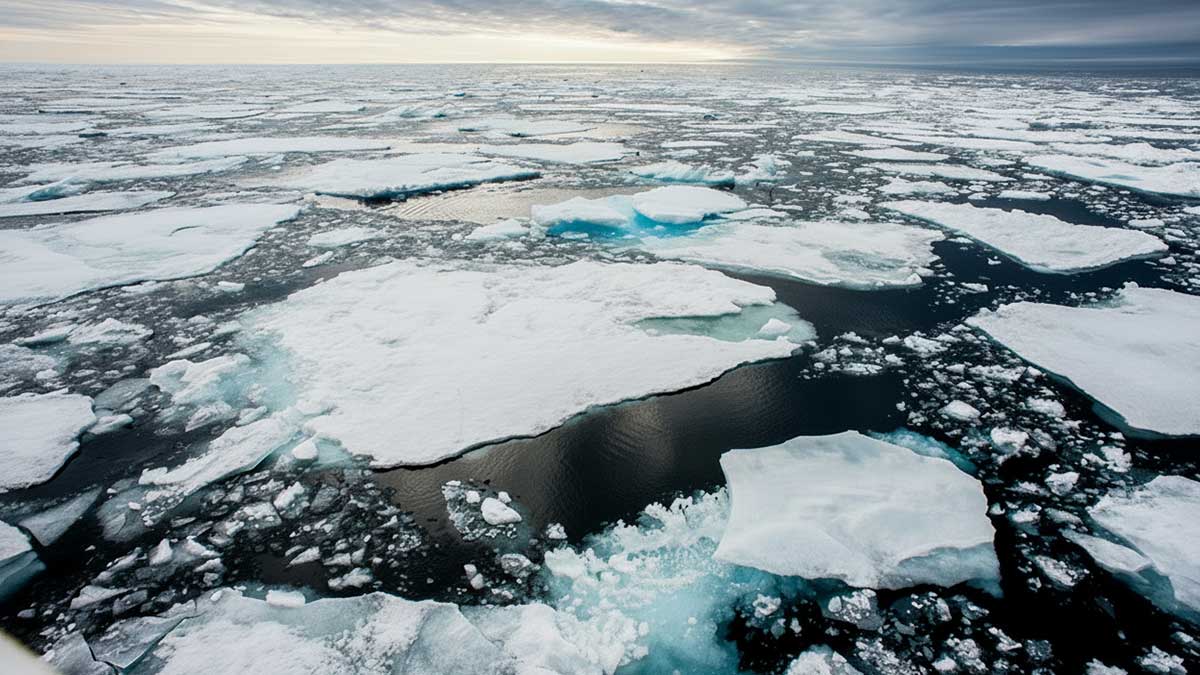
In March 2026, the Arctic’s winter sea ice reached one of the lowest levels ever recorded, at 5.52 million square miles, about 10% below the 30-year average. This was 10,000 square miles less than the 5.53 million square miles measured in 2025. The Arctic winter sea ice covered 5.56 million square miles in 2017 and 5.79 million square miles in 2020, and has been declining since then.
Less white ice means more dark ocean water, and dark water absorbs heat rather than reflecting it, speeding up warming, or so we are told. Yet, any helmsman will attest that the ocean is never truly black, except on a moonless night. Light reflects off the sea as brightly as the sky. A cloud-covered sky lowers the reflection, turning the ocean gunmetal gray.
Science is a cycle of observing, questioning, recording, and sharing. Imagine practicing science with a pair of pint glasses on a sunny day. Fill one glass with cold black coffee and the other with cold white milk. Place a thermometer in each and observe what happens over time.
Both the pint of coffee and the pint of milk will reach the same temperature as the air. The heating occurs through conduction, with the glass in contact with the air. Unlike a black car seat, water molecules are free to move. The chaotic motion of warming water molecules makes it impossible to heat water in a glass or coffee in a mug above room temperature with a hair dryer. Dark waters are not warmed by sunlight and so are not responsible for melting sea ice. Waters are warmed by contact with warmer surfaces, like when a coffee pot is placed on the stove.
The Arctic Ocean connects to the Atlantic Ocean via the Greenland Sea, which is part of the Atlantic. The Svalbard Archipelago is on the threshold between the two oceans. To the east of Svalbard is the Barents Sea. Covering about 540,000 square miles, the Barents Sea is north of Norway and Russia and west of Franz Josef Land. On the continental shelf, it is relatively shallow, with an average depth of about 750 feet. The average depth of the Arctic Sea to the North is about 3,900 feet.
The Arctic isn’t melting uniformly like a spring pond. Melting starts with warm Atlantic Gulf Stream water. Nearly all the Arctic Sea ice loss, totaling 525,000 square miles, happens in the Barents Sea, a part of the Arctic Ocean. This occurs because of the Coriolis Effect, a phenomenon caused by the Earth’s eastward rotation. The equator moves faster through space than the North Pole. As a result, water flowing north curves to the right. When it enters the Arctic, warm Atlantic water flows directly into the Barents Sea.
In April 1810, the whaler William Scoresby lowered a ten-gallon wooden cask made of fir into the deep after overwintering in the Greenland Sea west of Svalbard. This design was by Joseph Banks, the scientist on Cook’s expedition. Fir was the preferred wood because it is a softwood that insulates better than harder woods. Scoresby was surprised to find that the Gulf Stream water at 100 to 200 fathoms deep was six to eight degrees warmer than the Arctic water above. He didn’t believe it at first and modified the cask to record the temperature more quickly. However, the results were consistent. The Gulf Stream was flowing into the Arctic Ocean, separated from the sea ice by a layer of less salty, denser Arctic water.
Besides discovering changes occurring in the Greenland Sea, Scoresby observed, “changes of climate to a certain extent, have occurred, …, considered as the effects of human industry, in draining marshes and lakes, felling woods, and cultivating the earth” (Scoresby 1821, page 263).
Over time, the loss of vegetation and soils, replaced by hard surfaces that have become heat islands, has resulted in more and warmer stormwater runoff into the Atlantic. This happened without a change in annual rainfall. More water strengthens the Gulf Stream, and as temperatures rise, the expanded water has moved closer to the surface in the Arctic.
In 2007, the Gulf Stream surfaced in Svalbard, and warm water began melting glaciers on land.
During the winter of 2010-2011, the Gulf Stream was observed to have a more pronounced meander onto the Continental Shelf closer to Rhode Island than ever before. This indicates a need for a strengthened Gulf Stream to dissipate more energy.
The Gulf Stream flows past New Jersey at 30 to 40 Sverdrups, or 30 to 40 million cubic meters per second, with a seasonal variation of 5-15%. Maximum flow usually occurs in late summer to early fall. It gathers water as it barrels northward. The Gulf Stream transports more than 100 Sverdrups east of the Grand Banks off Newfoundland,
Only 2-3% of the total Gulf Stream flow is carried by the Norway Current into the Barents Sea, but it punches far above its weight in terms of climate impact in the Arctic Ocean.
Atlantification is the process by which warm Atlantic water melts Arctic sea ice. This leads to thinner winter sea ice that melts faster in summer. NASA imagery shows the Siberian coast from Norway to Alaska opening nearly simultaneously. The counter-clockwise gyre created by Atlantic water entering the Arctic pushes ice against Canada and Northern Greenland.
Rounding Greenland, the Arctic Ocean current flows south along Greenland and into the Denmark Strait between Iceland and Greenland. Here, the cold, nutrient-rich Arctic water meets warm, nutrient-poor Atlantic water and plunges 11,500 feet down. The Earth’s largest waterfall, three times taller than Angel Falls, is underwater.
The East Greenland Current will become the Labrador Current after rounding Greenland, carrying oxygen-rich and nutrient-rich waters into the Atlantic. The Grand Banks off Newfoundland will force Arctic waters to mix with warm, salty water, creating arguably the world’s most productive fishing region.
The Northeast Passage, the Arctic Ocean sea route from the Atlantic along the coast of Siberia to the Pacific, opened in the early 2000s. In 2007, the Northwest Passage through the Canadian Arctic Archipelago opened to shipping. The close timing of the two passages’ openings was a surprise, given our understanding of oceanography. However, solar radiation off the granites and gneiss (igneous and metamorphic) rocks of the Canadian Shield made the difference for a region where warm Atlantic water could not reach.
We need to reduce surface runoff by increasing vegetation cover and soil depth to help water stay on the land where it falls, while restoring the Arctic’s winter sea ice and cooling the climate. Additionally, we should naturally lessen the heat island effects of our structures by providing more shade and transpiration cooling from plants. Slowing down water flow during times of abundance to ensure it is available where and when nature needs it will lower seasonal ocean warming.
There are immediate benefits to having more water on land, such as more greenery, less warming, and decreased ocean swelling. The advantages for land, water, and sky are vast and difficult to fully understand. Still, the benefits of restoring Arctic sea ice are clear and serve as a clarion call for responsible local actions by all property owners, no matter where they are in the watershed we call Earth.
About the Author
Dr. Rob Moir is a nationally recognized and award-winning environmentalist. He is the president and executive director of the Ocean River Institute, a nonprofit based in Cambridge, MA, that provides expertise, services, resources, and information not readily available locally to support the efforts of environmental organizations. Please visit www.oceanriver.org for more information.
The author reflects on Jeffrey Sachs, the U.N., and the need to redesign global institutions for a world shaped by climate change, poverty and geopolitical strain.
 Login
Login