Search warrant for man targeted in fatal Toronto police raid includes U.S. consulate charges


Whatever happened to just faking a stomach ache?
In March, a restaurant in Saga City received a phone call, and when an employee answered it, the voice on the other end of the call gruffly commanded “Go check your entrance.” When the staff did, they discovered a piece of paper with a chilling message written on it:
“I have planted a bomb.”
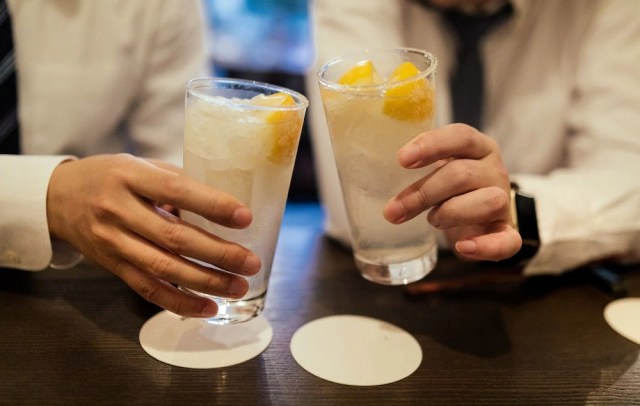
On this same night, the restaurant had a reservation for a farewell party, in which a group of coworkers was celebrating a colleague who was leaving the organization. Obviously, the restaurant couldn’t tell customers to come on in after receiving a bomb threat, so the party was cancelled, though thankfully no explosives were found, and the threat turned out to be a hoax.
Since the party was supposed to be for a police officer in the Saga Prefectural Police, you might expect the culprit to be someone with a beef against the justice system. Maybe it was a teenage delinquent he’d busted for shoplifting, or the loyal lieutenant of a yakuza boss serving time after the officer put him behind bars. Following an investigation into the matter, though, it was discovered that the bomb threat came from the police officer himself. Why? In his words:
“I didn’t want to go to my farewell party.”
The officer, a man in his 20s attached to the central division of the Saga Prefectural Police, was supposed to be leaving the force at the end of March, meaning he had less than a month to go until he’d be free from all such after-work functions. Apparently one more after-work night with his coworkers was one too many for his tastes, though.
His base motivation isn’t so hard to understand. Work farewell parties can sometimes be unpleasant for the person who’s being celebrated, since avoiding saying anything bad about the job everyone else at the party still has, and also not coming off as bragging about their new job, can make for tense, awkward conversations. Unfortunately for the officer, who has admitted to making the bomb threat, he’s no doubt since had to have many much more awkward conversations since his actions came to light.
▼ “How come you don’t want to work with us anymore?” is still an easier conversation than “How come you threatened to blow up a building?”

The ploy even seems to have extended his time at his job, as instead of reaching the end of his duty period at the end of March, he was given a formal reprimand and resigned on April 30. His case has been referred to the public prosecutor on charges of forced obstruction of business and intimidation, though it’s unclear whether or not his case will go to trial.
So remember, whether you’re dreading going to a work function or simply have a grudge against Nintendo, a bomb threat is never the wise way to solve your problem.
Source: RKB Mainichi Hoso via Yahoo! Japan News via Golden Times
Top image: Pakutaso
Insert image: Pakutaso
● Want to hear about SoraNews24’s latest articles as soon as they’re published? Follow us on Facebook and Twitter!
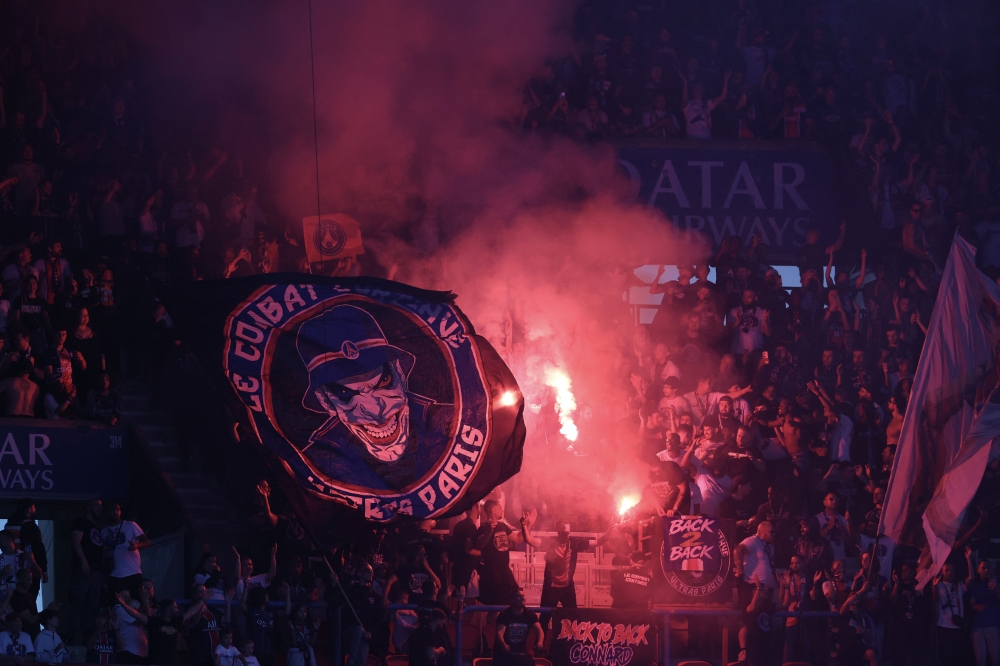
PARIS, June 1 — France said today that nearly 900 people had been arrested in riots that broke out after Paris Saint-Germain club won the coveted Champions League for a second consecutive year over the weekend.
“We’ve had more than 890 arrests. In total, that’s 45 per cent more than last year,” Interior Minister Laurent Nunez told broadcaster France Inter, adding that nearly 180 law enforcement officers had been injured.
Celebrations were blighted by clashes between youths and police in Paris and other cities, cars set on fire and shops looted.
Yesterday evening, President Emmanuel Macron received the team at the Elysee Palace. While he said PSG were an “immense pride” for France, he denounced the “unspeakable” violence.
“Enough. We are fed up,” he said.
“This is not football, this is not sport, this is not what we love,” he added.
One man died riding his motorbike around the Paris ring road in celebration while authorities reported stabbings and other attacks. — AFP
Met seizes far-right activist’s phones after he disembarks flight at Heathrow under counter-terrorism provisions
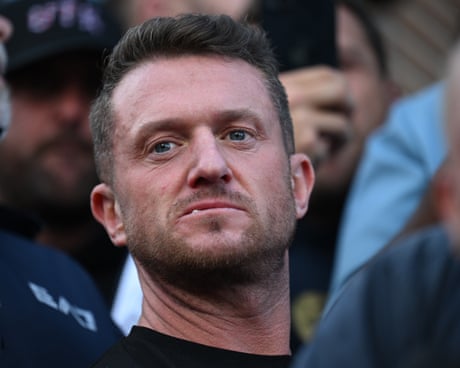
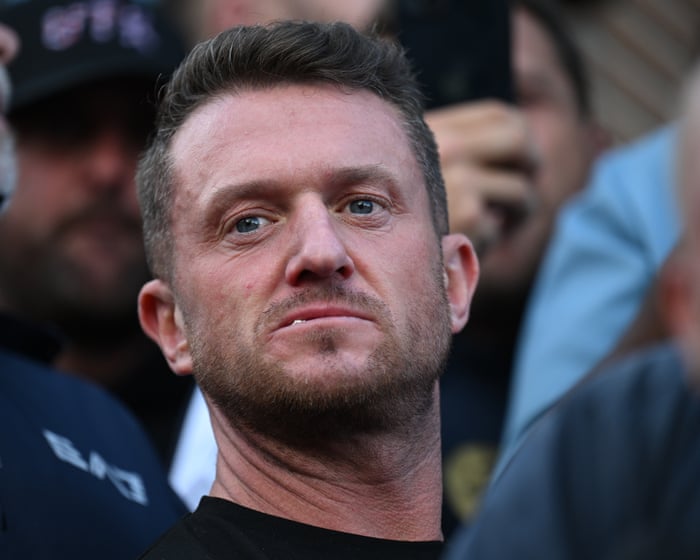
British police say they stopped the far-right activist Tommy Robinson and seized his phones as he returned from a trip to Russia.
Robinson, whose real name is Stephen Yaxley-Lennon, met Elon Musk’s father in Moscow during his trip.
Continue reading...
© Photograph: Finnbarr Webster/Getty Images

© Photograph: Finnbarr Webster/Getty Images

© Photograph: Finnbarr Webster/Getty Images

Crowds gather at sites across Belfast after Sudanese man charged with attempted murder
Badenoch said, after the murder of Stephen Lawrence, it was right that people wanted to ensure this did not happen again.
It led to the Macpherson report, she said.
[It] wanted to put right what went wrong with policing in the 1990s.
However, in attempting to do so, it also enshrined a principle which I believe is wrong that a racist incident is racist if it is perceived as racist by the victim or any other person.
Equality law, properly designed, should protect us all in the same way. It should be a shield, not a sword.
It should protect people from discrimination. It should protect people from being treated differently because of their race, sex, religion, sexuality, disability or age.
Continue reading...
© Photograph: PA

© Photograph: PA

© Photograph: PA
PARIS, June 7 — Faced with a painful slowdown in recent years, the luxury sector is seeking to recover its mojo by juggling a back-to-basics approach with finding new ways to connect to clients.
The financial performances of the heavyweights – profits amputated last year at LVMH and Kering, while Burberry posted a loss for its 2024-2025 financial year – testify to the fact the market has undergone a change.
The causes are multiple, including the slowing Chinese market, aspirational customers becoming more cost-conscious, and concerns about quality.
“Following the Covid pandemic the luxury market was boosted by binge buying,” said Eric Briones, a cofounder of the Paris School of Luxury who recently published a book about the transformation of the sector.
“And when the luxury sector was confronted with that strong demand, the artisanal model came under pressure,” he said, pointing to recent outsourcing scandals in Italy.
Luxury overexposed
A major part of the luxury cachet is that products are made with superior materials by skilled artisans using traditional methods, which naturally limits production.
Italian police have been investigating major luxury brands for two years over work allegedly outsourced to poorly paid Chinese workers and grim labour conditions.
The post-Covid boom in demand was accompanied by price hikes of up to 50 percent for some labels, “without improvements in quality, and sometimes a drop in quality”, Briones said.
Not only prices increased. Volumes did too.
“It is a fundamental question,” said Christophe Cais, chief executive at CXG, a consultancy that works with premium and luxury brands about customer experiences.
“How many bags can you sell globally without becoming overexposed? Exclusivity is desirable and at the same time you want sales volume, so at what point does volume undermine exclusivity?” he said.
According to the consultancy Bain & Company, the luxury market lost 20 million clients between 2024 and 2025, after having lost 50 million over the previous two years.
Consolidation
Following years of economic and geographic growth for the big luxury groups, analysts say the time has come to prune.
“A phase of recentring and bringing some coherence to portfolios is underway,” said Lea Hubsch at Kearney.
“That may include stepping back or finding another partner for certain brands that aren’t so much part of the DNA” of a group, she added.
LVMH, the world’s largest luxury conglomerate, recently sold off US label Marc Jacobs after holding it for three decades.
In January, it sold the DFS duty free shops’ activities in China.
Kering, another luxury group based in France that is undergoing a major shakeup, sold off its beauty division to L’Oreal for €4 billion (US$4.7 billion; RM18.57 billion).
“This consolidation trend is sure to continue as conglomerates clean out underperforming or strategically less important divisions, focusing on core operations,” CXG said in a recent report.
That will provide opportunities for other companies to snap brands and create new combinations.
Italy’s Versace bought its home turf rival Prada last year for €1.25 billion (RM5.8 billion).
Other deals are expected: Giorgio Armani indicated in his will that he wanted his fashion house to eventually join a luxury group like LVMH or L’Oreal.
Desirability, quality, experiences
Kering’s new CEO Luca de Meo was quite clear in his presentation of the group’s turnaround strategy last month that consolidation was coming, but he also signalled a back-to-basics approach.
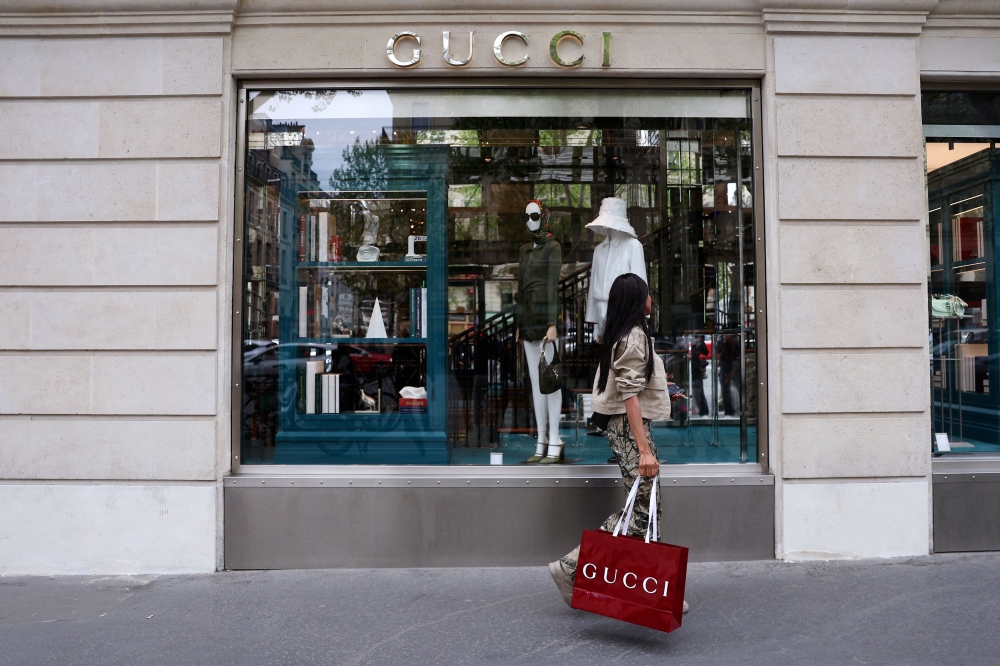
He called for an upgrade in quality and efforts to restore the desirability of its leading brand Gucci, which fell victim to overexposure thanks to streetwear.
“Our priority is to make Gucci unmissable again,” de Meo said.
“In one second, you must know it’s Gucci – and it doesn’t mean covering the world with GG.”
Analysts say that in addition to returning to an emphasis on craftmanship and quality, the industry is tuning into demand for experiences and tap into the wellness trend with customer service that rivals that of luxury hotels.
“Desire has shifted to ‘experiences’: beauty, hospitality, transformative luxury,” Briones said. — AFP