 Login
Login
Photojournalists Say ICE Agents Targeted Them and Their Cameras at Delaney Hall Protests
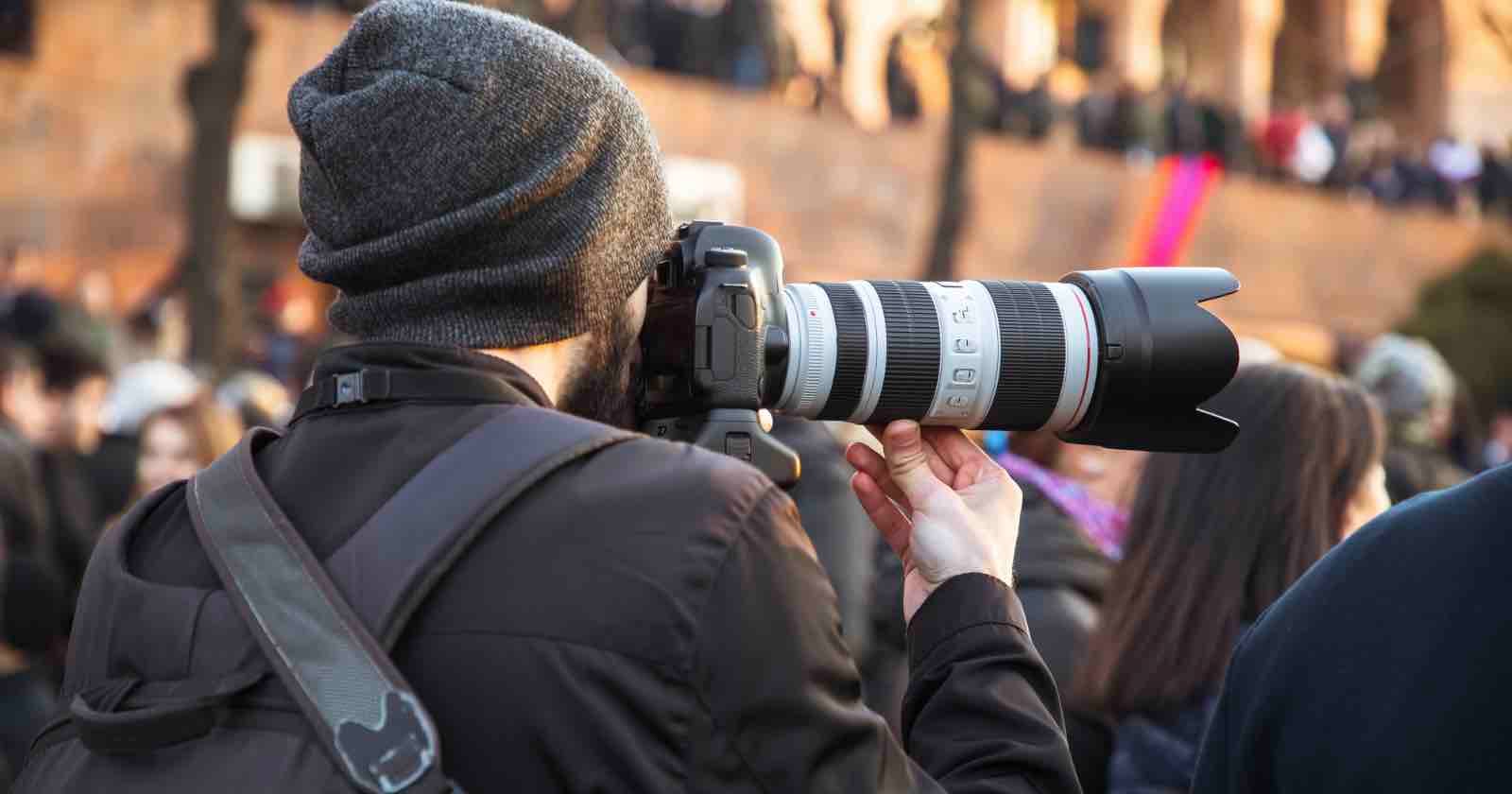
Several photojournalists, who were covering the protests outside Delaney Hall, have alleged that they were purposely targeted and attacked by some ICE agents.

Several photojournalists, who were covering the protests outside Delaney Hall, have alleged that they were purposely targeted and attacked by some ICE agents.


Nestled amid plants native to the U.K., a giant figure of Gaia, or Mother Nature, sleeps in a verdant garden. With willow-branch locks shaped by artist Tom Hare and a crown of leaves, the figure’s face and shoulders are made from a fallen mature tree carved by Tim Wood. A winding pathway leads beneath an arch that extends the character’s torso, created in the tradition of dry stone walls and meticulously assembled by the family-run outfit Noble Stonework.
You’ll find Gaia in a garden titled “On the Edge” at this year’s RHS Chelsea Flower Show, which has taken the top prize of Garden of the Year. The project is a collaboration between designer Sarah Eberle and Campaign to Protect Rural England (CPRE), which champions the countryside and the sustainable practices necessary to protect and preserve its ecosystems.

For this year’s exhibit, Eberle emphasized “edgelands,” or spaces between rural and urbanized areas like the borders of fields or even residential gardens. Think roadside berms or the seemingly unruly growth beside a canal. Often, these spots just look like a lot of weeds. Eberle sees not only the beauty, but the value, in these overlooked areas.
“These spaces connect millions of people to nature in everyday life, yet they’re undervalued and under constant pressure,” CPRE says in a statement. “This garden is an invitation to see them differently: not as ‘leftover’ land, but as living places that can recover and thrive with the right care.” Eberle’s choice of plants has a slightly wild aesthetic, with vines taking over the stone arch—redolent of the U.K.’s historic stone bridges—and a graceful yet somehow satisfyingly chaotic arrangement of plants we might associate with untamed overgrowth.
The garden’s design encourages people to consider using natural materials, cultivating local plants to help pollinators, and embracing “flaws” like old stumps or rocky areas that can be havens for wildlife. Amid nature’s innate rhythms, Gaia is a gentle protector who snoozes calmly with everything in balance. Eberele describes the effect: “A sense of abundance, a landscape under repair, the beauty in the ordinary. It’s about how it makes you feel—it’s almost a homecoming, an embrace, a hug.”
The Chelsea Flower Show is the flagship event of the Royal Horticultural Society, and it has been held on the grounds of the Royal Hospital since 1913, with the exception of a few skipped seasons during the two World Wars and in 2020. It’s not just limited to British gardeners, however: exhibitors from around the globe conceive of some of the most creative gardens imaginable. Tickets are available on the RHS website, and the show continues through May 23 in London.


Do stories and artists like this matter to you? Become a Colossal Member today and support independent arts publishing for as little as $7 per month. The article Gaia Sleeps Amid Sarah Eberle’s Award-Winning Garden at the RHS Chelsea Flower Show appeared first on Colossal.
Neil. Moralee posted a photo:

Founded in 1919 by Walter Owen Bentley in Cricklewood, London, the Bentley motor company quickly established a reputation for exceptional performance and engineering, famously dominating the 24 Hours of Le Mans throughout the 1920s with the help of the legendary 'Bentley Boys'. Following financial difficulties during the Great Depression, the company was acquired by Rolls-Royce in 1931, moving production to Derby and later to its iconic factory in Crewe, Cheshire, in 1946. After decades of being closely associated with Rolls-Royce, Bentley was purchased by the Volkswagen Group in 1998, a transition that sparked a significant revitalisation of the brand's identity as a manufacturer of luxury, high-performance grand tourers that continues to define its legacy today.
Beer, Devon, UK.

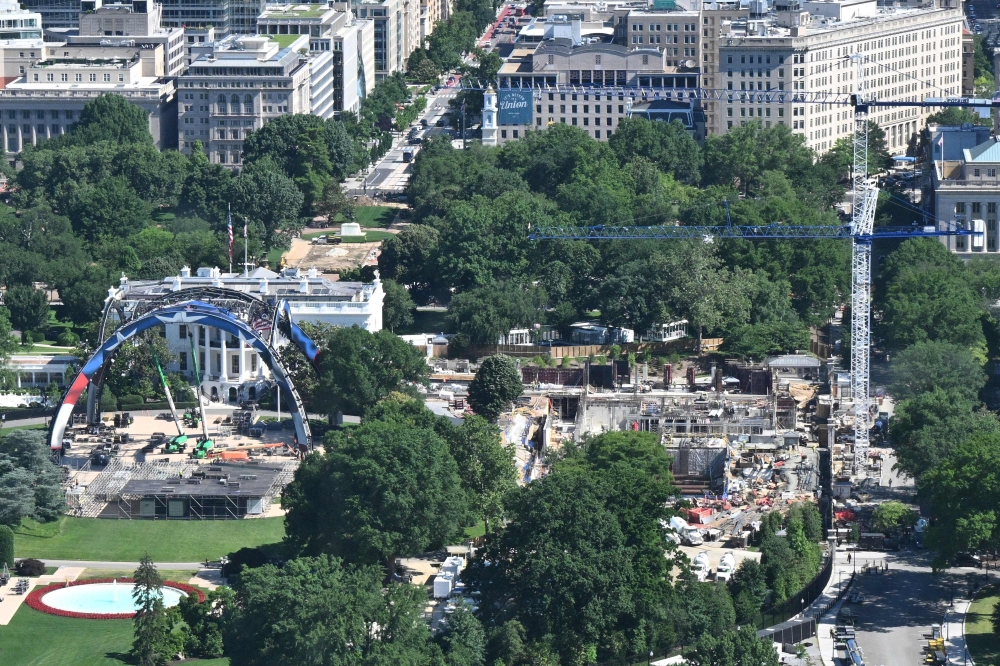
WASHINGTON, June 5 — US President Donald Trump’s administration will ask an appeals court today to allow construction of a US$400 million ballroom on the site of the White House’s demolished East Wing, pitting Trump against preservationists in a case testing the limits of presidential authority.
The East Wing, part of the White House complex in Washington, traditionally housed the offices of the first lady and her staff. The National Trust for Historic Preservation, a nonprofit group that campaigns to protect significant American sites, sued last year after the Trump administration tore down the East Wing in October 2025 and began building a 90,000-square-foot (8,360-square-meter) ballroom without seeking authorisation from Congress. Trump’s ballroom plan is part of a broader push by the Republican leader to reshape central Washington’s landscape of government buildings and national monuments. The hearing before a three-judge panel of the US Court of Appeals for the District of Columbia Circuit, a powerful court one rung below the Supreme Court, is scheduled for 9:30 am EDT (1330 GMT). US District Judge Richard Leon, appointed by Republican former President George W. Bush, twice blocked above-ground construction on Trump’s ballroom while allowing underground work to continue.
Leon said no federal statute even “comes close to giving the President” the required authority to construct the ballroom without approval by Congress.
The administration’s appeal is being heard by Democratic-appointed D.C. Circuit judges Patricia Millett and Bradley Garcia alongside Trump-appointed Judge Neomi Rao. In an order last month, the appeals court allowed construction to continue during the legal battle without ruling on the merits of the case. The administration has framed the ballroom project as a national security necessity, citing recent assassination attempts against Trump.
“The East Wing Project answers that critical security need, and ensures that the President can fulfill his constitutional duties in a safe and heavily secured facility,” the Justice Department told the appeals court in May.
Preservationists reject that argument. The National Trust for Historic Preservation contends that the D.C. Circuit and US Supreme Court have never allowed a president to “usurp powers vested in Congress by the Constitution based on nothing more than his claim of necessity.”
The organisation said in a filing that “the public has a strong interest in pausing a project that will irreparably damage what is perhaps the most significant historic site in the country.” Trump also intends to erect a 250-foot (76-meter) arch near the National Mall, the tree-lined strip between the US Capitol and the Lincoln Memorial, and renovate the Kennedy Center performing arts complex. A federal judge last week ordered Trump to remove his name from the iconic Kennedy Center building and blocked his plans to close it for renovations.
Trump has said his planned ballroom is scheduled to open around September 2028. — Reuters

In April, the 70th month since Beijing imposed the national security law, the Hong Kong government applied to the court to seize assets belonging to Apple Daily founder Jimmy Lai, who is serving a 20-year prison sentence.

On National Education Day, a top Chinese official delivered a warning about those who “politicised” the deadly Tai Po fire and tried to “stir up chaos” in the city.
The Hong Kong government filed an application with the High Court on April 2 to seize “offence-related” properties owned by jailed pro-democracy media tycoon Jimmy Lai on national security grounds.
In a statement issued the same day, the government mentioned Lai’s earlier convictions under the Beijing-imposed national security law. It said the High Court had found that he was the “mastermind and driving force behind the case, consciously using Apple Daily and his personal influence” to undermine local and Beijing authorities.
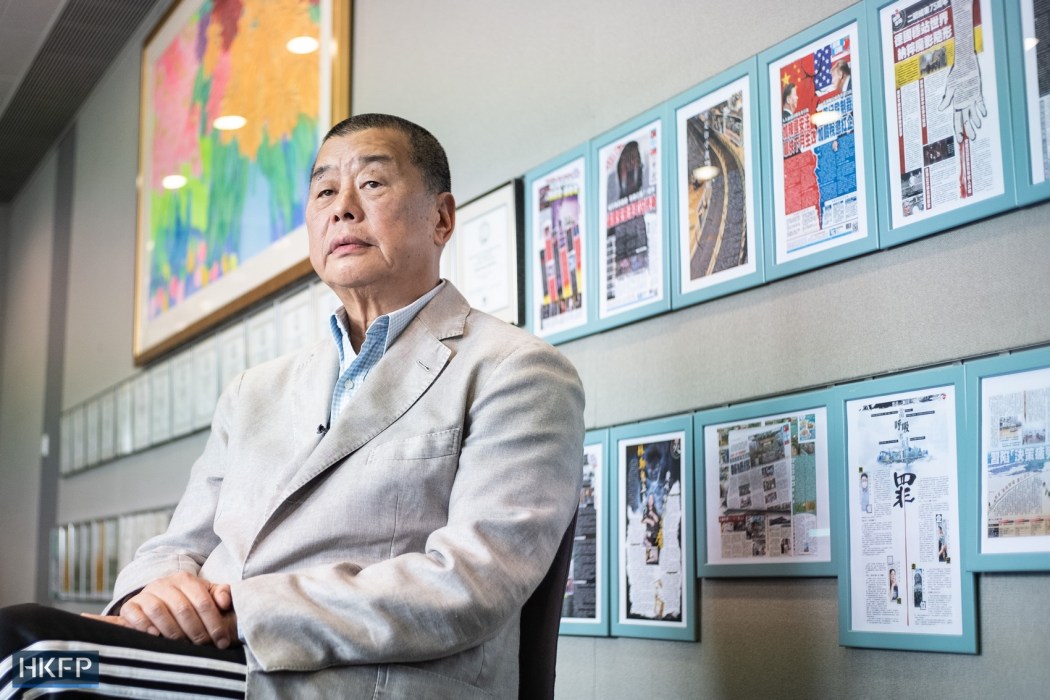
In a writ dated April 2, the secretary for justice listed HK$127 million in assets to be “forfeited” to the authorities.
The assets include credit balances in bank accounts belonging to or linked to the Apple Daily founder.
Fifteen bank accounts under Lai’s name – 10 with HSBC, two with Hang Seng Bank and three with Shanghai Commercial and Savings Bank – have over HK$32 million.
The government is also seeking to seize bank accounts belonging to 17 companies linked to Lai. It is also demanding that Lai give up shares in 17 companies, some of which overlap with the 17 firms whose assets the government is seeking to seize.
Among the companies whose assets and shares the government wants to seize are Dico Consultants Ltd, which has over HK$404,302 in its HSBC account, and Lai’s Hotel Properties Ltd, which has over HK$3.1 million in its four HSBC accounts.
Lai has been summoned to the High Court on July 8 to hear the government’s application. The case will be presided over by Esther Toh, one of the three judges who heard his national security trial.

The move to seize Lai’s assets came after the government designated three companies linked to Lai’s now-defunct Apple Daily tabloid “prohibited organisations” in late March and removed them from the corporate registry. Police cordoned off the Apple Daily building in Tseung Kwan O a day later.
The three firms were tried and convicted alongside the Apple Daily founder in his high-profile national security case. Lai was sentenced to 20 years behind bars in early February, while the companies were each fined over HK$3 million.
A Hong Kong political commentator charged with disclosing details of a national security investigation appeared at the District Court on April 28.
Wong Kwok-ngon, known by his pen name Wong On-yin, has been detained since his arrest in December for allegedly divulging in a YouTube video details of enquiries made by police during a national security investigation.
Judge Stanley Chan said the pre-trial review would take place behind closed doors on August 11, and the trial would begin on October 9.

Wong’s offence falls under the Safeguarding National Security Ordinance, a homegrown security law known as Article 23. It was added to the ordinance in May as part of subsidiary legislation, and Wong is the first to be charged under the new law.
He is also charged with sedition over videos posted on YouTube between January 3 and December 6 last year. He plans to plead not guilty to both charges.
The defendant, who continues to represent himself, told the court he had dropped his legal aid application.
Asked by the judge whether he had legal knowledge for self-defence, Wong said he had “three law degrees” and was confident of handling the case.
Secretary for Environment and Ecology Tse Chin-wan said in early April that all Hong Kong restaurant licences would include national security clauses from September.

Tse made the remarks on April 7, nearly a year after the Food and Environmental Hygiene Department (FEHD) introduced the provisions for restaurant licence renewals in May.
“With restaurants renewing their licences gradually, we expect that by September this year, all restaurant licences will contain the clauses,” Tse told reporters, according to RTHK.
A Hong Kong man was jailed for a year under the city’s homegrown national security law after pleading guilty to making seditious remarks on Facebook, including comments supporting Hong Kong’s and Taiwan’s independence.
Raymond Chong pleaded guilty before national security judge Victor So at West Kowloon Magistrates’ Courts on April 14 to one count of knowingly publishing publications with a seditious intention – an offence under the city’s local security law, also known as Article 23.
The magistrate handed Chong, a retiree in his early 60s, an 18-month sentence but discounted it by six months after considering his guilty plea.

Chong was accused of making 53 seditious social media posts between March 2024 and November 2025, local media reported.
The posts had wording such as “dissolving the Chinese Communist Party is the most important thing” and “Hong Kong independence is within sight.”
The defendant posted on a public Facebook page called “Holy Raymond,” which features the Chinese phrase “Heaven will destroy the Chinese Communist Party, God bless Hong Kong” as its profile picture.
During mitigation ahead of sentencing, his lawyer argued that Chong was a Falun Gong believer who had come to hate the Chinese Communist Party because of false information that the CCP engaged in live organ harvesting.
China’s top official in charge of Hong Kong affairs warned of some people who “politicised” the deadly Tai Po fire and tried to use the disaster to “stir up chaos” in Hong Kong.
Xia Baolong, director of the Hong Kong and Macao Affairs Office, delivered his remarks on April 15 via a recorded video shown at a National Security Education Day ceremony.
In his speech, Xia mentioned the massive fire that broke out at Wang Fuk Court, a government-subsidised housing estate in Tai Po, on November 26, killing 168 people.

“After the Tai Po fire, some malicious people politicised the tragedy, attempting to use the disaster as a means to disrupt Hong Kong,” Xia said in Mandarin, without giving further details.
“Once again, it reminds us that along Hong Kong’s path toward prosperity under good governance, there will be various risks and challenges.”
Speaking at the same event, Hong Kong Chief Executive John Lee also warned that some people were “using the disaster to stir up chaos” and “to incite hatred” in Hong Kong.
“Only through the government’s swift action and decisive law enforcement has the situation been able to return to normal,” Lee said in Mandarin.
A French journalist was denied entry to Hong Kong in November, Reporters Without Borders (RSF) said in late April, accusing the city’s authorities of “weaponising visas” against foreign media workers.

Antoine Vedeilhe, who was shooting a documentary for French public broadcaster France Télévisions, was questioned upon arrival at Hong Kong International Airport on November 2 last year, RSF said in a statement on April 24.
He was detained for three hours before being deported without being given a reason, it added.
The press freedom NGO said Vedeilhe was the 13th foreign media worker who had been denied entry or a visa by the city’s authorities following Beijing’s imposition of the national security law in 2020.
“In the journalist’s view, his detention was a reprisal for his work on a documentary examining Beijing’s grip on Hong Kong,” RSF said.
Another cameraman for the documentary was able to enter the city, RSF said, but he was followed by “unidentified individuals that he suspects were Hong Kong’s national security police.”
“In the following days, there was a hacking attempt on Vedeilhe’s private email account and his sources in the documentary were harassed by the national security police,” the NGO said.
In an emailed reply to HKFP’s enquiries, the Hong Kong government said it “strongly condemns the smearing remarks and distorted narratives by” RSF.
As of April 1, a total of 394 people have been arrested for “cases involving suspected acts or activities that endanger national security” since Beijing’s national security law came into effect, according to the Security Bureau. That figure includes those arrested under Article 23 and for other offences.
Of the 208 people and five companies that have so far been charged, 180 people and four companies have been convicted or are awaiting sentencing.
In total, 100 people and four companies have been charged under Beijing’s national security law, with 79 persons and three companies convicted. Thirteen people have been charged under Article 23, 10 of whom have been convicted.


