Reading view

Traveling without a passport, boarding pass, or hotel key: The seamless travel Amadeus dreams of

Prepare to be scanned. Taking a flight without a boarding pass, traveling without a passport, or entering a hotel room without keys or cards is becoming increasingly likely. Tech companies dream of facilitating these “seamless journeys” through biometrics, which uniquely identifies people based on their individual biology. And whoever controls the biometric system will control a significant part of the future tourist experience, becoming a key supplier for infrastructure operators (and governments).

Seguir leyendo

© Tomohiro Ohsumi (Getty Images / NEC Corporation) (EL PAÍS)

Facial recognition at Narita Airport (Japan).
  •  

Dancing cows and tigers hatching from eggs: The impact of AI-generated videos on children

YouTube, TikTok, and Instagram are facing a flood of AI-generated content aimed at children. It’s easy and quick to create, and production is rampant. But it has the inherent flaws of AI-generated video: visual inconsistencies, narrative gaps, and a lack of realism. While it’s still too early for comprehensive studies, experts have already raised concerns about the impact of these videos on children’s cognitive development.

Seguir leyendo

Images generated by artificial intelligence posted on social media.
  •  

Google must let UK publishers opt out of AI search under new rules

Malay Mail

LONDON, June 3 — Britain has imposed new conduct requirements on Google’s search services, including allowing publishers to stop their content being used to power the US tech giant’s AI features, as the watchdog ramps up its oversight.

The country’s Competition and Markets Authority has flagged concerns about Google’s dominance in search, designating the company with the “strategic market status” that allows it to set targeted rules to increase trust and transparency.

Google accounts for more than 90 per cent of UK queries and the regulator said in January it wanted to give publishers more control over how their content was used.

The CMA today said the requirements imposed on Google under the digital markets competition regime gave “publishers more control and stronger bargaining power over the use of their content,” ‌while securing a fair deal.

News websites and other publishers have seen click-through rates drop ⁠sharply as a result of users relying ⁠on overviews generated with the help of AI.

Google said ⁠it was providing “new resources, insights ⁠and control for website owners” ⁠to navigate the changes in how users find and understand information using generative AI.

It said it was testing a new control that lets publishers manage how their links ⁠and content appear in generative AI search features.

Sites that opt out would not receive traffic from AI Overviews and AI Mode, it said in a blog post, but the controls would not affect traditional search results.

It said it was also increasing the number of links in AI responses and it was starting to roll out ⁠new insights for publishers.

The CMA said Google would be required to make sure content from publishers, including news organisations, was properly attributed in AI-generated search results, using ⁠clear links.

“Google has recently announced changes to its search business and the requirements we’ve introduced ⁠today are designed ⁠to respond to what Google is doing now and in the future,” CMA Chief Executive Sarah Cardell said.

Google faces increasing regulatory scrutiny across the world, including in the United States and ‌European Union, and the company in March said it was developing new search controls to address British competition concerns. — Reuters


  •  

Colbert’s Next Act?: Ex-‘Late Show’ Host’s New YouTube Channel Way More Interesting Than BS That CBS Tried To Quash His Public Access Special

Stephen Colbert may have revealed what his next move is now that the Late Show is over on CBS. At the same time, CBS has absolutely revealed that they were behind Colbert’s May 22 Michigan public access special, the one that aired the day after the long-running network late-night franchise came to an end. In […]

  •  

‘Not an impossible challenge’: UK PM Starmer orders tech firms to block nude images for minors or face new laws

Malay Mail

  • UK says tech firms must stop underage nude images
  • Times says Starmer may ban harmful social media platforms
  • Government could introduce fines or even criminal liability for tech bosses

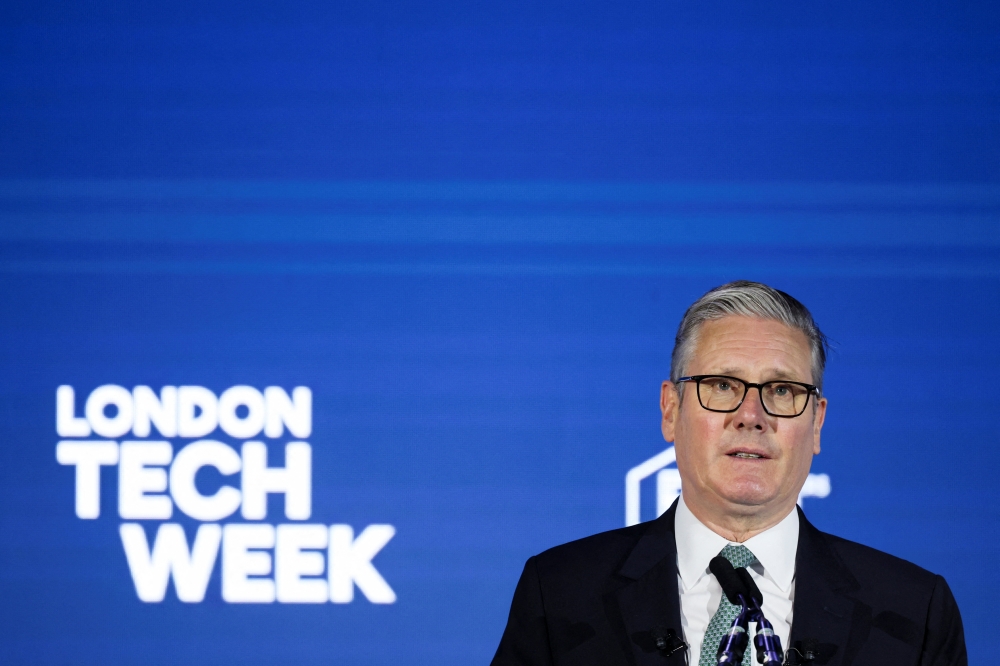
LONDON, June 8 — Big tech firms operating in Britain must stop children circulating nude images on their phones or they will face legislation forcing them to do so, Prime Minister Keir Starmer said today.

The announcement is Starmer’s latest effort to protect children ‌from the harmful impacts of technology. It comes as the Times reported that he is also planning to announce a ban on some social media platforms for those aged under 16.

“Today I’m calling on tech companies operating in this country to introduce device controls that prevent children from sending and receiving sexually explicit images,” Starmer said in a speech at London Tech Week. “This is not an impossible challenge.”

Under the new plans, firms like Apple and Google would have to build or activate technical solutions on smartphones and tablets to detect and block nude images for children. Adults would still be able to take, share or view nude content through an age verification process.

If companies did not act within three months, the government said it would bring forward legislation to force them to do so or risk facing fines or, as a last resort, the threat of criminal liability for bosses.

Google said it was deeply committed to protecting children online.

“We are working constructively with UK partners to ‌find effective, privacy-preserving solutions that deter the spread of harmful content while ensuring a safe digital environment for young people,” a Google spokesperson said.

Apple did ⁠not comment. The company has tools designed to limit children’s exposure to ⁠explicit content, including a feature that warns when nudity is detected in images sent or received.

Social media ⁠ban coming soon, report says

The British authorities ⁠said blocking nudity was key, ⁠saying it would disrupt much of the grooming and sextortion model of gangs and predators who share nude images with others or use them to blackmail minors. They argue it is technically achievable and can be done quickly.

Currently a child sex abuse referral is made about every five minutes, with 91 per cent ⁠of images self-generated. Investigators say they deal with cases where predators groomed victims and encouraged them towards self-harming or suicide, forced them into bestiality and other sadistic live-streamed content.

The government said it wanted to work with industry and that age checks recently introduced by Apple were a significant step forward. But it wanted more action by both Apple and Google to block nudity by default and across third-party apps.

Britain has separately been considering whether to ban children from accessing social media in response to widespread concern about its overall safety and the impact it has ⁠on mental health. A public consultation on the issue closed in May.

Australia last year blocked children under 16 from platforms including TikTok, Alphabet’s YouTube and Meta’s Instagram and Facebook.

France, Denmark and Poland are also considering tightening rules around social media use for ⁠children, while Greece in April announced it would ban access to those under the age of 15 from January 2027.

The Times reported Starmer was set to ⁠announce a ban ⁠for children under 16 on online platforms determined to be harmful while maintaining access to some safer forms of social media.

Asked about the report, a source at Downing Street said: “The prime minister is not afraid about taking on the tech companies and their bosses to protect young people.”

A source close to the matter ‌said a formal ban was unlikely to come this week. Experts are divided on how effective a total ban would be, while a group of young people in London recently told Reuters they were opposed to restrictions. — Reuters


  •  

Catastrophists versus accelerationists: Will AI destroy the world or save it?

Eliezer Yudkowsky, 46, and Nate Soares, 37, are convinced that if artificial intelligence (AI) systems continue to improve, they will eventually surpass human capabilities. And when that happens, humanity will go extinct. They argue this could occur in a matter of months or within a decade. The title of their latest book is blunt: If Anyone Builds It, Everyone Dies: Why Superhuman AI Would Kill Us All (Little, Brown & Co).

Seguir leyendo

BigDog, a quadrupedal walking robot designed for military use by Boston Dynamics and Foster-Miller.
  •  

Generational rejection of AI? Why are university students booing big tech at graduation ceremonies?

“The rise of AI is the next industrial revolution,” Gloria Caulfield, a real estate executive, told recent graduates of arts, humanities, and communication at the University of Central Florida. The response? A chorus of boos. Caulfield turned to the organizers: “What happened?” she asked. She looked back at the young people in the audience: “Ok, I’ve struck a chord, may I finish?” And she continued: “Only a few years ago, AI wasn’t a factor in our lives,” she added. And then they applauded, and Caulfield smiled with relief. The video of her bewilderment went viral.

Seguir leyendo

© SHAHAR AZRAN

Former Google CEO Eric Schmidt.
  •  

100 Years Ago: E&P Directory of Syndicated Comic Art 1926

In the June 5, 1926 issue Editor & Publisher presented their “Third Annual Directory of Press Features.” The Newspaper Art section listed “Cartoons, Comic Strips, Magazine Covers and Sketches” available to, well, editors and publishers of newspapers and other publications. Note: most of the cartoons listed in the other sections are listed here under “Cartoons.” […]

  •  

Sleep-better tech: apps and devices that actually work

Sleeping well has become one of modern life’s biggest challenges. Between screens, irregular schedules and stress, more and more people feel like they’re not getting the rest they need. As such, it’s no surprise that recent years have seen the proliferation of tools designed for sleep analysis: smart watches, rings, sensors placed under the mattress and mobile apps that promise to measure how we sleep, and help us to improve our rest.

Seguir leyendo

© whitebalance.space (Getty Images)

A smart watch that monitors sleep patterns.
  •  

How social media platforms keep students hooked: Notifications during school hours and paid ‘teen ambassadors’

TikTok executives decided not to disable notifications during school hours, ignoring recommendations from their own safety team, and paid millions of dollars to parents’ and teachers’ associations to promote the social network in schools. Snapchat sent alerts to teenagers while they were in class urging them to share what was happening in the classroom. Google executives knew that YouTube was recommending videos to students during the school day that were unrelated to their lessons. Meta paid “teen ambassadors” to promote Instagram and hand out gifts to their classmates.

Seguir leyendo

© JUAN BARBOSA

A group of teenagers with their cell phones.
  •  
❌