Reading view

NASA satellite images show how a massive tsunami in Alaska changed the landscape forever

New satellite images are helping scientists understand a major tsunami that changed the landscape of a popular tourist destination in Alaska forever. 

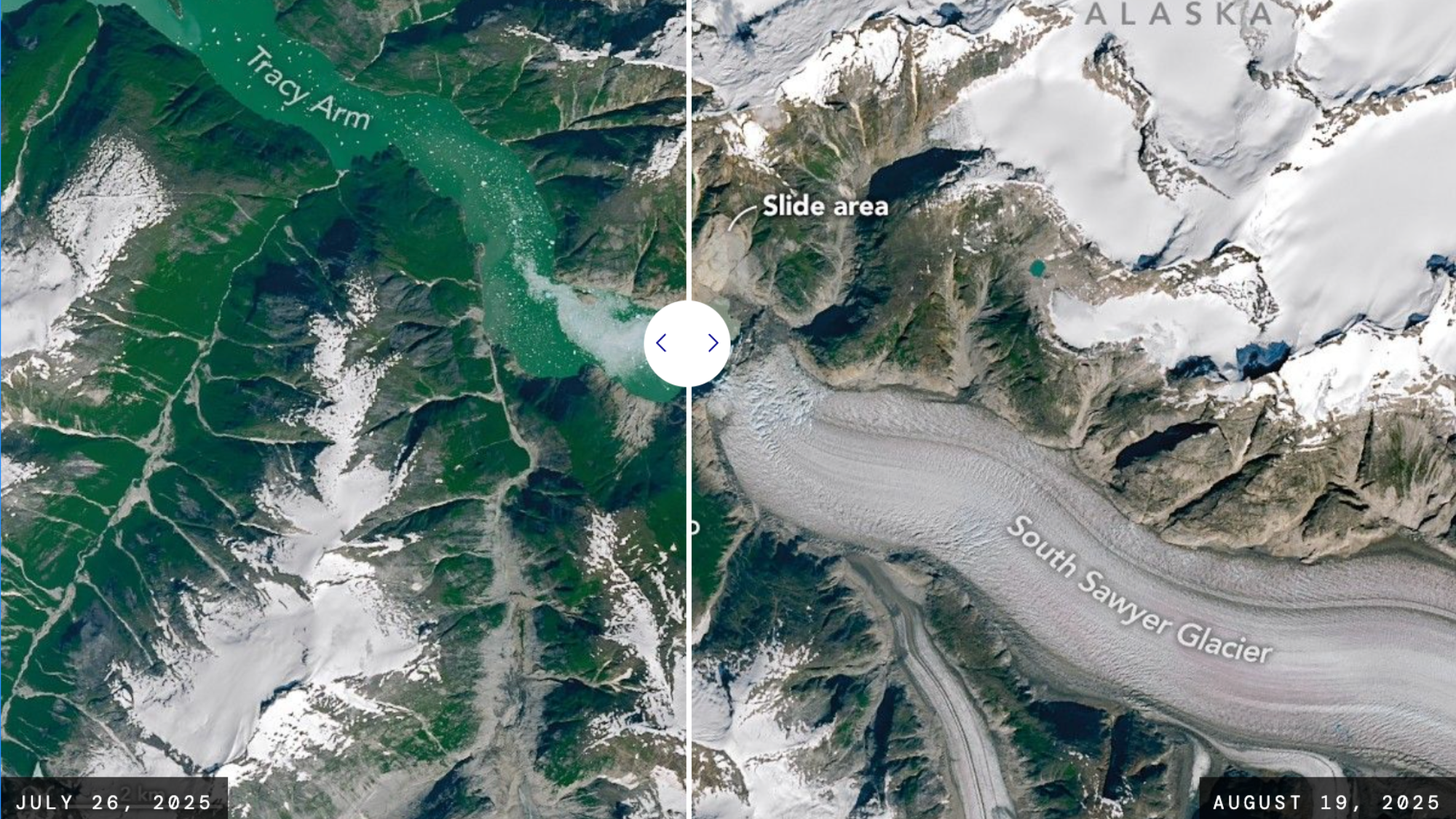
On August 10, 2025, a tsunami larger than the Eiffel Tower ripped through Tracy Arm fjord in southeast Alaska. The rapid retreat of the South Sawyer Glacier triggered a landslide that swept huge rocks down the picturesque waterway visited by millions aboard Alaskan cruises every summer. At least 64 million cubic meters of rock slid down the slope of the glacier. The rocks created an enormous tsunami that stripped trees and other vegetation from the opposing fjord wall up to 1,578 feet above sea level. 

The NASA-USGS Landsat satellite images show the dramatic changes to the landscape. In one photo taken on July 26, 2025, the fjord is surrounded by green vegetation. 
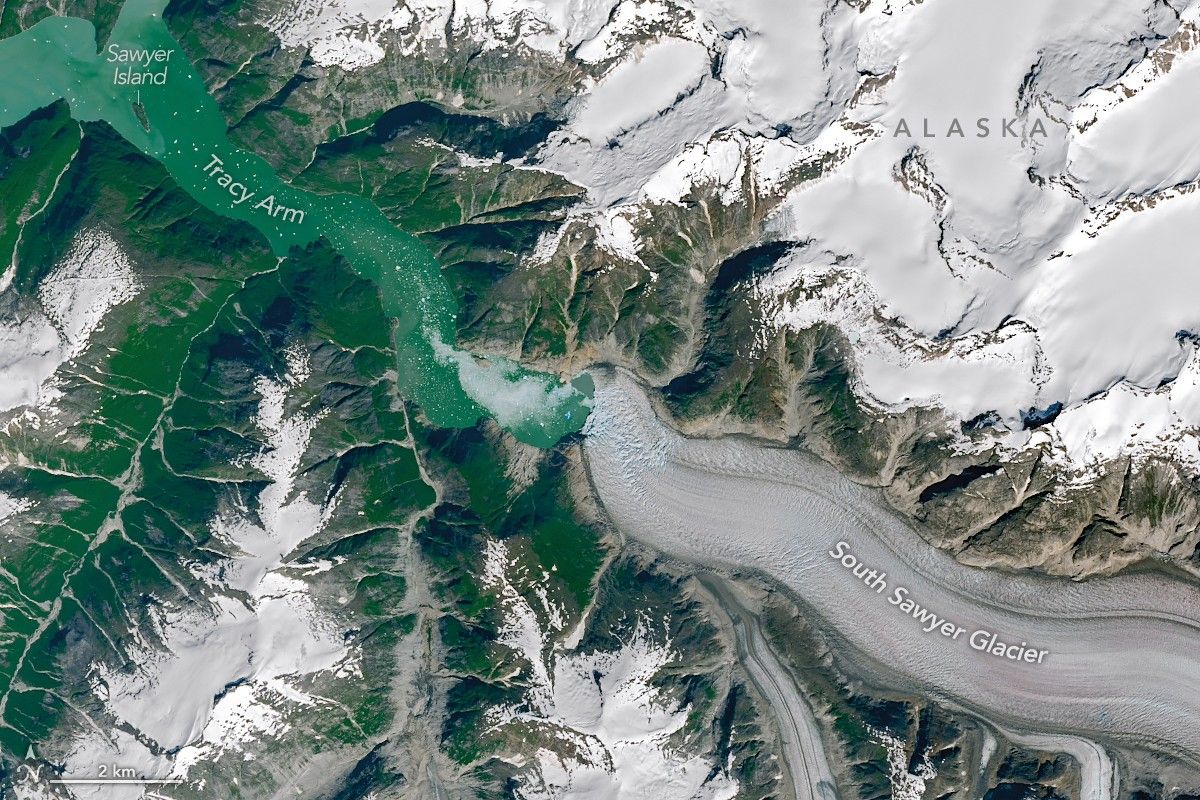
a satellite image showing green vegetation on a fjord
The shores of Tracy Arm on July 26, 2025. Image: NASA Earth Observatory images by Michala Garrison, using Landsat data from the U.S. Geological Survey.

In the second image, taken nine days after the landslide on August 19, the fjord is dominated by a gray scar made by the cascading rock. 
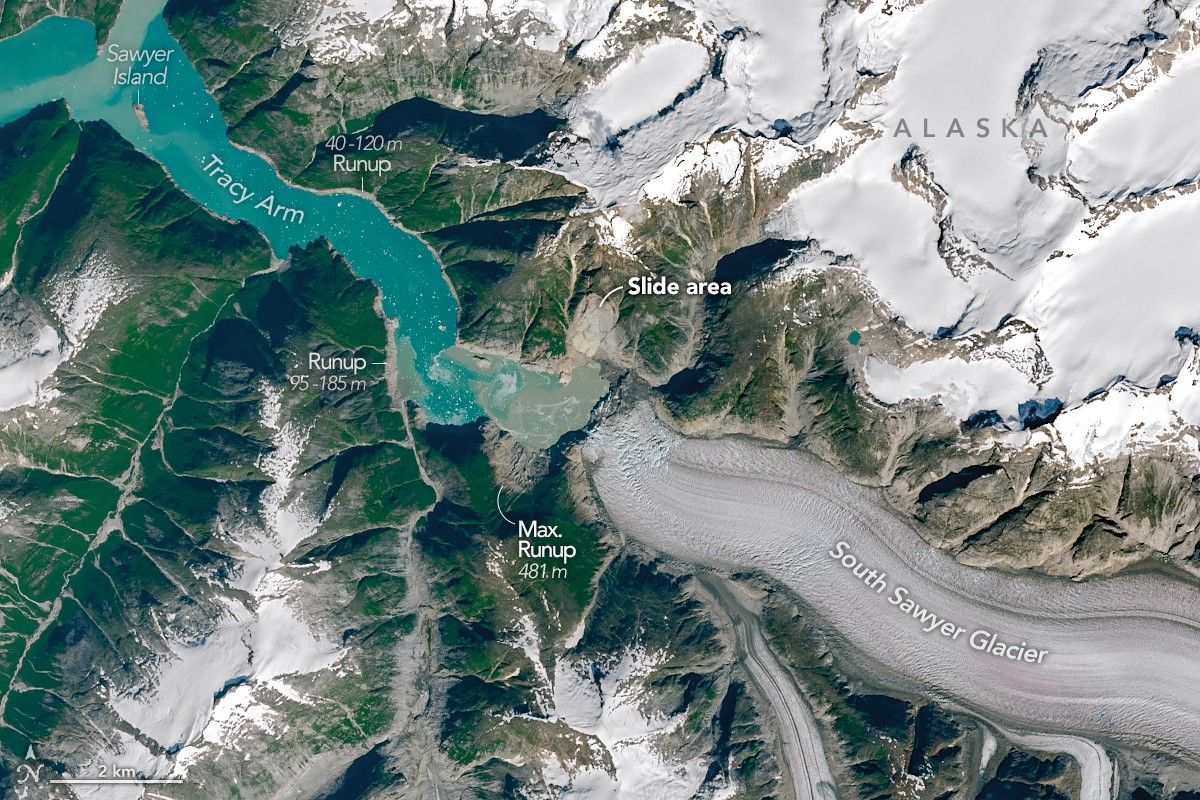
a satellite image of a landslide
The shores of Tracy Arm on August 19, 2025. This image was taken after the tsunami and landslide. Image: NASA Earth Observatory images by Michala Garrison, using Landsat data from the U.S. Geological Survey.Image: NASA Earth Observatory images by Michala Garrison, using Landsat data from the U.S. Geological Survey.

“The bright landslide scar on the north side of the fjord is striking, as is the ‘bathtub’ ring around the fjord showing the areas where the forest was leveled by the tsunami,” said Dan Shugar, a geomorphologist at the University of Calgary.

Sawyer Island, located about 6 miles away from the landslide, also turned from green to brown. Only a few trees still stood at the island’s higher elevations.

Over the past several months, Shugar and his colleagues combined satellite, airborne, and ground-based observations with eyewitness accounts and simulations to build a complete story with how this historic event transformed. Their analysis was published May 6 in the journal Science.

Their analysis found that water continued to slosh around the fjord for more than one day. Geologists call this water-sloshing phenomenon a seiche. Both the landslide and resulting seiche produced seismic signals that were detected around the world and equivalent to a magnitude 5.4 earthquake.
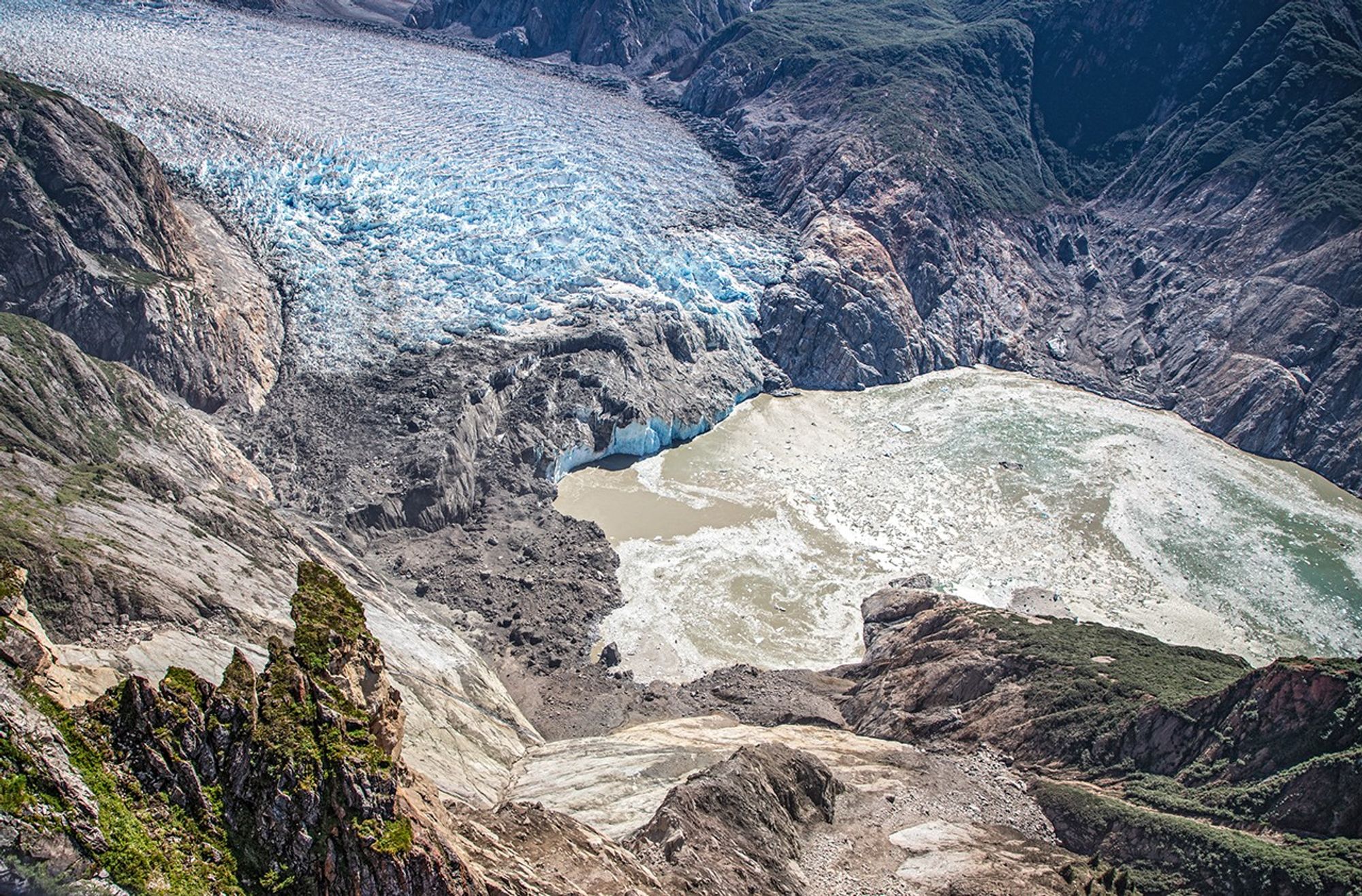
a landslide scar
The landslide scar and the zone where vegetation was stripped by the resulting tsunami are both visible in this aerial photo of Tracy Arm and South Sawyer Glacier, captured on August 13, 2025. Image: U.S. Geological Survey/John Lyons

The Landsat images also show that the South Sawyer Glacier retreated significantly in less than a month. Typically, glacial retreat takes much longer. 

“Part of that occurred between the date of the first image and the date of the landslide,” Shugar said. “But part of it is from the landslide itself, which broke off a big chunk of the terminus of South Sawyer Glacier, resulting in a slurry of icebergs in the fjord.”

Fortunately, no one was injured in the event, largely because it occurred around 5:30 a.m. local time. The wave did sweep away some gear from a group of kayakers camping on Harbor Island near the fjord’s mouth. Passengers aboard a small cruise ship in neighboring Endicott Arm also reported swings in water levels and a strong current associated with the tsunami

In response to the event, at least six cruise lines have eliminated the Tracy Arm fjord from their itineraries for 2026 due to the hazards. The United States Geological Survey also warns that steep, mountainous landslide areas are “inherently unstable” and that the Tracy Arm fjord tsunami will likely continue to change the landscape.

The post NASA satellite images show how a massive tsunami in Alaska changed the landscape forever appeared first on Popular Science.

  •  

My Personal Uniform: 50 Pieces That Make Getting Dressed Effortless

Camille Styles living room decorated with the best affordable home decor.

If you haven’t yet subscribed to my Substack, it’s where I get a little more personal—writing from the heart about self-care, motherhood, wellness, and all things in between. My community loved this post there, so I wanted to share an excerpt with you here.

I really love the idea of a personal uniform. I want to walk into my closet and know that every single item is something I genuinely love and feel great in—no “I’ll wear it someday,” guilt, just pieces I’m actually excited to pull on all the time.

My theme for this year is about simplifying every aspect of my life, and with that, I’ve been dressing for how I want to feel on a given day. It’s really shifted my approach from choosing outfits based on what’s on my calendar to being guided by how I want to show up—and it’s made getting dressed feel so much easier.

My current life season is all about being comfortable, confident, and effortless. Broken-in jeans, soft sweaters, well-fitting t-shirts, neutral tones. It’s not about “less style,”—it’s getting dressed with more intention and not spending a ton of time overthinking it. (Seeing how crazy everyone is over Carolyn Bessette’s ultra-simple wardrobe choices, I don’t think I’m alone in craving this vibe right now.)

I’ve also noticed that the pieces I reach for over and over all have two things in common: quality materials and a great fit. Get those two things right, and you look like you have an expensive wardrobe regardless of what it actually costs. Those are really the only two style rules I follow anymore.

Pin it

At the start of every year, I do a bit of a wardrobe recalibration. I’ll pull inspo on Pinterest, create a little mood board in Canva, and settle on a few words that capture how I want to feel in my clothes this year. My words for 2026 are effortless, classic, and alive (meaning I can do anything and go anywhere in them). When I’m considering a new purchase, I hold it up against those three words as the ultimate filter against impulse buys I might later regret.

Then I shop my own closet! I’m a big believer in slowly building a wardrobe over time—adding things with purpose rather than starting over every season. Once I know what I already have that fits the vision, I can be intentional with where I need to fill in the gaps.

Unlock the full post here to read about the 50 pieces that make up my personal uniform right now. These are the wardrobe staples I reach for on repeat—the ones that help me feel comfortable, confident, and effortlessly put together without spending too much time thinking about what to wear.

The post My Personal Uniform: 50 Pieces That Make Getting Dressed Effortless appeared first on Camille Styles.

  •  

19 breathtaking images from the Milky Way Photographer of the Year 2026 awards

Billions of stars illuminate the Milky Way. Down here on Earth, only about 6,000 stars are visible to the naked eye, but with the right camera, we can see tens of thousands more.

The Milky Way Photographer of the Year awards celebrate the celestial light show, honoring 25 truly awe-inspiring images. This year’s competition received more than 6,500 submissions, the highest number in the project’s history.

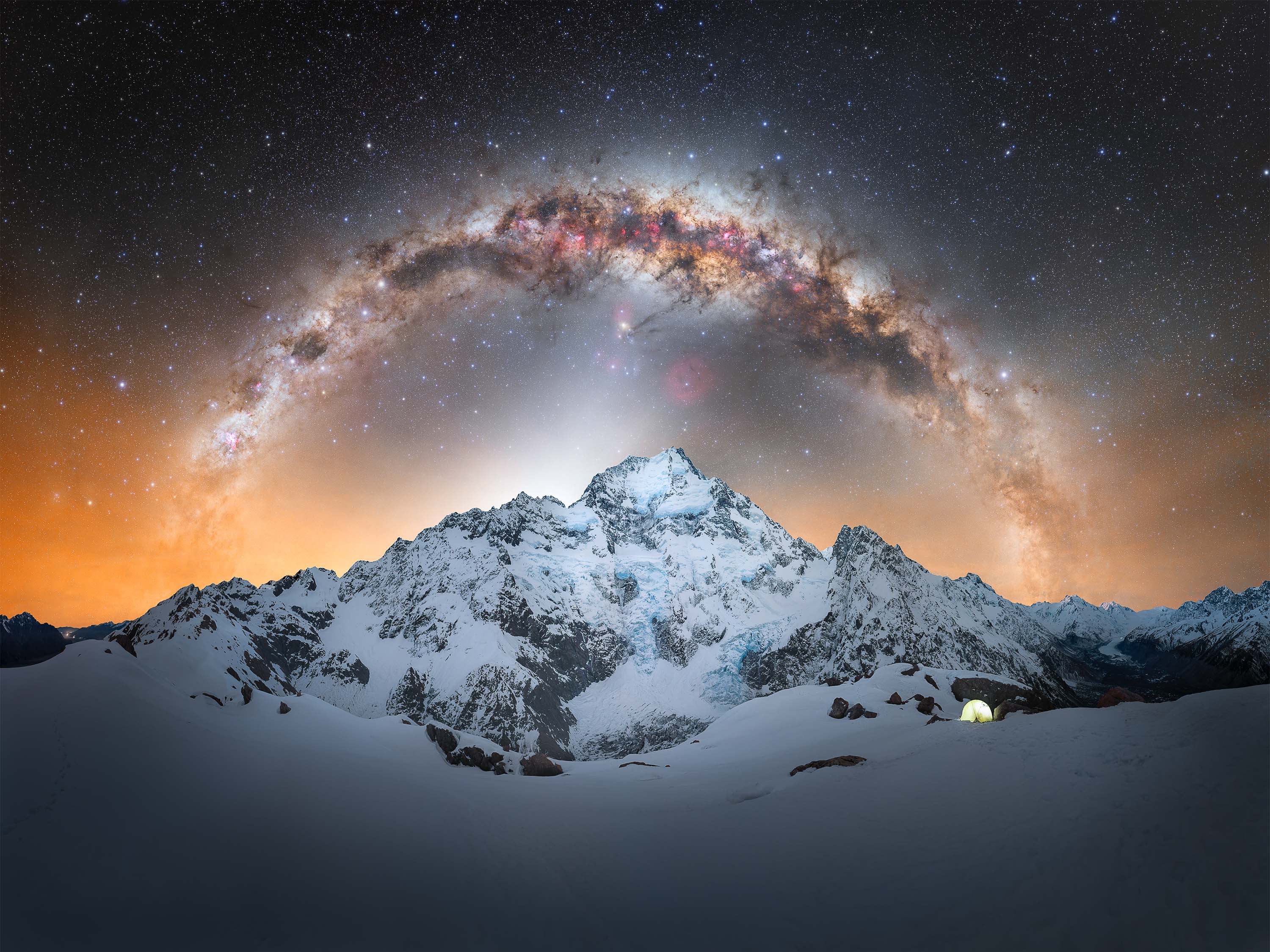
My goal with astrophotography has always been to combine my passion for mountains, adventure, and the landscapes of New Zealand. Capturing the Milky Way arch above Aoraki / Mount Cook, the central peak of the national park, became one of the most demanding challenges I had set for myself. Reaching this location required drawing on my experience as a mountaineer, navigating steep rocky terrain and snow-covered slopes under winter conditions. The route presented constant challenges, including large washouts along the mountainside, unstable snow affected by solar radiation, and the demands of winter camping at altitude. The effort required both physical endurance and careful decision-making throughout the journey. Despite these difficulties, the environment offered extraordinary conditions. As night fell, the Milky Way and zodiacal light appeared with exceptional clarity, enhanced by the cold, stable air at elevation. Being positioned so close to Aoraki added a sense of scale and intensity to the moment, especially as the western arc of the Milky Way moved into alignment above the mountain. With only a brief window to capture the scene, there was little margin for error. This image represents that single opportunity, where preparation, experience, and timing came together to document a moment that felt both challenging and deeply rewarding.
“Aoraki Mt Cook”
My goal with astrophotography has always been to combine my passion for mountains, adventure, and the landscapes of New Zealand. Capturing the Milky Way arch above Aoraki / Mount Cook, the central peak of the national park, became one of the most demanding challenges I had set for myself. Reaching this location required drawing on my experience as a mountaineer, navigating steep rocky terrain and snow-covered slopes under winter conditions. The route presented constant challenges, including large washouts along the mountainside, unstable snow affected by solar radiation, and the demands of winter camping at altitude. The effort required both physical endurance and careful decision-making throughout the journey. Despite these difficulties, the environment offered extraordinary conditions. As night fell, the Milky Way and zodiacal light appeared with exceptional clarity, enhanced by the cold, stable air at elevation. Being positioned so close to Aoraki added a sense of scale and intensity to the moment, especially as the western arc of the Milky Way moved into alignment above the mountain. With only a brief window to capture the scene, there was little margin for error. This image represents that single opportunity, where preparation, experience, and timing came together to document a moment that felt both challenging and deeply rewarding.
Credit: Owain Scullion / Milky Way Photographer of the Year 2026 Owain Scullion

“Every year, this collection reminds us that photographing the Milky Way is not only about technique or planning,”says Dan Zafra, editor of Capture the Atlas, the organization behind the collection. “It is about curiosity, patience, and the desire to experience the night sky in places where it still feels wild,” “Many of these skies are becoming increasingly rare, and we hope these images inspire people not only to admire them, but also to value and protect them.”

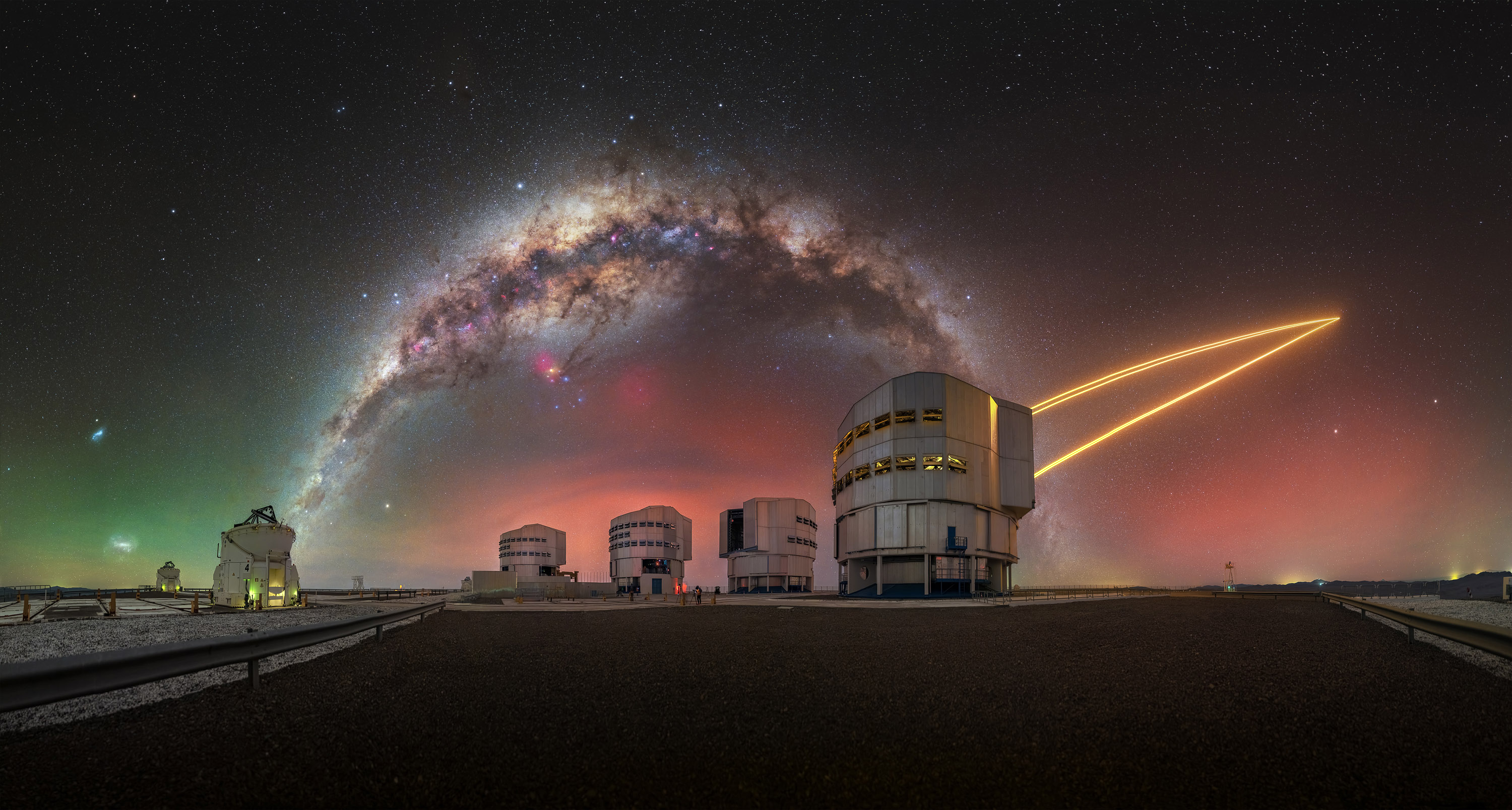
Amongst the 25 selected images are scenes from Paranal, Chile, home to the Very Large Telescope and coastal Florida during the Perseids and Geminids meteor showers.

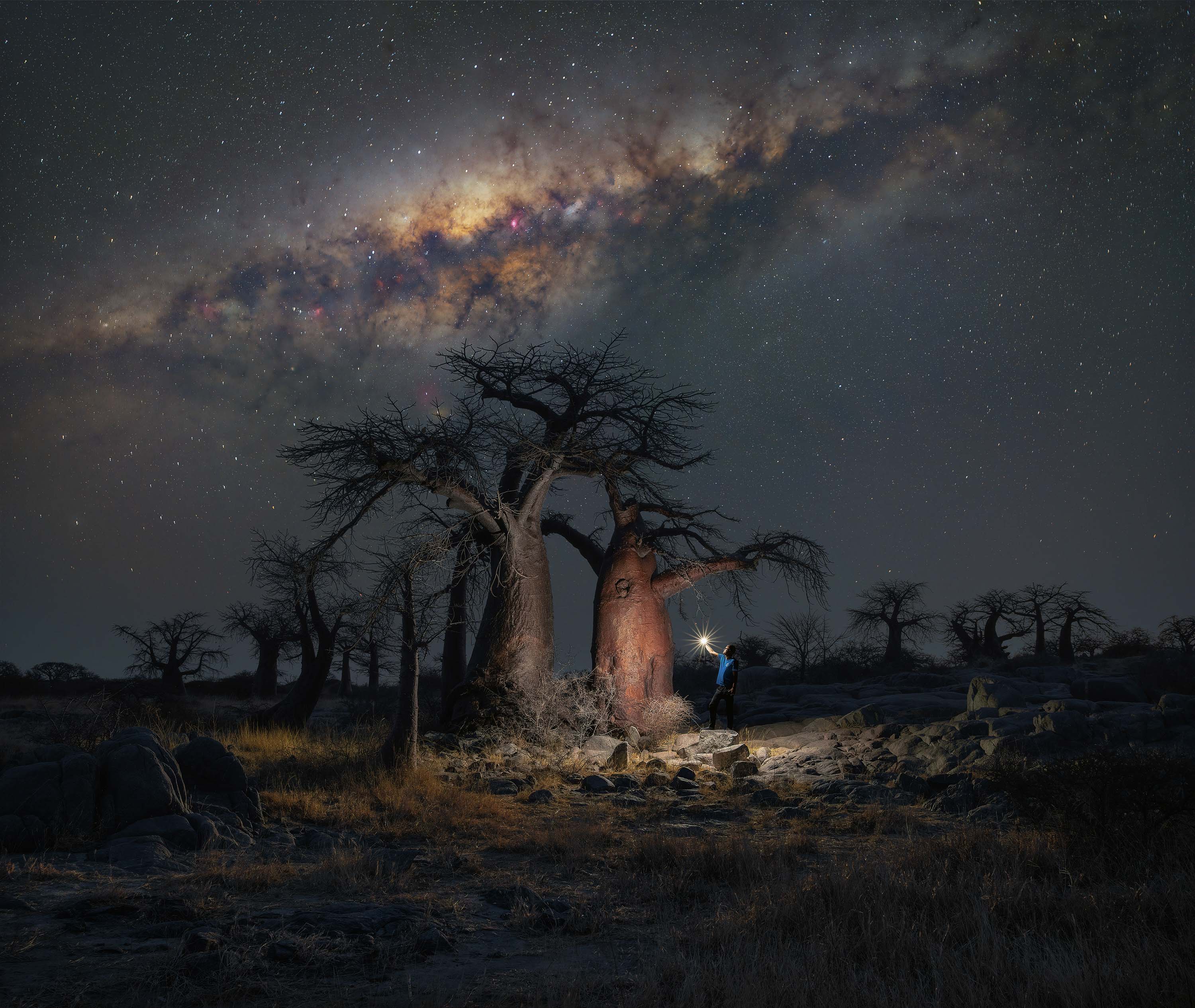
I spent ten days traveling through Botswana, living out of my car and moving through remote desert landscapes in complete isolation, focused entirely on photographing the night sky. This location became the highlight of the trip: a small, ancient island rising from the middle of a vast salt pan. Reaching it, however, was far from straightforward. After struggling to find the route and nearly giving up, I only managed to get there by chance, spotting two Jeeps heading in the opposite direction and deciding to turn around and follow them. After three intense hours navigating the terrain, I finally found myself driving across the open salt pan, leaving a trail of white dust behind. The island itself was covered with baobab trees, scattered in small groups or standing alone, each one offering a striking subject under the night sky. Many were naturally positioned beneath the Milky Way core early in the night, while others lent themselves to different compositions, including star trails. This particular group stood out to me the most. Alone in the darkness, I took my time shaping the scene, using a torch to carefully light-paint the foreground. The final image is a blend of one exposure for the landscape, eleven for the light painting, and a stack of four tracked exposures for the sky, combined to balance detail and atmosphere.
“Botswana Baobabs by Night”
I spent ten days traveling through Botswana, living out of my car and moving through remote desert landscapes in complete isolation, focused entirely on photographing the night sky. This location became the highlight of the trip: a small, ancient island rising from the middle of a vast salt pan. Reaching it, however, was far from straightforward. After struggling to find the route and nearly giving up, I only managed to get there by chance, spotting two Jeeps heading in the opposite direction and deciding to turn around and follow them. After three intense hours navigating the terrain, I finally found myself driving across the open salt pan, leaving a trail of white dust behind. The island itself was covered with baobab trees, scattered in small groups or standing alone, each one offering a striking subject under the night sky. Many were naturally positioned beneath the Milky Way core early in the night, while others lent themselves to different compositions, including star trails. This particular group stood out to me the most. Alone in the darkness, I took my time shaping the scene, using a torch to carefully light-paint the foreground. The final image is a blend of one exposure for the landscape, eleven for the light painting, and a stack of four tracked exposures for the sky, combined to balance detail and atmosphere.
Credit: Stefano Pellegrini / Milky Way Photographer of the Year 2026  Stefano Pellegrini
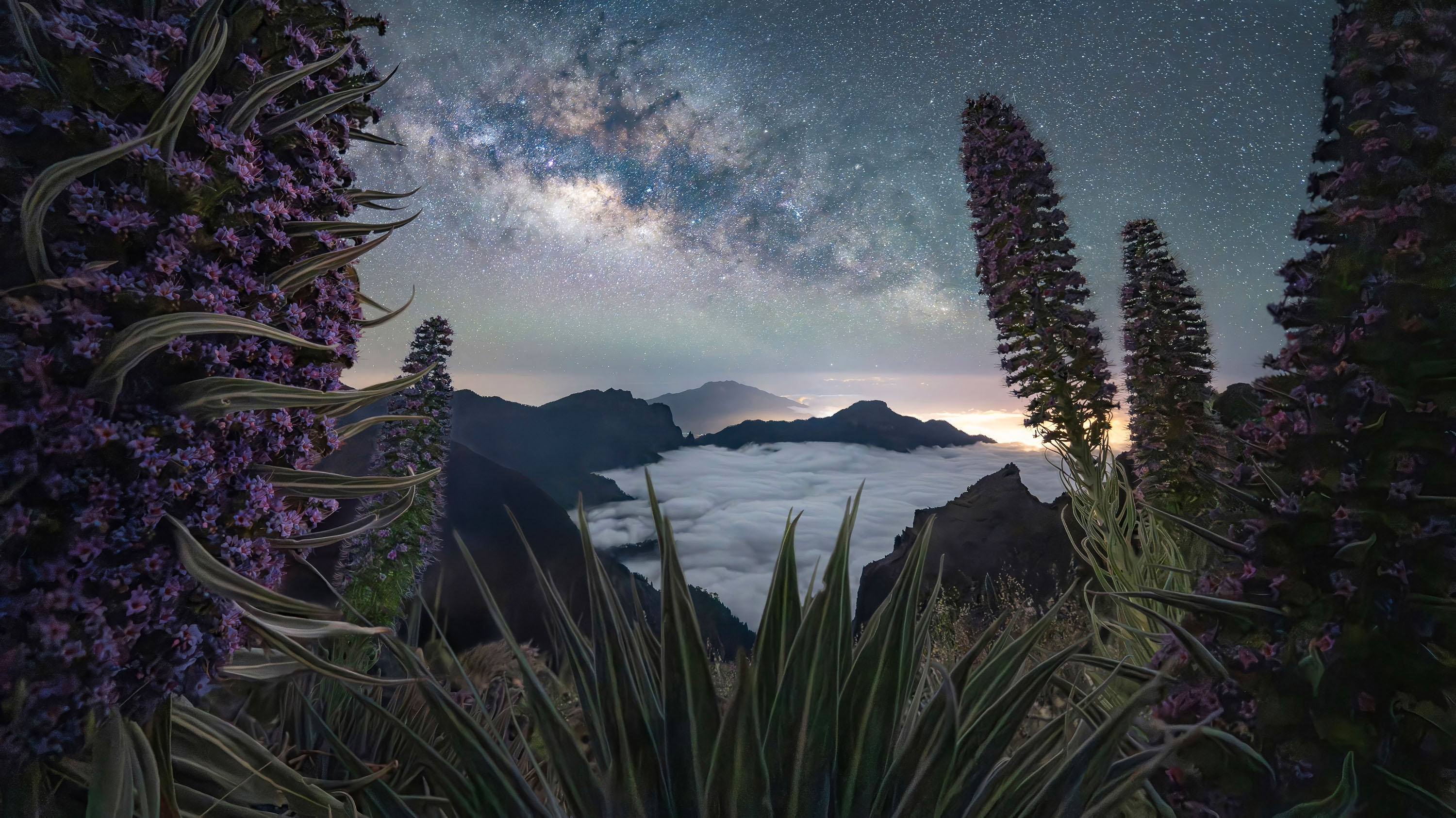
This panorama was captured at the highest point of the volcanic island of La Palma, a location defined by its unique terrain and exceptional night sky conditions. The lack of ambient light made the process more demanding, requiring extensive focus stacking to achieve sharpness across the entire scene, but it also provided ideal conditions for astrophotography. I chose to create a panoramic composition to include the blooming pink Tajinaste flowers, an endemic species of the island, using them to frame the full arc of the Milky Way’s core. The summit itself forms a vast crater, offering expansive views across the island, often rising above a layer of clouds. Although it was already early summer and nearing the end of the blooming season, I was fortunate to find a few flowers still in good condition and positioned perfectly for the composition I had envisioned. This image represents both careful planning and timing, and I’m especially pleased with the result and honored to have it selected for the Milky Way Photographer of the Year collection.
“Caldera Galaxy Panorama”
This panorama was captured at the highest point of the volcanic island of La Palma, a location defined by its unique terrain and exceptional night sky conditions. The lack of ambient light made the process more demanding, requiring extensive focus stacking to achieve sharpness across the entire scene, but it also provided ideal conditions for astrophotography. I chose to create a panoramic composition to include the blooming pink Tajinaste flowers, an endemic species of the island, using them to frame the full arc of the Milky Way’s core. The summit itself forms a vast crater, offering expansive views across the island, often rising above a layer of clouds. Although it was already early summer and nearing the end of the blooming season, I was fortunate to find a few flowers still in good condition and positioned perfectly for the composition I had envisioned. This image represents both careful planning and timing, and I’m especially pleased with the result and honored to have it selected for the Milky Way Photographer of the Year collection.
Credit: Max Terwindt / Milky Way Photographer of the Year 2026  Max Terwindt
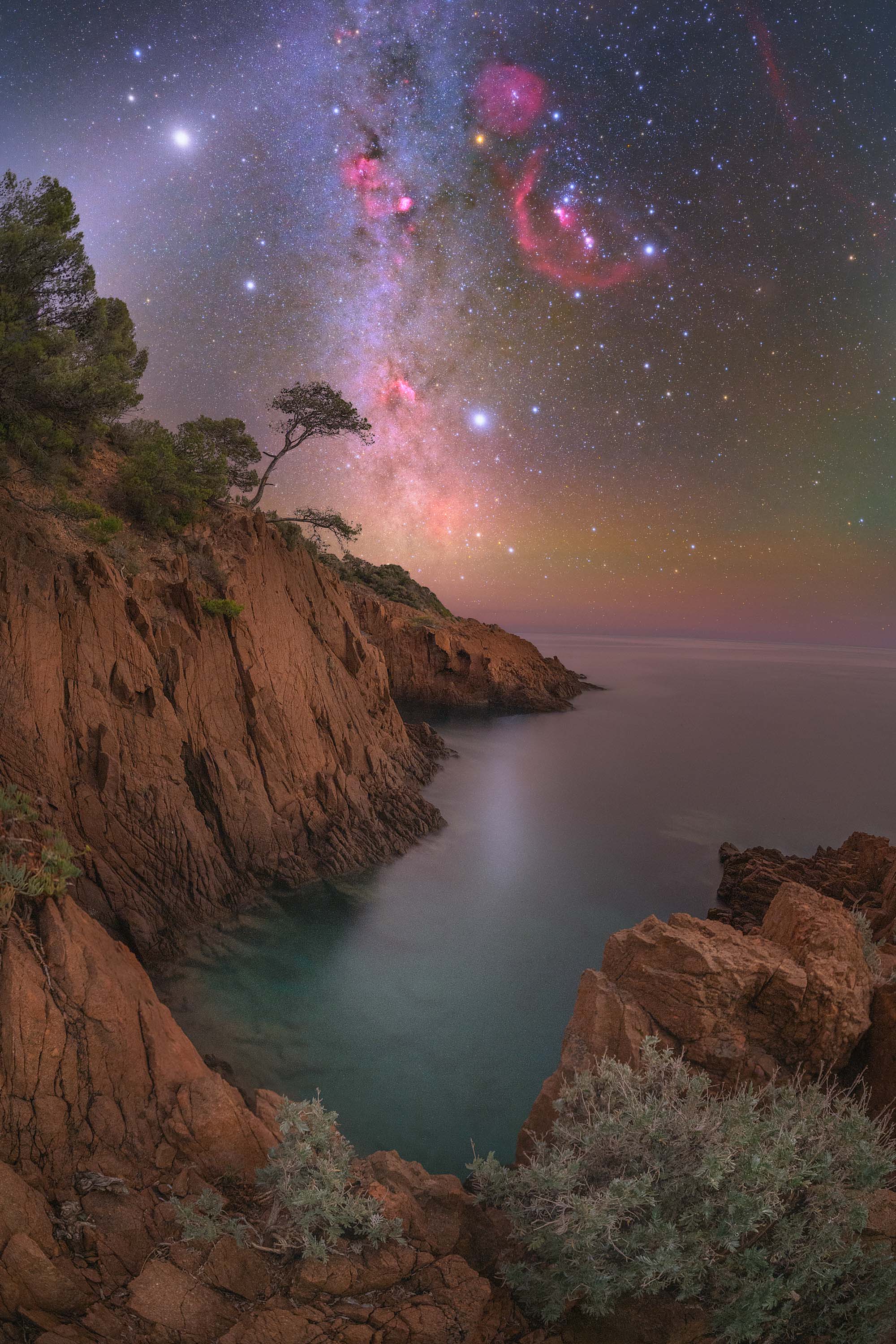
The night sky takes on a distinctly different character during this time of year, especially with the arrival of the winter constellations. The tones feel cooler, the air sharper, and Orion rises prominently above the horizon, becoming the centerpiece of the scene. It’s a season that brings a quiet, almost meditative atmosphere to nightscape photography. This image was captured along the sea cliffs near my home in the south of France, a place where the coastline, the stars, and the surrounding silence come together in perfect balance. Having access to such diverse landscapes, from mountains to the sea, all within reach of dark skies, makes moments like this not only possible, but deeply rewarding.
“Celestial Light Over Sea Cliffs”
The night sky takes on a distinctly different character during this time of year, especially with the arrival of the winter constellations. The tones feel cooler, the air sharper, and Orion rises prominently above the horizon, becoming the centerpiece of the scene. It’s a season that brings a quiet, almost meditative atmosphere to nightscape photography. This image was captured along the sea cliffs near my home in the south of France, a place where the coastline, the stars, and the surrounding silence come together in perfect balance. Having access to such diverse landscapes, from mountains to the sea, all within reach of dark skies, makes moments like this not only possible, but deeply rewarding.
Credit: Anthony Lopez / Milky Way Photographer of the Year 2026 Anthony Lopez
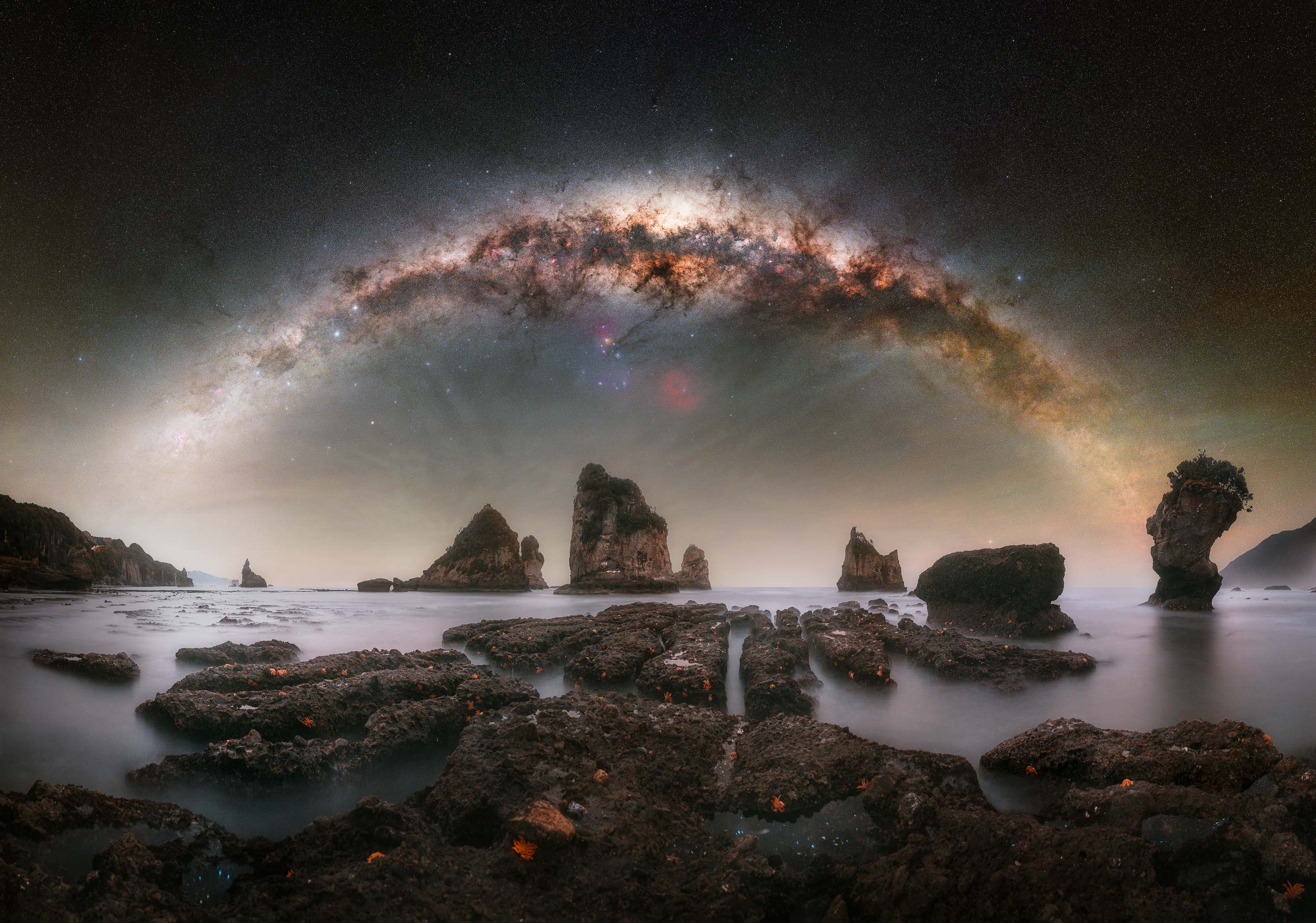
Capturing a setting Milky Way core from this beach had been on my list for a long time, with the starfish-covered reef offering a distinctive and compelling foreground. It’s a notoriously difficult scene to photograph, as access to the reef is only possible during the lowest tides, while the sky must also cooperate with favorable moon and cloud conditions. During my short visit, everything unexpectedly aligned. At first, the conditions seemed uncertain due to strong winds, but I decided to attempt the shot with some company for safety. After assessing the reef, I carefully made my way onto it while others kept watch to ensure I remained safe. The terrain is hazardous, with gaps between the rocks posing a real risk, and the rapidly rising tide added constant pressure throughout the shoot. Despite these challenges, I was able to capture the necessary frames, returning to shore just in time. Due to the changing tide, the upper rows of the sky panorama were photographed from the beach, while the lowest row was captured from the reef to maintain proper alignment and perspective in the final composition.
“Divinity”
Capturing a setting Milky Way core from this beach had been on my list for a long time, with the starfish-covered reef offering a distinctive and compelling foreground. It’s a notoriously difficult scene to photograph, as access to the reef is only possible during the lowest tides, while the sky must also cooperate with favorable moon and cloud conditions. During my short visit, everything unexpectedly aligned. At first, the conditions seemed uncertain due to strong winds, but I decided to attempt the shot with some company for safety. After assessing the reef, I carefully made my way onto it while others kept watch to ensure I remained safe. The terrain is hazardous, with gaps between the rocks posing a real risk, and the rapidly rising tide added constant pressure throughout the shoot. Despite these challenges, I was able to capture the necessary frames, returning to shore just in time. Due to the changing tide, the upper rows of the sky panorama were photographed from the beach, while the lowest row was captured from the reef to maintain proper alignment and perspective in the final composition.
Credit: Kavan Chay / Milky Way Photographer of the Year 2026 Kavan Chay
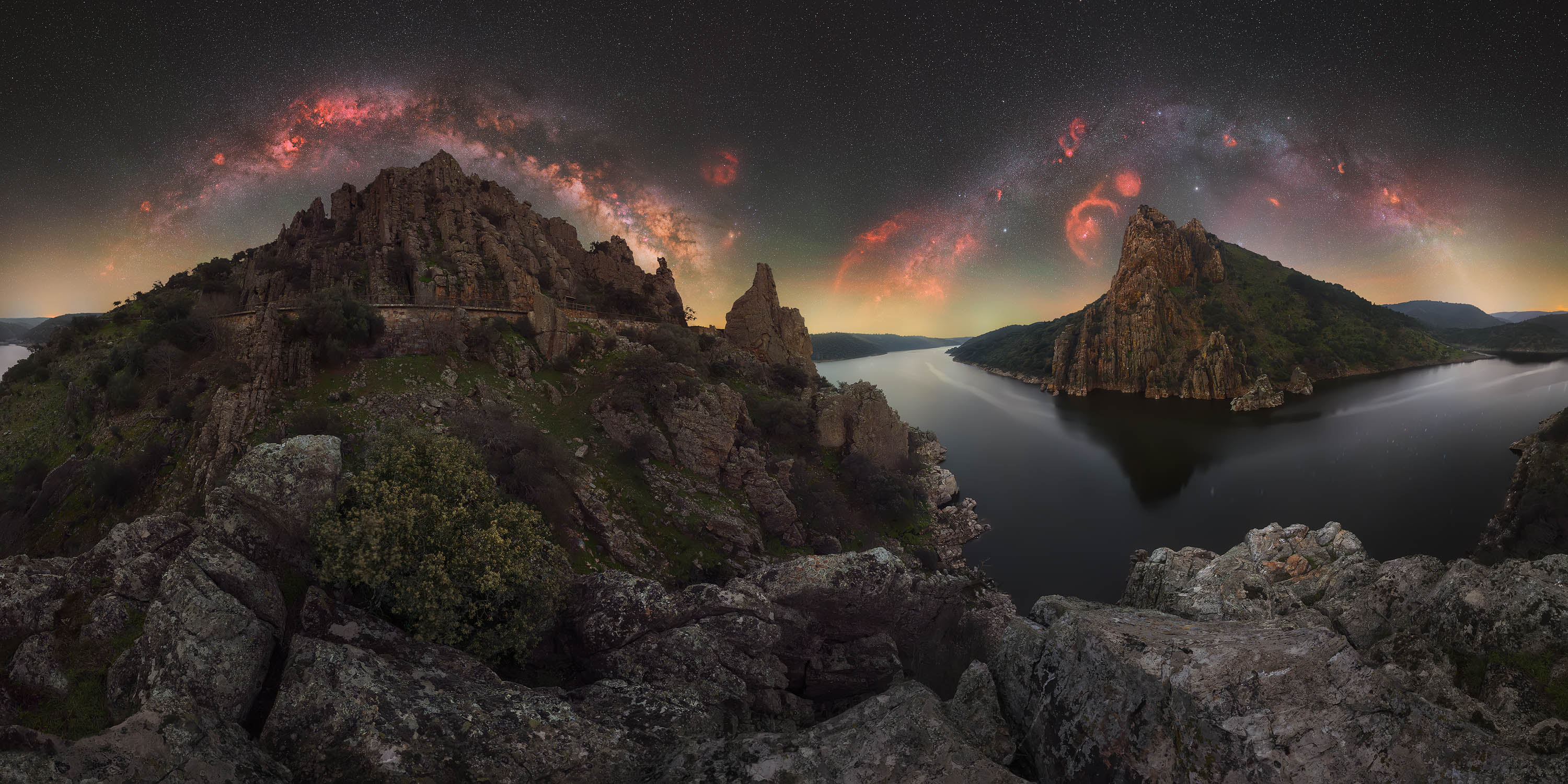
I am always drawn to traveling to remarkable natural landscapes to capture their essence through night photography. This image, which represented a significant challenge for me, was taken in Monfragüe National Park during one of the few nights of the year when both the winter and summer Milky Way can be seen in the same sky. The scene does not appear this way to the naked eye. It is a composite that captures the transition of the Milky Way over several hours, combining the winter Milky Way visible after dusk with the summer Milky Way rising before dawn. The following morning, I was able to return to this location with my family, who had accompanied me in the search for this long-envisioned image. Those shared moments, along with the effort behind the capture, make this photograph especially meaningful to me.
“Double Milky Way over Monfrague National Park”
I am always drawn to traveling to remarkable natural landscapes to capture their essence through night photography. This image, which represented a significant challenge for me, was taken in Monfragüe National Park during one of the few nights of the year when both the winter and summer Milky Way can be seen in the same sky. The scene does not appear this way to the naked eye. It is a composite that captures the transition of the Milky Way over several hours, combining the winter Milky Way visible after dusk with the summer Milky Way rising before dawn. The following morning, I was able to return to this location with my family, who had accompanied me in the search for this long-envisioned image. Those shared moments, along with the effort behind the capture, make this photograph especially meaningful to me.
Credit: Luis Cajete / Milky Way Photographer of the Year 2026 Luis Cajete
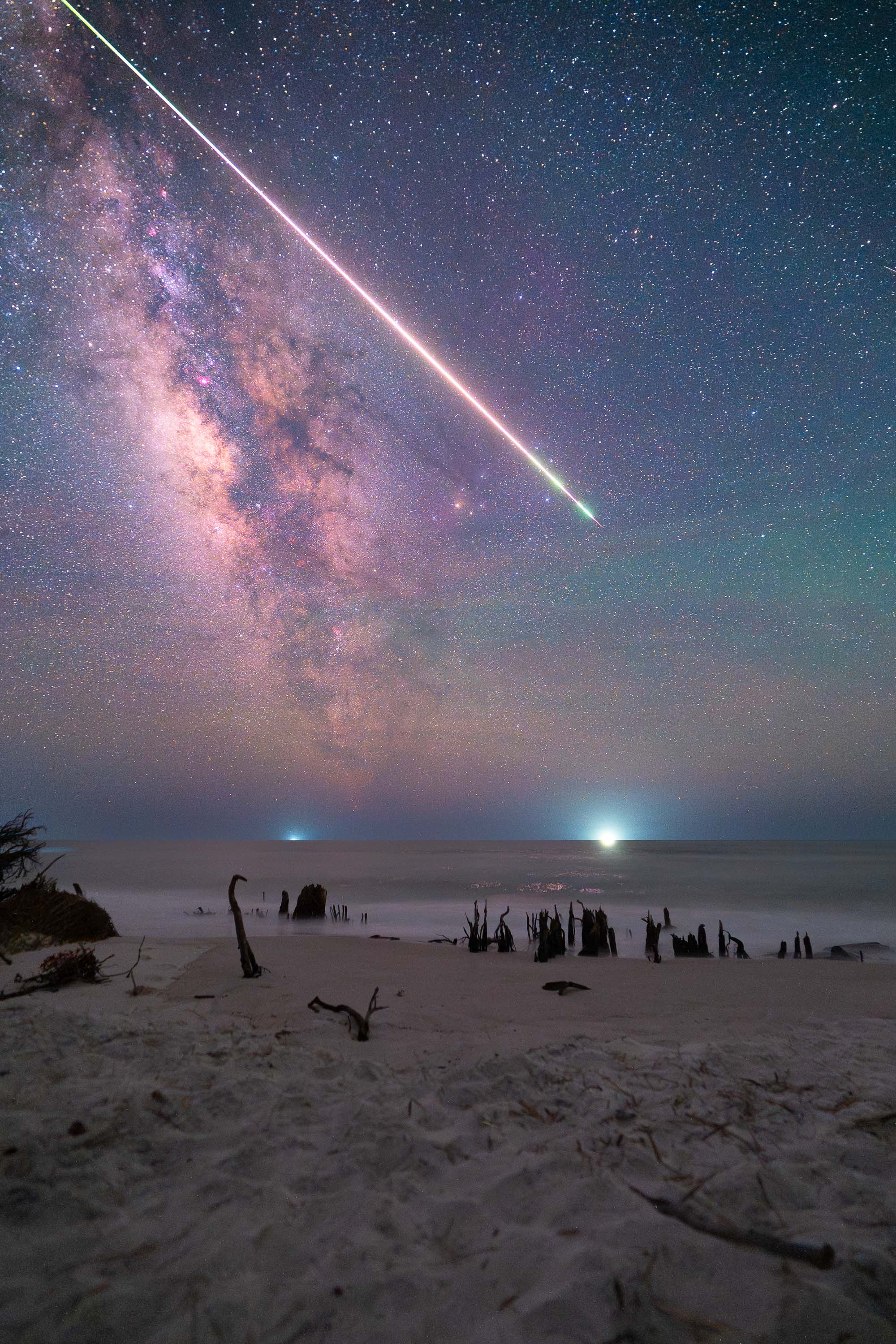
This single-exposure image became a reminder to always expect the unexpected in astrophotography. I had not even planned to visit this beach, as the forecast called for clouds and rain throughout the night. The capture was part of a larger day-to-night time-lapse that I began shooting at golden hour, working through biting insects and the intense tropical humidity of Florida. After setting up the sequence, I left the camera running and returned to my vehicle. Several hours later, shortly after midnight, I noticed the ground around me suddenly illuminated by a green glow, prompting me to look up. What followed was the largest meteor I have ever witnessed. It moved slowly across the Milky Way for nearly five seconds, and the glowing trail left behind by the fireball remained visible for almost fifteen minutes. It was one of the most memorable moments I have experienced in astrophotography, completely unplanned and impossible to anticipate.
“Fireball in Paradise”
This single-exposure image became a reminder to always expect the unexpected in astrophotography. I had not even planned to visit this beach, as the forecast called for clouds and rain throughout the night. The capture was part of a larger day-to-night time-lapse that I began shooting at golden hour, working through biting insects and the intense tropical humidity of Florida. After setting up the sequence, I left the camera running and returned to my vehicle. Several hours later, shortly after midnight, I noticed the ground around me suddenly illuminated by a green glow, prompting me to look up. What followed was the largest meteor I have ever witnessed. It moved slowly across the Milky Way for nearly five seconds, and the glowing trail left behind by the fireball remained visible for almost fifteen minutes. It was one of the most memorable moments I have experienced in astrophotography, completely unplanned and impossible to anticipate.
Credit: Jason Rice / Milky Way Photographer of the Year 2026 Jason Rice
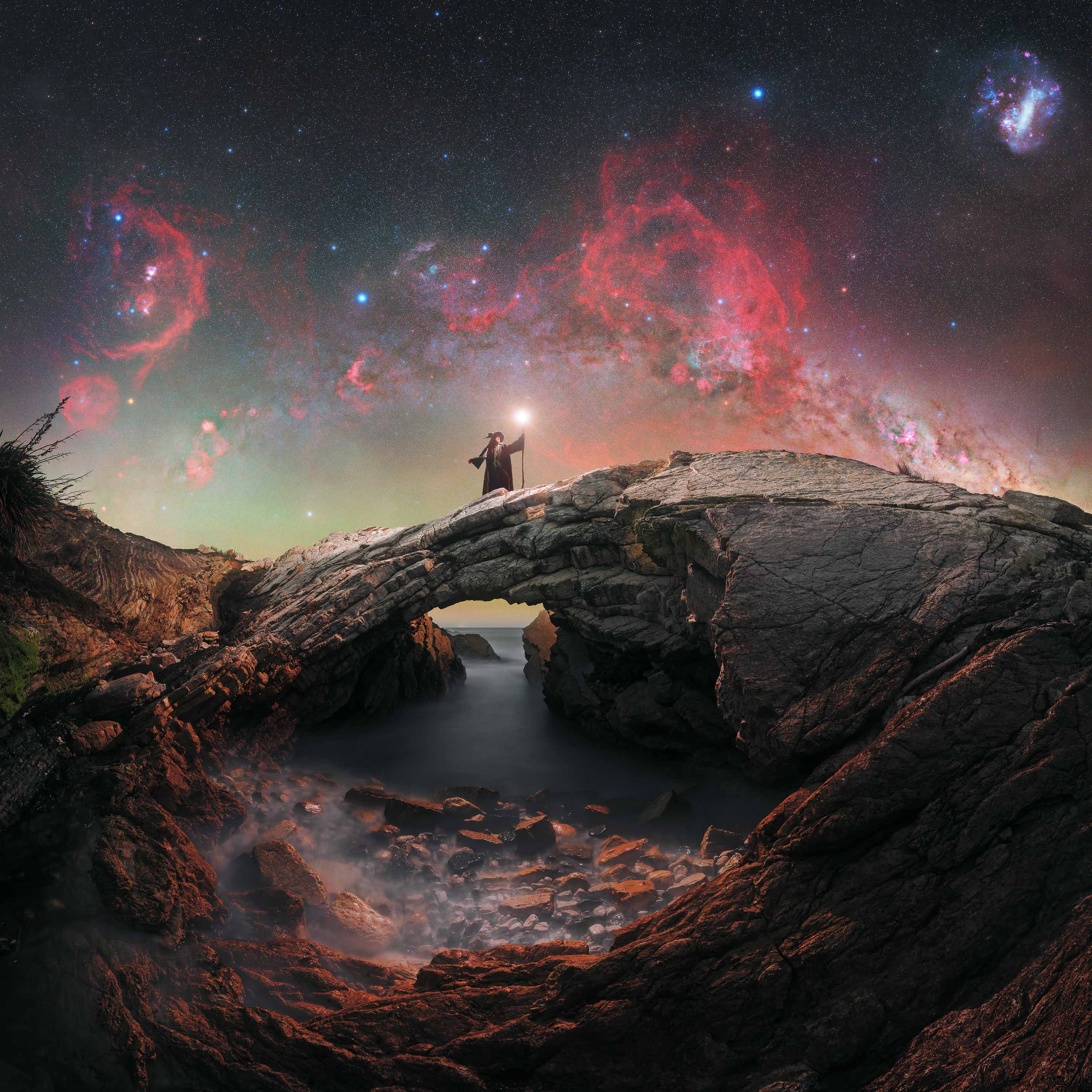
When I first discovered this location, I immediately envisioned creating something special beneath the night sky. However, upon arriving after dark, I found that a seal had settled exactly where I had planned to set up my tripod. It showed little interest in moving, and judging by how worn and polished the rock was, it was clearly one of its preferred resting spots. Eventually, the seal shifted slightly to the side, remaining within the scene for the duration of the shoot. It can still be seen in the final image for those who look closely, adding an unexpected and memorable element to the composition. Given the complexity of the scene, I knew the final image would require a significant amount of work. Over the following weeks, starting in November, I returned whenever possible to collect the necessary data for this panorama, carefully building the image piece by piece under the night sky.
“Galactic Gandalf”
When I first discovered this location, I immediately envisioned creating something special beneath the night sky. However, upon arriving after dark, I found that a seal had settled exactly where I had planned to set up my tripod. It showed little interest in moving, and judging by how worn and polished the rock was, it was clearly one of its preferred resting spots. Eventually, the seal shifted slightly to the side, remaining within the scene for the duration of the shoot. It can still be seen in the final image for those who look closely, adding an unexpected and memorable element to the composition. Given the complexity of the scene, I knew the final image would require a significant amount of work. Over the following weeks, starting in November, I returned whenever possible to collect the necessary data for this panorama, carefully building the image piece by piece under the night sky.
Credit: Evan McKay / Milky Way Photographer of the Year 2026 Evan McKay
I am drawn to Milky Way photography because of its ability to spark curiosity. It offers a perspective that feels entirely different from other forms of photography, often revealing a world that many people have never experienced. With my images, my goal is to inspire that same sense of curiosity, encouraging others to imagine what it feels like to stand beneath a sky like this and witness it with their own eyes. That sense of wonder is what first drew me to the Milky Way, and it continues to shape the way I approach each image.
“Galactic Spine”
I am drawn to Milky Way photography because of its ability to spark curiosity. It offers a perspective that feels entirely different from other forms of photography, often revealing a world that many people have never experienced. With my images, my goal is to inspire that same sense of curiosity, encouraging others to imagine what it feels like to stand beneath a sky like this and witness it with their own eyes. That sense of wonder is what first drew me to the Milky Way, and it continues to shape the way I approach each image.
Credit: Andrew Imhoff / Milky Way Photographer of the Year 2026 Andrew Imhoff
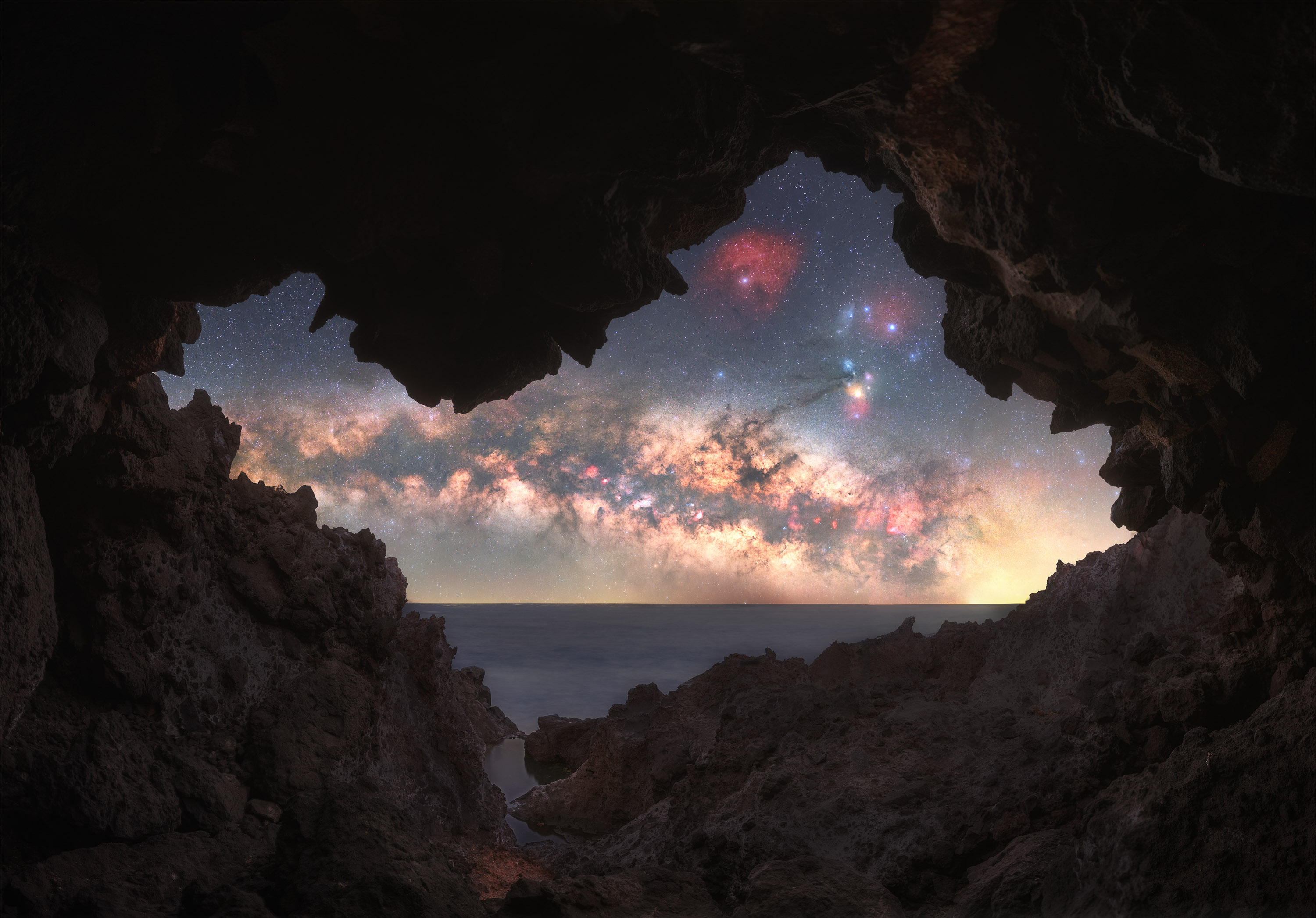
I’m always drawn to locations that feel unique and relatively undiscovered, and this cave was a perfect example. Although it was only a few minutes from the parking area, it took me nearly four hours of scouting to finally locate it. The conditions made the process even more demanding. Intense heat combined with powerful winds made movement difficult, at times pushing me against sharp rocks. After nearly giving up and heading back, I finally came across the cave, a moment that made the entire search worthwhile. Capturing the image proved just as challenging. Composing and shooting the panoramic foreground required careful positioning, while properly illuminating the upper section of the cave was particularly difficult. To manage this, I used focus stacking across different planes, including the upper edge, the horizon, and the lower foreground, all in near-total darkness, where the brief blue hour offered little assistance. With the Milky Way sitting low on the horizon, bringing out its color and detail required additional effort in both capture and processing. In the end, the result reflects not only the scene itself, but also the persistence and experience behind it, making it especially meaningful.
“Galaxy on the Rise”
I’m always drawn to locations that feel unique and relatively undiscovered, and this cave was a perfect example. Although it was only a few minutes from the parking area, it took me nearly four hours of scouting to finally locate it. The conditions made the process even more demanding. Intense heat combined with powerful winds made movement difficult, at times pushing me against sharp rocks. After nearly giving up and heading back, I finally came across the cave, a moment that made the entire search worthwhile. Capturing the image proved just as challenging. Composing and shooting the panoramic foreground required careful positioning, while properly illuminating the upper section of the cave was particularly difficult. To manage this, I used focus stacking across different planes, including the upper edge, the horizon, and the lower foreground, all in near-total darkness, where the brief blue hour offered little assistance. With the Milky Way sitting low on the horizon, bringing out its color and detail required additional effort in both capture and processing. In the end, the result reflects not only the scene itself, but also the persistence and experience behind it, making it especially meaningful.
Credit: Anastasia Gulova / Milky Way Photographer of the Year 2026 Anastasia Gulova
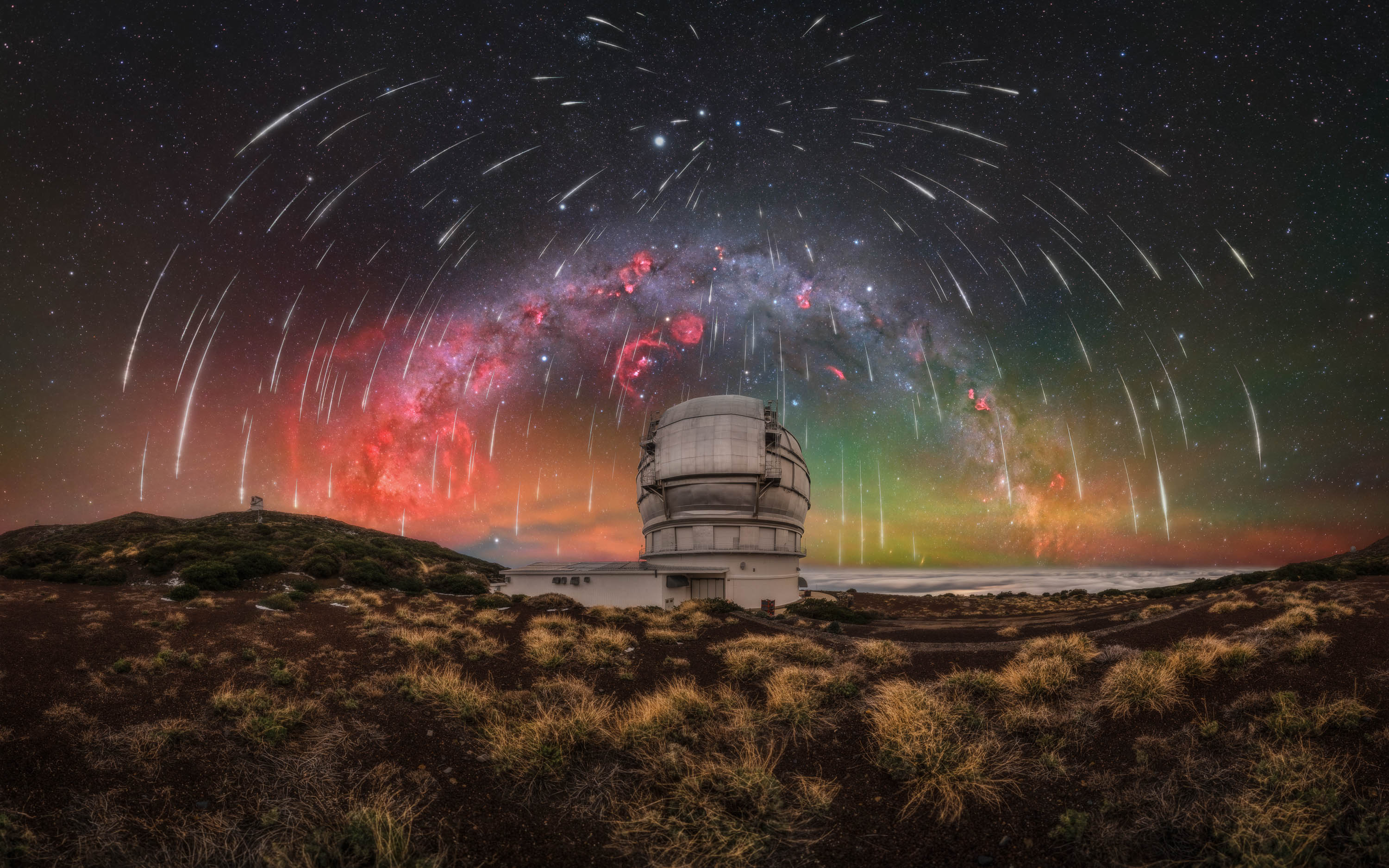
This winter Milky Way panorama captures a sky filled with Geminid meteors above the Gran Telescopio Canarias, the largest optical telescope in the world. My first trip to La Palma was an intense and unpredictable experience, from storms and summit snowfall to strong winds, rain, and brief windows of clear skies. For the first three nights, we were confined to the southern part of the island, as the road to the Roque de los Muchachos Observatory remained closed, forcing us to search for clear conditions elsewhere. Reaching the summit seemed increasingly unlikely, until the fourth day, when the road finally reopened. We immediately made our way up, filled with anticipation. After scouting compositions and preparing for the night, clouds once again moved in, putting everything at risk. Rather than giving up, we waited, constantly checking the sky for any sign of improvement. Around midnight, the first stars began to appear, and we quickly headed to the Gran Telescopio Canarias. Above us, the sky opened into a field of stars, while a layer of clouds remained below, creating a striking contrast with the illuminated structure of the telescope. Although the dome could not be opened due to humidity, the experience of witnessing such dark skies for the first time was remarkable, with the Milky Way appearing almost three-dimensional. This was also my first successful capture of the Gum Nebula, adding a unique element to the composition. The final image is the result of an extensive post-processing workflow, combining meteor data registered using Auriga RegiStar from six cameras over five nights on La Palma. All RGB frames were captured using the Capture the Night Astro filter by Capture the Atlas. The final resolution reaches approximately 400 megapixels. This image reflects not only the complexity of the process, but also the experience behind it. Each time I revisit it, it brings me back to that unforgettable time on La Palma.
“Geminid Symphony Over La Palma Guardian of the Sky”
This winter Milky Way panorama captures a sky filled with Geminid meteors above the Gran Telescopio Canarias, the largest optical telescope in the world. My first trip to La Palma was an intense and unpredictable experience, from storms and summit snowfall to strong winds, rain, and brief windows of clear skies. For the first three nights, we were confined to the southern part of the island, as the road to the Roque de los Muchachos Observatory remained closed, forcing us to search for clear conditions elsewhere. Reaching the summit seemed increasingly unlikely, until the fourth day, when the road finally reopened. We immediately made our way up, filled with anticipation. After scouting compositions and preparing for the night, clouds once again moved in, putting everything at risk. Rather than giving up, we waited, constantly checking the sky for any sign of improvement. Around midnight, the first stars began to appear, and we quickly headed to the Gran Telescopio Canarias. Above us, the sky opened into a field of stars, while a layer of clouds remained below, creating a striking contrast with the illuminated structure of the telescope. Although the dome could not be opened due to humidity, the experience of witnessing such dark skies for the first time was remarkable, with the Milky Way appearing almost three-dimensional. This was also my first successful capture of the Gum Nebula, adding a unique element to the composition. The final image is the result of an extensive post-processing workflow, combining meteor data registered using Auriga RegiStar from six cameras over five nights on La Palma. All RGB frames were captured using the Capture the Night Astro filter by Capture the Atlas. The final resolution reaches approximately 400 megapixels. This image reflects not only the complexity of the process, but also the experience behind it. Each time I revisit it, it brings me back to that unforgettable time on La Palma.
Credit: Uroš Fink / Milky Way Photographer of the Year 2026 Uroš Fink
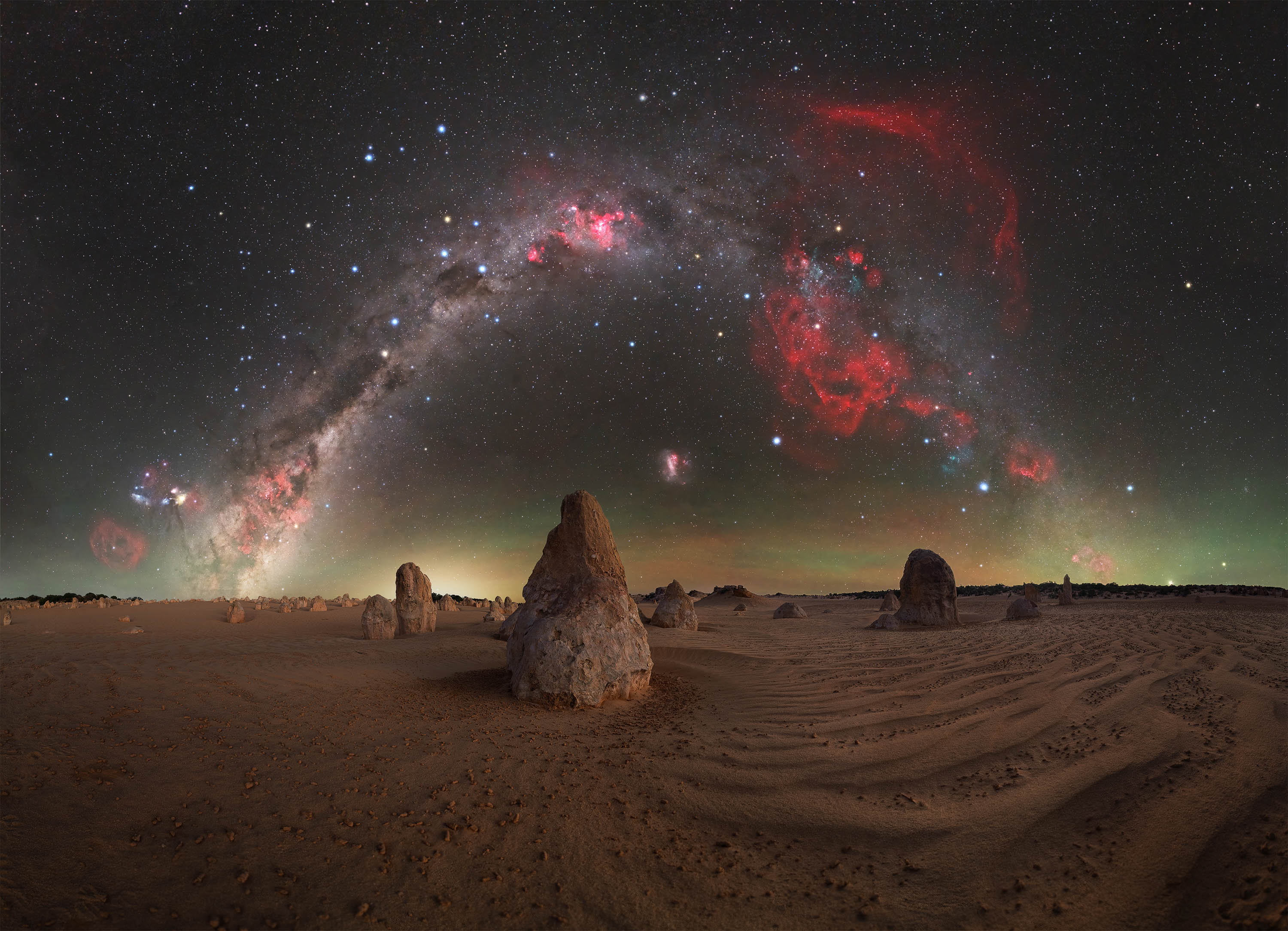
There’s something uniquely powerful about a calm, windless night in the Pinnacles Desert, a place that never fails to remind me how fortunate we are to have such pristine dark skies so close to home, just a short drive away. As the sun sets beyond the Indian Ocean, a profound stillness settles over Nambung, transforming the landscape into an almost otherworldly scene and drawing me back here time and time again. In this composition, the main limestone pillar aligns almost perfectly with the South Celestial Pole, anchoring the image beneath the rotating sky. To the right, the faint but unmistakable red glow of the Gum Nebula, a vast supernova remnant, adds depth and scale to the scene. Western Australia offers some of the finest night skies in the world, yet it’s easy to take them for granted. Nights like this serve as a reminder of just how special these quiet, remote corners of the Wheatbelt truly are.
“Lost in the ripples of space and time”
There’s something uniquely powerful about a calm, windless night in the Pinnacles Desert, a place that never fails to remind me how fortunate we are to have such pristine dark skies so close to home, just a short drive away. As the sun sets beyond the Indian Ocean, a profound stillness settles over Nambung, transforming the landscape into an almost otherworldly scene and drawing me back here time and time again. In this composition, the main limestone pillar aligns almost perfectly with the South Celestial Pole, anchoring the image beneath the rotating sky. To the right, the faint but unmistakable red glow of the Gum Nebula, a vast supernova remnant, adds depth and scale to the scene. Western Australia offers some of the finest night skies in the world, yet it’s easy to take them for granted. Nights like this serve as a reminder of just how special these quiet, remote corners of the Wheatbelt truly are.
Credit: Leonel Padrón / Milky Way Photographer of the Year 2026 Leonel Padrón
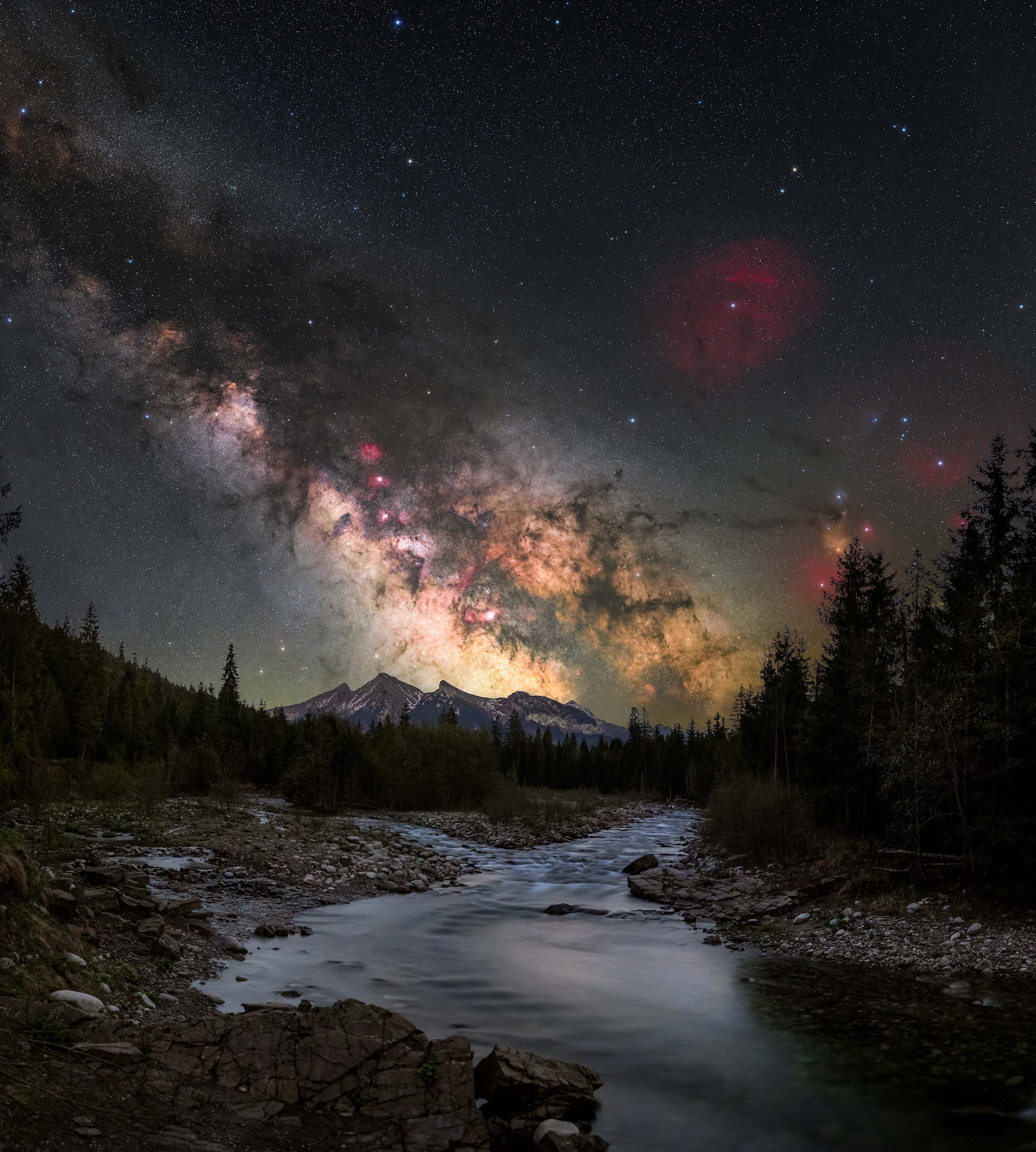
Taking advantage of the April new moon, I set out to capture my first Milky Way image of 2025. With promising conditions forecast across southern Poland, I returned to the Tatra Mountains, a region I often revisit with my camera, this time exploring the Białka Gorge in Jurgów, a location I had not photographed before. From this vantage point, the Milky Way rises above the Tatras, which in early spring still carry the lingering traces of winter. What drew me most to this scene was the contrast between the dark, rugged landscape and the richness of the sky. The galactic core emerges just above the mountain horizon, accompanied by the subtle colors of the dust and nebulae within the Rho Ophiuchi region. In the foreground, the river creates a natural leading line, guiding the eye from the earth toward the mountains and into the night sky, visually connecting the terrestrial and the cosmic. Beyond the final image, astrophotography is equally about the experience in the field, often shared with others who are drawn to the same conditions and moments, united by a common appreciation for the night sky.
“Milky Way over Tatra mountains”
Taking advantage of the April new moon, I set out to capture my first Milky Way image of 2025. With promising conditions forecast across southern Poland, I returned to the Tatra Mountains, a region I often revisit with my camera, this time exploring the Białka Gorge in Jurgów, a location I had not photographed before. From this vantage point, the Milky Way rises above the Tatras, which in early spring still carry the lingering traces of winter. What drew me most to this scene was the contrast between the dark, rugged landscape and the richness of the sky. The galactic core emerges just above the mountain horizon, accompanied by the subtle colors of the dust and nebulae within the Rho Ophiuchi region. In the foreground, the river creates a natural leading line, guiding the eye from the earth toward the mountains and into the night sky, visually connecting the terrestrial and the cosmic. Beyond the final image, astrophotography is equally about the experience in the field, often shared with others who are drawn to the same conditions and moments, united by a common appreciation for the night sky.
Credit: Lukasz Remkowicz / Milky Way Photographer of the Year 2026 Łukasz Remkowicz
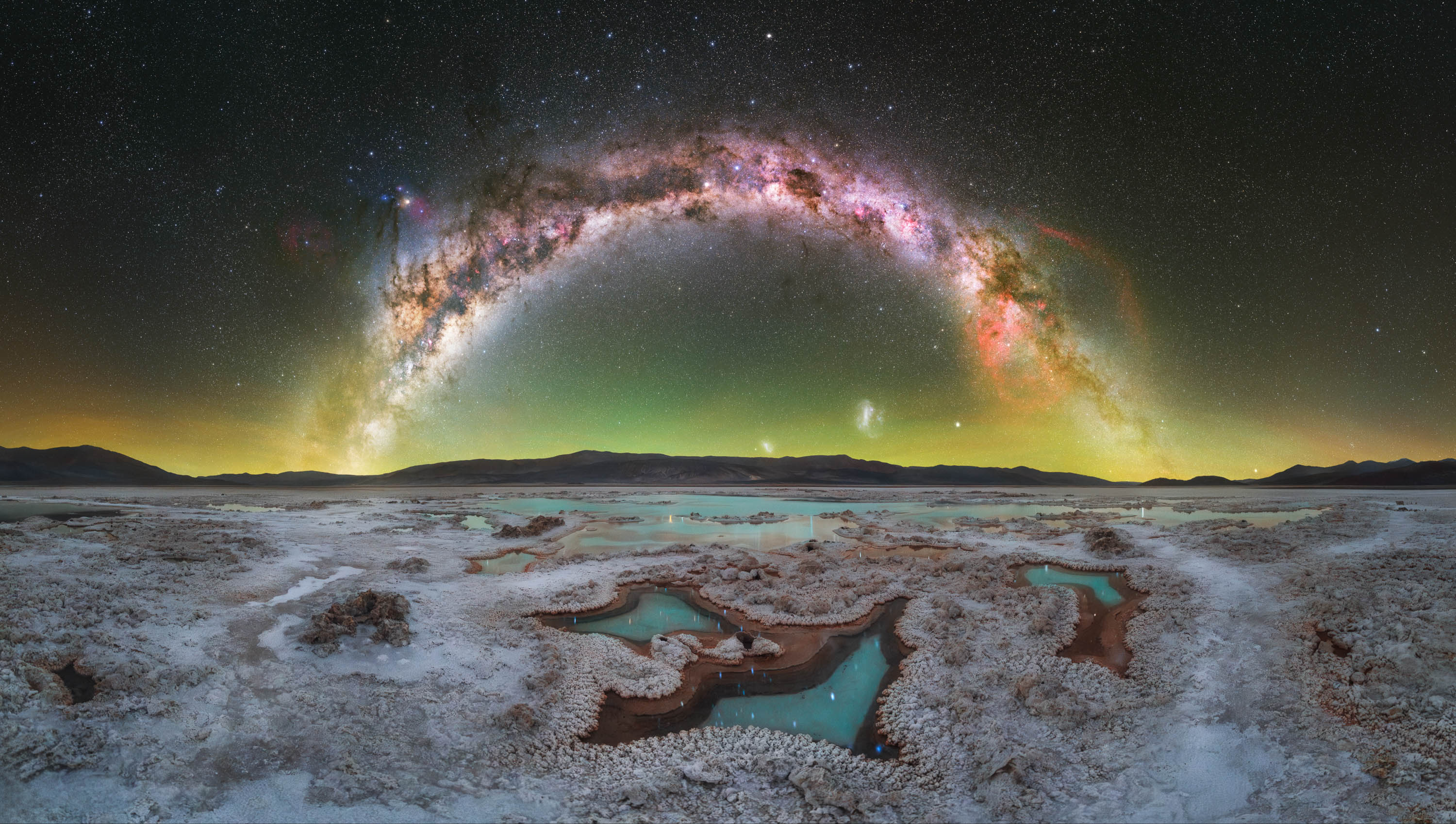
Reaching this location required traveling deep into the Argentine Puna, a remote region accessible only by 4×4 vehicles along rough dirt tracks, far from any source of light pollution. The nearest settlement was Antofalla, a small village of around 60 inhabitants, where electricity is generated locally and turned off at night. Beyond that, the closest towns are several hours away, surrounded by vast and isolated landscapes. Situated between 3,500 and 4,000 meters above sea level, the altitude and remoteness make this an exceptional environment for night sky photography. What made this place particularly compelling was its rarity. I had never seen photographs of this salt flat before, and its untouched character and minimalist landscape immediately stood out. Photographing the Milky Way in the southern hemisphere brought both challenges and excitement, as its appearance differs significantly from what I was used to in the north. In this moment, the galactic center sits to the left side of the arch, while the Gum Nebula appears on the right, creating a natural visual balance across the sky.
“My perfect night”
Reaching this location required traveling deep into the Argentine Puna, a remote region accessible only by 4×4 vehicles along rough dirt tracks, far from any source of light pollution. The nearest settlement was Antofalla, a small village of around 60 inhabitants, where electricity is generated locally and turned off at night. Beyond that, the closest towns are several hours away, surrounded by vast and isolated landscapes. Situated between 3,500 and 4,000 meters above sea level, the altitude and remoteness make this an exceptional environment for night sky photography. What made this place particularly compelling was its rarity. I had never seen photographs of this salt flat before, and its untouched character and minimalist landscape immediately stood out. Photographing the Milky Way in the southern hemisphere brought both challenges and excitement, as its appearance differs significantly from what I was used to in the north. In this moment, the galactic center sits to the left side of the arch, while the Gum Nebula appears on the right, creating a natural visual balance across the sky.
Credit: Daniel Viñe Garcia / Milky Way Photographer of the Year 2026 Daniel Viñé Garcia
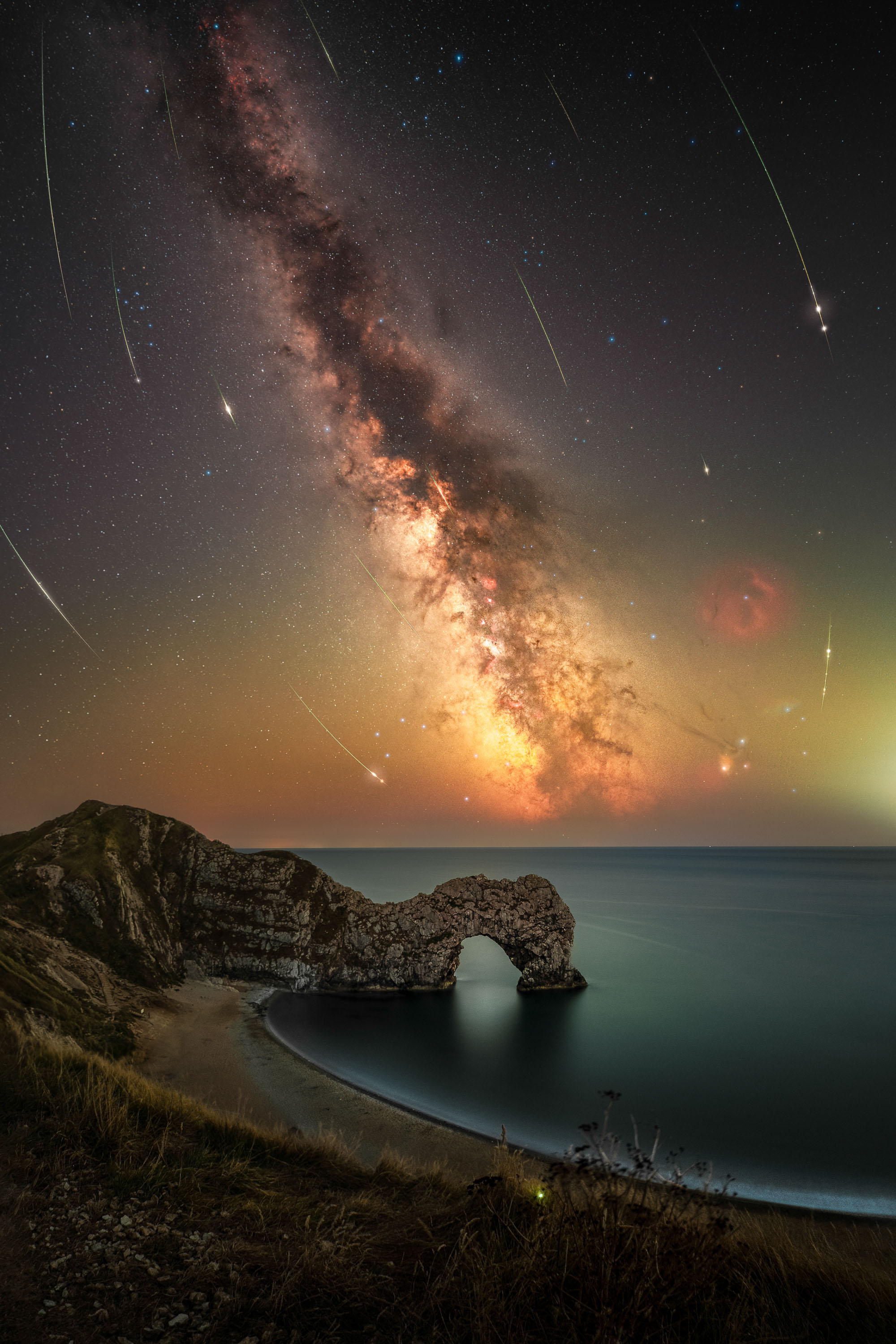
“Ancient fireworks” from Comet Swift-Tuttle hurtled through the atmosphere to document this ultra-wide angle composite image above the natural limestone arch of Durdle Door. In the foreground, a singular glow worm was documented amongst reeds along the sea cliff edge. As the subject of Astrophotography grows by demand, beauty hotspots and World Heritage Sites including Durdle Door, are getting busy. With good reason that is why as Astrophotographers, we need to set an example in protecting beauty hotspots and local ecology. Through practice of utilising red head torches and adhering to access-restricted areas of UNESCO World Heritage sites.
“Perseid Meteors over Durdle Door”
“Ancient fireworks” from Comet Swift-Tuttle hurtled through the atmosphere to document this ultra-wide angle composite image above the natural limestone arch of Durdle Door. In the foreground, a singular glow worm was documented amongst reeds along the sea cliff edge. As the subject of Astrophotography grows by demand, beauty hotspots and World Heritage Sites including Durdle Door, are getting busy. With good reason that is why as Astrophotographers, we need to set an example in protecting beauty hotspots and local ecology. Through practice of utilising red head torches and adhering to access-restricted areas of UNESCO World Heritage sites.
Credit: Josh Dury / Milky Way Photographer of the Year 2026 Josh Dury
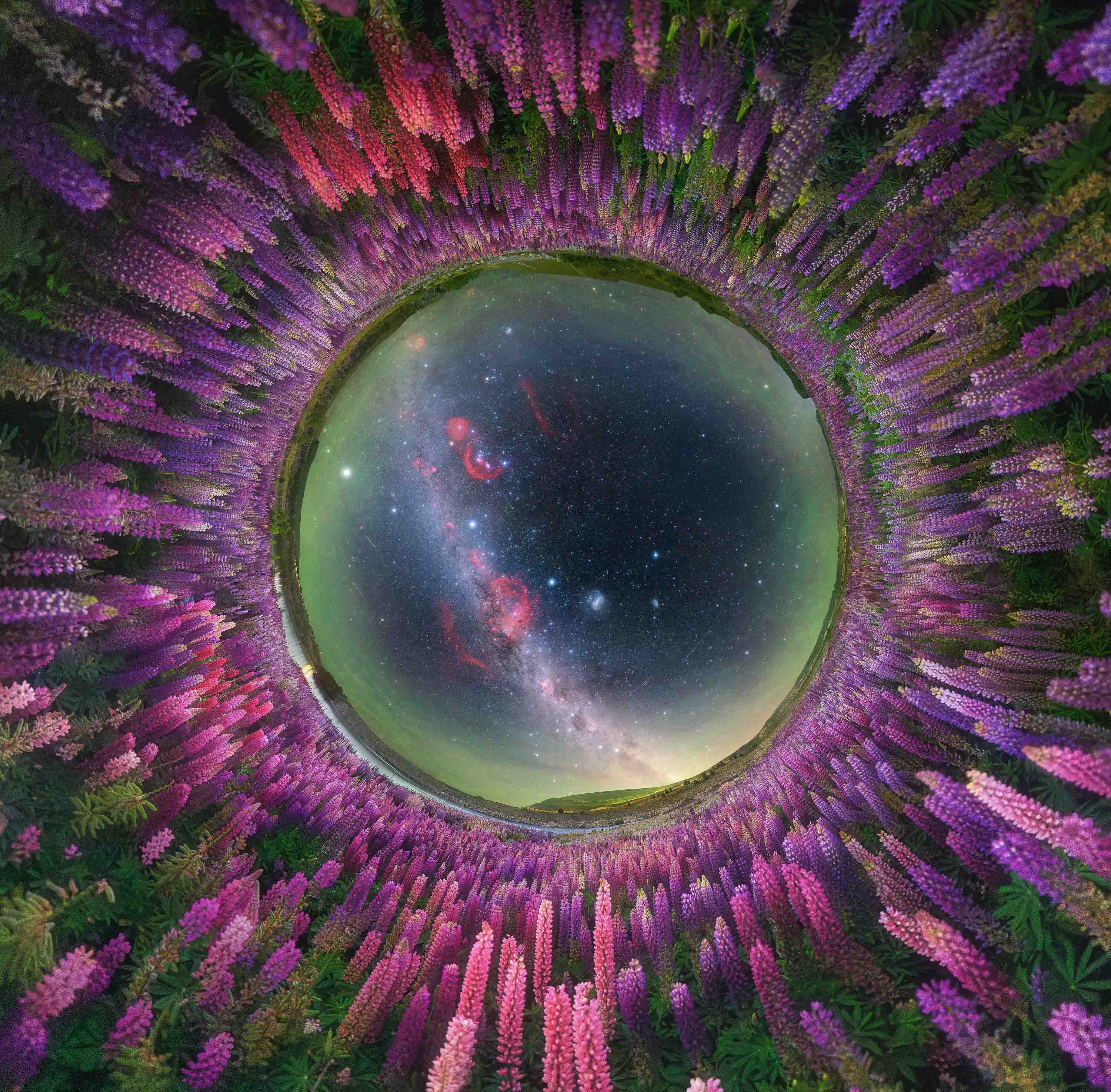
This image captures the Milky Way rising above a blooming field of lupines in New Zealand during November, when spring wildflowers transform the landscape beneath the night sky. Using a fisheye perspective, the flowers encircle the scene, forming a natural frame that draws the viewer into the celestial sphere above.
“The Milky Way over a field of Lupines”
This image captures the Milky Way rising above a blooming field of lupines in New Zealand during November, when spring wildflowers transform the landscape beneath the night sky. Using a fisheye perspective, the flowers encircle the scene, forming a natural frame that draws the viewer into the celestial sphere above.
Credit: Alvin Wu / Milky Way Photographer of the Year 2026 Alvin Wu
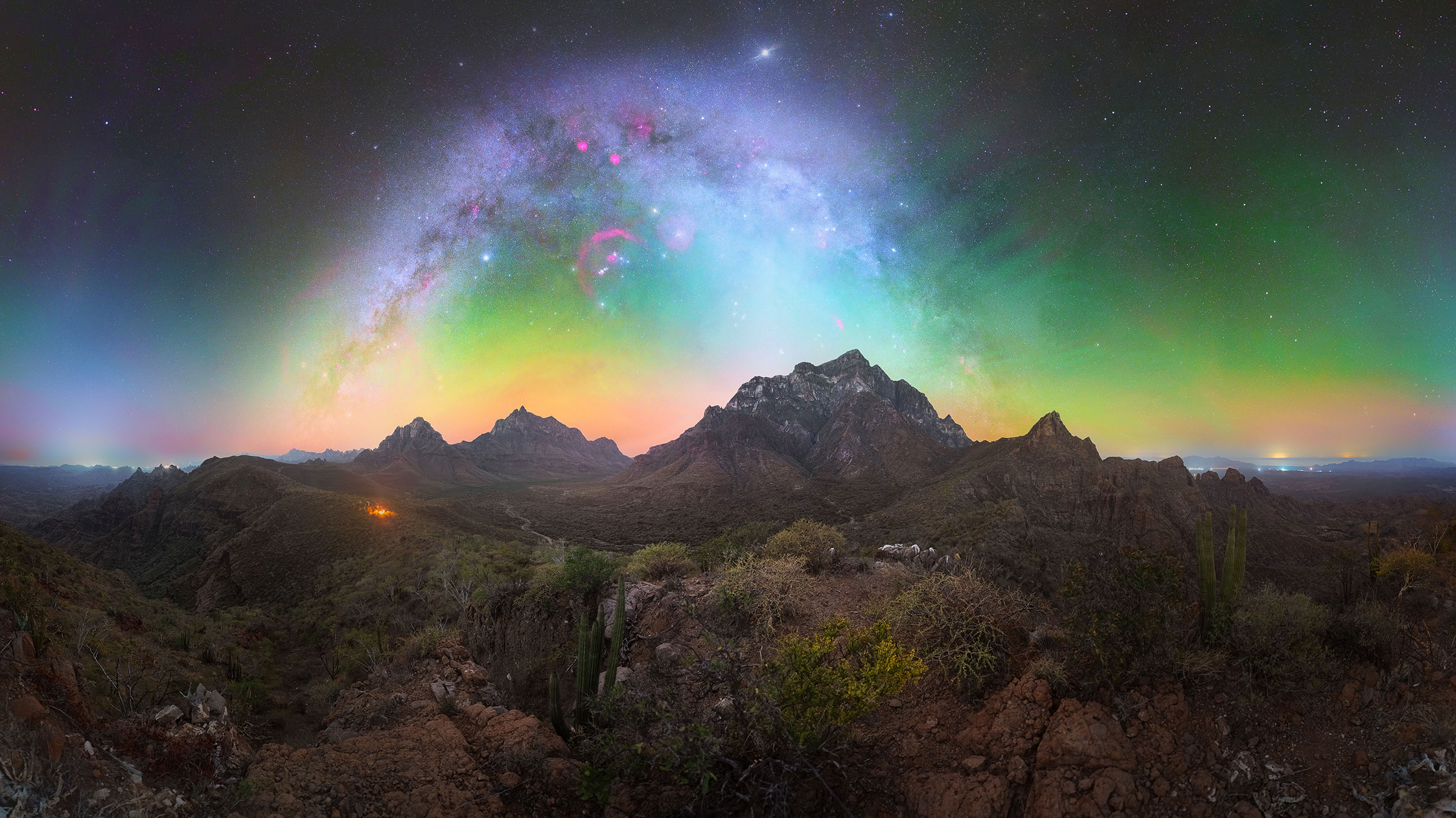
This photograph was captured in the heart of the Sierra La Giganta, in Baja California Sur, following a two-day expedition from the small village of San Juan Londo. The final approach required an ascent of more than 800 meters by mule along a long-forgotten section of the historic Camino Real, once used by vaqueros and their donkeys to transport goods between remote settlements. This path has remained largely untouched for nearly 80 years. The image forms part of an ongoing project focused on documenting and promoting the exceptional dark skies of Baja California Sur for astrotourism. These conditions meet the standards of true Dark Sky Sanctuaries, offering some of the purest night skies in the region. On the right side of the frame, the faint glow belongs to the distant city of Loreto, the first capital of the Californias, located approximately 30 kilometers to the south. We were accompanied by Señor Juan, our guide, whose father first brought him to this hidden location over 65 years ago. Together, we aim to preserve the memory of these historic routes, ancient paths that have been gradually reclaimed by nature over time. This photograph reflects not only the pursuit of pristine dark skies, but also a deeper process of exploration and rediscovery. It brings together the search for untouched landscapes with the recovery of a cultural and historical legacy, helping to position Baja California Sur as a world-class destination for night sky photography while honoring the stories embedded in its terrain. Milky Way photography goes beyond capturing the stars. It becomes a way to explore remote environments, challenge physical limits, and reconnect with both nature and history. If this image encourages others to look beyond established paths in search of truly dark skies, then it has fulfilled its purpose.
“Standing on the shoulders of Giants”
This photograph was captured in the heart of the Sierra La Giganta, in Baja California Sur, following a two-day expedition from the small village of San Juan Londo. The final approach required an ascent of more than 800 meters by mule along a long-forgotten section of the historic Camino Real, once used by vaqueros and their donkeys to transport goods between remote settlements. This path has remained largely untouched for nearly 80 years. The image forms part of an ongoing project focused on documenting and promoting the exceptional dark skies of Baja California Sur for astrotourism. These conditions meet the standards of true Dark Sky Sanctuaries, offering some of the purest night skies in the region. On the right side of the frame, the faint glow belongs to the distant city of Loreto, the first capital of the Californias, located approximately 30 kilometers to the south. We were accompanied by Señor Juan, our guide, whose father first brought him to this hidden location over 65 years ago. Together, we aim to preserve the memory of these historic routes, ancient paths that have been gradually reclaimed by nature over time. This photograph reflects not only the pursuit of pristine dark skies, but also a deeper process of exploration and rediscovery. It brings together the search for untouched landscapes with the recovery of a cultural and historical legacy, helping to position Baja California Sur as a world-class destination for night sky photography while honoring the stories embedded in its terrain. Milky Way photography goes beyond capturing the stars. It becomes a way to explore remote environments, challenge physical limits, and reconnect with both nature and history. If this image encourages others to look beyond established paths in search of truly dark skies, then it has fulfilled its purpose.
Credit: Ignacio Pelaez / Milky Way Photographer of the Year 2026 Nacho Peláez
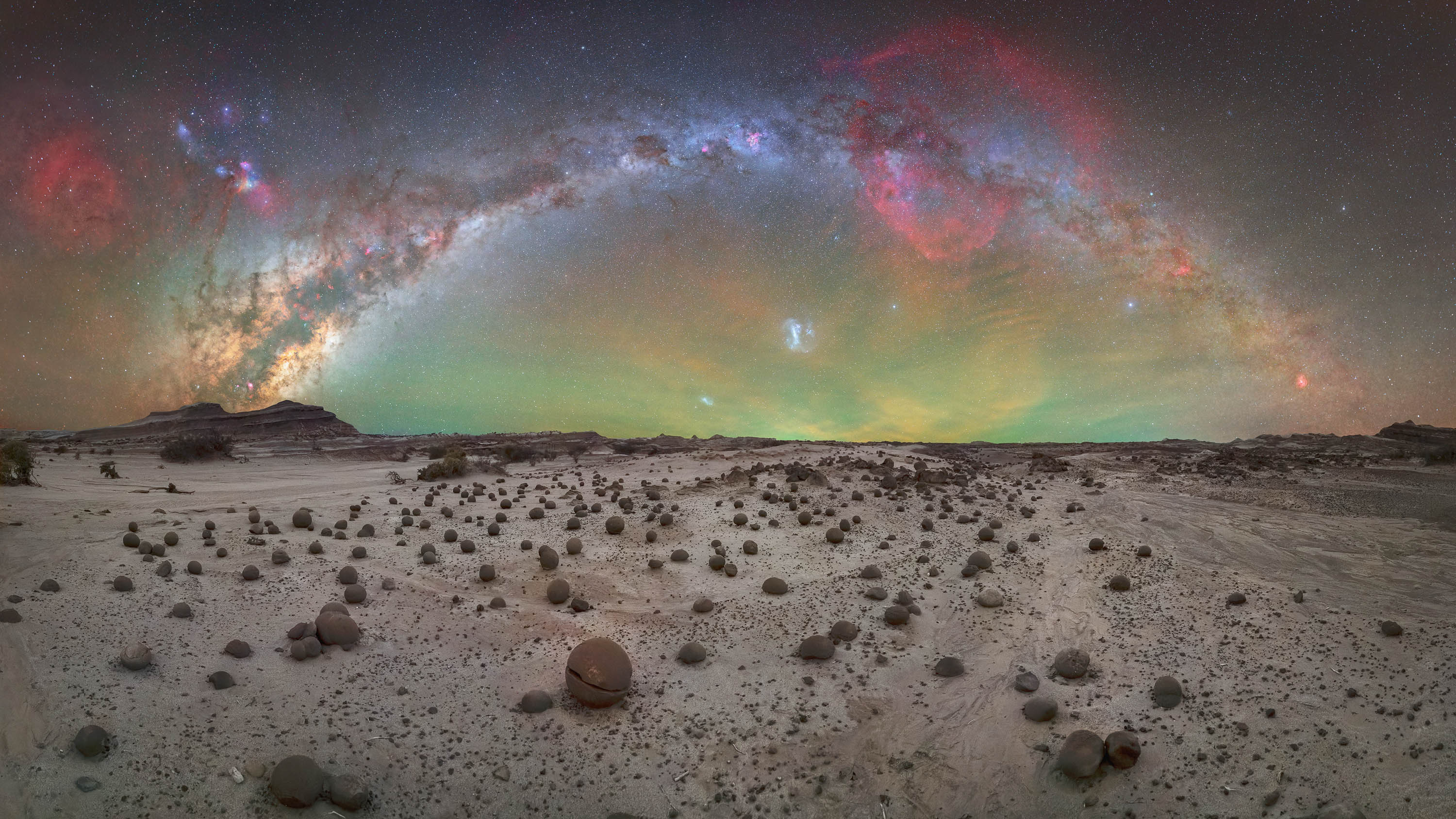
This photograph captures the first full Milky Way arch ever taken at this location, a site of exceptional scientific and cultural significance. Recognized as a UNESCO World Heritage Site, its geological importance lies in being the only place on Earth where the complete sequence of the Triassic Period can be observed, preserving key fossils from the earliest dinosaurs and earning its place among the most valuable geological heritage sites in the world. Located in Valle Fértil, this landscape was shaped more than 200 million years ago by powerful river systems. Today, it continues to attract geologists and paleontologists from around the globe, further highlighting both its importance and its fragility. While photographing in the area known as Cancha de Bochas, I felt an unprecedented sense of responsibility. Guided by local experts, accessing the site required extreme care. Every movement had to be deliberate to avoid damaging this irreplaceable environment, turning the experience into a challenge that went far beyond the technical aspects of photography. In the end, this was not just about capturing an image, but about connecting with the deep past of our planet. Places like this remind us that beyond appreciating them, we also share the responsibility of preserving them.
“Valle de la luna”
This photograph was captured in the heart of the Sierra La Giganta, in Baja California Sur, following a two-day expedition from the small village of San Juan Londo. The final approach required an ascent of more than 800 meters by mule along a long-forgotten section of the historic Camino Real, once used by vaqueros and their donkeys to transport goods between remote settlements. This path has remained largely untouched for nearly 80 years. The image forms part of an ongoing project focused on documenting and promoting the exceptional dark skies of Baja California Sur for astrotourism. These conditions meet the standards of true Dark Sky Sanctuaries, offering some of the purest night skies in the region. On the right side of the frame, the faint glow belongs to the distant city of Loreto, the first capital of the Californias, located approximately 30 kilometers to the south. We were accompanied by Señor Juan, our guide, whose father first brought him to this hidden location over 65 years ago. Together, we aim to preserve the memory of these historic routes, ancient paths that have been gradually reclaimed by nature over time. This photograph reflects not only the pursuit of pristine dark skies, but also a deeper process of exploration and rediscovery. It brings together the search for untouched landscapes with the recovery of a cultural and historical legacy, helping to position Baja California Sur as a world-class destination for night sky photography while honoring the stories embedded in its terrain. Milky Way photography goes beyond capturing the stars. It becomes a way to explore remote environments, challenge physical limits, and reconnect with both nature and history. If this image encourages others to look beyond established paths in search of truly dark skies, then it has fulfilled its purpose.
Credit: Gonzalo Santile / Milky Way Photographer of the Year 2026 Gonzalo Javier Santile

The post 19 breathtaking images from the Milky Way Photographer of the Year 2026 awards appeared first on Popular Science.
  •  

China launches crewed space flight as part of Moon ambitions, with Hong Kong police officer-turned-astronaut aboard

space launch

China launched its crewed Shenzhou-23 spacecraft and eased it into a successful docking with a space station early Monday as part of Beijing’s ambitions to send humans to the Moon by 2030, state media said.

The Shenzhou-23 spacecraft launch on May 24, 2026.
The Shenzhou-23 spacecraft launch on May 24, 2026. Photo: CGTN screenshot.

During this mission, a Chinese astronaut is scheduled to spend a full year in orbit on the Tiangong space station, a crucial first in the Chinese lunar landing programme.

The Long March 2-F rocket blasted off in a cloud of flames and smoke on time at 11:08 pm (1508 GMT) Sunday night from the Jiuquan launch centre in China’s northwestern Gobi Desert, video from state broadcaster CCTV showed.

The spacecraft separated from the rocket around 10 minutes later and entered orbit, the Chinese Manned Space Agency (CMSA) said on social media.

“The astronauts are in good condition, and the launch has been a complete success,” it added.

The craft docked successfully with the Tiangong space station after a flight of about 3.5 hours, the state news agency Xinhua reported, quoting CMSA.

The mission marks the first spaceflight by an astronaut from Hong Kong: 43-year-old Li Jiaying (Lai Ka-ying in Cantonese), who previously worked for the Hong Kong police.

Lai Ka-ying
Lai Ka-ying is a police superintendent with a doctorate in computer science – she will be Hong Kong’s first astronaut. Photo: CCTV.

The two other crew members are 39-year-old space engineer Zhu Yangzhu and 39-year-old Zhang Zhiyuan, a former air force pilot, who is travelling into space for the first time.

Cheering crowds waved Chinese flags at a farewell ceremony ahead of the launch, while a band played and the three astronauts saluted on stage.

The crew is set to carry out numerous scientific projects in life sciences, materials science, fluid physics and medicine.

A key experiment of Shenzhou-23 will be the full-year stay in orbit by one of the crew in order to study the effects of a long stay in microgravity.

Year-long experiment

The experiment is part of China’s preparations for future lunar missions, as well as missions to Mars.

The astronaut selected for this one-year mission will be named at a later date, depending on the progress of the Shenzhou-23 mission, a spokesperson for the CMSA said on Saturday.

The main challenges will involve long-term effects on humans, including bone density loss, muscle wasting, radiation exposure, sleep disturbances, behavioural and psychological fatigue, said Richard de Grijs, an astrophysicist and professor at Macquarie University in Australia.

He also underlined the importance of reliable water and air recycling systems, as well as the ability to manage potential medical emergencies far from Earth.

China is “steadily” building operational experience for “sustained occupation” of its Tiangong space station, and year-long missions are an important step towards future lunar and potentially deep-space ambitions, de Grijs told AFP.

“A year in orbit pushes both hardware and humans into a different operational regime compared with the shorter Shenzhou missions of the programme’s earlier phases,” he said.

Crews aboard Tiangong have until now largely remained in orbit for six months before being replaced.

The Shenzhou-23 mission is part of China’s goal to land astronauts on the Moon before 2030, a race in which the United States is also competing with its Artemis programme.

Pakistani crew members

China is testing the equipment required for its goal, with an orbital test flight of its new Mengzhou spacecraft set for 2026.

The Mengzhou craft will replace the ageing Shenzhou line, and will carry China’s astronauts to the Moon.

Beijing hopes to have built the first phase of a manned scientific base by 2035, known as the International Lunar Research Station (ILRS).

China also plans to welcome its first foreign astronaut, from Pakistan, aboard the Tiangong station by the end of this year.

The Asian giant has significantly expanded its space programmes over the last 30 years, injecting billions of dollars into the sector in order to catch up with the United States, Russia and Europe.

In 2019, China landed a spacecraft, the Chang’e-4 probe, on the far side of the Moon — a world first.

Then in 2021, it landed a small rover on Mars.

China has been formally excluded from the International Space Station (ISS) since 2011, when the United States banned NASA from collaborating with Beijing, prompting the Asian giant to develop its own space station project.

  •  

Rare lunar meteorite was smacked three times before finally hitting Earth

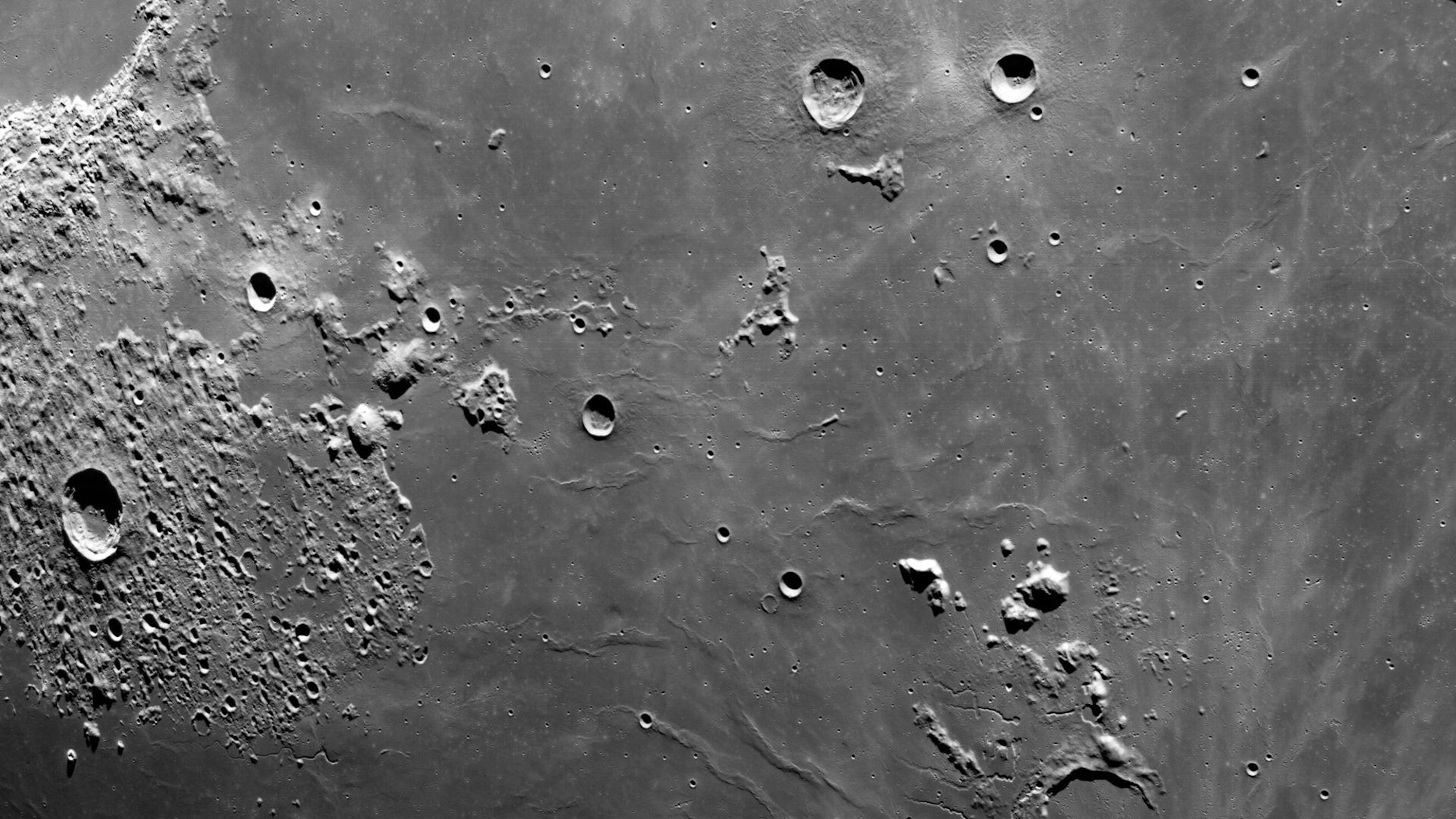
A rare type of meteorite discovered in Mali is revealing a multibillion-year tale of lunar catastrophes. With its unique composition, astronomers are beginning to better understand the processes that shaped not only the moon and Earth, but the solar system itself.

The study recently published in the journal Geology is nearly 10 years in the making and focuses on a meteorite classified as NWA 12593. Found in the west African nation in 2017, experts soon recognized the space rock as an especially unique specimen. NWA 12593 is one of only 53 known lunar breccia—a meteorite formed by the amalgamation of multiple moon fragments during separate impacts billions of years ago. 

“Breccias are similar to what you would see if you went and chipped out a chunk of concrete. You would see all these little rocks, and then they’re fused together by the cement,” Carolyn Crow, a planetary scientist at the University of Colorado Boulder and study co-author, said in a statement.

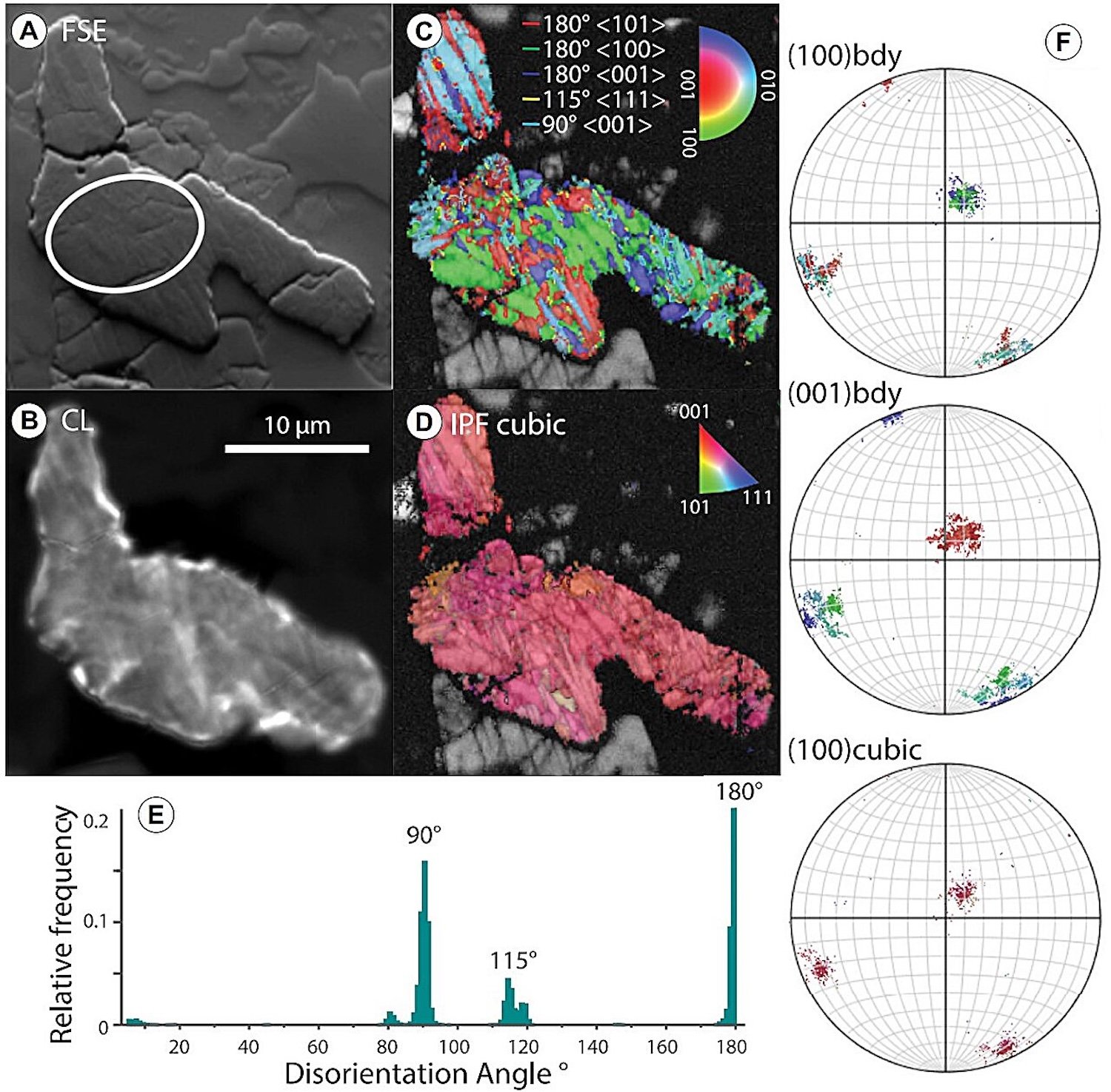
Electron backscatter diffraction data of NWA 12593. Credit: Geology

Crow and her colleagues used radiometric dating and chemical analysis on NWA 12593 to successfully identify evidence of three major impact events in the moon’s past. The earliest occurred around 3.5 billion years ago amid an era that also produced the first known fossil evidence of life on Earth. This collision was powerful enough to reduce the moon’s surface to molten rock similar to a lava flow.

The impact also created cubic zirconia, a mineral that only forms during extremely high temperatures. Known for its uses in jewelry, cubic zirconia doesn’t last in cold, uncontrolled temperatures. While the mineral disappeared as the lunar surface eventually solidified and cooled, researchers pinpointed lingering traces of its existence in NWA 12593.

The second impact event formed the breccia itself. In the aftermath of that meteor strike, slabs of lunar rock slammed into one another to create a mosaic of materials.

“The meteorite is fused together by the impact process. You get all these chunks of different kinds of rocks that the impact hit into,” explained Crow.

The third event explains how the lunar breccia reached Earth. At some point in the more recent past, yet another impact cracked off a piece of our moon itself and sent it hurtling towards the planet.

A portion of the meteorite’s story also aligns with a tumultuous chapter in Earth’s geological history. The 3.5-billion-year-old impact identified in the breccia occurred around the same time as known impacts on both Earth and the asteroid 4 Vesta, fourth-largest member of the asteroid belt between Mars and Jupiter. This was a particularly chaotic time in the solar system, with planets still forming amid near-constant collisions Knowing this, further examination of NWA 12593 can help contextualize the history of Earth, the moon, and the wider cosmic neighborhood.

The post Rare lunar meteorite was smacked three times before finally hitting Earth appeared first on Popular Science.
  •  

Dustin Myers is Perfectly Normal

In Perfectly Normal—the exhibition from Dustin Myers that ran at Los Angeles gallery Thinkspace Projects in November 2023—the Southern California artist presented a collection of young characters painted in oils. Posed in the awkward-yet-endearing postures associated with school photographs, the characters’ exaggerated facial features reveal a bevy of emotions. Some are ready for their close-up. […]

The post Dustin Myers is Perfectly Normal first appeared on Hi-Fructose Magazine.

  •  

Astronaut who nearly drowned in space selected for Artemis III crew

Today, NASA announced the four Artemis III astronauts and one backup crew member for the 2027 test flight. NASA astronaut Randy Bresnik will serve as the commander, alongside mission specialists Andre Douglas and Frank Rubio (also with NASA). European Space Agency (ESA) astronaut Luca Parmitano will serve as the mission’s pilot. 

Parmitano was selected to the ESA astronaut corps in May 2009 and is also a colonel and test pilot for the Italian Air Force. He is the first ESA astronaut assigned to an Artemis mission and immediately pointed to his family as motivation. 

“I am honored by the role that I have been given,” Parmitano said during the press conference. “The rocket figuratively and literally is NASA. I am grateful that NASA is allowing me to be part of this incredible group of people and this crew and for letting me fly. But we wouldn’t be going anywhere without fuel and the fuel that lets everything move is right here–Maia, Sarah, Marta, and my extended family here in the crowd. You are the energy that feeds my soul and your love is the spark that ignites every passion.”

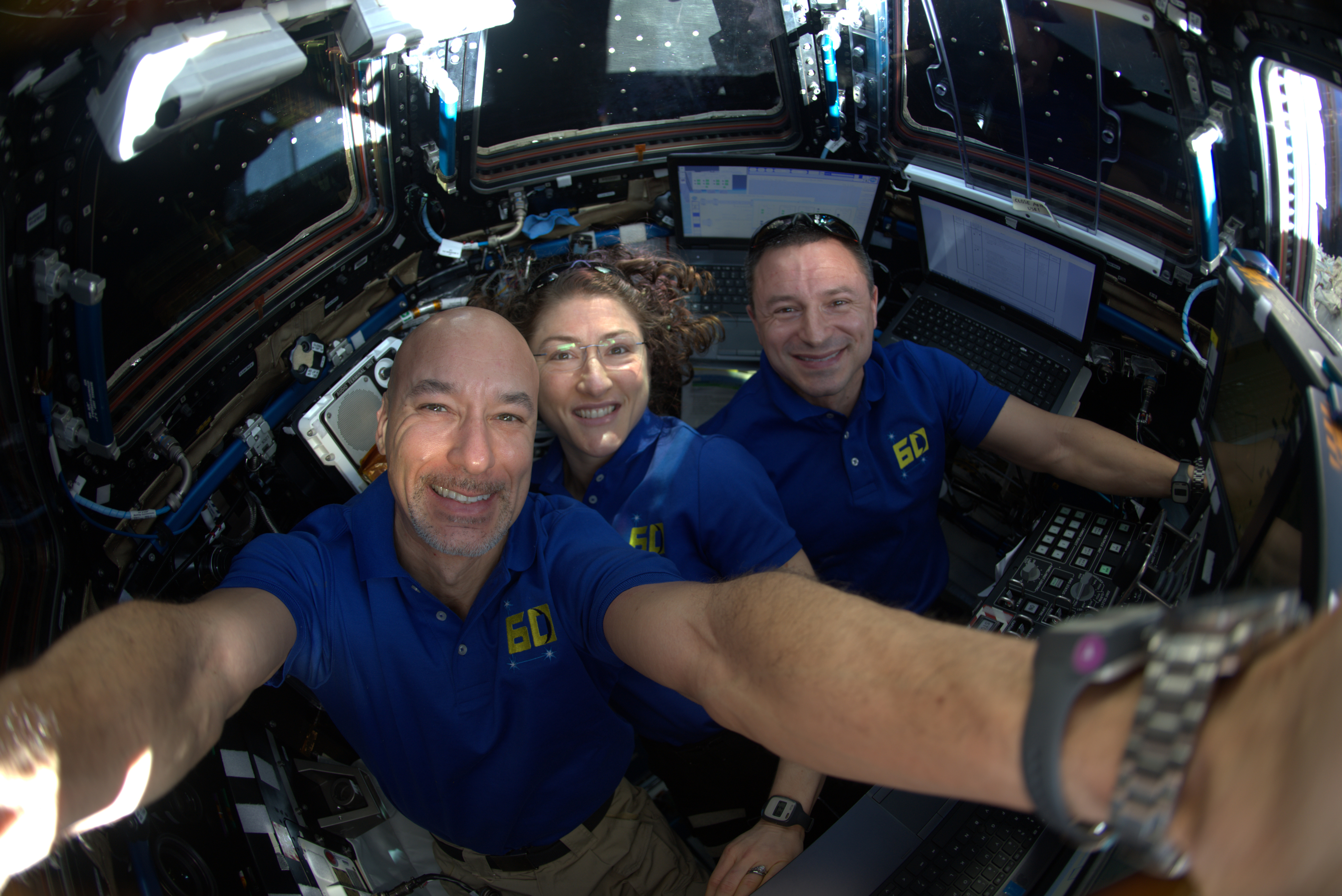
three astronauts pose for a selfie
ESA astronaut Luca Parmitano shared this photo with NASA astronauts Andrew Morgan and Christina Koch as a throwback to the capture of HTV 8 in July 2019. Image: ESA/NASA.

Parmitano has already proven that he possesses coolness under pressure. On July 16, 2013, he nearly drowned during a space walk, after data about a previous spacesuit did not make its way up the International Space Station’s chain of command. Water chemistry issues caused a leak in the spacesuit’s cooling system. 

The issue started near the end of a spacewalk on July 9. At the time, the crew concluded that the water came from Parmitano’s drink bag. That initial assessment was incorrect. The leak occurred due to contamination build up that blocked a filter. The blockage allowed water to go into a line that feeds air to the astronaut’s helmet.

“When the water reached my face, it spread over my nose and up into my nostrils in an instant. I was almost blinded, I couldn’t hear anything and I couldn’t breathe through my nose,” Parmitano wrote in a March 2026 commentary on the event published in New Scientist. “I already knew I needed to reach the airlock and get back inside the International Space Station. The key question: how long did I have before the water reached my mouth and I couldn’t breathe at all?”

In a report released several months later, investigators said that ISS management should not have given the go ahead for the July 16 spacewalk following the incident on July 9. The report also criticized management for not immediately stopping the dangerous task as soon as Parmitano reported water in his helmet. The report ultimately included 49 recommendations to help prevent a similar incident.

Artemis III will undertake a series of challenging tests in Earth orbit in 2027. These tests are essential for Artemis IV in 2028, the first planned crewed mission to the lunar South Pole.

The agency’s Space Launch System (SLS) rocket will propel the Orion spacecraft and its crew from NASA’s Kennedy Space Center into low Earth orbit. After Orion systems checkout, the spacecraft will demonstrate rendezvous and test docking capabilities for the first time. It will use test versions from one, or both, American commercial human landing systems in development by Blue Origin and SpaceX. 

“This highly choreographed mission includes a dramatic multi-launch campaign of the world’s most powerful rockets, testing integrated hardware between Orion and the landers, including system interfaces, software, propulsion, and communications,” NASA writes. 

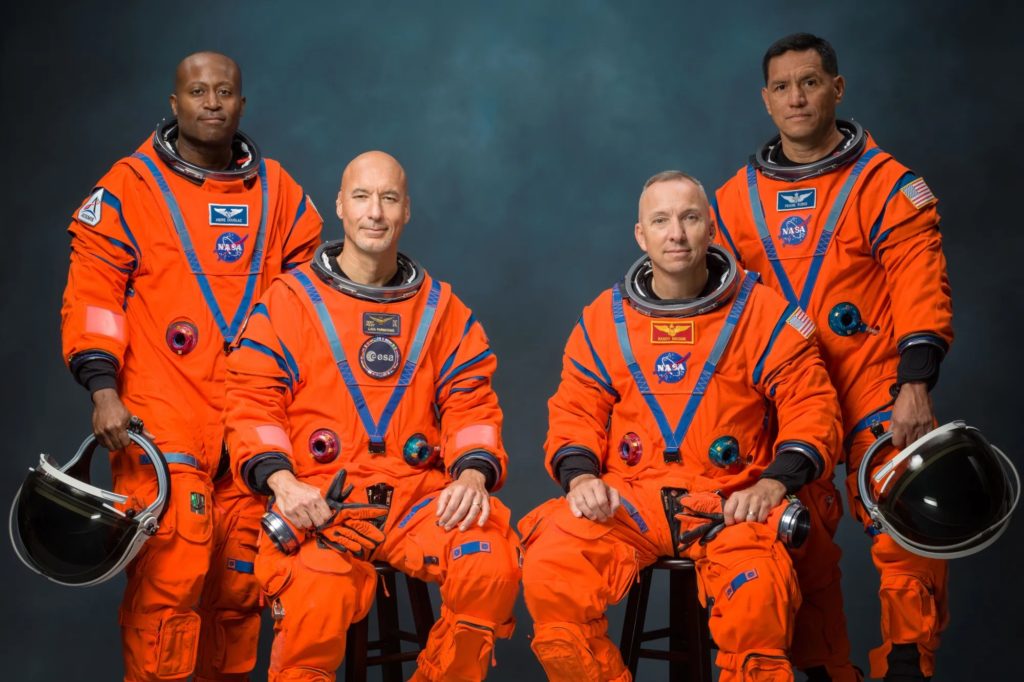
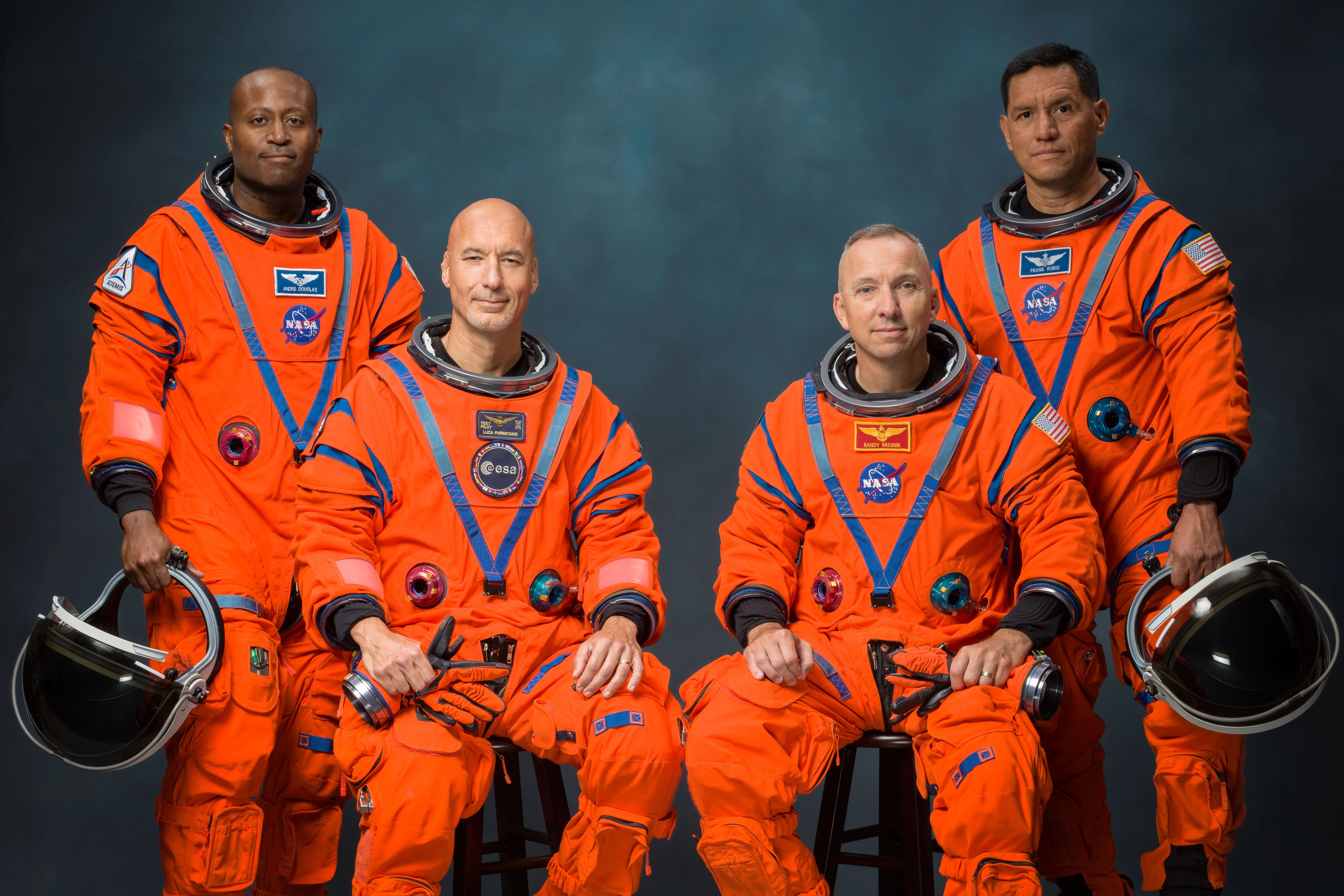
The Artemis III crew poses for an official portrait (from left: Andre Douglas, Luca Parmitano, Randy Bresnik, Frank Rubio). They are wearing orange astronaut suits
The Artemis III crew poses for an official portrait (from left: Andre Douglas, Luca Parmitano, Randy Bresnik, Frank Rubio). Image: NASA/Bill Stafford.

“Artemis III will push the boundaries of spacecraft operations in orbit. Luca’s assignment as pilot reflects the depth of European expertise in human spaceflight and draws on his extensive operational experience in high-pressure situations,” ESA’s director general Josef Aschbacher said in a statement. 

“At the same time, ESA’s European Service Module will once again provide the critical capabilities that power Orion, demonstrating Europe’s enduring role at the very heart of the Artemis program. The news out of Houston today is a powerful recognition of ESA’s role in enabling humanity’s return to the Moon – and a key advancement in our partnership with NASA. Europeans can take pride in being part of this exciting journey.”

The post Astronaut who nearly drowned in space selected for Artemis III crew appeared first on Popular Science.
  •  

Mars rover snaps a selfie near skyscraper-sized boulders

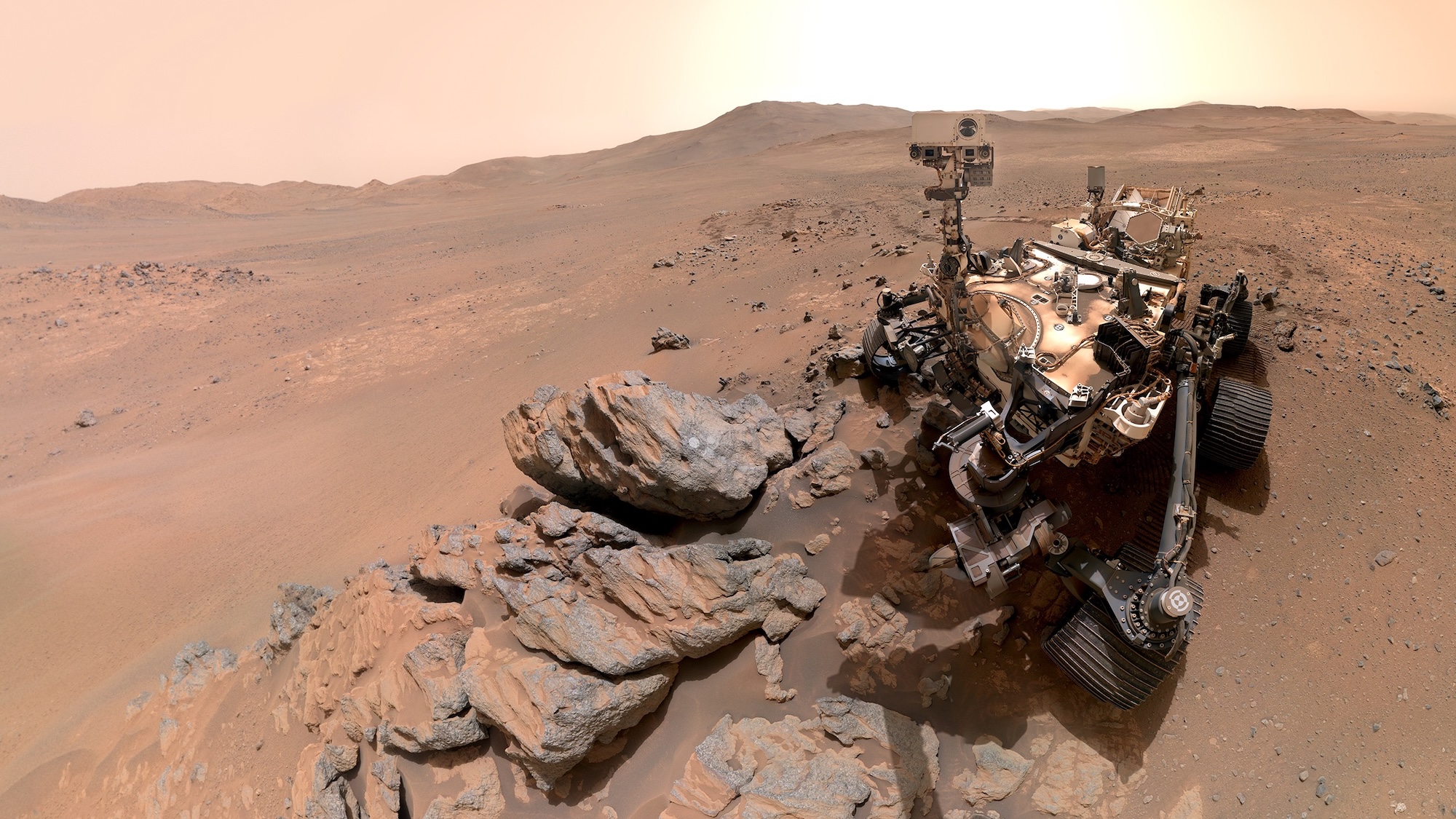
After five years of rolling across Mars, NASA’s Perseverance rover is still going strong. And it has the selfies to prove it. NASA highlighted its “six-wheeled scientist’s” latest Red Planet excursion in a mission update on May 12, explaining that the explorer is currently engaged in the Northern Rim Campaign. This is Perseverance’s fifth project since arriving on Earth’s planetary neighbor in February 2021.  Compiled from 61 separate photos taken in March, the latest scene depicts Perseverance near a region known as Lac de Charmes.

“We took this image when the rover was in the ‘Wild West’ beyond the Jezero Crater rim—the farthest west we have been since we landed at Jezero a little over five years ago,” Perseverance project scientist Katie Stack Morgan said in a statement.

Prior to snapping its selfie, the rover had just finished abrading the rocky Arethusa outcrop. This task involves using the drill on its robotic arm to grind a section of the geological formation, which then offers scientists back on Earth the materials necessary to analyze its composition. After remotely examining the rock’s chemistry, researchers learned Arethusa is largely igneous minerals dating even further back than the Jezero Crater itself. The outcrop likely formed underground millions of years ago from molten material.

The latest portrait is the sixth selfie taken by Perseverance since arriving on Mars. To pull it off, the rover relied on its Wide Angle Topographic Sensor for Operations and eNgineering (WATSON) camera installed at the end of its robotic arm. It took about one hour to accomplish and required 62 extremely fine-tuned movements to ensure the clearest shot possible.

NASA’s Perseverance captured this enhanced-color panorama of an area nicknamed “Arbot” on April 5, the 1,882nd Martian day, or sol, of the mission. Made of 46 images, the panorama offers one of the richest geological vistas of the rover’s mission, revealing a windswept landscape of diverse rock textures. Credit: NASA / JPL-Caltech / ASU / MSSS

Lest anyone think Perseverance is too narcissistic, the rover also employed its Mastcam-Z to also photograph Lac de Charmes’ Arbot area a few days later. The vista scene is the result of 46 combined images, and will help NASA plot out a route to further investigate the ridge. Thanks to the new vantage points, scientists already think they have spotted a few megabreccia—massive chunks of rock as big as skyscrapers that were launched during a meteorite impact about 3.9 billion years ago.

“The rover’s study of these really ancient rocks is a whole new ballgame,” Stack Morgan explained. “These rocks—especially if they’re from deep in the crust—could give us insights applicable to the entire planet, like whether there was a magma ocean on Mars and what initial conditions eventually made it a habitable planet.”

The post Mars rover snaps a selfie near skyscraper-sized boulders appeared first on Popular Science.
  •  

IATA summit to tackle fuel shock, detours and delivery delays facing global airlines amid Iran war

Malay Mail

  • Iran war raises fuel and routing costs
  • Airlines test fare hikes as demand holds
  • Gulf hubs face network resilience test
  • Sustainable aviation fuel shortages cloud airline climate goals

RIO DE JANEIRO, June 4 — Global airline bosses gathering in Rio de Janeiro ‌this weekend will be searching for answers to the industry’s biggest crisis since the pandemic, with the Iran war driving up jet fuel costs, forcing flight detours and testing carriers’ ability to raise fares.

The June 6-8 annual meeting of the International Air Transport Association (IATA) is the industry’s biggest summit, bringing together hundreds of top executives from airlines, manufacturers, suppliers and financiers.

IATA represents more than 370 airlines accounting for ‌some 85 per cent of global air traffic, giving it a central role in a sector where profits were expected to reach a record US$41 billion (RM164 billion) this year before the Iran war began.

Industry executives and analysts expect a downgrade to that forecast at the meeting, where discussions are expected to centre on surging fuel prices and supply fears, disruptions to Middle Eastern airspace, deepening aircraft delivery delays and whether airlines are falling further behind on climate goals.

Airlines around the world have already been responding by raising fares, cutting unprofitable routes and conserving cash until pressures ease, raising more questions about whether they can meet IATA’s goal of net-zero emissions by 2050 given the high cost and limited supply of sustainable aviation fuel.

Moody’s Ratings last week cut its global airline sector outlook to negative from stable, saying fuel costs tied to the Iran war and disruption around the Strait of Hormuz would “materially reduce” operating profit this year. It said profits could fall by more than 35 per cent in 2026 before recovering next year.

IATA data showed global passenger traffic contracted in April for the first time since the post-pandemic recovery, led by a sharp drop at Middle Eastern carriers.

Air India’s outgoing CEO Campbell Wilson said higher fuel prices and airspace closures were making some routes harder ‌to justify.

“When you take on all those competitive dynamics, the added cost of this extra flying, the added cost to fuel, it just makes some routes uneconomic,” he said.

Mixed picture ⁠for airlines

Airlines with stronger demand and greater premium traffic have more room to raise fares, ⁠but the ability to recover fuel costs is uneven across markets and business models.

Southwest Airlines CEO Bob Jordan, whose carrier joined ⁠IATA last year, said US carriers had raised fares ⁠on seven occasions since February without seeing ⁠demand weaken. But he said fares were still “not close” to covering current fuel costs.

Gulf carriers face a particular test. Emirates and Qatar Airways rely heavily on hubs in Dubai and Doha, while Etihad Airways is expanding again from Abu Dhabi after scaling back earlier global ambitions.

The Iran war has not broken the Gulf hub model, but detours have exposed its reliance on accessible airspace ⁠and stable routes, lengthening flight times and increasing fuel burn.

The disruption is also creating openings on some long-haul flows for airlines offering non-stop flights between Asia and Europe, including Lufthansa Group, Air France-KLM, Singapore Airlines and Cathay Pacific.

For European carriers, the picture is mixed. Some may benefit from Gulf airline troubles on long-haul routes, avoiding the most disrupted airspace, but higher fuel costs are compounding pressure from closed Russian airspace, air traffic control disruption and sustainable aviation fuel mandates.

In Asia, Air India faces higher fuel costs and longer routings, while IndiGo remains exposed to aircraft shortages and Pratt & Whitney engine issues. Currency weakness is amplifying fuel costs for Japanese carriers, while Air New Zealand has warned of a sharp earnings hit.

In ⁠Latin America, the fuel shock is colliding with currency swings and consumers with limited room to absorb fare increases, even as limited competition gives some carriers more room to pass on costs. LATAM has cut its earnings forecast due to fuel costs, while Brazil’s Azul remains exposed to fuel prices and currency volatility.

Aircraft ⁠and engine shortages

Delayed Boeing and Airbus deliveries, meanwhile, are forcing airlines to keep older, less fuel-efficient jets in service, adding to margin pressure.

United Airlines CEO Scott Kirby said engines and components had ⁠become the key constraint, ⁠estimating that 800 to 900 aircraft worldwide were grounded due to engine issues.

“There are not enough engines and they’re not going to be for many, many years,” Kirby said at a Bernstein conference last week.

The fuel shock is also driving talk of sector consolidation, as airlines with thinner margins and less pricing power struggle to absorb higher costs, underscored by the collapse last month of US no-frills pioneer Spirit ‌Airlines.

US firm Castlelake, an aircraft lessor and investor in Scandinavia’s SAS, has said it is considering a possible offer for British budget carrier easyJet, while United’s recent informal merger approach to American Airlines has put US dealmaking back in focus, even after American rejected the idea and Washington signalled resistance. — Reuters
  •  
❌