Reading view

We’re not as helpless against dementia as we think

A scan of a brain with Alzheimer’s. | BSIP/UIG via Getty Images

I turned 48 this week, which meant it was time for my annual physical. After the usual battery of questions from my doctor — How much did I drink? Was I exercising? How was I sleeping? — it was my turn to ask a question. I had one prepared: Should I get the shingles vaccine?

Key takeaways

  • Dementia cases will keep climbing as the population ages — a projected million new US cases annually by 2060 — but your odds of getting it at any given age have been falling for decades. An 80-year-old today is meaningfully less likely to have dementia than one a generation ago.
  • Across wealthy countries, age-specific dementia rates have dropped roughly 13 percent per decade since the late 1980s, and most of that decline tracks with things we can influence: better-controlled blood pressure and cholesterol, less smoking, more years of school. The brain lives downstream of the heart.
  • A 2024 Lancet commission estimated that up to 45 percent of dementia could be prevented or delayed by addressing 14 risk factors — and the highest-leverage window is midlife, not old age.
  • The anti-dementia to-do list: treat your blood pressure and LDL cholesterol, don’t smoke, stay physically active, get your hearing and vision checked, keep learning, and go easy on alcohol. Unglamorous, but it buys time for your brain.
  • A growing run of studies links the shingles vaccine to lower dementia risk. The evidence isn’t conclusive and the shot is only recommended at 50, but it’s worth a conversation with your doctor.
  • There is no drug that reverses dementia today. That’s not the same as being helpless.

According to standard medical guidance, the answer would be no. The shingles vaccine is only recommended by the government for people 50 years or older; the only exceptions are adults whose immune systems are weakened by disease or treatment. And despite the way my back feels when I get out of bed each morning, I wasn’t there quite yet. Our immune systems weaken as we age, but at 48, I was probably still capable of beating back the varicella-zoster virus that causes shingles (and chickenpox).

And yet my doctor was open to the idea for the same reason that I was asking about it: because there is early but growing evidence that the shingles vaccine may be protective against neurodegenerative diseases like dementia. For someone my age, with more time behind me than in front of me, the possibility of developing those diseases — and the desire to do anything to prevent them — is suddenly looming large.

I’m far from alone. Dementia already afflicts more than 6 million Americans today, and a 2025 study in Nature Medicine estimated that the lifetime risk of developing dementia after age 55 is 42 percent, with higher figures for women, Black adults, and those who carry the APOE ε4 allele genetic variant, which is known to increase the risk for Alzheimer’s. That same study projected new US cases of dementia would double by 2060, from 514,000 a year in 2020 to more than 1 million annually, due largely to population aging.

Behind those figures is a universe of suffering. Nearly everyone reading this has watched, or will watch, someone they love succumb to dementia. And once you get to my side of your 40s, that risk starts to feel less abstract and a lot more personal.

Yet the frightening story of the rise in dementia cases as the US population ages obscures real progress that is already being made to prevent it — and the even greater progress that could follow. Dementia may feel inevitable, a cruel side effect of longer life. But it doesn’t have to be.

Dementia epidemiology 101

The Nature study is about incidence — new cases, not the total number of people living with dementia. Separate CDC estimates project nearly 14 million older Americans living with Alzheimer’s disease, the most common form of dementia, by 2060.

But the rate hasn’t been holding steady — it’s been dropping. A 2020 study that drew on data from six countries across Europe and North America found that age-specific dementia incidence for people of European ancestry had fallen about 13 percent per decade since the late 1980s, and around 16 percent per decade for clinical Alzheimer’s. A 2016 study tracked five-year dementia rates across four periods between the late 1970s and the early 2000s and found them steadily falling, ultimately dropping 44 percent by the most recent period. The authors of the 2020 study project that if the decline in incidence remains steady in the future, 15 million fewer people might develop dementia by 2040 across high-income countries than if the incidence of the disease remained unchanged.

That good news may not be shared by everyone. The 2016 study found that the decline only showed up among people with at least a high school diploma — more on that below — and even then, it wasn’t evenly shared. And the sheer increase in older people means that a continually dropping incidence only blunts the coming dementia wave, rather than blocking it. One study of older adults in England actually found dementia incidence falling through 2008 and then creeping back up; the researchers also found that when you account for the fact that people headed toward dementia tend to die earlier, the drop gets much harder to see. What’s fallen before can rise again.

But what this likely means in practice is that a person turning 80 today is meaningfully less likely to have dementia than a person who turned 80 a generation ago. And it’s reasonable to hope the same will hold for whoever turns 80 next — like, say, me.

The question, though, is why.

How we learned to fight dementia without realizing it

Here’s a veteran health journalist tip: if anyone ever asks you why something is improving in public health, just attribute it to the decline in smoking. There’s a decent chance you’ll be right.

While Alzheimer’s is a brain disease, and dementia is the umbrella term for several kinds of cognitive decline, there is a growing consensus that they are deeply driven by vascular health — meaning what damages your heart and blood vessels is ultimately what damages your mind. Thanks to the development of blood pressure and cholesterol-lowering medicines, better heart disease and stroke management, and perhaps most of all, drastic reductions in smoking, cardiovascular health has been improving. Even with the rise of obesity and diabetes, most vascular risk factors have decreased over the same time that dementia and Alzheimer’s prevalence fell.

The rise in education over the same time period may play a role as well. Americans turning 80 today went to school during a great mid-century expansion in education, while their parents were schooled — or rather, not schooled — in the 1920s and ’30s. In 1940, only 24.5 percent of Americans 25 and older had a high school diploma, and just 4.6 percent had completed a bachelor’s degree or more. By 2017, high school completion had reached 90 percent, and the share of people with a bachelor’s or more had hit 34 percent. And researchers have correlated higher education attainment with lower dementia and Alzheimer’s rates.

Now repeat after me: correlation is not causation. Researchers don’t really know why more years of schooling seem to be associated with a lower risk of dementia, though there are theories that education might boost the brain’s “cognitive reserve.” But the hopeful take is that the decline in incidence is largely driven by behaviors and life conditions we can change. And one of the most unexpected and promising acts is something as simple as routine vaccination.

The vaccine you need to know about

Last April, I wrote about what I called “one of the brightest spots in an otherwise dark field”: a study in Wales that found that older adults who received a vaccine against shingles were 20 percent less likely to develop dementia in the seven years following vaccination than those who did not receive it. It wasn’t a randomized trial, but it was stronger than the usual observational association: the study harnessed a natural experiment in Wales, where vaccine eligibility turned on a birthday cutoff, meaning it was less likely that the results were because vaccinated people were simply healthier.  

Earlier this year, a study in Canada looked at hundreds of thousands of people over the age of 70 and, like the Welsh study, found that those who had taken the shingles vaccine were less likely to develop dementia. And a new analysis from late 2025 of the data in the Welsh study found that the vaccine was associated with benefits that went beyond prevention — it also seemed to slow the disease for those with dementia and reduced deaths attributable to it.

The shingles vaccine in the Welsh study was an older, live-virus version; the current vaccine is a newer recombinant form that can’t accidentally cause shingles, and another study found it was associated with even greater protection from dementia.

These findings are promising but still leave plenty of questions. The Welsh live-vaccine study found a larger apparent benefit in women, who also suffer higher rates of dementia. But the pattern is not settled: the newer recombinant-vaccine study found an association in both men and women, though stronger in women. Shingles may be connected to dementia, though the evidence is still messy: A large 2025 health-records study found recurrent shingles was associated with a modestly higher dementia risk than a single episode, while earlier evidence has been more mixed.

Shingles occurs when the dormant varicella zoster virus — the same virus that causes chickenpox — reactivates. It’s possible that the resulting neural inflammation may feed dementia. A randomized controlled trial published in December tested a related herpes-virus idea, treating 120 adults with early Alzheimer’s or mild cognitive impairment — all with evidence of prior herpes simplex infection — with a medication called valacyclovir. After 18 months, researchers found no significant advantage over a placebo, dampening hopes that herpes antivirals could be an effective Alzheimer’s treatment. 

That’s a real strike against the simplest version of the theory that the virus itself is rotting the brain. But it could mean that the shingles vaccine’s possible protective effects don’t come from shingles at all. A 2025 study found that the newer shingles vaccine and an RSV vaccine that share the same AS01 immune-boosting adjuvant were each associated with lower 18-month dementia risk compared with flu vaccination, and researchers did not find a statistically significant difference between the two AS01 vaccines. The implication is that the benefit might come from giving an aging immune system a jolt, rather than from any one bug it’s aimed at.

You can protect yourself

But as the vaccine science sorts itself out, there are lifestyle changes you can make to help protect yourself without getting a shot. A 2024 Lancet commission found that, in principle, up to 45 percent of dementia cases could be prevented or delayed by addressing 14 risk factors, including not smoking; lowering high LDL cholesterol in midlife; treating hearing loss, especially from midlife on; and limiting obesity. The key period here is midlife, which the commission defined (rather widely in my opinion) as 18-65. Which, for someone my age, means there’s no better time to focus on prevention.

I don’t know whether I’ll go ahead and try to get the shingles vaccine early, and to be clear, I’m not telling anyone they should. The science is still uncertain, and I am, obviously, not a medical doctor. But the lifestyle factors that have been shown to protect against dementia — which are largely the same ones that help cardiovascular health — can be adopted by everyone, for their health now and in the future.

No one knows for sure what the future holds, for me or for you. What’s certain is that, barring a medical miracle, the sheer number of dementia cases will continue to rise as our population ages, and that some of us will be in that number. But that doesn’t mean we’re helpless.

A version of this story originally appeared in the Good News newsletter. Sign up here!

  •  

The global epidemic of death by cars

Motorcyclists, buses, and trucks share a curving rural road bordered by trees, with little separation between vehicles and vulnerable road users.
A road in Ho Chi Minh City, Vietnam. | Godong/Universal Images Group via Getty Images

The story of global health over the last few centuries has generally been one of great progress — vastly longer lifespans, far fewer women dying in childbirth, many fewer children dying from miserable diseases like measles and smallpox. But there is one often overlooked feature of modernity that has brought a new and enormous degree of mortality and injury to everyday life, a risk that falls most heavily on the world’s poorest people. It kills about as many people as the world’s deadliest infectious disease — tuberculosis — and it’s the leading cause of death globally for people in the prime of their lives, aged 5 to 29. It is one of the defining technologies of modern life, one of the 20th century’s most dangerous gifts: the car. 

Around 1.19 million people globally are killed by road crashes every year, according to estimates from the World Health Organization (some estimates put the number higher), and many times more — likely between 20 and 50 million — are injured, sometimes leaving them with life-altering disabilities. More than 90 percent of those deaths occur in low- and middle-income nations, although these countries contain only around 60 percent of the world’s cars. 

This century, humanity has halved the mortality rate for children under five and reduced AIDS-related deaths from their peak by 70 percent. But the number of people killed by cars has remained roughly the same for the last 20 years. As motor vehicles spread around the world — the total fleet has doubled over the past 20 years — the burden of those deaths has shifted increasingly to lower-income countries. Despite all the progress we’ve made against ancient natural killers, we’re making little against a killer we engineered ourselves. 

That’s not for a lack of known solutions, but rather because there’s been comparatively little attention paid to car crash deaths as a real global health issue until relatively recently. Unlike deadly maladies that are purely bad, cars do add value to society. Perhaps as a result, even though wealthy countries have brought down per capita road fatalities over the course of decades, deaths by car have still often tended to be discounted by policymakers and the general public as the price of progress and economic growth. It’s “one of the few public health problems where society and decision makers still accept death and disability on such a large scale as inevitable,” the late Dinesh Mohan of the Indian Institute of Technology wrote in 2019. 

“You can become very depressed,” James Leather, director of transport at the Asian Development Bank, told me in a recent conversation at the International Transport Forum summit (an event sometimes called the Davos of transportation). “Why is no one taking this seriously?” 

Of course, it’s not that literally no one is taking it seriously, but rather that cars have long been an underrated threat to human well-being. But that is, perhaps, slowly beginning to change. 

Why cars kill so many people in countries with so few of them

I am sometimes known as a bit of a car hater, devoting a lot of my consciousness to thinking about how the United States got locked into car dependence. Our car-oriented development pattern is part of the reason the US has one of the highest road fatality rates of any wealthy country. (But, listen, I own a car too, and benefit greatly from it! I am American, after all.) 

US car fatality rates may be an outlier by wealthy-country standards, but most low- and middle-income nations face far greater risk. Haitians and Ethiopians are more than three times more likely to be killed by a car than an American; Kenyans, Bolivians, and Thais are more than twice as likely. 

That alone is worth dwelling on. If you live in the US, consider that you probably know at least several people who’ve been killed in a car crash or who have loved ones who have, and that this proximity to sudden, violent loss is felt even more acutely in most of the world. Road deaths account for around 1 percent of all deaths in the US; globally, that figure is about 2 percent, and in a typical middle-income country like Vietnam, it is more than 3 percent. 

That might sound a bit surprising — and feels all the more unfair — in light of the fact that poorer nations do not have anywhere close to as many cars as wealthy ones do, and their residents travel fewer miles by car than people in rich countries do. If cars kill so many Americans because we simply drive so much, in the developing world, the problem is almost the inverse: A minority of people who can afford it ride in private cars, while everyone else walks, bikes, or rides a motorcycle, scooter, or three-wheeled vehicle like an auto rickshaw. And those outside of an automobile — known as “vulnerable road users” — often share space in the road with cars and are at high risk of being hit. 

Cars themselves in developing nations are often more dangerous for their occupants than vehicles in rich countries are, too. Weaker car safety standards and a reliance on imported old cars mean that people sometimes travel in vehicles that lack safety features long taken for granted in rich countries, including airbags and frames designed to absorb the force from a crash. 

Dense urban traffic of motorbikes, cars, taxis, and buses fills a hazy multilane street, with riders packed closely together in mixed traffic.

Amid all this, cars and other motorized vehicles are spreading rapidly in the Global South — much more quickly than that transition took place in North America and Europe — and doing so before governments have built safer roads, vehicle standards, adequate trauma care, or robust traffic regulations. Many nations lack comprehensive laws governing what the WHO considers the five key behaviors that shape road fatalities: high speeds, drunk driving, seatbelt use, helmet use for motorcyclists, and child restraints in cars.  

In Southeast Asian countries, which have seen a massive proliferation of motorized vehicles since 2010, “maybe the infrastructure was designed when you didn’t have so many cars, and now all of a sudden you have twice the number of cars that you did before,” Nhan Tran, the WHO’s head of violence and injury prevention, told me. Road crashes are a major burden on the medical systems of these countries and exact staggering economic costs, amounting to about 5 percent of national GDP in Vietnam, for example. 

Meanwhile, as the total number of global road fatalities has stayed roughly constant for the last few decades, the gap between poor and rich countries has widened. Between 2010 and 2021, high-income countries, particularly those in Europe, saw dramatic decreases in car crash deaths, while deaths in the vast majority of low-income nations (which are predominantly in sub-Saharan Africa) increased, according to the WHO’s most recent report on global road safety. Across lower-middle-income nations, like India, the aggregate number of deaths and the per capita fatality rate stayed roughly flat. 

Line chart showing annual deaths from road injuries per 100,000 people by country income group from 1980 to 2023. Low-income countries have the highest death rate throughout, rising from about 36 per 100,000 in 1980 to about 44 in 2023. High-income countries fall sharply, from about 22 to 8. Upper-middle-income countries also decline, from about 32 to 13, while lower-middle-income countries remain roughly flat around 18 to 20. Deaths include drivers, passengers, motorcyclists, cyclists, and pedestrians.

I asked Leather whether there was an easy, no-brainer intervention that could make a big dent in these deaths. He pointed, among other things, to helmets — in the Philippines, where he lives, national law now requires that helmets be made available with every new motorcycle purchase, though for that to work, people of course actually have to use them.

“If you go to New Delhi today, nearly every motorcycle rider wears a certified full-faced helmet. This was achieved through strong enforcement,” Kavi Bhalla, a professor at the University of Chicago’s Department of Public Health Sciences and an expert on global road safety, told me in an email. “In contrast, most other cities in India don’t enforce the helmet law, have very low helmet use, and this leads to many unnecessary deaths.”  

Poor countries don’t need to wait their turn for safer roads

Twenty years ago, two US economists published what became one of the most influential papers in the field of global road safety, on the relationship between a nation’s wealth and its traffic fatality rate. As countries get richer, they argued, motor vehicle ownership rises, and per capita car deaths rise in tandem. Eventually, as countries become wealthier — and as safer roads, vehicles, and traffic policies catch up with motorization — fatality rates start to fall, as they did across much of the industrialized world beginning in the early 1970s. That tipping point, the authors found, comes at around $8,600 (in 1985 international dollars) of per capita GDP. 

But this “economic determinism,” as Bhalla has described it, might be the wrong way of looking at the problem. It contributes to a sense that traffic carnage is inevitable until a nation becomes rich. But we would never argue that maternal mortality or malaria deaths can’t be significantly mitigated in low-income countries; in fact, we already know they have been. Although Europe, the US, and other high-income nations have steadily reduced car death rates over the last 60 years, Bhalla told me “it is a mistake to think that this has much to do with these countries being rich.”

Instead, “safety improved in these countries once they established national road safety agencies, gave them the authority to regulate what happens on the roads, and gave them a dedicated funding stream,” he wrote to me. “These agencies did what you would expect agencies to do. They identified the most common traffic safety risks in the countries, undertook investigations on how best to address these, and then made investments for large scale interventions focused on safer designs of cars and roads, coordinated enforcement programs, and emergency medical systems. Low and middle income countries can and should do this now.”

The WHO and other global organizations, along with some philanthropies, have been working to speed along such work over the last few decades, but the results have so far been somewhat underwhelming. The United Nations had aimed to halve global road deaths from the baseline of roughly 1.2 million by 2020, a goal we didn’t come anywhere close to reaching. On the other hand, world population has greatly increased in the last few decades, so holding the absolute number of traffic deaths constant is still a meaningful achievement: From 2010 to 2021, the global per capita road fatality rate decreased by about 16 percent. And in that period, Tran said, road safety has at least gained a lot more visibility among political leaders and civil society as a badly neglected public health crisis. 

Having missed the 2020 target, the UN now aims to halve road deaths by 2030. But we will “definitely not” meet that goal either, Bhalla told me. 

A core reason the global road fatality crisis has been so maddeningly obstinate is that the root of the problem is complicated, contested, and depends on one’s perspective. “It’s not the same as when you’re talking about Covid or HIV, where there is a virus” that we want to eradicate, said Tran. “When you talk about road safety, what is the virus?” Is it dangerous individual behaviors — speeding, drunk driving, refusing to wear a seatbelt? Is it deteriorating roads or a lack of sidewalks? Is it humanity’s growing dependence on cars themselves? 

Tran, like many road safety advocates today, calls for an approach that focuses on the most upstream cause of car fatalities — the proliferation of cars — and champions good urban planning designed to prioritize transit, walking, and cycling over the movement of cars. That would make safety an inherent feature of the transportation network and obviate the need for what Tran calls “quick fixes” to poorly designed systems.

WHO director-general Tedros Adhanom Ghebreyesus echoed that message in the agency’s 2023 road safety report: “As motor vehicles proliferate, countries are doubling down on transport systems built for cars, not people, and not with safety at their core,” he wrote. 

There’s a lot of wisdom to this, as the American experience over the last century well shows. The US experiment in car dependence has burdened us with a road fatality rate that rivals nations much poorer than us. Urban planners now widely agree that that car-dependent paradigm was a mistake, but now that it’s built out, it’s hard to claw our way out of.

But that lesson also requires some humility: Even a car hater like me can acknowledge that for many people in poorer nations, automobility offers a measure of freedom that rich countries have taken for granted for many years. And it would be a mistake to see simple interventions that can save tens of thousands of lives, and that were instrumental in bringing down car fatalities in rich countries, as mere Band-Aids. We need both approaches. Just as humans did with once-devastating infectious diseases, we will have to learn to see a person killed for simply trying to get somewhere not as a tragic act of God, but as the result of forces within our control. 

  •  

When did getting prescriptions start feeling like online shopping?

an illustration of a doctor in split-view. On the left, she’s holding a clipboard, and on the right side, she’s holding a pill bottle and the scene is pixelated

A generation or two ago, when Americans had an important but nonemergency medical need, many of them would have called on their family doctor, somebody who had treated them for years. It was a little like going to a family restaurant: The purveyors knew you, knew your tastes and personal quirks, and they were part of the fabric of your community.

These days, patients aren’t visiting the family doctor nearly as frequently. They’re instead heading to what you might think of as drive-thru clinics — some physical, some entirely online — where they order off a menu, undergo a cursory and formulaic interaction with a healthcare provider they’ll never see again, and head off with the product they came to get. It’s like ordering a Big Mac at McDonald’s: When you pull up, you already know exactly what you want.

The very nature of medical care in the United States is changing. It is a transformation driven by the flaws of the preexisting healthcare system, technological progress, evolving patient preferences, and the do-it-yourself consumerism that is the lifeblood of modern medicine as much as any conventional clinical practice. 

In some cases, this drive-thru healthcare approach is filling genuine holes in healthcare access for Americans who are in need, such as people in the United States who live in the states with restricted access to reproductive and abortion services, and who have had no choice but to seek help online from other providers out of state. Beyond that, we’re dealing with a doctor shortage. Wait times to see a physician for all types of care are getting longer and longer — and these new practices promise to put you in touch with one with a simple click of a button. They can also offer competitive prices compared to conventional medicine, even without taking insurance, because they have maximized their efficiency. They’ve eliminated a lot of overhead in terms of physical space or administrative workload. One provider can screen an enormous number of patients and rake in a lot of revenue, which allows the company to reduce their prices.

“The word of the day in health policy is affordability,” said Dr. Ateev Mehrotra, who chairs the Department of Health Services, Policy, and Practice at the Brown University School of Public Health and has studied these practices. “You can see how these can create a more affordable and accessible way” to get healthcare.

But replacing the traditional doctor-patient relationship with something brief and transactional presents real risks to patients and their long-term well-being. Some of the most common reasons for seeking these services — erectile dysfunction medications or hair loss treatments — could be signs of an underlying health condition that would benefit from a more serious conversation with a personal physician.

The trick is in knowing the difference — and that isn’t always easy to do. The US healthcare system in its current incarnation places an enormous burden on individuals to figure out the best way to get the care they need. 

“A lot of quote-unquote empowered consumers are engaging in a lot of do-it-yourself medicine without necessarily understanding the limits of it,” Dr. Sachin Jain, who held several leadership roles in the Department of Health and Human Services during the Obama administration and is currently the CEO of the nonprofit Medicare Advantage insurance carrier SCAN Health Plan, told Vox. “I think even though there are more options for patients today than there were 30 years ago, the degree of fragmentation, in my view, is decreasing quality and truly eroding the patient experience.”

Drive-thru clinics don’t appear to be going anywhere — and that’s exactly why consumers need to be smart about how they use them.

Why drive-thru healthcare is thriving

Drive-thru medical care has emerged as primary care access has shrunk in recent decades. Long-term relationships with a family physician or general practitioner, which were once the foundation of medical treatment, are less common: The number of Americans who say their source of medical care is their personal physician has been steadily declining. As of 2018, nearly half of adults under 30 said they did not have a primary care doctor. By one estimate, 100 million Americans face some kind of barrier (physical or financial) to accessing primary care. More than 30 percent of Americans don’t have a regular source of healthcare, a share that has been steadily growing since 2000.

In hundreds of communities, a doctor shortage is already here. Most of rural America, 80 percent of it, is considered by the federal government to be medically underserved. About 20 percent of the US population lives in rural communities, but only 10 percent of doctors practice there.

Sign up for the Good Medicine newsletter

Our political wellness landscape has shifted: new leaders, shady science, contradictory advice, broken trust, and overwhelming systems. How is anyone supposed to make sense of it all? Vox’s senior correspondent Dylan Scott has been on the health beat for a long time, and every week, he’ll wade into sticky debates, answer fair questions, and contextualize what’s happening in American healthcare policy. Sign up here.

“This notion that there’s going to be this available person who’s covered through your insurance, like who schedules visits with you and really gets to know you and is able to provide you with a comprehensive assessment, is just unavailable to most people,” Jain said.

Faced with these barriers, Americans have gravitated toward the convenience offered by urgent care facilities and “minute clinics” in pharmacies or large retail stores. The number of urgent care visits among privately insured Americans doubled from 2008 to 2015. In 2024, more than 80 percent of Americans said they had visited an urgent care or other kind of walk-in clinic; about 7 percent said in 2022 that it was their regular source of care.

The success of those businesses revealed Americans were comfortable with one-time-only healthcare. The idea of visiting a provider for one specific purpose predetermined by the patient started to take hold. As medical marijuana proliferated in the 2000s and 2010s, clinics popped up that offered the kind of routinized service that is now commonplace: Simply answer a few questions, and you’ll get the prescription you desire.

Today, that kind of service is available for an array of medical products and services, including erectile dysfunction pills, testosterone, GLP-1s, birth control, performance anxiety drugs, and Botox. They are finding an audience as Americans desire agency over their own healthcare — driven by the lack of access to conventional healthcare, distrust in the medical establishment, and wellness trends that prioritize self-optimization.

According to one consumer survey, 80 percent of Americans said that they own at least one personal medical device, which could include a blood pressure monitor or smartwatch. Nearly half prefer at-home or virtual care to visiting a doctor’s office. They increasingly consult Google or ChatGPT to investigate their own health before seeing a provider.

“We glorified do-it-yourself medicine through the lens of this idea of consumerism,” Jain said. “What consumerism has really done is it’s created a high degree of fragmentation in a customer base, where they may not fully understand or know what they need.”

Amid those trends, the old-fashioned image of a family doctor you’d call for any range of medical needs looks increasingly out-of-date and out of reach.

“It’s turning medical care into a commodity,” said John McDonough, a public health professor at the Harvard T.H. Chan School of Public Health and author of the new book America’s Wrong Turn: US Health Care in the Neoliberal Era. “You can buy the package of services. You can buy the individual services, and you can go to the store and pull it off the shelf.”

Medical care looks more like Hims and Hers, perhaps the most high-profile examples of this kind of limited-category telehealth. Visit their websites and it looks a lot like ordering at a fast-casual chain restaurant: Have better sex, grow fuller hair, lose more weight, treat menopause, and would you like a side of testosterone with that? In 2025, the company generated $2.4 billion in revenue, an increase of 59 percent from 2024; it now claims more than 2.5 million subscribers.

Many consumers are getting the convenience they desire, but others may feel that the patient experience suffers. Patients on social media who’ve used Hims and Hers, for example, will sometimes complain about how impersonal the interactions feel or worry the service is increasing their dose too quickly.

In a statement to Vox, Dr. Pat Carroll, chief medical officer of Hims & Hers, said:

Millions of Americans face real barriers to healthcare: long wait times, stigma, cost, and provider shortages. Digital health can help close these gaps in care but only when done responsibly.

At Hims & Hers, every treatment decision is made by a licensed, independent provider who reviews a comprehensive medical intake to determine clinical eligibility before anything is prescribed. No shortcuts. As patient expectations rise, that standard should be non-negotiable across the industry.

Why you should be cautious about using drive-thru medical services

The premise of these services is that the patient knows what they want. But even a well-informed patient is not a physician — and, at the same time, these business models are based on doctors selling a specific product, not necessarily on whether they are providing the most clinically appropriate care during this one-time interaction.

“What happened is a number of entrepreneurs started picking off specific pain points, like things that are true pain points for patients, where there’s no clean place to go, and created access,” Jain said. For example, you may not be able to find a dermatologist covered by your insurance but visit a Hims and Hers-type service, and “there’s going to be someone there who’s willing to use their medical license to actually give you the thing you need.”

Patients should be cautious about using these “drive-thru” services, given those misaligned incentives, experts told me. Two of the most popular uses — for men who are seeking treatment for impotence or hair loss — are instructive.

On its face, erectile dysfunction checks all the boxes for this kind of service: It’s a narrow medical question and there is an obvious drug for physicians to prescribe. People who might be embarrassed to bring the problem up can get the treatment they want after answering a few questions from a provider that they will never have to see again, without anybody else needing to know.

“The business model is the provider has a drug they’re trying to sell.”

Vivian Ho, Rice University healthcare economist

But erectile dysfunction can be a more complex medical question than “can you get an erection when you want to have sex?” It absolutely could be something as innocuous as older age, and therefore an ED drug is the right treatment. But it could be a sign of serious underlying health problems such as hypertension, diabetes, depression and anxiety, sleep apnea, and more. 

“Good clinical practice suggests that you have to rule out underlying causes while you’re simultaneously treating it,” Jain said. “I think that’s the kind of stuff that gets lost in clinically sloppy protocols. Oftentimes, these ‘lifestyle conditions’ are the window into broader systemic issues that go untreated or undertreated.”

Likewise, losing your hair can simply be a byproduct of aging and thus responsive to a hair-loss treatment. But it can be an outward symptom of a more serious issue like hypothyroidism or, again, stress and anxiety. Performance anxiety, which some of these services will prescribe a beta blocker for ahead of, say, a public speaking engagement, could be a signal you have deeper issues with anxiety or depression.

Or take GLP-1 drugs, which have become a popular offering for telehealth services. As Vox has reported, these powerful drugs can be effective in helping people lose weight — but they can also have serious side effects, including dramatic loss of muscle mass. They require careful management in terms of eating the right diet and getting on the right kind of exercise regimen. Developing a holistic weight-loss plan would be best done in ongoing consultation with a doctor who knows you and your medical history.

But this is where the economics of drive-thru healthcare fail patients. The doctors who practice in them don’t necessarily make money by offering you the best personalized advice or looking at your health from a whole-person perspective. They make money by prescribing you the medication you came to get; some of these services even ship the drug to you directly themselves.

“The business model is the provider has a drug they’re trying to sell,” Vivian Ho, a healthcare economist at Rice University, told me. Some pharmaceutical ads now even allow you to click through to connect with a provider who will prescribe you the advertised drug.

Secret-shopper research has revealed the limitations of these types of services. When Mehrotra’s team tried out contraception telehealth clinics using different patient profiles, they found these services were generally very good at screening for the specific product that they offer. But the companies did not take a broader look at the person’s sexual and reproductive health.

“They never address the fundamental questions. No one ever asked about STDs. No one ever asked, ‘Did you get your Pap smear?’” Mehrotra said. “There’s some holes here in this.”

Why you may sometimes need a drive-thru clinic anyway

Of course, it’s easy to say that everyone should seek out a primary care physician for some of these services — but, given the access issues faced by many people, it’s not that simple. For a person who needs birth control but can’t get an OB-GYN appointment (wait times were up 33 percent in 2025 compared to 2022), using that uncurious drive-thru clinic might be better than the alternative if the alternative is nothing.

“If a woman wants a freaking birth control, she should have every right to get birth control. … There’s all sorts of research out there about birth control deserts in the world,” Mehrotra said. “So if that’s what she wants, go for it. … You could see how the rationale for these in the context of birth control could be quite viable.”

Jain told me that, in his ideal world, insured patients would at least have a specific general practitioner who would hopefully become their first stop for some of these medical needs. The emergence of direct primary care — where patients pay a flat fee for on-demand access to the same doctor or a group of doctors — could also provide a counterweight to drive-thru clinics. The premise of these practices is that you pay for a subscription to have a doctor on call whenever you need them, and that doctor will already know you and your medical history. But those services tend to target people well-off enough to pay those fees on top of health insurance premiums (or who can afford to just pay for everything out of pocket).

And there may be times when a one-time-only provider is a good option. Going to urgent care or a minute clinic can be convenient for minor medical needs like a strep test or a flu shot. Prior case studies have found that these facilities tend to operate under rigorous clinical protocols that guide the care they offer to their patients. The value proposition is clear: It’s readily available, it’s clinically sound — and it’s cheaper than going to the emergency room.

“When there’s a degree of clinical discipline that is really rigorous and where there’s a high degree of protocolization that ensures people are getting really high-quality care, I have no problem with it,” Jain said. “But a lot of times the work is highly superficial.”

Then there is at least one truly special case, where drive-thru clinics are providing a service to patients when they have no other options available: mifepristone and other abortion drugs in a post-Dobbs America. Requests for telehealth abortion care have doubled since the decision, according to the Center for Reproductive Rights. They have offered a vital lifeline to patients with an urgent healthcare need when the alternative is having to travel out of state: A recent report from the Guttmacher Institute found that the number of American women who lived in a state with a total abortion ban and traveled out of state for an abortion dropped in 2025 while, at the same time, telehealth visits for women in those states were on the rise.

The Supreme Court is still weighing whether to permit doctors to continue virtually prescribing mifepristone. For this special type of drive-thru clinic, the stakes are high. 

“Women in the United States already face real health consequences, including preventable deaths, due to abortion care being denied or delayed,” wrote two women’s rights advocate at Human Rights Watch in May. “Ending telehealth provision would greatly worsen this crisis, especially for women and girls with limited financial resources, or with disabilities, and those living in states with abortion bans or in rural areas.”

But those abortion providers are, in the broader context of DIY healthcare, an exception that proves the rule. Without those services, patients would lose access to lifesaving medical care. 

For other healthcare needs, however, convenience does not always equal quality. Buyer — and patient — beware.

  •  

The US just got its first new sunscreen in almost 30 years

A sports fan sitting in stands among a crowd applies a white sunscreen to his face.
A new sunscreen ingredient, bemotrizinol or BEMT, has won approval in the US. | Jon Tlumacki/Boston Globe via Getty Images

For the first time in the 21st century, the United States has approved a new sunscreen ingredient. Well, new to us.

It’s called bemotrizinol, also known as BEMT, and it’s been available in Europe and Asia for years. But the peculiar way that sunscreen is regulated in the United States — as an over-the-counter drug rather than a cosmetic — had long prevented it from coming to American store shelves. 

In 2020, however, Congress ordered the Food and Drug Administration (FDA) to overhaul its sunscreen approval process, and in 2024, DSM Nutritionals, which manufactures a bemotrizinol-based sunscreen, asked the FDA for approval. After a review of relevant safety and efficacy data, bemotrizinol has become the first new sunscreen ingredient to be approved for sale in the US since the late 1990s. The Environmental Working Group, which has lobbied for bemotrizinol’s approval since 2019, called its approval “a monumental victory for health and wellness.” 

Dr. Adewole Adamson, who is a dermatologist and assistant professor of internal medicine at the University of Texas at Austin, agreed that this is a win for consumers. “We haven’t been able to really have any innovation in US-based sunscreens since last millennium,” he told me. 

Sunscreen use has ticked downward in the US, at the same time that concerns about sunscreen seeping into your body and causing adverse health effects have risen. BEMT’s boosters hope it can change that trend by promising broad protection, a more aesthetically appealing application, and less risk of it permeating your skin.

Sunscreen is already complicated, as Vox’s Allie Volpe covered in her 7 burning questions about sunscreen explainer. Now there’s a new ingredient to consider. Here’s what you should know.

Sunscreen and the sunscreen backlash, briefly explained

The sun emits a spectrum of ultraviolet rays, including two types — UVA and UVB — that can burn your skin if you are exposed for too long without protection. 

That is why experts advise consumers to make sure they are buying “broad spectrum” sunscreen, which means it provides protection against both kinds of UV rays. Those products usually combine several different agents (or “filters”) that protect against different parts of that spectrum. 

“Some filters only cover part of the spectrum, so you have to combine a bunch of them in order to get that broad-based coverage,” Adamson said. 

Sunscreens are either “mineral” or “chemical.” Both types are equally effective if used correctly, assuming they have the same sun protection factor, or SPF, but each come with their own trade-offs. Mineral sunscreens leave unsightly white residue, while chemical sunscreens have faced widespread safety concerns in recent years.

The major shift came in 2019, when the FDA announced an overhaul in its safety assessment of some of the most popular sunscreen ingredients, sparking a backlash against chemical sunscreen in particular. The agency said that the two ingredients primarily used in mineral sunscreens — zinc oxide and titanium dioxide — were generally regarded as safe for human use. Two ingredients (aminobenzoic acid and trolamine salicylate) were said to be unsafe, and more than a half-dozen other ingredients used in chemical sunscreens were left a question mark due to “insufficient data.” New research soon followed that suggested that the ingredients in chemical sunscreens could seep into your blood and body in concerning concentrations, raising the specter of uncertain long-term health effects.

In response to the new findings and the doubts they raised about such a widely used product, anti-sunscreen advocacy spread, bolstered by the broader wellness and MAHA movements. As the Washington Post described, some people online boasted of stopping their sunscreen use — despite its clear effectiveness in preventing skin cancer, which kills thousands of people in the US every year — and promoted DIY formulas featuring, for example, oil and butter. (They do not confer the same protection.) Some influencers have even argued for the health benefits of more sun exposure.

One consumer analysis found that the percentage of Americans who believed sunscreen is toxic grew from 17 percent in 2021 to 24 percent in 2025. And, at the same time, the share of people who reporting using sunscreen at all has slightly declined.

Bemotrizonal is broad spectrum and could be more cosmetically appealing

Into that messy context comes a new sunscreen ingredient. 

A big part of what makes bemotrizinol appealing is that it provides protection against both types of dangerous ultraviolet rays on its own. And not only does it provide that broad level of protection, Adamson said, but it could also be more “cosmetically elegant,” as he put it. It won’t leave those white streaks that mineral sunscreens do, which could encourage more people to actually put it on. 

The shift toward mineral sunscreen in the wake of the chemical sunscreen panic has brought one unfortunate side effect: that white film on the skin of beachgoers and baseball game fans across the country. If you have ever applied zinc-centric sunscreen, you probably know the look (and that heavy feeling of the cream on the skin).

Chemical sunscreens can be annoying for people with sensitive skin, but by and large, people seem to prefer those products because they look better when wearing them. BEMT could make it easier for manufacturers to produce sunscreens that provide that broad level of coverage while being aesthetically more pleasing.

BEMT also comes with fewer safety concerns

The other hope is that bemotrizinol products will ameliorate some of the safety concerns that have driven sunscreen skepticism since 2019, when the one-two punch of the FDA’s announcement that most ingredients had “insufficient” data to judge their safety, followed by a worrying study, damaged the reputation of chemical sunscreens for the better part of a decade.

Sign up for the Good Medicine newsletter

Our political wellness landscape has shifted: new leaders, shady science, contradictory advice, broken trust, and overwhelming systems. How is anyone supposed to make sense of it all? Vox’s senior correspondent Dylan Scott has been on the health beat for a long time, and every week, he’ll wade into sticky debates, answer fair questions, and contextualize what’s happening in American healthcare policy. Sign up here.

The study, published in JAMA in May 2019, showed several popular chemical sunscreen ingredients appeared to penetrate a user’s body in volumes sufficient enough that they should trigger new safety studies. The authors noted that some of the ingredients had previously been found in human breast milk and other bodily fluids. The findings raised real concerns, thus the FDA’s policy shift — but those concerns also took on a life of their own in the health and wellness social media ecosystem, stoking doubts about sunscreen overall.

“That freaked everyone out. And everyone was like, ‘I don’t want to do chemical sunscreens. They’re terrible. They’re getting [in] your blood. They’re endocrine disruptors.’ All of that kind of fearmongering,” Adamson said. “This ingredient doesn’t seem to do that.”

He pointed me to preliminary evidence from clinical trials that indicates BEMT does not generally lead to the same kind of concentration in human plasma. The drug has already been in use in other countries for decades and has accrued a strong safety record. But the FDA’s policy of regulating sunscreen as an over-the-counter drug, rather than as a cosmetic, sets a higher standard for approval, which meant that it took more than 25 years for BEMT to finally cross the Atlantic from Europe to the US.

BEMT will be coming soon to stores near you

DSM Nutritionals will have exclusive rights for 18 months to sell their proprietary BEMT formulation Parsol Shield in the United States; after that, other companies will be able to sell sunscreens with it in them too. Going forward, consumers can check for bemotrizinol or BEMT on the ingredients list.

Whether or not you opt for BEMT, here is the thing to keep in mind about protection when you’re buying this or any sunscreen: SPF, or sun protection factor. Experts say that the ideal is between SPF 30 and SPF 50, which blocks 98 percent of the sun’s rays. Just remember that SPF above 50 adds minimal additional protection, and doesn’t mean you can spend longer in the sun without reapplying.

Advocates hope BEMT can revive people’s faith in sunscreen which, despite the recent controversies, remains a lifesaving product. Skin cancer is still the most commonly diagnosed cancer in the United States, with more than 200,000 new cases expected this year. “American consumers deserve access to the best available sun protection,” Alexa Friedman, senior scientist at EWG, said in a statement. “Today they’re finally getting closer to it.”

  •  

This animal kills 100,000 people a year. Why can’t we stop it?

A venomous-snake handler shows a snake to villagers during a snakebite awareness campaign in rural Kenya.
Zakaria Muturi, a puff adder bite survivor and venomous-snake handler, leads a snakebite awareness campaign in rural Kenya. Kenya is working to develop locally produced antivenom for regional snakes. | Tony Karumba/AFP via Getty Images

There are few animals humans fear more than sharks. This is understandable: Sharks are big, dramatic creatures that have been permanently lodged in our culture as underwater killers since Jaws.

They also kill about six people in a given year. Snakes, on the other hand, kill roughly 100,000. After mosquitoes, which spread diseases like malaria, and humans, who just murder each other, snakes are the deadliest animals on Earth.

A chart showing human deaths caused by a list of animals, with snakes at the top, and sharks near the bottom.

The surprise isn’t just that snakes kill so many people, but that the scale of this death and suffering has only recently become clearer. In India, where roughly half of the world’s snakebite deaths happen, official reports had long recorded only about 1,000 snakebite deaths a year. But many victims die in villages, on farms, or on their way to hospitals, and until recently, India did not require snakebite cases or deaths to be systematically reported through its public health system. Researchers using household death surveys and verbal autopsies have more recently estimated that the real number is close to 60,000 a year in India alone.

That gap in data is a big part of the reason why snakebites are so deadly in the first place. Antivenoms exist, and modern antivenoms can work well when given in time. But snake venom differs from one snake species to the next. Different species carry different mixes of toxins that can attack the nervous system, muscles, or tissue in different ways. That means antivenoms often have to be matched to the various snakes found in a given region; an antivenom made for one set of snakes may do little against another. Antivenoms are also expensive to produce and buy, and hard to keep reliably stocked in the rural clinics where they’re needed most.

This story was first featured in the Future Perfect newsletter.

Sign up here to explore the big, complicated problems the world faces and the most efficient ways to solve them.

But medicine is only half the problem. Once a person gets bitten, they have to recognize the danger, reach a hospital or clinic in time, and that clinic has to have an appropriate antivenom in stock, often without anyone knowing exactly which snake bit them. The patient also has to be able to afford the treatment. In poor, rural communities, any of those steps can and often do fail.

And because the people most at risk are also among the least able to pay, there has never been much of a market for better snakebite treatments. In fact, in the last two decades, the market has gotten worse with some manufacturers leaving the field altogether.

But things are beginning to change. Scientists are now running human trials on snakebite treatments other than antivenom, including drugs that may not require cold storage or precise species matching. In February, the World Health Organization issued its first formal blueprint for what next-generation snakebite drugs should look like, including treatments that could be given to victims before they reach a hospital. And in 2024, after years of severe undercounting, India’s health ministry moved to make snakebite a notifiable disease, meaning every case and death has to be reported to public health authorities, and launched a national plan to bring those deaths down.

The field is “witnessing important developments (not sufficient, but important) on various fronts,” José María Gutiérrez, one of the field’s leading authorities on antivenom at the University of Costa Rica, wrote in an email. But whether any of this reaches the villages where most snakebite deaths happen is a separate question.

How the field got stuck

The basic technology behind antivenoms is more than a century old. In the 1890s, scientists figured out they could inject small amounts of snake venom into animals, usually horses and sheep, wait for their immune systems to produce antibodies, and then harvest those antibodies as treatments.

The manufacturing has gotten a lot more sophisticated since then. The basic animal-based method is still widely used, but modern antivenoms are more carefully purified, processed, and quality-controlled, making them far safer and more effective than earlier versions. But the underlying challenge is still the same. Antibodies have to be matched to specific toxins they are meant to neutralize, and making them at scale is still expensive.

This economic challenge of producing antivenom became most visible in 2014, when Sanofi, a French pharmaceutical company, stopped producing Fav-Afrique, a vital antivenom for sub-Saharan Africa that neutralizes venom from 10 of the most dangerous snakes in the region, because it wasn’t profitable enough. That breakdown was a clear illustration of the underlying problem: snakebite kills at an enormous scale, but mostly among people who have little purchasing power.

One surprising thing

Australia has many of the world’s most venomous snakes, but only about two people die from snakebites there each year.

But things are beginning to look up. In 2019 the Wellcome Trust, a UK-based philanthropy, announced a roughly $100 million, seven-year program to bring snakebite treatment into the 21st century. A review commissioned by Wellcome found that global funding for snakebite research totaled just $57 million from 2007 to 2018, averaging less than $5 million a year.

The new commitment was the largest infusion of funding the field had ever seen, supporting both the search for new kinds of snakebite treatment and efforts to shore up existing antivenom supply. Some of that money went to Wales-based MicroPharm to restart production of Fav-Afrique, the antivenom Sanofi had abandoned.

The big shift now is that researchers are no longer just trying to make better antivenoms. They’re also trying to develop treatments that could get around some of  antivenom’s biggest limitations. And the WHO blueprint gives that shift a more concrete shape. It calls for two kinds of next-gen treatments: drugs that could help in hospitals, alongside or instead of antivenom, and simpler drugs that could be given soon after a bite.

The most advanced new candidate is called varespladib, a drug that can be given as a pill that blocks one of the most damaging families of enzymes in snake venom. In a phase 2 trial, it appeared safe but did not clearly outperform standard care. Researchers now see it more as a field aid. 

There are also efforts to repurpose other existing drugs and test them against snakebites, such as marimastat, a cancer drug, and DMPS, a drug used to treat heavy metal poisoning. Gutiérrez says these repurposed drugs are the most promising near-term options because researchers don’t have to start from zero. They have already been tested for other diseases, which means they can move into snakebite trials much faster than brand new drugs. Clinical trials of some of these repurposed drugs are now underway in the US, India, and Kenya. Further out, researchers are also working on new antibody therapies and AI-designed proteins targeted at specific snake toxins.

These drugs are not meant to replace antivenom, which remains quite effective when given in time. But they could finally move the field beyond where it has been stuck for decades.

The hard part

But the new excitement has yet to pay off. Tim Reed, who runs the Amsterdam-based NGO Health Action International, has long argued that snakebite researchers and funders have chased expensive scientific solutions while community needs go unmet. The pipeline looks promising, he said, but it has yet to bring anything to market. Meanwhile, hundreds of thousands of people have died from snakebite in recent years, and many more have been left with life-changing injuries, “with a disproportionate representation of children,” Reed said.

The new drugs may eventually arrive, but Reed worries that when they do, they may still be priced out of reach for rural patients. Even varespladib, which is cheaper to develop than antibody-based treatments, is being brought forward by a small biotech company that will eventually need to recoup its investment. Whether it will be affordable for a farmer in Bihar or western Kenya is separate from whether it works in trials, yet just as important.

Reed argues that the global snakebite world still underfunds the work that can help people now: prevention, first response, and community education. His organization has kept a small snakebite program going with its own funds, supporting school-based prevention work in Kenya and research in Rwanda. Its Women Champions of Snakebite network is still active, and it has helped launch a Snakebite Community Engagement Network run by people in the Global South. These programs are small, but they are built around the communities where snakebite actually happens.

A better snakebite response would have to do both things at once: Develop better drugs while also funding the community work that can prevent snakebites and deaths now. There’s been real progress, more so in some areas of concern than others, but, as Gutiérrez put it, “there is still a long road to go to give this problem the attention it deserves.” 

  •  

MAHA wellness culture is coming for teens. Grown-ups aren’t ready.

an illustration of teens on their phones standing among a cracked medical symbol and oversized food items, including raw milk, steak, an egg and a soda

This story was originally published in The Highlight, Vox’s member-exclusive magazine. To get access to member-exclusive stories every month, become a Vox Member today.

For years, the “Make America Healthy Again” movement was driven by moms.

Concerned about the safety of childhood vaccines and about chemicals in the food their kids were eating, they helped propel Donald Trump to the White House — and Robert F. Kennedy Jr. to the role of the nation’s top health influencer — with a message centered on fear for the next generation. 

Now, that next generation is here.

Key takeaways

  • A new group of young influencers is changing the face of MAHA.
  • Gen Z Americans, with their low trust in mainstream medicine and other institutions, may be especially susceptible to MAHA messaging.
  • Educators can teach young people to evaluate MAHA and other health claims, but it requires meeting Americans where they are.

The latest MAHA advocates to gain public attention are women in their teens or early 20s. Lexi Vrachalus, 20, posts videos of her seed-oil-free, sugar-free meals, snacks, and shopping trips. In a post around Easter, she made her own Peeps with maple syrup and beef gelatin.

Her message: “You can take back health into your own hands,” she told me. “You have the power to heal your body.”

She and other influencers, like the young filmmaker Grace Price and clean-living maven Ava Noe, are creating videos with a younger sensibility than their forebears — think baking sourdough for siblings rather than talking about kids’ vaccines. And their version of MAHA (that’s Make America Healthy Again, for the uninitiated) is breaking through to American teens.

“I get questions from my younger audience like, how can I encourage my parents to eat healthy?” Vrachalus said. “Or, how can I eat healthy when all my parents do is buy junk food?”

On the surface, there’s nothing wrong with young people trying to eat healthy. But educators and misinformation experts are worried about what comes next: Among adults, MAHA influencer culture has served as a funnel for a host of beliefs and behaviors that start with skepticism, veer into suspicion of all authority, and end up with actively dangerous behavior, including a resistance to vaccines that has led to outbreaks of disease.

“There’s this focus on healthy foods and environmental concerns, but running under the surface of some of those more superficial connections is this idea that there’s this cabal,” said Whitney Phillips, a professor of information politics and media ethics at the University of Oregon. “There’s this kind of conspiratorial thinking that ‘they,’ coded as liberal, are lying to you.”

So far, polling shows that young people are less likely to identify with MAHA than Americans in their 30s and 40s. But MAHA-inflected wellness videos are reaching more teens, and there’s evidence that more young people are falling for health misinformation that they see online. 

In a 2024 survey by the News Literacy Project, 80 percent of teens said they saw conspiracy theories on social media platforms, and a majority of those teens said they were inclined to believe one or more of those theories. The second most common type of conspiracy theory mentioned by teens in the survey (after “aliens & UFOs”) was content around Covid-19 and public health issues.

The rise of young MAHA influencers has educators and other experts asking what they can do to help Gen Z and Gen Alpha Americans — a group already deeply distrustful of institutions and authorities — distinguish reality from toxic misinformation. If teachers, families, and policymakers hope to thread that needle, they’ll have to do more than just respond to false claims point-by-point — they’ll need to address the sources of discontent and disaffection that may be pushing young people toward MAHA in the first place. 

The new face of MAHA

If you had to picture the MAHA coalition, you might think about a group of millennial and Gen X moms, banding together over their opposition to vaccine mandates and food additives. Or maybe you’d call to mind someone like Andrew Huberman or Joe Rogan, male podcasters in their 50s extolling the virtues of supplements and protein to an audience of “Huberman husbands.”

And sure, that’s today’s MAHA — a recent Politico poll found that those most likely to identify with the movement were Americans in their 30s and 40s. 

But tomorrow’s MAHA is coming, and the teen girls and young women emerging as MAHA influencers show us what it might look like. 

Vrachalus, for example, has more than 170,000 followers on Instagram — not as many as established voices like Vani Hari with follower counts in the millions, but a respectable reach for a creator, especially one so young. Vrachalus recently made a video with Kennedy, the Health and Human Services secretary, to promote the new federal dietary guidelines

When she was diagnosed with anorexia at 13, a dietitian told her she’d have to eat “junk food” in order to get better, Vrachalus told me. Instead, “I started to research, and I realized that basically everything in the grocery store is ultraprocessed junk food,” she said. 

Today, “I heal my body using real food that God created and designed us to eat,” she said.

Ava Noe, 18, has about 26,000 followers on her Instagram account, @cleanlivingwithava. She hopes to show young people that they “don’t have to be a certain age to take their health into their own hands,” she told me. “It’s never too early to start maximizing your health.”

For Noe, that looks like anything from searching for “clean” food at the grocery store to medically controversial practices like making her younger siblings use fluoride-free toothpaste. 

Meanwhile, some older MAHA influencers feature their young children as a way to get their message out to families. Gretchen Adler, for example, a creator with over 500,000 Instagram followers, recently posted a video in which her 9-year-old daughter explains why she makes her own gummy candy from orange juice and gelatin. Storebought gummies, she says, are “pure trash.”

“I’ll always say to show this to your child,” Adler says of her daughter’s appearances on her feed. “That’s the way that we can inspire these people or these young children, is when they see another child that they can relate to.”

The anti-seed-oil to anti-vax pipeline

Young people may be an especially receptive audience for the message that they can take their health into their own hands.

Gen Z Americans “feel very disillusioned by organizations in society and institutions, including, of course, medical institutions in the wake of Covid,” said Melissa Deckman, CEO of Public Religion Research Institute and author of The Politics of Gen Z

They are more likely than their elders to rely on friends and family or social media for health advice, and less likely to rely on doctors. They also distrust news outlets that could give them fact-checked information about health claims.

At the same time, young people are concerned about their health, experts say. “I have seen students become more inclined towards trying to think about wellness because they need to, because they’re not doing well,” said Phillips, who has taught university students for 18 years. “College students used to be some of the most carefree people in the world, and that just isn’t what is true anymore.”

The result, some say, is a population especially primed to listen to MAHA messaging delivered by influencers their own age. “These are beautiful young people that are promoting it, and they’re thinking, old people don’t know what they’re talking about. Here’s this cute 22-year-old who’s explaining this to me,” said Bertha Vazquez, who runs Generation Skeptics, a program that trains teachers to respond to misinformation.

However, experts worry that some MAHA content could be harmful, not helpful, for young people’s health. Such content often promotes the idea that consumers need to be vigilant about their food to avoid “toxins,” or that products can be divided into “real food” and “not-real food.” 

“That black-and-white thinking is very dangerous for people that have vulnerability to eating disorders,” Zoë Bisbing, a psychotherapist specializing in disordered eating, told me. 

Vrachalus isn’t convinced that opposing processed food promotes disordered eating. “Our great-great-grandparents, they didn’t have Oreos, they didn’t have ice cream,” she said. “I just don’t think that our great-great-grandparents had eating disorders because they didn’t have fake food.”

But eating disorders aren’t the only concern experts have raised. Some fear that exposure to MAHA content could push young people toward harmful behaviors that Kennedy and other movement leaders have supported, from using beef tallow as sunscreen to avoiding vaccines or chemotherapy

 “When they do get a dangerous virus, or they do get cancer, or they do have a child, the big concern is that they will not get the vaccines and the standard care,” Vazquez said.

Vrachalus and Noe don’t talk as much about vaccines or avoiding modern medicine as older MAHA and MAHA-adjacent influencers do. “I’m not anti-Western medicine at all,” Vrachalus told me. “If I break my arm, I’m going to the doctor tomorrow.”

But previous generations of MAHA and wellness influencers have cast doubt on proven treatments from the measles vaccine to chemotherapy, sometimes while pushing dietary supplements that are unproven and unregulated, or foods like raw milk that can cause serious illness.

Some young people are already subscribing to this kind of thinking — 18-year-old Shelby Gwinn, who is studying to be a dietitian, recently told the New York Times that “all pills do is cover up a problem instead of getting to the root cause,” and that today she takes 30 supplements to manage her eczema. “I do think the government should step in if a food company is putting absolute trash or chemicals in their food products,” she said — “but then again, I don’t trust the government.”

There’s a long history of wellness movements shading into conspiracy theory, Phillips told me. This anti-government, anti-medicine thinking began to creep into many wellness spaces, including yoga studios, around the time of the pandemic. 

“The messaging is basically this idea that you can’t trust doctors, you can’t trust the medical establishment,” Phillips explained. “They are trying to poison you.”

Getting young people to trust science again

In a polarized political landscape in which many young people are disillusioned with traditional news sources, conspiracy theories can be especially difficult to counter. That’s doubly true since so many young people really have been failed by their doctors, their government, and their world. 

“There are so many different ways that institutions have really genuinely let people down,” Phillips said. “But being able to make those kinds of critiques is different than this kind of conspiratorial attitude towards institutions.”

Teaching young people to think critically about information, whether it comes from an authority figure or a content creator their own age, may involve separating that information from politics. 

Melanie Trecek-King, a biology professor at Massasoit Community College and founder of the website Thinking Is Power, likes to start with European witch trials. She helps her students evaluate the beliefs about witchcraft that led to these trials, the evidence presented against accused “witches,” and the harms — including torture and executions — that false beliefs caused. 

By choosing examples from the past that aren’t personal for students today, she avoids putting them on the defensive. And once they’ve learned the process of evaluating information and evidence, “then they will make the connection in the real world,” she told me.

Not everyone can take a class like Trecek-King’s. But educators say it’s crucial for science communicators to meet young people where they are, whether that means posting on platforms like Instagram and TikTok or responding to questions about health without judgment or shaming.

“We have to be going to the places where people are,” said Jessica Knurick, a science communicator and content creator who has a PhD in nutrition science. Too often, scientific and medical experts take the attitude that “you should just listen to us because we’re us, instead of talking to people on a human level and understanding where their concerns are,” Knurick said. 

Getting expert information to where teens and other young people can see it will require changing professional norms that discourage doctors and tenure-track scientists from being on social media, Knurick said. It will also require finding ways to compensate experts for their time in a social-media economy that doesn’t always reward sober fact-checking.

But more science communicators and groups that serve young people are rising to the challenge. And it’s possible that young people’s tendency to question everything can be part of the solution.

“These MAHA influencers, they’re so confident in their claims, and you’ll never see a scientist like that,” Vazquez said. “Science is never about 100 percent certainty.”

That’s something educators can teach students, Vazquez said: “If someone’s so cocksure of themselves, then that’s a red flag.”

  •  

As the Coal Industry Fades, Life Expectancies in Coal Country Shift

A foggy mountain scene at sunset. In the right-hand corner, a railroad leading to a small building can be seen.

The coal industry can damage human health in myriad ways via dangerous working conditions and harmful pollution. But the income opportunities offered by the industry can also provide much-needed stability for certain communities, such as those in Appalachia’s coal country.

“Being employed is good for your health, but environmental pollution is bad for your health, and these two things are operating at the same time in some communities,” said Mary Willis, an epidemiologist at Boston University.

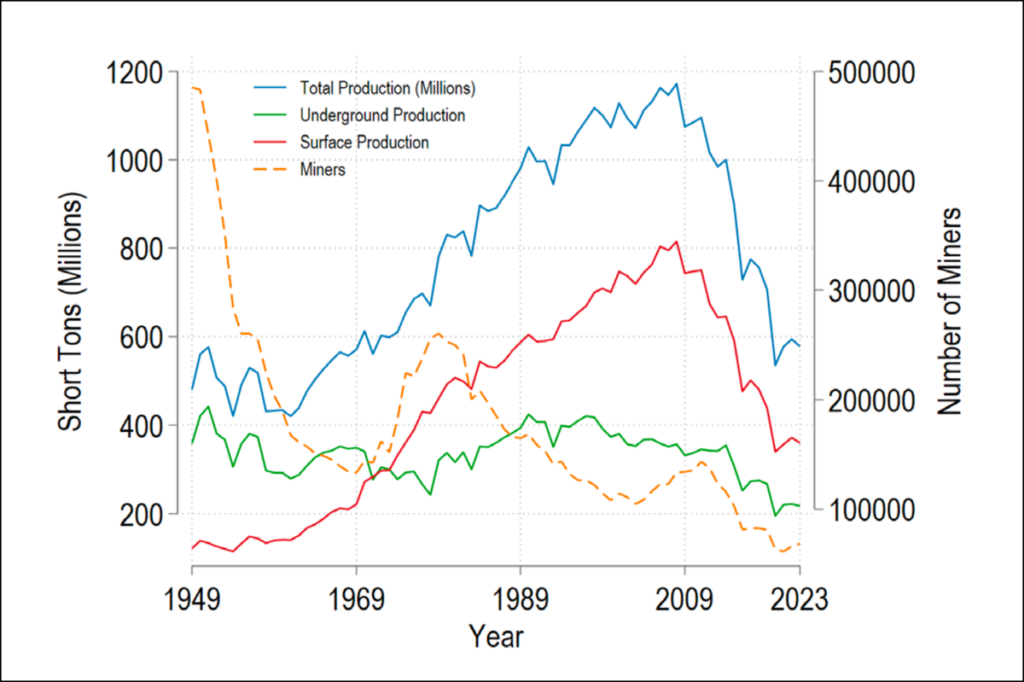
The industry, though, is changing. Total coal production in the United States peaked in 2008, and the number of miners has steadily dropped since then.

A graph shows total, underground, and surface production of coal in millions of short tons alongside the number of coal miners from 1949 to 2023.
Total coal production peaked in the United States in 2008, after which the number of coal miners declined, too. Credit: Thombs et al., 2026, https://doi.org/10.1111/ruso.70034, CC BY 4.0

A new study coauthored by Willis and published in Rural Sociology delves into the effects of this decline on life expectancies across the United States and in Appalachia in particular. The results show that a disappearing coal mining industry has mixed effects on health, highlighting the importance of a “just transition”—a shift away from coal mining and toward clean energy that also prioritizes decent work opportunities for those left without a job.

“How do we balance these two conflicting priorities?” Willis said.

Delving into the Decline

Coal production and consumption are linked to many human health harms, including heart disease, asthma, lung cancer, mental illness, and more. But how those health impacts intersect with the broader economic effects of mining has not been well studied.

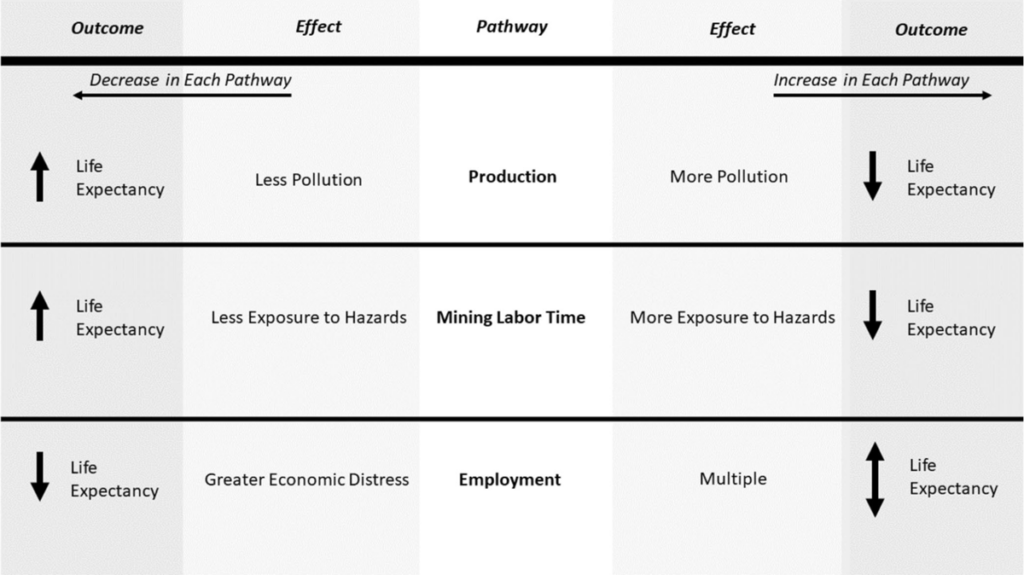
In the new study, the research team analyzed the effects of the declining industry through the lens of the social determinants of health, or how social structures influence health outcomes.

A table shows the life expectancy outcomes of the effects of three pathways by which coal mining impacts health.
Researchers analyzed how coal mining impacts life expectancies via three pathways: production, mining labor time, and employment. Credit: Thombs et al., 2026, https://doi.org/10.1111/ruso.70034, CC BY 4.0

To study these effects, the team compared coal mining data from the U.S. Energy Information Administration to life expectancy data from the Institute for Health Metrics and Evaluation at the University of Washington from 2012 to 2019. Life expectancy is a metric that can be responsive to subtle changes in the environment, Willis explained. For example, the decommissioning of a coal-fired power plant a few miles away from a community may not affect residents’ day-to-day life but probably affects the scale of life expectancy across the population.

In coal-producing counties across the United States, the average life expectancy was 1.6 years lower than that in non-coal-producing counties. But the declining coal industry had more nuanced impacts on health in Appalachian communities, the researchers found. As coal production fell and miner labor hours decreased, life expectancy increased. But as the number of jobs available decreased, life expectancy decreased, too.

The findings suggest that the employment and associated economic impacts of a waning coal industry harm health. Previous studies documented similar increases in mortality in other regions where the fossil fuel industry has declined. Such research has indicated that these increased mortality rates may be partially driven by “deaths of despair” from drug and alcohol use and suicide related to economic distress. The association of these factors with mortality rates in coal country, the authors suggest, may be an area for future study.

Understanding that coal mining is associated with some positive economic and health effects is “an important perspective for understanding the sector as a whole,” said Lucas Henneman, an environmental engineer at George Mason University who was not involved in the new study. “It’s a really interesting piece of work.”

“This is just a really complex story that hasn’t been told yet—putting health into the context of these just energy transitions,” Willis said.

The complex reality of the coal industry extends beyond Appalachia. Most of the pollution related to the coal industry consists of toxins released when coal is burned, meaning those who bear the brunt of coal’s health impacts may not be located where coal is mined, Henneman said.

In fact, a 2023 study by Henneman and others found that before 2009, a quarter of all air pollution–related deaths of people on Medicare were attributable to coal burning. From 2013 to 2020, that number dropped to 7%, alongside a drop in coal consumption. A complete picture of how the coal industry affects health should also consider how pollution travels beyond coal country—where it’s burned, how it’s transported in the air, and who ultimately breathes it in, he said.

A Just Transition

“The question is how to provide [jobs] in a way that provides the same level of stability, same kind of income benefits, and isn’t too much of a shock to [communities’] way of life or sense of identity.”

The economic activity of a mine, through direct employment as well as businesses reliant on the mine and miners, “chases away other opportunities,” making the mine the economic backbone of the area, said Jonathan Buonocore, an environmental health scientist at Boston University and a coauthor of the new study. The concept of a just transition aims to ensure that employment opportunities in the wake of the coal industry’s decline reach these communities.

“The question is how to provide [jobs] in a way that provides the same level of stability, same kind of income benefits, and isn’t too much of a shock to [communities’] way of life or sense of identity,” Buonocore said.

—Grace van Deelen (@gvd.bsky.social), Staff Writer

Citation: van Deelen, G. (2026), As the coal industry fades, life expectancies in coal country shift, Eos, 107, https://doi.org/10.1029/2026EO260134. Published on 30 April 2026.
Text © 2026. AGU. CC BY-NC-ND 3.0
Except where otherwise noted, images are subject to copyright. Any reuse without express permission from the copyright owner is prohibited.
  •  

Cleanup of Battery Recycling Sites May Lower Childhood Lead Exposure

A person in an orange jumpsuit and a yellow hard hat takes a tool similar to a hoe to the dark soil they are standing on.

Lead-acid batteries are omnipresent. An integral part of most electric vehicles and all conventional vehicles globally, they also serve as backup energy storage systems in developing countries. But if lead-acid batteries are recycled in smelting units without adequate pollution control measures, they can cause elevated lead pollution that persists in local soils for thousands of years. However, because recycling sites with pollution control measures cost millions of dollars, most efforts are informal and unregulated.

In a recent study, researchers reported that scraping lead-contaminated soil in the vicinity of an abandoned recycling site for used lead-acid batteries and treating it with phosphate was linked to a 22% reduction in the blood lead levels (BLLs) of children who were living close to that site in a Bangladeshi town. The research was published in the International Journal of Hygiene and Environmental Health.

“Informal battery recycling is rampant in Bangladesh.”

“Informal battery recycling is rampant in Bangladesh,” said study coauthor Mahbubur Rahman, an environmental health scientist at the International Centre for Diarrhoeal Disease Research, Bangladesh. “Used lead-acid batteries are broken up and smelted in close proximity to residential and agricultural areas, which exposes those communities to lead emissions that contaminate their soil and water sources.”

Rahman and colleagues analyzed the BLLs of 130 children living close to two recycling sites for used lead-acid batteries (ULAB) in the Tangail District of Bangladesh that were abandoned in early 2019. They also assessed the BLLs of 37 children who did not live anywhere near ULAB recycling sites. The researchers then carried out soil remediation efforts at one of the ULAB sites but not the other. Prior to the work, the team members held informational sessions for the community about the dangers of lead pollution so locals could provide informed consent to participate.

The team observed that following remediation efforts, the lead content of the soil in and around the former battery recycling site decreased from more than 20,000 parts per million to less than 400 parts per million, which was considered acceptable by the U.S. EPA when the study was conducted, from 2022 to 2023. (The EPA reduced the limit to 200 parts per million in 2024.)

The researchers collected and cleaned up soil from children’s play areas, roadsides, and courtyards of 68 households that belonged to the intervention group. A year after the lead-contaminated soil was cleaned up, the 89 children from those households had the most significant decreases in their BLLs: from 90.1 to 70.4 micrograms per liter, a decrease of more than 21%.

“We know for sure that the areas close to abandoned ULAB recycling sites are as contaminated as areas around abandoned lead mines.”

The children in the group who lived close to the second abandoned ULAB recycling site, where soil remediation was not conducted, experienced only about an 8.4% decrease in their BLLs, from 88.5 to 81.1 micrograms per liter. The reduction in the control group’s BLLs could be attributed to a government initiative focused on reducing lead levels in turmeric, which was happening over the same time period as the study, Rahman said.

Anne Riederer, an environmental health scientist at the University of Washington who was not involved in the new study, said the dangers of lead exposure from ULAB recycling sites are well documented.

“We know for sure that the areas close to abandoned ULAB recycling sites are as contaminated as areas around abandoned lead mines. This study fits with the bigger picture of what we have learned to date about cleaning up contaminated sites and how that could improve children’s health,” she said.

A Widespread Issue

Similar studies conducted in Brazil and Bangladesh reported 46% and 35% reductions, respectively, in children’s BLLs following soil remediation initiatives around ULAB recycling sites.

Despite those drastic improvements, the children’s BLLs were still far above the World Health Organization’s threshold of 50 micrograms per liter. “This could mean there are other sources of lead exposure, like paints and cookware items,” said Rahman. “Or the persistently high BLLs could be because of chronic and long-term lead exposure, due to which lead gets deposited deep into the bones for several decades, even if [people] move away from toxic sites.”

Rahman explained that while soil remediation is an effective mitigation measure for lowering childhood lead exposure, it is also labor-intensive and expensive. Though the team identified hundreds of toxic sites borne from informal ULAB recycling, it wasn’t possible for them to remediate the soil at every site.

“The reason why this issue is so widespread is [that] informal recycling is cheap,” he said. “That makes the formal sector reluctant to invest in costly pollution control measures.”

—Anuradha Varanasi, Science Writer

Citation: Varanasi, A. (2026), Cleanup of battery recycling sites may lower childhood lead exposure, Eos, 107, https://doi.org/10.1029/2026EO260120. Published on 15 April 2026.
Text © 2026. The authors. CC BY-NC-ND 3.0
Except where otherwise noted, images are subject to copyright. Any reuse without express permission from the copyright owner is prohibited.
  •  

An HIV-free generation is closer than you think

A woman with her back to us carries a baby on her back before a picturesque landscape
No baby should be born with HIV in 2026. So how come many still are? | Gideon Mendel/Getty Images

Ismail Harerimana grew up in Uganda not knowing why he was always sick. 

His childhood in the 1990s was a string of recurrent infections: malaria, diarrhea, headaches, and skin rashes. By 14, he was scarily thin, at which point doctors put him on a new medication that seemed to help. It was for kidney disease, his father falsely told him. But a classmate with the same prescription knew better. “Are you also suffering from kidney disease?” Harerimana remembers asking him. “And the boy said, ‘No — I’m suffering from AIDS.’”

Key takeaways

  • In theory, no baby should be born with HIV in 2026. But almost 120,000 children are still infected with HIV each year, normally during pregnancy, childbirth, or breastfeeding.
  • The world has made tremendous strides in reducing children’s HIV infections in recent decades, but many parents still lack access to the HIV testing and prenatal care they need to keep their babies safe.
  • USAID made much of this progress possible. With US funding for HIV prevention in flux, the world’s hard-earned wins against childhood HIV could be in jeopardy.
  • New advancements in prevention and care mean an HIV-free generation is genuinely within reach — but only if families can access them.

In the 1990s, at the height of the AIDS crisis in Uganda, hundreds of thousands of babies like Harerimana were born with HIV each year, contracting the virus from their HIV-positive parents in utero, during childbirth, or while breastfeeding. About half did not live to see their second birthday.  

But those outcomes have changed in radical, often remarkable ways over the past three decades. In some parts of Uganda, as many as one in four infants were once infected with HIV at birth, leading to 32,000 new childhood HIV infections annually in the mid-1990s. Today, that infection rate has plummeted to fewer than 5,000

This changed because Uganda — along with much of the world — has diligently perfected the simple interventions needed to keep babies safe from the virus: repeated HIV testing for all expectant parents, and widely available anti-retroviral therapies for those who test positive, which makes the virus virtually untransmittable. In some countries, Botswana among them, new childhood infections are now so exceedingly rare that every new baby born with HIV prompts a comprehensive federal audit.

“I’m filled with hope because now, as Africans, we’re not asking whether elimination is possible,” said Doris Macharia, president of the Elizabeth Glaser Pediatric AIDS Foundation. “We are actually confronting what it will take to finish this job. That is profound. That is progress. And that’s where we should be.”

But finishing the job would mean building a world where no babies are born with HIV at all, and many African countries with the highest HIV burdens remain far from that goal. About 120,000 children are still newly infected with HIV each year, most of them before or shortly after birth, accounting for nearly 10 percent of all new infections. That’s one child every four and a half minutes. 

Thanks to advancements in treatments, even babies born with HIV today can go on to live long, healthy, happy lives. But it is more difficult, because the same barriers that prevent their parents from getting on treatment while pregnant mean that many of their children struggle to access care. As a result, roughly 75,000 kids die from AIDS-related causes each year, typically before their fourth birthday. That is almost definitely an undercount, as it likely excludes many of the roughly 34 percent of children living with HIV who are never accurately diagnosed. 

Reaching these kids is what Macharia calls the last mile in preventing childhood HIV. It is also the hardest to cross — and particularly so now. Cuts to foreign assistance from the US and other countries have hampered progress, and in some harrowing cases, even reversed it. A projection by UNAIDS found that sustained aid cuts could lead to 1.1 million additional HIV infections in children between 2024 and 2040, and 820,000 more deaths.

Harerimana, who has found his calling as a community health worker, is already seeing some of those dire scenarios play out. For the first time in years, he’s seen an uptick in babies being born with HIV in his town.

“It takes me back to those days,” he said, “when there was no access to medication, where there was no access to research,” there was only “a disease everyone fears, a disease that has no concrete cure.”

Regression is not inevitable. Even the Trump administration — which deeply destabilized global HIV services last year — has supported the rollout of Lenacapavir, a potentially game-changing HIV prevention drug, for expectant parents at risk of HIV. Stopping babies from being born with HIV is, after all, about as sympathetic a case as you can get with foreign aid. But the very aid systems that have helped us reach the cusp of an HIV-free generation are now confronting a massive transition, one that makes all elements of care far more difficult. 

The secret to making sure kids don’t get HIV

After Harerimana learned he had HIV, he began zoning out in class. He couldn’t understand how a kid like him could get a virus he thought spread only through unprotected sex. 

“I would just sit and get lost. My mind would only think about how I’m going to lose my friends, how I’m going to die very soon,” he said. “And I started to ask God, like, ‘God, where did I get this disease?’”

Two health workers test children while writing notes in a notebook on a dirt road.

Even many adults at the time didn’t realize there were other ways to contract HIV. Pervasive stigmas around HIV have made correcting such misconceptions an uphill battle around the world. As recently as 2016, only 56 percent of young women in Uganda knew much about vertical transmission, which is how the vast majority of children acquire HIV. Nearly half of babies born to an HIV-positive parent who is not on treatment will contract the virus. In comparison, there is at most a 1 in 72 chance of contracting the virus if you have unprotected sex with an untreated HIV-positive partner, and a 1 in 158 chance if you share needles with them.

But as awful as it sounds, at the height of the HIV epidemic, there “was not a market” for investing in pediatric treatment and prevention, said Florence Riako Anam, co-executive director of the Global Network of People Living with HIV. That was because “most of the children who acquired HIV did not live long. Many of them did not go beyond months, frankly.”

But some, like Harerimana, did live long enough to see a renaissance of new treatments and discoveries. The medication he began as a teen was an anti-retroviral therapy, or ARV, that these days is so effective, it can virtually eliminate HIV from your bloodstream. 

In 1994, a group of American researchers found that people who are pregnant and on treatment have a minuscule chance of passing the virus on to their baby, results so impressive that they halted their medical trial so they could offer treatment to the placebo group. Nearly 80 percent of HIV-positive pregnant people in the US were on ARVs by 1999. By 2003, just 1.2 percent of those parents passed the virus to their children.

But it would take many years for these miracle drugs to reach most African countries. Philippa Musoke, a pediatric infectious disease specialist in Uganda, led a landmark study in 1999 that found just two doses of the HIV drug Nevirapine — which cost $2 at the time per dose — slashed the chance a newborn would contract the virus by 50 percent. Other treatments relied on a “cocktail” of drugs that were much more effective, but often prohibitively expensive, costing $815 for a month-long course in the US.  

A woman holding HIV drugs in her hand wearing a blue and yellow dress.

“It opened people’s eyes that a simple regimen could actually prevent mother-to-child transmission globally,” Musoke told me. Within a few years, many countries began rolling out free Nevirapine programs  — and later, more effective combined drug treatments — for pregnant people living with HIV. 

Most of the world saw its childhood infection rate collapse, but the undisputed breakout star was Botswana, which, in 1999, became the first African country to offer free HIV drugs to all pregnant women. At the time, a woman in the country had a one in four chance of having HIV, among the highest rates in the world. If she had three children in the years that followed, at least one would likely become infected before or during childbirth or breastfeeding. 

But thanks to the free treatment program, and a robust maternal health system that integrates universal HIV testing, a young Botswanan woman living with HIV today has an under 1.2 percent chance of passing the virus to her kids. Last year, the World Health Organization certified Botswana as the first country in the world with a high HIV rate to eliminate mother-to-child transmissions as a public health threat.

Other countries have also managed to pull off remarkable, albeit more modest, progress. In Kenya, where Anam lives, more than three-quarters of pregnant people with HIV received treatment in 2008, up from virtually none in 2003. In those five years, the number of children newly infected with HIV fell by 75 percent

After contracting HIV, “I don’t think many of us thought we could have kids,” not safely at least, said Anam, who tested positive for the virus shortly after giving birth to her first child 26 years ago. “And then over time, with advancement in treatment, it became an option for women.” 

Many of her friends who thought they could never have more children, some of whom lost their first babies to HIV in the 1990s, suddenly found they could have kids safely. Their second children, she says, are now in their tweens. 

Botswana cracked the code. Why can’t everyone else?

Even with all that progress, hundreds of babies are still being born with HIV each day. Other than Botswana, no country with a high HIV rate has managed to all but eliminate childhood HIV. Despite decades of progress and far better treatments, the rest of the world is still stubbornly far from that goal. 

“We’ve really made significant progress, but we’re not there yet,” Musoke said. “That is really unacceptable because we have all the knowledge, we have all the resources” to ensure no child is born with HIV in theory.

Yet about one in six pregnant people living with HIV is still not on treatment. And about half of those who are on treatment don’t take it as consistently as they should. Together, their children account for the vast majority of the 328 infected with HIV every single day.

“We can’t just wait for people to go to the clinic. We have to go to them.”

Doris Macharia, Elizabeth Glaser Pediatric AIDS Foundation

Reaching these parents is critical. The problem is that many of them do not know they have the virus and live in rural areas where there are few providers who can test them for it. 

“Eliminating pediatric HIV and mother-to-child transmission is no longer a scientific question,” Macharia said. “It’s really a delivery and a systems question,” which will require more outreach workers, especially peer mentors, people living with HIV who’ve been trained to help others like themselves navigate their treatment and prevention options.

Liako Serobanyane tested positive for HIV in 2007, when she was pregnant with her second child. She trained as a mentor mother through the group Mothers2Mothers in Lesotho because she wanted to help “other women going through what I went through, even though I didn’t get the support I needed at the time,” she said. “There is no other model better than this, because we have been there. We know how it feels to be HIV-positive. We know how it feels to be rejected.”

The progress that’s been made so far against mother-to-child transmission has largely stemmed from parents who were easier to reach. They were already receiving prenatal care or giving birth at a clinic or hospital, as 99.8 percent of expectant parents in Botswana do. But there are still many parents with limited access to care. In Nigeria, which accounts for one in seven of the world’s babies born with HIV, about half of parents give birth at home with no skilled health worker present. The country has offered free HIV treatment to its citizens for nearly two decades now. But not enough pregnant people are taking them up on it. It is mentors like Serobanyane who have the best shot at making sure they do.

“We can’t just wait for people to come to the clinic” anymore, said Macharia of the Elizabeth Glaser Pediatric AIDS Foundation. “We have to go to them.” 

The US built the system to keep babies HIV-free. It’s now dismantling it.

But bringing together all of those factors – strengthening delivery systems, hiring more peer mentors, normalizing HIV testing, and convincing more parents to give birth at the hospital – is neither easy nor cheap.

Maybe the biggest difference between Botswana and other countries with high HIV rates is that Botswana has diamonds. Lots of diamonds. Enough diamonds to turn Botswana into one of Africa’s richest countries per capita

That’s allowed Botswana to largely bankroll its own HIV response. As Alankar Malviya, Botswana country director for UNAIDS, told me, the country pays for about 70 percent of all testing, treatment, and outreach costs. Other less well-off countries like Nigeria have built about 90 percent of their HIV response primarily with the help of PEPFAR, the US-funded HIV program that began in 2003. It’s no coincidence that much of the world’s success in fighting off childhood HIV infections so far began that year. PEPFAR has helped make sure that at least 7.8 million babies were not born with HIV over the past 26 years. 

PEPFAR continues to fund lifesaving HIV treatment around the world, according to newly released data, but the Trump administration has severely disrupted its support for prevention and outreach work. That includes cuts to many outreach programs aimed at preventing mother-to-child HIV transmission, though the administration has maintained funding for some services, such as prenatal testing. 

With less funding for HIV screenings and prevention, fewer pregnant people will know they need antiretrovirals in the first place. They won’t have the condoms they need to prevent the spread. And if their babies contract the virus in utero or while breastfeeding, their parents might not know why they are so sick until it is too late.

“We are in a period of transition,” a senior official from the US State Department, which now oversees PEPFAR, told me under the condition of anonymity. “And during that transition, yes, there may be a few people who used to go to a particular community site that isn’t there anymore, and are having to figure out where to get those services from.”

The official insisted that the US still cares about preventing mother-to-child transmission. The Trump administration has shifted the way aid works by channeling it through bilateral agreements that require countries to partially pay their own way. It throws the old, and in many ways, highly successful system of HIV aid — which relied on international organizations as partners — out the window.

“Yes, it saved lives. Yes, it made progress,” the official said of the old aid order. “But it isn’t a model we can keep going with.”

Josephine Nabukenya, a pediatric HIV advocate who, like Harerimana, was born with the virus in the 1990s, agrees that having countries take more ownership of their health care system is a good thing in the long run. “But you do it in a phased approach,” she said, to avoid letting parents and children fall through the cracks. 

A staff member at an HIV outreach organization holds a poster inscribed with the USAID logo.

So far, that’s not how it’s played out. Mothers2Mothers, an organization that, since 2001, has trained HIV-positive moms like Serobanyane to be peer health mentors — a uniquely effective intervention — lost most of its funding last year. They closed offices in four countries and laid off hundreds of workers and peer mothers, shutting off outreach services for 450,000 people.

Serobanyane is based in Lesotho, one of the few countries where the group still operates. Because of funding cuts, she is one of just two mentor mothers in her district, down from six. “We love our job. We are doing it passionately,” she said, “but not knowing if the funding is going to be there or is going to be cut off is depressing and tiring.” 

She also worries for the mothers whose treatment or testing she can no longer follow as closely. Reminding them to attend their prenatal screenings or refill their treatment prescriptions requires resources and support that are no longer as available to her. 

Lesotho is one of the over 30 countries that have signed bilateral health aid deals with the State Department so far. The country is set to receive $232 million over 5 years from the US, which its government could theoretically use to hire its own mentor mothers and otherwise make up for lapses in HIV care and outreach. “It’s our dream that the mentor mother model be absorbed by the government one day,” Serobanyane said.

But the reality is, said Mpolokeng Mohloai, director of Mothers2Mothers in Lesotho, “the government is not yet ready to absorb it all.” 

“Every child that is infected with HIV is unacceptable.”

In an absolute worst-case scenario, if US-funded HIV programs aren’t adequately replaced, then a total of up to 1.7 million more children could die of AIDS-related causes by 2040, according to UNAIDS, a devastating leap in the wrong direction on an issue where the world had been making so much progress.

Even if governments do manage to plug some gaps, a large number of parents and children will lose access to support in the short term as a result of funding cuts. This means more mothers who don’t know they’re HIV-positive until it’s too late, more parents who fall behind on their medications, and more children who grow up to be very sick.

“Every child that is infected with HIV is unacceptable. Any mom who acquires HIV during pregnancy, breastfeeding, or even before then — that is also unacceptable,” said Macharia of the Elizabeth Glaser Pediatric AIDS Foundation. “Those have to be unacceptable facts for us.”

Harerimana lost his job as a community health worker last year when the Trump administration put a pause on all foreign assistance funding. He has continued to work without pay, supporting children and their parents, some of whom he says have already missed out on critical treatment.

“I can now comfortably say that over the past year, when the aid cuts and confusion started, we are now seeing children getting infected by HIV through mother-to-child transmission again,” he said. “By the time the system stabilizes, the world will know how much the aid cuts have caused.”

  •  

Antibiotic Resistance Might Get a Boost from Droughts

A forest on a mountainside has mostly green trees, with sprinkles of autumn red and yellow. A brown mountain is in the distance.

The spread of antibiotic resistance, a growing threat to global health that causes millions of deaths annually, is typically blamed on the overuse of drugs in hospitals and in the food industry. However, a new study published in Nature Microbiology suggests that normal geological processes could be accelerating the development of new resistances.

Soil microorganisms naturally produce antibiotics as a form of chemical warfare to compete with each other. When soils dry out, these natural compounds become more concentrated because there is less water to dilute them. Like a dosage increase, this concentration can create a harsher environment, killing sensitive microbes and sparing those with the capacity to resist. This phenomenon, in turn, is an evolutive driver that favors the appearance of new and more effective resistance genes.

“If you have more antibiotics in your environment, only the organisms that can withstand it…can resist it.”

To test whether this mechanism is having real genetic effects, Xiaoyu Shan, a microbial ecologist and postdoctoral researcher at the California Institute of Technology (Caltech), and colleagues looked at soil samples under controlled conditions as the samples transitioned from a wet state to a desiccated one. They found that as the soil dried, the presence of genes related to antibiotic production and resistance spiked, suggesting that drought leads to a rapid escalation in the subterranean biological arms race. Importantly, they did not look for pathogenic bacteria specifically, only for resistance genes, which can be present in a variety of microbes, whether those microbes are pathogenic or not.

“Drought leads to this elevation of antibiotic producers and bacteria that are resistant,” said team member Dianne Newman, a professor of biology and geobiology also at Caltech. “It’s a pretty simple idea: If you have more antibiotics in your environment, only the organisms that can withstand it…can resist it.”

Alternative Explanations

However, there could be other potential explanations for the observed increase in antibiotic-producing and antibiotic resistance genes, according to Enrique Monte, a microbiologist at the Universidad de Salamanca in Spain who wasn’t involved with the new study. For instance, arid soils are naturally more diverse than humid soils, making it common to find a more diverse gene pool in the ground, Monte said. In addition, the mere presence of antibiotic genes might not result in an actual release to the environment, or a release could happen in dosages that are too small to cause noticeable effects. “There are antibiotics that are volatile; they escape into the air, so they never reach a therapeutic concentration to kill others,” Monte said.

The authors, however, took some precautions to show that the increase in antibiotic resistance genes was actually a biological response to environmental stress. For instance, they also tracked other genes that should remain unaffected or decline under desiccation. As expected, genes that are needed for basic survival remained stable, while genes responsible for bacterial movement declined in dry soil, where mobility is restricted. Even some species that were not favored by desiccation saw an increase in resistance-related genes, “which is even stronger evidence,” Shan said.

Geographic Limitations

As the researchers combed through publicly available metagenomic data libraries, they had to select collections with strict control of all variables and in which the only changing factor was water content. That limited the analysis to five locations: two grasslands and a sorghum field in California; a forest in Valais, Switzerland; and a wetland in Nanchang, China.

The scarcity of locations might limit how extrapolable these results are, said Fiona Walsh, a microbiologist at Maynooth University in Ireland who was not involved with the work. “There are thousands of high-quality metagenomes available online with excellent metadata. I would really like to see a comparison where they apply their analysis to a broader map of global metagenomic data to see if they reach the same conclusions,” she said.

From the Soil to the Hospital

Drier regions consistently showed a higher number of resistant bacteria cases in hospitals, even after adjusting for confounding factors such as local income.

The study also suggests that dry soils might be a hidden driver of clinical cases of antibiotic resistance worldwide. The authors combined hospital data on the number of cases of resistant infections from 116 countries with the local aridity index, which measures temperature and precipitation, for each location. They found a strong correlation: Drier regions consistently showed a higher number of resistant bacteria cases in hospitals, even after adjusting for confounding factors such as local income.

However, the authors admitted that this is only a correlation effect and doesn’t prove causation. “It motivates follow-up research to see how environmental concentration weighs against human overuse and poor stewardship,” Newman said.

Even this correlation could be a stretch, according to microbiologist Sara Soto, head of the Global Viral and Bacterial Infections Programme at the Instituto de Salud Global de Barcelona. At the end of the day, she said, the authors have soil data from only five locations in three countries, and they are not tracking the specific bacterial varieties that make people sick, only resistance genes.

For the thesis to be solid, Soto said, the ideal approach would have been to contrast hospital strains from a specific area with soil data from that same region during the same drought episode. “Making such a vast inference—that what happens in the soil of one location affects what happens in a hospital elsewhere—is a big leap,” she said.

The authors, however, point out that resistance genes from soils can eventually make their way into human pathogens. Microbes have the capacity to share genetic material across species—a process known as horizontal gene transfer. In their analysis, the team identified specific resistance sequences that appeared to have been transferred between soil bacteria relatively recently, perhaps within the past decade. How they are reaching hospitals remains a matter for a future study, they said.

As droughts increase in numerous regions in the face of climate change, this selective pressure within soil ecosystems is expected to intensify. Though these findings do not show that drought directly puts drug-resistant pathogens in hospitals, they still suggest that a drying climate could set the scene for an increase in antibiotic resistance, the researchers report.

—Javier Barbuzano (@javibar.bsky.social), Science Writer

Citation: Barbuzano, J. (2026), Antibiotic resistance might get a boost from droughts, Eos, 107, https://doi.org/10.1029/2026EO260132. Published on 29 April 2026.
Text © 2026. The authors. CC BY-NC-ND 3.0
Except where otherwise noted, images are subject to copyright. Any reuse without express permission from the copyright owner is prohibited.
  •  
❌