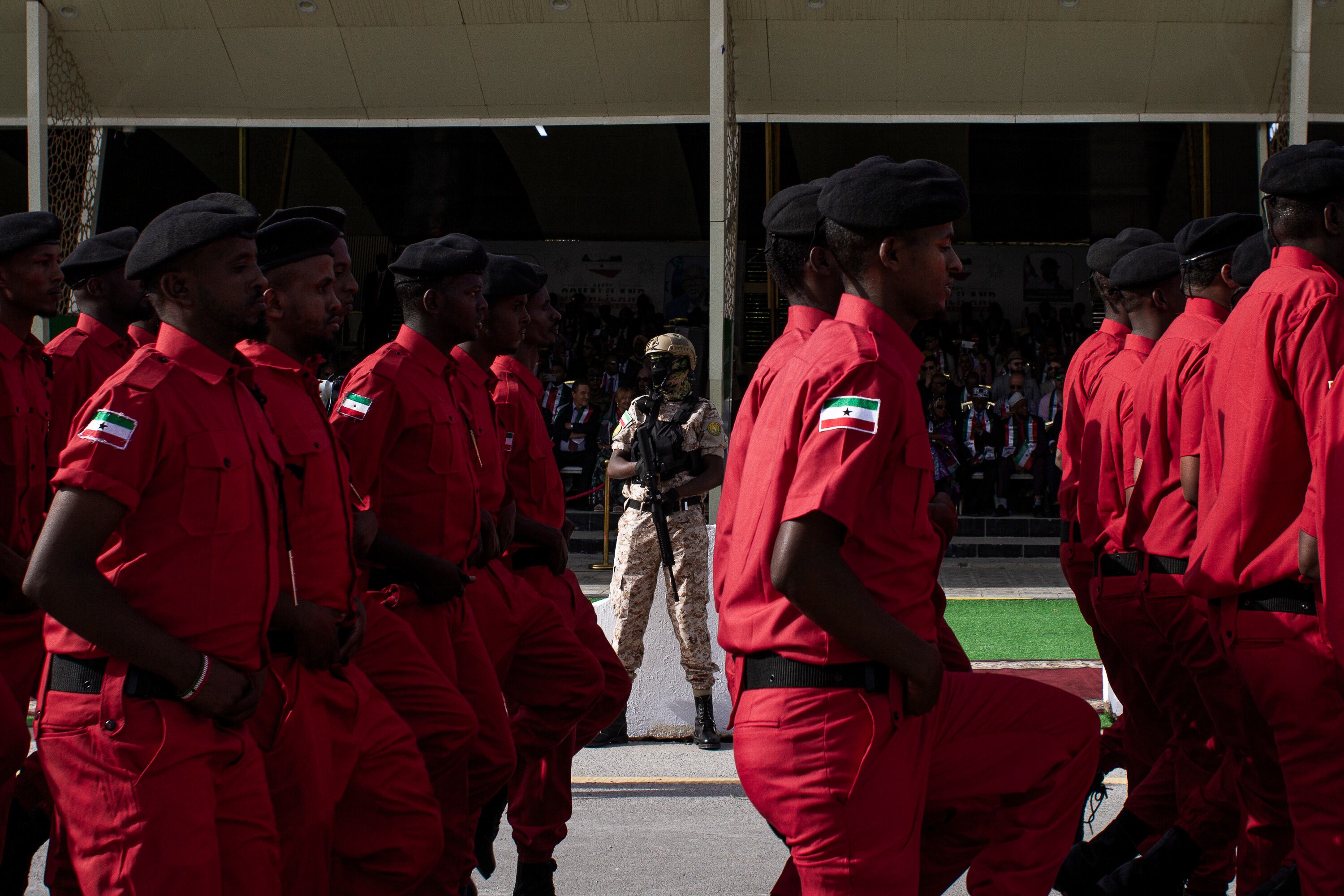
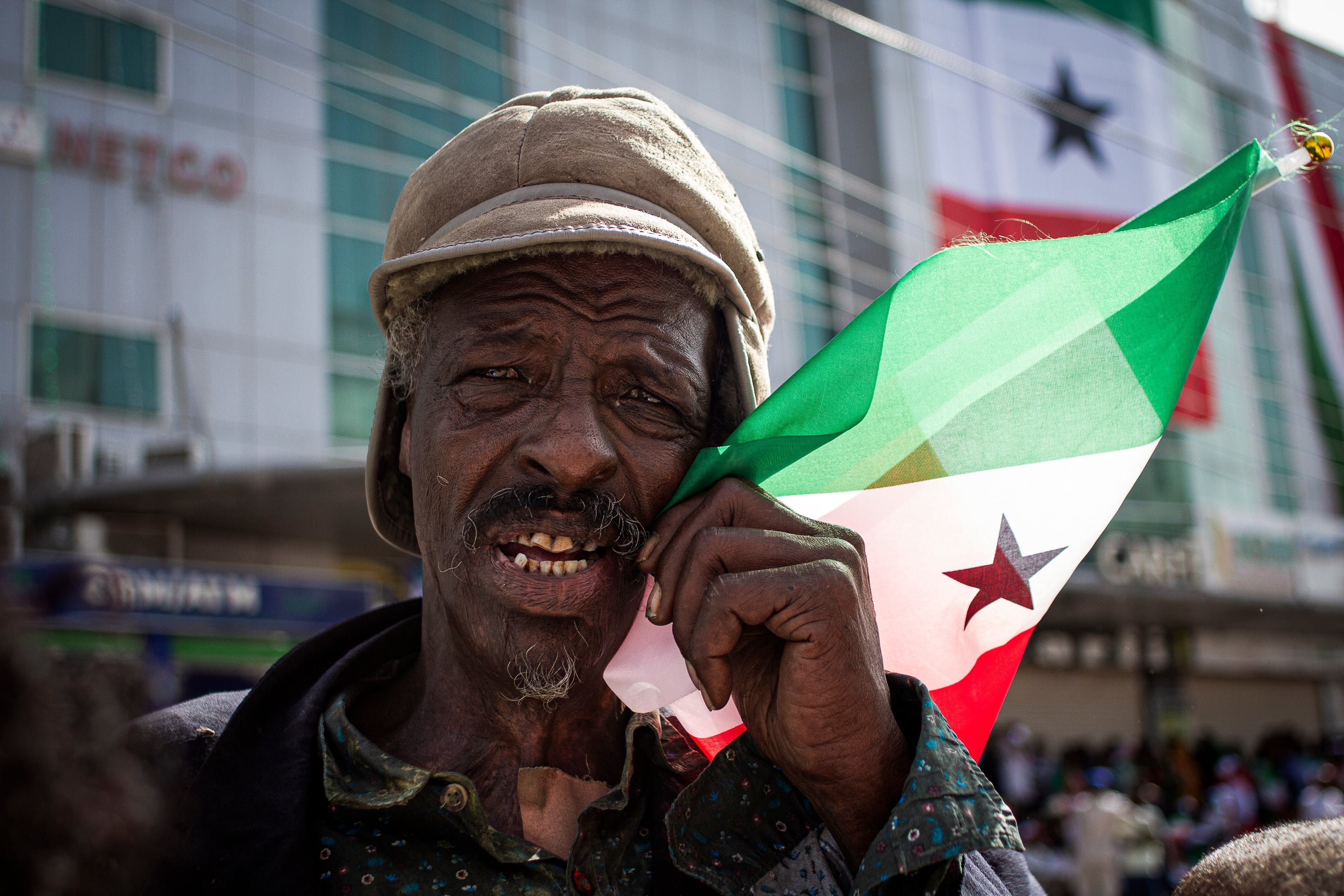
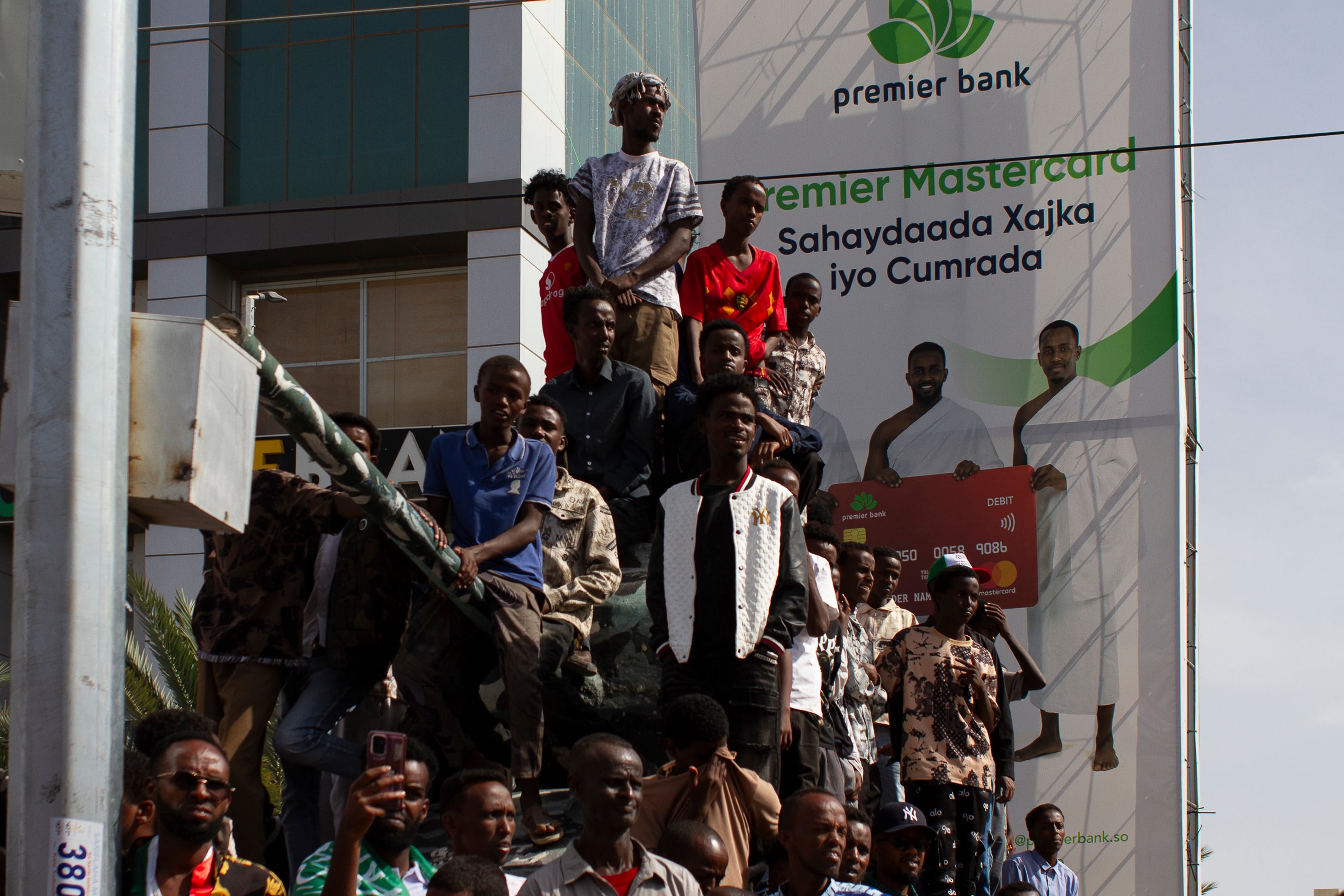
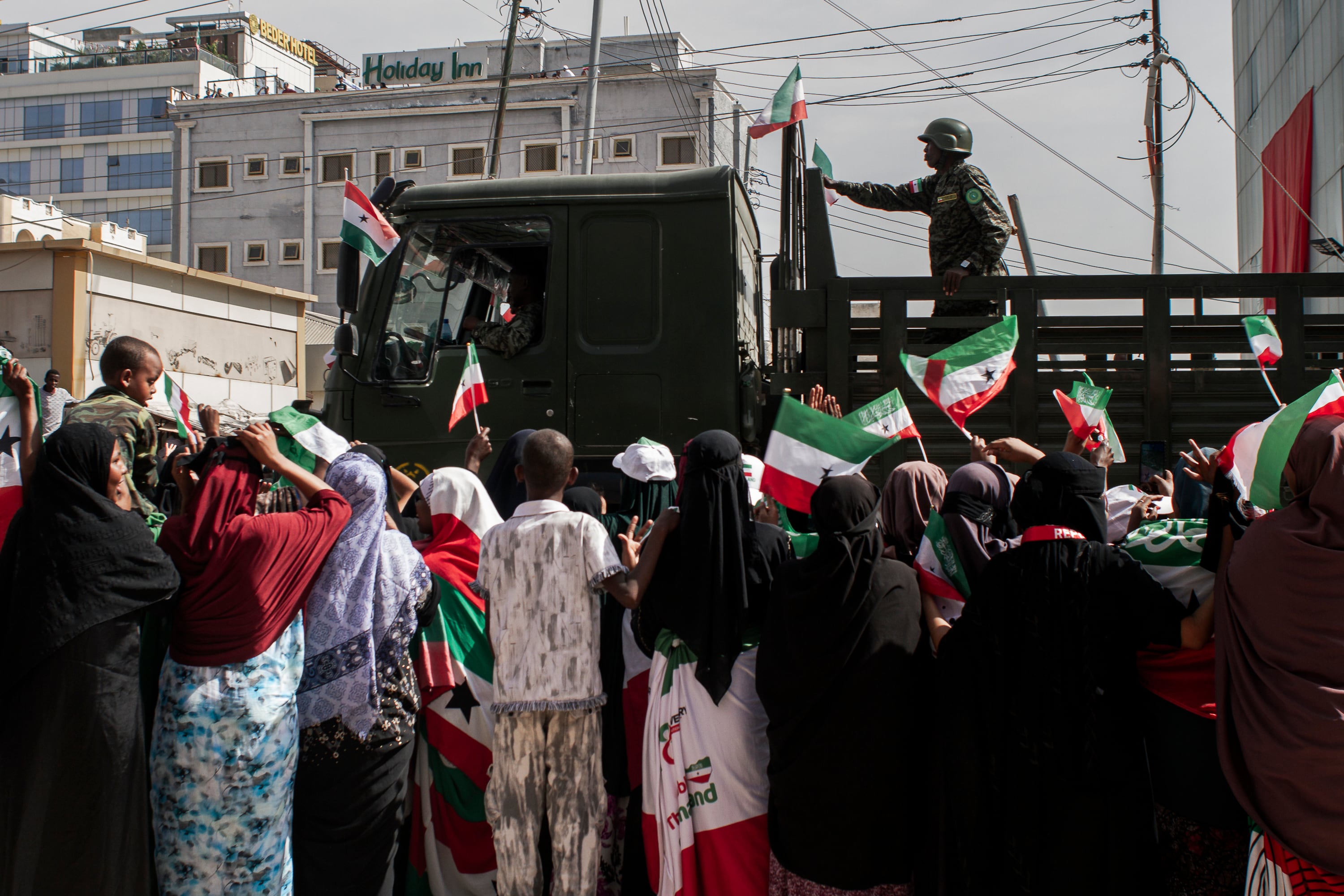
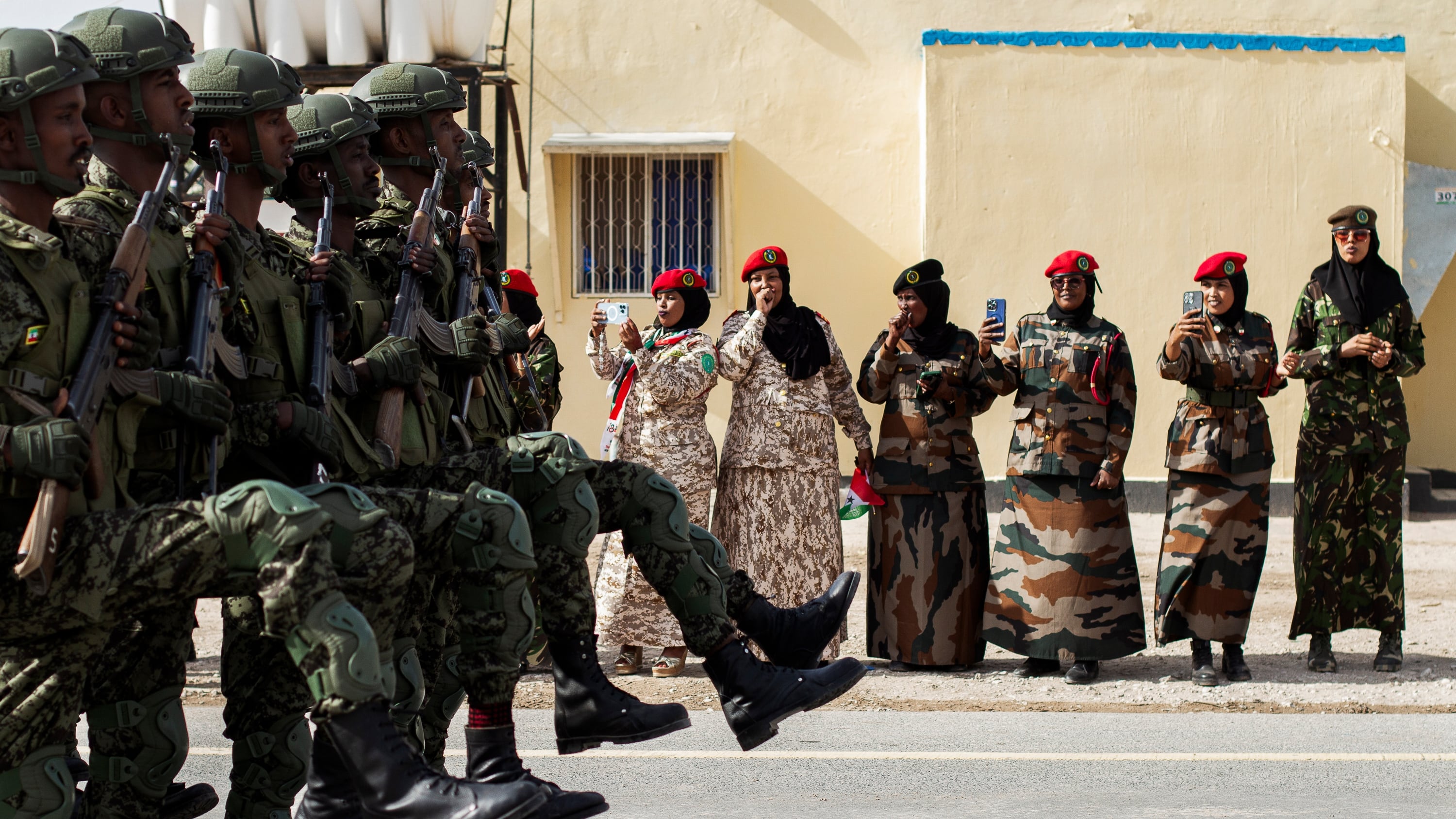
A tank — which isn’t really a tank — could be the national monument of Somaliland, a country that isn’t really a country. The armored vehicle, which rests beside Highway 1 in the city of Hargeisa, depicts what was once a weapon of war that rolled in from Somalia in 1988, in order to prevent this territory in the Horn of Africa from gaining independence. Today, the tank is part of the scenery in the capital of a land that declared itself a republic 35 years ago.
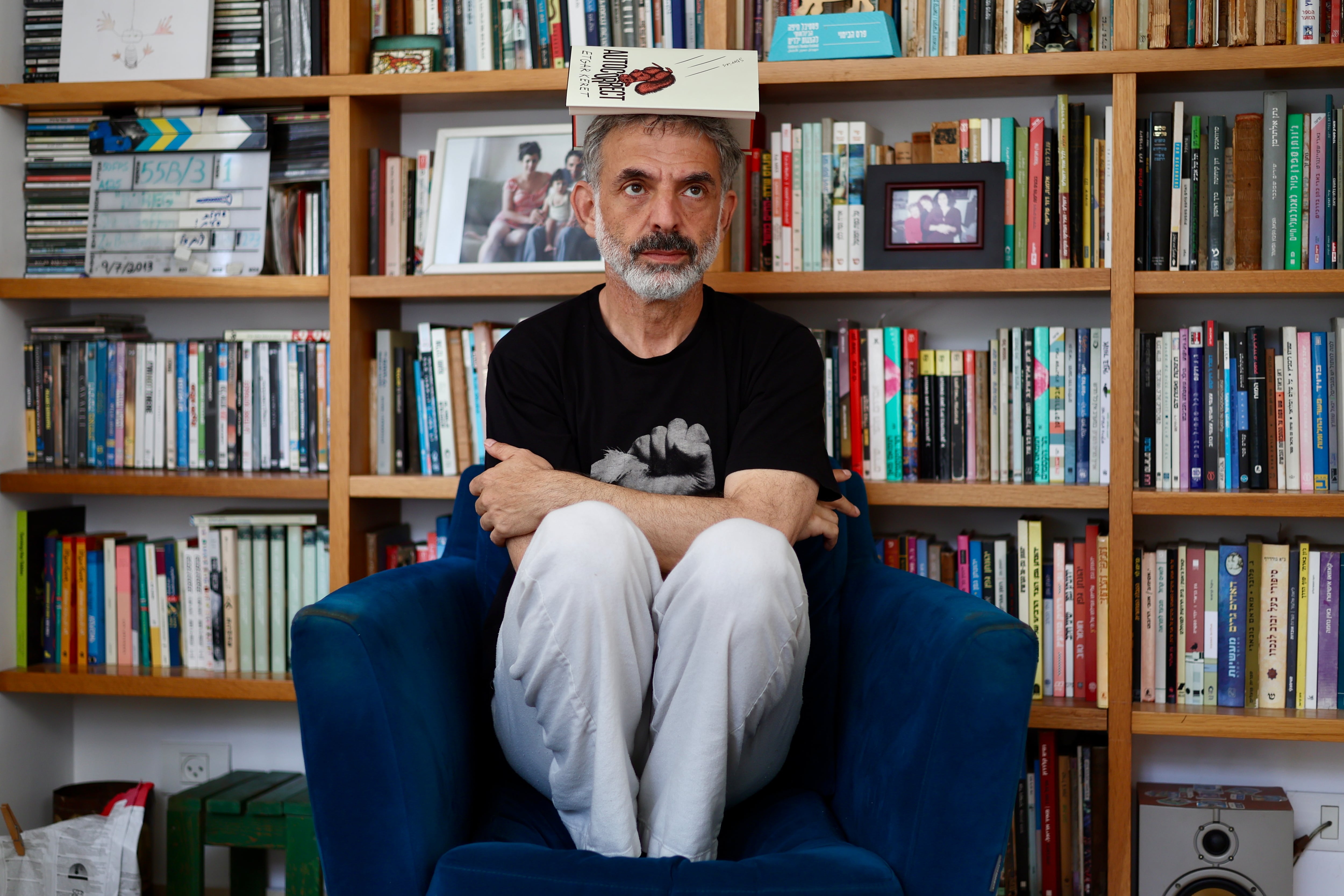
Writer Etgar Keret (Ramat Gan, Israel, 58) had planned to deliver his ninth book of short stories to his publisher on October 8, 2023. He had picked the date at random: he produces one every seven years or so and sets himself a firm deadline. Two days earlier, he told his wife, Shira Geffen — the screenwriter and filmmaker who wrote the film Jellyfish (2007), directed by Keret and awarded at Cannes — that he felt the book had become too dark because of the personal and political events that had marked him in preceding years: his mother’s death, the coronavirus pandemic, a herniated disc, the return to power of Benjamin Netanyahu with the most right-wing government in the country’s history… His wife advised him to reread it calmly the next day and, if he still felt that way, to ask the publisher for an extension.
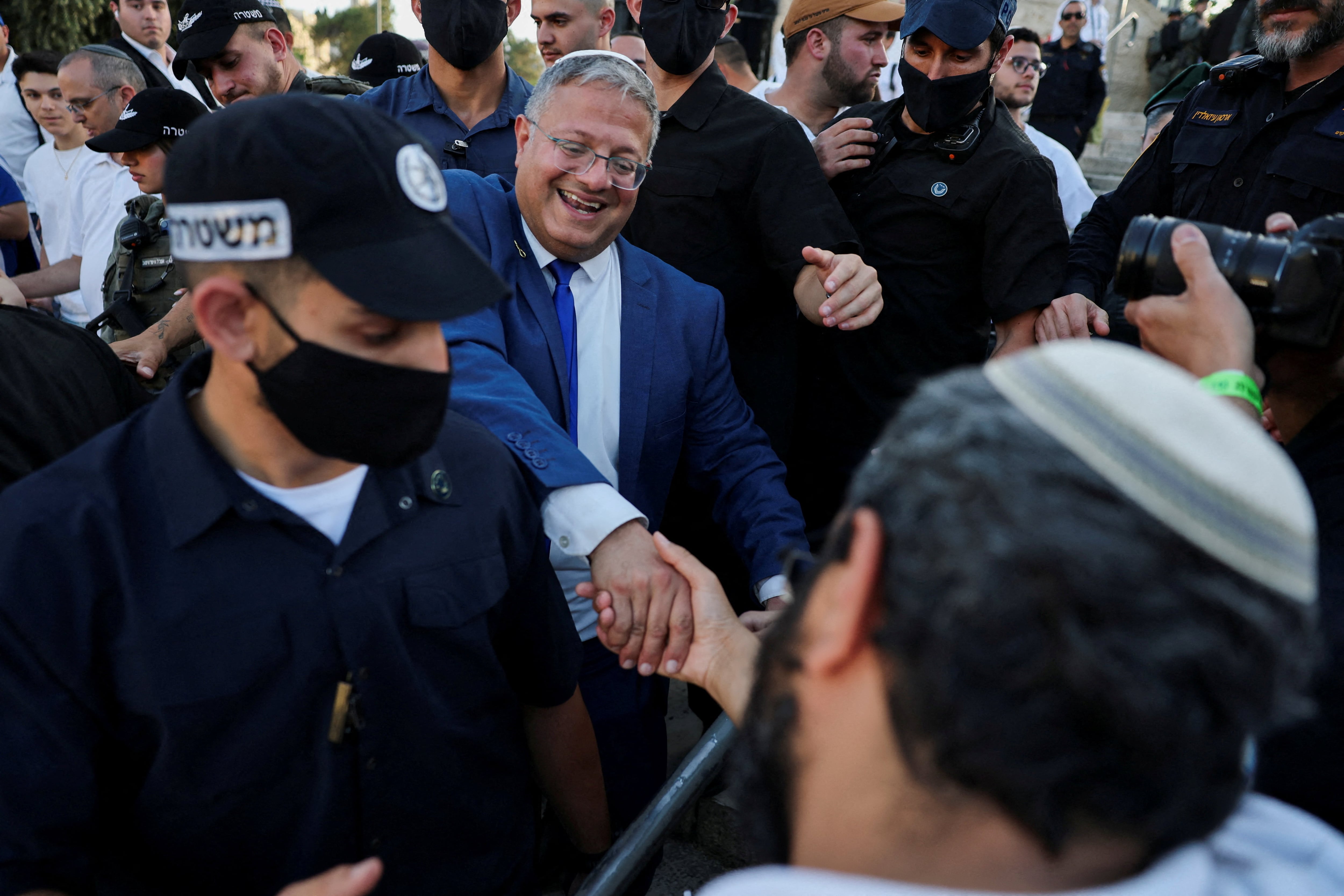
Israel’s National Security Minister Itamar Ben-Gvir remained defiant on May 20, undaunted by international protests triggered by images of him mocking Gaza Flotilla activists, who appeared in videos kneeling and handcuffed with their faces to the floor in the port of Ashdod. “Whoever comes to our territory to support terrorism and identify with Hamas, will receive harsh punishment,” he warned on social networks, after several Western countries, including Spain, Italy, the United Kingdom, Canada, and Germany, condemned Israel’s treatment of the activists, criticism that has even come from a handful of Israeli leaders. “We will not turn the other cheek,” Ben-Gvir railed.
US forces launched overnight strikes on missile sites in southern Iran and boats they said were trying to lay mines in Gulf waters, sending oil prices higher Tuesday and fuelling tension as diplomats sought a deal to end the war.
A photo published on May 22, 2026, shows US Navy fighter jets taking off from aircraft carrier USS Abraham Lincoln in the Arabian Sea. Photo: US Central Command, via Facebook.
The international benchmark Brent crude jumped up by almost three percent after the US Central Command announced the new wave of bombings, and China urged both sides to respect their truce and resolve their dispute peacefully.
Iran did not immediately confirm the reported strikes, but state media reported blasts in the southern port city of Bandar Abbas, and the Revolutionary Guards Corps said its forces had downed a US drone entering its airspace and fired at an F-35 fighter jet.
In a statement marking the start of the Eid al-Adha holiday, Tehran’s supreme leader Ayatollah Mojtaba Khamenei declared that Washington was losing its influence in the Middle East and warned Middle East countries to ensure that they no longer host bases from which the US could launch attacks.
The United States, he said in a written statement, “in addition to no longer having any safe haven in the region for aggression and the establishment of military bases, is moving further and further away from its former position with each passing day”.
Tim Hawkins, a spokesman for US Central Command, said: “US forces conducted self-defence strikes in southern Iran today to protect our troops from threats posed by Iranian forces.”
‘We’ll see’
He gave few details of the attacks and said only that the targets included missile launch sites and boats trying to “emplace mines.”
Despite the strikes, Secretary of State Marco Rubio said on Tuesday that a deal remained within reach.
US Secretary of State Marco Rubio delivers remarks to members of the media at the White House on May 5, 2026. Photo: The White House, via Flickr.
But he remained firm on the fate of the Strait of Hormuz, the key oil and gas shipping route out of the Gulf, which Iran is seeking to control by charging fees to approve the passage of vessels.
“There were some talks going on in Qatar today, so we’ll see if we can make progress. I think it’s a lot of talking back and forth going on about specific language in the initial document, so it’ll take a few days,” Rubio told reporters during a visit to India.
He said the strait was “going to be open one way or the other,” adding: “What’s happening there is unlawful, it’s illegal, it’s unsustainable for the world, it’s unacceptable.”
The strikes threatened a ceasefire that began on April 8 as the United States and Iran struggle to reach an accord to end a war that has rattled the global economy with a severe disruption of energy flows.
China, Washington’s great power rival and a major energy importer, expressed concern after the US strikes.
“We urge the parties concerned to fulfil their ceasefire commitments, resolve disputes through peaceful means… and promote the early restoration of peace,” foreign ministry spokeswoman Mao Ning told reporters.
Chinese foreign ministry spokesperson Mao Ning. File photo: China’s Ministry of Foreign Affairs.
Hopes of an accord took another blow when Israeli Prime Minister Benjamin Netanyahu vowed to “crush” Hezbollah in Lebanon on Monday evening. Iran has demanded that any peace accord apply to the fighting in Lebanon as well.
On Tuesday, Israel warned Lebanese civilians to evacuate the southern city of Nabatieh ahead of more planned strikes.
Nuclear fuel disposal
US President Donald Trump said in a social media post that he expected Iran to hand over its enriched uranium to the United States to be destroyed, or have it destroyed in Iran with an international witness.
The nuclear fuel “will either be immediately turned over to the United States to be brought home and destroyed or, preferably, in conjunction and coordination with the Islamic Republic of Iran, destroyed in place or, at another acceptable location”.
The Iranian ambassador to Mexico signaled on Friday that his country and the U.S. could have a good relationship in the future, so long as President Trump does not take foreign policy cues from Israel. “If the U.S. closes its eyes to Israel’s interest, Iran and the U.S. can be very good friends,” Abolfazl Pasandjdeh...
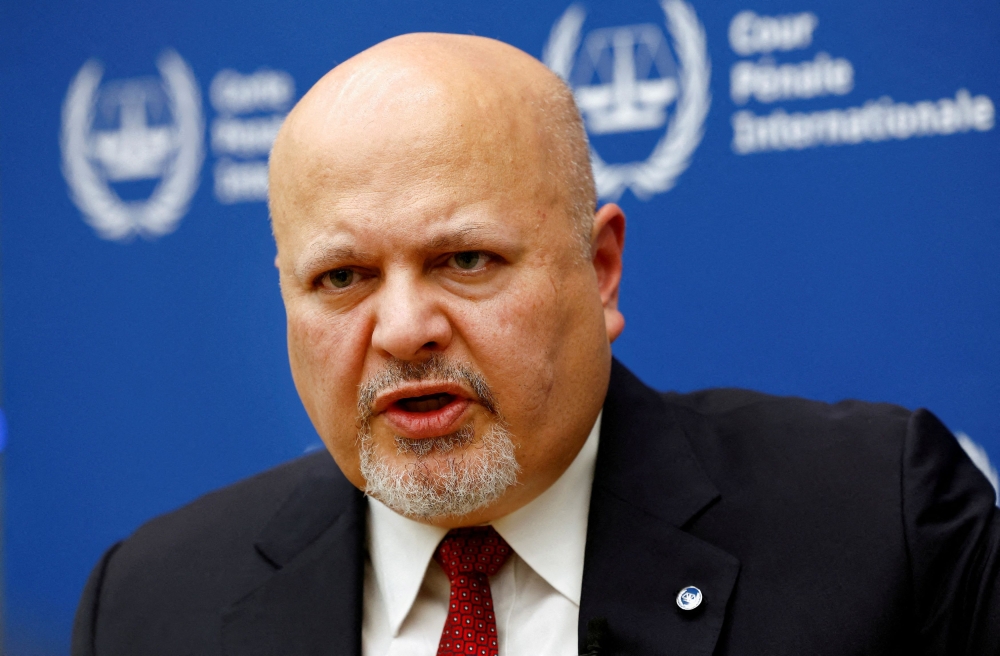
THE HAGUE, June 9 — A key governing body of the International Criminal Court yesterday suspended chief prosecutor Karim Khan as he faces sexual abuse allegations against a member of his office.
The 21-member bureau of the Assembly of State Parties (ASP) decided to refer Khan’s case to the wider ASP that represents every member country of the ICC.
The bureau decided “by qualified majority... to suspend the Prosecutor from duty with immediate effect pending the final decision of the Assembly of States Parties as the competent decision-maker,” the body said in a statement.
“The bureau emphasises that this suspension is not an indication of the final outcome,” added the statement.
The decision will have little practical impact on the functioning of the court, as the 55-year-old Khan stepped aside in May 2025, taking a leave of absence to fight the allegations that he denies.
He has already been removed from pleading in the ICC’s most high-profile case against former Philippines president Rodrigo Duterte.
A special session of the ASP will be convened as soon as possible to discuss the Khan case, according to the statement.
The 55-year-old Briton hit the headlines when he sucessfully applied for arrest warrants against Israeli Prime Minister Benjamin Netanyahu and former defence minister Yoav Gallant over the Gaza war.
He was among the first to be sanctioned by Israel’s ally, the United States, which expressed outrage over the arrest warrants. — AFP
President Donald Trump said Monday he was ready to discuss US arms sales to Taiwan during his visit this week to Beijing, as he suggested his personal chemistry with counterpart Xi Jinping would prevent a Chinese invasion of the island.
President Donald Trump in the Oval Office, the White House, on March 16, 2026. Photo: The White House, via Flickr.
The White House said Trump will bring along top US executives including his former nemesis Elon Musk and Apple’s Tim Cook for a trip expected to focus heavily on the US president’s hopes to ramp up trade.
China said it hoped to achieve greater stability between the world’s two largest economies during the visit lasting Wednesday through Friday, the first by a US president since Trump went in 2017.
Asked if the United States should keep selling weapons to Taiwan, a key irritant for Beijing, Trump did not answer directly but said: “I’m going to have that discussion with President Xi.”
“President Xi would like us not to, and I’ll have that discussion. That’s one of the many things I’ll be talking about,” he said, speaking to reporters in the Oval Office.
Trump, after referencing Russia’s invasion of Ukraine, said of Taiwan, “I don’t think it’ll happen.”
“I think we’ll be fine. I have a very good relationship with President Xi. He knows I don’t want that to happen,” he said.
But Trump also noted that the United States was “very, very far away” compared with China.
When asked for a response to Trump’s remarks, Taiwan’s foreign ministry vowed to “continue to strengthen cooperation” with the United States, the island’s main security backer, and “build effective deterrence capabilities in order to jointly maintain peace and stability in the Taiwan Strait.”
Congress backs Taiwan
The United States recognizes only Beijing but under domestic law is required to provide weapons for the defense of Taiwan, a self-governing democracy which China considers its own.
From right: Taiwan President Lai Ching-te, Democratic Senator Jeanne Shaheen, and Republican Senator John Curtis pose at the Presidential Office in Taipei on March 30, 2026, during a bipartisan US Senate delegation’s visit to Taiwan. Photo: Lai Ching-te, via Facebook.
Under the 1982 “Six Assurances,” a key foundation of US policy on Taiwan after the switch of recognition, the United States said it would not “consult” with Beijing about arms sales to the island.
Trump has long berated allies as not spending enough on their own defense. Days ahead of his trip to China, Taiwan’s parliament Friday approved a US$25 billion defense spending bill, although it fell short of the government’s proposal.
Pointing to the vote by parliament, a group of US senators led by Jeanne Shaheen, the top Democrat on the Senate Foreign Relations Committee, said that Trump should immediately green-light a US$14 billion arms package to Taiwan.
“We urge you and your team to make clear that America’s support for Taiwan is inviolable,” wrote the senators, mostly Democrats but including two centrists from Trump’s Republican Party.
While discussing economic concerns, Trump should also state that “American support for Taiwan is not up for negotiation,” they wrote.
New sanctions over Iran
Trump delayed the trip once due to the war he launched with Israel against Iran, which is still rebuffing his appeals for an agreement.
China is the main international customer for Iran’s oil, which Trump has tried to stop all countries from buying through unilateral US sanctions.
Israeli Prime Minister Benjamin Netanyahu, in an interview Sunday with CBS News’ “60 Minutes,” said he was unhappy that Beijing had shared missile technology with Iran.
Trump’s Treasury Department on Monday issued sanctions against 12 individuals and entities it said facilitated the sale and shipment of Iranian oil to China.
US Secretary of the Treasury Scott Bessent (left) and Chinese Vice Premier He Lifeng during a bilateral meeting between the United States and China in Geneva, Switzerland, on May 10, 2025. Photo: Swiss Federal Department of Foreign Affairs, via Flickr.
The sanctions came even as Treasury Secretary Scott Bessent prepared to set up Trump’s visit during talks with Chinese Vice Premier He Lifeng in Seoul on Wednesday.
Bessent and He have been the chief negotiators for the United States and China on all trade and economic issues.
In Beijing on Monday, foreign ministry spokesman Guo Jiakun said that top-level diplomacy was “irreplaceable” between the two countries.
“China is willing to work with the United States in the spirit of equality, respect, and mutual benefit, to expand cooperation, manage differences, and inject more stability and certainty into a volatile and intertwined world,” he told a briefing.
Asked about US pressure on Iran, Guo said only that China’s position on Iran was “consistent” and that Beijing would continue to play a “positive role” in promoting a ceasefire and peace talks.
JERUSALEM, June 7 — The enormous costs of Israel’s multi-front war and Prime Minister Benjamin Netanyahu’s determination to turn his country into a “super-Sparta” of the Middle East are driving up the defence budget and raising fears of cutbacks in education and healthcare.
The total cost of the series of interconnected regional conflicts that began with Hamas’s attack on Israel on October 7, 2023 stood at 405 billion shekels (about RM556 billion) as of late April, according to the governor of the Bank of Israel, Amir Yaron.
“That’s a huge figure, more than 17 per cent of GDP,” he said during a recent economic conference in Herzliya, north of Tel Aviv.
Just the military campaign against Iran, which began with a wave of US-Israeli strikes on February 28, incurred an additional cost of 35 billion shekels (US$12 billion) for the state up until a ceasefire took effect on April 8, according to an initial estimate by the finance ministry.
Following the adoption of the 2026 budget in late March, the government noted the defence ministry’s budget had more than doubled since October 2023.
To support the war effort, the government borrowed heavily on international markets in 2024 and 2025.
It has reached the point where public debt now accounts for more than 69 per cent of GDP, compared to 60 per cent before the war, according to the Treasury.
Taxes and social security contributions have also increased.
‘Trauma economy’
Israelis are “paying twice” for the war, said Esteban Klor, an economics professor at Jerusalem’s Hebrew University.
The first cost, he told AFP, is via the decline in government social spending and reduced investment in public services resulting from several successive “across-the-board” budget cuts, even as “we are... increasing the debt”.
“Education will suffer, the quality of infrastructure will decline, as will the performance of the healthcare system,” he said.
The second cost is to economic growth, though this has been less visible as the Israeli economy quickly overcame the initial shock of the war. GDP had returned to its 2022 level by 2024 and is continuing to grow at an enviable rate.
But the ongoing mobilisation of tens of thousands of reservists since October 2023 is also taking a toll.
“Since... many of our workers are in the army rather than at their jobs, this affects production,” Klor explained.
According to a survey published on June 1 by the Israel Democracy Institute (IDI) think tank, 31 per cent of respondents said they had experienced a decline in their wages or income since October 7, 2023.
The phenomenon is hitting the self-employed and lowest-income workers the hardest.
At the Herzliya conference, the deputy head of budgets at the finance ministry, Tamar Levy-Boneh, warned against a “trauma economy” — in which the sense of shock and failure from October 7 lead the military to constantly demand more funding to ensure the country’s security.
“The security establishment must learn to meet its needs in a way that does not undermine the standard of living and must assume its share of responsibility,” Levy-Boneh said.
‘Super-Sparta’
But Netanyahu advocates the opposite view.
In September 2025, he said Israel had no choice but to become a “super-Sparta”, a reference to the ancient Greek city-state devoted entirely to war.
As divergences emerge between Netanyahu and US President Donald Trump regarding Israel’s offensive against Hezbollah in Lebanon and how to end the war with Iran, the Israeli premier is pushing for greater self-sufficiency.
Under his vision, Israel would gradually wean itself off its reliance on the massive military aid it receives from the United States.
He confirmed as such on May 3, vowing to invest 350 billion shekels over the next decade in the national defence industry to ensure “overwhelming aerial superiority”.
Economics professor Klor warned that the defence budget could exceed 10 per cent of GDP and called for a swift return to a “more reasonable” level.
Israel is one of the developed countries where inequality is most glaring, and the dragging war is not helping.
According to the latest available study by the Israeli National Insurance Institute, the proportion of children living below the poverty line rose from 27.6 per cent to 28 per cent between 2023 and 2024. — AFP
The vote in the House of Representatives on Wednesday to limit Donald Trump’s authority to continue his war in Iran will not bring that conflict to an end. But it does represent a symbolic setback for the U.S. president on an issue — the Middle East — that has become, both domestically and in foreign policy, the most painful stone in the shoe of his return to the White House. Meanwhile, the weeks go by and, with the peace deal with Tehran stalled, it seems clear that Washington has no idea how to extract itself from a quagmire of its own making.
Israel hits petrochemical plant in southwestern Iran
Trump tells Iran, Israel to ‘stop shooting’
Sounds of explosions heard in Tehran
Latest attacks follow Iranian missile strikes on Israel
DUBAI, June 8 — Iran’s military announced today that its first wave of attacks on Israel since a ceasefire in April was now over, although it threatened to resume the strikes if Israel continued attacks on Lebanon.
There was no immediate response from Israel, which had launched attacks on Iran after Tehran fired missiles towards Israel late on Sunday. Iran had said its strikes were in retaliation for Israeli strikes on the outskirts of Beirut.
Earlier, US President Donald Trump demanded that Israel and Iran “immediately stop ‘shooting’”.
The flurry of attacks drove oil prices up around 4 per cent and threatened to wreck US-led efforts to broker a deal to end the war.
Israel hit a petrochemical plant in southwestern Iran that it said was used to produce ballistic missiles. Iran’s Islamic Revolutionary Guard Corps (IRGC) said it retaliated with a strike aimed at a similar Israeli plant in the city of Haifa.
The first direct exchange between Israel and Iran since April could interfere with Trump’s efforts to end the war he launched alongside Israel at the end of February.
Iran’s military headquarters said it had “delivered a painful response” against Israel for its attacks on Lebanon, including Sunday’s strikes on the outskirts of Beirut.
“Accordingly, the operations of the armed forces are hereby declared halted; however, it is emphasized that if the aggressions and acts of mischief continue — including in southern Lebanon — much more severe and crushing actions than before will follow.”
In one of several posts on social media, Trump said Israel and Iran both wanted “an immediate CEASEFIRE! Final negotiations on ‘Peace’ are proceeding, subject to ignorance or stupidity getting in its way.” He added that a US blockade of Iranian ports would remain in place till a final deal was reached.
An Israeli official said Trump had spoken on Monday to Prime Minister Benjamin Netanyahu.
Earlier on Monday an Israeli military official said Israel was prepared for a range of options for military strikes against Iran, from several days to “as long as it takes”. Israel had struck Iranian air defence systems that were being rebuilt after previous Israeli attacks, as well as the petrochemical plant.
In a similarly defiant vein, an Iranian military source quoted by the Tasnim news agency had said Tehran was prepared for a prolonged conflict with Israel and for renewed strikes against US interests in the region.
‘Extreme suspicion’
Iranian Foreign Ministry spokesperson Esmaeil Baghaei said Tehran was exchanging messages with Washington in an atmosphere of “extreme suspicion”. Israel’s actions in Lebanon, whether carried out with US knowledge and consent or not, were aimed at sabotaging diplomacy, he added.
“The United States bears direct responsibility for any action the Zionist regime (Israel) takes in relation to violating regional peace and security against Iran,” he said.
Iranian media reported the sound of explosions in Tehran on Monday, and the semi-official Mehr news agency said air defences had shot down a drone over the capital. There were no immediate reports of casualties or damage.
Yemen’s Iran-aligned Houthis pledged in a statement to stop Israel’s maritime navigation in the Red Sea, and said they had also fired missiles at Israel.
The Houthis have so far largely stayed out of the regional war; they control territory at the mouth of the Red Sea, increasingly important as the alternative route for millions of barrels per day of Middle East oil otherwise blocked by Iran’s grip on the Strait of Hormuz.
The Israeli military official said Iran had fired “close to 30 ballistic missiles” at Israel since Sunday evening, and the Houthis a further two missiles.
Israel said it struck targets at the Mahshahr petrochemical complex that were used to produce and export raw materials for Iran’s missile programme. A provincial official told Iranian media parts of the plant were damaged. — Reuters

 Login
Login