Reading view

How To Save Energy in Your Home With Smart Plugs

Want to save time, money, and energy all while adding convenience to your life? Something as simple as using smart plugs throughout your home can help achieve these goals.

The average U.S. household has roughly 65 devices plugged in around the clock, quietly drawing about 770 kilowatt-hours of phantom power every year, about enough to run a refrigerator for nine months. At today’s average residential electricity rate of 17.47 cents per kilowatt-hour, that’s roughly $135 a year wasted on devices nobody uses.

Smart plugs are the simplest, cheapest way to stop electricity waste. The arrival of Matter, the cross-platform smart home standard backed by Amazon, Apple, Google, and Samsung, and the maturing of the low-power Thread wireless protocol mean a smart plug bought today should outlast the app it shipped with and work across whatever smart home ecosystem you switch to next. This updated article covers what changed, what to look for now, and which models are worth installing in 2026.

This article contains affiliate links. If you purchase an item through one of these links, we receive a small commission that helps fund our work.

How Smart Plugs Work

A smart plug sits between a wall outlet and whatever you plug into it — a lamp, a coffee maker, a space heater, an entertainment center. Inside is a relay that opens or closes the circuit on command, plus a wireless radio that listens for those commands from your phone or a smart speaker. Some plugs add an energy meter that reports real-time wattage and cumulative kilowatt-hours back to the app.

Older smart plugs relied entirely on 2.4 GHz Wi-Fi and the manufacturer’s cloud services, which meant a server outage or a Wi-Fi hiccup could leave you unable to turn off your lamp. Matter-certified plugs communicate locally over your home network and continue working even when the internet drops. Thread-based plugs go further, forming a self-healing mesh network in which each plugged-in device acts as a relay for the next, extending range and cutting response time, so there’s less waiting for your smart home app to make your smart home work.

Man operates smart plug with his smartphone
Smart plugs enable you to schedule when electrical devices go on and off throughout the day, whether you are home or not.

In late 2022, the Connectivity Standards Alliance released Matter 1.0, an open, royalty-free standard meant to end the era of locked smart home ecosystems. Matter-certified plugs pair with Apple Home, Amazon Alexa, Google Home, and Samsung SmartThings simultaneously, and it is configured by scanning a single QR code. No brand-specific app required, no separate hub for each platform.

Matter has matured quickly. Version 1.4 added home energy management as a first-class device category and introduced certified routers and access points that double as Thread border routers. Version 1.5, published in November 2025, expanded support to cameras, soil moisture sensors, and additional energy management features. As of 2026, Thread border router certification requires Thread 1.4, which lets security credentials to be passed between platforms, so a plug added through Apple Home can also be controlled from a SmartThings hub.

A Matter plug bought in 2026 should still work in 2030, even if you switch from an Amazon Echo to a HomePod or add a SmartThings station. By contrast, a proprietary Wi-Fi plug from a brand that goes out of business or sunsets its app is a paperweight. That’s a real consideration in a category where startups have come and gone — Wink, Insteon, and others left users stranded when their cloud services shut down.

How Much Energy They Actually Save

Smart plugs save energy only when you use them deliberately. The plug itself draws roughly 1 to 2 watts of standby power, so each one adds about $1.50 a year to your bill before it does any work. That cost is recovered many times over if the plug is used to schedule, monitor, or kill standby loads.


Three smart plug features do most of the work:

1. Cutting Standby Loads

The U.S. Department of Energy and the Natural Resources Defense Council estimate that standby power — the electricity devices draw when they’re switched off but still plugged in — accounts for 5% to 10% of residential electricity use, and as much as 23% in homes packed with always-on electronics. The NRDC estimates the national wasted energy spending at about $19 billion a year, or roughly $165 to $440 per household. Older devices, gaming consoles, set-top boxes, and audio equipment are the worst offenders.


A smart plug with energy monitoring lets you spot which devices are draining power in standby and either schedule them off overnight or kill the circuit entirely. One reviewer found an old gaming console drawing 50 watts in standby mode, which costs is about $45 a year at average rates.

2. Scheduling and Off-Peak Shifting

Scheduling a coffee maker, towel warmer, or seasonal lights to run only when needed is the simplest savings case. The bigger one is shifting flexible loads — EV chargers, dehumidifiers, pool pumps — to off-peak hours when many utilities offer lower rates and the grid is running on cleaner sources. Earth911’s reporting on vampire loads walks through which household devices are worth targeting first.

3. Smart Plugs can Catch Failures Early

This is the underrated benefit. A refrigerator that suddenly draws 40% more power, a sump pump that’s cycling too often, or a freezer running 24/7 because the door seal failed will all show up in an energy-monitoring plug’s history before they show up on your utility bill. For appliances that fail gradually, the plug is a cheap diagnostic tool.

2026 Performance Standards: What to Look For

The smart plug market has consolidated around a handful of meaningful specifications. A plug bought in 2026 should meet most of these:

  • UL or ETL safety certification. This is non-negotiable. Uncertified plugs from unknown brands have been linked to overheating and fires; in 2023 the CPSC announced a recall of Emporia smart plugs over electric shock hazards, and counterfeit electrical products remain a documented risk. Look for the printed UL or ETL mark on the device itself, not just the listing page.
  • 15-amp / 1,800-watt rating. Standard for U.S. plugs and sufficient for nearly any single-outlet appliance. Be cautious about controlling space heaters with smart plugs, even at this rating; high-draw devices running for hours can stress the relay.
  • Matter certification. Look for the Matter logo (three arrows forming a triangle) on the plug packaging.
  • Real energy monitoring. Look for plugs that report actual wattage and cumulative kilowatt-hours, not estimated usage based on assumed device profiles. This is the feature that turns a smart plug into a savings tool rather than a convenience gadget.
  • Local scheduling stored on the plug itself continues running when the internet drops. Cloud-only schedules don’t.
  • Compact form factor. Older plugs were bulky enough to block the second outlet on a duplex receptacle. Slim designs from Kasa, TP-Link Tapo, and Eve now fit two per outlet.
  • Thread support is optional but useful. Thread plugs use less power than Wi-Fi, respond faster, and strengthen your mesh as you add more. They require a Thread border router, which is built into most current Apple, Google, and Amazon hubs.

Recommended Models for 2026

These picks are organized by use case rather than ranked overall. Prices and availability checked April 2026; verify before purchase.

Best Cross-Platform Pick: Kasa KP125M

The Kasa KP125M was one of the first Matter-certified plugs with proper energy monitoring and remains the best balance of features in 2026. It works with Apple Home, Alexa, Google Home, and SmartThings via Matter to track real-time and historical wattage in the Kasa app. It stores schedules locally and is compact enough to stack two in a duplex outlet. UL-certified, 15A/1800W. Around $20 per plug in 2-packs and 4-packs. The Chinese manufacturer, TP-Link, has had its U.S. market presence scrutinized for security concerns — worth considering if that’s a priority for your household.

Best for Apple Home and Thread Mesh: Eve Energy

Eve Energy (Matter) runs over Matter and Thread, joining a Thread mesh automatically to act as a router for nearby devices. Eve’s privacy posture is unusual: no cloud, no account registration, no telemetry, so you can use it without fear of digital surveillance of your home. The energy monitoring is granular enough to capture small changes in appliance behavior, and the app provides detailed cost projections. UL-certified, 15A/1800W. Premium-priced at closer to $40 per plug, but the Thread support and privacy stance justify it for households committed to a local-first smart home.

Outdoor Use: Wyze Plug Outdoor

For holiday lights, pool pumps, garden features, and string lights, the Wyze Plug Outdoor offers two independently controlled, weather-sealed outlets with energy monitoring, a built-in light sensor, and IP64 water resistance. It works with Alexa and Google Assistant, operating from -4°F to 120°F. Typically priced between $25 and $30. Note that Wyze has had several security incidents over the past few years, which is worth weighing for indoor cameras, but matters less for an outdoor plug controlling lights.

Simplest Alexa-Only Setup: Amazon Smart Plug

If your household is already deep in the Alexa ecosystem and you want zero-configuration setup, the Amazon Smart Plug pairs automatically with Echo devices and works through the Alexa app, with no separate setup required. While it provides n o energy monitoring, this Alexa-only costs around $20. The simplest option, but the least flexible if you ever switch ecosystems.

The Bigger Picture

Smart plugs are a small intervention. Cutting standby load might save a household $50 to $200 a year — meaningful, but a fraction of the savings available from more efficient HVAC, water heating, and appliance choices, which together account for the majority of residential electricity use. The case for smart plugs is less about that one number and more about the visibility they provide. Most households have no idea which devices are responsible for their bills until they get the data.


The category also has a larger-grid story. Smart plugs that can shift flexible loads to off-peak hours give utilities and grid operators tools to balance demand without building more peaker plants, particularly relevant as electrification of heating and transportation drives residential demand growth. Check out our conversation with ecobee’s Sarah Colvin, which to go deeper into how distributed smart devices are starting to function as grid resources, not just consumer conveniences.

What You Can Do

  • Audit before you buy. Walk through your home with a notepad and list devices that run on standby, such as entertainment systems, gaming consoles, printers, set-top boxes, microwaves with clocks, or anything with an LED that stays lit. Those are your first smart plug candidates.
  • Start with one Matter plug with energy monitoring. Use it as a diagnostic tool for a week on each of your top suspects before installing a full set. The data will tell you which loads are worth automating.
  • Build schedules around the loads you actually use. A coffee maker that runs from 6:30 to 7:30 a.m., an entertainment system that powers down at midnight, and holiday lights on a sunset-to-11 p.m. window. Aim for the plug to spend most of its time off.
  • Check for utility rebates. Many U.S. utilities offer rebates on energy-monitoring devices and smart home products that participate in demand-response programs. Your provider’s website or ENERGY STAR’s rebate finder is the place to start.
  • Don’t put high-draw appliances on smart plugs. Space heaters, window AC units, and other devices that draw near the 15A rating for hours at a time stress the relay and pose a real fire risk. Use a hardwired smart switch or a smart breaker for those instead.
  • Verify safety certification on the physical product. The UL or ETL mark should be printed on the plug itself. If it’s not, return it.

Editor’s Note: Originally written by Sandi Schwartz on March 29, 2023, this article was substantially updated in April 2026.

The post How To Save Energy in Your Home With Smart Plugs appeared first on Earth911.

  •  

Earth911 Inspiration: Living by Sufficiency Rather Than Excess

Today’s quote is from Yvon Chouinard, rock climber, environmentalist, and founder of outdoor gear retailer Patagonia. He said, “Going back to a simpler life based on living by sufficiency rather than excess is not a step backward.” Is it time to simplify your life?

Earth911 inspirations. Post them, share your desire to help people think of the planet first, every day. Click the poster to get a larger image.

"Going back to a simpler life based on living by surriciency rather than excess is not a step backward." --Yvon Chouinard

This poster was originally published on June 26, 2020.

The post Earth911 Inspiration: Living by Sufficiency Rather Than Excess appeared first on Earth911.
  •  

The 2026 Drought, Region by Region

Just over half the country is officially in drought, and about 155.7 million Americans—almost seven million more than last week—are now affected. The U.S. Drought Monitor’s April 23 report shows that 52.46% of the United States and Puerto Rico, and 62.78% of the Lower 48, are experiencing moderate drought or worse. According to NOAA, this is the worst spring drought on record for the continental United States.

This drought is not limited to one region. The Southeast just had its driest September-through-March since records began in 1895. The Colorado River system is only 36% full. Texas is 77% in drought, and Corpus Christi’s reservoirs have dropped to nearly 9%. Nebraska experienced its largest wildfire ever, fueled by dry grasslands. Oregon’s snowpack reached zero on April 1. In California, Tahoe City Cross melted completely by March 8, 40 days earlier than usual, after a record-breaking March heat wave caused rapid melting of an already low snowpack across most of the West.

The common factor is that from January through March, precipitation was below 70% of average across the lower 48 states, setting a new record. As a result, water restrictions are now broader and, in many places, more severe than usual.

The National Picture

The headline numbers come from the U.S. Drought Monitor, which is jointly produced by the National Drought Mitigation Center, USDA, and NOAA. As of April 21, drought conditions had worsened across the South, Southeast, Mid-Atlantic, High Plains, and West, with a 2.9% increase in coverage over the past week and an 11.7% increase over the past month. The Northeast and parts of Texas and the eastern Plains saw modest improvement; everywhere else trended drier.

Two main climate factors have caused this record drought. First, La Niña led to less rainfall from January to March, with totals below 70% of average—the lowest since records began in 1895, just surpassing the previous low in 1910. Second, spring temperatures in the Central Plains, Midwest, Northeast, and Mid-Atlantic were 5 to 10 degrees above normal, which sped up soil moisture loss and increased evaporation. This drought is not just about low rainfall; high temperatures are also drying out what little moisture remains.

The effects of the drought are already clear in the number of wildfires. By mid-April, over 1.7 million acres had burned across the country, nearly double the 10-year average. Nebraska’s Morrill Fire, which burned more than 640,000 acres in March, was the largest in the state’s history. In southeastern Georgia, the Highway 82 Fire destroyed at least 54 structures in Brantley County, which was the first county in the Southeast to reach exceptional drought (“D4”).

Southwest: The Colorado River Approaches a Threshold

The Colorado River Basin is facing water shortages not seen in modern times. The Bureau of Reclamation says the system is at about 36% of capacity. Lake Powell is only 23% full, and Lake Mead is about one-third full. Spring runoff into Lake Powell is expected to be just 22% of average. If this continues, 2026 could be one of the driest years in over sixty years, possibly even drier than 2002, which was the previous record.

In response, the Bureau of Reclamation announced in April that it plans to cut Lake Powell releases to 6 million acre-feet, the lowest in decades. They will also move water from Flaming Gorge to keep Lake Powell high enough for Glen Canyon Dam to generate hydropower. The dam provides electricity to about five million people, but water levels could drop too low by December if things do not improve. The seven states that share the Colorado River have not agreed on new rules for after 2026, when current guidelines expire. The Interior Department has said it may set new rules on its own if no agreement is reached this summer. Western states could be heading toward a conflict over water.

Local water restrictions are getting stricter. In March 2026, Erie, Colorado, moved to a Level 4 Emergency, the highest stage, which bans all residential sprinkler use. Aurora has completely banned new turf lawns. Denver Water started Stage 1 restrictions, asking residents to cut both indoor and outdoor water use by 20% until October 1. Along the Rio Grande, Elephant Butte is at 12.6% capacity, Falcon at 19.2%, and Amistad at 31.4%.

Source: UNLV Drought Monitor, April 28, 2026.

California: Permanent Rules Meet a Fourth Dry Year

California’s situation is more complex than just being in drought or not. In January 2026, the Drought Monitor showed no part of California in drought for the first time in 25 years. By April, Southern California was facing its fourth straight year of below-average rainfall. The statewide snowpack was only 18% of normal, and the State Water Project will limit water releases to 30% of normal.

What’s notable is that California’s restrictions no longer depend on whether a drought is officially declared. After the 2012-2017 drought, the state moved to a permanent year-round conservation framework codified by state law AB 1572 and the State Water Resources Control Board’s “Making Conservation a California Way of Life” rules.

Statewide baseline rules apply every year, regardless of conditions: no hosing down driveways or hardscape; no irrigation within 48 hours of rainfall; no irrigation runoff into streets or storm drains; mandatory shutoff nozzles on hoses; and recirculation requirements for fountains and decorative water features.

On top of these restrictions, the Metropolitan Water District of Southern California, which serves 19 million people, issued a Level 1 conservation notice in March 2026 to all 26 city and county agency members. State enforcement of the new water-budget rules is paused until 2027 to give utilities time to adjust.

California is in for a dry summer this year.

Southeast: A Recharge Season That Failed

The Southeast, usually a humid region, is now facing a record drought. Georgia, North Carolina, and South Carolina all had their driest September-through-March since 1895. Normally, the region relies on December through March to restore soil moisture, streamflows, and groundwater, but this year, that recharge mostly did not occur.

The result, as of April: 100% of North Carolina, 99.95% of Virginia, 99.34% of South Carolina, 98.99% of Florida, 98.13% of Georgia, 93.65% of Tennessee, and 88.66% of Alabama are in drought. In Georgia, extreme drought now covers 71% of the state, the highest reading since 2012. Some monitoring stations with 75 or more years of data are recording their driest six-month periods on record. Drought watches are active across Virginia, Tennessee, and Alabama, with mandatory rules likely if late-spring rainfall doesn’t materialize.

Texas and the Southern Plains: Cities at the Edge

Texas is 77% in drought as of mid-April. The Coastal Bend story is the one to watch closely. Combined storage at Choke Canyon Reservoir and Lake Corpus Christi has fallen to 8.7% as of April 2026 — among the lowest levels ever recorded. Corpus Christi has been under Stage 3 mandatory restrictions since December 2024, the most severe stage in the city’s standard drought contingency plan, which is triggered when combined reservoir storage drops below 20% capacity. Stage 3 bans all outdoor irrigation, home vehicle washing, and most non-essential outdoor water use; second and subsequent violations carry fines up to $2,000 each.

The bigger concern is what happens next. City models now predict a Level 1 Water Emergency by September 2026, when the water supply could be just 180 days from running out. On April 28, 2026, the City Council postponed a vote on a proposal that would require everyone—residents, businesses, and industry—to cut water use by 25% if Level 1 is declared. Many residents at the meeting said this cut would be impossible unless industrial users reduce even more.

If Corpus Christi runs out of water—a scenario city officials now consider possible—it would be the first modern American city to face this. There is no guidebook for what to do. In the worst case, the city could see rolling water shutoffs by district, water delivered by tanker trucks, and even managed evacuations. The largest industrial users, such as petrochemical refineries, would likely lose access to water first, potentially leading to lawsuits.

In other parts of Texas, Dallas has had a permanent rule since 2001 that only allows watering lawns two days a week, and no irrigation is allowed between 10 a.m. and 6 p.m. from April to October. In Oklahoma and Kansas, the Ranger Road Fire—the largest U.S. wildfire of 2026 so far—burned 283,283 acres in February, killed hundreds of livestock, and led to burn bans across central and eastern Oklahoma.

High Plains: Dust, Fire, and Lake Beds

Nebraska is experiencing conditions that one state climatologist said are unlike anything seen before. Fifty-six percent of the state is in extreme drought, similar to 2012 but with warmer temperatures. The Morrill Fire started in March and quickly spread through dry grasslands, burning over 640,000 acres—the largest wildfire in Nebraska’s history. In Sheridan County, some landowners say their private lakes have dried up completely for the first time since 2012.

The Black Hills in South Dakota are now in extreme drought. In southern Nebraska, southwest Kansas, and southeast Colorado, low rainfall combined with high temperatures and evaporation have made spring planting difficult in many areas. The U.S. Geological Survey reports that streamflows are below or much below normal across southwestern South Dakota, southern Nebraska, and central and western Kansas.

Mandatory urban restrictions in this region are still relatively rare, but burn bans are widespread, and ranchers are culling cattle herds rather than feeding them on pastures with no grass.

Pacific Northwest: A Snow Drought, Not a Rain Drought

The Pacific Northwest had more precipitation this winter than the Southwest, but most of it fell as rain instead of snow because of record-warm temperatures. This has caused a snow drought rather than a rain drought. Since the region relies on snowpack for summer water, this is a serious problem.

Across the broader Columbia River Basin, snowpack ranks in the second percentile. On April 8, Washington’s Department of Ecology declared a statewide Drought Emergency, citing snowpack at just 53% of the median and projected summer water supply below 75% of normal in many basins, including the Yakima. Junior water-rights holders in the Yakima Basin are projected to receive only 44% of their allotment. Idaho is facing what could be its fourth consecutive drought year in its northern basins.

For the Northwest, the effects go beyond just this summer. New research from Oregon State University predicts that by the end of the century, water will move from precipitation to streamflow about 18% faster on average. This happens because there is less snow and more rain, so water moves through the system more quickly instead of slowly melting from snowpack. As a result, there could be about 50% less water in rivers, lakes, and reservoirs during the summer growing season.

The shift toward earlier runoff seen in 2026 is not a one-time event. It is a preview of the more severe impacts that climate change could bring.

Where Restrictions Are Active

This is a partial snapshot as of April 27, 2026. Local utilities update stages weekly. Verify before relying on these figures.

Region Location Stage / Action Notes
Southwest Erie, CO Level 4 Emergency All residential sprinklers banned; most severe Front Range stage
Southwest Aurora, CO Stage 1 + turf ban New turf lawn installations prohibited
Southwest Denver, CO Stage 1 (through Oct. 1) Watering schedule by address
California MWD Southern Calif. region Level 1 conservation notice Issued March 2026; covers 19M residents
California San Francisco (SFPUC) Level 2 Tied to Hetch Hetchy levels
California Sacramento Stage 2 Folsom Lake at 48%
Southeast SW Florida (SWFWMD) Phase III (Apr 3 – Jul 1) Possible extension if summer rains fail
Southeast Raleigh, NC Mandatory Stage 1 (from Apr 20) Odd/even address watering schedule
Southeast Valdosta, GA Mandatory 1-day/week (from Apr 15) First Georgia city to move to mandatory rules
Texas Corpus Christi Stage 3 — Reservoir Crisis Reservoirs at 8.7%; 25% cut planned for September
Texas Dallas Permanent 2-day/week Ordinance since 2001; no irrigation 10am–6pm Apr–Oct
Pacific NW Washington (statewide) Drought Emergency (Apr 8) Snowpack at 53% of median; Yakima Basin junior rights cut to 44%
Pacific NW Oregon (snow drought) No statewide order yet Snow water equivalent at zero percentile on April 1

What You Can Do

Households use about 10% of all water in the U.S. Agriculture is still the biggest user, but in cities with restrictions, saving water at home can help prevent stricter rules, fines, or limits on businesses. The EPA’s WaterSense program says the average American family uses about 300 gallons a day, and simple upgrades can cut indoor use by 35%.

Indoor (immediate, no cost):

  • Check your home for leaks. On average, American homes waste over 11,000 gallons a year from running toilets and dripping faucets. A single toilet leak can waste 200 gallons a day. To test for leaks, put food coloring in the tank—if it shows up in the bowl without flushing, you have a leak.
  • Turn off the tap while brushing your teeth or shaving. This can save 8 to 10 gallons per person each day.
  • Only run your dishwasher and washing machine when they are full. You can also skip pre-rinsing dishes.
  • Take shorter showers. Reducing your shower by two minutes with a standard showerhead can save about 5 gallons of water.

Indoor (small investment):

  • Install WaterSense-labeled fixtures. Faucet aerators and showerheads use at least 20% less water and are inexpensive. The average family can save about 3,500 gallons of water and 410 kWh of energy each year just by using these.
  • Replace any toilet made before 1992. Older toilets use 4 gallons per flush, while WaterSense models use 1.28 gallons or less.

Outdoor (where most savings can happen):

  • Outdoor irrigation uses nearly 9 billion gallons of water a day nationwide. It makes up about 30% of household water use, and up to 70% in dry areas. Water your yard before sunrise or after sunset to reduce evaporation.
  • Consider replacing your lawn with drought-tolerant plants that are suited to your region. This type of landscaping uses less than half the water of a traditional lawn. Many cities, such as Aurora, Las Vegas, and Phoenix, offer rebates for replacing turf.
  • Install a smart irrigation controller with a rain shutoff or soil moisture sensor. These devices adjust watering based on real conditions instead of following a set schedule.
  • Add 2 to 3 inches of wood chips as mulch to your flower beds and vegetable gardens. This helps reduce evaporation and keeps weeds down.

Community and policy:

  • Find out your utility’s current drought stage and the rules that apply. Most utilities post this information online and let you report water waste, like irrigation during banned hours or broken sprinklers spraying onto pavement.
  • If you’re in an HOA, know your rights. California’s AB 1572 and Texas Property Code §202.007 prohibit HOAs from fining residents for brown lawns during active water restrictions. Other states are following this example.
  • Pay attention to how agriculture and industry use water in your area. While homes use only about 10% of water, decisions about the other 90%—used by farms and businesses—will shape whether household conservation efforts make a lasting difference.

The Big Climate Picture

Some may see the 2026 drought as just a mix of La Niña, a warm winter, and early snowmelt, with rain expected to return as conditions change and an El Niño watch begins for late summer. While this is partly true, the bigger pattern—record warmth, snow falling as rain, earlier and faster runoff, and reservoirs unable to keep up as demand rises during hotter, longer summers—is what climate science has predicted for nearly twenty years.

Lake Powell is at 23%. Oregon’s snowpack is gone. North Carolina is completely in drought. Corpus Christi is preparing for the chance of running out of water. These are not separate stories. They are all part of the same story, showing what aridification looks like when it becomes a daily reality instead of just a forecast.

Editor’s note: Drought conditions are evolving weekly. Statistics in this piece are current as of the U.S. Drought Monitor release dated April 21–23, 2026. Local water restrictions change frequently — verify with your utility before relying on the figures cited here.

The post The 2026 Drought, Region by Region appeared first on Earth911.
  •  

Researchers Find The Same Chemicals Wrecking Wildlife Fertility In Humans

Female mud snails are developing male reproductive organs near marinas. In Florida, alligators living in lakes contaminated with pesticides are being born with smaller genitals and disrupted hormones. Sea turtle populations are becoming almost entirely female as nesting sands get warmer. The same types of chemicals responsible for these wildlife changes are now found in human placentas, testes, and semen. A new peer-reviewed review brings all of this evidence together for the first time.

A cross-species review published April 23 in npj Emerging Contaminants, led by Oregon State University toxicologist Susanne Brander and Mount Sinai researcher Shanna Swan, brings together evidence from many animal groups, including invertebrates, fish, birds, reptiles, amphibians, marine mammals, rodents, and humans. The main finding is that pollution and climate change together are now the biggest single cause of biodiversity loss. The chemicals at the heart of this problem—phthalates, bisphenols, PFAS, and microplastics—are lowering fertility and reproductive success in many species, including humans.

Of more than 140,000 synthetic chemicals registered under the EU’s REACH chemical safety regulation, only about 1% have been properly tested for safety, and over 1,000 are known endocrine-disrupting chemicals (EDCs). Each year, more than 2,000 new chemicals are introduced worldwide. The review’s authors say these chemicals can be effective at concentrations so low they are “analogous to a whisper that is powerful enough to redirect a hurricane.” Because the endocrine system is very similar across vertebrates, scientists have used fish to predict effects in mammals. This is why the human findings in the review are not surprising when compared to what has happened in wildlife.

The article provides new clarity on how climate change and chemical exposure interact. Warmer temperatures have been shown to worsen endocrine disruption. In some fish, heat combined with EDCs changes sex ratios more than either factor alone. At the world’s largest green turtle rookery, almost all hatchlings are now female. In humans, an 80-year study of U.S. birth data found that hotter weather is linked to fewer conceptions. Other studies show that higher temperatures are connected to lower semen volume, sperm count, and sperm quality.

Plastics aren’t inert and “BPA-free” doesn’t mean safe

The article pays special attention to microplastics and nanoplastics, which were only recently recognized as reproductive toxicants. In 2021, researchers found microplastics in human placentas. In 2023, another study found microplastics in human testis and semen samples. A follow-up study found microplastics in every canine and human testis examined, with higher levels in humans. Several studies in the review show that polystyrene microplastics lower fertility, fertilization, and hatching rates in fish, and these effects can last for generations.

The issue of chemical substitution is important here as well. Older PFAS chemicals like PFOA have mostly been replaced, but their substitutes, such as GenX chemicals and other similar compounds, show equal or even stronger estrogen-like effects in lab tests. BPA substitutes like BPS and BPF act almost the same way on hormones. The review also points out that bio-based plastics like polylactic acid (PLA) caused reproductive harm in earthworms, similar to regular polyethylene. This pattern of “regrettable substitution,” where a banned chemical is swapped for a similar, unregulated one that causes the same harm, is now well documented.

The PFAS picture, in 2026

PFAS deserve their own paragraph because the regulatory ground is shifting. EPA’s most recent water testing data shows about 176 million Americans drink tap water contaminated with at least one PFAS compound. The CDC has detected PFAS in the blood of 99% of Americans tested, including newborns. PFAS are now linked to abnormal sperm in Arctic seabirds, in dogs, and in human cohort studies, with a recent systematic review of 30 studies covering nearly 28,000 participants finding moderately elevated odds of PCOS- and endometriosis-related infertility associated with PFAS exposure.

The federal regulatory response is the focus of much controversy. EPA finalized the first national drinking water limits for six PFAS in 2024, setting PFOA and PFOS at 4 parts per trillion. In May 2025, the agency announced it would keep those two limits but extend the compliance deadline to 2031, and eliminate limits on four other PFAS. In January 2026, the D.C. Circuit denied EPA’s request to summarily vacate those four limits; final briefs are due this spring, and a decision is expected in the second half of 2026. While that plays out, individual filtration is the only consumer-side lever that actually removes PFAS from the water already in the tap.

What you can do to reduce your family’s exposure

Individual actions alone cannot solve a problem this big. The review’s main point is that we need broad regulatory changes for whole classes of chemicals, not just one at a time. Still, you can lower your own exposure, and the most effective changes come from a few key steps. The list below is ordered by impact, not by how easy the steps are.

Drinking water: this is where to start

  • Start by checking your water. Enter your ZIP code into EWG’s Tap Water Database to find out what has been found in your local water supply. You can also use the EPA’s PFAS Analytic Tools for more information. If you have a private well, have it tested by an EPA-certified lab. Mail-in kits from SimpleLab and Cyclopure cost between $85 and $300.
  • Use a filter for your tap water. Choose filters that are certified to NSF/ANSI 53 (carbon-based) or NSF/ANSI 58 (reverse osmosis) for reducing PFAS. Be aware that “tested to NSF standards” is just a marketing term that can be abused, so check that the filter is actually certified. Reverse osmosis and granular activated carbon are proven to work, but most pitcher and refrigerator filters are not certified for PFAS.
  • Change filter cartridges on time. EWG senior scientist Tasha Stoiber points out that a used-up filter can release more PFAS than untreated tap water. Keeping up with the maintenance schedule is essential for protection.
  • Avoid using bottled water as a long-term fix. A 2024 Columbia University study found about 240,000 plastic particles per liter of bottled water, which is 10 to 100 times higher than earlier estimates. Around 90% of these particles are nanoplastics.

Food contact materials

  • Do not heat food in plastic containers. Phthalates are more likely to leach out when heated. Use glass or ceramic in the microwave. If you plan to reuse plastic food containers, avoid putting them through the dishwasher’s high-heat cycle.
  • Reduce takeout and fast food when possible. A 2016 study found that people who ate more fast food had higher levels of phthalate metabolites in their urine, likely due to plastic gloves, wraps, and containers. Maine will ban PFAS in food packaging starting in May 2026, with a wider ban by 2030. Other states are following Maine’s lead, but for now, eating fewer plastic-wrapped meals means less exposure.
  • Replace nonstick cookware when it becomes chipped or scratched, as it is damaged. PTFE-coated pans can release particles into food. Stainless steel, cast, good, long-lasting alternatives. Also, nonstick pans are not ideal for high-heat cooking like searing.
  • Store food in glass or stainless steel containers. This is the easiest change you can make. Glass jars and stainless containers do not release microplastics or phthalates and can last for decades. Replace plastic containers only when they break or stain, instead of buying more. products
  • Be cautious when you see the word “fragrance” on a product label. Diethyl phthalate (DEP) is often used as a fragrance carrier and does not have to be listed separately under U.S. labeling rules; it just appears as “fragrance” or “parfum.” Choose products that list all fragrance ingredients or are certified EWG VERIFIED or EPA Safer Choice.
  • Plug-in air fresheners are especially high in phthalates, so the easiest solution is to remove them and use ventilation instead.
  • Get rid of vinyl shower curtains. The “new shower curtain” smell comes from phthalates being released from PVC. Cotton, hemp, and PEVA shower curtains are easy to find and cost about the same as vinyl ones.
  • Check your cleaning products for parabens, triclosan, and APEs. EWG’s Guide to Healthy Cleaning rates products based on an EDC database. Laundry detergent and fabric softener residues stay on clothes and touch your skin for hours, so exposure can add up quickly.
  • Be careful with plastic toys labeled with codes 3, 6, or 7, especially for young children who put toys in their mouths. Code 3 is PVC, which contains phthalates. Code 6 is polystyrene. Code 7 is a general category that often includes polycarbonate, a source of BPA. Safer alternatives include wood, natural rubber, organic cotton, and silicone.

Stop pesticides at the property line.

  • Think twice before using pyrethroid-based treatments for your home or lawn. Bifenthrin, one of the most common pesticides in the U.S., has been shown to disrupt estrogen receptors in fish at levels often found in urban runoff after rain. The review also notes that people with higher levels of pyrethroid metabolites in their urine tend to have lower semen quality and more sperm DNA damage. If you hire a pest control service, ask about the active ingredients they use and request safer alternatives.
  • Buy organic for the produce items with the highest pesticide loads. EWG’s Shopper’s Guide to Pesticides in Produce (the “Dirty Dozen” / “Clean Fifteen”) lets you prioritize organic where it matters most, rather than treating the produce aisle as all-or-nothing.

Where individual action stops working

The authors of the review make it clear that consumer choices alone are not enough. These chemicals are found even in Arctic rainwater, can cross the placenta, and last for centuries in the environment. The solution they propose is coordinated regulatory action: a strong Global Plastics Treaty that targets harmful chemicals, not just plastics in general; regulations that cover whole classes of chemicals rather than one at a time; and rules that make polluters responsible for cleanup costs, rather than passing those costs to utilities and customers.

The reason the review looks at different species is to show that what happens to snails, alligators, and seabirds also happens to humans, just at a different pace. Wildlife data have been warning us for 40 years, and now human data are starting to show the same patterns.

The post Researchers Find The Same Chemicals Wrecking Wildlife Fertility In Humans appeared first on Earth911.

  •  

The Can That Pays for Your Recycling Bin

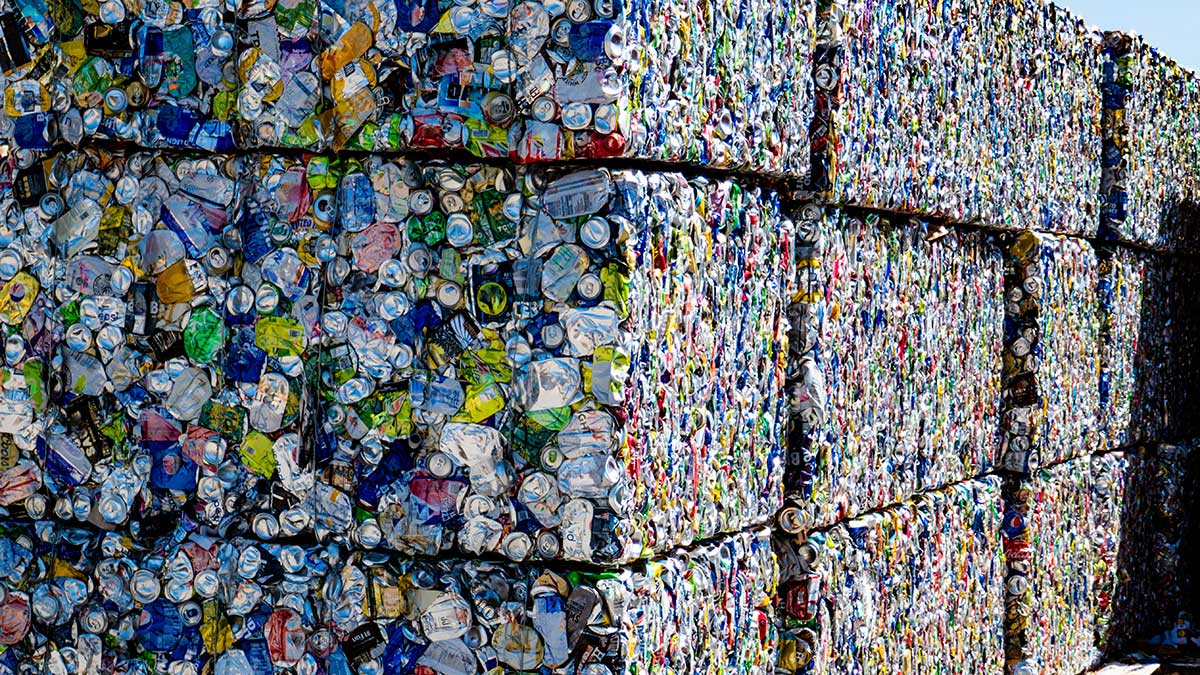
A used aluminum can is worth more, pound for pound, than almost anything else you put at the curb. In late 2024, a ton of crushed and baled cans was selling for around $1,338. Glass, by comparison, sells for roughly, well, nothing. Mixed plastics often cost the recycler money to handle. A single bale of cans, about the size of a small refrigerator, can be worth $40,000 in scrap. In a lot of towns, that one bale is the reason the whole truckful of recyclables is worth picking up.

That makes aluminum the quiet engine of curbside recycling. And right now, fewer Americans are putting cans in their bins than at any time since the early 1990s. According to a 2024 report from the Aluminum Association and Can Manufacturers Institute, the U.S. consumer aluminum-can recycling rate fell to 43 percent in 2023, well below the 30-year average of about 52 percent. Consequently, more than half of every can you finish ends up buried in a landfill instead of back on a store shelf as a new can.

How a recycling plant makes its money

Your bin doesn’t go straight to a recycling factory. It goes to a sorting facility called a MRF, pronounced “murf,” short for material recovery facility. A MRF is essentially a giant conveyor belt with magnets, screens, optical scanners, and people, all pulling the stream into separate piles: cardboard here, paper there, plastics by type, glass, metal.

Each of those piles becomes a bale, a compressed cube of a single material wrapped in wire. The MRF sells the bales to processors, who melt or pulp them into raw material for new products. That sale price, minus what it cost to sort, is the MRF’s revenue.

Most of the bales barely break even. Glass usually loses money. Mixed plastics sometimes make a loss, and sometimes don’t. The bale that consistently makes money is aluminum. A used can returned to a mill is back on a shelf, full of soda or seltzer, in as little as 60 days, using about 95 percent less energy than making aluminum from raw ore. And the metal doesn’t degrade. The same atoms can be recycled over and over, forever, with minimal losses of material during the recovery process.

That combination of high value and infinite recyclability is why aluminum is the only material in your bin that the recycling system genuinely wants. The rest of the content rides on the can’s profit.

Why fewer cans are getting back to mills

The 43 percent national rate hides a sharp split between two kinds of states.

Ten states have a system called a deposit-return scheme, more commonly known as a bottle bill. You pay an extra five or 10 cents when you buy a canned drink and get it back when you return the empty to a store or a redemption center. Those states are California, Connecticut, Hawaii, Iowa, Maine, Massachusetts, Michigan, New York, Oregon, and Vermont, where return rates run from 65 to 90 percent, with Michigan and Oregon — both at $0.10 deposits — consistently reporting the highest recovery rates, according to Container Recycling Institute data.

The other 40 states rely solely on curbside collection. Their rates are about half as high.

The reason is simple. A deposit turns a can from “trash” into “money I’m holding.” It doesn’t take an environmental conviction to bring it back; it takes ten cents on the table. Curbside recycling doesn’t create that signal. It depends on people remembering to rinse and toss every can in the right bin, week after week, with no immediate reward. A lot of cans don’t make it.

What this costs your community

When cans miss the bin, the cost is spread across three areas.

The first is your municipal budget. Many city and county recycling contracts include aluminum revenue as a line item. When that revenue shrinks, somebody covers the gap — usually you, through a slightly higher trash bill or property-tax allocation. According to the Aluminum Association, roughly $800 million worth of cans are landfilled in the U.S. every year. That lost value has to come from somewhere; the gap shows up in your trash bill or your property taxes.

The second is energy. Every can made from raw bauxite ore rather than recycled metal requires far more electricity. Across the volume the U.S. landfills annually, the difference is the equivalent of several large coal-fired power plants’ worth of generation, every year, lit up to make new metal we already have above ground.

The third is the recycling system itself. The aluminum bale is what subsidizes the rest of the bin. When fewer cans go in, the cost of recovering everything else rises — and pressure builds on cities to drop materials they can’t afford to handle. Glass is usually first to go, and it has been abandoned by many municipalities over the last decade.

Why bottle bills are coming back

For most of the late 20th century, the beverage industry fought bottle bills hard. That has flipped. Both the Aluminum Association and Can Manufacturers Institute now back well-designed deposit programs, because the industry has set a 70 percent recovery target by 2030, and the arithmetic doesn’t work without deposits in more states.

Washington State has considered a bottle bill in several recent legislative sessions. Tennessee and Rhode Island also have active or recurring proposals. Since 2019, Vermont, Connecticut, and Oregon have expanded or updated their programs by adding wine and spirits containers, raising deposit amounts, or installing reverse-vending machines that process returns automatically.

Whether recycling scales to your community’s needs depends largely on how loud and informed the local civic conversation gets in the next five years.

What You Can Do

At home

  1. Rinse and recycle every can. Make sure it’s empty and dry before putting it in the bin. A little residue is okay, but food waste lowers the value of the bale.
  2. If you live in a bottle-bill state, don’t crush your cans. Reverse-vending machines need to scan the barcode, and a crushed can can’t be read, so you lose your deposit.
  3. Aluminum foil and trays can be recycled too, but they are sorted separately.
  4. If your state has a deposit system, return your cans for redemption. Cans returned this way go straight to mills with almost no loss during sorting. Curbside cans take a longer route and more are lost along the way.

In your community

  1. Support bottle-bill legislation if your state is thinking about adopting one.
  2. Encourage updates to deposit programs in states with older systems. A five-cent deposit set in the 1970s doesn’t motivate people like it used to. Ten cents is now the standard that works.
  3. Ask your city council how recycling revenue is used. It’s a real part of the budget and directly affects your trash bill. Most people never ask, but those who do usually get answers.

The post The Can That Pays for Your Recycling Bin appeared first on Earth911.

  •  

Classic Sustainability In Your Ear: Freight Farms’ Jake Felser on Hydroponic Agriculture & Container Farming

Revisit a classic episode of Sustainability In Your Ear. Mitch Ratcliffe talks with Jake Felser, chief technology officer at Freight Farms, about the company’s “complete farming system inside a box.” It’s a very big box that includes climate controls and monitoring systems to make farming easy for anyone to do. Freight Farms builds and delivers shipping containers converted into highly efficient hydroponic farms that use LED lighting to grow and deliver fresh produce year-round.

Jake discusses the cost of getting started, how many people are needed to run the farm, and how the built-in automation helps farmers plan a profitable business. Grocers, restaurants, communities, and small farms are using Freight Farms installations at 350 farms in 49 states and 32 countries. The company says most of its customers are new to agriculture and operate right in the urban and rural communities they serve.

Jake Felser, CTO at Freight Farms
Jake Felser, CTO at Freight Farms, visits Sustainability in Your Ear to talk about automated hydroponic gardening in shipping containers.

Growing and distributing vegetables locally is one of the most effective ways to lower our society’s carbon footprint. While agriculture contributes about 10% of the U.S. greenhouse gas emissions each year, the majority of that is from raising animals. By increasing our consumption of locally grown vegetables, we can improve local health and reduce overall emissions from transportation. It’s not easy to grow food in most cities using traditional methods. The introduction of container farms and vertical farming inside buildings can reshape food deserts and create economic opportunities.

To learn more, visit FreightFarms.com.

This podcast originally aired in July 14, 2021.

The post Classic Sustainability In Your Ear: Freight Farms’ Jake Felser on Hydroponic Agriculture & Container Farming appeared first on Earth911.

  •  

We Are Doing to Low Earth Orbit What We Did to the Oceans

About two tons of satellite material burns up in Earth’s atmosphere every day. That is the steady-state exhaust of a single company’s broadband network, SpaceX’s Starlink, operating at its current scale. Each vaporized spacecraft leaves behind aluminum oxide, lithium, copper, and a growing list of metals the upper atmosphere has never had to contained in these quantities before.

We’re following a familiar human pattern. A commons, like the low earth orbit (LEO) region of space, is declared abundant. Commercial activity scales faster than science can measure the consequences. Governance lags by a decade or more. By the time the damage is legible, it is already expensive to reverse.

We did this to rivers in the 19th century, to the atmosphere in the 20th, and to the deep ocean in a quiet accumulation that stretched across both. A new peer-reviewed analysis published in Advances in Space Research makes clear that LEO is now on the same trajectory, and the chemistry is moving faster than the regulation.

An Atmosphere Already Dominated by Human Metal

The paper, an update to a 2021 study, reassesses how much spacecraft material is now being injected into the mesosphere and lower thermosphere as satellites and rocket stages burn up on reentry. The comparison it draws is that for several metals commonly used in spacecraft, anthropogenic injection now rivals or exceeds the natural input from meteoroids.

What was already true in 2021 is more true now. The researchers incorporate direct observations from stratospheric aerosol sampling — work led by Daniel Murphy at NOAA and published in PNAS in 2023 — which confirmed that roughly 10 percent of stratospheric aerosol particles now contain aluminum and other metals traceable to satellite and rocket-stage burn-up. For decades, the natural baseline was micrometeoroid ablation, what space sent naturally toward our planet. Earth sweeps up roughly 30 to 50 metric tons of cosmic dust every day, a steady rain of mostly sand-grain-sized particles left over from comets and asteroids. Those grains hit the upper atmosphere at speeds between 11 and 72 kilometers per second, vaporize in a thin layer between about 75 and 110 kilometers altitude, and seed the mesosphere with iron, magnesium, silicon, sodium, and trace amounts of nickel, calcium, and aluminum. This process has been running for the entire 4.5-billion-year history of the planet. The metal layers it produces in the upper atmosphere are well-mapped; they are the chemistry the stratosphere evolved with.

Aluminum is a useful tracer because it is a small share of the natural input. Cosmic dust is dominated by silicates and iron, with aluminum running on the order of one to two percent by mass. So when researchers began detecting elevated aluminum in stratospheric aerosol particles in the early 2020s, the signal was unambiguous — meteoritic infall could not account for it. The source had to be terrestrial in origin, vaporized at altitude. Spacecraft, in other words.

Human vehicles have become a second, larger source.

The near-term trajectory is worse. Researchers at the University of Southern California documented an eightfold increase in stratospheric aluminum oxide between 2016 and 2022, corresponding almost exactly to the ramp-up of Starlink and other satellite megaconstellations. In 2022 alone, reentering satellites released an estimated 17 metric tons of aluminum oxide nanoparticles — raising total atmospheric aluminum input about 29.5 percent above natural levels.

The Ocean Parallel

Consider the deep ocean in the 1960s. Dumping was legal, monitoring was barely funded, and the prevailing assumption was that the ocean was big enough to absorb anything. We now know the answer to that assumption after finding microplastics in Mariana Trench amphipods, pharmaceutical residues in Arctic sediment cores, and PFAS in polar bear blood.

Low Earth orbit is in the 1960s-ocean phase. The prevailing assumption among launch operators is that satellites that burn up are satellites that disappear. Michael Byers, Canada Research Chair in global politics and international law, put this directly in a 2024 interview with Scientific American: “There’s this widespread assumption that something burning up in the atmosphere disappears, but, of course, mass never disappears.”

What it does instead is change form. A 250-kilogram satellite, typically about 30 percent aluminum by mass, generates roughly 30 kilograms of aluminum oxide nanoparticles as it ablates through the mesosphere. Those particles are small enough — 1 to 100 nanometers — that they can drift in the stratosphere for decades before settling. Aluminum oxide is not inert. It catalyzes the chlorine reactions that destroy stratospheric ozone, the same chemistry the Montreal Protocol was designed to stop. Crucially, the particles are not consumed in those reactions; they continue to destroy ozone molecules for the duration of their atmospheric lifetime.

The Scale Is Not Hypothetical

As of April 2026, SpaceX alone operates more than 10,000 active Starlink satellites, roughly two-thirds of all functioning spacecraft in orbit. The company has launched over 11,700 total, with about 1,500 already deorbited and replaced. Starlink satellites are designed for a five-year operational life, which means the constellation is, by design, a continuous churn: launch, operate, burn, launch again.

Amazon’s Project Kuiper, Eutelsat’s OneWeb, and a growing roster of Chinese state-backed constellations are moving toward similar architectures. The European Space Agency now tracks roughly 40,000 objects in low Earth orbit, about 11,000 of them active payloads, the rest debris or derelict hardware. Statistical models from ESA estimate another 130 million fragments smaller than one centimeter, each traveling fast enough to destroy whatever it hits.

Research published in Geophysical Research Letters projects that once currently planned megaconstellations are fully deployed, roughly 912 metric tons of aluminum will reenter the atmosphere every year, producing around 360 tons of aluminum oxide annually. A separate NOAA modeling study published in 2025 found that sustained alumina injection at expected 2040 levels could alter polar vortex speeds, warm parts of the mesosphere by as much as 1.5°C, and measurably impact the ozone layer.

Two Kinds of Pollution, One Commons

The orbital damage is happening on two fronts simultaneously, and they reinforce each other.

Atmospheric injection is the slow-accumulating chemistry problem. Every satellite that completes its mission becomes tomorrow’s stratospheric dust. A newly upgraded lidar system at the Leibniz Institute of Atmospheric Physics in Germany can now simultaneously detect lithium, sodium, copper, titanium, silicon, gold, silver, and lead in the upper atmosphere — each element a chemical fingerprint for specific spacecraft components. On February 20, 2025, the instrument registered a sudden spike in lithium vapor that researchers traced to a Falcon 9 upper stage reentering overhead.

The measurement capability is arriving just as the pollution is scaling.

Orbital debris is the faster-moving physical problem. SpaceX reported that its Starlink satellites executed 144,404 collision-avoidance maneuvers in the first half of 2025, due to collision warnings every couple of minutes, for six months straight — three times the previous rate. Two Starlink satellites have fragmented in orbit in the past four months, each creating a trackable debris field. Space is getting filled with junk that led to the International Space Station performing avoidance maneuvers twice in a single six-day window in November 2024, and again in April 2025.

Darren McKnight, a senior technical fellow at the debris-tracking firm LeoLabs, told IEEE Spectrum that certain orbital altitudes at 775, 840, and 975 kilometers have already passed the debris-density threshold where collisions generate fragments faster than atmospheric drag can remove them. This is known as the Kessler syndrome, proposed by NASA scientists Donald Kessler and Burton Cour-Palais in 1978, and it is no longer hypothetical in every band.

“Some operators in low Earth orbit are ignoring known long-term effects of behavior for short-term gain,” McKnight said, “Some will not change behavior until something bad happens.”

The Governance Gap

There is no body that regulates the cumulative atmospheric impact of satellite reentries. No operator is required to submit an environmental impact assessment for a constellation’s aggregate burn-up.

The FCC licenses spectrum.

National launch authorities license liftoff.

Debris mitigation guidelines from the UN’s Committee on the Peaceful Uses of Outer Space are voluntary, and compliance is inconsistent. The chemistry of the upper atmosphere is, in regulatory terms, nobody’s jurisdiction.

The United Nations Environment Program took a first step in late 2025, releasing a report titled Safeguarding Space: Environmental Issues, Risks and Responsibilities. It framed space debris and atmospheric injection as “emerging issues” deserving the attention international bodies already give to ocean pollution and transboundary air quality. This is the same framing UNEP used for atmospheric ozone depletion in the 1970s before the Montreal Protocol. Measuring something does not fix it. But it is the necessary precondition for fixing it — and for the first time, the measurement infrastructure is catching up to the pollution.

The Counter-Case, Honestly

Not every specialist agrees the situation is as urgent as the headlines suggest. A skeptical review published in March 2026 argued that the Kessler cascade framing oversimplifies a risk that plays out on timescales of decades to centuries, and in specific orbital bands rather than across all of LEO. The review is right on one narrow point: the ISS has operated continuously at 400 kilometers since 2000, its debris risk is managed in real time, and the environment is not in a runaway state.

What the skeptical case does not resolve is the atmospheric chemistry. The Kessler debate is about whether low-earth orbit becomes unusable. The alumina question is about whether the recovery of the ozone layer — a genuine success story of international environmental governance — is quietly being undone from above. Those are different problems. The first might take a century. The second is already measurable and is projected to worsen within fifteen years.

The post We Are Doing to Low Earth Orbit What We Did to the Oceans appeared first on Earth911.

  •  

Guest Idea: How To Spread Awareness About Issues That Matter

Trash can? Storage container? The dilemma of what should be done with all types of old batteries may seem trifling, but choosing incorrectly is detrimental to our planet and against the law in many states. As a junior in high school, I chose to help people make the right choice by starting an awareness campaign, the Battery Recycling Initiative.

The first step to starting an awareness campaign is identifying the issue you wish to advocate for. Through research and observation, I noted that many of us, including people in my own community, were unaware of the consequences of improper battery disposal on our environment. In fact, according to Recycling Today, 41% of Americans are unaware of the dangers of improper battery disposal.

The second step is to set the scope of your campaign. Are you planning on only advocating locally, globally, or a mix of both? Which specific areas should you advocate in to effectively spread awareness?

For my campaign, I chose to start locally and move globally. To find out if a local battery recycling campaign would be effective in my community, I decided to survey residents in Houston, TX and found out that more than 50% of the residents did not recycle batteries and about 14% only recycled certain types of batteries.

Step 1: Identify the issue and scope of your initiative

How does one start taking inititative? It is simple. Get people to listen. There were three strategies I used to increase awareness about battery recycling:

  1. Provide information digitally and physically
  2. Engage people through interaction and face-to-face conversations
  3. Provide resources for people to take action.

These strategies tend to work for the majority of awareness campaigns: indirectly educate people (this could be through flyers, websites posts, etc.), directly educate people through in-person events, and give them a convenient method to take action. Why are these strategies effective?

Because through these 3 different ways to reach out to and engage people, you can cover most of the reasons why people may choose not to participate in resolving an issue. For example, the three main reasons why people don’t recycle batteries are:

  • people do not know they can recycle batteries.
  • recycling batteries is not convenient for some people.
  • they do not know where to recycle, or people do not have the will to recycle- they see recycling as insignificant, or they are ignorant of grave consequences for future generations.

All three of these problems can be combatted using the three strategies. Through indirect education, people learn that batteries can be recycled and where they can recycle them. Direct education empowers people to recycle, to take action, which combats the lack of will problem. Finally, providing resources to residents, in my case by placing battery recycling bins at my community clubhouses, combatted the lack of convenience aspect.

Step 2: Use the Three Strategies

Strategy 1 – Indirect Education

The first step to indirectly educating people is to ensure your information is accurate. I did plenty of research and talked to various battery recycling centers- like the Fort Bend County Battery Recycling Center- to ensure my information was accurate. The next step is choosing which methods of indirect education you wish to utilize. I chose to provide information via flyers, and use a QR code to help people locate their nearest battery recycling center, to give people quick and easy means to receive the information. I chose to utilize social media as my 2nd method to spread my initiative over a more globalized scope.

Strategy 2 – Direct Education

The main goal of direct education is to empower people to take action and to support/join your initiative.  By interacting with people via face-to-face conversations, you retain the person’s attention a lot better than indirect means. By building a connection with the person you converse with, it encourages them to take part in the initiative.

For example, I participated in my community’s Green Day event where I set up a small booth and talked with residents about battery recycling.  I remember having a conversation with this resident who was surprised to learn she could recycle batteries.

Many other residents told me they would just store old batteries in a container, not knowing what to do with them. One of my favorite interactions was with this lady who was so inspired by my initiative; she offered to help me out with anything I needed. While direct education does not reach that large of an audience, every meaningful connection you develop carries a depth of impact that numbers alone cannot measure- it has the potential to ripple out and influence countless others.

Strategy 3 – Providing a Convenient Method to Take Action

Convenience and availability play a big part in people’s will to take action. In fact, according to a study done by the Carton Council, these two factors contributed the most towards people’s will to recycle.

By appealing to people’s need for convenience, you spread awareness more effectively and grow your initiative by influencing people to act. I applied this idea by placing two battery recycling bins at both of my community clubhouses. I ended up receiving around 1,000 old batteries from those bins within two weeks, which I then safely recycled by taping the points of contact- this helps prevent fires due to batteries.

Have the Will and a Vision to Make an Impact

It may seem like you are just one person who cannot make an impact, but with a strong will and right vision you can achieve success. Your age, position, or location does not matter: I am just a Junior in high school living in a suburban area, but what does matter is you care and you have the heart to do something about it.

I urge you to utilize these methods and strategies to spread awareness about issues that matter to you, to make an impact. To quote the well-known, “Be the change you wish to see in the world.”

About the Author

Swara Bhatt is a high school junior who loves to paint, read, and watch movies in her free time. She hopes to make the world a better place, one step at a time. If you are interested in seeing updates about the battery recycling initiative, follow the project on Instagram: @batteryrecyclingintitative

The post Guest Idea: How To Spread Awareness About Issues That Matter appeared first on Earth911.

  •  

Where Waste Comes From: Your Closet

On average, each American throws away about 81 pounds of clothing, shoes, and household textiles every year. That’s roughly a hamper full every month for each person. For a family of four, this adds up to over 320 pounds of textiles tossed or donated each year. Most people don’t realize how much they discard until they actually weigh it over a year.

The number comes from EPA’s most recent, 2018 sustainable-materials accounting, which puts U.S. post-consumer textile generation at roughly 17 million tons and the recovery rate at 14.7 percent. While the EPA has discontinued its reporting, ThredUp’s 2025 Resale Report and the Apparel Impact Institute updates suggest per-capita generation has continued rising. Most of what falls inside that 14.7 percent is downcycled into industrial wiping rags or insulation, not turned into new clothing.

What “donating” actually does

The mental model in most American closets is that the donation bin is the recycling bin. It isn’t. Goodwill, Salvation Army, and the secondhand chains sell what they can on the resale floor, typically only 10 to 30 percent of the clothing they accept as donations. The rest is sold by the pound to textile graders, who export the higher grades to wholesale markets in West Africa, Eastern Europe, and Central America, bale the remainder as wiping rags or insulation feedstock, and landfill the rest.

That export pipeline is under pressure. Ghana, Kenya, and Chile have moved to restrict or refuse low-grade used-clothing imports, citing the volume of unsellable fast-fashion synthetics arriving contaminated and culturally mismatched. The January 2025 GAO report on textile recovery flagged the offshore-disposal pathway as structurally fragile and quietly subsidized by U.S. consumers who treat donation as absolution.

The amount of clothing waste is closely tied to price. Since 1995, clothing prices in the U.S. have dropped by over 30 percent, even as other costs have gone up. This is mainly due to ultra-fast-fashion brands like Shein and Temu. Many clothes, especially those made from polyester-spandex blends, aren’t made to last, be repaired, or recycled. They’re often thrown out after just six wears. According to McKinsey’s State of Fashion report, the average piece of clothing is now worn only seven to ten times before being discarded, much less than in the past.

The household bill

The value of clothing can change a lot, so it’s harder to put an exact dollar amount on waste compared to food. Still, the Bureau of Labor Statistics says the average U.S. household spends about $1,900 a year on clothes. If 30 to 40 percent of those clothes are thrown out within two seasons, that means a household is tossing $570 to $760 worth of new clothing every year.

The environmental impact of clothing is even bigger before it reaches your closet. The UN Environment Programme says fashion is responsible for 2 to 8 percent of global greenhouse gas emissions and 20 percent of industrial water pollution. Making just one cotton t-shirt uses about 2,700 liters of water, which is as much as one person drinks in two and a half years.

The policy lever finally arriving

For years, there were no rules holding clothing producers responsible for textile waste in the U.S. That changed with California’s SB 707, the Responsible Textile Recovery Act of 2024, which is the first law of its kind in the country. CalRecycle chose Landbell USA to run the program starting February 27, 2026. Brands selling clothes and household textiles in California will have to help pay for collection and processing, with requirements rolling out through 2030. Other states like New York, Massachusetts, and Washington are considering similar laws that would make clothing manufacturers cover the costs of fast fashion waste.

Fiber-to-fiber recycling — the missing technology piece — is moving, slowly. Circ, Syre, and Reju are at pilot or first-commercial scale. Renewcell, the most visible name in cellulosic recycling, filed for bankruptcy in early 2024 and has since been acquired and restarted as Circulose. Textile recycling technology is real, but the economics of the business still depend on virgin-fiber prices going higher, the development of a sorting infrastructure, and the kind of policy support SB 707 is now beginning to provide.

What You Can Do

At home and while shopping:

  1. Focus on slowing down how often you buy new clothes, not just buying less. Choose better quality items and wear them for longer. If you double how long you wear each garment, you can cut its total emissions by about half.
  2. Try to fix your clothes before replacing them. Local tailors, Repair Cafés, and repair programs from brands like Patagonia, Nudie Jeans, and Eileen Fisher can help you get more use out of what you already have.
  3. Be honest when sorting your donations. Clean, up-to-date, and resaleable items should go to local thrift stores. Items that are stained or torn should go to textile-specific takeback bins at places like H&M or Madewell, where they can be properly processed.
  4. Before putting anything in your curbside bin, use Earth911’s recycling search to find local textile drop-off locations by ZIP Code. Most curbside bins don’t accept clothing or textiles.

In your community:

  1. Support textile extended producer responsibility (EPR) laws in your state. SB 707 is the example to follow, and the next few states to pass similar laws will help decide if this approach can grow.
  2. Ask retailers to clearly label fiber content and recyclability. The EU will require digital product passports by 2027, and U.S. brands selling overseas will have to comply. Whether these labels appear in the U.S. depends on consumer demand.
  3. Support and volunteer at local repair and reuse programs. Repair Cafés, Buy Nothing groups, and clothing swaps help reduce waste before it starts, which is the most effective way to make a difference.

The post Where Waste Comes From: Your Closet appeared first on Earth911.
  •  

Best of Sustainability In Your Ear: Okhtapus Cofounder Stewart Sarkozy-Banoczy Accelerates Ocean Solutions

Subscribe to receive transcripts by email. Read along with this episode.

The ocean provides half the oxygen we breathe, absorbs 30% of our carbon emissions, and helps control the planet’s climate. By 2030, it’s expected to support a $3.2 trillion Blue Economy. Yet 70% of proven ocean solutions, such as coastal resilience, coral restoration, and marine pollution cleanup, never move past the pilot stage. These projects often win awards and get media attention, but then stall because funding systems don’t connect working ideas with the cities, ports, and coastal areas that need them. Stewart Sarkozy-Banoczy, co-founder and ocean lead at Okhtapus, wants to change that. Okhtapus, named with the Persian word for the octopus, uses a model that links what Stewart calls “the three hearts” of successful projects: innovators with proven solutions, cities and ports ready to use them, and funders looking for solid projects.
Stewart Sarkozy-Benoczy, Cofounder and Ocean Lead at Okhtapus.org, is our guest on Sustainability In Your Ear.
The first Okhtapus Global Replicator will launch in 2026. It will bring groups of proven innovators to work on important projects in specific places, such as a single port city like Barcelona, where Okhtapus already has strong partnerships, or a group of Caribbean islands facing similar problems. The aim is to have enough successful projects that funders stop asking “where are the deals?” and start saying “we’ve got enough.” The platform focuses on late-stage startups and scale-ups, not early-stage ideas. Stewart calls these the “Goldilocks zone”—solutions that are proven enough to copy but still need funding and partners to grow. By combining several solutions for different locations, Okhtapus can offer investors portfolios that fit their needs and make a real difference in cities, ports, and island nations.
Stewart has spent 20 years working where climate resilience and policy meet. He was part of President Obama’s Hurricane Sandy Rebuilding Task Force, led policy and investments at the Resilient Cities Network, and is now Managing Director of the World Ocean Council. “Ten years from now, if this is done fast enough,” Stewart said, “we should have pushed hard enough on the funders and the system to change it. What we don’t know is whether we’ll get to the solution status fast enough for some of these tipping points.”
To find out more about Okhtapus, visit okhtapus.org.

Editor’s Note: This episode originally aired on December 22, 2025.

The post Best of Sustainability In Your Ear: Okhtapus Cofounder Stewart Sarkozy-Banoczy Accelerates Ocean Solutions appeared first on Earth911.
  •  

5 Places to Mail In Your Old Clothes and Earn Rewards

Every year, Americans toss out about 17 million tons of textiles, and most items left in donation bins don’t find a new home. Now, more mail-in programs are stepping in to take your old clothes, keep them out of landfills, and reward you—often with store credit or cash-like rewards you can use at familiar brands.

The programs listed here include options that take any brand or condition—even socks and stained T-shirts—as well as brand-specific trade-ins that give you real money for quality items. While none of these fully solves fashion’s waste problem, and some have fees or important details to check, each offers a more responsible choice than tossing clothes in the curbside bin. With the right program, your rewards can even cover your costs or more.

1. Trashie Take Back Bag — The Any-Brand, Any-Condition Option

Trashie ships a prepaid, prepackaged bag that holds up to 15 pounds of clothing, shoes, accessories, and home textiles from any brand, in any condition, including single socks, worn-through T-shirts, and bedsheets. A single Take Back Bag runs $20, though they are frequently on sale, and earns $5 in TrashieCash redeemable for deals at partners including Sephora, Nike, Starbucks, Allbirds, and Cozy Earth.

If you want to recycle often, Trashie Unlimited costs $68 a year and gives you unlimited bags, plus bigger rewards as you go. You get $5 for your first bag, $15 more at your fifth bag (for a total of $26), and by your tenth bag, you’ve earned back your membership with $68 in TrashieCash. After that, every bag earns you extra. Trashie reports that 95% of what they receive is repurposed, reused, or recycled, sorted into over 600 categories.

Best for: that pile of clothes you’ve been meaning to deal with for months, especially items too worn out to donate.

2. Retold Recycling — Subscription Bags With Curated Partner Rewards

Retold Recycling uses a subscription model. Their annual plan costs $99 and comes with six pre-labeled, prepaid bags—three to start, then one each quarter—each holds about five pounds of textiles. You earn Retold Rewards worth about $15 per bag, which you can use at partners like Dropps, Allyoos, Me Mother Earth, and Plaine Products. There’s also a quarterly plan for $24.75 every three months, with the same rewards per bag.

Retold accepts all textiles, including clothing, household linens, and fabric scraps, from any brand. Its recycling partners sort items by fiber content, quality, and style, with the company stating that items are kept out of landfill except when materials like leather, coated textiles, or neoprene can’t be processed. Consumer Reports said only Retold subscribers earn the rewards credits; one-time bag buyers don’t.

Best for: people who want to recycle regularly and like getting discounts at smaller sustainable brands instead of big retailers.

3. Patagonia Worn Wear — Real Trade-In Value for Well-Made Gear

Patagonia’s Worn Wear offers the best payouts if you have Patagonia items. Go to their website, take a quick quiz to check if your items qualify, print a shipping label, and send in your clean, working Patagonia jackets, fleece, pants, packs, and more. You’ll get credit as a gift card to use online or in Patagonia stores.

Trade-in values are usually about 20% of the original price. According to Patagonia’s FAQ, credits can go up to $180 for high-value items, with jackets earning between $10 and $200, and wheeled bags between $45 and $90. Sometimes, they run promotions that double your credit, so keep an eye out for those.

Keep in mind, Worn Wear only takes Patagonia-branded gear that’s still in good, usable shape. They don’t accept underwear, swimwear, or wetsuits. If your items don’t qualify, they’ll either send them back or recycle them for free.

Best for: people clearing out Patagonia gear they no longer need and who already shop at Patagonia.

4. ThredUp Clean Out Kit — Cash or Credit for What Actually Sells

ThredUp is a consignment service, not recycling: the company pays you for items it can resell, and routes the rest to donation or recycling partners. Order a Clean Out Kit, fill it with women’s or kids’ clothing in excellent or like-new condition, and ship it in. Payouts scale with listing price, from low single-digit percentages on inexpensive items to as much as 80% on premium and designer brands like Lululemon or Gucci.

You can get paid in cash or as store credit at ThredUp or partner brands like Gap, Banana Republic, Athleta, Madewell, Janie and Jack, and Reformation. If you pick store credit, you usually get a 15–20% bonus. Be aware that ThredUp takes a $14.99 processing fee from your earnings per bag, and if you want any rejected items sent back, there’s a $10.99 fee. This program isn’t for fast fashion—items from those brands or heavily worn clothes are usually rejected.

Best for: closets with name-brand, current-season women’s and kids’ clothes in good shape—not for stained T-shirts.

5. ReGirlfriend — Closed-Loop Recycling for Activewear

Girlfriend Collective, an athleisure brand, offers ReGirlfriend—a mail-in program run with SuperCircle. You can send in clean clothes from any brand and get $10 in store credit for each Girlfriend item or $5 for each non-Girlfriend item, up to 10 pieces per shipment. There’s a $15 deposit to print your shipping label, but you get it back if you make a purchase within 30 days.

You’ll get personalized discount codes for up to 30% off your next Girlfriend order. For example, a $30 credit needs at least a $100 purchase to use the full amount. Items are sorted for reuse when possible, or they’re recycled, upcycled into new yarn or fabric, or downcycled for industrial uses if they can’t be resold.

Best for: people who already shop at Girlfriend and want a mail-in option for activewear and basics from different brands.

Quick Comparison

  • Accepts any brand in any condition: Trashie, Retold, ReGirlfriend
  • Brand-specific only: Patagonia Worn Wear (Patagonia gear), ThredUp (women’s and kids’ name-brand resale)
  • Cash payout possible: ThredUp (via consignment)
  • Store credit only: Trashie, Retold, Patagonia Worn Wear, ReGirlfriend, ThredUp (credit option)
  • Highest potential payout: Patagonia Worn Wear for premium Patagonia items; ThredUp for current-season designer women’s clothing

Get Ready for Mail-In Recycling Success

  • Sort your clothes before sending them. Items in good enough shape to resell or donate are worth more on ThredUp, Patagonia Worn Wear, or at a local consignment shop. Clothes that are worn out or off-brand are better suited for Trashie, Retold, or ReGirlfriend.
  • Consider whether a subscription makes sense for you. Trashie Unlimited is worth it if you send about 10 bags a year. Retold’s annual plan can earn you up to $90 in partner rewards. If you won’t fill several bags, it’s better to skip the subscription.
  • Pick store credit if you already shop at that brand. ThredUp’s 15–20% credit bonus and Patagonia’s double-credit promotions can boost your payout, but only if you were planning to spend there anyway.
  • Don’t mail clothes that your city already recycles. Many places offer curbside textile pickup or special drop-off bins. Use the Earth911 Recycling Search to find local options before paying to ship clothes out of state.
  • Check the details on fees. ThredUp charges a $14.99 processing fee, Patagonia deducts $7 for shipping, and ReGirlfriend requires a $15 refundable deposit. Make sure to consider these costs before you decide.
  • Try to buy less in the first place. No mail-in program can make up for the impact of owning lots of fast fashion. The best thing you can do is choose fewer, longer-lasting clothes.

The post 5 Places to Mail In Your Old Clothes and Earn Rewards appeared first on Earth911.

  •  

Earth911 Inspiration: A Serious Look at Modern Lifestyle

Today’s quote comes from Pope John Paul II’s message for the celebration of the World Day of Peace, 1990. He wrote, “Modern society will find no solution to the ecological problem unless it takes a serious look at its lifestyle.”

Earth911 inspirations. Post them, share your desire to help people think of the planet first, every day.

Pope John Paul II quote from World Day of Peace message

The post Earth911 Inspiration: A Serious Look at Modern Lifestyle appeared first on Earth911.

  •  
❌