Normal view

Japan’s cafe that won’t let you go home until you solve a puzzle is opening in Osaka’s canal district

30 May 2026 at 13:00

Hatena Coffee continues to make customers smile as they scratch their heads.

The line that separates cafes from regular restaurants can be a hazy one, but most people would say that cafes generally have a more relaxed vibe that encourages you to linger over your drink or meal. And it’s definitely true that Hatena Coffee, which just arrived in Osaka’s Namba neighborhood, isn’t going to pressure you to hurry up and leave. As a matter of fact, Hatena Coffee has a policy in which they won’t even let you go home until you’ve proved your smarts.

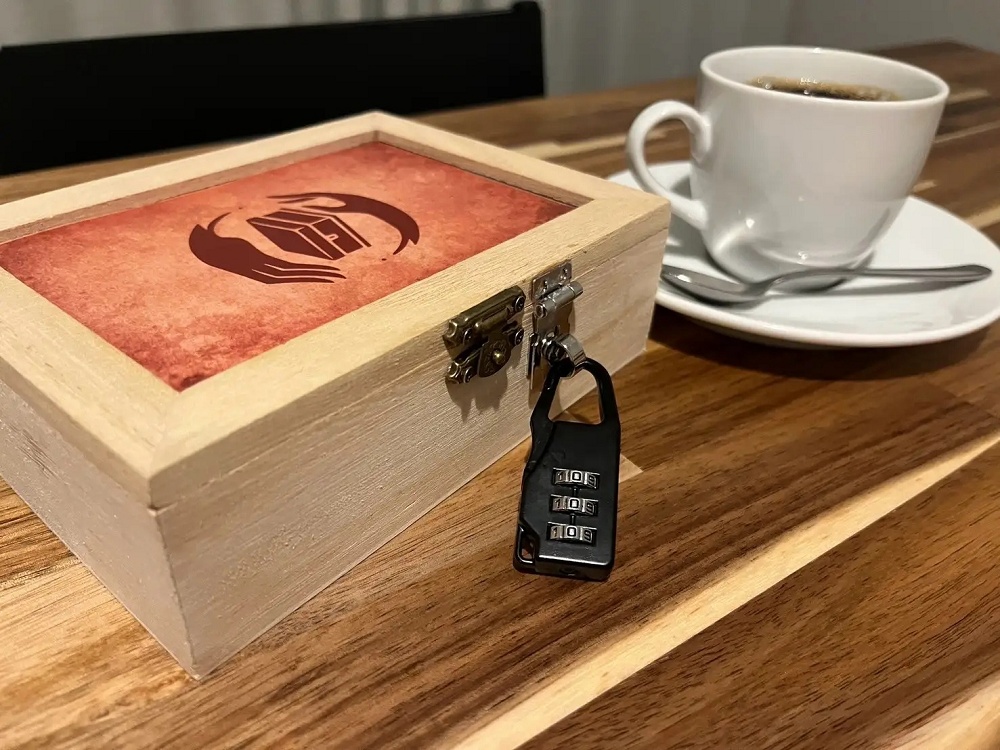
The cafe’s name is a tipoff to this unique rule, as “hatena marks” are what question marks are called in Japanese. In addition to beverages and light fare, Hatena Coffee also serves up brain-teasing puzzles. There’s a selection to choose from, with varying difficulties, and solving the puzzle is an official requirement in order to be allowed to leave.

That might sound like the place is an escape room that you can eat and drink in, but Hatena Coffee takes the opposite approach to time. In an escape room you’re given a certain amount of time in which to try to solve the mystery, and when time’s up, you’re let out regardless of whether or not you succeeded. At Hatena Coffee, though there’s no time limit, so you can approach the puzzle at whatever pace feels fun and enjoyable to you…or to you and your date or friends, since the Namba cafe has three types of seating: counters for solo customers, two-chair tables for pairs, or four-chair tables for larger groups.

All of the cafe’s puzzles are produced by Tokyo-based puzzle/mystery design company Experiful. The estimated time needed to solve most of them is in the range of 30 to 60 minutes, but if you want even more mental stimulation, the tougher ones will take up to 90 minutes, the company says (and while not explicitly stated, we’re sure that if you’re really stumped, they’ll let you go home without solving the puzzle, if you ask nicely).

Each guest pays a 1,500-yen (US$9.70) “puzzle fee” and is asked to also order at least one drink, but there’s no timed seat/table charge at Hatena Coffee, so you don’t need to worry about running up a more expensive tab if it takes you an extra-long time to solve your puzzle. Drinks are all priced at 500 yen (whether soft drinks or alcoholic), while snacks start at 500 yen, sandwiches and pasta plates at 700 yen, and desserts at 1,000 yen.

The Namba Hatena Coffee’s grand opening is scheduled for June 1, when it will become the chain’s sixth branch, joining the three locations in Tokyo (in the Ginza, Shinjuku, and Ikebukuro neighborhoods), one in Yokohama, and one already open in Osaka’s Umeda neighborhood. With barely more than a year having passed since the initial branch opened in Yokohama, the fast expansion seems to show that there’s an eager market of fans for puzzles in relaxing spaces, and the new branch should make a great place to visit for a coffee after trying the neighborhood’s innovative sushi pizza.

Cafe information
Hatena Coffee (Osaka Namba branch)/ はてな珈琲店(大阪なんば店)
Address: Osaka-fu, Osaka-shi, Chuo-ku, Dotonbori 2-3-23, Hermanos Building 2nd floor
大阪府大阪市中央区道頓堀2丁目3−23 エルマーノスビル2階
Open 11:30 a.m.-9 p.m. (no new seating between 5 p.m. and 6 p.m.)
Website

Related: Hatena Coffee
Source: PR Times, Hatena Coffee
Top image: PR Times
Insert images: PR Times, Hatena Coffee
● Want to hear about SoraNews24’s latest articles as soon as they’re published? Follow us on Facebook and Twitter!

Maura Higgins Reveals What She Keeps in Her Birkin Bag from Rob Rausch — and How to Get Your Own Version (Exclusive)

3 June 2026 at 15:13
The reality TV star shared what loyalty means to her and talked about how she created a version of her treasured bag for fans

© <p>bravo; wingstop</p>

  • ✇SoraNews24 Japan
  • Japanese government to allow desecration of flags on kids’ meals Master Blaster
    A victory for freedom of eats. The ruling Liberal Democratic Party has been hard at work drafting a bill to criminalize desecration of the Japanese flag. It’s apparently a pressing matter, even though I’ve never seen anyone do anything bad to a flag before. In fact, I rarely see the flag used much at all, good or bad. But it’s perhaps in anticipation of continuing protests to the current administration’s efforts to roll back the pacifist elements of the constitution that they feel this is a pr
     

Japanese government to allow desecration of flags on kids’ meals

25 May 2026 at 14:00

A victory for freedom of eats.

The ruling Liberal Democratic Party has been hard at work drafting a bill to criminalize desecration of the Japanese flag. It’s apparently a pressing matter, even though I’ve never seen anyone do anything bad to a flag before. In fact, I rarely see the flag used much at all, good or bad. But it’s perhaps in anticipation of continuing protests to the current administration’s efforts to roll back the pacifist elements of the constitution that they feel this is a priority.

There has been a lot of discussion about the specific details of this law as it rubs up against people’s freedom of expression. One major point is what exactly constitutes the national flag of Japan. Especially since it’s just a red circle on a white background, I could drop some spaghetti sauce on my shirt and end up wearing the flag. So, how is it legally different from a real flag?

According to the latest revision of the bill, the flag is defined as generally made of cloth or paper, primarily displayed on poles as a sign or decoration, and usable in real society. This means the Japanese flags in the virtual world are fair game, which is great news for my upcoming smartphone game Flag Blaster 3000.

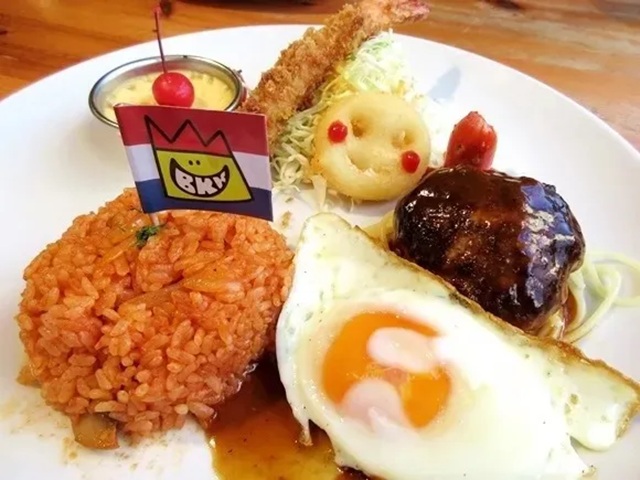
But where does that leave those little toothpick flags that restaurants in Japan stick in the potato salad or rice of kids’ meals? They’re made of paper, displayed as a decoration, and used in society.

▼ The countries are usually randomly given out, so there’s only a small chance of getting a Japanese flag a lot of the time.

Since they technically fit the legal definition of a flag, the makers of the bill decided to explicitly exclude kids’ meal flags from the law. This means you wouldn’t have to worry about getting in trouble with the law if you attacked some ketchup rice extra hard and made a mess of your flag. Another exemption involves flags depicted in paintings. That being said, destroying other people’s paintings can land you in a whole other spot of trouble.

Online commenters have been less than happy that this is what the government is choosing to spend its time on when so many other things in the country seems to be getting less and less bearable.

“This is what they’re discussing?”
“They can’t seriously be spending time on kids’ meal flags.”
“Just ignoring all of our other anxieties.”
“Didn’t they recently say they didn’t have time to discuss same-sex marriage or separate surnames?”
“I should get a tattoo of the flag. Then no one will hurt me.”
“Just copy whatever they do in France and get it done with.”
“When I was a kid, I used to carefully save my kids’ meal flag and take it home. I’d usually forget all about it 10 minutes after that.”

The draft bill also includes a provision that freedom of expression should be considered when pressing charges. According to the wording, artistic expression, such as live-action films, using real national flags as props would be exempt if considered socially acceptable.

That last part about being “considered socially acceptable” is still a matter of contention in the bill, since it is greatly open to interpretation. I think we can all agree that Godzilla torching the flag with its atomic breath is completely acceptable because that big lug just doesn’t know any better. But if King Kong hurls a colossal turd at one, the issue becomes much less black and white.

Hopefully, they get this all sorted out soon, and maybe go back to working on things like how no one can afford stuff anymore, and why we can’t even secure the resources to make colored bags of potato chips.

Source: Mainichi Shimbun, Hachima Kiko
Photos ©SoraNews24
● Want to hear about SoraNews24’s latest articles as soon as they’re published? Follow us on Facebook and Twitter!

  • ✇SoraNews24 Japan
  • Saltiest ramen in Japan? Ikebukuro White goes viral for crazy salt levels Oona McGee
    We challenge you to find a saltier ramen in Japan. Once you start diving into the world of Japanese ramen, you’ll find that the waters are deep, with an incredibly diverse array of varieties, and new dishes being created somewhere every day. A great example of that can be seen at Kuwabara, a ramen restaurant in Tokyo’s Ikebukuro that specialises in “shio soba“, a light, salt-based ramen. The store’s full name is “Shio Soba Specialty Shop Kuwabara” so it prides itself on salty ramen, but accord
     

Saltiest ramen in Japan? Ikebukuro White goes viral for crazy salt levels

14 May 2026 at 16:00

We challenge you to find a saltier ramen in Japan.

Once you start diving into the world of Japanese ramen, you’ll find that the waters are deep, with an incredibly diverse array of varieties, and new dishes being created somewhere every day.

A great example of that can be seen at Kuwabara, a ramen restaurant in Tokyo’s Ikebukuro that specialises in “shio soba“, a light, salt-based ramen. The store’s full name is “Shio Soba Specialty Shop Kuwabara” so it prides itself on salty ramen, but according to diners, a dish on the menu called “Ikebukuro White” is off the scale, with diners describing it as “shockingly salty“.

▼ A sign out the front shows customer’s views of the store, with “The soup is salty” in top place, written in red.

The saltiness of the Ikebukuro White is said to be so insane that the restaurant is now trending on social media, with some online commenters describing it as “salty delicious”, “incredibly addictive”, “one of a kind” and “the saltiest salt ramen I’ve ever eaten in my life.”

▼ Needless to say, those comments immediately piqued our interest so we headed out to the store to try the Ikebukuro White.

Ironically, the dish is marked by a black-and-white button on the ticket machine inside, where it’s priced at 1,200 yen (US$7.61). Next to it is a handwritten sign that says, “rapidly gaining popularity”, indicating that this dish really is attracting attention from diners.

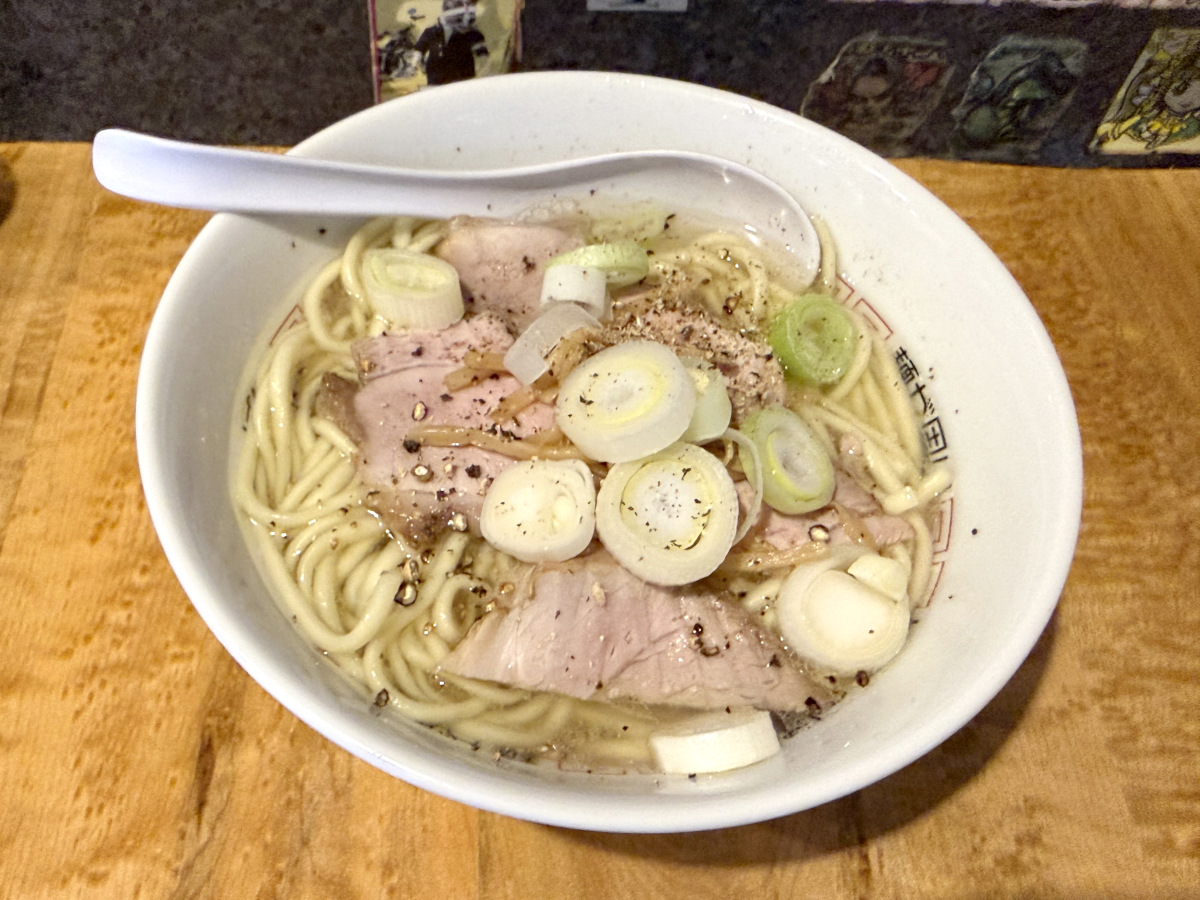
After handing our ticket over to staff, we took a seat and a few minutes later our Ikebukuro White arrived. At first glance, it looked like a slightly unorthodox salt ramen, with black pepper and flat noodles, but nothing could prepare us for what we tasted when we took our first sip of the broth.

▼ SALTY!!

The saltiness is so strong it needs to be emphasised in all caps, and although it’s not extreme enough to make you stop eating, it toes the line by erring on the side of tolerable. This really was the saltiest ramen we’d ever had in our life, and in addition to the saltiness, the garlic and black pepper also pack a punch. The firm texture of the flat noodles, cooked perfectly al dente, attempts to soften the flavours, but they remain strong in every mouthful.

Perhaps because of the intense saltiness, we found ourselves finishing the noodles in no time.

One unexpected side effect of the salty broth was it made the water taste incredibly delicious. And yes, we gulped down an entire glass after the meal.

Now that we’ve tried the famed ramen, we challenge anyone to find a saltier broth in Japan. It’s so salty that if you didn’t know its reputation beforehand, you might find yourself wondering if the chef made a mistake with the seasoning.

There’s no mistake here, though, and although the saltiness is incredibly overwhelming, it’s a one-of-a-kind ramen you won’t find anywhere else. So if you’re willing to dive into Japan’s ramen world, this is definitely the deep end, where the broth is delicious, but as salty as the sea.

Restaurant information
Shio Soba Specialty Shop Kuwabara / 塩そば専門店 桑ばら
Address: Tokyo-to, Toshima-ku, Higashi-Ikebukuro 1-27-5
東京都豊島区東池袋1-27-5
Open 11:00 a.m.-8:30 p.m.
Closed irregularly

Photos ©SoraNews24
● Want to hear about SoraNews24’s latest articles as soon as they’re published? Follow us on Facebook and Twitter!

Burger King Japan offering all-you-can-eat quad-burgers, whoever eats the most gets more in December

10 June 2026 at 15:00

Beefy gauntlet has been thrown down once again by Burger King Japan.

Burger King Japan understands that there are times when a regular-size hamburger just won’t cut it, which is why they offer what they call the One Pounder series, a line of sandwiches with four patties. Sometimes, though, a person’s bottomless well of burger love equals the infinite capacity of their stomach, and so for them, later this month Burger King Japan is offering all-you-can eat One Pounders.

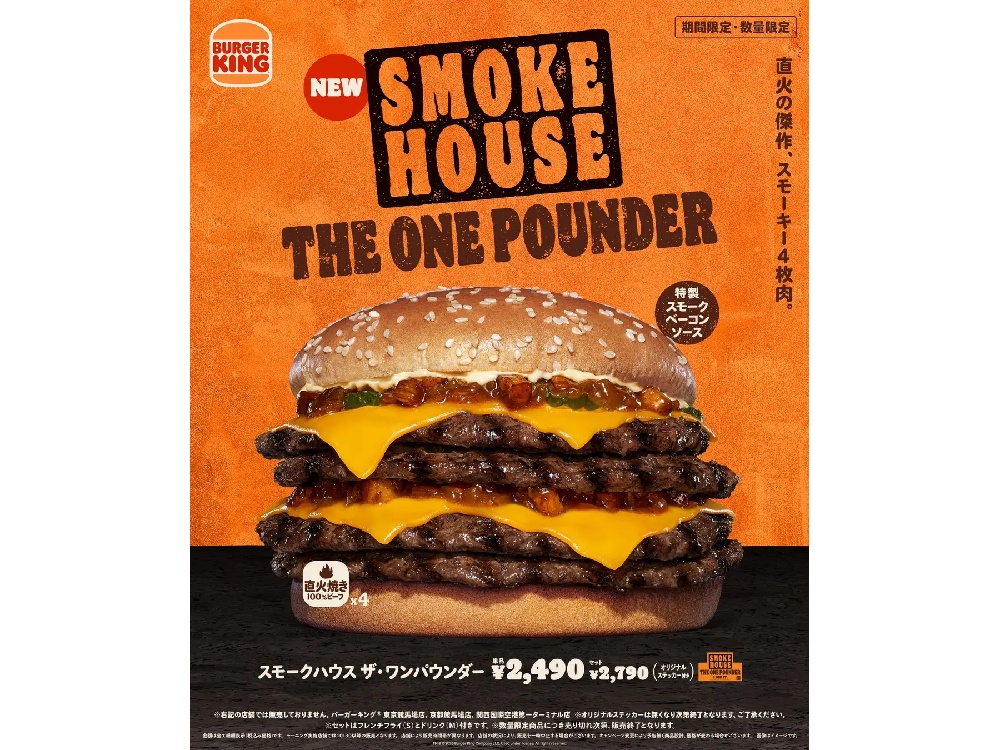
First, let’s take a look at the exact kind of One Pounder that’s being served in the One Pounder Challenge, as the promotion is called. This is the Smoke House The One Pounder. Linguists might take the position that it really should be called the “The Smoke House One-Pounder,” but apparently all that beef leaves no room for such minute syntax or punctuation quibbles. In addition to four all-beef patties and cheddar cheese, the burger has both smoked bacon and a smoked bacon sauce. It looks like there might be some pickles in there too, but they appear to be the only things between the buns that aren’t meat, cheese, or sauce.

A single Smoke House The One Pounder weighs 545 grams, which converts to roughly 1.2 pounds, so its name is actually a bit of an understatement. It also packs 1,615 calories, so you may be questioning how many a person could possibly eat. Well, back in the spring, Burger King Japan also ran an all-you-can-eat Smoke House The One Pounder promotion, and the customer who ate the most put away 11 of them, which works out to 5,973 grams, or approximately 13.17 pounds, of burgers.

If you’re wondering where the break-even point is, Burger King Japan is charging 4,900 yen (US$31) for a 45-minute all-you-can-eat session, and with the Smoke House The One Pounder costing 2,790 yen when ordered off the menu normally, that would mean you’ll need to eat 1.75 of them to get your money’s worth. That calculation doesn’t take into account that the One Pounder Challenge also includes unlimited refills of French fries and soft drinks, though, so if you do manage to get to the 1.75-burger mark, you could say you’re actually coming out ahead. All entrants also receive a One Pounder Challenge 2026 T-shirt, Burger King Towel, and two stickers.

The One Pounder Challenge will take place daily from June 19 to June 26 at 80 Burger King Japan branches, with seatings at 2:30, 4, 5:30, and 7 p.m. Advance reservations must be made through the event’s website here, and seating is limited. Should you miss out on this chance, though, take heart that this is the second of three planned One Pounder Challenges for 2026, and they’ll be followed by a fourth promotion, the One Pounder Challenge 2026 Final, in December, with free tickets to the Final being given as prizes to the three customers who eat the most burgers at each of the first three One Pounder Challenges.

Source, images: PR Times
● Want to hear about SoraNews24’s latest articles as soon as they’re published? Follow us on Facebook and Twitter!

  • ✇SoraNews24 Japan
  • Order a cocktail, support a senior with Shinjuku Day Service Mojito at a handful of businesses Krista Rogers
    A new model of urban community collaboration in Shinjuku’s Kabukicho area connects the generations using mint as a bridge. Senior citizens probably aren’t the first demographic that comes to mind when you think of Shinjuku’s Kabukicho neighborhood, which is much more commonly associated with younger crowds, nightlife, and bars. Yet, the area is home to a sizeable population of older folks who depend on facilities such as Shinjuku Day Service for lifestyle support and social activities. “Day se
     

Order a cocktail, support a senior with Shinjuku Day Service Mojito at a handful of businesses

9 June 2026 at 01:00

A new model of urban community collaboration in Shinjuku’s Kabukicho area connects the generations using mint as a bridge.

Senior citizens probably aren’t the first demographic that comes to mind when you think of Shinjuku’s Kabukicho neighborhood, which is much more commonly associated with younger crowds, nightlife, and bars. Yet, the area is home to a sizeable population of older folks who depend on facilities such as Shinjuku Day Service for lifestyle support and social activities.

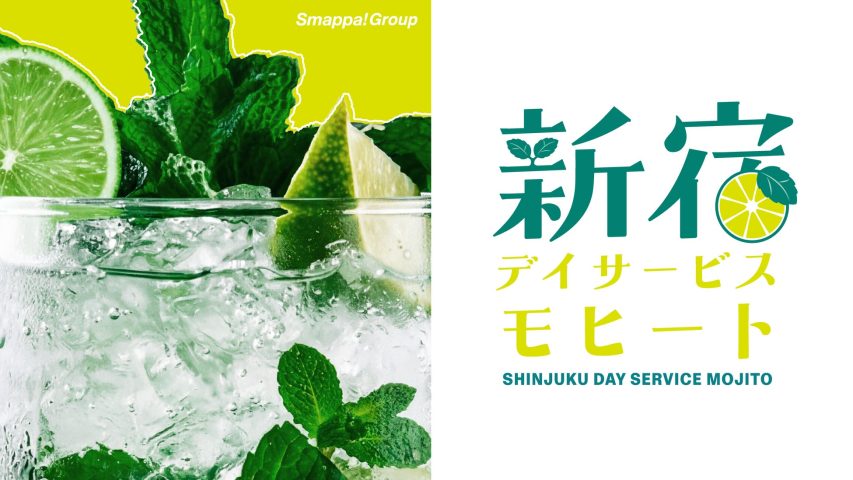
“Day service” is a Japanese term that describes a place akin to a senior center where outpatient services are offered to senior citizens who are still capable of living independently but could use help with certain tasks or socialization activities. Shinjuku Day Service has recently partnered with Smappa! Group, which operates a large number of restaurants, bars, host clubs, and other entertainment facilities throughout Shinjuku, to bring a refreshingly new partnership to Kabukicho tables called the Shinjuku Day Service Mojito.

This initiative, which is one of the first of its kind in a major metropolitan area, connects farms, day service facilities, and restaurants/bars together in a community chain of compassion. Senior citizen volunteers grow mint plants organically using seedlings provided by Pipichan Farm in Ome, Tokyo Prefecture, which are then harvested and distributed to several Kabukicho restaurants, bars, and host clubs. Each of these participating locations has designed its own unique cocktail using the mint and is committed to sharing the story of its cultivation with customers.

The beauty of Shinjuku Day Service Mojito is that it creates a sense of purpose for many of the seniors so that they can feel their impact not only within their own community but in the larger Kabukicho community as well. Project organizers have commented that cultivating plants also has important physical and mental benefits for the seniors such as keeping their senses and cognitive abilities sharp. Best of all, involvement in the project is completely voluntary, participants can grow the herbs at their own pace, and they can be involved in other parts of the distribution process if they so choose.

▼ It’s fitting that mint means “virtue” or “warmth of emotions” in Japan’s language of flowers (hanakotoba).

If you’d like to support seniors by purchasing one or more of the collaborative mint cocktails, please see the list of participating businesses below. We think this is an excellent way for seniors to stay active and connected to the community–tied right up there with having their own line of collective trading cards.

Participating restaurants and bars (all located within Kabukicho)
人間レストラン (Ningen Restaurant)
麦ノ音 (Mugi no Oto)
MISO SOUP
BRIAN BAR
red.
世阿弥 (Zeami)
ありんす (Arinsu)
デカメロン ギャルバー (Decameron Gyaru Bar)
PEGASUS
● BAR CACCO
クラブ春 (Club Haru)

Participating host clubs (all located within Kabukicho)
APiTS
AWAKE
CURE
SMAPPA! HANS AXEL VON FERSEN
OPUST

Source, images: PR Times
● Want to hear about SoraNews24’s latest articles as soon as they’re published? Follow us on Facebook and Twitter!

Japan’s cheap beef bowl chain Matsuya opens gourmet Premium Matsuya with Kobe beef…inside Matsuya

8 June 2026 at 02:00

A tale of four Matsuyas, and a whole lot of gourmet wagyu beef.

As one of the country’s big-three gyudon/beef bowl chains, Matsuya is among the top choices for those looking for a cheap but hearty meal in Japan. But maybe it doesn’t always need to be quite so cheap, and so Matsuya has made the decision to open a new, more expensive, and more gourmet, branch inside Matsuya.

Actually, we should back up a bit, because there are no fewer than four different Matsuyas we’re going to be talking about here. First is just plain old Matsuya, the beef bowl chain. Then there’s Matsuya Foods, the Matsuya restaurant chain’s parent company. Next there’s the Matsuya department store chain, whose branch in Ginza is going to be the site of the new Premium Matsuya gyudon shop.

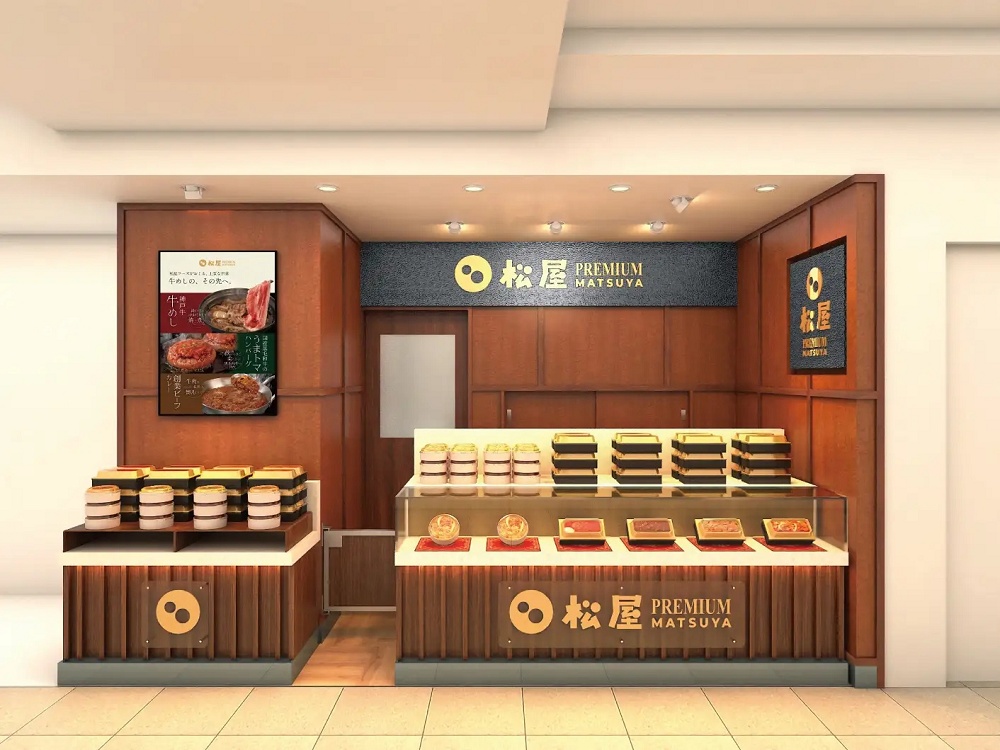
The Matsuya department store chain is a totally separate company from Matsuya Foods. Founded 101 years ago, the Matsuya department store has an upscale image, offering not only fancy fashions but also high-end food items at its flagship store in Tokyo’s posh Ginza neighborhood. There’s some comic irony in a luxury department store and budget-friendly restaurant coincidentally sharing the same name, and the two companies decided to explore the idea of some sort of promotional collaboration, with the result being Premium Matsuya, which will be opening in Matsuya Ginza’s food section later this month serving special, upscale items you won’t see on a regular Matsuya restaurant menu.

For example, Matsuya’s signature dish is their standard beef bowl, which is priced at 460 yen (US$3). Premium Matsuya’s beef bowl, pictured below, will cost more than three times as much, 1,390 yen, but that’s because it’s made with Kobe beef!

Other delicacies offered by Premium Matsuya will include a hamburger steak bento boxed lunch with domestically raised kuroge wagyu (Japanese Black) beef (1,681 yen)…

…a tonteki (pork steak) bento (1,681 yen)…

…and beef curry rice sets, also with the options of sliced Kobe beef or a kuroge wagyu hamburger steak (1,050-1,681 yen).

While some Japanese department store food shops have seats for eat-in dining, preview images for Premium Matsuya suggest it’ll be a take-out only operation, though the staff will also have dapper uniforms unique to the upscale offshoot to help create an elegant atmosphere.

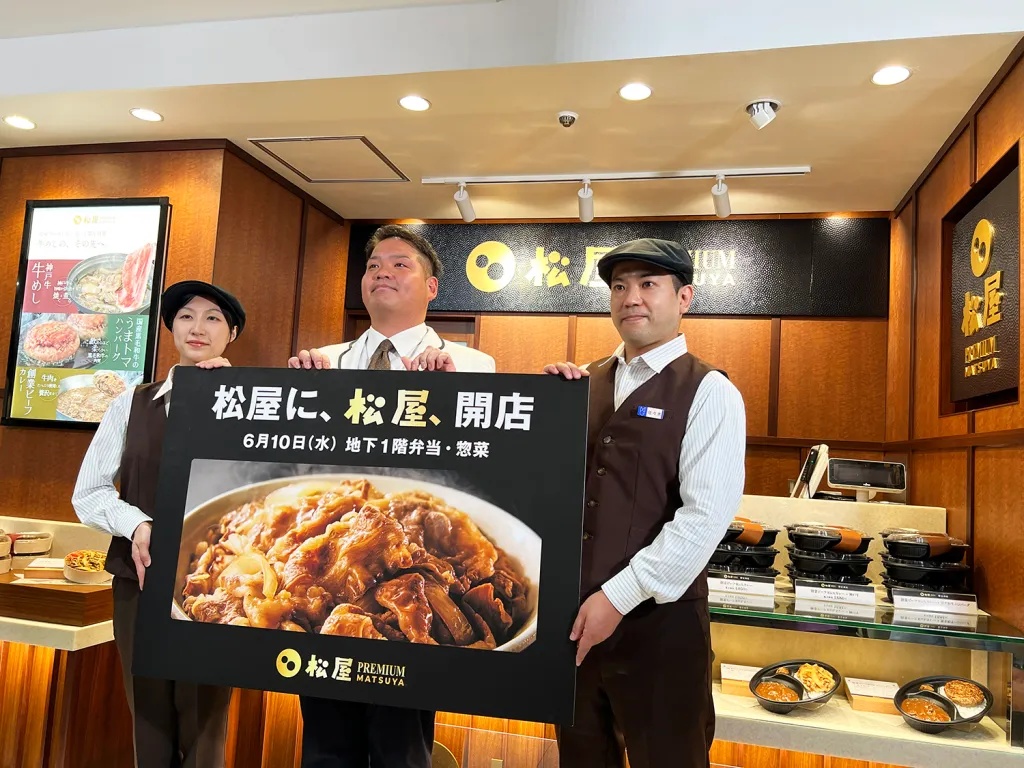
It should be noted that the menu and prices at regular Matsuya restaurants will remain unchanged, so this isn’t an example of Matsuya trying to reestablish its preexisting branches as higher-priced eateries, unlike the course recently taken by curry chain Coco Ichibanya. As for whether Matsuya Ginza’s clientele will be interested in gourmet Matsuya meals, Premium Matsuya’s opening as a permanent part of the food department comes after a similar limited-time pop-up at Matsuya Ginza last year was met with an overwhelmingly positive reaction from shoppers, so hopes are high for when Premium Matsuya opens on June 10.

Related: Matsuya Ginza
Source: Otakuma Keizai Shimbun via Livedoor News via Hachima Kiko, PR Times

Images: PR Times
● Want to hear about SoraNews24’s latest articles as soon as they’re published? Follow us on Facebook and Twitter!

  • ✇SoraNews24 Japan
  • Japan’s izakaya pubs closing at record pace, failing to attract foreign tourists Casey Baseel
    Combination of factors is dimming the shine of one of the stars of Japanese restaurant culture. Izakaya are a unique part of Japanese food culture. Their closest analogy would be pubs, since izakaya serve a wide variety of alcoholic drinks and food meant to be paired with such beverages. Their menus are much more extensive than just basic bar munchies, though, with things such as yakitori chicken skewers, grilled onigiri rice balls, and plates of sliced sashimi being long-standing favorites. A
     

Japan’s izakaya pubs closing at record pace, failing to attract foreign tourists

20 May 2026 at 15:00

Combination of factors is dimming the shine of one of the stars of Japanese restaurant culture.

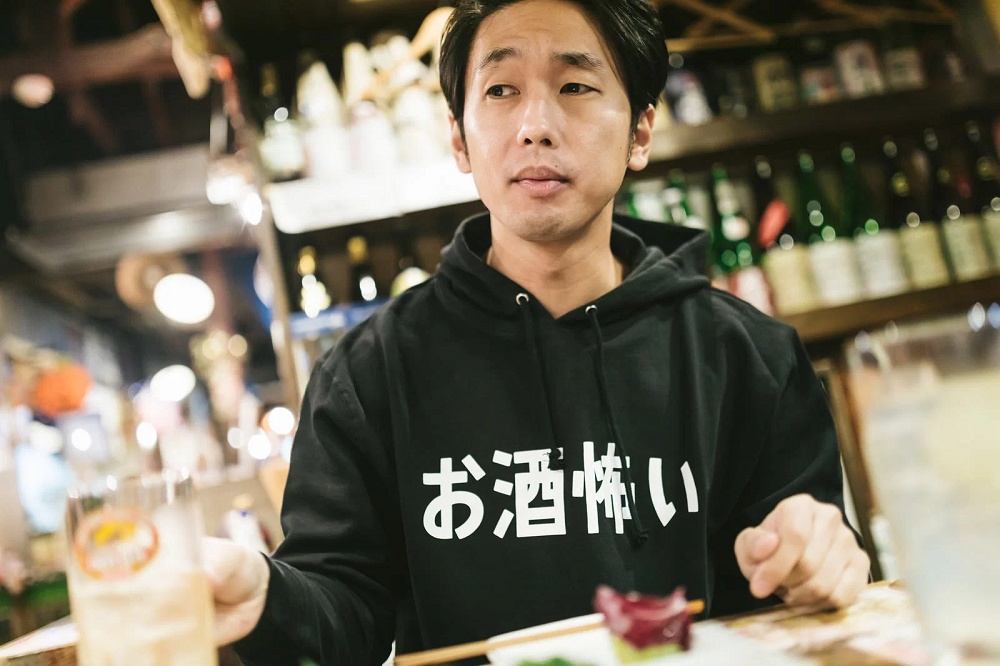
Izakaya are a unique part of Japanese food culture. Their closest analogy would be pubs, since izakaya serve a wide variety of alcoholic drinks and food meant to be paired with such beverages. Their menus are much more extensive than just basic bar munchies, though, with things such as yakitori chicken skewers, grilled onigiri rice balls, and plates of sliced sashimi being long-standing favorites. As a matter of fact, unlike with a pub, the expectation is that izakaya customers will always order some kind of food too, though there’s still a greater focus on drinks than at a regular restaurant.

However, izakaya are in a tough spot in Japan these days, and since the start of the year have been going bankrupt at a faster rate than at any time in nearly the past 40 years, according to a new study.

Data from Tokyo Shoko Research, a commerce and industry research organization, shows that between January and April of 2026, 88 izakaya have declared bankruptcy with debts of 10 million yen (US$65,000) or more. That’s 54.3 percent more than for the same period last year, and the highest number Tokyo Shoko Research has observed for the first quarter of the year since it began tracking such statistics in 1989, significantly more than the previous high of 59 in 2024.

So what’s causing the closures? A mix of factors, but one of the biggest is rising prices. Japan is experiencing by far its worst inflation in a generation, and costs for not just ingredients, but also for utilities, are hitting izakaya hard. Many are responding by reducing portion sizes, reworking recipes to make use of cheaper ingredients, or raising the prices they charge their own customers to make up the increased expenses. There are limits to how much of those tactics diners will put up with, though.

Facing rising costs for their own necessities such as rent, groceries, transportation, and home utilities, many consumers are becoming much more sensitive to the value they’re getting with the reduced amount of money they have left over for discretionary spending, and izakaya are looking a lot less appealing to many people than they used to. In particular, Tokyo Shoko Research points out that izakaya offers that include a full meal’s worth of food plus unlimited drinks for a period of time (usually 90 or 120 minutes), traditionally some of their most attractive deals, have gotten more expensive and now often cost more than 5,000 yen, a price point that many diners are balking at.

The study also highlights recent changes in dining/drinking patterns in Japan. Traditionally, izakaya have gotten much of their business from groups of coworkers coming in together, either as part of a pre-planned event such as a welcome party for new employees or an end-of-the-year celebration, or as spontaneous excursions to grab a drink after clocking out, sometimes after doing overtime and being too hungry/thirsty to wait until they can commute back home. However, those gatherings largely went away during the pandemic, and while many izakaya weathered that economic storm due to financial support from the government, the custom of coworkers going to drink together hasn’t rebounded to its previous level.

Part of that is due to more people working from home, something that was extremely rare in Japan prior to the pandemic. Many jobs now offer at least some telecommuting flexibility,  meaning fewer people in the office, and so fewer people to go grab a cold Asahi with on the way to the station at the end of the day. There’s also been a gradual increase in desire for a more even work/life balance in Japanese society. Even many in management positions are now more aware that constant overtime chips away at morale and the company’s ability to retain workers, and have come to accept that many employees feel that, when overtime does have to be done, having to go drinking with your boss afterward doesn’t make up for it, but actually makes the situation even worse.

So when you combine higher prices, freedom from the obligation to go to izakaya with coworkers, and the possibility of already being at home when you clock out from work, having a drink in the comfort of your living room, and one you purchased at the supermarket for half of what an izakaya would have charged you, becomes a very compelling alternative.

▼ Especially when stores in Japan have not just beer, but a wide variety of canned cocktails too.

Ah, but what about inbound foreign tourists? Japanese cuisine is one of the top reasons travelers from overseas come to Japan, and with the yen remaining so weak, many visitors still feel like dining out here is a bargain compared to their home countries. Tokyo Shoko Research, though, says that izakaya aren’t drawing in foreign tourists to the same extent that other restaurants in Japan are.

The report doesn’t offer any theories as to why this is, but it likely has something to do with international foodies’ passion for Japanese food being strongly focused on specific dishes, such as ramen, sushi, or curry rice. While many izakaya do have tasty food, their broader menu makes them a little less likely to hook a traveler’s attention than, for instance, a restaurant whose storefront is plastered with signage featuring photo after photo of steaming hot bowls of ramen. Ordering at izakaya is also a little trickier to navigate. There aren’t any vending machines at the entrance to purchase a meal ticket from, and it can be hard for newbies to estimate how many plates of food to order for a filling spread. There’s also the whole otoshi custom of unasked-for appetizers that you still have to pay for, but aren’t told the price of in advance, which can be an unpleasant bit of culinary culture shock.

Izakaya, like all pubs, are about more than just base sustenance. In a sense, they’re a form of entertainment, and much like certain genres of music or movies fluctuate in popularity, there’s a chance that izakaya will bounce back. For now, though, the situation isn’t very rosy, so if you see one that looks intriguing, they’d probably really appreciate it if you came in for a drink and a bite to eat.

Source: Tokyo Shoko Research via Yahoo! Japan News via Jin
Top image: Pakutaso
Insert images: Pakutaso (1, 2)
● Want to hear about SoraNews24’s latest articles as soon as they’re published? Follow us on Facebook and Twitter!

Japan’s cheap beef bowl chain goes upscale with Matsuya Premium, but is it worth the higher price?

12 June 2026 at 03:00

Ordinarily cheap Matsuya opens a high-priced Matsuya inside another upscale Matsuya.

Japanese department stores have food departments on their basement levels, and naturally the fancier department stores offer fancier foods. So it might surprise some shoppers at the Matsuya department store in Tokyo’s upscale Ginza neighborhood to find that one of Japan’s cheapest restaurant chains now has a presence in the store’s food section.

June 10 was the grand opening of Matsuya Premium Ginza, the new department store spinoff of the Matsuya gyudon/beef bowl restaurant chain (which is a separate company from the Matsuya department store). As the name implies, Matsuya Premium is positioning itself as a more luxurious, upgraded version of the Matsuya restaurant chain, offering takeout meals exclusive to Matsuya Premium, such as beef bowls made with Kobe beef.

▼ Premium Matsuya’s Kobe beef gyudon

▼ Premium Matsuya’s Kuroge Wagyu Hamburger Steak Bento with tomato sauce

Obviously, Matsuya Premium’s prices are higher too. At a normal Matsuya, for example, the standard beef bowl is just 460 yen (US$3), but Matsuya Premium’s Kobe beef version will cost you 1,390 yen. There’s a gap in price between the price for regular Matsuya’s tomato sauce hamburger steak set (1,180 yen) and Matsuya Premum’s Kuroge Wagyu Hamburger Steak Bento (1,681 yen).

Here’s the thing though. Regular Matsuya’s food isn’t just cheap, it’s also really tasty. Sure, the restaurant chain is friendly to your wallet, but it’s just as kind to your taste buds, which raises a question.

If regular, cheap Matsuya is already so good, is there any point in paying extra for Matsuya Premium?

To investigate, our Japanese-language reporter Seiji Nakazawa sprang into action, first stopping by Matsuya Premium to pick up a Kobe beef gyudon and Kuroge Wagyu Hamburger Steak, then swinging by a regular Matsuya to procure their more plebian counterparts as well.

▼ Matsuya Premium on the left, basic Matsuya on the right

The Matsuya Premium items do come in more elegant-looking containers, but visually there isn’t much difference to be seen with the food itself.

But beef is always beautiful, and we’re paying extra for what’s supposed to be the special flavor of the Premium items, not enhanced aesthetics. So now it was time for Seiji to taste-test the different versions back-to-back.

He started with the beef bowl, and right away he could taste that the Kobe beef version has something the regular Matsuya beef bowl doesn’t. The marbled quality of the Kobe beef gives it a much heavier dose of umami flavor, which melts in your mouth and merges with the flavors of the stock that the beef is simmered in. That combination danced across his taste buds and fired up his taste buds with a greater intensity than the regular Matsuya gyudon, in which the meaty flavor of the beef is less pronounced and the stock plays a more prominent role.

Moving on to the hamburger steaks, the most striking difference here was the texture of the meat. The Matsuya Premium version is tenderer, and it’s juicier too. Switching to the regular Matsuya hamburger steak after trying a bite of the Premium, Seiji couldn’t help but feel a that the cheaper version is drier and tougher, and, with such a closely-timed comparison, had a twinge of frozen-food feeling to it, he says.

So Seiji is happy to report that Matsuya Premium isn’t just charging more because of its location, and that it genuinely does deliver a more refined eating experience than what you can find at a regular Matsuya. The new venture might not quite match the value-for-money that standard Matsuya is known for, but Matsuya Premium delivers on giving you the quality you’re paying for.

Shop information
Matsuya Premium Ginza / 店名 松屋PREMIUM銀座店
Address: Tokyo-to, Chuo-ku, Ginza 3-6-1, Matsuya Ginza basement level 1
住所 東京都中央区銀座3-6-1松屋銀座 地下1階
Open 11 a.m.-8 p.m. (11 a.m.-7:30 p.m. Sundays and final day of consecutive holidays)

Photos ©SoraNews24
● Want to hear about SoraNews24’s latest articles as soon as they’re published? Follow us on Facebook and Twitter!

❌
Subscriptions