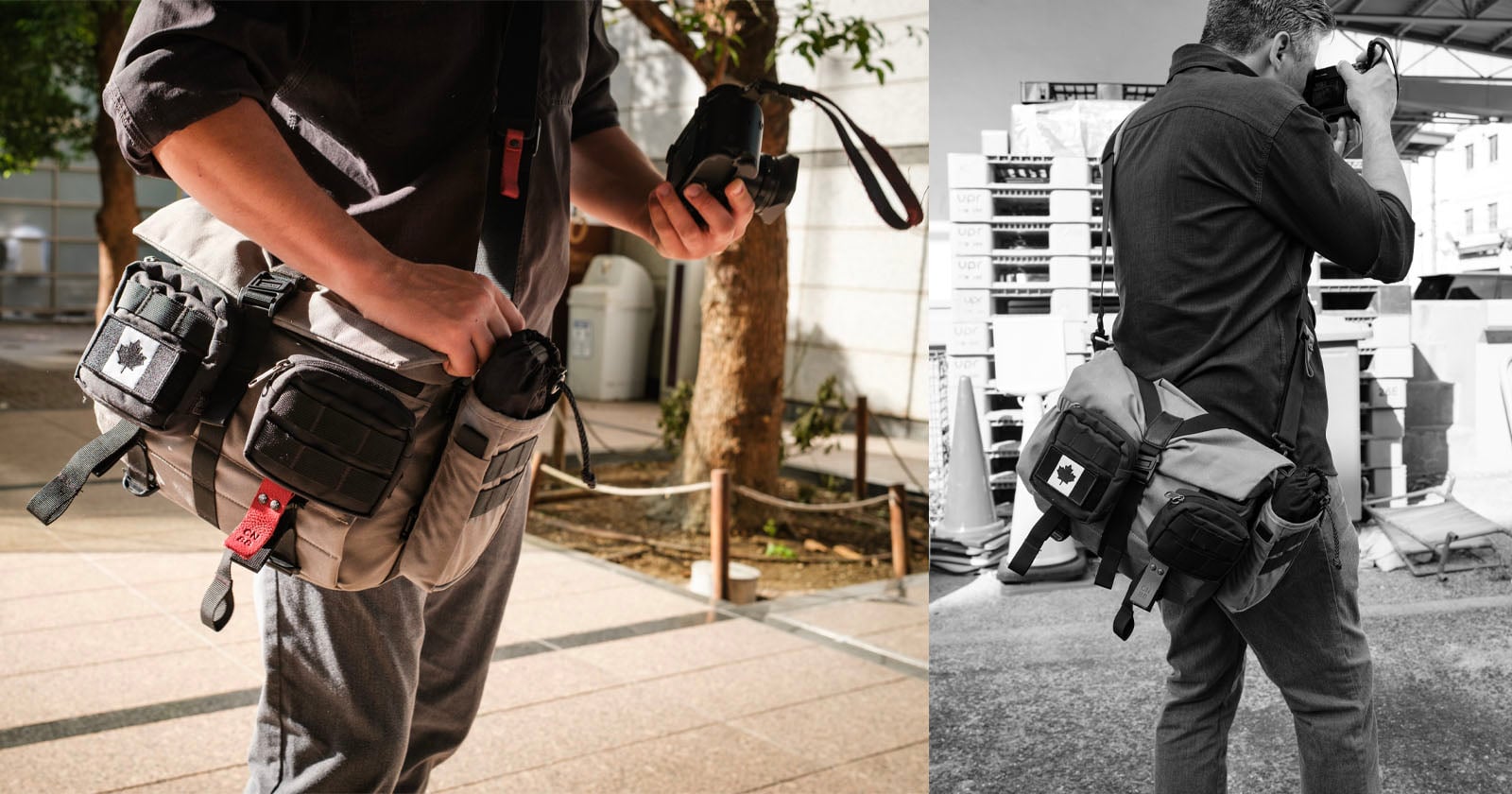
Wotancraft, Chris Niccolls, and PetaPixel have announced a limited, special edition of the Pilot messenger camera bag. After almost a year of development, the Chris Niccolls x Wotancraft Special Edition Pilot 88 features a unique size and tailored adjustments that are ideal for a traveling photographer.
[Read More]
Wotancraft, Chris Niccolls, and PetaPixel have announced a limited, special edition of the Pilot messenger camera bag. After almost a year of development, the Chris Niccolls x Wotancraft Special Edition Pilot 88 features a unique size and tailored adjustments that are ideal for a traveling photographer.
JillyBeanSSF posted a photo:
Sindy: "Trendsetters" Vintage UK Children's Magazine Paper Doll (Marvel Comics LTD.) 1986
*Appeared In: Sindy, "Every Girl's Best Friend!" UK Magazine Issue No. 27 - October 18 (Marvel Comics LTD.) 1986
JillyBean's "FLAT CHICKS" The World of Paper Dolls
Every year, there are two major migration events. Birds, insects, fish, and many mammals head north in the spring to nest and breed and return south in the winter to feed and raise their young. Using BirdCast, a tool that’s active seasonally and allows anyone to see bird migration “heat maps” around the U.S., ornithologists tracked a record-breaking one billion birds migrating on a single October night in 2023 (last year, that number reached 1.2 billion). But on the night spanning October 4 t
Every year, there are two major migration events. Birds, insects, fish, and many mammals head north in the spring to nest and breed and return south in the winter to feed and raise their young. Using BirdCast, a tool that’s active seasonally and allows anyone to see bird migration “heat maps” around the U.S., ornithologists tracked a record-breaking one billion birds migrating on a single October night in 2023 (last year, that number reached 1.2 billion). But on the night spanning October 4 to 5, something else really big happened: nearly 1,000 birds died in Chicago after hitting a single building.
McCormick Place Lakeside Center is situated along the Lake Michigan shoreline, set apart from other buildings in a park-like space, and it has roughly enough windows to cover two football fields. As birds cruise along the shore, flitting over greenery, they sometimes mistake the reflections of nature in glass for the real thing. On the morning of October 5, hundreds of birds fell victim to architecture.
When artist and educator Holly Greenberg heard this news, she was stunned. No stranger to nature and long interested in sustainability and the environment, she was nevertheless totally unaware of the scale of bird collisions in the U.S. During a day out in a Chicagoland arboretum, on sabbatical from her role as assistant professor at Syracuse University, she worked with a group to remove invasive buckthorn and make room for native trees. A fellow volunteer rued the sad irony of planting new bird habitat when the feathered creatures try to fly into their reflections in glass instead.
“That was the first time that I’d heard that these birds were crashing into windows in Chicago,” Greenberg says. When she later read about the mass collision at McCormick Place, she thought, “Oh man, something needs to be done.” That’s when the multi-year project Bird Collisions in the Anthropocene was born.
Greenberg launched the initiative in 2024 to not only raise awareness of the problem but also to educate people about preventing incidents. Using data from the Chicago Field Museum and with the help of its lead ornithologist Dave Willard, Greenberg landed on a specific number: 10,863. That’s how many were found dead after hitting Chicago buildings in 2023 alone.
It’s estimated that around one billion birds die in window collisions annually throughout North America. One of the organizations working to collect this data and—just as importantly—to protect, rescue, and advocate for avians is the Chicago Bird Collision Monitors (CBCM) program. Every morning, volunteers walk the streets of the city to count and collect fallen individuals, taking them to wildlife sanctuaries for treatment or rehabilitation where possible. Most, however, don’t survive the impact.
Bird specimens at the Field Museum
Paul Groleau, president of a company called Feather Friendly that makes bird-safe window treatments, suggests that many more die from window impacts than we realize. Greenberg hears people at her workshops say things like, “I heard a bird hit my window, but it flew off, so it’s fine.” Groleau, however, posits that about 60 percent of birds that are stunned do not survive. Their skulls are paper-thin, and if they don’t hemorrhage, they may sit under some shrubbery as they try to recover, which makes them more vulnerable as prey.
When CBCM volunteers find dead specimens, they take them to the Field Museum, where the bodies become part of an archive Willard has overseen for decades. Many are preserved in the museum’s collection, each tagged and identified. At the very least, they are added to a carefully tended data set, which lists thousands upon thousands specifically killed by impacting windows at speed.
10,863 is the number Willard had recorded in 2023. Of course, the actual number of birds that collided with windows that year is exponentially higher, but the figure reflects the number that Willard and the CBCM volunteers found. And it’s the exact number that Greenberg is getting thousands of people to help recreate from fabric and glue. At the same time, she’s sharing knowledge about collisions with others through craft, science, advocacy, and social practice.
Starting with a small grant and a group of interns at Syracuse University, Bird Collisions in the Anthropocene began with the list of avians from the Field Museum, some basic crafting supplies, and photographs of individual birds so that makers could replicate the actual species. Eventually, Greenberg relocated to Evanston, Illinois, a suburb of Chicago, and opened a studio where she hosts workshops and processes birds that are sent in from all over North America.
Workshops are facilitated across the U.S. and Canada, and so far, a total of more than 140 have been held. Materials can be downloaded from the website, and anyone can host a workshop. Popular locations include public libraries and schools. Cornell Lab of Ornithology, which is behind the BirdCast tool, has even launched a pilot program to send hundreds of sew-a-bird kits to biology teachers in New York State in order to help students complete a core education requirement.
The hands-on, participatory, and very communal aspect of the bird workshops is fundamental to the project’s success. Greenberg opens her studio to the public on the first Saturday of every month as part of the Evanston Made program, and private gatherings can be organized, too. “People get into the flow, no one is touching their phone, and everyone is super concentrated,” Greenberg says. “They’re working with awkward materials, and it’s a mess, but it’s a good creative mindset.”
Studies have shown that hands-on or experiential learning is linked to greater knowledge retention, attentiveness, and experimentation. As people create their house sparrows, dark-eyed juncos, golden-crowned kinglets, and many more—and one’s level of technical skill is no matter—a sense of camaraderie builds around a common pursuit. Greenberg then provides resources about how to help prevent bird collisions, such as information about remediation technologies.
Businesses like Feather Friendly make products that can be applied directly to any window, most commonly in the form of small vinyl dots. It also offers Bird Divert, which uses clear dots that are actually hard for us to see, but due to the way birds’ vision works, the application helps them to differentiate between architecture and nature. Fritted glass is another method, which involves ceramic details baked right onto the surface of the glass.
Artist Taro Takizawa in front of the ‘Bird Collisions in the Anthropocene’ studio in Evanston
Greenberg sees the artistic potential in the remedial window coverings, and she has previously invited artist Taro Takizawa to apply beautiful organic lines made of hand-cut vinyl on the top windows of her Evanston studio. For a forthcoming social project this summer, Greenberg plans to install different types of remediation dots on the large storefront windows of the space, plus an installation by artist Alice Hargrave, who creates abstract works using the sound waves of bird calls.
While the official number of finished birds is currently at 3,451, Greenberg estimates there are at least 1,000 more awaiting tagging and entry into the project’s handwritten ledger, which is reminiscent of museum catalogues before computerized records came into widespread use. With the help of a team of interns, she labels each bird individually with its species name, its artist, and where it “flew” in from. And installation opportunities abound.
Eventually, the birds will create one giant “carpet” to illustrate not only the poignant and urgent reality of bird collision deaths, but the power of collective action. In the meantime, groups of the fabric critters go on view occasionally in other exhibitions. One of these is Chicago Architecture Center’s forthcoming show, Flyway City, which “aims to catalyze positive change on making cities safer and more welcoming for birds and diverse wildlife” by focusing on how architecture can help to protect avians from the get-go.
The exhibition is organized by Studio Gang, whose lead architect, Jeanne Gang, has also encouraged the city of Chicago to enact building codes that are more bird-friendly. While Evanston has an ordinance that requires bird-friendly building design, Chicago does not yet, although it’s been on the table many times. Greenberg hopes that continued advocacy and information-sharing empowers others to speak up, too, so that these types of changes will be seen in more communities all over North America.
Flyway City runs from June 11 to January 3, 2027, in Chicago. Keep updated about workshops and other ways to get involved by following Greenberg’s Instagram.
Manuel Gual posted a photo:
The Quiet Discipline of Japanese Woodworking: A Traditional Joinery Workshop
Description
Inside a serene Japanese woodworking studio, the images reveal the slow, precise, and deeply tactile world of traditional cabinetmaking. Soft natural light filters through shoji screens, illuminating aged wooden workbenches, hand planes, chisels, saws, measuring tools, stacked timber, polished drawers, iron hardware, and carefully assembled joinery. The atmosphere is calm an
The Quiet Discipline of Japanese Woodworking: A Traditional Joinery Workshop
Description
Inside a serene Japanese woodworking studio, the images reveal the slow, precise, and deeply tactile world of traditional cabinetmaking. Soft natural light filters through shoji screens, illuminating aged wooden workbenches, hand planes, chisels, saws, measuring tools, stacked timber, polished drawers, iron hardware, and carefully assembled joinery. The atmosphere is calm and contemplative, shaped by patience, repetition, and respect for material.
The series follows the full rhythm of artisanal creation: selecting and preparing raw boards, drawing measured plans by hand, sharpening blades on a wet stone, cutting and carving joints, planing long ribbons of wood from a board, assembling drawers and cabinets, fitting metal handles, brushing lacquer, polishing surfaces, and finally presenting finished tansu-style furniture in a quiet tatami room. Every scene emphasizes craftsmanship over speed, touch over machinery, and inherited knowledge over industrial production.
The visual language combines documentary realism with a refined cinematic sensibility. Warm wood tones, indigo work garments, soft diffused daylight, shallow depth of field, sawdust, wood grain, worn tools, and traditional Japanese interiors create an intimate portrait of a craft that feels timeless. The images celebrate not only furniture making, but also the philosophy behind it: restraint, precision, durability, balance, and beauty found in useful objects.
This collection is ideal for themes related to Japanese culture, traditional carpentry, handmade furniture, heritage crafts, sustainable design, woodworking, wabi sabi aesthetics, slow craftsmanship, interior design, and the quiet dignity of manual labor.
The images have been generated by Artificial Intelligence.
chris murkin posted a photo:
VH-HET 1945 Supermarine Spitfire HF.VIII RAF as MV239 RAAF A58-758 Marked up as A58-602 RG-V Grey Nurse
Photo Taken at Warbirds over Scone NSW Australia March 2026
VH-HET 1945 Supermarine Spitfire HF.VIII RAF as MV239 RAAF A58-758 Marked up as A58-602 RG-V Grey Nurse
Photo Taken at Warbirds over Scone NSW Australia March 2026
When we visit major hubs like Copenhagen or Paris, we often take a lot of photos and make sure to grab a little souvenir as a memento of our visit. How better to remember the architecture and the feel of the city? Well, fiber designer Jake Henzler, a.k.a. Boy Knits World, figures you can stitch those memories into something much cozier than a postcard or a keychain.
Forthcoming from David & Charles Publishing, Henzler’s book Knit the City highlights buildings around the world through a
When we visit major hubs like Copenhagen or Paris, we often take a lot of photos and make sure to grab a little souvenir as a memento of our visit. How better to remember the architecture and the feel of the city? Well, fiber designer Jake Henzler, a.k.a. Boy Knits World, figures you can stitch those memories into something much cozier than a postcard or a keychain.
Forthcoming from David & Charles Publishing, Henzler’s book Knit the City highlights buildings around the world through a series of building block-like patterns. Using a modular system, details like gables and windows can be switched up to create your own unique facades. Then it’s up to you to choose the colors you’d like to use. The blocks can then be stitched together to create a blanket, pillow covers, or any other application you can come up with.
Knit the City is slated for release on May 5. Pre-order your copy in the Colossal Shop. You can also find Henzler’s patterns on Ravelry.
From dusky woodland scenes to fantastical landscapes populated by mythical creatures, Shannon Taylor’s vibrant dioramas spring to life inside vintage cosmetic compacts. Sourced from flea markets, vintage shops, friends, and anywhere else they might appear, the vessels themselves are often brimming with character, but they let on little about what resides inside. Tiny mermaids, unicorns, and a range of flora and fauna made with watercolor on paper beckon us into a Polly Pocket-sized realm.
From dusky woodland scenes to fantastical landscapes populated by mythical creatures, Shannon Taylor’s vibrant dioramas spring to life inside vintage cosmetic compacts. Sourced from flea markets, vintage shops, friends, and anywhere else they might appear, the vessels themselves are often brimming with character, but they let on little about what resides inside. Tiny mermaids, unicorns, and a range of flora and fauna made with watercolor on paper beckon us into a Polly Pocket-sized realm.
In addition to the inclusion of her work in Common Watersat Arch Enemy Arts, Taylor is preparing for a solo exhibition titled Minor Mending at Modern Eden in San Francisco, which opens on August 6. She also curated a show at the Oakland Museum of California titled Fairyland @ 75: A Legacy of Magic, organized on behalf of Children’s Fairyland, where she is Director of Art and Restoration. The show continues through the end of the summer. See more on Taylor’s Instagram.
Exterior of the diorama shown aboveExterior of the diorama shown aboveA diorama in progress
KohensDigicams07 posted a photo:
This was towards the end of the airshow when the classic P51 Mustang returned to the ground! This was shot on the Kodak EasyShare CD33:)

 Login
Login