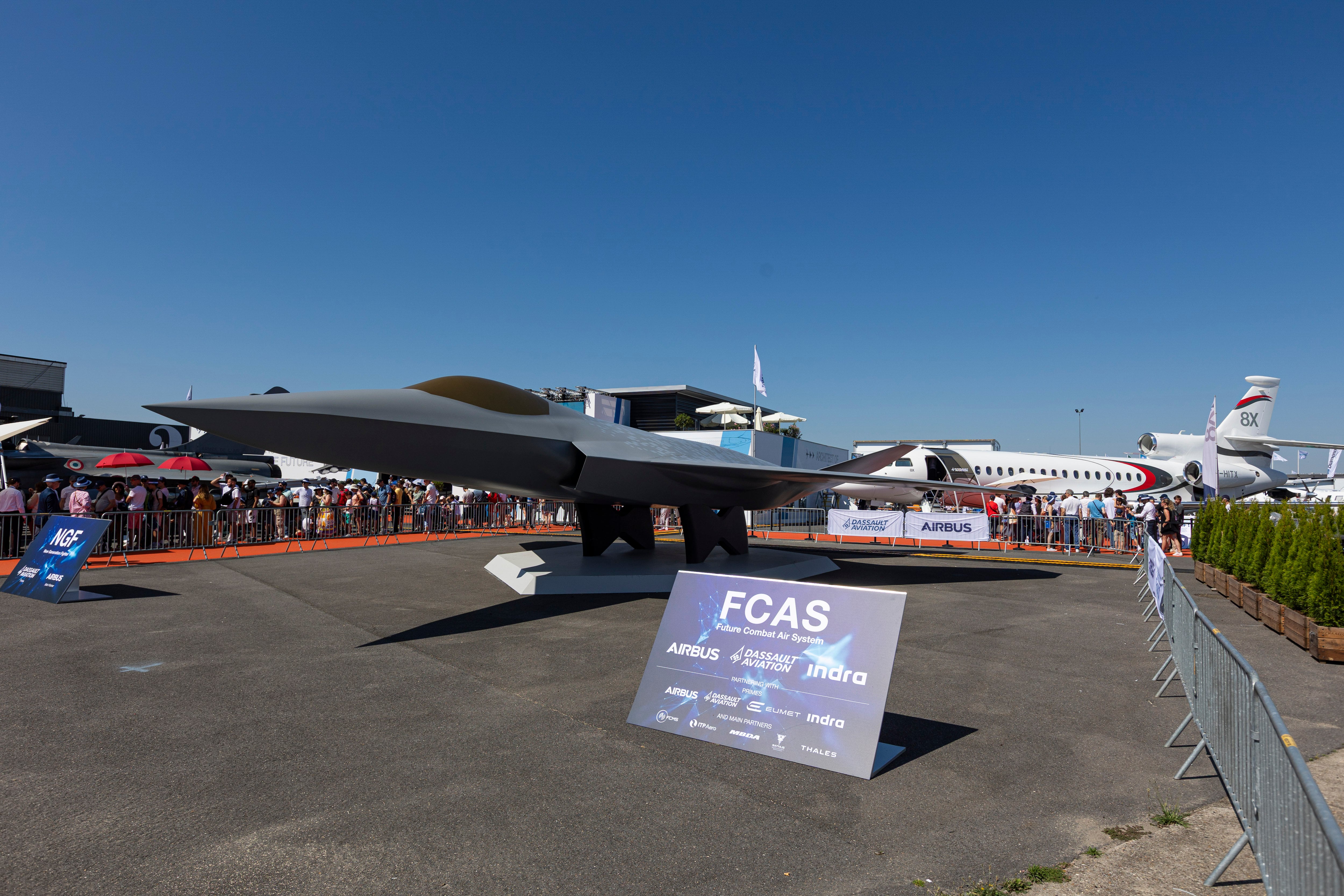
The European Future Combat Air System (FCAS), a joint project led by France and Germany with participation from Spain, has failed because of disagreements between Airbus, the German representative, and Dassault, the French firm. It was the most ambitious European project at a time when the EU says it wants to increase and coordinate military spending to develop shared defense technologies, programs, and platforms — like the one that collapsed on Monday, June 8. What happened with FCAS casts doub
The European Future Combat Air System (FCAS), a joint project led by France and Germany with participation from Spain, has failed because of disagreements between Airbus, the German representative, and Dassault, the French firm. It was the most ambitious European project at a time when the EU says it wants to increase and coordinate military spending to develop shared defense technologies, programs, and platforms — like the one that collapsed on Monday, June 8. What happened with FCAS casts doubt on whether Europe can ever reconcile national sovereignty with the demands of building next-generation, complex weapons systems, at a moment when the EU is trying to bolster its defense sovereignty and the United States is beginning to withdraw its security umbrella. It also adds pressure and lessons for other projects trying to move forward.
Hong Kong International Airport is among the top polluting hubs in the world, a UK thinktank has found.
Travellers in the Hong Kong International Airport. Photo: GovHK.
On Wednesday, new data from global affairs thinktank ODI Global ranked Hong Kong’s airport as the world’s sixth most polluting in terms of flight CO2 emissions, and second in Asia-Pacific.
The study, based on 2023 data from the International Council on Clean Transportation, concluded that the fossil-fuel dependent avia
Hong Kong International Airport is among the top polluting hubs in the world, a UK thinktank has found.
Travellers in the Hong Kong International Airport. Photo: GovHK.
On Wednesday, new data from global affairs thinktank ODI Global ranked Hong Kong’s airport as the world’s sixth most polluting in terms of flight CO2 emissions, and second in Asia-Pacific.
The study, based on 2023 data from the International Council on Clean Transportation, concluded that the fossil-fuel dependent aviation sector would be the fifth-largest emitter if it were a country.
Hong Kong emitted 15.1 million tonnes of CO2, and saw 138,764 flights, in 2023.
Seoul was Asia-Pacific’s most polluting airport, responsible for 16.8 million tonnes of CO2 emissions in 2023. Dubai topped the global ranking with 23.2 million tonnes of CO2, followed by London’s Heathrow.
The 20 cities with the highest airport emissions. Chart: ODI Global.
The research also showed that Hong Kong’s airport was a significant source of local pollutants – it ranks ninth in the world, emitting 4,572 tonnes of nitrogen oxides in 2023.
The thinktank warned against reliance on so-called “sustainable” aviation fuels to bring down emissions, citing “high production costs and price premiums, limited policy support, weak long-term offtake commitments, bankability challenges and constraints on feedstock availability and sustainability.”
It also said that jet fuel emissions are predicted to increase and eat up future carbon budget: “The sector’s own high-growth scenario projects passenger demand could increase by 3.3% annually, from 9.0 trillion revenue passenger-kilometers (RPKs) in 2024 to 21.9 trillion RPKs in 2050. Between now and 2050, aviation is projected to consume 15% of the remaining carbon budget associated with 1.7ºC of warming.”
HKFP has reached out to the Environmental Protection Department and the Airport Authority for comment.
chris murkin posted a photo:
G-AHAG 1945 De Havilland Dragon Rapide DH-89A RAF RL944
This Aircraft was built by Brush Coachworks Ltd which was at Loughborough in Leicestershire Brush Coachworks Ltd, DH89A in the livery of Scillonia Airways and is based at Membury airfield in Berkshire
A number of Rapides were used during WWII to provide internal flights under the control of National Air Communications
Photo taken at Old Warden Shuttleworth Wings & Wheels Air Show 30th May 2026
HAH_8767
G-AHAG 1945 De Havilland Dragon Rapide DH-89A RAF RL944
This Aircraft was built by Brush Coachworks Ltd which was at Loughborough in Leicestershire Brush Coachworks Ltd, DH89A in the livery of Scillonia Airways and is based at Membury airfield in Berkshire
A number of Rapides were used during WWII to provide internal flights under the control of National Air Communications
Photo taken at Old Warden Shuttleworth Wings & Wheels Air Show 30th May 2026
HAH_8767
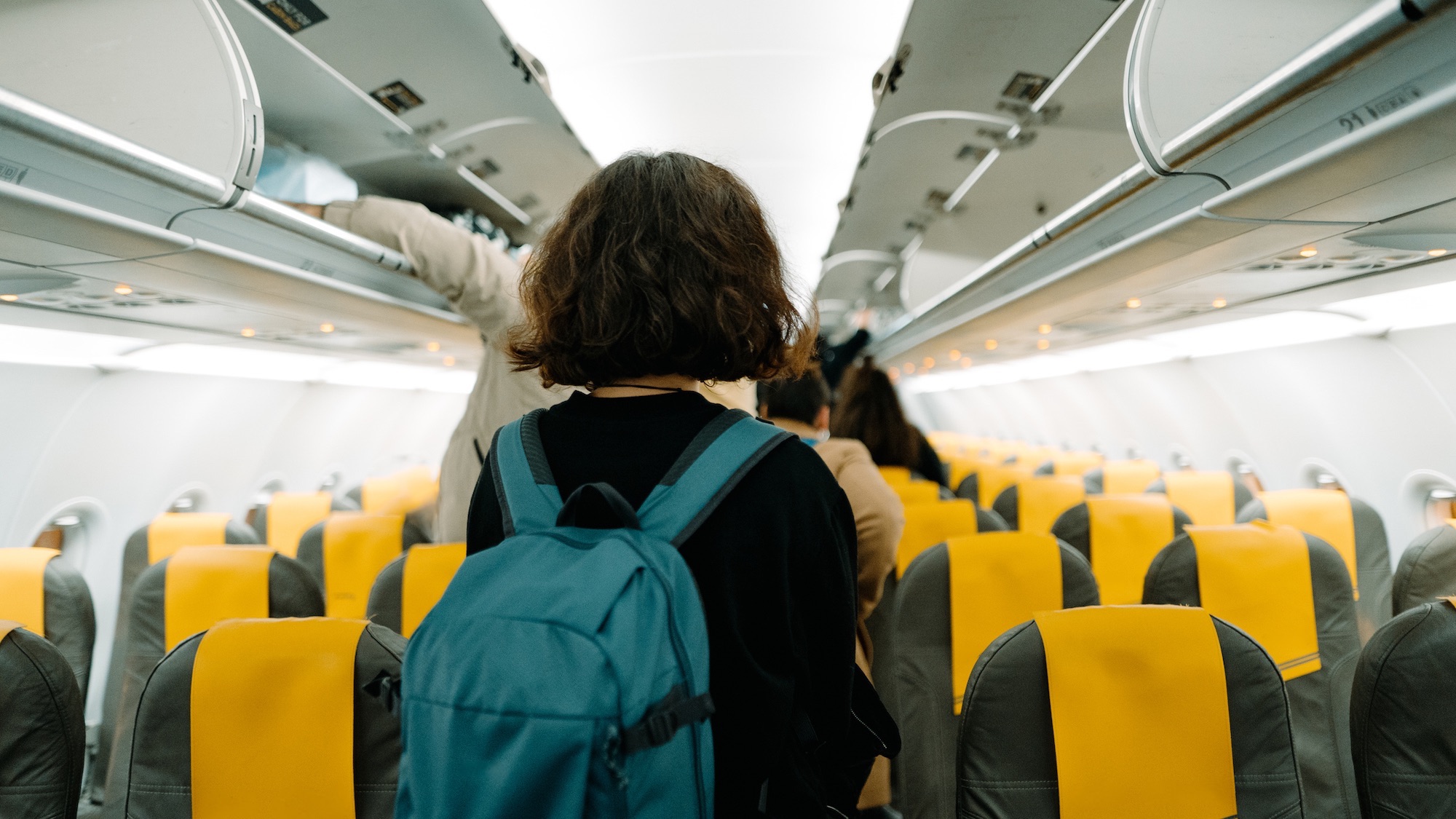
Navigating air travel in 2026 is full of annoyances, but few bring more dread than the boarding process. What was once a straightforward exercise has grown increasingly complicated due to the proliferation of groups, zones, and variations of priority-based seating. All of this, studies show, has contributed to boarding times getting gradually longer each year. Boarding in the 1970s reportedly took just 15 minutes. Today, that process often takes up to 40.
Now, a University of Florida master’s
Navigating air travel in 2026 is full of annoyances, but few bring more dread than the boarding process. What was once a straightforward exercise has grown increasingly complicated due to the proliferation of groups, zones, and variations of priority-based seating. All of this, studies show, has contributed to boarding times getting gradually longer each year. Boarding in the 1970s reportedly took just 15 minutes. Today, that process often takes up to 40.
Now, a University of Florida master’s student named Adam Jacobs has built a simulator that clearly visualizes what so many travelers already feel in their gut. Jacobs created a computer model simulating a 186-seat Airbus A320neo and had computer-generated travelers board using three well-documented methods: random, back-to-front, and the lesser-known but academically popular “Steffen method.” Jacobs initially posted the video clip on LinkedIn but it had since gained traction on Instagram and other social platforms.
The video shows passengers, represented as red dots, making their way through the cabin and sitting in their respective seats. The seats appear as blue squares when they are empty but then turn green once a passenger sits down. Each method plays out at the same time side by side for an up-to-moment comparison. The Steffen method, which prioritizes boarding window seats first, concluded boarding after just 11 minutes and and 16 seconds, by far the fastest of the three. Random seating, which is essentially Southwest Airlines offered until recently, completed in 17 minutes and 59 seconds.
Loading back-to-front, however, which many intuitively assume should be the most efficient approach, actually performed far worse than the other two, taking 31 minutes and 15 seconds. That sounds bad, but the real-world experience for most travelers is even worse. Numerous studies have shown that front-to-back loading, more or less the standard approach for most airlines, is even less efficient than back-to-front. Zone-based loading, meanwhile, arguably reduces chaos at the gate but does not produce meaningfully faster boarding times.
“Random boarding performs surprisingly well,” Jacobs writes. “People could get to their destination faster if gate agents just said ‘everyone get on the plane now.’
Despite seeming logical, back-to-front boarding is very slow compared to other methods. Screenshot: Adam Jacobs
Angry at long boarding times? Blame checked bag fees.
So why is something as seemingly simple as loading people onto a plane so complicated and so frustrating? The answer mostly comes down to two things: the battle for overhead bin space and ever-tightening, profit-maximizing by airlines. Boarding used to be straightforward. Most carriers would prioritize first class passengers and those needing extra time, then open the cabin to everyone else. But that began to change around 2008, when airlines started charging for checked bags. Checked bags, like so many things that were once included in the base fare, used to be free.
That seemingly small change had ripple effects. Now passengers wanting to sidestep paying for a checked bag had an incentive to bring their bags as carry-ons. But, as any regular traveler knows, there is rarely ever enough overhead bin space to accommodate a bag for every person. That meant a greater interest from passengers to board early. Airlines, seeing untapped demand there, decided to charge fees to non-first class passengers to board early. That evolved into the group and zones and seemingly endless options of prioritized seating. Passengers, trying to avoid paying a checked-bag fee, ended up paying another fee instead to board early. The resulting complexity of all of that translated to longer board times for everyone.
“Airlines figured out they could make money off of bags,” Embry-Riddle Aeronautical University professor Massoud Bazargan told CNN in 2023. “That killed any efficiency to do faster boarding.”
“Zones reduce congestion at the gate, and they’re how airlines sell priority boarding,” Jacobs said. “That revenue apparently outweighs a few minutes of turnaround time.”
Better ways to board already exist
Realization of the overhead bag bottleneck isn’t new. In fact, that’s exactly the problem being addressed in the Steffen model featured in Jacobs’ simulation video. The concept dates back to 2005 when a University of Nevada astrophysic professor named Jason Steffen reportedly became obsessed with airline boarding after getting stuck within a jet bridge at Seattle International Airport. Steffen took his expertise in computer modelling, which he has previously used to measure exoplanets, and applied it to airplane boarding.
After running hundreds of simulations, it became clear that much of the delay was caused by the aisle getting bogged down as passengers tried to stow their luggage. Steffen tweaked his model to specifically solve for that inefficiency. What followed was a system where passengers with even-numbered window seats board first, followed by those with odd-numbered window seats. Next come passengers with even-numbered middle seats, then odd-numbered middle seats, and so on, with all passengers boarding two at a time.
The process looks bizarre, but it works, at least in theory. By spacing out passengers and ensuring everyone can stow their luggage without blocking the aisle, the “Steffen Method” cuts overall boarding time by up to half in simulations compared to front-to-back boarding.
So if it’s so much faster, why isn’t the Steffen method the standard? Part of the issue is that the model doesn’t really account for families or companions traveling together. People sitting together wouldn’t board together under this method, which would likely cause frustration at the gate. More than that though, the real flaw lies in the reality of human behavior. People (especially cranky travellers) simply don’t behave like tidy mathematical models, a point viewers of Jacobs’ post seemed to intuitively grasp.
“It’s much easier to model things when you ignore basically everything and just pretend everyone it [sic] traveling alone and is of the exact same physical capability,” one user commented on Instagram.
“Would never work outside the simulation,” another user on LinkedIn wrote. “Sorting the people prior boarding would be a nightmare. Forcing families with small children to separate while boarding is inhumane.”
Other models have come along other the years tweaking Steffen’s downsides, but they all eventually come face to face with an arguably bigger roadblock: the airlines. When it comes to charging for boarding the cat’s out of the bag. What began as a niche product for a select few looking to get ahead has turned into a booming business. And with the average plane today fuller and more densely packed than ever before, travelers arguably have more incentive than ever to pay a few extra bucks to jump ahead, even if that creates a worse overall experience for everyone.
The science of airplane boarding, in other words, has less to do with models and efficiency and more to do with old-fashioned greed.
chris murkin posted a photo:
VH-HET 1945 Supermarine Spitfire HF.VIII RAF as MV239 RAAF A58-758 Marked up as A58-602 RG-V Grey Nurse
Photo Taken at Warbirds over Scone NSW Australia March 2026
VH-HET 1945 Supermarine Spitfire HF.VIII RAF as MV239 RAAF A58-758 Marked up as A58-602 RG-V Grey Nurse
Photo Taken at Warbirds over Scone NSW Australia March 2026
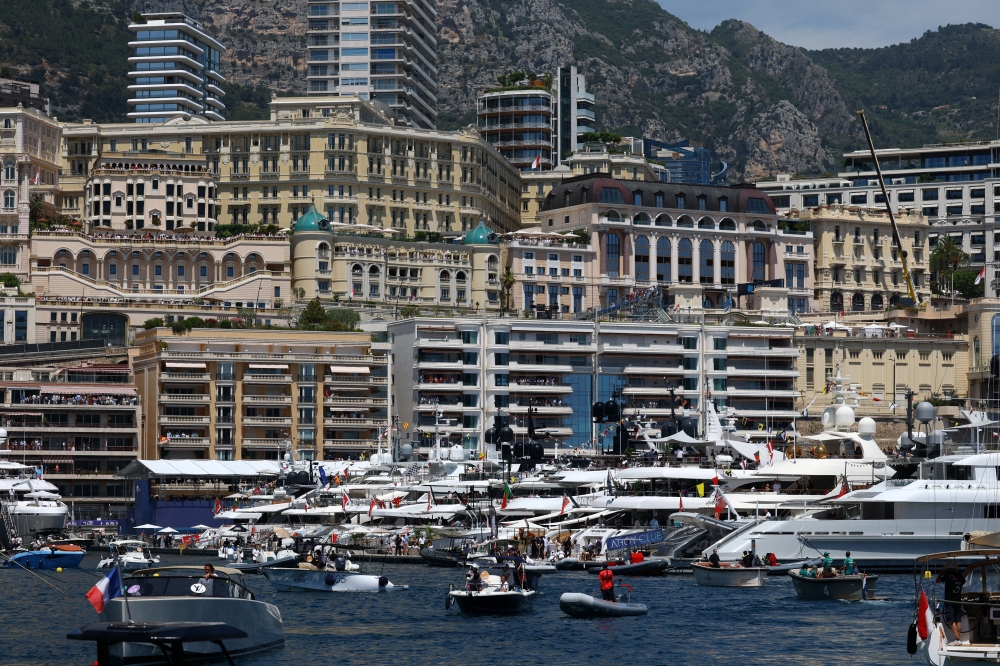
LONDON, June 9 — As soaring jet fuel prices triggered by the Iran war send ripples across the global travel market, a wealthy elite of CEOs, celebrities and sports stars is flying by private jet in greater numbers than ever before, to glitzy events from the Monaco Grand Prix to the Cannes film festival.The phenomenon is another sign of the so-called “K-shaped” economy that is showing up across consumer markets from luxury to dining, industry watchers say, as high
LONDON, June 9 — As soaring jet fuel prices triggered by the Iran war send ripples across the global travel market, a wealthy elite of CEOs, celebrities and sports stars is flying by private jet in greater numbers than ever before, to glitzy events from the Monaco Grand Prix to the Cannes film festival.
The phenomenon is another sign of the so-called “K-shaped” economy that is showing up across consumer markets from luxury to dining, industry watchers say, as high-income travellers spend more while middle- and lower-income groups tighten their belts, with budget carriers in particular feeling the squeeze.
Jet fuel costs have roughly doubled since the start of the war in late February, forcing global airlines to cancel flights and raise ticket prices, while missile and drone strikes around the Gulf have seen flights almost halve in a region that was a global connection hub.
“The world is in turmoil, but not our passengers,” Deniz Weissenborn, owner of Platoon Aviation, which charters eight-seat jets, told Reuters, explaining that its clients are wealthy enough to absorb higher prices.
“If you fly in a private jet, I don’t think you’re bothered by an increase of 1,000 or 2,000 euros.”
According to aviation data firm WINGX, the number of private flights has increased by about 4 per cent globally so far this year, adding thousands of trips. In the same period, overall global capacity has fallen 3-4 per cent, data from aviation analytics firm Cirium shows.
‘As busy as ever’
Private jet pilots and executives told Reuters that charter jet services are seeing an uptick in bookings as wealthy travellers turn away from premium, business and first class in an effort to dodge the risk of commercial flight cancellations and airport disruption due to the conflict.
Amalfi Jets founder and CEO Kolin Jones said there had been around a quarter more requests for Cannes this year compared to last, while those for Sunday’s Monaco GP were up almost a third, as people switched up from commercial flights.
“Lots who could afford it but flew commercial are now happy to pay more for the safer option,” Jones said. “Cannes Film Festival, Monaco Grand Prix, and World Cup-related travel from Europe to the US are driving demand.”
Eight private jet executives said that while private traffic to the Middle East had dipped given airspace safety concerns, demand for travel to Europe and the United States was likely to approach record levels this year.
“It is as busy as ever,” said Andy Spencer, a private jet pilot who has flown routes in the Middle East and Asia.
During early February’s US Super Bowl in California, private traffic at nearby airports was three times that of a normal day, WINGX told Reuters. For April’s Masters Golf Tournament in Augusta, private traffic was 10 times more than normal, jumping from fewer than 50 flights to more than 400.
“Our customers’ flight hours continue to hit record highs month after month,” private jet maker Embraer’s CEO Francisco Gomes Neto told Reuters at an executive aviation airshow in May in Sao Paulo, Brazil.
‘People feel safe when they have control’
Private jets have come in for criticism from climate groups and campaigners, who say their use underscores global inequality, is a threat to the environment and that regulation of the sector is too lax.
A spokesperson for the European Business Aviation Association said the sector played an important role in Europe’s connectivity and criticism was overly simplistic, while manufacturers and charter operators added that well-heeled individuals were simply looking for more security in uncertain times.
“Every time there are world events, private aviation gets a little bit of a bump, every single time,” said Jason Middleton, owner of Silver Air Private Jets, citing the Iran war, the Covid pandemic and unrest in South America.
“It’s like a safety thing...People feel safe when they have control.” — Reuters
Manuel Gual posted a photo:
A Cinematic Journey Through the History of Aviation
Description:
A wide cinematic collection celebrating the evolution of aviation, from fragile early biplanes and daring pioneer pilots to flying boats, wartime fighters, classic airliners, supersonic icons, stealth aircraft, and futuristic aerospace designs. The series combines golden hour light, dramatic skies, ocean crossings, misty runways, military silhouettes, retro travel atmosphere, and science fiction con
A Cinematic Journey Through the History of Aviation
Description:
A wide cinematic collection celebrating the evolution of aviation, from fragile early biplanes and daring pioneer pilots to flying boats, wartime fighters, classic airliners, supersonic icons, stealth aircraft, and futuristic aerospace designs. The series combines golden hour light, dramatic skies, ocean crossings, misty runways, military silhouettes, retro travel atmosphere, and science fiction concepts to create a visual timeline of flight as both engineering achievement and human dream.
These images have been generated by Artificial Intelligence.
Manuel Gual posted a photo:
A Cinematic Journey Through the History of Aviation
Description:
A wide cinematic collection celebrating the evolution of aviation, from fragile early biplanes and daring pioneer pilots to flying boats, wartime fighters, classic airliners, supersonic icons, stealth aircraft, and futuristic aerospace designs. The series combines golden hour light, dramatic skies, ocean crossings, misty runways, military silhouettes, retro travel atmosphere, and science fiction con
A Cinematic Journey Through the History of Aviation
Description:
A wide cinematic collection celebrating the evolution of aviation, from fragile early biplanes and daring pioneer pilots to flying boats, wartime fighters, classic airliners, supersonic icons, stealth aircraft, and futuristic aerospace designs. The series combines golden hour light, dramatic skies, ocean crossings, misty runways, military silhouettes, retro travel atmosphere, and science fiction concepts to create a visual timeline of flight as both engineering achievement and human dream.
These images have been generated by Artificial Intelligence.

 Login
Login