Normal view

  • ✇Eos
  • Vegetation Moves Upslope Across the Himalayas Katherine Kornei
    When it comes to thriving at high elevation, diminutive plants are always a safe bet. And low-lying vegetation is in fact colonizing higher and higher reaches as the climate changes, new results reveal. Researchers analyzed more than 2 decades’ worth of satellite data and showed that the vegetation line in the Himalayas is moving upward, in some cases by up to several meters per year. These changes have implications for the hydrology of the region and therefore for water resources for the popul
     

Vegetation Moves Upslope Across the Himalayas

14 May 2026 at 13:19
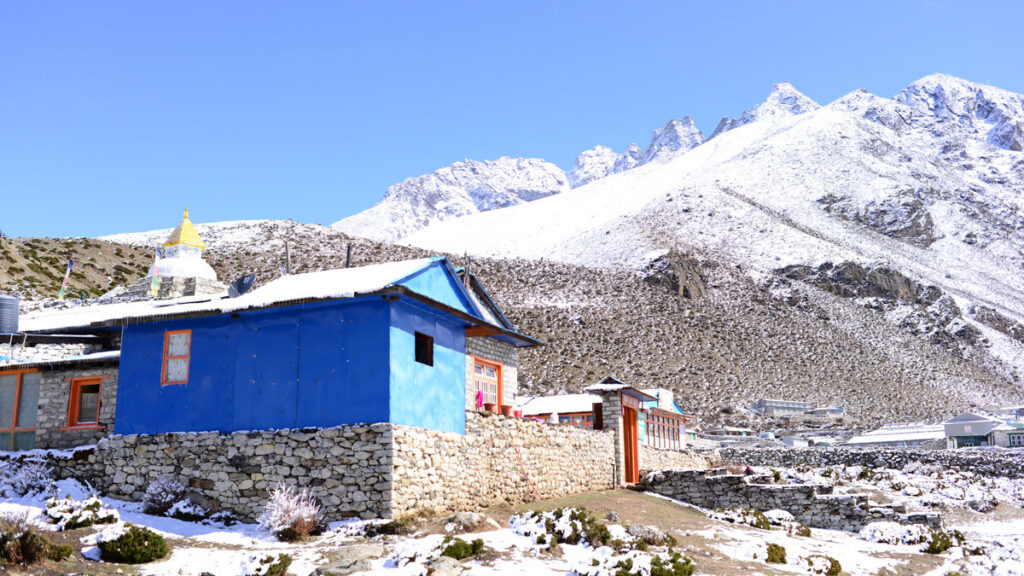
A blue building sits on a stone foundation with snow-covered mountains in the background.

When it comes to thriving at high elevation, diminutive plants are always a safe bet. And low-lying vegetation is in fact colonizing higher and higher reaches as the climate changes, new results reveal. Researchers analyzed more than 2 decades’ worth of satellite data and showed that the vegetation line in the Himalayas is moving upward, in some cases by up to several meters per year. These changes have implications for the hydrology of the region and therefore for water resources for the population centers located downstream, the team reported last month in Ecography.

Mountains and People

“If you’re going to understand climate change across the Himalayas, you can’t just look at one location.”

The Himalayas, with their massive stores of frozen water, are part of a region known as the planet’s “Third Pole.” Nearly a billion people rely on water sourced from this area, but the Himalayas aren’t immune to climate change—shifts in temperature and precipitation patterns are causing glaciers to melt and permafrost to thaw, among other effects. “The Himalayan mountains are experiencing a lot of ecosystem changes,” said Ruolin Leng, an Earth scientist who led this new research while at the University of Exeter in the United Kingdom. She currently works at H2Tab, a wellness company.

And while the macroscopic effects of climate change in mountainous regions—the melting of the aforementioned glaciers, for example—have been readily studied, shifts in vegetation are often overlooked, said Leng. That’s a problem because plant cover affects everything from soil moisture levels to water runoff to the albedo of the planet’s surface, all of which have consequences for how water moves through the larger system, she said. “It’s a very important factor in the hydrological system.”

Leng and her colleagues focused on six sites, each roughly 40,000 square kilometers in size, in Bhutan, Nepal, and politically disputed areas farther west. Altogether the locales spanned roughly 15° in longitude (about the width of a U.S. time zone). The choice to analyze several locations along an east-west gradient was deliberate, said Stephan Harrison, a climate scientist also at the University of Exeter and a member of the research team. “The western Himalayas are very different from the eastern Himalayas in terms of climate. If you’re going to understand climate change across the Himalayas, you can’t just look at one location.”

Spotting Vegetation from Space

For each of those sites, the researchers mined satellite observations collected from 1999 to 2022 by the NASA/U.S. Geological Survey Landsat program. The researchers focused on visible and near-infrared observations to calculate a metric known as the normalized difference vegetation index (NDVI). Vegetation tends to reflect relatively little visible light while reflecting much more near-infrared light, and that fact can be exploited to infer the presence of vegetation in remote sensing data, said Karen Anderson, a remote sensing scientist at the Environment and Sustainability Institute at the University of Exeter and a member of the research team.

After masking out pixels too obscured by clouds or snow to correctly analyze, Leng and her colleagues calculated the NDVI for each 30- × 30-meter Landsat pixel within their study regions. The team retained pixels with NDVI levels above a minimum threshold and used those data, combined with topography information, to estimate the maximum elevation that was reliably vegetated each year. All six sites exhibited upward trends in the elevations of their vegetation lines over time, the researchers found. A site in central Nepal straddling the country’s northern border recorded the largest changes: From 1999 to 2022, the elevation of its vegetation line rose from roughly 5,520 meters to 5,670 meters, an increase of just under 7 meters per year on average. The five remaining sites all recorded annual upward shifts ranging from about 1 to 6 meters per year on average.

“Broadly speaking, plants are moving up mountains,” said Anderson. But different regions are responding differently, she added. (And while similar results have been previously noted in the Himalayas, not all plant life everywhere is moving up—recent research has shown that some tree lines are in fact moving downslope.)

A Climatic Culprit?

“People neglect the little plants.”

To investigate the potential drivers behind these changes, the team studied correlations with three climatic parameters: temperature, total precipitation, and snow depth. These data came from the European Centre for Medium-Range Weather Forecasts reanalysis dataset, which has a spatial resolution of roughly 30 kilometers.

Leng and her collaborators found that their site with the fastest-changing vegetation line also recorded the most rapid increase in snow depth over time. These two changes might therefore be linked, but more work is needed, Anderson admitted. “We haven’t addressed the causal link here. We’ve simply looked for patterns.”

There’s also a significant mismatch in the spatial resolution of the team’s meteorological data and their Landsat data, said Trevor Keenan, an ecosystem scientist at the University of California, Berkeley not involved in the research. Such a discrepancy can be particularly problematic in complex landscapes like mountain ranges because the coarse meteorological data might not be capturing the true microclimates that are bound to persist in such places, he said. “With heterogenous terrain and large elevational gradients, you really need that microclimate information.”

An outcropping of delicate, pinkish white flowers is seen on a mountainside.
Sagarmatha National Park in Nepal, home to Mount Everest, is also host to rhododendron forests like this one. Credit: Peter Prokosch, CC BY-NC-SA 2.0

Anderson knows the geographical complexity of the Himalayas firsthand—in 2017 and 2022, she and other scientists conducted fieldwork in Nepal that informed this research. Those trips were a special opportunity to see plants like dwarf rhododendron thriving in tough conditions, she said. And it was a good lesson in appreciating some of the most diminutive members of the plant kingdom, Anderson added. “People neglect the little plants.”

—Katherine Kornei (@KatherineKornei), Science Writer
Citation: Kornei, K. (2026), Vegetation moves upslope across the Himalayas, Eos, 107, https://doi.org/10.1029/2026EO260149. Published on 14 May 2026.
Text © 2026. The authors. CC BY-NC-ND 3.0
Except where otherwise noted, images are subject to copyright. Any reuse without express permission from the copyright owner is prohibited.

‘Tiger of the mountains’: Nepali guide nicknamed ‘Hillary’ survives six days on Everest in harsh conditions before rescue

4 June 2026 at 07:29

Malay Mail

KATHMANDU, June 4 — A Nepali climbing guide who went missing on Mount Everest for six days and was believed dead has been found alive after crawling alone almost to Base Camp, officials told AFP today.

His wife had even begun to offer last rite prayers for his soul, she told AFP at the hospital in the capital Kathmandu, where he is recovering from “some frostbite” but is conscious.

Mountaineer Dawa Sherpa — who is in his 50s, and is better known as “Hillary” after famed climber Edmund Hillary due to his experience — vanished on the upper reaches of the world’s highest mountain in bitter conditions, early on May 30.

He was found this morning close to Base Camp by the Sagarmatha Pollution Control Committee (SPCC), a Nepali team that helps set routes on Everest and clean up waste left behind.

“He was found by a team of SPCC this morning close to the base camp — he was crawling down,” Pemba Sherpa of 8K Expeditions, which was overseeing search and rescue efforts, told AFP.

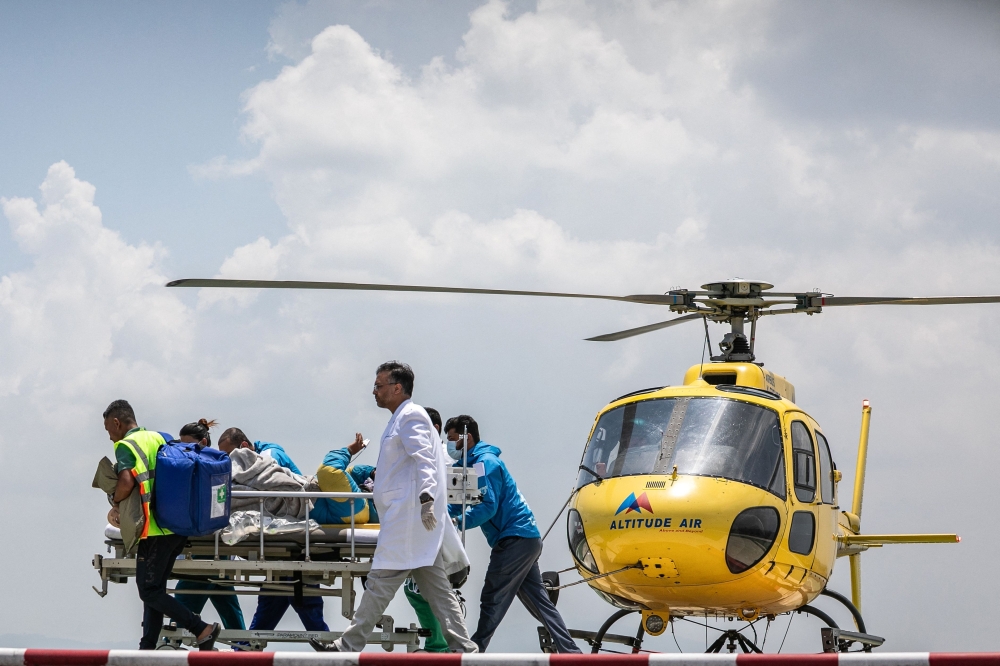
A helicopter flew him to Kathmandu, where an AFP team saw him carried out on a stretcher.

“I spoke to the doctors — he has some frostbite, but otherwise seems okay,” Pemba Sherpa added.

His wife Damu Sherpa said her family was overjoyed.

“We were very happy to hear the news, we had given up hope,” she said. “We also began puja (death prayers) yesterday.”

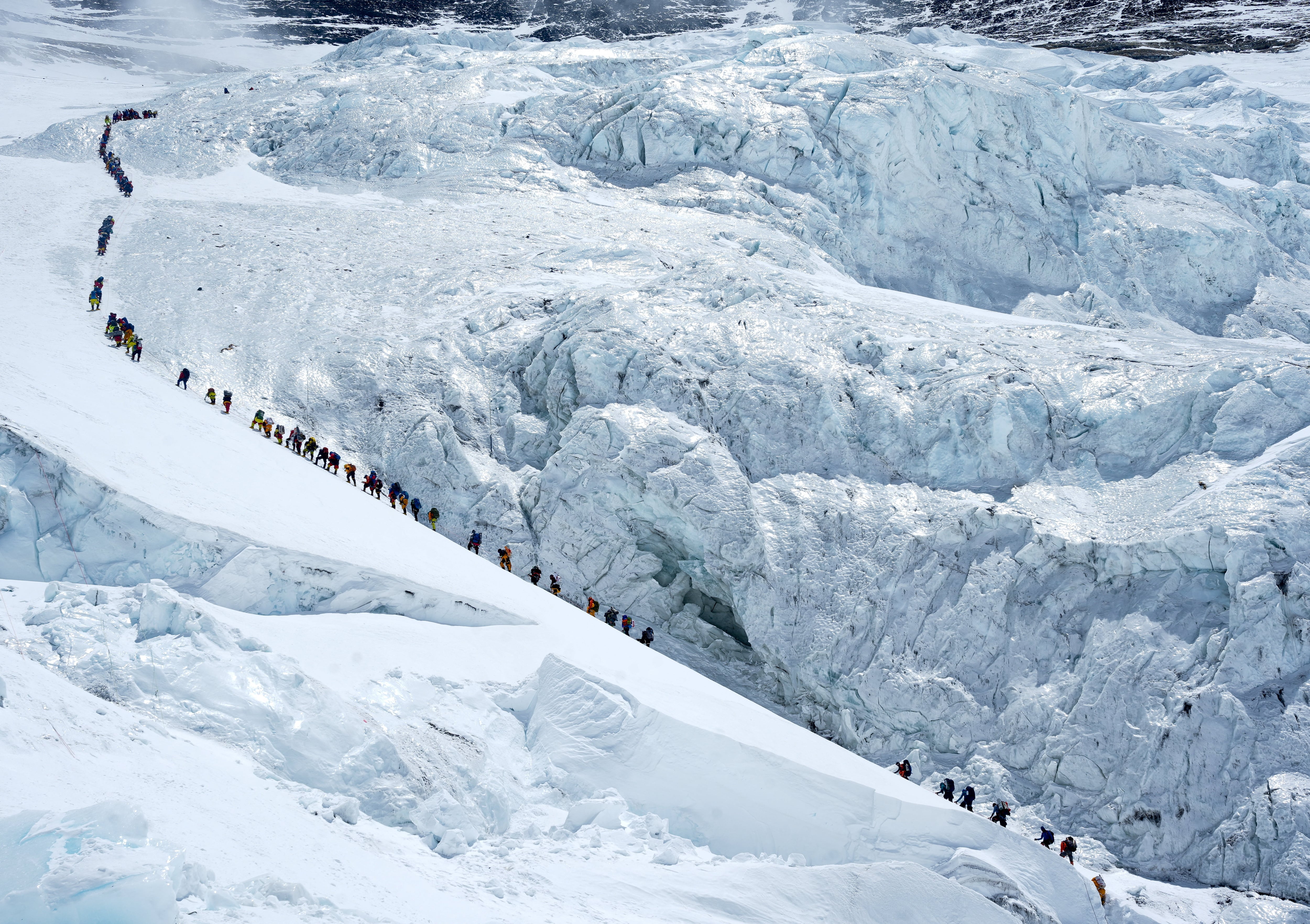
This photograph taken on May 20, 2026, shows mountaineers climbing a slope lined up during their ascent from the Hillary Step to summit Mount Everest in Nepal.

‘Tiger of the mountains’ 

Climber Chris Thrall, a former British Royal Marine, said he successfully summited the 8,849-metre peak with Sherpa around 5pm on May 29.

He posted a video message on Instagram yesterday morning what he thought was the death of Dawa Sherpa.

He called him an “absolute gentle giant of a man and a true ‘tiger of the mountains’”, in a post that assumed the worst.

Thrall described how on May 30 he had begun to descend from Camp Four — at around 7,950m — and just below the low-oxygen “death zone”.

He said that as he descended, Dawa Sherpa stopped.

“He sat down for a rest with his backpack, these guys carry huge loads,” he said.

“And I turned and I said, ‘Hillary, are you okay, brother?’ He said, ‘Yes, yes, fine Chris, please go, go!’ This is nothing new, you know, I’d go ahead, he’d go ahead.”

As Thrall went down, he found a Polish climber who was struggling after running out of supplementary oxygen and had suffered frostbite.

“It had been a long summit push. What should have been five days to the summit and back took us 11 days, that’s how challenging the conditions were,” said Thrall.

“So, do I go back for Sherpa, who’s probably going to rock up and be fine, as he has done hundreds of times before?” he added.

“Or do I help my fellow climber, who’s got no oxygen, frostbite in his fingers, and obviously you’re never far off hypothermia up there?”

Thrall described tough conditions, sharing his oxygen cylinder with the Pole as they descended, taking 11 hours to get to Camp Three. It would usually take two hours.

“I realised we had a really serious situation,” he said.

Search teams set out to find Dawa Sherpa but he was not seen again until this morning, having made his way down on his own.

The climb was one of the last of the season, meaning that there were few other mountaineers on the peak.

At least five people have died this season — two Indians and three Nepali climbers involved in Everest preparations.

More than 1,000 climbers reached the summit of Everest this season, according to initial tallies by Nepali officials, making it the busiest season on record. — AFP

Missing Sherpa guide found alive on Everest after funeral rites had begun

Climbing support team rescue Hillary Dawa Sherpa almost a week on from when he was last seen

A Nepali guide who was believed to have died on Mount Everest has been found crawling to base camp a week after going missing – and after his funeral rites had begun.

Dawa Sherpa, also known as Hillary Dawa Sherpa after the famous climber Edmund Hillary, was last seen on 29 May but did not reach base camp with other climbing groups.

Continue reading...

© Photograph: Narendra Shrestha/EPA

© Photograph: Narendra Shrestha/EPA

© Photograph: Narendra Shrestha/EPA

Henry Todd, or how the ‘king of LSD’ ended up creating the first low-cost agency for Everest tourists

20 May 2026 at 11:28

A few weeks ago, hundreds of climbers hoping to summit Everest were stranded at the mountain’s South Base Camp in Nepal, waiting for a massive block of ice to finally break away and clear the route to Camp I through the Khumbu Icefall. If the climbers were anxious, local agencies were nearly in panic: so much money is at stake that a closed Mount Everest means ruin. But the profits from mountain tourism do not improve the quality of life in a country that, a few months ago, repressed young people protesting in Kathmandu and that in recent days has demolished a vast shantytown sheltering nearly 1.5 million workers, who have been forcibly relocated to places that are equally unfit and even more dangerous. The sun shines on Everest, however, and the sherpas who rig the maze of ice and crevasses in the Khumbu have finally found a safe route that avoids the threatening ice mass.

Seguir leyendo

© Purnima Shrestha (REUTERS)

Dozens of climbers head toward the summit of Everest last Monday.
❌
Subscriptions