White House Says Iran, Ukraine, High On Trump's G7 Agenda


A wave of US strikes represents the gravest test yet of the fragile truce. Here’s what happened, what officials are saying and whether the deal can survive
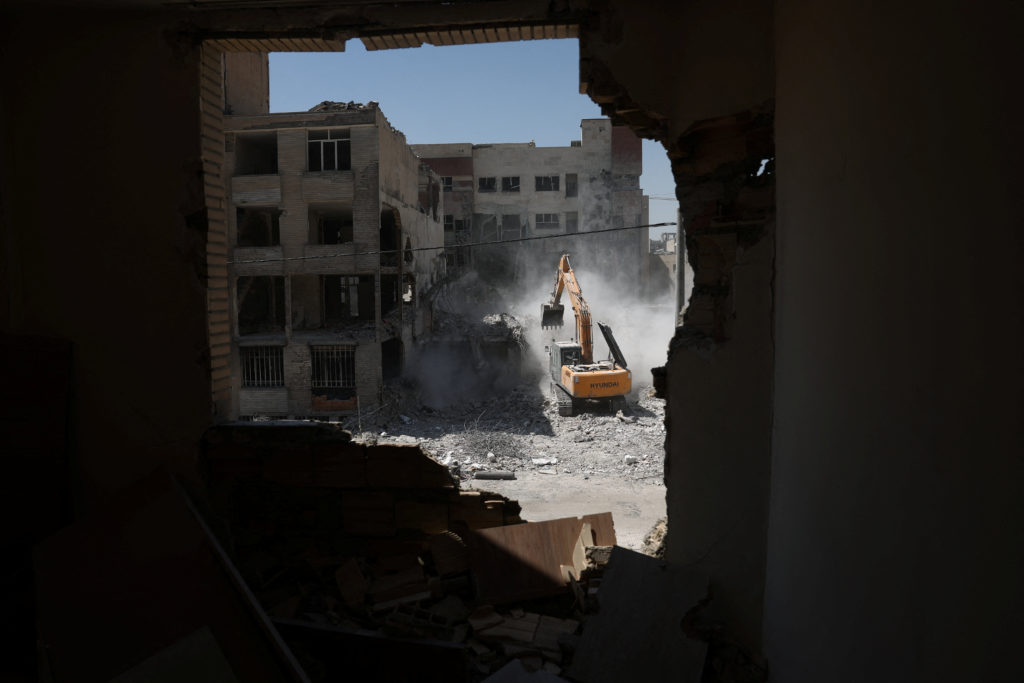
The US has launched strikes across southern Iran for a second consecutive day. Although there have been several breaches since a ceasefire was agreed between the two sides in April, the attacks this week – launched after the downing of a US helicopter over the strait of Hormuz – represent the most serious and extensive breakdown of the truce to date.
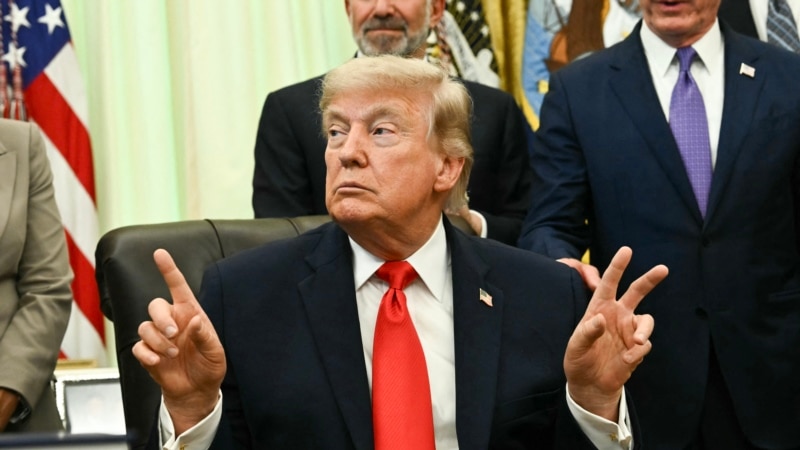
The US president, Donald Trump, has raised the prospect of further attacks, while his defence secretary, Pete Hegseth, has told reporters if strikes “have to happen [Friday] night, they will be strong and they will be clear”.
Continue reading...
© Photograph: Abedin Taherkenareh/EPA

© Photograph: Abedin Taherkenareh/EPA

© Photograph: Abedin Taherkenareh/EPA


President Donald Trump will visit China from May 13 to 15, Beijing confirmed on Monday, with the US leader expected to discuss Iran and trade with his Chinese counterpart.

Washington and Beijing have been at loggerheads over key issues ranging from trade tariffs to the Middle East war and Taiwan, which China claims as part of its territory.
Trump was originally meant to visit in late March or early April, but postponed his trip to focus on the Iran war.
“At the invitation of President Xi Jinping, President of the United States of America Donald J. Trump will pay a state visit to China from May 13 to 15,” a Chinese foreign ministry spokesperson said.
Trump is expected to push Xi on Iran while aiming to ease trade tensions, according to US officials.
China is a key customer for Iranian oil, mainly through independent “teapot” refineries that rely on discounted crude from the Islamic republic.
“This will be a visit of tremendous symbolic significance,” US Principal Deputy Press Secretary Anna Kelly told reporters on a call.
“But of course, President Trump never travels for symbolism alone. The American people can expect the president to deliver more good deals on behalf of our country.”
Trump’s first trip to China in his second term will feature pomp and ceremony including a tour of the Temple of Heaven in Beijing and a lavish state banquet, the White House said.
This is the first visit by a US president to China since 2017.


![]()
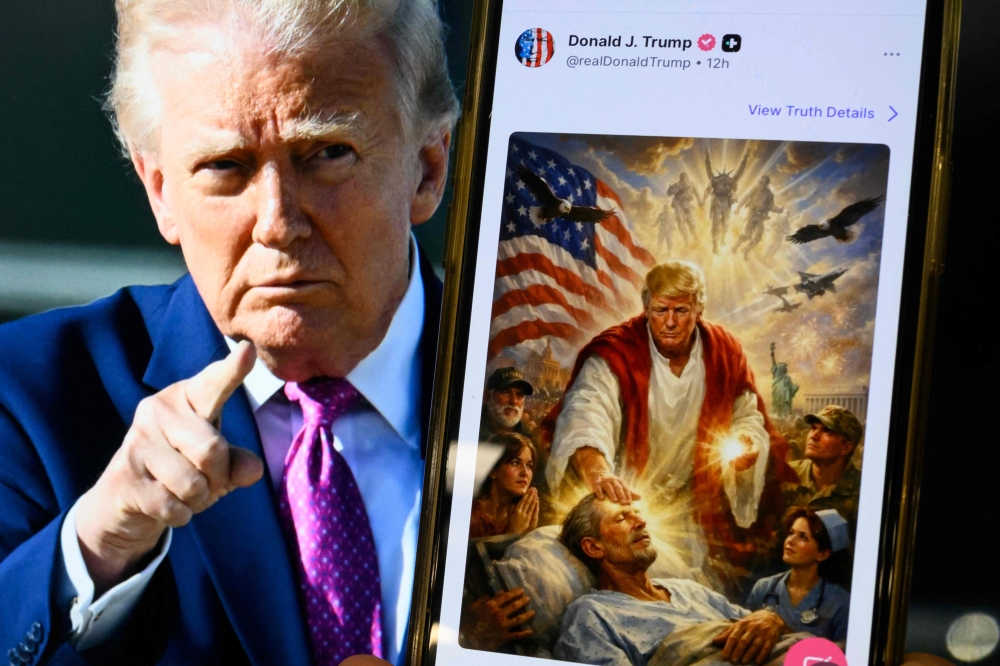
WASHINGTON, June 9 — From handcuffed extra-terrestrials to an orbital missile command centre — US President Donald Trump is unleashing a relentless stream of AI-generated imagery that analysts view as an effort to dominate the attention economy ahead of perilous midterm elections.
Artificial intelligence has transformed Trump’s Truth Social feed into a cascade of memes skewering his political rivals and glorifying himself, with the communications style echoed across his administration.
The attention-grabbing posts come as Trump’s approval ratings slide to new lows ahead of elections in November, in which his Republican Party is seeking to maintain its narrow control of Congress.
Trump is “facing many problems that he has failed to solve,” including an unpopular war with Iran and inflation, Todd Belt, director of the political management program at George Washington University, told AFP.
“So, he’s flooding the information environment with positive images of himself, particularly images that make him look large and in charge.”
For a president facing multiple challenges, Trump has averaged about 20 posts a day on Truth Social this year, researchers say, with many of those posts — sometimes part of late-night tirades — featuring AI-generated imagery.
During one particularly active stretch last weekend, one post showed Trump riding horseback beside George Washington, next to a race car, with the White House in the background.
Another depicted an enlarged image of Trump towering over Greenland beneath the words “Hello, Greenland!”
Trump has raised alarm by repeatedly threatening to take over Denmark’s autonomous territory, saying it is vital for national security.
‘Diverting attention’
Another image showed Trump looming over warships, dressed as a military commander clad in gold armor, as fighter jets flew overhead.
Trump may be attempting to control the narrative with such AI-generated imagery, some observers say, even as he triggers backlash — such as with his now-deleted post depicting himself as Jesus Christ.
“Trump’s AI trial balloons are yet another strategic distraction, reducing public dialogue to the most banal issues in hopes of diverting attention from more important topics of the day,” Nora Benavidez, senior counsel at the advocacy group Free Press, told AFP.
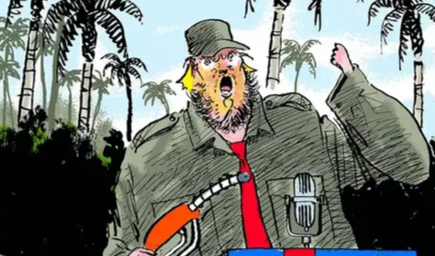
“If we are busy debating his likeness to Christ or some other AI-generated savior image, Trump hopes we might not have the time or energy or solidarity to challenge his latest war or rising unaffordability and gas prices.”
Other analysts say the AI messaging could seek to rally his support base and campaign through trolling.
‘Illusion is powerful’
“Trump is posting these to generate emotion,” Cory Alpert, a researcher at the University of Melbourne, wrote in a report.
“His followers are not seeing actual truth, but a version of reality that they want to believe is true. The illusion is powerful.”
Underscoring the strategy’s potential appeal to younger voters, similar AI-driven messaging has also been adopted by other arms of the Trump administration as well as by some of the president’s political rivals.
It is unclear how much of the Truth Social feed is posted by Trump himself, by his White House team or a combination of both. The White House did not respond to AFP’s request for comment.
“The White House is certainly aware of the stakes of the midterm elections, and the president’s sensational AI renderings reflect the need to attract attention to initiatives he believes are successful,” Walter Scheirer of the University of Notre Dame told AFP.
“Whether these AI fantasies and the less than spectacular circumstances they’re based on resonate with voters will be determined in November.” — AFP


By AFP teams in Tehran, Dubai, Beijing and Mecca
US forces launched overnight strikes on missile sites in southern Iran and boats they said were trying to lay mines in Gulf waters, sending oil prices higher Tuesday and fuelling tension as diplomats sought a deal to end the war.

The international benchmark Brent crude jumped up by almost three percent after the US Central Command announced the new wave of bombings, and China urged both sides to respect their truce and resolve their dispute peacefully.
Iran did not immediately confirm the reported strikes, but state media reported blasts in the southern port city of Bandar Abbas, and the Revolutionary Guards Corps said its forces had downed a US drone entering its airspace and fired at an F-35 fighter jet.
In a statement marking the start of the Eid al-Adha holiday, Tehran’s supreme leader Ayatollah Mojtaba Khamenei declared that Washington was losing its influence in the Middle East and warned Middle East countries to ensure that they no longer host bases from which the US could launch attacks.
The United States, he said in a written statement, “in addition to no longer having any safe haven in the region for aggression and the establishment of military bases, is moving further and further away from its former position with each passing day”.
Tim Hawkins, a spokesman for US Central Command, said: “US forces conducted self-defence strikes in southern Iran today to protect our troops from threats posed by Iranian forces.”
He gave few details of the attacks and said only that the targets included missile launch sites and boats trying to “emplace mines.”
Despite the strikes, Secretary of State Marco Rubio said on Tuesday that a deal remained within reach.

But he remained firm on the fate of the Strait of Hormuz, the key oil and gas shipping route out of the Gulf, which Iran is seeking to control by charging fees to approve the passage of vessels.
“There were some talks going on in Qatar today, so we’ll see if we can make progress. I think it’s a lot of talking back and forth going on about specific language in the initial document, so it’ll take a few days,” Rubio told reporters during a visit to India.
He said the strait was “going to be open one way or the other,” adding: “What’s happening there is unlawful, it’s illegal, it’s unsustainable for the world, it’s unacceptable.”
The strikes threatened a ceasefire that began on April 8 as the United States and Iran struggle to reach an accord to end a war that has rattled the global economy with a severe disruption of energy flows.
China, Washington’s great power rival and a major energy importer, expressed concern after the US strikes.
“We urge the parties concerned to fulfil their ceasefire commitments, resolve disputes through peaceful means… and promote the early restoration of peace,” foreign ministry spokeswoman Mao Ning told reporters.

Hopes of an accord took another blow when Israeli Prime Minister Benjamin Netanyahu vowed to “crush” Hezbollah in Lebanon on Monday evening. Iran has demanded that any peace accord apply to the fighting in Lebanon as well.
On Tuesday, Israel warned Lebanese civilians to evacuate the southern city of Nabatieh ahead of more planned strikes.
US President Donald Trump said in a social media post that he expected Iran to hand over its enriched uranium to the United States to be destroyed, or have it destroyed in Iran with an international witness.
The nuclear fuel “will either be immediately turned over to the United States to be brought home and destroyed or, preferably, in conjunction and coordination with the Islamic Republic of Iran, destroyed in place or, at another acceptable location”.


- Ozymandias - posted a photo:
Philadelphia, PA '25
Penn Museum
Cheshmeh 'Ali (Iran), c. 5200-4700 BC