Normal view

  • ✇W Magazine
  • How Jennifer Venditti Flipped the Script on Hollywood Casting Jenny Comita · Sam Hellmann · and · Tori López
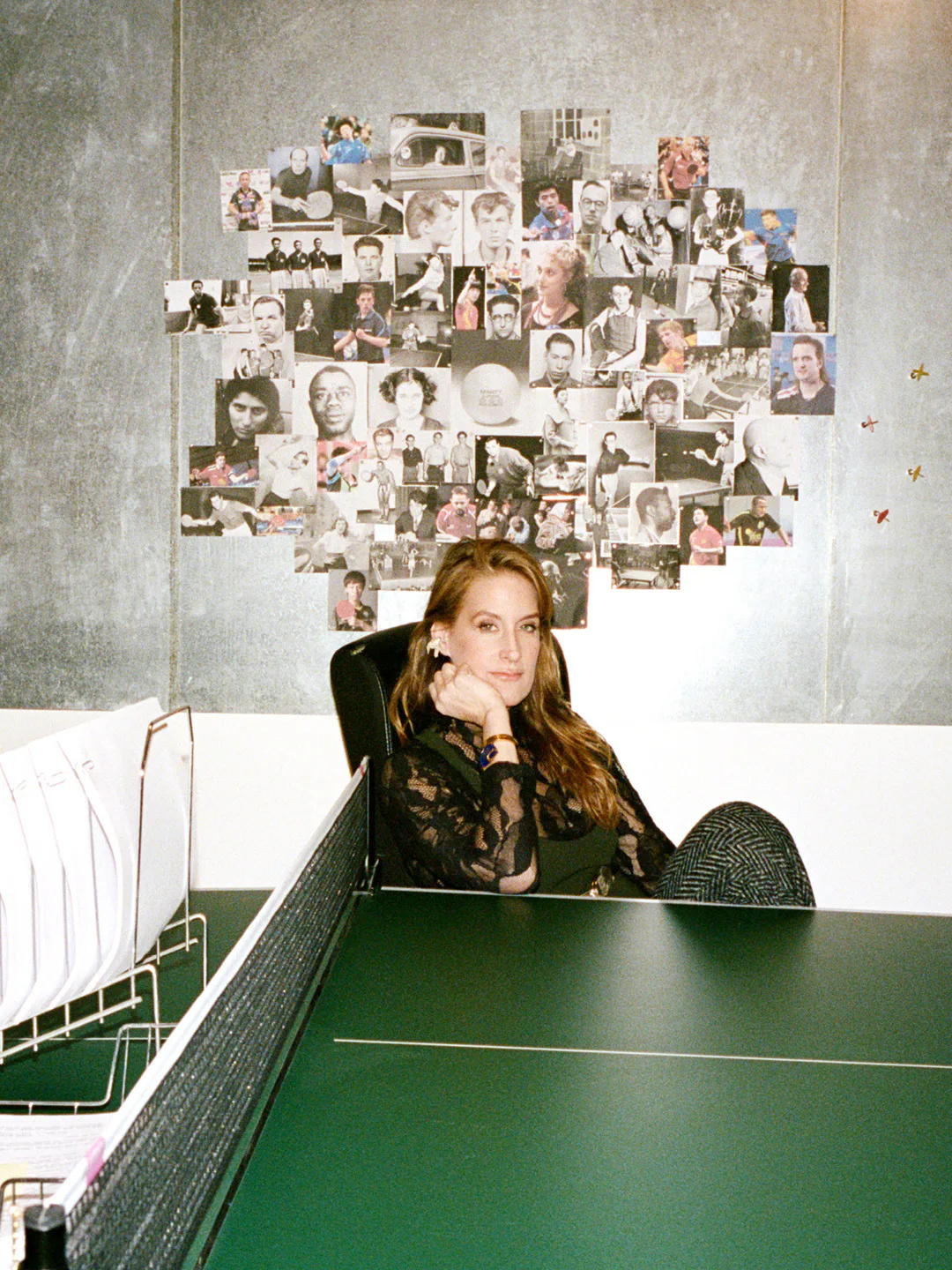
    Jennifer Venditti wears her own clothing.Several decades before Jennifer Venditti became one of the most in-demand casting directors in Hollywood—a woman known for her uncanny ability to pick a potential scene-stealer out of the crowd at, say, a nerd-packed anime convention or an acne-blighted high school cafeteria—she orchestrated her own casting, at a Midwestern shopping mall. It was the dawn of the ’90s, and Venditti, who grew up in St. Paul, Minnesota, was a student at Chicago’s Internationa
     

How Jennifer Venditti Flipped the Script on Hollywood Casting

19 May 2026 at 12:00
Jennifer Venditti wears her own clothing.

Several decades before Jennifer Venditti became one of the most in-demand casting directors in Hollywood—a woman known for her uncanny ability to pick a potential scene-stealer out of the crowd at, say, a nerd-packed anime convention or an acne-blighted high school cafeteria—she orchestrated her own casting, at a Midwestern shopping mall. It was the dawn of the ’90s, and Venditti, who grew up in St. Paul, Minnesota, was a student at Chicago’s International Academy of Merchandising and Design when she heard that one of her idols, the designer Anna Sui, would be making a local in-store appearance. With her boyfriend in tow and her résumé in hand, Venditti dressed herself (and her man, who happened to be a model) in the most eye-catching vintage she could get her hands on—“I was really obsessed with the whole grunge thing,” she says—and headed to the event, where she waited for her moment. Sure enough, Sui approached. “She liked what we were wearing,” Venditti remembers. Over the course of a quick conversation, Venditti expressed her desire to land a summer internship in the New York fashion world. Sui instructed her to fax her résumé to Keeble Cavaco & Duka, one of the top fashion PR and production firms (now known as KCD), and within weeks Venditti was working under the agency’s runway producer, Nian Fish, on a Calvin Klein show. She dressed models backstage and spent hours with the brand’s head of show production, the soon-to-be Carolyn Bessette Kennedy. She never made it back to school in Chicago.

After two years at KCD, where she did “a little bit of everything” but ultimately concentrated on casting, Venditti left to assist the stylist Lori Goldstein. It was, in many ways, a dream job. “I was traveling around the world with all the top photographers, doing stuff with Madonna and Annie Leibovitz,” she says. But she eventually got frustrated by what she saw as the industry’s closed-minded lack of creativity when it came to models. “It was rules and dogma and trends: Someone’s saying this is what it is, and then everyone else is doing their version of that. First it was Brazilian beauty, then Belgian beauty.…” One day, she was working on a magazine cover shoot, and “I just looked around and thought, I can’t do this anymore.” She decided to start her own agency, hoping to encourage a more expansive definition of beauty through street casting.

An image from “Coal Country,” a W story from August 1998 photographed by Peter Lindbergh and cast by Venditti.

Her timing was spot-on. With the supermodel era winding down and reality TV on the rise, stylists and photographers were realizing that so-called regular people (who were more often not actually “regular” but in some way unusual looking) could be an especially compelling addition to fashion shoots. One of the first to embrace the idea was W’s creative director at the time, Dennis Freedman, who hired Venditti to cast some of the magazine’s most elaborate fashion stories. Whereas today “we have the street through Instagram,” says Venditti, in those pre–social media days, street casting involved marathons of pavement-pounding. She combed Brazilian favelas in search of interesting faces for a story by Philip-Lorca diCorcia and scoured Penn State for a David Sims portfolio set at the school. Her most memorable trip, she says, was to Appalachia, where she befriended a young mother of five named Melissa and cast her in the 1998 Peter Lindbergh story “Coal Country.” “The magazine sent me all over the world with a Polaroid, and I just got to explore,” Venditti remembers. “Dennis never even gave me guidelines. It was just, ‘Find what you think is beautiful, what you think is interesting.’ ”

Top: Adam Sandler in Uncut Gems. Courtesy of A24. Middle: A still from Billy the Kid, directed and produced by Venditti. Courtesy of Oscilloscope Laboratories. Bottom: Timothée Chalamet (center) in Marty Supreme. Courtesy of A24.

A casting trip to Maine in 2006 led to her film career. There, she struck up a conversation at a high school lunch table with a 15-year-old social outlier named Billy Price, whom his classmates described as “a total weirdo.” Venditti was entranced by his unfiltered honesty and off-kilter outlook and decided to make a documentary about him. “I wanted to experience the world through his eyes,” she says. Billy the Kid was released in 2007, and, Venditti says, “I started getting calls from, like, Spike Jonze and Ryan Gosling. Everyone was kind of just like, ‘I love the way you see the world. Will you populate my world like that?’ ”

Venditti’s most serendipitous connection came via a screening of the doc at the South by Southwest festival, in Austin, Texas, where she noticed two brothers playing pool. “I thought they were so cute, and I think I tried to scout them,” she says, laughing. It turns out they were the then-unknown auteurs Josh and Benny Safdie, with whom she’s now worked on multiple films, including the duo’s Uncut Gems in 2019 and Josh’s Marty Supreme in 2025, for which Venditti was nominated for the inaugural Oscar in the category of casting.

Jennifer Venditti wears her own clothing and Celine shoes.

Finding actors for a film or television show, says Venditti—who’s also known for her work on the HBO series Euphoria—is very different from casting a fashion shoot. For still photography, “you just look for a face, photograph the face, and then you get their contact info.” With a movie, “you have to get a performance out of them.” The first step, she says, is building trust with a person, which she does over the course of several in-depth, interview-esque conversations. When she’s dealing with nonactors, the idea isn’t to determine whether they can act, but “to see if there’s anything from their own life that they can bring to the role,” she says. “My whole thing is, I’m trying to create the cinema of life.” Most of all, she says, she’s looking for a compelling, magnetic singularity that might be described as “star quality,” but that she calls simply “authenticity.” The ability to spot it has been the key to her success. “The strongest tool that I have is instinct,” she says. “I can just kind of feel, This person has ‘it.’ I can literally feel it in my body.”

Hair by Junya Nakashima for Oribe at Streeters; makeup by Romy Soleimani at eArtists; fashion assistant: Sofia Prochilo; makeup assistant: Jackie Piccola.

Viltrox Vintage Z1 Pro Flash Offers Retro Style and Modern Performance for Under $60

26 May 2026 at 13:45

Two metallic camera flash units labeled "Vintage Z1 Pro" are displayed, featuring digital screens and control dials, with a stylish, modern-retro design and yellow text above reading "Vintage Z1 Pro.

Viltrox has announced another vintage-inspired on-camera flash. The Viltrox Vintage Z1 Pro TTL Retro promises old-school style with new-school lighting technology, all for under $60.

[Read More]

  • ✇Antiques and Vintage - flickr
  • Ruth Chatterton in Once A Lady (1931) Truus, Bob & Jan too!
    Truus, Bob & Jan too! posted a photo: Canadian postcard in the Artists of the Camera series by McKenzie & Marlow, Vancouver. Ruth Chatterton in Once a Lady (Guthrie McClintic, 1931). Collection: Marlene Pilaete. On 5 June 2026, the new La Collectionneuse post at European Film Star Postcards will feature American stage and film actress Ruth Chatterton. She was at her most popular in the early to mid-1930s, and in the same era gained prominence as an aviator, one of the few female pil
     

Ruth Chatterton in Once A Lady (1931)

Truus, Bob & Jan too! posted a photo:

Ruth Chatterton in Once A Lady (1931)

Canadian postcard in the Artists of the Camera series by McKenzie & Marlow, Vancouver. Ruth Chatterton in Once a Lady (Guthrie McClintic, 1931). Collection: Marlene Pilaete.

On 5 June 2026, the new La Collectionneuse post at European Film Star Postcards will feature American stage and film actress Ruth Chatterton. She was at her most popular in the early to mid-1930s, and in the same era gained prominence as an aviator, one of the few female pilots in the United States at the time. In the late 1930s, Chatterton retired from film acting.

  • ✇Colossal
  • ‘Our Neighbors, the Peacocks’ Paints a Portrait of an Unusual Convergence of Populations Kate Mothes
    When we think of “invasive species,” perhaps zebra mussels or kudzu vine spring to mind. Both have flourished in their non-native environments and continue to threaten other native organisms. Invasive species aren’t inherently bad—they’re just trying to survive—but by definition, they’re likely to disrupt local ecosystems and even cause billions of dollars worth of damage each year. So, what does one California city have to say about its burgeoning population of… peacocks? Introduced by a
     

‘Our Neighbors, the Peacocks’ Paints a Portrait of an Unusual Convergence of Populations

20 April 2026 at 16:00
‘Our Neighbors, the Peacocks’ Paints a Portrait of an Unusual Convergence of Populations

When we think of “invasive species,” perhaps zebra mussels or kudzu vine spring to mind. Both have flourished in their non-native environments and continue to threaten other native organisms. Invasive species aren’t inherently bad—they’re just trying to survive—but by definition, they’re likely to disrupt local ecosystems and even cause billions of dollars worth of damage each year. So, what does one California city have to say about its burgeoning population of… peacocks?

Introduced by a businessman and land baron named Elias Lucky Baldwin more than a century ago, the avian population has long called the area home. Over the years, though, as the originally open area filled with homes and commercial strips, efforts by local residents end up at odds, as some would like to protect the birds and others would prefer to see them sent away altogether. In a short film titled “Our Neighbors, the Peacocks,” filmmaker Callie Barlow traces the unusual history of peafowl in Los Angeles County through the eyes of some of its current residents.

Arcadia, California, sits in the San Gabriel Valley about 45 minutes from downtown Los Angeles. Dozens of peacocks, which are carefully watched over by some and detested by others, meander through residents’ yards, traipse around on rooftops, peck at cars, call from trees, and of course, display their beautiful feathers—especially during mating season.

In her short documentary, Barlow invites locals to share their love—or loathing—for the vibrant birds as she highlights how Arcadia’s history of protecting the birds has perhaps led to something of an overpopulation problem. Nearby neighborhoods participate in relocation programs, while Arcadia’s birds are protected, and opinions about how to deal with growing numbers land all along the spectrum.

“‘Our Neighbors, the Peacocks’ resists the urge to resolve the tension it so clearly lays out,” says Jason Sondhi, who selected the film for Short of the Week. “Instead, it leans into a modest but resonant idea articulated by its director that living alongside these animals might require ‘putting aside your own discomforts to find a deeper meaning in nature.'”

See the film on YouTube.

a still from a short film showing peacocks walking through a suburban front yard
a still from a short film showing a woman seated in her living room, surrounding by eclectic decor and wearing peacock-feather leggings
a still from a short film showing a peacock with its feathers on full display

Do stories and artists like this matter to you? Become a Colossal Member today and support independent arts publishing for as little as $7 per month. The article ‘Our Neighbors, the Peacocks’ Paints a Portrait of an Unusual Convergence of Populations appeared first on Colossal.

Tri-X in the woods. Mamiya C220

Quellin Images posted a photo:

Tri-X in the woods. Mamiya C220

Kodak Tri-X 400 with the Mamiya C220 and I think this would be the 80mm lens here (must get sorted with my note taking). Film developed in 510 Pyro.

‘Blue Film’ Star Kieron Moore Says Movie’s Kink and Taboo Subjects Were ‘Never a Shock’ to Him Because He Has ‘Super Sex Positive’ Friends

12 June 2026 at 23:20
SPOILER ALERT: This story contains significant details about “Blue Film,” now available on VOD. Kieron Moore hopes that people don’t know much about “Blue Film” before they watch the movie. “I think it’s really good to go in as blind as you can,” the actor tells me. “That’s getting harder to do but I think […]

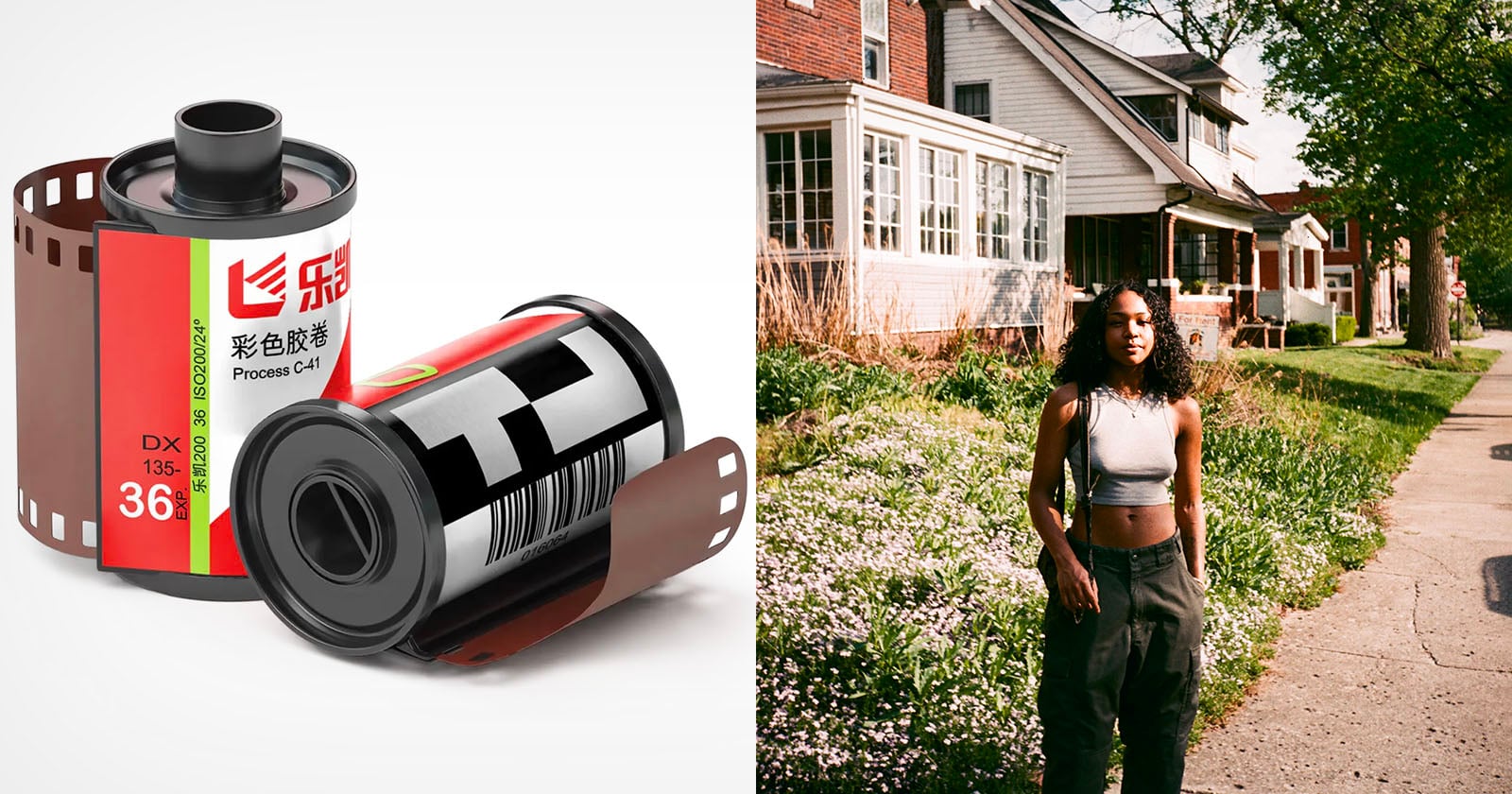
China Lucky’s New Color C200 Film Has Arrived in the US and Looks Great

2 June 2026 at 13:42

The image is split in half: on the left are two rolls of 35mm film, one unbranded and one with a colorful label in Chinese; on the right, a person stands on a sidewalk in front of a house on a sunny day.

China Lucky Film's highly anticipated all-new color emulsion, Lucky Color 200, is finally available in the United States.

[Read More]

Chrissie White

Truus, Bob & Jan too! posted a photo:

Chrissie White

Vintage British postcard, 1910s. Hepworth Picture Player. Photo by Lallie Charles.

British actress Chrissie White (1895-1989) was one of the most famous and popular stars of British silent cinema.

❌
Subscriptions