Normal view

  • ✇Latin America Reports
  • Tensions rise as Colombia presidential run-off campaign gets underway Catherine Ellis
    Bogotá, Colombia – A challenge to a public debate, accusations about football shirts used as political symbols, and increasingly sharp exchanges on social media — campaigning for Colombia’s run-off in its presidential election is already underway just a day after Abelardo de la Espriella emerged as the surprise first-round winner. While Senator Iván Cepeda had been widely expected to come out on top and enter the second round in a stronger position, his camp was left disappointed after fallin
     

Tensions rise as Colombia presidential run-off campaign gets underway

1 June 2026 at 23:11

Bogotá, Colombia – A challenge to a public debate, accusations about football shirts used as political symbols, and increasingly sharp exchanges on social media — campaigning for Colombia’s run-off in its presidential election is already underway just a day after Abelardo de la Espriella emerged as the surprise first-round winner.

While Senator Iván Cepeda had been widely expected to come out on top and enter the second round in a stronger position, his camp was left disappointed after falling short of those expectations.

Although he still claimed nearly 41% of the tally, de la Espriella surpassed him by almost three points, coming out with 44%.

Analysts say the run off is wide open. An important factor is supporters of other candidates whose votes are up for grabs. But a decisive factor is also likely to be those who didn’t participate at all in the first round.

“Whoever manages to somehow win over the undecided voters who didn’t vote in the first round but will vote in the second, I think that’s already enough to be president,” political analyst Oscar Chala said.

With three weeks to go until the June 21 elections, the race is on to sweep up those votes, and the candidates haven’t wasted any time in trying to position themselves.

Shortly after the results, Cepeda’s camp alleged irregularities in the vote, although the candidate backtracked the next day, saying they were not significant.

He also criticised the wearing of Colombian football shirts as part of political campaigns, linking it to de la Espriella’s far right movement — and also challenged him to a public debate, something he had not previously participated in.

“Cepeda is now inviting and wanting to hold a debate when he had always avoided it. That is a sign of desperation,” Rubén Erazo, political consultant, told Latin America Reports.

Although de la Espriella accepted the debate — which will be held on Tuesday June 9 — he also called his rival a “coward” and accused his campaign of hiding behind Petro.

Despite the disappointing result for Cepeda, he gained roughly what polls had been predicting — even marginally higher. Yet analysts say he struggled to win over undecided and abstentionist voters and lacked a solid and coherent campaign.

“The failures of Cepeda’s campaign are that Cepeda is not himself the candidate. The candidate is the current president Petro,” political consultant Rubén Erazo said, referring to this election being more like a referendum on Petro’s legacy.

He said this incorporates “the good, the bad, and the ugly” of his presidency. While he expanded social programmes, other policies, such as opening ambitious negotiations with armed groups, were highly controversial. Those dissatisfied with what Petro stands for are likely to be against Cepeda.

Despite knockbacks, Erazo says this doesn’t mean it is game over for the senator and Petro ally.

“Cepeda could win as long as his team reorients his strategy, acknowledges mistakes, thinks calmly and does not focus solely on claiming fraud,” he said.

The race is still very much open — and analysts say anything could happen, and that a lot will depend on where they target their political energy.

“Cepeda is likely to move closer to the centre and Abelardo could become more radical. The strategy Abelardo will use to try to win is to radicalize his discourse because he knows that Iván Cepeda will start seeking centrist votes,” Chala said.

He believes Espriella will also target an abstentionist segment on the right, even further right than traditional right-wing establishment figures such as Paloma Valencia, who once polled above 20% but ultimately secured just under 7%.

This part of the electorate is conservative, often macho, and wants hardline security strategies and more investment in the country.

De la Espriella was the main candidate able to capitalize on this as well as anti-Petro sentiment, and is expected to continue drawing support from parts of Valencia’s former base.

“However, his discourse is very anti-establishment and he’s not seeking the support of political parties,” Chala explained.

Nevertheless, Paloma Valencia — and her mentor, former president Álvaro Uribe — have come out in support of de la Espriella. Her relevance is not yet completely diminished if she can convince those who supported her to shift to this camp.

Moreover, while Cepeda took a backseat in his own campaign and drew heavily on traditional strategies such as mass gatherings and marches, Espriella, as well as doing this, drew heavily on crafting his own image — calling himself “The Tiger”.

“Everything is exaggerated and trying to inspire: the planes, the Italian suits from when he was a lawyer, and even his image of advising controversial figures,” he said. “Even the beard, for example, is copied from Nayib Bukele. It’s the same style.”

De la Espriella is plainly anti-establishment and aligns himself with Nayib Bukele, Javier Milei and Donald Trump. That appeals to some of the electorate, and repels another part.

At this stage, both candidates are still very much in this race, with everything to play for.

Featured image description: Iván Cepeda (Left) and Abelardo de la Espriella (Right).

Featured image credit: Respective campaigns.

The post Tensions rise as Colombia presidential run-off campaign gets underway appeared first on Latin America Reports.

  • ✇TheHill - Just In
  • Altman, OpenAI get bogged down in political spending fight Miranda Nazzaro
    OpenAI, the artificial intelligence firm that birthed ChatGPT, is struggling to distance itself from pro-AI super PAC Leading the Future and its Silicon Valley backers as the industry faces backlash over its midterm election donations. OpenAI CEO Sam Altman is facing new questions over the company’s affiliation with Leading the Future, which is backed by...
     

Altman, OpenAI get bogged down in political spending fight

9 June 2026 at 10:00
OpenAI, the artificial intelligence firm that birthed ChatGPT, is struggling to distance itself from pro-AI super PAC Leading the Future and its Silicon Valley backers as the industry faces backlash over its midterm election donations. OpenAI CEO Sam Altman is facing new questions over the company’s affiliation with Leading the Future, which is backed by...

  • ✇Latin America Reports
  • José Antonio Kast becomes Chile’s first hard-right president since dictatorship  Amelia Makstutis
    Medellín, Colombia – José Antonio Kast was sworn in today as the new president of Chile, inaugurating the country’s first far-right government since the fall of Augusto Pinochet’s military dictatorship in 1990. Kast beat Jeanette Jara from the Communist Party last December, winning 58% in second-round polls following a campaign focused on law and order and tackling illegal immigration through mass deportations. He succeeds left-wing president Gabriel Boric, forming part of a broader right-
     

José Antonio Kast becomes Chile’s first hard-right president since dictatorship 

11 March 2026 at 23:32

Medellín, Colombia – José Antonio Kast was sworn in today as the new president of Chile, inaugurating the country’s first far-right government since the fall of Augusto Pinochet’s military dictatorship in 1990.

Kast beat Jeanette Jara from the Communist Party last December, winning 58% in second-round polls following a campaign focused on law and order and tackling illegal immigration through mass deportations.

He succeeds left-wing president Gabriel Boric, forming part of a broader right-wing wave across the Americas. 

Chile’s new president resembles U.S President Donald Trump in his approach to certain policy matters, such as his promises to curb illegal immigration, increase mass deportations and even build border walls.

Kast is a controversial figure: his father was a member of the Nazi party, and he was raised deeply conservative. 

While studying law at the Universidad Católica, he was mentored by Jaime Guzmán, who was a trusted advisor of Pinochet.

Kast is now the first president to defend the legacy of Pinochet, and he has suggested that the dictator would have supported his candidacy. He has also appointed two ex-Pinochet lawyers, Fernando Barros and Fernando Rabat, to his cabinet as Minister of Defence and Minister of Justice and Human Rights, respectively. This move has drawn criticism from human rights groups.

Kast previously failed in a 2022 bid for the presidency, losing to Boric. Boric, however, was a deeply unpopular president, with polling from July 2025 highlighting a 66% disapproval rating.

Kast recently withdrew from transition talks with his predecessor, claiming that he had not been informed about the construction of an underwater sea cable connecting Chile and China. The spat raised concerns regarding democratic transfer of power.

Kast is part of a growing right-wing coalition across the Americas, supported by Trump, who has announced a return of the Monroe Doctrine, which maintains Washington’s dominance across the Western Hemisphere.

Before assuming office, Kast attended Trump’s “Shield of the Americas” summit on Saturday alongside other Latin American leaders, signalling his eagerness to cooperate with Washington in its invigorated counter-narcotics strategy. 

His swearing-in ceremony, held in the coastal city of Valparaíso, was attended by many prominent political figures from the Americas, including conservative leaders like Ecuador’s Daniel Noboa and Argentina’s Javier Milei.

The left-wing president of Brazil, Lula Inácio da Silva, canceled at the last minute after finding out that his potential rival in the next elections, Flávio Bolsonaro – the son of jailed former president Jair Bolsonaro – would be attending. 

Venezuelan opposition figure, María Corina Machado, also attended the inauguration, posting on X that she was excited to meet with Venezuelans in Chile during her visit.

Kast has singled out Venezuelan immigrants, having centered his campaign on fighting irregular migration through mass deportation with his “Border Shield” plan; it references “hundreds of thousands of illegals, bringing with them crime, narcotrafficking, human trafficking and gun smuggling, and labor exploitation”. Migrants represent almost 10% of the population in Chile, the largest group being Venezuelans – 17% of which entered irregularly, according to El País. Despite this, figures shared by the Minister of Defense, Adriano Delpiano, indicate that the number of irregular entries to Chile decreased by 54% between 2021 and 2025.

Despite Kast’s promises to restore public order amid rising crime, Chile remains one of the safest countries in Latin America.

Featured image description: José Antonio Kast in European Parliament

Featured image credit: @joseantoniokast via X.

The post José Antonio Kast becomes Chile’s first hard-right president since dictatorship  appeared first on Latin America Reports.
  • ✇The Independent SG
  • UMNO seeking former glory with the Johor snap elections Kazi Mahmood
    MALAYSIA: Liew Chin Tong, a Deputy Minister of Finance of Malaysia, warns United Malays National Organisation (UMNO) and Barisan Nasional (BN) of a painful realisation in Malaysia’s general election after the allies in the Madani government insisted they will go solo in the Johor elections. Now that the Legislative Assembly of Negeri Sembilan has also been dissolved, there are talks that UMNO-BN will contest these elections without their government partners. It appears that BN is not changing co
     

UMNO seeking former glory with the Johor snap elections

6 June 2026 at 00:01

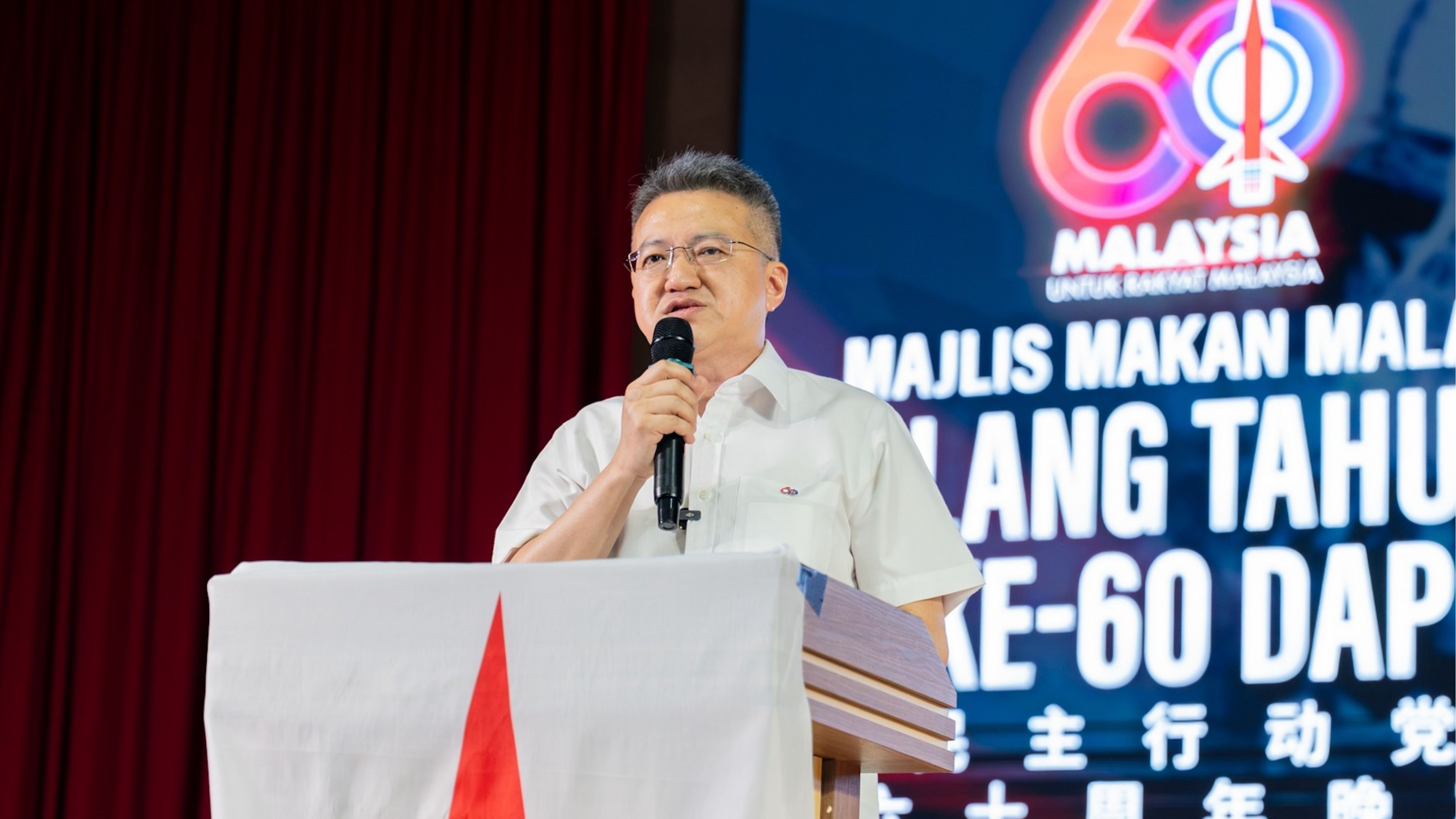
MALAYSIA: Liew Chin Tong, a Deputy Minister of Finance of Malaysia, warns United Malays National Organisation (UMNO) and Barisan Nasional (BN) of a painful realisation in Malaysia’s general election after the allies in the Madani government insisted they will go solo in the Johor elections.

Now that the Legislative Assembly of Negeri Sembilan has also been dissolved, there are talks that UMNO-BN will contest these elections without their government partners.

It appears that BN is not changing course from its plans to contest all seats in the upcoming Johor state election, despite Pakatan Harapan (PH) chief Anwar Ibrahim’s desire to work out a deal to avoid clashes.

BN chief and Deputy Minister Ahmad Zahid Hamidi said he is in the midst of finalising the list of candidates for all 56 seats. It clearly means there will be no Madani deal in the state that borders Singapore.

“I will finalise BN’s list of candidates for the 56 state seats as soon as possible and, God willing, the names will be announced a week before nomination day,” he was quoted as saying by The Star today.

For Liew, BN wants to go solo in the Johor polls because UMNO wants to use this state election to restore itself as the “dominant party” like its former supreme position in the pre-2018 one-party state.

He says, “Umno wants to turn back the clock to before 2018.”

This is the year UMNO was dethroned after six decades of rule, marking a historic moment in the country with the first Prime Minister, Najib Razak, defeated in an election.

He believes that UMNO is going solo in Johor because they have a good chance of winning these elections, but things will be very different at the national level, where Umno failed to win more than 23 seats.

He warns UMNO and BN that the debacle of the coalition at the national level will continue in the next general election.

Liew also lamented that Johor BN has decided not to hold the state election concurrently with the general election.

“It has also decided to contest all 56 state seats, even if this means contesting against Pakatan Harapan (PH), its coalition partner in the federal Unity Government.

“BN is now confident of winning more than 40 seats out of 56 seats in the Johor state assembly. Some even think BN will win 45 to 48 seats.

“In the general election on 19 November 2022, PH won 82 parliamentary seats, Perikatan Nasional (PN) 74, BN 30, and GPS 23,” he recalls.

Liew says the cooperation between PH and BN has largely passed the tests of governing together and winning elections together.

He says there was a real possibility that both coalitions could work together in the next general election in direct one-on-one contests between the Unity Government and Perikatan Nasional (PN).

However, he says some people are still dreaming of bringing back the era when UMNO was the overwhelmingly dominant political force. He reminds UMNO that in the 2022 general election, of the Peninsula’s 165 parliamentary seats, PH and PN won 71 seats each, while BN only secured 23 and also blames the Malaysian Chinese Association (MCA) for pushing UMNO to go solo, that is, without PH, in elections.

The reason he says is that if both PH and BN were to be together, MCA would only be able to contest 2 seats, but without PH, MCA can have a larger representation in the elections.

“Although MCA is part of the governing coalition, it has consistently behaved like an opposition party, playing up issues, stoking insecurity among the Chinese, and fanning dissatisfaction towards Prime Minister Dato’ Seri Anwar Ibrahim, the DAP and the Unity Government,” he says.

He concluded his missive on Facebook saying he hopes that BN and Umno leaders will soon realise that “no Malaysians in their right mind want to return to pre-2018 UMNO’s dominance. The era has changed.”

This article (UMNO seeking former glory with the Johor snap elections) first appeared on The Independent Singapore News.

  • ✇Latin America Reports
  • Mounting irregularities cloud Peru’s 2026 general election as runoff remains unclear Peru Reports
    Lima, Peru — Peru’s general election, held Sunday, April 12, has been thrown into uncertainty following a series of logistical failures, contested tally sheets, and newly reported irregularities that have raised doubts about the integrity of the process—even as authorities insist there is no evidence of fraud. With partial results still being processed several days later, no clear contender has emerged to face Keiko Fujimori in the runoff, despite her leading the vote with around 17%. The tight
     

Mounting irregularities cloud Peru’s 2026 general election as runoff remains unclear

18 April 2026 at 18:40

Lima, Peru — Peru’s general election, held Sunday, April 12, has been thrown into uncertainty following a series of logistical failures, contested tally sheets, and newly reported irregularities that have raised doubts about the integrity of the process—even as authorities insist there is no evidence of fraud.

With partial results still being processed several days later, no clear contender has emerged to face Keiko Fujimori in the runoff, despite her leading the vote with around 17%. The tight race for second place—separated by a razor-thin margin—between right-wing candidate Rafael López Aliaga and leftist Roberto Sánchez could ultimately be decided by thousands of challenged votes.

Delays, missing materials, and ballots found in the trash

Election day was marked by widespread delays in the delivery of voting materials, especially in Lima, forcing authorities to extend voting into Monday in several districts.

Officials are now facing scrutiny over more troubling incidents. In one of the most widely reported cases, sealed boxes containing 1,200 ballots—distributed across four tamper-evident containers—were found discarded in the trash in the Lima district of Surco.

The National Office of Electoral Processes (ONPE) attributed the incident to negligence during the transport of ballot boxes and tally sheets to its central headquarters. It maintained, however, that the chain of custody was not compromised, noting that a coordinator, a police officer, and an electoral observer from the National Jury of Elections were present in the vehicle.

However, Roberto Burneo, president of the National Jury of Elections (JNE), told a congressional oversight committee on Friday that the ONPE’s statement was “false.”

“It is important to clarify that, regarding those boxes, contrary to what ONPE indicated, there was no observer accompanying them nor a police officer. They were transported in unregistered private vehicles, and the JNE was not present,” he said.

Burneo added that evidence has already been submitted to prosecutors.

“Serious irregularities,” but no fraud, observers say

Despite the growing list of incidents, international observers from the Organization of American States and electoral experts have drawn a distinction between administrative failures and deliberate manipulation.

“There have been serious irregularities that must be investigated and sanctioned, but this is not a fraudulent situation,” former Justice Minister Aldo Vásquez told CNN. “At least up to now, there is no evidence supporting that claim.”

Observers from international organizations echoed that assessment, noting that while “egregious irregularities” were documented, they do not amount to systemic fraud.

Still, the scale and variety of problems—from late poll openings to missing materials—have eroded public confidence.

Thousands of disputed votes could decide the runoff

At the center of the uncertainty are more than 5,000 tally sheets marked as “disputed”—representing just over one million votes—due to inconsistencies such as missing signatures, illegible figures, or arithmetic errors.

These votes are now under review by electoral authorities and, in such a close race, could determine who advances to the runoff.

“Of course they can change the outcome,” said electoral lawyer Silvia Guevara. “The difference between candidates is so small that these votes could tip the balance.”

“This is a situation that won’t be resolved tomorrow or in two or three days. Citizens will need to be patient,” she added to Canal N.

Institutional crisis and ongoing investigations

The fallout has triggered multiple investigations. The Public Ministry and the Comptroller General have launched inquiries, while the National Board of Justice—the body responsible for overseeing judicial appointments—has opened a preliminary investigation against Piero Corvetto Salinas, head of the ONPE.

According to Vásquez, the process could lead to disciplinary sanctions or even suspension, noting that “it is highly likely that a formal proceeding will be opened.”

Meanwhile, electoral authorities have confirmed that at least 85 requests to annul the election have been filed, further complicating the timeline.

With the runoff scheduled for June, the coming days will be decisive not only in determining who advances, but also in whether Peru’s electoral institutions can restore public trust after one of the most controversial elections in recent years.

The post Mounting irregularities cloud Peru’s 2026 general election as runoff remains unclear appeared first on Perú Reports.

The post Mounting irregularities cloud Peru’s 2026 general election as runoff remains unclear appeared first on Latin America Reports.
New report shows misinformation is a threat to election security

1 June 2026 at 22:40
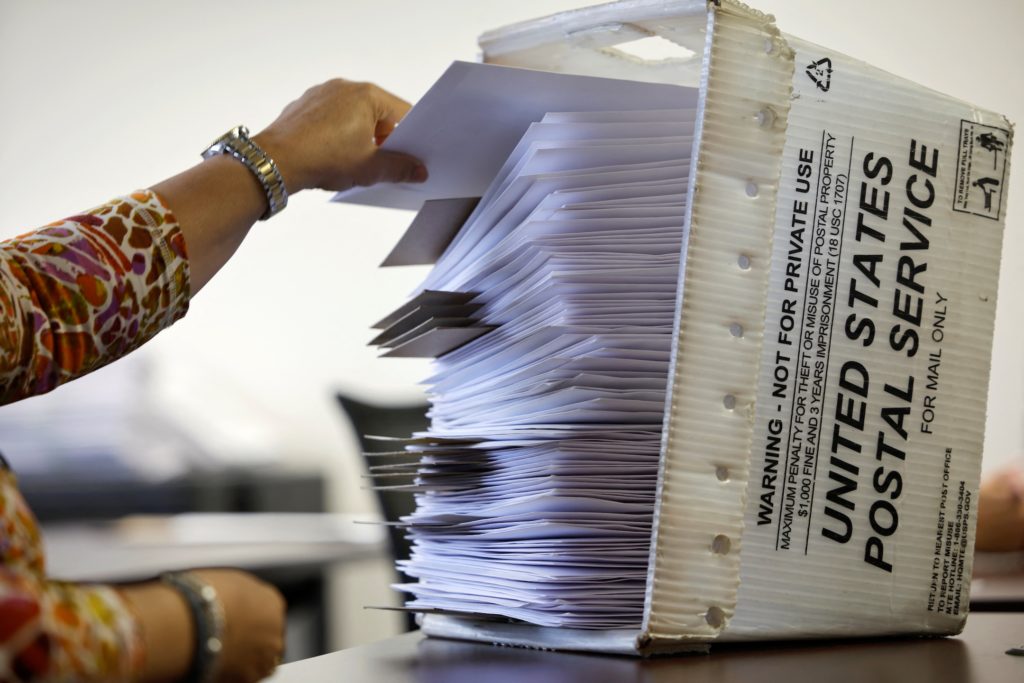
New rules proposed by the U.S. Postal Service would make states give data on voters who receive mail-in ballots for federal elections. This after President Trump tightened mail-in voting rules with a stated goal of making more secure elections. But a new report says election security threats are more likely something else. Arron Rose of Check Point Software Technologies joins Liz Lander for more.

2-month suspended jail term for elderly man who reposted social media call to boycott legislative elections

18 May 2026 at 23:30
ICAC. File photo: Kyle Lam/HKFP.

A 67-year-old man has been handed a two-month jail term, suspended for 24 months, after he pleaded guilty to resharing a social media post urging a boycott of the 2025 “patriots only” legislative elections.

The Independent Commission Against Corruption (ICAC). File photo: Kyle Lam/HKFP.

According to a press release from the Independent Commission Against Corruption (ICAC), Lam Kin-sik admitted on Monday to inciting another person not to vote, in violation of the Elections (Corrupt and Illegal Conduct) Ordinance.

Whilst it is legal to cast a blank ballot or boycott an election in Hong Kong, it is unlawful to encourage another person to do so during an election period.

Tong Wai-hung, who is accused of inciting a boycott of the 2025 Legislative Council elections. Photo: ICAC.

Magistrate Shirley Cornelia Hung said a custodial sentence was inevitable as it was a serious offence, but it was suspended considering Lam’s guilty plea and mitigating factors such as his health condition.

Lam was among three people prosecuted by the ICAC in November after they shared social media posts by two overseas activists – Alan Keung and Tong Wai-hung – who called for a boycott of what they described as a “fake election.”

In the Monday statement, the anti-corruption watchdog said that the defendant shared a post published by Tong.

“A warrant for Tong’s arrest, who has since left Hong Kong, was earlier issued by a Magistrate upon the ICAC’s application,” the ICAC said.

See also: Hong Kong woman given suspended jail term for reposting calls to boycott legislative polls

Those found guilty of inciting another person not to vote, or to cast an invalid ballot, face up to three years’ imprisonment and a fine of HK$200,000.

In March 2021, Beijing passed legislation to ensure “patriots” govern Hong Kong. The move reduced democratic representation in the legislature, tightened control of elections and introduced a pro-Beijing vetting panel to select candidates. Authorities say the overhaul ensures the city’s stability and prosperity. But the changes also prompted international condemnation, as much of the traditional opposition remains behind bars, in self-exile or has quit politics.

Rove: Democrats' polling advantage might not result in blue wave in midterms

4 June 2026 at 21:22
Republican strategist Karl Rove on Thursday said polls showing Democrats with the advantage in midterm elections might not result in a blue wave. During an appearance on Fox News, Rove discussed a new poll from Marquette that found Democrats had a 1-point advantage over Republicans heading into midterm elections.  Poll results showed 46 percent of...

  • ✇Latin America Reports
  • Colombia president rejects preliminary election results Alfie Pannell
    Bogotá, Colombia – President Gustavo Petro rejected the results of first-round presidential elections on Sunday, alleging irregularities. Hard-right populist Abelardo de la Espriella defied pollsters’ predictions to beat the candidate representing Petro’s leftist Historic Pact party, Iván Cepeda, although neither surpassed the 50% required to win outright. “The so-called count being transmitted is not legally binding. Its data is not considered official. As president, I do not accept the r
     

Colombia president rejects preliminary election results

1 June 2026 at 01:46

Bogotá, Colombia – President Gustavo Petro rejected the results of first-round presidential elections on Sunday, alleging irregularities.

Hard-right populist Abelardo de la Espriella defied pollsters’ predictions to beat the candidate representing Petro’s leftist Historic Pact party, Iván Cepeda, although neither surpassed the 50% required to win outright.

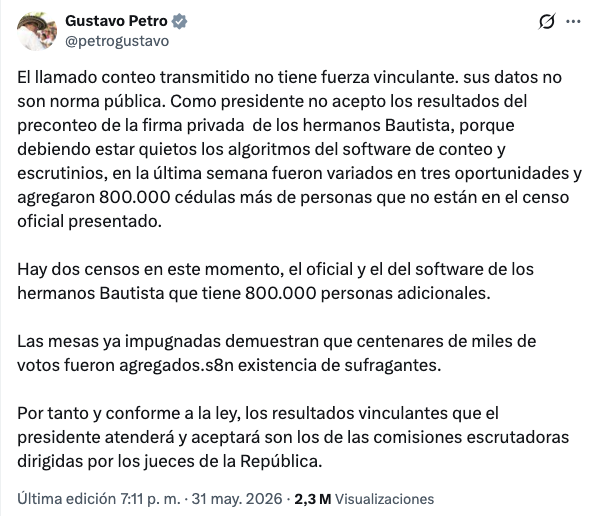
“The so-called count being transmitted is not legally binding. Its data is not considered official. As president, I do not accept the results of the preliminary count,” wrote Petro on X shortly after the election was called.

In Colombia, the “pre-conteo”, or preliminary count, is based on officials tallying the ballot sheets and entering them into an online software. But the “escrutinio”, or scrutinized results, usually take several days to be announced and are ratified by judges.

According to the Registrar’s Office, which is responsible for overseeing the voting process, the pre-count is “for informational purposes only” and has “no legal standing.”

But de la Espriella received nearly 700,000 more votes than Cepeda, a gap which is very unlikely to be closed after the scrutiny.

Delivering a speech after the results were released, Cepeda said he would not address the elections until the scrutinized count came out.

A post from President Gustavo Petro on May 31 saying he would not accept the pre-count results of Sunday’s elections.

“Only once the vote-counting committees have fully, clearly, and thoroughly clarified this matter will we comment on tonight’s results,” the senator told a crowd of supporters at the Hotel Tequendama in central Bogotá.

He also referred to historic efforts by Colombia’s traditional parties and institutions to repress the leftist movement embodied by the Historic Pact: “Our life has been a constant struggle.”

A crowd of Cepeda voters gathered nearby to watch the speech on a large screen, with some chanting the Spanish anti-fascist slogan “No Pasarán”. One pair held a sign reading “Fraud!”.

Petro has repeatedly warned that the elections may be stolen, part of a long-running dispute with Thomas Greg & Sons, a multinational company responsible for electoral logistics.

In 2022, the Historic Pact gained some 500,000 votes in legislative elections following the scrutiny.

Regardless of the final results of the election, Cepeda and de la Espriella are set to face off in a second round on June 21.

Featured image description: President Gustavo Petro at a cabinet meeting, October 22, 2025.

Featured image credit: @InfoPresidencia via X.

The post Colombia president rejects preliminary election results appeared first on Latin America Reports.

Abdul El-Sayed scores key endorsement in Michigan Senate race

6 June 2026 at 14:13
Michigan Democratic Senate candidate Abdul El-Sayed has picked up a key endorsement from the United Auto Workers (UAW), adding labor firepower to a crowded primary field. El-Sayed is competing against Rep. Haley Stevens (D-Mich.) and state Sen. Mallory McMorrow (D) for the Senate seat being vacated by retiring Sen. Gary Peters (D-Mich.). The labor union,...

  • ✇Malay Mail - All
  • EC sets Johor election on July 11, Negeri on Aug 1 Syed Jaymal Zahiid
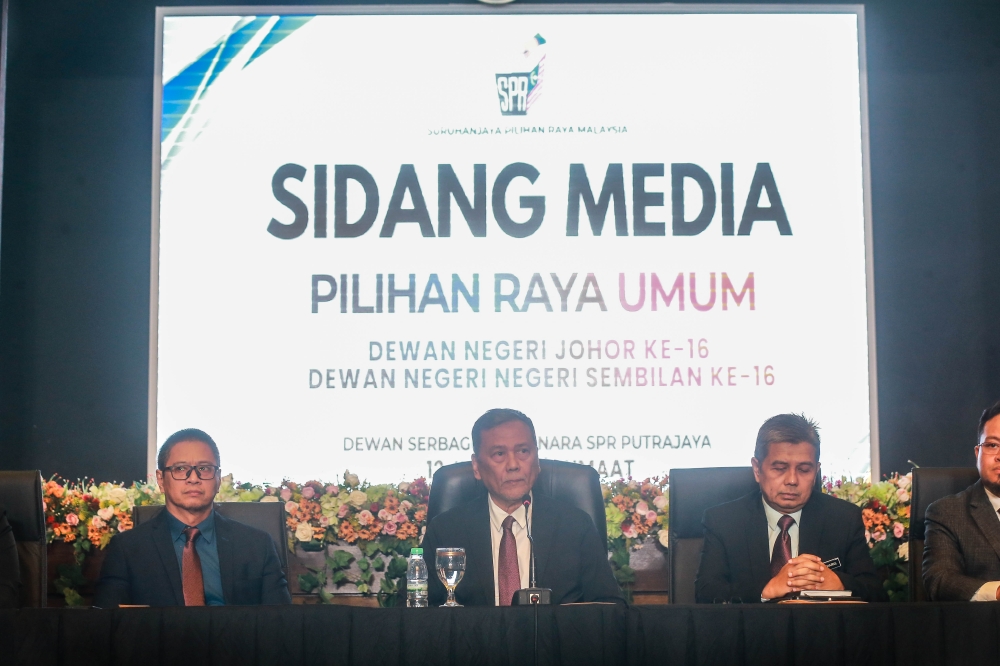
    PUTRAJAYA, June 12 — The Election Commission (EC) has announced the polling dates for the upcoming state elections in Johor and Negri Sembilan, setting the stage for a high-stakes political showdown in the southern region.EC chairman Datuk Seri Ramlan Harun confirmed that Johor voters will head to the polls on July 11, with nomination day scheduled for June 27 and early voting taking place on July 7.Negri Sembilan will follow shortly after, with polling day set f
     

EC sets Johor election on July 11, Negeri on Aug 1

12 June 2026 at 04:18

Malay Mail

PUTRAJAYA, June 12 — The Election Commission (EC) has announced the polling dates for the upcoming state elections in Johor and Negri Sembilan, setting the stage for a high-stakes political showdown in the southern region.

EC chairman Datuk Seri Ramlan Harun confirmed that Johor voters will head to the polls on July 11, with nomination day scheduled for June 27 and early voting taking place on July 7.

Negri Sembilan will follow shortly after, with polling day set for Aug 1. Nominations for the state will be held on July 18, followed by early voting on July 28.

MORE TO COME

  • ✇Malay Mail - All
  • Khaled: Separate state polls offer no edge to BN Malay Mail
    KUALA LUMPUR, June 13 — Barisan Nasional (BN) will have to depend on its own strength to win over voters, regardless of whether the Johor and Negeri Sembilan state elections are held separately or simultaneously, Umno vice-president Datuk Seri Mohamed Khaled Nordin said today.Asked whether BN stood to gain any advantage from the staggered election schedule, Khaled said the coalition did not enjoy an edge over Pakatan Harapan (PH) or other political parties.Instea
     

Khaled: Separate state polls offer no edge to BN

13 June 2026 at 04:23

Malay Mail

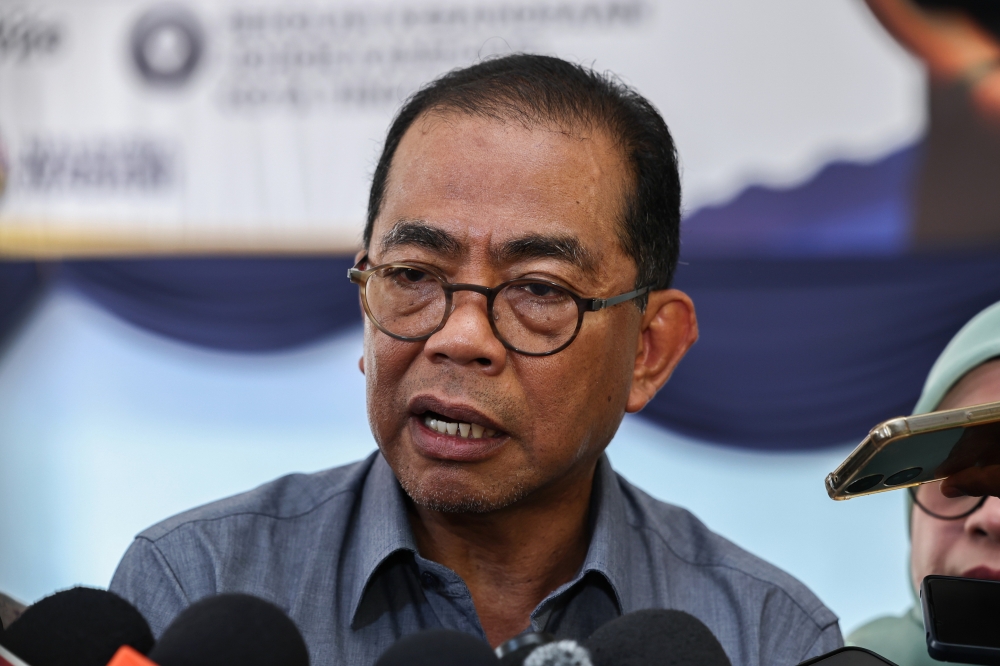
KUALA LUMPUR, June 13 — Barisan Nasional (BN) will have to depend on its own strength to win over voters, regardless of whether the Johor and Negeri Sembilan state elections are held separately or simultaneously, Umno vice-president Datuk Seri Mohamed Khaled Nordin said today.

Asked whether BN stood to gain any advantage from the staggered election schedule, Khaled said the coalition did not enjoy an edge over Pakatan Harapan (PH) or other political parties.

Instead, he said BN and its component parties would need to secure the people’s mandate through their own efforts.

“We do not depend on whether the elections are held together or not.

“As for why the Johor and Negeri Sembilan state elections are being held separately or otherwise, that is a question for the Election Commission (EC),” he told Utusan Malaysia today.

Khaled said Umno and BN had made preparations to face any election.

“When Johor dissolved its state assembly before this, there was no issue of holding the state election simultaneously with Negeri Sembilan.

“We ourselves did not know that Negeri Sembilan would dissolve and hold a state election,” he added.

Khaled, who is the defence minister, was speaking after officiating the Defence Ministry’s Program Jiwa Murni Madani at Sekolah Kebangsaan Johor Kampong in Kota Tinggi, Johor.

Election Commission chairman Datuk Seri Ramlan Harun announced yesterday that Johor voters will head to the polls on July 11, with nomination day set for June 27 and early voting on July 7.

Negeri Sembilan will follow on August 1, with nominations scheduled for July 18 and early voting on July 28.


❌
Subscriptions