TEHRAN, June 11 — Iran’s military command said today it will target any ship transiting the Strait of Hormuz, after it struck two vessels attempting to pass through the strategic waterway, as talks to end the war faltered.The United States launched a new wave of attacks against Iran yesterday, with President Donald Trump vowing to “hit them hard” after accusing Tehran’s negotiators of “playing us for suckers”.The Khatam al-Anbiya command said todayday, “any vess
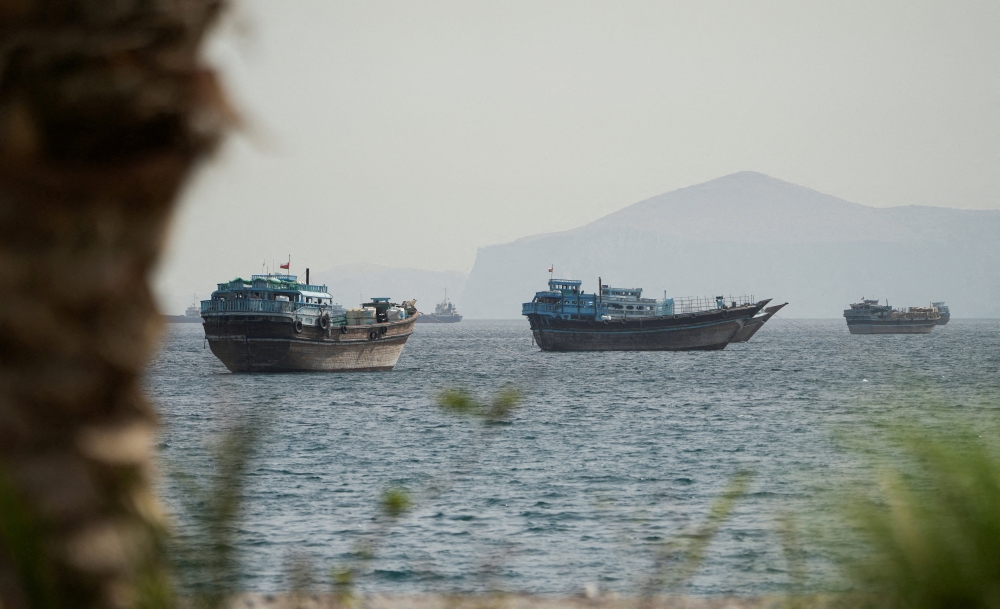
TEHRAN, June 11 — Iran’s military command said today it will target any ship transiting the Strait of Hormuz, after it struck two vessels attempting to pass through the strategic waterway, as talks to end the war faltered.
The United States launched a new wave of attacks against Iran yesterday, with President Donald Trump vowing to “hit them hard” after accusing Tehran’s negotiators of “playing us for suckers”.
The Khatam al-Anbiya command said todayday, “any vessel traffic through the Strait of Hormuz will be targeted” adding that the strait is now “completely closed to all types of vessel”, according to the Tasnim news agency.
Iran’s Revolutionary Guards navy, quoted by state television IRIB and the Mehr agency, said that “two ships attempting to illegally pass through the Strait of Hormuz were hit”.
“Following repeated violations of the ceasefire by the American enemy, the Strait of Hormuz will be closed until further notice,” it said.
“We warn that no vessel should leave its anchorage in the Persian Gulf and the Sea of Oman. Approaching the Strait of Hormuz will be considered cooperation with the enemy.”
Iranian media reported explosions across the country’s south near the Strait of Hormuz, the same area where US forces had already bombarded air defence, radar and other sites on Tuesday. — AFP
President Trump confirmed plans to sign a new framework for a peace deal with Iran on Sunday. “The Deal is scheduled to get signed tomorrow,” Trump wrote Saturday afternoon on Truth Social, adding, “Our relationship with Iran is a much different and better one than previous Administrations have had.” “Hopefully, this process will all work...
President Trump confirmed plans to sign a new framework for a peace deal with Iran on Sunday. “The Deal is scheduled to get signed tomorrow,” Trump wrote Saturday afternoon on Truth Social, adding, “Our relationship with Iran is a much different and better one than previous Administrations have had.” “Hopefully, this process will all work...
SINGAPORE: A university student has turned to Reddit for advice after finding himself trapped in what he sees as an impossible situation. While his mother refuses to contribute to his university expenses or allow him to take out a bank loan, she has also forbidden him from taking on certain part-time jobs in the F&B industry to support himself.
Confused by what he saw as contradictory demands, the student turned to Reddit to ask whether his mother was being unreasonable and selfish.
For con
SINGAPORE: A university student has turned to Reddit for advice after finding himself trapped in what he sees as an impossible situation. While his mother refuses to contribute to his university expenses or allow him to take out a bank loan, she has also forbidden him from taking on certain part-time jobs in the F&B industry to support himself.
Confused by what he saw as contradictory demands, the student turned to Reddit to ask whether his mother was being unreasonable and selfish.
For context, he said his mother had been insisting since his polytechnic days that she “didn’t want him to go to university” and preferred that he start working immediately after graduating from polytechnic.
However, when he followed her wishes and secured a full-time job, he discovered what he believed was the real reason behind her stance: she wanted him to provide her with a monthly allowance.
According to the student, his mother demanded S$250 from him every month and, on some occasions, even logged into his bank account herself to transfer the money into her own account.
He wrote, “I got angry about it and had a fight with her over it, but I continued transferring her S$250 a month until I went to uni.”
When he eventually enrolled in university, he said he received no support from his mother, either emotionally or financially.
“She didn’t lend me any money and, if I didn’t have enough, she said I should just drop out. She didn’t let me take out a bank loan either, so I had to pay for all of my uni fees and expenses from my savings.”
The student said he wanted to work part-time as a barista because it would significantly ease his financial burden and also seemed like a job he would enjoy. He eventually secured a position.
However, when his mother found out, she allegedly threatened to throw him out of the house.
She also warned him against working in the F&B industry, claiming he would end up scalding himself with hot water because he had never cooked or made drinks before.
The student added that this was largely because his mother had prevented him from learning basic household skills while growing up.
He also suspected that her objections were linked to “saving face,” as she appeared willing to let him work in retail instead.
“Now I am totally not working and trying to find a part-time job that she is OK with while being thrifty so my savings don’t run out.”
“Is she being selfish if she doesn’t let me work in F&B, but at the same time says she won’t lend me money? Shouldn’t she just let me work at whatever job I want? And is it selfish if I still give her an allowance, but she won’t lend me a single cent or let me take out a bank loan?
“We are not poor or anything, by the way. Our CHAS card is green, and she paid for my brother’s school fees after he ORD’d from NS.”
“You should just tell her once and for all how you feel.”
The post quickly attracted responses from other Singaporeans, many of whom felt the student’s mother was being unfair.
One individual said, “Yes, incredibly selfish. A low birth rate is better than people being parents but not knowing how to be a good one.”
Another commented, “She’s not just selfish. She’s projecting whatever desires she wanted but didn’t get when she was younger onto you. Have ONE good talk with her because keeping communicating makes you weak. So you should just tell her once and for all how you feel, and if she wants to throw you out, then good riddance; move out and be independent forever.”
A third wrote, “Follow your dreams. Never let anyone hold you back from fulfilling your dreams, even if it’s your mother. And if you are no longer working, I don’t think it’s still necessary to give her allowance.”
However, not everyone agreed. One commenter said the mother wasn’t selfish and had her reasons.
“If we are answering your question, no. She has the right to manage her own money and how she chooses to manage the family. Regarding your F&B, it is likely that she doesn’t believe that you have the money to pay for your medical bill should you get injured at work, especially since 2nd or 3rd degree burned skin replacement surgery isn’t exactly cheap.”
In other news, a foreign worker sparked concern online after sharing details of a cooking job in Singapore that would require him to work up to 14 hours a day for a monthly salary of just S$2,000.
Posting on the r/asksg forum on Saturday (May 30), the worker said his contract stated a 44-hour work week. However, he claimed that the staff roster he had seen told a different story, with employees allegedly working around 14 hours a day and receiving only one or two rest days a month.
The Troncal del Caribe, a key highway on Colombia’s Caribbean coast, has been blocked since a government offensive against the Autodefensas Conquistadores de la Sierra Nevada (ACSN) armed group on Monday morning.
It is unclear whether members of the local community or the ACSN ordered the closure, which has affected a large stretch of the road between the key coastal cities of Santa Marta and Riohacha, paralyzing commuter buses, tourist transport, and freight vehicles.
Locals say Monday’s
The Troncal del Caribe, a key highway on Colombia’s Caribbean coast, has been blocked since a government offensive against the Autodefensas Conquistadores de la Sierra Nevada (ACSN) armed group on Monday morning.
It is unclear whether members of the local community or the ACSN ordered the closure, which has affected a large stretch of the road between the key coastal cities of Santa Marta and Riohacha, paralyzing commuter buses, tourist transport, and freight vehicles.
Locals say Monday’s events, during which vehicles were set on fire, have created uncertainty for tourism operators and raised security concerns just days ahead of presidential elections.
The blockade began at around 9AM and has affected some 43 miles (70 kilometers) of the road, according to locals.
The area is a popular destination for foreign and domestic tourists, home to white sand beaches and the famous Tayrona National Park.
But key tourist hotspots have become inaccessible, with images shared on social media showing trees being cut down to block the road, long lines of buses, cars, and freight trucks lining the highway, and an inter-municipal bus on fire.
— Idinael Fernández C. (@idinaelferca19) June 15, 2026
The ACSN, a criminal organization with ties to drug trafficking, controls much of the area surrounding Santa Marta.
Some media reports say the blockade was a protest by the group against a state military operation on Monday morning, which the ACSN condemned in a statement shared on social media: “Early this morning, we were attacked in the village of Quebrada del Sol. Even now, the fighting continues, and our troops are trying to protect their lives.”
#Urgente Grave situación de orden público en la Troncal del Caribe en la vía entre Santa Marta y Riohacha tras combates entre el Ejército Nacional y Los Pachencas. #ElMontemarianopic.twitter.com/1ujAsajGiG
But other reports claim residents of the Guachaca district blocked the roads to condemn the escalation in violence.
Speaking to Latin America Reports, Luis Eduardo Muñoz, a community leader from the area, described the impact of the blockade on residents.
“It’s having a big effect on the communities because the stores are closed, the roads are closed, and … it also causes a lot of anxiety for tourists who are afraid to come here, which hurts all of us,” he said.
Muñoz noted that there has been uncertainty about whether the Tayrona National Park – one of Colombia’s biggest tourist destinations – will open tomorrow. The park was forced to close earlier this year after staff reportedly received threats from armed groups in the area.
The community leader also noted that local tourism operators are worried that rising tensions will deter visitors.
“Nobody likes to be in the middle of a warzone, let alone visit one on vacation,” he said.
Muñoz criticized the government, questioning why they chose to launch the offensive against the ACSN now: “We’re outraged that [President Gustavo] Petro talks about peace… and then he starts this military incursion.”
The army said the “operation was aimed at disrupting the structures of the organized armed group Autodefensas Conquistadoras de la Sierra and curbing its criminal activities in the province.”
Security has been a key campaign issue; Petro’s chosen successor, leftist Iván Cepeda, pledges to continue negotiating with armed groups. But his rival, hard-right Abelardo de la Espriella, vows an iron fisted offensive against them.
Muñoz speculated that with the second round of presidential elections scheduled for Sunday, the offensive may be a political move: “I don’t know why he’s doing this, maybe so that his candidate wins and people can vote for him, but what he’s doing is making things worse.”
The blockade remains in effect, with the Santa Marta Mayor’s Office calling for the government to help establish a humanitarian corridor to ensure safe passage on the road.
This article was originally published on The Bogotá Post and was reposted with permission.
Featured image description: Screenshot of the Troncal del Caribe near Guachaca.
KUALA LUMPUR, June 12 — Malaysian consumers, already weathering months of relentless price hikes, face a sobering warning: the worst may yet be coming.According to the latest industry report from Retail Group Malaysia (RGM), a fresh wave of retail price increases is expected to hit this month.This new surge arrives as the country grapples with an inflationary environment that has been steadily deteriorating since the start of the year. Inflation rose 1.6 per cent
KUALA LUMPUR, June 12 — Malaysian consumers, already weathering months of relentless price hikes, face a sobering warning: the worst may yet be coming.
According to the latest industry report from Retail Group Malaysia (RGM), a fresh wave of retail price increases is expected to hit this month.
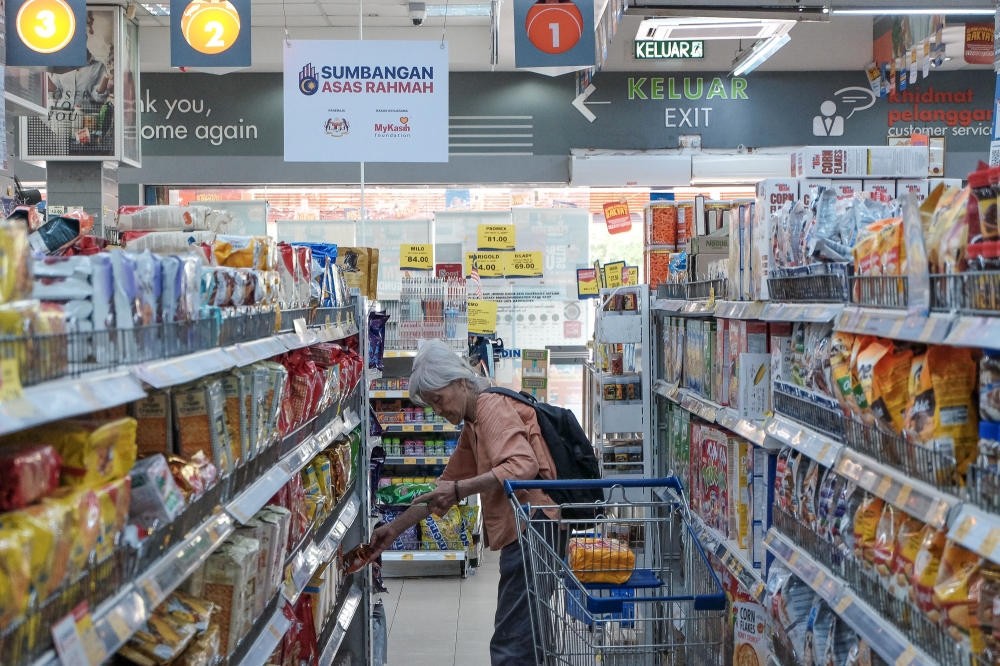
This new surge arrives as the country grapples with an inflationary environment that has been steadily deteriorating since the start of the year. Inflation rose 1.6 per cent in the first quarter of 2026, only to jump further to 1.9 per cent in April alone.
The categories driving this spike mirror the daily struggle of the average household: insurance and financial services surged 4.9 per cent, personal care and miscellaneous services climbed 4.8 per cent, and transport costs rose 4.1 per cent.
Even the simple act of dining at restaurants, cafes, and takeaway outlets saw a rise of 2.6 per cent.
“To make matters worse, new wave of retail price increases is expected to begin from June this year,” RGM said in its report.
The root cause of this mounting pressure is thousands of kilometres away. The escalation of conflict between the US, Israel, and Iran in February has sent fuel prices spiralling.
Between the first week of March and the first week of June, unsubsidised RON95 jumped 39 per cent, from RM2.67 to RM3.72 per litre. Diesel prices in Peninsular Malaysia were hit even harder, climbing 45 per cent to reach RM4.67.
These costs do not stay confined to the petrol pump; they bleed into every corner of the economy. RGM notes that the “fuel effect” has already inflated prices for a staggering array of essentials: from groceries and dining out to car repairs, house rentals, medical consultations, tuition fees, and even airline tickets.
The latest warning suggests this list is about to grow longer.
The timing is particularly precarious. RGM’s initial projection of 3.7 per cent retail growth for Q1 2026 already fell short of the 4.4 per cent retailers had hoped for in March.
Now, heading into the second half of the year, RGM has slashed its full-year retail sales growth forecast from 4.0 per cent to 3.8 per cent, citing the direct hit the conflict has taken on consumer purchasing power.
This caution is echoed at the highest levels of government. The Malaysian government has revised its annual inflation forecast upward to between 1.5 per cent and 2.5 per cent,a significant jump from the previous estimate of 1.3 per cent to 2.0 per cent.
RGM suggests the final figure will likely lean toward the upper end of that range.
For the manufacturing sector, the pressure is compounding. Prolonged conflict in the Middle East has not only spiked energy prices but disrupted supply chains and inflated logistics costs.
Manufacturers are now trapped in a difficult balancing act: absorb these costs and risk their margins, or pass them on to the consumer.
For the ordinary Malaysian, the implication is straightforward: the pinch felt at the petrol station, the grocery store, and the dining table is set to intensify.
With retailers across multiple sectors already adjusting prices to survive rising input costs, households must brace for a tighter budget.
RGM’s report also offers no sign of a reversal before the year ends, marking the second half of 2026 as a period of high-stakes navigation for both businesses and consumers.
Bogotá, Colombia – The sophistication of drones used by armed groups is escalating rapidly in Colombia as the military expands efforts to tackle them, the commander of Colombia’s armed forces told Latin America Reports.
“We are dealing with terrorists using drones carrying grenades that are dropped from different altitudes, as well as wire-guided drones,” General Hugo Alejandro López Barreto said, referring to some of the latest and most difficult drones to counter.
On June 2, one person w
Bogotá, Colombia – The sophistication of drones used by armed groups is escalating rapidly in Colombia as the military expands efforts to tackle them, the commander of Colombia’s armed forces told Latin America Reports.
“We are dealing with terrorists using drones carrying grenades that are dropped from different altitudes, as well as wire-guided drones,” General Hugo Alejandro López Barreto said, referring to some of the latest and most difficult drones to counter.
On June 2, one person was reportedly killed in a drone attack in La Tarra, in the conflict-ridden Catatumbo region. A day earlier, six children and one adult were seriously injured in Suárez, Cauca, in an attack authorities attributed to the Jaime Martínez structure of the FARC dissident group.
According to Colombia’s Ministry of Defence, 333 drone attacks successfully struck targets or caused damage in 2025, compared with 61 incidents in 2024 — an increase of 445 percent.
While the FARC disbanded under the 2016 peace accord, some splinter groups emerged. These factions, as well as the National Liberation Army (ELN) guerrilla group, frequently target each other and the military, with civilians often caught in the middle.
General Lopez explained that the military is employing a variety of strategies to counter the growing use of drones by these structures.
“We already have units deployed with anti-drone equipment that will allow us to counter the actions of these criminals and also target those carrying out these attacks against us,” he said. Lopez added that the armed forces were responding through a combination of ‘technical and non-technical measures,’ including protective equipment and weapons capable of bringing down the aircraft.
While drones have been used by Colombia’s armed groups for around a decade, initially for reconnaissance and intelligence gathering, their use in attacks has increased sharply in recent years.
The first recorded death linked to a drone attack occurred in 2024, when a 10-year-old boy was killed while playing football in El Plateado, Cauca.
According to defense analyst and drones expert, Camilo Mendoza, since armed groups began using drones in an organized way in 2024, they have gained the advantage over security forces.
“Groups use drones for both surveillance and attacks, and they have learned a great deal from Ukraine. Ukraine has been the laboratory of modern warfare for the last three or four years,” he explained.
“The success of drones, both in Colombia and in Ukraine, comes down to cost. Drones are very cheap and can do many things.”
According to Mendoza, who also wrote the book Colombia Under Drone Threat, the main groups using drones are the FARC dissident group Estado Mayor Central and the National Liberation Army (ELN), which employ the devices for both surveillance and attacks. The Clan del Golfo also uses drones, although primarily for reconnaissance purposes.
As the technology has evolved, so too have efforts to counter it. In October 2025, Colombia’s Defence Ministry launched BANOT, described as Latin America’s first military battalion dedicated to countering drone threats. Authorities have also invested in radio-frequency jammers and tactical radar systems as part of a broader anti-drone strategy and have an anti-drone shield planned.
But analysts say the pace of development means the military is struggling to keep up. Where initially groups were buying cheap drones in major cities or online sites, like Amazon, now they’re using more sophisticated ones, including First Person View (FPV) drones and fibre-optic drones, which pose challenges for security forces.
“The fibre-optic drones cannot be detected or jammed because the systems simply cannot see them,” Mendoza said.
Traditional anti-drone systems work by disrupting the signal between an operator and an aircraft. But newer drones can be modified to reduce the effectiveness of those countermeasures.
“All anti-drone systems in Colombia operate through the electromagnetic spectrum,” Mendoza explained. “They have no effect on these newer systems, and the drones can continue carrying out attacks even when battalions have anti-drone equipment.”
While analysts warn of the challenge drones pose to security forces, humanitarian organizations say civilians are increasingly bearing the consequences.
“This is not a new phenomenon, but the speed at which it is escalating is alarming,” Antonio Salvatore Armentano, Colombia representative at The United Nations Mine Action Service (UNMAS) told Latin America Reports. “Communities on the ground are absorbing a threat that policy frameworks have barely begun to name.”
In a recently released technical report on drones in Colombia, UNMAS highlighted that in many territories, the only available defence is “the visual and the acoustic detection by recognizing the distinctive ‘buzzing’ sound of drones and attempting to flee.”
While not all drones are used to attack — some are for surveillance — communities have no way of knowing, and so the sound or sight of drones induces psychological distress.
“The harm does not end when the attack does. Communities living under the sound of drones experience chronic fear and anxiety. Not every drone is armed – but no one on the ground can tell the difference. That uncertainty is itself a form of violence,” Armentano said.
As armed groups adopt increasingly sophisticated drones, humanitarian organizations warn that civilians are likely to face a growing share of the consequences.
Featured image description: A member of the Colombian Air Force holds a drone.
Featured image credit: Fuerza Aerospacial de Colombia.
High-ranking members of the Trump administration have intensified their rhetoric towards Cuba in recent days, with President Donald Trump himself joking last week that the U.S. Navy would attack the communist island after it has completed its operations against Iran.
U.S. Secretary of State Marco Rubio also told reporters at the White House on Tuesday that Cuba was a “failed regime” run by “incompetent communists” while dismissing the significance of a months-long U.S. fuel blockade against
High-ranking members of the Trump administration have intensified their rhetoric towards Cuba in recent days, with President Donald Trump himself joking last week that the U.S. Navy would attack the communist island after it has completed its operations against Iran.
U.S. Secretary of State Marco Rubio also told reporters at the White House on Tuesday that Cuba was a “failed regime” run by “incompetent communists” while dismissing the significance of a months-long U.S. fuel blockade against the island nation of 10 million.
The threats, however, are not merely rhetorical. Trump also signed an executive order on Friday introducing further sanctions against the Cuban government.
These measures target officials deemed to be working in the security, energy, defense, financial services and mining sectors of the Cuban economy. The order also authorized secondary sanctions against anyone accused of facilitating transactions with these officials.
This weekend’s announcement marks the latest example of a series of punitive measures that the U.S. has introduced against the island since the beginning of the year.
In addition to restricting the island’s oil supply, the U.S. has declared Cuba an extraordinary threat to U.S. national security and pressured countries in the region to cancel decades-old medical agreements with Cuba.
Domestic attempts to prevent military action fail
Some members of the Democratic party, however, have been urging the Trump administration to show restraint towards Cuba.
Last week, the majority-Republican Senate blocked a Democrat-backed resolution which would have prevented Trump from authorizing military action against Cuba without congressional approval.
The resolution lost by a vote of 51-47, with all Senators voting along party lines with the exception of Republican Senators Rand Paul and Susan Collins, who supported the resolution, and Democrat John Fetterman, who opposed it.
This is not the first time that Democrats have attempted to limit Trump’s capacity to circumvent congress and approve military action abroad; the U.S. Senate has rejected resolutions seeking to block U.S. military action against Venezuela and further action in Iran.
Democratic Senator Tim Kaine cited the economic blockade as a key reason for his sponsorship of the resolution, calling the sanctions tantamount to an “act of war”.
Republican Senator Rick Scott, who has been an outspoken supporter of U.S.-backed political regime change on the island, introduced the point of order which stopped the resolution’s adoption.
Scott asserted that the resolution was unnecessary as Trump has thus far not deployed any troops to the island and, this notwithstanding, argued that “President Trump is doing everything he can to bring back freedom and democracy all across Latin America, and we should do everything we can to support him”.
Probability of political conflict grows
The Cuban and U.S. governments are currently negotiating a potential solution to the brewing tensions between the two nations, but sources close to the Trump administration’s negotiating team have revealed that the U.S. sees the removal of current Cuban President Miguel Díaz-Canel as key to any successful deal.
However, the Cuban government has been emphatic in its opposition to any form of U.S.-enabled political change on the island: Díaz-Canel told NBC that he would not step down as a result of U.S. pressure under any circumstances.
In light of this political impasse, the recent escalation of rhetoric by the Trump administration and the failure of the U.S. Senate to restrict Trump’s capacity to strike the island, a U.S.-instigated attempt at forcing political regime change appears increasingly likely.
Stephanie Cepero, the co-founder of the Florida-based Cuban dissident organization Cuban Freedom March, spoke to Latin America Reports about the implications of the recent Senate ruling and increasing U.S. sanctions, as well as her hopes for comprehensive political change.
“When you cut off GAESA [the Cuban military conglomerate that controls a large portion of the Cuban economy], when you sanction Díaz-Canel directly, when you choke the regime’s access to hard currency — you are hitting the people responsible, not the people suffering”, Cepero argued.
Cuban Foreign Minister Bruno Rodriguez Parrilla disagrees, calling the sanctions “illegal and abusive” and tantamount to “collective punishment against the Cuban people”.
Cepero also characterized the Senate ruling as “the right outcome”, accusing the proponents of the Democrat-led resolution of attempting to “tie the President’s hands at a moment when U.S. leverage over the regime is arguably stronger than it’s been in decades.”
“The Cuban dictatorship has survived for over 60 years in part because of predictable, toothless U.S. policy. Uncertainty is a tool. Removing it prematurely would have been a gift to Havana, not to the Cuban people,” she continued.
Large elements of the sizable Florida-based Cuban-American community have long pressured successive U.S. administrations to take more decisive action against the Cuban state, citing its human rights abuses, imprisonment of dissidents and restriction of civil liberties.
Cepero believes that the change long sought after by the Cuban-American constituency could be imminent given the Trump administration’s current harsh stance towards the Cuban government.
“A U.S. administration willing to hold firm on pressure without blinking creates real conditions for change … pressure [must be] sustained and intensified until there is meaningful, verifiable political change on the island. Half-measures and relief valves only delay the inevitable. The Cuban people deserve freedom now,” the dissident concluded.
The Cuban government, however, has promised to resist any attempts to force political change upon the island; Díaz-Canel warned that millions of Cubans, including him, would be willing to sacrifice their lives to resist a U.S. attack on Cuba and its Revolution.
Featured Image: Pro-Trump Cuban Americans celebrate his first inauguration in 2017.
Bogotá, Colombia – On April 20, the Special Jurisdiction for Peace (JEP) – Colombia’s transitional justice mechanism – released a report on the violence suffered by animals in the context of the armed conflict.
The JEP’s report, conducted in partnership with the University of Essex, found that an animal is killed or injured every 30 minutes due to the armed conflict.
Animal rights activists say the release represents a step forward in publicizing the often invisibilized violence inflicted
Bogotá, Colombia – On April 20, the Special Jurisdiction for Peace (JEP) – Colombia’s transitional justice mechanism – released a report on the violence suffered by animals in the context of the armed conflict.
The JEP’s report, conducted in partnership with the University of Essex, found that an animal is killed or injured every 30 minutes due to the armed conflict.
Animal rights activists say the release represents a step forward in publicizing the often invisibilized violence inflicted upon animals in war.
The report was developed through the construction of a database using 237 national, regional, and local media outlets, and 600 X accounts belonging to social and environmental organizations, as well as State entities and multilateral organizations.
Based on the information collected, they made an individual categorization referring to domestic animals, and a collective one referring to species, that is, wild animals. In this context, 100,252 domestic animals faced violence and 44 species are at imminent risk of extinction as a result of the armed conflict.
Thirty-two percent of the recorded cases involving animals were directly linked to military actions, including armed confrontations, ambushes, and attacks. The impacts were not distributed evenly across the territory; there are regions where armed conflict, illegal economies, and environmental richness converge, intensifying the harm. For example, Antioquia is the department with the highest concentration of species threatened by the conflict.
“We realized that most cases involved incidents such as accidents with landmines, anti-personnel mines, ambushes against the public security forces, harassment of the public security forces, and armed confrontations. These were some of the situations in which animals were killed or injured. They were also affected by forced displacement,” Laura Ojeda, a researcher on the JEP’s Investigation and Prosecution Unit who contributed to the report, explained.
Forced abandonment was one of the most documented forms of harm identified in the report, largely because it was closely tied to the victimization of caregivers within the dynamics of the conflict. 27% of the recorded cases — corresponding to approximately 900,000 animals — involved forced abandonment.
The report also identified nine ways in which animals were used throughout the armed conflict: as means of transportation; as devices to detonate explosive artifacts; as instruments to inflict pain and suffering – torture –; as sentinels for rapid alerts; as surveillance tools; in practices of bioterrorism involving zoonotic diseases; as propaganda tools; as amulets or part of esoteric rituals; and as a means to intimidate communities and extort payments from business owners and farmers.
Visibilizing animal suffering
The report comes as part of the JEP’s efforts to recognize the environment within its processes of justice, truth, and reparation. This release, the third in a series of three, is the first to focus on the specific forms of violence suffered by animals.
“It is part of a strategy to recognize all forms of life that have been victims of the armed conflict in Colombia,” Ojeda told Latin America Reports.
For Senator Andrea Padilla of the Green Alliance (Alianza Verde) party, the report represents a major step forward for animal rights.
She notes that harm to animals is usually addressed as a collateral issue, as damage to property under a framework of harm to human assets.
“Animals have always been excluded from any moral consideration, from any legal consideration, even from news coverage,” the senator told Latin America Reports.
Senator Andrea Padilla delivers a speech on animal rights. Image credit: @andreanimalidad via X
The team behind the report faced the challenge of shifting the narrative away from the legal framework which refers to animals only as part of the natural environment.
Instead, it adopted a “differential” approach from natural sciences, in collaboration with La Enredadera & co, a scientific outreach collective.
For Luis Carlos Posso, anthropologist and member of the collective, the report represents an exception to the “unavoidable anthropocentrism permeating the law.”
Senator Padilla highlighted the animal rights implications: “I believe it is only fair that sentient beings capable of emotions, affection, and social, moral, and emotional lives are also considered as affected by the conflict.”
Padilla added that understanding the impact of the conflict on animals deepens the appreciation of the human toll of violence.
“When we understand that there are bonds of affection there, family bonds that are abruptly broken by war, we can also see the conflict in a deeper way — that is, we can understand the deepest forms of harm being caused,” said the senator.
Animals as victims of the armed conflict
In addition to detailing the harms inflicted upon animals, the report proposes various reparative measures. These include habitat restoration, veterinary care in conflict zones, public veterinary care networks, the inclusion of animals in memory and truth processes, protection measures for at-risk species, and conservation initiatives.
However, there is still a long way to go before animals can be fully recognized as victims.
“Legally they are not things, but they are also not rights-holders. If they are not rights-holders, they cannot be recognized as victims,” explains Ojeda.
Colombian law recognizes animals as sentient beings, and laws such as the Ángel Law reflect significant progress in their rights. Currently, there is a bill advancing in congress that seeks to historically and legally recognize animals and ecosystems as victims of the internal armed conflict, prohibiting their use as instruments of war and ordering their essential reparation. This is Bill No. 012 of 2025, led by Senator Esmeralda Hernández of the Pacto Histórico party.
Senator Padilla explained that the success of the legal changes will depend on whoever is elected as the next president.
“Undoubtedly, this report holds great value. It not only offers another perspective on the armed conflict, but also explicitly incorporates animals into the analysis of war, harm, and peace,” said Senator Padilla. She added that animals must be involved in reparations processes, insisting, “peace must include animals, or it will not be complete.”
This article originally appeared in The Bogotá Post and was re-published with permission.
Prime Minister Shehbaz Sharif said the U.S. and Iran have reached a 'final, agreed upon text' and that Pakistan was working with the warring countries on next steps.
Prime Minister Shehbaz Sharif said the U.S. and Iran have reached a 'final, agreed upon text' and that Pakistan was working with the warring countries on next steps.
Coach Julen Lopetegui says Qatar aim to be competitiveQatar’s World Cup buildup disrupted by Iran conflictCaptain Hassan Al Haydos promises maximum effortSANTA CLARA (California), June 13 — Four years after their home World Cup went sour, Qatar are not expecting any gifts in North America as they look for a performance to make their fans proud, coach Julen Lopetegui said ahead of their opener against Switzerland.Qatar lost all three matches in 2022 and scored a s
Coach Julen Lopetegui says Qatar aim to be competitive
Qatar’s World Cup buildup disrupted by Iran conflict
Captain Hassan Al Haydos promises maximum effort
SANTA CLARA (California), June 13 — Four years after their home World Cup went sour, Qatar are not expecting any gifts in North America as they look for a performance to make their fans proud, coach Julen Lopetegui said ahead of their opener against Switzerland.
Qatar lost all three matches in 2022 and scored a solitary goal in an unprecedented low for a tournament host but have since earned some credibility by qualifying under their own steam for North America.
“When we arrived here one year ago more or less, our goal was (qualification). Our dream was that. Inshallah, we achieved it. With the help of this group. They made history,” Lopetegui told reporters on Friday.
“Now we don’t want to stop. We know the kind of opponents we face. We know that we are at the World Cup but we want to follow our dream.
“In the same way, (we’re) thinking that no-one gives us presents here. Now we want to be able to be as competitive as possible, starting with the first match tomorrow.”
Asian champions Qatar target their first World Cup points from a group also featuring Canada and Bosnia and Herzegovina, and following a buildup disrupted by the war in Iran.
The conflict meant friendlies against Serbia and world champions Argentina in March were cancelled, and they kick off the World Cup following a 1–0 loss to Ireland and a 0–0 draw against El Salvador in friendlies against humbler opponents.
There were no complaints from Lopetegui about their preparations before they take on a highly regarded Swiss side, the coach saying Qatar just had to get used to it.
He said there was no use targeting any one player in Saturday’s opener at the home of NFL team San Francisco 49ers, either.
“I think Switzerland is a very, very strong team. Most of them are top players. I don’t want to talk about one, I would have to talk about all of them,” he said.
Lopetegui is coaching a World Cup team for the first time, eight years after being sensationally fired as Spain manager days before the tournament in Russia.
But he had little interest in talking about his past near miss.
“I am not thinking about the past, I am thinking about the present,” he said.
“Because you are building your future.”
Qatar captain Hassan Al Haydos, who was coaxed out of retirement to play a second World Cup, was also hesitant to look back at the 2022 tournament but said that the players had learned from it.
“Of course, we tried to put this experience into practice from a technical perspective, and performance-related perspective,” he said through a translator.
“We tried to share whatever insights and experience we gained.
“We cannot promise our fans anything or any outcomes, but still I can promise that we are going to do our best and come out in a positive way.” — Reuters
The United States is preparing options for a possible military operation against Cuba, according to a report today by daily newspaper USA Today.
Two sources reportedly familiar with the matter told the paper that the Pentagon is increasing its preparedness in case U.S. President Donald Trump orders the military to intervene on the island, a possibility which Trump and various other high-ranking figures in his administration have mooted.
In response, the Cuban government said that while i
The United States is preparing options for a possible military operation against Cuba, according to a report today by daily newspaper USA Today.
Two sources reportedly familiar with the matter told the paper that the Pentagon is increasing its preparedness in case U.S. President Donald Trump orders the military to intervene on the island, a possibility which Trump and various other high-ranking figures in his administration have mooted.
In response, the Cuban government said that while it did not want Washington to attack, it was prepared for any possible intervention.
This year, relations between the two ideological adversaries have become more tense than at any other point since the end of the Cold War, with the U.S. removing Cuba’s closest political ally Nicolás Maduro from power in Venezuela and imposing a complete blockade on non-private fuel imports during the first three months of 2026.
However, the commencement of high-level diplomatic talks between the two nations and the recent arrival of a Russian oil tanker in Cuba – which Trump said he had “no problem” with – suggested that mutual desire for a peaceful resolution to tensions was growing.
But earlier this week, Trump said that the U.S. “may stop by Cuba” after the conflict with Iran reaches a resolution, which may be an indication that ongoing diplomatic talks between Cuba and the U.S. that seek to de-escalate tensions are progressing poorly.
Nevertheless, Cuban President Díaz-Canel repeatedly expressed his desire for peace with the United States in his first interview with U.S. media last Sunday, though he warned that he and the Cuban population would be willing to fight to defend the island from any aggression by Washington.
In January, Havana ordered its forces to prepare for war and has hosted countrywide defensive drills to prepare for a potential invasion from the north, yet its ability to defend against a Pentagon-led operation is unknown.
Jennifer Kavanagh, a senior fellow and director of military analysis at foreign policy think tank Defense Priorities, spoke to Latin America Reports about the likelihood of a U.S. military operation in Cuba.
She speculated that, although the leak to USA Today was likely a negotiating tactic intended to pressure the Cuban government into making greater concessions in negotiations, “there is planning going on for such a [military] operation … Rubio has made his support for regime change in Cuba clear. Trump, too, would likely welcome a distraction from Iran that he can sell as a success”.
The expert also explained what a potential intervention might look like: “I doubt they would use exiles, as this has failed in the past. A Maduro-style approach is possible. A more complete takeover of the island which is small and weak is an alternative”.
Kavanagh also weighed in on the chances of such an operation’s success. “[Although]
defenders always have an advantage, I imagine the United States could overpower Cuba’s defenses. Holding the island for a sustained period might be more challenging”.
The U.S. has intervened several times in Cuba, which is situated approximately 90 miles off the coast of Cuba. In the early 1900s, the U.S. invaded the island on three occasions to protect American economic interests.
In 1961, after the triumph of the Cuban Revolution, Washington also backed a failed invasion attempt of the island by anti-communist Cuban exiles, which came to be known as the Bay of Pigs.
In a rally today, Díaz-Canel drew parallels between the latest threats and the infamous Cold War operation.
“The moment is extremely challenging and calls upon us once again, as on April 16, 1961, to be ready to confront serious threats, including military aggression. We do not want it, but it is our duty to prepare to avoid it and, if it becomes inevitable, to defeat it.”
Featured Image: The celebration of the 50th anniversary of the creation of the United States Southern Command (USSOUTHCOM) in Miami. USSOUTHCOM is the command of the U.S. military that would likely be responsible for overseeing any military operation against Cuba.
TOKYO, June 5 — An “extremely intelligent” bear that injured four people in northern Japan remains at large as of today, after apparently unlatching a window while evading capture and turning on a water tap, officials said.A record 13 people were killed by bears in Japan last year, and there has been a jump in sightings as the animals emerge hungry from hibernation.After attacking four people at two factories in Fukushima on Tuesday, the bear took shelter inside
TOKYO, June 5 — An “extremely intelligent” bear that injured four people in northern Japan remains at large as of today, after apparently unlatching a window while evading capture and turning on a water tap, officials said.
A record 13 people were killed by bears in Japan last year, and there has been a jump in sightings as the animals emerge hungry from hibernation.
After attacking four people at two factories in Fukushima on Tuesday, the bear took shelter inside one of the buildings, local media reported.
It dodged capture despite efforts by hunters and responders equipped with traps and anaesthetic guns, and escaped late Wednesday.
The bear remains at large as of this morning, a Fukushima official told AFP.
Fukushima city mayor Yuki Baba told reporters yesterday that evidence suggested the animal “unlocked the window on its own” to flee, adding that claw marks had been found near the exit.
It is also believed the bear “turned on the water tap” to drink, he added, describing it as “extremely intelligent”.
“With the cooperation of hunters, police and firefighters, I believe we took all possible measures available to us” to catch it, Baba said.
“That we failed to achieve our goal despite our best efforts is extremely regrettable,” he said.
In the last fiscal year to March, bear sightings nationwide topped 50,000, more than double the previous record set two years earlier, according to official data.
The animals were seen entering homes, roaming near schools and rampaging through supermarkets and hot spring resorts on an almost daily basis.
Bears are thriving thanks in part to an abundance of food — including acorns, deer and boars — under the influence of a warming climate, experts say. — AFP

 Login
Login