Normal view

  • ✇Vox
  • Trump’s strange flirtation with AI socialism, explained Eric Levitz
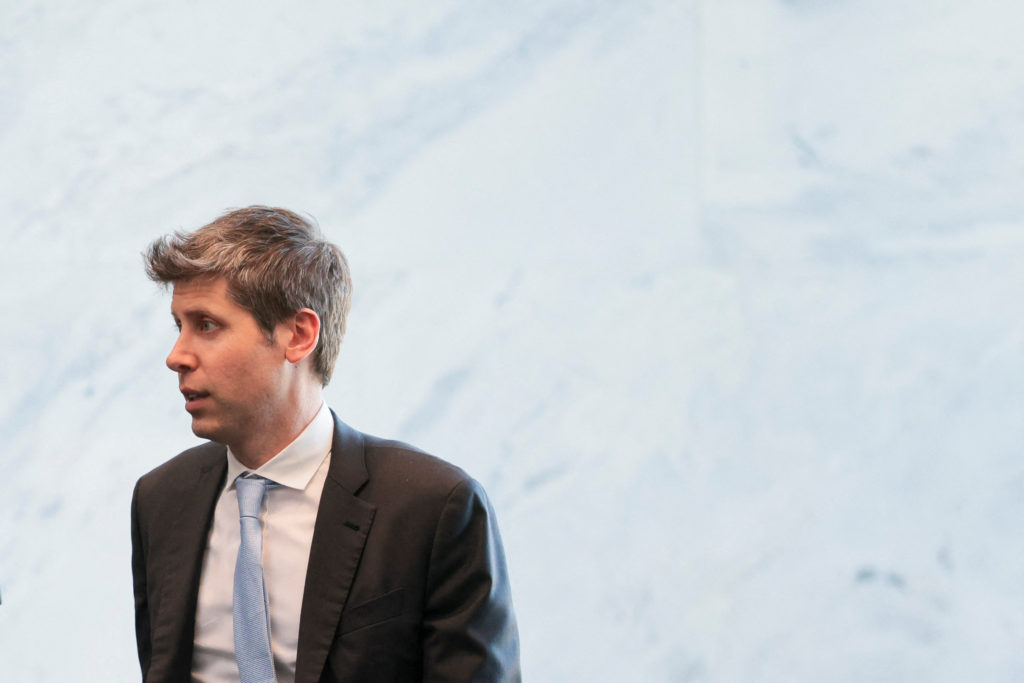
    OpenAI CEO Sam Altman, accompanied by President Donald Trump, speaks during a news conference in the Roosevelt Room of the White House on January 21, 2025, in Washington, DC. | Andrew Harnik/Getty Images A new, bipartisan idea is taking Washington by storm: collective ownership of the means of production.  Sort of, anyway. Last Friday, President Donald Trump announced that he would soon be meeting with the executives of top AI companies to discuss a financial “partnership.”  “There ar
     

Trump’s strange flirtation with AI socialism, explained

12 June 2026 at 10:30
OpenAI CEO Sam Altman standing with Donald Trump.
OpenAI CEO Sam Altman, accompanied by President Donald Trump, speaks during a news conference in the Roosevelt Room of the White House on January 21, 2025, in Washington, DC. | Andrew Harnik/Getty Images

A new, bipartisan idea is taking Washington by storm: collective ownership of the means of production. 

Sort of, anyway.

Last Friday, President Donald Trump announced that he would soon be meeting with the executives of top AI companies to discuss a financial “partnership.” 

“There are concepts where pieces [of these companies] could be given to the American public, where the American public essentially becomes a partner with the companies,” Trump said. “And by doing that, they’re going to like it better.”

Key takeaways

  • President Donald Trump says the government may take ownership stakes in major AI companies and share the returns with the public — an idea pitched to him by OpenAI’s Sam Altman.
  • Critics suspect OpenAI’s real aim is to insulate itself from regulation and competition by aligning its profits with the government’s interests.
  • A broad, well-governed public wealth fund could genuinely help counter AI-driven inequality.
  • But an informal deal between the White House and a few favored firms is more likely to breed cronyism than spread wealth.

By this, the president (seemingly) meant that the US government may take an ownership stake in major AI companies and then distribute the fruits of its investments to the general public, perhaps through universal dividend payments.

This proposal did not come to Trump via some undercover, socialist operative embedded deep within the White House — but rather, from the CEO of OpenAI. 

As NOTUS reported last week, Altman first pitched Trump on the concept in early 2025 and discussions between the administration and OpenAI have heated up more recently. No deal has been finalized. But talks have centered on an arrangement in which top AI labs voluntarily donate shares to the government — an approach that might enable Uncle Sam to partially nationalize the AI industry without Congress passing any law. 

Officially, OpenAI’s interest in effectively transferring wealth from its shareholders to Uncle Sam is public-spirited. The company maintains that advances in AI are likely to generate massive profits for top labs, while sowing wrenching disruptions through labor markets. Thus, to ensure that ordinary people “share in the upside” of AI-fueled economic growth, the company has called for the creation of a “Public Wealth Fund,” which would invest in “both AI companies and the broader set of firms adopting and deploying AI,” and then send a portion of the returns to every American. In other words, it would pay out a universal basic income (another popular idea in Silicon Valley). 

Yet many suspect OpenAI’s motives are more self-interested: By giving the US government a direct stake in its success, the company may be trying to insulate itself from stringent regulation or open competition. Moreover, whatever Altman’s intentions, skeptics argue that the government getting into cahoots with individual AI companies is a recipe for cronyism and conflicts of interest. (Disclosure: Vox Media is one of several publishers that have signed partnership agreements with OpenAI. Our reporting remains editorially independent.)

These concerns seem well-founded. A narrow partnership between the federal government and select AI companies would plausibly do more to generate corruption than redistribute income. 

Yet there is a real risk that artificial intelligence will shift massive amounts of income away from workers and towards capital. And a highly diversified, scrupulously managed public wealth fund could help mitigate that hazard. Unfortunately, the Trump administration has evinced little interest in that approach to social ownership (or in scruples more broadly). 

Why is OpenAI trying to get itself nationalized?

Companies don’t typically cook up schemes for reducing the value of their own shares. And yet, on its face, OpenAI’s reported proposal amounts to precisely that: If the company donates equity to the government, it will dilute the value of all its existing stock. 

This invites the question: What’s in it for them?

There are multiple plausible answers. OpenAI may be trying to limit its exposure to regulation. In opinion polls, a supermajority of Americans express concern for where AI is taking their society — and support for more heavily regulating the industry.

Turning every American into an OpenAI shareholder could theoretically reduce the company’s susceptibility to onerous new rules in a couple of different ways. First, doing so may simply soften the AI industry’s image and buy it some goodwill from the American electorate (Trump seemed to reference this when saying that his arrangement would make Americans like AI better).

Second, such an arrangement would more closely align the public’s interests with those of OpenAI. After all, regulations that reduce the firm’s profitability would now also cut government revenue and/or, Americans’ dividend payments (such payouts might be small at first, but could become substantial over time, particularly if the government cuts deals with other major AI labs). Voters might be less inclined to protest a noisy data center if they think they’re directly profiting from it.  

Similarly, accepting partial nationalization could boost OpenAI’s odds of securing a federal bailout if its revenues do not grow fast enough to cover its debts (a scenario that some analysts consider quite likely). There is a long history of governments shielding state-owned enterprises from market discipline. Thus, the progressive economist Dean Baker fears that an AI wealth fund would “end up being a mechanism to shovel yet more money” at billionaires aligned with the administration. 

It is also possible that, by donating shares to the government, individual AI firms might buy themselves an advantage over their competitors. For its part, the Trump administration has displayed no shyness about rewarding businesses that curry its favor, and retaliating against those who do not

Indeed, the White House has already tried to sabotage OpenAI’s chief rival. In February, Anthropic refused to sign a contract that would have authorized the Pentagon to use its AI for mass surveillance and fully autonomous weapons systems. The Defense Department responded by declaring Anthropic a “supply chain risk” — a designation that would restrict the capacity of government contractors to do business with the AI company. If a federal judge had not blocked that move, it could have done serious damage to Anthropic’s business — while benefiting both OpenAI and xAI, which is owned by Trump megadonor Elon Musk.

If the government took a stake in OpenAI but not Anthropic — or in all the major AI labs but not in more recent startups — the Trump administration might have further incentive to intervene on behalf of its favored firms. 

Separately, the White House could use a public wealth fund to unduly influence AI labs’ decision-making. The government’s shares could give it the power to vote on companies’ internal policies — or else, seek to deter certain decisions with threats of selling off the firm’s stock. 

These risks are amplified by the reportedly informal and ad-hoc nature of the public wealth fund being contemplated. Without congressionally authorized rules governing the fund’s management and investment decisions, the administration could have wide latitude to use its newfound financial power in self-interested ways.

“It would be good for OpenAI to have every American underwriting them,” Samuel Hammond, Director of Artificial Intelligence Policy at the Foundation for American Innovation, told me. “But in America’s political context, we’re likely to get a corrupted version of a state enterprise that is used for personal enrichment and the partisan motives of whoever’s in charge.”

The case for having a little communism, as a treat

Although Trump’s (reported) version of a public wealth fund seems to invite more risks than benefits, this would not necessarily be true of all such funds. 

As a general concept, combating AI-induced inequality by increasing public ownership of corporations has much to recommend it. 

Artificial intelligence could greatly increase investors’ share of national income at workers’ expense: If companies replace much of their high-skill workforce with AI, their shareholders could reap the benefits, even as white-collar laborers lose their jobs and bargaining power.

And if the technology truly takes off, generating an explosively productive economy run by software and robots instead of people, the AI giants could end up harvesting profits of mind-bending scale. 

At the very least, this is what a lot of investors are seemingly betting on. Despite myriad economic headwinds, stock prices are hovering near record highs, due largely to the sky-high valuations of AI stocks. Meanwhile, Anthropic and OpenAI’s impending initial public offerings are expected to be among the biggest in history, and Musk could soon become a trillionaire. 

The government could seek to share this wealth through traditional tax and transfer policies: If investors and tech firms are raking in cash, Congress can raise rates on capital gains, inheritances, and corporate income, then use the proceeds to fund more generous social programs or cash benefits for ordinary Americans.

Conventional taxes are surely part of the solution. As an approach to redistributing business income, however, a public (or “social”) wealth fund has some advantages over corporate taxes. 

The corporate income tax applies only to the profits a company reports, which firms have considerable latitude and incentive to minimize. Large enterprises spend vast sums of money each year on finding innovative ways to defer or relocate their profits, so as to reduce their liabilities. The government then must dedicate its own resources to auditing these practices. This system not only enables corporations to weasel out of their obligations but also generates tremendous waste: All the skilled labor and entrepreneurial energy currently devoted to tax avoidance could otherwise be deployed towards creating actual value for consumers. 

A public wealth fund circumvents these problems. Suppose that, instead of taxing corporate profits at 25 percent, the government required each firm to hand over newly issued shares equal to 25 percent of its total stock. From then on, whenever the company paid a dividend or bought back shares, the government would automatically collect a quarter of the payout. With this approach, a business’s profits have nowhere to hide: A company can shift its earnings to a subsidiary in Dublin or a mailbox in Singapore. Regardless, if that corporation wants to reward its shareholders, Uncle Sam will get his cut. And even if the company hoards its cash, when its operations get more profitable, its stock will rise — and the government’s portfolio will gain value.

Separately, a public wealth fund could have political advantages over traditional tax-and-transfer programs. Once voters get accustomed to the idea that they collectively own a share of their society’s financial wealth, dividends paid out of those assets may be seen more as an entitlement than a handout. 

The Alaska Permanent Fund is a case in point. In the 1970s, Alaska used royalties on its oil resources to seed a financial fund owned by all its residents in common. This year, it will pay out $1,200 to each Alaskan. Critically, despite Alaska’s conservative bent — and Americans’ general skepticism toward unconditional cash welfare — the permanent fund is overwhelmingly popular among Alaskans, and no serious effort has been made to restrict eligibility for dividends.

“There’s this notion that we all own this,” Matt Bruenig, founder of the People’s Policy Project and a leading advocate for social wealth funds, said. “So, there’s this attitude of: Maybe I disapprove of you or speculate that you’re going to blow your dividend on a snow machine or whatever. But it’s not my business. It’s your money.”

It’s possible that this consensus reflects the particular origins of Alaska’s fund: The idea that everyone has some entitlement to their state’s oil reserves — which no human being brought into existence — may be more intuitive than the notion that we all deserve a share of corporate profits writ large. 

Yet American companies’ value derives in large part from inherited technologies, knowledge, and institutions that no living person created — as well as public goods that all US workers and taxpayers help to sustain. 

And artificial intelligence may make the social origins of private profits more readily apparent: As Bernie Sanders recently noted, when AI generates useful code, images, or writing, it does so by synthesizing vast corpuses of data that humanity collectively produced. 

Granted, America would probably screw this up

To be sure, a broad social wealth fund would present some of the same risks as the rumored Trump-Altman proposal. 

Although a fund that invested in all corporations would be less likely to fuel government favoritism towards select firms or industries, such a policy would still align the government’s interests with those of corporate shareholders: Any new regulation that reduced the corporate sector’s profitability — whether by increasing its labor costs, environmental responsibilities, or some other mechanism — would simultaneously reduce the government’s revenue and potentially, voters’ dividend payments. Some on the left oppose social wealth funds on these grounds.

And yet, the government already has a stake in corporate profitability: When firms earn less profit, they pay less in taxes. A public wealth fund might make this reality more apparent. But the alignment of interest between the state and corporate shareholders is inherent in capitalism. And democratic governments have nonetheless constrained businesses’ profits in myriad ways, for better and worse

This said, a public wealth fund would undoubtedly risk centralizing economic power and thus, abetting corruption: The government could theoretically leverage its status as a mega-shareholder to micro-manage the internal operations of private businesses. A world in which the Trump administration and its allies exercised influence over every corporate news outlet — rather than just some — would be less than favorable for democratic freedom. 

This threat is also manageable in principle. One approach would be to simply have the public wealth fund hold exclusively nonvoting shares, which would limit the government’s role in corporate decisionmaking. Another would be to establish transparent, technocratic, and bipartisan rules for how the public wealth fund will exercise its voice in corporate affairs, as Norway has already done for its own fund. 

Of course, many things are possible in principle but not in today’s United States. A rule-bound, universal social wealth fund might help ordinary Americans share in the fruits of AI-fueled economic growth. A voluntary partnership between the Trump administration and select AI firms, by contrast, seems more likely to help the president’s favorite companies limit their investors’ downside risks. 

If so, Trump’s wealth fund would be less of a bold reform for unprecedented times than a new spin on an age-old tradition: Socialism for the rich, capitalism for the poor. 

  • ✇Vox
  • Smartphones broke dating. AI might finish the job. Eric Levitz
    This photo taken on February 1, 2018, shows an engineer holding a silicon face against the head of a robot at a lab of a doll factory of Exdoll, a firm based in the northeastern Chinese port city of Dalian. | AFP via Getty Images Humanity may be scrolling its way out of existence.  Across the globe, fertility rates are plummeting. In 2023, the average number of births per woman worldwide fell beneath 2.1 — the minimum level necessary for averting population decline (also known as the “r
     

Smartphones broke dating. AI might finish the job.

8 June 2026 at 10:00
A man puts a face on a robot.
This photo taken on February 1, 2018, shows an engineer holding a silicon face against the head of a robot at a lab of a doll factory of Exdoll, a firm based in the northeastern Chinese port city of Dalian. | AFP via Getty Images

Humanity may be scrolling its way out of existence. 

Across the globe, fertility rates are plummeting. In 2023, the average number of births per woman worldwide fell beneath 2.1 — the minimum level necessary for averting population decline (also known as the “replacement rate”). And this collapse is not concentrated in just a handful of places; more than two-thirds of all nations now have below-replacement fertility.

While this crisis has been building for decades, its nature recently changed. In the 20th century, fertility fell primarily because couples started having fewer children. Now, it is falling mostly because fewer people are forming couples — or having sex at all.

If these trends continue, the consequences will be transformative — and possibly, catastrophic, as graying populations place unprecedented burdens on the remaining young. Vast countries will swiftly shrivel into city states. Today, Thailand is home to 63 million people. In two centuries, that will fall to 2 million, if the country’s current fertility rate persists. 

Key takeaways

  • Global fertility has fallen below the “replacement rate” of 2.1 births per woman.
  • The collapse in the 2010s in romantic partnership tracks closely with mass smartphone adoption.
  • AI chatbots and companion apps may accelerate the trend by offering on-demand emotional support and validation.

These are just 23rd-century problems. If sustained indefinitely, today’s global fertility rate would ensure humanity’s extinction.

And it’s partly your phone’s fault. 

Or so one leading theory goes. To make sense of recent fertility trends, some analysts have turned to the devices in their pockets. In the view of the journalist John Burn-Murdoch and social scientist Alice Evans, the smartphone helped birth the global spike in singledom. 

Their argument goes (partly) like this: As smartphone ownership skyrocketed globally during the 2010s, more and more young people tapped into a vast, omnipresent trove of personalized entertainment, which reduced their incentives to socialize in person. When you have virtually every movie, TV show, and pornography ever made at your fingertips, you no longer need parties for stimulation or diversion. And when you have an X or Facebook account, you can participate in a public conversation — and experience communal recognition — without ever leaving the comfort of your goon cave

Yet this withdrawal from in-person socializing reduces young people’s opportunities to meet romantic partners or develop social skills. Relationship formation falls as a result.

“The digital revolution has played a signal role in both degrading socialization for young adults and dividing young adults from one another,” Brad Wilcox, a senior fellow at the Institute for Family Studies, told me.

And that revolution is only just beginning. After all, the tech sector’s quest to make social isolation more appealing did not end with the advent of the iPhone, Netflix, or TikTok.

Since 2022, more than 1 billion people have gained access to an infinitely patient conversation partner — one who can speak knowledgeably about all of their interests and listen compassionately to all of their problems. Thanks to Claude and ChatGPT, hermits can not only enjoy perpetual stimulation without social contact but also forms of emotional support that had previously required an intimate friend, family member, lover, or licensed therapist. 

And these are the worst versions of these products we’ll ever see. Future iterations may take even more engaging forms; someday, Claude might be able to get it on

This makes the “smartphone theory” one of the more important hypotheses of our time. If its narrative is correct — and there is some compelling evidence in its favor — then the fertility crisis is liable to deepen in the coming years. And AI might be replacing more than just our jobs. 

Amusing ourselves to abstinence

Before digging into the “smartphone theory” of falling birth rates, it’s worth clarifying its scope. 

No one thinks that digital technology is the primary cause of declining fertility, a trend that predates the iPhone by more than a century in wealthy countries (Swedish farmers did not start having fewer kids in the 1880s because of TikTok). 

Rather, the main drivers of the long-term fertility descent appear to be foundational features of modernity: When scientific systems of healthcare and sanitation reduce child mortality, couples feel less compelled to have six kids in the hopes that three might survive. When industrial progress boosts the returns to education, parents have an incentive to invest more resources in each individual child’s development, making large families harder to sustain. And when women secure political rights, economic autonomy, and reliable contraception, fewer choose to spend decades of their lives perpetually pregnant.

Yet these structural forces only get us so far. Modern medicine, economic development, and women’s emancipation may have put humanity on the path to collapsing fertility. But some other factor recently sped us on our way: In the aughts, fertility rates actually plateaued globally and rose in advanced economies — before abruptly plummeting in the 2010s. 

During that same decade, rates of singledom also spiked. In countries as varied as the United States, South Korea, Turkey, Tunisia, and Finland, young adults became less likely to have a romantic partner. And this “relationship recession” seems to have fueled the post-2010 drop in fertility. According to a 2025 study published in Nature, mothers in most high-income countries are having about as many children as they did decades ago. Yet fertility rates are falling nonetheless, due to a steep drop in the share of women who have any children at all.

The coupling collapse can’t be explained by a sudden expansion of women’s rights; it is happening even in deeply patriarchal societies like Saudi Arabia. Nor is it easily attributed to economic turmoil; rates of romantic partnership have fallen in both high-growth and low-growth nations, advanced economies and developing ones, countries rattled by the 2008 crisis and those largely unharmed by it.

Smartphones, on the other hand, were in the right places at the right times.

In country after country, the rise in singles — and drop in birth rates — coincided with the mass adoption of smartphones, according to an analysis from Burn-Murdoch, the journalist at the Financial Times.

Correlation isn’t causation. But there’s reason to think this timing isn’t coincidental.

In one recent study, economists from the University of Cincinnati examined how teen fertility changed in different American and British localities as they gained access to 4G mobile networks. They found that the arrival of high-speed internet consistently accelerated declines in adolescent birth rates and conceptions. Their explanation for this phenomenon is straightforward: When the center of adolescent life moves online, in-personal socializing declines — and with it, opportunities for one thing to lead to another.

Time-use data lends credence to this theory. Across 21 European nations, the share of people who got together with their friends on a daily basis fell from 21 percent in 2006 to 12 percent in 2022. In the US, meanwhile, time spent on in-person social interaction has plunged during the smartphone era.

Taken together, these data points appear to tell a simple story: When humans acquire 24/7 access to social media platforms and unlimited digital entertainment, they feel less need to hang out with peers in the real world — and demand more from potential partners.

“When phones become ever more engaging and ever more exciting, then you want a super engaging person,” Evans, the social scientist, said. “He’s got to be better than an episode of Bridgerton.”

Thus, some retreat from the frictions of in-person socialization entirely. Others forfeit opportunities to hone their social skills or  find suitable but imperfect mates. Sexlessness ensues. 

How AI could make sex obsolete

It isn’t hard to see how AI could accelerate these trends. 

Streaming and social media might have made the solitary life less dull and uncomfortable. But Pornhub won’t talk with you about your career anxieties, favorite Civil War battle, or debilitating fear of iguanas. And TikTok won’t provide discrete reassurance about that new mole on your chest. Before 2022, securing this sort of sympathetic ear typically required forging and sustaining real-world relationships. 

But now, Claude, Gemini, and ChatGPT are happy to oblige.

Thus, if smartphones were outcompeting offline interaction before they hosted chatbots, they seem even better equipped to do so today. 

Separately, AI may also widen the gap between young people’s romantic expectations and dating realities.

Frequent interaction with a chatbot — who perpetually centers your concerns, never loses patience, and always has something to say about your topics of interest — could  encourage unrealistic standards for human conversation, particularly among those who’ve used AI intensively from an early age. 

Of course, these are mere speculations. And research into AI’s impacts on in-person socialization and dating is limited. But there is some evidence that chatbots could be expediting young people’s drift towards solitude and sexlessness. 

In a study published in 2025 from OpenAI and MIT, researchers tracked 981 participants’ use of AI chatbots over a four-week period. They found that subjects who voluntarily spent more time talking with LLMs during that span became more socially isolated by the study’s end. 

This doesn’t necessarily mean that heavy chatbot use caused people to socialize less with other humans. After all, those who lack hangout opportunities might be more inclined to talk with chatbots. And yet, those who used AI intensively during the study had roughly as active social lives as other participants when the trial period began. Therefore, it seems likely that — at least in some cases — bonding with ChatGPT led to social isolation rather than vice versa.

Meanwhile, survey data suggest that people are turning to chatbots for companionship or romantic stimulation in growing numbers. In a 2025 poll from Brigham Young University’s Wheatley Institute, 19 percent of American adults — including 31 percent of young men — said they had chatted with an AI system meant to simulate a romantic partner. 

More recently, the institute examined the use of these pseudo-significant others by young Americans in committed relationships. In its survey, 15 percent of young adults with human partners reported having a secret AI romantic relationship. And among this significant minority, more than 70 percent of men — and nearly 60 percent of women — agreed with the statement, “I wish conversations with my partner were like AI.” And more than half of both male and female users of AI companions said they wished their human partners “behaved like my AI.”

Perhaps more concerningly, respondents who used AI companions regularly were more likely to be in unstable relationships — in which they often thought that their partnership was in trouble, or discussed ending the relationship, or had broken up and gotten back together.

Once again, causality is difficult to determine. People in unstable relationships might be more inclined to seek artificial companionship. But chatbots’ influence on their users’ expectations are likely a factor, according to the report’s co-author Brian Willoughby. 

“The more I talk to an AI companion that is always validating me, always taking my side, and always talking about what I want to talk about,” Willoughby said, “the more conversations with my real-life partner — who has their own views — will start paling in comparison to those AI interactions.”

And silicon substitutes for human intimacy will only grow more sophisticated and holistic in the coming decades. Or so many in and around the tech industry believe. 

Daniel Faggella, founder of Emerj Artificial Intelligence Research, believes that advances in AI, virtual reality, and mechanized sex toys will eventually render human intercourse an obsolete pastime — one largely confined to nostalgists and connoisseurs, like driving stick shift. 

“The great sexual organ is the brain,” Faggella told me. “If you have the visuals, the voice, the haptics, the sound, real-time biofeedback — and even very crude physical implements to go along with them — I think you’re going to beat the human flesh experience every time.”

I suspect that sex has more staying power than Faggella allows. But erotic AI doesn’t need to fully displace intimacy to accelerate the dating recession and fertility crisis. It merely needs to lure a sizable minority of men and women away from the hassle and heartbreak of human relationships. Judging by existing trends, superintelligent sexbots seem liable to meet that challenge.

The future could be brighter

AI’s effects on human sociality remain uncertain. In theory, artificial intelligence could benefit human relationships and fertility — by, for example, helping awkward adolescents refine their conversational skills or providing troubled couples with on-demand counseling.

Moreover, some experts question how much smartphones actually changed fertility trends. In the view of University of Pennsylvania economist Jesús Fernández-Villaverde, the fundamental causes of the 2010s fertility collapse are long-term structural forces — among them, secularization, the “dissolution of old social networks,” and the rise of a service economy in which women’s relative economic power has increased. 

Social media and streaming may have accelerated these processes, in Fernández-Villaverde’s view, by diffusing feminist ideas: Over the past decade, women in patriarchal societies have gained unprecedented access to commentary and dramas that affirm their desire for autonomy and idealize egalitarian marriages (Evans and Burn-Murdoch also put considerable weight on this dynamic). But he believes that this merely hastened already inevitable declines. 

“Cellphones matter a little bit,” Fernández-Villaverde said. “But it’s not because people are spending their whole life playing Pokémon. It’s because they’re seeing what the rest of the world looks like and deciding that they want to do things differently.”

Nevertheless, it is clear that mass smartphone adoption coincided with falling in-person socialization — and rising singledom — in all manner of different countries. And there are some signs that AI is further displacing face-to-face interaction and distorting relationship expectations. In any case, the tech industry has a strong incentive to generate evermore compelling substitutes for human connection.

“Here in the Bay Area, all these startups are trying to make apps that will compete in the attention economy,” Evans said. “All these genius software engineers are trying to make something that hooks you in. So I’d predict that the market will enable AI to outcompete humans — they will be funnier, more charming, and enticing.”

At the very least, that possibility warrants concern, given the potential consequences for both fertility and human welfare. 

If the past decade is any guide, technological progress may be speeding us toward a future of ubiquitous ghost towns, scarce children, and nursing homes full of gray-haired hermits, each passing their days with VR paramours as civilization slowly unwinds. 

There are worse fates. But ideally, humanity would hold out for a better one.

  • ✇Marketoonist - Tom Fishburne
  • Storytelling and AI tomfishburne
    LinkedIn reported that the percentage of US job postings that include the term “storyteller” doubled last year from the year before. Katie Deighton recently wrote about this in the WSJ: “Marketing and technology companies have often repurposed grandiose descriptions from other arenas to lend corporate office roles additional sparkle. While the heyday of technology gurus, developer ninjas, SEO rockstars and at least one digital prophet have long since passed, calling salaried communications
     

Storytelling and AI

6 April 2026 at 11:32

Storytelling and AI Marketoonist cartoon

LinkedIn reported that the percentage of US job postings that include the term “storyteller” doubled last year from the year before.

Katie Deighton recently wrote about this in the WSJ:

“Marketing and technology companies have often repurposed grandiose descriptions from other arenas to lend corporate office roles additional sparkle. While the heyday of technology gurus, developer ninjas, SEO rockstars and at least one digital prophet have long since passed, calling salaried communications professionals “storytellers” and the practice of storytelling appears to only have picked up in popularity.”

Of course this isn’t totally new. Storytelling in business practice goes through periods of being in vogue.

In 2014, Austrian designer Stefan Sagmeister famously pilloried the whole idea of creatives calling themselves storytellers, showing up to a conference on storytelling to tell everyone they weren’t really storytellers.

“People who actually tell stories, meaning people who write novels and make feature films don’t see themselves as storytellers. It’s all the people who are not storytellers, who kind of for strange reasons because it’s in the air suddenly now want to be storytellers.”

I find it funny that Stefan Sagmeister’s own wikipedia entry now describes him as a “graphic designer, storyteller, and typographer.”

AI is impacting storytelling in interesting ways. In some ways, AI is democratizing storytelling. It’s helping amplify and extend stories that might not otherwise get told. Yet, the path of least resistance is to use these tools to generate more of the same.

Here are a few related cartoons I’ve drawn over the years:

marketing storytelling - July 2016

Share
  • Share this Marketoon
| Read Post

branded content - September 2013

Share
  • Share this Marketoon
| Read Post

AI Slop Fatigue and Analog Intelligence - September 2025

AI Slop Fatigue cartoon
Share
  • Share this Marketoon
| Read Post

The post Storytelling and AI first appeared on Marketoonist | Tom Fishburne.

Shopee cuts Singapore jobs as AI takes over their work; even local software engineers among hundreds of global developer roles are also affected

11 June 2026 at 19:30

SINGAPORE: Shopee has cut jobs in Singapore, with software engineers among those affected, as the e-commerce giant continues a major dive into artificial intelligence (AI).

The company confirmed the workforce adjustment on June 10, saying it regularly reviews staffing needs and may make changes based on business and operational priorities. The decision was made as Shopee’s parent company, Sea Limited, accelerates investment in AI projects across its businesses.

Employees at Shopee’s Singapore headquarters were informed of the layoffs on Monday. The company was also cutting hundreds of developer roles globally, representing about 8 per cent of its developer workforce, Channel NewsAsia (CNA) reported, citing Bloomberg.

Software engineers among those affected

Two Shopee software engineers, on condition of anonymity, said they were among those retrenched. One of them said he first received a message through the company’s internal communication platform before being called into a meeting with human resources.

Affected staff were reportedly offered an “N+2” package, which provides one month’s salary for every year of service, plus an additional two months of pay. The total number of affected employees in Singapore is still unknown.

Another employee, whose role wasn’t impacted, said there was no company-wide town hall or email announcing the exercise. He was aware of at least 10 colleagues who lost their jobs, mostly from product and engineering teams.

The retrenchments are concerning because they involve software developers, a profession viewed as one of the safer bets in the digital economy.

Read related: ‘Complete nonsense’ — Jensen Huang rejects the need for global workers to fear AI-driven job losses, says more software engineers will be needed

As AI tools become more capable of writing code, testing software and automating routine development work, technology firms are increasingly reassessing how many engineers they need.

Union and task force step in

Sea Limited isn’t unionised in Singapore, but the company informed the Creative Media and Publishing Union (CMPU) before the retrenchment exercise.

The union said the advance notice allowed it to work with management to support affected employees and ensure compensation packages met expectations. Union representatives were also present during the exercise to assist.

The Taskforce for Responsible Retrenchment and Employment Facilitation said Sea was working with CMPU to support affected employees whose final working days fall between late June and late August.

The task force added that Sea had committed to providing retrenchment benefits that align with Singapore’s tripartite guidelines on responsible retrenchment.

Read related: NTUC: Singapore is looking into ways to better support workers before job losses

AI becomes a bigger priority for the business

The layoffs come against the backdrop of Sea’s growing AI ambitions. Sea’s chief executive officer (CEO), Forrest Li, has previously described AI as a major growth opportunity for the company.

Mr Li told employees in 2025 that Sea could potentially reach a trillion-dollar market valuation if it made the right decisions around AI and doubled down on the technology.

Last month, Bloomberg reported that Sea had committed fresh funding to both internal and external AI initiatives as it looked for new growth opportunities beyond e-commerce.

In April, the company launched an Artificial Intelligence Centre of Excellence in Singapore with support from Digital Industry Singapore. At the launch, Mr Li described AI as a core capability that would strengthen product development, operations and long-term value creation.

Read related: ‘Singaporeans will definitely get retrenched at least once’ — HR consultant and author of ‘Still Relevant in the Age of AI?’ says, ‘It’s only a matter of when’

Workforce cut even when business profits rise despite higher spending

For the first quarter of 2026, the company reported net income of US$438.2 million (S$564.31 million), up 6.7 per cent from a year earlier. Adjusted earnings before interest, taxes, depreciation and amortisation (EBITDA) rose 9.3 per cent to US$1 billion (S$1.28 billion).

At the same time, Sea’s spending climbed sharply. Operating expenses rose 43.4 per cent year-on-year to nearly US$2.6 billion (S$3.34 billion), while cost of revenue increased 51.7 per cent to US$4 billion (S$5.15 billion).

Read related: Singapore retrenchments 2026: Amazon, Tiger Beer, Yeo’s, and more firms cut jobs amid rising energy costs and weak demand

AI is taking over jobs at every level of the workforce

The latest cuts again show a change taking place across the technology sector. Companies are pouring money into AI while seeking ways to streamline teams and automate work previously handled by humans.

The development is another reminder that AI is taking over jobs at every level of the workforce. The subject is no longer whether AI will affect knowledge workers; it is increasingly about which tasks are still uniquely human and how workers can adapt as technology takes on a larger role.

Job cuts are never easy for those affected. Companies pursuing AI-driven growth should continue investing in retraining and skills development, helping employees move into new roles instead of leaving them behind.

Read related: Meta terminates 8,000 jobs globally, while Singapore staff receive their termination e-mails at 4 AM, as the company moves on with its new AI-focused teams

This article (Shopee cuts Singapore jobs as AI takes over their work; even local software engineers among hundreds of global developer roles are also affected) first appeared on The Independent Singapore News.

  • ✇Marketoonist - Tom Fishburne
  • Human Made tomfishburne
    This week’s cartoon goes out to my friend Ann Handley, who has been putting up a valiant defense for the em dash (—). As Ann put it recently: “People are patrolling the streets, rounding up em dashes like it’s CSI: Grammar Unit. “Use one in a paragraph? That means you’re secretly AI! You’re generating your LinkedIn posts with a boiling cauldron of vibes and predictive text! You’re a fake! A phony! Cue the pitchforks! Light the torches! The mob is lurching toward you! “Meanwhile, the
     

Human Made

20 April 2026 at 11:30

Human Made Marketoonist cartoon

This week’s cartoon goes out to my friend Ann Handley, who has been putting up a valiant defense for the em dash (—).

As Ann put it recently:

“People are patrolling the streets, rounding up em dashes like it’s CSI: Grammar Unit.

“Use one in a paragraph? That means you’re secretly AI! You’re generating your LinkedIn posts with a boiling cauldron of vibes and predictive text! You’re a fake! A phony! Cue the pitchforks! Light the torches! The mob is lurching toward you!

“Meanwhile, the rest of us are just out here trying to write like actual humans—messy, rhythmic, gloriously imperfect.

“I just used an em dash in that last sentence, see? Like humans do.”

The Em Dash is just the tip of the spear for AI detection vigilanteism. In just the last few weeks, Hachette pulled a novel and The Atlantic called out a NYT column for tripping AI detection sensors.

The AI slop floodgates are wide open and the AI backlash is simultaneously underway. And as AI tools are more widely used, we’re in a murky period as a culture of figuring out where to draw the line and what to disclose.

The BBC recently counted 8 different initiatives to come up with an “AI-free,” modeled on the “Fair Trade” endorsement used for products. Claims like “Proudly Human”, “Human-made”, ‘”No A.I” and “AI-free” are popping up everywhere from films to books to marketing.

And yet, there’s no full agreement on how even to define “human made.”

As AI Research Scientist Sasha Luccioni put it:

“AI is now so ubiquitous and so integrated into different platforms and services, that it’s truly complicated to establish what ‘AI free’ means. From a technical perspective, it’s hard to implement. I think that AI is a spectrum, and we need more comprehensive certification systems, rather than a binary with AI/AI-free approach.”

In the meantime, it will likely be a bumpy ride.

Here are a few related cartoons I’ve drawn over the years:

AI Slop Fatigue and Analog Intelligence - September 2025

AI Slop Fatigue cartoon
Share
  • Share this Marketoon
| Read Post

AI Written, AI Read - March 2023

AI Written, AI Read cartoon
Share
  • Share this Marketoon
| Read Post

Content, Content, Content - August 2025

Content cartoon
Share
  • Share this Marketoon
| Read Post

optimizing content - March 2017

Share
  • Share this Marketoon
| Read Post

The post Human Made first appeared on Marketoonist | Tom Fishburne.

  • ✇Vox
  • The couples using ChatGPT as their therapist Allie Volpe
    Nick Sadler and his wife had different ideas of what a chill Saturday looked like. He considered the weekend a blank slate — no set plans, the family’s moment to reset and chill. She was under the impression that time was up for grabs and put a short hangout on their calendar, which Sadler saw as his wife not taking his schedule into account. To settle the argument, he opened up ChatGPT, specifically the group chat function, which allows more than one human to interact with the technolo
     

The couples using ChatGPT as their therapist

9 June 2026 at 11:00
An illustration of a robot handing a confused man a bouquet of flowers and a heart full of chocolate.

Nick Sadler and his wife had different ideas of what a chill Saturday looked like. He considered the weekend a blank slate — no set plans, the family’s moment to reset and chill. She was under the impression that time was up for grabs and put a short hangout on their calendar, which Sadler saw as his wife not taking his schedule into account. To settle the argument, he opened up ChatGPT, specifically the group chat function, which allows more than one human to interact with the technology. Sadler prompted the chatbot to act as a neutral mediator and to instruct them on their next moves. Sadler tells Vox that ChatGPT acted as a trusted friend, or even a therapist, suggesting both of them consider different perspectives. It attempted to pinpoint where the conversation broke down (“Both of you then behaved logically according to your own understanding. That means this is not primarily a respect problem. It’s a classification problem.”) and offered guidelines for future scheduling (“A simple question can prevent most of these arguments: ‘Is this an idea, or are we locking this in?’”)

“It was like, ‘Well, next time just consider this’ and ‘maybe try saying this’ and ‘maybe try doing that,’” Sadler, a film producer, says. “We got some sort of advice to follow, but ultimately we’ve still got to do the work and we’ve still got to actually take the actions.”

Sadler, a 48-year-old self-proclaimed AI enthusiast, is no stranger to utilizing ChatGPT in his marriage. He’s used it to uncover the weaknesses in his arguments and to craft apology texts to his wife. “I put in purpose mistakes so she wouldn’t think I was just using ChatGPT,” he says.

But the pressures of parenting two young kids was kindling for their periodic annoying marital spats. Sadler and his wife considered couples counseling, but once he discovered ChatGPT could guide them through difficult conversations, they no longer felt they needed the help of a professional. One night, while sitting on the couch with his wife, Sadler launched ChatGPT and told his wife to talk to it as if it was a therapist. “In a way, it’s having a therapist on tap,” he says.

That people are turning to large language models to navigate their love lives isn’t entirely surprising. Relationships have peaks and valleys and, many times, exist in an emotional gray area. Chatbots, on the other hand, are authoritative in tone and confident, even when they’re wrong

Some people are going a step beyond asking Claude to draft an apology text, and inviting AI into the most intimate moments of their lives: fights with their significant others. In other words, they are treating technology like an on-demand couples therapist. The tech, which could be ambiently listening or addressed directly via voice or text, might suggest someone use more “I” statements or prompt couples to ask questions like “Where did you feel unsupported?” 

Research has suggested publicly available AI, like ChatGPT, is an effective intermediary in a dispute, with human subjects feeling less divided when AI was mediating. But AI platforms lack the emotional intelligence to adequately read a couple’s body language and tone, understand cultural context and power dynamics, and incorporate a couple’s past into the fight at hand.

The desire for an authoritative, always-available guide in the midst of conflict is certainly seductive, but emotional matters are best reserved for human-to-human conversation. “The answer is typically not that you need some type of content strategy on how you should approach your next steps,” Amelia Miller, a fellow at the Berkman Klein Center for Internet and Society at Harvard University, tells Vox. “But it’s much more that you need emotional support, which comes from asking other people that you care about what you should do in the situation, not asking a machine.”

Drawing from a shared reality

In her Bay Area therapy practice, Courtney Quattrini has seen her fair share of couples who leverage AI chatbots in their relationships, including using it as a practice conversation partner and to ghostwrite texts to their significant other. While none of her clients have let ChatGPT or Claude mediate a fight, some do bring in AI summaries of arguments from one person’s perspective to their sessions with her. “They’re ruminating or they’re thinking about their side of the fight: What am I going to come back and say, how am I going to prove that I’m right or wrong?” Quattrini tells Vox. “They’re summarizing the fight from their perspective, and then they’ll bring in the summary and present it almost like it’s objective, but of course it’s not objective.”

But much of the work in couples therapy centers on the idea that two things can be true at once, and is about getting both individuals to understand that their partner’s emotional reality is important. “When you’re coming in and you want to summarize who won a fight, that really doesn’t align with the work that we’re actually doing,” Quattrini says. Feeding AI your narrative doesn’t help you see the things you could have done differently. 

But when both people in a relationship invite AI into the discussion, leveling the playing field, the technology draws from a version of the story that may be more closely aligned with reality. A few months into dating, Khalid Tawohid and his partner discovered they’d both been discussing their relationship with their respective AI chatbots. “How can we get our AIs to just talk to each other?” Tawohid tells Vox.

Earlier this year, the 25-year-old software engineer designed a workaround where both his and his partner’s Claude agents — drawing from each individual’s full chat history — could facilitate difficult conversations. The app, called Bridge, claims to provide scaffolding for the discussions and package disorderly thoughts in a more coherent manner. Instead of looking to a machine to validate your point of view, the machine, ideally, would hold your hand as you attempt that same conversation with a human. “This helps your AI have a real sense of identity of who this [other] person is because it’s two different AIs, one knows one person, one knows the other person, and they’re both vehemently going to defend their own person,” Tawohid says. “But together it gets you to a more shared sense of truth.”

Still, Tawohid isn’t convinced his AI chatbot mediation tool, Bridge, is even a good idea. He has shared Bridge with about 10 couples, all of whom have given him the feedback that they’d use it again, he says, but it isn’t widely available for use. Perhaps, he says, it could be a supplement to traditional couples counseling, a way to practice communication outside of the therapy room.

Ironically, though, Tawohid has come down on the side of mild AI skepticism. “It’s a combination of a journal and a therapist and a friend, but it is also not real. It’s also just a computer code,” he says. When he discovered he’d lost his ability to craft a sentence without help, he stopped writing with AI. Now he fears people could lose their relationships to chatbots, too. 

Gateway to introspection or outsourcing sincerity?

After a few months of using Bridge, Tawohid says he and his partner spend much less time talking to AI. They’ve had enough machine-facilitated conversations that they better understand each other’s thought patterns and triggers. Sadler, the AI-curious film producer, and his wife have similarly come to rely on AI less frequently because, he says, ChatGPT has taught them to be better communicators. “It just taught me to understand that she’s got a different perspective on things. If I’m not understanding where [she’s] coming from, just asking questions to say, well, what do you mean? And not jumping to conclusions,” he says.

Using AI as a therapeutic outlet can be instructive for people who aren’t in the habit of introspection, says Miller, the Harvard fellow. These chatbots can, in theory, be a tool for reflecting on an argument and for rehearsing what to say next. But sometimes the language the chatbot suggests is so far out of the realm of what your partner would actually say that its assistance is counterproductive. 

For Josh Elledge and his wife, the stupid fight began over a haircut — or lack thereof. Elledge, a 54-year-old podcast consultant, was refusing to clean up his look (“I didn’t like something my barber said, and so I stopped going to him,” Elledge says) and his wife was not pleased. So she turned to an AI chatbot for assistance on how to break it to him. What she ended up saying to Elledge didn’t land. “It just made her opinion stronger in a way that wasn’t really helpful,” he says. “She’s conveying this stuff and I’m like, wow, you really think that? And she’s like, well, no, not really.” He says they “thankfully had the good sense” to distinguish between what she believed and what was the AI. 

Once you relinquish enough of your critical thinking to AI, you run the risk of undermining the relationship you sought to fix. Therapists are trained to identify when a fight needs to be slowed, rerouted, or ditched altogether. But because chatbots never tire of hearing about your problems, you can get caught in a loop of rumination, perpetually mulling over the same frustrations and workshopping language on how to tell your husband you hate his haircut. At that point, who are you in a relationship with — a large language model, or a human? “That was an instance where maybe this isn’t a miracle process. You still have to just be really careful about not showing up as someone who you are not just simply because you defaulted to this AI being this authority in all things,” Elledge says.

AI chatbots are programmed to keep you engaged, but endless mediation and reflection isn’t exactly helpful. If you feel compelled to use one to navigate a squabble, give the technology guardrails. For example, Miller has created custom prompts that don’t exceed 10 or so exchanges with the AI and are meant to illuminate your own biases and shortcomings. But, ultimately, Quattrini, the therapist, says it’s important to remember that true counsel comes from a human who possesses the ability to read nonverbal cues, affect, and changes in body language. “Right now I think AI is a pretty dangerous mediator because it doesn’t have a nervous system,” she says. 

The joy of being a person in a relationship with another person is getting through the hard parts together, even imperfectly. “We’re complicated people and no one really knows everything going on in everyone’s mind,” Tawohid says. “But humans are awesome, truly.”

Elev8on Management Debuts AI-Powered American Talent Tool St8r In Cannes

20 May 2026 at 10:09
EXCLUSIVE: Elev8on Management has officially launched its AI-powered tool that assesses the chances of U.S. talent in Europe. St8r, the new name for Pulse By Elev8on, debuted in Cannes following a Beta testing phases in which ten European producers and distributors provided positive feedback. It has been developed over recent years. The tool, which we […]

Pope Leo Warns That Artificial Intelligence Could Be “New Tower Of Babel”, Cautions Against AI In The Hands Of The Few

25 May 2026 at 15:50
In his encyclical “Magnifica Humanitas” (Magnificent Humanity) released today, Pope Leo XIV warns that artificial intelligence “threatens to normalize an anti-human vision” and strongly cautions against the concentration of the new technology in the hands of the few. In the first sentence of the encyclical, the Pope writes, “Humanity, created by God in all its grandeur, […]

  • ✇Vox
  • New college grads are doing better than the vibes suggest Bryan Walsh
    There are many ways to bomb a college commencement speech.  You can tell everyone you composed the talk while high on ayahuasca, like Chris Pan at Ohio State. You can deliver the entirety of your speech in the voices of your incredibly annoying cartoon characters, like Tom Kenny and Bill Fagerbakke at the University of Vermont. You can even, like my graduation speaker in 2001, admonish the graduating class for depending too much on their parents and generally being an ungrateful lot, b
     

New college grads are doing better than the vibes suggest

1 June 2026 at 10:00
College grad with flower on hat

There are many ways to bomb a college commencement speech. 

You can tell everyone you composed the talk while high on ayahuasca, like Chris Pan at Ohio State. You can deliver the entirety of your speech in the voices of your incredibly annoying cartoon characters, like Tom Kenny and Bill Fagerbakke at the University of Vermont. You can even, like my graduation speaker in 2001, admonish the graduating class for depending too much on their parents and generally being an ungrateful lot, before later being convicted of multiple counts of sexual assault and undergoing a dramatic fall from grace. (Yes, that was none other than Bill Cosby, whose convictions were later overturned.) 

But the surest way to turn your graduate audience hostile in 2026 is to refer positively to AI, as speakers ranging from former Google CEO Eric Schmidt at the University of Arizona to real estate executive Gloria Caulfield at the University of Central Florida to record label honcho Scott Borchetta at Middle Tennessee State University discovered. And that’s because AI has — not unreasonably — become the symbol of growing fears that a college degree is no longer as valuable as it once was, and that today’s college grads are uniquely screwed. (The only speaker I could find whose comments on AI were well received was The Daily Show’s Ronny Chieng at Harvard, probably because they included the line: “fuck AI, fuck AI, fuck AI.”)

In a late-2025 NBC News poll, 63 percent of voters said a college degree isn’t worth it, against just 33 percent who said it was. A Gallup poll found that the share of Americans who say college is “very important” had fallen to 35 percent in 2025, a huge drop from 75 percent in 2010. And that pessimism has real grounding. Recent graduates ages 22 to 27 had an unemployment rate of about 5.7 percent in early 2026, above the national average of 4.3 percent. Hiring has slowed to the lowest rate outside the pandemic since 2014, while entry-level postings have fallen roughly 35 percent over the past 18 months. 

So there’s no doubt that 2026 will be a rough launch for new college grads. But a rough launch doesn’t mean a rough life, and while the longer-term impact of AI is unknowable, it’s far from the worst time even in recent memory to graduate into the workforce. The data still says, for most graduates, a college degree is more than worth the investment.

The vibes out there for college grads are not good. But when the bad vibes are outpacing the actual reality, that qualifies as qualified good news. 

One of the best investments you can make

Let’s start with the number the college panic ignores. In 2025, the Federal Reserve Bank of New York asked the question “Is college still worth it?” and came back with a very specific answer: Yes — to the tune of 12.5 percent. 

That was the median return on investment in a college degree, after accounting for the cost of tuition and the amount lost by not spending those years working. College graduates in recent years have earned a median of around $80,000 a year, compared to around $47,000 a year for high school graduates. Government data in 2024 put median weekly earnings for workers with a bachelor’s degree at $1,543, compared with $930 for workers with only a high school diploma — about 66 percent more. And while it’s true that the growth of this premium has largely flattened over the past two decades, after roughly doubling between 1980 and 2000, it hasn’t disappeared. Graduating from college, even in 2026, still puts you on a better path than skipping it.

It’s telling that when you shift from the abstract idea of college to the value of individual degrees, the vibes change. Asked about their own degree, according to a 2026 Gallup poll, about 80 percent of bachelor’s graduates call it critical or important to their careers, while 71 percent say they landed a good job within six months. It’s a bit like the perennial attitude toward Congress: People hate the institution and yet tend to rate their own representatives highly. Abstract views are influenced by the deluge of content about the crisis of college, while individual views are influenced by what is actually happening to people. 

It’s the timing, not the degree

Speaking as a proud member of the college class of 2001, I can tell you that 2026 is far from the first year when it was tough to graduate into the workforce. My friends one year above me in college entered an economy that had an astoundingly low unemployment rate of 1.4 to 1.7 percent for college grads ages 25 to 34, while real hourly wages for young college graduates had grown at 3 percent a year between 1995 and 2000. My classmates assumed we were headed for the same golden outcome.

“Psych!”, as we used to say back then. By the spring of 2001, the dot-com crash was in full effect, wiping out startups and jobs. More than a few people I knew had lined up lucrative starting jobs at investment banks and consulting businesses, only to have those gigs rescinded as they were preparing to receive their diplomas. (I cleverly avoided this by never getting those offers in the first place and instead entering the thriving field of journalism.) By December 2001, in the aftermath of 9/11, the unemployment rate for college grads ages 25 to 34 had jumped to 4 percent.

The class of 2010 had it even worse — recent college grads had a 7 percent unemployment rate. But though both the classes of 2001 and 2010 experienced what economists call “recession scarring” that had lasting effects on their income, those scars largely, though not completely, faded as time passed and the economy improved. The lesson? You can’t control when you graduate college, but you can largely control whether you graduate college at all — and finishing school is likely to still benefit you over the long term.

It’s true that the class of 2026 is facing an extra layer of uncertainty: the fear that AI is eating away at the bottom rung of the career ladder before graduates can reach it. Goldman Sachs finds unemployment among 20- to 30-year-olds in tech-exposed roles is up nearly 3 percentage points since early 2025, while research from Stanford has counted a roughly 20 percent drop in employment for young software developers in highly automatable jobs. 

But every time you think the case has been made that AI is causing a jobpocalypse, new data complicates the picture. Vanguard reports that employment in highly AI-exposed occupations rose 1.7 percent between 2023 and 2025, while a Federal Reserve study this year of more than a million firms found no clear connection between adopting AI and posting fewer jobs so far. At the moment, hiring problems have more to do with a cautious, high-interest-rate economy. And employer hiring plans for the class of 2026 are actually being revised upward — not the move you make while deleting the entry level.  

“To you, the class of 2026, I say…”

None of this data means that college bet is a sure thing for everyone. Tracking by the Burning Glass Institute and Strada finds that 52 percent of graduates are underemployed a year out, and 45 percent are underemployed a decade later. A college grad who takes a first job that doesn’t require a degree is 3.5 times more likely to be underemployed 10 years on. For that group, the earnings premium over a high school grad shrinks to about 25 percent — roughly the same as a college dropout.

Outcomes are also influenced by what a graduate chooses to study: Underemployment runs under 10 percent for nursing graduates and above 65 percent for criminal justice majors. (I realize telling someone who just claimed their diploma that maybe they should have picked a different major is not exactly actionable advice.) And the financing has gotten tougher — for Gen Z, it cost 32 percent of the typical American family’s annual income to pay for one year at a state university in 2021, compared to mid-20s for Gen X in the 1990s and 15 percent for Boomers in 1975. 

But generational comparisons obscure as well. When people say college doesn’t pay like it used to, they may not realize they’re comparing against a past when a far smaller and more homogenous slice of Americans got their degree: Among 25- to 29-year-olds, the share holding a bachelor’s has roughly doubled between 1980 and 2021, from about a fifth to nearly two in five. That much larger and more varied pool of graduates skews the individual outcomes, even if the average largely holds up. 

So what would I tell the class of 2026 if someone were misguided enough to put me on the dais? Mustering my best commencement-grade metaphors, I’d tell them that, yes, they are graduating into a sea of troubles, but that they are far from the first academic sailors to make such a voyage, and that the diploma they hold is still the most oceanworthy raft they can find. (Can you tell I was an English major?) And if I were so bold as to mention AI, I’d lean more Ronny Chieng than Eric Schmidt.

A version of this story originally appeared in the Good News newsletter. Sign up here!

  • ✇Malay Mail - All
  • Drones more effective than boat patrols along Sungai Golok, say Kelantan police
    KOTA BHARU, June 14 — The use of drones is more effective than conventional boat patrols in curbing smuggling activities along the Sungai Golok border, as syndicates can easily detect patrol boats operating in the narrow river, Kelantan police chief Datuk Mohd Yusoff Mamat said.He said the movement and engine noise of Marine Police patrol boats can be heard from across the border, allowing smugglers to suspend their activities before enforcement personnel can tak
     

Drones more effective than boat patrols along Sungai Golok, say Kelantan police

14 June 2026 at 06:56

Malay Mail

KOTA BHARU, June 14 — The use of drones is more effective than conventional boat patrols in curbing smuggling activities along the Sungai Golok border, as syndicates can easily detect patrol boats operating in the narrow river, Kelantan police chief Datuk Mohd Yusoff Mamat said.

He said the movement and engine noise of Marine Police patrol boats can be heard from across the border, allowing smugglers to suspend their activities before enforcement personnel can take action.

"The river is too narrow. By the time the boat arrives, people on the other side can already hear it approaching, so they will not attempt to smuggle at that time.

"That is why I believe drone technology is a better option for monitoring the border area before the security wall or fence is fully completed on our side,” he told Bernama recently.

Mohd Yusoff said 300 General Operations Force (GOF) personnel are deployed each month to monitor the 91-kilometre border stretch through 17 control posts.

However, he acknowledged security gaps due to the distance between posts, which can be as far as two to three kilometres and are often exploited by criminal syndicates.

He said syndicates have also taken advantage of changing weather conditions, including periods when Sungai Golok became shallow, to smuggle stolen vehicles into the neighbouring country.

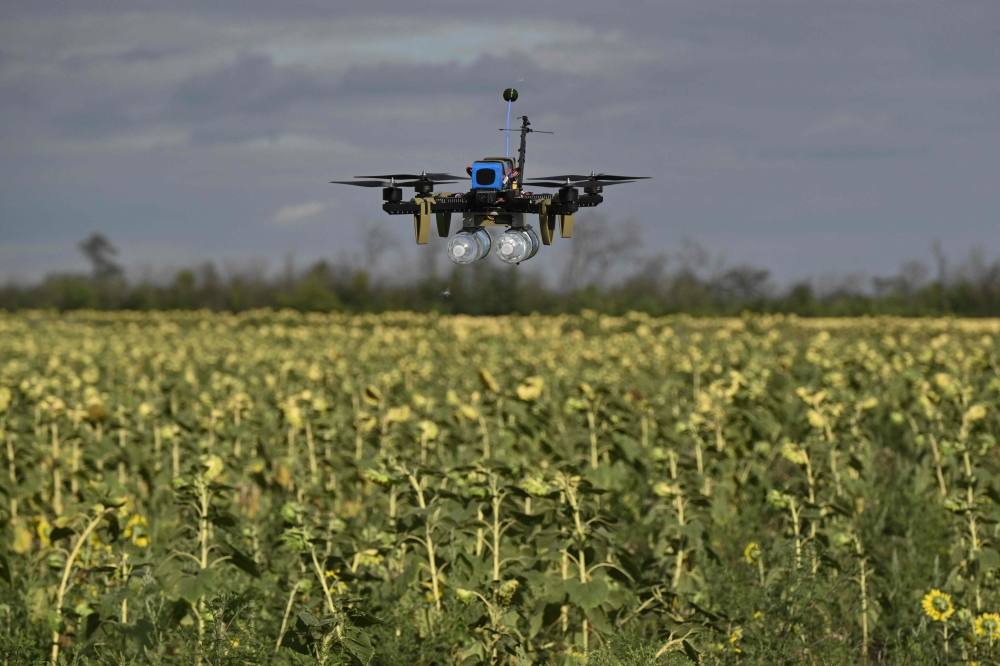
To strengthen border surveillance, blind spots are being monitored by GOF intelligence units, while requests have been made for more advanced drones from the police (PDRM) Air Operations Unit to support integrated operations.

Kelantan police are also using artificial intelligence (AI) technology and high-tech closed-circuit television (CCTV) systems to counter syndicates that have increasingly turned to encrypted communication platforms and social media.

To enhance integrity and transparency, all enforcement personnel conducting border patrols, including Mobile Patrol Vehicle (MPV) and GOF personnel, are now required to wear body cameras.

Mohd Yusoff said strict Standard Operating Procedures (SOPs), including the buddy system during motorcycle patrols, are enforced to safeguard personnel.

He added that there had been no incidents involving physical threats, confrontations or intimidation against personnel during the one-and-a-half years he has led the state police contingent.

"The police have also intensified random and regular inspections along the border to ensure there is no room for the smuggling of firearms, drugs or other illegal goods through illegal entry points in the state,” he said. — Bernama


Gaokao jitters meet youth unemployment fears as 12.9 million students chase university dreams across China

7 June 2026 at 09:28

Malay Mail

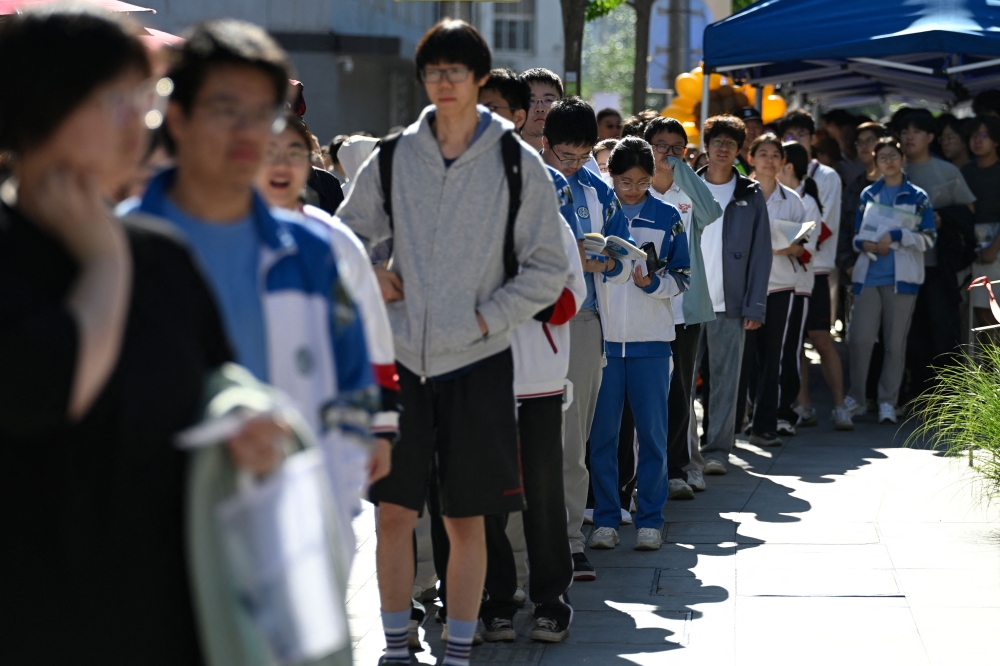
BEIJING, June 7 — Hundreds of young Chinese students clutching pens and their IDs shuffled into a testing centre in blue-skied Beijing on Sunday, swarmed by parents, joining millions sitting for the national high-stakes university entrance exam.

Around 12.9 million students nationwide registered for this year’s “gaokao”, according to the Ministry of Education, which for most is the sole determining factor in admission to a Chinese university.

The multi-day exam, which began Sunday, drills test-takers on subjects including Chinese, mathematics, English, science and the humanities—with the tallied scores to be released later this month.

“It’s my first time, so I’m a bit anxious,” said student Zhang Xinnan moments before entering the exam hall.

The spectacled Beijinger admitted he was nervous for the essay portion of the Chinese test.

But, wearing his school uniform, the 18-year-old told AFP that despite the jitters he thought he would do well, having spent the last year drilling practice questions.

“The things we needed to master have been mastered,” said Zhang, who hopes to work with new energy vehicles.

“Just go in with self-confidence; you’ll be solid.”

Some mothers and fathers clustered outside the exam halls dressed in red, a symbol of good fortune in Chinese culture.

A teacher hoisted a huge sunflower made from dozens of balloons — the plant’s name in Mandarin is a homophone for a Chinese idiom about success.

Dozens of police and security guards milled about as parents stood beside the line of students waiting to enter the exam hall, hoping to film their children walking inside.

Education authorities are on high alert each year and have sought to crack down on cheating, this year explicitly warning students not to bring smart glasses or smart watches into test sites that are surveilled by video.

Parents outside the exam halls dressed in red, a symbol of good fortune in Chinese culture. — AFP pic

Shifting attitudes

High-level education has expanded rapidly in China in recent decades as an economic boom pushed up living standards — as well as parental expectations for their children’s careers.

Yet the job market that fresh graduates enter is no longer as rosy as it once was, with high youth unemployment a significant concern.

Roughly one in six Chinese between the ages of 16 and 24, excluding students, are jobless, according to official data.

Attitudes toward the test are changing, with students and parents more and more unwilling to trade physical and mental health for high test scores.

“I’m pretty free range,” said mother Deng Ju, standing across from the exam hall holding a stack of practice books for her daughter, revising last minute with her friend nearby.

“Just perform normally; that’s enough,” said Deng, 53. “I care more about physical health; the test is just a formality.”

For Deng, whose daughter isn’t aiming for a “name school” such as the elite Tsinghua or Peking University in the capital, doing away with the gaokao would be ideal.

“No more gaokao. Let’s not gaokao anymore,” she told AFP. “But that’s impossible,” she said, smiling.

Topics of change and adapting to challenges featured on this year’s gaokao exams, which often touch upon ideology and societal issues.

A question in Beijing asked test-takers to write a slogan for an artificial intelligence event targeted toward retirees, according to state newspaper People’s Daily.

“The school plans to organise volunteers to carry out the “Artificial Intelligence (AI) and Happy Old Age” themed activity at nursing homes. Please write a slogan for the event to attract seniors to participate,” the question read.

In Shanghai, students were asked to write 800 words about technology’s reshaping of the world and human imagination.

For many Beijing students, the gaokao was still a step toward achieving their dream.

“I hope I can go to my ideal university,” said student Zhang.

His friends also cared about the exam, he said.

“But if we can calm down, we should be able to get to a stable mentality,” said Zhang.

“Mentality is the most important when it comes to the gaokao.” — AFP

❌
Subscriptions