HANOI, June 5 — Vietnam’s foreign ministry said yesterday that the US Trade Representative’s conclusion that it had failed to curb trade in goods made with forced labour does not fully or accurately reflect Vietnam’s mitigation efforts.Vietnam’s policy strictly prohibits any form of forced labour, and it complies with the regulations of the International Labour Organization, foreign ministry spokesperson Pham Thu Hang told a regular press conference in Hanoi.Earl
HANOI, June 5 — Vietnam’s foreign ministry said yesterday that the US Trade Representative’s conclusion that it had failed to curb trade in goods made with forced labour does not fully or accurately reflect Vietnam’s mitigation efforts.
Vietnam’s policy strictly prohibits any form of forced labour, and it complies with the regulations of the International Labour Organization, foreign ministry spokesperson Pham Thu Hang told a regular press conference in Hanoi.
Earlier this week, the Trump administration proposed tariffs of up to 12.5 per cent on imports from 60 countries, including Vietnam, after determining they had failed to curb trade in goods made with forced labour, an assertion that US trading partners have rejected.
The probe coincided with a surge in Vietnam’s exports to the US. The US trade deficit with Vietnam reached US$54.8 billion in the first three months of this year, second only to Taiwan and higher than the deficits with major exporters China and Mexico, US data showed.
The Trump administration has repeatedly said it wants to reduce trade deficits.
“Vietnam has been and will continue to exchange and work with the US in a constructive and cooperative manner to resolve existing disagreements, while always trying to protect legitimate interests of workers and businesses,” Hang said.
Vietnam is being targeted by the Trump administration for allegedly distorting trade with excess capacity, intellectual property violations and the use of goods from forced labour. — Reuters
A Chinese dissident who fled to South Korea this week in a rubber boat will be transferred to an immigration detention centre, police told AFP on Thursday.
Chinese dissident Dong Guangping. Photo: Front Line Defenders.
Dong Guangping, a 68-year-old former policeman, has been a thorn in Beijing’s side for advocating political reform and human rights and served multiple prison stints over the years.
The longtime critic of China’s ruling Communist Party made several failed attempts to fle
Chinese dissident Dong Guangping. Photo: Front Line Defenders.
Dong Guangping, a 68-year-old former policeman, has been a thorn in Beijing’s side for advocating political reform and human rights and served multiple prison stints over the years.
The longtime critic of China’s ruling Communist Party made several failed attempts to flee the country, including a 2019 bid to swim to the Taiwanese territory of Kinmen and a 2020 trip to Vietnam where he was detained by local police.
He was found by South Korean authorities on Monday night drifting off the country’s west coast on a 3.3-metre (11-foot) rubber boat with a 9.9-horsepower engine, and was questioned on suspicion of violating immigration laws.
Prosecutors asked the court to detain him, but the Daejeon District Court determined that “detention is not necessary” for the authorities’ investigation, a court spokesperson told AFP on Thursday.
The court spokesperson said Dong had two options: “If he is deemed an illegal immigrant, it would be appropriate to transfer him to an immigration detention centre. However, if he applies for refugee status, he can stay in the country in accordance with the Refugee Act.”
South Korean flag. Photo: Aboodi Vesakaran, via Pexels.
After the court’s determination, the dissident remained in police custody in Taean county, on South Korea’s western coast.
Dong will soon be transferred to the immigration office’s foreign detention centre, police in Taean told AFP.
Dong’s lawyer did not immediately return AFP’s requests for comment. Seoul’s foreign ministry did not respond to a request for comment.
South Korea has granted political asylum to relatively few applicants since it began formally processing refugee claims in 1994, with an overall recognition rate in the low single digits despite tens of thousands of applications.
Critics say the low approval rate reflects strict screening and lengthy procedures, while the government maintains that decisions are made on a case-by-case basis and take security considerations into account.
Dong was dismissed from his work as a policeman after signing a petition a decade after Beijing’s 1989 Tiananmen Square crackdown, according to US-based advocacy group Human Rights in China.
He later spent about three years in prison from 2001 for “inciting subversion of state power”, United Nations experts said, and was detained again in 2014 over Tiananmen-related activities.
Dong fled to Thailand with his family, who later resettled in Canada as refugees, but Thai authorities handed him over to Chinese police in 2015 despite his UN-recognised refugee status.
annelaure365 posted a photo:
Hoang A Tuong Palace, located in Bac Ha, Lao Cai, is a unique architectural blend of French colonial and local ethnic influences. Built in the early 20th century, the mansion once belonged to a powerful Hmong family. Today, it stands as a cultural and historical landmark in northern Vietnam, reflecting a fascinating period of Indochinese history.
Hoang A Tuong Palace, located in Bac Ha, Lao Cai, is a unique architectural blend of French colonial and local ethnic influences. Built in the early 20th century, the mansion once belonged to a powerful Hmong family. Today, it stands as a cultural and historical landmark in northern Vietnam, reflecting a fascinating period of Indochinese history.
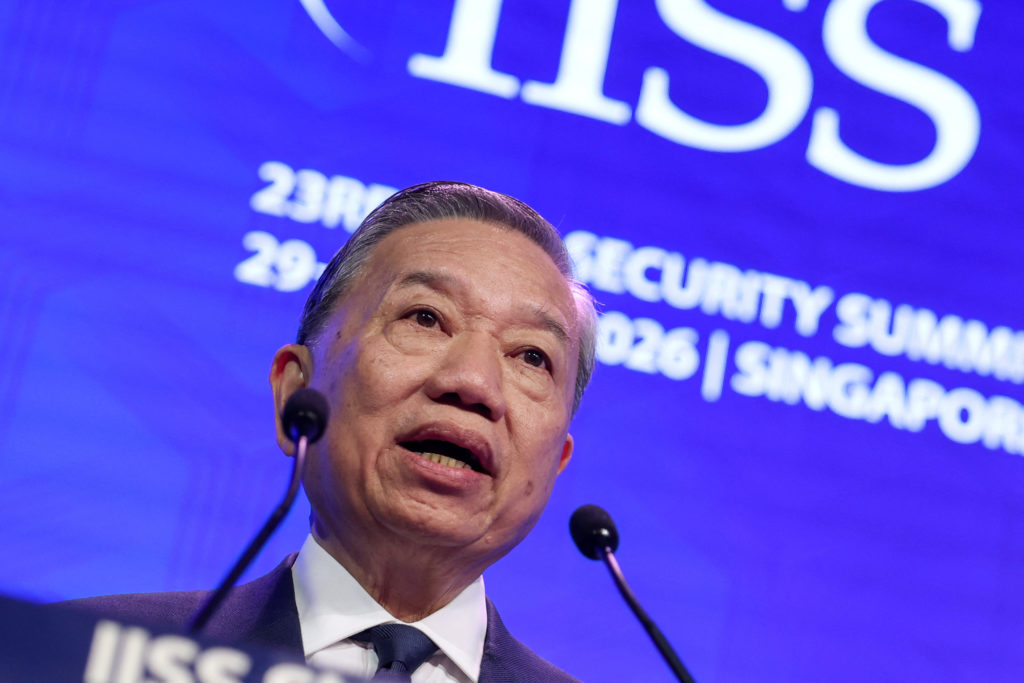
Vietnam's leader said Friday that the Strait of Hormuz has shown how one flashpoint can throw the rest of the world into turmoil, suggesting that the U.S. and China need to abide by international law to avoid provoking a global crisis as they vie for influence in the Asia-Pacific region.
Vietnam's leader said Friday that the Strait of Hormuz has shown how one flashpoint can throw the rest of the world into turmoil, suggesting that the U.S. and China need to abide by international law to avoid provoking a global crisis as they vie for influence in the Asia-Pacific region.
HANOI, June 5 — Samsung plans to invest up to US$4 billion (RM16.1 billion) in a Vietnam chip-testing plant, according to company documents obtained by AFP today, as the South Korean giant ramps up spending on semiconductors to meet demand driven by artificial intelligence.Spanning nearly 266,000 square metres in an industrial park north of Hanoi, the facility will include two factories — the first slated to begin partial operations in November 2027.The second fa
HANOI, June 5 — Samsung plans to invest up to US$4 billion (RM16.1 billion) in a Vietnam chip-testing plant, according to company documents obtained by AFP today, as the South Korean giant ramps up spending on semiconductors to meet demand driven by artificial intelligence.
Spanning nearly 266,000 square metres in an industrial park north of Hanoi, the facility will include two factories — the first slated to begin partial operations in November 2027.
The second factory will commence operations in 2031, according to an investment registration document signed by authorities in Thai Nguyen province.
Samsung is Vietnam’s largest foreign corporate investor, having sunk more than US$23 billion into the Southeast Asian country, but this would be its first chip-testing facility there.
The AI boom is straining global memory chip supplies, as manufacturers prioritise chips for hyperscale data centres over less flashy chips used in everyday consumer electronics like phones and laptops.
The Vietnam facility will focus on legacy DRAM and NAND chips, the price of which have soared.
Samsung plans to invest nearly US$1.5 billion developing the facility and up to US$2.5 billion in future earnings from the project. It is expected to create around 3,750 jobs.
Samsung Electronics, one of the world’s biggest memory chipmakers, reported record earnings in the first quarter of 2026. — AFP
By Kang Jin-kyu
A Chinese dissident who has long been a thorn in Beijing’s side has escaped to South Korea on a rubber boat, his lawyer confirmed on Wednesday, after repeated attempts to flee China.
Chinese dissident Dong Guangping. Photo: Front Line Defenders.
Dong Guangping, a former policeman who was imprisoned for his activism, was found by South Korean authorities on Monday night drifting off the country’s west coast on a 3.3-metre (11-foot) rubber boat with a 9.9-horsepower engin
A Chinese dissident who has long been a thorn in Beijing’s side has escaped to South Korea on a rubber boat, his lawyer confirmed on Wednesday, after repeated attempts to flee China.
Chinese dissident Dong Guangping. Photo: Front Line Defenders.
Dong Guangping, a former policeman who was imprisoned for his activism, was found by South Korean authorities on Monday night drifting off the country’s west coast on a 3.3-metre (11-foot) rubber boat with a 9.9-horsepower engine, according to police.
He was taken to shore for questioning on suspicion of violating immigration laws.
The man’s lawyer, Kim Joo-kwang, confirmed his identity to AFP.
Dong, 68, is known for his opposition to the Chinese Communist Party (CCP) and his advocacy for political reform and human rights.
He was dismissed from his work as a policeman after signing a petition a decade after Beijing’s 1989 Tiananmen Square crackdown, according to US-based advocacy group Human Rights in China.
He later spent about three years in prison from 2001 for “inciting subversion of state power”, United Nations experts said, and was detained again in 2014 over Tiananmen-related activities.
Dong fled to Thailand with his family, who later resettled in Canada as refugees, but Thai authorities handed him over to Chinese police in 2015 despite his UN-recognised refugee status.
He was released from prison after completing his sentence in 2019.
But faced with constant police surveillance, harassment and a lack of access to housing, work and financial resources, he decided to flee again in an attempt to reunite with his family, according to a UN report from 2022.
Before arriving in South Korea, Dong made several failed attempts to flee China.
In 2019, he tried to swim to the Kinmen archipelago, a Taiwanese territory, but nearly drowned at sea. In 2020, he crossed into Vietnam, but was detained by Vietnamese police.
Dong’s attorney told AFP his client’s current situation is “highly likely to be a political asylum case”.
Full protection
Chinese-Canadian journalist and human rights activist Sheng Xue, who described Dong as a friend, said in a post on X Wednesday that Dong set off from Weihai, in China’s Shandong province, after “meticulous inspection and preparation”.
Chinese-Canadian human rights activist Sheng Xue. Photo: Sheng Xue, via X.
“Last night, I spoke with him on the phone… He hadn’t slept for over fifty hours and had been at sea for more than thirty hours,” she said.
His rubber boat was spotted by the captain of a fishing boat at 9:30 pm (1230 GMT) on Monday, about 18 kilometres (11 miles) northwest of Taean County, South Chungcheong province, who then alerted the police, according to Sheng.
The Coast Guard dispatched a patrol vessel that arrived at the scene about an hour later, and Dong was detained, she added.
South Korea has granted political asylum to a relatively small number of applicants since it began formally processing refugee claims in 1994, with an overall recognition rate in the low single digits despite tens of thousands of applications.
Critics say the low approval rate reflects strict screening and lengthy procedures, while the government maintains that decisions are made on a case-by-case basis and take security considerations into account.
Seoul’s foreign ministry did not respond to a request for comment.
The opposition People Power Party has called on the government to offer Dong “full protection”.
“It should take swift humanitarian measures to ensure that he can safely travel to Canada, where his family is anxiously awaiting him,” party spokesman Choo Hyun-chul said in a statement to AFP.
“This is a matter of a fundamental responsibility as a liberal democratic state.”
Defense Secretary Pete Hegseth on Saturday said the U.S. naval blockade in the Strait of Hormuz is “very much still in place,” as President Trump weighs a ceasefire extension with Iran that would unlock the critical energy corridor. Hegseth told NewsNation’s Kellie Meyer that the prolonged closure of the strait “came up relatively often” in...
Defense Secretary Pete Hegseth on Saturday said the U.S. naval blockade in the Strait of Hormuz is “very much still in place,” as President Trump weighs a ceasefire extension with Iran that would unlock the critical energy corridor. Hegseth told NewsNation’s Kellie Meyer that the prolonged closure of the strait “came up relatively often” in...
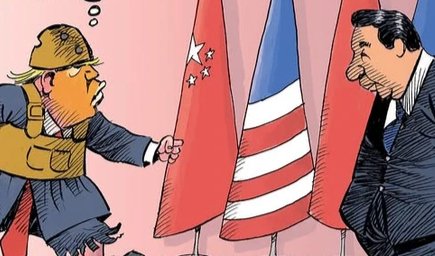
The general opinion around the world seems to be that Dear Leader is in way over his head in attempting to pull “The Art of the Deal” on Xi Jinping, and that, as MacKay illustrates, Xi is playing with him as a cat plays with a mouse, before eating it.Trump has said he and Xi […]
The general opinion around the world seems to be that Dear Leader is in way over his head in attempting to pull “The Art of the Deal” on Xi Jinping, and that, as MacKay illustrates, Xi is playing with him as a cat plays with a mouse, before eating it.Trump has said he and Xi […]

 Login
Login