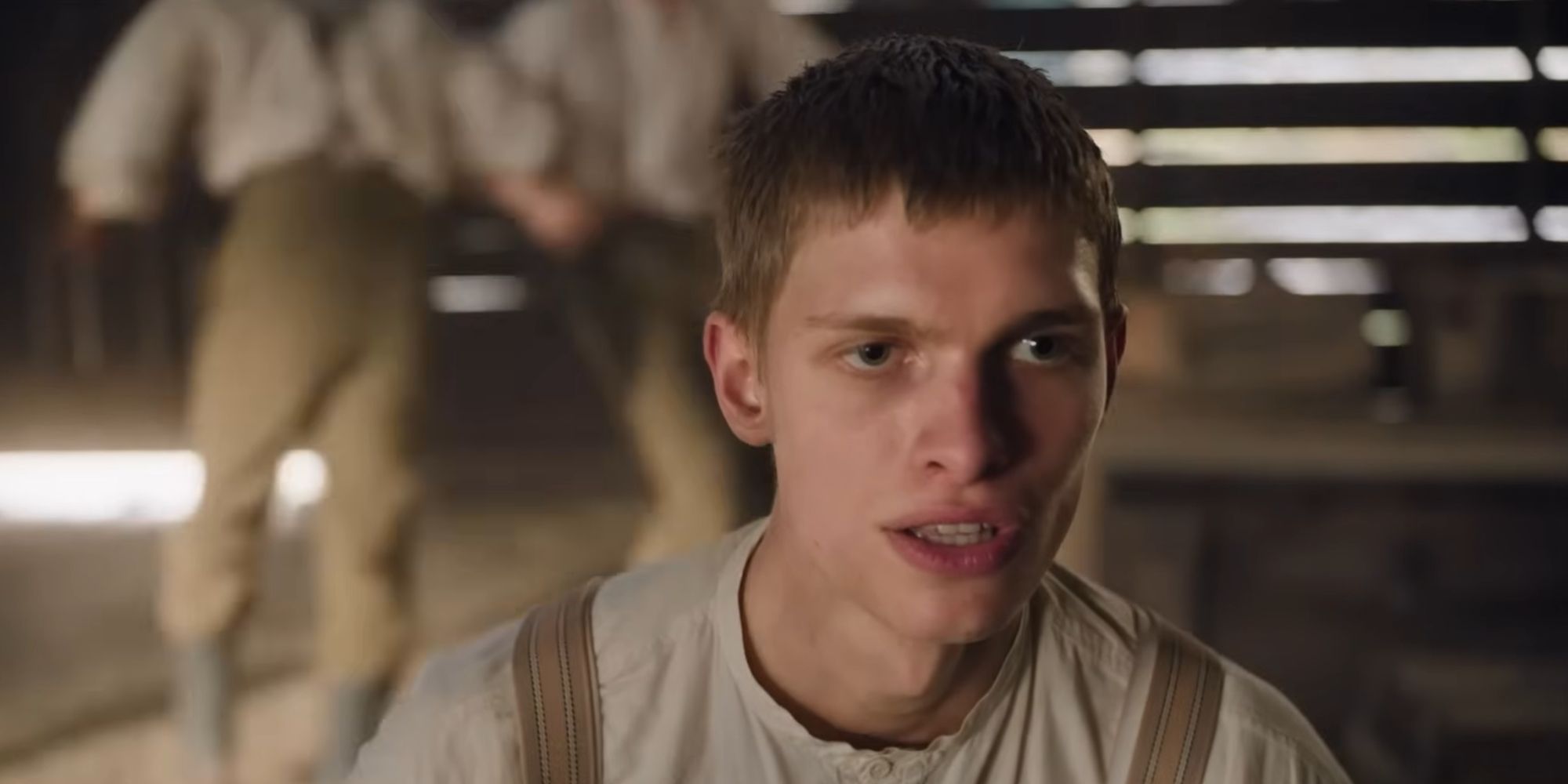
Movies about the two World Wars forever remain in fashion. The sheer scale of destruction, sacrifice, and loss makes for a great spectacle, with films like All Quiet on the Western Front and Dunkirk offering a visceral portrait of the wars. While WWII is more "popular" than its predecessor, which leads to more movies and TV shows, some creators also tackle the complicated events of WWI. At this point, it seems like there is nothing more to say, but Lukas Dohnt has another angle to explore.
Movies about the two World Wars forever remain in fashion. The sheer scale of destruction, sacrifice, and loss makes for a great spectacle, with films like All Quiet on the Western Front and Dunkirk offering a visceral portrait of the wars. While WWII is more "popular" than its predecessor, which leads to more movies and TV shows, some creators also tackle the complicated events of WWI. At this point, it seems like there is nothing more to say, but Lukas Dohnt has another angle to explore.
“How To Make A Mint.”
This past May, we received a letter from David Shenton on his 75th birthday, in which he thoughtfully answered our interview questions. We warmly congratulate David on his remarkable 40+ year career as a cartoonist and are delighted to feature him on our museum blog this Pride Month. David’s comics have vividly depicted the gritty realities of gay life, since long before the term “LGBTQ+” existed. His latest comic collection “Forty Lies“, published last December, is an a
This past May, we received a letter from David Shenton on his 75th birthday, in which he thoughtfully answered our interview questions. We warmly congratulate David on his remarkable 40+ year career as a cartoonist and are delighted to feature him on our museum blog this Pride Month. David’s comics have vividly depicted the gritty realities of gay life, since long before the term “LGBTQ+” existed. His latest comic collection “Forty Lies“, published last December, is an autobiography covering his life from his teens to his 70s(with his unique queer knitting patterns) and it is also a chronicle of more than half a century of LGBTQ+ history. New, young readers may be struck to learn that, how until recently living as a gay person, and loving someone as you are could even be considered a crime. This real living record of his struggles with various unreasonable challenges, wrapped in jokes and humor, reminds us of the communicative power of the art form of cartoon. In this interview, we asked David about how he got started as a cartoonist and what motivates him to continue creating to this day.
David Shenton https://www.facebook.com/dscomics/ David Shenton was born on May 20, 1949, in Ashton-under-Lyne, Lancashire. He entered Ashton-under-Lyne College of Further Education in 1965 and Loughborough College of Art in 1967 where he studied printed textiles. He has been a cartoonist since the 1970s, with his comics appearing in The Guardian, various specialist magazines, and most gay newspapers in the UK. His work brings laughter, provokes thought, and offers comfort for the inevitable challenges people face in life. He has also tackled social issues such as same-sex marriage and the AIDS crisis. He posts daily on the DS Comics page on Facebook, works on his knitting, and continues to attend LGBTQ+ events in London and Norfolk.
–Can you tell us about your journey as a comic artist specialising in LGBTQ themes? What inspired you to focus on this genre and cartoons as a form? Are there any particular artists, works, or episodes that have influenced or inspired your creative process? To begin, I’ve never specialized in LGBTQ+ themes. I’m a gay man; I’ve known that since I was a teenager. So these themes are my norm. I started as a cartoonist by accident. I had a well-received painting exhibition in Manchester in the mid-1970s, which had a splendid write-up in The Guardian. I invited the gay press to review it, too. But because the subject matter wasn’t explicit, they didn’t show up. Instead of writing a letter wanting to know what constitutes gay art, I drew them a cynical cartoon. They still didn’t review the exhibition, but liked the cartoon enough to offer me a weekly space in Gay News. This space developed into a four-frame strip and eventually a book. Alongside Kate Charlesworth, we were in both of the gay papers and magazines through the mid-70s, and the 80s and 90s. Sometimes we worked together, documenting LGBTQ+ life in its entirety: politics, music, nightlife, idioms, phases, fashions, more politics, and health.
“Gay Life”, 1987
As the years went by, I became an established cartoonist. My focus was all over the place. I had strips in The Guardian and professional publications, such as Solicitor’s Journal, Building Design and The Optician. But the queer cartoons were the personal ones that carried the most clout because they covered issues that mattered to my community through those difficult years. Cartoons can highlight the shortcomings of the government – their acceptance of, and indifference to, growing homophobia, leading to a lack of essential investment in healthcare. The trans community is facing similar problems today.
My creative process had to grow up and become serious with the advent of the HIV/AIDS crisis and the iniquities of Clause 28. I deal with the age of consent in “Forty Lies“, from the viewpoint of my own personal story and the PARTIAL Decriminalisation of the Sexual Offences Act in1967. I was eighteen then and had a boyfriend who was twenty-one. The partial repeal set the age of consent at twenty-one. I was immediately classed as a minor and my boyfriend could be sent to prison as a sex offender. We had to split up. ‘My Four December Weddings’, also a personal story, in “Forty Lies“, tells of the lead up to and legalisation of Equal Marriage in 2014.
“Been there, Seen that”
I’m from the North West of England where a lot of comedians come from and many people routinely use humour to counter the difficulties of everyday life. Comedy is very serious to handle when politics and events are so dire, but it can be done. I like to be sly and funny, but I’m a kind cartoonist and let people off easily, yet still get my point across.
“The Baton of Activism is Lost”
–In “Forty Lies” and ‘My Four December Weddings’, there’s a clear reflection of the evolution of LGBTQ-related environments and legislation in the UK, including milestones like Section 28, change in the age of consent for gay men sex, the AIDS crisis, the legalisation of same-sex marriage and more. Have you noticed any significant shifts in audience reception or mainstream acceptance of LGBTQ comics throughout your over 40-year career? Last week I gave a talk about “Forty Lies” and my work overall to fifty members of the Women’s Institute here in Norwich. They were aware of my sexuality and the LGBTQ+ focus of a lot of my work. This invitation and welcome to their meeting most likely wouldn’t have happened ten years ago. I am openly gay and a named patron of Norwich Pride, so people accept who I am.
–Can you share some of the most memorable reactions or feedback you’ve received about your comics and activities? The most important reaction to my work, I suppose, is that I’ve made a career doing something I love. I’ve had eight books published; all are out of print now, except “Forty Lies”, which came out last year. The first one, “Stanley and the Mask of Mystery “(1983) was the first LGBTQ+ graphic novel to be published in Europe, and perhaps in the world. It sold very well in the USA.
“Stanley and the Mask of Mystery”, 1983
I was once kidnapped and held to ransom in a pub by the Sisters of Perpetual Indulgence, and was only released when the pub coughed up £40 for AIDS research. In 2022, I received the Orfeo Imago Award, from Sweden, which honors outstanding contributions to LGBTQ+ art, photography and sculpture. Incidentally, this year it was awarded to Durk Dehner, the Tom of Finland Foundation President. In 2022, I was also made a patron of Norwich Arts Centre.
“Ginger Tom of Finland”
-As you continue to update your Facebook page almost daily with your cartoons, have you noticed any changes in the response from your readers or in your creative process compared to when your work was primarily published through traditional means? How has the internet as a platform influenced your approachand motivation to creating and sharing your cartoons? When Facebook first came out I knew it could be useful. I was still cartooning and drawing illustrations, mainly for Cambridge University Press. All the weekly gay newspapers had disappeared, some gone forever and others becoming online publications. And the monthly gay lifestyle magazines had no use for political cartoons. So my LGBTQ+ platforms had gone. I therefore decided to upload my cartoons onto a dedicated Facebook page called These Foolish Things. This brought my queer work back into public notice, and revived my career. Through this page, I’ve produced cartoon collections and stories, printed out and sold as zines. These zines culminated in being noticed by a book publisher, who offered me “Forty Lies“. Also, my embroidered and knitted craftivist pieces have been shown in The Cartoon Museum and Sheringham Museum, and acquisitioned by the Castle Museum in Norwich and Queer Britain in London.
–Can you share any upcoming projects or plans you have? “Forty Lies” has brought offers of conducting workshops in London, in Queer Circle and Queer Britain this summer. I haven’t stopped drawing and creating, and will do until I can no longer hold a pencil. There is still a long way to go before LGBTQ+ issues worldwide are resolved, and discrimination and hatred are replaced with equality and peace.
*All images were provided by David Shenton, and the copyright of these images belongs to him.
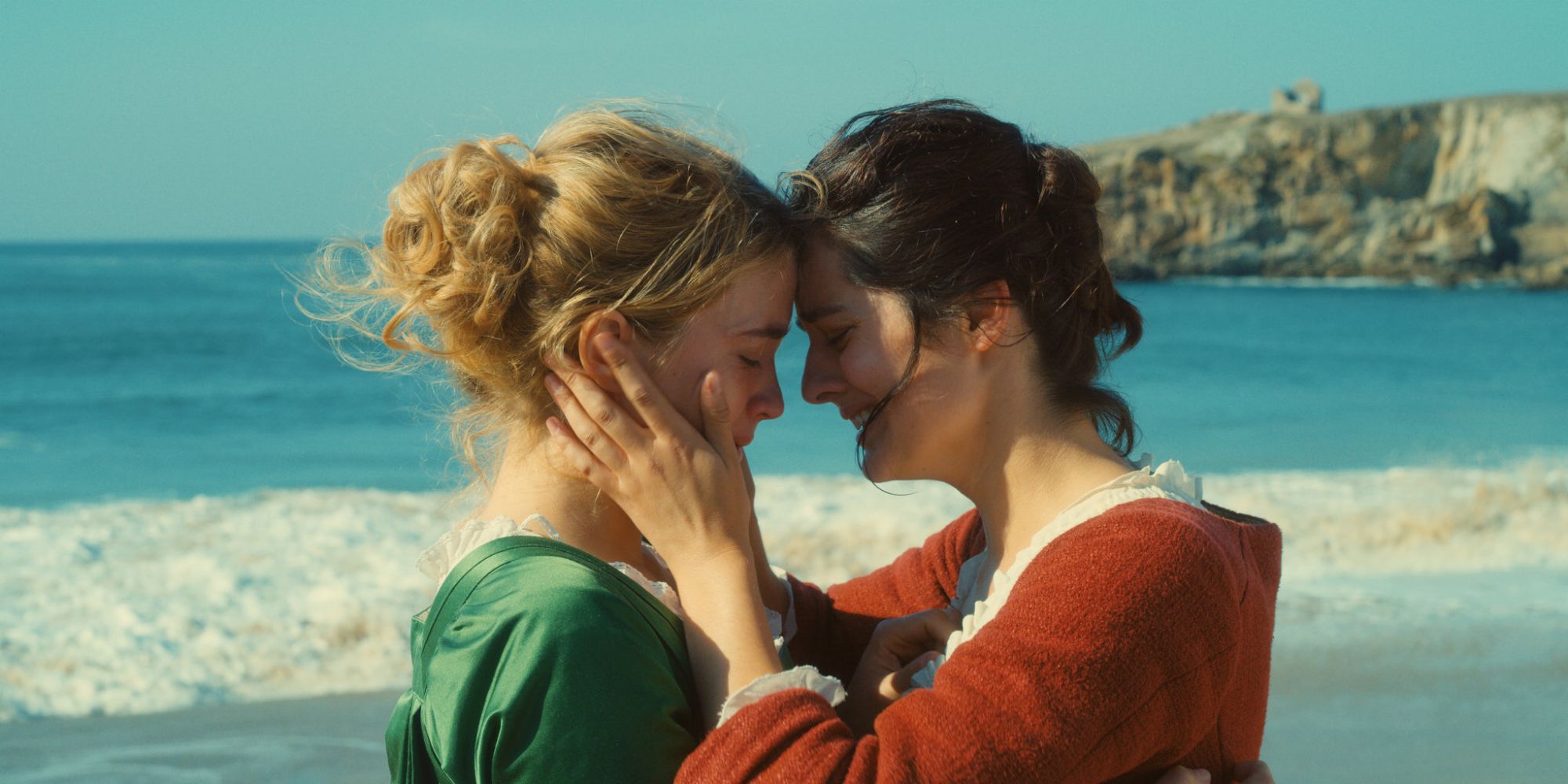
Cinema lovers should always strive to celebrate diversity in film. It might've taken long - too long, in fact - but cinema is becoming more inclusive, celebrating stories about every identity in the wide and colorful sexual spectrum. Going back to the New Hollywood Age, stories about LGBTQ+ people have been around, often standing as groundbreaking and pioneering efforts, especially at a time when such films remained controversial and scarce.
Cinema lovers should always strive to celebrate diversity in film. It might've taken long - too long, in fact - but cinema is becoming more inclusive, celebrating stories about every identity in the wide and colorful sexual spectrum. Going back to the New Hollywood Age, stories about LGBTQ+ people have been around, often standing as groundbreaking and pioneering efforts, especially at a time when such films remained controversial and scarce.
Hong Kong’s Metro Radio has abruptly halted plans to relaunch radio programme We Are Family, an LGBTQ show axed by government-funded broadcaster RTHK three years ago, its host has said.
The crew of the LGBT radio programme We Are Family. Photo: We Are Family, via Facebook.
Brian Leung, the host of We Are Family, said on the show’s Facebook page on Wednesday that Metro Radio invited him in April to relaunch We Are Family on Metro Info Live, one of the radio’s channels.
The invitation w
Hong Kong’s Metro Radio has abruptly halted plans to relaunch radio programme We Are Family, an LGBTQ show axed by government-funded broadcaster RTHK three years ago, its host has said.
The crew of the LGBT radio programme We Are Family. Photo: We Are Family, via Facebook.
Brian Leung, the host of We Are Family, said on the show’s Facebook page on Wednesday that Metro Radio invited him in April to relaunch We Are Family on Metro Info Live, one of the radio’s channels.
The invitation was made by Steven Ma, who was the CEO of Metro Radio at the time. It was decided that the show would start on May 29, Leung said.
After Ma announced he was leaving Metro Radio in May, Leung said he sought clarification from the head of Metro Info Live about whether the show would go on. He was told it would launch as scheduled and that an advertisement for it had already aired on Monday.
However, Leung said he received a call from the head of Metro Info Live on Wednesday afternoon, saying Metro Radio’s new management had decided to halt the relaunch.
No reasons were provided for the change, Leung said.
HKFP has reached out to Metro Radio, which is owned by CK Hutchison Holdings, for comment.
Veteran broadcaster Brian Leung, who hosted the programme We Are Family for 17 years. Photo: We Are Family, via Facebook.
“It was sudden and unusual… [I] send my apologies to all of We Are Family‘s supporters for getting everyone’s hopes up,” Leung said in the Chinese-language post.
“The platform is run by others, and we can’t influence their back-and-forth decisions. What we could do is to safeguard the channels we have left and continue to speak up,” Leung has said.
We Are Family was launched in 2006 to promote diversity and discuss topics related to gay culture and diverse lifestyles, according to the broadcaster’s website.
It was the city’s first and only LGBTQ radio show. After the RTHK suspension, Leung continued to run the show on the YouTube channel.
Hong Kong has seen a shrinking space for LGBTQ events in recent years.
On Monday, LGBTQ carnival Pink Dot announced its cancellation for the second year after its venue pulled out. Leung is also a co-director of Pink Dot.
In November last year, the Hong Kong Pride Committee scrapped an outdoor festival at Kwun Tong Promenade after being told the venue was not available.
The author of “Taiwan Travelogue”, Yang Shuang-zi, told AFP she hopes her International Booker Prize-winning novel can one day be read in China and facilitate dialogue about the “future Taiwanese people want”.
Taiwanese author Yang Shuang-zi. Photo: Yang Shuang-zi, via Facebook.
On Tuesday, Yang, 41, became the first Taiwanese author to win the prestigious award which celebrates works translated into English, alongside translator Lin King, 32.
The playful novel, set in 1930s Japan-cont
The author of “Taiwan Travelogue”, Yang Shuang-zi, told AFP she hopes her International Booker Prize-winning novel can one day be read in China and facilitate dialogue about the “future Taiwanese people want”.
Taiwanese author Yang Shuang-zi. Photo: Yang Shuang-zi, via Facebook.
The playful novel, set in 1930s Japan-controlled Taiwan, poses as a translation of a rediscovered Japanese travel memoir penned by fictional writer Aoyama Chizuko.
It traces ebullient Chizuko’s travels and gastronomic adventures across the colonial outpost, and the relationship she develops with her Taiwanese interpreter, the reticent Chizuru.
Although historical fiction, the novel probes themes of power imbalance and cultural erasure that the author says are relevant to present-day Taiwan, which is claimed by China as part of its territory.
“Taiwan Travelogue,” a novel by Yang Shuang-zi. Photo: Graywolf Press.
“I’ve countless times felt anxious inside, asking myself whether literature is too slow,” Yang admitted when asked about Taiwan’s future.
“I often worry, often feel that maybe I should make political statements, or take some kind of action, engage in other forms of activism,” she told AFP in an interview Wednesday.
“But in reality, as a novelist, I’ve decided to put my faith in literature, to believe in the power of literature.”
First published in Mandarin in 2020, the book has won accolades in Taiwan, but has not been released in China.
“If this book can, in one way or another, make its way into China and be read by Chinese readers, I think we would have an opportunity for dialogue and communication,” said Yang.
That would “let more Chinese people understand what kind of future Taiwanese people want — which is not the same as what many in China imagine”.
‘Uphill battle’
“Taiwan Travelogue” is the first book published in any Chinese language to win the International Booker Prize.
“I hope it can serve as an example in the Chinese-speaking world, showing that in a free and democratic country like Taiwan — a country where I can come out openly as a queer person — we can do this together,” said Yang.
Unlike writing from former British colonies like Hong Kong, King says Taiwanese literature and its colonial past are lesser known in the Anglophone world.
Taiwanese author Yang Shuang-zi (left) and translator Lin King. Photo: Booker Prize Foundation.
“For Taiwan, it’s always been an uphill battle to be translated into English, and published, and recognised. So this is definitely very momentous for me personally,” said King.
The win has prompted an outpouring of emotion from Taiwanese readers on social media, who see it as an important moment for the self-ruling island usually in the news over tensions with China.
But Yang says the universal themes she discusses in the book — and her mouthwatering descriptions of Taiwanese delicacies — may have also touched readers.
“I’ve packed a lot of elements I personally love into this work — whether it’s travel, railways, food, or women’s friendships. Because I’m so fond of these things, I hope my enthusiasm can also infect my readers.”
For Yang, who dedicated this book featuring the larger-than-life women characters to her late sister, it is as much about preserving Taiwan’s past as it is about fighting for its future.
“Sometimes history briefly disappears; it becomes a blank. But as long as there are descendants willing to search, I believe history can be completed,” said Yang.
This book is “a call to readers all over the world: we can go and retrieve the histories that were once lost, our mothers’ voices, our grandmothers’ voices. We have to recover them ourselves.”
Bogotá, Colombia – After days of searching for missing American Airlines flight attendant Eric Gutiérrez, Colombian authorities discovered his body in a river in Antioquia province on Friday, several hours away from where he was last seen near Medellín.
While the coroner’s office has not issued an official cause of death, it quickly concluded Gutiérrez, a U.S.-citizen, had not died of natural means; officials are reportedly working on the hypothesis that Gutierrez’s death was a robbery gone w
Bogotá, Colombia – After days of searching for missing American Airlines flight attendant Eric Gutiérrez, Colombian authorities discovered his body in a river in Antioquia province on Friday, several hours away from where he was last seen near Medellín.
While the coroner’s office has not issued an official cause of death, it quickly concluded Gutiérrez, a U.S.-citizen, had not died of natural means; officials are reportedly working on the hypothesis that Gutierrez’s death was a robbery gone wrong, likely involving the incapacitating drug scopolamine.
Advocacy groups say the murder of Gutiérrez – a gay man – is part of a pattern of violence against members of the LGBTQ+ community in Colombia, while officials offer reassurances to travellers, saying these crimes are rare and could happen to anyone.
What happened to Eric Gutiérrez?
Gutiérrez, 32, arrived in Colombia on March 22 after working on a flight from Miami to Medellín. He reportedly went to the Perro Negro nightclub in the El Poblado neighborhood of the city with his colleagues, where they met two men.
Gutiérrez and his colleague then went with the men to Itagüí, a city on the outskirts of Medellín.
The flight attendant’s co-worker returned to their hotel the next day alone, feeling disoriented. He was admitted to hospital with suspected scopolamine poisoning.
Law enforcement began searching for Gutiérrez, but did not find his body until Friday, located in the Piedras River near the town of Jericó, a roughly three-hour drive from Medellín.
Authorities have also begun to share details of criminal investigations, saying they have found evidence linking the case to criminal rings known to use scopolamine to rob people.
Scopolamine is commonly used by thieves in Colombia to incapacitate victims in order to access their bank accounts and steal their possessions.
‘Pattern of violence’
Gutiérrez’s death reveals a broader trend of violence against gay men, according to Caribe Afirmativo, a Colombia-based LGBTQ+ rights observatory.
“This latest death should not be viewed as an isolated incident,” read a statement by the organization released a day after the flight attendant’s body was found.
“On the contrary, it is yet another sign—serious, painful, and deeply alarming—of a pattern of violence that continues to take hold in Antioquia and that now demands a forceful response from the Colombian government,” it continued.
Caribe Afirmativo said that Gutiérrez’s murder marked the 23rd killing of an LGBTQ+ person in Colombia this year, noting “a large proportion of the cases” had occurred in Antioquia.
“What has happened cannot be dismissed as a mere coincidence or an individual risk. We are facing a systematic form of urban violence that combines organized crime, substance abuse, and contexts of vulnerability,” continued the statement.
In April last year, Italian biologist Alessandro Coatti was found dead in Santa Marta. Authorities later discovered he had been lured into a robbery by a man on the gay dating app Grindr and was likely drugged with scopolamine.
The observatory called for “urgent” action by authorities, including information campaigns warning the public of the risks of scopolamine and robberies in the nighttime economy.
Authorities reassure LGBTQ+ travellers
Despite suggestions of a pattern of violence against LGBTQ+ people in Colombia, authorities in Medellin insist that LGBTQ+ travellers do not face a heightened risk.
“We have no evidence of a systematic trend of crime targeting exclusively LGBTQ+ travelers,” Manuel Villa Mejía, Medellín’s Secretary of Security, told Latin America Reports.
He maintained that the risks to travellers are the same, regardless of sexual orientation, and highlighted broader patterns in how tourists are targeted, including “the use of social media, dating apps, or fake offers of companionship to commit theft or extortion.”
Villa Mejía called on all tourists, regardless of who they are, to exercise caution and stay aware of their surroundings.
He also offered reassurances to travellers: “In Medellin we protect all people equally and our priority is to guarantee the security of all visitors, without distinction.”
Featured image description: Missing poster for Eric Gutierrez
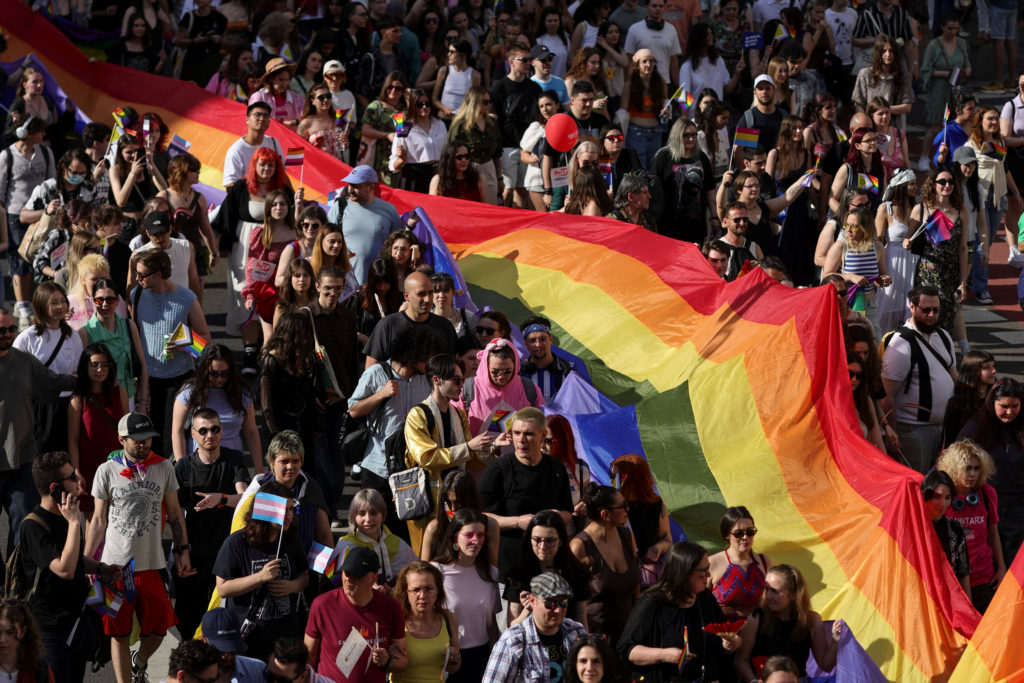
Romania and Bulgaria do not recognize same-sex marriage or civil partnerships, despite the bloc prohibiting discrimination based on sexual orientation.
Romania and Bulgaria do not recognize same-sex marriage or civil partnerships, despite the bloc prohibiting discrimination based on sexual orientation.
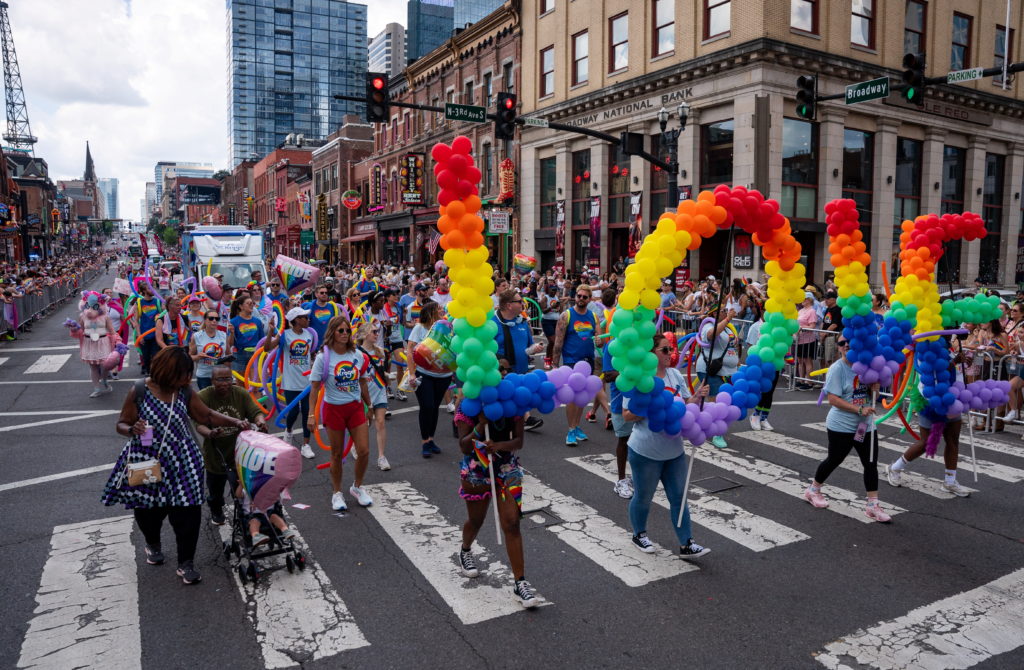
June is widely recognized as Pride Month, but a handful of Republican governors have bestowed alternative titles that both supporters and opponents view as counterprogramming.
June is widely recognized as Pride Month, but a handful of Republican governors have bestowed alternative titles that both supporters and opponents view as counterprogramming.

 Login
Login