 Login
LoginArab Stereotypes
16 February 2015 at 07:33





In 2004, Epson and Voigtländer teamed up to create a truly legendary camera, the Epson R-D1. It was the world's first digital rangefinder, packed with exceptional features and style to match. Cameralabs' Gordon Laing has given the Epson R-D1 his wonderful "Retro Review" treatment, giving the R-D1 another chance to shine and show the world what made it so special more than 20 years ago.


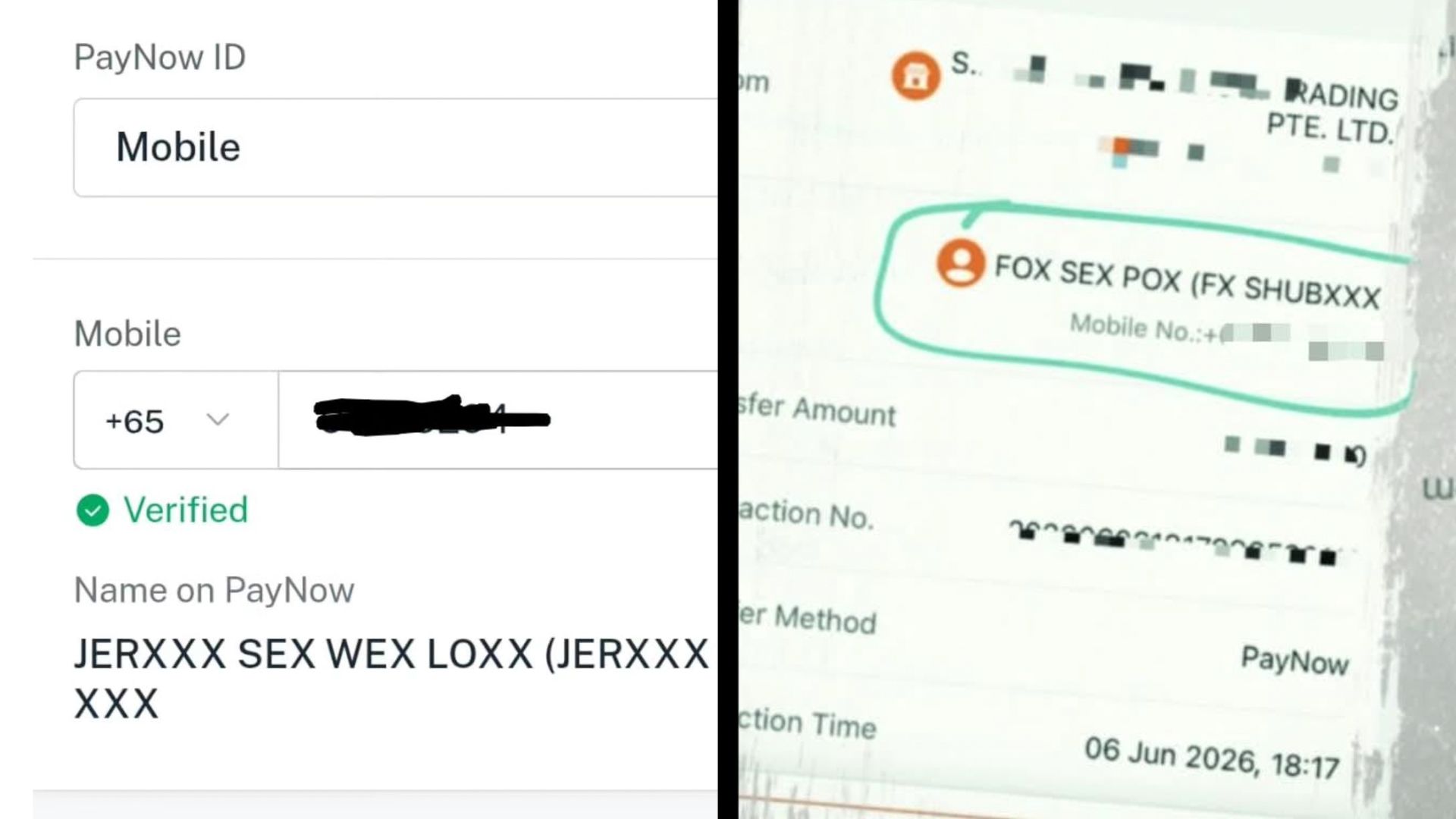
SINGAPORE: A recent change to Singapore’s PayNow system has triggered a wave of complaints after some users discovered their masked names were displaying unintended and sometimes inappropriate words.
The problem emerged after the Association of Banks in Singapore (ABS) removed PayNow’s nickname feature on June 6 as part of efforts to combat impersonation scams. In place of nicknames, users’ registered names are now displayed, with certain letters replaced by the letter “X”. The bank’s action was intended to improve customer security. Instead, it caught public attention for a different, or rather, for all the wrong reasons.
Several users shared screenshots of their X-ed names on Reddit and Facebook, showing how the new masking format had transformed parts of their names into combinations that spelt words such as “SEX”. The posts received hundreds of comments and reactions, with some poking fun at the unexpected results and others questioning the choice to use “X” as the masking character. ABS said it was aware of the feedback and was reviewing customer responses, according to a June 11 Channel NewsAsia (CNA) report.
ABS explained that not all PayNow-related systems across its 29 participating financial institutions currently support special characters, symbols such as asterisks or dashes, which couldn’t be used consistently across the network.
As that was the case, ABS opted for the letter “X” instead because it’s generally recognised as a marker for concealed or missing information and visually resembles a crossed-out character.
Ong-Ang Ai Boon, Director of the Association of Banks in Singapore, said the approach was chosen so the nickname feature could be removed quickly while keeping the payment system running smoothly for users. She added that ABS hopes customers will understand the need for the fast change and said customer feedback will continue to be reviewed for improvements.
The nickname feature has been part of PayNow since its launch in 2017. It was originally introduced to address privacy concerns among people who didn’t want their full registered names displayed when receiving payments through their mobile numbers or revealing their National Registration Identity Card (NRIC) details.
However, ABS recently found that scammers were exploiting the feature by creating nicknames that resembled trusted organisations or individuals. This made it easier to trick victims into sending money to fraudulent accounts.
The removal of nicknames was therefore aimed at reducing impersonation risks, a growing concern as scam cases continue to affect Singapore residents.
While the security rationale is understood, the naming mishaps show how even well-intentioned technical fixes can produce unexpected outcomes once they reach millions of users.
PayNow has become a routine part of daily life in Singapore. From splitting restaurant bills to paying small businesses and transferring money to friends and family, many people use the service regularly. So when such a system touches everyday transactions, even a minor design choice can become highly visible.
The incident also brought to light a common challenge in technology and policy decisions. Changes made to solve one problem can sometimes create another, even if the new issue is far less serious than the original one.
For now, businesses receiving payments through their Unique Entity Number (UEN) are unaffected, as they have always used their registered business names and never had access to the nickname feature.
Nevertheless, security remains the bigger priority, and customer responses do suggest that user experience matters too. A small adjustment to how names are masked could go a long way towards preventing future awkward moments at the payment screen.
This article (Singapore’s PayNow use of ‘X’ to mask customer names spells out inappropriate words, ABS cites system limitations) first appeared on The Independent Singapore News.

The NDP introduced a private member’s bill on Monday that aimed to include management in anti-scab legislation. Bill C-248 is meant to close a loophole in Canada’s anti-scab laws that workers say has already been exploited by at least one employer.
The Canada Labour Code currently prohibits the employer from using services from any employee whose regular workplace is different from the one where a strike or lockout is taking place. The current language of the law means employers can transfer management from other workplaces to perform the duties of workers who are locked out or on strike.
“That is not what the anti-scab legislation was intended to allow,” said NDP leader Avi Lewis. “It flies directly in the face of the law and the spirit of it, and it’s exactly why the loophole we’re addressing today must be closed.”
The loophole in the anti-scab legislation has already been used by Rogers Communications, according to the United Steelworkers. During a labour dispute in Abbotsford, workers represented by USW 1944 went on strike to fight for wages that matched what other workers in the profession made in the area. Rogers brought in out-of-town managers to cross the picket line.
“The strike lasted far too long,” said Michael Philips, president of USW local 1944. “It was prolonged by this loophole and by the company being able to use scabs to replace workers.”
Philips highlighted that the use of scab labour has also soured relationships at work for the foreseeable future. Striking workers watched the company bring in replacement labour while they fought for fair wages, then had to return to the workplace and work under people who undermined their strike.
“I’m not sure if employers understand the degree to which their own workplace culture is devastated when they use scabs in this way,” Philips said. “I think they’re probably getting the idea now after a few months of having folks back on all the tools, and you know, the morale situation that exists in Abbotsford.”
Marty Warren, USW national director for Canada said the low morale in Abbotsford further highlights why strong anti-scab legislation must exist. When employers go down the path of using scabs, it can harm labour relationships for generations. These toxic dynamics can be avoided when a deal is reached at the table.
Fighting for free and fair collective bargaining is key to ensuring healthy labour relations persist.
“A law designed to protect the right to strike that allows employers to bypass it is not strong enough, and must be fixed,” Warren said. “If employers can keep operations running by shifting work outside the bargaining unit, workers’ leverage is weakened and disputes go on and on and on. That’s bad for workers, families, and their communities. Any scab legislation must be clear, enforceable, and strong enough to protect the integrity of collective bargaining.”
NDP labour critic, Don Davies, framed this bill as a continuation of the NDP’s fight to bolster workers’ rights. He highlighted that this bill comes after Leah Gazan introduced a bill to remove section 107 from the labour code and after Heather McPherson introduced a bill that would prohibit employer-friendly unions.
“I’m very proud of my caucus colleagues, as this is the third consecutive week in a row that we have introduced legislation to strengthen unions in Canada and also to support workers,” he said.
The post No loopholes: NDP tables bill to strengthen anti-scab legislation appeared first on rabble.ca.
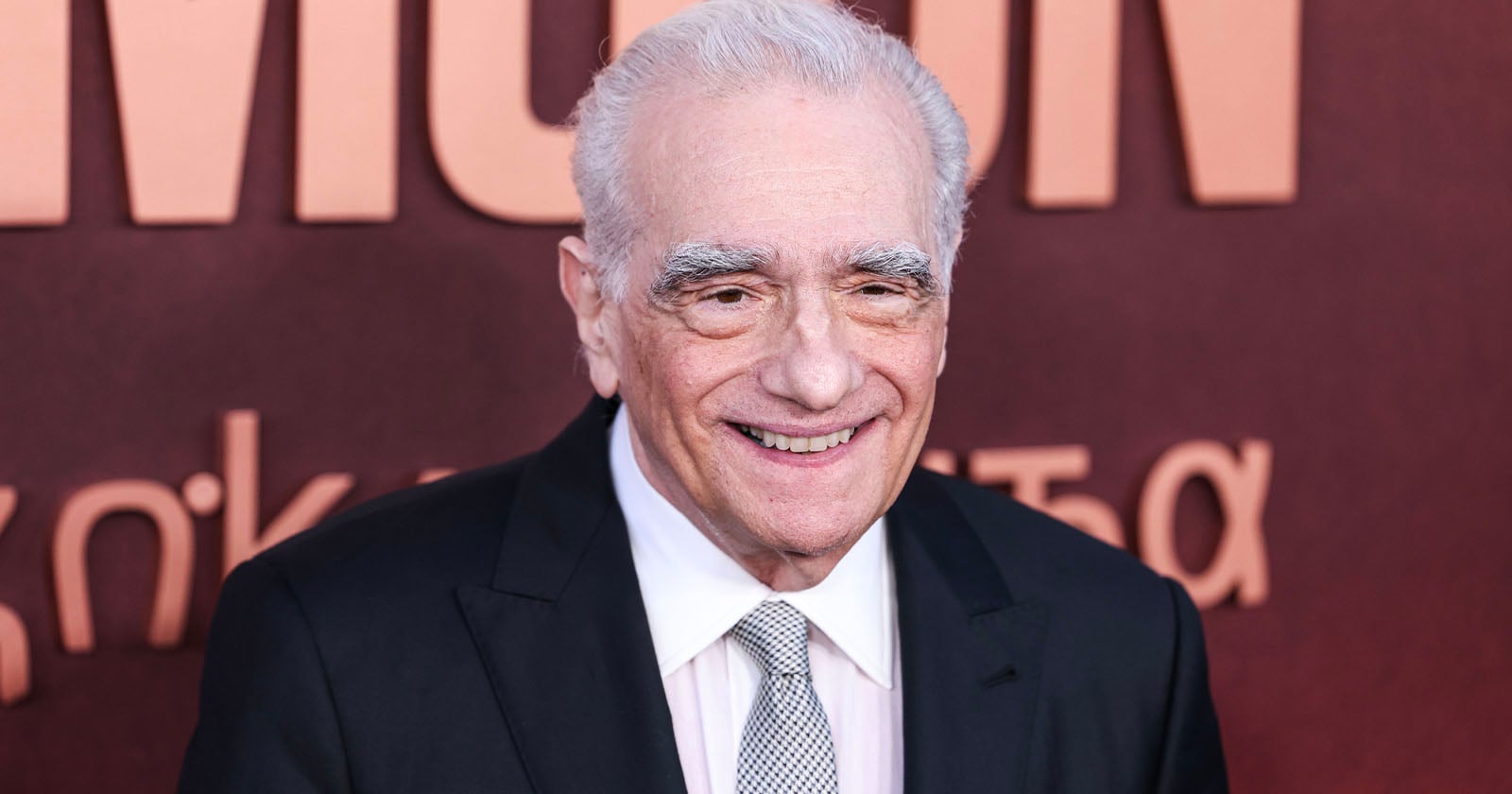
Martin Scorsese has joined the AI image company Black Forest Labs as an adviser, a decision that has shocked some in the film and creative communities.


