Normal view

  • ✇National Herald
  • Guess who isn’t calling the shots? Ashok Swain
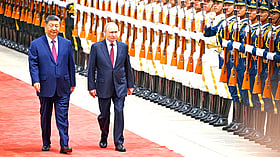
    When Vladimir Putin arrived in Beijing days after Donald Trump had left, Xi Jinping did not merely host another summit. He staged a geopolitical statement. Trump had come to China believing that personal diplomacy if not transactional pressure could still bend the world to Washington’s will. Xi answered by standing beside Putin, as if to declare that the age of unquestioned American dominance is nearing the end.The Xi-Putin summit was a calculated performance. By signing a declaration on a multi
     

Guess who isn’t calling the shots?

31 May 2026 at 11:51

When Vladimir Putin arrived in Beijing days after Donald Trump had left, Xi Jinping did not merely host another summit. He staged a geopolitical statement. Trump had come to China believing that personal diplomacy if not transactional pressure could still bend the world to Washington’s will. Xi answered by standing beside Putin, as if to declare that the age of unquestioned American dominance is nearing the end.

The Xi-Putin summit was a calculated performance. By signing a declaration on a multipolar world, China and Russia were mounting a direct challenge to the central assumption of Trump’s foreign policy that the US can still define the global order, decide which wars are legitimate, determine who is to be punished and expect others to fall in line.

Trump’s worldview has chronically overestimated US leverage. He has banked on America’s ability to coerce other nations — China, Russia, India, Iran, even NATO allies — to cooperate or pay a price. Sanctions, tariffs, military strikes, theatrical summits and Truth Social ultimatums have become US strategy. But where some powers like India have capitulated in the face of bullying, China and Russia and more recently Iran have pushed back and successfully called his bluff.

These countries and their leadership read Trump’s vulnerabilities. Xi has never confronted Trump with reckless gestures. Instead, he steadily accumulates leverage. He receives Trump with courtesy, keeps economic channels open, avoids unnecessary rupture, and then immediately hosts Putin to show that China will not be trapped inside a Washington-designed international order. This is the essence of Xi’s challenge, careful in tone, forceful in substance.

The condemnation of US and Israeli military strikes on Iran gave the summit its sharpest edge. By framing these strikes as violations of international law and basic norms of international relations, Xi and Putin placed Washington in the dock, not Tehran. This was not only about Iran. It was about the wider claim that no power, however strong, has the right to bomb, sanction or destabilise another state outside the authority of the United Nations.

Trump may unpredictably talk peace and even covet the Nobel Peace Prize, but overestimated US leverage. He has banked on America’s ability to coerce other nations — China, Russia, India, Iran, even NATO allies — to cooperate or pay a price. Sanctions, tariffs, military strikes, theatrical summits and Truth Social ultimatums have become US strategy. But where some powers like India have capitulated in the face of bullying, China and Russia and more recently Iran have pushed back and successfully called his bluff.

These countries and their leadership read Trump’s vulnerabilities. Xi has never confronted Trump with reckless gestures. Instead, he steadily accumulates leverage. He receives Trump with courtesy, keeps economic channels open, avoids unnecessary rupture, and then immediately hosts Putin to show that China will not be trapped inside a Washington-designed international order. This is the essence of Xi’s challenge, careful in tone, forceful in substance.

The condemnation of US and Israeli military strikes on Iran gave the summit its sharpest edge. By framing these strikes as violations of international law and basic norms of international relations, Xi and Putin placed Washington in the dock, not Tehran. This was not only about Iran. It was about the wider claim that no power, however strong, has the right to bomb, sanction or destabilise another state outside the authority of the United Nations.

Trump may unpredictably talk peace and even covet the Nobel Peace Prize, but his administration spouts the doctrine of ‘peace through strength’, an euphemism for flexing muscle to achieve desired outcomes. He attacks multilateral institutions, then complains when others build alternatives. He invokes sovereignty when it suits America but violates the principle flagrantly, as evidenced by US actions in Venezuela and Iran and US support for Israel’s wars. Xi has seized on this contradiction and turned it into a diplomatic weapon.

China’s message is simple: the UN, not Washington, must remain central to international legitimacy.

Of course, Beijing’s own record is not spotless. Its positions on Taiwan, the South China Sea and its human rights record invite criticism. Likewise, Russia’s invasion of Ukraine makes Moscow’s position untenable in any discussion of sovereignty. Yet the power of Xi’s move lies not in its moral framing but in political timing. Trump’s unilateralism and the unreliability of his word and actions has made it easier for China to present itself as a defender of rules, restraint and global balance.

The more Trump attacks the international order in the name of American greatness, the more space he creates for Xi to claim global responsibility. The more Washington behaves like a hegemon, the more convincing Beijing’s language of multipolarity sounds to many countries in Asia, Africa, Latin America and West Asia.

Xi is not asking the world to choose Russia over America. He is asking the world to question why America should remain the final arbiter of every other nation’s conduct. That is a far more sophisticated challenge. It appeals not only to authoritarian states but also to governments tired of the West’s double standards.

The Beijing summit also showed that Russia needs China more than China needs Russia. Putin requires markets, technology, diplomatic cover and energy buyers. Xi requires Russia as a strategic counterweight, but he is careful not to become dependent on Moscow. The failure to finalise key energy decisions, including long-delayed pipeline plans, reveals the limits of the partnership.

Xi is mindful of these limits. So, he engages with Putin without yielding to him. He engages with Trump without trusting him. He talks about the centrality of the United Nations in the international order even while expanding China’s influence through trade, infrastructure, technology and diplomacy. This is statecraft.

Trump, by contrast, treats foreign policy as spectacle. His visits produce headlines, handshakes and declarations, but not durable order. Xi’s summits are designed differently. They are meant to place China at the centre of every conversation. Trump comes to Beijing seeking a deal. Putin comes seeking reassurance. Others come seeking access. Xi receives them all, and the image is unmistakable — the world is no longer kowtowing to Washington.

The call for a multipolar world is not an abstract slogan. For China, multipolarity weakens US primacy and gives Beijing time to expand its own influence without triggering a direct confrontation. For Russia, it offers protection from isolation. For many states in the Global South, it offers bargaining space. For Trump’s America, though, it’s a rude reminder that its military might does not automatically translate into leverage or legitimacy.

****

The call for ‘multipolarity’ is really a push towards competing spheres of influence. Big powers may invoke sovereignty but violate it when convenient. Russia has done exactly that in Ukraine and China has made low-key assertions in its own neighbourhood.

The Xi-Putin summit should, therefore, be read as a diplomatic counterstrike. It told Trump that China will not yield to US pressure. It told the world that Beijing has partners, platforms and an alternative vision of international order.

Xi Jinping is challenging the US carefully yet forcefully — carefully because China still needs stability and forcefully because he believes history is moving in China’s direction. Trump’s policy missteps and hegemonic misadventures are no small help.

Ashok Swain is a professor of peace and conflict research at Uppsala University, Sweden. More by the author here

  • ✇Vogue
  • What Marjane Satrapi Made Leslie Camhi
    Arriving in the United States in the wake of 9/11, Satrapi’s “Persepolis” shattered common preconceptions about Iran, bringing the country’s complex history and the humanity of its people vividly alive for readers.
     
  • ✇National Herald
  • Herald View: A litmus test for the Opposition Herald View
    It was effective 2018, four years into Prime Minister Narendra Modi’s first term in office, that Sweden’s V-Dem Institute marked India’s descent into a state it describes as an ‘electoral autocracy’. That dubious classification has stuck ever since, though the democratic backsliding is, in fact, far worse than the label might suggest. In the 2026 edition of V-Dem’s Democracy Report, India is ranked #105 (out of 179 countries) on its ‘Liberal Democracy Index’.For citizens who have watched this er
     

Herald View: A litmus test for the Opposition

13 June 2026 at 06:36

It was effective 2018, four years into Prime Minister Narendra Modi’s first term in office, that Sweden’s V-Dem Institute marked India’s descent into a state it describes as an ‘electoral autocracy’. That dubious classification has stuck ever since, though the democratic backsliding is, in fact, far worse than the label might suggest. In the 2026 edition of V-Dem’s Democracy Report, India is ranked #105 (out of 179 countries) on its ‘Liberal Democracy Index’.

For citizens who have watched this erosion with concern, then alarm and now a sense of resignation, the 2024 Lok Sabha elections had briefly offered a ray of hope. That was two years ago in June 2024, when a more well-knit Opposition than you see today was able to make common cause, push back credibly and stop the BJP from securing a simple majority in the Lok Sabha.

Again, just two months ago in April 2026, the same Opposition was able to foil the BJP+ government’s plans to push through a Delimitation Bill that threatened to dramatically undercut the representation of southern states in Parliament and undermine India’s federal compact.

In its all-too-transparent bid to concentrate power at the Centre, the BJP has also been pushing ‘One Nation, One Election’ and many other unitary variants of the same driving impulse.

The primary unitary formulation advanced by the BJP–Sangh is their foundational ideological slogan ‘Ek Desh, Ek Nishan, Ek Vidhan, Ek Pradhan’ (one country, one flag, one Constitution, one prime minister). This historical formulation traces back to the BJP’s predecessor, the Bharatiya Jana Sangh, and its founder Syama Prasad Mookerjee.

It has grown new tentacles in the Modi era, in the shape of One Nation, One Election (ONOE); One Nation, One Tax; One Nation, One Ration Card; One Nation, One Grid; One Nation, One Uniform and so on.

****

Even though the BJP returned to power in 2024, it drew some lessons from a victory that still smelled like defeat. It hadn’t managed to entirely steamroll the Opposition and had fallen way short of the crushing 400-plus majority it was sloganeering about before the elections.

In Uttar Pradesh, where it had just inaugurated the new Ram Mandir to declare a great civilisational triumph, as it were, it dropped to 33 seats (out of 80) while the Samajwadi Party bagged 37. It even lost the prestige seat of Faizabad, which includes the assembly segment of Ayodhya. That defeat stung.

After all its toolkit attempts to bribe, bully, break the Opposition, it still only managed to secure 36.6 per cent of the popular vote. Which tells you something about its real appeal with the population at large, though not enough about its disproportionate hold on the levers of power.

The big lesson the BJP drew from its 2024 performance was that it needed to do more to tighten its grip on power. It realised that after everything it had done so far, it was still not able to organically win enough support to secure the two-thirds majority needed to rewrite the Constitution. With the singlemindedness of a rampaging bull, it saw that the only way was to re-engineer the electorate itself, to do a comprehensive purge of the voter rolls, and ensure that this culling of voters was decisively net-positive for the BJP. Enter the SIR.

At its service in the project to reshape the electoral rolls, the BJP has the Election Commission of India (ECI), which presides over the SIR. Readers will know that the ECI is supposedly an autonomous, nonpartisan body, but the election commissioners are now (legally) chosen by a 2:1 ruling party majority, which turns the ECI into a government department, for all intents and purposes.

The new law came into being via The CEC and Other Election Commissioners Bill, 2023, which was passed in December 2023, ahead of the Lok Sabha elections in April–May 2024.

Under the new law, the chief election commissioner (CEC) and other election commissioners are appointed by the President upon the recommendation of a selection committee. The selection committee consists of the prime minister, a Union cabinet minister and the leader of the Opposition/ leader of the largest Opposition party in the Lok Sabha. The ECI has read the script and is duly reporting to its new master.

The state Assembly elections in Bihar (in November 2025, after SIR, Phase 1) and in West Bengal (in April 2026 after SIR, Phase 2) are both excellent test cases to demonstrate the intention and the effect of the SIR. At the end of Bengal’s SIR nightmare, the state’s count of eligible voters was ~90 lakh less than the pre-SIR baseline of 7.66 crore. In Bihar, 69 lakh voters were dropped.

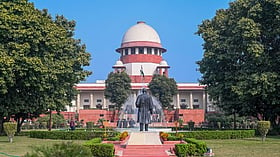
Citizens who view these developments with alarm had hoped that the Supreme Court of India might step in to question all this and hold the ECI to account. But on 27 May, the Supreme Court gave a clean chit to the SIR exercise. The bench of CJI Surya Kant and Justice Joymalya Bagchi ruled that the SIR process was constitutional and well within the ECI’s statutory powers. It held that the SIR process is necessary to protect the integrity, accuracy and credibility of electoral rolls.

Phase 3 of said SIR is currently under way in the remaining 16 states and three Union Territories. The first two phases, covering 10 states and 3 UTs, saw 7.2 crore deletions (and 2 crore additions, as per the ECI). This is down 10.2 per cent from pre-SIR baselines; in other words, the exercise has disenfranchised one in every 10 Indian voters.

****

Although mainstream media practically blacked out all the evidence of targeted deletions and more suspect tampering with the voter rolls, there were enough reports (on this portal and media outfits like The Wire, Newslaundry, Scroll, The News Minute, Reporters’ Collective and others) and other exposés besides — like the ones by Rahul Gandhi on Mahadevpura and Aland in Karnataka — that demanded a thorough investigation.

There was enough evidence to create reasonable doubt that the SIR was compromised — and yet, instead of demanding some answers from the ECI, demanding that it come clean on the SIR, and refute the evidence that had been presented, the Supreme Court has chosen to stamp its approval on the process.

This should tell the Opposition that the elections are no longer a fair battleground to take on the BJP. It needs to find other means to fight the capture of Indian democracy, the capture of India’s democratic institutions, the capture of media and other means of communicating with the people.

Opposition leaders should remember that to fight this assault on free and fair elections, on our democracy, on our Constitution, on India’s pluralist character, they need to make common cause. They need to define a Common Threat Perception, much before they can formulate a Common Minimum Programme of governance.

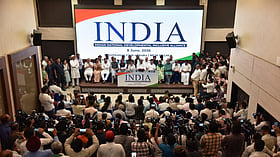
To even have another shot at governance, they must first learn to swim together, to recognise true allies and Trojan horses, and to keep true allies onside. The INDIA bloc meeting on 8 June was a beginning. There’s still a mountain to climb.

  • ✇National Herald
  • Of bail pleas and how courts learn to do better Sanjay Hegde
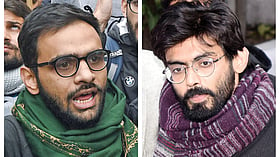
    In January this year, the Supreme Court refused bail to Umar Khalid and Sharjeel Imam. In May, it granted bail to Syed Iftikhar Andrabi. Both men are charged under the Unlawful Activities (Prevention) Act. Both have spent more than five years in jail awaiting trial. The same statute applies to them. Two different benches, sitting four months apart, read it in two very different ways. The story of those four months is worth telling. It is the story of how the Supreme court, talking to itself, is
     

Of bail pleas and how courts learn to do better

22 May 2026 at 12:32

In January this year, the Supreme Court refused bail to Umar Khalid and Sharjeel Imam. In May, it granted bail to Syed Iftikhar Andrabi. Both men are charged under the Unlawful Activities (Prevention) Act. Both have spent more than five years in jail awaiting trial. The same statute applies to them. Two different benches, sitting four months apart, read it in two very different ways. The story of those four months is worth telling. It is the story of how the Supreme court, talking to itself, is slowly correcting its own drift.

The statute at the centre of all this is Section 43-D(5) of the UAPA. It tells a judge that bail must not be granted if, on the face of the police case, the court has reasonable grounds to believe the accusation is true. Read literally, it is a tall order. The judge is asked to assume that the police story is correct, and then to refuse liberty on that assumption.

For some years the law moved between two poles. In 2019, in Zahoor Ahmad Shah Watali, the court took a strict view. A High Court order that had granted bail by sifting evidence too closely was reversed. In 2021, in K.A. Najeeb, three judges took a different view. They held that where trial was nowhere in sight and a man had already served much of his possible sentence, the rigours of Section 43-D(5) would, in the court’s striking phrase, “melt down” before Article 21. The principle was sensible. Liberty is the rule. Detention without trial cannot become a sentence by stealth. A statute is subordinate to the Constitution.

Then came the slow unwinding. Two-judge benches began to read Najeeb narrowly, treating it as a rare exception. They emphasised Watali again. By the time Gurwinder Singh was decided in 2024, the court had practically differentiated Najeeb out of existence. When the Delhi Riots conspiracy case reached the Supreme Court bench in January 2026, the default embargo on bail had stiffened back into something close to its original form.

In that case, Justices Aravind Kumar and N.V. Anjaria granted bail to five accused. Gulfisha Fatima, Meeran Haider, Shifa-ur-Rehman, Saleem Khan and Shadab Ahmed walked free after more than five years in custody. But the same bench denied bail to Umar Khalid and Sharjeel Imam. It treated them as principal conspirators. It allowed them to renew their bail prayer only after the protected witnesses had been examined, or after one year, whichever came first.

For all the careful sifting, the judgment carried an unhappy assumption. It treated <Najeeb> as a narrow safety valve, not as a constitutional principle. It read Section 43-D(5) as the governing rule, with Article 21 hovering somewhere in the background.

Four months later, Justices B.V. Nagarathna and Ujjal Bhuyan saw the matter differently. The man before them was Syed Iftikhar Andrabi. He was a village-level worker in the Rural Development Department at Kupwara. He was also a political activist with the Jammu and Kashmir People’s Conference. He had been arrested in June 2020, when a vehicle stopped at the Kuhroo Bridge yielded heroin and currency notes. The NIA took over the case. He was charged under the NDPS Act and the UAPA. By May 2026, he had been in jail for five years and eleven months. The prosecution had over three hundred and fifty witnesses still to examine. The end of his trial was not in sight. The two judges granted him bail. They could have stopped there. They did not.

What followed was an unusually candid explanation of how a three-judge bench decision had been quietly hollowed out by benches of lesser strength. The judgment named the cases. Gurwinder, it said, had read Watali as if Najeeb had not happened. Gulfisha Fatima, decided four months earlier, had reduced Najeeb to a footnote.

The reasoning was direct. Najeeb was the law. It had been rendered by three judges. Smaller benches were bound to follow it. If they could not, the only honourable course was to refer the matter to a larger bench. To rewrite Najeeb while pretending to follow it was not judicial discipline; it was something else.

The judges then did something rarer still. They turned to the statistics. In December 2025, the minister of state for home affairs had placed figures before the Lok Sabha. Across India, between 2019 and 2023, nearly 10,500 persons were arrested under the UAPA while 335 were convicted. The conviction rate hovered between two and six per cent. In Jammu and Kashmir, it was below one per cent. Ninety-nine times out of a hundred, the case ended in acquittal.

The judges asked the only question that mattered. With such numbers staring at the court, was it tenable to keep a man like Andrabi in jail year after year because the charges sounded serious? They answered it by setting him free. Surrender his passport, they said. Report to the Handwara Police Station once a fortnight. Cooperate with the trial. Do not threaten witnesses.

The judgment carried a grace note at the end. The author Justice Bhuyan noted that the order was based on the invaluable inputs of his sister judge, Justice Nagarathna. In a court not famous for collegial acknowledgement, the line meant something.

What does all this leave us with? It leaves us with two propositions worth holding together. The first is that the Constitution is not a slogan. Article 21 does not float over a statute. It runs through it. Section 43-D(5) does not suspend the right to a speedy trial; it must be read in the company of Article 21.

The second is that judicial discipline cuts in only one direction. A bench of two cannot quietly walk back what a bench of three has settled. The way to disagree is to say so, and to refer the matter up. The way best avoided is to keep citing the older case and treating the newer one as an aberration.

Umar Khalid and Sharjeel Imam remain in jail. Their year is running. Their renewed prayer for bail will fall to be considered in months that lie ahead. They will be heard by a court that has thought a little more clearly, between January and May, about what it owes them. That is something. That is, in fact, how courts grow up.

Sanjay Hegde is a senior advocate in the Supreme Court of India. More of his writing here

  • ✇National Herald
  • Why an ordinance to increase number of Supreme Court Judges? NH Digital
    Following the ordinance promulgated by the President of India, the Supreme Court of India now has a sanctioned strength of 38 judges including the CJI. The number of judges in the apex court was increased from 18 to 26 in 1988. Two decades later in 2009 it was increased to 30 plus the CJI. It was in 2019 when the number of Supreme Court judges was increased last to 33 excluding the CJI. As per Article 124 of the Constitution, the Supreme Court comprises the Chief Justice of India and the number
     

Why an ordinance to increase number of Supreme Court Judges?

17 May 2026 at 15:21

Following the ordinance promulgated by the President of India, the Supreme Court of India now has a sanctioned strength of 38 judges including the CJI. The number of judges in the apex court was increased from 18 to 26 in 1988.

Two decades later in 2009 it was increased to 30 plus the CJI. It was in 2019 when the number of Supreme Court judges was increased last to 33 excluding the CJI. As per Article 124 of the Constitution, the Supreme Court comprises the Chief Justice of India and the number of Judges which the Parliament prescribes by way of law.

A number of Supreme Court judges, including Justice Vikram Nath and Justice J.K. Maheshwari, are due to retire later this year in 2026. Both are members of the Supreme Court collegium being the second and the third most senior judges after the Chief Justice.

The Chief Justice of India justice Surya Kant is due to demit office in February, 2027. The probable successor Justice B.V. Nagarathna, the only woman Justice in the Supreme Court currently, will be the CJI for a short duration of six months or so.

With several other Supreme Court judges due to retire in 2026 and 2027, the government action in increasing the number of judges is being described in official circles as routine. What has however caused consternation is the government’s decision to take recourse to an ordinance, which is promulgated in an emergency and when the Parliament is not in session.

What kind of emergency has driven the government to opt for an ordinance bypassing the Parliament? Retirement dates of judges are known the day they are appointed and the government could have easily brought in a Bill, explained the urgency and get it passed after deliberation. Why the hurry?

“The date of appointment of a Judge of the Supreme Court decides the seniority and eventually who gets to become Chief Justice of India and for how long. Does this explain the 'extraordinary emergency' with which strength of Supreme Court has been increased through an 'Ordinance'?,” asks a social media post by Maadhyam, a handle which acts as a parliamentary watchdog.

The Budget Session ended barely a month ago, Maadhyam points out, and the union cabinet approved this increase in strength merely a few weeks after the session ended. Were they deliberately waiting for the session to end? Or are we to believe that Govt is so poor at planning that it couldn't bring a Bill to this effect in the Budget Session? And that pendency of cases in SC, built over the years, needs such an urgent resolution that Govt couldn't wait till July when Monsoon Session will begin?

While the real intent of the government will be known later, several troubling questions arise. Why is the Parliament being bypassed now? Is this a move to get some particular judges appointed to SC just in time to hear some particular cases pending before the court? Also, what is the rationale behind the number '37'? Why not 36 or 39? How are these decisions taken? What are the factors considered?

It is not always that Chief Justices of High Courts are appointed as judges of the Supreme Court. While seniority is a consideration, other factors are also considered though the collegium is rarely transparent while making its recommendations. However, as of May 2026, the five senior-most Chief Justices of High Courts in India are Justice Arun Bhansali (Allahabad), Justice Ramesh Sinha (Chhattisgarh), Justice Devendra Kumar Upadhyaya (Delhi), Justice Sunita Agarwal (Gujarat), and Justice Gurmeet Singh Sandhawalia (Himachal Pradesh).

While High Court judges who are not Chief Justices can also be appointed as Supreme Court judges before the Chief Justices themselves, the next five senior-most Chief Justices of High Courts in India (ranks 6–10 as of May 2026) are Justice Shree Chandrashekhar (Bombay), Justice Sujoy Paul (Calcutta), Justice Lisa Gill (Andhra Pradesh), Justice Sanjib Banerjee (Meghalaya), and Justice S. Vaidyanathan (Madras).

Bypassing Parliament when seemingly no emergency exists, raises suspicion that this route could be used to please the executive or members of the collegium and facilitate appointment of judges of their choice.

The choice of judges and the dates of their appointment and their retirement dates could provide some clue why the government is in such a tearing hurry to appoint them.

‘Why is IO playing hide and seek?’: SC pulls up UP in Noida hate crime case
  • ✇National Herald
  • Of sugar highs and water lows Jaideep Hardikar
    Think one day at a time. This was the strategy of farmers to stay afloat in Takwiki village, in Maharashtra’s drought-prone Dharashiv district in the summer of 2013. A crippling water scarcity devastated its economy, driving people out in search of work and water.Three more devastating droughts have since ravaged Marathwada region in which Takwiki falls, and each time, some of its people left the village and translocated to other places.That year, Maharashtra crushed 80 million tonnes of cane to
     

Of sugar highs and water lows

9 May 2026 at 06:29

Think one day at a time. This was the strategy of farmers to stay afloat in Takwiki village, in Maharashtra’s drought-prone Dharashiv district in the summer of 2013. A crippling water scarcity devastated its economy, driving people out in search of work and water.

Three more devastating droughts have since ravaged Marathwada region in which Takwiki falls, and each time, some of its people left the village and translocated to other places.

That year, Maharashtra crushed 80 million tonnes of cane to produce 8 million quintals of sugar. Sugar mills in Dharashiv crushed over 25 lakh tonnes of sugar-cane — a record.

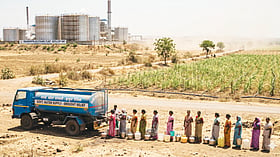
In my successive trips to this village and tens of others in this rain-shadow, low-rainfall, arid region of the state, one paradox stood out: villages that clamour for tankers to supply drinking water grow tonnes of water-guzzling sugarcane for the state’s sugar daddies. This, in a changing climate.

Year after year, they dig deep borewells to extract groundwater to irrigate cane crops, feeding factories that produce millions of tonnes of sugar and now ethanol, while a large section of people, especially in summer, are crying themselves hoarse for drinking water during drought years.

A few years ago, a geologist at the Maharashtra government Groundwater Surveys and Development Agency (GSDA) told me that Marathwada was sucking water from the palaeolithic age to grow orchards and cultivate sugarcane. The crisis is that serious.

In 2013, when the harangued district collector wrote to chief minister Prithviraj Chavan pleading for the suspension of the Diwali-to-March crushing season to preserve water for drinking needs, the entire political class was up in arms against him. He was snubbed, and transferred. People went without water, were forced to buy cans and packaged water by shelling out astronomical sums, but sugar mills worked round the clock, using millions of litres of water to produce the sweetener.

Cut to 2026. The water crisis has worsened, yet the Centre wants to push for vehicles to run on 100 per cent ethanol — produced by sugar factories — to tide over fuel shortages in the aftermath of the war in West Asia. It intends to amend the regulatory framework for mills, bringing ethanol into the framework in addition to sugar, molasses and other byproducts. This year, more of Maharashtra’s sugarcane will not become sugar, but ethanol — fuel for India’s vehicles.

The shift is part of India’s aim to achieve, over time, 100 per cent ethanol blending in petrol. Oil marketing companies are expanding procurement and sugar mills across Maharashtra are rapidly adding distillation capacity. What was once a by-product — molasses — has now become a central economic driver.

For five years, the Centre and states have, through policy tweaks, incentivised private and cooperative sugar factories to invest heavily in ethanol production. But in a state where water is already contested, the ethanol story is not just about energy. It is about how water is being used — and who decides.

Last week, the Modi-government took a step toward enabling cars in India to run entirely on ethanol. Under normal circumstances, such a move would be welcome. But these are not normal times. Ongoing geopolitical tensions in West Asia have disrupted global oil supplies, raising fears of fuel shortages. Reducing dependence on petrol and diesel is therefore understandable.

Early in April 2026, the ministry of consumer affairs, food and public distribution released the draft Sugarcane (Control) Order 2026 that aims to replace the 1966 order, to ‘modernise the sugar sector’. Aside from what it will achieve and why, among the 14 key proposals in the draft is the move to expand the regulatory scope to include ethanol production from sugarcane juice, syrup and molasses, formally integrating ethanol into the regulatory framework.

In principle, this seems like a forward-looking decision. But implementing it now is akin to digging a well when thirsty. Energy demand is predictable and should have been prepared for in advance. This policy carries two serious risks.

The first concern is impending water scarcity.

This year’s forecasts by multiple agencies including the IMD suggest that the 2026-27 monsoon may fall short by around 8 per cent due to the looming shadow of El Niño. Governments — right from the Centre down to municipalities — are already preparing for water shortages. Cities like Mumbai have announced water cuts.

Against this backdrop, accelerating ethanol production begs a critical question. Ethanol manufacturing requires enormous quantities of water. Using conventional methods, producing one litre of ethanol can require up to 10,000 litres of water. Even when produced from grains like rice or maize, efficiency is limited — one tonne yields about 475 litres of ethanol. So how economic and ecological is the decision to harp on higher ethanol blends?

In India, ethanol is primarily derived from sugarcane. In Maharashtra alone, nearly 350 sugar factories have invested heavily in ethanol production. Yet from a tonne of sugarcane juice (about 1,000 litres), only 70 litres of ethanol is produced. The process is doubly water-intensive: first, to grow a crop that guzzles vast quantities of water, and then, to expend further energy and resources to extract ethanol from it.

Just as you need to spend money to earn money, producing energy also consumes energy. The question is how much and at what cost.

If water itself is scarce, as in the regions that cultivate sugarcane, should it be used for drinking, farming and essential needs — or diverted toward fuel production? The answer is obvious. That is why pushing ethanol production at this moment appears deeply problematic.

The second concern is overcapacity and policy distortion.

Before the current energy crisis, the government had strongly incentivised ethanol production. As a result, India’s ethanol production capacity has increased dramatically — from about 518 crore litres a decade ago to nearly 2,000 crore litres today. However, current demand is only about 1,100 crore litres. In other words, capacity far exceeds demand.

Even within ethanol production, there is a hierarchy. Ethanol made from sugarcane is now being overshadowed by ‘new’ ethanol derived from grains like rice (also a water-guzzling crop) and maize. Government procurement policies appear to favour these newer producers, spelling uncertainty for traditional sugar-based ethanol producers — mainly sugar mills.

In Maharashtra and elsewhere, around 350 such producers have invested heavily, encouraged by earlier policies. But oil companies are now procuring only about half of their output, which leaves these producers struggling to recover their investments.

If India moves from 20 per cent blending to 85 or 100 per cent ethanol, demand will rise dramatically. But ethanol has lower energy density than petrol or diesel. This means vehicles require more ethanol to travel the same distance. Higher consumption will therefore drive even greater demand for ethanol production. And that, in turn, means even greater demand for water.

At present, India’s cropping patterns can support ethanol blending up to around 30 per cent. Moving to 85 or 100 per cent would require a massive expansion in ethanol-producing crops.

This raises other concerns. Sugarcane and rice — both water-intensive crops — are already under scrutiny. Yet they continue to receive policy support due to political considerations and food security needs. This has led to growing pressure on water resources. In addition, excessive irrigation brings risks like soil salinity and land degradation, as seen in Satara.

Ethanol has altered the financial logic of the sector. Instead of being trapped in cycles of sugar surplus and low prices, mills now have an alternative market.

Industry voices argue that ethanol has effectively stabilised the sector — indeed, Union minister Nitin Gadkari, a strong advocate for and player in the sugar sector and biofuels, recently claimed that without ethanol, a majority of mills in western Maharashtra would have shut down. There is little doubt that ethanol has revived the mills. But its mindless expansion rests on sugarcane and water, disregarding concerns about water availability and food security.

At the heart of Maharashtra’s ethanol turn lies a familiar political economy, now reconfigured rather than replaced. The cooperative sugar mill — once the backbone of rural patronage — has evolved into an increasingly private agro-industrial hub that converts cane into sugar, power and fuel.

Control over mills meant control of credit societies, transport contracts, labour networks, subsidies and ultimately electoral influence, particularly in western Maharashtra. Ethanol deepens this nexus. By improving cash flows through assured procurement by oil companies, it strengthens both cooperative and private mills, linked to political families across parties.

The beneficiaries are layered: mill owners secure new revenue streams, political actors consolidate influence through financially viable institutions, and relatively larger cane-growing farmers gain from more reliable payments.

The costs, however, are more diffuse — borne by regions like Marathwada, where groundwater is overdrawn to sustain cane, and by smallholders locked into a water-intensive crop because mills dictate local cropping patterns.

In effect, ethanol has not democratised the sugar economy; it has shifted its centre of gravity from a cooperative-led model to a hybrid regime of cooperatives and private mills, tightening the nexus between water, capital and political power while expanding it into newer, more fragile landscapes.

As Amey Tirodkar notes in Frontline, ‘sugar built Maharashtra’s cooperative power structure’, a structure now under strain. The traditional cooperative model, once the backbone of rural political control, is being reshaped by debt, rising costs and uneven access to ethanol capacity.

Mills with capital and political backing are adapting — investing in distilleries and securing new revenue streams — while weaker cooperatives struggle with unpaid dues running into thousands of crores. The result is a reconfiguration: from a broad-based cooperative network to a more uneven landscape where private mills and politically aligned entities consolidate control.

In this transition, ethanol acts as both stabiliser and filter — rewarding those who can invest, marginalising those who cannot. The benefits accrue upward, to mill owners and political actors, while the risks — water depletion, crop dependency and income volatility — are pushed onto farmers and labour.

In Maharasthra, sugarcane is not just a crop but a system of power. From Kolhapur and Sangli to Ahmednagar and Solapur, the geography of sugar overlaps with the geography of political influence. Cooperative mills historically anchored local economies, shaping access to credit, employment and electoral mobilisation.

Ethanol reinforces this system. By strengthening mill finances, it increases the institutional leverage of sugar networks. It also locks farmers into cane cultivation. Studies show that in Maharashtra, expansion in sugarcane production has been driven more by increase in area than productivity, indicating a steady spread of the crop across regions. That expansion has increasingly moved into drought-prone regions like Marathwada, or parts of western Maharashtra, where the ecological costs are far higher.

The impact of this transition is not the same across Maharashtra. Western Maharashtra — with canal irrigation systems and relatively higher rainfall — has historically supported sugarcane cultivation. Regions like Kolhapur, Sangli and Pune form the core of the sugar belt.

But Marathwada and parts of Vidarbha tell a different story. Here, sugarcane depends on groundwater extraction. Repeated droughts have already exposed the fragility of this model. Despite this, cane acreage has expanded into these regions, driven by the economic pull of mills. Ethanol risks accelerating that trend.

The shift also has implications for cropping diversity. As more land is committed to cane, less water is available for millets, pulses and oilseeds — crops that are both nutritionally and ecologically more suited to dryland agriculture. In effect, ethanol may be narrowing the state’s agricultural choices and aggravating the water crisis even as it expands its energy options.

Jaideep Hardikar is a senior Nagpur-based journalist and author of Ramrao: The Story of India’s Farm Crisis. Read more by him here

The biggest threat to higher education isn't making headlines 

Using compliance and reporting schemes allows the Trump administration to exercise substantial control over college operations without having to secure legislative approval or worry about public debate. These mechanisms tend to fly below the radar. But collectively they have an immense impact on how colleges and universities govern themselves, whom they admit and hire, what they teach, the research they conduct, and how they define educational quality. 

  • ✇National Herald
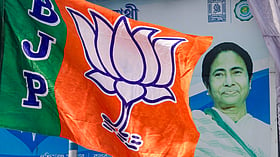
  • BJP had the ‘machinery’ backing it, Mamata Banerjee did not AJ Prabal
    Although only 1 crore votes out of 6 crore had been counted till 1.00 pm on Monday, 4 May, the writing on the wall appeared clear enough. The BJP was leading across West Bengal. Its unexpected victory even in Muslim-dominated constituencies in Murshidabad and Malda reflected how badly minority votes had been split. Pollsters claimed over 60 per cent Hindu voters in the state had consolidated behind the BJP to end the 15-year-rule of Mamata Banerjee and Trinamool Congress.When Prime Minister Nare
     

BJP had the ‘machinery’ backing it, Mamata Banerjee did not

4 May 2026 at 12:09

Although only 1 crore votes out of 6 crore had been counted till 1.00 pm on Monday, 4 May, the writing on the wall appeared clear enough. The BJP was leading across West Bengal. Its unexpected victory even in Muslim-dominated constituencies in Murshidabad and Malda reflected how badly minority votes had been split. Pollsters claimed over 60 per cent Hindu voters in the state had consolidated behind the BJP to end the 15-year-rule of Mamata Banerjee and Trinamool Congress.

When Prime Minister Narendra Modi and Union home minister Amit Shah left the state on the last day of campaigning on 27 April, both said they would return at the swearing-in of the BJP government. West Bengal governor R.N. Ravi, brought in before the election, twice declared that change was coming to the state. The day before the counting of votes, Mumbai Police gave permission to a victory march celebrating the BJP’s win in West Bengal. They did not need exit polls to tell them the result. They knew.

In hindsight, TMC's defeat will undoubtedly be attributed to people’s restlessness for change and their belief that the BJP, which had held up Central grants, would loosen the purse strings once they came to power in the state.

Big business could barely hide its happiness. Industrialist Harsh Goenka tweeted on Monday afternoon, “Bengal’s business community is absolutely delighted with result of Bengal elections: 1. Development will be back on the agenda 2. Jobs and investments will follow 3. A stronger, more cohesive social climate will emerge. A decisive mandate for BJP is the catalyst Bengal’s economy has been waiting for”.

Both Muslims and women, it was believed, would stand by the TMC. The women’s support for and loyalty to Mamata Banerjee, it was said, was not transactional and BJP’s promise of doubling the cash transfer from Rs 1,500 to Rs 3,000, it was felt, would have no impact.

This turned out to be delusionary, as the counting trend suggested. The pillars had not entirely collapsed but had cracked just enough for the BJP to cash in. Both demography and linguistic pride, wrote columnist Swaminathan Aiyar, would ensure a victory for Mamata. West Bengal, he felt, was not yet ready to accept the hegemony of Hindi-Hindu-Hindustan. Like many other commentators, he has turned out to be wrong.

Even the anger generated by a largely senseless and illogical Special Intensive Revision (SIR) of electoral rolls does not seem to have made any difference. The large number of migrant workers, who were subjected to considerable harassment, having to travel back and forth from their places of work in BJP-ruled states, it was argued, would vote against the BJP, which supported the exercise, with a vengeance. They apparently did not. Could they have been driven to vote for the BJP to buy peace at their place of work?

Anti-incumbency, recruitment scams, women’s safety, lack of industrialisation and steady jobs, corruption and lumpenisation of TMC cadres will be cited no doubt as some of the other factors which influenced the voters in the state. However, the key reason for the defeat of the ruling party seems to be the crippling of Mamata Banerjee by the Union government and the Election Commission ever since the election was notified on 15 March.

The unprecedented transfer of several hundred officers in the state by the Election Commission — from district magistrate and SPs to police constables — would have dealt a blow to the ruling party. The chief minister was reduced to a lame duck as Central Armed Police Forces took over police stations and collectorates. Central agencies like ED and Income Tax raided the offices and the directors of I-PAC, the political consultancy firm which acted as an extension of the ruling party in the districts. While BJP retained control over the ‘machinery’, TMC lost control of it.

The CAPF accompanied BJP candidates during campaigning and warned TMC leaders to ensure that their party cadres did not disturb BJP’s campaigning. TMC overnight stopped being ‘feared’ even as BJP president Nitin Nabin was seen riding in an armoured vehicle of the CAPF.

Reports suggested that all CAPF heads were ordered to remain in the state till after the counting; and the Union home minister — not the Election Commission — declared that 750 companies would stay back in the state even after a new government is installed. Such decisions were once left to the ECI but the difference between the Union government and the election commission has got blurred.

  • ✇Hong Kong Free Press HKFP
  • Punishing abusers is not enough: What Ombudsman’s animal cruelty report misses Guest Contributor
    By Tim Pit Hok-yau Last month, the Office of the Ombudsman released its long-awaited investigation into the Hong Kong government’s work in combating animal cruelty. Jack Chan, the Ombudsman, announces the report investigating the Hong Kong government’s work in combating animal cruelty on April 16, 2026. Photo: The Office of the Ombudsman. The report was prompted by a series of horrifying abuse cases which, in the Ombudsman’s own words, “amount to a deliberate trampling on the dignity
     

Punishing abusers is not enough: What Ombudsman’s animal cruelty report misses

Ombudsman animal report op-ed featured image

By Tim Pit Hok-yau

Last month, the Office of the Ombudsman released its long-awaited investigation into the Hong Kong government’s work in combating animal cruelty.

Jack Chan, the Ombudsman, announces the report investigating the Hong Kong government’s work in combating animal cruelty on April 16, 2026. Photo: The Office of the Ombudsman.

The report was prompted by a series of horrifying abuse cases which, in the Ombudsman’s own words, “amount to a deliberate trampling on the dignity of life and run wholly contrary to the very conscience of a civilised society.”

The investigation focuses primarily on the failures of the Agriculture, Fisheries and Conservation Department (AFCD), which is responsible for animal management and welfare.

Among the key findings are the AFCD’s inefficient investigations and insufficient prosecutions. Out of 1,633 reports of suspected animal cruelty from 2020 to June 2025, only six prosecutions were brought – a striking, though not new, statistic.

The AFCD responded to the Ombudsman, saying that the majority of reports it received pertained to noise or nuisance complaints rather than cruelty. However, media reports on animal cruelty, including a recent shocking case of a 14-year-old student sharing online photos and videos of cat abuse, may suggest otherwise. 

Other problems highlighted by the Ombudsman’s report include weak enforcement powers; inconsistent case handling; poor internal monitoring and staff training; delayed reform of the Prevention of Cruelty to Animals Ordinance (Cap. 169), first promised in 2019; and alarmingly low penalties for illegal animal traps, which currently carry a maximum fine of HK$50,000 with no provision for imprisonment.

Agriculture, Fisheries and Conservation Department
Agriculture, Fisheries and Conservation Department logo. File photo: Tom Grundy/HKFP.

These are important findings, and the Ombudsman deserves credit for highlighting institutional deficiencies that animal advocates have raised for years. 

But while the report has identified some of the government’s major failures, it also reveals a deeper problem: Hong Kong’s approach to animal welfare remains fundamentally reactive rather than preventive, with most suggestions focusing on punishment, not prevention.

Worse still, the report overlooks many of the structural and everyday forms of animal plight that are normalised across the city. This article, then, intends to address these blind spots.

Duty of care

The most glaring limitation of the investigative report concerns its ambivalence over nudging the government to implement a “duty of care.”

While the Ombudsman acknowledges that the government has struggled to reach consensus on this proposal, it stops short of urging its adoption. This hesitation matters.

The Office of the Ombudsman
The Office of the Ombudsman. Photo: Peter Lee/HKFP.

A duty of care would fundamentally shift existing animal law from punishing cruelty after suffering occurs to preventing suffering in the first place. Without such a framework, Hong Kong continues to operate on an outdated logic: authorities intervene only after visible injury, starvation, or death.

If a cat falls from an unprotected high-rise window, or a dog is chronically confined in a tiny flat with little exercise or social contact, the current legal framework can hardly intervene until obvious harm has already occurred.

With a duty of care, caregivers would be legally required to provide appropriate food, shelter, veterinary care, and living conditions that meet animals’ physical and behavioural needs safely. In other common law jurisdictions, including the UK and Australia, duty of care provisions have already become a cornerstone of animal protection.  

Undoubtedly, one of the report’s recommendations is to “further strengthen outreach and education in schools, helping students and young people build an awareness of animal protection from childhood.”

This is a fantastic recommendation for preventing animal cruelty, but it remains frustratingly vague. What kind of education are we talking about?

Dogs at the “Pets With Love” Dog Adoption Carnival in December 2018 in Lai Chi Kok. File photo: GovHK.
Dogs in Hong Kong. File photo: GovHK.

If Hong Kong genuinely wants to cultivate respect for animals, it must first confront contradictions in the current education system.

Attending a local secondary school, I still remember many science classes where animal dissection was presented as a normal part of learning, from dissecting ox eyes to hearing classmates describe experiments on mice.

These activities are still recommended by the Education Bureau’s Biology Curriculum and Assessment Guide, although the government also expects secondary school students to “learn about how humans can live in harmony with animals and show respect for all living things” in the very same subject.

Humane education

Not only do such laboratory practices risk reinforcing a worldview in which animals exist primarily as instruments for human use, but the pedagogical value of animal dissection has been convincingly challenged by a large corpus of research.

Yet, the issue is perhaps just one of the many voids in our education system that should help enhance animal well-being and stop the everyday exploitation of animals. Learning about veganism, the intersection between animal exploitation and other social problems, conservation, and other elements of animal education are equally important.

Humane education should equip citizens with the ability to locate the many practices of cruelty against animals in Hong Kong, many of which the Ombudsman’s report says nothing about. 

For instance, there have been repeated controversies surrounding captive animals at Ocean Park; animal deaths at the Hong Kong Zoological and Botanical Gardens; and the racing industry operated by the Hong Kong Jockey Club, where horses routinely suffer injuries and fatalities caused by running at maximal speed, lax whipping rules, and a hot climate.

Of course, the development projects and human activities that disrupt animals’ habitats should not be ignored. Just think of how Chinese white dolphins have lost their habitat because of reclamation or been injured because of high-speed ferries’ propeller blades, to name just one example.

Whether one supports these institutions and projects or not, it is difficult to argue that they fall outside the conversation on animal welfare.

Chinese white dolphin
A Chinese white dolphin spotted in the southern part of Lantau on September 10, 2021. Photo: Kelly Ho/HKFP.

The government’s poor animal management policies in urban areas are another major omission in the Ombudsman’s investigation. The report rightly condemns illegal animal traps but ignores government-led practices that also cause suffering, including the wild boar culling operations.

It also neglects ineffective regulation of religious animal release practices, which often disrupt ecosystems and harm the very animals being “saved” because more often than not, they are not released into suitable habitats. 

If Hong Kong truly wants to become a “civilised” city that respects life, then animal welfare cannot be confined to criminal prosecutions of isolated abuse cases. It must also confront the legal, educational, economic, and cultural systems that normalise animal suffering in everyday life and prevent it from happening in the first place.

Another step that must be taken to safeguard animals’ well-being is to ask a harder question: What kinds of relationships do we, as a city, continue to build with the animals who live among us?

As philosopher Martha Nussbaum reminds us, animal justice should not be measured simply by the absence of cruelty, but by whether animals can actualise the capabilities essential to their flourishing.

For dogs, that includes play, movement, and social bonding. For dolphins, it means the ability to hunt, communicate, and live within their natural habitat. Survival alone is not welfare; a decent life is.

The Ombudsman’s report is an important step. But it should not be mistaken for an ultimate solution. Rather, it should remind us that there is always more that we – as policymakers, educators, and citizens – must do.


Tim Pit Hok-yau is research lead for the Hong Kong Animal Law and Protection Organisation.

HKFP is an impartial platform & does not necessarily share the views of opinion writers or advertisers. HKFP presents a diversity of views & regularly invites figures across the political spectrum to write for us. Press freedom is guaranteed under the Basic Law, security law, Bill of Rights and Chinese constitution. Opinion pieces aim to constructively point out errors or defects in the government, law or policies, or aim to suggest ideas or alterations via legal means without an intention of hatred, discontent or hostility against the authorities or other communities.
❌
Subscriptions