Normal view

  • ✇Eos
  • Trump Terminates Entire National Science Board Grace van Deelen
    Research & Developments is a blog for brief updates that provide context for the flurry of news regarding law and policy changes that impact science and scientists today. The Trump Administration has terminated the positions of every member of an independent board meant to govern the National Science Foundation (NSF). The National Science Board directs and approves large funding decisions for NSF’s approximately $9 billion basic science research budget. It is meant to function ind
     

Trump Terminates Entire National Science Board

27 April 2026 at 14:44
Silhouettes of people in lavender and periwinkle stand, some overlapping, on a aubergine-colored background. Overlying the image at the bottom is the text “R&D Research and Developments.”

Research & Developments is a blog for brief updates that provide context for the flurry of news regarding law and policy changes that impact science and scientists today.

The Trump Administration has terminated the positions of every member of an independent board meant to govern the National Science Foundation (NSF).

The National Science Board directs and approves large funding decisions for NSF’s approximately $9 billion basic science research budget. It is meant to function independently from the federal administration to keep science funding insulated from political pressure and budget cycles.

“I have watched the systematic dismantling of the scientific advisory infrastructure of this government with growing alarm, and the National Science Board is simply the latest casualty.”

In a 24 April notice from the Presidential Personnel Office, all the scientists serving on the board were informed their positions had been eliminated. The emails dismissing board members provided no reason for the termination.

“I am deeply disappointed, though I cannot say I am entirely surprised,” Willie E. May, one of the terminated board members and vice president of research and economic development at Morgan State University in Maryland, told The New York Times

“I have watched the systematic dismantling of the scientific advisory infrastructure of this government with growing alarm, and the National Science Board is simply the latest casualty,” he said. 

Ranking member of the House Committee on Science, Space, and Technology Zoe Lofgren (D-CA) called the terminations “the latest stupid move made by a president who continues to harm science and American innovation.”  

The terminations come after a year that shocked higher education and research budgets. Last year, NSF granted 51% less funding to scientists than the 2015-2024 average and terminated hundreds of active grants. Last May, the Trump administration proposed cutting $5 billion from NSF’s budget, though the proposal was rejected. The president’s budget request for fiscal year 2027 once again proposes to reduce the foundation’s budget by more than half. In a February 2026 meeting of the National Science Board, NSF leadership said the foundation was seeking to reduce grant solicitations.

The Trump administration has also restructured scientific advisory groups elsewhere in the federal government, eliminating 152 federal advisory committees at science agencies, merging all of the Department of Energy’s advisory committees into one and dismantling the Environmental Protection Agency’s research office.

“Without a functional National Science Board in the near term, the agency is left without the guidance and oversight of independent experts, and the public is left without information on how NSF is carrying out its mission,” Gretchen Goldman, president and CEO of the Union of Concerned Scientists, wrote in a blog post about the terminations. 

—Grace van Deelen (@gvd.bsky.social), Staff Writer

These updates are made possible through information from the scientific community. Do you have a story about how changes in law or policy are affecting scientists or research? Send us a tip at eos@agu.org.

A photo of a hand holding a copy of an issue of Eos appears in a circle over a field of blue along with the Eos logo and the following text: Support Eos’s mission to broadly share science news and research. Below the text is a darker blue button that reads “donate today.”
Text © 2026. AGU. CC BY-NC-ND 3.0
Except where otherwise noted, images are subject to copyright. Any reuse without express permission from the copyright owner is prohibited.
  • ✇AllBusiness.com
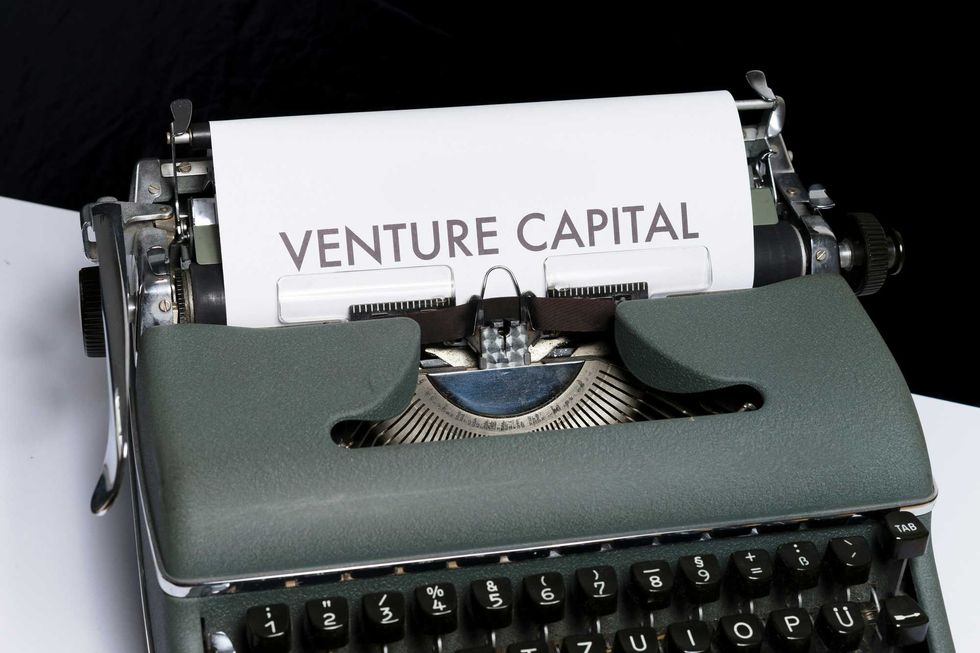
  • 10 Frequently Asked Questions About Venture Capital The AllBusiness.com Team
    1. What Is Venture Capital?Venture capital (VC) is a form of financing in which investors provide capital to startups or early-stage companies with high growth potential in exchange for equity, or partial ownership, in the company. Venture capital is a key source of funding for startups that lack access to traditional bank loans or public financing due to the risks involved in early-stage businesses. VC firms often invest in innovative industries such as technology, AI, internet, healthcare, and
     

10 Frequently Asked Questions About Venture Capital

18 March 2026 at 23:04


1. What Is Venture Capital?

Venture capital (VC) is a form of financing in which investors provide capital to startups or early-stage companies with high growth potential in exchange for equity, or partial ownership, in the company. Venture capital is a key source of funding for startups that lack access to traditional bank loans or public financing due to the risks involved in early-stage businesses.

VC firms often invest in innovative industries such as technology, AI, internet, healthcare, and biotechnology, where the potential for growth is significant but the risks are equally high. The goal for venture capitalists is to help these companies scale rapidly, ultimately earning a substantial return on investment when the company goes public or is acquired.

One of the defining characteristics of venture capital is that it typically targets high-growth companies that have the potential to disrupt industries or create new markets. These companies are often too new or risky to qualify for traditional funding sources. Google and Facebook, for example, both received venture capital funding early in their development, helping them grow into two of the largest and most influential companies in the world. Venture capital allowed them to scale quickly by investing in product development, hiring, and marketing, which positioned them for future success.

Venture capital is usually provided in several rounds, known as funding rounds, which correspond to different stages of a company's growth. Early-stage funding rounds, such as seed funding and Series A, provide initial capital to help companies build their product, develop their business model, and gain market traction. As the company matures and achieves specific milestones, it may receive additional rounds of funding—such as Series B or Series C—to support further expansion, such as scaling operations or entering new markets.

2. How Does a Venture Capital Firm Work?

A venture capital firm is a type of financial institution that provides funding to startups and early-stage companies with high growth potential. These firms pool capital from a variety of mainly institutional investors and deploy it into promising businesses, typically in exchange for equity ownership. The objective is to generate substantial returns on investment once these companies scale or achieve a successful exit through an initial public offering (IPO) or acquisition. Unlike traditional banks that offer loans with fixed repayment terms, venture capital firms take on significant risk by investing in unproven ventures.

Venture capital firms raise money from limited partners (LPs), which can include institutional investors, pension funds, family offices, and high-net-worth individuals. These funds are then managed by general partners (GPs) who are responsible for sourcing, evaluating, and overseeing investments.

The capital raised is organized into venture funds, which have a finite lifespan, typically around 10 years. During the first few years, VC firms identify and invest in portfolio companies; the remaining years are usually spent managing and exiting those investments.

General partners often work closely with the companies they invest in, providing strategic guidance, operational expertise, and connections to other stakeholders in the startup ecosystem. In addition to capital, the support of a venture capital firm can lend credibility to a startup, attracting other investors and opening doors to valuable networks. VC firm principals earn money through management fees and carried interest, which is a share of the profits from successful investments.

3. How Is a Venture Capital Investment Structured?

A typical venture capital investment is structured so that the venture capitalist receives convertible preferred stock in the company. This stock gives the venture capitalist a preference over the common shareholders in the event of a liquidation or merger. The preferred stock is convertible into common stock at the option of the holder—and this may be automatically triggered by certain events. For example, the preferred stock would convert to common stock in the event of an initial public offering (IPO) of the company to simplify the capital structure and to facilitate the IPO.

Venture capital investments are also sometimes staged. A certain amount of money is invested right away and additional money is invested later as certain milestones are reached. From the company's perspective, it's important that these milestones are clearly defined and reasonably obtainable.

Typical VC investment terms also include liquidation preferences, anti-dilution provisions, board representation rights, voting rights, and exit rights through IPOs, acquisitions, or mergers within defined timeframes—usually five to seven years.

Once the company and the venture capitalist agree on a term sheet, the VC's attorneys prepare the definitive agreements reflecting the transaction. The main agreement is the stock purchase agreement, which contains the price of the stock to be sold, the number of shares to be purchased, and representations and warranties from the company. Representations and warranties from the company are almost always present as part of a venture capital investment, and a breach of these means the investor may be entitled to various remedies laid out in the agreement.

4. What Is a Venture Capital Term Sheet?

Most venture capital financings are initially documented by a term sheet prepared by the VC firm and presented to the entrepreneur. The term sheet is an important document, as it signals that the VC firm is serious about an investment and wants to proceed to finalize due diligence and prepare definitive legal investment documents.

Before term sheets are issued, most VC firms will have gotten the approval of their investment committee. While term sheets are not a guarantee that a deal will be consummated, a high percentage of finalized and signed term sheets do result in completed financings.

The term sheet will cover all of the important facets of the financing: economic issues such as the valuation given to the company; control issues such as the makeup of the Board of Directors and what approval or veto rights the investors will have; and post-closing rights of the investors, such as the right to participate in future financings and rights to receive periodic financial information. The term sheet typically states that it is non-binding, except for certain provisions such as confidentiality and no-shop/exclusivity clauses.

An entrepreneur should think of the term sheet as a blueprint for the relationship with his or her investor, and be sure to give it plenty of attention. Although not binding, the term sheet is by far the most important document to negotiate with investors—almost all of the issues that matter will be covered in the term sheet, leaving smaller issues to be resolved in the financing documents that follow.

It is generally better for both the investors and the entrepreneur to have a comprehensive long-form term sheet, which will mitigate future problems in the definitive document drafting stage.

5. How Is a Startup Valued for Venture Capital?

The valuation put on a business is a critical issue for both the entrepreneur and the venture capital investor. The valuation is typically referred to as the pre-money valuation, referring to the agreed-upon value of the company before the new money is invested. For example, if investors plan to invest $5 million in a financing where the pre-money valuation is agreed to be $15 million, the post-money valuation will be $20 million, and the investors expect to obtain 25% of the company at closing. Valuation is negotiable and there is no single correct formula or methodology to rely upon.

The higher the valuation, the less dilution the entrepreneur will encounter. From the VC's perspective, a lower valuation—resulting in a higher investor stake in the company—means the investment has more upside potential and less risk, creating a higher motivation to assist the company.

Key factors that go into a determination of valuation include the experience and past success of the founders, the size of the market opportunity, proprietary technology already developed, any initial traction such as revenue or partnerships, and the current economic climate.

While each startup and valuation analysis is unique, the range of valuation for very early-stage rounds—often referred to as seed financings—is typically between $1 million and $10 million. The valuation range for companies that have gotten some traction and are doing a Series A round is typically $5 million to $25 million. AI companies have gotten significantly higher valuations.

Additional factors include the capital efficiency of the business model, valuations of comparable companies, and whether the company is attracting interest from multiple investors simultaneously.

6. What Are the Different Stages of Venture Capital Funding?

Venture capital funding typically progresses through structured rounds aligned with a startup's growth stages. Seed rounds represent the initial funding stage, providing capital for product development, market validation, initial team formation, and early operational expenses.

Seed investments are often smaller in size and may involve convertible promissory notes or SAFEs (Simple Agreements for Future Equity), rather than the full convertible preferred stock structures used in later rounds. Many seed investments come from angel investors, friends and family, or early-stage VC funds.

Series A rounds come next, intended to finance initial commercialization, product launches, customer acquisition, and early-stage market penetration. Series B rounds are larger and are focused on scaling operations, market expansion, significant product enhancements, or substantial talent acquisition.

As the company matures, Series C and beyond represent growth-stage investments where companies with established revenue streams seek capital to scale into new markets, fund large-scale marketing, or prepare for an acquisition or IPO.

Finally, the exit stage is when the VC firm seeks to realize its return on investment, typically through a public offering or acquisition. Successful exits generate profits for both the limited and general partners.

The entire venture lifecycle, from initial fund investment to exit, typically spans around 10 years—with the first few years devoted to identifying and investing in portfolio companies, and the remaining years spent managing and exiting those investments.

7. How Do You Get the Attention of a Venture Capitalist?

VCs get inundated with investment opportunities, many arriving through unsolicited emails. Almost all of those unsolicited emails are ignored. The best way to get the attention of a VC is to have a warm introduction through a trusted colleague, entrepreneur, or lawyer who is friendly with the VC. Before approaching a venture capitalist, entrepreneurs should also try to learn whether his or her investment focus—by industry sector, stage of company, and geography—aligns with their company and its stage of development.

A startup must have a good elevator pitch and a strong investor pitch deck to attract the interest of a VC. The pitch deck should clearly describe what the company does, why it should be interesting, and why it would eventually lead to a large exit. Entrepreneurs must paint a clear picture that the market opportunity is meaningfully large and growing. Venture capitalists want to see that the market opportunity is big enough—often hundreds of millions to billions of dollars—to yield a highly valued investment.

Entrepreneurs should also understand that the venture process can be very time-consuming. Just getting a meeting with a principal of a VC firm can take weeks, followed by more meetings and conversations, a presentation to all partners of the fund, issuance and negotiation of a term sheet, continued due diligence, and finally the drafting and negotiation by lawyers on both sides of numerous legal documents. Most VCs prefer to partner with companies that have a clear product in place, a go-to-market strategy, and ideally some actual sales already under their belt.

8. What Is Corporate Venture Capital?

Corporate Venture Capital (CVC) refers to the practice in which large corporations invest strategically in startups and early-stage companies. Unlike traditional venture capital funds, which primarily seek financial returns, corporate venture capital funds typically invest to achieve strategic objectives, including access to innovative technologies, new market entry, or alignment with broader corporate strategies. These investments allow established companies to gain early insights into disruptive trends, enhance innovation, and identify potential acquisition targets or strategic partners.

Corporate venture capital provides unique benefits for startups beyond traditional VC investments. Startups benefit from access to established corporate networks, industry expertise, and strategic market positioning. They can also leverage the investor's distribution channels, marketing resources, and customer relationships, accelerating market entry and scalability. Association with reputable corporate investors enhances a startup's credibility, aiding market entry, customer acquisition, and broader investor confidence.

CVC funds typically receive minority equity stakes, providing ownership without operational control. Corporate investors sometimes request a board seat or observer rights, enabling strategic oversight and direct insights into startup operations. Terms may also include strategic rights such as exclusive licenses, rights of first refusal on technology, or preferred collaboration agreements.

Corporate investors often provide patient capital with longer investment horizons compared to traditional venture capitalists, adding a dimension of long-term funding stability for the startup.

9. What Are the Advantages and Disadvantages of Venture Capital?

Venture capital funding offers substantial advantages for startups seeking rapid growth, scale, and success. Access to significant capital allows companies to fuel rapid growth, launch new products, and capture market opportunities. Experienced VC investors also offer valuable mentorship, operational advice, industry insights, and strategic guidance that can dramatically improve a startup's chances of success.

Receiving venture capital backing signals credibility and market validation, which attracts further investment, talent, and customers. VC firms also maintain extensive professional networks, facilitating introductions to industry partners, suppliers, and talent pools.

However, venture capital is not without its disadvantages. Founders must give up equity in their company, which can mean significant dilution over multiple rounds of funding. VCs frequently secure board seats, enabling direct involvement in strategic decisions, and may hold voting rights or veto power over critical company decisions. This can mean a loss of control for the original founders. Additionally, VC investors typically look for substantial returns within a defined timeframe of five to seven years, which can create pressure on the business to grow and exit on a schedule that may not always align with the company's natural trajectory.

Venture capital is also inherently risky because investments focus on young companies that may not yet be profitable. Many venture-backed startups fail, resulting in significant losses for investors. VCs look for companies that promise a blistering pace of growth and a solid return on investment—often between 300% and 1,000%—within three to seven years. With those kinds of numbers as the target, it's clear that not every startup is suitable for VC funding. Companies that operate in slower-growth industries or that are not aiming to scale to tens or hundreds of millions of dollars in revenue are likely better served by other financing options.

10. How Do You Raise a Venture Capital Fund as a First-Time Manager?

Raising a first venture capital fund is one of the most challenging undertakings in the financial world. It's important to first determine whether you are a first-time fund or simply a first-time fund manager—the distinction matters because experienced operators transitioning into VC have a different value proposition to limited partners than someone brand new to the industry.

Venture capital may look like a get-rich-quick scheme when the market is hot, but it is really a get-rich-slowly-over-time plan that requires consistent hard work, deep networks, and demonstrated investment discipline.

When looking for limited partners for a first fund, the first place to look is your inner circle—friends and family—and next, your contacts in the industry who might be looking to capitalize on their knowledge of market trends. It is even better if you can find general partners who specialize in your industry.

Larger funds will sometimes invest in emerging managers as a way to gather deal flow and provide mentorship. It's also important to start small: it is better to have a smaller fund, deploy it successfully, and come back to the market with a track record than to wait for a large fund that may never materialize.

Even in uncertain markets marked by political and geopolitical unpredictability, capital is still available for the right managers. The key is to show that you are uniquely positioned to succeed in your particular category. If limited partners see you as a specialist with real edge in your investment domain, they will believe in you.


  • ✇AllBusiness.com
  • 10 Frequently Asked Questions About Angel Investing The AllBusiness.com Team
    1. What Is an Angel Investor?An angel investor is a high-net-worth individual who provides financial backing to early-stage startups and entrepreneurs in exchange for equity ownership, convertible debt, or other investment structures. Typically investing their personal wealth, angel investors play an important role in funding businesses with high growth potential but that are considered too risky or unproven for traditional venture capital or institutional financing.Angel investors usually come
     

10 Frequently Asked Questions About Angel Investing

26 February 2026 at 19:56


1. What Is an Angel Investor?

An angel investor is a high-net-worth individual who provides financial backing to early-stage startups and entrepreneurs in exchange for equity ownership, convertible debt, or other investment structures. Typically investing their personal wealth, angel investors play an important role in funding businesses with high growth potential but that are considered too risky or unproven for traditional venture capital or institutional financing.

Angel investors usually come from diverse backgrounds. They are often experienced entrepreneurs, retired executives, industry professionals, or business owners who seek to invest in new ideas, innovative products, or disruptive technologies. Beyond providing capital, angel investors often offer mentorship, industry expertise, strategic guidance, and valuable networking opportunities that can significantly enhance the likelihood of the startup's success.

2. How Much Do Angel Investors Typically Invest?

The typical angel investment ranges from $25,000 to $200,000 per company, though deals can go higher depending on the opportunity and the investor's appetite. Angel investors typically make small bets with the hopes of getting outsized, "home run" returns. They understand that startups carry a high risk of failure, so they need to feel confident that the potential upside justifies the downside risk before writing a check.

What angel investors particularly care about includes the quality, passion, commitment, and integrity of the founders; the market opportunity and the potential for the company to become very large; a clearly thought-out business plan with early evidence of traction; interesting technology or intellectual property; an appropriate valuation with reasonable terms; and the viability of raising additional rounds of financing if progress is made.

3. How Is Angel Investing Different from Venture Capital?

Angel investors are typically wealthy individuals who invest their personal funds in early-stage startups, often at the pre-seed or seed stage when the business is still developing its product or trying to find product-market fit. Their investments usually range from tens of thousands to hundreds of thousands of dollars, filling the crucial gap between initial funding from friends and family and larger institutional investments. The decision-making process is often more personal and subjective—angels may rely heavily on their gut feeling, the entrepreneur's passion, and the potential they see in the idea.

Venture capitalists, on the other hand, are professional investors who manage funds on behalf of other investors, such as institutions, corporations, or pension funds. They tend to enter the picture at later stages—typically seed, Series A, and beyond—when a startup has already demonstrated some market traction. VC investments are significantly larger, often starting in the millions. Decisions are made by a committee rather than an individual, resulting in a longer but more rigorous evaluation process.

4. How Risky Is Angel Investing?

Angel investing is very risky. An angel will only invest if he or she is comfortable with potentially losing all of the investment. At best, only one in ten startups is successful. High-profile success stories like Uber, WhatsApp, Airbnb, and Facebook have spurred angel investors to make multiple bets with the hopes of getting outsized returns, but these celebrated wins are the exception rather than the rule. Diversification across many bets is a key strategy for serious angel investors.

Angel investors generally target specific types of businesses that exhibit characteristics attractive to early-stage investors: high growth potential, innovative products or services, strong founding teams, early traction, and clear exit potential. Companies in technology, software, healthcare, biotech, e-commerce, and AI commonly attract angel interest due to their potential for rapid expansion—but even in these sectors, the odds of any single investment returning capital are long.

5. How Do You Find Angel Investors?

The best way to find an angel investor is through a solid introduction from a colleague or friend of an angel. Angel investors are inundated with unsolicited executive summaries and pitch decks, and most of the time, these solicitations are ignored unless referred by a trustworthy source. LinkedIn can be an effective tool for reaching out to established angel investors—but it works best when you have a great, active profile with strong endorsements relevant to your business.

There are a variety of other ways to find angel investors, including through fellow entrepreneurs, lawyers and accountants, AngelList, angel investor networks (groups that aggregate individual investors), venture capitalists and investment bankers, and crowdfunding sites. Many cities also have startup events and local organizations that connect founders with potential investors. Online platforms such as Fundable.com can give entrepreneurs access to thousands of accredited investors searchable by location.

6. What Do Angel Investors Look for in a Startup?

For many angel investors, the management team is the most important element in deciding whether or not to invest. Entrepreneurs must show they are passionate, dedicated, and have relevant domain experience. Investors also look for founders who truly understand the financials and key metrics of their business and can articulate them coherently. The first thing an investor typically expects to see before taking a meeting is a 15–20 page investor pitch deck.

Beyond the team, investors scrutinize the market opportunity, the uniqueness of the product or service, competitive dynamics, the marketing and customer acquisition strategy, the technology and intellectual property, and financial projections. Angels want to make sure that at minimum, you have capital to reach your next milestone so you can raise more financing. They also pay close attention to whether your proposed valuation is reasonable given the stage and traction of the business.

7. How Long Does It Take to Raise Angel Financing?

It will always take longer to raise angel financing than you expect, and it will be more difficult than you had hoped. Not only do you have to find investors who are interested in your sector, but you also have to go through meetings, due diligence, negotiations on terms, and more. Raising capital can be a very time-consuming process. Entrepreneurs should plan for the fundraising process to run several months and not assume that a great pitch will close quickly.

It's also important to keep communicating with angel investors once they've committed. The best practice is to provide monthly updates to your angel investors, whether you have good or bad news. Regular communication builds trust, can surface opportunities for follow-on investment, and keeps investors engaged. As noted investor Jason Calacanis has observed, angel investors have more money to give—and keeping them informed and engaged makes them more likely to participate in future rounds.

8. What Are Typical Terms in an Angel Financing Round?

Angel financing rounds typically involve clearly defined terms negotiated between the investors and the startup founders. Angels will often invest through a convertible note, where the key terms negotiated include whether the note is secured or unsecured (almost always unsecured), the interest rate (usually accrued rather than paid currently), a discount rate rewarding early risk-taking (typically around 20% off the next Series A round), and a valuation cap—the maximum valuation at which the note can convert in the next round.

When equity is issued directly rather than through a convertible note, angel investors often receive equity stakes ranging from 10% to 30% or more, depending on the amount invested and the startup's valuation. Other typical terms may include liquidation preferences, participation rights (pro-rata rights to invest in future rounds to maintain ownership percentage), and, in some cases, a seat on the advisory board or formal board of directors. Sometimes a SAFE (Simple Agreement for Future Equity) note is used in lieu of a convertible note.

9. What Are Common Reasons Angel Investors Reject a Pitch?

The great majority of pitches are rejected by angel investors. Common reasons include: the market opportunity or potential size of the business is perceived as too small; the founders don't come across as knowledgeable or passionate; the sector the startup operates in is not of interest to the investor; or the pitch was made through a blind email rather than a referral from a trusted colleague of the angel. Financial projections that aren't believable—where founders can't convince the investor of the reasonableness of underlying assumptions—are also a frequent dealbreaker.

Other common pitfalls include: the company being based too far away from the angel investor (most angels prefer to invest locally, particularly in tech-centric cities); the investor not being convinced of a genuine need for the product or service; or a failure to differentiate from competitors. Entrepreneurs should also avoid asking investors to sign non-disclosure agreements, presenting unrealistic valuation expectations, and underestimating customer acquisition challenges—all of which signal a lack of market savvy.

10. How Should You Negotiate with Angel Investors?

Successful negotiation with angel investors requires understanding what makes each investor tick and offering a deal that appeals to them. Angel investors are often hesitant to invest too much into a business when they cannot see a clear exit—they want a realistic path to getting their money back in three to five years whether things go well or poorly. Creating a solid exit strategy and presenting it proactively can give investors the peace of mind they need to commit. Proactively identifying potential sticking points—like valuation, control rights, and exit strategies—and preparing alternative solutions in advance is a sign of a sophisticated founder.

Effective negotiation also means thoroughly understanding your own business's value proposition: your financials, growth potential, competitive landscape, and unique selling points. Going to trusted advisors who have experience as investors and asking them to review your planned terms before your actual negotiation is a valuable step. Above all, successful negotiation often comes down to finding a balance between investor expectations and entrepreneur needs—and maintaining open, transparent, data-driven communication throughout the process.

This article was created with the assistance of AI and was based on original material from AllBusiness.com

More articles:

Schools forced to cut back on support for Send pupils in England, poll finds

23 April 2026 at 07:00

More than 70% have cut down in past year on teaching assistants, who play key role in helping children with Send

Two-fifths of school leaders in England have been forced to cut back on support for children with special educational needs due to a financial crisis “more than a decade in the making”, according to a poll.

Seven out of 10 (71%) leaders say they have cut down on teaching assistants (TAs) in the past year, while 49% have reduced support staff. The crisis could escalate as 81% warn of further cuts in the year ahead.

Continue reading...

© Photograph: Stuart Boulton/Alamy

© Photograph: Stuart Boulton/Alamy

© Photograph: Stuart Boulton/Alamy

  • ✇TheHill - Just In
  • DHS will run out of money for salaries in early May: Mullin Sarah Davis
    Department of Homeland Security (DHS) Secretary Markwayne Mullin warned on Tuesday that his department will be unable to pay out employee salaries starting in early May amid the ongoing partial government shutdown.  The lapse in funding, which impacts DHS’s 22 agencies, has now stretched for a record 66 days.  “Fortunately, what President Trump did through...
     

DHS will run out of money for salaries in early May: Mullin

21 April 2026 at 19:00
Department of Homeland Security (DHS) Secretary Markwayne Mullin warned on Tuesday that his department will be unable to pay out employee salaries starting in early May amid the ongoing partial government shutdown.  The lapse in funding, which impacts DHS’s 22 agencies, has now stretched for a record 66 days.  “Fortunately, what President Trump did through...

❌