Earth911 inspirations. Post them, share your desire to help people think of the planet first, every day. Click to get a larger image.
This week’s quote from author and PBS host Steven Johnson gives us confidence that the post-carbon economy can be achieved: “[E]very now and then, some individual or group makes a leap that seems almost like time traveling.”
This poster was originally published on August 9, 2019.
Tires get recycled more than almost anything else Americans throw away. About 79% of worn-out tires get a second life, according to the U.S. Tire Manufacturers Association in its latest report. That beats paper (68%), aluminum cans (45%), and plastic bottles (29%). It sounds like a win. The catch is in the fine print.
Americans toss out more than 250 million tires a year. That 79% is one of recycling’s proudest numbers. But it mixes three very different things together: rubber that becomes new stuff, rubber that gets burned for fuel, and a huge amount of tire material that nobody counts at all because it wears off your tires and washes down the storm drain while you drive.
This installment of our Where Waste Comes From series breaks down what that 79% really means, what it leaves out, and what tires cost you and the country.
What “Recycled” Really Means Here
Here’s the first surprise. The biggest thing we do with old tires is burn them. Shredded tires get torched for energy in cement plants, paper mills, and power plants. That ate up 33% of all scrap tires in 2023, the single largest use. Tires burn hot, and they’re cheap fuel, so the rules count that burning as a “good use.” Incineration does keep tires out of landfills; burning isn’t really recycling. The rubber is gone for good, and the pollution goes up the smokestack.
Real recycling is happening too, it’s just at a smaller scale. Ground-up rubber goes into things like running tracks, playground surfaces, molded products, and a kind of road pavement called rubber-modified asphalt. These reuses are now the second-biggest consumer of used tires at about 28%, having grown 29% since 2019. A little more goes into construction fill. Here’s the rough breakdown:
What Happens to Old U.S. Tires
Share of all scrap tires generated, 2023
Burned for fuel
33%
Ground rubber
28%
Other recovery
~18%
Landfilled / stockpiled
21%
Real recycling
Burned for energy
Not recovered
Source: U.S. Tire Manufacturers Association, 2023 End-of-Life Tire Management Report. Shares are approximate and overlap slightly. “Other recovery” is the remainder of the 79% recovery rate (construction fill and similar uses).
The Trend the Number Hides
A 79% recycling rate sounds like a system that’s winning. The bigger picture is complicated. USTMA admits that we’re making old tires faster than we can find uses for them. People drive more miles in heavier vehicles, and the markets for used rubber haven’t kept up. The recycling rate has bounced around over the years — it was higher in the mid-2010s — and the latest report shows more tires going into landfills.
However, there is a real good-news story under all this, and it’s worth saying plainly. Giant piles of abandoned tires, the kind that bred mosquitoes and caught fire back in the 1980s, have mostly been cleaned up. They dropped from more than a billion tires in 1990 to fewer than 48 million in 2023, a 95%-plus cleanup, and the recycling rate climbed from just 11% back then.
The question now is whether we can handle a quarter-billion new tires every year without leaning on incinerators to do it.
The Waste You Can’t Even See
Every recycling number measures the whole tire you hand to the shop. None of them measures the tire that’s already gone. As you drive, your tires slowly wear down. That missing rubber doesn’t vanish, it sheds onto the road as tiny bits called tire wear particles, then washes into storm drains and streams. Around the world, an estimated 6 million tons of tire bits enter the environment each year, making tires one of the largest sources of microplastics in water.
And this isn’t just litter. Tires contain a chemical called 6PPD that keeps the rubber from cracking. When it hits the air, it turns into a related chemical, 6PPD-quinone, which can be deadly. In a 2020 study in the journal Science, scientists found it was the reason huge numbers of coho salmon were dying in city streams after rainstorms, even in tiny amounts. The 79% number says nothing about any of this, because road dust never shows up at a recycling plant.
One of the biggest piles of tire waste is the one no rate tracks.
What Tires Cost You
Tires are an expense most people forget to budget for. In 2025 a single new tire ran about $192, and a full set of four usually costs somewhere between $460 and well over $1,200 — before you pay to mount, balance, and align them. Most tires last 40,000 to 70,000 miles, or roughly three to five years of normal driving.
The easiest way to spend less, not to mention waste less, is to make the tires you already have last longer. Just keeping them properly inflated can add thousands of miles. That’s money in your pocket and rubber out of the trash.
What You Can Do
Make your tires last longer
Check your tire pressure once a month. Low pressure wears tires out faster than anything else — keeping them filled to the right pressure can add thousands of miles.
Rotate your tires every 5,000 to 8,000 miles and get an alignment if the car pulls to one side or the tread wears unevenly. Tires that last longer are tires you never have to throw away.
Shop for how long a tire lasts, not just the price tag. A longer-lasting tire often costs less per mile and makes less waste.
Get rid of old tires the right way
Let the shop take them. When you buy new tires, the installer usually has to handle the old ones — that small disposal fee pays for the recycling system.
Never dump or stockpile tires. Find a drop-off spot through the Earth911 Recycling Search instead of letting them pile up.
Cut down on the invisible pollution
Drive a little gentler. Hard starts and hard stops grind off more rubber, and more of those tiny tire bits. Easier driving saves your tires and keeps road dust out of local water.
Back local efforts to filter street runoff and find a safer replacement for 6PPD. Both are already in the works, and both need public funding to grow.
The global market for natural health products now exceeds $300 billion, and parents are leading the charge — looking for gentler, plant-based alternatives to synthetic medicines for their kids. Some natural remedies have centuries of traditional use behind them. Others have meaningful clinical support. And a few carry real safety caveats that are easy to miss when you’re shopping for a more natural medicine cabinet.
Four ingredients cover a lot of ground: coconut oil, essential oils, honey, and apple cider vinegar. Here’s what the evidence says about each, including what to watch out for, especially with younger children.
Note: A trained medical professional is always your best resource for treating serious ailments. This article provides general information, not medical advice. Never delay or ignore professional care based on something you read online.
This article contains affiliate links that help fund our work.
Coconut oil has many beneficial uses. Image courtesy of Phu Thinh Co.
1. Coconut Oil
Coconut oil earns its place in a natural medicine cabinet through sheer versatility. Applied topically, it works well as a balm for chapped cheeks, a diaper rash treatment for babies, a soothing after-bath moisturizer for dry skin, and as a carrier oil when diluting essential oils for topical use. It’s also a perfectly serviceable cooking oil — just keep separate containers to avoid cross-contamination between cosmetic and kitchen uses.
Look for unrefined, virgin coconut oil — it retains more of the naturally occurring medium-chain fatty acids (including lauric acid, which has demonstrated antimicrobial properties in lab studies) compared to refined versions. Nutiva Organic Virgin Coconut Oil is a consistently available option.
2. Essential Oils: Effective, But Use With Care
Essential oils are concentrated plant extracts potent enough to have real therapeutic effects, and potent enough to cause real harm if misused. For kids, the most useful are:
Lavender oil soothes minor skin irritation, helps with relaxation, and has mild antiseptic properties. It’s one of the gentler oils for children. Plant Therapy Lavender Essential Oil is a reputable, widely available option.
Tea tree oil (melaleuca) is a well-documented antiseptic useful for skin rashes and has shown effectiveness against head lice. NOW Tea Tree Oil is a reliable choice.
Eucalyptus oil supports respiratory comfort when diffused and can be used in a natural chest rub for older children. Plant Therapy Eucalyptus Globulus is a good starting point. For children under 2, eucalyptus in any form should be avoided. For children ages 2–4, use only with extra caution and well-diluted.
Eucalyptus age limits: Eucalyptus age limits: The blanket warning “never use on children under 10” guidance circulating online is an overstatement. The European Medicines Agency concludes that eucalyptus used by inhalation, topically, or as a bath additive is appropriate from age 4, and that oral use is restricted to age 12 and up. Do not apply near the nose, mouth, or face of any young child. Robert Tisserand and Rodney Young’s Essential Oil Safety (2nd ed., 2014), the field’s standard reference, supports this more nuanced reading.
Lavender and tea tree and hormonal concerns with boys: Research published in the New England Journal of Medicine found a link between topical use of lavender and tea tree oils and hormonal disruption in prepubescent boys. Aromatherapy (diffusing) is the lower-risk alternative for this age group.
Always dilute essential oils. Undiluted oils should never be applied to a child’s skin. For children under 2, use a 0.5–1% dilution in a carrier oil (like coconut or almond oil). For ages 2–6, 1–2% is appropriate.
No peppermint for children under 30 months. Peppermint oil can increase seizure risk in very young children and should be avoided.
Honey is much more than a sweetener. Image courtesy of Rachel.
3. Honey: Powerful Medicine — With A Critical Exception
Raw honey does considerably more than sweeten tea. Applied topically, it’s an effective treatment for acne, particularly raw honey, which retains more antimicrobial compounds. Manuka honey from bees that pollinate the New Zealand mānuka bush has demonstrated well-documented antibacterial properties and is worth keeping on hand for wound care and throat soothing.
For throat relief, a spoonful of honey dissolved in warm water with lemon is effective for children over 1 year old. Look for raw Manuka honey rather than processed honey in a plastic squeeze bottle, which has been heated and filtered to the point of losing most of its beneficial properties.
Critical Safety Warning — Honey and Infants: The FDA, CDC, and American Academy of Pediatrics all recommend that honey never be given to children under 12 months of age — in any form, including baked goods, cereals, or foods that contain honey as an ingredient. Honey can harbor Clostridium botulinum spores, which can cause infant botulism, a serious and potentially fatal illness. Infants’ digestive systems are not mature enough to neutralize the spores. This restriction applies to raw honey, pasteurized honey, and honey in cooked or processed foods. After age 1, honey is safe.
4. Apple Cider Vinegar
Apple cider vinegar’s acidic properties make it useful for a handful of topical applications. Two cups diluted in bathwater can help soothe eczema flares; diluted 50/50 with water, it’s effective for sunburn relief and itchy skin.
Its strong taste makes internal use a tough sell for kids, but they can still benefit from external applications. As with honey, quality matters: get an unfiltered, unpasteurized brand that retains “the mother” — the strand-like protein-enzyme matrix that forms during fermentation. Bragg Organic Raw Apple Cider Vinegar is the go-to product and is widely available.
A note on internal use for older kids and adults: ACV is acidic enough to erode tooth enamel if taken undiluted or frequently. Always dilute in water and consult a healthcare provider before making it a regular supplement.
These four ingredients are a good starting point for your own natural healing remedies. Simple and straightforward, most will be readily available at your local health food store and are a cinch to apply or administer.
Building Your Natural Medicine Cabinet
These four ingredients give you solid coverage for common minor ailments — skin irritation, dryness, colds, scrapes, and more. Most are available at natural grocery stores; the essential oils are easy to find online from reputable brands like Plant Therapy, NOW, and Edens Garden, all of which publish third-party testing data.
Start simple, read the labels carefully (especially age guidance on essential oils), and keep products stored out of reach of young children. When in doubt, your pediatrician is the right call.
Editor’s Note: Originally written by Madeleine Summerville on April 8, 2015, this article was updated in March 2026 to reflect current pediatric safety guidance, including honey/infant botulism warnings and updated essential oil age recommendations.
We would all like to buy the most environmentally friendly appliances available. But in real life, energy efficiency is only one of many factors we need to consider when we’re making major purchases. If you’re dealing with a narrow galley kitchen, living in a tiny house, or dealing with any number of awkward kitchen configurations, the dimensions of your new refrigerator might be your top priority. Fortunately, if a counter-depth refrigerator is non-negotiable, there are extremely efficient options.
The refrigerators in the original 2021 version of this guide are either discontinued, superseded, or now five years into an appliance lifecycle that averages 10–14 years. A lot has changed — and not just the model numbers.
Counter-depth refrigerators have closed much of the capacity gap with standard-depth models. In 2024, LG and Samsung introduced counter-depth models reaching 26.5–27 cubic feet, nearly matching standard-depth capacity without jutting past your cabinets.
Even better, refrigerant reform is also essentially complete: R-600a, which has a global warming potential 500 times lower than previous refrigerants, is now the industry standard across virtually all new household refrigerators sold in the U.S. You no longer need to check the door sticker for refrigerant type — it’s almost certainly R-600a. One new nuance: R-600a is flammable. This doesn’t create meaningful safety risk in normal use, but it does mean sealed-system repairs must be performed by a technician with hydrocarbon-rated recovery equipment. Ask before scheduling service.
This article contains affiliate links. If you purchase an item through one of these links, we receive a small commission that helps fund our Recycling Directory.
How to Choose a Counter-Depth Refrigerator
Counter-depth isn’t a single spec, it’s a range. True counter-depth refrigerators, which are 24- to 25-inches deep, offer a counter-flush look but are relatively rare. Most models marketed as counter-depth run 27–30 inches deep are still meaningfully shallower than standard-depth units, which range from 32 to 36 inches. Be sure to measure your space carefully before shopping.
Fit first. Measure the opening width, depth (including door swing clearance and handle protrusion), and height. Leave at least 1 inch on each side and top for ventilation. Note any door swing obstructions, such as islands, adjacent cabinets, dishwasher handles.
Right-size for your household. The commonly cited rule is that each person needs 4 to 6 cubic feet of total capacity. A household of two can usually work with 16–20 cubic foot fridge; three to four people generally need 20–26 cubic feet. Don’t oversize, as a mostly empty refrigerator is less efficient than one that’s three-quarters full.
Freezer configuration. Top-freezer models remain the most energy-efficient configuration per cubic foot. Bottom-freezer designs put fresh food at eye level but add mechanical complexity. French-door models are most popular and offer the widest variety but use more energy and generate more service calls than simpler designs.
Energy consumption, not just certification.Energy Star certification means a model uses at least 10% less energy than the federal minimum. That’s a floor, not a ceiling. Check the yellow EnergyGuide label on the appliance for estimated annual kWh; typically the difference between the best and worst Energy Star-certified counter-depth models can be 200+ kWh per year, a $20–$40 annual gap at annual utility rates.
Refrigerant. As of 2025, R-600a is effectively universal in new U.S. refrigerators. Verify on the data plate inside the fresh-food compartment.
Features that raise energy use. Through-door ice and water dispensers, in-door ice makers, anti-sweat heaters, and smart screens all increase electricity consumption. If you don’t need them, the most efficient models skip them. Internal water dispensers are a reasonable middle ground that provide convenience without an exterior mechanism that uses electricity.
Reliability data. French-door models with ice makers generate significantly more service calls than simpler designs. Yale Appliance’s 2026 service data, based on 33,190 service calls, ranks LG and GE as the most reliable counter-depth French-door brands, with Bosch leading on temperature stability. Consumer Reports members can find long-term predicted reliability rankings by brand at consumerreports.org, where GE brands and Bosch consistently rank near the top for long-term predicted reliability.
Service access. A reliable brand is only as good as the technicians who can fix it. GE has the broadest national service network. Bosch and LG are well-supported in most metros. Samsung has historically had longer repair wait times, a real consideration for a decade-long appliance relationship.
Don’t forget disposal. When your old refrigerator goes, the R-600a refrigerant must be recovered by a certified technician before recycling. Use Earth911’s recycling search to find appliance recyclers near you, and confirm that they are an EPA Responsible Appliance Disposal (RAD) partner to ensure proper refrigerant handling.
The Best Counter-Depth Refrigerators in 2026
The original article featured models from 2021, most of which are discontinued. Here are current alternatives organized by configuration, prioritizing Energy Star certification, current availability, and documented reliability.
Best for Energy Efficiency: Frigidaire FFTR1835VW (Top Freezer)
Top-freezer models remain the most efficient configuration available. The Frigidaire FFTR1835VW is an 18.3 cu. ft. Energy Star–certified top-freezer with a 30-inch depth, which is significantly shallower than standard models. It uses approximately 369 kWh/year, forgoes energy-intensive features like an ice maker and through-door dispenser, and includes humidity-controlled crisper drawers and an auto-defrost function. It’s also garage-ready (tested from 38°F to 110°F) and ADA compliant. No smart features, no ice maker; just efficient, reliable cold storage.
Depth: 30 in. | Capacity: 18.3 cu. ft. | Est. energy: ~369 kWh/yr | Price range: $600–$750
Best Value French Door (33″): Samsung RF18A5101SR
For smaller kitchens that want a French-door design without a full 36-inch footprint, the Samsung RF18A5101SR is a 33-inch-wide counter-depth model with 17.5 cu. ft. total capacity. Its Twin Cooling Plus system uses two independent evaporators to keep refrigerator and freezer air separate to extend food life and limit odor transfer. It includes an ice maker, Wi-Fi connectivity via Samsung’s SmartThings app, Power Cool and Power Freeze modes, and Energy Star certification. The 33-inch width is a significant advantage for kitchens with narrower openings. Note: Samsung’s service network can have longer wait times in some regions — check availability before purchasing.
Depth: 28.5 in. | Capacity: 17.5 cu. ft. | Est. energy: ~448 kWh/yr | Price range: $1,100–$1,500
Best Large-Capacity Counter-Depth: LG LRFLC2706S (Counter-Depth MAX)
The LG LRFLC2706S resolves what was long the core counter-depth trade-off: it delivers 26.5 cu. ft. of storage in a counter-depth footprint — previously only achievable with a standard-depth unit. The Counter-Depth MAX uses thinner walls and advanced insulation to achieve this. It includes an internal water dispenser (no exterior mechanism, which reduces complexity), an ice maker, Door Cooling+ for even temperature distribution, a PrintProof stainless finish, and Wi-Fi via LG’s ThinQ app. Energy Star certified. Yale Appliance’s 2026 reliability data ranks LG as one of the top performers for first-year service rates in this category.
Depth: 29.25 in. | Capacity: 26.5 cu. ft. | Est. energy: ~632 kWh/yr | Price range: $1,700–$2,200
Best for Food Preservation: Bosch 800 Series B36CT80SNS
No other freestanding counter-depth refrigerator matches Bosch’s food preservation system. The B36CT80SNS uses dual compressors and dual evaporators, keeping refrigerator and freezer air completely separate to prevent humidity fluctuations that accelerate produce spoilage and limits odor transfer. Bosch’s FarmFresh System includes VitaFreshPro automatic temperature and humidity balancing for different food types and SuperCool/SuperFreeze modes for rapid chilling of new groceries. The adjustable FlexBar adds organizational flexibility. Energy Star certified. Yale’s 2026 service data shows Bosch’s first-year service rate at 12.7% — higher than LG but with notably fewer cooling failures; its strength is sustained temperature stability rather than low failure probability.
Depth: 24 in. (case); 29 in. with handles | Capacity: 21 cu. ft. | Est. energy: ~530 kWh/yr | Price range: $2,800–$3,500
Best Premium Option: GE Profile PVD28BYNFS (4-Door French Door)
The GE Profile PVD28BYNFS is a 4-door, 27.9 cu. ft. French-door model with a door-in-door design for quick-access storage without opening the main compartment — reducing cold air loss on high-traffic items. GE’s TwinChill dual evaporators maintain optimal humidity and temperature in fresh-food and freezer sections independently. Includes a hands-free, sensor-controlled AutoFill water dispenser, an adjustable-temperature middle drawer with four preset modes for meat, beverage, snacks, and wine, as well as an LED light wall and Wi-Fi. Energy Star certified with an estimated operating cost of approximately $91/year. GE has the widest service network of any major appliance brand, which matters over a 10+ year ownership horizon.
Depth: 36.75 in. (standard depth; counter-depth version also available) | Capacity: 27.9 cu. ft. | Est. energy: ~760 kWh/yr (est. $91/yr operating cost) | Price range: $2,400–$3,200
*GE Profile PVD28BYNFS is primarily standard-depth; a counter-depth version is available at select retailers.
Getting the Most From Your Refrigerator
The most efficient refrigerator you can buy is the one you already own, as long as it’s working properly. To make your fridge last longer, take these simple steps:
Set the refrigerator to 35–38°F and the freezer to 0°F. These are the optimal food-safe temperatures.
Clean condenser coils 1–2 times per year. Dusty coils force the compressor to work harder.
Check door seals. If a dollar bill slides out easily when the door is closed, the gasket needs replacing.
Keep it three-quarters full. Both overfilled and mostly empty refrigerators are less efficient.
Turn off the anti-sweat heater if your climate doesn’t require it, as it’s one of the bigger phantom draws.
Editor’s Note: Originally published on March 24, 2021, this article was substantially updated in April 2026.
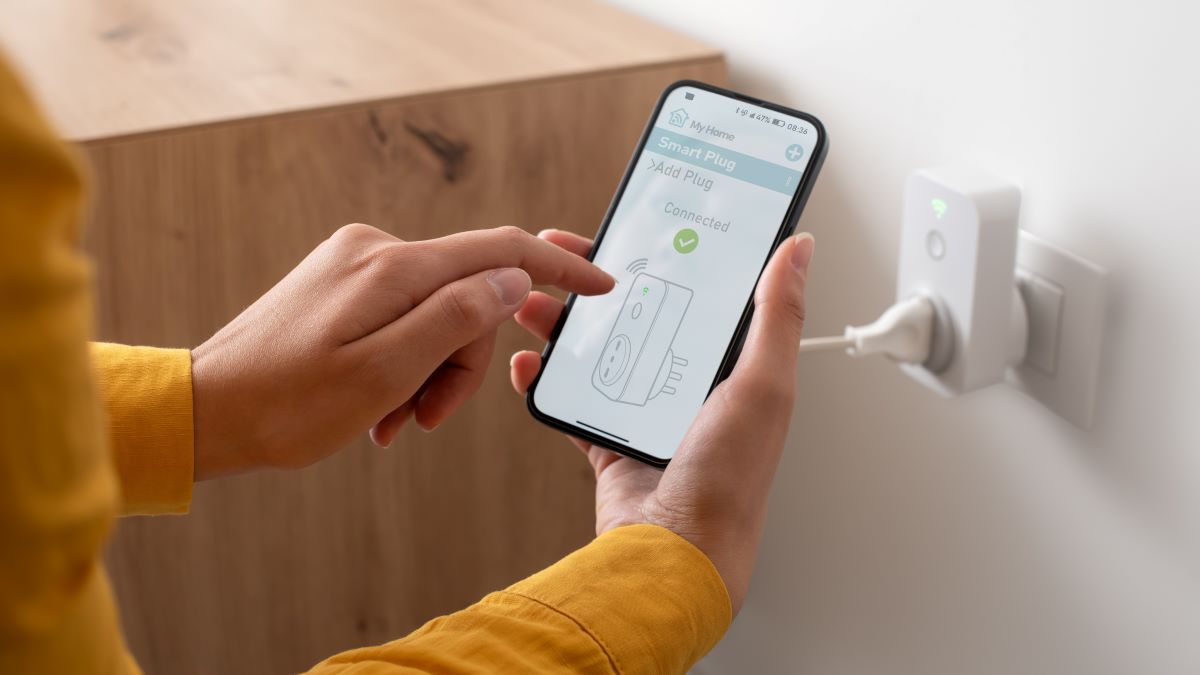
Want to save time, money, and energy all while adding convenience to your life? Something as simple as using smart plugs throughout your home can help achieve these goals.
The average U.S. household has roughly 65 devices plugged in around the clock, quietly drawing about 770 kilowatt-hours of phantom power every year, about enough to run a refrigerator for nine months. At today’s average residential electricity rate of 17.47 cents per kilowatt-hour, that’s roughly $135 a year wasted on devices nobody uses.
Smart plugs are the simplest, cheapest way to stop electricity waste. The arrival of Matter, the cross-platform smart home standard backed by Amazon, Apple, Google, and Samsung, and the maturing of the low-power Thread wireless protocol mean a smart plug bought today should outlast the app it shipped with and work across whatever smart home ecosystem you switch to next. This updated article covers what changed, what to look for now, and which models are worth installing in 2026.
This article contains affiliate links. If you purchase an item through one of these links, we receive a small commission that helps fund our work.
How Smart Plugs Work
A smart plug sits between a wall outlet and whatever you plug into it — a lamp, a coffee maker, a space heater, an entertainment center. Inside is a relay that opens or closes the circuit on command, plus a wireless radio that listens for those commands from your phone or a smart speaker. Some plugs add an energy meter that reports real-time wattage and cumulative kilowatt-hours back to the app.
Older smart plugs relied entirely on 2.4 GHz Wi-Fi and the manufacturer’s cloud services, which meant a server outage or a Wi-Fi hiccup could leave you unable to turn off your lamp. Matter-certified plugs communicate locally over your home network and continue working even when the internet drops. Thread-based plugs go further, forming a self-healing mesh network in which each plugged-in device acts as a relay for the next, extending range and cutting response time, so there’s less waiting for your smart home app to make your smart home work.
Smart plugs enable you to schedule when electrical devices go on and off throughout the day, whether you are home or not.
In late 2022, the Connectivity Standards Alliance released Matter 1.0, an open, royalty-free standard meant to end the era of locked smart home ecosystems. Matter-certified plugs pair with Apple Home, Amazon Alexa, Google Home, and Samsung SmartThings simultaneously, and it is configured by scanning a single QR code. No brand-specific app required, no separate hub for each platform.
Matter has matured quickly. Version 1.4 added home energy management as a first-class device category and introduced certified routers and access points that double as Thread border routers. Version 1.5, published in November 2025, expanded support to cameras, soil moisture sensors, and additional energy management features. As of 2026, Thread border router certification requires Thread 1.4, which lets security credentials to be passed between platforms, so a plug added through Apple Home can also be controlled from a SmartThings hub.
A Matter plug bought in 2026 should still work in 2030, even if you switch from an Amazon Echo to a HomePod or add a SmartThings station. By contrast, a proprietary Wi-Fi plug from a brand that goes out of business or sunsets its app is a paperweight. That’s a real consideration in a category where startups have come and gone — Wink, Insteon, and others left users stranded when their cloud services shut down.
How Much Energy They Actually Save
Smart plugs save energy only when you use them deliberately. The plug itself draws roughly 1 to 2 watts of standby power, so each one adds about $1.50 a year to your bill before it does any work. That cost is recovered many times over if the plug is used to schedule, monitor, or kill standby loads.
Three smart plug features do most of the work:
1. Cutting Standby Loads
The U.S. Department of Energy and the Natural Resources Defense Council estimate that standby power — the electricity devices draw when they’re switched off but still plugged in — accounts for 5% to 10% of residential electricity use, and as much as 23% in homes packed with always-on electronics. The NRDC estimates the national wasted energy spending at about $19 billion a year, or roughly $165 to $440 per household. Older devices, gaming consoles, set-top boxes, and audio equipment are the worst offenders.
A smart plug with energy monitoring lets you spot which devices are draining power in standby and either schedule them off overnight or kill the circuit entirely. One reviewer found an old gaming console drawing 50 watts in standby mode, which costs is about $45 a year at average rates.
2. Scheduling and Off-Peak Shifting
Scheduling a coffee maker, towel warmer, or seasonal lights to run only when needed is the simplest savings case. The bigger one is shifting flexible loads — EV chargers, dehumidifiers, pool pumps — to off-peak hours when many utilities offer lower rates and the grid is running on cleaner sources. Earth911’s reporting on vampire loads walks through which household devices are worth targeting first.
3. Smart Plugs can Catch Failures Early
This is the underrated benefit. A refrigerator that suddenly draws 40% more power, a sump pump that’s cycling too often, or a freezer running 24/7 because the door seal failed will all show up in an energy-monitoring plug’s history before they show up on your utility bill. For appliances that fail gradually, the plug is a cheap diagnostic tool.
2026 Performance Standards: What to Look For
The smart plug market has consolidated around a handful of meaningful specifications. A plug bought in 2026 should meet most of these:
UL or ETL safety certification. This is non-negotiable. Uncertified plugs from unknown brands have been linked to overheating and fires; in 2023 the CPSC announced a recall of Emporia smart plugs over electric shock hazards, and counterfeit electrical products remain a documented risk. Look for the printed UL or ETL mark on the device itself, not just the listing page.
15-amp / 1,800-watt rating. Standard for U.S. plugs and sufficient for nearly any single-outlet appliance. Be cautious about controlling space heaters with smart plugs, even at this rating; high-draw devices running for hours can stress the relay.
Matter certification. Look for the Matter logo (three arrows forming a triangle) on the plug packaging.
Real energy monitoring. Look for plugs that report actual wattage and cumulative kilowatt-hours, not estimated usage based on assumed device profiles. This is the feature that turns a smart plug into a savings tool rather than a convenience gadget.
Local scheduling stored on the plug itself continues running when the internet drops. Cloud-only schedules don’t.
Compact form factor. Older plugs were bulky enough to block the second outlet on a duplex receptacle. Slim designs from Kasa, TP-Link Tapo, and Eve now fit two per outlet.
Thread support is optional but useful. Thread plugs use less power than Wi-Fi, respond faster, and strengthen your mesh as you add more. They require a Thread border router, which is built into most current Apple, Google, and Amazon hubs.
Recommended Models for 2026
These picks are organized by use case rather than ranked overall. Prices and availability checked April 2026; verify before purchase.
Best Cross-Platform Pick: Kasa KP125M
The Kasa KP125M was one of the first Matter-certified plugs with proper energy monitoring and remains the best balance of features in 2026. It works with Apple Home, Alexa, Google Home, and SmartThings via Matter to track real-time and historical wattage in the Kasa app. It stores schedules locally and is compact enough to stack two in a duplex outlet. UL-certified, 15A/1800W. Around $20 per plug in 2-packs and 4-packs. The Chinese manufacturer, TP-Link, has had its U.S. market presence scrutinized for security concerns — worth considering if that’s a priority for your household.
Best for Apple Home and Thread Mesh: Eve Energy
Eve Energy (Matter) runs over Matter and Thread, joining a Thread mesh automatically to act as a router for nearby devices. Eve’s privacy posture is unusual: no cloud, no account registration, no telemetry, so you can use it without fear of digital surveillance of your home. The energy monitoring is granular enough to capture small changes in appliance behavior, and the app provides detailed cost projections. UL-certified, 15A/1800W. Premium-priced at closer to $40 per plug, but the Thread support and privacy stance justify it for households committed to a local-first smart home.
Outdoor Use: Wyze Plug Outdoor
For holiday lights, pool pumps, garden features, and string lights, the Wyze Plug Outdoor offers two independently controlled, weather-sealed outlets with energy monitoring, a built-in light sensor, and IP64 water resistance. It works with Alexa and Google Assistant, operating from -4°F to 120°F. Typically priced between $25 and $30. Note that Wyze has had several security incidents over the past few years, which is worth weighing for indoor cameras, but matters less for an outdoor plug controlling lights.
Simplest Alexa-Only Setup: Amazon Smart Plug
If your household is already deep in the Alexa ecosystem and you want zero-configuration setup, the Amazon Smart Plug pairs automatically with Echo devices and works through the Alexa app, with no separate setup required. While it provides n o energy monitoring, this Alexa-only costs around $20. The simplest option, but the least flexible if you ever switch ecosystems.
The Bigger Picture
Smart plugs are a small intervention. Cutting standby load might save a household $50 to $200 a year — meaningful, but a fraction of the savings available from more efficient HVAC, water heating, and appliance choices, which together account for the majority of residential electricity use. The case for smart plugs is less about that one number and more about the visibility they provide. Most households have no idea which devices are responsible for their bills until they get the data.
The category also has a larger-grid story. Smart plugs that can shift flexible loads to off-peak hours give utilities and grid operators tools to balance demand without building more peaker plants, particularly relevant as electrification of heating and transportation drives residential demand growth. Check out our conversation with ecobee’s Sarah Colvin, which to go deeper into how distributed smart devices are starting to function as grid resources, not just consumer conveniences.
What You Can Do
Audit before you buy. Walk through your home with a notepad and list devices that run on standby, such as entertainment systems, gaming consoles, printers, set-top boxes, microwaves with clocks, or anything with an LED that stays lit. Those are your first smart plug candidates.
Start with one Matter plug with energy monitoring. Use it as a diagnostic tool for a week on each of your top suspects before installing a full set. The data will tell you which loads are worth automating.
Build schedules around the loads you actually use. A coffee maker that runs from 6:30 to 7:30 a.m., an entertainment system that powers down at midnight, and holiday lights on a sunset-to-11 p.m. window. Aim for the plug to spend most of its time off.
Check for utility rebates. Many U.S. utilities offer rebates on energy-monitoring devices and smart home products that participate in demand-response programs. Your provider’s website or ENERGY STAR’s rebate finder is the place to start.
Don’t put high-draw appliances on smart plugs. Space heaters, window AC units, and other devices that draw near the 15A rating for hours at a time stress the relay and pose a real fire risk. Use a hardwired smart switch or a smart breaker for those instead.
Verify safety certification on the physical product. The UL or ETL mark should be printed on the plug itself. If it’s not, return it.
Editor’s Note: Originally written by Sandi Schwartz on March 29, 2023, this article was substantially updated in April 2026.
Today’s inspiration and photo come from Earth911’s Mitch Ratcliffe: “The first step to sustainability is seeing that there is no boundary between you and nature.” This early morning shot of Waughop Lake in Western Washington caught ground fog between a cloudy sky and a perfect reflection in the water below. There is no difference between us and nature, except for the artificial ones we create by imagining boundaries. When we see this essential connection and reverse the artificial disconnections created over millennia, people can imagine a future where we all thrive with a regenerated ecosystem.
Post and share Earth911 posters to help people think of the planet first, every day. Click the poster to get a larger image.
On average, each American throws away about 81 pounds of clothing, shoes, and household textiles every year. That’s roughly a hamper full every month for each person. For a family of four, this adds up to over 320 pounds of textiles tossed or donated each year. Most people don’t realize how much they discard until they actually weigh it over a year.
The number comes from EPA’s most recent, 2018 sustainable-materials accounting, which puts U.S. post-consumer textile generation at roughly 17 million tons and the recovery rate at 14.7 percent. While the EPA has discontinued its reporting, ThredUp’s 2025 Resale Report and the Apparel Impact Institute updates suggest per-capita generation has continued rising. Most of what falls inside that 14.7 percent is downcycled into industrial wiping rags or insulation, not turned into new clothing.
What “donating” actually does
The mental model in most American closets is that the donation bin is the recycling bin. It isn’t. Goodwill, Salvation Army, and the secondhand chains sell what they can on the resale floor, typically only 10 to 30 percent of the clothing they accept as donations. The rest is sold by the pound to textile graders, who export the higher grades to wholesale markets in West Africa, Eastern Europe, and Central America, bale the remainder as wiping rags or insulation feedstock, and landfill the rest.
That export pipeline is under pressure. Ghana, Kenya, and Chile have moved to restrict or refuse low-grade used-clothing imports, citing the volume of unsellable fast-fashion synthetics arriving contaminated and culturally mismatched. The January 2025 GAO report on textile recovery flagged the offshore-disposal pathway as structurally fragile and quietly subsidized by U.S. consumers who treat donation as absolution.
The amount of clothing waste is closely tied to price. Since 1995, clothing prices in the U.S. have dropped by over 30 percent, even as other costs have gone up. This is mainly due to ultra-fast-fashion brands like Shein and Temu. Many clothes, especially those made from polyester-spandex blends, aren’t made to last, be repaired, or recycled. They’re often thrown out after just six wears. According to McKinsey’s State of Fashion report, the average piece of clothing is now worn only seven to ten times before being discarded, much less than in the past.
The household bill
The value of clothing can change a lot, so it’s harder to put an exact dollar amount on waste compared to food. Still, the Bureau of Labor Statistics says the average U.S. household spends about $1,900 a year on clothes. If 30 to 40 percent of those clothes are thrown out within two seasons, that means a household is tossing $570 to $760 worth of new clothing every year.
The environmental impact of clothing is even bigger before it reaches your closet. The UN Environment Programme says fashion is responsible for 2 to 8 percent of global greenhouse gas emissions and 20 percent of industrial water pollution. Making just one cotton t-shirt uses about 2,700 liters of water, which is as much as one person drinks in two and a half years.
The policy lever finally arriving
For years, there were no rules holding clothing producers responsible for textile waste in the U.S. That changed with California’s SB 707, the Responsible Textile Recovery Act of 2024, which is the first law of its kind in the country. CalRecycle chose Landbell USA to run the program starting February 27, 2026. Brands selling clothes and household textiles in California will have to help pay for collection and processing, with requirements rolling out through 2030. Other states like New York, Massachusetts, and Washington are considering similar laws that would make clothing manufacturers cover the costs of fast fashion waste.
Fiber-to-fiber recycling — the missing technology piece — is moving, slowly. Circ, Syre, and Reju are at pilot or first-commercial scale. Renewcell, the most visible name in cellulosic recycling, filed for bankruptcy in early 2024 and has since been acquired and restarted as Circulose. Textile recycling technology is real, but the economics of the business still depend on virgin-fiber prices going higher, the development of a sorting infrastructure, and the kind of policy support SB 707 is now beginning to provide.
What You Can Do
At home and while shopping:
Focus on slowing down how often you buy new clothes, not just buying less. Choose better quality items and wear them for longer. If you double how long you wear each garment, you can cut its total emissions by about half.
Try to fix your clothes before replacing them. Local tailors, Repair Cafés, and repair programs from brands like Patagonia, Nudie Jeans, and Eileen Fisher can help you get more use out of what you already have.
Be honest when sorting your donations. Clean, up-to-date, and resaleable items should go to local thrift stores. Items that are stained or torn should go to textile-specific takeback bins at places like H&M or Madewell, where they can be properly processed.
Before putting anything in your curbside bin, use Earth911’s recycling search to find local textile drop-off locations by ZIP Code. Most curbside bins don’t accept clothing or textiles.
In your community:
Support textile extended producer responsibility (EPR) laws in your state. SB 707 is the example to follow, and the next few states to pass similar laws will help decide if this approach can grow.
Ask retailers to clearly label fiber content and recyclability. The EU will require digital product passports by 2027, and U.S. brands selling overseas will have to comply. Whether these labels appear in the U.S. depends on consumer demand.
Support and volunteer at local repair and reuse programs. Repair Cafés, Buy Nothing groups, and clothing swaps help reduce waste before it starts, which is the most effective way to make a difference.
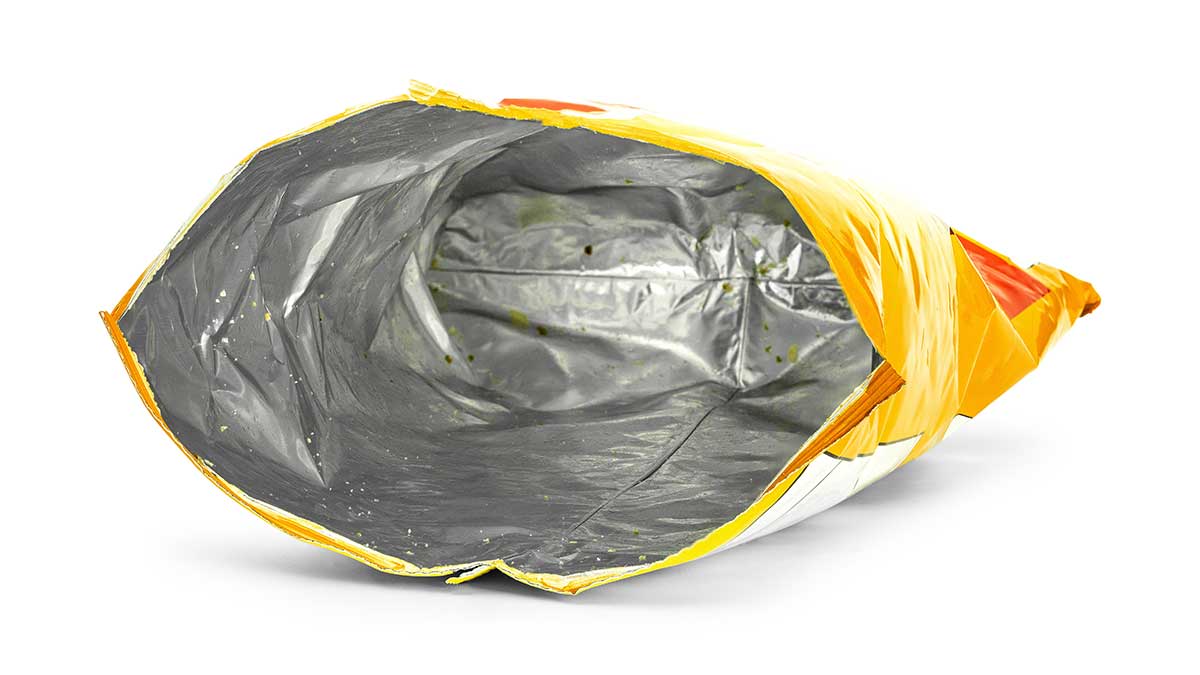
The bag your potato chips come in is seven layers deep. Metalized polyester, a plastic coated with a thin layer of metal, keeps out light. Polyethylene, a common plastic, holds the seal. A printed film provides the label. An oxygen barrier, a layer that blocks oxygen, helps prevent spoilage. There’s another sealant (a layer that helps bond the package), another structural layer for strength, and a food-contact inner skin that directly touches the chips. Each of those layers solves a problem for the manufacturer: preserving freshness, supporting branding, and extending shelf life. Together, these layers are a package no U.S. recycling system can recover for future use.
To put the potato chip bag problem in context, consider American packaging waste as a whole. Americans generated roughly 82.2 million tons of containers and packaging in 2018, about 28 percent of all municipal solid waste, according to the EPA’s most recent national accounting. Plastic packaging contributed more than 14.5 million tons of the total. Those figures are now seven years old. EPA has not issued an updated Facts and Figures report since, even as e-commerce shipments and single-serve formats keep multiplying the number of small, lightweight, hard-to-recycle packages moving through American homes.
The freshest picture comes from California, which is now doing what the federal government has stopped doing. CalRecycle’s SB 54 Material Characterization Study, conducted by Cascadia Consulting Group at 16 landfills in early 2025, found that about 8.5 million tons of single-use packaging and foodware were buried in California landfills in 2024, roughly 21 percent of everything the state landfilled that year. Plastic accounted for about 3.1 million tons of that covered material. Flexible and film plastics — the category that includes chip bags — turned up across all sampling sectors, from single-family curbside collection to commercial routes and self-haul loads. One state, one year, and the composite pouch is everywhere the waste auditors looked.
While composite pouches present a recycling challenge, some rigid plastics fare better. The rigid side of the plastic waste stream — PET water bottles, HDPE milk jugs, some polypropylene tubs — has a functioning recovery system. NAPCOR’s 2024 PET Recycling Report put the U.S. PET bottle collection rate at 30.2 percent; over 70 percent of bottles that reach a curbside bin actually are sorted, baled, and reprocessed into new material.
The situation shifts again when looking at flexible packaging specifically. Flexible bags, pouches, wrappers, and refill sacks that have quietly taken over the grocery aisle are a different story. The U.S. Plastics Pact’s most recent impact report reported a combined U.S. plastic packaging recycling rate of 13.3 percent. Flexibles within that number are a rounding error. Most estimates put flexible-packaging recycling in the United States below 2 percent.
Greenpeace’s 2022 assessment concluded that no type of U.S. plastic packaging meets the Ellen MacArthur Foundation’s definition of ‘recyclable,’ a 30 percent recycling rate across a region of 400 million people.
Why does the material resist recovery
Three things make flexible plastic packaging structurally hard to recycle:
Flexible plastic packaging is not made of a single resin but is often three to nine layers of different plastics and metals bonded together. Mechanical recycling requires a clean, mono-material feedstock, and these laminates cannot be separated into their constituent materials.
Flexible bags are too light for materials recovery facilities (MRFs) to sort effectively. They tangle in screens intended for separating paper from containers, and often jam equipment, prompting shutdowns for removal.
It has no domestic end market. Before China’s 2018 National Sword policy, a ban on imports of many types of foreign waste, much of the U.S. flexible-packaging stream was exported. That relief valve closed. Domestic reprocessing capacity (U.S.-based facilities to clean and reuse the material) for multi-layer flexibles has not been built because no private processor can make the economics work at the price a commodity market will pay for the bale (a compressed block of collected plastic packaging).
Composite film is what industry insiders call a “residual cost material”—meaning the combined cost of collecting, transporting, and processing it exceeds what any buyer will pay for the recovered commodity. The private market will not recycle it.
What store drop-off actually does
For a decade, the polite answer to “what do I do with this bag?” has been: take it to the front of your grocery store. The bins marked for plastic bags and film — operated by the Wrap Recycling Action Program (WRAP) and branded by retailers including Walmart, Kroger, and Target — accept clean polyethylene films: grocery bags, bread bags, dry-cleaning bags, produce bags, and some case-pack overwrap, but not chip bags and other packaging made with composites that combine plastics, paper, and metals.
Most of the polyethylene that does get captured at drop-off goes into composite lumber — Trex decking is the dominant end market, which is a form of downcycling rather than a closed-loop system. It’s a better outcome than landfill. It is also not what the word “recyclable” on the package implies.
Advanced recycling: real, overstated, and controversial
When mechanical recycling cannot process a feedstock, industry increasingly points to “advanced” or “chemical” recycling, which includes pyrolysis, gasification, and solvent-based depolymerization, as the solution for films and flexibles. The promise: break the polymer down to monomer or fuel-feedstock molecules that can be re-polymerized or combusted.
The promise is technically real, though many critics question its promised results. The scale is not yet. Most operating U.S. pyrolysis facilities produce pyrolysis oil sold as fuel, which, from a climate perspective, is combustion with extra steps. A 2023 NRDC analysis found most “advanced recycling” projects in the U.S. are either producing fuel rather than new plastic or operating at a pilot scale. Facilities designed for polymer-to-polymer chemical recycling, such as Eastman’s Kingsport, Tennessee, plant, and Alterra’s Akron facility, process a small fraction of national flexible-packaging generation.
Twenty-five states have now classified advanced recycling as “manufacturing” rather than waste management, easing permitting requirements and exempting the facilities from solid-waste oversight (regulatory supervision for handling waste). Environmental-justice advocates (groups focused on pollution impacts on vulnerable communities) argue the reclassification moves emissions and solid-residue handling out from under the permitting regime designed to protect fenceline communities (neighborhoods directly next to industrial sites). The argument is not settled.
The EPR turn
The meaningful change in the flexible-packaging story over the past eighteen months has not come from new recycling technology. It has come from policy: seven U.S. states now implement Extended Producer Responsibility laws for packaging.
Oregon’s program went operational on July 1, 2025, with the Circular Action Alliance serving as the producer responsibility organization (PRO) that manages the program, supported by roughly $200 million in producer funding for the first year. The state plans to build out 144 PRO-operated recycling collection centers across the state. Colorado, California, Minnesota, Maryland, Washington, and Maine are at various stages behind Oregon, with California’s SB 54 program — the most expansive of the group — scheduled to be fully activated in 2027.
What EPR changes, in plain terms, is that the producer — the brand that chose the seven-layer laminate for branding and shelf life reasons — now pays for the collection and recovery of the package after a consumer uses it. The fees are eco-modulated: simpler, mono-material, more-recyclable packaging pays less; hard-to-recycle multi-layer flexibles pay more. Over time, the fee differential is intended to push producers toward redesigning packaging.
Why we’re paying for the old ways
The externalities the household pays for without seeing them, from flexible packaging specifically:
Landfill tipping fees. At the Environmental Research & Education Foundation’s 2024 weighted-average U.S. tipping fee of $62.63 per ton, the flexible-packaging share of the ~14 million tons of plastic packaging generated annually represents hundreds of millions of dollars in direct municipal disposal cost funded through utility bills and solid-waste budgets.
MRF fire risk. Flexible packaging is the stream that most commonly carries lithium-ion batteries — from disposable vapes, earbud cases, and lithium cells — into the recycling system. Fire Rover’s 2024 annual review reported that publicly tracked MRF and transfer-station fires rose roughly 20 percent year over year, with total damage and operational impact estimated at $1.2 billion annually. Much of that cost is passed through to municipalities in the form of higher processing fees.
Marine and microplastic pollution. Lightweight flexible packaging is disproportionately represented in litter and marine-debris inventories because it is light enough to blow out of collection vehicles, bins, and landfills. Microplastic shedding from degrading film is a growing concern for surface waters and the food chain.
Incinerator air quality. When flexibles are combusted in waste-to-energy plants, the emissions include PM2.5 particles, hydrogen chloride from chlorinated layers, and metals from inks and lamination, which disproportionately fall on the communities that host those plants. Sixteen of the twenty largest U.S. incinerators operate in majority or above-average communities of color.
None of these costs appear on the grocery receipt. Yet, you’re paying these fees until EPR programs force producers to do so.
What You Can Do
For individuals and households, you can make these choices:
Buy the format that’s actually recyclable where you live. Rigid containers — a jar, a bottle, a tub — can be recycled; flexible pouches in most places cannot. When the product is available in both formats, the rigid is the better environmental choice, even when weight is accounted for.
Separate clean polyethylene film for store drop-off. Grocery bags, bread bags, dry-cleaning bags, produce bags, and case-pack overwrap are the films that the WRAP system actually handles. Anything with foil, zippers, or mixed layers should not go in the drop-off bin.
Do not put flexible packaging in your curbside bin. In most municipal systems, composite packaging is treated as contamination that reduces the value of the entire load.
At the community and policy level, you can get involved:
Support packaging EPR in your state. Seven states have laws; a dozen more have active bills. The programs work only when constituents push, and they push when the programs pass.
Ask brands directly. Eco-modulated EPR fees move producers toward better design only if producers perceive consumer pressure alongside the fee. Social-media and direct-contact campaigns targeting specific CPG brands have moved packaging decisions before and will again.
Be skeptical of “chemical recycling” claims. When a brand points to a pyrolysis partnership as evidence of circular packaging, ask which facility, what output, and at what scale relative to the package volume the brand puts into the market.
More than 25,000 square miles of the U.S. Great Basin, an area nearly twelve times the size of Yellowstone, has flipped from native sagebrush to invasive annual grassland over the past three decades, much of it without ever burning. The change is amplifying the Western fire season. Researchers using satellite data found that fire is no longer required to convert these landscapes; once the grasses arrive, the fire follows.
Grasses occupy a unique position in our climate. They are everywhere — pastures, lawns, prairies, savannas, roadsides — and they are easy to overlook precisely because they are so familiar. However, the world’s grasses are responding to warmer temperatures, shifting precipitation, and rising atmospheric carbon dioxide in ways that are reshaping ecosystems and fire regimes from the Mojave Desert to the slopes above the fire-scorched community of Lahaina in Hawaii.
The story of climate change and grass is, increasingly, a story about what burns, when, and how often.
A different kind of fuel
Wildfire science has long focused on forests, but the dominant fuel type driving change in the American West today is not timber. It is grass, particularly fine, dry, non-native annual grass that cures by early summer and carries flame between shrubs that would otherwise be too widely spaced to burn together.
Cheatgrass greens up earlier than native bunchgrasses, drawing down soil moisture and nutrients before native species start to grow. It then dies in early summer, leaving a continuous, dry, highly ignitable mat across landscapes that historically had patchy fuels and infrequent fires. The Bureau of Land Management found that areas invaded by cheatgrass (Bromus tectorum) are roughly twice as likely to burn as uninvaded land, and that cheatgrass now dominates or is a meaningful component of vegetation on roughly 52 million acres of the Intermountain West, up from roughly 31.5 million acres mapped in 2000 using satellite imagery.
A 2013 study, later supported by broader analyses, found that fire return intervals are now two to four times more frequent in cheatgrass-dominated landscapes than in intact sagebrush steppe. In 2019, ecologist Emily Fusco and her colleagues published the first national-scale analysis of the problem in Proceedings of the National Academy of Sciences. They looked 12 invasive grass species across 29 U.S. ecoregions, and found that eight significantly increased fire occurrence by up to 230 percent, and six increased fire frequency by up to 150 percent.
“This work shows that invasive species are one of the ‘big three’ ways that people are changing fire regimes,” senior author Bethany Bradley told reporters when the study was published. “Climate change more than doubles the likelihood of fire, human ignitions triple the fire season, and now we can add invasive species fueling fires.”
How climate change rewires the grass life cycle
Grasses are unusually responsive to climate change. Three variables — temperature, the timing and form of precipitation, and atmospheric CO₂ — interact in ways that often favor invasive annuals over the perennial natives they displace.
A decade-long warming experiment published in Frontiers in Plant Science by the U.S. Geological Survey tracked cheatgrass through three climate manipulations on the Colorado Plateau. Plots warmed by 4°C above ambient temperatures saw the vegetative growing season shorten by about 12 days; at 2°C, by about 7 days. Cheatgrass compressed its life cycle, finishing seed production and dying earlier in the summer. That sounds like bad news for cheatgrass, until you remember that an earlier, drier death means earlier, drier fuel, set down before the peak of the fire season.
Cheatgrass has another advantage native species lack: phenotypic plasticity. The Frontiers researchers concluded that the plant’s “phenotypic plasticity … may make the plant particularly adept at dealing with extreme interannual climate variation,” allowing it to respond to shifting climate cues that native bunchgrasses cannot. When native grasses fail to keep up with earlier springs and longer dry seasons, cheatgrass moves into the gap, adding fuel for fires.
Precipitation patterns matter as much as temperature. A long-term study in Global Change Biology of more than 10,000 wildfires across the Great Basin between 1980 and 2014 found that area burned in any given year was strongly predicted by precipitation in the previous one to three years. Wet years build fuel; the next dry year burns it. As the climate delivers more whiplash between wet winters and intense summer drought, the cycle accelerates.
Rising atmospheric CO₂ adds another wrinkle. Grasses use one of two photosynthetic pathways — C₃ (most cool-season grasses, including cheatgrass) or C₄ (most warm-season prairie grasses) — and both grow more efficiently as CO₂ climbs. A study in Nature examined a Wyoming CO₂ enrichment site, finding that elevated CO₂ improved water-use efficiency enough to partly offset the drying effect of warming;later research showed similar benefits for C₄ grasses. In short, more CO₂ means more grass, and more grass means more fuel.
Grasslands will not simply grow more biomass and burn more. Nature’s rules governing which grasses dominate where, and when each one cures, are being rewritten in real time. The species best equipped to exploit the new rules are, very often, the ones accelerating the grass-fire cycle.
Lahaina and the human-grass-fire cycle
On August 8, 2023, downed power lines sparked dry vegetation on a fallow hillside above Lahaina, Maui. By nightfall the fire had killed at least 102 people and become the deadliest U.S. wildfire in more than a century. A Washington Post investigation later confirmed the inferno began on land covered in non-native grasses, relics of sugar plantations that closed in the 1990s.
Hawaiʻi has experienced a roughly 400 percent increase in the typical area burned annually over the past century, and roughly a quarter of the state’s land area is now covered in flammable invasive grasses, according to the Hawaiʻi Invasive Species Council. Guinea grass (Megathyrsus maximus), buffelgrass (Cenchrus ciliaris), molasses grass, and fountain grass are the dominant culprits — all introduced for pasture or ornament, all now spreading on lands no one is actively managing.
“The main factor driving the fires involved the invasive grasses that cover huge parts of Hawaii, which are extremely flammable,” Clark University climatologist Abby Frazier told ABC News in the days after the fire. University of Hawaiʻi fire scientist Clay Trauernicht had been warning about exactly this scenario for years; in a 2018 letter referenced in Smithsonian Magazine, he wrote: “Just like with climate change, we know what steps will reduce the risk of wildfire. But actually taking these steps will require reinvesting in and, frankly, reimagining our individual and collective responsibility for the larger landscape.”
The Lahaina disaster is now considered a defining example of what ecologist Emily Fusco and her co-authors call the “human–grass–fire cycle,” the recognition that invasive grasses, human ignition sources, and a warming, drying climate are not separate problems but a single coupled system. People plant or spread the grasses (often inadvertently). The grasses build continuous fuel beds. Climate change extends the burn season. Human infrastructure provides the spark. The fire returns the landscape to grass-favored conditions, and the cycle tightens.
All the factors are rising, increasing the chance that a region will see a grass-fed fire.
Beyond the West
It would be reassuring if this were a regional problem. It is not. The U.S. Geological Survey has documented invasive grasses altering fire cycles in the Midwest, Northeast, and Southeast as well. Cogongrass (Imperata cylindrica) is reshaping fire behavior in Southern pine forests; silk reed (Neyraudia reynaudiana) more than tripled fire frequency in the South Florida areas Fusco’s team studied. Mediterranean grass (Schismus barbatus) tripled fire occurrence in the Sonoran Desert.
Native grasslands face their own pressures. C₄ tallgrass prairie species like big bluestem (Andropogon gerardii) differ markedly in drought tolerance from co-occurring species like little bluestem (Schizachyrium scoparium); during the Dust Bowl of the 1930s, little bluestem replaced big bluestem across much of the tallgrass prairie, driving the kind of species reshuffling that more frequent drought is likely to drive again.
A 2025 study used species distribution models for 37 grasses and projected that C₄ species will retain higher habitat suitability in a warmer future while many C₃ species will decline. Because the C₄ species projected to take over tend to be less flammable than the C₃ species they replace, the same study found elevated CO₂ raised water-use efficiency enough to lower leaf-level flammability for some species, a rare piece of cautious good news in a literature dominated by bad.
What can be done
There is no clean fix for a feedback loop, but there are well-tested intervention points in grasslands management. Federal agencies are scaling up restoration. The BLM launched the Restoration for Resilience program, funded through the Bipartisan Infrastructure Law and Inflation Reduction Act (both laws’ funding is under attack), is targeting 21 priority landscapes across the West for invasive species removal and native reseeding. Researchers at the University of Wyoming are leading the IMAGINE partnership to translate management science into guidance for land managers facing annual grass invasion.
On private land and at the wildland-urban interface, the highest-leverage actions are simpler than they sound: maintain native or low-fuel vegetation, remove invasive grass thatch before fire season, and create and maintain fuel breaks. Pre-emergent herbicides applied promptly after fires can give native perennials a fighting chance; without that intervention, burned landscapes in cheatgrass country tend to convert permanently to annual grassland.
Maintain defensible space. If you live in a fire-prone area, keep grass mowed below four inches within 30 feet of structures and remove cured fuels before the dry season.
Resist the urge to plant non-native ornamentals. Fountain grass, pampas grass, and several other landscape favorites are listed as moderate to high fire-hazard species and often escape cultivation.
Replant natives after disturbance. Whether the disturbance is fire, construction, or removal of an invasive stand, native perennial bunchgrasses re-establish slowly and benefit from active reseeding.
Support landscape-scale work. Most invasive grass control is too big for any single landowner. Support local fire-safe councils, conservation districts, and state-funded restoration programs that operate at the watershed or basin scale.
Female mud snails are developing male reproductive organs near marinas. In Florida, alligators living in lakes contaminated with pesticides are being born with smaller genitals and disrupted hormones. Sea turtle populations are becoming almost entirely female as nesting sands get warmer. The same types of chemicals responsible for these wildlife changes are now found in human placentas, testes, and semen. A new peer-reviewed review brings all of this evidence together for the first time.
A cross-species review published April 23 in npj Emerging Contaminants, led by Oregon State University toxicologist Susanne Brander and Mount Sinai researcher Shanna Swan, brings together evidence from many animal groups, including invertebrates, fish, birds, reptiles, amphibians, marine mammals, rodents, and humans. The main finding is that pollution and climate change together are now the biggest single cause of biodiversity loss. The chemicals at the heart of this problem—phthalates, bisphenols, PFAS, and microplastics—are lowering fertility and reproductive success in many species, including humans.
Of more than 140,000 synthetic chemicals registered under the EU’s REACH chemical safety regulation, only about 1% have been properly tested for safety, and over 1,000 are known endocrine-disrupting chemicals (EDCs). Each year, more than 2,000 new chemicals are introduced worldwide. The review’s authors say these chemicals can be effective at concentrations so low they are “analogous to a whisper that is powerful enough to redirect a hurricane.” Because the endocrine system is very similar across vertebrates, scientists have used fish to predict effects in mammals. This is why the human findings in the review are not surprising when compared to what has happened in wildlife.
The article provides new clarity on how climate change and chemical exposure interact. Warmer temperatures have been shown to worsen endocrine disruption. In some fish, heat combined with EDCs changes sex ratios more than either factor alone. At the world’s largest green turtle rookery, almost all hatchlings are now female. In humans, an 80-year study of U.S. birth data found that hotter weather is linked to fewer conceptions. Other studies show that higher temperatures are connected to lower semen volume, sperm count, and sperm quality.
Plastics aren’t inert and “BPA-free” doesn’t mean safe
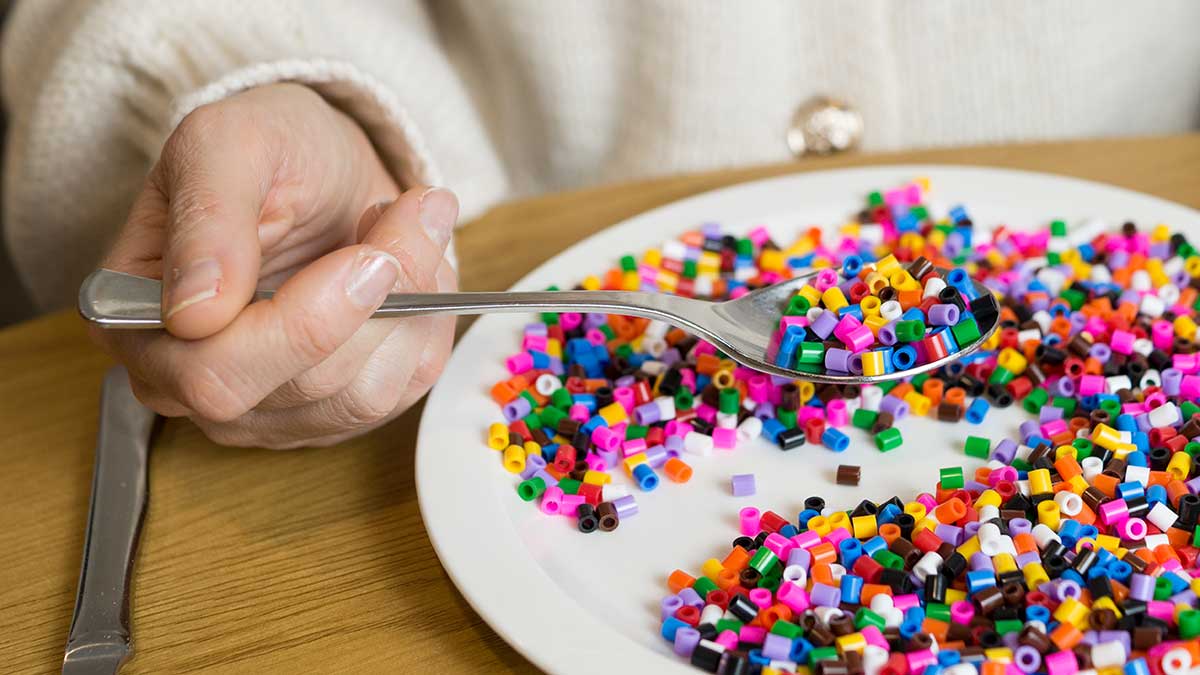
The article pays special attention to microplastics and nanoplastics, which were only recently recognized as reproductive toxicants. In 2021, researchers found microplastics in human placentas. In 2023, another study found microplastics in human testis and semen samples. A follow-up study found microplastics in every canine and human testis examined, with higher levels in humans. Several studies in the review show that polystyrene microplastics lower fertility, fertilization, and hatching rates in fish, and these effects can last for generations.
The issue of chemical substitution is important here as well. Older PFAS chemicals like PFOA have mostly been replaced, but their substitutes, such as GenX chemicals and other similar compounds, show equal or even stronger estrogen-like effects in lab tests. BPA substitutes like BPS and BPF act almost the same way on hormones. The review also points out that bio-based plastics like polylactic acid (PLA) caused reproductive harm in earthworms, similar to regular polyethylene. This pattern of “regrettable substitution,” where a banned chemical is swapped for a similar, unregulated one that causes the same harm, is now well documented.
The federal regulatory response is the focus of much controversy. EPA finalized the first national drinking water limits for six PFAS in 2024, setting PFOA and PFOS at 4 parts per trillion. In May 2025, the agency announced it would keep those two limits but extend the compliance deadline to 2031, and eliminate limits on four other PFAS. In January 2026, the D.C. Circuit denied EPA’s request to summarily vacate those four limits; final briefs are due this spring, and a decision is expected in the second half of 2026. While that plays out, individual filtration is the only consumer-side lever that actually removes PFAS from the water already in the tap.
What you can do to reduce your family’s exposure
Individual actions alone cannot solve a problem this big. The review’s main point is that we need broad regulatory changes for whole classes of chemicals, not just one at a time. Still, you can lower your own exposure, and the most effective changes come from a few key steps. The list below is ordered by impact, not by how easy the steps are.
Drinking water: this is where to start
Start by checking your water. Enter your ZIP code into EWG’s Tap Water Database to find out what has been found in your local water supply. You can also use the EPA’s PFAS Analytic Tools for more information. If you have a private well, have it tested by an EPA-certified lab. Mail-in kits from SimpleLab and Cyclopure cost between $85 and $300.
Use a filter for your tap water. Choose filters that are certified to NSF/ANSI 53 (carbon-based) or NSF/ANSI 58 (reverse osmosis) for reducing PFAS. Be aware that “tested to NSF standards” is just a marketing term that can be abused, so check that the filter is actually certified. Reverse osmosis and granular activated carbon are proven to work, but most pitcher and refrigerator filters are not certified for PFAS.
Change filter cartridges on time. EWG senior scientist Tasha Stoiber points out that a used-up filter can release more PFAS than untreated tap water. Keeping up with the maintenance schedule is essential for protection.
Avoid using bottled water as a long-term fix. A 2024 Columbia University study found about 240,000 plastic particles per liter of bottled water, which is 10 to 100 times higher than earlier estimates. Around 90% of these particles are nanoplastics.
Food contact materials
Do not heat food in plastic containers. Phthalates are more likely to leach out when heated. Use glass or ceramic in the microwave. If you plan to reuse plastic food containers, avoid putting them through the dishwasher’s high-heat cycle.
Reduce takeout and fast food when possible. A 2016 study found that people who ate more fast food had higher levels of phthalate metabolites in their urine, likely due to plastic gloves, wraps, and containers. Maine will ban PFAS in food packaging starting in May 2026, with a wider ban by 2030. Other states are following Maine’s lead, but for now, eating fewer plastic-wrapped meals means less exposure.
Replace nonstick cookware when it becomes chipped or scratched, as it is damaged. PTFE-coated pans can release particles into food. Stainless steel, cast, good, long-lasting alternatives. Also, nonstick pans are not ideal for high-heat cooking like searing.
Store food in glass or stainless steel containers. This is the easiest change you can make. Glass jars and stainless containers do not release microplastics or phthalates and can last for decades. Replace plastic containers only when they break or stain, instead of buying more. products
Be cautious when you see the word “fragrance” on a product label. Diethyl phthalate (DEP) is often used as a fragrance carrier and does not have to be listed separately under U.S. labeling rules; it just appears as “fragrance” or “parfum.” Choose products that list all fragrance ingredients or are certified EWG VERIFIED or EPA Safer Choice.
Plug-in air fresheners are especially high in phthalates, so the easiest solution is to remove them and use ventilation instead.
Get rid of vinyl shower curtains. The “new shower curtain” smell comes from phthalates being released from PVC. Cotton, hemp, and PEVA shower curtains are easy to find and cost about the same as vinyl ones.
Check your cleaning products for parabens, triclosan, and APEs. EWG’s Guide to Healthy Cleaning rates products based on an EDC database. Laundry detergent and fabric softener residues stay on clothes and touch your skin for hours, so exposure can add up quickly.
Be careful with plastic toys labeled with codes 3, 6, or 7, especially for young children who put toys in their mouths. Code 3 is PVC, which contains phthalates. Code 6 is polystyrene. Code 7 is a general category that often includes polycarbonate, a source of BPA. Safer alternatives include wood, natural rubber, organic cotton, and silicone.
Stop pesticides at the property line.
Think twice before using pyrethroid-based treatments for your home or lawn. Bifenthrin, one of the most common pesticides in the U.S., has been shown to disrupt estrogen receptors in fish at levels often found in urban runoff after rain. The review also notes that people with higher levels of pyrethroid metabolites in their urine tend to have lower semen quality and more sperm DNA damage. If you hire a pest control service, ask about the active ingredients they use and request safer alternatives.
Buy organic for the produce items with the highest pesticide loads. EWG’s Shopper’s Guide to Pesticides in Produce (the “Dirty Dozen” / “Clean Fifteen”) lets you prioritize organic where it matters most, rather than treating the produce aisle as all-or-nothing.
Where individual action stops working
The authors of the review make it clear that consumer choices alone are not enough. These chemicals are found even in Arctic rainwater, can cross the placenta, and last for centuries in the environment. The solution they propose is coordinated regulatory action: a strong Global Plastics Treaty that targets harmful chemicals, not just plastics in general; regulations that cover whole classes of chemicals rather than one at a time; and rules that make polluters responsible for cleanup costs, rather than passing those costs to utilities and customers.
The reason the review looks at different species is to show that what happens to snails, alligators, and seabirds also happens to humans, just at a different pace. Wildlife data have been warning us for 40 years, and now human data are starting to show the same patterns.
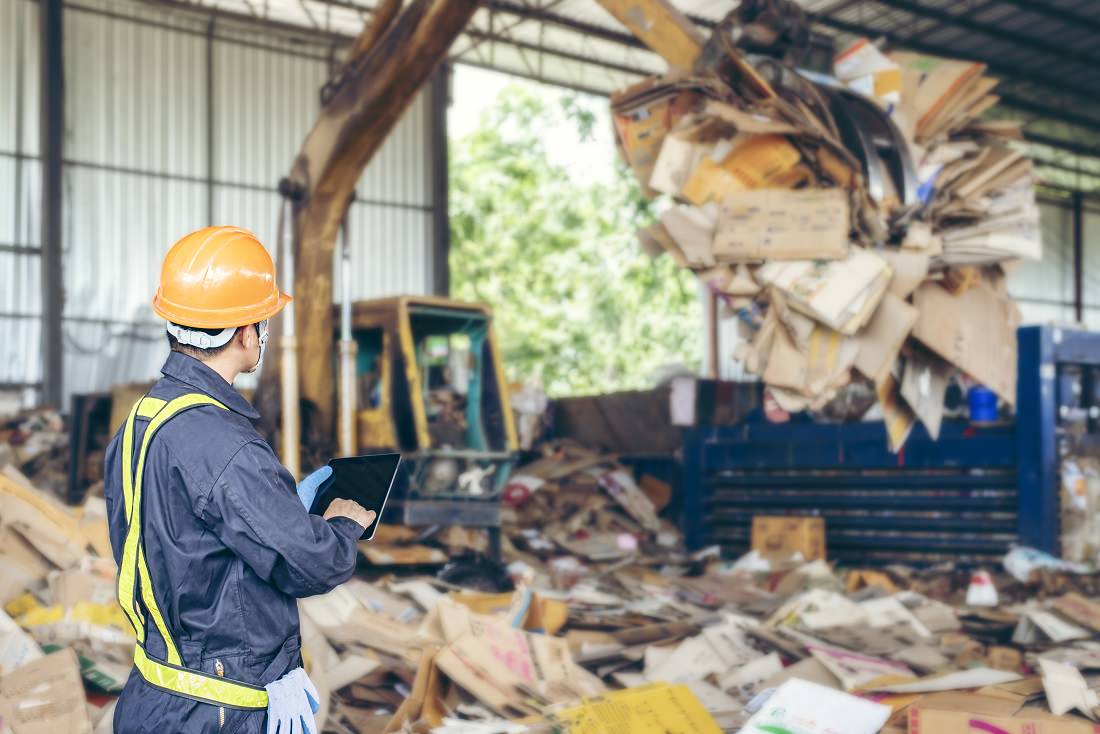
Corrugated cardboard makes its way from warehouse to mill in about two weeks. In contrast, plastic packaging can take centuries to break down, and even the most optimistic estimates say only 5 to 6 percent of U.S. plastic is actually recycled. This difference highlights both the promise and the challenges of creating a circular packaging economy.
Back in April 2020, when this article first appeared, the recycling industry was still struggling after China banned imported recyclables in 2018. Around that time, DS Smith opened its first North American recycling plant in Reading, Pennsylvania, marking the first closed-loop corrugated packaging system. Five years later, the circular packaging sector has become a $245 billion global market and is expected to nearly double by 2034.
However, growth does not always mean true circularity. The gap between what companies promise and what recycling systems actually deliver is under more scrutiny than ever.
How the Recycling Loop Works and Where It Breaks
Many people picture recycling as a simple process: items go from the curbside bin to a materials recovery facility (MRF) and then become new products. In reality, the process is more complicated. Mixed curbside collections have about a 25 percent contamination rate in baled recyclables from MRFs, so more sorting is needed before they can be turned into new materials. In the past, this extra sorting was often done cheaply in other countries.
After China stopped buying U.S. recyclables in 2018, the U.S. was left with about a third of its collected materials and no place to send them. This led to a crisis: many communities lost their recycling programs, and it became obvious that the U.S. needed more domestic processing and cleaner materials from better recycling programs.
Paper and corrugated cardboard are still the big success stories in circular packaging. In 2024, the U.S. recycled over 33 million tons of cardboard, or about 90,000 tons each day, reaching a recovery rate between 69 and 74 percent, according to the American Forest & Paper Association. The share of recycled paper used at U.S. mills has grown from 36.6 percent in 2005 to 44.4 percent in 2024.
Plastic is still a major challenge. Only about 5 to 6 percent of U.S. plastic packaging is recovered and made into new packaging or products.
A Growing Market With Caveats
Europe is leading the way in recycling growth, thanks to strict regulations. North America is catching up through corporate ESG commitments, extended producer responsibility programs, and state-level policies.
Paper-based packaging leads in circular packaging revenue, making up about 40 percent of the global market in 2024. This is due to advances in fiber recovery technology and the fact that consumers are used to recycling cardboard. Reusable and refillable packaging is growing quickly, but it is still a small part of the market. As a result, the food and beverage sector makes up nearly 47 percent of circular packaging demand, and packaging companies are teaming up with recyclers to meet this need.
Industry consolidation signals how seriously investors have bet on this sector. In July 2024, Smurfit Kappa completed its acquisition of WestRock to form Smurfit WestRock, one of the world’s largest paper-based packaging companies, with $32 billion in combined revenue and 100,000 employees across 40 countries. Separately, International Paper announced an agreement to acquire DS Smith in a deal valuing DS Smith at approximately $9.9 billion. These deals suggest that fiber-based, recyclable packaging is a durable growth market.
The DS Smith Model, Five Years Later
In March 2020, DS Smith opened its first North American recycling plant in Reading, Pennsylvania, right next to an existing paper mill and corrugated packaging facility. These three sites could make, use, collect, and recycle corrugated boxes in about two weeks, creating a true closed loop. DS Smith got clean materials from distribution centers, packaging facilities, and retailers instead of mixed curbside collections, which helped keep contamination low.
Since then, this model has grown significantly. DS Smith, now part of International Paper, and other companies have shown that fiber-based packaging circular systems can work on a large scale. The Ellen MacArthur Foundation’s 2024 Global Commitment Progress Report, which covers over 1,000 organizations representing 20 percent of global plastic packaging production, noted that companies like Amcor have “doubled the share of recycled content in their plastic packaging, making as much progress in four years as in the four decades before,” according to EMF leader Rob Opsomer.
Where Optimism Meets Reality
But the numbers are more complex than market growth projections suggest. The Ellen MacArthur Foundation (EMF) found that the 2025 targets set by its member companies in 2018—to cut virgin plastic use by 18 percent, reach 26 percent recycled content, and achieve 100 percent reusable, recyclable, or compostable packaging—are now mostly out of reach without major changes. Together, these companies have avoided using 9.6 million tons of virgin plastic since 2018, but that is less than 3 percent of annual plastic production. At the same time, the overall market increased plastic packaging use by 8 percent.
Scaling up reusable packaging has been especially hard. Even though 64 percent of EMF Commitment participants have started pilot programs, reuse models make up only 1.3 percent of packaging, according to the Foundation’s 2024 analysis. The main obstacles are structural: the U.S. lacks a shared reverse logistics system, does not offer enough consumer incentives, and has no binding policies to make reuse practical.
Greenwashing has made the credibility problem worse. In October 2024, the legal advocacy group ClientEarth released a report saying that vague plastic recycling claims, like “100-percent recyclable” and circular loop images, mislead consumers about the real environmental impact of products and violate UK and EU consumer protection laws.
“The thing that blew my mind,” said Myles Cohen, founder of consulting firm Circular Ventures, at the September 2024 Packaging Recycling Summit, “is that in the company’s defense, they argued, ‘Hey, our statements were just classic puffery.’” Cohen called greenwashing “a pet peeve that damages not just individual companies but the packaging and recycling industries as a whole.”
Not all circular packaging strategies are equally effective. The evidence shows a clear ranking of materials:
Fiber-based packaging, like corrugated cardboard and paperboard, has proven circularity supported by real infrastructure. The DS Smith model is successful because it uses clean materials and relies on commercial, not residential, collection systems.
Aluminum is the most valuable recyclable material. Recycling just one can saves as much energy as half a gallon of gas. Beverage cans contain 73 percent recycled content, and steel cans are recycled at an 80 percent rate, so metal packaging truly supports a circular system.
Reusable packaging is most effective in closed-loop commercial settings, such as logistics, food service, and institutional supply chains. It does not work as well in consumer retail or quick-service restaurants, where returning packaging is expensive and unreliable.
Compostable packaging is only a limited solution. More industry analysts are skeptical because most communities do not have home composting, industrial composting facilities often reject packaging, and composting creates greenhouse gases instead of recovering materials.
Plastic recycling needs a very specific approach. PET bottles and HDPE containers are recycled more successfully than most other plastics. Flexible plastics like films, pouches, and sachets are still mostly unrecyclable on a large scale and often end up polluting the environment.
The EPA estimates that updating U.S. recycling infrastructure will cost between $36.5 and $43.4 billion, mainly for better packaging recovery, more composting capacity, and improved plastics processing. This investment has been slow to happen because there are no binding policy requirements.
The E.U. Regulatory Push and the U.S. Gap
Europe has moved decisively. The E.U.’s Packaging and Packaging Waste Regulation (PPWR) requires 70 percent of all packaging waste to be recycled by 2030, with plastics recycling rates targeted to double to 55 percent. Member states must cut packaging waste per capita by 15 percent by 2040 versus 2018 baselines. The European Commission is also requiring products claiming to be biobased, biodegradable, or compostable to meet minimum, verifiable standards to combat greenwashing.
In the U.S., California is leading the way with extended producer responsibility (EPR) laws and the new Voluntary Carbon Market Disclosures Act, both aimed at reducing greenwashing in sustainability claims. However, there is little action at the federal level.
At the November 2024 Busan negotiations for a UN Global Plastics Treaty, countries failed to reach a binding agreement. This has left a major policy gap and prevents a coordinated global effort.
What You Can Do
If you want to make a positive difference, it helps to be both a conscious shopper and an active citizen. Here are some steps you can take in your daily life:
Choose fiber and aluminum products. Corrugated boxes, paperboard, and aluminum cans have real end-of-use recycling systems. Recycling these materials truly closes the loop.
Don’t just trust the label. “Recyclable” does not always mean it can be recycled where you live. Check if your local program accepts the material, and use Earth911’s recycling search to see what is accepted in your area.
Focus on reducing packaging, not just recycling. Buying products with less packaging, choosing concentrates, or picking refillable options has a bigger environmental impact than recycling alone.
Support EPR policies. Extended producer responsibility moves recycling costs from cities and taxpayers to the companies that create packaging. This is a structural solution that market growth alone cannot achieve.
Ask companies for details. If you see vague claims like “eco-friendly” or “100-percent recyclable,” ask questions: Where is it recyclable? What infrastructure is used? What percentage of the material is actually recycled? Demand clear, verifiable answers.
If you value the environment, keep a variation on Smokey Bear’s familiar advice in mind: Only you can prevent the economy from burning down the planet. Your response needs to combine thoughtful choices when shopping with active communication with friends, family, the businesses you frequent, and the representatives you elect.
Editor’s Note: This article, originally authored by Gemma Alexander on April 14, 2020, was substantially updated in April 2026.
Today’s quote comes from Pope John Paul II’s message for the celebration of the World Day of Peace, 1990. He wrote, “Modern society will find no solution to the ecological problem unless it takes a serious look at its lifestyle.”
Earth911 inspirations. Post them, share your desire to help people think of the planet first, every day.

 Login
Login