US president had faced widespread criticism of his decision to install a controversial ally, Bill Pulte
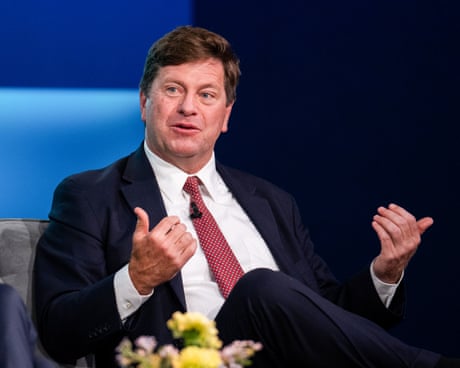
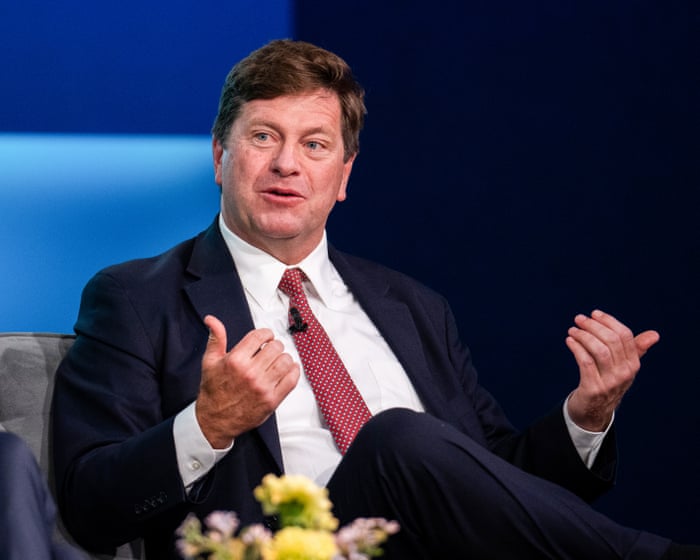
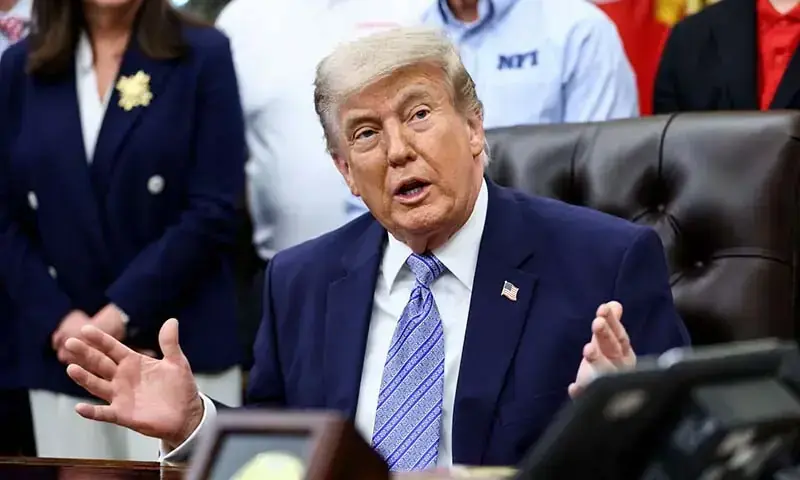
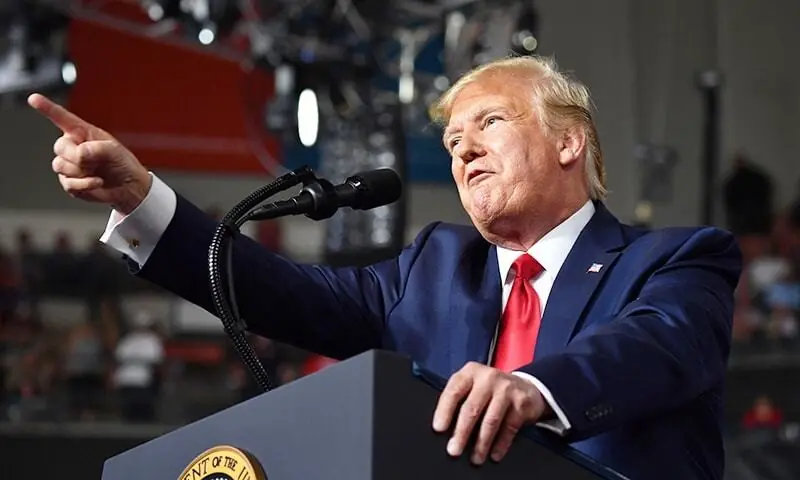
Donald Trump has nominated Jay Clayton, former head of the top US markets watchdog, to be the country’s leading intelligence official.
The US president faced widespread criticism of his decision to install a controversial ally, Bill Pulte, as acting director of national intelligence while searching for a permanent candidate.
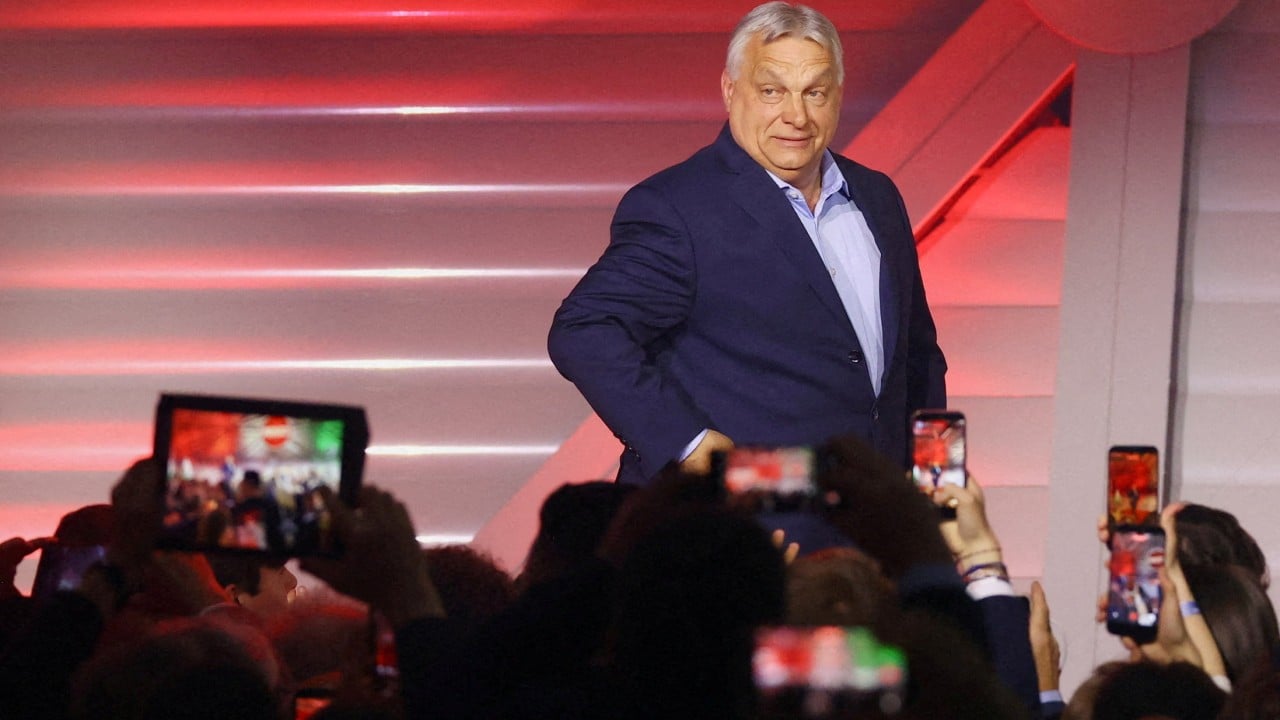
Hungary’s parliament approved a constitutional amendment on Monday that allows prime ministers to serve for a maximum of eight years, effectively barring former premier Viktor Orban from holding the role again.
Prime Minister Peter Magyar ousted Orban in an election in April after 16 years, gaining a two-thirds majority in parliament that allows his party to roll back or change legislation passed by Orban’s Fidesz, including the constitution.
The amendment was a key campaign promise of...
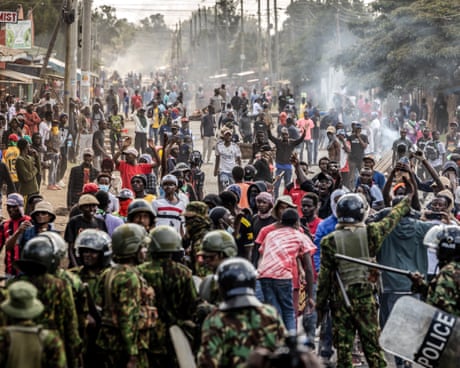
Police dispersed demonstrators in Nanyuki, 120 miles from Nairobi, amid rising anger at US plans
Kenyan police have shot dead a man during a protest against a proposed Ebola quarantine facility for US citizens.
Patrick Wahome, who has organised protests in Nanyuki against the centre, told Reuters on Tuesday the man died from a gunshot wound to the head. Reporters from the agency saw his body lying motionless in a police van with a large head wound.
• Tel Aviv working alongside US and right-wing groups to declare compound ‘multi-faith centre’ • Israeli settlers torch two mosques in occupied West Bank
HARDLINE Israeli officials and radical right-wing politicians are working with the United States to alter the longstanding ‘Status Quo’ at the sacred Al-Aqsa Mosque compound, pushing a highly inflammatory campaign to usurp the exclusively Muslim site, BBC News reported.
Recent media reports indicate the Israeli government intends to formally designate the compound as a “multi-faith centre”.
This brazen move flies in the face of centuries of tradition, under which even some Jewish groups forbid their followers from praying within the mosque’s premises.
According to BBC, Israel might impose large-scale Jewish prayer practices at this historically Muslim site, an audacious move towards full control of its administration.
The move is spearheaded by extreme right-wing Israeli politicians like Moshe Feiglin, who recently descended from the compound after unlawfully praying and singing religious songs alongside radical religious zealots.
“The whole land of Israel was promised to the children of God … and this is where we are going to build a new Temple for the entire humanity to come and pray together,” Feiglin said, openly flouting diplomatic conventions in complete contravention of international agreements.
Under the binding Status Quo agreement, the Jordanian-administered Islamic Waqf retains sole custody of Al-Aqsa. Non-Muslims are legally permitted to visit, but explicitly barred from carrying out religious rites.
Israel’s far-right National Security Minister Itamar Ben-Gvir frequently storms the al-Aqsa compound to aggressively incite sectarian tensions. A recently circulated video prominently captures the controversial minister leading nationalist mobs in absolute defiance of existing peace mandates.
“The Temple Mount is ours. It’s in our hands!” Ben-Gvir chanted as he unfurled an Israeli flag to systematically dismantle the Status Quo.
While the Israeli prime minister’s office denies changes, regional governments have strongly protested the destructive takeover.
Meanwhile, US Secretary of State Marco Rubio told Congress he had “no knowledge” of joint US-Israeli coordination, though US envoy Mike Huckabee remains aggressively outspoken in advocating for exclusive Israeli dominance over the illegally occupied sites.
Dr Mustafa Abu Sway, deputy head of the Islamic Waqf Council, opposed the illegal Israeli encroachment.
“Peace without leaving al-Aqsa Mosque alone, is simply opening a Pandora’s box,” Abu Sway told the BBC. “It is jeopardising the peace in the region.”
Mosques torched
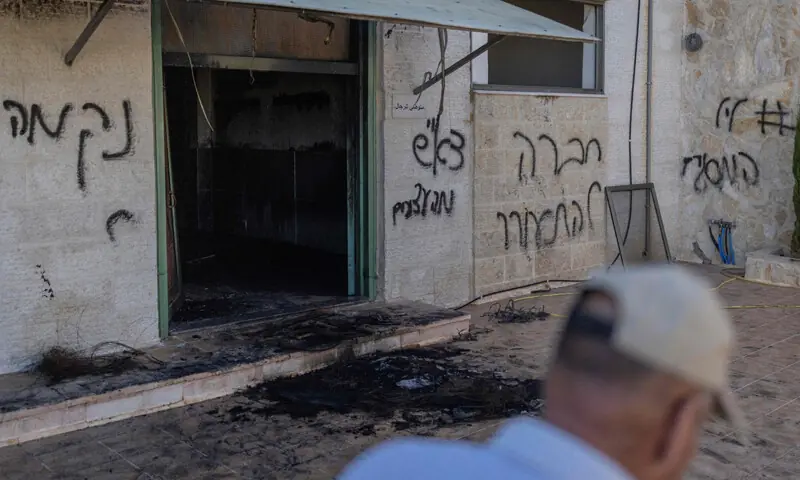
Meanwhile, Israeli settlers set fire to mosques in two West Bank villages on Wednesday as Israeli government approved the expansion of a Jewish school for settlers living in the centre of the Palestinian city of Hebron in the occupied West Bank.
Osama Abdullah, head of the village council in Jiljiliya, north of Ramallah, told AFP that “settlers set fire to the ablution room, caused damage to the village’s main mosque, and scrawled hostile slogans on the outer walls”.
AFP journalists who visited one mosque on Wednesday saw that the ceiling, walls and floors were blackened by smoke and flames.
Graffiti had also been daubed on the walls in Hebrew. Some read “vengeance” and: “Hi, from the Hilltop Youth”.
The Hilltop Youth are a group of Israelis in the West Bank who are regularly accused of violence towards Palestinians they seek to evict from areas they want to take over.
“The forces searched the area for suspects and located two burned mosques, as well as graffiti on the walls. The suspects had fled prior to the arrival of the forces,” Israel’s military said in a statement.
MALE: Pakistan ended a 74-year wait for a football tournament title on Wednesday, defeating Afghanistan 2–0 in the final of the Diamond Jubilee International Football Tournament in at the National Stadium to claim a historic first stand-alone international crown.
Shayek Dost produced a spectacular overhead kick to open the scoring in the first half before substitute Harun Hamid added a second in stoppage time to seal victory, as Pakistan lifted a tournament trophy for the first time since 1952 — when they shared the Asian Quadrangular title on a league basis.
The triumph also marks the first time in Pakistan’s history that the men’s national team has won a tournament final outright.
Afghanistan started brightly and tested Pakistan early, but the Shaheens gradually settled into rhythm. Otis Khan was influential down the left flank and it was from one of his moves that Pakistan struck in the 24th minute.
A loose clearance and a misdirected cross fell kindly for Shayek, who adjusted brilliantly to execute an acrobatic finish into the net, sending the Pakistan supporters into celebration.
Afghanistan responded before half-time, hitting the crossbar in injury time, but Pakistan held on to take a 1–0 lead into the break.
The second half saw Pakistan continue to press, with Adil Nabi striking the bar soon after the restart, while Afghanistan pushed forward in search of an equaliser.
As the match wore on, Pakistan defended resolutely with goalkeeper Saqib Hanif marshaling the back line effectively. Harun then put the result beyond doubt in stoppage time, beating his marker with a sharp turn before finishing past the post.
Pakistan had earlier gone unbeaten en route to the final, including a 2–0 win over Afghanistan in the round-robin stage, and sealed the title with a third consecutive victory in the tournament.
Pakistan head coach Norberto Solano praised his side’s resilience and growth, saying the win reflected their progress ahead of next year’s Asian Cup and World Cup qualifying campaigns.
“We proved that we are a strong group of boys coming back after the Bangladesh draw. They are happy, I am so glad for them, for the Pakistani nation,” Solano said. “This brings back belief in football. They have amazing talent. We have to continue this as we have more challenges in September, October and November. We have to prepare well before Asian competitions start next year.”
Pakistan captain Abdullah Iqbal dedicated the trophy win to the country’s football supporters.
“Very happy with the team first and foremost,” he said after the match. “This one is for the fans. We have worked so hard for the fans. We had to give back to the fans. They had supported us through very tough times. That’s the most important thing for us.”
Pakistan Football Federation (PFF) president Syed Mohsen Gilani, in a brief statement, said the victory marked a key milestone in his tenure and signalled a “new beginning” for Pakistan football.
President says Hector Rusthenford Guerrero Flores killed in ‘swift and lethal’ military strike with help from Venezuela
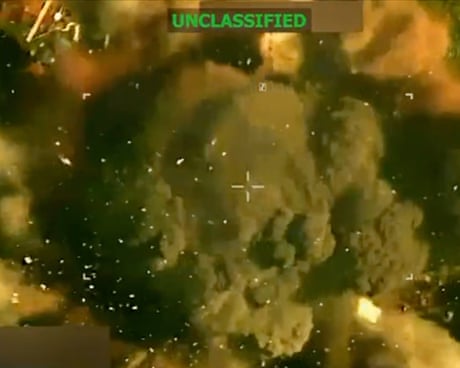
The US military has killed a leader in the Venezuelan street gang Tren de Aragua, Hector Rusthenford Guerrero Flores, with the help of Venezuela, Donald Trump announced on Friday.
“At my direction, the United States Southern Command delivered a swift and lethal kinetic strike to successfully execute Niño Guerrero, the infamous leader of Tren De Aragua, one of the most bloodthirsty Terrorist Organizations on Planet Earth,” Trump wrote on Truth Social.
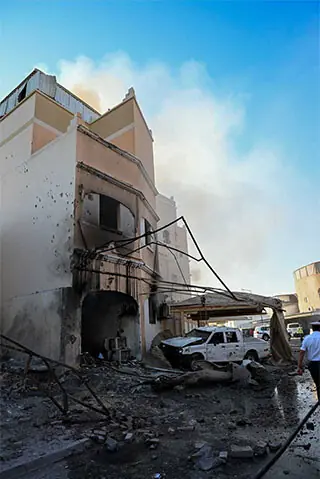
BAHRAIN: A damaged building and vehicle are seen in the aftermath of Iranian drone attacks.—Reuters
• Announcement comes after US calls off Iran attacks • Oil drops after Washington backs down • IRGC strikes Bahrain, Jordan, Kuwait after US bombs targets across Iran • Tehran says American attacks have rendered ceasefire ‘practically’ meaningless • Saudis call for Pakistan, Qatar-led efforts for renewed talks • Iran ‘completely’ closes Hormuz
WASHINGTON / TEHRAN: US President Donald Trump on Thursday said the United States and Iran could sign a peace deal as soon as this weekend that would reopen shipping traffic through the Strait of Hormuz.
The agreement, if finalised, would be the most significant diplomatic breakthrough yet to end the three-month-old war, which has killed thousands of people and sent global energy prices sharply higher.
Iran’s semi-official Fars news agency reported that Tehran is likely to approve the agreement, though it has yet to give a formal response.
However, Iran’s foreign ministry spokesperson said matters related to an agreement are speculation and nothing has been finalised, according to Iran’s state-run IRNA news agency.
“We just made a great settlement of the war with Iran,” Trump told reporters at the White House. “The strait will officially open as soon as we sign, which could be soon, very soon, maybe over the weekend in Europe,” he said. Vice President JD Vance could sign for the United States, Trump added.
When asked if Iran’s Supreme Leader Ayatollah Mojtaba Khamenei has approved the deal, Trump said: “I understand the answer is yes.”
Trump’s announcement came after he called off planned military strikes on Iran, citing progress in talks.
Since mid-March, Trump has repeatedly claimed that a deal with Iran to end the war is close. The two sides have traded strikes throughout the week, straining a ceasefire announced in April.
He called off planned strikes on Iran hours after threatening more bombings and a desire to “take” its oil export hub Kharg Island.
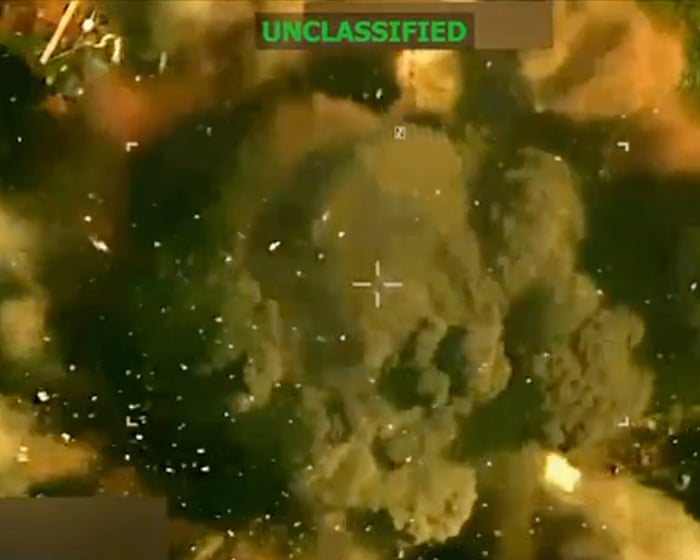
That statement came after both sides attacked each other in the early hours of Thursday, putting an already-fragile ceasefire to the test. After the US attacked targets across Iran, the Iranian army responded with strikes on US targets in Bahrain, Jordan, and Kuwait.
In a statement posted on Truth Social, President Trump said, “Based on the fact that discussions with the Islamic Republic of Iran have been brought to the highest level of Iranian leadership and approved, I have, as President of the United States of America, cancelled the scheduled strikes and bombings against Iran this evening.”
He said “discussions and final points” have been approved by the United States, Israel, Saudi Arabia, UAE, Qatar, Turkiye, Pakistan, Bahrain, Kuwait, Jordan, Egypt and others.
“The Naval Blockade will remain in full force and effect until this Transaction is finalised — Time and place of the signing to be announced shortly,” he added.
Oil prices fell after he cancelled plans to strike Iran within hours. Brent futures fell $2.50, or 2.7pc, to $90.60 a barrel by 1838 GMT. US West Texas Intermediate (WTI) crude futures fell $2.32, or 2.6pc, to settle at $87.71 a barrel.
Overnight strikes
In response to the US strikes, Iran’s Islamic Revolutionary Guard Corps (IRGC) said it fired ballistic missiles at a US command centre in Jordan and attacked the US Fifth Fleet in Bahrain.
“During two waves of operations, eighteen important targets belonging to the US Army in the bases of Ali and Ahmad Ahmad Air Force (were hit),” the Guards said in a statement quoted by state-run IRNA, adding that they also “hit and destroyed Sheikh Isa air bases”.
The US military, meanwhile, said that it targeted “Iranian military surveillance capabilities, communication systems, and air defence sites across Iran”.
“US Marine Corps, Air Force, and Navy assets fired precision munitions on Iranian targets that posed a threat to US forces and international commercial ships transiting regional waters,” Central Command posted on X.
The Fars news agency reported that explosions have been heard in the port city of Bandar Abbas, while citizens have reported hearing explosions in Kargan and Minab.
Following these strikes, the US president warned of more attacks. The US will “be hitting Iran … very hard tonight”, he said, reiterating his claim that Iran’s military and “all other forms of defence” had been rendered inoperable.
“At some point in the not-too-distant future, we will be taking Kharg Island, and other oil infrastructure points, and assume total control of their Oil and Gas Markets, much like we have with Venezuela,” he added in a post on Truth Social.
Iran’s parliament speaker Bagher Ghalibaf, in an apparent warning to President Trump, said, “Wrong strategies and impulsive decisions will reset the entire board for the worse, explode energy infrastructure and markets and create an endless quagmire that you will be stuck in for years.” “You will see a different Iran.”
Iran’s top joint military command, Khatam al-Anbiya Central Headquarters, also warned the United States will receive a more severe response than before.
“Considering recent US threats against Iran’s oil infrastructure, either oil and gas exports are for everyone, or they will be available for no one,” the command said in a statement carried by state media, adding that the war will become more widespread and extensive, causing insecurity in the region.
Meanwhile, Iran’s foreign ministry condemned the latest US strikes on the country, saying the attacks rendered the nearly two-month ceasefire “practically meaningless”.
Calls for renewed talks
As the situation escalated between the two countries, Saudi Arabia called for renewed negotiations under Pakistani and Qatari mediation to end the Middle East war.
In a statement, the Saudi foreign ministry called for “de-escalation and restraint, urging all parties to prioritise wisdom by returning to diplomatic efforts and resuming the constructive negotiations sponsored by the Islamic Republic of Pakistan, along with the efforts of the State of Qatar”.
Pakistan also called for a “negotiated settlement”. Foreign Office spokesperson Tahir Andrabi said Pakistan’s leadership would continue its mediation efforts to help end the war between the United States and Iran despite the recent escalation in the conflict.
“Pakistan remains deeply concerned about the situation in the region, which has been marked by recent escalation. We are of the view that diplomacy and dialogue should be the guiding principles for achieving a negotiated settlement of all contentious issues,” he said during his weekly press briefing.
The renewed strikes also prompted calls for de-escalation from the UN chief, China, Russia, Turkiye and the EU.
Closure of Hormuz
Earlier in the day, Iran’s new body overseeing the Strait of Hormuz confirmed a complete closure order for the strategic waterway until further notice, after the Revolutionary Guards announced the move overnight, AFP reported.
“Due to the tensions caused by the aggression of the American forces in the region and the announcement made last night by the Iranian armed forces, the Strait of Hormuz will be closed until further notice,” the Persian Gulf Strait Authority said in a post on X.
Meanwhile, Indian foreign ministry spokesperson Randhir Jaiswal called for attacks on ships to cease, after three Indians were killed in a US attack on an oil tanker in the Gulf, Al Jazeera reports. Jaiswal told reporters that another ship, M/T Jalveer, was attacked by the US Navy.
Move to ChapsVision is to avoid ‘strategic dependencies’, says PM amid concern about reliance on US-controlled tools
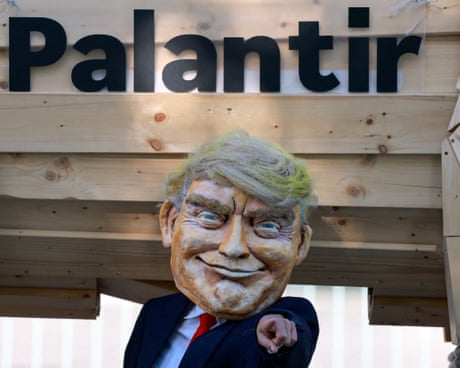
France’s domestic intelligence service is to ditch AI data tools from the US tech company Palantir in favour of a domestic provider in an effort to avoid “strategic dependency”, the prime minister, Sébastien Lecornu, has said.
“We must use our own AI models; we cannot accept new strategic dependencies in the digital sphere,” Lecornu posted on social media. “We cannot rely on tools developed by foreign powers. France must have its own tools.”
‘Mastermind’ Dawie Groenewald given fine of 2m rand or four-year jail term almost 16 years after arrest
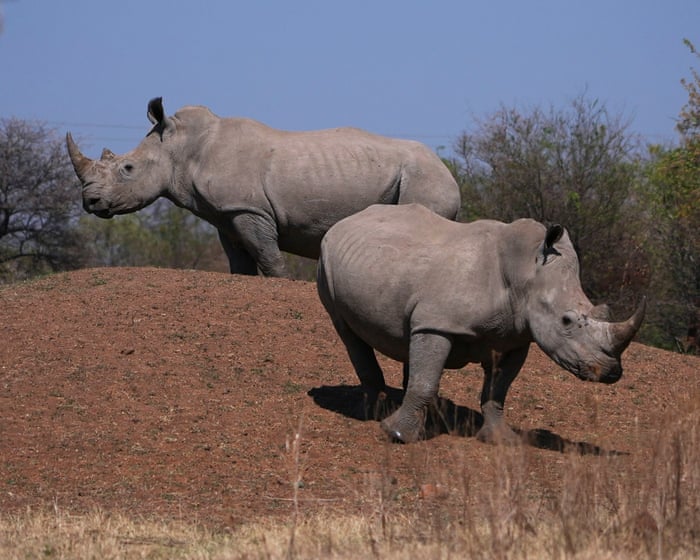
Two traffickers of rhino horns have been sentenced by a South African court in what police said was the world’s largest such case, partly bringing to an end an almost two-decade legal saga.
Dawie Groenewald and Tielman Erasmus had faced more than 1,700 charges ranging from illegally hunting and dehorning rhinos to racketeering and money laundering.
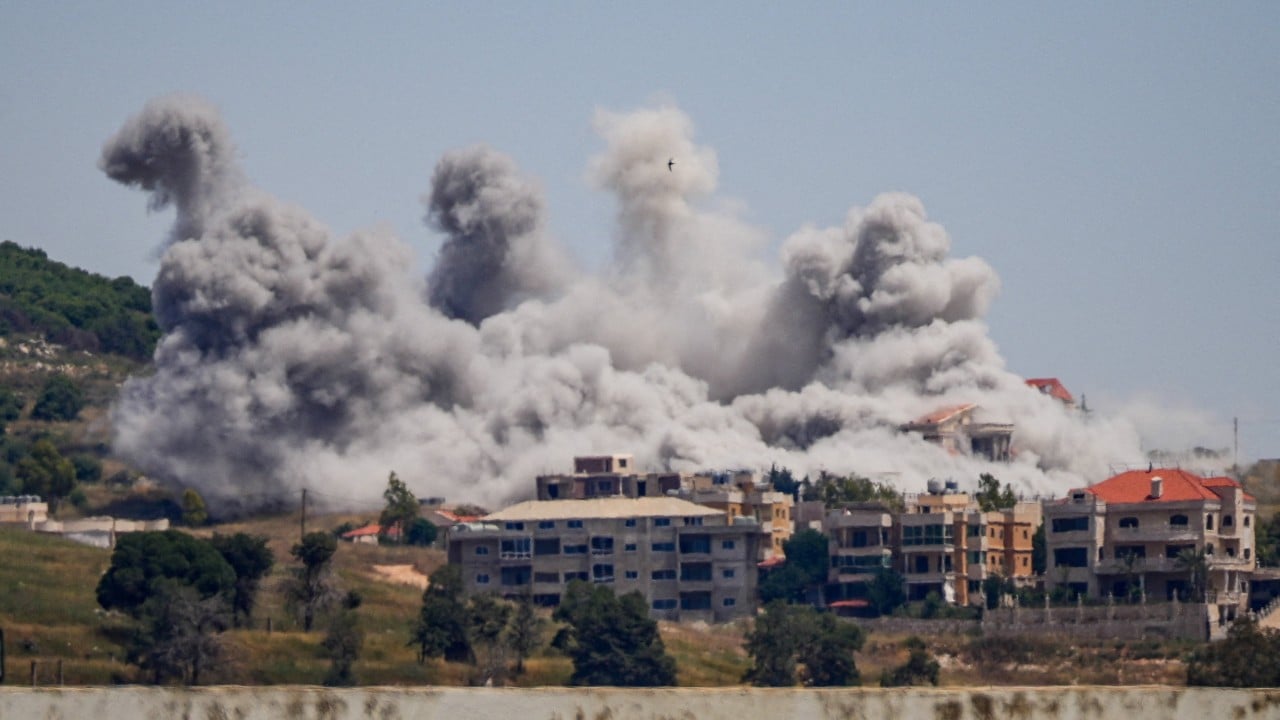
Hezbollah rejected a ceasefire plan agreed by the Lebanese and Israeli governments in US-mediated talks, as Israel kept up strikes in southern Lebanon on Thursday and said it would not be withdrawing from the south.
Israel and Lebanon agreed to implement a ceasefire but said it would require a “complete cessation” of fire by Iran-backed Hezbollah, according to a joint statement after US-led talks in Washington on Wednesday.
The two sides, which do not have formal diplomatic relations, also...
Suspect, 19, still at large after officer dies in hospital having been shot while searching an apartment
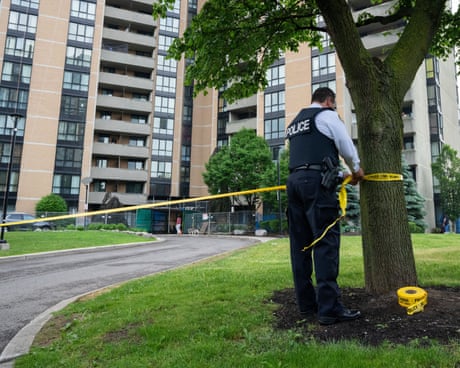
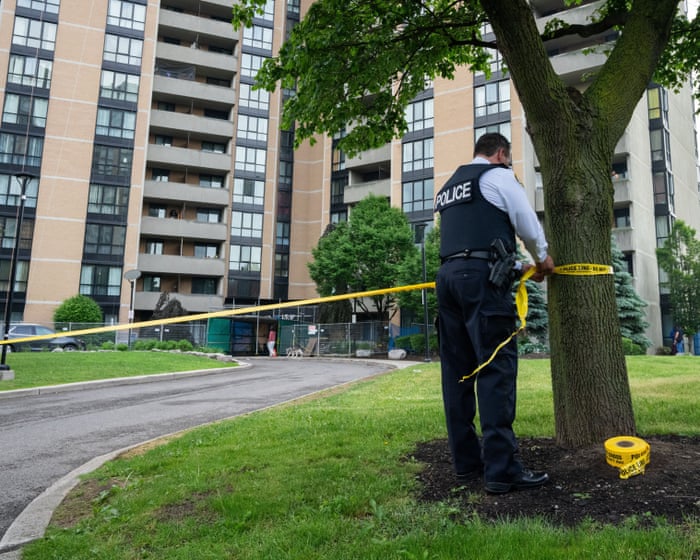
A Toronto police officer has been shot dead as police raided an apartment allegedly linked to the March attack on the US consulate, the city’s police chief, Myron Demkiw, said.
Demkiw said 43-year-old constable Marc Pinizzotto was shot while conducting an early-morning search warrant in the north-west of the city and later died at a hospital.
• Netanyahu not coming to Trump’s bilateral meetings • One-on-one session with Zelensky not planned
WASHINGTON: US President Donald Trump will meet Middle Eastern leaders and attend a working session with Ukrainian President Volodymyr Zelensky during the G7 summit next week, senior US administration officials said on Saturday.
The officials said Trump, who is scheduled to travel to Evian, France, for the G7 summit early on Monday, would meet separately with the leaders of Egypt, Qatar, United Arab Emirates, France and India, though no bilateral meeting with Zelensky is planned.
A senior US administration official said that Israel’s Netanyahu is not coming to Trump’s bilateral meetings with Middle Eastern leaders at G7.
Trump will participate in a working session on Tuesday with Zelensky and G7 leaders. The meeting comes at a time when Russian advances in Ukraine have slowed and Ukraine seeks more military funding from its allies.
One of the senior US officials, who briefed reporters on condition of anonymity about Trump’s trip, said Russian gains have “more or less stopped”. “We want the war to end as quickly as possible,” the official said.
Trump has had up-and-down relations with Zelensky. No bilateral meeting was planned with Zelensky but the two leaders could meet on the sidelines of the summit, the officials added.
He will speak to a number of European leaders with whom he has squabbled over trade, tariffs, Ukraine and Nato since his return to the White House early in 2025.
Trump planned to raise issues of shared importance with leaders at the summit, including economic growth and development, supply chain resilience, illegal migration and AI, one of the officials said. He also planned to work on boosting resilience in the supply chain for critical minerals needed for advanced technologies.
Before returning to Washington, Trump planned to attend a dinner with French President Emmanuel Macron at the Palace of Versailles on Wednesday, the officials said.
‘On receiving end’
Meanwhile, Liana Fix, an associate fellow at the Council on Foreign Relations, told AFP ahead of the summit, which will bring the United States face-to-face with France, Germany, Canada, Italy, Japan, and the United Kingdom, “all of these countries’ leaders have been on the receiving end of Trump’s trade pressure or diplomatic intimidation, with the exception of Japanese Prime Minister Sanae Takaichi, for whom he has expressed particular fondness.”
Neither growing unpopularity that could cost Trump control of Congress, nor court’s annulment of his across-the-board tariffs is likely to soften his stance toward partners. European leaders have learned, through the Greenland episode, trade conflicts, and Iran war, “to hope for the best but to expect the worst,” she said.

 Login
Login