Reading view

Musk’s xAI fired engineer for raising concerns about Grok chatbot, lawsuit claims

Former xAI engineer Devin Kim alleges he was illegally fired for trying to implement safety mechanisms for the chatbot

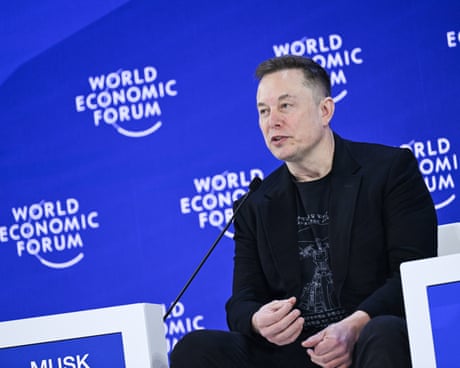
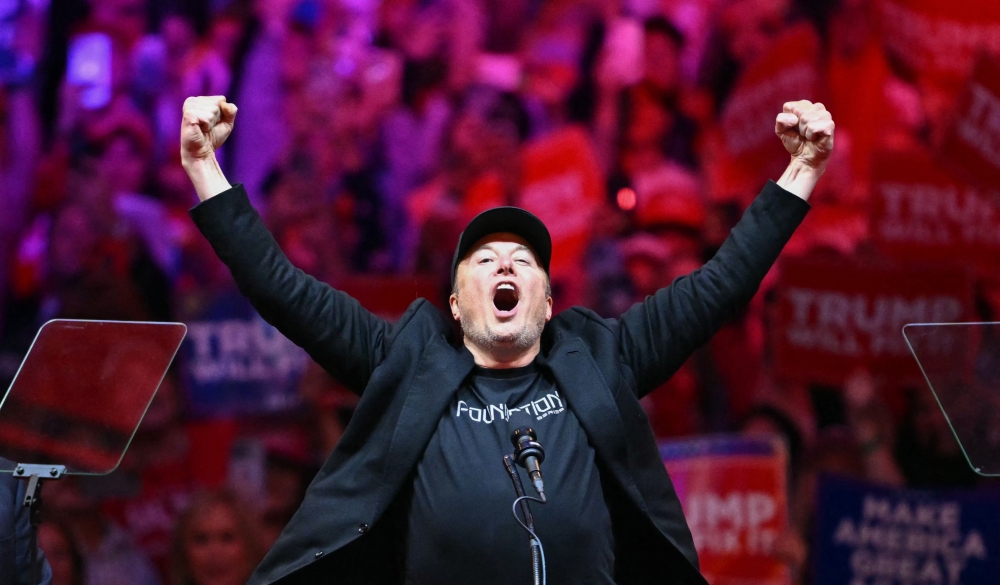
A former engineer at Elon Musk’s xAI who now heads a thinktank focused on AI safety filed a lawsuit claiming he was fired from the SpaceX subsidiary for raising concerns about the risks artificial intelligence poses to humanity.

Devin Kim claims in the lawsuit filed in California state court on Tuesday that his efforts to place guardrails on the development of the chatbot Grok made him a target for company leadership.

Continue reading...

© Photograph: Harun Ozalp/Anadolu via Getty Images

© Photograph: Harun Ozalp/Anadolu via Getty Images

© Photograph: Harun Ozalp/Anadolu via Getty Images

  •  

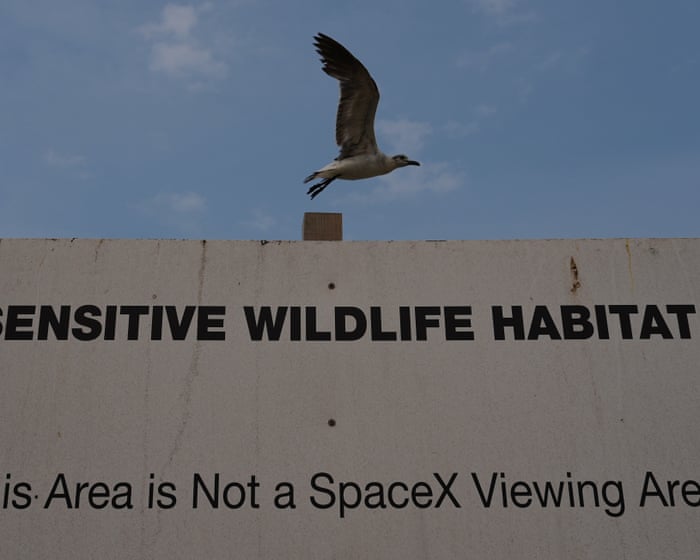
Trump administration land gift to SpaceX would hurt Texas habitat, lawsuit says

Environmental groups say exchange between US government and SpaceX would worsen ecological risks

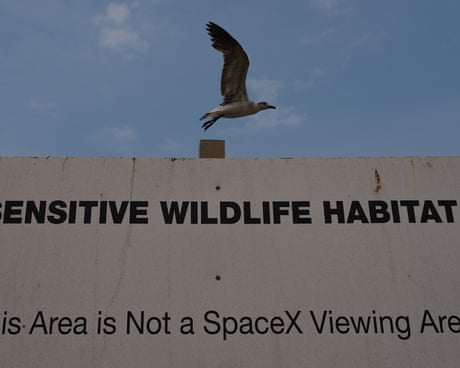
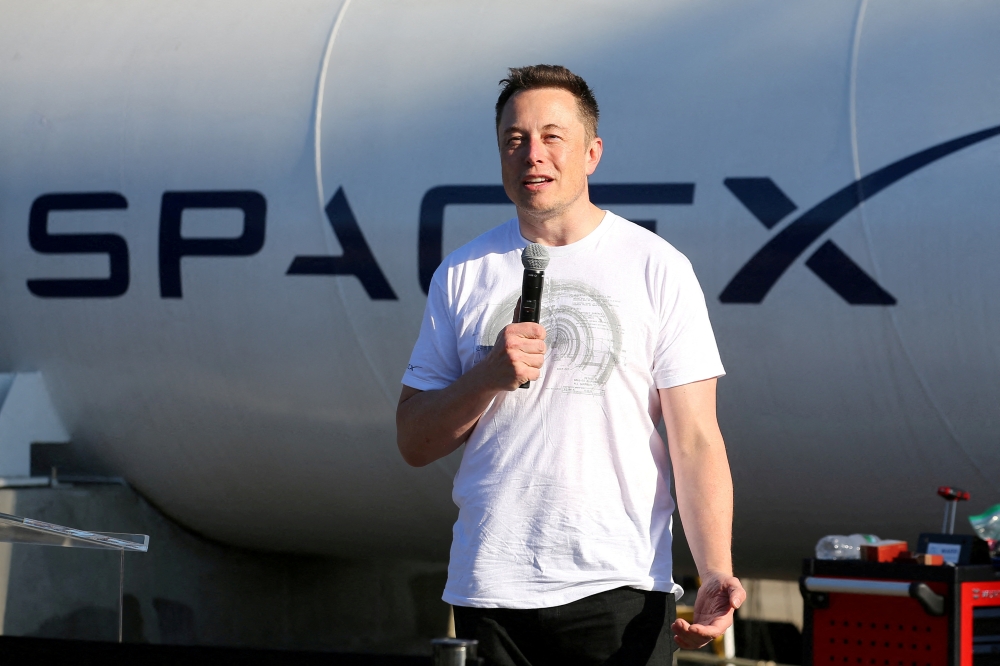
Environmental groups on Wednesday sued in an attempt to stop the Trump administration from giving SpaceX more than 700 acres (280 hectares) of wildlife refuge in Texas, claiming it would worsen ecological risks to a Gulf coast region already transformed by billionaire Elon Musk’s rocket operations.

The US Fish and Wildlife Service this month approved moving forward with the deal with SpaceX, which would surrender 683 acres (276 hectares) the company owns in exchange for federal land in the Lower Rio Grande Valley national wildlife refuge. The 103,000-acre (41,700-hectare) refuge spans four counties along the Texas border and is home to animal habitats and historical landmarks.

Continue reading...

© Photograph: Eric Gay/AP

© Photograph: Eric Gay/AP

© Photograph: Eric Gay/AP

  •  

Musk's xAI, SpaceX sued over 'pervasive and inescapable' data center power plant noise

Mississippi residents are suing Elon Musk’s xAI and SpaceX over the “pervasive and inescapable” noise from their data center and accompanying power plant in a Memphis, Tenn.-area community. Three individuals who live near the plant in Southaven, a city just south of Memphis across the Mississippi-Tennessee border, filed a class-action lawsuit Monday against Musk’s companies,...

  •  

SpaceX to begin trading in biggest IPO in history as Musk eyes trillionaire status

Malay Mail

NEW YORK, June 12 — Elon Musk’s SpaceX yesterday confirmed it will begin trading on the Nasdaq exchange today in the biggest initial public offering in history, a blockbuster market debut that could propel the entrepreneur to trillionaire status.

In a filing with the US markets regulator, the company priced more than 555 million shares at US$135 each, placing SpaceX in the top 10 of Wall Street’s biggest companies with a valuation of just under US$1.8 trillion.

It will be valued more than Musk’s own Tesla car company, Facebook-owner Meta and Walmart.

The offering will raise a record US$75 billion, easily outranking Saudi Aramco’s US$29.4 billion debut in 2019, until now the biggest ever.

Underwriters hold an option to buy nearly 83 million additional shares, which would push the total above US$86 billion if exercised in full.

The space and rocket company, co-founded by Musk in 2002, will trade under the ticker symbol “SPCX,” with a parallel listing on Nasdaq Texas. All eyes will be on how Wall Street absorbs the offering, which could send tremors across global markets.

SpaceX will be the first out of the gates among the tech and AI giants eyeing public markets, with OpenAI and Anthropic expected to follow—both having recently filed with regulators for their own market debuts.

As is traditional for high-profile debuts, executives are expected to ring the opening bell on Friday to mark the start of the session—in this case at New York’s Times Square, home of the Nasdaq.

The IPO is Musk’s biggest financial gamble yet, with his xAI company and the X social media platform (formerly Twitter) also included in the offering after the multi-billionaire folded them into the company earlier this year.

Goldman Sachs, Morgan Stanley and Bank of America led a syndicate of more than 20 banks on the deal.

The offering was more than four times oversubscribed by major banks and financial institutions, according to Bloomberg, with interest from everyday investors reported to be high.

More than 20 percent of the shares will be reserved for these retail investors, a far greater proportion than is typically allocated in IPOs, giving Musk’s legions of fans a chance to buy a slice of the company.

Data centers in space 

The success of the IPO rests squarely on investors’ faith in Musk as a visionary entrepreneur. The tech multi-billionaire will serve as chief executive, chief technology officer and board chairman of the newly traded company.

The IPO is expected to mint thousands of new millionaires and many billionaires, with former and current employees—and a long list of investors—from the company’s near quarter-century history looking to cash in.

The financials of the company are giving some on Wall Street pause, as the valuation largely depends on Musk delivering on promises worthy of science fiction, including putting data centers in space and humans on Mars using as yet unproven technology.

While the company is growing fast—revenue hit US$18.7 billion in 2025 — it is also losing money, producing a net loss of US$4.9 billion.

In an extraordinary prediction, SpaceX’s filing claims it can pull in over US$28.5 trillion in revenue from its various markets.

A successful IPO could make him the first trillionaire in history today. 

Musk’s fortune yesterday stood at US$782 billion, according to the Forbes list of the world’s richest people, nearing three times the wealth of number two, Google co-founder Larry Page.

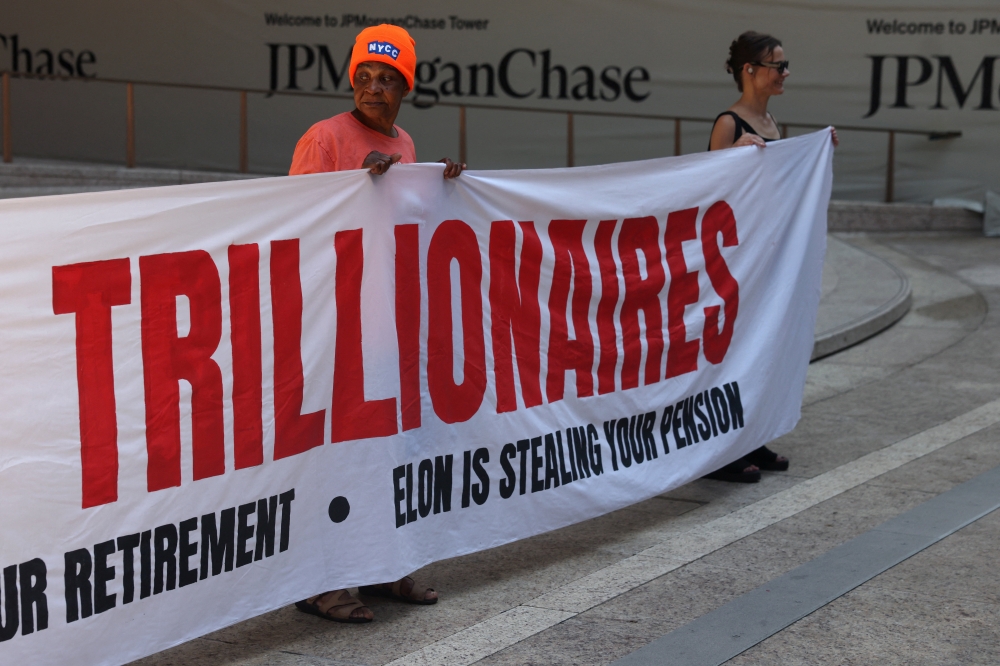
“A trillion dollars in the hands of one man is incompatible not only with an affordable economy, but also with a healthy democracy,” said Nabil Ahmed, senior director of economic justice at Oxfam America.

On the eve of the trading launch, activists displayed a giant inflatable Musk outside Nasdaq’s offices to protest the ability to create fake sexualized images using xAI’s Grok chatbot. — AFP


  •  

SpaceX launches IPO, making Musk the world’s first trillionaire

{beacon} Technology Technology   The Big Story SpaceX launches IPO, making Musk the world’s first trillionaire Elon Musk’s SpaceX made its highly anticipated stock market debut Friday morning, establishing him as the first person to ever be worth $1 trillion. © Matt Rourke, Associated Press The spacecraft and satellite communications company began trading on the...

  •  

OpenAI files to go public as IPO race heats up

OpenAI has confidentially filed paperwork to go public, the company announced Monday. It is one of three leading AI companies preparing for an initial public offering (IPO), alongside SpaceX and Anthropic, which have both filed with the Securities and Exchange Commission (SEC) in recent months. The company said in a post on X it “recently...

  •  

What a trillion dollars means: Inside the scale and risks of Musk’s fortune

Malay Mail

PARIS June 13 — As SpaceX completed the biggest initial public offering in history, controversial entrepreneur Elon Musk saw his wealth blow past the symbolic – and unprecedented – level of a trillion dollars.

Following strong demand for shares in the space technology as part of the IPO, they jumped more than 20 per cent when they began trading on the Nasdaq Friday.

That lifted the estimated wealth of the South Africa-born Musk, 54, to above US$1 trillion (RM4.05 trillion) , according to Bloomberg and CNBC.

That takes him into an uncharted zone of the mega-wealth stratosphere, leaving Google co-founders Larry Page and Sergey Brin, as well as Amazon creator Jeff Bezos trailing in his wake, according to data from Forbes and Bloomberg.

But what could a discerning unfathomably rich investor actually do with a cool trillion at his disposal?

That’s around the wealth produced over a year by entire countries, such as Switzerland or Poland (US$1,040 billion GDP in 2025, according to the International Monetary Fund).

Or, if you prefer, see it in terms of totalling three times the current value of France’s gold reserves.

Yet Musk’s wealth is considerably different to that afforded by precious metal, a tangible asset with safe-haven status owing to its reputation for stability.

Musk’s wealth mostly derives from his stock portfolio, the value of which fluctuates and can be decidedly volatile.

“If Elon Musk wanted to sell off a huge chunk of his shares to buy real estate or whatever, the stock price would drop hugely,” warned Alexandre Baradez, head of market analysis for investment company IG France.

That would mechanically see his total wealth follow the same trend.

“There’s the law of supply and demand,” Baradez said.

“But there’s also, and maybe even more importantly, the psychological effect: a massive sale of Elon Musk’s shares, given the strong influence he has on his companies’ strategies, would send a very strong signal to the market.”

Other investors would likely follow suit, which would further decrease the stock’s value, and ultimately, the fortune of a man who would revert from being a trillionaire to merely a multi-multi-billionaire. — AFP

  •  

‘Mag 7’ or MANGOS? SpaceX IPO sparks Wall Street debate

Malay Mail

NEW YORK, June 14 — SpaceX roared into markets this past week with a valuation of more than US$2 trillion, surpassing two members of Wall Street’s “Magnificent Seven” and raising a key question: Does the Mag 7 name still fit? ‌And if not, what should replace it?

The IPO, the biggest in US history, vaulted SpaceX’s value above two ​Mag 7 members: CEO Elon Musk’s other company, Tesla, and Meta Platforms. With trillion-dollar contenders such as OpenAI and Anthropic waiting in the IPO wings, the club may soon need a name change, analysts said.

With SpaceX’s arrival, “it becomes very hard to keep using Mag 7 as the clean shorthand ​for market leadership because one of the most important companies in the world would immediately be outside the label,” said Shay Boloor, chief market strategist at Futurum Equities.

These groupings are not formal market categories, but shorthand labels coined by strategists, investors and the media to capture the hottest big stocks at a given moment. Such monikers have a long history, ranging from the “Nifty 50” of the 1960s and 1970s to the “Four Horsemen” of the late 1990s dot-com boom. The SpaceX IPO has ‌set off a race to devise the next cool acronym.

One sobriquet gaining traction on X is “MANGOS”, which stands for Meta, Anthropic, ⁠Nvidia, Alphabet, OpenAI and SpaceX. That grouping is far from standardised, ⁠with some interpreting the “A” as Apple, currently the third most-valuable US-listed firm.

“We are already referring ⁠to it internally and the industry is picking ⁠up on it as ⁠well,” said Aga Kuplinska, SVP of product development at Tidal Financial Group, which helps asset managers roll out ETFs.

Dan Boardman-Weston, CEO at BRI Wealth Management, is going another way, suggesting “Magna Atoms” – the Magnificent Seven plus SpaceX, OpenAI and Anthropic.

The Magnificent Seven ride

 The “Magnificent Seven” term was ⁠coined by BofA Global Research Chief Investment Strategist Michael Hartnett in late 2023 to describe seven heavyweight technology-related stocks: Nvidia, Apple, Amazon, Alphabet, Meta, Tesla and Microsoft.

With an AI boom driving stock markets to record highs and the sudden appearance of new trillion-dollar companies, the leaderboard is often in a state of flux. In a May 22 note, BofA wrote about the “AI Big 10,” adding Broadcom, Micron Technology and Advanced Micro Devices to the original seven, reflecting the semiconductor rally of the past year. That group ⁠accounts for more than 40% of the S&P 500’s weight, according to LSEG data.

The labels have evolved before – from FANG to FAANG to the Magnificent Seven – each tracking shifts in companies that led the market.

FANG covered Facebook, ⁠Amazon, Netflix and Google. FAANG added Apple, and Magnificent Seven dropped Netflix while adding Microsoft, Nvidia and Tesla, each shift reflecting changes at the ⁠top of ⁠the market.

“It’s been Mag 7 for several years now. Maybe the markets are excited for something new,” said Dustin Thackeray, chief investment officer at Crewe ​Advisors.

To be sure, not everyone expects the old label to ride off into ​the sunset.

“The Magnificent Seven label is not going away,” ‌said Dave Mazza, CEO of Roundhill Investments. “It is too embedded in how investors and the ​media view large-cap tech leadership. What you will ​likely see is additive terminology rather than replacement.” — Reuters

  •  

Trillionaire Elon Musk makes history with SpaceX IPO: 5 takeaways

Elon Musk’s SpaceX went public Friday, setting a new record with its stock market debut and turning the tech mogul into the world’s first trillionaire. The highly anticipated initial public offering (IPO) popped 11 percent when trading officially opened on the Nasdaq, sending the company’s valuation soaring to a massive $1.96 trillion. Here are five...

  •  
❌