Written on reverse – all very disjointed and written all over the place. Please advise me if I’ve transcribed words incorrectly. Sometimes it doesn’t make sense.
29/4/1917
Dear Mary
This was taken while gardening and digging up ground for potatoes to be planted for the troops. Some old pot took it 4 each. A most remarkable thing to us happened today. Yesterday we were isolated for mumps and measles etc and today we were transferred from hut 30 to a new lot of huts ours is 13 the wash house is no 3.
Note Thorpe marked X, McGowan 14 stone next to me. What do you think in the name H.M.A.T. WILTSHIRE 13 words.
Tomorrow will be the start of 13 weeks since we left Brisbane. Will we have luck or not? I was put as Corporal over the Chows and was told if anyone got away I would go in the clink.
We saw a great sham? fight today at Hurdcott visitors were here and two fellows got badly hurt one lost his eye
gas, bowls, cricket anything. Pretty to see.
I was luck again left watch in bath room for 15 minutes and got it.
Watch losing again 10 minutes each day.
Love and kisses, Harold
Solomon Islands Prime Minister Matthew Wale said Wednesday he would be “reviewing” his country’s secretive 2022 security pact with China, which rattled Canberra and Washington.
Solomon Islands Prime Minister Matthew Wale speaks during a press conference at Parliament House in Canberra on June 3, 2026. Photo: Hilary Wardhaugh/AFP.
Asked about that pact alongside Australian Prime Minister Anthony Albanese, the Solomons leader — who was elected last month — said he had been “praying and fasting” about the Chinese security deal.
“We are going to be reviewing, as we are reviewing other security agreements that we have with many other countries,” he said.
Australia and the United States have been sharply critical of the deal over concerns it could allow a permanent Chinese navy presence in the South Pacific.
It was signed under one of Wale’s predecessors, Manasseh Sogavare, who was seen as Beijing’s staunchest ally in the South Pacific.
Wale said the deal contained a non-disclosure agreement and he had not seen it until just before his visit to Australia.
“I have had to remove certain people from key positions. I have not been afforded a copy, even, of that agreement, until a day before I left, so I have not had a good look at it,” he told a news conference in Canberra.
Australia is the largest aid donor to the country of 800,000 people that sits 2,000 kilometres (1,240 miles) to its north-east and historically provided police support during crises.
After the Solomons switched diplomatic ties from Taiwan to Beijing in 2019 and struck the security pact, relations with Canberra and Washington deteriorated.
China quickly became the strategically located Pacific island state’s largest bilateral creditor, with Solomon Islands’ debt to Chinese banks for infrastructure projects doubling last year.
Seeking to counter Beijing’s influence, Australia has seized the opportunity to rebuild ties, hosting Wale on his first international visit as leader.
Albanese said Wednesday the two countries would begin work on a “comprehensive” new treaty as well as deepen ties in policing, with Australia seeking to be the top security partner for the Pacific.
Solomon Islands Prime Minister Matthew Wale (left) and Australian Prime Minister Anthony Albanese attend a press conference at Parliament House in Canberra on June 3, 2026. Photo: Anthony Albanese, via Facebook.
The treaty will be “underpinned by mutual trust, respect, and open dialogue”, the prime minister said.
Deals on policing, infrastructure
“We have sought a reset in this relationship — we acknowledge there have been problems over the last few years,” Wale told reporters.
The Pacific should turn to other countries within the region for their security, he stressed.
The leaders also agreed to push ahead with a major police training deal.
Australia’s offer to fund the expansion of the Solomons own police force had stalled under the previous Solomon Islands government, which allowed Chinese police to enter villages to collect household and biometric data.
Wale also said he was in discussions with Australia and the United States for financing for critical infrastructure such as ports.
Former Solomon Islands prime minister Sogavare rejected US offers of infrastructure grants, instead opting to partner with Chinese state companies.
Australia has sought to bind South Pacific countries closer by striking treaties with a string of small but strategically located island states, Tuvalu, Nauru and Papua New Guinea offering significant economic support in return for curbs on Chinese security ties.
Vanuatu and Fiji have said they are close to signing similar deals.
In Sydney’s Circular Quay, a 6.5-meter-tall installation spins, twirls, and totters amid a public thoroughfare. Titled “There, Now, Here,” the kinetic artwork is by the Brooklyn-based duo Wade and Leta and is in almost constant motion, thanks to wind, motors, and willing participants hopping on a see-saw.
With black and white stripes alongside a more muted palette, the colors of the playground-style project reference Dorothea Mackellar’s beloved poem “My Country,” which professes her devotion to the Australian landscape and what she dubs the “sunburnt country.” Harnessing the washed-out tones of a sun-bleached environment, the artists present their signature bold works in more subtle hues, as if the pieces have been baking under the light for years.
A sonic component created by Josh Burgess accompanies the sculpture and can be manipulated by the public through accessible controls. “If one were to listen closely, they can hear the rush of water on the rocks, the dings of the light rail, the crosswalk signal, and most importantly, the local wildlife,” the artists say. “Our favorite piece is a nod to the ‘bush doof’ using the sounds of a lyrebird as the structure.”
“There, Now, Here” is the pair’s first public work in Australia and part of the annual light and music festival Vivid Sydney. Find more on Wade and Leta’s Instagram.
The world’s largest whale graveyard has been discovered at the bottom of the Indian Ocean by Chinese scientists, who found that the vast expanse of both new and ancient carcasses supports huge communities of deep-sea life.
This handout photograph, taken in 2023 and released on June 10, 2026, by Global TREnD, IDSSE, shows a robotic arm manoeuvring a whale bone at the world’s biggest known whale graveyard, discovered by the Chinese submersible Fendouzhe, seven kilometres under the sea on the deep seafloor of the Diamantina Zone in the Indian Ocean. Photo: Handout/Global TREnD, IDSSE/AFP.
It is also the deepest and oldest known whale graveyard on Earth, according to research published in the journal Nature on Wednesday, with some fossils dating back 5.3 million years.
From inside a small submersible, the Chinese researchers saw an array of strange animals — many believed to be new to science — living off the whale carcasses.
A new, though extinct, species of whale was also identified among the nearly 500 skeletons found up to 7,000 metres deep along a 1,200-kilometre corridor of bones in the Indian Ocean west of Australia.
Lead study author Xiaotong Peng of the Chinese Academy of Sciences told AFP that the researchers were “astonished” when the scale of their discovery became clear.
It was known that when whales die and drop to the seafloor, their sunken bodies — called “whale falls” — provide a source of food to bottom-dwelling creatures.
“But discovering a necropolis of this scale was completely unexpected: the size of distribution, the depth and the age range were far beyond anything we had imagined,” Peng said.
The researchers had several theories for why so many whales died in this particular corridor, including that it is a popular foraging area and has a V-shaped trench that funnels carcasses to the ocean’s floor.
‘Truly incredible experience’
For the discovery, the Fendouzhe submersible carried out 32 dives in 2023 — though what it found was only revealed in Nature on Wednesday.
China’s Fendouzhe submersible. Photo: Institute of Deep-sea Science and Engineering (IDSSE).
The sub took up to three people on the dives, collecting the fossil samples using robotic arms.
Study co-author Zhou Peng said witnessing the whale graveyard “was a truly incredible experience”.
“The vibrant ecosystems we saw offered a completely different perspective on this otherwise dark and cold ocean floor.”
Among the animals they discovered living off the carcasses were jellyfish, worms, snails, crustaceans, brittle stars and molluscs called bivalves.
Extrapolating from the number of bones they found, most of which were from beaked whales, the scientists estimated there could be more than 10 million carcasses across the area called the Diamantina Zone.
The soft tissue and lipids inside those many carcasses “translates to roughly 6.7 million tonnes of sequestered carbon,” Xiaotong Peng said.
This provides an immense source of sustenance for animals, similar to how hydrothermal vents create their own ecosystems on the ocean floor.
Some of the animals seen by the scientists also live in hydrothermal vents and cold seeps, suggesting whale carcasses could help connect these deep-sea communities to each other.
While this is by far the largest whale graveyard yet found, fossils found during trawling suggest there could be others off South Africa, the Iberian peninsula and the Crozet islands, according to the study.
‘More blockbusters to come’?
University of Hawaii oceanographer Craig Smith, who discovered the first whale fall in 1987 but was not involved in the new research, told AFP it was “extremely exciting”.
This photograph, taken in 2023 and released on June 10, 2026, by Global TREnD, IDSSE, shows whale bones at the world’s biggest known whale graveyard, discovered by the Chinese submersible Fendouzhe, seven kilometres under the sea on the deep seafloor of the Diamantina Zone in the Indian Ocean. Photo: Handout/Global TREnD, IDSSE/AFP.
“The vast number of fossil whale falls documented, including a new species of beaked whale, is truly amazing and is of major importance to understanding whale evolution and whale distributions over geologic time,” he said.
Whale fall researcher Amy Baco-Taylor at Florida State University told AFP the “remarkable discovery” would “likely provide many new insights”.
“It does seem very strange” that so many whales died in this area, Baco-Taylor admitted, adding that “we don’t know enough about whale consciousness”.
US palaeontologist Stephen Godfrey compared the “truly unique discovery” to past major underwater finds, such as when scientists first identified hydrothermal vents teeming with life on the ocean floor in 1977.
He called for future submersible voyages to find more whale graveyards across the world.
This discovery “reminded me of a trailer for the first in a series of epic movies”, Godfrey commented in a linked Nature paper.
“I hope that there will be many more of these blockbusters to come.”
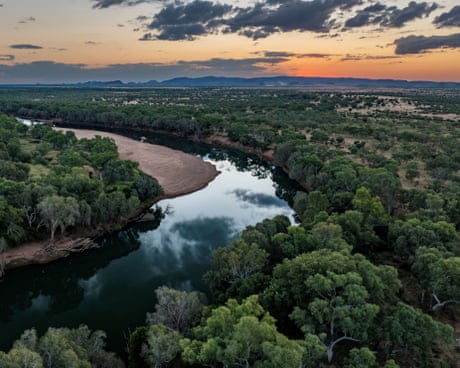
The federal government has repeatedly raised concerns about an American company’s bid to frack for gas in Western Australia’s Kimberley region, part of the world’s largest and most intact tropical savanna.
Texas-based Black Mountain Energy, through its subsidiary Bennett Resources, is seeking federal approval to drill 20 gas wells for its Valhalla project west of Fitzroy Crossing.
The building was named after the Hon. W. Forgan Smith, Premier of Queensland, 1932 -1942, and University Chancellor in 1944.
The Forgan Smith Building is the centrepiece of the Great Court complex at the core of The University of Queensland’s St. Lucia campus.
The foundation stone of the Forgan Smith Building was laid in 1937, and the building was officially opened in 1949, although not completed until 1952. Sandstone carvings are a feature of the Central Court as well as on the façade of the building around the Law and Arts Entrances. These depict historical scenes and figures, the names of great thinkers and teachers, coats of arms, grotesques and carvings of Australian flora and fauna.
(QUT info)
Australian production company Titantale Film is mid-shoot on “Tanabata: The Evening of the Seventh,” a supernatural romance drama starring Japanese actor Yamada Takayuki. The project, fully funded out of Australia with production service partners in Japan, spans three historical periods – Edo-period Japan, 1865 New South Wales and 2027 Australia – following three incarnations of […]
Derrick Borte’s Russell Crowe L.A.-set action-thriller Bear County sent a frisson through Hollywood last year when it was announced the production was shooting on Australia’s Gold Coast. Russell stars as an ageing L.A. night club owner whose plans for a comfortable retirement are put on hold when he robbed by a masked gunman. He is […]
Australia on Monday ordered a string of China-linked shareholders to sell their stakes in a rare earths firm, citing the need to protect the sector from outside influences.
Northern Minerals is vying to challenge China’s dominance of dysprosium production, a rare earth mineral that is used to make high-performance magnets used in electric vehicles.
Australian Treasurer Jim Chalmers. File photo: Australia’s Treasury.
Chinese investors have in recent years sought to take sizeable positions in the Australia-based firm, and Canberra had already used the same rules to remove another batch of China-linked shareholders in 2024.
Wary of a takeover by stealth, the company referred itself to Australia’s foreign investment review board in November 2025. The government has kept a close eye on it since then.
Treasurer Jim Chalmers said six shareholders would be forced to exit Northern Minerals.
“We operate a robust and non-discriminatory foreign investment framework and will take further action if required to protect our national interest in relation to this matter,” he said in a statement.
Three of those shareholders had addresses listed in China, two were listed in Hong Kong, and one was listed in the British Virgin Islands.
The list included some of Northern Minerals’ largest single shareholders, including Beijing-based Vastness Investment Group, which held more than six percent of the firm.
Vastness tried to use its sizeable stake to replace the chair of Northern Minerals earlier this year.
It eventually withdrew its bid to vote on the company’s leadership at an extraordinary general meeting.
Hong Kong-based Qogir Trading and Service Company separately holds almost five percent of Northern Minerals.
Australia has over the past two years waged a running battle to pry Northern Minerals away from Chinese investors.
It used the same foreign takeover laws in 2024 to force a different group of Chinese investors to sell shares in Northern Minerals.
Northern Minerals said it was “currently considering the new disposal orders and will make a further announcement once it has done so”.
The United States signed a deal in October last year unlocking greater access to Australia’s deposits of rare earths and critical minerals.
Northern Minerals was one of the Australian companies singled out under the deal, which touted the need to “diversify critical supply chains”.
Enormous influence
China controls some of the world’s largest reserves of rare earth elements and wields enormous influence as almost the sole country able to refine the metals on an industrial scale.
Australian rare earths firm Northern Minerals’ Browns Range project. File photo: Northern Minerals.
It wields enormous influence as almost the sole country able to refine the metals on an industrial scale.
Manufacturing nations such as the United States, Germany and South Korea are on the hunt for alternative sources.
Northern Minerals has the rights to a substantial dysprosium deposit found at Browns Range in Western Australia.
It bills itself as a “reliable alternative source” to “production sourced from China”.
Almost 99 percent of the world’s dysprosium is currently produced in China, according to the company.
The China-linked Yuxiao Fund sought to up its stake in Northern Minerals in 2024, a move that drew the attention of Australia’s Foreign Investment Review Board.
Yuxiao Fund and four other associated shareholders were subsequently given 60 days to dispose of their interests in the company.
The Australian Securities Exchange halted trading in Northern Minerals on Monday morning.

 Login
Login