Reading view

US-Mexico start free trade review talks without Canada

Mexico President Claudia Sheinbaum meeting with US trade representatives in April of 2026.

When U.S. trade representative Jamieson Greer met with President Claudia Sheinbaum in Mexico City on May 27 to discuss the upcoming review of the Canada–United States–Mexico Agreement (CUSMA), Canada’s chief trade negotiator Janice Charette was not at the table. 

Although Canada and the U.S. have each met with Mexican officials in advance of the review, Canada’s negotiating team has not publicly met with U.S. representatives over CUSMA at all, and the Americans are becoming increasingly vocal about their complaints with Canada. U.S. Commerce Secretary Howard Lutnick went so far as to directly criticize Canada’s trade strategy in April, calling out the Carney administration, and saying that, “they suck.

Tensions around trade have steadily been escalating between the Trump and Carney administrations over a series of disagreements in recent months. With the U.S. just freezing a long-standing military board with Canada and the Trump administration remaining upset over Canada lowering tariffs on some Chinese Electric Vehicles, the July 1 CUSMA review may be the next frontier for a fight. 

On June 1, U.S. Trade Representative Greer will tell the US Congress what the Trump administration’s negotiating priorities are for the CUSMA review.

“Everything matters and nothing matters at the same time,” said Flavio Volpe, president of the Automotive Parts Manufacturers’ Association (APMA), in an interview with rabble.ca. Volpe has also served on the Ontario Premier’s Council on U.S. Trade.   

“Our advice to the government has been to be tactical in giving us all a chance to see what the cards are, in as much as we can see them before we decide how to play them. It’s good that [the U.S. and Mexico are] meeting, but I do know that the Canadians and the Americans are constantly talking,” he said.

Although Charette has not spoken directly with the media since her appointment as Canada’s chief trade negotiator to the United States, she has indicated that we should expect “some turbulence” around CUSMA and both the Canadian and American negotiators have said the review is not expected to be resolved on July 1. 

“There’s really no consequence either way of them not coming to an agreement this year,” said Stuart Trew, a Senior Researcher at the Canadian Centre for Policy Alternatives.

“The only important deadline from Canada’s perspective is some certainty around the tariffs, which are slowly destroying many of our industrial sectors, as they’re intended to do, right? That’s Trump’s plan. It’s not mysterious. He wants to kill our jobs so that they move to the States.”  

What should we expect from the CUSMA review? 

When the original CUSMA agreement was signed six years ago, it included a “sunset clause” that the deal would face a mandatory re-assessment on July 1, 2026. The “joint review,” as it’s called, was the first of its kind in a U.S. free trade agreement, and it forces the participants to decide every six years whether to extend the existing agreement, re-negotiate it, or abandon it for separate bi-lateral agreements. Unless the parties elect to continue with CUSMA, the agreement itself expires at the end of a 16-year period. 

Initially, Canada and Mexico were opposed to these “sunset clauses,” saying they create uncertainty for business and investments between the North American trade block. Chrystia Freeland, who was Global Affairs Minister at the time, called it “absolutely unnecessary,” while other critics called it a “ticking time bomb.” At the time, the U.S. argued that the review process would prevent agreements from becoming “out of date,” and to make sure it was working as intended.

But according to Abram Lutes, Senior Research Officer at the Canadian Union of Public Employees: “The sunset clause is to keep the parties on their toes, right?”  Lutes continued, “Basically to keep Canada and Mexico feeling a little bit uncertain, a little bit insecure in their relationship with the United States, as a way of the U.S. being able to table concessions or rearrangements down the line.”

Canada’s trade agreements with the U.S. have always been under some form of negotiation or another, ever since the very first Canadian–American Reciprocity Treaty between British North America and the United States in 1854. The so-called “Elgin-Marcy Treaty” was designed to reduce tariffs between the two fledgling populations and facilitate trade across their borders just as it was meant to remove any cause for Canadian annexation to the U.S., providing Canada economic benefits without the “political complications” of becoming part of the United States. 

Fast forward more than 170 years to the present and now the economies of Canada and the United States, along with Mexico, are so profoundly intertwined, that it would be practically impossible to 

separate free-trade agreements into individual bi-lateral arrangements, despite the threats coming out of the Oval Office

“At the end of the day, we’re going to have a trade deal within North America. There’s no doubt about that. That will look pretty much the same as it does today,” said Jim Stanford, a Canadian economist and Director for the Centre for Future Work.

“This is similar to what Trump did in 2020, where for three years before that, you had bluster and threats and unilateral tariffs imposed. Obviously not as dramatic as what he’s doing this term, but then at the end he makes a couple tweaks and claims victory,” Stanford said. 

Or as author Maude Barlow, founder of the The Council of Canadians, put it: “It’s not like before when we had no trade agreement. Now we have a trade agreement and we’re so integrated that so many of our workers are so dependent on the North American Free Trade integration that the eggs got scrambled into an omelet.”

What issues might actually be on the table? 

Even if the U.S. is unlikely to abandon CUSMA upon review, and despite political bluster, there are some sticking points between Canada and the U.S. that can still be expected to surface this summer. 

Trump’s “Section 232 tariffs” on steel and aluminum, which the U.S. administration says are meant to protect U.S. national security, have been especially painful for the Canadian and Mexican manufacturing sectors, and have also increased production costs for American manufacturers. It can be expected that this could become a significant issue on the negotiating table. 

”They’re hurting General Motors, Ford, and the American divisions of Stellantis more than they’re hurting any other major company with these national security tariffs on automobiles,” said Volpe from the APMA. 

Another point of contention is likely to be centered around the United States Trade Representative office’s Section 301 investigation, in which the U.S. has been assessing Canada’s ban on importing products that were made with  forced labour.

Abram Lutes from The Canadian Union of Public Employees (CUPE) is also expecting issues around digital trade and services to also become contentious, and control over digital platforms in Canada could have far-reaching effects. The U.S. has expressed irritation at the Online News Act and Online Streaming Act in advance of the CUSMA review. 

“The Trump administration is really interested in advancing language around digital trade and services, and this is basically coming from the US tech industry,” said Lutes. “This would really significantly restrict Canada’s policy space around developing domestic digital technology and around regulating US platforms.”

“There’s also things like basically dismantling regulations around Canadian content, regulations around French language content in places like Quebec. And also kind of making it very difficult for the Canadian government, for example, to combat disinformation that might be targeting Canadians on US platforms.” 

Lutes has been closely following the effects the CUSMA joint review could potentially have on CUPE’s members, many of which work in the healthcare and energy sectors, and he said the interdependence of the energy grid is another issue that might come up. 

“There’s a huge opportunity in this time to kind of rethink our energy mix and the way we approach energy policy,” he said.  “A lot of energy development in Canada is very regionally uneven and is very oriented towards that kind of north-south integration. At the time Canada was electrifying, this was a very cheap and efficient way to go about it, but obviously has made us very reliant on the United States and it sort of limited the extent to which we have a genuine national energy system.”

Pharmaceutical regulation and U.S. access to the Canadian dairy market are also issues that arise during every recent trade negotiation between Canada and the U.S. just as fair wages and expanded rights for workers in Mexico also routinely come up. 

It’s unlikely that Canada’s “trade diversification agenda” will meaningfully impact CUSMA because the new agreements with Europe, India, Japan, China and the UAE, as well as bi-lateral partnerships with Mexico, are with countries that have export economies, which sell products to Canada but import very little. 

Nevertheless, all of these issues combined promise to transform the July 1 deadline from a boring review of the existing agreement into a high-stakes re-negotiation opportunity in which the Trump, Carney and Sheinbaum administrations might indeed be forced into a high-stakes game of chicken with 30 per cent of the world’s economy. 

And for all the political theater and policy expectations that will ensue, we shouldn’t forget the irony of why we’re even reviewing free trade at all right now. 

As the economist Jim Stanford said, “I will remind readers of rabble that when the CUSMA was signed, Trump hailed it as the best trade agreement ever signed in world history, and of course now he’s back to saying it’s horrible and neglecting the point that he’s the one who negotiated it.”

The post US-Mexico start free trade review talks without Canada appeared first on rabble.ca.

  •  

Trump’s vanity war and inflation in Canada

Donald Trump’s war in the Persian Gulf has killed hundreds of innocent people in 131 Iranian cities sparking increased inflation in Canada which will affect contract negotiations over the next year. An interview with Jim Stanford, the economist and executive director of the Centre for Future Work.

Music credit: UnionNation, the International Union of Machinists. Used with permission.

RadioLabour is the international labour movement’s radio service. It reports on labour union events around the world with a focus on unions in the developing world. It partners with rabble to provide coverage of news of interest to Canadian workers.

The post Trump’s vanity war and inflation in Canada appeared first on rabble.ca.
  •  

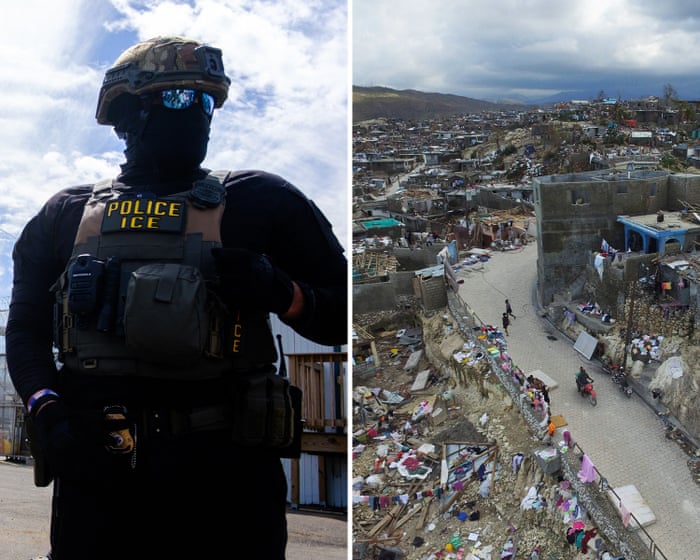
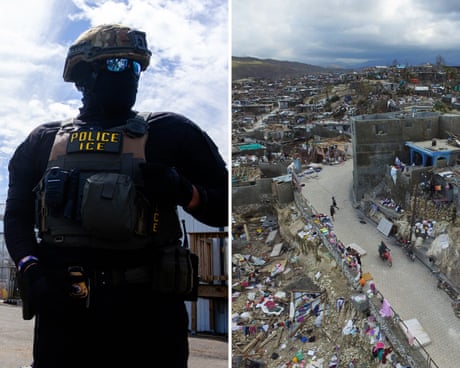
Trump targeting immigrants from countries hit most by climate shocks

A Guardian analysis reveals how most of 39 countries facing US entry restrictions are most vulnerable environmentally

Donald Trump’s immigration crackdown is largely targeting people from the countries most vulnerable to displacement from climate-driven disasters, a Guardian analysis shows.

As the Trump administration pushes policies to boost planet-heating fossil fuels, millions of people are being forced to flee their homelands due to storms, floods and droughts worsened by the climate crisis.

Continue reading...

© Composite: The Guardian, AFP via Getty Images

© Composite: The Guardian, AFP via Getty Images

© Composite: The Guardian, AFP via Getty Images

  •  

The power and paradox of American hegemony

This week on rabble radio, Thomas Ponniah joins rabble editor Nick Seebruch to talk about the heavy influence of the U.S. on the world stage. They break down why massive military power hasn’t led to a better quality of life in the States and how a better future is possible.

About our guest

Thomas Ponniah is a co-writer of Unholy Trinity: the IMF, World Bank, and WTO, co-editor of Another World is Possible: World Social Forum proposals for an Alternative Globalization, co-editor of The Revolution in Venezuela: Social and Political Change Under Chávez, and is a contributor to rabble.ca.

If you like the show please consider subscribing on Apple Podcasts, Spotify, YouTube and now: subscribe to rabble on Patreon to hear exclusive bonus episodes of rabble radio. 

The post The power and paradox of American hegemony appeared first on rabble.ca.
  •  

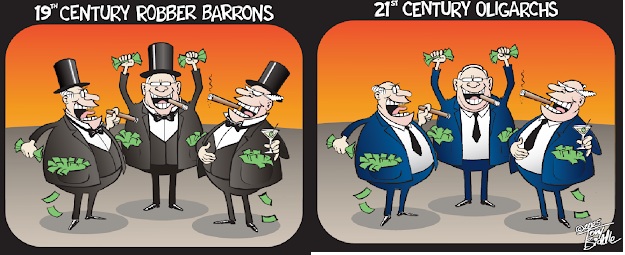
The Oligarch Chronicles Part 3

Trickledown economics sets the stage

With the election of British Prime Minister Margaret Thatcher in 1979 in the UK, and President Ronald Reagan in 1980 in the US, the progressive era ended. Ushered in was the beginning of a regressive era, where both pre-war and post-war progressive laws and regulations protecting the public interest and the environment were steadily eliminated. 

Enabled by their politician servants, Capitalism broke out of its cage and over the next two decades dismantled the cage bar by bar and resumed its quest for unfettered profits and the power and control to guarantee deregulated free markets. Their narrative of tax cuts, deregulation and privatization, promised prosperity for all. 

In the UK it was called Thatcherism. In the US it was called Reaganomics. Decades of progress were dismantled and the wealthy received big tax cuts. 

Reagan cut taxes from 73 per cent to 28 per cent on the wealthy. Reagan cut the corporate tax rate from 46 per cent to 34 per cent. Thatcher cut the corporate tax from 52 per cent to 35 per cent. 

Politicians and governments of every stripe have forwarded this narrative. It was particularly Conservative politicians who promised this trio of policies would bring in prosperity for all, by incentivizing investment. 

Politicians promised the wealthy and their corporations would reinvest their profits creating more jobs. They also promised that these policies would create more competition, more innovation and lower costs through “increased efficiencies”.  It became known as “trickledown economics” on the belief that profits and money would eventually trickledown to everyone. 

Both Reagan and Thatcher championed privatization of public owned industries and assets. It was George HW Bush who called it “voodoo economics.” 

Governments in more than 100 countries were convinced to sell thousands of businesses to the private sector, including airlines, railroads, electrical utilities, water and postal services. As of 2015, the value of this transfer of public wealth to capitalist interests was valued at more than $3.3 trillion. 

The narrative of deregulation and eliminating regulations that protected the public interest and our health and the environment quickly evolved into the deliberately derogatory term “red tape.” Red tape was touted as bad and some kind of barrier to prosperity, restricting innovation and growth. It is as ridiculous as Monty Python’s “the ministry of silly walks.” In Canada there is even a national red tape office and in Ontario the “ministry of red tape reduction” with very serious consequences. 

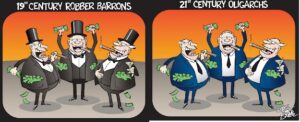
 This set up the conditions enabling today’s oligarchs to massively increase their total wealth. 

Capitalism keeps on repeating the big lie over and over again until it is believed. This narrative put out by wealthy friendly media continues the narrative of tax cuts, cutting red tape and the increased efficiencies of private ownership continuously today. 

Out of its cage, capitalism went back to attacking and weakening unions with the narrative that unions were no longer necessary, and belonging to a union was somehow an infringement on your rights as a person who wanted to work. This resulted in the creation of “right to work” laws claiming the automatic collection of union dues from paychecks was a violation of rights and the freedom to work was being given. 

The 1990s saw an increase in right to work laws in the US. Twenty-six states have now enacted right to work laws prohibiting mandatory union membership and the payment of union dues as a condition of employment was made illegal. 

Working conditions, wages and benefits in those states have severely deteriorated. The wealthy went back to manipulating markets and even committing corporate fraud through corporations like Enron and World Com as well as banker and investor fraud. 

The elimination of banking and investor regulations caused four financial meltdowns that hurt the public and ordinary working people.  

The recession of 1981, the recession of 1991, the Savings and Loan scandal in 1989, where excessive lending, speculation deregulation, and insider fraud, caused more than 1,000 Savings and Loan institutions to fail. It cost American taxpayers $132 billion in a bailout initiated by the federal government. Capitalism went back to the same pump and dump schemes that caused the great depression in the dot com market crash in 2000. Capital markets, venture capitalists, investment banks and brokerage houses publicly hyped up and then sold shares at a profit. All backed up by the Federal Reserve. 

The 2008 financial crisis was arguably the biggest corporate fraud in history. Banks and financial institutions gave mortgages to just about everyone who applied whether they qualified or not. Thanks to financial deregulation, lenders were willing to take the risk of nonpayment because they simply packaged up these loans into an instrument they sold, passing the risk onto investors. 

These worthless instruments crashed. The 2008 financial crisis is one of the five worst financial crises the world has ever seen. It led to a loss of more than $2 trillion dollars from the world economy. “Too big to fail,” was the cry from capitalists. Support for AIG (America International Group) cost the US government approximately $182 billion.

Trickledown policies were the center piece of Ontario Premier Mike Harris’ “Common Sense Revolution” that Ontarians lived through from 1995-2003. Tax cuts for the wealthy, deregulation and privatization figured prominently. In 2000, Hwy 407 was privatized in a 99-year lease. In a far worse deal, the Bruce nuclear plant was privatized through a long-term lease. The profits were privatized but the debt, risks and pollution remained public.

In 1998, Harris turned every municipal and provincial utility from a public non-profit hydro commission into artificially created for-profit corporations. 

Today, Premier Doug Ford is strictly adhering to trickledown policies, implementing big tax cuts for corporations under the cover of small tax cuts to ordinary citizens. Ford is eliminating rules and regulations in every bill as well as deliberately cutting and underfunding public services to create privatization opportunities. 

Both Trump and Conservative leader Pierre Poilievre are presenting the “common sense” policies of tax cuts, cutting red tape, and privatization as irrefutable and indisputable facts. They continuously promise prosperity by saying things like, “all boats will be lifted by the rising tide.”  

In the UK in September of 2022, Conservative Prime Minister Liz Trust tried to bring in a 45-billion-pound unfunded tax cut for the wealthy promising it would spur economic growth. It caused stock market chaos and a huge backlash. Liz Truss was forced to drop her tax cut plan and resigned. The shortest prime minister’s term in British history.  

Even though trickledown economics has been repeatedly discredited and debunked, conservatives everywhere keep on promising more of the same. Their think tank, the Fraser Institute, even made the false claim that the Mike Harris tax cuts brought in an era of prosperity. The facts are clear:under trickledown policies, the rich got much richer and will continue to get richer while more and more people, suffer deprivation. 

Disaster capitalism

A new form of capitalism rose during the 1990’s. Disaster capitalism is where capitalism either takes advantage of natural disasters, wars, and economic crises. 

Standard operating procedure for corporate friendly governments is creating a crisis, with tax cuts and underfunding, or just claiming a fictitious crisis to privatize public assets and services. 

Disaster capitalism is also used to implement deregulation and austerity measures, drastically cutting public spending. Disaster capitalism has been brilliantly outlined by Naomi Klein in her book, The Shock Doctrine

Ontario Premier Doug Ford used the crisis of the COVID-19 pandemic to suspend the “Environmental Bill of Rights.” Former Ontario Premier Mike Harris’ education minister John Snobelen spilled the beans when he said, “first you have to create a crisis.”

In her book, Klein argues that disaster capitalism is not a natural outcome of crises, but a deliberate strategy employed by powerful corporations to reshape societies and economies, to increase profits from disaster relief, resource extraction and infrastructure development. The consequences of disaster capitalism are clear. There is an ever-widening inequality gap of haves and have nots, weakened privatized public services, and environmental damage. 

United States especially under certain Republican state administrations, have embraced versions of this strategy for decades. In places like Texas, natural disasters like Hurricane Harvey and the 2021 winter storm were met not with strengthened public infrastructure but deregulation and further privatization of the energy grid, which had already been separated from federal regulation. In education, some states have underfunded public schools to the point of crisis, then promoted voucher systems and charter schools as a lifeline with clear benefits to private operators. New Orlean’s public housing was privatized after hurricane Katrina. 

Greece offers a dramatic example, particularly during the Eurozone Crisis. When public debt spiraled, austerity measures imposed by the European Union and the International Monetary Fund demanded massive sell offs of public assets, airports, ports and energy utilities at depressed prices. These moves were justified as necessary to restore fiscal health, but in practice they gutted public control over critical infrastructure. The Greek people bore the brunt of a crisis they did not create, while multinational investors reaped the benefits.

Chile, once the original laboratory for Shock Doctrine economics under Pinochet, has continued to exhibit this logic in democratic form through successive administrations, especially regarding pensions, water rights, and education. Even after the end of the dictatorship, Chile’s deeply privatized model, particularly in healthcare and retirement has been maintained under the guise of “efficiency” and “market innovation.” Protests in 2019 revealed the social costs of this model, but Chile’s wealthy still frame any attempt to reinvest in public systems as economically reckless or unsustainable.

France, under President Emmanuel Macron, one can observe a skilled and shrewder form of crisis leverage. Pension reforms, presented as fiscally necessary amid demographic pressures, have been pushed forward even amid massive public resistance. The framing relies on the language of crisis economics, generational, or demographics to justify a weakening of public guarantees in favor of private alternatives, despite France’s strong tradition of social welfare protections.

Australia, a country very much like Canada and is seen as a stable democracy. The pandemic became an occasion for rapid expansion of surveillance technologies and the outsourcing of public functions, such as quarantine enforcement and contact tracing, to private firms with little oversight. Critics pointed out that the militarization of pandemic response and the privatization of quarantine hotels created both public health risks and transparency concerns. 

Iraq after the US invasion under false pretenses, in March of 2003, called “Operation Freedom,” Iraq’s resources were privatized. 

Turkey, after the 2016 coup attempt, President Erdogan declared an emergency and pushed through mass privatizations, weakened labor protections and redirected public funds to loyalist business conglomerates under the guise of national security. 

Britain is the closest parallel to Ontario with similar conservative governments. After the 2008 financial crisis and with increasing fury during the COVID crisis, witnessed deep cuts to public services under the justification of fiscal prudence. The National Health Service, once the crown jewel of British public infrastructure, saw creeping privatization through outsourcing, private finance initiatives like, P3’s Public Private Partnerships, and contract handovers to corporations with close ties to the governing party. During the pandemic, emergency procurement laws were used to award billions in contracts to firms with no transparency and often no relevant experience. A typical crisis capitalism maneuver. The crisis was real but the government’s response was engineered to prioritize deregulation and profits.

The Philippines, Serbia and South Africa have also used crisis capitalism to bring in tax cuts, deregulation and privatization. 

In Part 4, we discuss oligarch actions and influences as well as Canadian oligarch influenced provinces.

The post The Oligarch Chronicles Part 3 appeared first on rabble.ca.

  •  

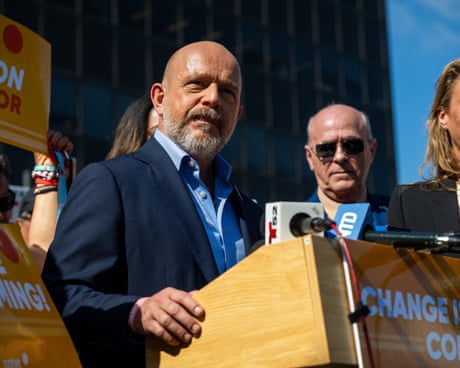
Republican Steve Hilton advances in tight California governor’s race

Former UK political operative endorsed by Trump will face off against Democrat Xavier Becerra in November election

Republican Steve Hilton, the former UK political operative turned Fox News personality, has advanced to the November general election in the race to become California’s next governor, facing off against Democrat Xavier Becerra, a former congressman, state attorney general and US health secretary.

Hilton’s success, a remarkable achievement for a recent immigrant, came after he was endorsed by Donald Trump.

Continue reading...

© Photograph: Benjamin Hanson/AP

© Photograph: Benjamin Hanson/AP

© Photograph: Benjamin Hanson/AP

  •  

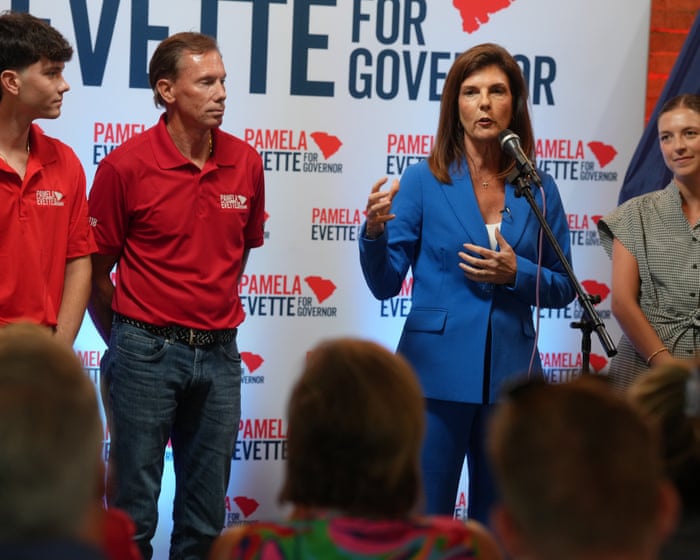
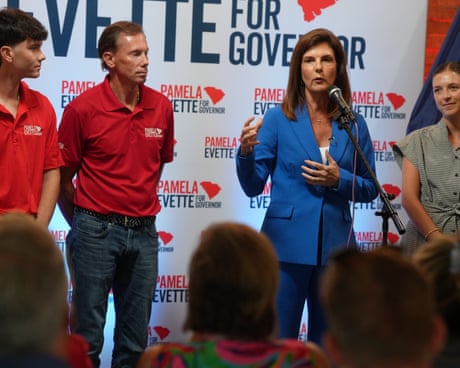
Trump-backed Pamela Evette and Alan Wilson head to runoff in South Carolina GOP governor race

Lieutenant governor and attorney general advance but result signals decisive defeat for controversial Nancy Mace

Donald Trump-backed Pamela Evette, South Carolina’s lieutenant governor, and Alan Wilson, the state’s attorney general, have advanced to a runoff in a competitive race to represent the Republican party in South Carolina’s gubernatorial election.

The winner of the Republican primary is favored to win the closely watched general election, given South Carolina’s conservative tilt, although Democrats are hoping to ride a wave of progressive enthusiasm to make political gains across the ticket.

Continue reading...

© Photograph: Meg Kinnard/AP

© Photograph: Meg Kinnard/AP

© Photograph: Meg Kinnard/AP

  •  

rabble Q&A with Privy Council Office on CUSMA review

The Langevin Block building houses the Privy Council Office.

The United States Trade Representative’s office announced in a press release this week that it will conduct three rounds of negotiations with Mexico about the upcoming Canada–United States–Mexico Agreement (CUSMA) review on July 1 – all of which will continue to exclude Canada from the discussions. 

While Canada-U.S. Trade Minister Dominic LeBlanc has indicated he will head to Washington next week

Canada’s Chief Trade Negotiator Janice Charette and Prime Minister Mark Carney’s Office of the Privy Council have remained tight-lipped about the upcoming CUSMA review. 

rabble.ca had an opportunity to do a Question and Answer with the Privy Council Office this week, to clarify some expectations about the next phase of negotiations with the United States and Mexico.  

1. What’s it like working with the USTR right now. Is it actually adversarial or confrontational? Jamieson Greer has made several remarks in the past few months indicating that it might be, so we’re trying to filter out political theatre from reality.

Canada continues to be a ready and willing trading partner, favouring durable outcomes built on comprehensive and pragmatic solutions and not short-term fixes.

The proposals Canada has advanced are serious and substantive, having the potential to generate hundreds of billions of dollars in economic value for American industries and workers in exchange for real relief from the unfair tariffs imposed on Canadian products.

As is appropriate, Canada does not negotiate publicly and will continue to engage through diplomatic channels in a manner that reflects the seriousness and importance of these discussions.

2. Can you give me an indication of how your office is working with Mexico directly at this point? Are there effects from the recent Mexican Trade missions that relate your work in any way? 

Canada recently held the latest round of its own bilateral engagements with Mexico, and those discussions were very positive and productive.

Canada remains fully prepared for any and all discussions with the U.S. and Mexico on trade issues and we are engaged in substantive and concrete discussions with both countries.  We are confident in the strength of our position.

As we near the joint review of the CUSMA, we are engaging on a continuous basis with industry and labour representatives as well as provincial and territorial governments to ensure that we can exchange relevant information and keep key partners up-to-date.

We have been clear and consistent with the United States that we are ready to launch the joint review the moment they are. There continues to be meetings between Canadian and American trade officials on a regular basis.

With respect to the upcoming U.S.-Mexico meetings, discussions between any two partners are a normal part of diplomatic engagement, as they serve to address issues particular to that bilateral relationship.

To be clear, any review or renegotiation of the core structure of CUSMA, including foundational elements such as rules of origin, cannot happen without Canada. Canada is committed to maintaining the CUSMA as a trilateral agreement, and any consideration of changes or modifications requires all three parties at the table.

Canada continues to advance its own bilateral discussions, remains in close contact with both partners, and stands ready to move forward with trilateral negotiations as soon as all three parties are prepared to engage together.

3. What are the issues that are being prioritized in the CUSMA review? 

Canada and the United States share one of the most comprehensive and mutually beneficial economic relationships in the world, and Prime Minister Carney’s remarks reflect our commitment to deepening that partnership in a way that works for both countries.

Examples of sectors where deeper integration holds the most significant potential include energy, steel and aluminum, softwood lumber, agriculture, and the automotive sector.

These are areas where our two economies are already deeply integrated, where Canadian inputs form part of high-value supply chains, and where a strengthened, rules-based trading framework can deliver real benefits for workers, farmers, businesses, and communities on both sides of the border.

It is also important to remember that more than 70 per cent of what Canada sends across the border is not finished consumer goods. They are inputs like energy, raw materials, critical minerals, aluminum, steel that go directly into American manufacturing. 

In short, Canadian exports do not displace American production but rather help make it possible and increase the ability of companies in both countries to compete globally.

That said, the Canada-U.S. relationship extends well beyond any single sector or agreement.

More broadly, Canada shares the U.S.’s concerns about unfair competition from non-market economies and has taken steps to protect our industries from unfair trade practices, for example in the steel and aluminum sectors. We are prepared to work collaboratively with the U.S. in this regard.

Canada has consistently been a strong, stable, and reliable partner in trade, in hemispheric security, in defence, and across the full range of shared interests that define our partnership.

The post rabble Q&A with Privy Council Office on CUSMA review appeared first on rabble.ca.

  •  

Only one in 10 Europeans now see US as an ally, survey suggests

Exclusive: poll across 15 countries finds ‘deep mistrust’, with majority doubting US would come to their aid in an attack

European confidence in an American “security guarantee” has hit a historic low, a survey suggests, with only one in 10 people across 15 countries seeing the US as an ally and majorities in all doubting it would come to their aid if they were attacked.

The survey, published on Wednesday by the European Council on Foreign Relations (ECFR) thinktank before critical G7 and Nato summits in France and Turkey over the coming weeks, revealed “deep European distrust in the US”, the authors said.

Continue reading...

© Photograph: Piroschka Van De Wouw/Reuters

© Photograph: Piroschka Van De Wouw/Reuters

© Photograph: Piroschka Van De Wouw/Reuters

  •  

Off the Hill (FULL VIDEO): A new era of American Imperialism

This year has been marked by the U.S. President Donald Trump’s aggressive approach to foreign policy. From the seizure of the Venezuelan president in January to the ongoing war in Iran, the U.S. government is unashamedly entering into a new era of American Imperialism.

Political scientist Gabriel De Roche, Madelaine Drohan, senior fellow at the Graduate School of Public and International Policy, University of Ottawa, politics and philosophy professor Thomas Ponniah and rabble’s own parliamentary reporter Karl Nerenberg discuss how progressives north and south of the border can respond to the so-called Donroe Doctrine.

About our guests

Gabriel De Roche is a political scientist and public opinion survey researcher working on global, national, and local projects with a particular focus on the politics of climate change and the clean energy transition. He holds a PhD in political science from the University of California, San Diego, and currently works at The 2035 Initiative at UC Santa Barbara where he is the Director of Polling and Survey Research and a Postdoctoral Fellow. He is also the founder and principal of a public opinion consultancy, Pluriel Research. Based in Santa Barbara, California, and Toronto, Ontario, he is the co-host of the Canadian podcast, Culture Lab, a show about how the zeitgeist shapes our political culture.

Madelaine Drohan is a senior fellow at the Graduate School of Public and International Policy, University of Ottawa. She is a former Canada correspondent for The Economist, and a former foreign correspondent for The Globe and Mail. During her long journalism career, she covered politics, economics, and business in Africa, Asia, Canada, and Europe. Her latest book is: He Did Not Conquer: Benjamin Franklin’s Failure to Annex Canada. She lives in Ottawa.

Thomas Ponniah is a co-writer of Unholy Trinity: the IMF, World Bank, and WTO, co-editor of Another World is Possible: World Social Forum proposals for an Alternative Globalization, co-editor of The Revolution in Venezuela: Social and Political Change Under Chávez, and contributor of 76 articles for rabble.ca.

Karl Nerenberg is an award-winning journalist, broadcaster and filmmaker, working in both English and French languages. He is rabble’s senior parliamentary reporter.

About Off the Hill

Since 2019, Off the Hill has been rabble.ca’s live political panel. Through this series, we break down important national and international news stories through a progressive lens.

This webinar series invites a rotating roster of guest activists, politicians, researchers and more to discuss how to mobilize and bring about progressive change in national politics — on and off Parliament Hill.

Our Off the Hill series has seen some changes in recent months! Check out those changes here.

The post Off the Hill (FULL VIDEO): A new era of American Imperialism appeared first on rabble.ca.
  •  

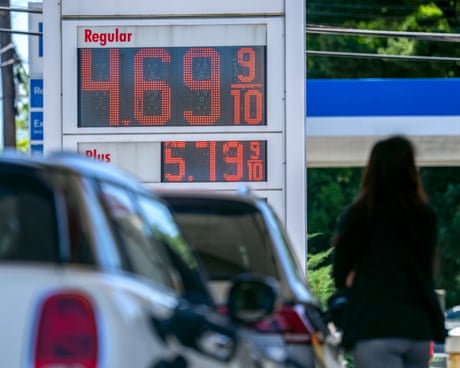
US inflation jumped to 4.2% in May, the third consecutive increase since start of Iran war

Before the conflict began, inflation was at 2.4%, but the closure of the strait of Hormuz has affected energy prices

US inflation jumped to an annual rate of 4.2% in May, the third consecutive monthly increase since the start of the Iran war and a three-year high, as Americans continue to face steep oil prices.

Prices have increased sharply over the past several months, rising at an annual rate of 3.3% in March before going up to 3.8% in April. In February, before the conflict began, inflation was at 2.4%.

Continue reading...

© Photograph: Bonnie Cash/UPI/Shutterstock

© Photograph: Bonnie Cash/UPI/Shutterstock

© Photograph: Bonnie Cash/UPI/Shutterstock

  •  

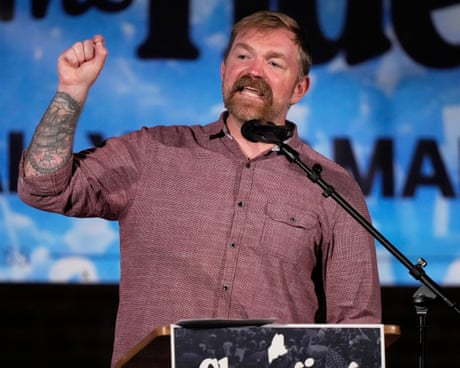
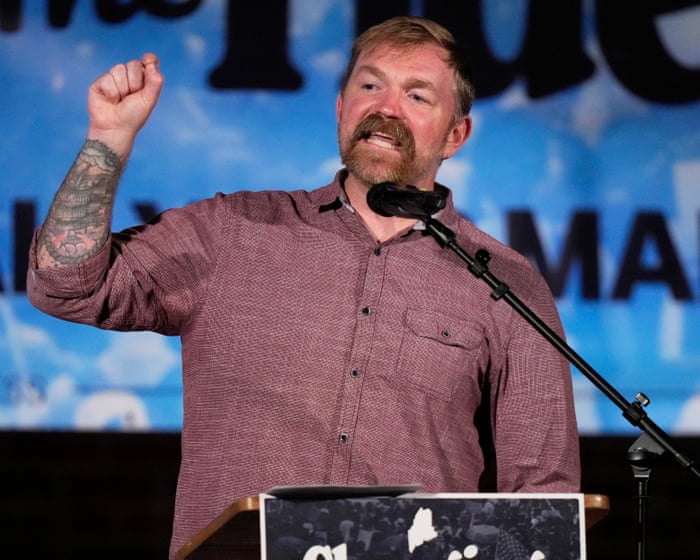
Graham Platner shrugs off scandals to win Maine Democratic Senate primary

Platner, whose campaign was hit by series of negative headlines, to face Susan Collins in key midterm contest

Graham Platner, a Marine veteran, oyster farmer and progressive activist, has scaled a mountain of personal controversies to win the Democratic nomination for the US Senate in Maine.

Victory on Tuesday caps a remarkable rise for a candidate who has never held elected office and whose campaign was shadowed by negative headlines that might have ended a more conventional political career.

Continue reading...

© Photograph: Robert F Bukaty/AP

© Photograph: Robert F Bukaty/AP

© Photograph: Robert F Bukaty/AP

  •  
❌