Reading view

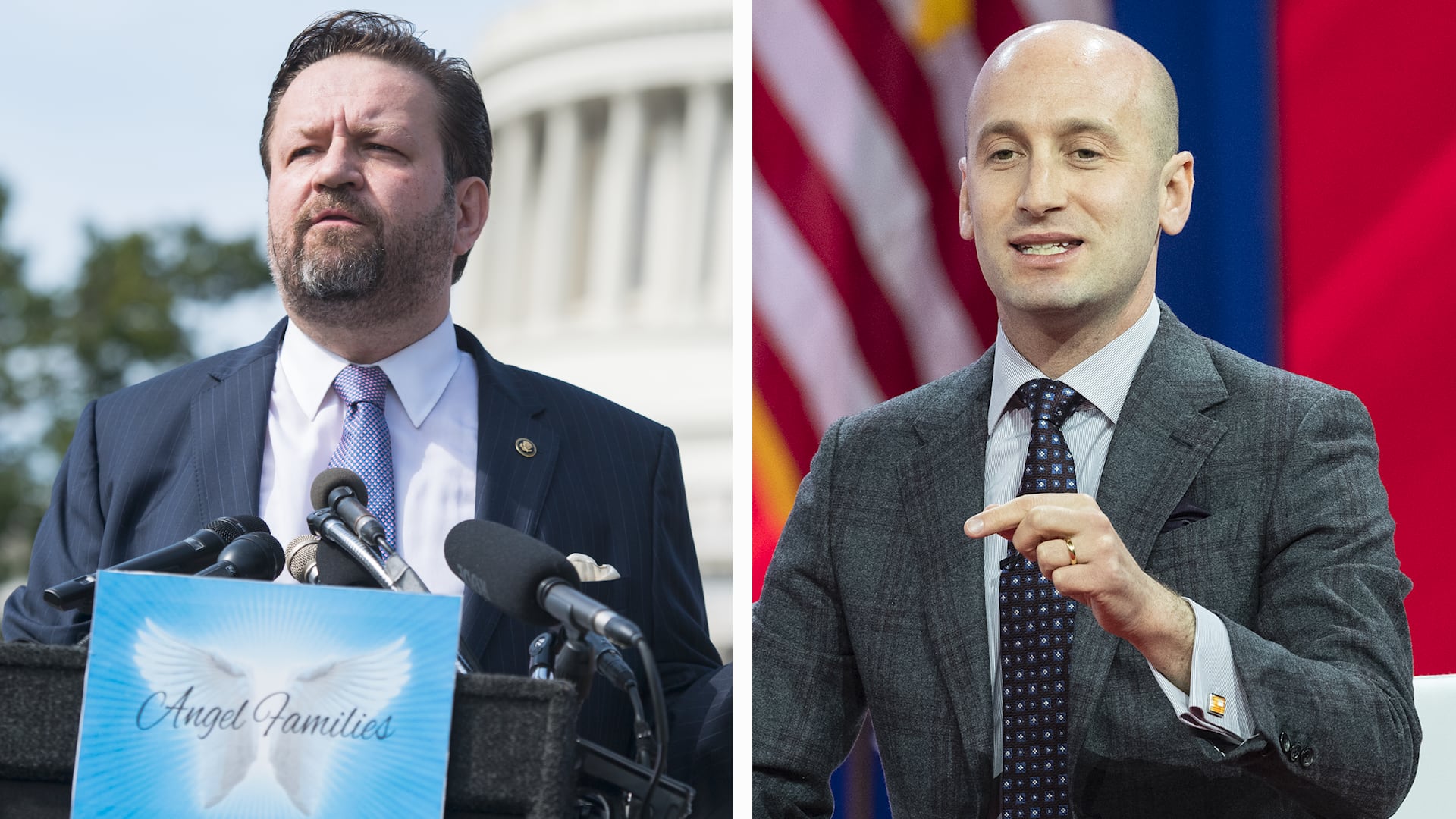
Sebastian Gorka and Stephen Miller, architects of Trump’s pressure on Mexico

At the helm of the pressure strategy on Mexico designed in Washington, on the hard-line side, there are two individuals: Stephen Miller and Sebastian Gorka. They are two well-known figures from Donald Trump’s circle of loyalists, both allies of his during his first presidency and whom the president recruited as soon as he secured a second term.

Seguir leyendo

© Getty Images

Sebastian Gorka and Stephen Miller.
  •  

Sheinbaum says Mexico will ensure peaceful World Cup opening despite protest threats

Malay Mail

MEXICO CITY, June 9 — Mexican President Claudia Sheinbaum said yesterday she could guarantee a peaceful World Cup opening ceremony this week, despite concern over ongoing protests.

A teachers union has threatened demonstrations at Thursday’s opening game between Mexico and South Africa in the capital if the government doesn’t respond to demands for salary raises and pension reforms.

“We are going to guarantee... that the celebration of the World Cup is well-executed, in peace and tranquility,” Sheinbaum said in her daily press conference.

Last week, police dispersed protesters with teargas and rubber bullets outside the historic Zocalo square where authorities have erected a massive screen for a World Cup fan zone.

The streets surrounding the square remain closed off with metal barricades, which Sheinbaum has said are meant to guard against “provocations.”

Protesting teachers also toppled commemorative statues of players in downtown Mexico City last week.

Though Sheinbaum has maintained open dialogue with the teachers, the union has deemed government proposals insufficient.

Joining the protests are hundreds of people from the Ayotzinapa teachers college, who are demanding further efforts to investigate the disappearance of 43 students from the rural school in 2014.

Mexico City police said they discovered 59 homemade explosive devices on one of the bus convoys entering the capital on Monday, posting a photo of dozens of small white pipes with fuses on X.

Tourists ‘freaked out’ 

The teachers’ sprawling tent camps have flooded the city center, leading to complaints from businesses that tourists will stay away during the World Cup.

“The access to our restaurant is closed off, the people aren’t coming, the tourists are freaked out,” 31-year-old waiter Jonathan Herrera, who was protesting against the encampment, told AFP.

Around 50 people waited to cross through one of the metal barricades under the watch of police, where one restaurant glued a poster reading “we’re still open.”

US tourist Heather Lutz, 64, expressed support for the protesters.

“No government likes their city to look real” during big events like the World Cup, she said.

The tournament is the ideal moment to “generate pressure” to win concessions from the government, 42-year-old teacher Dinora Diaz told AFP in the street encampment.

Negotiations

Sheinbaum’s government explained on Monday their proposals to the teachers union, proposing the creation of a new state-owned company to administer pensions.

But the government dismissed the possibility of reversing pension laws, arguing it would cost around $400 million.

The teachers have rejected the government’s proposals while the Secretary of Governance Rosa Icela Rodriguez called for the strikers to lift the blockades.

“It’s fundamental that the legitimate exercise of the right to protest can coexist with the rights of those who live in and move through this great city,” the official said. — AFP


  •  

Not the time to cement North America’s fate

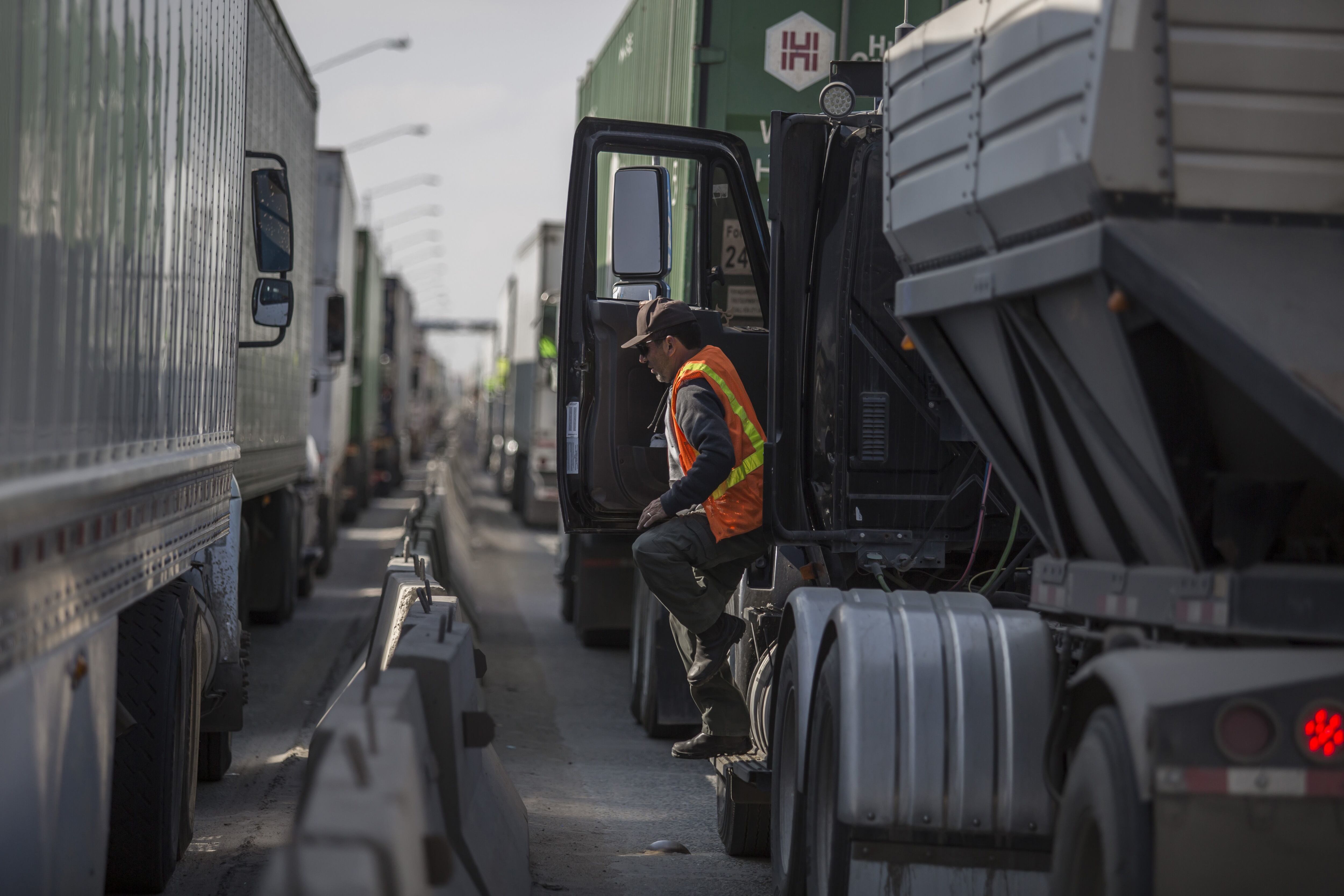
The future of U.S. global competitiveness hangs in the balance as the United States-Mexico-Canada Agreement’s July 1 review deadline fast approaches and formal U.S.-Mexico negotiations begin Monday. Simply put, the United States can achieve neither the scale nor the economic differentiation needed to compete with China without deepening the close collaboration that has defined much of North America’s past 35 years.

Seguir leyendo

© Omar Martínez (CUARTOSCURO)

A line of trucks at the border crossing in Tijuana, Mexico.
  •  

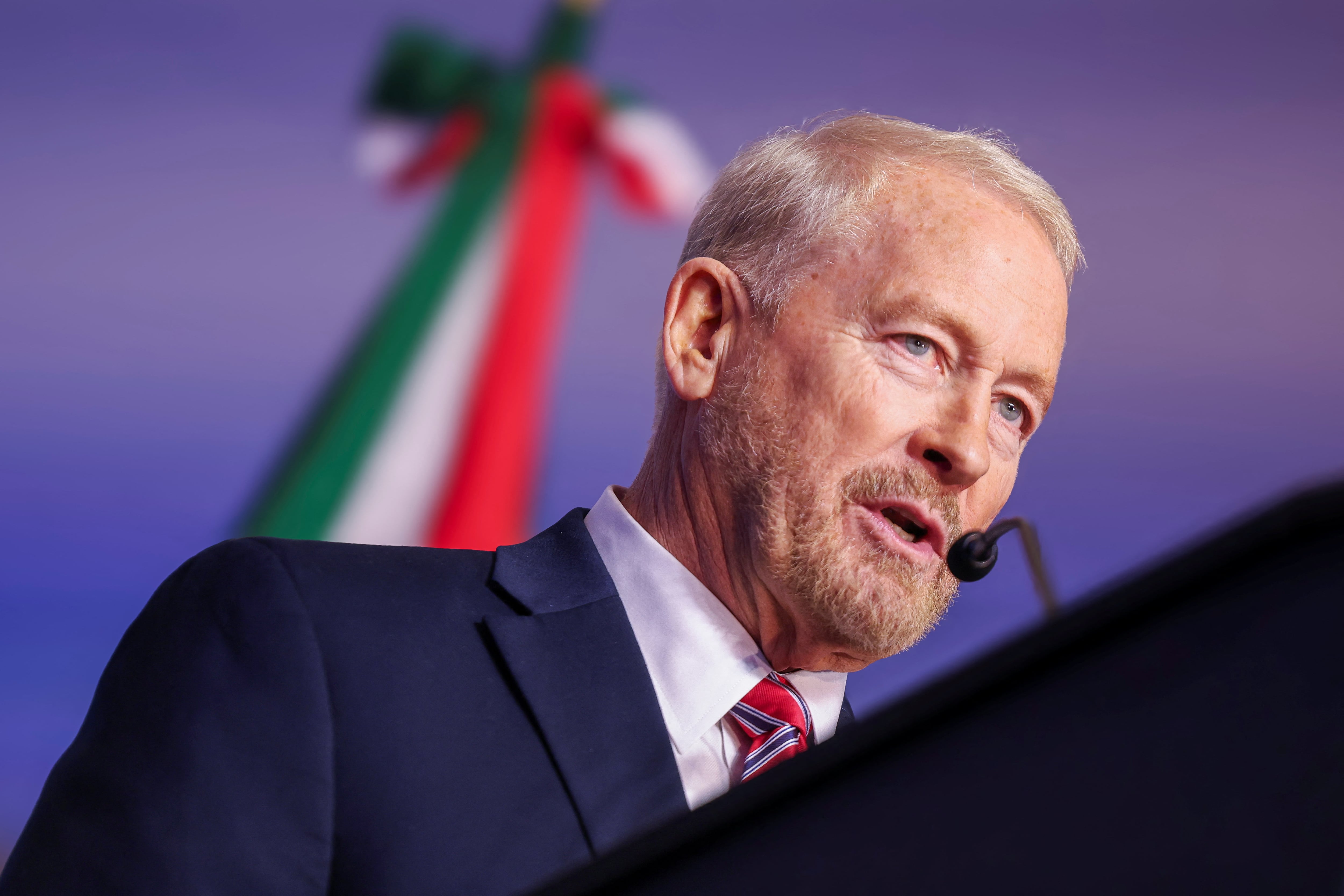
US Ambassador Ronald Johnson, an uncomfortable voice amid Mexico’s defense of sovereignty

The Mexican government’s campaign against foreign interference has reached U.S. Ambassador to Mexico Ronald Johnson. The U.S. representative this week clashed with President Claudia Sheinbaum after her Sunday speech, in which she protested U.S. interference in Mexico’s internal politics. Johnson, a former Green Beret appointed by Donald Trump to press for action against the drug cartels, replied with a social media post that the Mexican leader acknowledged almost immediately: “Ambassadors must be respectful of countries’ internal political affairs.”

Seguir leyendo

© Raquel Cunha (REUTERS)

Ronald Johnson at the ambassador's residence in Mexico City, June 26, 2025.
  •  

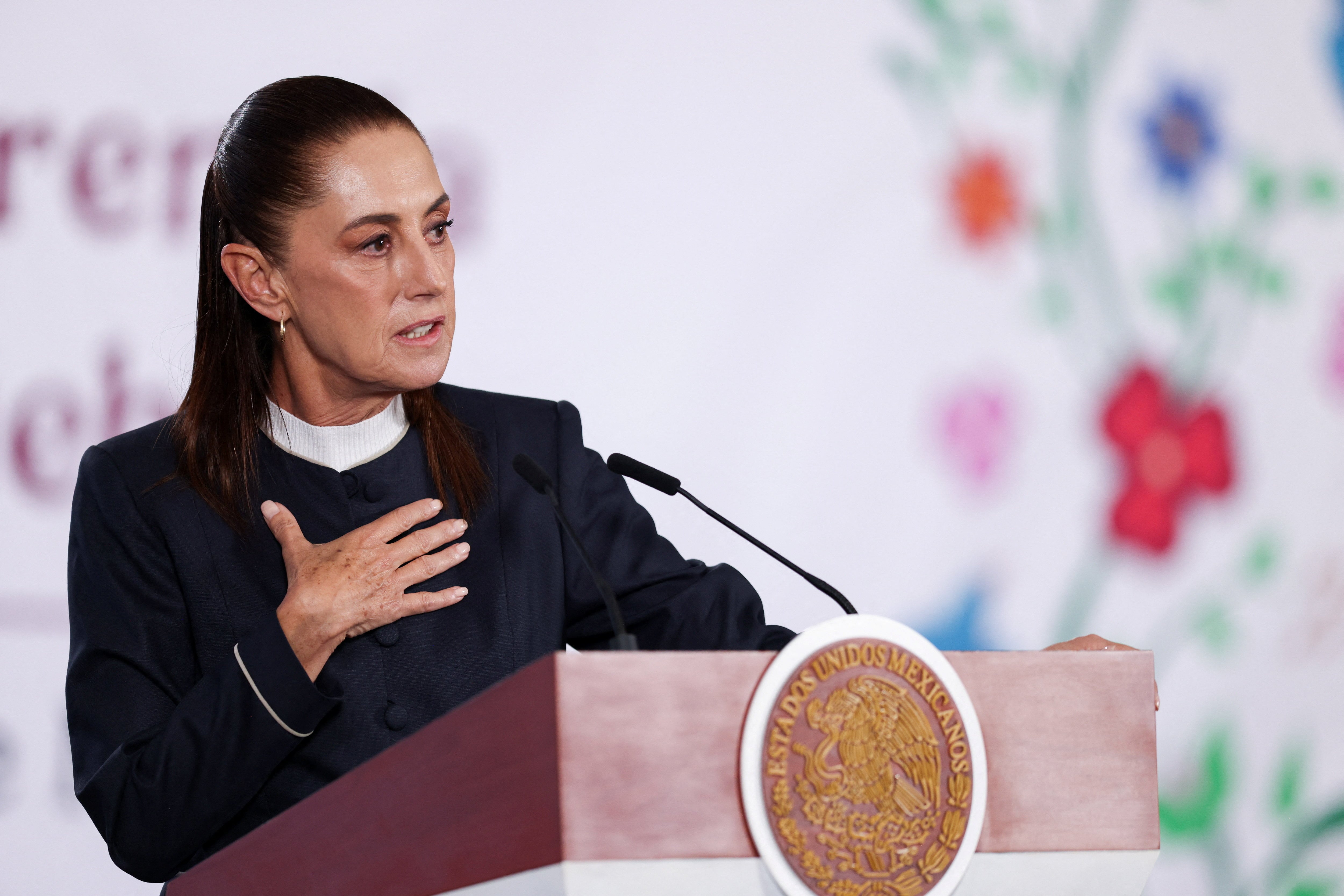
Sheinbaum’s approval ratings drop seven points after Sinaloa and Chihuahua crises

Mexico’s president, Claudia Sheinbaum, is going through her most delicate moment just as she reaches a year and a half in office. Faced with multiple open fronts, the president is showing signs of wear, with a seven-point drop in approval since last March. It is the steepest fall so far in her term, although approval ratings remain high at 68%, according to an Enkoll poll conducted for EL PAÍS and W Radio. To the crisis triggered by the indictment of the governor of Sinaloa, along with nine other senior officials accused by a New York prosecutor of collaborating with drug traffickers, is added a worrying economic weakness that threatens the viability of social policies—a flagship of the leftist Morena government. Insecurity, corruption and the economy are the president’s main shortcomings and the principal concern of Mexicans, with rates slightly up since the last poll in early March.

Seguir leyendo

May 16 to 19, 2026.

1,207 interviews with men and women aged 18 and over, with valid voter ID and resident in Mexico.

© Quetzalli Nicte-Ha (REUTERS)

Mexico's President Claudia Sheinbaum speaks during her daily conference on May 26, 2026.
  •  

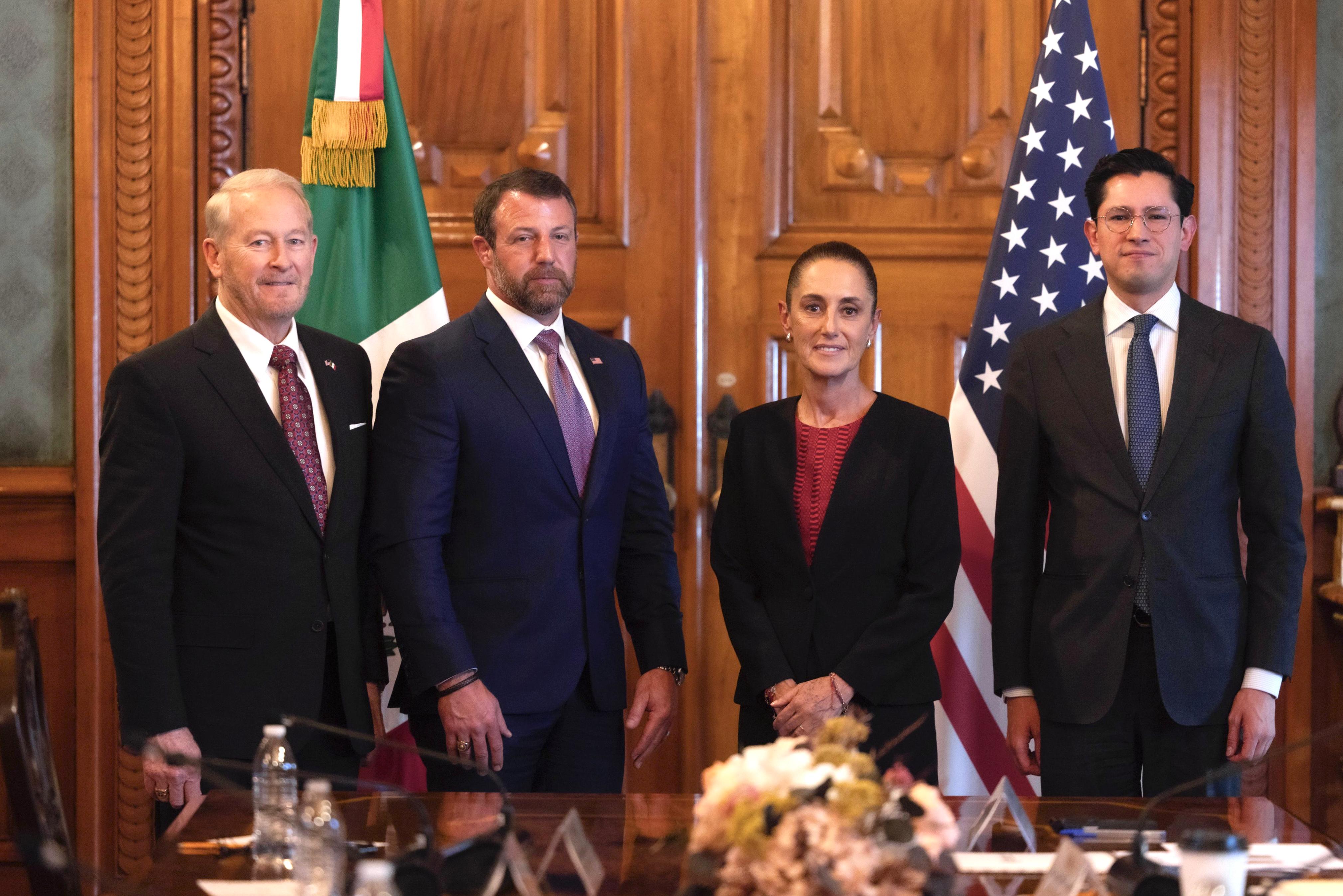
Mexico seeks to reset ties with Washington as Sheinbaum welcomes Trump’s DHS chief

Mexico is preparing its World Cup warm‑up — paradoxically far removed from football and focused instead on its relationship with one of its partners in the tournament venture, the United States.

Seguir leyendo

© Presidencia de México

Ronald Douglas Johnson, Markwayne Mullin, Claudia Sheinbaum, and Roberto Velasco in the National Palace in Mexico City on May 21.
  •  

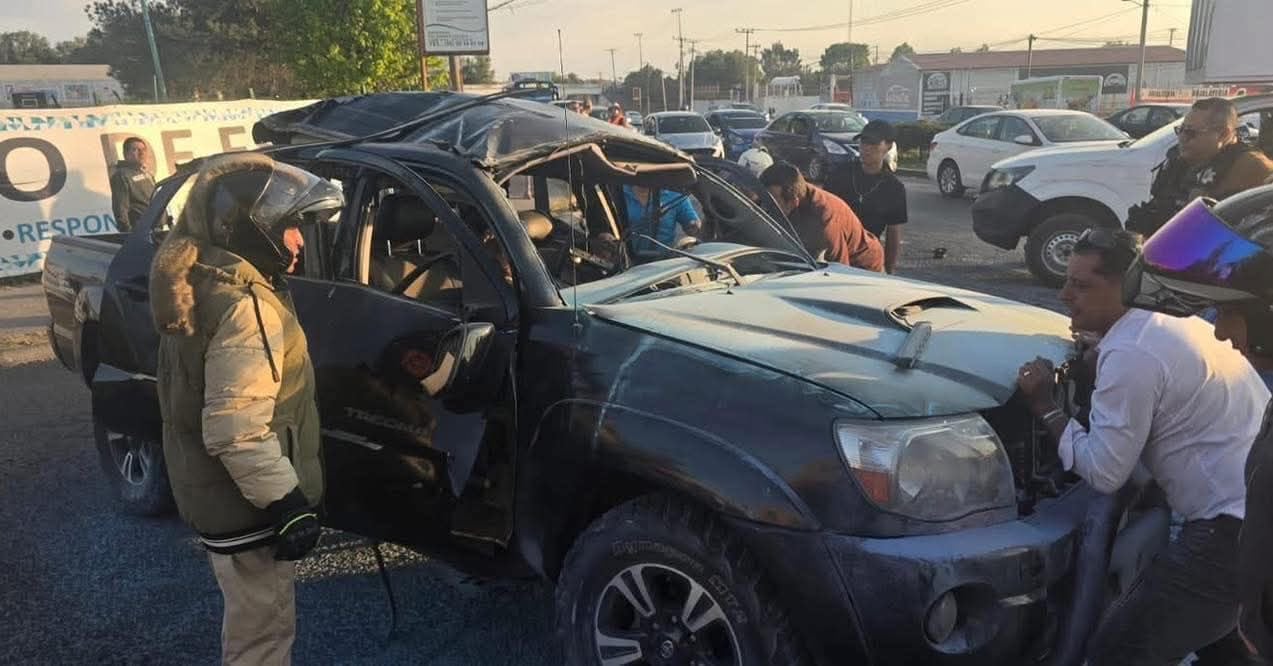
The CIA’s shadow grows larger over Mexico

A bitter spring in the southern part of North America. Tensions between Mexico and the United States are escalating rapidly, straining the very fibers and tendons that, until a few weeks ago, had sustained the bilateral relationship without much difficulty. The smooth and fruitful security cooperation that characterized the first year of Donald Trump’s administration has recently turned into a nightmare, with developments that paint a rather bizarre picture — some of which are cause for concern for the Mexican government led by Claudia Sheinbaum, such as the growing presence of CIA agents in the country. This week, U.S. media outlets revealed that the intelligence agency orchestrated the March car bomb attack against a mid-level operative of the Sinaloa Cartel near the capital. Both governments have denied the information, with varying degrees of intensity.

Seguir leyendo

The incident in which Francisco Beltrán died in the State of Mexico.
  •  

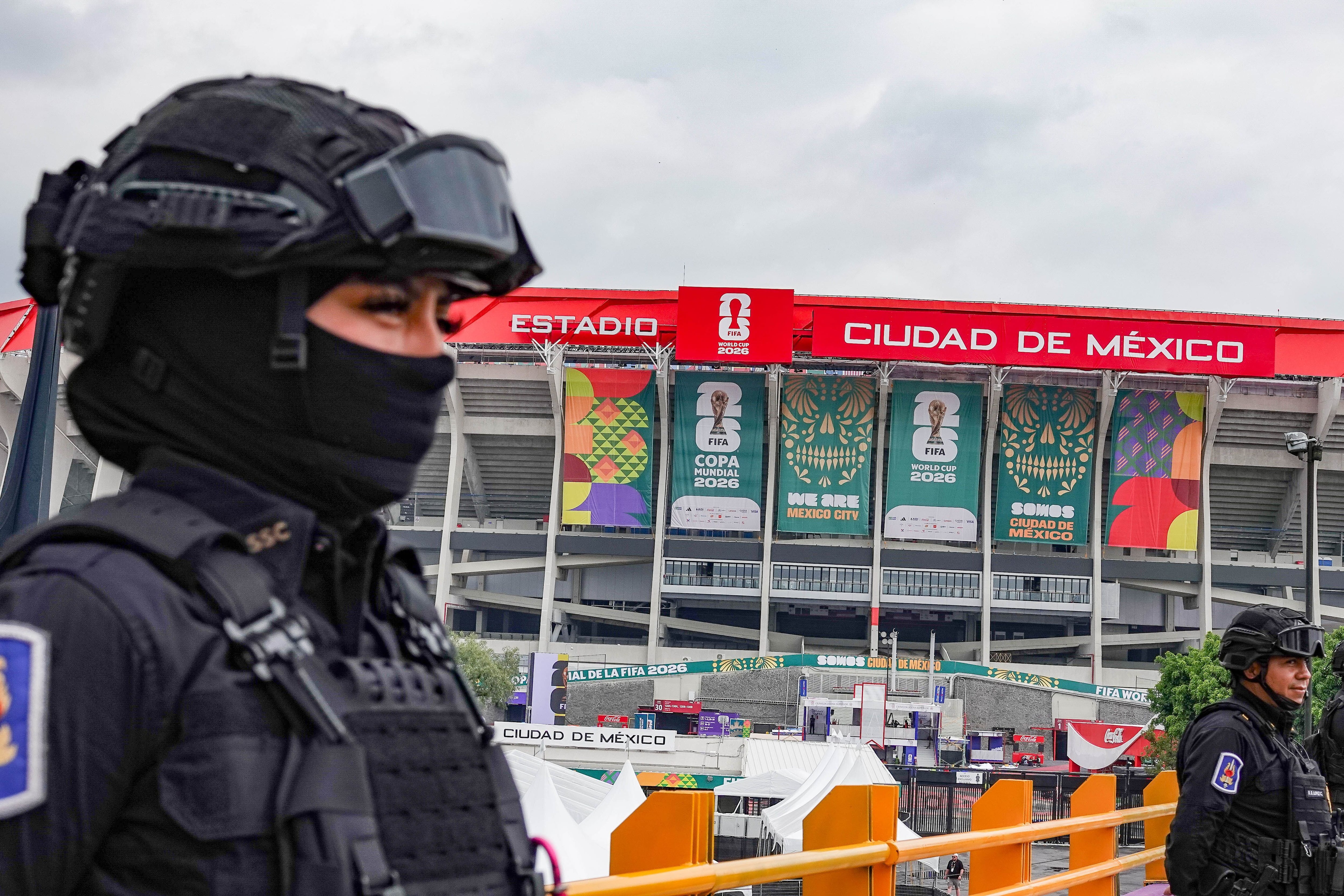
Final countdown to defuse protests against Mexican government ahead of World Cup opening game

Only 24 hours remain before the World Cup kicks off in Mexico and the country is going though its final dress rehearsals. Preventing demonstrations on opening day is already a pipe dream: negotiations with teachers have stalled and search groups will march to make their missing relatives visible. With everyone in position and the cards on the table, attention is focused on avoiding the worst-case scenario for the government of Claudia Sheinbaum — an image of a police officer striking a teacher circling the globe on the day the country is playing for its international image. The concern is not unfounded: on the first day of protests a teacher lost an eye in clashes with police. The past two weeks have tested containment measures, and Wednesday will be the last chance to fine-tune the public staging. To ease the pressure, authorities have canceled classes for Thursday and ordered remote work for public servants.

Seguir leyendo

© Rogelio Morales Ponce (Cuartoscuro)

A police officer guarding the perimeter of Estadio Azteca on Tuesday.
  •  

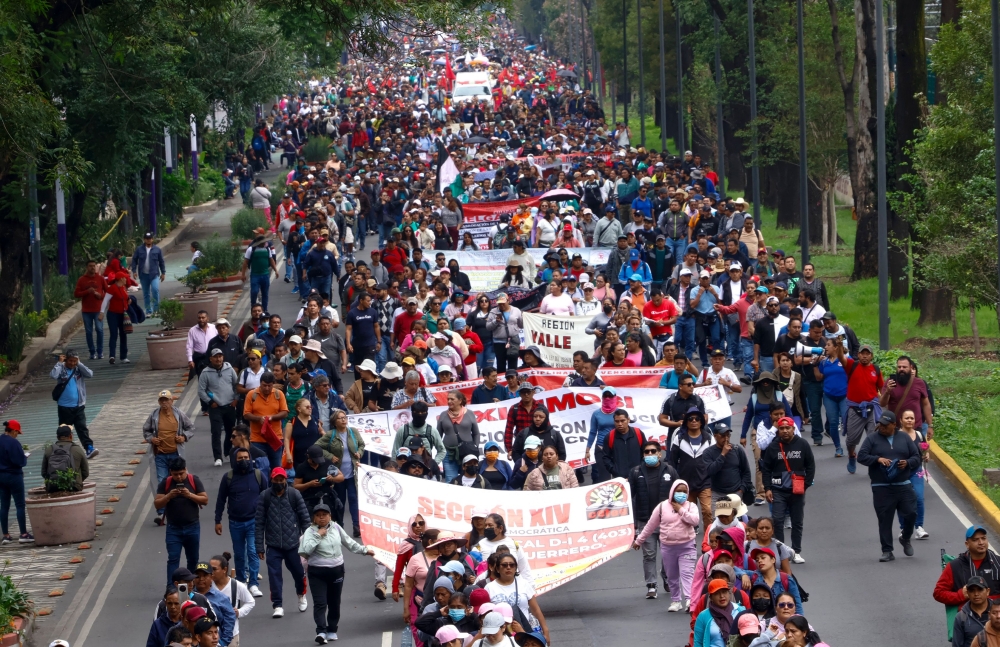
Mexico City protests block Azteca Stadium route days before World Cup opener

Malay Mail


MEXICO CITY, June 10 — A protest blocked an avenue leading to Mexico City’s Azteca Stadium for hours yesterday, just days before the 2026 World Cup kicks off at the venue.

As football fans flood into tournament co-hosts the United States, Canada and Mexico, the Central American country is grappling with chaotic teacher protests in its capital.

Thousands took part in yesterday’s protest, which was led by a breakaway group of the CNTE teachers union following a week of demonstrations that President Claudia Sheinbaum has called a “provocation.”

“As if to say, ‘Look at how bad the situation is in Mexico,’” she told a press conference.

A police blockade prevented the demonstrators from reaching the Azteca Stadium, which will host the World Cup opening match on Thursday.

With thousands of officers deployed and concrete barriers set up around the venue, protesters rallied on the street for around three hours before dispersing.

Mexico City’s security chief Pablo Vazquez said in a statement that the movement had been peaceful.

Sheinbaum said earlier that the opening match was “guaranteed,” though the left-leaning leader again ruled out using police to repress the demonstrations.

Her government has favored dialogue with the protesting teachers, but to no avail.

“We’re going to continue our struggle,” said protester Austreberto Flores.

The CNTE teachers union has been on strike since last week to demand a salary raise and the reversal of a pension law—which the government considers unfeasible.

The teachers have also set up camp near the World Cup fan zone in Mexico City’s Zocalo square.

On June 1, police dispersed protesters in the area with rubber bullets and teargas.

“They want to make it seem like there is mass social turmoil in Mexico, and that’s not true,” Sheinbaum has said of the protests.

The teachers have called for demonstrations on Thursday that will also include families of so-called “disappeared” people, who are alleged to have been killed or kidnapped by Mexican authorities or criminal gangs.

The 2026 edition of the world’s biggest football extravaganza is the most logistically complex ever staged.

A vast global TV audience is set to tune in to the opening ceremony and match pitting Mexico against South Africa.

Mexico is still rushing to complete renovations at subway stations and at its main airport ahead of the tournament. — AFP


  •  

Sheinbaum announces controversial plan to begin fracking to “strengthen national sovereignty”

Medellín, Colombia – On Wednesday, Mexican President Claudia Sheinbaum announced plans to begin fracking in order to more than double the country’s natural gas production and “strengthen national sovereignty”. 

Despite Mexico possessing 141 billion cubic feet of unconventional gas reserves, the country has hardly extracted it, instead importing more than 70% of its natural gas from the United States, making it the world’s largest buyer of U.S. gas.

Sheinbaum’s announcement signals a U-turn in her party’s traditional opposition to fracking due to its deleterious environmental impacts.

Hydraulic fracturing, or fracking, is a method of extracting oil and natural gas by forcing water, sand, and chemicals into the ground to fracture deep rock formations and allow oil and gas to flow up to the surface. 

Fracking has long been controversial due to its environmental effects, such as causing earth tremors, air and water pollution, massive water consumption and increased greenhouse gas emissions.

However, in a press conference on Thursday, Sheinbaum, who is an energy and climate change scientist by profession, defended the plans to begin fracking, arguing that there are “new technologies which open the possibility of recycling water, that don’t use such powerful chemicals which are so hard to recycle”, therefore providing a sustainable alternative to traditional fracking practices. She emphasized that for all of her life, she has been “against traditional fracking.” 

Sheinbaum said that a technical committee will spend two months evaluating the feasibility of these new fracking technologies. 

The president’s announcement signals a departure from the historical rhetoric of her party, Morena. Andrés Manuel López Obrador, Sheinbaum’s predecessor and the founder of Morena, had previously attempted to impose a constitutional ban on the practice. 

The announcement will likely also prove unpopular with people who considered Sheinbaum’s previous position on fracking when voting for her; in February a spokesperson for the Mexican Alliance Against Fracking described a potential shift towards fracking as “a betrayal to those who voted for President Sheinbaum, who said fracking would not be carried out,” and suggested that the president was “only listening to the industry and fracking promoters,” according to El País. 

The spokesperson also highlighted the risks that fracking can have on indigenous communities, where it “fracture[s] the social fabric and create[s] risks for women.”

Although Sheinbaum recognizes that contracts with the U.S. for natural gas imports remain in place, the priority is to ensure energy stability in Mexico and reduce reliance on foreign powers in case of shortages caused by situations like the current war in the Middle East.

Featured image description: Claudia Sheinbaum in 2020

Featured image credit: Maritza Ríos via Wikimedia Commons

The post Sheinbaum announces controversial plan to begin fracking to “strengthen national sovereignty” appeared first on Latin America Reports.

  •  

The CIA crash that opened a fraught month in Mexico–US relations

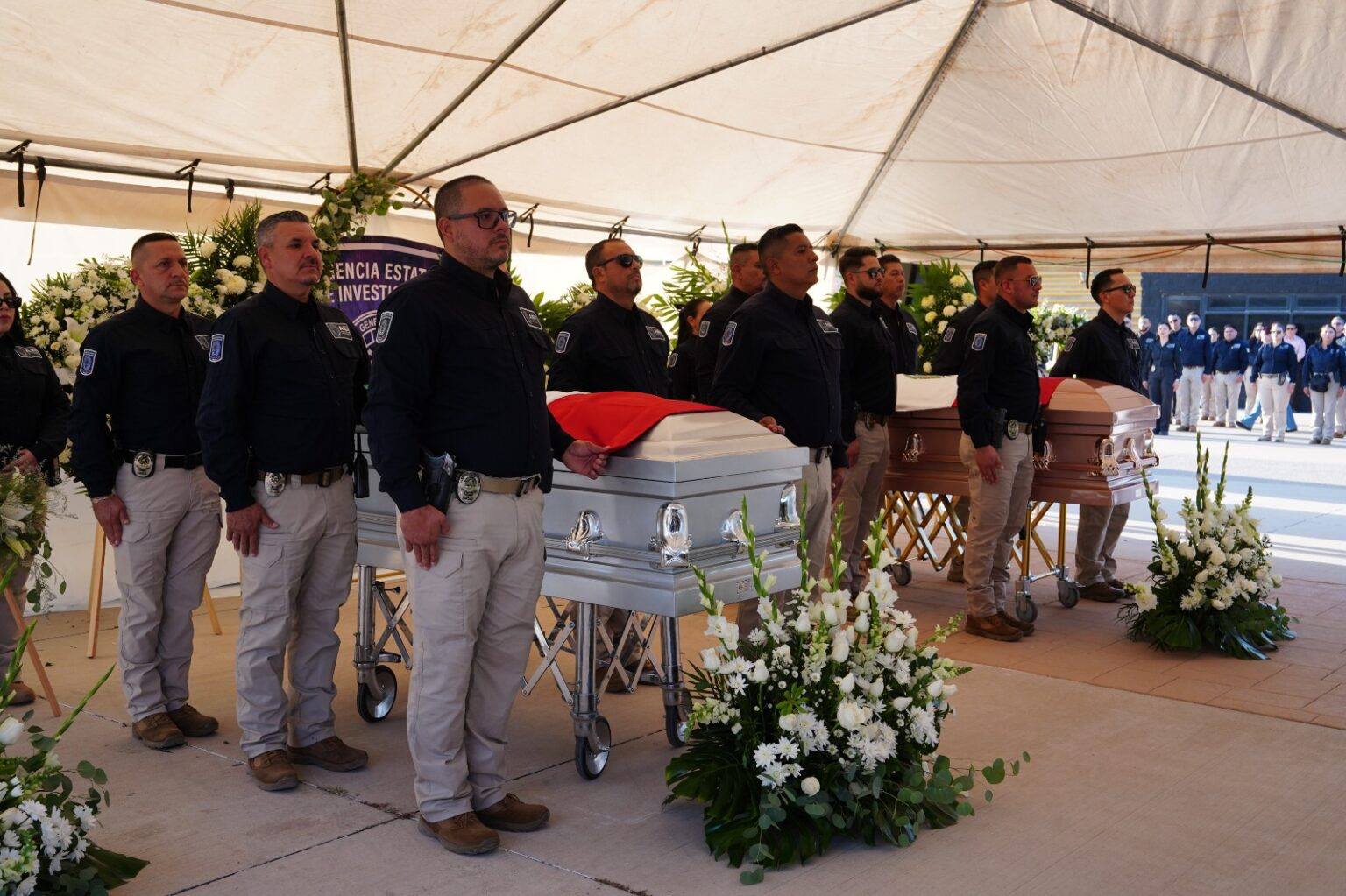
In a country of drug traffickers, savage battles between cartels, and their victims, the spark that set everything off came from a remote spot in an isolated mountain range. In the early hours of April 19, two CIA officers and two agents from the Chihuahua Attorney General’s Office were killed in a brutal car crash. On a road that winds through the gorges of the Sierra Tarahumara, their vehicle plunged into the depths of a ravine. The tragedy itself quickly receded into the background because of what it revealed: U.S. intelligence officers were with Mexican state agents returning from dismantling a huge drug lab. That revelation quickly set the rest of the pieces in motion.

Seguir leyendo

© FISCALÍA DE CHIHUAHUA

Posthumous tribute to the director of the State Agency of Investigation, Pedro Román Oseguera, in Chihuahua.
  •  

The Chilapa mountain range, a crossroads between crime and politics

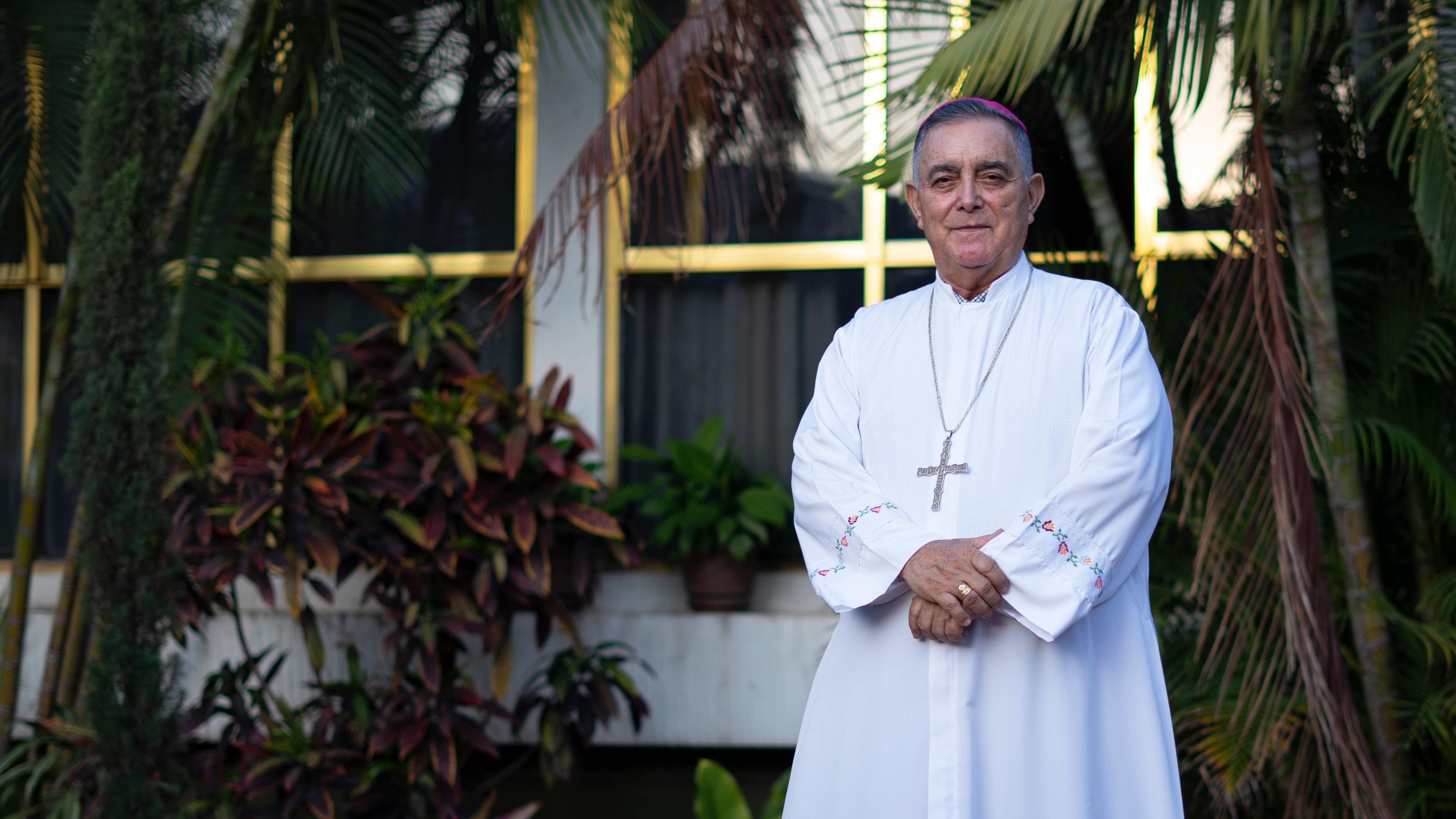
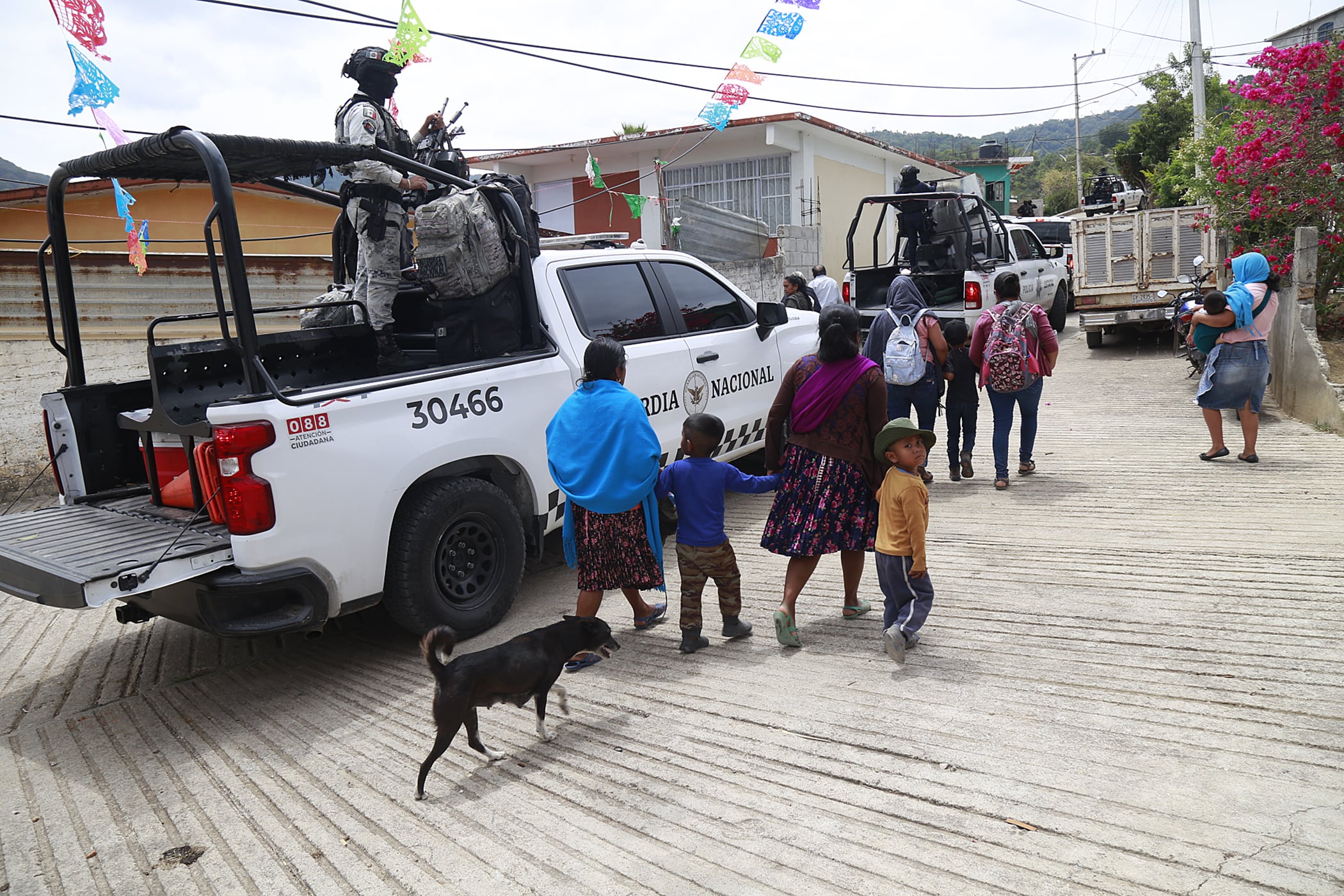
Four years ago, Salvador Rangel, then Bishop of Chilpancingo-Chilapa, outlined in an interview the motivations behind the battles in central Guerrero state, a territory he knew very well. At the time, he was close to Celso Ortega, leader of the Los Ardillos criminal group. Rangel pointed out that the fighting in the region, which has recently resurfaced in several communities in the lower mountains, has never been about drugs. “It’s not about drugs, because there aren’t any drugs here!” the bishop declared. “Celso tells me, ‘not even the damn marijuana grows here.’ So, the issue is political,” he added. Read in retrospect, his statements offer an interesting perspective on the current violence.

Seguir leyendo

Salvador Rangel Mendoza, then-bishop of Chilpancingo-Chilapa, at the episcopal house, on February 23, 2022.

© José Luis de la Cruz (EFE)

Residents leave their shelters after last week's clashes in Chilapa.
  •  
❌