Reading view

Thailand finally adopts ICAO power bank rules after airline fire scares
Malay Mail

BANGKOK, June 6 — Thailand’s aviation regulator has tightened rules on power banks on flights after a series of lithium-battery scares, more than two months after standards set by the International Civil Aviation Organisation (ICAO) took effect.

The move follows the January 2025 Air Busan fire in South Korea, where early investigations suggested a power bank may have been involved, as well as Thai-linked incidents on Thai AirAsia in January 2024 and Bangkok Airways in July 2025. 

The Civil Aviation Authority of Thailand said power banks must now be carried only in cabin baggage and are banned from checked luggage, The Bangkok Post reported this week.

It capped devices at 100 watt-hours, or 20,000 milliampere-hours, while power banks between 101Wh and 160Wh require airline approval.

Each passenger may carry no more than two lithium-battery power banks, and devices with unclear or missing capacity labels are not allowed on board.

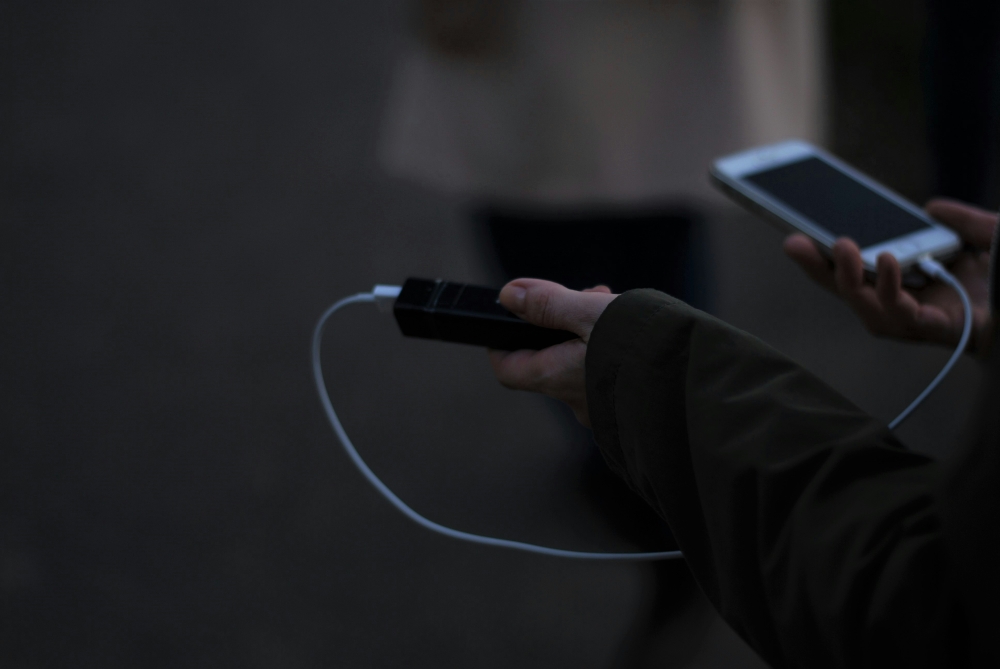
Passengers are also barred from charging power banks or using them to charge phones or other devices during flights. 

Power banks must be kept within reach, such as in a seat pocket, under the seat in front or on the passenger, and cannot be stored in overhead lockers.

The safety logic is simple: a lithium battery fire in the hold is hard to detect, while a smoking battery in the cabin can be isolated, cooled and contained by trained crew.

The ICAO guidelines, set on March 27, limits passengers to two power banks each, besides barring them from recharging the devices during flights. 

That means Thailand took about 10 weeks, or 69 days, to turn the latest international safety practice into a local regulator rule.

But Thailand was not starting from zero, as Thai Airways had already announced similar power bank restrictions in early April based on ICAO requirements. 

Malaysia Airlines, Firefly and MASwings tightened power bank controls on April 1, 2025, requiring passengers to keep devices with them, barring overhead storage and banning the charging of power banks in flight. 

Malaysia-based budget carrier AirAsia also moved to require power banks to be kept in the cabin and within reach, while barring their in-flight use and charging. 

Malaysia had also put core lithium-battery flight limits into a regulator directive as far back as December 2015, showing that parts of Thailand’s new package reflect safety practice that has existed regionally for more than a decade. 

Singapore moved faster on the 2026 ICAO update, limiting passengers flying out of the island nation to two power banks from April 15.

Singapore Airlines and Scoot had already banned passengers from using or charging power banks in flight from April 1, 2025, after a series of battery-related cabin fire incidents. 

The common international baseline remains that power banks and spare lithium batteries should travel in the cabin, devices under 100Wh are generally allowed, 101Wh to 160Wh devices require airline approval, and higher-capacity units are banned from passenger baggage.

Thailand’s version is slightly stricter in practice because it states the standard limit as 20,000mAh, below the roughly 27,000mAh often treated as the 100Wh equivalent for typical 3.7-volt power banks.

For travellers, the message is blunt: bring no more than two clearly labelled power banks, keep them in hand luggage, do not put them overhead, do not use them in flight, and charge your phone before boarding.


  •  
  •  

The world’s largest RC Boeing 777-9X takes flight

Popular YouTuber and aircraft enthusiast Ramy RC built and flew what he’s calling the world’s largest remote-controlled (RC) version of a Boeing 777-9X jet. It’s not just big for an RC toy, it’s big, period

With a wingspan of 33 feet and weighing 630 pounds, it’s roughly the same size as a human-piloted Cessna 150. The RC Boeing 777-9X may look  identical to the real aircraft on the outside, but the plane is made mostly out of CNC-milled foam and carbon fiber. It has five actuators controlling the flaps, working landing gear, and is fully electric. In testing, the behemoth was able to taxi around a tarmac, lift off, and land several times.

Ramy has made a bit of a name for himself in the over-the-top RC plane-building world. He started off building models on his kitchen floor with limited time and resources, and videos of those early builds took off online. His audience has helped him scale up and pursue increasingly ambitious RC plane designs full-time. To date, he has over 200 videos showcasing massive RC versions of a ViperJet, a Boeing 787-9, and a C-17 Globemaster. Ramy’s most recent build prior to the new Boeing was the world’s largest RC Airbus A380, which came in at a staggering 800 pounds with a 32-foot wingspan.

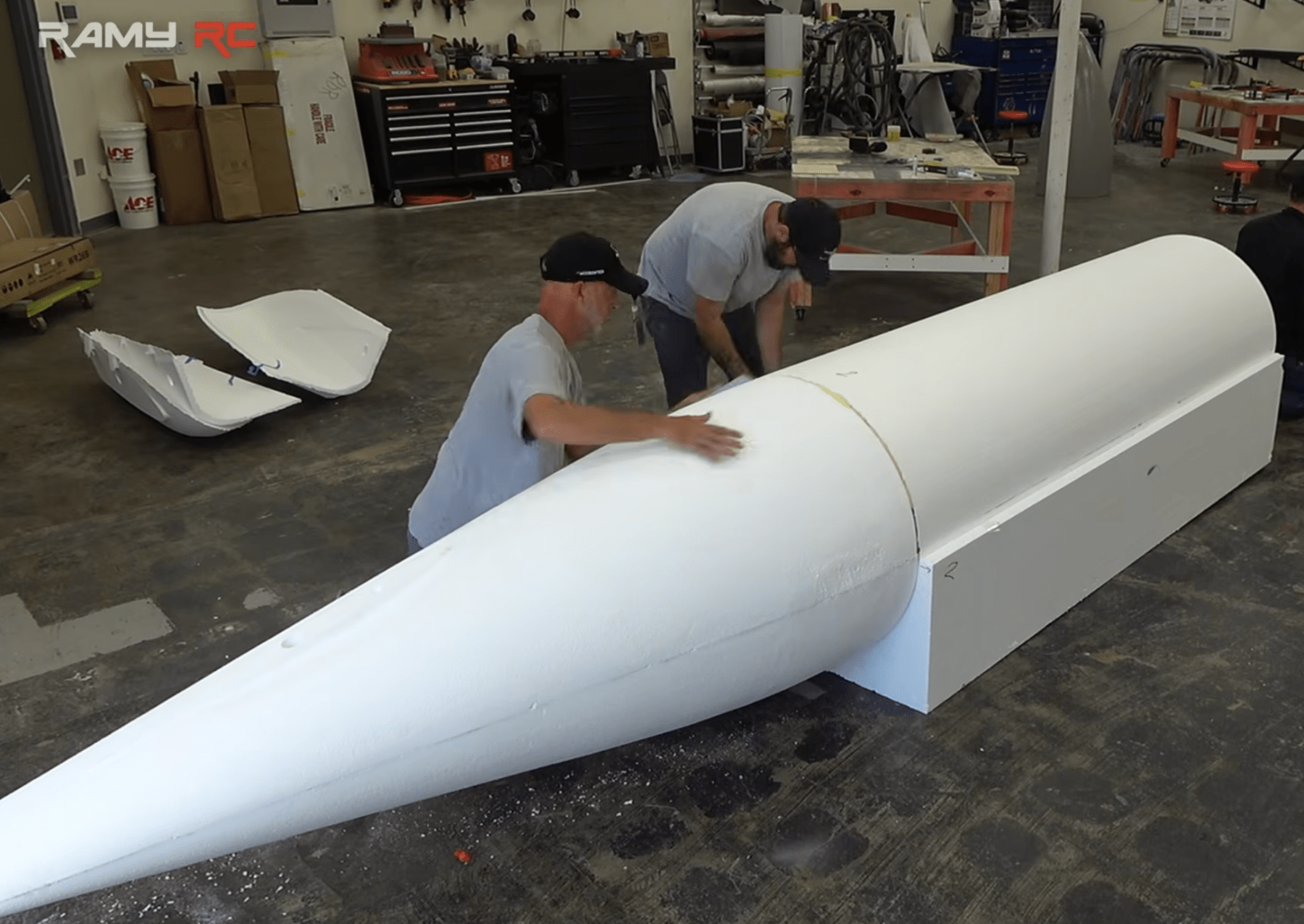
two men building a plane using white molded foam
The entire plane was built out of sections and 3D molded foam and attached together. Image: Ramy RC.

The Boeing 777-9X build started, like others, with a digital 3D model scaled down to 1/7 the size of the actual jet. With the proportions locked in, Ramy and his team then used a CNC mill to cut out separate foam parts for the plane’s fuselage, nose, and wings. Each section was reinforced with carbon fiber sheeting and sprayed with a thin layer of plastic for protection. Long runs of wiring were threaded through the plane to power systems like the wing flaps and landing gear doors. The whole aircraft is propelled by a pair of large electric ducted fans mounted where the real jet’s engines would sit.

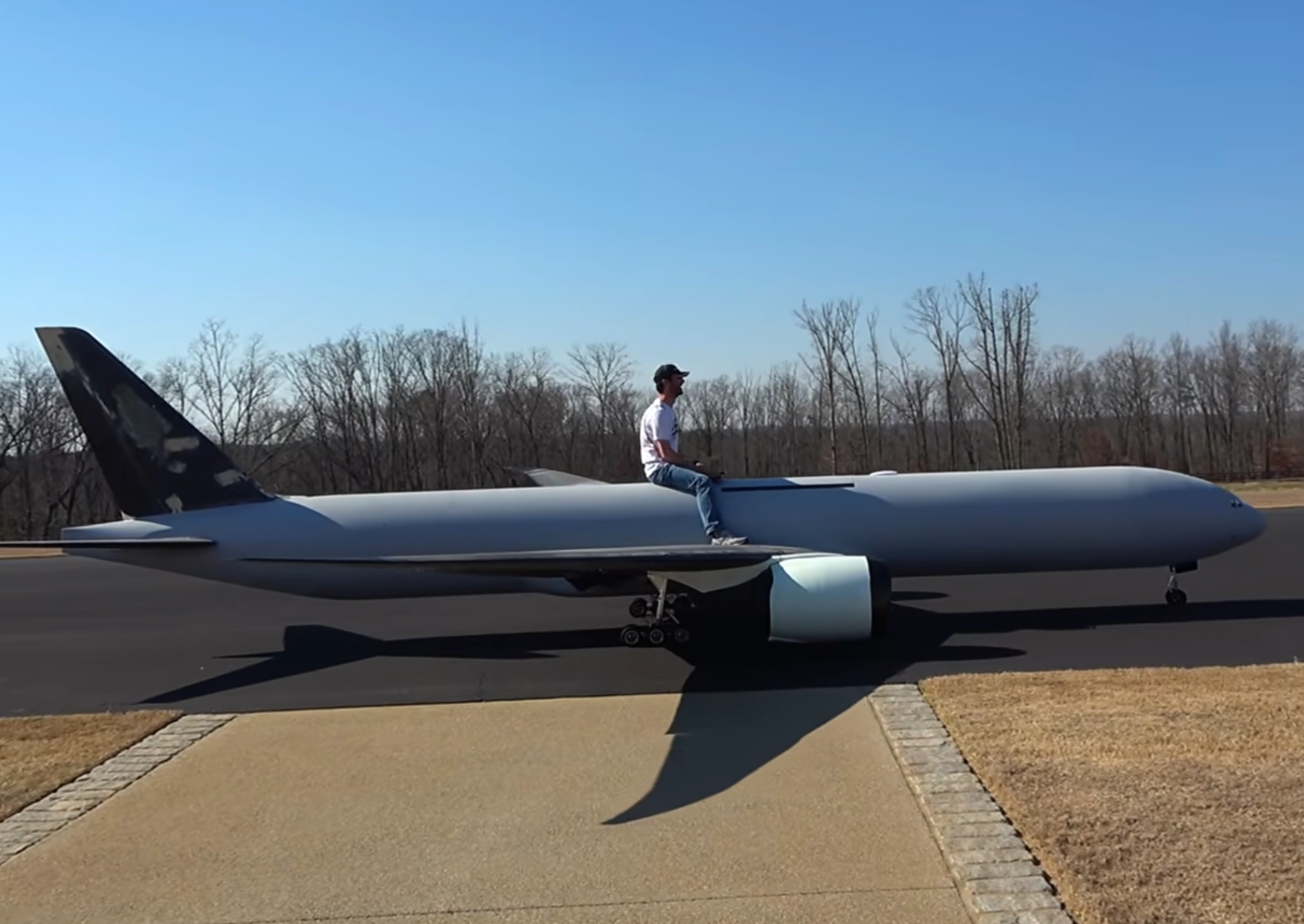
a man sitting on a large remote-controlled plane
Ramy decided to take a ride on top of his plane, Flintstones style. Image: Ramy RC .

Once assembled, Ramy used a remote control to taxi the plane around his outdoor tarmac. To drive home just how absurdly large the thing is, Ramy himself climbed on top and straddled his creation as it rolled around the facility. Once the team felt confident it was airworthy, they painted it white and blue with bold Boeing lettering along its side.

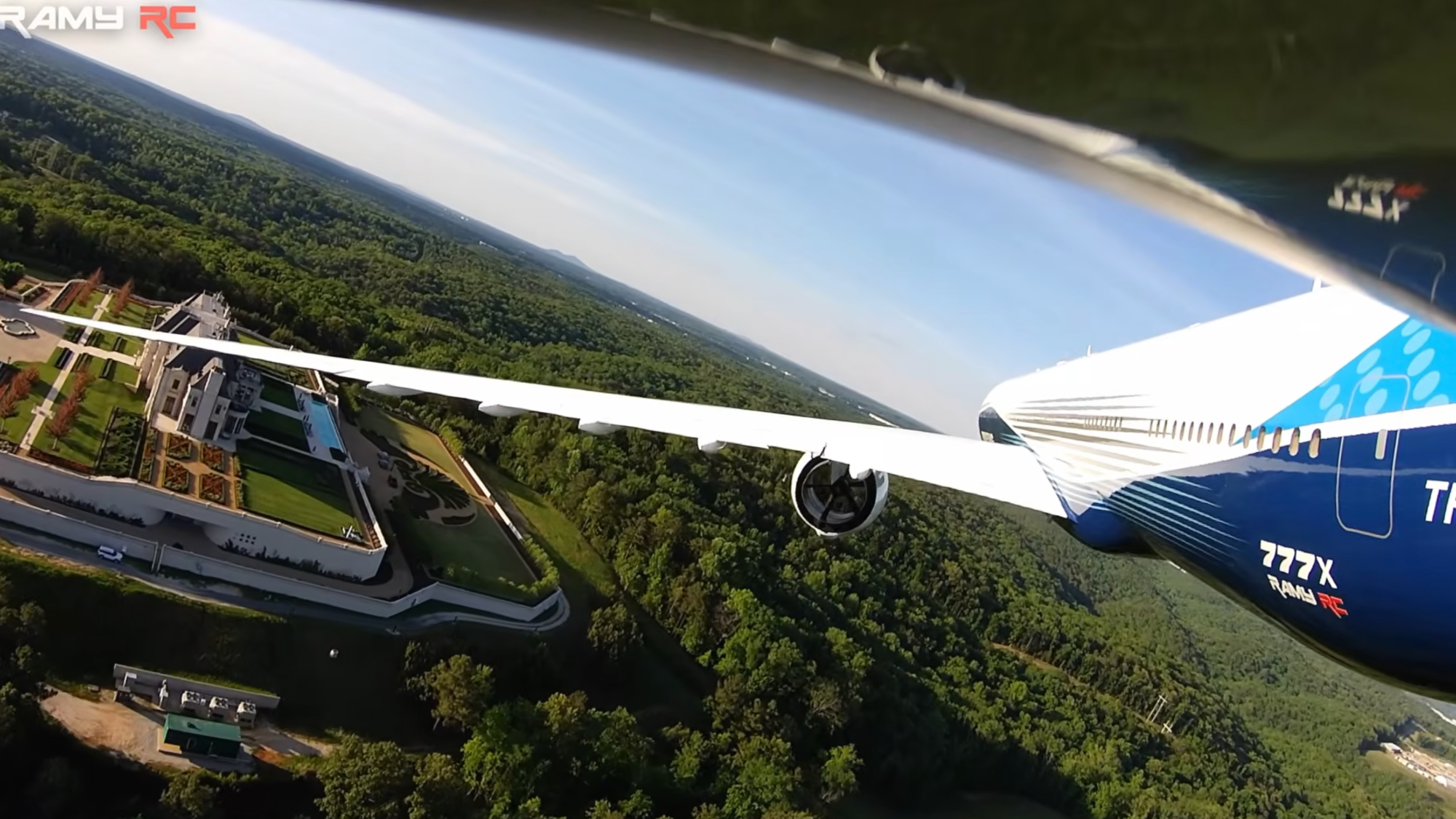
Ramy entrusted the plane’s maiden flight to a surprise guest: filmmaker Tyler Perry. The director is also an avid RC enthusiast and has credited these jumbo models like Ramy’s for helping him conquer his fear of flying. With the controller in his hands, the RC Boeing slowly powered up and its ground wheel started churning. It drove toward the end of the tarmac, then pitched up and went airborne, the buzz of its electric fans heard from the ground. Perry flew the plane for a few passes before bringing it down for a smooth landing worthy of a movie.

The post The world’s largest RC Boeing 777-9X takes flight appeared first on Popular Science.

  •  

Transport chief says health risks linked to late-night aircraft noise over Tung Chung at ‘acceptable’ levels

tung chung noise

Hong Kong’s transport chief has said that late-night aircraft noise over Tung Chung is within acceptable limits in terms of risks to residents’ health.

Secretary for Transport Mable Chan on December 17, 2025. Photo: GovHK.

Lawmaker Chan Hok-fung relayed concerns from residents during a legislative Q&A on Wednesday. He said that the issue “has been aggravated significantly,” since the operating hours of the South Runway were extended to 2am in August last year.

His requests for the utilisation rate of the runway during midnight and 2am were not met by Secretary for Transport and Logistics Mable Chan. However, the minister said that the Airport Authority had conducted health impact assessments with regard to noise.

“The assessment indicates that both short-term and long-term potential health risks resulting from the operation of the 3RS [Three Runway System] are within acceptable levels,” she said.

Housing and urban planning
Tung Chung. File Photo: Kyle Lam/HKFP.

The Aviation Environmental Federation, a UK-based non-profit, says high levels of aviation noise can lead to chronic sleep disturbance and long-term annoyance.

The World Health Organization (WHO) recommends that the annual average outdoor noise level for aircraft, across 24 hours, remains below 45 decibels. The WHO uses a Day-Evening-Night level metric, taking account of quiet and loud moments throughout a year, whilst penalising night-time noise before averaging them out to a single figure.

In environmental impact assessments, Hong Kong uses the Noise Exposure Forecast (NEF) 25 contour, under which the day-night average sound level of aircraft should be kept at around 55 to 60 decibels.

Cathay Pacific. Photo: GovHK.

Hong Kong’s Civil Aviation Department monitors aircraft noise by tracking the peak instantaneous noise level of individual flights passing overhead, rather than a continuous annual average. It then publishes the percentage of total flights which hit certain decibel brackets.

In the 12 months leading up to March 31 this year, 91.49 per cent of flights over Tung Chung emitted noise under 65 decibels – the rest exceeded the limit.

Mitigation measures

The transport chief said on Wednesday that a number of aircraft noise mitigation measures had been rolled out and aviation technology was improving to dampen engine sound.

“Relevant measures include control at source by prohibiting/restricting aircraft with higher noise levels from operating in Hong Kong, and reducing the number of flights overflying densely populated areas at night when weather and safety conditions permit, such as arranging arrival aircraft to land from the southwest over the water, thereby mitigating the noise impact on residents living in the vicinity of the airport,” she said.

“While consolidating and enhancing Hong Kong’s position as an international aviation hub, the Government will continue to balance community well-being and environmental benefits, proactively promoting the synergistic development of the aviation industry and the environment to achieve high-quality and sustainable growth,” she added.

Hongkongers may complain about aircraft noise by contacting the Civil Aviation Department hotline on 2769 6969 or emailing aircraftnoise@cad.gov.hk.

  •  

Private jet demand rises as Monaco GP, Cannes drive travel surge despite Iran war disruption

Malay Mail

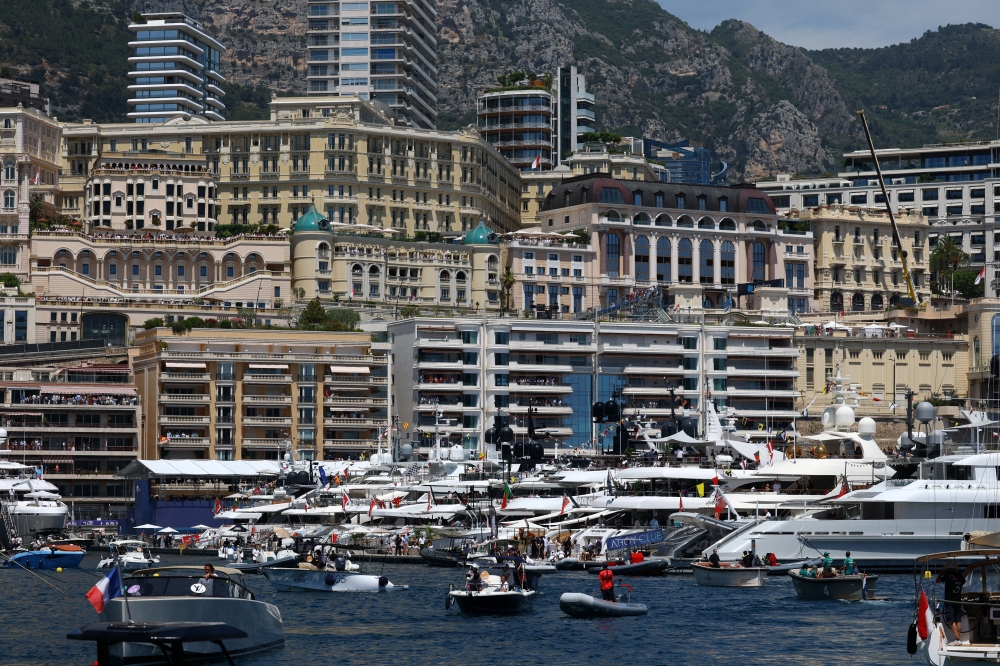
LONDON, June 9 — As soaring jet fuel prices triggered by the Iran war send ripples across the global travel market, a wealthy elite of CEOs, celebrities and sports stars is flying by private jet in greater numbers than ever before, to glitzy events from the Monaco Grand Prix to the Cannes film festival.

The phenomenon is another sign of the so-called “K-shaped” economy that is showing up across consumer markets from luxury to dining, industry watchers say, as high-income travellers spend more while middle- and lower-income groups tighten their belts, with budget carriers in particular feeling the squeeze.

Jet fuel costs have roughly doubled since the start of the war in late February, forcing global airlines to cancel flights and raise ticket prices, while missile and drone strikes around the Gulf have seen flights almost halve in a region that was a global connection hub.

“The world is in turmoil, but not our passengers,” Deniz Weissenborn, owner of Platoon Aviation, which charters eight-seat jets, told Reuters, explaining that its clients are wealthy enough to absorb higher prices.

“If you fly in a private jet, I don’t think you’re bothered by an increase of 1,000 or 2,000 euros.”

According to aviation data firm WINGX, the number of private flights has increased by about 4 per cent globally so far this year, adding thousands of trips. In the same period, overall global capacity has fallen 3-4 per cent, data from aviation analytics firm Cirium shows.

‘As busy as ever’

Private jet pilots and executives told Reuters that charter jet services are seeing an uptick in bookings as wealthy travellers turn away from premium, business and first class in an effort to dodge the risk of commercial flight cancellations and airport disruption due to the conflict.

Amalfi Jets founder and CEO Kolin Jones said there had been around a quarter more requests for Cannes this year compared to last, while those for Sunday’s Monaco GP were up almost a third, as people switched up from commercial flights.

“Lots who could afford it but flew commercial are now happy to pay more for the safer option,” Jones said. “Cannes Film Festival, Monaco Grand Prix, and World Cup-related travel from Europe to the US are driving demand.”

Eight private jet executives said that while private traffic to the Middle East had dipped given airspace safety concerns, demand for travel to Europe and the United States was likely to approach record levels this year.

“It is as busy as ever,” said Andy Spencer, a private jet pilot who has flown routes in the Middle East and Asia.

During early February’s US Super Bowl in California, private traffic at nearby airports was three times that of a normal day, WINGX told Reuters. For April’s Masters Golf Tournament in Augusta, private traffic was 10 times more than normal, jumping from fewer than 50 flights to more than 400.

“Our customers’ flight hours continue to hit record highs month after month,” private jet maker Embraer’s CEO Francisco Gomes Neto told Reuters at an executive aviation airshow in May in Sao Paulo, Brazil.

‘People feel safe when they have control’

Private jets have come in for criticism from climate groups and campaigners, who say their use underscores global inequality, is a threat to the environment and that regulation of the sector is too lax.

A spokesperson for the European Business Aviation Association said the sector played an important role in Europe’s connectivity and criticism was overly simplistic, while manufacturers and charter operators added that well-heeled individuals were simply looking for more security in uncertain times.

“Every time there are world events, private aviation gets a little bit of a bump, every single time,” said Jason Middleton, owner of Silver Air Private Jets, citing the Iran war, the Covid pandemic and unrest in South America.

“It’s like a safety thing...People feel safe when they have control.” — Reuters 

  •  

World’s largest solar-powered aircraft crashes after losing power

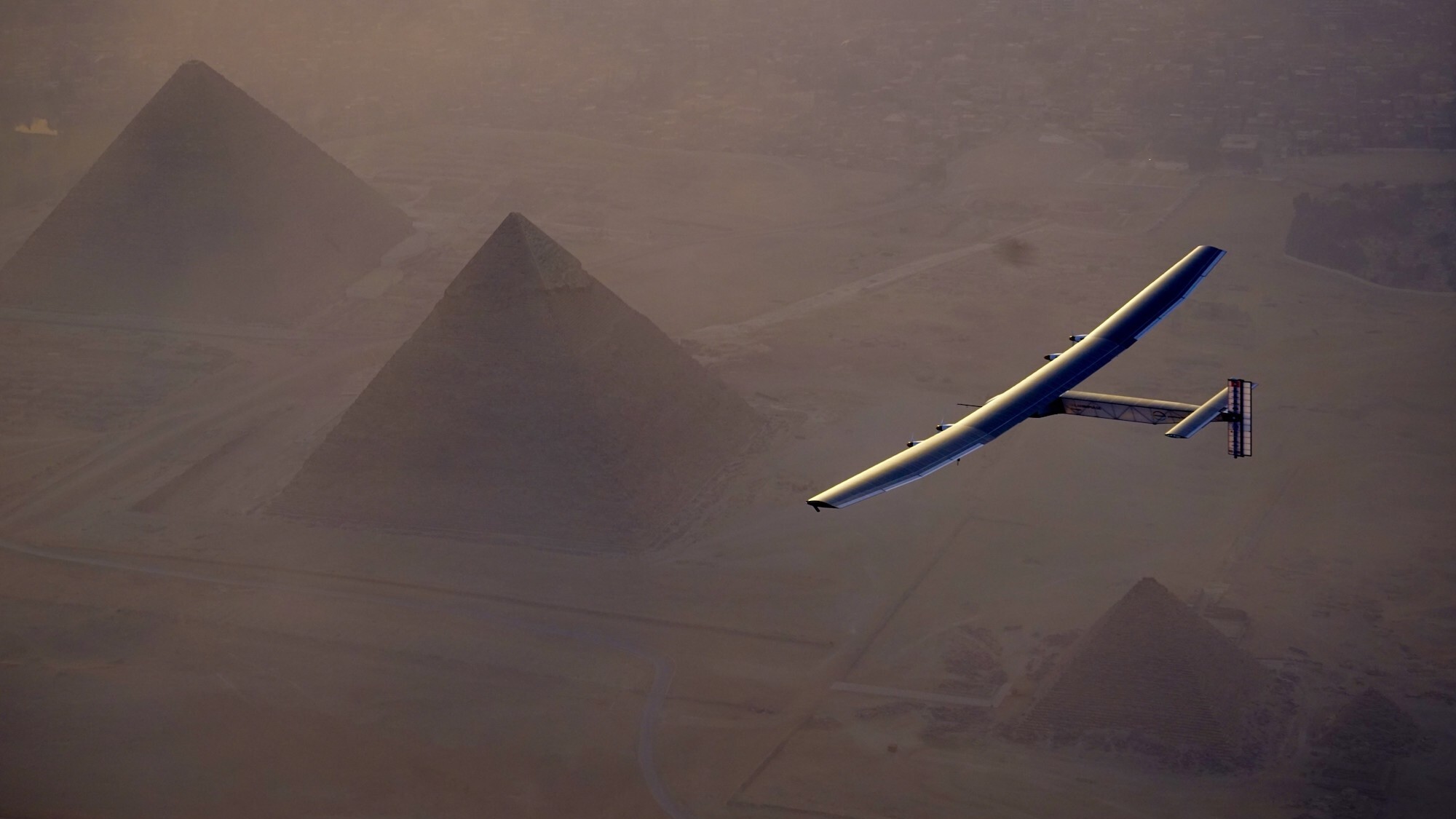
The groundbreaking experimental aircraft known as Solar Impulse 2 has met an untimely end. According to a National Transportation Safety Board report, the completely solar-powered plane crashed into the Gulf of Mexico during an autonomous test flight on May 4. While there were no injuries or fatalities, the wreck of the Solar Impulse marks an unfortunate end for one of the most impressive and inspirational planes in aviation history.

Solar Impulse was first conceptualized in 2003 by Bertrand Piccard, the grandson of Swiss deep sea pioneer Auguste Piccard and the son of Jacque Piccard, the first person to reach the Mariana Trench. Piccard never intended the vehicle for commercial use, but instead envisioned it as a way to raise awareness for sustainable energy by building the first solar-powered plane capable of circumnavigating the globe. The first iteration, Solar Impulse 1, completed its inaugural test flight in 2009 followed by multiple additional trips over the next few years.

Construction on Solar Impulse 2 began in 2011. Even with a 232-foot wingspan that made it wider than a Boeing 747, the completely carbon-fiber frame ensured the plane only weighed about 5,100 lbs, making it about as heavy as a standard SUV. The 130-cubic-foot, nonpressurized cockpit included oxygen reserves and additional environmental equipment to enable a pilot to travel long distances at a maximum altitude of 39,000 feet. According to sUAS News, a total of 17,248 photovoltaic solar cells offered a peak power output of 66 kW to four electric motors and four lithium-ion batteries weighing nearly 1,400 lbs. Basic autopilot technology also allowed its sole occupant to sleep in 20 minute intervals.

Solar Impulse 2 made history in 2016 as the first fixed-wing, entirely solar-powered plane to circumnavigate the Earth. The feat was accomplished over the course of 16.5 months, with Piccard alternating piloting duties with Foundation co-founder André Borschberg and making 17 stops along the route. Solar Impulse 2 cruised at a ground speed between 31 and 62 mph, relying on the slower pace during evening portions of the trip.

In 2019, the Solar Impulse Foundation announced the sale of Solar Impulse 2 to Skydweller Aero for an undisclosed sum. The Spanish–American company’s plans were very different from the plane’s initial purpose. Instead of focusing on its solar capabilities, Skydweller hoped to pursue its military-related surveillance potentials, which included “carrying radar, electronic optics, telecommunications devices, telephone listening, and interception systems.”

After supplying numerous modifications, Solar Impulse 2 completed its first autonomous flight in Spain in 2023. The first entirely uncrewed, autonomous flight took place at Stennis International Airport near Bay St. Louis, Mississippi, the following year. At the time, Skydweller also confirmed its larger goal was to develop and supply a fleet of uncrewed, solar-powered planes capable of nonstop flight at latitudes between Miami (26°N) to Rio de Janeiro (23°S). These near-continuous operations would involve military and commercial contracts, allegedly at a much lower cost than current satellite options. The overhauled flagship aircraft reportedly crashed after losing power while flying over the Gulf of Mexico on May 4.

“We learned through social media about the crash of the Skydweller solar drone,” Piccard and Borschberg wrote in a statement provided to Popular Science. “The Solar Impulse team is saddened by the loss of an important technological flagship.”

Skydweller representatives did not respond to Popular Science at the time of writing. According to the Swiss news outlet SWI, part of Solar Impulse Foundation’s original sales contract with Skydweller stipulated the aircraft would eventually return to Switzerland for installation in the Swiss Museum of Transport in Lucerne.

“Very often when we speak of protection of the environment, it’s boring,” Piccard told Popular Science in 2013. “The first airplane [had] the technology of 2007. The second airplane [had] the technology of tomorrow.”

The post World’s largest solar-powered aircraft crashes after losing power appeared first on Popular Science.

  •  

G-AHKX Avro Anson C19 RAF TX176 Royal Air Force

chris murkin posted a photo:

G-AHKX Avro Anson C19 RAF TX176 Royal Air Force

G-AHKX Avro Anson C19 RAF TX176 Royal Air Force
The Avro Anson was constructed in Manchester
This Anson has now been painted in the colours of one that would have been used by RAF based at Coningsby Station Flight
Photo taken at Old Warden Shuttleworth Air Show 10th May 2026
HAA_1419

  •  

G-AHAG 1945 De Havilland Dragon Rapide DH-89A RAF RL944

chris murkin posted a photo:

G-AHAG 1945 De Havilland Dragon Rapide DH-89A  RAF RL944

G-AHAG 1945 De Havilland Dragon Rapide DH-89A RAF RL944
This Aircraft was built by Brush Coachworks Ltd which was at Loughborough in Leicestershire Brush Coachworks Ltd, DH89A in the livery of Scillonia Airways and is based at Membury airfield in Berkshire
A number of Rapides were used during WWII to provide internal flights under the control of National Air Communications
Photo taken at Old Warden Shuttleworth Wings & Wheels Air Show 30th May 2026
HAH_8767

  •  
❌