 Login
Login
Japan’s Takaichi Pitches Strength and Stability in Visits to Australia and Vietnam
Prime Minister Sanae Takaichi is attempting to raise Japan’s profile at a time when China’s clout is rising and doubts about the United States are spreading.

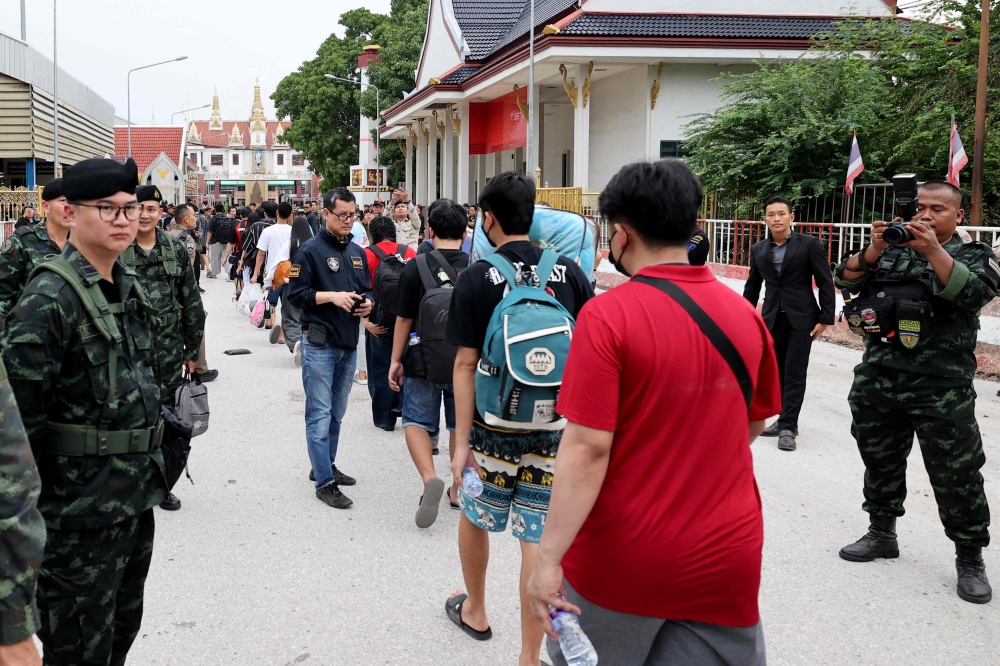
PHNOM PENH, May 6 — A cousin of Cambodian Prime Minister Hun Manet said Wednesday he owned a 30 per cent stake in a digital payments platform linked to cyberscams and money laundering and sanctioned by the US.
“I would like to inform the public that I have indeed owned 30 per cent of shares in HUIONE PAY PLC,” Hun To said in a statement.
The US government last year accused Huione Group, which owned several companies offering e-commerce, payment and cryptocurrency exchange services, including Huione Pay, of laundering funds for transnational criminal groups perpetrating scams from Southeast Asia.
Huione’s former chairman, Li Xiong, was extradited to China on April 1.
Chinese authorities say he was central to a major transnational gambling and fraud syndicate and is suspected of multiple crimes.
Li owned 62 per cent of Huione Pay’s shares, while Hun To owned 30 per cent, according to a report by liquidator Reachs & Partners.
Huione Pay’s liquidation was completed in October 2025, it said.
Hun To said he did not manage the business operations of Huione Pay and “never received any profits, dividends or assets from that company”.
Since last month, protesters have demanded the unfreezing of their accounts with the Huione platform H-Pay, previously Huione Pay, which they said have been inaccessible since December.
The National Bank of Cambodia has said the Huione platforms’ business licences have been revoked. — AFP
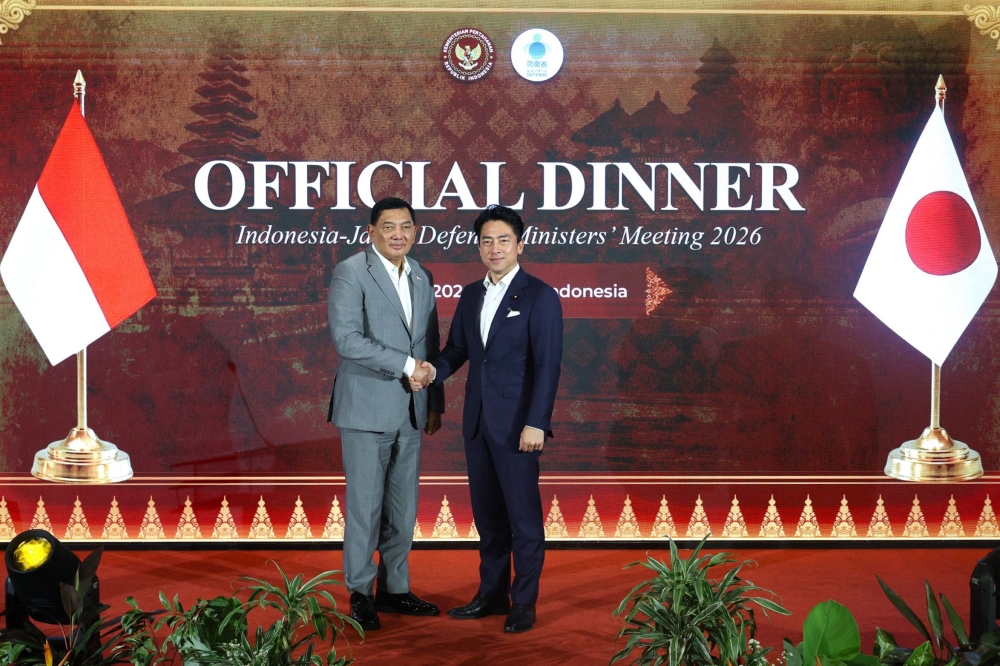
MAY 6 — Trust in international relations is never absolute. It is earned, calibrated, and shaped by geography as much as history.
Nowhere is this clearer than in Southeast Asia, where a recent survey by the ISEAS – Yusof Ishak Institute shows that Japan remains the most trusted major power among Asean states.
Yet beneath this headline lies a more nuanced reality—one that reflects Asean’s diversity rather than division.
According to the latest State of Southeast Asia 2026 Survey, trust in Japan is highest in the Philippines at 77.3 per cent, followed by Brunei at 72.9 per cent, Cambodia at 72.0 per cent, and Vietnam at 67.9 per cent. Across all 11 members of the Association of Southeast Asian Nations, trust in Japan outweighs distrust—an impressive achievement in a region known for its strategic caution.
These figures are not incidental. They reflect how Japan has embedded itself as a consistent economic partner, a provider of high-quality infrastructure, and a supporter of maritime stability.
In countries such as Vietnam and the Philippines, where tensions in the South China Sea remain acute, Japan’s role is especially valued. Trust, in this sense, is inseparable from security reassurance.
But the case of Indonesia is different—and far more instructive.
Public confidence in Japan in Indonesia has declined from 61.5 per cent in 2025 to 47.9 per cent in 2026.
At first glance, this drop may suggest growing scepticism. Yet such a conclusion would be misleading.
Indonesia is not distrustful of Japan. Rather, it is recalibrating its expectations.
Under the leadership of Prabowo Subianto, Indonesia is entering a new phase of national development. The country is not merely seeking partners for geopolitical balance.
It is seeking partners that can deliver tangible economic transformation—faster infrastructure rollout, deeper industrial cooperation, and meaningful technological transfer within shorter time horizons. Indonesia is asking a practical question: what can external partners deliver now ?
Japan has long been one of Indonesia’s most important development partners. Its investments in infrastructure, transport, and industrial capacity are well documented.
But in the first year of President Prabowo’s administration, there may be a perception among Indonesian policymakers that the scale or speed of engagement has yet to match the urgency of domestic priorities.
This is not rejection. It is signalling.
Indonesia is a large and increasingly ambitious economy.
It is no longer satisfied with long-gestation partnerships alone. It seeks visible, measurable outcomes aligned with its development agenda.
Its cautious stance reflects maturity, not hesitation.
By contrast, Vietnam and the Philippines operate under more immediate strategic pressures.
Their higher levels of trust in Japan are shaped by frontline realities. Indonesia’s threat perception is less acute, and its strategic horizon is correspondingly broader.
This divergence does not weaken Asean. It strengthens it.
Asean’s resilience has always depended on its ability to accommodate different national outlooks. Diversity in threat perception allows member states to engage external powers in ways that suit their own interests, without undermining regional cohesion. This flexibility is the essence of Asean centrality.
The survey also offers insight into Asean’s perceptions of China. While China remains a critical economic partner, trust levels across Asean are generally lower and more uneven compared to Japan.
In Vietnam and the Philippines, trust in China remains in the low double digits, reflecting ongoing maritime disputes. In Indonesia, trust tends to be moderate—often in the 30 to 40 per cent range—consistent with its balanced and pragmatic approach.
Meanwhile, countries such as Cambodia and Thailand often report higher levels of trust in China, in some cases exceeding 50 per cent, driven by strong economic ties and political alignment. Although Cambodia is a country that is now reeking with many scamming centers that Beijing has shown extreme displeasure.
These variations reinforce a central point: Asean’s strategic perceptions are plural, not uniform.
There is, however, an important caveat.
The survey was conducted before the eruption of the Iran war on February 28, 2026.
At that time, Asean’s strategic thinking was still dominated by US-China rivalry and South China Sea tensions. Energy security, though important, had not yet reached crisis proportions.
Today, the situation has changed dramatically.
The disruption of flows through the Strait of Hormuz has exposed Asean’s deep structural vulnerabilities.
The region depends heavily on West Asia for oil, liquefied natural gas, fertilisers, and critical industrial inputs such as helium, which is indispensable for semiconductors and medical technologies like CT scans.
These are not peripheral concerns. They strike at the core of economic resilience and food security.
Had the survey been conducted after February 28, the results might have reflected a different hierarchy of priorities. Trust would not only be about strategic alignment but also about reliability in times of systemic disruption.
In such a context, Japan’s reputation as a stable, rules-abiding, and non-disruptive partner could rise even further.
At the same time, Asean states—including Indonesia—would likely place greater emphasis on partners capable of delivering immediate solutions to energy, food, and supply chain insecurities.
Indonesia’s cautious posture may therefore prove prescient.
Rather than aligning prematurely with any single external power, Jakarta is preserving its flexibility in an increasingly uncertain world. It is maintaining a diversified network of relationships while assessing which partnerships can best serve its evolving needs.
This is not indecision. It is strategic prudence.
For Japan, the implications are equally clear. Trust, while already high, must be matched by responsiveness.
Indonesia is not asking for preferential treatment. It is asking for alignment with its development tempo.
Faster implementation of infrastructure projects, deeper industrial collaboration, and greater technological exchange would go a long way in strengthening mutual confidence.
If Japan can respond effectively, Indonesia will not remain cautious for long. It will become an even more committed partner.
Ultimately, the survey tells us something fundamental about Asean.
There is no single Asean voice. There are multiple voices, shaped by geography, history, and national priorities. This diversity is not a weakness.
It is the foundation of Asean’s resilience and centrality.
Indonesia’s stance should therefore be understood in this light.
It is not a sign of distrust toward Japan. It is a reflection of a country that knows what it wants—and is carefully evaluating how best to achieve it.
In an era defined by geopolitical rivalry, economic fragmentation, and energy insecurity, such calibrated trust may well be Asean’s most valuable strategic asset.
And perhaps, its most enduring contribution to an increasingly fractured world order.
* Phar Kim Beng is a professor of Asean Studies and director of the Institute of Internationalization and Asean Studies, International Islamic University of Malaysia.
** This is the personal opinion of the writer or publication and does not necessarily represent the views of Malay Mail.
chris murkin posted a photo:

VH-JUC 1947 CA-18 Mustang Mk-21 RAAF A68-105 CV-P KH677
Photo Taken at Warbirds over Scone NSW Australia March 2026
HAF_4995

The Rambling Tog posted a photo:

18.03.24 NEC, Birmingham, England, UK. Manufacturers and distributers gather for the annual photo show at the NEC in Birminham, UK.

The Rambling Tog posted a photo:

18.03.24 NEC, Birmingham, England, UK. Manufacturers and distributers gather for the annual photo show at the NEC in Birminham, UK.

The Rambling Tog posted a photo:

18.03.24 NEC, Birmingham, England, UK. Manufacturers and distributers gather for the annual photo show at the NEC in Birminham, UK.

The Rambling Tog posted a photo:

18.03.24 NEC, Birmingham, England, UK. Manufacturers and distributers gather for the annual photo show at the NEC in Birminham, UK.


