 Login
Login
The world has veered way off-target of its climate goals. Can we rebound?
Once global warming peaks, it could take centuries to cool things back down. But we can bend the curve by cutting fossil fuel emissions now.

Once global warming peaks, it could take centuries to cool things back down. But we can bend the curve by cutting fossil fuel emissions now.
Using chemistry, archival records and AI, scientists are reviving the aromas of old libraries, mummies and battlefields

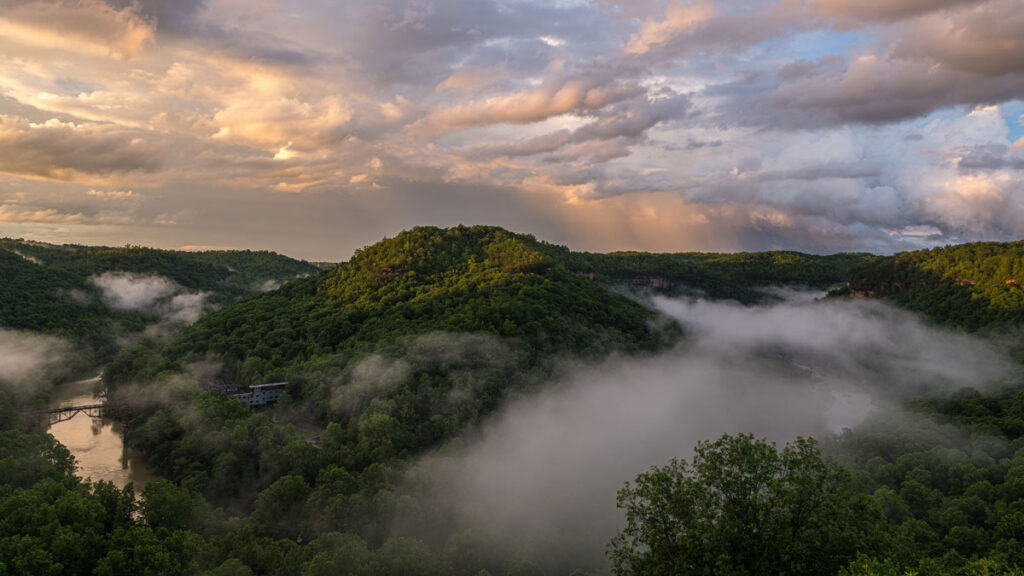
The coal industry can damage human health in myriad ways via dangerous working conditions and harmful pollution. But the income opportunities offered by the industry can also provide much-needed stability for certain communities, such as those in Appalachia’s coal country.
“Being employed is good for your health, but environmental pollution is bad for your health, and these two things are operating at the same time in some communities,” said Mary Willis, an epidemiologist at Boston University.
The industry, though, is changing. Total coal production in the United States peaked in 2008, and the number of miners has steadily dropped since then.
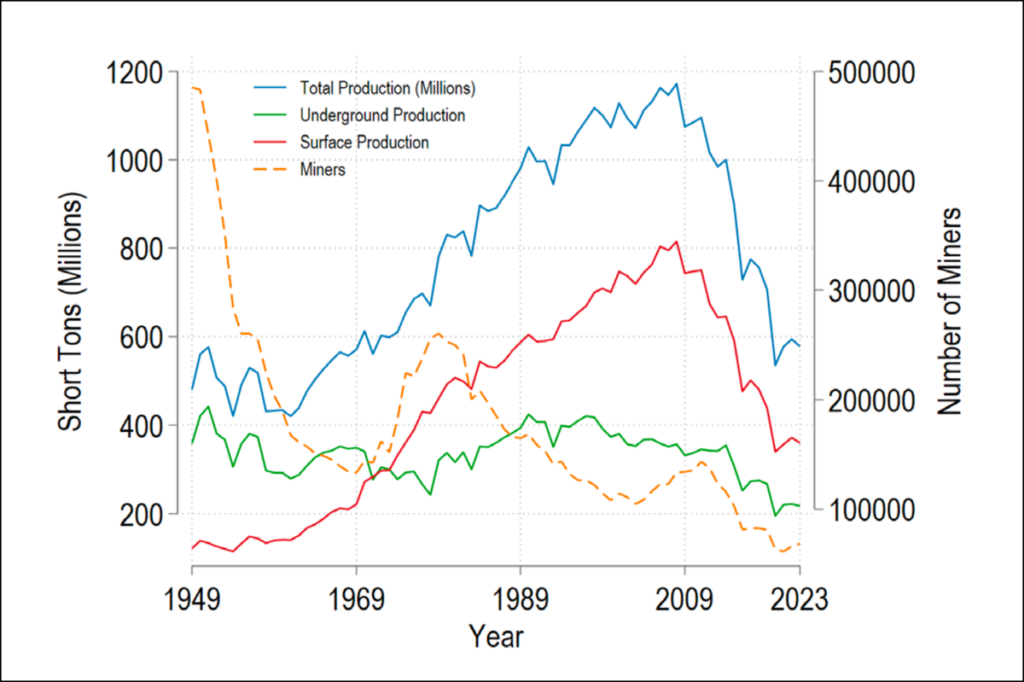
A new study coauthored by Willis and published in Rural Sociology delves into the effects of this decline on life expectancies across the United States and in Appalachia in particular. The results show that a disappearing coal mining industry has mixed effects on health, highlighting the importance of a “just transition”—a shift away from coal mining and toward clean energy that also prioritizes decent work opportunities for those left without a job.
“How do we balance these two conflicting priorities?” Willis said.
Coal production and consumption are linked to many human health harms, including heart disease, asthma, lung cancer, mental illness, and more. But how those health impacts intersect with the broader economic effects of mining has not been well studied.
In the new study, the research team analyzed the effects of the declining industry through the lens of the social determinants of health, or how social structures influence health outcomes.
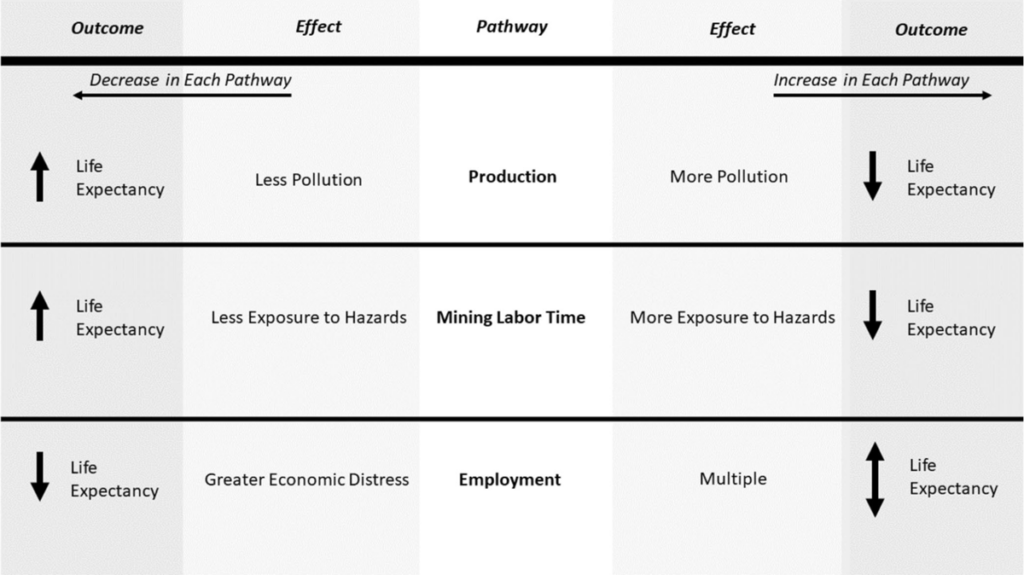
To study these effects, the team compared coal mining data from the U.S. Energy Information Administration to life expectancy data from the Institute for Health Metrics and Evaluation at the University of Washington from 2012 to 2019. Life expectancy is a metric that can be responsive to subtle changes in the environment, Willis explained. For example, the decommissioning of a coal-fired power plant a few miles away from a community may not affect residents’ day-to-day life but probably affects the scale of life expectancy across the population.
In coal-producing counties across the United States, the average life expectancy was 1.6 years lower than that in non-coal-producing counties. But the declining coal industry had more nuanced impacts on health in Appalachian communities, the researchers found. As coal production fell and miner labor hours decreased, life expectancy increased. But as the number of jobs available decreased, life expectancy decreased, too.
The findings suggest that the employment and associated economic impacts of a waning coal industry harm health. Previous studies documented similar increases in mortality in other regions where the fossil fuel industry has declined. Such research has indicated that these increased mortality rates may be partially driven by “deaths of despair” from drug and alcohol use and suicide related to economic distress. The association of these factors with mortality rates in coal country, the authors suggest, may be an area for future study.
Understanding that coal mining is associated with some positive economic and health effects is “an important perspective for understanding the sector as a whole,” said Lucas Henneman, an environmental engineer at George Mason University who was not involved in the new study. “It’s a really interesting piece of work.”
“This is just a really complex story that hasn’t been told yet—putting health into the context of these just energy transitions,” Willis said.
The complex reality of the coal industry extends beyond Appalachia. Most of the pollution related to the coal industry consists of toxins released when coal is burned, meaning those who bear the brunt of coal’s health impacts may not be located where coal is mined, Henneman said.
In fact, a 2023 study by Henneman and others found that before 2009, a quarter of all air pollution–related deaths of people on Medicare were attributable to coal burning. From 2013 to 2020, that number dropped to 7%, alongside a drop in coal consumption. A complete picture of how the coal industry affects health should also consider how pollution travels beyond coal country—where it’s burned, how it’s transported in the air, and who ultimately breathes it in, he said.
“The question is how to provide [jobs] in a way that provides the same level of stability, same kind of income benefits, and isn’t too much of a shock to [communities’] way of life or sense of identity.”
The economic activity of a mine, through direct employment as well as businesses reliant on the mine and miners, “chases away other opportunities,” making the mine the economic backbone of the area, said Jonathan Buonocore, an environmental health scientist at Boston University and a coauthor of the new study. The concept of a just transition aims to ensure that employment opportunities in the wake of the coal industry’s decline reach these communities.
“The question is how to provide [jobs] in a way that provides the same level of stability, same kind of income benefits, and isn’t too much of a shock to [communities’] way of life or sense of identity,” Buonocore said.
—Grace van Deelen (@gvd.bsky.social), Staff Writer
For months, US President Donald Trump has been fixated on Cuba. He’s issued threats and imposed additional sanctions on the island. The US military has conducted dozens of intelligence-gathering flights off the coast in recent weeks, suggesting a prelude to an invasion.
The Cuban government has indicated a readiness to negotiate with the Trump administration on some issues, such as migration, drug trafficking and investment openings for Cuban-Americans. But Cuba’s sovereignty is not negotiable.
After interviewing Cuban President Miguel Díaz-Canel last month, US journalist Kristen Welker seemed to catch on:
Nothing gets under [Cubans’] skin more than the notion that the United States can tell the Cuban government who should lead it or what it should be doing, how it should be governing, because that challenges the very idea of the sovereignty of the country.
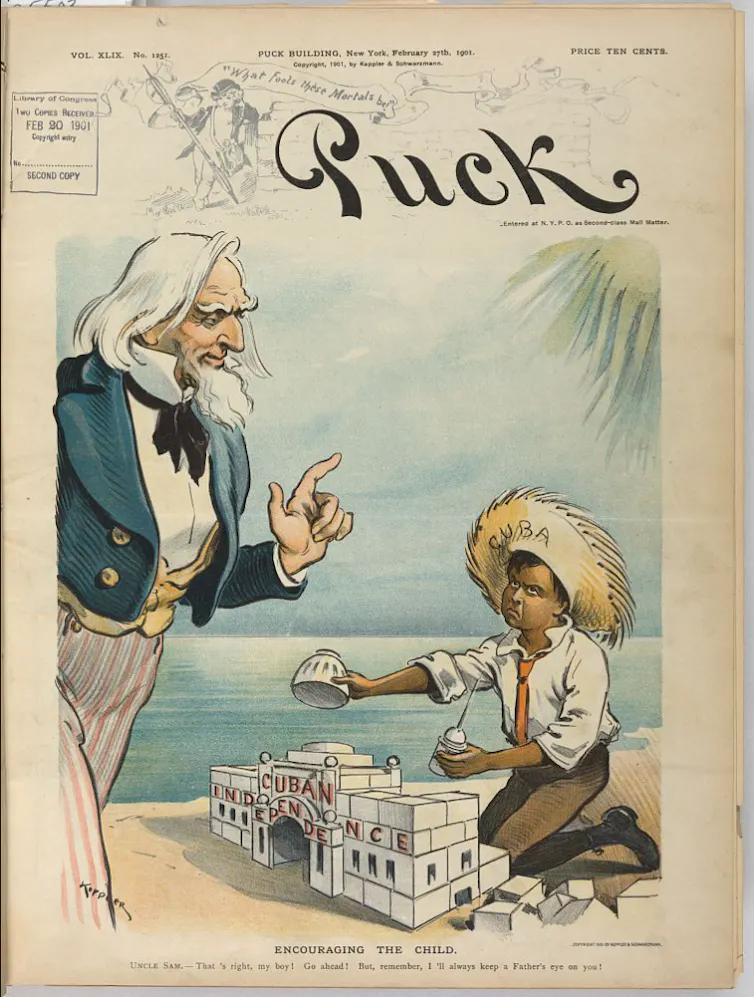
This US obsession with controlling, influencing and coercing Cuba long predates Trump and even the Cold War. This is how President Theodore Roosevelt described the island in 1906:
I am so angry with that infernal little Cuban republic that I would like to wipe its people off the face of the earth. All we have wanted from them was that they would behave themselves and be prosperous and happy so that we would not have to interfere. And now, lo and behold, they have started an utterly unjustifiable and pointless revolution.
Understanding the current impasse between the two adversarial neighbours requires looking at this full arc of history. While the 1823 Monroe Doctrine sought to establish US predominance in the entire American continent, Cuba has always been a particular focus of Washington’s attention.
Read more: Cuba has survived 66 years of US-led embargoes. Will Trump’s blockade break it now?
From the moment the 13 American colonies declared independence from Britain, Americans assumed Cuba would become part of the union. Successive US administrations sought to purchase, annex or otherwise control Cuba, claiming this was inevitable by virtue of the laws of gravity and geography. It was also seen as part of a self-proclaimed “civilising mission”.
When the Cubans eventually defeated their Spanish colonial masters in 1898, the United States stepped in and occupied the island to thwart its independence.
At the time, at least one third of Cubans were former slaves or of mixed race. The US governor of Cuba, Leonard Wood, argued they were not ready for self-government.
Certainly, the US – especially the Southern former slave holders – didn’t want another Haiti in its neighbourhood. Haitian slaves had seized control of their island nation from the French in a violent rebellion in 1804, echoing the cries of the French revolution for liberty, fraternity and equality.
The US military occupation of Cuba ended in 1902 and Cuba formally declared independence – albeit with provisions. These allowed for future US intervention whenever Washington thought the Cuban people needed a guiding hand (which turned out to be fairly often).
In the decades that followed, US business interests deeply penetrated every sector of Cuba’s economy and had complete sway over Cuban governments.
On a cultural level, Cuba rapidly became “Americanised” through a new US-style education system. Travel to the island picked up, too. The popular Terry’s Guide to Cuba reassured US visitors in the 1920s they would feel right at home because “thousands [of Cubans] act, think, talk and look like Americans”.
All of this changed with the rise of Fidel Castro.
During the Cuban Revolution, Castro announced in April 1959 that the revolutionary government would be “Cubanising Cuba”. This might seem “paradoxical”, he explained, but Cubans “undervalued” everything Cuban. They had become “imbued with a type of complex of self-doubt” in the face of the overwhelming US influence on the island’s culture, politics and economy.
US journalist Elizabeth Sutherland similarly observed at the time that Cubans suffered from a “cultural inferiority complex typical of colonised peoples”.
For North Americans, however, Castro’s blunt statement seemed at best to reflect ingratitude, and at worst, an insult. As the US broadcaster Walter Cronkite recalled:
The rise of Fidel Castro in Cuba was a terrible shock to the American people. This brought communism practically to our shores. Cuba was a resort land for Americans […] we considered it part of the United States.
At the heart of Cuba’s revolutionary project has been an assertion of Cuba’s sovereignty, independence and national identity. The drive has been to create a new, united and socially just Cuban nation, as envisioned by its great national hero and poet, José Martí.
So, for Cubans it’s a matter of history. For North Americans, it’s a matter of self-image. They had “convinced themselves,” writes historian Louis A. Pérez, of the “beneficent purpose […] from which [the US] derived the moral authority to presume power over Cuba”.
When the Obama administration finally resumed relations with Cuba in 2014, it felt like a historic shift was taking place. The US might finally respect Cuban sovereignty and engage with Cuba on equal terms.
As President Barack Obama said at the time:
It does not serve America’s interests, or the Cuban people, to try to push Cuba toward collapse. […] We can never erase the history between us, but we believe that you should be empowered to live with dignity and self-determination.
Trump has now reverted to Washington’s traditional neo-colonialist view of Cuba, proclaiming he can do what he likes with the island. Perhaps it is time to try a new approach. As the spectacular debacle of the US-backed Bay of Pigs invasion showed 65 years ago, Cubans remain ready to defend their independence and their right to determine their own future.

Deborah Shnookal does not work for, consult, own shares in or receive funding from any company or organisation that would benefit from this article, and has disclosed no relevant affiliations beyond their academic appointment.
This is an authorized translation of an Eos article. 本文是Eos文章的授权翻译。
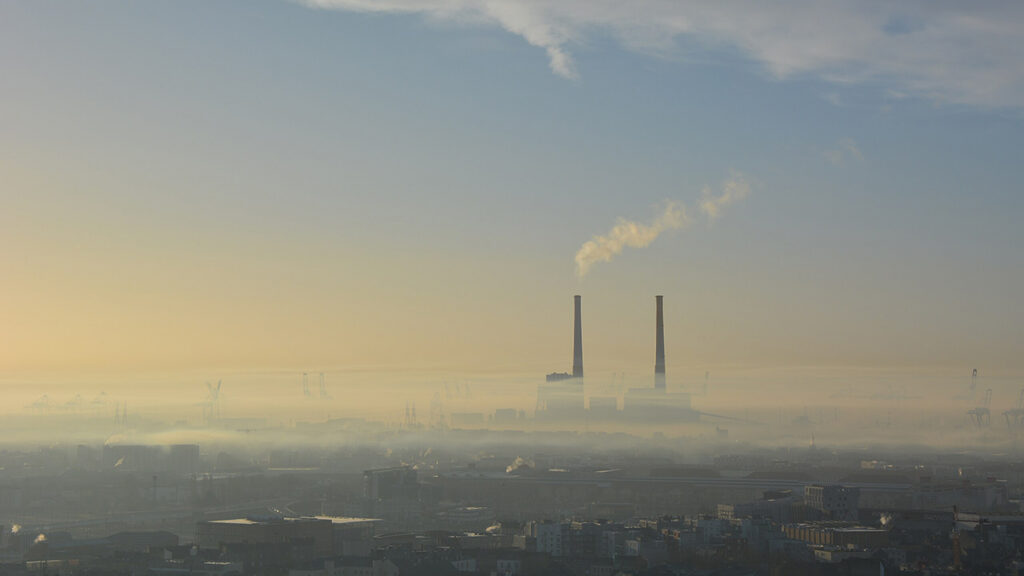
据世界卫生组织的数据,全球每年因空气污染导致的死亡人数估计达 700 万。其中大部分死亡病例是由PM2.5引起的,这种直径小于 2.5 微米的颗粒物能够进入肺部和血液,从而引发呼吸系统和心血管系统疾病。除了直接排放到大气中的颗粒物外,工厂、船只、汽车和发电厂排放的氨(NH3)、氮氧化物(NOX)和二氧化硫(SO2)等物质也是导致 PM2.5 形成的前体物。然而,颗粒物污染的影响并非均匀分布。
Oztaner等人对北半球各区域的空气污染后果进行了建模,从而更细致地分析了哪些地区的减排政策最为有效。他们利用美国环保署(EPA)社区多尺度空气质量(CMAQ)建模平台的多相伴随模型(multiphase adjoint model),从挽救生命和节省资金两个角度评估了减少各种污染物带来的效益。该研究通过国际机构所广泛采用的一种成熟方法,计算出了空气污染影响所造成的经济损失。不过,这种方法也引发了一些伦理方面的担忧,因为它在评估生命价值时部分地依据了各国的人均国内生产总值(GDP)。
总体而言,研究发现,如果所有模型中的排放量减少 10%,那么在北半球每年将能挽救 513,700 人的生命,并节省 1.2 万亿美元的费用。
死亡率降幅最大的是中国和印度,削减排放量每年将分别挽救184,000人和124,000人的生命。成本节约幅度最大的也是中国,其次是欧洲和北美。健康效益也因排放类型和行业而异。氨(NH3)在中国造成的危害更大,而氮氧化物(NOx)在欧洲的危害相对高于其他地区。在整个北半球,农业部门是颗粒物和前体物污染的主要来源,预计农业相关排放量减少10%可挽救95,000人的生命,并节省约2900亿美元。其次是居民区和工业区。
作者指出,在对类似研究的结果进行比较时应保持谨慎,一部分原因是污染物浓度与健康结果之间的关联并非总是呈线性关系,还有一部分原因是不同地区在核算各行业排放量时可能采用不同的方法。此外,他们的研究仅关注与 PM2.5 相关的死亡率,未考虑如臭氧等其他污染物。总体而言,他们认为他们的研究为比较北半球不同污染物减排策略的效果提供了一个有意义的参考。(GeoHealth, https://doi.org/10.1029/2025GH001533, 2026)
—科学撰稿人Nathaniel Scharping (@nathanielscharp)
This translation was made by Wiley. 本文翻译由Wiley提供。
Read this article on WeChat. 在微信上阅读本文。


Built from thickets of glucose, galactose, mannose and more, the glycome plays key roles in cell communication, immunity and the blood-brain barrier

Unlike violent crimes, there are no comprehensive national statistics on the serious misconduct of companies. Some see a need for change.

We have been on a years-long campaign of satellite remote sensing of the vast desert landscapes in Eastern Sudan.
This involved using satellite aerial imagery to systematically and painstakingly search for archaeological features in Atbai Desert of Eastern Sudan, a small part of the much larger Sahara.
Our team – which includes archaeologists from Macquarie University, France’s HiSoMA research unit, and the Polish Academy of Sciences – wanted to tell the story of this desert region between the Nile and the Red Sea, without having to excavate.
One mysterious archaeological feature stood out. We kept finding large, circular mass graves filled with the bones of people and animals, often carefully arranged around a key person at the centre.
Likely built around the fourth and third millennia BCE, all these “enclosure burial” monuments have a large round enclosure wall, some up to 80 metres in diameter, with humans and their cattle, sheep and goats buried inside.
Our new research, published in the journal African Archaeological Review, reveals how we found 260 previously unknown enclosure burials east of the Nile River, across almost 1,000km of desert.
Already known from a few excavated examples in the Egyptian and Sudanese deserts, these large circular burial monuments have long puzzled scholars.
What seemed once isolated examples emerge now as a consistent pattern. It is suggestive of a common nomadic culture stretching across a vast stretch of desert.
Most are within the borders of modern Sudan on the slopes of the Red Sea Hills. Unfortunately, satellite imagery alone cannot communicate the whole story of these enclosure burial builders.
The carbon dates and pottery from the few excavated monuments tell us these people lived roughly 4000–3000 BCE, just before Egyptians formed a territorial kingdom we know of as Pharaonic Egypt.
But these “enclosure burial” nomads had little to do with urbane and farming Egyptians.
Living in the desert and raising herds, these were Saharan desert nomads through and through.
Some enclosures show “secondary” burials arranged around a “primary” burial of a person at the centre – perhaps a chief or other important member of the community.
For archaeologists, this is important data for discerning class and hierarchy in prehistoric societies.
The question of when Saharan nomads became less egalitarian has plagued archaeologists for decades, but most agree it was around this time of the fourth millennium BCE that a distinctive “elite” class emerged.
This is still a far cry from the sort of huge divisions between ruler and ruled as seen in societies such as Egypt, with its pharaohs and farmers. However, it ushers in the first traces of inequality.
Cattle seem very important to these prehistoric nomads (a theory also supported by ancient local rock art in the area).
Burying themselves alongside their herd, these nomads show they held their animals in esteem.
Thousands of years later, local nomads chose to reuse these now “ancient” enclosures for their burial plots – sometimes almost 4,000 years after they were first built.
In other words, the prehistoric nomads created cemetery spaces that lasted for millennia.
No one can say for sure.
The few dates we have for these monuments cluster between 4000–3000 BCE, nearing the end of a period when the once-greener Sahara was drying, a phase scientists call the “African Humid Period”.
From north to south, the summer monsoon gradually retreated, reducing rainfall and shrinking pastures. This led nomads to abandon thirsty cattle, increase the mobility of their herds, migrate to the south or flee to the Nile.
The monuments are overwhelmingly located near what were then favourable watering spots; near rocky pools in valley floors, lakebeds and ephemeral rivers.
This tells us that when the monuments were being built, the desert was already quite challenging and dry.
At some point, as grass and bush made way for sand and rocks, keeping their prized cattle became unsustainable.
Having large herds of cattle in this desert, at this period, may have been a way of showing off an expensive and rare possession – a prehistoric nomad’s equivalent to having a Ferrari. This may help explain why cattle were frequently buried alongside their owners in enclosure burial monuments.
These enclosure burials are only one part of the greater story of human adaptation to climate change across North Africa.
From the Central Sahara, to Kenya and Arabia, keeping cattle, goats and sheep transformed societies. It changed the food they ate, the way they moved around, and community hierarchies.
It’s no coincidence communities changed how they buried their dead at the same time as they adopted herding lifestyles.
These burial enclosures tell us even scattered nomads were extremely well-organised people, and expert adapters.
Our discovery reshapes the story of the Sahara deserts and the prehistory of the Nile.
They provide a prologue for the monumentalism of the kingdoms of Egypt and Nubia, and an image of this region as more than pharaohs, pyramids and temples.
Sadly, many of these enclosure monuments are currently being destroyed or vandalised as a result of unregulated mining in the region. These unique burials have survived for millennia, but can disappear in less than a week.
Maria Gatto (Polish Academy of Sciences) was an author on our paper. We also want to acknowledge Alexander Carter, Tung Cheung, Kahn Emerson, Jessica Larkin, Stuart Hamilton and Ethan Simpson from Macquarie University for their contribution. We are also grateful to the National Corporation of Antiquities and Museums (Sudan).

Julien Cooper receives funding from the Australian Research Council, (Future Fellowship, FT230100067).
Maël Crépy receives funding from the CNRS (HiSoMA) and the Ifao (NOMADES research program).
Marie Bourgeois receives funding from Ifao (NOMADES research program).
