Normal view

  • ✇SoraNews24 Japan
  • Order a cocktail, support a senior with Shinjuku Day Service Mojito at a handful of businesses Krista Rogers
    A new model of urban community collaboration in Shinjuku’s Kabukicho area connects the generations using mint as a bridge. Senior citizens probably aren’t the first demographic that comes to mind when you think of Shinjuku’s Kabukicho neighborhood, which is much more commonly associated with younger crowds, nightlife, and bars. Yet, the area is home to a sizeable population of older folks who depend on facilities such as Shinjuku Day Service for lifestyle support and social activities. “Day se
     

Order a cocktail, support a senior with Shinjuku Day Service Mojito at a handful of businesses

9 June 2026 at 01:00

A new model of urban community collaboration in Shinjuku’s Kabukicho area connects the generations using mint as a bridge.

Senior citizens probably aren’t the first demographic that comes to mind when you think of Shinjuku’s Kabukicho neighborhood, which is much more commonly associated with younger crowds, nightlife, and bars. Yet, the area is home to a sizeable population of older folks who depend on facilities such as Shinjuku Day Service for lifestyle support and social activities.

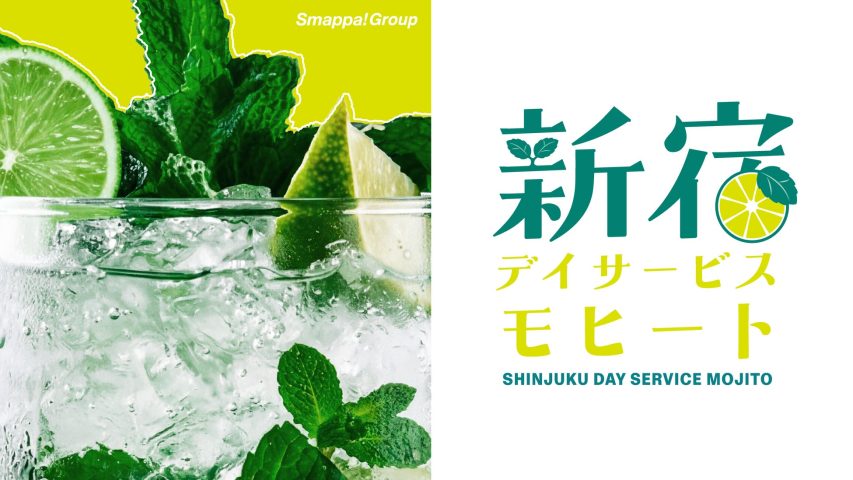
“Day service” is a Japanese term that describes a place akin to a senior center where outpatient services are offered to senior citizens who are still capable of living independently but could use help with certain tasks or socialization activities. Shinjuku Day Service has recently partnered with Smappa! Group, which operates a large number of restaurants, bars, host clubs, and other entertainment facilities throughout Shinjuku, to bring a refreshingly new partnership to Kabukicho tables called the Shinjuku Day Service Mojito.

This initiative, which is one of the first of its kind in a major metropolitan area, connects farms, day service facilities, and restaurants/bars together in a community chain of compassion. Senior citizen volunteers grow mint plants organically using seedlings provided by Pipichan Farm in Ome, Tokyo Prefecture, which are then harvested and distributed to several Kabukicho restaurants, bars, and host clubs. Each of these participating locations has designed its own unique cocktail using the mint and is committed to sharing the story of its cultivation with customers.

The beauty of Shinjuku Day Service Mojito is that it creates a sense of purpose for many of the seniors so that they can feel their impact not only within their own community but in the larger Kabukicho community as well. Project organizers have commented that cultivating plants also has important physical and mental benefits for the seniors such as keeping their senses and cognitive abilities sharp. Best of all, involvement in the project is completely voluntary, participants can grow the herbs at their own pace, and they can be involved in other parts of the distribution process if they so choose.

▼ It’s fitting that mint means “virtue” or “warmth of emotions” in Japan’s language of flowers (hanakotoba).

If you’d like to support seniors by purchasing one or more of the collaborative mint cocktails, please see the list of participating businesses below. We think this is an excellent way for seniors to stay active and connected to the community–tied right up there with having their own line of collective trading cards.

Participating restaurants and bars (all located within Kabukicho)
人間レストラン (Ningen Restaurant)
麦ノ音 (Mugi no Oto)
MISO SOUP
BRIAN BAR
red.
世阿弥 (Zeami)
ありんす (Arinsu)
デカメロン ギャルバー (Decameron Gyaru Bar)
PEGASUS
● BAR CACCO
クラブ春 (Club Haru)

Participating host clubs (all located within Kabukicho)
APiTS
AWAKE
CURE
SMAPPA! HANS AXEL VON FERSEN
OPUST

Source, images: PR Times
● Want to hear about SoraNews24’s latest articles as soon as they’re published? Follow us on Facebook and Twitter!

  • ✇SoraNews24 Japan
  • Japan’s izakaya pubs closing at record pace, failing to attract foreign tourists Casey Baseel
    Combination of factors is dimming the shine of one of the stars of Japanese restaurant culture. Izakaya are a unique part of Japanese food culture. Their closest analogy would be pubs, since izakaya serve a wide variety of alcoholic drinks and food meant to be paired with such beverages. Their menus are much more extensive than just basic bar munchies, though, with things such as yakitori chicken skewers, grilled onigiri rice balls, and plates of sliced sashimi being long-standing favorites. A
     

Japan’s izakaya pubs closing at record pace, failing to attract foreign tourists

20 May 2026 at 15:00

Combination of factors is dimming the shine of one of the stars of Japanese restaurant culture.

Izakaya are a unique part of Japanese food culture. Their closest analogy would be pubs, since izakaya serve a wide variety of alcoholic drinks and food meant to be paired with such beverages. Their menus are much more extensive than just basic bar munchies, though, with things such as yakitori chicken skewers, grilled onigiri rice balls, and plates of sliced sashimi being long-standing favorites. As a matter of fact, unlike with a pub, the expectation is that izakaya customers will always order some kind of food too, though there’s still a greater focus on drinks than at a regular restaurant.

However, izakaya are in a tough spot in Japan these days, and since the start of the year have been going bankrupt at a faster rate than at any time in nearly the past 40 years, according to a new study.

Data from Tokyo Shoko Research, a commerce and industry research organization, shows that between January and April of 2026, 88 izakaya have declared bankruptcy with debts of 10 million yen (US$65,000) or more. That’s 54.3 percent more than for the same period last year, and the highest number Tokyo Shoko Research has observed for the first quarter of the year since it began tracking such statistics in 1989, significantly more than the previous high of 59 in 2024.

So what’s causing the closures? A mix of factors, but one of the biggest is rising prices. Japan is experiencing by far its worst inflation in a generation, and costs for not just ingredients, but also for utilities, are hitting izakaya hard. Many are responding by reducing portion sizes, reworking recipes to make use of cheaper ingredients, or raising the prices they charge their own customers to make up the increased expenses. There are limits to how much of those tactics diners will put up with, though.

Facing rising costs for their own necessities such as rent, groceries, transportation, and home utilities, many consumers are becoming much more sensitive to the value they’re getting with the reduced amount of money they have left over for discretionary spending, and izakaya are looking a lot less appealing to many people than they used to. In particular, Tokyo Shoko Research points out that izakaya offers that include a full meal’s worth of food plus unlimited drinks for a period of time (usually 90 or 120 minutes), traditionally some of their most attractive deals, have gotten more expensive and now often cost more than 5,000 yen, a price point that many diners are balking at.

The study also highlights recent changes in dining/drinking patterns in Japan. Traditionally, izakaya have gotten much of their business from groups of coworkers coming in together, either as part of a pre-planned event such as a welcome party for new employees or an end-of-the-year celebration, or as spontaneous excursions to grab a drink after clocking out, sometimes after doing overtime and being too hungry/thirsty to wait until they can commute back home. However, those gatherings largely went away during the pandemic, and while many izakaya weathered that economic storm due to financial support from the government, the custom of coworkers going to drink together hasn’t rebounded to its previous level.

Part of that is due to more people working from home, something that was extremely rare in Japan prior to the pandemic. Many jobs now offer at least some telecommuting flexibility,  meaning fewer people in the office, and so fewer people to go grab a cold Asahi with on the way to the station at the end of the day. There’s also been a gradual increase in desire for a more even work/life balance in Japanese society. Even many in management positions are now more aware that constant overtime chips away at morale and the company’s ability to retain workers, and have come to accept that many employees feel that, when overtime does have to be done, having to go drinking with your boss afterward doesn’t make up for it, but actually makes the situation even worse.

So when you combine higher prices, freedom from the obligation to go to izakaya with coworkers, and the possibility of already being at home when you clock out from work, having a drink in the comfort of your living room, and one you purchased at the supermarket for half of what an izakaya would have charged you, becomes a very compelling alternative.

▼ Especially when stores in Japan have not just beer, but a wide variety of canned cocktails too.

Ah, but what about inbound foreign tourists? Japanese cuisine is one of the top reasons travelers from overseas come to Japan, and with the yen remaining so weak, many visitors still feel like dining out here is a bargain compared to their home countries. Tokyo Shoko Research, though, says that izakaya aren’t drawing in foreign tourists to the same extent that other restaurants in Japan are.

The report doesn’t offer any theories as to why this is, but it likely has something to do with international foodies’ passion for Japanese food being strongly focused on specific dishes, such as ramen, sushi, or curry rice. While many izakaya do have tasty food, their broader menu makes them a little less likely to hook a traveler’s attention than, for instance, a restaurant whose storefront is plastered with signage featuring photo after photo of steaming hot bowls of ramen. Ordering at izakaya is also a little trickier to navigate. There aren’t any vending machines at the entrance to purchase a meal ticket from, and it can be hard for newbies to estimate how many plates of food to order for a filling spread. There’s also the whole otoshi custom of unasked-for appetizers that you still have to pay for, but aren’t told the price of in advance, which can be an unpleasant bit of culinary culture shock.

Izakaya, like all pubs, are about more than just base sustenance. In a sense, they’re a form of entertainment, and much like certain genres of music or movies fluctuate in popularity, there’s a chance that izakaya will bounce back. For now, though, the situation isn’t very rosy, so if you see one that looks intriguing, they’d probably really appreciate it if you came in for a drink and a bite to eat.

Source: Tokyo Shoko Research via Yahoo! Japan News via Jin
Top image: Pakutaso
Insert images: Pakutaso (1, 2)
● Want to hear about SoraNews24’s latest articles as soon as they’re published? Follow us on Facebook and Twitter!

  • ✇El País in English
  • The Chicago Cubs and the ‘rooftop wars’ Miquel Echarri
    The United States professional baseball league (MLB) was suspended for three months between May and July 2020, at the worst point of the pandemic. When it finally resumed, it did so behind closed doors or with very restricted access. For the first time in many years, stars of the sport such as Mike Trout of the Los Angeles Angels and Christian Yelich of the Milwaukee Brewers had to celebrate their victories in front of empty stands.Seguir leyendo
     

The Chicago Cubs and the ‘rooftop wars’

10 June 2026 at 16:58

The United States professional baseball league (MLB) was suspended for three months between May and July 2020, at the worst point of the pandemic. When it finally resumed, it did so behind closed doors or with very restricted access. For the first time in many years, stars of the sport such as Mike Trout of the Los Angeles Angels and Christian Yelich of the Milwaukee Brewers had to celebrate their victories in front of empty stands.

Seguir leyendo

© Brian D. Kersey (Getty Images)

Fans watch a Cubs game from the rooftops across the street from Wrigley Field.
  • ✇Hong Kong Free Press HKFP
  • Overtaken by Hong Kong in global wealth management, Swiss keep cool AFP
    Though Hong Kong has overtaken Switzerland as the number one in cross-border wealth management, rather than enter panic mode, Swiss banks seem unruffled — feeling it bolsters the case against looming tighter banking regulations. Financial Secretary Paul Chan holding a press conference after presenting the budget address on February 25, 2026. Photo: Kyle Lam/HKFP. Hong Kong is now the world’s largest cross-border booking centre thanks to inflows from mainland China, strong initial public o
     

Overtaken by Hong Kong in global wealth management, Swiss keep cool

By: AFP
6 June 2026 at 03:10
paul chan

Though Hong Kong has overtaken Switzerland as the number one in cross-border wealth management, rather than enter panic mode, Swiss banks seem unruffled — feeling it bolsters the case against looming tighter banking regulations.

Financial Secretary Paul Chan holding a press conference after presenting the budget address on February 25, 2026. Photo: Kyle Lam/HKFP.

Hong Kong is now the world’s largest cross-border booking centre thanks to inflows from mainland China, strong initial public offering activity, and equity market gains, said a study published last week by the Boston Consulting Group (BCG).

Hong Kong had US$2.95 trillion of cross-border assets under management in 2025, while Switzerland had US$2.946 trillion.

Rapid advances in technology innovation and artificial intelligence sectors are “expected to open up greater scope for development within Hong Kong’s asset and wealth management industry”, said the semi-autonomous Chinese city’s Financial Secretary Paul Chan.

More than 60 percent of the external capital comes from mainland China, the BCG 2026 Global Wealth Report said, adding that Hong Kong was “cementing its role as China’s gateway to global markets”.

“Uncertainties around US-China tensions are the main reason they are moving capital and managing wealth in Hong Kong,” Gary Ng, senior economist at Natixis Corporate and Investment Banking, told AFP.

However, China’s market regulator announced a sweeping investigation in May against some brokers running cross-border trading, as it launched a two-year crackdown on investment leaving the mainland.

On Monday, China’s cabinet unveiled new rules due to enter force in July, aimed at curbing outbound investment and deals with foreign entities which might transfer restricted technology, services and data overseas without authorisation.

“Investors engaging in foreign investment and related activities… shall not endanger China’s national security or harm national interests,” authorities said.

China's national flags and Hong Kong flags are displayed in the city on September 30, 2025, a day before the 76th anniversary of the People's Republic of China. Photo: Kyle Lam/HKFP.
China’s national flags displayed in the city on September 30, 2025, a day before the 76th anniversary of the People’s Republic of China. Photo: Kyle Lam/HKFP.

Ng noted that if Beijing “truly wants to accelerate” the internationalisation of China’s yuan currency, “it will need to accept freer cross-border capital movement”.

Tougher Swiss regulations planned

The Swiss Bankers Association told AFP that Hong Kong had been directly benefiting from exceptionally strong asset growth in China.

But it said Swiss banks too had a successful presence in key Asian growth markets.

“For Switzerland, competitive framework conditions are particularly crucial for the future. It is essential that regulation remains targeted and internationally coordinated so that both stability and competitiveness are strengthened,” it said.

Switzerland’s biggest bank UBS is currently at loggerheads with the government, which wants to tighten banking regulations following the implosion of Credit Suisse in 2023.

UBS was strongarmed into a quickfire takeover of its closest domestic rival to prevent a major blow to Switzerland’s financial stability.

Bern now wants stronger safeguards, given the merged megabank’s size relative to the Swiss economy.

Hong Kong overtaking Switzerland “shows that international competitiveness must remain at the heart of the discussions,” the Association of Swiss Private Banks, which represents wealth management firms, told AFP.

During debates on the government’s proposals, “parliament will have to keep this in mind”, it added.

‘Playing half the game’

Andreas Venditti, an analyst with Swiss investment managers Vontobel, said Hong Kong’s rise to the top had been coming because growth rates were stronger in Asia.

“As Swiss banks are among the largest wealth managers in Asia — with UBS the largest in the region by very far — they clearly benefit from the higher growth rates,” he told AFP.

UBS’s assets under management in the Asia-Pacific region amounted to US$781 billion at the end of March, he noted.

Zurich, Switzerland in 2024
Zurich, Switzerland in 2024. File photo: Tom Grundy/HKFP.

Cross-border wealth grew by 10.7 percent in Hong Kong in 2025, compared to 7.6 percent in Switzerland, said BCG.

Dean Frankle, a managing director and financial institutions specialist at BCG, said Hong Kong overtaking Switzerland is primarily down to “the rise of Asia”.

For wealthy Asian clients, “why would you go to Europe” when Hong Kong is “at your doorstep”, he said, hence the importance for Swiss banks to be competitive in the Asian market.

“If you’re not serving both markets, you’re only playing half the game,” he told AFP.

❌
Subscriptions