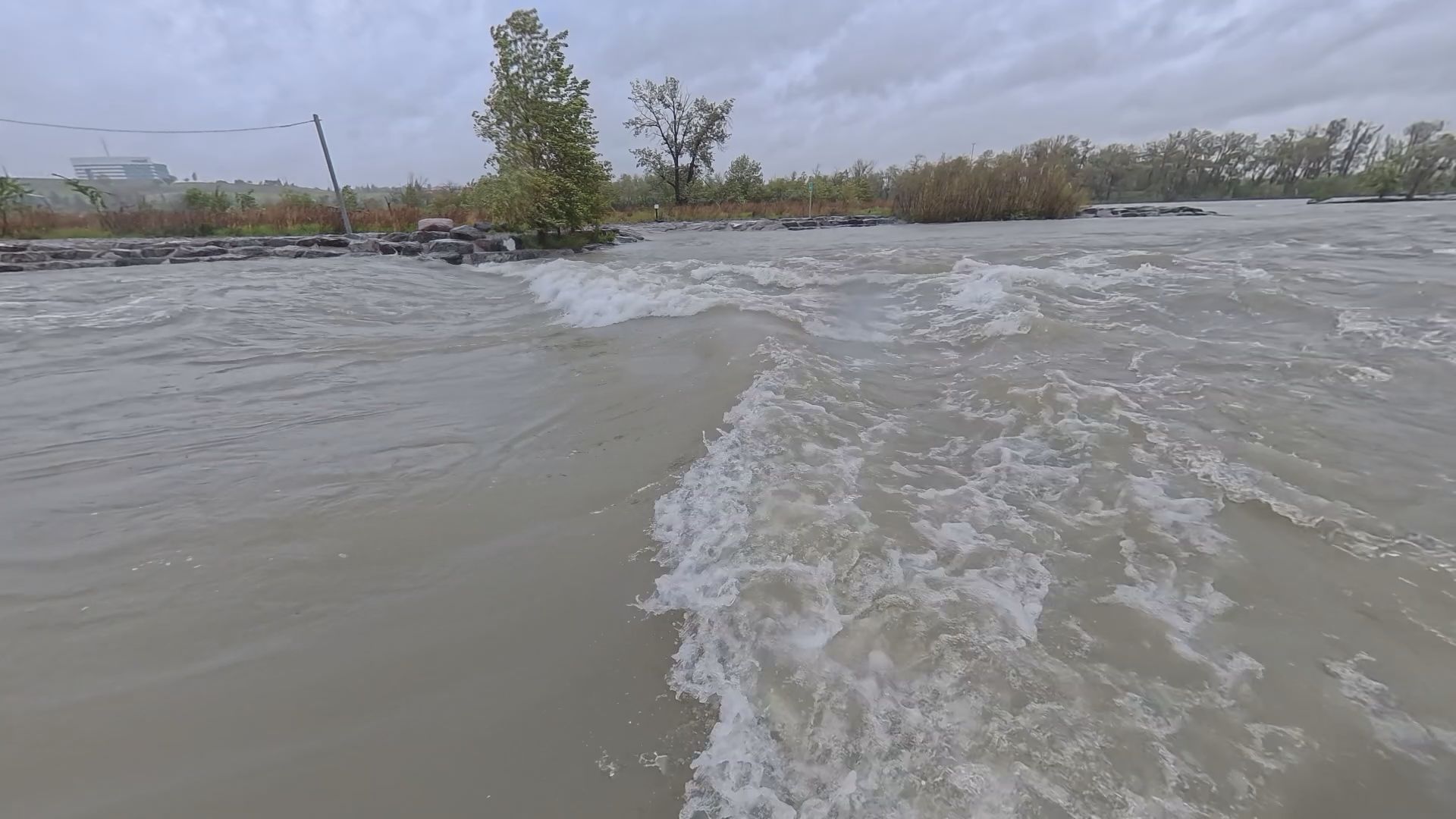
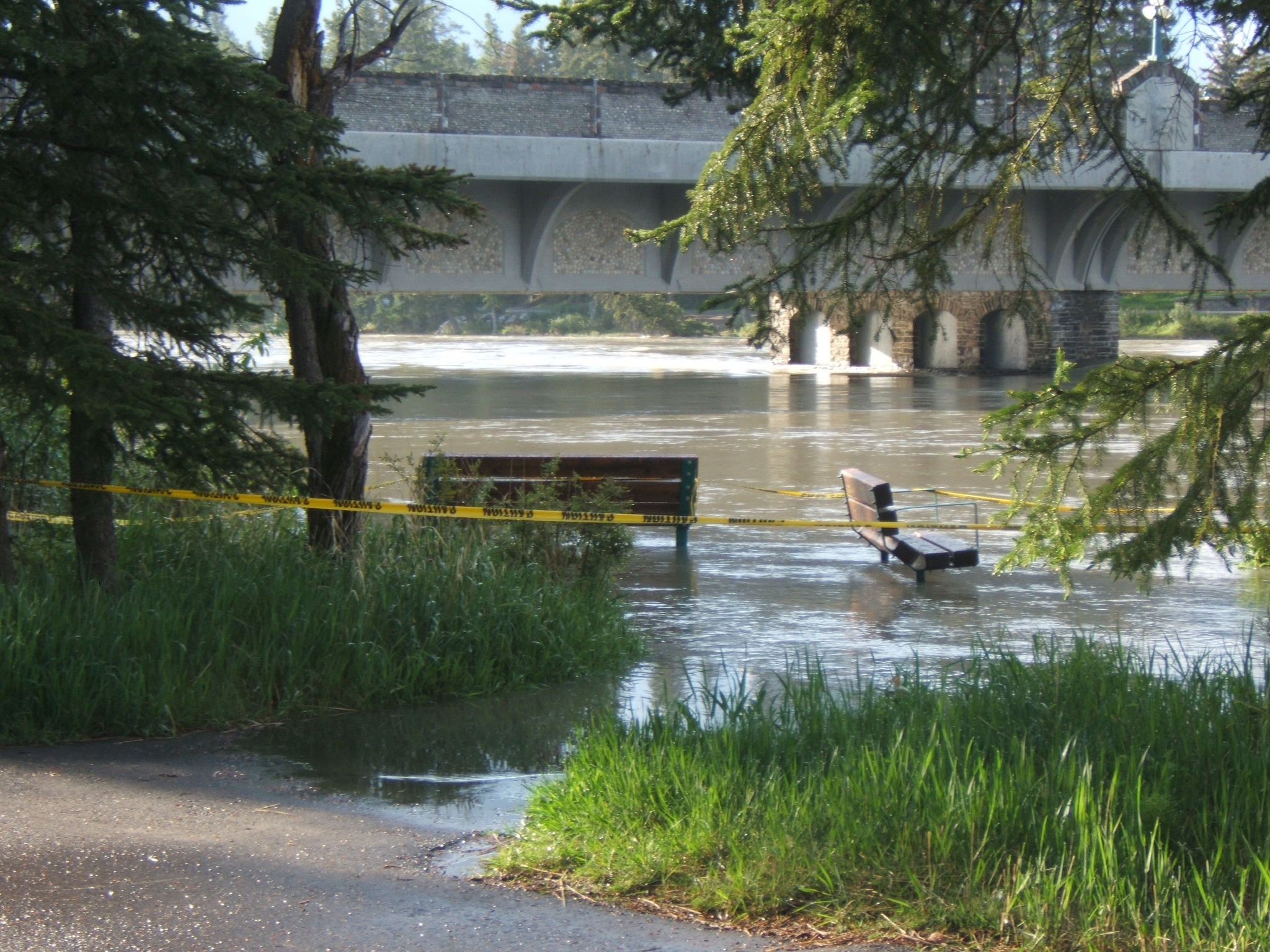
City of Calgary officials forecast river levels to peak by Tuesday


Prime Video started the year hot with a few new releases, particularly the highly anticipated second season of Fallout, which arrived back at the end of 2025 but continued well into 2026. Following closely behind the critically acclaimed sci-fi show was a pair of superhero series, Invincible and The Boys, and while the latter will be back for another batch of episodes next year, the former has gone off the air for good. Prime Video is also the home of some of the biggest straight-to-streaming movies this year, and the streamer has been testing the waters this year in various genres. Prime Video’s swashbuckling epic, The Bluff, was a massive hit despite lukewarm reviews, and the same can be said for The Wrecking Crew, the original crime thriller starring Dave Bautista and Jason Momoa that smashed to the top of streaming charts.


![]()
ALOR SETAR, June 14 — Police have identified one of two men whose bodies were recovered from the Kedah River today as a 16-year-old boy who had been reported missing two days earlier, adding that there was no indication the deaths were linked.
Harian Metro reported Kota Setar police chief Assistant Commissioner Syed Basri Syed Ali as saying that the teenager, identified as Saw Chee Wan, was believed to have left his home on June 12. Family members identified him through a pendant necklace he had been wearing.
According to police, Saw had a learning disability and was reported missing from his home in Kampung Seberang Perak, about two kilometres from where his body was found.
The teenager's body was discovered by Alor Setar City Council cleaning workers at about 9am near Taman Pesisiran Jeragan in Ampang Jajar.
Firefighters later recovered the body from the river.
The national daily also said that police later identified the second victim as Muhammad Amin, also known as N. Thiagarah, 46, from Tanjung Bendahara who had also been reported missing on June 12.
Syed Basri said investigations found that Muhammad Amin had previously received treatment for mental health issues.
Although the two bodies were found about 100 metres apart, police said investigations showed the cases were unrelated.
A forensic examination found no evidence of foul play, and both cases have been classified as sudden deaths.
The bodies were taken to Sultanah Bahiyah Hospital for post-mortem examinations.
Police also confirmed that a motorcycle found near the scene belonged to Muhammad Amin, based on identification by his younger brother.
Syed Basri urged the public not to speculate about the circumstances surrounding the discovery of the two bodies.
Earlier reports said the bodies of two men, aged 16 and 46, were found in the Kedah River near Titi Taman Pesisiran Jeragan today.


Aussie~mobs posted a photo:
Written on reverse:
This is a photo of the grave of our ?? worker, name on the cross, he was the only one of our Corps who fell on the Peninsula.
Regimental number - 5939
Place of birth - Adelaide, South Australia
Religion - Methodist
Occupation - Plumber
Address - Jones Street, Nailsworth, South Australia
Marital status - Single
Age at embarkation - 20
Next of kin - Mother, Mrs L R Hill, Jones Street, Nailsworth, South Australia
Date of enlistment from Nominal Roll - 16 January 1915
Rank on enlistment - Driver
Unit name - Light Horse Brigade Train 4
AWM Embarkation Roll number - 25/102/1
Embarkation details - Unit embarked from Adelaide, South Australia, on board HMAT A19 Afric on 26 May 1915
Regimental number from Nominal Roll - 8883
Rank from Nominal Roll - Driver
Unit from Nominal Roll - 20th Company, Australian Army Service Corps
Fate - Died of wounds 12 November 1915
Place of burial - Shrapnel Valley Cemetery (Plot II, Row E< Grave No. 17), Anzac, Gallipoli
Panel number, Roll of Honour,
Australian War Memorial - 181


The thriller genre has always been oversaturated. Every year, the box office sees an influx of stories about serial killers, detectives, and wild conspiracies. Now, the problem here is that most of them feel like the same film because they rely on the same formula of constant twists, shock value, and predictable moments designed to keep audiences reacting every few minutes.


![]()
BEIRUT, June 5 — Israel and Lebanon have agreed to implement a ceasefire that would require Hezbollah to stop firing, withdraw from near the border and would see Lebanon’s army deploy in new “pilot zones” in the area.
The Iran-backed group has rejected the proposed arrangement, instead demanding a comprehensive ceasefire and the withdrawal of Israeli troops from Lebanon.
AFP examines the agreement, announced in a joint statement after a fourth round of US-led talks between Israel and Lebanon in Washington on Wednesday.
South of the Litani
According to the statement, the ceasefire is “contingent on a complete cessation of Hezbollah fire and the evacuation of all Hezbollah operatives” from south of Lebanon’s Litani River, which runs around 30 kilometres from the border.
Under a November 2024 ceasefire that sought to end a previous round of fighting between Israel and Hezbollah, the group’s fighters were supposed to withdraw north of the river and the Lebanese army was to dismantle the group’s military infrastructure in the area.
In January, the army said it had finished doing so — but weeks later, fighting erupted there once again when Hezbollah drew Lebanon into the Middle East war on March 2.
A Hezbollah official told journalists last month that the group had managed to send reinforcements and weapons to the area after the war began.
Israel’s ambassador to the United States, Yechiel Leiter, who was part of Wednesday’s talks in Washington, told reporters that “the first step is that the Hezbollah fighters, these terrorists who have come down to the south have to go back to the north”, saying they numbered more than 2,000.
“We will guarantee them safe passage as long as they leave,” he said.
“But after a certain amount of time — which is not very long — if they don’t make their way back to the north, then they know exactly what’s coming,” he added.
‘Pilot zones’
The agreement includes the creation of “pilot zones” where Lebanon’s army “will take exclusive control of the territory to the exclusion of all non-state actors”.
Lebanese Prime Minister Nawaf Salam said the army’s planned deployment in such areas was a tangible step that “does not prejudice our right to a full (Israeli) withdrawal, but brings us closer to it”.
Michael Young of the Carnegie Middle East Center think tank, in Beirut, said the plan “is full of pitfalls, full of potential problems and ambiguities”.
“But it’s the first serious plan... where they are addressing Hezbollah’s disarmament,” he told AFP.
Young said that allowing the army to take control of the pilot zones after Hezbollah’s withdrawal would avoid a confrontation between Lebanon’s military and the militants.
The plan implies US recognition “that a full-front assault on Hezbollah to disarm the militia is not a realistic option” for Lebanon’s army, he said.
‘Political decision
Lebanese authorities, who have been under US and Israel pressure to disarm Hezbollah, took the largely symbolic step of banning the group’s military activities after it attacked Israel on March 2.
But they stopped there, in part fearing that the unity of the underfunded, under-resourced force, which counts some 80,000 personnel, could crack in case of a confrontation with the powerful Iran-backed group.
“The army won’t fight any domestic Lebanese component... it doesn’t want to start a civil war,” said retired Lebanese military general Khalil Gemayel, who once commanded forces south of the Litani.
“Disarming Hezbollah requires a political decision” as happened with other militias after Lebanon’s 1975-1990 civil war, he added. — AFP


Arsenic-contaminated groundwater affects more than 230 million people living in 108 countries. About 180 million of these people live in the Indian subcontinent (which includes Bangladesh, Nepal, and Pakistan, in addition to India) and Southeast Asia. The Indian state of Bihar, which borders Nepal, has several regions with extremely high levels of naturally occurring arsenic in their groundwater.
In Bihar, silt from the Himalayas containing arsenic and other heavy metals is routinely deposited in floodplains and seeps into the groundwater below. This phenomenon puts up to 21 million residents in Bihar at risk of consuming arsenic-contaminated water each day. Arsenic is a carcinogen that has also been linked to diabetes, pulmonary disease, cardiovascular disease, and infant mortality.
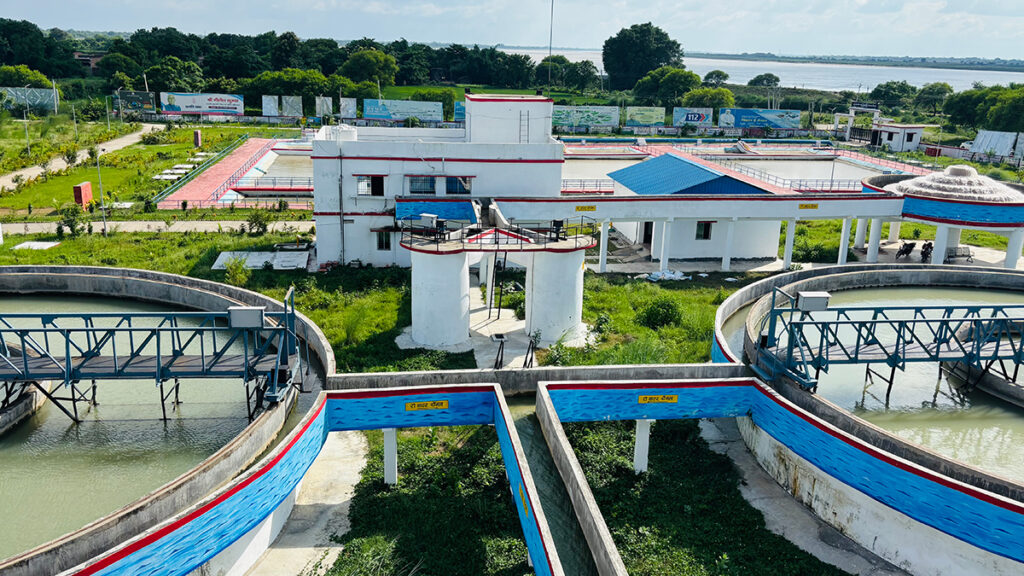
Though Bihar has close to 600 groundwater treatment units designed to filter out arsenic, a recent study of 98 units found that 90% of them were installed in parts of the state where groundwater arsenic levels were within the World Health Organization’s permissible limits (below 10 parts per billion)—which means almost all the communities that need these units the most still do not have access to them. The research was published in Groundwater for Sustainable Development.
“Some of the areas with these units had reported a higher prevalence of gallbladder cancer, which is associated with arsenic poisoning. But we found that it was the food that was the main source of arsenic exposure, not groundwater,” said Arun Kumar, a study author and senior scientist at Mahavir Cancer Sansthan & Research Centre in Patna, the state’s capital city. “In the last decade, we have observed drastic changes in groundwater arsenic levels in Bihar. Along with that, the cancer burden has also reduced in some parts of the state.”
In another city, Buxar, Kumar and his colleagues observed levels of arsenic of up to 1,900 parts per billion in the groundwater in 2015. But when the researchers retested that region’s water samples last year, the arsenic levels had gone down to 100–200 parts per billion.
“We hypothesize that because Bihar is prone to earthquakes, the seismic activity might have changed the properties of sediments and silt in groundwater. And perhaps, at some stage, those regions with the groundwater treatment units had experienced arsenic contamination,” added Kumar. “It is still a mystery to us” why the levels changed so drastically.
Kumar acknowledged that in the past few years, there has been a mushrooming of public and private groundwater arsenic treatment units in regions located within 10 kilometers (6.2 miles) of the Ganges River in Bihar. The majority of the 98 units included in the study were installed by the state government from 2016 onward. The researchers observed that privately owned units underwent regular maintenance, unlike many of the government-run units.
“Much of the previous large-scale groundwater testing conducted in Bihar was limited to the 6-mile stretch on either side of the Ganges River.”
The corresponding author of the study, Laura Richards, a professor of water resources and geochemistry at the University of Manchester, explained that regions close to the Ganges River may have been given higher priority mainly because they are situated along major roads and highways, making them easier to access than inland Bihar.
“Much of the previous large-scale groundwater testing conducted in Bihar was limited to the 6-mile stretch on either side of the Ganges River. The issue with that is that the regions selected for arsenic remediation units were likely based on nonrepresentative spatial sampling of the state, and those locations might not have necessarily covered all areas with arsenic contamination in the groundwater,” said Richards. “Arsenic distribution across the state is really quite heterogeneous.”
The researchers further found that in 10% of the locations where groundwater arsenic treatment units were installed by the state government, high levels of fluoride posed a greater public health risk than arsenic, suggesting that governmental policies were rolled out without site-specific water quality monitoring and testing.
“Alluvial or sand-rich aquifers are the main culprits of arsenic-contaminated water in Indian terrains.”
In addition to arsenic and fluoride, the groundwater in different parts of Bihar has high levels of manganese and iron. Currently, the state has more than 3,000 groundwater treatment units for arsenic, fluoride, and iron. However, Kumar said a better solution would be to look to other sources for drinking water and to ensure water treatment centers are properly maintained.
“People would be a lot safer if they stopped consuming groundwater altogether,” Kumar said. “This is why the state government has started treating and supplying water from the Ganges River to villages. They have already started doing it in two districts and plan on expanding the supply of river water.”
“Alluvial or sand-rich aquifers are the main culprits of arsenic-contaminated water in Indian terrains,” said M. Santosh, a professor at the China University of Geosciences in Beijing who was not involved in this study. “This study clearly shows how we can rectify remedial measures on a local level. We should encourage more such studies on how to tackle this problem.”
—Anuradha Varanasi, Science Writer