An estimated magnitude 7.8 earthquake was felt in Davao City shortly before 7.40am local time on Monday, June 8, 2026. Residents reported strong shaking and people have evacuated buildings as a precaution
An estimated magnitude 7.8 earthquake was felt in Davao City shortly before 7.40am local time on Monday, June 8, 2026. Residents reported strong shaking and people have evacuated buildings as a precaution
As Kremlin-London relations plummet to an all-time low over Ukraine, an ex-government terrorism adviser has warned there could be worse to come over UK failing to avenge previous attacks
As Kremlin-London relations plummet to an all-time low over Ukraine, an ex-government terrorism adviser has warned there could be worse to come over UK failing to avenge previous attacks
French director Marine Atlan’s La Gradiva has scooped the top Ami Paris Grand Prize in the competition of Cannes parallel section Critics’ Week. The first film follows a group of French high-school students who travel to Naples on a school trip to discover the ruins of Pompeii and the bodies petrified by Vesuvius. Emotions and […]
French director Marine Atlan’s La Gradiva has scooped the top Ami Paris Grand Prize in the competition of Cannes parallel section Critics’ Week. The first film follows a group of French high-school students who travel to Naples on a school trip to discover the ruins of Pompeii and the bodies petrified by Vesuvius. Emotions and […]
There are plenty of good-luck charms the superstitious can credit with helping the Knicks pull off the biggest comeback in NBA Finals history on Wednesday night: Jordyn Woods’ orange ostrich purse, which she’s carried to every winning game of the postseason; Kylie Jenner and Timothée Chalamet’s matching Chrome Hearts looks; Ben Stiller’s Knicks-themed Air Force […]
There are plenty of good-luck charms the superstitious can credit with helping the Knicks pull off the biggest comeback in NBA Finals history on Wednesday night: Jordyn Woods’ orange ostrich purse, which she’s carried to every winning game of the postseason; Kylie Jenner and Timothée Chalamet’s matching Chrome Hearts looks; Ben Stiller’s Knicks-themed Air Force […]
EXCLUSIVE: Zach Cregger, the filmmaker behind last year’s horror phenomenon Weapons, has parted ways with his longtime manager Peter Principato of Artists First, multiple sources tell Deadline. Principato couldn’t be reached for comment. Cregger had been with the famed manager for around 15 years — from a time when he was better known for comedy, as a […]
EXCLUSIVE: Zach Cregger, the filmmaker behind last year’s horror phenomenon Weapons, has parted ways with his longtime manager Peter Principato of Artists First, multiple sources tell Deadline. Principato couldn’t be reached for comment. Cregger had been with the famed manager for around 15 years — from a time when he was better known for comedy, as a […]
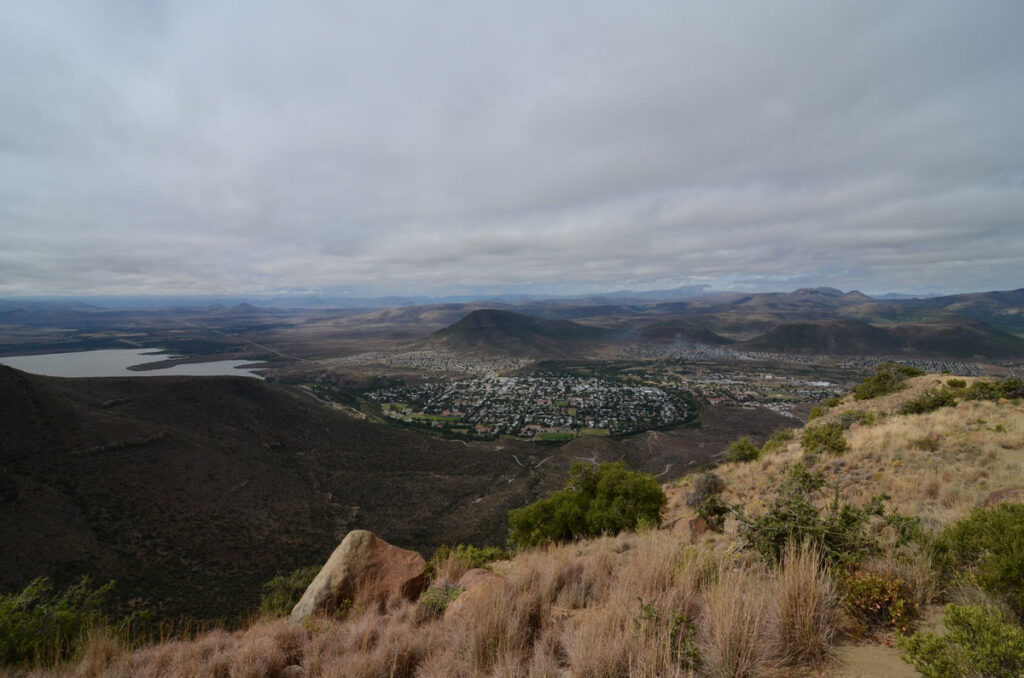
Roughly the size of Texas, the Karoo Basin of central western South Africa is brutally dry, sparsely populated, and known in part for its potentially “massive” hydrocarbon deposits.
South Africa, which consumes more energy than any other country in sub-Saharan Africa, has shown a growing interest in commercial fracking for shale gas and oil across the Karoo hinterland, with the country moving in late 2025 to lift a 13-year ban on shale gas exploration in the area.
However, a recent study
Roughly the size of Texas, the Karoo Basin of central western South Africa is brutally dry, sparsely populated, and known in part for its potentially “massive” hydrocarbon deposits.
South Africa, which consumes more energy than any other country in sub-Saharan Africa, has shown a growing interest in commercial fracking for shale gas and oil across the Karoo hinterland, with the country moving in late 2025 to lift a 13-year ban on shale gas exploration in the area.
However, a recent study from the University of Cape Town, published in Seismological Research Letters, cautioned that the Karoo might not be as seismologically calm as it appears, meaning fracking efforts could have the potential to induce earthquakes in the region.
A Swarm of Earthquakes
The researchers observed 66 earthquakes in this cluster between 2007 and 2022, ranging from 0.7 to 4.8 in magnitude.
The researchers investigated what they call a sudden swarm of earthquakes that occurred in the Leeu Gamka cluster, a region of the Karoo that was previously considered seismically stable. They observed 66 earthquakes in this cluster between 2007 and 2022, ranging from 0.7 to 4.8 in magnitude.
“The individual earthquakes here are very small,” said Alastair Sloan, a tectonics and structural geologist at the University of Cape Town.
Using ambient noise tomography, previous geophysical surveys, and information about the locations of past earthquakes, the researchers identified a critically stressed fault underlying the region. The fault appears to extend for at least 30 kilometers roughly west-northwest to east-northeast.
Looking at South Africa more generally, there are other places where there have been “fairly large” earthquakes with a similar orientation, Sloan said. He cited a series of large earthquakes in the early 20th century in a place called Koffiefontein, north of the study area, and the disastrous 1969 Tulbagh earthquake, west of the team’s study area.
Both of those earthquakes occurred in regions that are geologically similar to the Karoo, though they’re outside of the area being considered for shale gas exploration, Sloan said.
Fracking Risks?
In other parts of the globe, such as Oklahoma in the United States, processes related to oil and gas extraction have led to “induced earthquakes.” Most of these earthquakes have been triggered by wastewater disposal associated with oil production, not by fracking directly.
Researchers are unsure if industrial fluid injection in the Karoo, as is applied in shale gas fracking processes, could trigger significant seismic action in the region’s existing faults.
“Some locations which undergo shale gas development don’t see very much seismicity, and there is a catalog of things which need to be present for [seismicity] to be something that you would particularly worry about,” Sloan said.
For instance, if faults are only within the crystalline basement and therefore separated from the sedimentary layers where the fracking occurs, then it’s not likely they’ll be reactivated, because there’s no way for the fracking fluid to get down to the fault zone itself. Another factor, Sloan added, is that for significant earthquakes to occur, large faults that are already critically stressed need to be present in the region undergoing fracking.
The new study showed that both of these conditions may be met in the Karoo: Microseismicity does extend to the depths at which the carbonaceous shale is present. And this microseismicity is occurring on a reasonably extensive structure with a similar orientation to larger earthquakes that have already occurred in the region.
However, Sloan stressed, this isn’t a cause for immediate panic.
“I don’t want to be too alarmist; the size of the structure revealed by the microseismicity is not huge, and so we do not have evidence to expect an earthquake much larger than the damaging historical earthquakes that we have already seen in the wider region,” he said. “Globally, large earthquakes triggered by fracking (rather than associated deep wastewater exposure) are very rare, but the study suggests the necessary preconditions are present. And so the possibility needs to be considered and monitored carefully.”
Not Unique
Raymond Durrheim, a geoscientist and the South African Research Chair in Exploration, Earthquake and Mining Seismology at the University of the Witwatersrand, and who also examined the Ph.D. thesis on which the new study is based, said no area is perfectly seismically quiet.
“We know the way seismicity works in this whole area of southern Africa is that swarms occur,” he said. “They’ll last for years or even decades, and then they’ll die away. This is not a unique occurrence.”
This study was “useful,” though, Durrheim added, especially with the possibility of shale gas development in the Karoo. “It’s very important that we understand this because we know that when you inject fluid under high pressure, there’s always a chance you could trigger an earthquake,” he said, noting examples of fluid injection triggering earthquakes in places such as Canada. “It’s always a risk.”
To mitigate risks, Sloan suggested it would be useful to have a much denser network of seismometers within this region of South Africa.
Citation: Mwareya, R. (2026), A swarm of earthquakes in South Africa’s Karoo Basin poses questions for oil and gas development, Eos, 107, https://doi.org/10.1029/2026EO260159. Published on 20 May 2026.
NewsNation is expanding its borders. The Nexstar-backed cable-news outlet has quietly launched a suite of new podcasts, a maneuver that Michael Corn, president of specials and programming, says is only the beginning of a foray into the format, which he believes will help NewsNation reach viewers who are looking for authoritative, non-partisan conversations about a […]
NewsNation is expanding its borders. The Nexstar-backed cable-news outlet has quietly launched a suite of new podcasts, a maneuver that Michael Corn, president of specials and programming, says is only the beginning of a foray into the format, which he believes will help NewsNation reach viewers who are looking for authoritative, non-partisan conversations about a […]
Kenji Oyama, 42, reportedly stabbed his neighbours to death in their home in Japan before telling cops “I killed someone”. But hapless police officers did not inform homicide detectives
Kenji Oyama, 42, reportedly stabbed his neighbours to death in their home in Japan before telling cops “I killed someone”. But hapless police officers did not inform homicide detectives
Britain’s reliance on bricks-and-mortar levies has reached a level unmatched anywhere else in the developed world, leaving businesses shouldering a disproportionate share of the burden and the Exchequer dangerously exposed to any wobble in commercial property values.
The United Kingdom now extracts more from property taxes than any other major economy, with receipts equivalent to 3.7 per cent of the entire economy, according to the annual business rates review published by tax firm Ryan. The fig
Britain’s reliance on bricks-and-mortar levies has reached a level unmatched anywhere else in the developed world, leaving businesses shouldering a disproportionate share of the burden and the Exchequer dangerously exposed to any wobble in commercial property values.
The United Kingdom now extracts more from property taxes than any other major economy, with receipts equivalent to 3.7 per cent of the entire economy, according to the annual business rates review published by tax firm Ryan. The figure is well clear of France and Canada, both on 3.4 per cent, with Belgium and Luxembourg trailing on 3.3 per cent, a gap that underlines just how exposed the British system has become to a downturn in commercial real estate.
Taken together, business rates, council tax and transaction levies such as stamp duty are now generating around $136 billion (£108 billion) a year for the Treasury, more than France, Japan or Canada raise, and second only to the United States, where total receipts are nearly seven times larger at $855 billion. The OECD’s most recent Revenue Statistics confirm Britain’s outlier status among advanced economies.
Just under 11 per cent of every pound the Government raises in tax now comes from property — the third highest share among advanced economies, behind only South Korea on 11.8 per cent and the United States on 11.4 per cent. That level of dependence, analysts argue, has begun to crowd out investment in precisely the kind of physical, capital-intensive businesses ministers say they want to attract.
A structural problem, not a valuation quibble
Alex Probyn, practice leader at Ryan, said the combination of stubborn inflation, the end of pandemic-era reliefs and a string of policy tweaks had pushed receipts ever higher, in effect baking the squeeze into the architecture of the tax.
“Business property is carrying a disproportionate share of the overall tax burden, and that is beginning to weigh heavily on investment, particularly in sectors that rely on physical assets and long-term capital,” Probyn said. “Property taxes in the UK are the highest by international standards, and the system is designed in a way that continues to increase the yield over time. That creates a clear tension between the need to raise revenue and the need to support investment. That balance has to be addressed.”
The Government’s revaluation of business rates in England, Wales and Scotland, which came into force this April, is forecast to drag the total rates take up to £37.1 billion in 2026-27, from £33.6 billion the previous year, a leap of £3.5 billion in a single year. Business Matters has already reported on the £1.56 billion rise in rates bills that has rippled through every sector of the economy.
Probyn warns that the Exchequer’s fiscal dependence on these revenues is itself becoming an obstacle to reform. “This is not simply a question of valuation methodology. It is a structural issue,” he said.
Appeals backlog hits 40,000 as SMEs go to the wall
The pressure on businesses has been compounded by a logjam at the valuation office, the HM Revenue & Customs agency responsible for setting rateable values. Nearly 40,000 firms have lodged appeals against their revised bills and are still waiting for a hearing, with the Valuation Office Agency bracing for a further deluge of challenges from hospitality operators hit by punishing increases to their rateable values.
The average wait is now 11 months, during which firms must continue paying the higher rate. Some businesses are waiting up to 18 months for an assessment — a delay that has tipped a number of small companies into closure before their case is even heard. The squeeze helps explain why nearly 5,500 small firms have urged the Chancellor to halt what they describe as an “apocalyptic” revaluation, and why business rates appeals have plummeted overall, with many owners deterred by the cost and complexity of challenging their bills.
Layered on top of all this is the spike in energy costs flowing from the war in Iran, which broke out at the end of February. Three in five companies say the combination has forced them to freeze hiring and investment plans, the precise opposite of the growth story ministers are trying to sell.
The verdict from the high street
For SME owners on Britain’s high streets and industrial estates, the message from the data is unambiguous: the country’s tax system is increasingly tilted against the firms that take on premises, employ staff and pay rates in the local authority where they trade. Until ministers grasp the nettle of structural reform, rather than tinkering with reliefs at the margins, the burden on physical businesses will continue to rise, and so will the risk that the next downturn in property values takes the public finances down with it.
Senate Democrats on Thursday blocked Republicans' attempt to pass a short-term extension of the nation's spy powers by unanimous consent. Sen. Tom Cotton (R-Ark.) asked the chamber for unanimous consent to extend Section 702 of the Foreign Intelligence Surveillance Act (FISA) until July 2, but Sen. Ron Wyden (D-Ore.) objected. Wyden also objected to a...
Senate Democrats on Thursday blocked Republicans' attempt to pass a short-term extension of the nation's spy powers by unanimous consent. Sen. Tom Cotton (R-Ark.) asked the chamber for unanimous consent to extend Section 702 of the Foreign Intelligence Surveillance Act (FISA) until July 2, but Sen. Ron Wyden (D-Ore.) objected. Wyden also objected to a...
Pratt dropped to third with 25.8% of the vote as he was beaten to the runoff by incumbent Mayor Karen Bass and progressive Nithya Raman when AP called the race.
Pratt dropped to third with 25.8% of the vote as he was beaten to the runoff by incumbent Mayor Karen Bass and progressive Nithya Raman when AP called the race.
Welcome to Horror Explorer, a curated column showcasing the month’s best movies, series, books and everything else spooky worth checking out. I’m William Earl, the executive digital director of Variety and the publication’s resident horror enthusiast. Please drop me a line at wearl@variety.com if there’s something I should check out for next month’s missive.
Welcome to Horror Explorer, a curated column showcasing the month’s best movies, series, books and everything else spooky worth checking out. I’m William Earl, the executive digital director of Variety and the publication’s resident horror enthusiast. Please drop me a line at wearl@variety.com if there’s something I should check out for next month’s missive.

 Login
Login