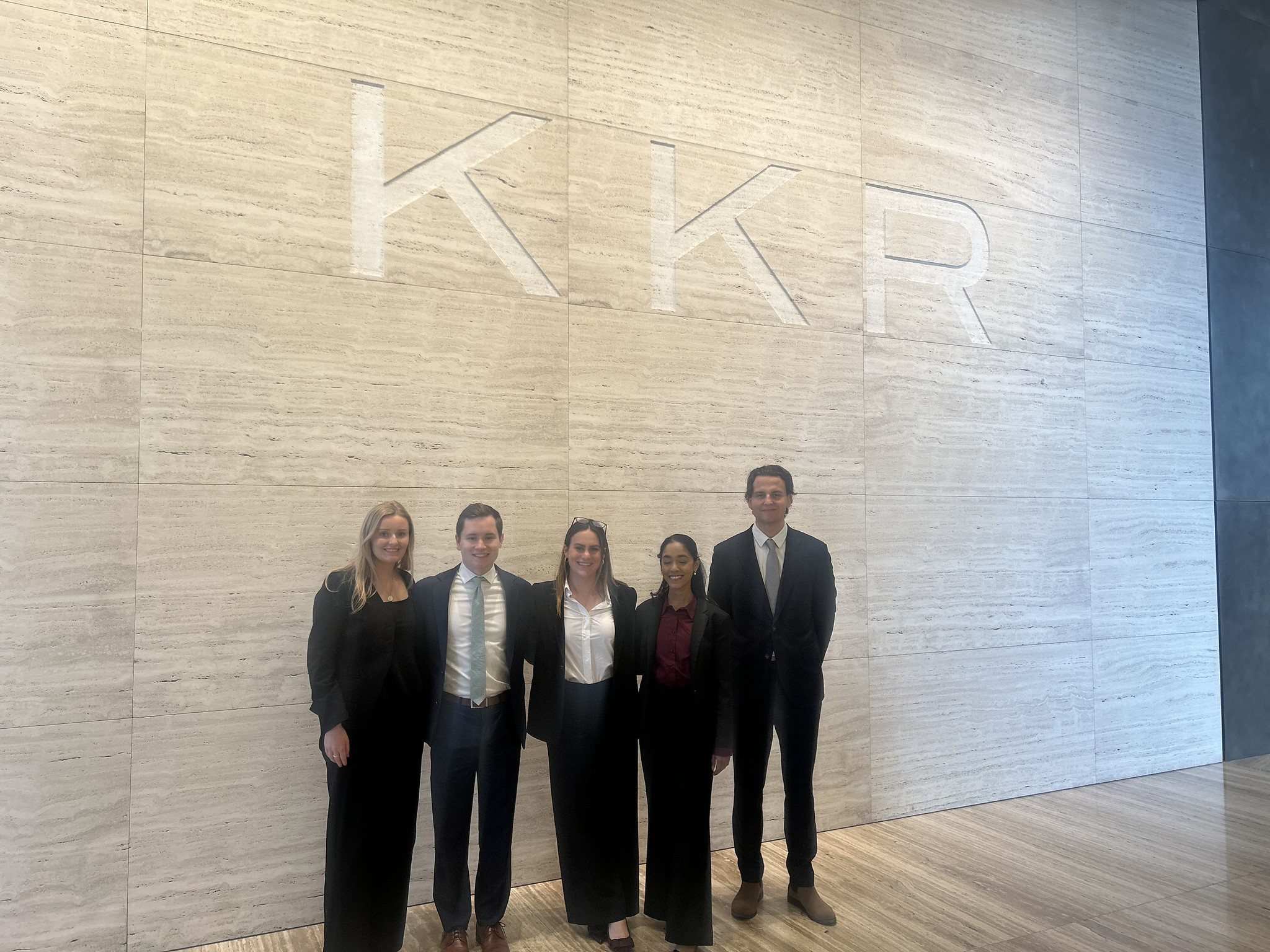
For the first time, a team from the inaugural M.S. in Climate Finance program participated in the prestigious Columbia Business School and KKR Private Equity Case Competition.
For the first time, a team from the inaugural M.S. in Climate Finance program participated in the prestigious Columbia Business School and KKR Private Equity Case Competition.
KULAI, June 9 — A marketing officer claimed to have lost RM343,190 after allegedly falling victim to a non-existent investment scheme that promised unusually high returns.Kulai police chief ACP Tan Seng Lee said the 46-year-old woman was lured into participating in the investment programme that claimed to offer profits of between 20 and 30 per cent within 24 hours.According to him, the woman claimed she was informed that the returns generated from the investment
KULAI, June 9 — A marketing officer claimed to have lost RM343,190 after allegedly falling victim to a non-existent investment scheme that promised unusually high returns.
Kulai police chief ACP Tan Seng Lee said the 46-year-old woman was lured into participating in the investment programme that claimed to offer profits of between 20 and 30 per cent within 24 hours.
According to him, the woman claimed she was informed that the returns generated from the investment would be credited into her account through an application known as “Shugoa AI Investment”.
Believing the scheme to be legitimate, the victim proceeded to make 13 payment transactions amounting to RM343,190 into 10 different local bank accounts between Sept 14, 2025 and April 18 this year.
“Subsequently, the victim checked the application and found that it showed accumulated profits amounting to RM1.5 million.
“However, when she attempted to withdraw the funds, she discovered that her account had been blocked,” he said in a statement today.
Realising she may have been deceived, the woman lodged a police report yesterday.
Tan said the case is being investigated under Section 420 of the Penal Code for cheating. — Bernama
PUTRAJAYA, June 15 — The Ministry of Economy is set to deliver a ministerial statement addressing the global energy crisis and worldwide supply chain disruptions when Parliament reconvenes on June 22, Minister Akmal Nasrullah Mohd Nasir confirmed.He said the statement would include a debate session to allow MPs to discuss the government’s actions and plans in addressing the impact of the crisis on the national economy.“For this upcoming session, we will table a m
PUTRAJAYA, June 15 — The Ministry of Economy is set to deliver a ministerial statement addressing the global energy crisis and worldwide supply chain disruptions when Parliament reconvenes on June 22, Minister Akmal Nasrullah Mohd Nasir confirmed.
He said the statement would include a debate session to allow MPs to discuss the government’s actions and plans in addressing the impact of the crisis on the national economy.
“For this upcoming session, we will table a ministerial statement on the global energy and supply crises. Parliament has indicated that time will be allocated for this, and the statement will be followed by a debate,” he said during his address at the Ministry of Economy’s monthly gathering today.
Akmal Nasrullah said that the government, through the National Economic Action Council (MTEN), has increased its meeting frequency from six to 12 times a year due to pressures from the global crisis, with 124 decisions recorded so far.
He said Malaysia still recorded encouraging economic growth of 5.4 per cent in the first quarter of 2026, while the inflation rate remained low at 1.9 per cent.
Akmal Nasrullah said approved foreign direct investment for the first quarter of 2026 amounted to RM92.8 billion, with Japan emerging as the largest investor at RM21.5 billion, particularly in the digital and technological transformation sectors.
He said China and the United States each recorded investments of RM10.1 billion, while domestic investment increased by 13 per cent to RM36.6 billion compared to the same period last year.
In a separate development, Akmal Nasrullah said the ministry is reviewing project applications under the 13MP, with an emphasis on more realistic and achievable implementation within the current economic climate.
He said the budget screening process is currently underway at the ministry level to assess the suitability of the submitted projects and programmes, taking into account current fiscal challenges and global economic pressures.
“The assessment also takes into account several more thorough and realistic considerations, rather than simply looking good on paper.
‘We must ensure that the continuity of the programmes or projects we arrange can be executed within the timeframe, taking into account the constraints we currently face,” he said.
Akmal Nasrullah said that while the 13MP focuses on long-term development up to 2030, the government needs to make several adjustments to ensure that economic growth can be sustained in 2027, adding that the ministry is facing the challenge of balancing the need for immediate intervention to address the global energy and supply crises and maintaining the country’s medium- and long-term development planning.
“On one hand, we have to review the interventions that need to be made now, but at the same time, we are also looking into the requirements for 2027 and must maintain the spirit of five-year planning,’ he said.
He said 2026 is a period of implementation and delivery that requires adaptation to all current constraints without compromising the country’s development goals.
The ongoing global crisis, he said, should not hinder efforts to restructure the national economy, but should be leveraged as an opportunity to strengthen Malaysia’s economic resilience. — Bernama
As the global sustainable forestry industry grows, driven by a carbon credit market expected to reach US$19.9 trillion by 2035, long-term conservation projects in Latin American countries like Peru are taking off.
The Slalom Foundation – part of the global digital consulting firm Slalom – operated a fund of over US$10 million and recently awarded more than $200,000 to impact initiatives in Latin America, Africa, and the U.S.
Among those receiving the fresh Slalom Foundation funds is the Fores
As the global sustainable forestry industry grows, driven by a carbon credit market expected to reach US$19.9 trillion by 2035, long-term conservation projects in Latin American countries like Peru are taking off.
The Slalom Foundation – part of the global digital consulting firm Slalom – operated a fund of over US$10 million and recently awarded more than $200,000 to impact initiatives in Latin America, Africa, and the U.S.
Among those receiving the fresh Slalom Foundation funds is the Forest Stewardship Council Investments & Partnerships (FSC). The FSC has been working with the Peruvian National Service of Natural Protected Areas (SERNANP) to certify 7.4 million hectares of national parks and Peruvian Amazon ecosystems.
Through its Certification Initiative, the FSC has set up shop in Peru, recently announcing a brand new conservation facility, which will streamline the certification process of national parks and conservation areas in the country.
The FSC Certification Initiative has already committed US$1.7 million in 2026 to high-value areas in Africa, Latin America, and Central Asia. As it seeks new partners to scale impact, it welcomes Slalom Foundation’s donation and funding for Peru.
“We are profoundly honored to receive the climatic subsidy from the Slalom Foundation in support of the Fund for Conservation of the FSC,” said Jen Opie, deputy executive director of FSC Investments & Partnerships. “This investment accelerates our certifying capabilities to protect some of the most critical conservation areas in the world throughout Latin America, including Peru.”
Today, sustainable forestry and conservation efforts are tied to the global carbon credit offsetting market.
A Precedence Research report released in February estimated that the global carbon credit market is worth US$1.3 trillion and expected to grow to $19.9 trillion by 2035, expanding at a CAGR of 35.80% in the same period.
While North America is expected to see the fastest growth, and Europe holds the largest share of the market, Latin America stands out for its untapped potential, as sectors like aviation and big tech — seeking to offset new energy-hungry AI data center operations – drive demand.
Within this market, forestry conservation projects lead the way.
The Slalom Foundation said that the organizations benefiting from their recent investment are setting in motion groundbreaking conservation and ecological programs, helping families and women access essential services, and promoting technological certifications that support local wealth and economic development.
“These environments often face significant barriers when trying to access the necessary resources to unblock financing for long term conservation,” said Opie from FSC. “The collaboration with Slalom reinforces our shared commitment to safeguarding biodiversity, promoting climate resilience, and supporting local communities, whose stewardship is essential to global climate goals,” she added.
“Together, we are scaling credible and verifiable nature-based climate solutions at a time when decisive action has never been more urgent,” concluded Opie.
Featured image description: Aerial view of the Amazon Rainforest.
Featured image credit: FSC.
Disclosure: This article mentions a client of an Espacio portfolio company.
Climate finance in the multipolar era will be driven less by collective targets and more by the need to manage geopolitical security risks in a less stable world.
Climate finance in the multipolar era will be driven less by collective targets and more by the need to manage geopolitical security risks in a less stable world.
SpaceX IPO marketing materials inaccessible, Reuters review findsIT expert says rare block is likely a company decisionMusk’s China popularity contrasts with US scrutiny over alleged Chinese investmentHONG KONG, June 5 — SpaceX’s website and IPO marketing documents were not accessible today in Hong Kong and mainland China, a Reuters review showed, a step that threatens to curb participation by investors there in a listing expected to be the world’s largest.Elon
IT expert says rare block is likely a company decision
Musk’s China popularity contrasts with US scrutiny over alleged Chinese investment
HONG KONG, June 5 — SpaceX’s website and IPO marketing documents were not accessible today in Hong Kong and mainland China, a Reuters review showed, a step that threatens to curb participation by investors there in a listing expected to be the world’s largest.
Elon Musk’s SpaceX aims to raise US$75 billion (RM302 billion), the most globally in an IPO, in a deal that would value the company at US$1.75 trillion, immediately vaulting it into the ranks of the 10 most valuable US-listed firms.
The company kicked off marketing roadshows yesterday in New York and its IPO roadshow materials were posted on its website, accessible to users in most major Asian markets, except for mainland China and Hong Kong, the Reuters review showed.
Both institutional and retail investors access a company’s IPO marketing material to better acquaint themselves with the business and financial details of such candidates, to ensure they pick the best investment prospects.
Reuters could not immediately establish why and since when the website of SpaceX, the rocket, satellite and AI company, and the IPO material were restricted in mainland China and the world’s No. 1 wealth hub of Hong Kong.
SpaceX did not immediately respond to Reuters’ request for comment outside US working hours.
Citigroup, one of the lead banks, declined to comment. Spokespeople for the IPO’s other lead banks, Bank of America , Goldman Sachs, JPMorgan, and Morgan Stanley, did not immediately respond to requests for comment.
Could be first US market debut above US$1 trillion
The SpaceX IPO has generated global interest and the listing could become the first US market debut in excess of US$1 trillion, which would immediately make it one of the world’s most valuable publicly traded companies.
Besides a long list of Wall Street giants, Japan’s Mizuho and Macquarie Capital in Australia are involved in managing SpaceX’s IPO in Asia Pacific, the roadshow presentation showed.
An “Error 1009” message was displayed in response to attempts to access the company website and marketing material both in mainland China and the global financial centre of Hong Kong, the Reuters review showed.
Web security provider Cloudflare said the most common explanation for the error was that the website owner “has banned” the country or region of the related IP address from access.
Such a block is usually a company decision, said Francis Fong, honorary president of the Hong Kong Information Technology Federation.
While Hong Kong users have also been unable to access some US government websites in recent years, such cases are rare for major companies, he added.
Musk is a household name in China, the world’s second-largest economy, where the success of his Tesla electric vehicles makes him one of the most popular foreign business figures.
Jeffery Chan, a managing director at Hong Kong’s Central Asset Investments, said the access restrictions could be due to SpaceX’s status as a defence contractor, adding that Chinese investors have not typically been a target market for the company.
“For local retail investors, getting a direct piece of the IPO book is going to be incredibly tough. But for regional institutional funds, the pipeline will likely run through standard US bookbuilding,” he said.
In February, two Democratic US senators urged the Pentagon to conduct an immediate review of SpaceX amid accusations that Chinese investors had secretly acquired stakes in the closely held rocket maker, citing potential national security risks. — Reuters
SINGAPORE: One Raffles Place, one of the most recognisable office developments in Singapore’s central business district, has drawn interest from several potential buyers, according to sources who spoke to Bloomberg.
The property, which is being marketed for more than $2.3 billion (US$1.8 billion), has attracted interest from a range of parties including father-and-son property investors Raj Kumar and Kishin RK, Malaysian developer IOI Properties Group Bhd and Singapore-based asset manager Capita
SINGAPORE: One Raffles Place, one of the most recognisable office developments in Singapore’s central business district, has drawn interest from several potential buyers, according to sources who spoke to Bloomberg.
The property, which is being marketed for more than $2.3 billion (US$1.8 billion), has attracted interest from a range of parties including father-and-son property investors Raj Kumar and Kishin RK, Malaysian developer IOI Properties Group Bhd and Singapore-based asset manager CapitaLand Investment Ltd, Bloomberg reported.
Located in the heart of the financial district, One Raffles Place comprises two office towers and a retail mall. The development is among a growing number of commercial properties in Singapore drawing renewed attention as financing conditions improve and sellers show greater flexibility on pricing.
The majority stake in the complex is held by OUE REIT, which is backed by the Indonesian Riady family. The real estate investment trust owns 81.54 per cent of the property, while United Overseas Bank holds the remaining 18.46 per cent and occupies premises within the development.
In a February exchange filing, OUE REIT said it had begun an exercise with UOB to gauge market interest in the property.
A spokesperson for OUE REIT said the trust would decide on its next steps after evaluating the outcome of the exercise. UOB declined to comment, while representatives for RB Capital, the property firm linked to Raj Kumar and Kishin RK, also declined to comment. CapitaLand Investment and IOI Properties did not respond to requests for comment.
Despite the interest, market observers say the scale of the deal presents challenges. The asking price is considered substantial, making it difficult for a single buyer to complete the acquisition. Similar concerns have surfaced in relation to Marina One, another major city-centre asset that has been linked to a potential sale valued at around $5.7 billion.
Based on the valuation of OUE REIT’s stake at the end of 2025, One Raffles Place was valued at approximately $2.37 billion. The property offers 65,309 square metres, or about 702,980 square feet, of lettable space.
Some potential buyers are also said to be weighing the likelihood of additional redevelopment costs. While parts of the complex benefit from long-term leases stretching centuries into the future, much of the development dates back to the 1980s. One of the towers and a quarter of the retail space are held under long-duration leases, while the remaining tower and 75 per cent of the retail component have leases that expire by the 2080s, according to people familiar with the matter.
IOI Properties, controlled by Malaysian businessman Datuk Lee Yeow Seng, has been steadily expanding its footprint in Singapore through a series of acquisitions. Most recently, the company agreed to acquire Asia Square Tower 2 for $2.48 billion.
CapitaLand Investment, which is backed by Temasek Holdings, manages stakes across multiple REITs and private real estate funds.
Raj Kumar and Kishin RK, meanwhile, are linked to several firms including Royal Holdings and RB Capital, and oversee a property portfolio in Singapore that includes RB Capital Building, located beside One Raffles Place.
Securities litigation is undergoing a quiet but consequential transformation. The rise of artificial intelligence and a shifting regulatory environment are changing not only the types of claims being brought, but also how plaintiffs plead cases, how regulators shape and enforce rules, and how companies manage litigation risk. Together, these forces are challenging traditional approaches that no longer fit the realities of today’s market.As these dynamics evolve, companies and their advisors are
Securities litigation is undergoing a quiet but consequential transformation. The rise of artificial intelligence and a shifting regulatory environment are changing not only the types of claims being brought, but also how plaintiffs plead cases, how regulators shape and enforce rules, and how companies manage litigation risk. Together, these forces are challenging traditional approaches that no longer fit the realities of today’s market.
As these dynamics evolve, companies and their advisors are being pushed to rethink disclosure practices, litigation strategy, and the role of experts earlier than ever in the process. Precision, innovation, and the ability to translate complex financial and market data into defensible positions have become increasingly critical, particularly at the motion to dismiss stage, where cases are often won or lost outright.
We sat down with Eric Poer, Managing Director at Secretariat International, an expert advisory and disputes consulting firm whose professionals have worked on some of the most impactful matters across the globe, to discuss the changing landscape of securities litigation.
Q: Can you tell us about Secretariat and your role within the firm?
A: Secretariat is a leading advisory firm that specializes in disputes and investigations with more than 700 experts and advisors worldwide. Our experts have been engaged by most of the Am Law 100 law firms and have completed more than 10,000 engagements on six continents. We operate strategically, growing by selectively hiring top-tier professionals who not only bring deep subject matter expertise, but also fit a highly collaborative and entrepreneurial culture.
I now lead Secretariat’s securities litigation and complex financial disputes practices. Our work sits at the intersection of financial markets, regulation, and litigation, supporting clients in matters where the factual, economic, and accounting issues are both highly technical and highly consequential. I have practiced in this area for more than 20 years and have worked on some of the largest, most complex, and highest-profile securities litigation and investigations matters in the country, including the Wells Fargo sales practices investigation, one of Apple’s most significant securities litigation matters, the recent Rivian Automotive securities litigation related to its IPO, and many more.
Q: What types of clients and matters does your practice focus on?
A: Our primary clients are Am Law 100 law firms and directors and officers facing regulatory inquiries, enforcement actions, or securities litigation. We are most often engaged in situations where the issues are technically demanding and time-sensitive, and where early strategic decisions can materially affect the trajectory of a case. From an industry perspective, we routinely work with large, global financial institutions and many of the most highly regarded Fortune 100 technology companies in the world.
The matters we typically work on include securities class actions, derivative litigation, complex financial disputes, including damages assessments, and forensic investigations involving disclosure issues, market activity, valuation, or transaction-related allegations. Increasingly, we are brought in early, often before a motion to dismiss is even filed. At this early stage, we help to shape defense strategy before positions harden and costs escalate.
Q: What differentiates your securities litigation practice from others in the market?
A: The core differentiator is our expert-led, technology-enabled team model. We operate with a lean, deeply experienced group of professionals who have worked together for more than 15 years. That continuity matters. It allows us to move quickly, communicate efficiently, and apply judgment that has been refined across decades of dealing with similar matters.
Our size also enables us to take a highly strategic and tactical approach. Rather than applying a one-size-fits-all framework, we tailor our analysis to the specific allegations and strategic objectives of each case. We are technology-enabled, but expert-driven—the tools support the analysis, not the other way around.
Just as important, we are comfortable going very narrow and deep. In many cases, the most impactful issues hinge on a very specific nuance and our clients require niche expertise to support their needs. We have access to more than 1 million industry experts that we frequently partner with to supplement our accounting, economic, and financial experts. Our experience allows us to surface those nuanced issues early and help clients focus their resources where they matter most.
Q: How have client expectations in securities litigation evolved in recent years?
A: Securities litigation is quickly changing—both procedurally and due to technological shifts.
Settlements are increasingly growing, with median settlement value in 2025 at a 10-year high, particularly if a matter survives a motion to dismiss. As a result, clients increasingly expect advisors who can help them win—or significantly narrow—the case early. There is far less appetite for broad, unfocused analysis. Instead, clients want precision, credibility, and a clear articulation of why certain theories fail under scrutiny at the pleadings stage.
This has elevated the importance of targeted financial and market analysis and the ability to respond creatively and credibly when translating complex technical issues into persuasive, defensible positions under intense judicial scrutiny.
In addition, clients increasingly expect that experts know how to use AI effectively and responsibly. Deliverables that rely on generative or analytical AI must meet rigorous and defensible standards—with robust human oversight.
Q: What major enforcement and regulatory shifts are influencing securities litigation this year?
A: One of the most notable shifts is the increased role of state attorneys general in enforcement activity. As federal enforcement priorities have shifted and staffing reductions have affected agencies like the SEC and DOJ, state attorneys general appear poised to step in to fill perceived gaps. That dynamic introduces new risks for companies that may have historically focused their compliance and litigation strategies on federal regulators.
At the same time, the SEC itself has undergone significant changes, with more anticipated. These developments are creating uncertainty, but also opportunity, for public companies as they reassess disclosure practices, governance structures, and litigation risk.
Q: What about arbitration provisions as a way to limit litigation?
A: One of the more interesting and potentially transformative developments is the emerging opportunity for public companies to enforce arbitration provisions that could limit or eliminate securities class actions as we know them. The SEC has taken a more neutral stance on arbitration clauses in registration statements, opening the door for companies to revisit this issue.
What’s especially significant is that costs for companies and insurers could skyrocket, while opportunities for plaintiffs could diminish. Securities class actions in their current form, often lasting for several years, are still far more efficient than dozens or even hundreds of individual arbitration claims, each requiring separate defense.
It is an area that warrants close attention, as future challenges and regulatory responses will shape how viable this strategy ultimately becomes.
Q: We haven’t really talked about the focus that seems to be on everyone’s minds these days: artificial intelligence. How is AI influencing securities litigation?
A: AI-related securities claims have emerged as one of the most significant recent developments. Plaintiffs are increasingly focusing on alleged misrepresentations about companies’ AI capabilities, deployment, or strategic importance. Many of these cases revolve around what has been described as “AI-washing,” where companies are alleged to have overstated the sophistication or impact of AI initiatives.
Plaintiffs are testing how courts will evaluate statements about AI that may be aspirational, forward-looking, or grounded in rapidly changing technical realities. As a result, we are seeing that AI-related filings generally have been dismissed at a lower rate than other filings but are settled at a higher rate.
Outside of trends in securities class actions, my personal view is that we need to be leaning into AI or we’ll be left behind. At Secretariat, we are actively pursuing and implementing opportunities to utilize AI in a smart and responsible way.
We like to equate AI to a first-year analyst. It’s smart and capable but needs to be checked for accuracy and reasoning. So yes, we are always looking for ways to deploy advanced technology to benefit our clients, but that technology is always supported by expert judgment and never replaces it; the stakes are simply too high in our business to do otherwise.
Q: AI is certainly an increasingly litigated area. What other topics are seeing increased litigation?
A: Crypto-related disputes and enforcement remain a growing area. In 2025, there were 14 cases with crypto-related claims, 75% more than in 2024. In addition, healthcare-related filings always account for a significant portion of securities litigation filings, and this continued in 2025, with healthcare-related filings accounting for more new filings than any other sector. Each of these trends is likely to continue in 2026.
Conclusion on the Securities Litigation Landscape
Although the SEC has shifted from its regulation by enforcement era, it is evident that private litigation and state attorneys general will fill at least some of the enforcement void. In addition, the potential for public companies to enforce arbitration provisions could have a transformative effect on securities litigation as we know it; however, at this time, it is not clear that a significant number of companies have or will adopt such provisions. Undoubtedly, this year will be a year of change in the securities litigation space.
As the global sustainable forestry industry grows, driven by a carbon credit market expected to reach US$19.9 trillion by 2035, long-term conservation projects in Latin American countries like Peru are taking off.
The Slalom Foundation – part of the global digital consulting firm Slalom – operated a fund of over US$10 million and recently awarded more than $200,000 to impact initiatives in Latin America, Africa, and the U.S.
Among those receiving the fresh Slalom Foundation funds is the Fores
As the global sustainable forestry industry grows, driven by a carbon credit market expected to reach US$19.9 trillion by 2035, long-term conservation projects in Latin American countries like Peru are taking off.
The Slalom Foundation – part of the global digital consulting firm Slalom – operated a fund of over US$10 million and recently awarded more than $200,000 to impact initiatives in Latin America, Africa, and the U.S.
Among those receiving the fresh Slalom Foundation funds is the Forest Stewardship Council Investments & Partnerships (FSC). The FSC has been working with the Peruvian National Service of Natural Protected Areas (SERNANP) to certify 7.4 million hectares of national parks and Peruvian Amazon ecosystems.
Through its Certification Initiative, the FSC has set up shop in Peru, recently announcing a brand new conservation facility, which will streamline the certification process of national parks and conservation areas in the country.
The FSC Certification Initiative has already committed US$1.7 million in 2026 to high-value areas in Africa, Latin America, and Central Asia. As it seeks new partners to scale impact, it welcomes Slalom Foundation’s donation and funding for Peru.
“We are profoundly honored to receive the climatic subsidy from the Slalom Foundation in support of the Fund for Conservation of the FSC,” said Jen Opie, deputy executive director of FSC Investments & Partnerships. “This investment accelerates our certifying capabilities to protect some of the most critical conservation areas in the world throughout Latin America, including Peru.”
Today, sustainable forestry and conservation efforts are tied to the global carbon credit offsetting market.
A Precedence Research report released in February estimated that the global carbon credit market is worth US$1.3 trillion and expected to grow to $19.9 trillion by 2035, expanding at a CAGR of 35.80% in the same period.
While North America is expected to see the fastest growth, and Europe holds the largest share of the market, Latin America stands out for its untapped potential, as sectors like aviation and big tech — seeking to offset new energy-hungry AI data center operations – drive demand.
Within this market, forestry conservation projects lead the way.
The Slalom Foundation said that the organizations benefiting from their recent investment are setting in motion groundbreaking conservation and ecological programs, helping families and women access essential services, and promoting technological certifications that support local wealth and economic development.
“These environments often face significant barriers when trying to access the necessary resources to unblock financing for long term conservation,” said Opie from FSC. “The collaboration with Slalom reinforces our shared commitment to safeguarding biodiversity, promoting climate resilience, and supporting local communities, whose stewardship is essential to global climate goals,” she added.
“Together, we are scaling credible and verifiable nature-based climate solutions at a time when decisive action has never been more urgent,” concluded Opie.
Featured image description: Aerial view of the Amazon Rainforest.
Featured image credit: FSC.
Disclosure: This article mentions a client of an Espacio portfolio company.
AI is a two-sided coin, with tremendous potential to benefit the environment while also requiring an immense amount of water and energy. How will these two opposing dynamics balance out—or can they?
AI is a two-sided coin, with tremendous potential to benefit the environment while also requiring an immense amount of water and energy. How will these two opposing dynamics balance out—or can they?

 Login
Login