 Login
LoginBologna, Italy (2026)
20 May 2026 at 11:46


scuba_dooba posted a photo:

The colliery buildings at Beamish Museum represent the essential surface infrastructure that supported coal mining operations across the North East of England during the late 19th and early 20th centuries. These structures were central to the organisation of daily work, housing facilities for administration, equipment handling, and the coordination of miners heading underground.
Collieries were often designed as tightly integrated industrial sites, where every building had a specific function within a highly efficient system. From the winding engine house to workshops and offices, each element played a role in keeping production running smoothly. Mining was not only a dangerous and physically demanding occupation, but also the foundation of entire communities, with colliery sites shaping the growth of towns and villages. Beamish preserves this landscape to show how deeply coal mining influenced everyday life and industry.

Neil. Moralee posted a photo:
Founded in 1919 by Walter Owen Bentley in Cricklewood, London, the Bentley motor company quickly established a reputation for exceptional performance and engineering, famously dominating the 24 Hours of Le Mans throughout the 1920s with the help of the legendary 'Bentley Boys'. Following financial difficulties during the Great Depression, the company was acquired by Rolls-Royce in 1931, moving production to Derby and later to its iconic factory in Crewe, Cheshire, in 1946. After decades of being closely associated with Rolls-Royce, Bentley was purchased by the Volkswagen Group in 1998, a transition that sparked a significant revitalisation of the brand's identity as a manufacturer of luxury, high-performance grand tourers that continues to define its legacy today.
Beer, Devon, UK.

scuba_dooba posted a photo:
The Engine Works at Beamish Museum represents the skilled industrial engineering that kept mines, railways and factories running during the height of Britain’s industrial era. These workshops were the beating heart of maintenance and repair, where heavy machinery was stripped down, repaired and rebuilt by highly skilled fitters, turners and engineers.
Many engineering works operated almost continuously, as breakdowns in mining or rail transport could bring entire operations to a halt. Engineers often worked under pressure to fabricate replacement parts by hand using lathes, forges and basic machine tools, long before standardised mass production made components easily interchangeable. The Beamish reconstruction helps illustrate just how vital these workshops were to industrial life in the North East.


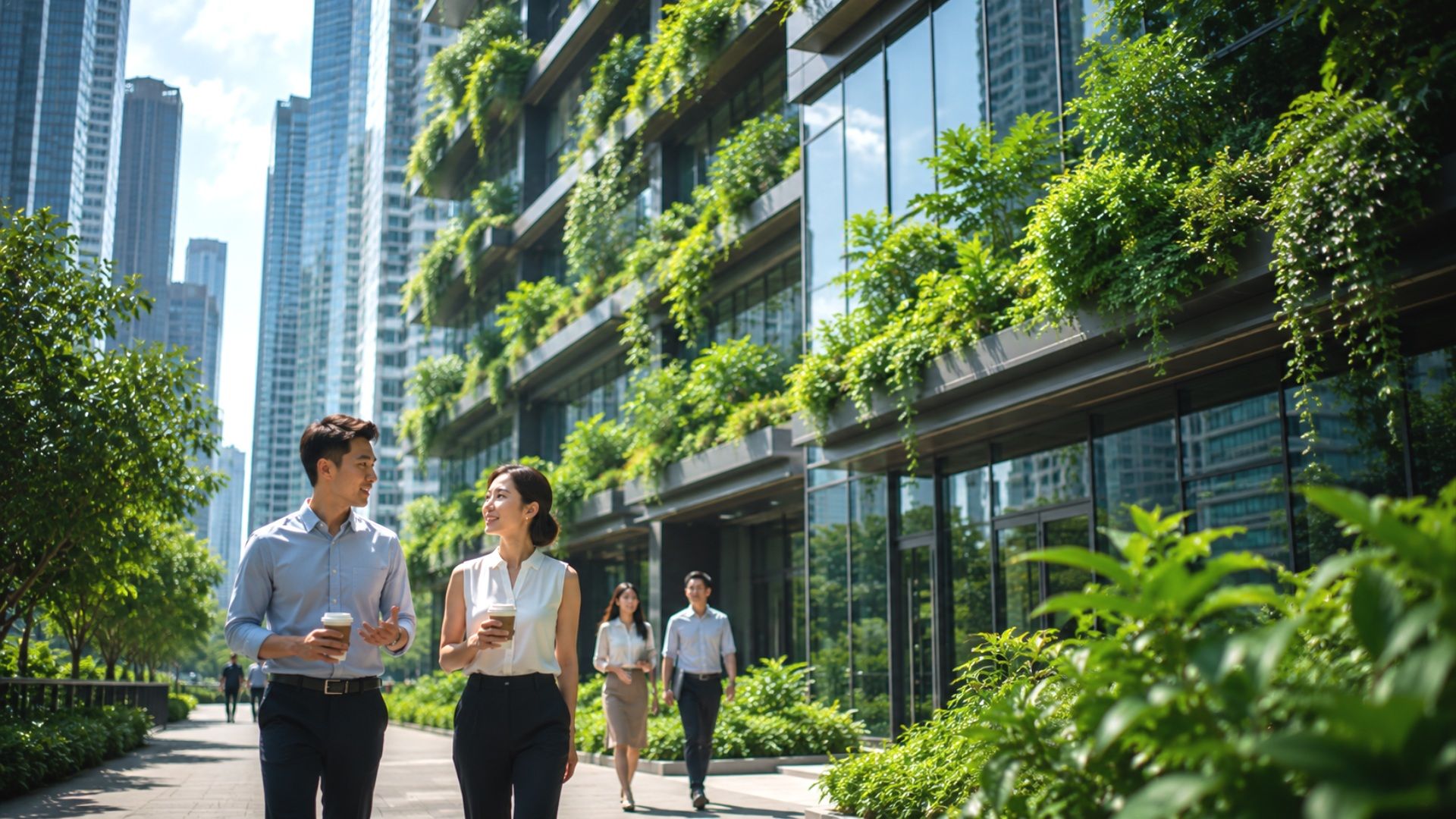
SINGAPORE: Rising electricity bills are doing something years of sustainability campaigns struggled to achieve: convincing more private developers that green buildings make financial sense.
Across Singapore, developers are increasingly adopting energy-saving designs, low-carbon materials and shared cooling systems. While environmental goals are always important, industry players say the change is now driven as much by cost savings as by sustainability targets.
Developers are also moving beyond minimum green building requirements as they seek to reduce operating expenses and attract buyers who value sustainable homes, offices, and commercial spaces. The trend comes as Singapore works towards its Green Building Masterplan, which aims for 80% of buildings to meet higher energy efficiency and sustainability standards by 2030, Channel NewsAsia (CNA) reports (June 10).
One example is Geneo at Singapore Science Park, developed by CapitaLand Development. The first phase of the rejuvenation project spans five buildings across roughly 180,000 square metres.
Instead of treating each building as a separate development, the project was planned as a connected precinct where businesses, workers and visitors can share spaces and interact.
Jonathan Yap, Chief Executive Officer of CapitaLand Development, said that the company wanted to create an ecosystem rather than simply construct individual buildings.
A major feature is The Canopy, a 27-metre-tall communal space built using mass-engineered timber. The company estimates the structure cuts construction-related carbon emissions by up to 80% compared with steel and 60% compared with reinforced concrete.
The space also relies heavily on passive cooling. Shading, building orientation, and large, slow-moving fans help keep temperatures comfortable while reducing the need for air conditioning. According to Mr Yap, air-conditioning consumption is about 60% lower than in a fully air-conditioned space.
The sustainability push is also happening on a larger scale. At Punggol Digital District, JTC Corporation has implemented a district cooling system that supplies chilled water to multiple buildings, including Punggol Coast MRT station, retail areas, business park developments and the Singapore Institute of Technology campus.
Instead of every building operating its own cooling equipment, cooling is produced centrally and distributed across the district.
David Tan, Assistant Chief Executive Officer of JTC Development Group, said the approach can reduce energy consumption by up to 30%. It also frees up rooftop and building space that would otherwise be occupied by cooling equipment, allowing more room for solar panels and other uses.
The district was planned with sustainability in mind even before construction began. Wind flow and solar radiation studies helped determine building placement to improve natural ventilation. More than 20,000 sensors now collect data on temperature, air quality and energy use to help optimise operations.
Industry observers say the discussion around sustainability has changed significantly over the past two decades.
Melvin Tan, Joint Managing Director of LAUD Architects and immediate past president of the Singapore Institute of Architects, said that rising energy costs have made energy efficiency a major business consideration. Buildings that use less energy are cheaper to operate and maintain over time.
Mr Tan noted that when Singapore’s Green Mark certification scheme was introduced in 2005, some developers saw it mainly as a compliance exercise. Today, many view it as a way to make properties more attractive to buyers and tenants.
While government projects must meet strict sustainability requirements, some private developers are voluntarily aiming higher. Mr Tan estimated that about 20% to 30% are pursuing standards beyond what regulations require because they see commercial value in doing so.
Buyers are increasingly interested in sustainable homes, offices and developments.
Environmental benefits have become increasingly important, and economics may be the stronger driver for gaining from them.
As energy prices stay elevated, efficient buildings are becoming easier to justify on a balance sheet. What was once marketed as a green choice is increasingly becoming a practical business decision.
Lower energy consumption is no longer just good for the environment. It is becoming good business for developers, architects and property buyers alike as well.
This article (Higher energy bills drive more Singapore developers to adopt greener building solutions) first appeared on The Independent Singapore News.


The built environment, particularly office buildings other urban facilities, are responsible for 39% of the global energy-related emissions, according to the World Green Building Council. About a third of that impact comes from the initial construction of a building and the other two-thirds is produced over the lifetime of a building by heating, cooling, and providing power to the occupants. Our guest today is leading a key battle to reduce the impact of the built environment. Tune in for a wide-ranging conversation with Rob Bernard, Chief Sustainability Officer at CBRE Group Inc., which manages more than $145 billion of commercial buildings, providing logistics, retail, and corporate office services across more than than 100 countries.

Rob cut his sustainability teeth at Microsoft, as its Chief Environmental Strategist for 11 years, as the company was developing its world-leading approach and collaborating with other tech giants to lobby for policy and funding to accelerate progress. He discusses CBRE’s Sustainability Solutions & Services for commercial building owners, as well as the accelerating progress for renewables, carbon tracking, and economic, health, and lifestyle benefits of living lightly on the planet. You can learn more about CBRE and its sustainability services at cbre.com
Take a few minutes to learn more about making construction and building operations more sustainable:
Editor’s Note: This podcast originally aired on April 15, 2024.
The post Best of Sustainability In Your Ear: Making Billions of Square Feet of Commercial Space Sustainable with CBRE’s Rob Bernard appeared first on Earth911.

From factories and barrel-roofed buildings to gabled churches and towers, Charles Young’s sprawling yet diminutive city of paper models continues to grow. Known for his miniature constructions and animations that often double as three-dimensional color studies, the sculptor and animator highlights a wide range of architectural styles with an emphasis on color pairings.
Since 2020, Young has been making hundreds of miniature structures inspired by A Dictionary of Color Combinations by Japanese costume designer and painter Sanzo Wada (1883-1967). (There’s even a fun, interactive website based on the book.) So far, Young has completed 258 buildings from the first volume, which focuses on two-color combinations, and there are 90 to go. But he’s created a wide array of examples featuring multiple color combinations, too.
In June, Young will display 120 three-color paper sculptures at Galerie Handwerk in Munich. And in addition to the paper models, he also creates architecturally inspired sculptures from wood and woven cane, some of which are currently on display in Scotland at Kirkcudbright Galleries and MacLaurin Gallery. See more on Young’s Instagram and Tumblr.
Do stories and artists like this matter to you? Become a Colossal Member today and support independent arts publishing for as little as $7 per month. The article Explore a Growing City of Meticulously Crafted Miniature Paper Buildings by Charles Young appeared first on Colossal.

scuba_dooba posted a photo:
This smallpox vaccination poster reflects an important chapter in the history of public health, when governments and local authorities promoted vaccination to combat one of the most serious infectious diseases of the time. Smallpox was once a major cause of illness and death across Britain and the world, and widespread vaccination campaigns eventually led to its eradication in 1980.
Early vaccination efforts in the 19th century were sometimes met with public suspicion and debate, despite their proven effectiveness. Over time, however, compulsory vaccination laws and improved medical understanding helped transform public attitudes. Posters like this were used to encourage participation, often displayed in public buildings, clinics and workplaces to reach as many people as possible. At Beamish Museum, such material helps illustrate how medical science and public health policy evolved alongside everyday life in industrial communities.

