Normal view

Investigation: Illegal firings, cancelled visas and lack of healthcare – how domestic workers facing critical illness are left in limbo

domestic workers hk

Nancy, a Filipino domestic worker in Hong Kong, squints her eyes for the camera as her right arm holds her employers’ younger daughter tight. The toddler beams, legs thrown around her nanny’s hips. “My baby,” Nancy sobs as she scrolls through old pictures with one hand, while dabbing her wrinkled face with a crumpled white tissue with the other.

Nancy.
Migrant domestic worker Nancy says she lost her job after having a heart attack. Photo: Raquel Carvalho/HKFP.

When she started working for the family, the girl in the photo had not yet been born. Nancy was there for every milestone – from her first tentative steps to the day she left for university in England.

💡HKFP grants anonymity to known sources under tightly controlled, limited circumstances defined in our Ethics Code. Among the reasons senior editors may approve the use of anonymity for sources are threats to safety, job security or fears of reprisals.

“I couldn’t take longer holidays because she would often get sick while I was away,” recalled Nancy, whose name has been changed due to ongoing legal claims. “I sometimes even put her before my own children.”

In Hong Kong, workers like Nancy are legally required to live in their employers’ homes, where they often work excessive hours and only have one day off per week. But for the most part, Nancy said, she was treated “like family.”

Nancy
Nancy, a domestic worker from the Philippines, worked for her Hong Kong employers for over two decades. Photo: Raquel Carvalho/HKFP.

Everything changed in 2024. While helping to fold a bed, she felt a sudden pressure around her chest. Nancy stopped for a few seconds, massaged it, and carried on working: “I wasn’t feeling good, but I tried to ignore it.”

A few days later, after cleaning up piles of dust and hanging fresh curtains, Nancy started to feel more pain and found it hard to breathe.

It seemed as if an invisible hand was squeezing her heart. She finished work and took the subway to Admiralty, then a taxi to a public hospital in Wan Chai, where tests revealed that she had suffered a heart attack.

After telling Nancy she needed surgery, doctors contacted her employer, who claimed she no longer worked for them, and there was nothing they could do for her. Under the harsh light of her hospital room, Nancy was stunned. “I cried so much that day,” she said, noting that she had not even been served with a termination letter.

Domestic workers in Hong Kong
Hong Kong is home to over 377,000 migrant domestic workers – most of whom are from the Philippines and Indonesia. Photo: Raquel Carvalho/HKFP.

Interviews with 14 migrant domestic workers from the Philippines and Indonesia diagnosed with critical illnesses in Hong Kong, Singapore, Taiwan, and Malaysia show how sick migrant women are often fired – sometimes illegally – or coerced into resigning.

While some are pushed into shelters or face salary cuts, most are forced to return home. For many, that means losing access to public medical care in the countries where they worked, cutting them off from more sophisticated treatments that could prolong and even save their lives. Three of the women we interviewed have passed away in recent months.

‘Almost like a death sentence’

While comprehensive data is scarce, HKFP compiled official records along with statistics from five non-profits and informal support groups in Hong Kong, shedding light on an underreported issue that has rarely been addressed by authorities either in the destination or countries of origin. Analysed data suggests that, in Hong Kong alone, over 700 migrant women faced serious illnesses such as cancer and heart disease in the past five years. At least 245 have died during the same period.

“[A] lot of workers who are diagnosed with a serious illness are terminated by their employer. Technically, it’s illegal, it’s potentially disability discrimination.”

Rachel Li, Help for Domestic Workers

A stocky woman with thick, short hair, Nancy fights back tears when she recalls that the couple who employed her, a wealthy businessman and a banker, never visited her or showed any concern during the five nights she was hospitalised. According to a spokesperson for Hong Kong’s Labour Department, employers have the obligation to provide free medical treatment to their foreign domestic workers, irrespective of whether the illness or injury is work-related.

Nancy left the hospital with a warning that she should undergo immediate surgery, as a blood clot could trigger another heart attack. More vulnerable than ever, she felt that she could not return to her home of two decades. Instead, Nancy went to a boarding house – cheap accommodation used by migrant workers – in Wan Chai and then to the Labour Department to file a claim against her employer.

Rachel Li of HELP for Domestic Workers
Rachel Li, head of case management and research at the Hong Kong charity HELP for Domestic Workers, says that many domestic workers are wrongfully fired after receiving a serious diagnosis. Photo: Raquel Carvalho/HKFP.

In Hong Kong, wrongfully dismissed migrant women have legal recourse, but it can be an uphill battle. “The issue we see is that a lot of workers who are diagnosed with a serious illness are terminated by their employer[s]. Technically, it’s illegal, it’s potentially disability discrimination,” said Rachel Li, head of case management and research at the Hong Kong charity HELP for Domestic Workers.

According to the city’s regulations, an employer is prohibited from terminating the contract of an employee on their paid sick day, unless it involves serious misconduct. In cases where such protection does not apply, the only other piece of legislation migrant workers can turn to is Hong Kong’s Disability Discrimination Ordinance, which states that it is unlawful to fire an employee on the grounds of their disability, including an illness.

While labour claims cover only contract breaches such as unpaid wages and sick leave, a successful discrimination case can yield higher compensation. “But filing a disability claim is an extremely long process,” Li noted, and eventual compensation may take years.

Indonesian domestic workers in Hong Kong.
Driven by poverty and lack of job opportunities back home, thousands of women from Indonesia and the Philippines arrive every year in Hong Kong. Photo: Raquel Carvalho/HKFP.

Even if a worker is wrongfully dismissed and their claim is legitimate, they lose their visa status as well as discounted access to public health care in the city. Exceptions are made on a case-by-case basis. “We’ve had so many clients [with] heart problems or cancer or other forms of serious illness who are stuck in Hong Kong because they have a claim, but then they cannot access health care,” Li said. “Then their situation deteriorates. It’s almost like a death sentence.”

Fired over diagnosis

From January 2019 to August 2025, HELP, one of the local non-profits that contributed to HKFP’s database, supported 62 women facing a range of health problems. At least 13 women were wrongfully dismissed or fired as a consequence of their diagnosis.

According to records, only five filed discrimination complaints. Li said that, even when workers are unlawfully terminated, a significant number settle their cases out of court and many choose not to pursue claims due to financial reasons.

Chloe Martin
Chloe Martin is a programme manager at the non-profit Stop Trafficking of People (STOP). Photo: Raquel Carvalho/HKFP.

Chloe Martin, programme manager at local non-profit Stop Trafficking of People (STOP), agreed that “the process of seeking redress can come at a high personal cost.”

Martin said the cases involving medical care support were too many to count, adding that STOP was “regularly approached by migrant domestic workers for advice [about] not being allowed to take time off when sick, having their wages unpaid or deducted more than the permitted 20 per cent for sick leave.”

In May last year, Siti Kodijah, a domestic worker from Indonesia in Hong Kong, could barely move her hands or legs. She did not know where the pain was coming from. Siti asked her employer to see a doctor, but instead of comforting words, she claimed she got scolded.

Siti Kodijah returned to Indonesia last year, after being diagnosed with Lupus in Hong Kong.
Siti Kodijah returned to Indonesia last year, after being diagnosed with Lupus in Hong Kong. Photo: Raquel Carvalho/HKFP.

With the help of one of her employer’s relatives, the 43-year-old was sent to the hospital in an ambulance the following day. After being diagnosed with Lupus – an autoimmune disease that can cause fatigue, joint pain, skin issues, and affect major organs – she lost her job.

Forced into a shelter, Siti filed a labour claim against her employer. By August, she was on a plane back home, having settled her case for HK$7,000. “It basically just covered my return ticket, but I could not get more medical care in Hong Kong,” she said.

Her husband, daughter, sister, and nephew collected her at Jakarta’s airport, where she arrived in a wheelchair. “I’m so happy that she is here with us now,” said Siti’s 17-year-old daughter, who dreams of becoming a mechanical engineer.

Siti and her daughter.
Siti Kodijah (right) and her daughter meet at Soekarno-Hatta International Airport, near Jakarta, in August 2025. Photo: Raquel Carvalho/HKFP.
Siti at Jakarta's airport.
Siti Kodijah (in a wheelchair) arrives from Hong Kong at Soekarno-Hatta International Airport, near Jakarta, Indonesia, in August 2025. Photo: Raquel Carvalho/HKFP.

With her husband only working as a part-time delivery driver, Siti worries about her health and her daughter’s future. “Perhaps she will get a job in Japan as a factory worker,” Siti said. “But if it’s as a helper, I won’t let her go.”

Begging to remain employed

Some domestic workers reach private agreements with their employers. HKFP spoke with one Filipino woman who received chemotherapy treatments for breast cancer while continuing to work without a salary for more than three years. “It’s OK because I was allowed to stay in Hong Kong,” the 52-year-old said. “If I chose to leave, who was going to employ me with this problem?”

Others in Hong Kong reported not being allowed to attend medical appointments during weekdays or take sick leave, which led in some cases to postponing and even forgoing medical tests and treatments.

Domestic workers in Hong Kong
For migrant domestic workers in Hong Kong, Sunday is often their only weekly day off. Photo: Raquel Carvalho/HKFP.

Nicole, a 42-year-old Filipino migrant woman who was diagnosed with breast cancer in 2024, said that her employer attempted to break her contract while she was undergoing treatment. “I knelt down, begging her not to cancel my visa,” she recalled.

A soft-spoken woman who requested that her real name be withheld for fear of losing her job, Nicole has tried to hide the toll that the illness has taken on her from everyone, including her employer and her family back home. Concealing the traces of eight cycles of chemotherapy, she often wears a short, light-brown wig that frames her small face. In all her Facebook photos, Nicole poses with a grin.

“I knelt down, begging her not to cancel my visa.. Our family is so poor, I would not be able to afford treatment, even in the Philippines.”

NICOLE, DOMESTIC WORKER

She has been able to maintain her contract by doing all her work chores as usual, sometimes with no food provided. She has also attended her medical appointments and treatments alone.

On a late winter afternoon, HKFP accompanied Nicole to a clinic in Kowloon, where she was due for a breast scan. Nicole was wearing a red sweatshirt and tracksuit bottoms, with a knit black beanie covering her wig. After elbowing her way into a commercial building, she patiently waited for the lift that took her to a clinic with a bright white reception counter. The hardest part, Nicole said – eyes fixed on her hands – was not having to bear it all by herself, but her employer’s constant negative comments.

On her way out of the clinic, all she could think about was rushing back home. “I really need to keep my job,” she explained. “Our family is so poor, I would not be able to afford treatment, even in the Philippines.”

Dozens of sick domestic workers in the city have turned to the Filipino Migrants Cancer Support Society, a community group in Hong Kong that organises sharing sessions, provides food, and other forms of support. They handled 211 cases from January 2012 to May 2026 – most of which were recorded in the past five years. According to their estimates, less than 10 per cent received full support from employers during diagnosis and treatment, and at least 55 women have died since reaching out.

Janice Valencia
Janice Valencia (second from the right) is a domestic worker and chairperson of the community group Filipino Migrants Cancer Support Society in Hong Kong. Photo: Raquel Carvalho/HKFP.

“Not all employers are bad. But we see many workers getting fired or being treated unfairly when they are very desperate,” said Janice Valencia, a domestic worker and chairperson of the group.

Research suggests that employers in Hong Kong support the idea that migrant domestic workers should have the same social services as residents. In a recent study by social enterprise Migrasia, only 27 per cent of employers disagreed or strongly disagreed with that.

The group said it received help requests from more than 70 migrant workers across Asia and the Gulf, who faced serious illnesses or injuries, over the past five years.

Domestic workers gather on their day off in Hong Kong

Employers struggle for alternatives

Some employers do want to support their domestic workers, but they often have a hard time finding workable solutions.

Mary, whose name has been changed, said that when she was diagnosed with stage 3 Hodgkin’s lymphoma in 2022, a form of blood cancer, her employers worried about how to support her while both worked full-time and had a nine-year-old boy to look after.

“They felt very sorry for me, but of course they were concerned about their child too,” she said.

Mary
Mary said that her Hong Kong employers tried to support her and let her stay in the city to receive treatment before returning to the Philippines. Photo: Raquel Carvalho/HKFP.

After reaching out to a church-run organisation in the city, she suggested moving to a shelter. Her employers agreed to let her live outside, which is illegal in Hong Kong, and they kept her work contract, so she could continue receiving medical health care in the city. “They made a big decision with their heart… I know it was also hard for them,” she said.

While going through treatment in Hong Kong, Mary once met her employer near an MTR exit and saw how much she was struggling. “I used to be the one reminding her to brush her hair before leaving for work,” she said, smiling affectionately.

By the end of the year, Mary had 12 rounds of chemotherapy and five scans. She then agreed to break her contract and returned to the Philippines.

Speaking from the kitchen of her uncle’s house in a quiet neighbourhood in Davao City, Mindanao, Mary said she got about 20,000 Philippine pesos (HK$2,540) from the Philippine government. Although she was supported by various relatives, Mary went for months last year without receiving the treatment she needed, due to financial reasons.

“My chemo drugs are not available in [Davao City’s public hospital], and if I buy those drugs outside, it’s very expensive. I can’t afford it,” she said in November. Each vial costs about 9,800 Philippine pesos (HK$1,245). Doctors ordered six rounds of chemo, with two vials per session, which corresponded to about HK$14,940 in total.

Davao City.
Mary received treatment in Davao City, Mindanao, after returning to her home country. Photo: Raquel Carvalho/HKFP.
Mary said that her Hong Kong employers tried to support her and let her stay in the city to receive treatment before returning to the Philippines.
Mary, a former migrant domestic worker, holds the phone she used in Hong Kong, where she was diagnosed with cancer. Photo: Raquel Carvalho/HKFP.

Mary eventually moved to a boarding house to be near the hospital while receiving radiation therapy, but her condition started worsening. “I lost weight and can’t eat properly… I don’t have a taste for any food,” she said in a text message in February. She also described an episode when she only remembered falling asleep for an afternoon nap and then waking up in an emergency room.

On April 6 this year, she passed away. Her family printed a large poster of Mary in a white blazer, short-haired and with a broad smile, her bust framed by white and purple orchids, a candle and a dove, announcing her “sudden passing”. The funeral service took place 10 days later.

Despite the challenges she faced, Mary never once blamed her Hong Kong employers. “[They] did what they could,” the 48-year-old said.

domestic worker helper
Indonesian domestic workers gather on their day off in a park. File photo: Robert Godden.

“Migrants often have poorer outcomes in terms of recovery from cancer,” scholars Margo Turnbull and Ivy Wu wrote in a paper published last year. In places like Hong Kong, they added, “relatively little is known about the long-term health needs of these women as they age or if they are diagnosed with serious illnesses.”

There were 377,200 migrant domestic workers in Hong Kong as of the end of October, according to an Immigration Department spokesperson. About 55 per cent hailed from the Philippines, 43 per cent from Indonesia, and the rest from countries including India, Thailand, and Sri Lanka.

Zivya Syifa Husnayain, vice-consul for information and sociocultural affairs at the Indonesian Consulate General in Hong Kong, said that, from 2021 to 2025, the consulate received over 100 reports annually of domestic workers facing illness. About 40 passed away annually due to “various causes while working as a foreign domestic worker.”

domestic worker maid helper
A domestic worker protest. File photo: Tom Grundy/HKFP.

She noted that the consulate regularly organises events to explain their rights. “Our foreign domestic workers in Hong Kong are relatively better protected in terms of healthcare compared to their counterparts in other parts of the world,” she said.

The Filipino authorities did not respond to repeated requests for comment.

Singapore: Sent home at a moment’s notice

Long working hours in dual-salary households, limited child care options and ageing populations have exacerbated the need for migrant workers. But despite providing essential care, foreign domestic workers in cities such as Hong Kong and Singapore still lack the protection afforded to other residents. They remain legally tethered to a single employer, and barred from gaining permanent residence.

Singapore
Singapore. File photo: Tom Grundy/HKFP.

In Singapore, one of the world’s wealthiest cities, migrant domestic workers who face critical illnesses are often fired with no way to fight back.

“Employers are able to cancel their work permits and send them home at a moment’s notice,” said Jaya Kumar, senior manager of research and advocacy at Singapore-based charity Humanitarian Organisation for Migration Economics. “Migrant domestic workers do not have recourse if they have been dismissed because they are sick,” she noted.

As of June 2025, official figures showed there were 308,700 foreign domestic workers in the city-state. Most of them were from Indonesia, the Philippines, and Myanmar. For these women, usually their families’ sole breadwinners, recruitment debts and low pay often leave little room to save. Singapore does not have a minimum wage for foreign domestic workers, while Hong Kong has recently increased it to HK$5,100 per month.

Catherine Ventic, 47, worked for a family living in a penthouse in Singapore for over a year. She felt the first symptoms in August 2022, when she started having what she thought was “heavy menstruation”. After seeing two doctors who said it was a hormonal issue, she was advised to get a Pap smear, a test used to screen for cervical cancer.

Catherine Ventic, a former domestic worker in Singapore, has struggled to make ends meet.
Catherine Ventic, a former domestic worker in Singapore, has struggled to make ends meet since returning to the Philippines. Photo: Raquel Carvalho/HKFP.

During a medical examination in 2023, she was sent to the emergency services of the Singapore General Hospital. In three days, she was diagnosed with cervical cancer.

“I was heartbroken. I knew that Singapore is a bit advanced and [thought] I would have been taken care of if I stayed there.”

CATHERINE Ventic, DOMESTIC WORKER

Ventic said that her employers worried about the medical costs they would have to incur, despite having medical insurance. Employers in Singapore are required to purchase hospitalisation insurance for foreign domestic workers that covers at least S$60,000 (HK$370,000) per year. But without medical subsidies, this ceiling can be quickly breached, and outpatient costs such as chemotherapy are not covered.

Catherine Ventic was forced to return to Cebu Island.
Catherine Ventic was forced to return to Cebu Island, in the Philippines, after being diagnosed with cervical cancer in Singapore. Former migrant women often face long journeys to reach large hospitals. Photo: Raquel Carvalho/HKFP.

Ventic was given 7,000 Singaporean dollars (HK$42,586) and a plane ticket back home. “I’m lucky that my employer gave me some money because there are others who are sent home without even a cent,” the single mother of two said. But “I was heartbroken. I knew that Singapore is a bit advanced and [thought] I would have been taken care of if I stayed there.”

YouTube 360 domestic workers
Explore the immersive 360-degree video on YouTube.

Without any savings, Ventic knew that the amount of money she was given would not be enough to cover her treatment and expenses back home. “I respected her decision to send me home, but in the back of my mind, I was so worried.”

Catherine Ventic
Catherine Ventic. Photo: Raquel Carvalho/HKFP.
Catherine Ventic still has cash and cards from her time as a domestic worker in Singapore.
Catherine Ventic still has cash and cards from her time as a domestic worker in Singapore. Photo: Raquel Carvalho/HKFP.

With the support of friends from Singapore, together with assistance from the Filipino government and a local congressman, Ventic was treated in Cebu City, more than a four-hour drive from her home on the island’s southeastern coast. Her latest biopsy came back negative, but she did not finish the six-month course of oral chemotherapy prescribed by doctors due to financial reasons.

Ventic now lives with her daughter, granddaughter and other relatives in her family home in Cebu, where she runs a small corner shop from her patio, while juggling a job as a social media manager. She also has a small online ticketing business, takes occasional food orders, and makes bouquets.

Catherine Ventic, a single mother of two, holds a photo of her eldest daughter taken to mark her university graduation in 2017.
Catherine Ventic, a single mother of two, holds a photo of her eldest daughter taken to mark her university graduation in 2017. Photo: Raquel Carvalho/HKFP.

In recent months, Ventic noticed bleeding again. Already stretched from paying her youngest daughter’s university fees, she has put off a medical appointment until she has saved enough. “There are so many bills to pay,” Ventic said.

Robina Navato, from the Philippines, was also diagnosed with cervical cancer while working in Singapore in 2023. When she realised that she had no option but to return home after nearly three decades, Navato feared she could not sustain herself. “I didn’t think that my employers would look after me, and I also wanted to be close to my family,” she said. But “I hadn’t saved enough and, in the Philippines, cancer is for rich people because the treatment is very expensive.”

Robina Navarro, from the Philippines, was diagnosed with cervical cancer while working in Singapore in 2023.
Robina Navato, from the Philippines, was diagnosed with cervical cancer while working in Singapore in 2023. Photo: Raquel Carvalho/HKFP.

Navato, who has recently gone through another cycle of chemotherapy treatments, has received support from fundraising initiatives and friends in Singapore. She also runs a small corner shop, which covers her daily expenses. But she worries about others who return home critically ill.

YouTube 360 domestic workers
Explore the immersive 360-degree video on YouTube.

Migrant women are often from rural parts of their home countries, facing journeys of hours or days to reach large hospitals. Many cannot afford transport, accommodation, or food. Even when they have access to public healthcare and qualify for discounted rates, former migrant workers are then left to navigate strained systems that sometimes lack the medication and specialists they need.

Robina Navarro runs a small corner shop to cover her daily expenses, while she undergoes treatment
Robina Navato runs a small corner shop to cover her daily expenses while she undergoes treatment. Photo: Raquel Carvalho/HKFP.
Robina Navarro used to volunteer on her days off in Singapore, helping other domestic workers, and now runs TikTok live sessions.
Robina Navato used to volunteer on her days off in Singapore, helping other domestic workers, and now runs TikTok live sessions. Photo: Raquel Carvalho/HKFP.

“[The government] always says that migrant domestic workers are the modern heroes of the Philippines, but when we get sick, we don’t know where to get help,” Navato said, adding that she only received 20,000 pesos (HK$2,540) in financial assistance from the government. Her initial radiation and chemotherapy treatment cost over 500,000 pesos (HK$63,554).

Unless their case goes viral, Navato said that most sick migrant workers are on their own. “I can go to the mayor’s office, but the queue will start at 4am. How many people are waiting for that help? Then they might give 1,000 (HK$127) or 2,000 pesos (HK$254). It happened to my sister.”

YouTube 360 domestic workers
Explore the immersive 360-degree video on YouTube.

Back in the single-storey house that she shares with her 11-year-old grandson and a small dog, Navato is navigating physical pain while missing the life she left behind in Singapore, where she used to spend her days off volunteering in support of fellow workers.

Despite her illness, she has remained active within the community. When she has the energy, Navato goes live on TikTok and takes questions from domestic workers scattered across the globe. “I did not expect to come home like this,” she said. But “I try to respond and help as much as I can.”

filipinos domestic helpers

What can be done?

The real number of domestic workers who get sick while working overseas and face infringements on their rights is impossible to ascertain, and the numbers available are only conservative estimates.

Many women never report their cases to the authorities or seek help from support groups due to fear of losing their jobs, lack of knowledge, language barriers, and even shame.

Data analysed by HKFP largely involved Filipino and Indonesian domestic workers, whereas cases involving smaller minorities in Hong Kong are even more likely to go unreported.

A group of individuals in Singapore launched the Criticare Fund for Migrant Workers to support those facing critical illness. “[It] provides immediate relief, but that in itself is not enough,” said Vincent Ng, the fund’s secretariat lead. “There needs to be some kind of policy reform that has subsidised rates for domestic workers.”

Migrant domestic workers in Singapore.
Migrant domestic workers in Singapore meet at Orchard Road’s Lucky Plaza shopping mall. Photo: Raquel Carvalho/HKFP.

Ng’s group, which estimates that over 400 female migrant workers under 49 years old develop cancer every year in Singapore, calls for improved insurance. They also advocate for the city-state to create an endowment fund for migrant workers.

Kumar said that “sometimes, employers step in to try and raise funds to cover medical costs, but this can only go so far.” She argued that “given the extensive contributions that migrant workers make to Singapore, they should be entitled to subsidies so that they have the chance to seek treatment – or part of it – in Singapore.”

A spokeswoman for Singapore’s Ministry of Manpower said the mandatory insurance provisions, which were increased in 2023, covered 99 per cent of inpatient and day surgery bills of migrant domestic workers in public healthcare institutions.

“We will continue to review this periodically as needs evolve,” she said, adding that it collaborates with local organisations to ensure affordable healthcare for foreign domestic workers.

Cynthia Abdon-Tellez
Cynthia Abdon-Tellez is the founder of Bethune House, a shelter that has supported dozens of women facing critical illnesses and injuries. Photo: Raquel Carvalho/HKFP.

In Hong Kong, Cynthia Abdon-Tellez, the founder of Bethune House, a shelter that has supported dozens of women facing critical illness and injuries, urged authorities to ensure continued healthcare coverage for migrant workers while labour and legal disputes are pending.

More comprehensive insurance is also needed, as the current mandatory policy only covers work-related injuries. “It’s something for the government to consider whether they can subsidise employers because I don’t think it’s fair to shift the burden entirely on [them],” case manager Li said.

She noted there is a lack of alternatives for low and mid-income families in Hong Kong. When domestic workers face critical illness, Li said, “there’s absolutely no policy, no support for employers and workers… This is a policy-level issue that needs to be addressed.”

PathFinders, which supports migrant mothers in the city, released a report last year that suggested allowing employers to hire a temporary replacement while their original worker is on maternity leave. This idea, CEO Catherine Gurtin said, could also help to address some of the challenges faced by employers whose workers are seriously ill and need treatment.

A spokesperson for the Labour Department said the “government is firmly committed to protecting the rights and benefits of foreign domestic workers in Hong Kong.”

The spokesperson noted that there is a 24-hour hotline available to them and that they may seek free advice from the department’s branches across the city. Those “who suspect they have been denied or deprived of statutory entitlements are strongly encouraged to report their cases to the Labour Department,” he said.

Nancy
Nancy has filed labour and discrimination claims against her employer after losing her job in Hong Kong. Photo: Raquel Carvalho/HKFP.

Nancy’s employer is currently being investigated by the Hong Kong authorities, while her labour and discrimination claims are still ongoing. Since having a heart attack, she has lived in two shelters run by non-profits and has yet to receive the surgery she needs. “I am so tired, I just want to go home,” she said from the airport before leaving Hong Kong this spring. Advocates in the city are continuing to pursue her cases.

After 22 years working for the same household, Nancy did not expect to be abandoned in her hour of need and so close to retirement. She flew out of the city with a small beige backpack sitting at her feet and countless memories from her time with her former employers.

Nancy, who is now looking after her husband, also struggling with chronic illness, has yet to come to terms with the fact that she lost a family: “Sometimes I still cry thinking about them.”


Women’s Media Foundation’s Kim Wall Memorial Fund
Reporting was supported by the International Women’s Media Foundation’s Kim Wall Memorial Fund.
A shorter version of this piece was published in The Telegraph.

‘I treated her with kindness’: Employer shocked after maid allegedly went behind her back to borrow money

29 May 2026 at 18:04

SINGAPORE: An employer has shared her frustration and disappointment after her helper, who had only been working for the family for a month, allegedly took out a loan despite being told not to. 

Posting anonymously in the SINGAPORE TRANSFER (No Fees/SD), DIRECT HIRE & NEW HELPER Facebook group, the employer said she had made her expectations clear from the very beginning. According to her, she repeatedly reminded the helper not to disclose information about the family or their home to outsiders and strictly told her never to borrow money.

She claimed she had also assured the helper that if she was facing financial difficulties, she could approach her directly for help instead of turning to lenders.

Despite those warnings, the employer alleged that on April 23, the helper borrowed from a moneylender she found through TikTok.

She borrowed S$200 from a licensed moneylender on TikTok, and by the 26th, she was already expected to repay S$300. This is especially concerning as her salary is only paid on the 29th, and she still has an outstanding loan with the agency.

The employer also claimed she later discovered that the helper had been sharing private details about the household with family members back home.

“Our household is usually empty during the day as both my husband and I work, and the children are out. I even chose to work from the office most of the time to give her space to adjust to our routine,” she wrote.

“However, I later found out that she has been sharing daily details about our home with her husband, including photos of my children, and speaking negatively about me.”

The employer said she felt particularly hurt because she believed she had treated the helper well and tried to make her feel welcome.

“I treated her with kindness, bringing her out and buying her clothes and shoes, hoping she would feel comfortable and motivated. Instead, my family’s privacy has been violated, and now we are dealing with potential issues from moneylenders,” she said.

She added that the helper had fabricated stories to her husband, including falsely saying that she had been hospitalised.

“I am honestly confused as to why she would do this,” the employer said. “I feel deeply disappointed and disrespected. Trust and privacy are very important in a home. I hope helpers understand that they are here to work, and while being treated like family is a bonus, it should not be taken for granted or abused. As an employer, I feel at the losing end.”

“Terminate ASAP.”

In the comments section, some Singaporeans urged the employer not to pay off the helper’s debts.

One commenter wrote, “DO NOT, under any circumstances, pay her debts. You will receive harassment from the money sharks. Do not answer. You must file police reports. If you just return her to the agent, they will send her to another employer, and the cycle repeats. This helper must be blacklisted for life.”

Another commented, “You treated the helper too nice TOO EARLY. – You should have observed her first before being nice to her. Since it involves a loan shark, I suggest calling MOM and possibly sending her back to her country.”

Meanwhile, several others questioned how the employer found out about both the loan and the alleged sharing of household information.

Responding to the queries, the employer explained, “It started while I was doing PayNow for her at the bank. I saw money being transferred to her. I got concerned as I had given her in hand (not her pay but out of goodwill) S$100, so to see S$220 when her pay was due on the 29th (today; this happened yesterday), I questioned her about the source of this money. And I gave the phone to the agent to check where this money came from, as I sensed something was off.”

“Only through checking her phone did we find the messages from the loan sharks and threats — everything. While the agent was checking, we saw the texts. Anyway, the helper gave me 6 different stories before we caught the loan shark calling her via WhatsApp, and the threats haven’t stopped since last night.”

One user said, “Because of this type of helper, it makes the others rotten. Report to Agent MOM about her immediately before the loan shark comes to your home with interest. She needs to be under the MOM case.”

Another added, “This is just the beginning; it starts here, and then it escalates to bigger issues. Terminate ASAP.”

Employers are not responsible for their helpers’ debts

According to the Ministry of Manpower, domestic helpers are not allowed to borrow money from unlicensed moneylenders. Helpers caught doing so may be permanently barred from working in Singapore again.

The ministry also states that employers are not responsible for their helper’s debts. Those facing harassment or threats from licensed or unlicensed moneylenders are advised to contact the police immediately by calling 999 or the X-Ah Long hotline at 1800-924-5664.

Read also: Singaporeans weigh in on hawker centre first dates: ‘Sweating like mad’ isn’t romantic

This article (‘I treated her with kindness’: Employer shocked after maid allegedly went behind her back to borrow money) first appeared on The Independent Singapore News.

  • ✇Malay Mail - All
  • Singapore, Microsoft team up to build reliable AI governance framework
    SINGAPORE, June 12 — Singapore’s Infocomm Media Development Authority (IMDA) and Microsoft Corporation have established a partnership to deepen collaboration on artificial intelligence (AI) safety and security.In a joint statement, the two organisations said the collaboration reflects their commitment to ensuring AI development remains safe, secure and trustworthy.Under the memorandum of understanding signed on Friday, IMDA and Microsoft will collaborate in three
     

Singapore, Microsoft team up to build reliable AI governance framework

13 June 2026 at 03:28

Malay Mail

SINGAPORE, June 12 — Singapore’s Infocomm Media Development Authority (IMDA) and Microsoft Corporation have established a partnership to deepen collaboration on artificial intelligence (AI) safety and security.

In a joint statement, the two organisations said the collaboration reflects their commitment to ensuring AI development remains safe, secure and trustworthy.

Under the memorandum of understanding signed on Friday, IMDA and Microsoft will collaborate in three key areas, aimed at building a trusted ecosystem that fosters innovation while ensuring the safe and reliable development and deployment of technology.

These include technical and research collaborations on AI safety and security, facilitation of information sharing, and development of a policy framework for trusted access to frontier AI models.

IMDA deputy chief executive Kiren Kumar said the collaboration on AI safety with Microsoft demonstrates how government and industry can partner to drive and scale good governance for the public good.

“This goes beyond developing policy frameworks towards jointly building benchmarks, tools and other evaluation methods, concretely advancing the state of evaluation sciences in an area of increasing importance,” he said on Friday.

Meanwhile, Microsoft Chief Responsible AI Officer Natasha Crampton noted that the partnership combines government insights with Microsoft’s technical and operational experience to strengthen AI evaluation, address emerging risks and build greater trust in advanced AI systems. — Bernama

Singapore Customs seizes more than 740 packets of illegal cigarettes from Jurong restaurant freezers

5 June 2026 at 13:32

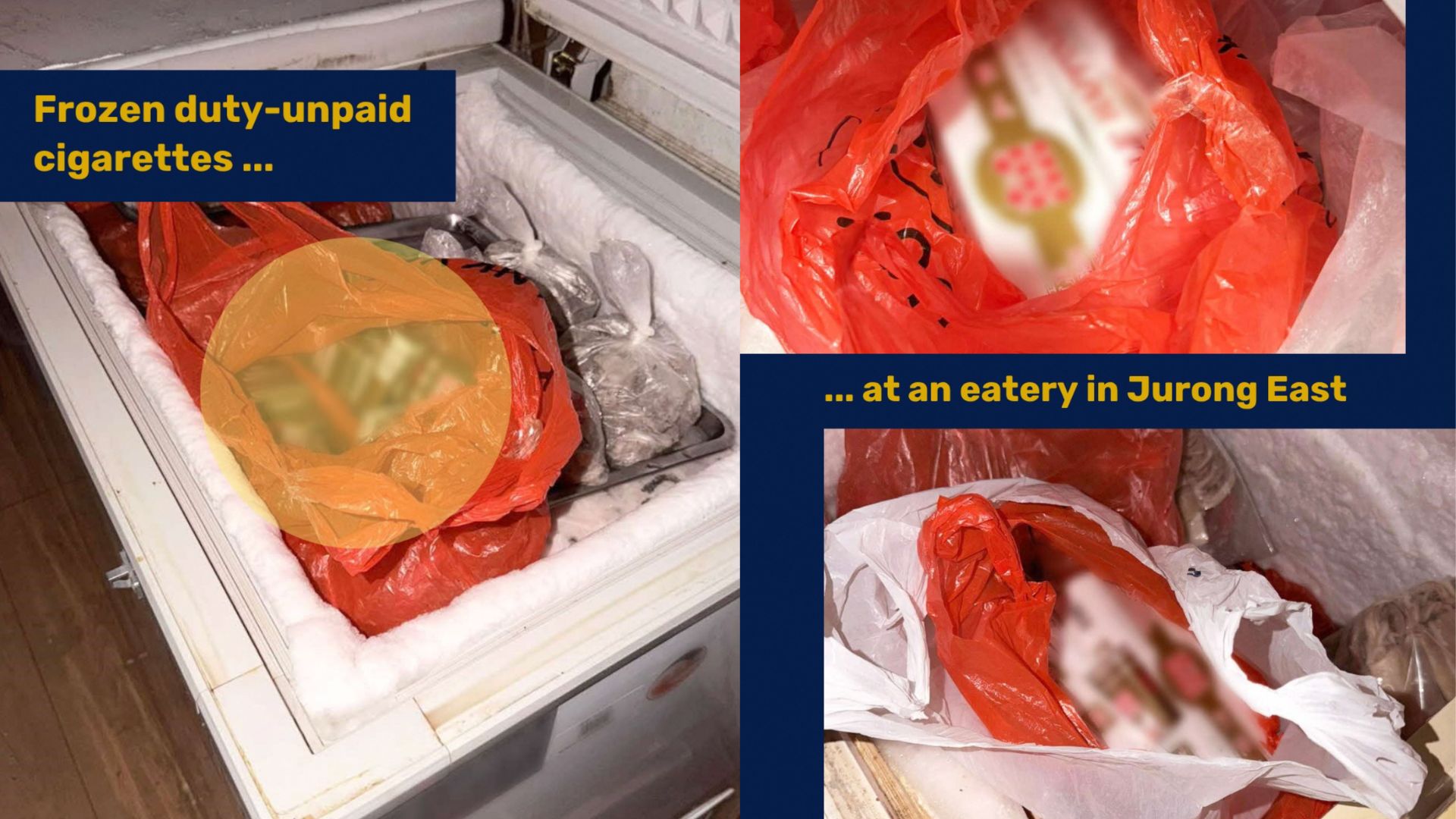
SINGAPORE: A shocking incident was revealed when Singapore Customs officers uncovered more than 740 packets of duty-unpaid cigarettes stored in various freezers at an eatery in Jurong East Avenue 1.

On Facebook, the authorities claimed that from the operation, a number of cigarette packets were seized alongside four Chinese nationals aged 43 and 47 who were working at the eatery. Two of these men were arrested, and the other two issued composition sums. The two men arrested were then charged and sentenced to 66 and 18 days’ imprisonment, respectively. 

In the post, the authorities declared: “Duty-unpaid cigarettes may be cheap, but their consequences are costly. Remember, buying, selling, storing or consuming duty-unpaid cigarettes is illegal and carries severe penalties, including hefty fines and jail terms. Don’t risk it. It’s simply not worth it.” 

According to Singapore laws, the Customs remain committed to enforcing strict compliance with regulations and protecting revenue. It is under the Customs Act and GST Act that buying, selling, conveying, delivering, storing, keeping, possession or dealing in duty-unpaid cigarettes are serious offences. Offenders of this law can be fined up to 40 times the amount of duty, and GST evaded, or imprisonment of up to six years, or both. 

If you have encountered any suspicious activities, the authorities are urging everyone to report any suspicious activities here: https://go.gov.sg/reportcustomsoffence.

Other related news 

In similar news, the Immigration and Checkpoints Authority (ICA) officers found a total number of 42 cases of passengers carrying e-cigarettes across sea, land, and air checkpoints last March. 

Some of these passengers were caught on the spot, while others chose to throw their vapes away after seeing the inspection checks.

Read more about the news story here

This article (Singapore Customs seizes more than 740 packets of illegal cigarettes from Jurong restaurant freezers) first appeared on The Independent Singapore News.

  • ✇Malay Mail - All
  • South Korea’s Kim Seung-gyu aims to repay family after missing daughter’s birth for World Cup prep
    SEOUL, June 8 — South Korean goalkeeper Kim Seung-gyu missed the birth of his daughter this ‌month due to his World Cup preparations, but the 35-year-old says he is determined to compensate for his absence with performances on ‌the pitch.Kim, who is set for his fourth World Cup appearance, acknowledged the emotional cost of being away from his family.“I am really sorry that I couldn’t be with my wife for the birth, and I want to bring home good results from here
     

South Korea’s Kim Seung-gyu aims to repay family after missing daughter’s birth for World Cup prep

8 June 2026 at 10:33

Malay Mail

SEOUL, June 8 — South Korean goalkeeper Kim Seung-gyu missed the birth of his daughter this ‌month due to his World Cup preparations, but the 35-year-old says he is determined to compensate for his absence with performances on ‌the pitch.

Kim, who is set for his fourth World Cup appearance, acknowledged the emotional cost of being away from his family.

“I am really sorry that I couldn’t be with my wife for the birth, and I want to bring home good results from here as my presents,” he told reporters on Sunday before a training session at Chivas Verde Valle in Zapopan, near Guadalajara in Mexico. With ‌more than 80 caps for South Korea, the experienced ⁠FC Tokyo goalkeeper faces competition ⁠for the starting spot from Jo Hyeon-woo.

The ⁠tournament also carries a ⁠sense of finality ⁠for Kim, who suggested this campaign may mark the end of his World Cup journey. Despite that, his enthusiasm ⁠has not dimmed.

“I’ve played at every World Cup thinking it could be my last. Given my age now, this one really does feel like my final one,” he said.

“I am just as excited about my fourth World Cup ⁠as I was about my first one. The first match will set the tone for the rest of the ⁠tournament, and so there will be some pressure. I will ⁠try to ⁠stay calm and just do what I can do.”

South Korea have been drawn in Group A with co-hosts Mexico, the Czech ‌Republic and South Africa. They begin their campaign against the Czechs in Guadalajara on June 11. — Reuters


Singapore-based design firm The Afternaut Group to design Bank of Singapore Centre co-working space

3 June 2026 at 13:30

SINGAPORE: Singapore-based design firm The Afternaut Group was appointed by Arcc Spaces to design its newest co-working space at the Bank of Singapore Centre, 63 Market Street, set to open in July 2026.

It will occupy levels five, six, and seven of the Bank of Singapore Centre, covering about 25,782 square feet (sq ft) and accommodating more than 300 members.

In an announcement on Tuesday (June 2), the project was described as Singapore-headquartered Arcc Spaces’ “most design-forward project to date”. This marks the fifth collaboration between the two firms, including The Co. at Duxton and Arcc Spaces at One Marina Boulevard (OMB). 

The newest co-working space is centred on biophilia (love of life or nature) and the need for relief from screen-heavy, notification-dense workdays. The space is said to feature greenery both indoors and outdoors, a collection of unique experiences catering to different working modes, and nature-inspired elements designed to create a calming connection to nature.

Arcc Spaces CEO Justin Chen said, “Our work with The Afternaut Group has always been a genuine co-authorship and each project has evolved alongside how work itself has changed. In an age defined by AI and digital saturation, and coming out of years of remote work, people are seeking something different from their offices: real connection, presence, and a reason to commute. The Bank of Singapore Centre is designed precisely around that need.”

The Afternaut Group’s Design Principal, Gwen Tan, said, “Each project with Arcc Spaces has pushed us to find a different expression of how people connect to a workspace, from the soul and creativity of a shophouse, to the precision of a five-star hotel.”

She added that with the new project, they have decided to design inward, adding: “Spaces that slow you down, draw you into the materiality, and make the experience in an office well elevated. This is the type of exploration we find most meaningful, and the rendition of it highly anticipated.”

Earlier last month, The Edge Singapore initially reported that the co-working space would open in June, taking over the space formerly occupied by OCBC. /TISG

Read also: ‘Clean Singapore no more’: Uncle shares concern of irresponsible rubbish dumping in Geylang not because of property prices dropping but of dengue and rats

This article (Singapore-based design firm The Afternaut Group to design Bank of Singapore Centre co-working space) first appeared on The Independent Singapore News.

Sepang goes electric as over 100 EV owners experience racing at SoyaCincau x Dongfeng track day

7 June 2026 at 09:29

Malay Mail

SEPANG, June 7 — The bustling sounds of engines were replaced by the serene hum of electric vehicles (EVs) as over 100 EV owners from Malaysia and Singapore took to the Sepang International Circuit for a unique track day event.

Organised by tech media outlet SoyaCincau and EV brand Dongfeng, participants experienced the thrill of racing on the iconic track yesterday.

In a significant leap from last year’s inaugural event, which attracted around 30 participants, this year’s turnout surpassed expectations with more than 100 EV enthusiasts queuing to enter the track by 5pm.

SEPANG 07/06/2026 Few of the EV Cars put the pedal to the metal as they participate in the Dongfeng Track Day here at Petronas Sepang International Circuit. PICTURE BY SAYUTI ZAINUDIN

According to SoyaCincau co-founder and chief executive officer Amin Ashaari, the enthusiastic response was overwhelming.

“The event is not about racing on the track but more to allow EV owners to experience the track and test their vehicle’s capabilities. We want to prove that EVs don’t have any limitations,” he stated.

Amin expressed satisfaction with the turnout, acknowledging the current small market share of EVs in Malaysia, where sales don’t even reach 30 per cent of total car sales.

“We feel that EVs are the future, and we have been focusing on these cars over the past few years to educate the public about pricing and charging solutions,” he added.

SEPANG 07/06/2026 Few of the EV Cars put the pedal to the metal as they participate in the Dongfeng Track Day here at Petronas Sepang International Circuit. PICTURE BY SAYUTI ZAINUDIN

The day kicked off with a parade lap, allowing EV owners to familiarise themselves with the Sepang track.

Following this, participants engaged in four one-hour track sessions, testing their vehicles’ performance.

Among the notable EV models represented were those from Dongfeng, Tesla, BYD, BMW, Proton, and Porsche.

Volt Auto Singapore and Malaysia chief executive officer Soh Ming expressed his excitement about the inaugural event, which he described as a first for the brand.

“It’s a great experience for us as we get to test our cars on the track and gather data on where we can improve further,” he said.

Looking ahead, Soh emphasised his desire to organise more track events, noting his brand’s sponsorship of sports like football and pickleball in Singapore.

Volt Auto chief executive officer Soh Ming speaks to Malay Mail during the Dongfeng Track Day at Petronas Sepang International Circuit in Sepang, June 7, 2026. — Picture by Sayuti Zainudin

Dongfeng showcased three of its models — 007, Vigo, and Box E2 — during the event.

Participants also had the opportunity to experience a track taxi ride in the 007, driven by a professional.

Kim Chan, 39, who had never experienced the track before, shared her excitement.

“It was fun and I enjoyed it. I have been here before to see other races, but this is the first time I came to the track, and it was quite strange to see it so quiet,” she said, adding that she is considering purchasing an EV in the future with the improvements in charging infrastructure.

Participant Kim Chan speaks to Malay Mail during the Dongfeng Track Day at Petronas Sepang International Circuit in Sepang, June 7, 2026. — Picture by Sayuti Zainudin

Returning for the second time, EV owner Ee Sheeden aimed to beat his previous lap record of 2:34.344 with his Tesla Model 3 Performance.

Last night, he completed the time attack challenge with a time of 2:27.90.

“It is great to have such an event for EV cars to bring them together. The EV community is still small in Malaysia, and we need such events to encourage more people to learn about EVs,” he stated.

As the founder of Exotic Mods, a one-stop centre for Tesla modifications, Ee said he is an EV enthusiast and spent a few years modifying his car to suit the track.

An EV takes to the track during the Dongfeng Track Day at Petronas Sepang International Circuit in Sepang, June 7, 2026. — Picture by Sayuti Zainudin

“I removed the rear seats and replaced the rear doors with fibreglass doors to reduce the weight by 60kg,” he added.

Ee said he enjoys the track and always looks forward to such events to test his cars.

Other winners of the time attack challenge were Tesla Model 3 Performance owner Firhat Mokhzani (2:32.42) and Tesla Model 3 Performance owner Ryan Woon Tian Chong (2:38.20). 

* Editor’s note: An earlier version contained an error that has since been corrected. 


  • ✇The Independent SG
  • BTS Singapore ticket frenzy sees resale prices soar to nearly S$9,000 Aiah Bathan
    SINGAPORE: The world-renowned K-pop group, BTS, is having a four-day concert at the Singapore National Stadium this coming December 2026, and official ticket sales have finally begun. However, some tickets are already being resold by scalpers on various platforms for up to 23 times their original price, with one offering a VIP ticket close to the stage for nearly $9,000. More so, resale ads have already appeared on secondhand auction platforms, with one seller offering four VIP tickets for an es
     

BTS Singapore ticket frenzy sees resale prices soar to nearly S$9,000

4 June 2026 at 13:31

SINGAPORE: The world-renowned K-pop group, BTS, is having a four-day concert at the Singapore National Stadium this coming December 2026, and official ticket sales have finally begun.

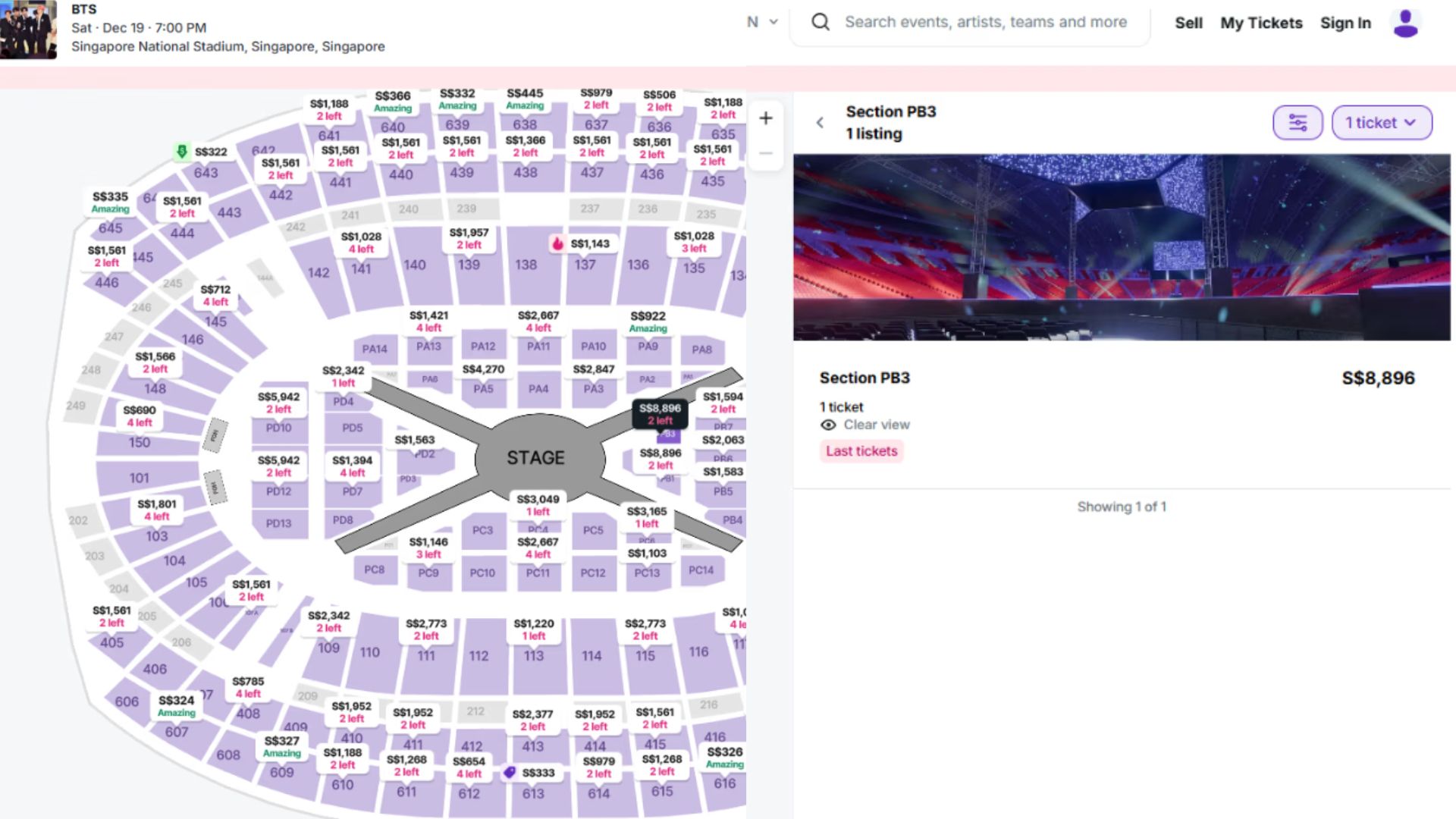
However, some tickets are already being resold by scalpers on various platforms for up to 23 times their original price, with one offering a VIP ticket close to the stage for nearly $9,000. More so, resale ads have already appeared on secondhand auction platforms, with one seller offering four VIP tickets for an estimated amount of $6,700, as reported by 8world News. 

Official ticket prices range from S$148 to S$388, and many fans are truly preparing for this so-called ‘ticket wars.’ 

According to Singapore Legal Advice, any ticket scalpers who are committing fraud are considered to be cheating. Those convicted of cheating can be imprisoned for up to three years and/or fined.

If a customer purchased resold tickets and never received them, or received tickets that did not match the description provided by the reseller, one can file a police report if it is a suspected scam.

Furthermore, one can file a complaint with the Consumers Association of Singapore (CASE). This is a non-government organisation responsible for investigating sellers who are committing unfair trade practices.

Protect yourself from scams

If purchasing resold tickets, it is important to remember to check the terms and conditions of the tickets. If the terms state that the tickets can’t be resold, it may be voided. Additionally, compare the resale price with the original price to know if you are purchasing the tickets at a fair price, and approach the official event organisers to verify the legitimacy of the tickets.

Most importantly, avoid making a payment in advance, and if it is possible, meet the seller in person to collect the tickets.

Stay cautious when buying resold tickets. It is better to know the rules, double-check the seller, and use safe payment methods to avoid being tricked. 

This article (BTS Singapore ticket frenzy sees resale prices soar to nearly S$9,000) first appeared on The Independent Singapore News.

‘Why am I doing all the work?’: Singapore woman says too many men put minimal effort into dating

7 June 2026 at 18:00

SINGAPORE: A Singaporean woman has sparked a lively discussion online after sharing that men have become a little too comfortable doing the bare minimum when it comes to dating.

Posting on the r/SingaporeRaw forum, she said that many of the men she has gone on dates with appear more than happy to leave all the planning and decision-making to her.

From choosing where to meet and what to eat to planning activities and keeping the conversation alive, she often finds herself doing all the heavy lifting while her date simply tags along for the ride.

“I don’t mind paying for myself on dates. In fact, I usually do,” she continued. “But what bothers me is when the guy doesn’t even make the slightest effort to plan anything. Like I’m expected to just decide everything. Where to go, what to eat, what to do… While he just shows up.”

She went on to share some of the more underwhelming dating experiences she has encountered.

“I’ve met guys whose idea of dating is literally just ‘come my house and watch Netflix,’ Then somehow the conversation starts, and it’s just dry replies, memes, or ‘Wyd’ at random hours.”

“One guy straight up told me relationships shouldn’t require effort, and it should just ‘flow naturally.’ Another said if I like him, I should just stop thinking so much and go with the vibe.”

After repeatedly running into similar situations, she decided to ask a question she felt was completely reasonable: “What exactly are you bringing to the relationship?”

The response, she said, wasn’t great. “Some got offended by the question. This isn’t a one-off experience either. I’ve met people like this from dating apps and even through mutual friends.”

“For context, I’m doing quite well for myself. Stable career, decent income, I can afford my own lifestyle, go on trips when I want, take care of my own stuff.”

Curious whether others were experiencing the same thing, she asked fellow Reddit users if this had become the norm in Singapore’s dating scene.

“Are more guys just not willing to put in effort anymore? Or am I somehow attracting the wrong crowd? Anyone else experienced this before? Or maybe I should just focus on myself and stop expecting much from dating for now?”

She added, “I don’t want to become cynical because I still believe there are plenty of good guys out there. But sometimes dating feels less like finding a partner and more like I’m carrying the whole interaction alone while the guy just follows along.”

“A lot of girls these days also give zero effort..”

In the comments, one user said she and her female friends have had many conversations about the state of dating in Singapore and found that many women share similar frustrations.

“I spoke to my girlies about it, and the majority of us are on the same page about Singapore dating scenes. And even if they put in effort, the 2nd date or late-night texts start heading somewhere completely different. Or even better, receiving an ‘I miss you’ message after the 3rd day of talking without meeting.”

Others, however, argued that this issue is not limited to either gender. One individual explained that the modern dating culture, particularly in the age of dating apps, has encouraged many people to put in less effort because there is always the possibility of finding someone new with a few swipes.

Another commented, “A lot of girls these days also give zero effort and don’t take initiatives in SG.”

A third added, “Guys do put in a lot of effort and try a lot. Especially in their early years of dating. They now know how to identify girls that are not worth the effort. Make yourself into someone worth the effort.”/TISG

In other news, a jobseeker was left shocked after what he thought was an interview for an admin position allegedly turned into a recruitment pitch for an insurance role and ended with the interviewer scolding him for not being “driven” enough.

Sharing his experience on the r/singaporejobs subreddit, the man said he had originally applied for an “admin and operations” executive position through JobStreet.

Read more: ‘Younger generations have no drive’: Interviewer lashes out after jobseeker rejects insurance role

This article (‘Why am I doing all the work?’: Singapore woman says too many men put minimal effort into dating) first appeared on The Independent Singapore News.

  • ✇The Independent SG
  • NUS professor warns Super El Niño could deepen Asia’s energy and economic woes Anna Maria Romero
    SINGAPORE: As many countries in Asia already wrestle with the energy emergency brought about by the conflict in the Middle East, some are predicting that the region will be hit by a second blow in the form of an unusually strong El Niño. The weather phenomenon is likely to make 2027 the hottest year on record, and South and Southeast Asia, along with southern Africa and Australia, are expected to experience a period of intense dryness. However, aside from bringing more heat, economies will also
     

NUS professor warns Super El Niño could deepen Asia’s energy and economic woes

30 May 2026 at 00:00

SINGAPORE: As many countries in Asia already wrestle with the energy emergency brought about by the conflict in the Middle East, some are predicting that the region will be hit by a second blow in the form of an unusually strong El Niño.

The weather phenomenon is likely to make 2027 the hottest year on record, and South and Southeast Asia, along with southern Africa and Australia, are expected to experience a period of intense dryness.

However, aside from bringing more heat, economies will also feel adverse effects.

“The Super El Niño will further worsen the economic pain inflicted by the ongoing energy crisis. Asia’s electricity supply will be further strained as droughts curtail hydropower generation; farmers will be hard hit, and water-intensive manufacturing sectors like semiconductor and textile may also be disrupted, physical climate scientist and visiting professor at the National University of Singapore (NUS) Ming Yi was quoted in Fortune as saying in a May 28 piece.

Double whammy

The conflict in the Middle East, which began when the United States and Israel began bombing Iran on Feb 28, resulted in the closure of the Strait of Hormuz, a chokepoint for around 20% of the world’s fuel supply, much of which was headed toward Asia.

In its wake, countries in the region have had to scramble to obtain enough fuel for domestic use, even as the price of oil and its by-products has risen.

As in many situations, the effects of the crisis have been uneven, with countries with fewer resources feeling the most strain.

Since the war began, Indonesia has seen a 5% decline in foreign reserves, while the Philippines has seen a 7% drop. India’s rupee has already lost over 6% against the US dollar, and Tokyo stepped in at least twice to prop up the yen.

The fuel crisis has caused Asian economies to rely more on alternative sources of power, but the drought that the Super El Niño is expected to bring will affect hydropower resources, which make up more than 14% of South and Southeast Asia’s total electricity.

Also, hotter days will mean more air-conditioner usage, creating an additional strain on power grids.

Furthermore, extreme heat may also contribute to unbearable working conditions for people working outdoors, such as those in construction, delivery, and logistics.

The director of the Centre for Climate Change and Environmental Health at Singapore’s Nanyang Technological University (NTU), Steve Yim, warned Fortune that a public health crisis may ensue, as outdoor workers are put at risk for severe heat exhaustion.

Super El Niño in Singapore

On May 29, the Meteorological Service Singapore (MSS) issued a statement telling Singaporeans to expect warmer and drier conditions from June to October, increasing the risk of transboundary haze affecting Singapore and the region.

“There is a high chance of an El Niño event occurring this year (more than 80 per cent chance). This assessment is supported by the presence of key precursors, including warmer subsurface ocean temperatures in the eastern tropical Pacific. El Niño’s influence on Singapore’s climate is expected to be felt once the event becomes established,” the statement reads. /TISG

Read also: Study from NTU, City University warns El Niño events can reduce life expectancy even in wealthy Pacific Rim countries

This article (NUS professor warns Super El Niño could deepen Asia’s energy and economic woes) first appeared on The Independent Singapore News.

Singapore Category A COE premiums hit near eight‑month high at S$126,009 as other categories move mixed

4 June 2026 at 09:35

Malay Mail

SINGAPORE, June 4 — Singapore’s Category A Certificate of Entitlement (COE) premiums rose to S$126,009 (RM394,543) in the latest bidding exercise, reaching their highest level in almost eight months.

Category A premiums, which apply to cars up to 1,600cc and 130bhp, ended at S$126,009, according to CNA.

The price increased from S$124,229 in the previous exercise and last exceeded S$126,000 in October 2025, when it reached S$128,105.

Premiums for Category B vehicles, which cover larger and more powerful cars, fell to S$126,989 from S$129,501.

Commercial vehicle COEs, which include goods vehicles and buses, rose to S$94,000 from S$92,223.

Motorcycle premiums increased to S$10,000 from S$9,689.

Open category COEs, which can be used for any vehicle type but are typically used for larger cars, slipped to S$129,000 from S$130,000.

A total of 4,920 bids were submitted for 3,215 available COEs.  


  • ✇The Independent SG
  • Grab’s new delivery AI robots to ease Singapore’s worker shortages and labour costs Nick Karean
    SINGAPORE: Singapore’s delivery economy may soon gain a new co-worker; one that doesn’t ride a bike, wait for lifts, or search for block numbers. Grab plans to launch a pilot of its first delivery AI robot in Punggol in late 2026 as it pushes further into physical artificial intelligence (AI) and robotics, according to Fortune’s report. The move is to address a problem many Singapore businesses already know all too well: service demand keeps growing, but workers remain hard to find, and labour c
     

Grab’s new delivery AI robots to ease Singapore’s worker shortages and labour costs

27 May 2026 at 04:30

SINGAPORE: Singapore’s delivery economy may soon gain a new co-worker; one that doesn’t ride a bike, wait for lifts, or search for block numbers.

Grab plans to launch a pilot of its first delivery AI robot in Punggol in late 2026 as it pushes further into physical artificial intelligence (AI) and robotics, according to Fortune’s report.

The move is to address a problem many Singapore businesses already know all too well: service demand keeps growing, but workers remain hard to find, and labour costs keep staying high. So rather than replacing Grab drivers outright, Grab says the robots are meant to handle the least efficient parts of delivery.

Carri, Grab’s AI robot, will handle the first and last 100-metre deliveries

Grab’s robot, called Carri, is built to handle the first and final 100 metres of delivery journeys, including tasks such as moving food or parcels from roadside pickup points to apartment doorsteps.

Speaking at the Asia Tech (ATx) summit on May 20, Grab chief technology officer Suthen Paradatheth said these small stretches consume meaningful time across thousands of deliveries each day.

Mr Paradatheth further explained that most Grab deliveries already travel more than two kilometres. The usual friction happens before and after the actual trip, where drivers spend time walking, locating units, waiting, and completing handoffs. Grab estimates that these final steps account for around 10% of delivery time.

For Grab drivers, that could mean fewer repetitive tasks. For customers, the company hopes to improve delivery coverage in areas with demand where drivers are less likely to wait around.

Punggol becomes a testing ground for AI robots and autonomous vehicles on the ground

Mr Paradatheth said autonomous vehicles could help expand services in supply-constrained markets such as Singapore.

Grab will not be alone in AI, robotics, and autonomous vehicle tests. Seven other firms, including logistics company DHL and local startup Quikbot, are expected to test autonomous systems in Punggol. The pilots extend beyond food delivery. Other projects will focus on parcel handling, cleaning, and security work.

Singapore’s Minister for Digital Development and Information, Josephine Teo, said at the ATx summit that the government plans to support these trials through shared testing systems, operating rules, and infrastructure that enable robots to move safely across the district. Her view was that these tools can help workers extend services into places that are harder to serve consistently.

Singapore’s public messaging around AI has increasingly focused on augmentation rather than replacement, helping workers do more instead of reducing headcount.

Grab’s bigger AI ambition goes beyond just delivery

The robot trial also fits into Grab’s wider AI strategy. The company has already partnered with OpenAI since 2024 to improve areas including mapping, accessibility and customer support.

Grab is also working with the Chinese autonomous driving company WeRide and has invested in autonomous vehicle firms, including May Mobility and Momenta.

Grab’s chief executive officer, Anthony Tan, previously said automation could create new job paths instead of eliminating the work entirely. Examples discussed included remote safety monitoring, data work, and maintenance of sensing equipment.

Mr Paradatheth described Grab’s internal direction as one in which people and AI systems work side by side, an idea that is already evident within the company. He said most Grab engineers now use AI coding tools in their daily work while keeping human review before the software goes live.

Singapore’s broader AI race is also gathering speed. On the same day as the announcement, OpenAI said it would invest S$300 million into Singapore’s AI capabilities, including its first applied AI lab outside the United States. NVIDIA also announced a local research centre focused on embodied AI.

The more important question is not robots; it is where drivers and people fit in

Delivery AI robots tend to ignite the same debate each time: convenience versus jobs. But Singapore’s labour market has long relied on finding ways to stretch limited manpower.

If these pilots succeed, the real test may go beyond whether the robots can deliver food. It may be a question of whether companies can redesign work so people spend less time on repetitive tasks and more time on work where human judgment still matters.

Because, at the end of the day, technology still works best when it removes friction, not people.


Read related: NVIDIA to launch its new research hub in Singapore, marking latest boost to city-state’s artificial intelligence drive

This article (Grab’s new delivery AI robots to ease Singapore’s worker shortages and labour costs) first appeared on The Independent Singapore News.

❌
Subscriptions