Normal view

  • ✇Popular Science
  • Rare lunar meteorite was smacked three times before finally hitting Earth Andrew Paul
    A rare type of meteorite discovered in Mali is revealing a multibillion-year tale of lunar catastrophes. With its unique composition, astronomers are beginning to better understand the processes that shaped not only the moon and Earth, but the solar system itself. The study recently published in the journal Geology is nearly 10 years in the making and focuses on a meteorite classified as NWA 12593. Found in the west African nation in 2017, experts soon recognized the space rock as an especial
     

Rare lunar meteorite was smacked three times before finally hitting Earth

10 June 2026 at 18:52

A rare type of meteorite discovered in Mali is revealing a multibillion-year tale of lunar catastrophes. With its unique composition, astronomers are beginning to better understand the processes that shaped not only the moon and Earth, but the solar system itself.

The study recently published in the journal Geology is nearly 10 years in the making and focuses on a meteorite classified as NWA 12593. Found in the west African nation in 2017, experts soon recognized the space rock as an especially unique specimen. NWA 12593 is one of only 53 known lunar breccia—a meteorite formed by the amalgamation of multiple moon fragments during separate impacts billions of years ago. 

“Breccias are similar to what you would see if you went and chipped out a chunk of concrete. You would see all these little rocks, and then they’re fused together by the cement,” Carolyn Crow, a planetary scientist at the University of Colorado Boulder and study co-author, said in a statement.

Electron backscatter diffraction data of NWA 12593. Credit: Geology

Crow and her colleagues used radiometric dating and chemical analysis on NWA 12593 to successfully identify evidence of three major impact events in the moon’s past. The earliest occurred around 3.5 billion years ago amid an era that also produced the first known fossil evidence of life on Earth. This collision was powerful enough to reduce the moon’s surface to molten rock similar to a lava flow.

The impact also created cubic zirconia, a mineral that only forms during extremely high temperatures. Known for its uses in jewelry, cubic zirconia doesn’t last in cold, uncontrolled temperatures. While the mineral disappeared as the lunar surface eventually solidified and cooled, researchers pinpointed lingering traces of its existence in NWA 12593.

The second impact event formed the breccia itself. In the aftermath of that meteor strike, slabs of lunar rock slammed into one another to create a mosaic of materials.

“The meteorite is fused together by the impact process. You get all these chunks of different kinds of rocks that the impact hit into,” explained Crow.

The third event explains how the lunar breccia reached Earth. At some point in the more recent past, yet another impact cracked off a piece of our moon itself and sent it hurtling towards the planet.

A portion of the meteorite’s story also aligns with a tumultuous chapter in Earth’s geological history. The 3.5-billion-year-old impact identified in the breccia occurred around the same time as known impacts on both Earth and the asteroid 4 Vesta, fourth-largest member of the asteroid belt between Mars and Jupiter. This was a particularly chaotic time in the solar system, with planets still forming amid near-constant collisions Knowing this, further examination of NWA 12593 can help contextualize the history of Earth, the moon, and the wider cosmic neighborhood.

The post Rare lunar meteorite was smacked three times before finally hitting Earth appeared first on Popular Science.
  • ✇Popular Science
  • Look up for a blue moon on May 31 Laura Baisas
    This weekend, Earth will be treated to a nice blue moon. Our planet’s only natural satellite won’t put on a pleasant azure hue (indeed, blue moons have nothing to do with color). Instead, it will be the second full moon for the month of May, following the full Flower Moon on May 1. The blue moon will reach peak illumination at 4:46 a.m. EDT on Sunday May 31.  Seasonal vs. calendrical According to the Farmer’s Almanac, there are two definitions of a blue moon—a seasonal blue moon and a cale
     

Look up for a blue moon on May 31

29 May 2026 at 14:00

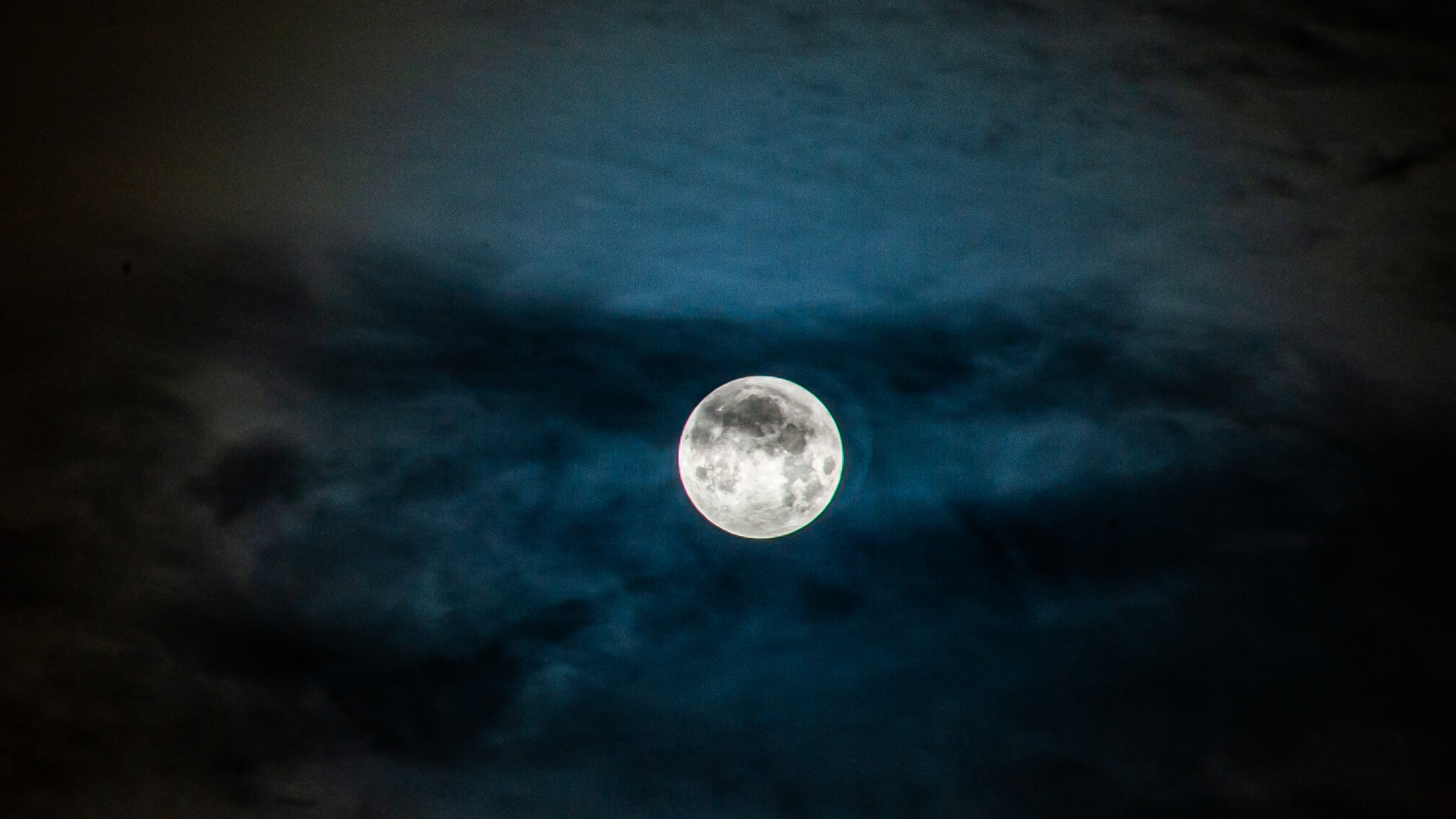
This weekend, Earth will be treated to a nice blue moon. Our planet’s only natural satellite won’t put on a pleasant azure hue (indeed, blue moons have nothing to do with color). Instead, it will be the second full moon for the month of May, following the full Flower Moon on May 1. The blue moon will reach peak illumination at 4:46 a.m. EDT on Sunday May 31. 

Seasonal vs. calendrical

According to the Farmer’s Almanac, there are two definitions of a blue moon—a seasonal blue moon and a calendrical blue moon.

A seasonal blue moon is one extra full moon within an astronomical season, or the dates between solstices and equinoxes. A typical astronomical season has three full moons within it. If it has four full moons instead, then the third may be called a blue moon. 

A calendrical (or monthly) blue moon is the one most of us are familiar with. It is the second full moon to fall in one calendar month—like in May 2026. It takes the moon roughly 29.5 days to complete one cycle of phases (new moon to new moon). So if a full moon falls on the first of the month on the calendar, there will be a second full moon at the end of the month. The only month in which a calendrical blue moon cannot fall is February. 

How rare are blue moons?

Blue moons are not quite as rare as the phrase “once in a blue moon” makes it sound. Calendrical blue moons happen every 2.5 years (or 30 months) on average, and seasonal blue moons fall about once every two to three years. 

The last calendrical blue moon was on August 31, 2023 and the next calendrical blue moon will rise just in time to ring in the new year on December 31, 2028. 

Two blue moons can also occur in one year. In 2018, January and March both had two full moons, with no full moon in February. The next time two blue moons will fall in one calendar year won’t be until 2037.

Why is it a micromoon?

May’s blue moon will also be a micromoon and the smallest micromoon of the year. Micromoons have nothing to do with size and everything to do with distance. Typically, the moon is about 238,855 miles away from Earth. Micromoons are further away, and this month’s micromoon will be 252,360 miles away. With the further distance, a micromoon may appear a bit smaller and dimmer than usual. 

On the opposite end of the spectrum are supermoons, which are closer to Earth at only 225,130 miles away.

How to watch and photograph a blue moon

If you want to see the blue moon rise over a historic city, the Virtual Telescope Project will broadcast the event live from Italy

NASA has also put together a handy lunar photography guide if you want to snap that perfect moon pic. If using a smartphone, NASA recommends stabilizing the device, turning off the flash, and tapping the moon on screen to focus the camera directly on it instead of the sky. Your brightness also needs to come down and taking pictures at twilight or as the moon clears the horizon will give the sensor less contrast. 

The post Look up for a blue moon on May 31 appeared first on Popular Science.

  • ✇Popular Science
  • Four drones will go where no astronaut have landed—yet Laura Baisas
    As NASA looks ahead towards Artemis III in mid-2027, the agency is sharing new details on several projects, including a future permanent moon base and a drone mission called MoonFall. The mission will send four drones to survey the surface of the moon’s South Pole to spot potential landing sites for future Artemis astronauts.  According to the update, the Jet Propulsion Laboratory (JPL) in Southern California has been developing the drone design and testing prototype hardware ahead of the sch
     

Four drones will go where no astronaut have landed—yet

27 May 2026 at 20:08

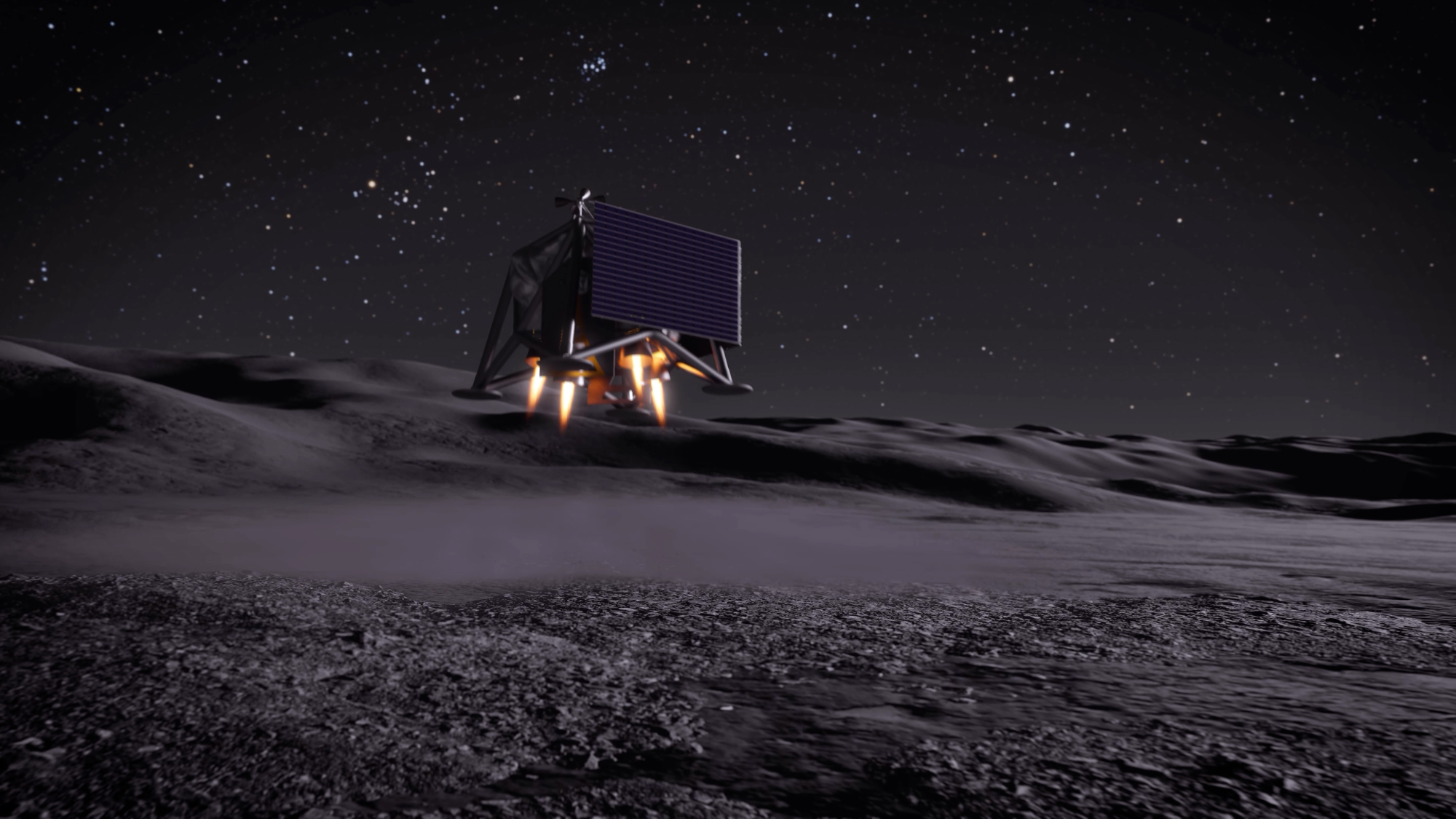
As NASA looks ahead towards Artemis III in mid-2027, the agency is sharing new details on several projects, including a future permanent moon base and a drone mission called MoonFall. The mission will send four drones to survey the surface of the moon’s South Pole to spot potential landing sites for future Artemis astronauts. 

According to the update, the Jet Propulsion Laboratory (JPL) in Southern California has been developing the drone design and testing prototype hardware ahead of the scheduled 2028 launch. Each drone will land on the moon’s surface and gather high-resolution imagery of the terrain over the course of a single lunar day (up to 14 Earth days). After each drone’s last flight, its survive-the-night payload will continue to work for several months. Payloads that are designed to survive-the-night can endure the sub-zero temperatures of the lunar night, which can get as cold as -208 degrees Fahrenheit.

Each of the four drones should weigh about 550 pounds, and stand at four-feet tall and seven feet in diameter. They will use a Lunar Dashcam imaging system to create maps of the terrain. The drones will also be equipped with a laser retroflector array so that mission control can precisely locate the drones, a neutron spectrometer system to help determine how much (if any) subsurface water is present, and a spectrometer to measure radiation.

Texas-based Firefly Aerospace was selected to build the spacecraft that will transport the drones. Firefly’s Elytra spacecraft will carry the drones for a 45-day transit from the Earth to the moon. After entering lunar orbit, it will deorbit and perform a braking maneuver to send out the drones roughly 31 miles above the lunar South Pole.  

No stranger to lunar exploration, Firefly Aerospace’s Blue Ghost lander became the first commercially built lander to reach the lunar surface in March 2025. While on the moon, Blue Ghost delivered 10 NASA instruments designed to gather lunar subsurface data and also snapped some beautiful images of a solar eclipse

Some scientists worry that extracting resources from the moon could jeopardize research, while many Indigenous nations see the moon as sacred and are against any desecration

As of now, NASA and 66 other nations have signed the Artemis Accords. While not an international treaty, the Artemis Accords is an agreement for high-level principles of space exploration and provides a basic legal framework for exploring and developing the lunar surface during this century. However, the NASA-led Artemis group is in direct competition with an initiative led by China to explore the lunar South Pole and potentially extract its resources. 

The post Four drones will go where no astronaut have landed—yet appeared first on Popular Science.

  • ✇Popular Science
  • NASA wastewater system will turn human poop into plant food Mack DeGeurin
    NASA’s ambitious plan to put humans on the moon may hinge on the bathroom habits of a handful of University of North Dakota grad students. In the name of science, those researchers will test the limits of a mobile wastewater treatment system designed to convert human waste into plant nutrients and other sustainable materials. The trial will serve as a stress test of sorts, measuring how well the Divergent Deployable Wastewater Treatment Facility holds up to regular use and heavy loads in an envi
     

NASA wastewater system will turn human poop into plant food

5 June 2026 at 13:42

NASA’s ambitious plan to put humans on the moon may hinge on the bathroom habits of a handful of University of North Dakota grad students. In the name of science, those researchers will test the limits of a mobile wastewater treatment system designed to convert human waste into plant nutrients and other sustainable materials. The trial will serve as a stress test of sorts, measuring how well the Divergent Deployable Wastewater Treatment Facility holds up to regular use and heavy loads in an environment designed to mirror a lunar habitat. 

It’s not pretty work, but someone has to do it.

“The tests will help NASA evaluate real-world operation, crew training needs, system reliability, and how wastewater simulants compare with actual human metabolic waste in an analog mission environment,” Ali Alshami, University of North Dakota Chemical Engineering professor and test participant, said in a statement.

a gray trailer sits in a parking lot
The unassuming gray building could one day be an astronaut wastewater facility. Technicians prepared the Divergent Deployable Wastewater Treatment Facility for transport at NASA’s Kennedy Space Center in Florida on April 21, 2026. Image: NASA/Kim Shiflett  

Treated astronaut poop will feed lunar plants 

The mobile facility consists of three separate bioreactors, each tasked with handling a specific kind of waste. Feces, urine, and food waste are treated separately because each material contains different levels of salts, solids, carbon, nitrogen, and phosphorus. One reactor processes feces and food waste, converting it into nutrient-rich water that can feed plants. The other two handle urine and greywater from activities like showering and laundry, some of which can be filtered and recycled into  clean drinking water. From an astronauts’ perspective, the experience should feel pretty familiar to life onboard the International Space Station (ISS). They use the toilet as normal, and it automatically diverts waste at the source, routing each type to its corresponding bioreactor.

The whole process takes place in a mobile, 8.5-by-24-foot trailer. In addition to the bioreactors, the unit also houses a vertical garden maintained by the converted wastewater. The goal is to kill two birds with one stone: process waste efficiently and then use it to sustain lunar agriculture. Both are essential if astronauts want any shot at building longer-term habitats on the moon or even Mars. To that end, NASA has ambitions to start constructing a semi-permanent lunar structure or “moon base” by 2029.

Where no one has gone before 

Waste management in space has come a long way since the first moon missions. Back in the 1960s, NASA Apollo astronauts left behind 96 bags of human waste (filled with poop, urine, and vomit) on the lunar surface to save weight. Those bags are almost certainly still there. 

Thankfully, decades of research mean astronauts no longer have to relieve themselves into a bag, at least not most of the time. The most recent Artemis mission featured a fully functional space toilet, though it malfunctioned almost immediately after liftoff.

Recycling wastewater has also seen major improvements. NASA had a breakthrough in 2023 when its life support system aboard the ISS  managed to recover nearly 98 percent of all breath, sweater, and urine brought aboard by the crew. Future astronauts on prolonged spacewalks may also wear this Dune-inspired backpack that filters urine and sweat into drinking water in a single self-contained loop.

The post NASA wastewater system will turn human poop into plant food appeared first on Popular Science.

❌
Subscriptions