 Login
Login71 CALEGARI Marco KTM 347 2T 00796 - IGLESIAS
17 May 2026 at 22:57


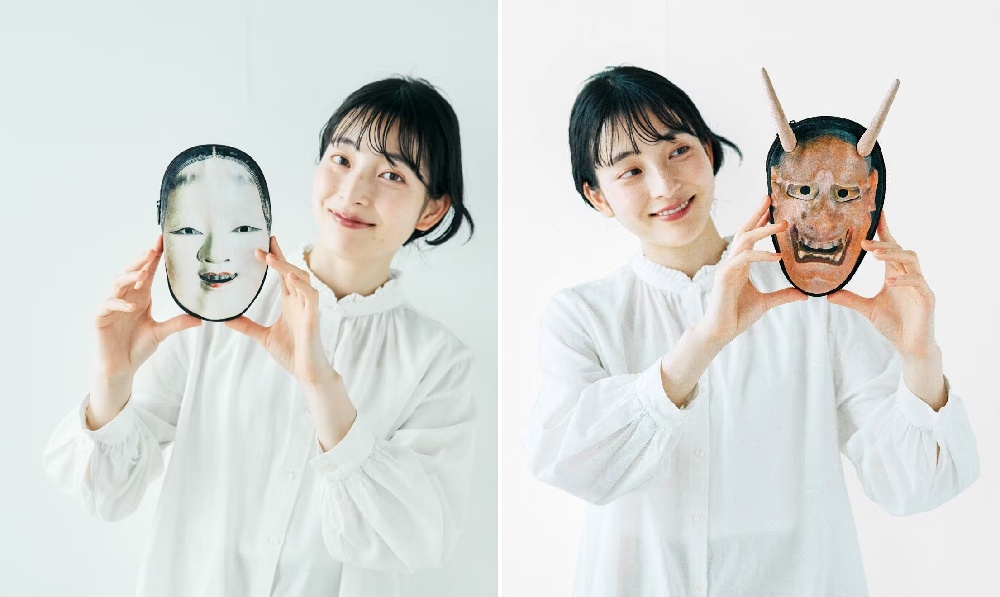

Practical and horrifying!
Usually when we’re talking about Japanese lifestyle brand Felissimo, we’re highlighting one of their animal-themed creations, like the Shiba Inu-shaped hot water bottle cover or red panda nap cushion. But Felissimo also has a “Museum Division” that draws inspiration from the arts, and who’ve come up with something a little less cute and cuddly looking.
Felissimo has entered into a creative partnership with the Kyoto Kanze Kaikan, or Kyoto Kanze Noh Theater. Noh is Japan’s oldest form of stage theater that’s still performed today, with its origins predating kabuki by more than a century. Noh performers wear masks while on stage, and with many of the stories dealing with demonic possession, madness, and other such chilling topics, the masks too are often unnerving in design, but the amount of undeniably skilled craftsmanship that goes into them also makes them, one could argue, in a way, beautiful.
Of course, Felissimo realizes that the average person doesn’t really have many occasions on which to slip on a Noh mask, so they’ve instead applied three classical designs as motifs for organizer pouches. With help from Kyoto Kanze Kaikan, Felissimo has produced a hannya mask pouch, showing a female demon consumed by jealously and sporting intimidating horns, and also a Okina mask, showing an old man with a long beard.
Being roughly the same size as a person’s face, they can actually hold quite a bit of stuff, with interior zippered sections and pockets to keep everything nice and organized.
Also part of the lineup is a pouch styled after a Kasei mask. Also known as a manbi mask, this type of mask is meant to create different atmosphere depending on the angle it’s viewed from, switching from a beautiful woman with a demure smile to something bolder or even sinister. The Kasei mask pouch was actually created by Felissimo’s designers prior to the start of their collaboration with Kyoto Kanze Kaikan, but as you can see, they were still able to achieve some terrifying results.
As further proof of just how committed Felissimo was to authenticity, even the backsides of the pouches mimic the interior surface of Noh masks.
The whole lineup is available from Felissimo online store here, priced at 2,860 yen (US$18.50) each. And should you find yourself instead in the mood for something that’s still strange but not quite so scary, don’t forget about Felissimo’s steamy Myaku-Myaku photo album.
Source, images: Felissimo
● Want to hear about SoraNews24’s latest articles as soon as they’re published? Follow us on Facebook and Twitter!

Bogotá, Colombia – Waiting for a vice minister on the eleventh floor of a dusty office block in downtown Caracas, a Venezuelan colleague hissed in my ear: “You can’t show that map, get rid of it”.
Surprised, I plucked the map of Venezuela out of the pile of papers that made up a project our NGO was proposing to provide health support in remote corners of the country. With economic collapse the country needed international support, but was not always open to receiving it. My job was to negotiate access to those remote corners.
Later, trudging down the gloomy stairwell (the lift wasn’t working) my colleague explained the problem: “Every Venezuelan map you show in Venezuela must include Essequibo.”
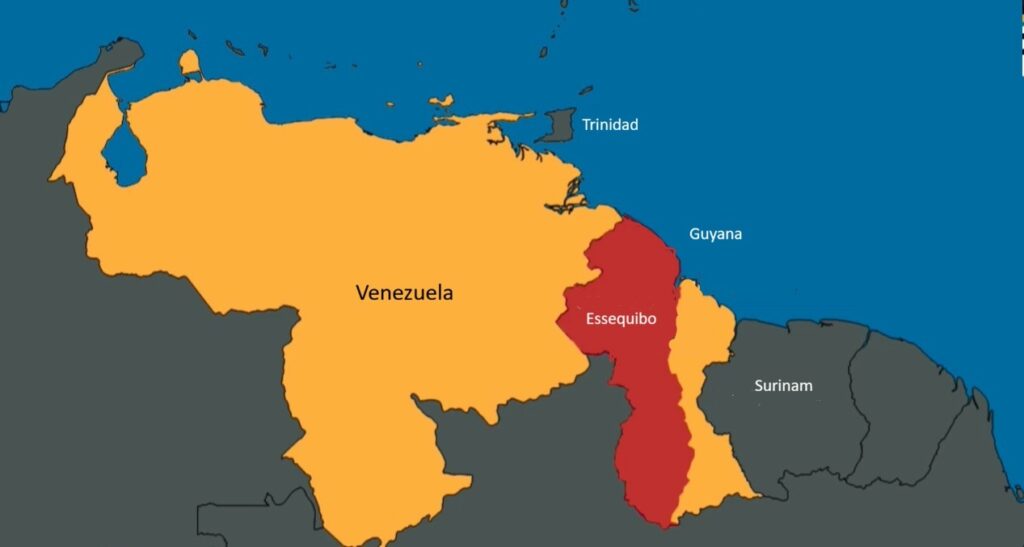
Like many newbies in Caracas, I’d never heard of Essequibo, a territory that lies in Guyana but is claimed by Venezuela. At 160,000 square kilometers (62,000 square miles) it has just 125,000 inhabitants, so is five times bigger than Belgium but with fewer people than Bruges.
I was intrigued. And grateful to my colleague: dealing with Venezuelan ministries was tricky enough without causing offense by omitting a vast tract of jungle dangling off the eastern border like a lost appendage.
But far from impotent.
To the east of Venezuela lies Essequibo, a vast tract of jungle rich in diamond and gold, as well as huge oil deposits discovered in 2015 off its coastal waters.
During his regime former president Nicolás Maduro – now facing drug charges in a U.S. court – laid claim to Essequibo and ramped up both political and military pressure for Guyana to cede the vast territory. This culminated in a legal declaration of annexation in 2023, a move sparking international condemnation.
In 2024 Maduro went further, issuing ID cards for ‘Guayana Esequiba’ as he called it, creating a phantom administrative center for the country’s “24th state”, and proposing a new governor.
Then the Venezuelan strongman sent soldiers to span the Cuyení River, close to the disputed border.
It may have been a bridge too far. In March 2025, U.S. secretary of state Marco Rubio condemned Venezuela’s moves as “illegitimate territorial claims by a narcotrafficking regime” and vowed to defend Guyana from Venezuelan incursions.
Any attacks on US oil companies exploiting oil reserves off the Essequibo coast would be a “very bad week for Maduro”, warned Rubio at a press conference in Guyana’s capital, Georgetown. In reply Maduro called the secretary of state “an imbecile”.
The rest, as they say, is history. Nine months later the Venezuelan leader would be snatched from his Caracas hideout by U.S. special forces and bundled off to a New York jail.
Map showing the disputed territory of Essequibo, which makes up most of Guyana.
Rigged arbitration
Following in her predecessor’s footsteps, Venezuela’s interim president, Delcy Rodriguez, flew to The Hague last week to argue her country’s case before the International Court of Justice (ICJ).
The case had been bumped up to the ICJ – sometimes referred to as the ‘world’s top court’ – by the UN, charged initially with untangling the misaligned borders.
First though, Rodriguez had to deal with another land grab issue: Venezuela was now the “51st State”, according to a map colored by the Stars and Stripes posted on social media by U.S. president Donald Trump.
.
Trump’s “51st State” memeAt the ICJ, journalists were quick to jump on the meme.
“We came to the court to defend our sovereignty, to defend our independence,” said Rodriguez, flustered by the irony of it all: her former boss Maduro had three years before pulled a similar stunt by declaring Essequibo – which by land mass makes up two thirds of Guyana – as a “new state of Venezuela”.
Over four days the ICJ judges heard oral arguments from both delegations, which though couched in legal jargon gave fascinating insights to centuries of colonial great games and arbitrary map-making; the case drew comparisons to centuries past when Spain, Holland, Britain and even Sweden tussled for a foothold in the jungles of northern South America.
Guyana’s position was simple: as de facto holder of Essequibo, and under aggression from Venezuela, it wanted the court to ratify the ruling of an international tribunal from 1899 – the so-called Paris Arbitral Accord – which drew the boundary largely in favor of Guyana, then a British colony.
Britain’s argument then was that they had a permanent presence in Essequibo, while both Venezuela and previous Spanish colonial administrations were largely absent.
The problem is that Venezuela never accepted the Paris accord, claiming it was a backroom deal between London and Washington, a quid pro quo where the Essequibo would remain a colony in return for regional favors.
As they put it before last week’s ICJ: “The British Empire, known throughout the world for its aggressive expansionism, negotiated with the U.S. a rigged arbitration to retain the territories usurped from Venezuela in exchange for recognizing the hegemony of the U.S.”
In some ways the Paris Accord was a problem of Venezuela’s own making. Having severed diplomatic ties with Britain, it subcontracted its 1899 negotiation to the U.S., whose delegation included no less than former president U.S. Benjamin Harrison.
Meanwhile the U.S., keen to flex its Monroe Doctrine – basically ‘keep out of our backyard’ – was happy to defend its Caribbean neighbor against old-world empires. Why they fudged the negotiation is a matter of historical debate.
This means a key question for the ICJ judges is rooted in the past: did the U.S. delegation defend Venezuela in good faith or buckle to machinations of the British Empire? And should they uphold the Paris Arbitral Accord?
Communities not consulted
While there has been much international focus on oil finds in Essequibo, there is little mention of the indigenous peoples, such as the Lokono and Warao, who have lived there since long before Europeans arrived. At least nine distinct languages are spoken within the territory.
But in 2023, at no point did Maduro consult the communities of Essequibo before declaring it annexed to Venezuela.
These communities had “moved between the borders of Venezuela and Guyana since time immemorial,” said Jean La Rose, a Lokono woman and director of the Amerindian Peoples Association of Guyana (APA), writing for Mongabay.
Those rooted in Essequibo considered it part of Guyana, she said, condemning Maduro’s announcements that had forced families to flee from the villages under threat of a military invasion.
“We are Guyanese citizens, and as such, we stand in solidarity with the Guyanese government and reject any foreign claim on this land,” said La Rose.
Warao community close to the border between Venezuela and Guyana. Indigenous people claim they were not consulted over Venezuela’s moves to annex Essequibo. Photo: S. Hide.
Rally to the flag
Though the court’s final findings are months away, most observers see it as unlikely that the ICJ will find for Venezuela.
Firstly, the geographical reality is that the troubled region makes up two thirds of Guyana’s land mass but would only add a small fraction to Venezuela’s much larger territory. Without Essequibo, Guyana shrinks off the map.
Secondly, arbitration courts often defer to the territorial status quo and self-determination of its inhabitants. ‘Possession is nine tenths of the law,’ as the saying goes.
In practical terms, U.S. oil companies are also coining it in Essequibo, also creating an economic boom in Guyana itself. So even with a foot in both camps, Washington is unlikely to back Caracas.
Any ruling in favor of Venezuela would also risk unravelling dozens of pending but stable border disputes stemming from colonial-era chicanery; most Latin American countries have at least one boundary grievance with one neighbour or another.
Such squabbles usually stay in play – a useful distraction for failing states – because leaders routinely reject international arbitration if the findings don’t go their way.
In such a vein Venezuela’s interim president Delcy Rodriguez told the court last week that her presence there “did not imply in any way a recognition of the competence of the ICJ in the territorial controversy”.
Instead any agreement, she said, had to be hammered out in direct talks between the two nations to establish “a solid and stable foundation for good neighborliness”.
Given recent history, that boat has sailed.
For guidance, Rodriguez could take a closer look at Trump’s “51st State” meme. His Venezuela map, like mine, omitted Essequibo. I doubt Caracas will correct him.
Judges hearing the Essequibo case at the International Court of Justice in The Hague last week. Photo: ICJ.
The post Essequibo: Venezuela’s long-running sore spot appeared first on Latin America Reports.

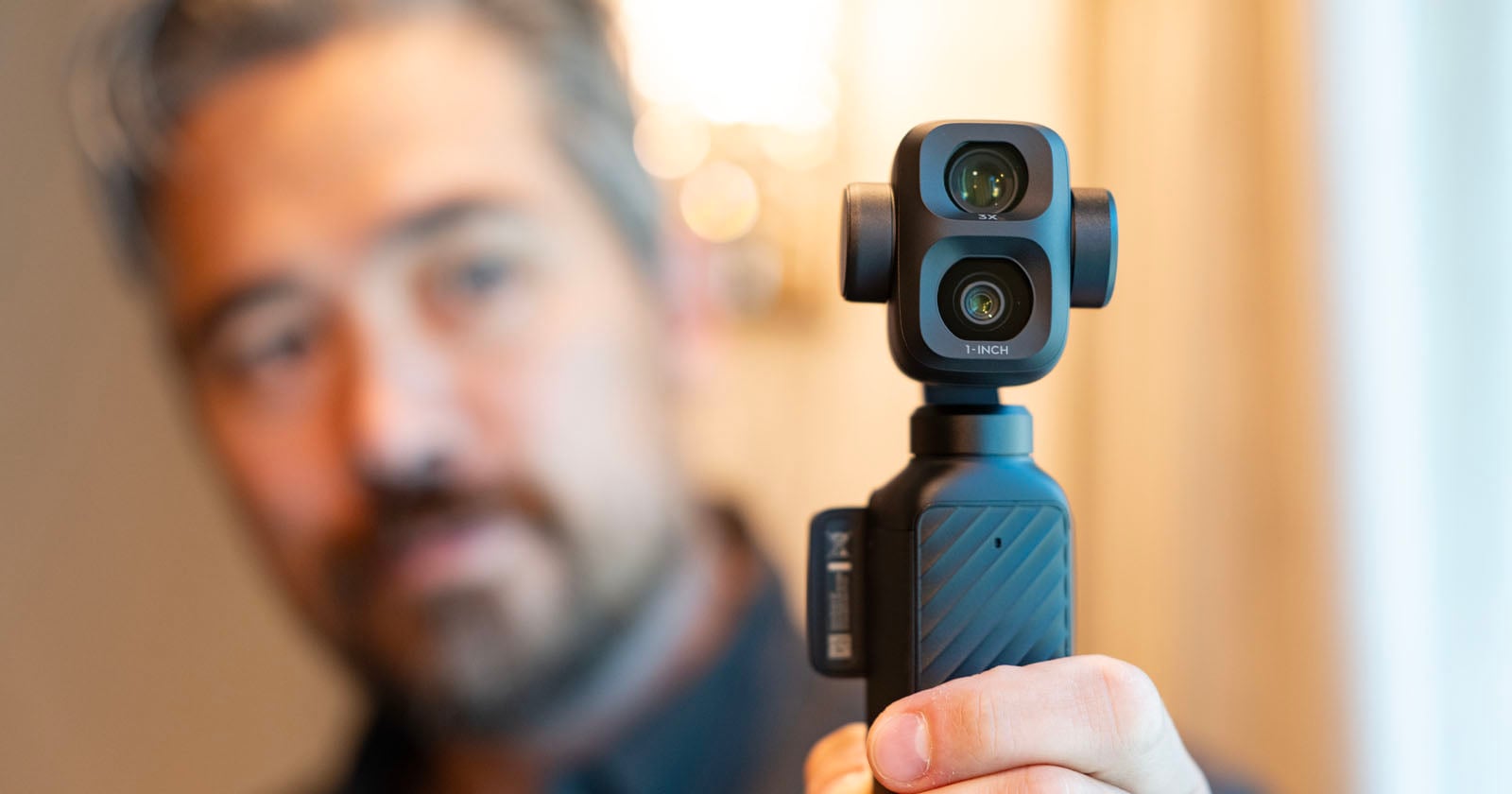
The Osmo Pocket 4P is starting to get more visible online as DJI is putting it into the hands of reviewers and content creators this week. That said, most of this camera is still a mystery -- and that's the way DJI wants it.


