Truus, Bob & Jan too! posted a photo:
Spanish postcard by Ed. Soberanas, no. 62. Photo: 20th Century Fox. Edmund Purdom in The Egyptian (Michael Curtiz, 1954)
Darkly handsome Edmund Purdom (1924 – 2009) was a British character actor who wore togas and sandals for a great deal of his career. In Hollywood, he replaced Marlon Brando in The Egyptian (1954) and Mario Lanza in The Student Prince (1954) and in Italy, he starred in countless Peplums and other genre films.
Edmund Anthony Cutlar
Spanish postcard by Ed. Soberanas, no. 62. Photo: 20th Century Fox. Edmund Purdom in The Egyptian (Michael Curtiz, 1954)
Darkly handsome Edmund Purdom (1924 – 2009) was a British character actor who wore togas and sandals for a great deal of his career. In Hollywood, he replaced Marlon Brando in The Egyptian (1954) and Mario Lanza in The Student Prince (1954) and in Italy, he starred in countless Peplums and other genre films.
Edmund Anthony Cutlar Purdom was born in Welwyn Garden City, England, in 1924. His father was an artist and London drama critic Charles Benjamin Purdom. Jesuits educated Edmund at St Ignatius College and by Benedictines at Downside School. He began his acting career in 1945 by joining the Northampton Repertory Company, appearing in productions which included 'Romeo and Juliet' and Molière's 'The Imaginary Invalid'. It was followed by two years of military service, during which he joined the Army Pool of Artists. He made his screen debut in the BBC TV film Carissima (1950), followed by a BBC TV adaptation of William Shakespeare’s Julius Caesar (Leonard Brett, 1951). He then joined the Shakespeare Memorial Theatre at Stratford-upon-Avon. In 1951-1952, Purdom was part of the company that Laurence Olivier and Vivien Leigh took to Broadway for alternating performances of Shakespeare's 'Antony and Cleopatra' and George Bernard Shaw's 'Caesar and Cleopatra'. He tested at Twentieth Century-Fox for the leading male role in My Cousin Rachel (1952), but Richard Burton got the part. The studio cast him instead as ship's officer Lightoller in Titanic (Jean Negulesco, 1953). His performance caught the attention of MGM, and he got a small role in the classic Julius Caesar (Joseph L. Mankiewicz, 1953) starring Marlon Brando. Purdome played Strato, the young servant of Brutus (James Mason), who holds the sword out for his master to run onto at the climax. Then he was cast in the title role opposite Jean Simmons in the epic The Egyptian (Michael Curtiz, 1954), 20th Century-Fox's most lavish production of the year. He played a brilliant physician in the service of the Pharaoh in 18th-dynasty Egypt. Ronald Bergan in The Guardian: “Purdom's reputation as a surrogate is underlined by the fact that he got his first chance of stardom when he replaced Marlon Brando in The Egyptian (1954) after Brando wisely cried off, preferring to play Napoleon in Desirée instead. (...) Purdom's striking dark good looks and dimpled cheeks made up for his rather wooden personality and inability to pronounce his 'r's, but not even Brando could have known how to react to dialogue such as: ‘You have bold eyes for the son of a cheesemaker.’”
Edmund Purdom then played the leading role opposite Ann Blyth in the MGM musical The Student Prince (1954), a part originally intended for Mario Lanza. According to Wikipedia, Lanza’s disagreement with director Curtis Bernhardt over how a certain song was to be sung led to his dismissal by MGM. (Ronald Bergan adds: “Mario Lanza's drugs-alcohol-weight problems got the better of him”) The film was subsequently directed by Richard Thorpe, and Purdom lip-synced to Lanza's singing voice. MGM gave the young unknown a considerable build-up. In the same year, he appeared in another MGM musical, Athena (Richard Thorpe, 1954), opposite Jane Powell and Debbie Reynolds. Tom Vallance cites in The Independent Debbie Reynolds saying, “The only relief on the set was the action going on off camera. Linda Christian, who was Mrs Tyrone Power at the time, was also in the picture. She was a temptress, and right before our eyes, we saw the tempted, who was Edmund Purdom. They would go to his little trailer, close the door and be gone for quite a while.” Christian later divorced Power and married Purdom. He then played the title role opposite superstar Lana Turner in the biblical epic The Prodigal (Richard Thorpe, 1955), MGM's most lavish production of 1955. It was a huge flop. He partnered with Ann Blyth again in the swashbuckling CinemaScope adventure film The King's Thief (Robert Z. Leonard, 1955). Purdom's MGM contract was terminated. On television, he starred as Marco del Monte in the swashbuckler series Sword of Freedom (Peter Cotes, Anthony Squire,1957-1958). In 1959, he filmed the crime drama Malaga / Moment of Danger (Laslo Benedek, 1960) in Europe. The American premiere of the film, co-starring Trevor Howard and Dorothy Dandridge, was delayed for nearly two years. After that, he did not work in Hollywood anymore except for some cameos, such as in the MGM production The Yellow Rolls-Royce (Anthony Asquith, 1964), in which peer Rex Harrison buys his wife (Jeanne Moreau) the titular limousine, unaware that she will be using the back seat to make love to Purdom.
When his Hollywood career sizzled out, Edmund Purdom went to Italy to star in the crime drama Agguato a Tangeri / Trapped in Tangiers (Riccardo Freda, 1957) with Geneviève Page. He decided to stay in Europe. In Italy, he made the Peplums (sword and sandal epic) Erode il grande / Herod the great (Viktor Tourjansky, 1959) with Sylvia Lopez, I cosacchi / The Cossacks (Viktor Tourjansky, Giorgio Venturini, 1960) opposite John Drew Barrymore, and
Salambò / The Loves of Salammbo (Sergio Grieco, 1960) featuring Jeanne Valérie. In France, he played Rasputin in Les nuits de Raspoutine / The Night They Killed Rasputin (Pierre Chenal, 1960) with Gianna Maria Canale. In Austria, he appeared in Das große Wunschkonzert / Big Request Concert (Arthur Maria Rabenalt, 1960) with Carlos Thompson and Linda Christian. In Great Britain, he played with Ian Hendry and Janette Scott in The Beauty Jungle (Val Guest, 1964) about the dangerous world of beauty contests. Another British film was the drama The Comedy Man (Alvin Rakoff, 1964) starring Kenneth More as a struggling actor. He lived in Rome for the rest of his life and continued to work extensively in Italian B-films and on television. His later films include the Spaghetti Western Crisantemi per un branco di carogne / Chrysanthemums for a Bunch of Swine (Sergio Pastore, 1968), the Horror film Thomas e gli indemoniati / Thomas and the Bewitched (Pupi Avati, 1970) and the thriller Giornata nera per l'ariete / Evil Fingers (Luigi Bazzoni, 1971) starring Franco Nero. He also worked as a voice actor. He dubbed dialogue translated from Italian into English for the sales of Italian films in English-speaking countries. During the 1970s and 1980s, he appeared in interesting films like the crime drama L'onorata famiglia / The honourable family (Tonino Ricci, 1974) with Raymond Pellegrin, the TV film Sophia Loren: Her Own Story (Mel Stuart, 1980) in which he convincingly played actor-writer-director Vittorio de Sica, and Don Bosco (Leandro Castellani, 1988) featuring Ben Gazzara. On TV, he was seen in The Scarlet and the Black (Jerry London, 1983) starring Gregory Peck, and the mini-series The Winds of War (Dan Curtis, 1983) starring Robert Mitchum. In 1984, he directed the Horror mystery Don't Open 'Til Christmas, about a psychopath who slaughters Santas. Purdom also played the leading role of a police inspector. It would be his first and last film direction. He was also very active as a sound engineer for music, recording many classical concerts in Florence and Vienna, and he devised a technique for transferring mono (sound) to stereo. He narrated popular short Christian documentaries on the life of Padre Pio and the 7 Signs of Christ's Return. His final film was the adventure film I cavalieri che fecero l'impresa / The Knights of the Quest (Pupi Avati, 2001) starring Raul Bova. Purdom was married four times. His first three wives, all divorced, were actress and ex-ballerina Tita Phillips (1951-1956), the mother of his children; Alicia Darr (1957-1958), and actress Linda Christian (1962-1963). In 2000, he married his fourth wife, the photographer Vivienne Purdom. Edmund Purdom died from heart failure in 2009 in Rome. He was 89. His daughter, Lilan Purdom, worked as a journalist for the French television channel TF1.
Sources: Ronald Bergan (The Guardian), Tom Vallance (The Independent), Wikipedia and IMDb.
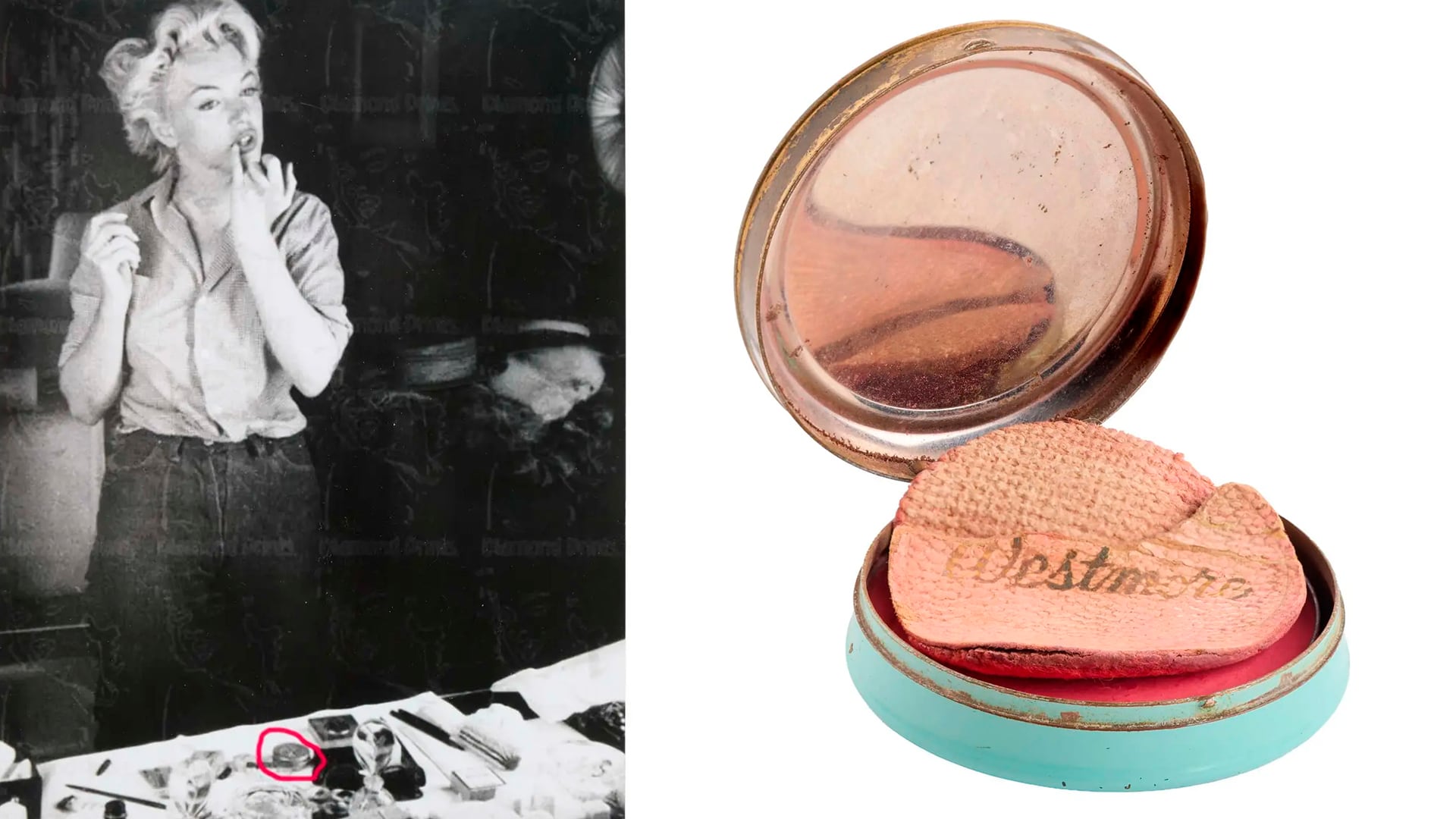
It’s only an imaginary birthday, one that was never meant to happen, but the celebrations say a lot about Hollywood’s eternal myth‑making. This Monday, June 1, Marilyn Monroe would have turned 100. And although she died more than 60 years ago, the world remains utterly fascinated by that perfectly imperfect blonde screen icon. Seguir leyendo
It’s only an imaginary birthday, one that was never meant to happen, but the celebrations say a lot about Hollywood’s eternal myth‑making. This Monday, June 1, Marilyn Monroe would have turned 100. And although she died more than 60 years ago, the world remains utterly fascinated by that perfectly imperfect blonde screen icon.
On the left, Marilyn Monroe applying her makeup. She used the partially used pink powder blush compact and its original applicator (right), which was sold at auction on June 4, 2026.
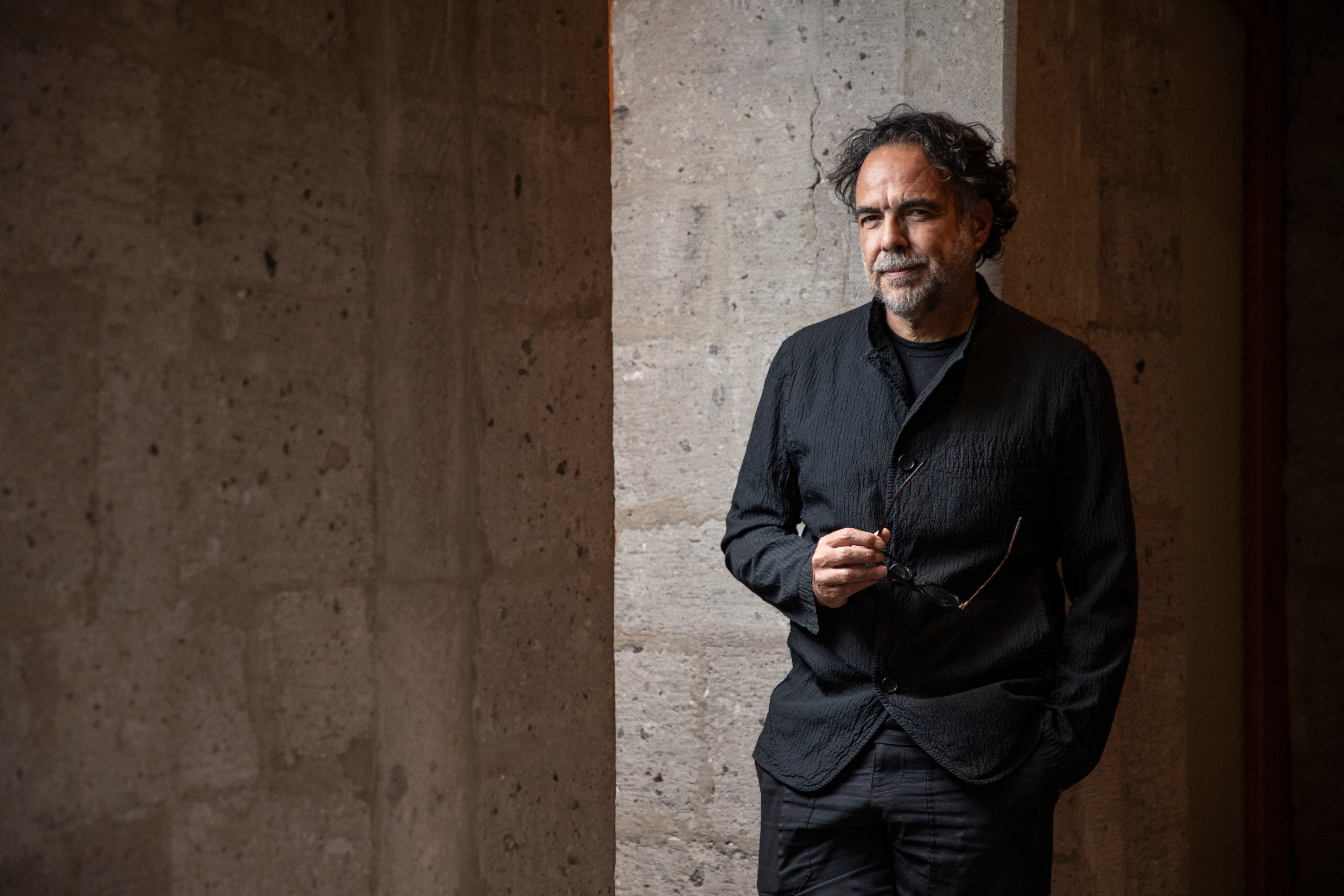
With five Academy Awards to his name, Alejandro González Iñárritu, 62, had few things left to achieve, and this week he crossed one off. The award-winning Mexican director, who will release his ninth film this fall — the dramedy Digger, starring Tom Cruise — has returned to his native city to join the Colegio Nacional de México, one of the most prestigious academic institutions in the Spanish-speaking world. As its new 38th member and the first filmmaker ever asked to join the honorary academy,
With five Academy Awards to his name, Alejandro González Iñárritu, 62, had few things left to achieve, and this week he crossed one off. The award-winning Mexican director, who will release his ninth film this fall — the dramedy Digger, starring Tom Cruise — has returned to his native city to join the Colegio Nacional de México, one of the most prestigious academic institutions in the Spanish-speaking world. As its new 38th member and the first filmmaker ever asked to join the honorary academy, his entire craft is also entering the institution: an art that has historically played different roles, he says, from “its use by governments for ideologies and repression” to “poetry and inspiration,” and also “entertainment.”
In the world of television, Girls marked a before and after when it premiered in 2012. If Sex and the City, which debuted 14 years earlier, reminded women of their power and their right to have fun and take control of their lives, Girls — the quintessential millennial series, written, directed, and starring Lena Dunham — delved much deeper into the realities of everyday life, far less glamorous for ordinary people.Seguir leyendo
In the world of television, Girls marked a before and after when it premiered in 2012. If Sex and the City, which debuted 14 years earlier, reminded women of their power and their right to have fun and take control of their lives, Girls — the quintessential millennial series, written, directed, and starring Lena Dunham — delved much deeper into the realities of everyday life, far less glamorous for ordinary people.
Truus, Bob & Jan too! posted a photo:
Italian postcard by B.F.F. Edit., no. 3236. Photo: Metro Goldwyn Mayer. Publicity still for The King's Thief (Robert Z. Leonard, 1955).
Darkly handsome Edmund Purdom (1924–2009) was a British character actor who wore togas and sandals for a great deal of his career. In Hollywood, he replaced Marlon Brando in The Egyptian (1954) and Mario Lanza in The Student Prince (1954) and in Italy, he starred in countless Peplums and other genre films.
Edmund
Italian postcard by B.F.F. Edit., no. 3236. Photo: Metro Goldwyn Mayer. Publicity still for The King's Thief (Robert Z. Leonard, 1955).
Darkly handsome Edmund Purdom (1924–2009) was a British character actor who wore togas and sandals for a great deal of his career. In Hollywood, he replaced Marlon Brando in The Egyptian (1954) and Mario Lanza in The Student Prince (1954) and in Italy, he starred in countless Peplums and other genre films.
Edmund Anthony Cutlar Purdom was born in Welwyn Garden City, England, in 1924. His father was an artist and London drama critic Charles Benjamin Purdom. Jesuits educated Edmund at St Ignatius College and by Benedictines at Downside School. He began his acting career in 1945 by joining the Northampton Repertory Company, appearing in productions which included 'Romeo and Juliet' and Molière's 'The Imaginary Invalid'. It was followed by two years of military service, during which he joined the Army Pool of Artists. He made his screen debut in the BBC TV film Carissima (1950), followed by a BBC TV adaptation of William Shakespeare’s Julius Caesar (Leonard Brett, 1951). He then joined the Shakespeare Memorial Theatre at Stratford-upon-Avon. In 1951-1952, Purdom was part of the company that Laurence Olivier and Vivien Leigh took to Broadway for alternating performances of Shakespeare's 'Antony and Cleopatra' and George Bernard Shaw's 'Caesar and Cleopatra'. He tested at Twentieth Century-Fox for the leading male role in My Cousin Rachel (1952), but Richard Burton got the part. The studio cast him instead as ship's officer Lightoller in Titanic (Jean Negulesco, 1953). His performance caught the attention of MGM, and he got a small role in the classic Julius Caesar (Joseph L. Mankiewicz, 1953) starring Marlon Brando. Purdome played Strato, the young servant of Brutus (James Mason), who holds the sword out for his master to run onto at the climax. Then he was cast in the title role opposite Jean Simmons in the epic The Egyptian (Michael Curtiz, 1954), 20th Century-Fox's most lavish production of the year. He played a brilliant physician in the service of the Pharaoh in 18th-dynasty Egypt. Ronald Bergan in The Guardian: “Purdom's reputation as a surrogate is underlined by the fact that he got his first chance of stardom when he replaced Marlon Brando in The Egyptian (1954) after Brando wisely cried off, preferring to play Napoleon in Desirée instead. (...) Purdom's striking dark good looks and dimpled cheeks made up for his rather wooden personality and inability to pronounce his 'r's, but not even Brando could have known how to react to dialogue such as: ‘You have bold eyes for the son of a cheesemaker.’”
Edmund Purdom then played the leading role opposite Ann Blyth in the MGM musical The Student Prince (1954), a part originally intended for Mario Lanza. According to Wikipedia, Lanza’s disagreement with director Curtis Bernhardt over how a certain song was to be sung led to his dismissal by MGM. (Ronald Bergan adds: “Mario Lanza's drugs-alcohol-weight problems got the better of him”) The film was subsequently directed by Richard Thorpe, and Purdom lip-synced to Lanza's singing voice. MGM gave the young unknown a considerable build-up. In the same year, he appeared in another MGM musical, Athena (Richard Thorpe, 1954), opposite Jane Powell and Debbie Reynolds. Tom Vallance cites in The Independent Debbie Reynolds saying, “The only relief on the set was the action going on off camera. Linda Christian, who was Mrs Tyrone Power at the time, was also in the picture. She was a temptress, and right before our eyes, we saw the tempted, who was Edmund Purdom. They would go to his little trailer, close the door and be gone for quite a while.” Christian later divorced Power and married Purdom. He then played the title role opposite superstar Lana Turner in the biblical epic The Prodigal (Richard Thorpe, 1955), MGM's most lavish production of 1955. It was a huge flop. He partnered with Ann Blyth again in the swashbuckling CinemaScope adventure film The King's Thief (Robert Z. Leonard, 1955). Purdom's MGM contract was terminated. On television, he starred as Marco del Monte in the swashbuckler series Sword of Freedom (Peter Cotes, Anthony Squire,1957-1958). In 1959, he filmed the crime drama Malaga / Moment of Danger (Laslo Benedek, 1960) in Europe. The American premiere of the film, co-starring Trevor Howard and Dorothy Dandridge, was delayed for nearly two years. After that, he did not work in Hollywood anymore except for some cameos, such as in the MGM production The Yellow Rolls-Royce (Anthony Asquith, 1964), in which peer Rex Harrison buys his wife (Jeanne Moreau) the titular limousine, unaware that she will be using the back seat to make love to Purdom.
When his Hollywood career sizzled out, Edmund Purdom went to Italy to star in the crime drama Agguato a Tangeri / Trapped in Tangiers (Riccardo Freda, 1957) with Geneviève Page. He decided to stay in Europe. In Italy, he made the Peplums (sword and sandal epic) Erode il grande / Herod the Great (Viktor Tourjansky, 1959) with Sylvia Lopez, I cosacchi / The Cossacks (Viktor Tourjansky, Giorgio Venturini, 1960) opposite John Drew Barrymore, and Salambò / The Loves of Salammbo (Sergio Grieco, 1960) featuring Jeanne Valérie. In France, he played Rasputin in Les nuits de Raspoutine / The Night They Killed Rasputin (Pierre Chenal, 1960) with Gianna Maria Canale. In Austria, he appeared in Das große Wunschkonzert / Big Request Concert (Arthur Maria Rabenalt, 1960) with Carlos Thompson and Linda Christian. In Great Britain, he played with Ian Hendry and Janette Scott in The Beauty Jungle (Val Guest, 1964) about the dangerous world of beauty contests. Another British film was the drama The Comedy Man (Alvin Rakoff, 1964) starring Kenneth More as a struggling actor. He lived in Rome for the rest of his life and continued to work extensively in Italian B-films and on television. His later films include the Spaghetti Western Crisantemi per un branco di carogne / Chrysanthemums for a Bunch of Swine (Sergio Pastore, 1968), the Horror film Thomas e gli indemoniati / Thomas and the Bewitched (Pupi Avati, 1970) and the thriller Giornata nera per l'ariete / Evil Fingers (Luigi Bazzoni, 1971) starring Franco Nero. He also worked as a voice actor. He dubbed dialogue translated from Italian into English for the sales of Italian films in English-speaking countries. During the 1970s and 1980s, he appeared in interesting films like the crime drama L'onorata famiglia / The honourable family (Tonino Ricci, 1974) with Raymond Pellegrin, the TV film Sophia Loren: Her Own Story (Mel Stuart, 1980) in which he convincingly played actor-writer-director Vittorio de Sica, and Don Bosco (Leandro Castellani, 1988) featuring Ben Gazzara. On TV, he was seen in The Scarlet and the Black (Jerry London, 1983) starring Gregory Peck, and the mini-series The Winds of War (Dan Curtis, 1983) starring Robert Mitchum. In 1984, he directed the Horror mystery Don't Open 'Til Christmas, about a psychopath who slaughters Santas. Purdom also played the leading role of a police inspector. It would be his first and last film direction. He was also very active as a sound engineer for music, recording many classical concerts in Florence and Vienna, and he devised a technique for transferring mono (sound) to stereo. He narrated popular short Christian documentaries on the life of Padre Pio and the 7 Signs of Christ's Return. His final film was the adventure film I cavalieri che fecero l'impresa / The Knights of the Quest (Pupi Avati, 2001) starring Raul Bova. Purdom was married four times. His first three wives, all divorced, were actress and ex-ballerina Tita Phillips (1951-1956), the mother of his children; Alicia Darr (1957-1958); and actress Linda Christian (1962-1963). In 2000, he married his fourth wife, the photographer Vivienne Purdom. Edmund Purdom died from heart failure in 2009 in Rome. He was 89. His daughter, Lilan Purdom, worked as a journalist for the French television channel TF1.
Sources: Ronald Bergan (The Guardian), Tom Vallance (The Independent), Wikipedia and IMDb.
An average big-budget movie creates about 3,370 metric tons of CO₂, according to the Sustainable Production Alliance’s 2021 report. That’s like driving over 700 gas-powered cars for a year, or about 33 metric tons of CO₂ for each day of filming. A single TV season can have the same impact as 108 cars. With thousands of productions happening every year in North America, Hollywood’s environmental impact is hard to overlook. Zena Harris, founder and president of Green Spark Group, has spent more t
An average big-budget movie creates about 3,370 metric tons of CO₂, according to the Sustainable Production Alliance’s 2021 report. That’s like driving over 700 gas-powered cars for a year, or about 33 metric tons of CO₂ for each day of filming. A single TV season can have the same impact as 108 cars. With thousands of productions happening every year in North America, Hollywood’s environmental impact is hard to overlook. Zena Harris, founder and president of Green Spark Group, has spent more than ten years helping the industry turn sustainability goals into practical steps that productions can track. On this episode of Sustainability In Your Ear, she shares how to build sustainable practices into film and TV projects from the very start, instead of adding them at the end when most waste has already been created. Zena started Green Spark Group in 2014 after earning a master’s in sustainability and environmental management at Harvard. She pitched Vancouver’s major studios on a simple idea: sustainability can save money. Her first big project, the X-Files reboot, managed to divert 81% of its waste across 40 filming locations. Since then, her certified B Corp consultancy has worked with Disney, NBCUniversal, Amazon, and other major studios, and she founded the Sustainable Production Forum, which is now in its tenth year.
Zena Harris, founder and president of Green Spark Group, is our guest on Sustainability In Your Ear.
This conversation comes at an important time. Soon, California’s climate disclosure laws will require studios to report emissions from every vendor in their production supply chain, both before and after filming. Zena points out that while studios are getting ready, most of their suppliers—like small companies that rent generators, handle waste, or provide lumber on tight schedules—are not prepared. The Sustainable Entertainment Alliance has released Scope 3 guidance for productions, and updated Scope 1 and 2 guidance came out in August 2025, but there is still no single tool that everyone uses. The real challenge over the next two years will be closing the gap between what studios must report and what their suppliers can provide. Zena also makes a bigger point about culture. After 12 years in the industry, she sees sustainability experts facing the same obstacles again and again because the way content is made hasn’t changed. The day-to-day work is important, but the bigger opportunity is in climate storytelling. Only about 13% of recent top-rated films mention climate change at all. Tracking the carbon footprint of a TV season is important, but what really matters is how a billion viewers see what’s normal on screen. That’s the influence Hollywood hasn’t fully used yet.
To follow Zena’s work, visit greensparkgroup.com. You can also learn more about the conference she started at sustainableproductionforum.com, or listen to her podcast, The Tie-In, which she co-hosts with Mark Rabin.
Hello, good morning, good afternoon, or good evening, wherever you are on this beautiful planet of ours. Welcome to Sustainability In Your Ear. This is the podcast conversation about accelerating the transition to a sustainable, carbon-neutral society, and I’m your host, Mitch Ratcliffe. Thanks for joining the conversation today.
We’re going to talk about film and television, because every film and TV production starts the same way: with a creative vision, a budget, a shooting schedule, and a huge amount of stuff. Generators burn diesel all day and night at shooting locations. Trucks idle as they wait to move between locations. Sets are built from raw materials only to end up in the landfill when filming ends. Craft services rely on single-use items for literally everything that’s placed on the table for the production team.
Now multiply that by the thousands of productions happening in North America each year, and the scale of the problem becomes clear. The average feature film emits 3,370 metric tons of carbon dioxide, which is like driving more than 700 gas-powered cars for a full year. And a single season of a TV show can match the emissions of 108 cars — and that’s not even counting the supply chain, everything that comes onto a set and everything that leaves. Hollywood has promised to be more sustainable many times, and our guest today has spent the last 10 years figuring out what it really takes to make these promises come to life in practice.
Zena Harris is the founder and president of Green Spark Group, a certified B Corp sustainability consultancy that she launched in 2014 with a mission to change the environmental impact of entertainment. She holds a master’s degree from Harvard in sustainability and environmental management, and she came to this work not as an environmentalist, but as a systems thinker — someone who spent her early career in engineering and HR identifying where organizations were leaking efficiency and money. But when she moved to Vancouver and discovered that nobody was focused on sustainability in what had become one of North America’s largest film production hubs, she saw a gap and filled it.
For more than a decade, she’s worked with major studios — including Disney, NBCUniversal, and Amazon — helping them embed sustainable practices in video production projects, and she’s developed measurable goals and built cross-industry collaborations that make lasting change possible.
She also founded the Sustainable Production Forum, which is now in its 10th year and has become the industry’s premier gathering place for turning sustainability talk into coordinated action.
We’ll talk with Zena about what it looks like when a production plans for sustainability from the very beginning, instead of adding it on at the end of the process like we usually do with all of our waste. And she’ll explain her idea of radical collaboration and why making real progress in Hollywood requires everyone — that includes unions, guilds, city governments, power companies, and those top-talent stars — to work together. We’ll also discuss how she uses the circular economy on set, the accountability gap that remains even as California’s new climate disclosure laws start to roll out, and whether the same systems-thinking approach can help business outside the film world.
To find out more about Zena’s work and Green Spark Group, visit greensparkgroup.com — that’s all one word, no space, no dash. Hollywood has the power to change how people think about sustainability, but can it also change how it works behind the scenes? Zena Harris is tackling both challenges at the same time. Let’s see what she’s discovered, right after this brief commercial break.
Mitch Ratcliffe 3:49
Welcome to the show, Zena. How you doing today?
Zena Harris 3:50
Hi. Thanks for having me. I’m doing great. The sun is shining in Tacoma, Washington, and I’m happy to be talking with you.
Mitch Ratcliffe 3:59
Well, I’m so happy to hear that you live in Tacoma. I lived there for almost 50 years. It’s a beautiful place, and I’m glad you’ve inherited it. I really like it. But you started your sustainability career in Vancouver, and you had no entertainment experience, and your first project was helping The X-Files reboot series divert material at 40 shooting locations — and you reduced their waste by 81%. What gave you the confidence to, you know, just call and say, ‘Hey, can I make you more sustainable?’
Zena Harris 4:31
It was a little more than that. You know, there was a lead-up to it. I had studied the film and TV industry in graduate school — I did my master’s thesis on it — so I had a little bit of a background. And the reason I studied it in grad school: I was in a sustainability master’s program, and I wanted to figure out how to shift culture. The first thing I thought of was, okay, people watch TV, we all love movies — that’s where I should start digging in to see what they’re doing. And they weren’t doing a ton. They were doing a little bit, but not too much.
So I talked to all the studio reps and found out what was going on and created a whole framework, like you do in graduate school, and wrote it all up. And then I pitched it to every studio. I sent out a white paper, essentially, to all the studios, and I was like, ‘Hey, let’s talk about this.’ Flew to LA, met with people in person. And I’m like, ‘I’m in Vancouver. I know it’s a major film hub. Put me to work.’ And one person did. She said, ‘Hey, you know, The X-Files is coming. It’s a big show. We have room in the budget to make this great. Let’s see what we can do.’ And that’s what really got me going.
One of the first people I met in the industry was Kelsey Evans. She is the owner of Keep It Green Recycling, which is a local vendor in Vancouver. Now, I had studied the film and TV industry, I know management practices and sustainability and the science, and she knew — like, really knew — the industry. So we worked together on that production, and we still work together today. She’s a friend of mine. She’s fantastic.
We got a lot of stuff done on that show, and that was my introduction into the film industry in practical terms. Vancouver, because it’s a major film hub, has — let’s just say — 20 shows filming at any given time. Sometimes it’s a lot more. But I knew that the work I was doing on that one show could scale. We needed to do it on all the shows. We needed to engage the industry. We needed to train people. So I started Green Spark Group as a vehicle to do this in the industry more broadly.
I think my past experience — prior to even going to grad school — in HR for a multinational company, and I was also an executive director at an international nonprofit where we had working groups and people from all over the world coming together to solve problems and create programs, all that gave me confidence to step into the film industry, look around, learn from others, apply my skills, and build this momentum locally. The company, locally, ended up — now we work across North America and even in other countries. So it’s been a journey.
Mitch Ratcliffe 7:52
Well, you point out that they said, ‘We’ve got room in the budget to make this great,’ but that isn’t always the case. So what’s the pitch to a new client?
Zena Harris 8:00
Yeah, yeah. Well, those are the magic words: ‘We can save you money.’ That is it. That’s it. I mean, look, this has been a movement over the last, let’s say, 12 years — that’s how long I’ve been working in this space. And it’s rare for folks to say, ‘Yeah, we can figure this out in the budget.’ Sometimes it happens, but most people want to know how they can save money. So if you can show them very clearly that they can save money, that pushes the door open. And then you can talk about lots of other things too.
Mitch Ratcliffe 8:43
So tell us about The Amazing Spider-Man 2. You saved them a lot of money. How’d you do it, and how much did you save them?
Zena Harris 8:48
I did not work on that. A colleague of mine, Emellie O’Brien, worked on that. That was actually one of the first productions publicized for saving a lot of money. I think they saved something like — well, I have the number here — $400,000. The cool thing about what happened with that, and also what happened with The X-Files and some others shortly thereafter, is that the studio recorded behind the scenes. They interviewed crew members to talk about what they had done. Then they published some of the stats in a case study and a video.
People in our industry love watching videos, right? So we did a behind-the-scenes for The X-Files, which caught lightning in a bottle — really created a whole movement in Vancouver. We showed that little five-minute behind-the-scenes video to everyone, and they saw their peers in that video because they were crew members speaking about what they had done. Things like that really sparked action in people and this excitement that, ‘Wow, things I have seen and kind of felt uncomfortable with — like waste, nobody likes seeing waste — people saw solutions in those videos. People saw themselves, saw their peers, and that inspired action, awareness, intrigue — like all the stuff you would want to create a movement. I can’t say enough about those early videos. They really helped kind of put us on a trajectory for more awareness and more action.
Mitch Ratcliffe 10:42
A set is kind of like a microcosm of a city. A lot of stuff comes together and then disperses again. We actually did some consulting a few years ago with Hollywood about recycling the material on site — they use the PCs for the first time and then send them to recycling. It’s amazing how wasteful it could be. Tell us about what happens on a set. What’s the input, and what’s the output?
Zena Harris 11:10
Yeah, you are right. It is definitely akin to a city. I mean, if you think about it, for a large film or TV series, there can be 20 different departments working together to make that project happen. Each of those departments brings in some kind of material, some kind of input. The production office will have lots of office supplies, equipment, office equipment, furniture for the office — that kind of thing. Those things are coming in, and then you use them, and then they go out.
Then you can think of production design and construction. These two departments work really closely together, and they’re the ones creating and then building the sets in the sound stage. You can think about all the materials that might be associated with that. Construction is a big input department, where we’re bringing in lots of wood — and other types of material. It’s not just wood, but essentially we’re building a village inside a sound stage to shoot. And it’s all the wood and any other material that goes into that: wallpaper, paint, all sorts of props, set dressing that will go into that space.
So all that’s coming in, and then we use it for a short period of time, and then we have to do something with it. A lot of times, set walls are kind of standard — they can be reused. These are things that, if we recognize the patterns here, we’re using these things all the time. We’re breaking them down, and then we do something with them. A lot of times the breakdown is fast. You don’t have a ton of opportunity to really think. But if we know that there’s a pattern associated — prep, production, and wrap every single show — we know that we can disrupt that pattern. We can plan for it.
This is where thinking ahead and planning like, ‘Hey, we can reuse these walls. Got a lot of doors here — we’re going to reuse these doors. We’re going to send them to a place that will hold them temporarily, like a reuse center, and then those can be redistributed back into the industry.’ Some productions will store this stuff on their own if they have reshoots they think they might have, or another series they might come along. So all of these are options.
The default historically has been — because this is a dynamic industry, because timelines are short, people need to get out of their stage space — to use it, break it down, put it in the dumpster, get that thing out of here, and move on. So we’re saying there’s another way to do it, and just that alone saves the production a lot of money, because those big dumpsters at the end of it all are expensive to haul away. If we can reduce even a few of those, that is a cost savings, and then that material can be diverted and reused. So everything coming in — food, big material like construction material that people think a lot about, anything coming in — has an opportunity to be diverted, redistributed on the back end. And then that action saves money.
Mitch Ratcliffe 14:59
Well, you describe what’s needed as radical collaboration. I’m wondering if you can explain what that means, because Hollywood’s going through a lot of changes right now, and it sounds like sustainability may be the keystone of some new talent or new careers during the production process. So what are the hardest stakeholders in that radical collaboration to get to move from where they are today?
Zena Harris 15:22
Yeah. I think, like I said, I’ve been doing this for a really long time, and one of the things that I’ve picked up over the years is that people in the industry have been conditioned to point fingers. There are different stakeholders in the industry. Crew will point to the union or the studio, for example, and say, ‘You know, those folks need to do something so that I can integrate sustainable practices.’ The unions will point to crew or studios. The studios will point to production or unions. And so at the end of the day, that doesn’t get us anywhere. We’re kind of swirling in this finger-pointing. And nobody really knows what to do. They’re waiting for something. So progress is slow when you do that.
In order to move the needle, I think one of the things we need to do is actually work together in ways that might seem unconventional or radical. I keep reminding myself of the saying, ‘What got us here won’t take us forward.’ So we have to get over ourselves and do something differently. We know that there’s no single organization that’s going to solve all the problems or change the existing system. We need a different approach, a different narrative around all of this — not just kind of deferring to another stakeholder.
This is what I call radical collaboration, because it’s different. Collaboration between crew and unions and studios and creatives and suppliers and industry organizations — in ways that have been different than we’ve tried before, that really haven’t worked so well, or not to the degree we wanted them to work. So instead of reinventing the wheel on that, we need a whole different tack. I think that in order to see success, we need positive reinforcement for people. We need to actually say, ‘Yes, this worked,’ and in increments too — not just the big things. When people see that positive reinforcement, they actually lean in. They actually have more confidence in what they’re doing. And then this increases momentum. That’s kind of my view of radical collaboration and what I think is needed to keep the ball rolling.
Mitch Ratcliffe 18:07
Well, you’re making a really interesting point, which is that people don’t dislike change. They may be a little afraid of it, but they want to see that the extra effort involved in making the change actually is paying off. As the orchestrator of the sustainability activities on set, how do you communicate that to them so that the Teamsters and the members of the Screen Actors Guild all say, ‘Oh, I’m in’?
Zena Harris 18:37
Yeah, yeah. Well, you know, it’s interesting. You mentioned a couple of different positions there — Teamsters and actors and these sorts of things. Everybody is coming to the production with a different perspective, a different viewpoint, kind of a different mandate within their department. Like, their job is to do this. So everybody sees sustainability in a slightly different way.
One of the things we really strive to do — and I would say this is kind of a standard practice, but what we’re trying to do as a team at Green Spark Group — is go beyond surface-level conversations. Not just say, ‘Here are a few things you could do,’ but really try to have a deeper conversation with people in each of these departments and ask them what they see, what they need to be successful in doing any one of the things that they might want to do differently, and really help them get there. If they’re afraid to talk to someone, well, we’ll help them do that. We will have their back. We will go with them and be a backstop for anything they may not know or feel confident talking about. If it is finding a vendor and they don’t have time to look around, we’ll help them do that.
You know, people say, ‘Meet you where you are.’ But it’s really going beyond surface-level conversations. It’s really tapping into people’s wants, needs, level of confidence, and helping them grow that and helping them shine in their role — whatever it is. I think that sort of human-centric approach is really helpful, and what really moves the needle, or actually builds trust. Because at the end of the day, we can go in there and talk about all sorts of gear. There’s a lot of gear out there. There’s a lot of batteries out there that are going to save emissions. But I have seen multiple times where batteries have been rented, they sit in the gear truck, and people are afraid to use them. Why is that? Let’s talk about that. Let’s really unpack it, and let’s find a safe space to do it. Maybe it’s that lightweight one over there, and we want to just test it out. Totally cool. Let’s make that happen. What’s it going to take to get there?
Mitch Ratcliffe 21:24
This very meta moment — talking about telling stories to storytellers to get them to change their behavior — is a great place to take a quick commercial break. Folks, we’re going to be right back to continue this really interesting conversation.
Welcome back to Sustainability In Your Ear. Let’s get back to my conversation with Zena Harris, founder and president of the Hollywood sustainability consultancy — although Vancouver, too — Green Spark Group. Zena, your mission is to change the climate of entertainment, and that has a double meaning that clearly was deliberate. But I’m wondering, in the current environment and thinking about the stories we tell about why we do things, with all the whiplashing political winds of the last couple of years, how has that changed your message and your perception of what Hollywood’s trying to accomplish?
Zena Harris 22:16
Yeah, I mean, I’ve said this a few times. We have a lot of momentum. Right now, in 2026, there are more organizations, there are more people thinking about sustainability, there are more tools out there for people to use. There’s a lot of momentum in the industry. So for us at Green Spark Group, we are on a mission to change the climate of entertainment, and it’s incremental, year over year, year over year — and so we’re still working on it. It’s very relevant for us today.
We have had a hand in changing a lot in the entertainment industry over the last 12 years. We started programs, we’ve created strategic plans for industry organizations and training in the C-suite, and started the industry’s first conference. We’re uplifting people and trying to give a platform to people to collaborate and share their ideas. But there’s a lot of opportunity out there. There are still a lot of people who are new to sustainability, and they need someone to help them make sense of it all. It’s taking all this wonderful information that’s been created by various organizations — and we’ve contributed as well — and distilling it and helping them make sense of it all, make decisions that are in line with their values, and implement the things that they want to implement. Save the money that they can save, that they know they can, when they start doing the math.
Mitch Ratcliffe 24:11
Is the money the key thing right now? Is it the sustainable savings, or is it still a commitment to the climate, in the context of, again, all the backlash against the idea of environmentalism?
Zena Harris 24:24
Yeah, I mean, the idea of environmentalism, I think, is kind of in the broader ethos. I think when you get down to talking to people one on one, they want solutions to things — waste they’ve seen, or emissions they’ve encountered on production, or food waste, or whatever it is. Whether they call themselves an environmentalist or they just are a caring and concerned person, everybody wants a positive working experience. And they don’t want that tension internally between, ‘I’m doing this great, creative, wonderful thing in my job, and then I look over here and some negative thing is happening environmentally or whatever.’ People want a holistic, positive work experience. So I think that’s core at the end of the day — to tap into that, and, like I said, just go beyond surface-level conversations and really help people figure that out.
Mitch Ratcliffe 25:35
Let me ask about the other side of that equation, about changing the climate of entertainment. Hollywood has enormous cultural reach, but we did a little research and found that only about 10%, 13% was the number we came up with, of recent top-rated films even acknowledge the idea of climate change on screen. Do you hear creatives on the content side talking about climate? Do they ask you? Do they say, ‘You know, this is interesting, I’d like to learn more, and I might tell a story about it someday’?
Zena Harris 26:05
Yeah. I mean, this idea that the industry reach is certainly enormous — the cultural influence of the industry, wherever you’re interacting with it, whether you love a character on screen, whether you follow an actor in real life and kind of just like what they do, whether you follow — like, I’m an operations kind of person, I like looking at how things work and trying to improve that. But this idea of climate storytelling, a lot of people are thinking about it right now. It’s a huge lever. You will hear that batted around a lot. A lot of industry organizations are doing research on it and trying to get into writers’ rooms and in film schools.
There’s a lot of momentum in that space. We have been engaged a few times in that effort, and it’s proven beneficial. So I would say that 13% — there’s a lot of momentum around this subject, and I can see that number increasing over time. People want stories that reflect the current reality they’re feeling in real life. There are a lot of people working in environmental jobs, or in some shape or form, and I think those kinds of professions will be reflected on screen a lot more in the future. So, yeah, I think there’s a lot of momentum in that space.
Mitch Ratcliffe 27:52
I can see a film about a ranger saving a family from a fire.
Zena Harris 27:57
You can think it, they can do it.
Mitch Ratcliffe 28:00
Let’s turn back to the operational question, as you pointed out you focus on that. One of the common problems that production has, along with every other business, is trying to fully measure what’s going on. Like we were talking about, this set is this midpoint in a very complex supply chain where stuff has flowed in, now it needs to go somewhere in order to either be reused or appropriately recycled, but we can’t fully measure all that. What’s still in the invisible category of information? In the same sense that Scope 3 emissions are hard for a typical corporation to measure, is there a comparable issue with production sustainability?
Zena Harris 28:36
Oh yeah, 100%. Look, there are always more things to measure. As an industry, we have focused a lot on carbon emissions from things like utilities, fuel, air travel, and accommodations. We have a really good handle on that. But those are, like, four categories, right? And, as you said earlier, materials are coming onto production — food, wood, office supplies, you name it, it comes onto production. So those are the things we don’t have a solid handle on. There’s embedded carbon and all that stuff.
There are also lots of industry tools, industry carbon calculators out there — some measure more than others.
Mitch Ratcliffe (interjects)
Are any of them any good?
Zena Harris (continues)
Yeah, yeah, they’re good. But some have more inputs than others. Some will only measure those four categories that I mentioned. For years, for example, everybody in the industry wants to know the waste diversion rate, right? But nobody focuses on the carbon emissions associated with that material. We just get a diversion rate, and we call it good. So you have to choose: if you want to know all of that, you have to choose a tool that will allow you to input more of that information. And we don’t have a standard tool yet in the industry that everybody uses, so we can compare apples to apples.
We have guidance in the industry, and that’s really helpful. The Sustainable Entertainment Alliance, which is an industry consortium, has put out guidance on Scope 1, Scope 2, and Scope 3. Their Scope 3 guidance is the most recent, and with new information, new methodology, a lot of people don’t really know what to do with that, and maybe aren’t sure which tool to use to capture some of that stuff. So there’s a lot of uncertainty even around the guidance that’s out there. That’s where you can seek out professionals to help you understand all that stuff.
Mitch Ratcliffe 31:11
One of the characteristics of the change we’re undergoing right now is the recognition of externalities. And in Hollywood production generally — I have some friends who are in the industry — it seems to me that they focused almost entirely on who was in front of the camera and who was behind the camera, and only now are starting to recognize that they’re part of this deeper supply chain. And now California’s new climate disclosure laws are going to require studios to report indirect, upstream and downstream emissions from every vendor by this year. How’s that going to change? And is the industry actually getting the traction on trying to respond to that requirement?
Zena Harris 31:47
The studios are very aware of this. They’ve been preparing for this. The suppliers upstream, downstream are not as [prepared].
Mitch Ratcliffe 31:58
So how are they not prepared? What do we need to do?
Zena Harris 32:00
Well, they haven’t been tracking.
Mitch Ratcliffe 32:10
So they’re the typical company.
Zena Harris 32:13
They are a typical company. These are small companies servicing these projects, these productions. And we’ve been so focused in the industry on pre-production and production — that piece of the content creation process. So if you think of a book that has 10 chapters, we’ve been essentially focusing on one chapter. So you’ve got all of the other ones, and all of the service companies and suppliers and all of that that still incorporates the book, and all of those are contributing in some way.
Now we’ve been collecting data from waste haulers. We’ve been collecting data from people who supply equipment, and even those folks are still trying to get organized with their data. So you can imagine, like every other company, they all have their own operations. So that’s one thing. You can incorporate sustainability into your own company operations, and then you can provide data associated with the product or service that you are providing. And that’s going to matter. Those things roll up into this production reporting, and that production reporting rolls up into the larger studio, who’s going to have to incorporate that into their corporate reporting.
Mitch Ratcliffe 33:54
So do you see this regulation as catalyzing the potential for sustainability at scale in entertainment production?
Zena Harris 34:05
Yeah. I mean, I think it provides people a solid talking point to go up and shake the tree a little bit and say, ‘Hey, we’re going to have to be doing this.’ Look, they’re not going to have all the information they need, probably, in year one. So they’re going to take what they do have, and they’re going to estimate probably across their slate. And then they’re going to work really hard to make that better, more accurate in the coming years. So if you’re not asked in year one as a supplier for certain information, you might be in year two and three. It would be wise, I think, to kind of get your house in order and be able to start reporting on these things, even if you’re never asked. It’s good for you as a company, because you start to understand where your waste is, where your emissions lie, and then you can start making changes accordingly. And yes, that stuff saves money. So it’s good for everyone to be thinking about this, whether you’re asked by a studio or not.
Mitch Ratcliffe 35:16
Well, that’s really the key — that it’s also rewarding to make that kind of additional positive impact, as well as save some money and make more profit in the long run. I mean, that’s what’s rewarding about progress in general.
Zena Harris 35:30
Totally, totally. It’s a ripple effect, right? And then we just get better as an industry, and then an industry that contributes to broader society.
Mitch Ratcliffe 35:40
So after 10 years, how far has the industry come toward the vision that you had when you started Green Spark Group?
Zena Harris 35:50
Oh, gosh. Well, there’s a lot that has happened over these years. Like I said, more people are aware, more people are engaged. But I think that we are swirling within the existing system. Sustainability practitioners that started working on production like I did years ago — we just entered this existing content creation system. And what I’m noticing now is that we’re swirling within the same system. We’re all running up against similar challenges around the world with regard to implementing sustainable practices. So we’re coming up against consistent hurdles, barriers within this system.
For me, that’s an opportunity to look a little bit bigger and say, ‘Okay, well, if we keep running into the same barriers, what if the system shifted? What if the entire system shifted? What are the incentives involved in the system to keep it the way it is?’ And there’s a lot — that’s a whole separate podcast — but all to say, this is where we need to be thinking: how we shift the system, how we have that radical collaboration, how we shift the needle on what suppliers are doing and reporting, and these sorts of things. And that’s what’s going to take us to the next level. We’re going to get over the hump.
Mitch Ratcliffe 37:34
So, given that, imagine that you are Zena, goddess of sustainability, and can put your finger on one thing and change it. What would it be, in order to drive much more rapid transition to a more sustainable production environment?
Zena Harris 37:51
I mean, I think it all comes down to the people — the people in the system that are either allowing or not allowing, either making excuses or open to possibility. It all comes down to that. There are some core elements associated with people, behavior change, these sorts of things. I think mindset is core, absolutely core. I think courage — even to talk about this stuff within your small team or your department, or even in a larger conversation — is pretty critical, to voice some things you’re noticing, or what ideas you have for doing things differently. I think that collective confidence — once you do that, people get on board. They come together. Confidence is critical as well. If you don’t have it, you’re not going to take the next step, right? So there are fundamental human elements that need to be developed, to be encouraged, to be demonstrated. And I think that is going to shift the needle.
Mitch Ratcliffe 39:08
It’s a storytelling challenge in a lot of ways. There’s some carrot, there’s some stick, there’s a lot of nuance to that tale that we need to really make embedded into everybody’s approach to thinking about the work. Zena, thanks so much for your time today. How can folks follow both Green Spark Group and the work you’ve done with the Sustainable Production Forum?
Zena Harris 39:28
Sure. You’re always welcome to check out our website, greensparkgroup.com. We post insights there monthly and have a lot of great information for folks. Also on social media at @greensparkgroup — pick a platform, we’re probably on it. And then the Sustainable Production Forum is online as well, sustainableproductionforum.com, and from there you can get to all of their content, videos, anything you want to know is there too.
And I’ll also just give a quick plug for my podcast that I co-host with my longtime friend Mark Rabin. It’s called The Tie-In, and so folks can also check out stories from crew members, from people doing amazing work behind the scenes. We talk to them all there.
Mitch Ratcliffe 40:21
Zena, thanks so much. It’s been a fascinating conversation. Really enjoyed it.
Zena Harris
Thank you.
Mitch Ratcliffe 40:31
Welcome back to Sustainability In Your Ear. You’ve been listening to my conversation with Zena Harris, founder and president of Green Spark Group, the certified B Corp sustainability consultancy she launched in 2014 to change the climate of entertainment. You can find Zena and her team’s work at greensparkgroup.com — that’s all one word, no space, no dash. And check out their conference, the Sustainable Production Forum, now in its 10th year, at sustainableproductionforum.com, also all one word, no space, no dash.
I think the headline from Zena’s work is a pitch, not a principle: ‘We can save you money.’ That’s how she opens a conversation with a studio, and it’s why The Amazing Spider-Man 2 became an early case study, based on the work of a colleague of hers at Green Spark who helped that production save roughly $400,000 through sustainable practices. The implications of these savings are clear when you stand next to the dumpster at the end of a chute and watch a village’s worth of lumber, furniture, wallpaper, and props get hauled away to a landfill because the stage needs to be empty by Monday.
The sustainability opportunity in film and TV isn’t a values problem — the industry’s values are already stated on the record. It’s an operational capacity problem, and Zena’s work is translating aspiration into line items a production accountant can track. And that’s to the benefit of the environment, even if it’s not visible on the bottom line.
California’s new climate disclosure laws are about to change the equation, too. Beginning this year, studios will have to report upstream and downstream emissions from every vendor in their production supply chain. That’s the chapter of the book, as Zena put it, that the industry has never actually opened. The studios knew that this is coming, and they’ve been preparing for it. Their suppliers — the small companies servicing productions on short timelines — mostly haven’t. That gap is the real story over the next 24 months in the entertainment sustainability business.
Zena’s advice to suppliers is the same advice my recent guest Steve Wilhite, who leads Schneider Electric’s power management division, offered corporate energy buyers just a few weeks ago: get your house in order now, because even if you’re not asked for data today, you will be in two or three years. The companies that can report cleanly will win work, while those that can’t will become a balance sheet burden to the studios.
A digital nervous system is arriving now in Hollywood, and every waste hauler, every generator rental company, every lumber supplier is becoming a data-producing node in a network that didn’t exist just one or two production cycles ago. California’s environmental policy is forcing that network into being, and once it exists, it will not unbuild itself, because people are going to see the benefits. They’re going to see the savings that we’ve been talking about throughout this conversation.
And after 12 years in the business, I think Zena’s comment near the end of our conversation — that sustainability practitioners in entertainment are ‘swirling within the existing system’ — is important to note. The hurdles they hit on one production look identical to the hurdles they hit on the next, because the content creation system itself hasn’t changed. That’s the green living myth problem I discussed recently with author Michael Maniates, but with a Hollywood accent: individual actors are doing the right thing inside a structure that continues to produce the same outputs by default. And that can easily become disenchanting. On-set greening is necessary and it’s real, but the industry’s deepest cultural lever is the one that we discussed in passing.
Only about 13% of recent top-rated films even acknowledge climate change on screen. The carbon accounting for a single TV season matters, but the cultural accounting — for what a billion viewers see, what they feel is normal, and what film and television characters drive and eat and care about — that’s the lever that this industry hasn’t yet pulled. Production sustainability builds the operational muscle and the credibility, but climate storytelling is where that credibility will be built at scale, because it will spread these ideas, changing not only Hollywood’s practices, but the practices of an entire world. One without the other leaves the most influential narrative engine on the planet running on the old script, and it’s time for a change.
So stay tuned. We’re going to keep talking with people rewriting what’s possible on set and on screen. And could you take a moment to help spread the word about the sustainable future we can build together? You are the amplifier that can spread more ideas to create less waste. So please take a look at any of the more than 550 episodes of Sustainability In Your Ear in our archives. Writing a review on your favorite podcast platform will help your neighbors find us. So please tell your friends, family, and co-workers they can find Sustainability In Your Ear on Apple Podcasts, Spotify, iHeartRadio, Audible, or whatever purveyor of podcast goodness they prefer.
Thank you, folks, for your support. I’m Mitch Ratcliffe. This is Sustainability In Your Ear, and we will be back with another innovator interview soon. In the meantime, take care of yourself, take care of one another, and let’s all take care of this beautiful planet of ours. Have a green day.
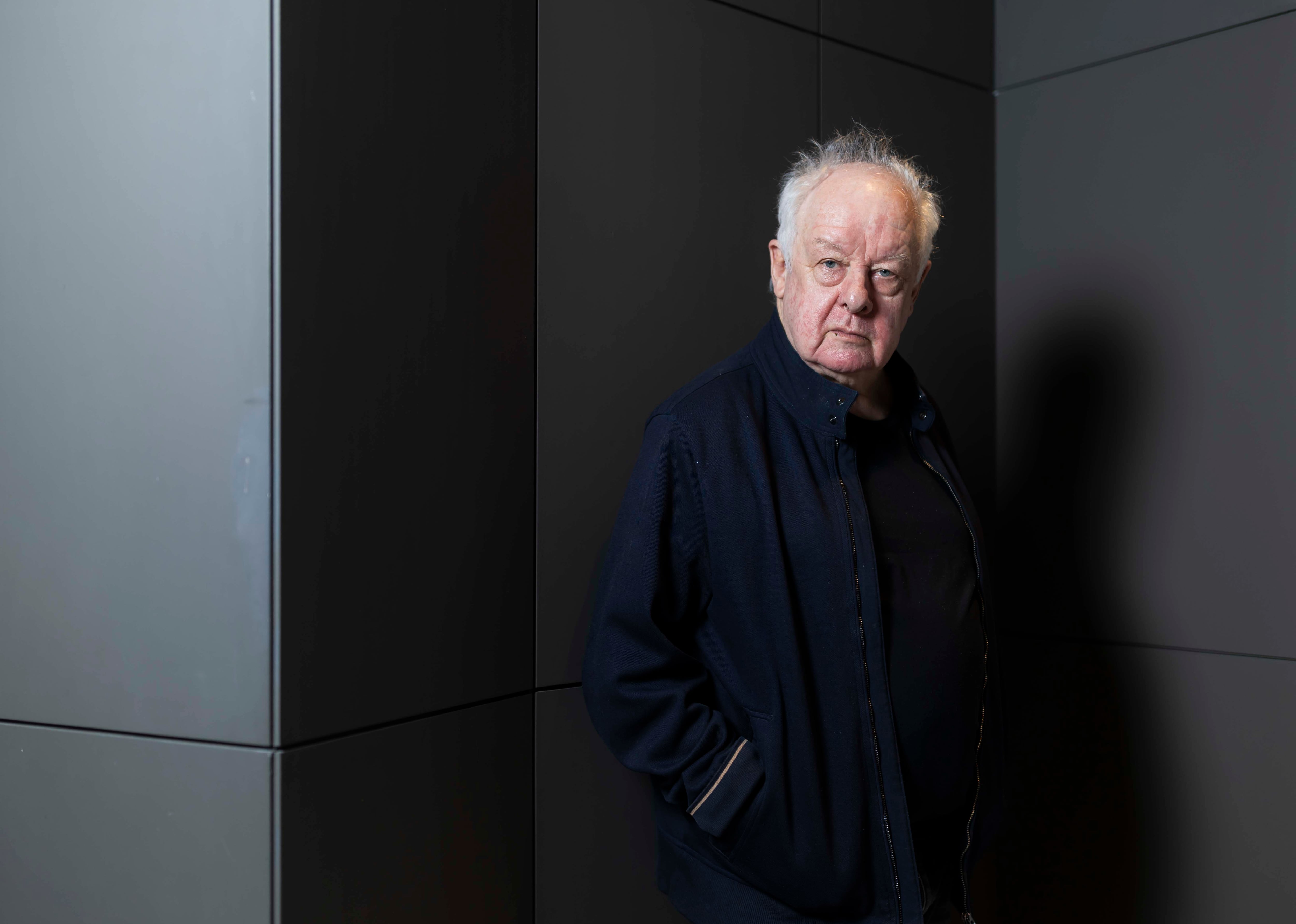
It’s time for the interview and Dubliner Jim Sheridan, 77, has not yet appeared. The press pack have been warned. That morning, in the Madrid hotel where he is staying, there was no tortilla. And after asking at reception, he has sought out a pincho with his wife in the neighborhood. “He said that he loves it and wanted to get his hands on a good one,” the press was told. Through the windows of the hotel, you can see the man who made My Left Foot, The Field, In the Name of the Father, The Boxer,
It’s time for the interview and Dubliner Jim Sheridan, 77, has not yet appeared. The press pack have been warned. That morning, in the Madrid hotel where he is staying, there was no tortilla. And after asking at reception, he has sought out a pincho with his wife in the neighborhood. “He said that he loves it and wanted to get his hands on a good one,” the press was told. Through the windows of the hotel, you can see the man who made My Left Foot, The Field, In the Name of the Father, The Boxer, and In America, walking at a leisurely pace, which is reflected in his delivery during the interview. He likes to talk but calmly.
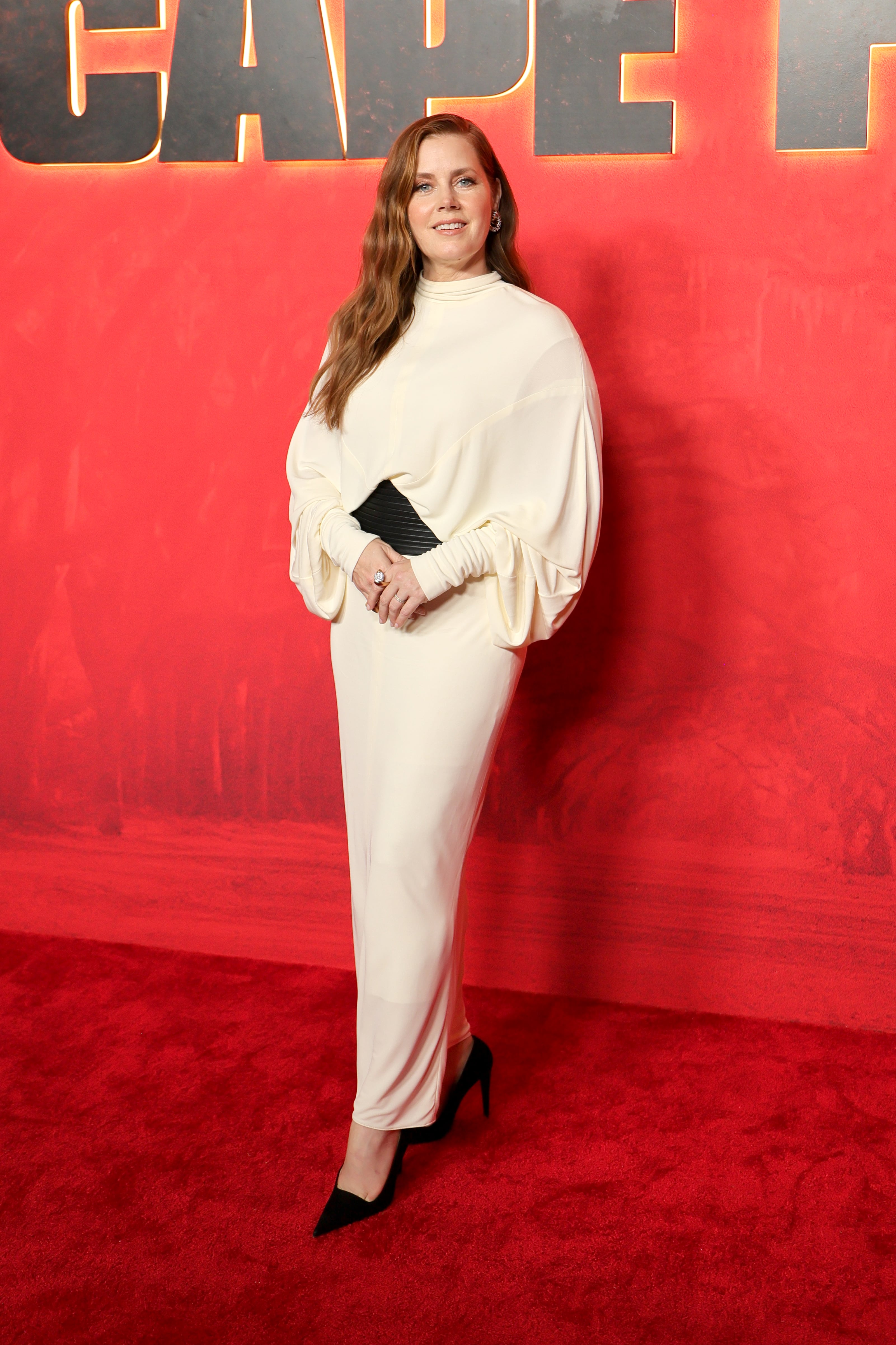
In the new adaptation of Cape Fear, a notorious convict returns years later to settle the score with those who ruined his life; the series’ protagonist also returns with a mission that is less violent, but not so different. After several years of setbacks, failed projects, and uncomfortable conversations about her supposed “slump,” Amy Adams returns to the spotlight to prove why she was unanimously considered one of the best actresses of her generation and to turn the tide once again in favor of one of Hollywood’s favorite redheads. Pictured here at the series premiere (an Apple TV production) in Los Angeles on June 2.
Amy Adams was Hollywood’s safe bet. The actress who elevated any film, the perennial Oscar contender—with six nominations in 13 years—the performer who seemed incapable of making a wrong choice when it came to projects. Versatility was her most notable quality: she could do drama, musicals, comedy, or action, and in the same year, she could act opposite both Kermit the Frog in The Muppets and Joaquin Phoenix in The Master. Her name was a guarantee of quality. But like legends such as Glenn Close or Annette Bening, Adams joined the club of perennial favorites who never quite manage to win the statuette, and her star seemed to be fading. Pictured here at the presentation of Louis Vuitton’s 2027 cruise collection in May in New York.
Social media, always so quick to spin narratives, coined a term for Amy Adams—“the flop era”—which is used to describe the period when a celebrity experiences a string of disappointments or failed projects. Adams had fully entered this phase after releasing box office flops like Hillbilly Elegy, The Woman in the Window, Dear Evan Hansen, Disenchanted, and Nightbitch. There are entire articles, tweets, and podcasts dedicated to debating the actress’s supposed career slump and how long it would take her to get out of it. Much like a pop star whose albums no longer debut at the top of the charts, unmet expectations fueled a sense of lost momentum because her projects weren’t making as much noise as her previous ones. Pictured here at one of the 2017 Oscar parties.
'Cape Fear' has all the ingredients to turn around the bad luck associated with its main star. A story with a distinguished cinematic pedigree, a compelling character—a lawyer whose peaceful life is threatened by the return of a criminal she sent to prison—a major network behind it, Spielberg and Scorsese as executive producers, and an antagonist of the caliber of Javier Bardem. These are, in fact, what critics consider the best aspects of the series. “Brilliant, incredible,” notes ‘The Guardian’ about the actress, who appears in the photo alongside the Spanish actor and Patrick Wilson, her on-screen husband.
The actress took advantage of the premiere of ‘Cape Fear’ to publicly introduce her only daughter, Aviana, who posed on the red carpet alongside her and her husband, director and artist Darren Le Gallo. The 16-year-old outshone her famous parents in a turquoise mini-dress with a sweetheart neckline and her mother’s signature red hair, but above all, because of her striking resemblance to a young Scarlett Johansson—a detail neither the press nor Twitter users failed to notice.
Many have blamed Adams’ career slump on Hollywood’s chronic ageism, which sidelines actresses or relegates them to more minor roles as they get older. However, at 51, she says she feels “more centered and relaxed” than she ever has. “I try to welcome opportunities with open arms and not fight too hard. For me, at least, that’s a very liberating part of getting older: just letting things go,” she revealed in a recent interview.
For more than a decade, Adams achieved something rare: she earned critical acclaim for films like Arrival (the 2016 film directed by Denis Villeneuve, pictured) and Doubt, while also starring in major franchises. Her portrayal of Lois Lane in the ‘Superman’ superhero universe and her wonderful performance as a modern Disney princess in ‘Enchanted’ further cemented her place in popular culture.
Adams’s first audience consisted of diners at a chain of restaurants in Minnesota that featured live music, where she worked for three years. She then faced a crossroads: move to New York to pursue her dream of becoming a dancer, or head to the other coast and try her hand at acting in Los Angeles. An injury ended up making the decision for her, and Hollywood gained one of its greatest ambassadors. Pictured here in 2002.
Adams is an anomaly in this age of hyper-exposure. She doesn’t use social media—she tried Instagram but quit because “my routine is too boring”—she isn’t involved in personal scandals, nor does she make inflammatory statements in the few interviews she grants, and her red-carpet appearances are limited to the premieres of her own projects or award shows that request her presence among the nominees. Perhaps this lack of dazzlement by the lights of the movie capital has to do with the fact that she came into the spotlight late: her breakthrough role, in the indie comedy ‘Junebug,’ came when she was 31.
The praise for her has always been unanimous. “Amy has the ability to convey her thoughts just by looking at you. An actress must move people, and she’s brilliant at that. Plus, she’s completely believable,” said Tom Ford, who cast her as the lead in his 2016 film Nocturnal Animals (pictured, in a scene from the film). “She maintains a certain mystery on purpose. That’s why she surprises us and draws us in,” added the late Philip Seymour Hoffman.
The actress’s style is one of the most consistent in Hollywood. She knows how to perfectly pair her icy beauty with designs that flatter her figure and align with her career. She’s never the most daring on the red carpet, but she’s always one of the best-dressed. Rather than following trends, she opts for flattering designs like this Valentino gown she wore to the 2014 Golden Globes. Adams won Best Actress in a Comedy or Musical for her role in American Hustle.
While she certainly rocks plunging necklines, her signature style is the strapless look. She has worn it on countless red carpets, especially in understated, monochromatic dresses. This one, which she wore to the 2014 Oscars, is by Gucci and perfectly embodies her approach to major events: with elegance, without fanfare, staying true to what she knows suits her, and, it’s also true, without taking big risks.
Her approach to fashion also draws heavily on classic Hollywood. It’s not just her hair—sometimes styled in Veronica Lake-inspired waves or pulled back into elegant buns—that evokes those years; her wardrobe is also filled with elegant dresses that have a certain retro flair and sensuality. A good example was this Alexandre Vauthier dress she wore to the Oscars afterparty hosted by Vanity Fair in 2019.
The actress’s early years in Hollywood weren’t easy. Her career seemed stuck in small, almost interchangeable roles; not even a part in Catch Me If You Can, opposite Leonardo DiCaprio, helped her break through. So Adams, desperate, decided to dye her hair red. “When you’re blonde, people associate it with being flirty or mischievous. When you’re a redhead, suddenly you’re eccentric and quirky,” she confirmed. And it worked.
Amy Adams met Darren Le Gallo in an acting class in Los Angeles when neither of them was well-known. For months, she saw him only as a fellow actor, and both of them were in relationships. Everything changed when they crossed paths on the set of a short film and she discovered a side of him she hadn’t known before: that of a man willing to go after what he wanted. “I know you’re getting over another guy, but I’m going to take you out to dinner on Wednesday,” he told her. More than two decades later, they’re still together. Pictured here at the 2025 Golden Globes.
Those who think Amy Adams is past her prime might want to take a look at her schedule. Following Cape Fear, the actress will star in Klara and the Sun, the adaptation of Kazuo Ishiguro’s acclaimed novel. In it, she will play the mother of a teenager who forms a relationship with an artificial intelligence designed to combat loneliness (Jenna Ortega). Next up is another of Hollywood’s most coveted projects: the new Star Wars universe film, Starfighter, where she’ll share the screen with Ryan Gosling. It doesn’t exactly look like the schedule of a star on the decline.
In 1938 Hollywood was still in its infancy. While cinema had long evolved from the point where most movies were simply filmed plays, the industry was just beginning to demonstrate what movies could do as a distinct art form.
A LIFE magazine story titled “Sound Stages of Hollywood Hum with Work on Movies for 1938” took a broad look at the state of the movie industry. One sign of how young cinema was is that LIFE began its article by explaining how sound stages had become necessary with the dem
In 1938 Hollywood was still in its infancy. While cinema had long evolved from the point where most movies were simply filmed plays, the industry was just beginning to demonstrate what movies could do as a distinct art form.
A LIFE magazine story titled “Sound Stages of Hollywood Hum with Work on Movies for 1938” took a broad look at the state of the movie industry. One sign of how young cinema was is that LIFE began its article by explaining how sound stages had become necessary with the demise of the silent film era.
Sound stages…cover all the Hollywood movie lots. Ever since the advent of sound drove the movies indoors, these huge, sound-proof buildings have been the factories of the cinema industry. Covering more than an acre of ground, each stage is so big that within its walls can be re-enacted the sinking of the Titanic or Napoleon’s retreat from Moscow.
The theme that LIFE hammered in its story was the rise of big-budget pictures, which the magazine referred to as “million-dollar epics.” A million dollars is a lot, but also not that much for a movie budget, even taking inflation into account. For point of reference, a million dollars back then would be the equivalent of about $23 million in 2026. The most expensive blockbusters of today—such as the newer entries in the Star Wars and Jurassic Park franchises—cost around $500 million.
LIFE, perhaps sensing what the future would be, looked at this culture with disdain.
Hollywood’s most successful studios are headed by producing “geniuses” with a fondness for sending expeditions to the South Seas for “atmosphere” and junking $100,000 worth of film to shoot it in color. Surrounding them are equally temperamental directors, writers and actors. The only reason the movies ever get made at all is that beneath the batteries of geniuses are amazingly smooth-working studios.
While the text of the story had its snarky moments, the photographs by Margaret Bourke-White looked more lovingly at the magic of movie making. Her images include movie sets recreating lavish ballrooms or the streets of San Francisco circa 1859, and also showed appreciation to the prop master who kept a vast collection of smoking pipes to give directors plenty to choose from.
Bourke-White also took several photos from the set of the movie The Big Broadcast of 1938, which may be of interest to modern movie fans because of the way its ship models and lifeboats and icebergs call to mind one of the most extravagant and successful productions in the history of film—James Cameron’s 1997 movie Titanic.
The Big Broadcast of 1938 was the last in a series of variety show anthologies, and this edition featured a story about a race between two big boats, the Colossal and the Gigantic—two names which obviously reference the ship Titanic.
To compare The Big Broadcast of 1938 to the vast enterprise behind of the making of James Cameron’s movie is to appreciate how far cinema has evolved. And this isn’t a knock on the prop department’s work on The Big Business of 1938. Rather, it’s a recognition of what happens when one generation after another tries top those that came before—no matter what the cost.
The Warner Bros Studio lot in Burbank, California, 1938.
Margaret Bourke-White/Life Picture Collection/Shutterstock
On the Paramount Studios lot Ernst Lubitsch, with cigar in his mouth, directed Gary Cooper and Claudette Colbert in the 1938 romantic comedy “Bluebeard’s Eight Wife.”
Margaret Bourke-White/Life Picture Collection/Shutterstock
A movie set of the Paramount Studios lot, 1938.
Margaret Bourke-White/Life Picture Collection/Shutterstock
On the set of a movie at Paramount Studios, 1938.
Margaret Bourke-White/Life Picture Collection/Shutterstock
This prop was being built for the musical comedy “The Big Broadcast of 1938” from Paramount Studios.
Margaret Bourke-White/Life Picture Collection/Shutterstock
This prop was being built for the musical comedy “The Big Broadcast of 1938” from Paramount Studios.
Margaret Bourke-White/Life Picture Collection/Shutterstock
On the set of the movie “The Big Broadcast of 1938” from Paramount Studios.
Margaret Bourke-White/Life Picture Collection/Shutterstuck
A set for the oceanbound musical comedy “The Big Business of 1938” at Paramount Studios.
Margaret Bourke-White/Life Picture Collection/Shutterstock
This iceberg prop was built for use in the Paramount Studios musical comedy “The Big Business of 1938.”
Margaret Bourke-White/Life Picture Collection/Shutterstock
Paramound prop master Charles J. Mccormick posed with a prop mosquito on his hand that he controlled with a hair held in his other hand; the mosquito was made for the 1937 comedy “Thrill of a Lifetime.”
Margaret Bourke-White/Life Picture Collection/Shutterstock
The Paramount Studios prop room included a wide selection of pipes, 1938.
Margaret Bourke-White/Life Picture Collection/Shutterstock
This breakaway stick in the Paramount Studios prop department was held together with toothpicks and designed to break away on contact, 1938.
Margaret Bourke-White/Life Picture Collection/Shutterstock
Prop man R.B. Berscheid at work at Warner Bros. studio, 1938.
Margaret Bourke-White/Life Picture Collection/Shutterstock
Prop champagne bottles on the lot at Warner Bros., 1938.
Margaret Bourke-White/Life Picture Collection/Shutterstock
This puppet of actress Martha Raye was built for a publicity gag and then kept hanging around the Paramount props department, 1938.
Margaret Bourke-White/Life Picture Collection/Shutterstock
This prop street on the Paramount Ranch, 30 miles from Hollywood, was meant to replicate San Francisco circa 1859 for the 1937 movie “Wells Fargo.”
Margaret Bourke-White/Life Picture Collection/Shutterstock
A set on the Paramount Studios ranch, 30 minutes north of Hollywood, 1938.
Margaret Bourke-White/Life Picture Collection/Shutterstock
Casual mention elicits enthusiastic response from commonly overlooked tourist destination.
Japan has become one of the world’s top tourist destinations, welcoming a record-breaking 42.7 million international visitors in 2025, a 15.8-percent increase from 2024, and on track to break the record this year. While this is great news for big cities like Tokyo, Kyoto and Osaka, where tourists tend to spend most of their time and money, there are 44 other prefectures in Japan that are crying out for i
Casual mention elicits enthusiastic response from commonly overlooked tourist destination.
Japan has become one of the world’s top tourist destinations, welcoming a record-breaking 42.7 million international visitors in 2025, a 15.8-percent increase from 2024, and on track to break the record this year. While this is great news for big cities like Tokyo, Kyoto and Osaka, where tourists tend to spend most of their time and money, there are 44 other prefectures in Japan that are crying out for international visitors, and one of the most in need is Tottori Prefecture.
▼ No hoardes of tourists here.
Home to roughly 530,000-540,000 people, Tottori is the least populous prefecture in Japan. Compared to Tokyo’s roughly 14 million residents, Tottori has about 4 percent of Tokyo’s population, and given its distance from major urban centres, it ranks in the bottom tier for international tourist numbers.
▼ The trip to Tottori takes over five hours by train from Tokyo, using the fastest Shinkansen on the initial leg of the journey.
▼ Alternatively, it’s about three hours by train from Kyoto Station.
Despite the lack of tourists, Tottori has a wealth of tourist attractions, and one person who knows about its charms is Hollywood actress Anne Hathaway. On a recent trip to Japan to promote her new film, The Devil Wears Prada 2, released here on 1 May, Hathaway appeared on the popular weekend morning television program King’s Brunch, where she was asked where in Japan she would like to visit. She replied by saying she would like to visit Tottori, mentioning that she likes the sea, the beaches and the sand dunes.
▼ These are three things Tottori is famous for.
After the show aired on 6 May, it didn’t take long for news of Hathaway’s comments to reach Tottori. Within days, official Tottori-based government sites jumped on the PR opportunity, posting photos, videos and messages on social media.
On 9 May, the governor of Tottori, Shinji Hirai, extended an official invitation for Hathaway to visit, promising that a sand dune sculpture would be made in her likeness if she were to take them up on the offer.
If there was an Academy Award for Best Social Media Post, it would go to Yonago City, who went all out with its invitation, creating a clever skit inspired by The Devil Wears Prada franchise, complete with lookalike characters.
While Hathaway is yet to respond to the invitations, we have our fingers crossed that she’ll make the journey to Tottori sometime in the near future. If she needs advice on how to get there, she could always call on former U.S. late-night talk show host Conan O’Brien, who put Tottori on the map back in 2018, when he visited Conan Town to collect 3 trillion yen from the mayor.
Last December, John Travolta told Thierry Frémaux, the general delegate of Cannes, that he had finished his first film as a director, Propeller One-Way Night Coach, which premieres on Apple TV on May 29. “But I don’t know…,” he hesitated. “Send it to me,” the Frenchman shot back. A few days later, Frémaux called him and said: “For the first time in the history of Cannes, I’m going to do this. I’m selecting it for the festival myself — and don’t touch it. It’s perfect. But let me protect it.”Segu
Last December, John Travolta told Thierry Frémaux, the general delegate of Cannes, that he had finished his first film as a director, Propeller One-Way Night Coach, which premieres on Apple TV on May 29. “But I don’t know…,” he hesitated. “Send it to me,” the Frenchman shot back. A few days later, Frémaux called him and said: “For the first time in the history of Cannes, I’m going to do this. I’m selecting it for the festival myself — and don’t touch it. It’s perfect. But let me protect it.”
Truus, Bob & Jan too! posted a photo:
Vintage British postcard. Lubin, 1910s, No. 45. Photo by Gilbert & Bacon, Philadelphia, 1916.
Eleanor Caines (1870 or 1880-1913) was an American silent film actress. She spent most of her film career at the Lubin Film Company. According to IMDb, Eleanor Caines was born in 1870 in Philadelphia, Pennsylvania, USA. In 1909, she began her film career at Lubin in the short comedy Blissville the Beautiful (1909) with George Reehm and Harry Myers. In t
Vintage British postcard. Lubin, 1910s, No. 45. Photo by Gilbert & Bacon, Philadelphia, 1916.
Eleanor Caines (1870 or 1880-1913) was an American silent film actress. She spent most of her film career at the Lubin Film Company. According to IMDb, Eleanor Caines was born in 1870 in Philadelphia, Pennsylvania, USA. In 1909, she began her film career at Lubin in the short comedy Blissville the Beautiful (1909) with George Reehm and Harry Myers. In the following years, she appeared in some 30 Lubin productions. Eleanor Caines died in 1913 in her hometown Philadelphia at the age of 43. The cause of her death was surgery after an accident. She was married to William Robson with whom she had a child, and till her death to Jack Le Faint.

 Login
Login