At a friend’s cottage I recently uncovered a copy of The Reptiles of Ontario published in 1939 by the Royal Ontario Museum of Zoology. It’s an artifact that thrills with the mention of the extraordinary nature once found near human settlement.
It says that, in 1877, a timber rattlesnake, a species now extirpated from Ontario, was discovered a mile from Niagara Falls and even into the late 1930s this large snake—which can be five feet or longer—was found at Niagara Glen.
The book’s most uplifting section is devoted to the Massasauga rattlesnake. The author, E.B.S. Logier, offers it a measure of empathy. In fact, he hints that it has intrinsic value.
This is extraordinary given that it’s long been reviled in the province. From the time of early settlement on, many considered it dangerous. Elizabeth Simcoe, wife of the first lieutenant-governor of Upper Canada, wrote in her diary in the 1790s that 700 rattlesnakes were killed during the building of a mill on the Humber River.
Logier laments that the creature is rarely seen and adds, “There will be multitudes of serious-minded people in the generations yet to come who will wish to see and study rattlesnakes…so there is a responsibility incumbent on us who are living today, and who by the very nature of the case are trustees of an estate to be passed on, not to wantonly destroy any living thing, regardless of whether from our point of view it is a desirable creature or not.”
Logier says we should protect rattlers because it would benefit humans: future Ontarians may want to experience them. But by urging their preservation even if they aren’t desirable ‘from our point of view’ he also suggests wildlife has inherent worth. It’s his use of ‘our point of view’ — coming decades before the modern environmental movement — that’s impressive here.
Further, in calling us “trustees of an estate”, he implies our job is not to exploit the natural world but to safeguard it. This echoes the message and conservation work of Ontario Nature, which reminds us that the environment is entrusted to us for future generations, not as something to own, but as something to steward.
Logier isn’t ready to grant the Massasauga constitutional rights (what might be called “security of the serpent”), but he’s gesturing in that direction.
And given he was writing 87 years ago, that’s admirable.
The species belongs to Group IB — a category of endangered and rare forest wildlife species given the highest level of protection in Việt Nam, with all forms of commercial exploitation and use strictly prohibited.
The species belongs to Group IB — a category of endangered and rare forest wildlife species given the highest level of protection in Việt Nam, with all forms of commercial exploitation and use strictly prohibited.
A Glimpse into the Life of Caribbean Reef Octopus
With headlamps and flashlights, we slowly step across sharp rocks along the edge of the eastern shoreline. It’s 7:30 pm, and the tide is out on Long Caye on Belize’s Glover’s Reef Atoll. Our guide shines his light on a blurry turquoise blob distorted by the waves on the beige sea floor. “Caribbean reef octopus,” he says. “If you say so,” I think to myself.
We move on. Tidal Splash crabs scatter sideways at our approach. There’s another octopu
With headlamps and flashlights, we slowly step across sharp rocks along the edge of the eastern shoreline. It’s 7:30 pm, and the tide is out on Long Caye on Belize’s Glover’s Reef Atoll. Our guide shines his light on a blurry turquoise blob distorted by the waves on the beige sea floor. “Caribbean reef octopus,” he says. “If you say so,” I think to myself.
We move on. Tidal Splash crabs scatter sideways at our approach. There’s another octopus! This one is in calmer seas, her characteristic shape more easily evident undersea.
She slides in our direction, out of the waves and into the still edge of the ocean where her full brilliance is revealed. Iridescent turquoise-blue and green, spotted with reddish-brown. Slithering, reaching, feeling – hunting! A few more steps and there’s another! This one is already at the water’s edge. He’s after the Tidal Spray crabs at our feet! He strikes with his long arms and misses. But he knows where they went and slinks around a rock to head them off on the other side. He strikes again in a flash and pulls one into his mantle.
At the end of the video, one crab escapes, and one does not. You can see the crab leg in the crevice on the left before the octopus pulls him down.
We watch him for a minute and then leave him with his meal.
A bright red fiddler crab pokes out of her hiding spot to shoo off a Tidal Spray crab and instantly disappears back into the shadows.
Tidal Spray Crab
Another octopus! This one is also close to shore. She is hunting using a common octopus technique; she spreads her skirt over the bottom to siphon her prey out of the crevices where they hide. We watch her deftly catch something and begin to eat. It’s a sizable meal for her.
Caribbean reef octopuses are a medium-sized octopus, growing up to twenty inches in diameter. They are short-lived, like most octopus, with a lifespan of just ten to twelve months. In all, along a hundred yards and forty-five minutes, we saw twelve (TWELVE!!) Caribbean reef octopuses on this walk.
Other Exotic Night Life
Also venturing out after dark in the ocean, giant sea slugs called spotted seahares creep along the sea floor. The way they move and explore their environment with their mouth and tentacles, just like a shell-less snail, identifies them as gastropods. Ruffled parapodia on their backs cover their mantle.
Note the ruffled edge of the parapodia along the middle of her back. Her head is to the left.
They secrete foul-tasting purple ink to cloud the water and deter would-be predators. I’d heard of these animals before, but never expected to see one here!
A gorgeous King Helmet conch (also a gastropod) feasting on a spiny urchin was within reach.
This is a big conch – more than a handful – with a striped, domed shell featuring a flare at one end.
Helmet Conch. Notice the swirl of the shell on the far right.
Endlessly fascinating!
Lastly, a young morey eel is tucked into the safety of the coral, part of his striped body visible through a hole. He cautiously peeks his head out from the end of the coral, sees me still there, and retreats into hiding. He’s less than twelve inches long and the diameter of my thumb. A far cry from the six-foot-long green eel I saw snorkeling yesterday!
HUGE green Morey eel
The sea is full of exotic-looking life at every turn. It never ceases to amaze. I am blessed that so many creatures reveal themselves to me. Even so, this was an exceptional shore walk.
Stay tuned for more Belize wild tales!
If you’re interested in purchasing or licensing any images you see here, please email me at SNewenham at exploringnaturephotos.com, and I’ll make it happen.
Subscribe here to receive an email whenever a new blog posts.
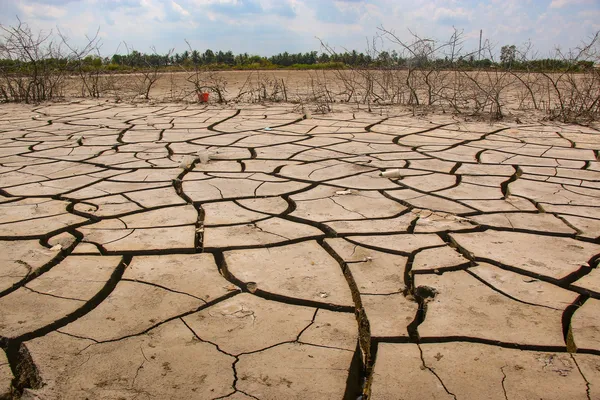
Meteorological and hydrological expert Nguyễn Ngọc Huy speaks to Việt Nam News reporter Thu Vân about forecasts pointing to a near-certain El Nino this year, warning that prolonged heatwaves, severe drought, saltwater intrusion and mounting pressure on agriculture, energy and water resources could pose major challenges for Việt Nam through 2027.
Meteorological and hydrological expert Nguyễn Ngọc Huy speaks to Việt Nam News reporter Thu Vân about forecasts pointing to a near-certain El Nino this year, warning that prolonged heatwaves, severe drought, saltwater intrusion and mounting pressure on agriculture, energy and water resources could pose major challenges for Việt Nam through 2027.
At Earth911, people often ask us, “Is shredded paper recyclable?” The answer is still “yes, but”—and how and where you can recycle it has changed a lot since our last update.
In 2024, 60% to 64% of paper and 69% to 74% of cardboard were recycled in the United States, according to the American Forest & Paper Association. U.S. mills used 32.7 million tons of recycled paper to make new products. Paper is one of the most recycled materials in the country, but shredded paper is an exception becau
At Earth911, people often ask us, “Is shredded paper recyclable?” The answer is still “yes, but”—and how and where you can recycle it has changed a lot since our last update.
In 2024, 60% to 64% of paper and 69% to 74% of cardboard were recycled in the United States, according to the American Forest & Paper Association. U.S. mills used 32.7 million tons of recycled paper to make new products. Paper is one of the most recycled materials in the country, but shredded paper is an exception because it is more complicated to recycle.
Why Shredded Paper Is Tricky to Recycle
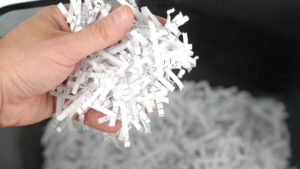
Paper is made of fibers, and longer fibers make paper more valuable for recycling. Each time paper is recycled, the fibers get shorter and lose value. Eventually, recycled paper is turned into tissue or toilet paper. Shredded paper is especially difficult to recycle, so many programs will not accept it.
Shredding accelerates fiber shortening and lowers the paper grade from high-grade to mixed-grade. Mixed-grade paper is still recyclable, but it ends up baled and processed into products like paper towels and packing paper. However, the smaller piece size creates real problems at material recovery facilities (MRFs). Loose shreds fall through sorting screens, jamming optical scanners that need a minimum piece size to identify materials correctly. Shredded paper often contaminates glass, plastic, and other streams. That’s why most programs require you bag shredded paper if they accept shredded paper at all.
The 2026 Curbside Reality: Check Before You Toss
Starting July 1, 2025, Oregon residents saw a change. Under Oregon’s Plastic Pollution and Recycling Modernization Act, shredded paper will no longer be accepted in curbside bins in counties like Clackamas. However, new recycling centers are being set up to take shredded paper. In the Portland metro area, shredded paper was also removed from curbside collection under new Extended Producer Responsibility rules, but new facilities are being built to handle it.
If your local program does accept shredded paper, you’ll almost always need to place it in a paper bag — a standard brown grocery bag works well — and label it clearly as “Shredded Paper” so recycling workers can sort it correctly. Only use a clear plastic bag if your facility explicitly instructs you to; otherwise the whole bag typically goes to the landfill.
One of the biggest changes for shredded paper recycling in 2025 and 2026 is the opening of special drop-off centers run by Producer Responsibility Organizations (PROs) in states with extended producer responsibility (EPR) laws.
Oregon’s RecycleOn Centers: At the RecycleOn Center in Ashland, the first of 144 planned statewide facilities under the Recycling Modernization Act, shredded paper is among the materials now collected, along with aluminum foil, expanded polystyrene, and other items that often contaminate curbside bins. The network began in Southern Oregon and is expanding to Deschutes County, with the Portland metro region expected to see new sites coming in 2026. Find local options at RecycleOn.org.
California, Colorado, Maine, and Minnesota have since passed similar EPR laws, and more states are expected to build comparable drop-off infrastructure for hard-to-recycle materials, including shredded paper.
Professional Shredding Events and Services
Businesses use paper shredders most often to protect confidential information. Many communities offer free shredding events, usually sponsored by banks, credit unions, or local government offices. The shredded paper from these events is reliably recycled instead of being sent to a landfill.
If you have a large amount of paper to shred, certified shredding services offer both security and environmental responsibility. For example, Iron Mountain shreds over 40,000 tons of material each month at its secure facilities and recycles it, helping save more than 4 million trees each year. Shred-it also recycles shredded materials whenever possible, following NAID AAA-certified processes. When choosing a shredding service, look for the NAID AAA designation to make sure your paper is recycled, not just destroyed.
Think Before You Shred
The best recycling strategy often starts before the shredder. In most cases, the information you want to delete is only on one line, such as a name or number. You can use a permanent marker to cover personal data; this ink is easily removed during recycling — then recycle the whole document intact. Intact paper has a higher value, is easier for MRFs to process, and is more likely to make it all the way through the recycling stream.
Only shred documents that really need it, like tax records, medical files, financial statements, or anything with full account numbers or Social Security numbers. For other papers, recycling the whole sheet is better for the environment.
If Recycling Isn’t an Option: Compost Or Reuse
Shredded paper is a great carbon source for composting because it is already partly broken down. You can add it to compost, but avoid glossy or heavily inked paper, which may have harmful chemicals. Mix shredded paper with food scraps, leaves, and other organic material for the best results. You can also reuse shredded paper as packing material or bedding for small animals like hamsters or rabbits, keeping it out of the trash.
Editor’s Note: Originally published on April 19, 2011, this article was updated in March 2026.
Scientists said dholes typically inhabit old-growth forests with minimal human disturbance. However, their range has continued to shrink due to habitat loss, declining prey populations and prolonged hunting pressure.
Scientists said dholes typically inhabit old-growth forests with minimal human disturbance. However, their range has continued to shrink due to habitat loss, declining prey populations and prolonged hunting pressure.
Fashion is a major sustainability challenge in the global economy, and for most of the last decade, it has faced little regulation. That is starting to change. In the past eighteen months, California passed the first U.S. law for extended producer responsibility (EPR) for textiles, France approved strict anti-fast-fashion laws, and the EU set a 2027 deadline for all member states to have a textile EPR program.
Every second, a garbage truck’s worth of clothing ends up in a landfill or is burned s
Fashion is a major sustainability challenge in the global economy, and for most of the last decade, it has faced little regulation. That is starting to change. In the past eighteen months, California passed the first U.S. law for extended producer responsibility (EPR) for textiles, France approved strict anti-fast-fashion laws, and the EU set a 2027 deadline for all member states to have a textile EPR program.
Every second, a garbage truck’s worth of clothing ends up in a landfill or is burned somewhere in the world. This isn’t just a figure of speech. The fashion industry produces about 92 million metric tons of waste each year, and if nothing changes, that number could reach 148 million metric tons by 2030.
Meanwhile, the resale market is growing about three times faster than traditional retail. The industry still has a long way to go, but for the first time, there are real systems in place to hold it accountable.
The Scale of the Problem
How big is fashion’s impact? It’s large, debated, and still growing. The fashion industry is responsible for 8 to 10 percent of global greenhouse gas emissions, according to the UN Environment Programme. While experts debate the exact numbers, everyone agrees the problem is getting worse.
The Apparel Impact Institute, a nonprofit supported by brands like H&M, Target, PVH, and Lululemon, reported that apparel sector emissions rose by 7.5 percent in 2023. This was the first yearly increase since 2019, and the group linked it to overproduction, ultra-fast fashion, and more use of virgin polyester, which now accounts for 57 percent of global fiber production.
No matter which numbers you believe, the trend is troubling. Each year, 80 to 100 billion new garments are made. Clothing production has doubled since 2000, and people now wear each item 36 percent fewer times before throwing it away. Synthetic fibers, mostly polyester made from fossil fuels, make up about 57 percent of global fiber production and are expected to increase.
The amount of water used in fashion is huge, even by industrial standards. Making one cotton T-shirt takes about 2,700 liters of water, which could provide drinking water for one person for 900 days. Producing a pair of jeans uses about 7,500 liters. Textile dyeing and treatment is the world’s second-largest source of water pollution, causing about 20 percent of industrial water pollution. ic clothing also sheds microplastics every time it’s washed. The IUCN has estimated that about 35 percent of primary microplastics in the ocean originate from synthetic textiles like polyester, nylon, and acrylic, though the total volume keeps rising as synthetic usage increases.
After technology manufacturing, garment production is still one of the industries most affected by modern slavery and child labor, according to International Labour Organization data. These problems are most common in the early stages of production, such as cotton farms, dye houses, and fabric mills, which are less visible than the brand-name factories.
Fast Fashion, Faster: The Shein and Temu Problem
In the last five years, a new category called ultra-fast fashion has emerged, making older models like Zara and H&M seem slow by comparison. Platforms such as Shein and Temu add thousands of new styles daily, produce items on demand in Chinese factories, and ship directly to customers around the world.
The environmental impact is severe. Shein’s own reports show its greenhouse gas emissions nearly doubled from 2022 to 2023, reaching 16.7 million metric tons of CO₂ equivalent. That’s almost as much as Inditex, Zara’s parent company, which is five times bigger by revenue. In 2024, Shein’s transportation emissions alone were over 8.5 million metric tons, more than three times Inditex’s. Temu hasn’t shared its emissions data, but third-party estimates put its yearly footprint between 4 and 6 million metric tons of CO₂e, mostly from shipping over a million air-freight parcels each day.
These business models not only pass environmental costs onto others, they rely on it. This is the main reason behind the push for new regulations.
The New Regulatory Landscape
For most of modern fashion history, sustainability promises have been voluntary, hard to verify, and mostly ineffective. That is finally starting to change. Three recent developments in the past eighteen months are especially important to watch..
Governor Gavin Newsom signed SB 707 into law in September 2024, making California the first U.S. state with extended producer responsibility for textiles. The law shifts responsibility for end-of-use management of apparel, footwear, and household textiles from consumers and municipalities to the companies that put the products on the market. Producers with less than $1 million in annual global revenue are exempt; everyone else must join a state-approved Producer Responsibility Organization (PRO) that will finance collection, repair, reuse, sorting, and recycling.
Implementation is staged. On February 27, 2026, CalRecycle selected Landbell USA as California’s textile PRO. Producers must register with the PRO by July 1, 2026. A statewide needs assessment runs through 2027, final implementing regulations are due by July 2028, and full enforcement begins July 1, 2030, with fines of up to $50,000 per day for noncompliance.
France’s Anti–Fast Fashion Law
In June 2025, the French Senate passed the most aggressive anti-fast-fashion legislation in the world by a vote of 337 to 1. The law imposes a per-item eco-tax starting at €5 and rising to €10 by 2030 (capped at 50 percent of retail price), bans advertising and influencer marketing of ultra-fast-fashion brands, requires point-of-sale environmental disclosures including carbon footprint and durability data, and carries fines of up to €100,000 for violating the ad ban. Revenue is directed to French sustainable-fashion producers.
The law is clearly aimed at Shein and Temu. In November 2025, French authorities requested that Shein’s fast-fashion platform be suspended for three months over the sale of illicit products — days after Shein opened its first physical retail store in Paris. The European Commission issued a detailed opinion on the French law in September 2025; other EU member states are watching.
The EU Waste Framework Directive
Under revisions to the EU Waste Framework Directive, every member state was required to have separate textile waste collection in place by January 2025 and must have a fully operational textile EPR scheme by 2027. France’s EPR program, which has been operating since 2008, and the Netherlands (2023) are already live. Italy, Spain, and others have draft decrees in public consultation. Outside the EU, Switzerland, Australia, and Chile are developing national frameworks.
In the U.S., beyond California, New York’s Fashion Sustainability and Social Accountability Act (A4631) and Senate Bill S3217A both carried into the 2026 session. Washington State introduced HB 1420 in January 2025; as of March 2026, it remains in committee. None of these have passed.
The Resale Market Is Doing What Regulation Hasn’t
While policymakers work on new rules, consumers are already changing their habits. ThredUp’s 2025 Resale Report says the U.S. secondhand clothing market grew by 14 percent in 2024, five times faster than traditional retail. It’s expected to reach $74 billion by 2029. Globally, the secondhand market could hit $367 billion by 2029, growing 2.7 times faster than the overall apparel market.
There is a clear generational divide. In 2024, 58 percent of U.S. consumers bought secondhand clothing. Among those aged 18 to 44, 48 percent now choose secondhand first when shopping for clothes. Thirty-nine percent of younger shoppers have bought secondhand items through social platforms like Instagram or TikTok Shop.
Resale alone won’t solve fashion’s environmental impact. Extending a garment’s life only helps if it replaces a new purchase. Still, this is the biggest shift in consumer behavior the industry has seen in a generation.
What Sustainable Fashion Actually Means
Sustainable fashion means having a supply chain that is responsible for both the environment and people at every stage. In practice, this includes using fibers that need less water, fewer chemicals, and create lower emissions; manufacturing with renewable energy; ensuring fair wages and safe working conditions; making products that last and can be repaired; and recycling materials into new clothes instead of turning them into insulation or sending them to landfills in places like Ghana or Chile.
It’s a long list, and no brand meets every standard. Still, more brands are making real progress. Patagonia, Eileen Fisher, and Pangaia share detailed impact reports that are checked by outside experts. Brands using leftover fabrics, made-to-order production, and closed-loop recycling are slowly growing. Certifications like Global Organic Textile Standard (GOTS) for organic fibers, Fair Trade Certified for labor, and bluesign for chemical management are meaningful when you see them on a label.
Fashion is still the most greenwashed part of the consumer goods industry. Words like “conscious,” “eco,” and “sustainable” aren’t regulated in the U.S. What really matters are specific certifications, published supply-chain data, and third-party audits—not marketing slogans.
Take Action At Home
Individual choices won’t fix fashion’s big problems, but they do influence demand. That demand can drive companies and lawmakers to make changes. Here are some practical steps, ranked by impact:
Buy less, buy better. The single most impactful choice is reducing the amount of new clothing entering your closet. A capsule wardrobe of durable, versatile pieces worn many times beats any “sustainable” label on a fast-fashion cycle.
Shop secondhand first. ThredUp, Poshmark, Depop, The RealReal, Vinted, and local thrift and consignment stores now offer selection and convenience comparable to traditional retail.
Get familiar with clothing materials. Natural fibers like organic cotton, linen, hemp, and wool usually have a smaller environmental impact at the end of their life than synthetics. Recycled polyester is better than new polyester, but it still releases microfibers.
Use a microfiber filter. Tools like the Guppyfriend wash bag or washing machine filters can catch a lot of synthetic microfibers before they enter the water system.
Repair before replacing. Visible mending, basic tailoring, and simple patches can extend a garment’s life by years.
Take care of your clothes so they last longer. Wash them in cold water, air-dry when you can, and avoid the dry cleaner unless it’s necessary. These steps help reduce emissions and wear on your clothes.
Recycle clothes instead of throwing them away. When something can’t be worn anymore, look for textile recycling options using Earth911’s recycling locator or a store take-back program. Sending clothes to a landfill should be the last resort.
Support new policies. Laws about textile EPR, supply-chain transparency, and anti-greenwashing are being considered in many states. These laws are more likely to pass when people contact their representatives.
Fashion is one of the most obvious ways the global economy affects our daily lives. Because it’s so visible, everyone is part of the problem—but it also means that when change happens, it’s easy to notice.
Editor’ Note: Originally written by Gemma Alexander on April 8, 2022, this article was substantially updated in April 2026.
Following an £8m investment over five years, The University of Manchester is set to lead an innovative centre funded by the Economic and Social Research Council (ESRC) and UKRI as part of its strategic focus on building a green future. The Centre for Joined Up Sustainability Transformations (JUST) will accelerate the understanding of a just transition by coordinating research into action at all levels of society.
Following an £8m investment over five years, The University of Manchester is set to lead an innovative centre funded by the Economic and Social Research Council (ESRC) and UKRI as part of its strategic focus on building a green future. The Centre for Joined Up Sustainability Transformations (JUST) will accelerate the understanding of a just transition by coordinating research into action at all levels of society.
The Coney Island Creek dune planting project started in 2021, with the goal of increasing coastal resilience and giving community members hands-on experience protecting their environment.
The Coney Island Creek dune planting project started in 2021, with the goal of increasing coastal resilience and giving community members hands-on experience protecting their environment.
Out of 52 climate targets needed to reach net zero by 2050, only six are on track or have been met. The other 46 are behind, failing, or marked as Code Red. This is according to the Speed & Scale tracker, a detailed public scorecard that measures if the global economy is cutting emissions fast enough.
The tracker is part of an initiative started in 2021 by investor John Doerr, known for backing Google and Amazon early on. He used Silicon Valley’s Objectives and Key Results method to tackle t
Out of 52 climate targets needed to reach net zero by 2050, only six are on track or have been met. The other 46 are behind, failing, or marked as Code Red. This is according to the Speed & Scale tracker, a detailed public scorecard that measures if the global economy is cutting emissions fast enough.
The tracker is part of an initiative started in 2021 by investor John Doerr, known for backing Google and Amazon early on. He used Silicon Valley’s Objectives and Key Results method to tackle the climate crisis. The 2026 edition comes with a new letter from Doerr called “Let’s Build, Friends, Build,” a call to focus on the need to build solutions. As he puts it, pledges alone won’t cool the planet—real progress comes from cutting emissions.
How the Tracker Works
Speed & Scale breaks down decarbonization into 10 main goals, such as electrifying transportation and investing in clean energy. Each goal has measurable key results with targets for 2035 and 2050. Progress is rated on a five-level scale, from Achieved to Code Red. Code Red is the worst rating and is given to areas with over 3 gigatons of yearly emissions and little or no progress.
The 2026 update now uses Climate TRACE, a satellite and AI system, instead of UN country reports to measure emissions. This change raised the baseline from 59 gigatons in 2019 to 74 gigatons in 2024. The increase is not due to a sudden jump in emissions, but because TRACE finds fossil-fuel activity that country reports often miss. Atmospheric CO₂ is now at 429 parts per million, which is about 53 percent higher than before the industrial era.
Where Cost Curves Are Winning
The key results that are on track have one thing in common: clean technology has become the cheaper choice. Electric vehicles show this best. There were about one million EVs on the road ten years ago, but now there are over 50 million. EVs make up more than 20 percent of new car sales worldwide and over half in China. In the first nine months of 2025, enough solar and wind power was built to stop the growth of fossil fuels in electricity. According to BloombergNEF, solar costs have fallen by 84 percent since 2010.
There are now three million more clean-energy jobs than fossil-fuel jobs worldwide, according tothe International Energy Agency. For the 249 Fortune Global 500 companies that report their direct emissions (Scope 1 and 2), those emissions have dropped by 23 percent since 2019. However, Scope 3 emissions, which include supply chain and product use, make up about 95 percent of their total and are not decreasing as quickly.
Code Red: Where the Cost Curve Hasn’t Bent
Methane emissions from oil and gas operations are still going up, even though the IEA says 75 percent could be cut using current technology, often at a net savings. Methane is about 80 times more powerful than CO₂ over 20 years, making it the most cost-effective way to cut emissions, yet progress is going in the wrong direction.
BuildingMost building heating and cooling still relies on fossil fuels, even as a million new buildings are added each month. Heavy industry is also behind: there are no commercial-scale zero-carbon steel plants and only one net-zero cement facility in the world. The tracker says we need 700 steel and 300 cement plants by 2035. Industrial agriculture and livestock are also rated Code Red. Carbon removal is far behind too—by 2025, just over one million metric tons have been removed, according to CDR.fyi, but the plan calls for 14 billion tons per year by 2050.
Where Each Objective Stands
Goal
On Track
Not On Track
Electrify Transportation
Cars
Planes and ships failing
Decarbonize the Grid
Solar & wind
Methane and buildings Code Red
Fix Food
None on track
Farming and meat Code Red
Protect Nature
Gradual
18 soccer fields of tropical forest lost per minute in 2024
Clean Up Industry
Pilots only
Steel, cement, plastics all Code Red or failing
Remove Carbon
Afforestation
Scale roughly 10,000x short
Politics & Policy
EU NDC aligned
U.S. has no national commitment; carbon pricing failing
Movements → Action
Clean-energy jobs achieved
Voter salience, air quality, education lagging
Innovate
Electricity and EV costs
Industrial heat, steel, cement, hydrogen all failing
Invest
None on track
Fossil-fuel subsidies still exceed clean-energy incentives
The Build Imperative — and the 1.5°C Verdict
In his new letter, Doerr says the climate challenge is now shaped by three main forces: rising demand for electricity, the global politics of clean-tech manufacturing, and falling costs thanks to market forces. He writes, “We cannot cut fossil fuels without building the alternative.” The updated tracker shows this change. While the 2021 plan focused on percentage reductions, the 2026 version spells out what needs to be built: 600 million EVs, 700 zero-carbon steel mills, and 30,000 TWh of solar and wind power.
Doerr also shares the toughest update: Speed & Scale now says keeping global warming to 1.5°C is no longer possible. Five more years of rising emissions have used up the remaining carbon budget. The new goal is to stay below 2°C, with the U.S., EU, and China aiming for net zero by 2050.

 Login
Login