Normal view

  • ✇Inkspill
  • Saturday Spill: Tilley Watch Online, The Week Of April 27 – May 1, 2026, With A Gallery Of Graduation Cartoons michael
    Tilley Watch Online, The Week of April 27–May 1, 2026 An end of the week listing of New Yorker artists whose work has appeared on newyorker.com features Daily Cartoon: Lynn Hsu, Enrico Pinto, (the duo of) Sophie Lucido Johnson and Sammi Skolmoski, Sarah Kempa, Hilary Campbell. See them here (in a slideshow). Barry Blitt’s Kvetchbook: “Charles And Donald See Eye To Eye”   _________________________ Pomp And Circumstance: A slideshow of graduation cartoons (the below, from the great Warren Miller,
     

Saturday Spill: Tilley Watch Online, The Week Of April 27 – May 1, 2026, With A Gallery Of Graduation Cartoons

2 May 2026 at 13:32

Tilley Watch Online, The Week of April 27–May 1, 2026

An end of the week listing of New Yorker artists whose work has appeared on newyorker.com features

Daily Cartoon: Lynn Hsu, Enrico Pinto, (the duo of) Sophie Lucido Johnson and Sammi Skolmoski, Sarah Kempa, Hilary Campbell. See them here (in a slideshow).

Barry Blitt’s Kvetchbook: “Charles And Donald See Eye To Eye”


_________________________

Pomp And Circumstance: A slideshow of graduation cartoons (the below, from the great Warren Miller,* is just one of many in this online special feature.

____________________________________________________________________________

*Warren Miller’s A-Z Entry:

Warren Miller (photo by Liza Donnelly, NYC, Sept. 1997) Born 1936, Chicago, Ill. The following biographical information comes from The Phoenix Gallery site which hosted a group exhibit of NYer cartoonists work (Lorenz, Harris, Modell, and Miller) in 2007: “Warren Miller studied commercial and fine art at the American Academy of Art, Chicago. He started selling cartoons to Playboy and The New Yorker in 1961 and moved to New York City later that year. Miller’s work has also appeared in Esquire, Punch, Rolling Stone, Audubon, Harvard Business Review, Barrons, Time, Newsweek, The New York Times, and the London Sunday Times. Mr. Miller is a painter and a sculptor as well. He has exhibited his work in a number of shows in the New York area and in the Midwest.” Key collections: All Thumbs (Bobbs-Merrill,1967); Prince and Mrs. Charming (Bobbs-Merril, 1970). New Yorker work: 1959 -.


The post Saturday Spill: Tilley Watch Online, The Week Of April 27 – May 1, 2026, With A Gallery Of Graduation Cartoons first appeared on Inkspill.

Friday Spill: Polly Lou Adams Guests On The Latest Cartoon Caption Contest Podcast; A New Yorker State Of Mind On The issue Of April 25, 1936; Article Of Interest…Guy Richards Smit; Live Interview Of Interest: Liza Donnelly On Radio Free Rhinecliff

1 May 2026 at 11:28

Polly Lou Adams Guests On The Latest Cartoon Caption Contest Podcast

Polly Lou Adams (upper left in the photo), who began contributing to The New Yorker in June of 2025, joins two of four CCCP co-hosts, Paul Nesja (upper right) and Nicole Chrolavicius. It’s Episode #249 for those keeping track. Listen here. 

Visit Polly Lou Adams website here. ___________________________________________________________________

A New Yorker State Of Mind Digs Into The Issue Of April 25, 1936


A New Yorker State of Mind: Reading Every Issue of The New Yorker Magazine continues its good work

Read it here. 

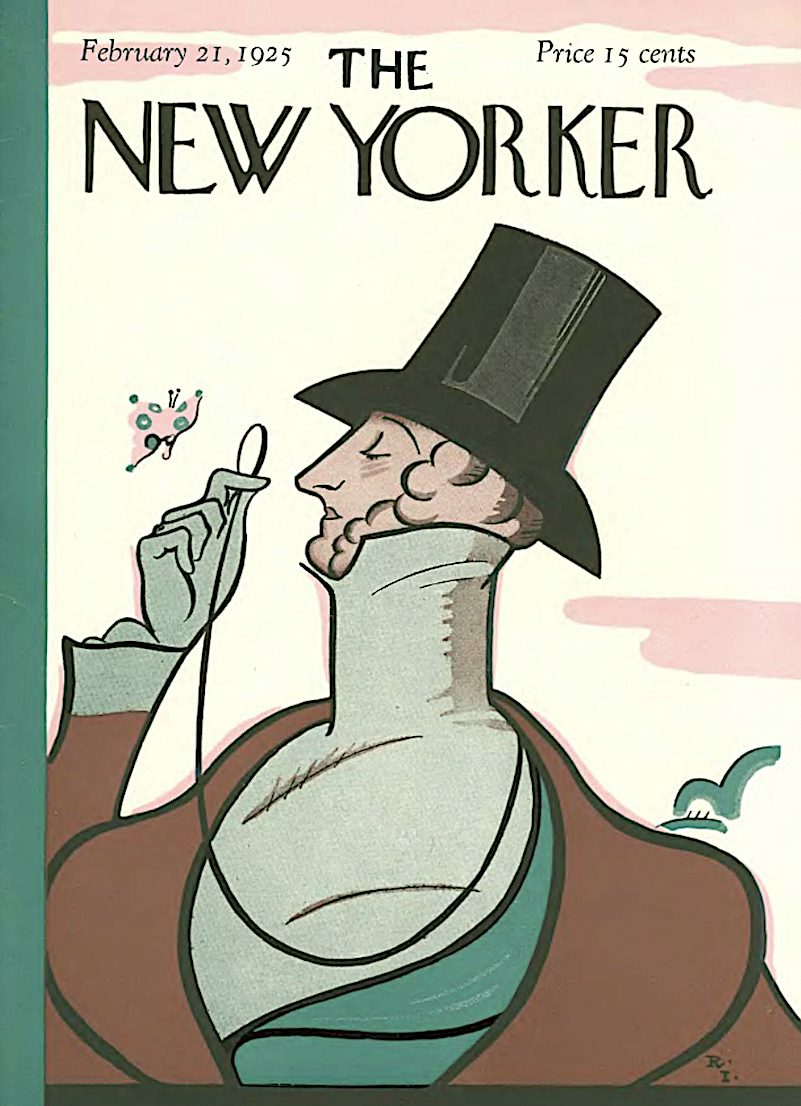
Cover by Rea Irvin: Born, San Francisco, 1881; died in the Virgin Islands,1972. Irvin was the cover artist for the New Yorker’s first issue, February 21, 1925. He was the magazine’s first art and only art supervisor (some refer to him as its first art editor) holding the position from 1925 until 1939 when James Geraghty assumed the title of art editor. Irvin then became art director and remained in that position until William Shawn officially succeeded Harold Ross in early 1952. Irvin’s last original work for the magazine was the magazine’s cover of July 12, 1958. The February 21, 1925 Eustace Tilley cover had been reproduced every year on the magazine’s anniversary until 1994, when R. Crumb’s Tilley-inspired cover appeared. Tilley has since reappeared, with other artists substituting from time-to-time. Number of New Yorker covers (not including the repeat appearances of the first cover every anniversary up to 1991): 179. Number of cartoons contributed: 261. 

____________________________________________________________________________

Article Of Interest…Guy Richards Smit

From The Creative Independent, April 30, 2026, Mr. Smit’s  conversation with Brandon Stosay. 

Guy Richards Smit began contributing to The New Yorker in 2022.


____________________________________________________________________________

Live Interview Of Interest: Liza Donnelly On Radio Free Rhinecliff

Liza Donnelly, long-time New Yorker contributor, and filmmaker (Women Laughing) will be live today at 5 on Radio Free Rhinecliff. Listen here.  


Photo: Eric Korenman


The post Friday Spill: Polly Lou Adams Guests On The Latest Cartoon Caption Contest Podcast; A New Yorker State Of Mind On The issue Of April 25, 1936; Article Of Interest…Guy Richards Smit; Live Interview Of Interest: Liza Donnelly On Radio Free Rhinecliff first appeared on Inkspill.
  • ✇Inkspill
  • Thurber Thursday: “His People Simply Happen” michael
    “His People Simply Happen”   In a 1989 collection, Conversations With James Thurber (University Press of Mississippi) edited by Thomas Fensch, there’s a terrif article, “Melancholy Doodler,” by Arthur Millier (it originally appeared in The Los Angeles Times Sunday Magazine, July 2, 1939). Thurber was forty-four at the time, and in the last year of the best decade of his life, drawings-wise. His eyesight, by May of ’39, had already worsened  to the point of his “struggling to type, read, and dr
     

Thurber Thursday: “His People Simply Happen”

30 April 2026 at 12:04

“His People Simply Happen”


In a 1989 collection, Conversations With James Thurber (University Press of Mississippi) edited by Thomas Fensch, there’s a terrif article, “Melancholy Doodler,” by Arthur Millier (it originally appeared in The Los Angeles Times Sunday Magazine, July 2, 1939). Thurber was forty-four at the time, and in the last year of the best decade of his life, drawings-wise. His eyesight, by May of ’39, had already worsened  to the point of his “struggling to type, read, and draw.”

The article makes no mention of Thurber’s eyesight or his struggles — it rolls along as if all’s well in Thurberland. Here are just a few quotes from the piece (I’d run the whole thing, but don’t want to get into a copyright muddle).

Thurber speaking to Millier:

“You are probably the only person in America who knows I write.” he said bitterly. “They all say: ‘Oh yes, Thurber?–the guy makes those crazy drawings?'”

“i’m not an artist. I’m a painstaking writer who doodles for relaxation. But it’s those doodles they go for…They’ve even labeled me a Dadiast and a surrealist…”

“I almost never have a piece of writing turned down [by The New Yorker]. They print them all — but who reads them? Whereas my drawings — the things people know me for — are often turned down.”

“Captions can make a drawing. Some of my drawings lie around the office for years — waiting for an inspired line.”

Finally, here’s Millier talking about Thurber’s drawings:

“When Thurber begins a drawing of these curious yet strangely familiar people, he rarely knows what they will look like or do. He just lets his hand move with a pencil in it. His people simply happen…”

__________________

–The undated drawing above can be found at Vassar’s Francis Lehman Loeb Art Center.  ________________

James Thurber’s A-Z Entry:

James Thurber Born, Columbus, Ohio, December 8, 1894. Died 1961, New York City. New Yorker work: 1927 -1961, with several pieces run posthumously. According to the New Yorker’s legendary editor, William Shawn, “In the early days, a small company of writers, artists, and editors — E.B. White, James Thurber, Peter Arno, and Katharine White among them — did more to make the magazine what it is than can be measured.”

Key cartoon collection: The Seal in the Bedroom and Other Predicaments (Harper & Bros., 1932). Key anthology (writings & drawings): The Thurber Carnival (Harper & Row, 1945). There have been a number of Thurber biographies. Burton Bernstein’s Thurber (Dodd, Mead, 1975) and Harrison Kinney’s James Thurber: His Life and Times (Henry Holt & Co., 1995) are essential. Website

The post Thurber Thursday: “His People Simply Happen” first appeared on Inkspill.

Wednesday Spill: National Cartoonists Society Announces Finalists; Liza Donnelly In Conversation With Andy Borowitz, Live Today At 3; Hilary Campbell’s Cartoon Strips

29 April 2026 at 13:36

National Cartoonists Society Announces Finalists


Photos, top row: Joe Dator, Amy Hwang, Tom Toro; middle row: Jason Chatfield, Tom Chitty; bottom row: Liniers, Garry Trudeau


A number of New Yorker contributors are finalists for this years NCS awards. Joe Dator, Amy Hwang, and Tom Toro are the finalists in the single panel group. Jason Chatfield is one of three finalists for Book Illustration. Tom Chitty is one of the three finalists in the Book and Magazine Illustration category. Liniers and Garry Trudeau are among the Newspaper Strip finalists.

The full slate of nominees for the 2026 awards, and more info on the awards themselves can be found here.

Congrats to all!

_______________________________________________________________________

Liza Donnelly In Conversation With Andy Borowitz Today, Live At 3 (EST). 

Andy Borowitz, of the popular Borowitz Report will be a guest on long-time New Yorker contributor (and now filmmaker) Liza Donnelly’s Substack, Seeing Things, today at 3 (EST).

Liza Donnelly’s website.

More about Andy Borowitz.

______________________________________________________________

Hilary Campbell’s Cartoon Strips

Hilary Campbell has announced the first of a new monthly show at the Greenpoint Comedy Club.This first one includes her fellow New Yorker contributor, Emily Flake.

The post Wednesday Spill: National Cartoonists Society Announces Finalists; Liza Donnelly In Conversation With Andy Borowitz, Live Today At 3; Hilary Campbell’s Cartoon Strips first appeared on Inkspill.

Tuesday Spill: Exhibit Of Interest…Mick Stevens To Show Work On Martha’s Vineyard; A New Yorker State Of Mind Looks At the Issue of April 18, 1936

28 April 2026 at 12:26

Exhibit Of Interest: Mick Stevens to Show Work On Martha’s Vineyard 

Mick Stevens, who began contributing to The New Yorker in December of 1979, tells the Spill that:

“There’s a show of a dozen or so of my older original New Yorker drawings here at The Martha’s Vineyard Playhouse in Vineyard Haven. The show will run for the entire month of May. The artist will be lurking there from time to time.”

Here’s a personal fave New Yorker drawing by Mr. Stevens (not sure this will be included in the exhibit) :

_____________________________________________________________________________

Some Stevens Cartoon Collections…


___________________________________________________________________________

A New Yorker State Of Mind Looks At The Issue Of April 18, 1936

Such fun New Yorker time traveling via the weekly New Yorker State of Mind posts.

This week: the issue of April 18, 1936.

Read it here!

Cover by the one-and-only Rea Irvin.


The post Tuesday Spill: Exhibit Of Interest…Mick Stevens To Show Work On Martha’s Vineyard; A New Yorker State Of Mind Looks At the Issue of April 18, 1936 first appeared on Inkspill.
  • ✇Inkspill
  • Monday Tilley Watch, The New Yorker Issue Of May 4, 2026 michael
    The Monday Tilley Watch takes a glancing look at the art and artists of the latest issue of The New Yorker The Cartoonists and Cartoons Thirteen cartoons, thirteen cartoonists. No newbies. No duos, that we know of. The longest active contributing cartoonist in the issue is this cartoonist (my drawing of a fife-playing bear appears on the Cartoon Caption Contest page with this week’s winning caption). This week’s cartoons (in a slideshow) This week’s Cartoon Caption Contest (Robert Leighton pro
     

Monday Tilley Watch, The New Yorker Issue Of May 4, 2026

27 April 2026 at 10:53

The Monday Tilley Watch takes a glancing look at the art and artists of the latest issue of The New Yorker

The Cartoonists and Cartoons

Thirteen cartoons, thirteen cartoonists. No newbies. No duos, that we know of. The longest active contributing cartoonist in the issue is this cartoonist (my drawing of a fife-playing bear appears on the Cartoon Caption Contest page with this week’s winning caption).

This week’s cartoons (in a slideshow)

This week’s Cartoon Caption Contest (Robert Leighton provides the latest contest drawing).

_______________________________________________________________________

The Rea Irvin Talk Watch

Way back in 2017, Rea Irvin’s 92 year old Talk design (shown here) was yanked and replaced by…I can’t even believe I’m writing this: a redrawn version by a contemporary illustrator. The Spill continues to hope that Mr. Irvin’s work returns. Read more here.

_________________________________________________________

Rea Irvin’s A-Z Entry:

Rea Irvin (pictured above. Self portrait above from Meet the Artist) Born, San Francisco, 1881; died in the Virgin Islands,1972. Irvin was the cover artist for the New Yorker’s first issue, February 21, 1925. He was the magazine’s first art and only art supervisor (some refer to him as its first art editor) holding the position from 1925 until 1939 when James Geraghty assumed the title of art editor. Irvin then became art director and remained in that position until William Shawn officially succeeded Harold Ross in early 1952. Irvin’s last original work for the magazine was the magazine’s cover of July 12, 1958. The February 21, 1925 Eustace Tilley cover had been reproduced every year on the magazine’s anniversary until 1994, when R. Crumb’s Tilley-inspired cover appeared. Tilley has since reappeared, with other artists substituting from time-to-time. Number of New Yorker covers (not including the repeat appearances of the first cover every anniversary up to 1991): 179. Number of cartoons contributed: 261.

The post Monday Tilley Watch, The New Yorker Issue Of May 4, 2026 first appeared on Inkspill.
  • ✇Inkspill
  • Sunday Spill: A New Yorker State Of Mind On The Issue Of April 11, 1936 michael
    A New Yorker State Of Mind Digs Into The Issue Of April 11, 1936   A New Yorker State Of Mind: Reading Every Issue Of The New Yorker: always fun, always interesting reading. This week: the issue of April 11, 1936. Read it here.  Cover by Helen Hokinson. Her A-Z Entry:   Helen Hokinson (above) Born, Illinois,1893; died, Washington, D.C., 1949. New Yorker work: 1925 -1949, with some work published posthumously. All of Hokinson’s collections are wonderful, but here are two favorites. Her first c
     

Sunday Spill: A New Yorker State Of Mind On The Issue Of April 11, 1936

26 April 2026 at 12:42

A New Yorker State Of Mind Digs Into The Issue Of April 11, 1936


A New Yorker State Of Mind: Reading Every Issue Of The New Yorker: always fun, always interesting reading.

This week: the issue of April 11, 1936. Read it here. 

Cover by Helen Hokinson.

Her A-Z Entry:


Helen Hokinson (above) Born, Illinois,1893; died, Washington, D.C., 1949. New Yorker work: 1925 -1949, with some work published posthumously. All of Hokinson’s collections are wonderful, but here are two favorites. Her first collection: So You’re Going To Buy A Book! (Minton, Balch & Co, 1931) and what was billed as “the final Hokinson collection”: The Hokinson Festival (Dutton & Co., 1956). According to a New Yorker document produced during Harold Ross’s editorship (1925-1951) rating their artists, Ms. Hokinson and Peter Arno occupied a special category unto themselves above all others.

_________________________________________________________________


The post Sunday Spill: A New Yorker State Of Mind On The Issue Of April 11, 1936 first appeared on Inkspill.
  • ✇Inkspill
  • Saturday Spill: Al Frueh’s Terrif Love Letter; The Tilley Watch Online, April 20-24, 2026 michael
    Al Frueh’s Terrif Love Letter In 1913, long before Al Frueh (pronounced “free”) became a fixture at The New Yorker, he designed the above letter for his wife. Read all about it here. Mr Frueh was a cover artist, as well as a cartoonist, contributing 201 cartoons during his 34 years at the magazine. Of note: he had the very first cartoon in the very first issue of The New Yorker. His one-and-only New Yorker cover, dated February 28, 1925, was the magazine’s second: He will most likely be reme
     

Saturday Spill: Al Frueh’s Terrif Love Letter; The Tilley Watch Online, April 20-24, 2026

25 April 2026 at 12:09

Al Frueh’s Terrif Love Letter

In 1913, long before Al Frueh (pronounced “free”) became a fixture at The New Yorker, he designed the above letter for his wife. Read all about it here.

Mr Frueh was a cover artist, as well as a cartoonist, contributing 201 cartoons during his 34 years at the magazine. Of note: he had the very first cartoon in the very first issue of The New Yorker. His one-and-only New Yorker cover, dated February 28, 1925, was the magazine’s second:

He will most likely be remembered for his theater drawings (accompanying the magazine’s theater reviews):

__________________________________________________________________________

Tilley Watch Online, April 20 – 24, 2026

Daily Cartoon: Ben Schwartz, Harriet Burbeck, Kyle Bravo, Felipe Galindo (bonus drawing), Tom Toro, Maggie Larson.

Barry Blitt’s Kvetchbook:Happy Earth Day (To Those Who Celebrate)”


The post Saturday Spill: Al Frueh’s Terrif Love Letter; The Tilley Watch Online, April 20-24, 2026 first appeared on Inkspill.

Friday Spill: Simon Fieldhouse’s Latest 3D Portrait Sculpture: Peter Arno; Frank Cotham Returns As Cartoon Caption Contest Podcast Guest; Paul Karasik Presents…

24 April 2026 at 12:10


Simon Fieldhouse’s Latest 3D Portrait Sculpture: Peter Arno

Next up in artist Simon Fieldhouse‘s New Yorker series: Peter Arno. See the sculpture in various settings here.

And here are his other New Yorker 3D sculptures:

Eustace Tilley

Harold Ross

Saul Steinberg

To see all of his 3D sculptures, go here.

___________________________________________________________________

Frank Cotham Returns As Guest On Cartoon Caption Contest Podcast

Frank Cotham, who began contributing to The New Yorker in 1993, returns to the CCCP in this episode (#248 for those keeping track). Listen here.

photo: clockwise, from top left…Frank Cotham, then the co-hosts Paul  Nesja, Vin Coca, Nicole Chrolavicius, Beth Lawler. 

_____________________________________________________________

Paul Karasik Presents…

From The Vineyard Gazette, April 23, 2026, “Film Noir Takes Center Stage” — this piece on films and Mr. Karasik, who began contributing to The New Yorker  in 1999.  Visit his website here.


_____________________________________________________________

The post Friday Spill: Simon Fieldhouse’s Latest 3D Portrait Sculpture: Peter Arno; Frank Cotham Returns As Cartoon Caption Contest Podcast Guest; Paul Karasik Presents… first appeared on Inkspill.

Thurber Thursday: New Additions to The Spill Library; Attempted Bloggery On A Recently Auctioned Thurber Drawing

23 April 2026 at 12:01

New Addition(s) To The Spill Library

With the arrival this week of the Armed Services edition of Thurber’s masterpiece, My Life And Hard Times, the Spill library has moved closer to a completing the Thurber Armed Services editions. Just The Thurber Carnival and Is Sex Necessary remain. All in good time! (I’m in no hurry).

Read more about the Armed Services editions here.

below: the other Thurber titles in the Spill library


_______________________________________________________________________

Also this week

Some time back I posted the above photo of the well-used (tattered?) dust jacket covering my copy of Burton Bernstein’s Thurber: A Biography. I bought this copy in 1975, the year it was published, when I was in my last year of college, diving deep into The New Yorker‘s history. I’ve read Mr. Bernstein’s book through and through, again and again (and it shows). Each time the book comes off the shelf I imagine the jacket loses a small piece or two (I’ve been patching it for years).

Strolling through the internet the other day I was so pleased to see a copy of Mr. Bernstein’s book in near new condition (price paid: $3.85). My 51 year old copy can now take it easy; from now on this “new” one will do the heavy lifting.

________________________________________________-

Attempted Bloggery On A Recently Auctioned Thurber Original 

A Spill fave site, Attempted Bloggery, is all over the recently auctioned Thurber original shown above. Read it here!

________________________________________________________________

James Thurber’s A-Z Entry

James Thurber Born, Columbus, Ohio, December 8, 1894. Died 1961, New York City. New Yorker work: 1927 -1961, with several pieces run posthumously. According to the New Yorker’s legendary editor, William Shawn, “In the early days, a small company of writers, artists, and editors — E.B. White, James Thurber, Peter Arno, and Katharine White among them — did more to make the magazine what it is than can be measured.”

Key cartoon collection: The Seal in the Bedroom and Other Predicaments (Harper & Bros., 1932). Key anthology (writings & drawings): The Thurber Carnival (Harper & Row, 1945). There have been a number of Thurber biographies. Burton Bernstein’s Thurber (Dodd, Mead, 1975) and Harrison Kinney’s James Thurber: His Life and Times (Henry Holt & Co., 1995) are essential. Website


The post Thurber Thursday: New Additions to The Spill Library; Attempted Bloggery On A Recently Auctioned Thurber Drawing first appeared on Inkspill.
Received — 1 May 2026 Comics Cartoons
  • ✇Cartoon Research
  • The 75th Anniversary of “Rabbit Fire” Michael Lyons
    There are a number of iconic moments from classic cartoons, and Rabbit Fire has a lot of them. This month marks the 75th anniversary of the first time Bugs Bunny, Daffy Duck, and Elmer Fudd began a feud in this Warner Bros. short that has gone down in the annals of animation history. Rabbit Fire opens with one of those iconic moments, as Elmer Fudd carefully makes his way through the forest, shotgun in hand, and turns to the camera to inform the audience, “Be vewy vewy quiet, I’m hunting rabbi
     

The 75th Anniversary of “Rabbit Fire”

1 May 2026 at 07:01

There are a number of iconic moments from classic cartoons, and Rabbit Fire has a lot of them.

This month marks the 75th anniversary of the first time Bugs Bunny, Daffy Duck, and Elmer Fudd began a feud in this Warner Bros. short that has gone down in the annals of animation history.

Rabbit Fire opens with one of those iconic moments, as Elmer Fudd carefully makes his way through the forest, shotgun in hand, and turns to the camera to inform the audience, “Be vewy vewy quiet, I’m hunting rabbits.”

Tracks lead to the rabbit hole of one “B. Bunny” (stated on his mailbox), but it turns out that Daffy Duck is making the tracks with a pair of fake rabbit feet.

Elmer tries to hunt Bugs who is trying to convince Elmer that he should instead be hunting Daffy, in the now iconic “Duck Season! Wabbit Season!” exchange between the two. This results in Daffy getting blasted by the shotgun and his bill being shifted in hilarious, precarious positions (more cartoon iconography).

They dress up and imitate each other to throw Elmer off, and Bugs dresses in drag (another iconic gag used in this and future shorts) as a female hunter with Daffy as his dog. When Elmer eventually sees through this, Bugs and Daffy begin tearing “Rabbit Season” and “Duck Season” posters off a nearby tree (again, iconic), eventually revealing one that reads: “Elmer Season.”

With a vicious glare, the two turn the tables and begin hunting the hunter, ending the short by stating: “Be vewy, vewy quiet. We’re hunting Elmers.”

Rabbit Fire came to be courtesy of the genius of two legends, who teamed up quite a bit at Warner Bros.: director Chuck Jones (billed here as “Charles M. Jones”) and writer Michael Maltese. Jones and Maltese created memorable sight gags, slowing the animation down for pauses, and allowing the audience to anticipate the laughs.

All of it delivered perfectly by Mel Blanc as Bugs and Daffy and Arthur Q. Bryan as Elmer.

In one sequence, Bugs tries to get Elmer interested in sports other than hunting, at which point, Daffy emerges, dressed in whites with a racquet in his hand, asking, “Anyone for tennis?” Elmer immediately shoots him, the smoke clears, and a scorched Daffy wearily declares, “Nice game!”

The comic timing in Rabbit Fire rivals anything seen in live action.

Adding to the brilliance of the short are backgrounds by Phillip DeGuard, and animation from Lloyd Vaughan, Ken Harris, Phil Monroe, and Ben Washam.

Following Rabbit Fire’s success, Bugs, Daffy, and Elmer teamed up again for two more short subjects, Rabbit Seasoning (1952) and Duck! Rabbit! Duck! (1953). Collectively, these cartoons have become referred to as “The Hunting Trilogy.”

The second of these, Rabbit Seasoning, came in at number 30 in our own Jerry Beck’s 1994 book, The 50 Greatest Cartoons. In it, author Joe Adamson notes: “The dialogue in these cartoons, savored by connoisseurs for years, was an element singled out for praise by Boxoffice as soon as the first of the trilogy appeared. Since Carl Stalling wrote the scores, there are now published pieces of music entitled ‘Rabbit Season,’ ‘Duck Season,’ ‘Elmer Season,’ and ‘Pronoun Trouble.’

The levels of irony, role-playing, role reversal, and slapstick that rebound, highlight, overlap, intensify, and ricochet off each other in all three of these cartoons have been the subject of endless analysis.”

Released on May 19, 1951, Rabbit Fire remains a shining moment in the Golden Age of Looney Tunes.

  • ✇Cartoon Research
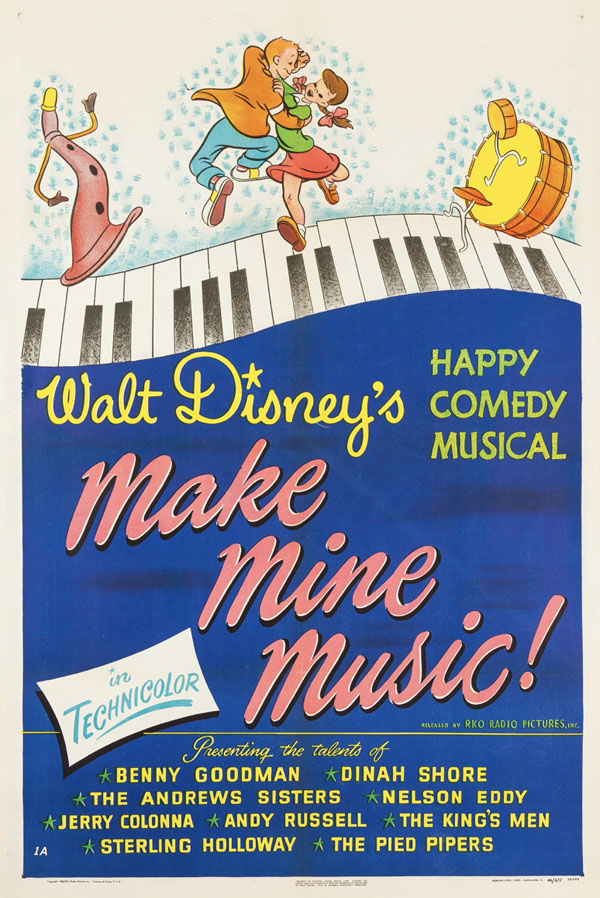
  • The 80th Anniversary of Make Mine Music Michael Lyons
    When Make Mine Music opened in 1946, The New York Post called it “…a veritable vaudeville show, a three-ring circus, and grand opera thrown together into one technical masterpiece.” It may be the best description for this film made during a difficult time for Walt Disney and his Studio. Between an animators’ strike, and America’s involvement in World War II, production at the Studio had been a challenge during most of the 1940s. Walt kept animation production going during this period by producin
     

The 80th Anniversary of Make Mine Music

24 April 2026 at 07:01

When Make Mine Music opened in 1946, The New York Post called it “…a veritable vaudeville show, a three-ring circus, and grand opera thrown together into one technical masterpiece.”

It may be the best description for this film made during a difficult time for Walt Disney and his Studio. Between an animators’ strike, and America’s involvement in World War II, production at the Studio had been a challenge during most of the 1940s.

Walt kept animation production going during this period by producing lower-budgeted, easy-to-execute films, known as “package films,” which didn’t have a traditional plot but instead were a series of short subjects strung together during a feature-length running time.

One of these was Make Mine Music, with a common theme among the segments being that each was set to a particular piece of music. As each is so vastly different, the Post’s description of the film is appropriate.

The film plays with the Fantasia formula, opening like a concert complete with a program that reads: “Make Mine Music: A Musical Fantasy.”

From here, the film segues to the first section of the film, “The Martins and the Coys” (billed on the program as “A Rustic Ballad”), narrated by the singing group The King’s Men, as it tells the musical tale of two feuding mountain families.

After this, the Ken Darby Chorus performs the title song, “Blue Bayou.” The slow-paced music features accompanying visuals of a nighttime bayou as a bird takes flight, in a sequence that reuses animation intended for a sequel to 1940’s Fantasia, originally intended to accompany the musical composition “Clair de lune.”

Next up is Benny Goodman and his Orchestra with “All the Cats Join in.” Two “hepcat bobbysoxer” teens of the decade dance to the upbeat music as they get ready for a date, with animation introduced by a pencil that draws images that come to life.

Singer Andy Russell performs the next segment, “Without You,” a ballad, with sad, surreal images that transition into views of lonely woods and nighttime stars.

The following segment is one of the film’s most famous, “Casey at the Bat,” narrated as a “Musical Recital” by comedian Jerry Colonna, in his over-the-top style, as a re-telling of the “baseball poem” by author Ernest Thayer about the Mudville team and their star player. This segment was released later in 1946 as a stand-alone short subject and even spawned a sequel with Casey Bats Again, in 1954.

Singer Dinah Shore sings “Two Silhouettes,” the next segment, a “Ballade Ballet” featuring two ballet dancers in rotoscoped silhouette animation, performing in front of a stylized backdrop and assisted by two cherubic figures.

Next is arguably the most popular segment, “Peter and the Wolf,” narrated by the familiar, comforting voice of Disney stalwart Sterling Holloway, from the famous musical composition by conductor Sergei Prokofiev. This segment (sans narration) was also created to be an additional component to Disney’s Fantasia.

Set in Russia, the segment tells the tale of young Peter and his friends Sascha, a bird, Sonia the duck, and Ivan the cat, who venture off into the woods to hunt a wolf. A different musical instrument represents each character, with a distinct theme.

“Peter and the Wolf” was such a substantial segment that it has been shown on its own several times and even released as a record album (paired with “The Sorcerer’s Apprentice” on the flip side).

“Peter and the Wolf” is followed by another Benny Goodman number, “Since You’ve Been Gone,” which provides the backdrop for a march of anthropomorphized musical instruments.

The Andrews Sisters then perform the musical narration for “Johnny Fedora and Alice Blue Bonnet,” a sweet story of two hats who fall in love after meeting in a department store window.

The concluding segment is baritone singer Nelson Eddy and the story of “The Whale Who Wanted to Sing at the Met,” about a whale named Willie with incredible operatic talents and dreams. He is hunted by a music conductor who believes that the whale has swallowed an opera singer.

Although it contains a sad ending, this segment includes beautiful, lush animation, particularly where Willie sings as Pagliacci the Clown, and full opportunity is taken for sight gags involving the size and scale of Willie.

Directed by Jack Kinney, Clyde Geronimi, Hamilton Luske, Joshua Meador, and Robert Cormack, Make Mine Music features animation by Disney Legends Ward Kimball, Ollie Johnston, and Eric Larson, among others.

The artists balance the different styles. There’s the entertaining, overly caricatured design of “Casey,” with the main character’s jut-jaw, and a player who touches the base with his giant handlebar mustache. This is offset by scenes with such images in “Without You,” which play out like rain cascading down a window.

Make Mine Music has been shown on The Disney Channel and released on home video in 2000 (with “The Martins and the Coys” removed due to violence and gunplay concerns), and on Blu-ray in 2021, but as of this writing, the film is still not available on Disney+ (although it is available on Amazon Prime).

Make Mine Music had its premiere in New York City on April 20, 1946, and went into general release on August 15. As the film now celebrates 80 years, it’s the perfect time to revisit this “vaudeville show, three-ring circus, and grand opera” from a unique era in Disney history.

For more about the music of Make Mine Music, check out Greg Ehrbar’s 2016 article.

❌