Normal view

  • ✇Malay Mail - All
  • How your next electric car will reshape the global rubber business — Ahmad Ibrahim
    JUNE 13 — For over a century, the car industry and the rubber business share an invisible pact, the tyre. Now, the pact is breaking. The world is going electric, and the humble tyre under your car is about to become a battleground. Nearly 70 per cent of all rubber produced on this planet — both natural and the synthetic — ends up as tyres. But electric vehicles (EVs) are a different beast. They are heavier, quieter, and focused on one thing: range. An EV driver’s
     

How your next electric car will reshape the global rubber business — Ahmad Ibrahim

13 June 2026 at 01:37

Malay Mail

JUNE 13 — For over a century, the car industry and the rubber business share an invisible pact, the tyre. Now, the pact is breaking. The world is going electric, and the humble tyre under your car is about to become a battleground. Nearly 70 per cent of all rubber produced on this planet — both natural and the synthetic — ends up as tyres. But electric vehicles (EVs) are a different beast. They are heavier, quieter, and focused on one thing: range. An EV driver’s greatest anxiety isn’t speed—it’s watching that battery meter drop. And every time a tyre flexes and deforms against the road, it wastes energy as heat. That’s called rolling resistance. For a petrol car, it’s an annoyance. For an EV, it’s a crisis. The solution seems simple: design tyres with lower rolling resistance. 

This is where the showdown between natural and synthetic rubber begins. Conventional wisdom, backed by science, points to one winner: natural rubber. Why? Because NR has a unique property called “low hysteresis — it springs back into shape with very little energy loss. It’s resilient, tough, and loves wet roads. Synthetic rubber, derived from petroleum, is often stiffer and generates more internal friction. For rolling resistance, NR is the undisputed champion.

So, problem solved, right? The EV revolution means more natural rubber and less oil. A green victory. Not so fast. Remember those two words: heavier and quieter. EVs are silent. Suddenly, every tiny noise from the tyres becomes a nuisance. And here, synthetic rubber excels. SR can be engineered to be whisper-quiet in ways natural rubber cannot easily match. Furthermore, the immense torque of an electric motor, instant acceleration, shreds ordinary tyres. EVs need abrasion-resistant compounds to survive 20,000 miles. That, too, leans back towards synthetics.

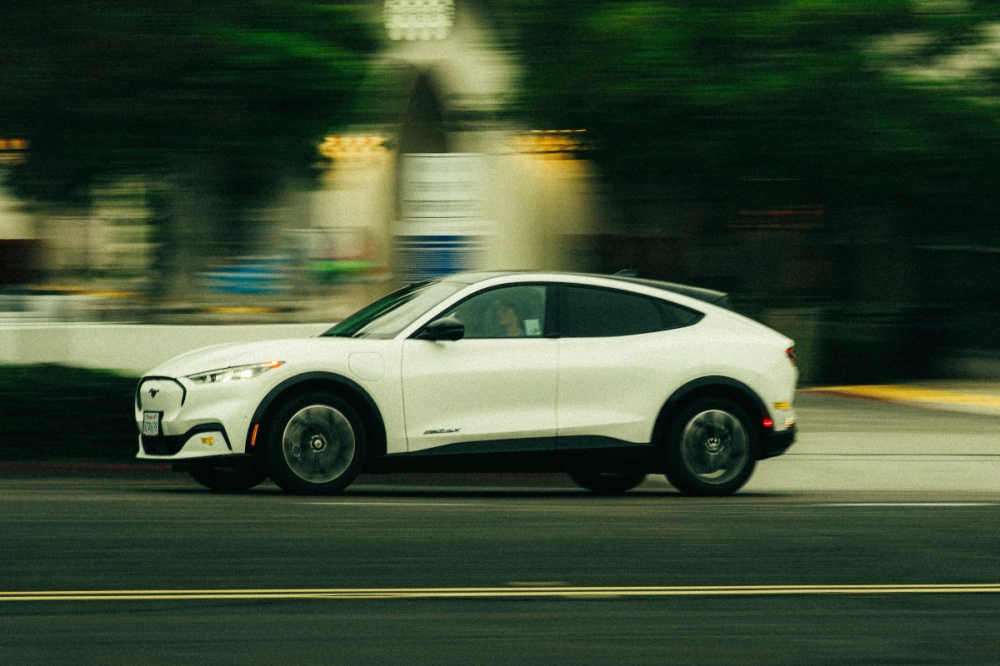
The author argues that the rise of electric vehicles is reshaping the global tyre industry, creating new opportunities for natural rubber due to its low rolling resistance while simultaneously demanding higher-quality materials and hybrid formulations that could transform traditional rubber supply chains and livelihoods. — Pexels pic

So the tyre maker is trapped. They need the low rolling resistance of natural rubber to satisfy range anxiety. But they also need the durability and acoustic comfort of synthetic rubber to satisfy safety and luxury. The coming war is not a substitution; it’s a reformulation. For the next decade, expect the tyre industry to move towards highly engineered “smart” tyres. The likely path? A renewed love affair with natural rubber for the tread — the part touching the road — where rolling resistance matters most. But reinforced with synthetic polymers in the sidewall and inner liner to handle weight and silence.

This is not good news for everyone. For the natural rubber industry — largely smallholder farmers in Thailand, Indonesia, and Vietnam — this is a double-edged sword. Demand could rise as EV tyre treads go NR-heavy. But the quality demanded will be brutal. No more inconsistent, smoky, low-grade slabs. EV tyres need pristine, highly purified natural rubber with molecular perfection. Small farmers without access to modern processing will be squeezed out. We could see a wave of consolidation, or worse, a shift to genetically engineered rubber plantations, wiping out traditional livelihoods.

For the synthetic rubber giants, the future is defensive. Their product will lose share in the tread but gain premium pricing for specialty applications. They will survive, but the era of cheap, bulk SR for every budget tyre is ending. And what about the rest of us? We will pay. A high-performance EV tyre is already a marvel of engineering; soon it will be even more expensive. But we’ll also win. Lower rolling resistance means smaller batteries, less mining for lithium, and lower electricity bills. The carbon footprint of driving could finally drop meaningfully.

The car industry is moving electric. That much is headline news. But the quieter revolution — the one happening in the rubber compounders’ labs, the latex processing sheds of Sumatra, and the boardrooms of petrochemical firms — will ultimately decide whether the EV era fulfils its promise. Natural rubber is poised for a comeback. But only if it can modernise fast enough. And only if we, the public, understand that the tyre under our silent new car is no longer just a tyre. It’s a geopolitical and ecological statement. Let the rubber meet the road. But first, let the science meet the tree.

* Professor Datuk Ahmad Ibrahim is affiliated with the Tan Sri Omar Centre for STI Policy Studies at UCSI University and is an Adjunct Professor at the Ungku Aziz Centre for Development Studies, Universiti Malaya. He can be reached at ahmadibrahim@ucsiuniversity.edu.my

** This is the personal opinion of the writer or publication and does not necessarily represent the views of Malay Mail.

  • ✇Malay Mail - All
  • Why your innovative ‘culture hack’ won’t save you — Ahmad Ibrahim
    JUNE 14 — We hear it constantly: “Innovation is the key to our future.” Governments race to launch “innovation strategies,” build shiny tech parks, and tout their rising patent counts. Yet, for all the fanfare, results are wildly uneven. Some nations consistently spawn world-changing technologies and resilient, high-growth industries; others pour money into research with little to show. The difference isn’t simply spending more — it’s about getting the foundation
     

Why your innovative ‘culture hack’ won’t save you — Ahmad Ibrahim

14 June 2026 at 00:58

Malay Mail

JUNE 14 — We hear it constantly: “Innovation is the key to our future.” Governments race to launch “innovation strategies,” build shiny tech parks, and tout their rising patent counts. Yet, for all the fanfare, results are wildly uneven. Some nations consistently spawn world-changing technologies and resilient, high-growth industries; others pour money into research with little to show. The difference isn’t simply spending more — it’s about getting the foundations right. After decades of watching policy fads come and go in the world, a clear pattern emerges. A successful national innovation agenda rests not on a single silver bullet, but on the deliberate cultivation of three interconnected ecosystems: the human, the financial, and the cultural.

There is no denying that we do live in an innovation-led world. Every boardroom from Silicon Valley to Singapore parrots the same gospel: “Innovate or die.” Even universities are increasingly giving emphasis on innovation beyond just publication. And yes, businesses pour billions into design thinking workshops, agile sprints, and “moonshot” labs. Yet most get little more than expensive PowerPoints and a trophy shelf of failed pilots. Why? Because they confuse innovation theatre with the real, unglamorous work of building an ecosystem where innovation actually survives. A robust ecosystem is critical. After watching two decades of corporate reinvention efforts, many would argue there are three non-negotiable requirements for innovation success — and none of them are what the consultants are selling.

First, we need to kill the ROI religion — at least for a while. Obsession with monetary returns has been a sore point when pursuing innovation initiatives. The norm is every executive claims to want breakthrough ideas, but their capital-allocation process is designed to hunt just dollars and cents. No positive ROI, no support, is common practice. The reality is true innovation is not a linear factory. It is not straight forward. It is messy, non-obvious, and often looks like failure for months. The major requirement? A separate governance model with a distinct risk appetite. That means a dedicated innovation budget that leadership cannot raid to cover quarterly earnings misses. It means rewarding teams for learning what doesn’t work, not just hitting short-term targets. Without financial “side pockets” and patient capital, your culture of innovation is just a poster on the wall. 

The author argues that successful innovation depends less on slogans, funding levels or symbolic initiatives and more on cultivating the right organisational conditions. — Pixabay pic

Second, psychological safety is not enough — you need political safety. We hear endlessly about “failing fast” and “speaking up.” But in most organizations, the real innovation killers aren’t fear of embarrassment — they’re fear of career suicide. Middle managers know that championing an unproven idea means risking their promotion, their budget, and their internal network. The major requirement is structural protection: explicit career pathways for intrapreneurs, no-blame post-mortems for ambitious flops, and senior leaders who visibly defend the radical failures alongside the wins. Otherwise, your brightest people will quietly innovate at a startup — not inside your walls.

Third, stop worshipping the lone genius. Build for friction. We love the Steve Jobs myth: one visionary, one garage, one world-changing product. But sustainable innovation is a team sport played across functional boundaries. The real requirement is what I call “productive friction” — deliberate collisions between engineering, marketing, operations, and finance. That means tearing down silos not with trust falls, but with joint metrics, shared innovation scorecards, and cross-functional project rotations. When a supply chain manager has equal say with a product designer, magic happens. When they don’t, you get “innovative” features no one can manufacture or sell.

So, here’s the hard truth: most businesses will continue to fail at innovation, not because they lack talent or ambition, but because they lack the courage to change how they govern, reward, and structure work. You can buy all the foosball tables and Post-it notes you want. But until you rewire your capital rules, protect your experimenters from political blowback, and force uncomfortable collaboration, your “innovation ecosystem” is just an expensive hobby. The companies that win won’t be the ones with the flashiest labs. They’ll be the boring ones that did the unsexy work of redesigning their operating systems for uncertainty. Everything else is just noise.

* Professor Datuk Ahmad Ibrahim is affiliated with the Tan Sri Omar Centre for STI Policy Studies at UCSI University and is an Adjunct Professor at the Ungku Aziz Centre for Development Studies, Universiti Malaya. He can be reached at ahmadibrahim@ucsiuniversity.edu.my

** This is the personal opinion of the writer or publication and does not necessarily represent the views of Malay Mail.

❌
Subscriptions